Cracking a skill-specific interview, like one for Load Control and Weight and Balance, requires understanding the nuances of the role. In this blog, we present the questions you’re most likely to encounter, along with insights into how to answer them effectively. Let’s ensure you’re ready to make a strong impression.
Questions Asked in Load Control and Weight and Balance Interview
Q 1. Explain the principles of weight and balance.
Weight and balance is all about ensuring an aircraft’s weight is distributed correctly to maintain safe flight characteristics. It’s a fundamental principle of flight safety, focusing on two key aspects: the total weight of the aircraft and its center of gravity (CG).
Imagine a seesaw: if the weight is evenly distributed, it balances perfectly. Similarly, an aircraft needs its weight properly balanced to fly safely and efficiently. An imbalanced aircraft can be difficult to control, leading to increased stress on the airframe and potentially dangerous flight conditions.
Weight and balance calculations consider every item onboard the aircraft – fuel, passengers, cargo, and even the aircraft itself. These weights are then used to determine the aircraft’s CG location, which needs to stay within pre-defined limits specified by the aircraft manufacturer.
Q 2. What is the significance of the Center of Gravity (CG)?
The Center of Gravity (CG) is the point where the entire weight of the aircraft is considered to be concentrated. Think of it as the balance point of the airplane. Its location is crucial because it directly affects the aircraft’s stability and controllability.
A CG that is too far forward can make the aircraft difficult to pitch up (raise the nose), potentially leading to a stall. Conversely, a CG that is too far aft can make it difficult to pitch down, increasing the risk of a tail strike during takeoff or landing. Maintaining the CG within the approved limits ensures safe and predictable handling.
For example, if you load heavier items too far aft, it might cause the aircraft to become nose-heavy, leading to increased drag. This means higher fuel consumption and decreased performance. Conversely, too much weight at the front could make the aircraft unstable and less maneuverable. Proper CG location keeps the aircraft stable, reliable, and easy to control.
Q 3. How do you calculate the moment of an item?
The moment of an item is the product of its weight and its distance from a reference point, usually the datum. The datum is an arbitrary point on the aircraft, often located at the nose. The moment tells us how much that item contributes to the overall balance of the aircraft.
Formula: Moment = Weight × Arm
Where:
- Weight is the mass of the item in pounds or kilograms.
- Arm is the horizontal distance in inches or centimeters between the item’s center of gravity and the datum.
Example: An item weighing 50 lbs located 100 inches from the datum has a moment of 50 lbs * 100 inches = 5000 lb-in.
Q 4. Describe the process of weight and balance calculations for a typical aircraft.
Weight and balance calculations for an aircraft usually involve these steps:
- Determine the empty weight and CG of the aircraft: This information is found in the aircraft’s weight and balance documentation.
- Weigh the aircraft: This step is crucial, often done using scales under the wheels. This gives the current empty weight. It’s normally done periodically.
- Determine the weight of all items to be added: This includes passengers, baggage, fuel, and cargo. You’ll need to use manufacturer’s data or the items’ individual weights.
- Determine the arm of each item: This is the distance from the datum to the item’s CG. You obtain this data from the aircraft’s documentation or the item’s specifications.
- Calculate the moment of each item: Multiply the weight and arm for each item, as described above.
- Calculate the total weight: Add the empty weight and the weight of all added items.
- Calculate the total moment: Add all the individual moments.
- Calculate the CG of the loaded aircraft: Divide the total moment by the total weight. This gives the CG location in relation to the datum.
- Compare the calculated CG to the aircraft’s limitations: Ensure the CG falls within the acceptable limits specified in the aircraft’s flight manual. This verifies if the aircraft can fly safely.
Software or spreadsheets are often used to simplify these calculations. It’s critical to meticulously record all weights and arms to ensure accuracy.
Q 5. What are the potential consequences of an unbalanced aircraft?
An unbalanced aircraft can have several serious consequences:
- Difficult control: An aircraft with an improperly located CG might be difficult or impossible to control during flight, making it susceptible to stalls, spins, or other dangerous maneuvers.
- Structural damage: Excessive stress on the airframe due to improper weight distribution can lead to structural damage over time, potentially resulting in catastrophic failure.
- Increased fuel consumption: An unbalanced aircraft will likely increase drag, leading to more fuel consumption, thereby reducing efficiency and range.
- Accidents: In extreme cases, an unbalanced aircraft may become uncontrollable and lead to accidents.
The seriousness of the consequences depends on how far outside the limits the CG is and the severity of the flight conditions.
Q 6. How do you account for fuel weight during weight and balance calculations?
Fuel weight is a significant factor in weight and balance calculations because it can change significantly during flight. It’s treated as a variable weight and normally considered at several points in the flight. You need to account for fuel burn during the flight. For instance, if you calculate CG for a fully fueled aircraft at departure, you need to also calculate the CG for the aircraft at different points during the flight (e.g., at landing) as you burn fuel.
Typically, the fuel weight is calculated based on the amount of fuel on board, as measured by the fuel gauges or calculated by comparing pre-flight fuel to post-flight fuel. This weight is then added to the overall weight of the aircraft, and its moment is calculated using its arm (distance from the datum).
Many weight and balance software packages have built-in calculations to automatically adjust for fuel consumption, showing how the CG changes throughout a flight.
Q 7. Explain the different types of weight and balance limitations.
Aircraft weight and balance limitations are defined in the aircraft’s flight manual and are critical for safe operation. These limitations typically include:
- Maximum weight: The highest allowable total weight of the aircraft.
- Minimum weight: The lowest allowable total weight of the aircraft. (This is less common and usually only relevant for lighter aircraft).
- CG limits (forward and aft): The acceptable range within which the CG must fall. These limits are crucial for maintaining aircraft stability and control.
- Center of gravity envelope: A graphical representation in the aircraft’s documentation showing the acceptable range of both weight and CG.
- Load limitations: Limits on the amount of weight that can be carried in specific locations on the aircraft.
Exceeding these limitations can compromise the aircraft’s safety and handling, potentially leading to an unsafe flight and possible accidents.
Q 8. What are the safety regulations related to weight and balance?
Weight and balance regulations are paramount to flight safety, ensuring the aircraft remains within its certified operational limits throughout the flight. These regulations, dictated by aviation authorities like the FAA (in the US) or EASA (in Europe), specify acceptable weight and center of gravity (CG) ranges. Exceeding these limits can compromise stability, controllability, and structural integrity, potentially leading to accidents. Key aspects of these regulations include:
- Maximum Takeoff Weight (MTOW): The maximum weight at which the aircraft is certified to take off.
- Maximum Landing Weight (MLW): The maximum weight at which the aircraft is certified to land.
- Center of Gravity (CG) Limits: The forward and aft limits within which the aircraft’s CG must remain for safe operation. This is crucial for maintaining stability and preventing stalls or other control issues.
- Weight and Balance Calculations: Strict procedures are mandated for accurately calculating the aircraft’s weight and CG before each flight, accounting for all factors like fuel, passengers, cargo, and baggage.
- Documentation: Detailed records must be kept of all weight and balance data, often including weight and balance manifests and load sheets. Failure to comply with these regulations can result in serious penalties, including grounding of the aircraft.
Think of it like balancing a seesaw – if the weight isn’t distributed correctly, the seesaw tips. Similarly, an aircraft’s weight and balance must be carefully managed to ensure stable and safe flight.
Q 9. How do you handle discrepancies in weight and balance data?
Discrepancies in weight and balance data are unacceptable and require immediate attention. They can stem from various sources: inaccurate weight measurements, incorrect cargo manifests, or human error during calculations. My approach involves a systematic investigation, following these steps:
- Identify the Discrepancy: Pinpoint the exact difference between the calculated weight and balance and the expected values.
- Review the Data Sources: Verify the accuracy of all weight data from passengers, cargo, fuel, and baggage. Cross-check against original documentation and scales.
- Recalculate: Perform the weight and balance calculations again, meticulously checking each step. Use multiple calculation methods if possible to confirm accuracy.
- Investigate Potential Errors: If the discrepancy persists, thoroughly investigate possible sources of error, such as faulty weighing equipment, incorrect weight estimations for cargo, or misinterpretations of the aircraft’s weight and balance data.
- Implement Corrective Actions: Based on the identified error, implement corrective measures. This might involve adjusting the cargo load, removing excess weight, or correcting data entry errors.
- Document the Process: Meticulously document the entire discrepancy investigation and resolution process. This documentation serves as a valuable record and aids in preventing future errors.
In one instance, I discovered a discrepancy due to a misplaced decimal point in the weight of a piece of oversized cargo. This seemingly small mistake could have led to serious consequences. By carefully reviewing the data and recalculating, the error was identified and corrected, preventing a potentially dangerous flight.
Q 10. Describe your experience with weight and balance software or tools.
I have extensive experience using various weight and balance software and tools, including specialized aviation software packages such as [mention specific software names if you have experience with them, e.g., Jeppesen, etc.]. These tools automate complex calculations, reducing the chance of human error. They also provide visual representations of the aircraft’s weight and balance, including CG location and the permissible operational envelope, which enhances understanding. I’m proficient in using these tools to:
- Generate weight and balance reports: This provides a clear and concise summary of all weight and balance data.
- Simulate different loading scenarios: I use the software to model various loading configurations to determine optimal weight distribution for balance and efficiency.
- Verify compliance with regulations: The software automatically checks that the calculated weight and balance are within the aircraft’s operational limits.
- Create and manage weight and balance manifests: The software automates the creation of documentation required by regulations.
Beyond software, I’m adept at using digital scales and other weight measurement equipment, ensuring accurate data entry and meticulous record-keeping. Proficient use of these tools and adherence to standard operating procedures are essential to maintaining safety.
Q 11. What is the role of load control in ensuring flight safety?
Load control is the systematic process of managing the weight and balance of an aircraft to ensure safe and efficient operations. It plays a critical role in flight safety because improper loading can lead to several dangerous situations:
- Loss of control: An improperly balanced aircraft may become difficult or impossible to control, leading to stalls, spins, or other hazardous flight conditions.
- Structural damage: Exceeding the aircraft’s weight limits can stress its structure, potentially leading to damage or failure.
- Reduced performance: An overweight aircraft will require longer takeoff and landing distances, reducing safety margins.
- Increased fuel consumption: An unbalanced aircraft may experience increased drag, resulting in higher fuel consumption and reduced range.
Effective load control minimizes these risks by ensuring the aircraft’s weight and center of gravity remain within safe limits, optimizing weight distribution and preventing structural stress. It is a fundamental aspect of flight operations, involving detailed planning, meticulous execution, and continuous monitoring to guarantee a safe flight.
Q 12. Explain the process of loading cargo onto an aircraft.
Loading cargo onto an aircraft is a precisely controlled process, emphasizing safety and efficiency. The steps involved are:
- Planning: The process begins with careful planning, considering the type and weight of cargo, its dimensions, and the aircraft’s weight and balance limitations. This often involves using weight and balance software to determine the optimal loading configuration.
- Weighing: All cargo is accurately weighed using certified scales. This ensures accurate weight data for weight and balance calculations.
- Documentation: Detailed records are maintained for each piece of cargo, including its weight, dimensions, and location within the aircraft. This information is crucial for accurate weight and balance calculations.
- Loading: Cargo is carefully loaded according to the predetermined loading plan, ensuring that the weight is distributed evenly to maintain the aircraft’s center of gravity within the specified limits.
- Securing: Once loaded, cargo is securely fastened to prevent shifting during flight. This involves using appropriate restraints, such as cargo nets or straps.
- Verification: After loading, a final weight and balance calculation is performed to verify that the aircraft is within its operational limits. This often includes a visual inspection to ensure that all cargo is correctly secured.
Every step involves careful attention to detail, adherence to safety procedures, and thorough documentation to prevent errors and ensure a safe flight.
Q 13. How do you ensure the proper distribution of weight during loading?
Proper weight distribution is crucial for maintaining the aircraft’s stability and controllability. We use several techniques to ensure this:
- Center of Gravity (CG) Calculation: The primary tool is the precise calculation of the aircraft’s CG using weight and balance software. This calculation considers the weight and location of every item onboard.
- Loading Plans: Detailed loading plans are created beforehand, outlining the precise location of each piece of cargo. These plans are often optimized to achieve the most favorable CG location, minimizing stress on the aircraft’s structure.
- Weight Distribution: Heavy items are typically loaded closer to the aircraft’s center of gravity to minimize the moment arm (distance from the CG). This minimizes the effect of these weights on the aircraft’s balance.
- Visual Inspection: A visual inspection is often performed to confirm that the cargo is loaded according to the plan and is securely fastened to prevent shifting.
Imagine a seesaw again. If all the weight is on one side, it will tilt. Similarly, uneven weight distribution on an aircraft can lead to instability. Careful planning and precise execution of the loading plan are crucial to achieving and maintaining a balanced aircraft.
Q 14. What are the limitations on cargo loading?
Cargo loading is subject to various limitations, ensuring flight safety and compliance with regulations. These limitations include:
- Maximum Takeoff Weight (MTOW): The total weight of the aircraft, including fuel, passengers, cargo, and baggage, cannot exceed the aircraft’s certified MTOW.
- Maximum Landing Weight (MLW): Similarly, the aircraft’s weight upon landing cannot exceed its certified MLW.
- Center of Gravity (CG) Limits: The aircraft’s CG must remain within the specified forward and aft limits for safe operation. Exceeding these limits can result in unstable flight conditions.
- Cargo Compartment Size and Capacity: Cargo must fit within the designated cargo compartments and not exceed their volumetric capacity. This ensures proper securing and prevents damage to the cargo or the aircraft.
- Weight and Balance Restrictions for Specific Cargo: Certain types of cargo, such as hazardous materials, may have specific weight and balance restrictions due to their nature. These restrictions must be strictly adhered to for safe handling.
- Structural Load Limits: The aircraft’s structure has limitations on the amount of weight it can withstand at various locations. Load distribution must consider these limitations to prevent structural damage.
These limitations are crucial for safe and efficient operations, safeguarding the aircraft’s integrity and preventing potentially disastrous outcomes.
Q 15. How do you handle hazardous materials during load control?
Handling hazardous materials during load control requires meticulous adherence to regulations and safety protocols. It begins with accurate identification of the material using its UN number and proper classification. This information dictates the specific handling requirements, including packaging, segregation, and stowage locations within the aircraft.
- Segregation: Incompatible materials must be kept apart to prevent dangerous reactions. For example, oxidizers should never be placed near flammable substances.
- Packaging: Hazardous materials must be packaged according to international standards (e.g., IATA regulations for air transport). This ensures containment and prevents leaks or spills.
- Documentation: Accurate and complete documentation is critical. This includes the Shipper’s Declaration for Dangerous Goods (DG), which provides essential information about the shipment to the flight crew and ground handling personnel. Missing or incorrect documentation can lead to delays, fines, and even accidents.
- Emergency Response: Load controllers need training on emergency procedures for hazardous materials incidents. This includes knowing how to handle spills, understanding the hazards of each substance, and knowing what to communicate to emergency services.
For instance, during one flight, we had a shipment of lithium batteries. Due to their fire risk, they were carefully secured in a designated compartment, separate from other cargo, and their location was clearly documented on the load manifest and communicated to the flight crew. This proactive approach ensured safe transportation of the cargo.
Career Expert Tips:
- Ace those interviews! Prepare effectively by reviewing the Top 50 Most Common Interview Questions on ResumeGemini.
- Navigate your job search with confidence! Explore a wide range of Career Tips on ResumeGemini. Learn about common challenges and recommendations to overcome them.
- Craft the perfect resume! Master the Art of Resume Writing with ResumeGemini’s guide. Showcase your unique qualifications and achievements effectively.
- Don’t miss out on holiday savings! Build your dream resume with ResumeGemini’s ATS optimized templates.
Q 16. Describe your experience with load planning and manifest preparation.
Load planning and manifest preparation are integral parts of my role. Load planning involves determining the optimal distribution of weight and cargo within the aircraft to maintain stability and efficiency, while adhering to weight and balance limits. This process starts with gathering detailed information on the weight and dimensions of every piece of cargo, passengers, and baggage.
The manifest is then created, meticulously listing each item with its weight, dimensions, location onboard, and any special handling instructions. This document becomes the reference for the entire flight operation. I use specialized software to perform weight and balance calculations, generating a detailed report showing the center of gravity (CG) and total weight. This report is checked against the aircraft’s weight and balance limits. Any discrepancies require adjustments to the load plan until the aircraft is safely within limits.
For example, I recently planned a charter flight carrying oversized equipment. I had to use 3D modeling software to ensure the equipment could safely fit within the aircraft’s cargo hold without exceeding weight or balance limitations. The subsequent manifest ensured clear communication to the ground crew and the flight crew about the location and securing of the equipment.
Q 17. What is the importance of accurate documentation in load control?
Accurate documentation is paramount in load control, acting as a crucial safety net. It provides a complete and auditable record of every step involved in loading the aircraft. This helps ensure regulatory compliance, aids in investigation of incidents, and supports efficient and safe operations.
- Regulatory Compliance: Accurate documentation is mandatory for compliance with national and international aviation regulations. Auditors use these records to verify that all procedures were followed correctly.
- Incident Investigation: If an incident occurs involving weight and balance, the documentation provides critical information for investigating the root cause. This helps prevent similar occurrences in the future.
- Efficient Operations: Clear, concise documentation streamlines the loading process, prevents misunderstandings between ground crews and flight crews, and speeds up turnaround times.
- Liability Protection: Detailed records protect the airline from potential liability in case of accidents or cargo damage claims.
Imagine a scenario where cargo damage occurs due to improper loading. If the loading documents are inaccurate or missing, establishing liability and determining the cause of the damage becomes significantly more challenging.
Q 18. How do you communicate with flight crews regarding weight and balance?
Communication with flight crews regarding weight and balance is crucial for safe operation. This is typically done using a standardized Weight and Balance Report. I ensure the report includes all relevant information, such as total weight, center of gravity (CG), and fuel status, expressed in clear and concise language, avoiding technical jargon whenever possible. This report is typically handed over to the Captain prior to the flight.
In addition to the report, I am always available to answer questions the flight crew may have. If there are any changes to the load plan after the report is issued, I immediately communicate these to the crew before they depart. Clear and timely communication prevents misunderstandings and ensures the safety of the flight.
For example, if a passenger decides to check in extra baggage at the gate, I recalculate the weight and balance, inform the Captain of the changes, and reissue the report. This ensures everyone has the most up-to-date information about the weight and balance status of the aircraft.
Q 19. Explain the concept of load factor.
Load factor represents the ratio of the actual weight of passengers, cargo, and baggage on board to the maximum allowable weight. It essentially measures how effectively an aircraft is utilizing its carrying capacity. A higher load factor indicates greater utilization of the aircraft’s payload capabilities.
The formula for load factor is:
Load Factor = (Actual Weight / Maximum Weight) x 100%For example, an aircraft with a maximum weight of 100,000 kg and an actual weight of 80,000 kg has a load factor of 80%. This suggests that the aircraft’s capacity is being used efficiently.
Understanding load factor is essential for revenue management and operational efficiency. Airlines strive for high load factors to maximize profitability. However, safety considerations are paramount; load factors should never compromise compliance with weight and balance limits.
Q 20. What are the emergency procedures for weight and balance issues?
Emergency procedures for weight and balance issues are designed to address situations where there is a potential compromise to the aircraft’s safe operation. These procedures typically include immediate communication with the appropriate personnel, a thorough assessment of the situation, and implementation of corrective actions.
- Immediate Communication: In case of an unexpected change impacting weight and balance (e.g., an unexpected increase in fuel weight), immediate communication with the Captain and ground operations is critical. This allows for quick assessment of the situation.
- Assessment and Recalculation: A thorough reassessment of the weight and balance is conducted to determine the impact on the aircraft’s center of gravity and operational limits. This often involves recalculating the load plan.
- Corrective Actions: Depending on the situation, corrective actions might include offloading cargo or passengers, adjusting fuel load, or even canceling the flight if safety cannot be guaranteed. The decision to cancel is made only after considering the severity of the issue and the available options.
- Documentation: All actions taken during an emergency situation are meticulously documented to facilitate a comprehensive post-incident review.
For instance, if there’s a sudden fuel leak before departure, we would immediately assess the reduction in fuel weight and recalculate the aircraft’s center of gravity. Depending on the fuel loss, we may need to offload baggage to maintain safe flight parameters.
Q 21. How do you resolve conflicts between weight and balance limitations and operational requirements?
Conflicts between weight and balance limitations and operational requirements are resolved through a careful balancing act, prioritizing safety without compromising operational efficiency as far as possible. This process involves a systematic evaluation of alternatives and a collaborative approach involving multiple stakeholders.
- Evaluate Alternatives: We explore several options to reconcile the conflict. This may include optimizing cargo loading to reduce weight imbalances, prioritizing essential cargo over less critical items, or potentially requesting a larger aircraft if the weight limitations are significantly constraining operations.
- Prioritization: If it’s a matter of selecting cargo, we prioritize essential cargo (e.g., perishable goods needing time-sensitive delivery) over less time-sensitive items.
- Collaboration: Close collaboration with the operations team, cargo handlers, and the flight crew is essential. Open communication ensures everyone is aware of the constraints and actively participates in finding a solution.
- Documentation: All decisions and compromises made must be meticulously documented. This provides a clear record of the process and justifies the actions taken.
In a real-world scenario, a cargo aircraft might be tasked with delivering a large, heavy piece of equipment that pushes the aircraft’s weight limit close to the maximum. This could mean carefully planning cargo stowage to perfectly balance the load and might necessitate removal of less critical items.
Q 22. Describe your experience with different types of aircraft and their weight and balance characteristics.
My experience encompasses a wide range of aircraft, from small single-engine piston aircraft to large multi-engine turboprop and jet aircraft. Each aircraft type presents unique weight and balance challenges. For instance, a Cessna 172’s weight and balance is relatively straightforward, primarily focusing on passenger and fuel distribution. In contrast, a Boeing 737 requires significantly more complex calculations due to its size, numerous fuel tanks, cargo compartments, and varying passenger load configurations. I’ve worked extensively with the weight and balance data provided in the aircraft’s flight manual, including the use of weight and balance computers and software to ensure all flights are within the aircraft’s certified limits. I’m proficient in understanding and applying the principles of CG (Center of Gravity) and its impact on aircraft stability and performance across diverse aircraft types. Understanding the weight distribution is crucial for safety and efficient flight operation.
For example, in a smaller aircraft, shifting a few bags of luggage can noticeably affect the CG. However, in larger aircraft, the effect is often less dramatic due to the overall larger weight, but precision is still essential for optimal flight performance and stability. I am familiar with the calculation methods for both conventional and unconventional aircraft configurations.
Q 23. How do you stay updated on changes in weight and balance regulations?
Staying current with weight and balance regulations is critical for safety and legal compliance. I actively monitor changes through several channels. This includes regularly reviewing updates issued by regulatory bodies like the FAA (in the US) or EASA (in Europe), subscribing to industry publications such as aviation safety newsletters and journals, and participating in professional development courses and workshops focused on weight and balance and load control. Furthermore, I maintain membership in relevant professional organizations that provide updates and training opportunities. Active engagement in these channels ensures my knowledge remains up-to-date with any amendments, new regulations, or best practices in the field.
Q 24. What are some common errors in weight and balance calculations and how can they be avoided?
Common errors in weight and balance calculations often stem from simple mistakes, but their consequences can be severe. Some frequent errors include:
- Incorrect weight input: This can involve misreading scales, failing to account for all items (crew baggage, catering, etc.), or using outdated weight data.
- Misplaced items: Failing to correctly account for the location of items on board, leading to incorrect CG calculations. This is especially critical with heavy items.
- Incorrect fuel calculation: Incorrectly estimating the fuel weight needed for a specific flight can significantly affect the weight and balance.
- Using outdated weight and balance data: Aircraft weight can change due to maintenance and modifications, and failure to use the most current data leads to inaccurate calculations.
These errors can be avoided through meticulous attention to detail, double-checking all data inputs, using appropriate weight and balance software, and following established procedures and checklists. Regular training and cross-checking with colleagues are key to minimizing human error.
Q 25. Describe your problem-solving skills in a weight and balance scenario.
My approach to solving weight and balance problems is systematic and methodical. I start by carefully reviewing all available data, including the aircraft’s weight and balance manual, loading manifests, and any relevant flight plans. I then identify the discrepancy or problem. For example, if the calculated CG is outside limits, I’ll analyze the weight distribution to pinpoint the source of the imbalance. I use a combination of manual calculations, software tools and my understanding of weight distribution principles to generate possible solutions. This might involve:
- Redistributing cargo or baggage: Moving heavier items closer to the center of gravity to bring the CG within limits.
- Adjusting fuel load: Reducing fuel if the aircraft is overweight, or adding if the CG is outside limits.
- Passenger re-arrangement: In some cases, strategically seating passengers can help correct imbalances.
I always prioritize safety and adhere to all applicable regulations and aircraft limitations when resolving any weight and balance issues. I document all calculations and solutions clearly for traceability and auditing purposes.
Q 26. How do you prioritize tasks in a busy load control environment?
Prioritizing tasks in a busy load control environment requires efficient time management and organizational skills. I employ several strategies:
- Using a task management system: This helps me track deadlines, assign priorities, and ensure no tasks are overlooked. This can be a simple checklist, sophisticated software, or a combination of both.
- Prioritizing based on urgency and impact: Immediate safety-critical issues related to weight and balance always take precedence. Flights with imminent departure times are prioritized.
- Communicating effectively: Clearly communicating with pilots, flight dispatch, and other relevant personnel is crucial to avoiding delays and ensuring smooth operations.
- Anticipating potential problems: Proactively identifying potential weight and balance challenges and taking steps to mitigate them before they occur is also key to efficient load control. For example, I might need to communicate special handling requirements to ground crews for oversized/heavy baggage, etc.
By combining efficient organization, clear communication, and proactive problem-solving, I can effectively manage workload in the demanding load control environment.
Q 27. What is your understanding of the relationship between load control, flight planning, and dispatch?
Load control, flight planning, and dispatch are intricately linked processes contributing to a safe and efficient flight. Load control is responsible for determining the aircraft’s weight and balance, ensuring it operates within its certified limits. Flight planning uses the weight and balance data from load control to calculate fuel requirements, optimal flight paths, and performance calculations. Finally, dispatch uses all this information, alongside weather reports and other operational considerations, to determine the feasibility and safety of the flight, releasing the aircraft for departure only when all parameters, including weight and balance, are within acceptable limits. Effective communication and seamless data exchange between these three departments are crucial for safe and efficient flight operations.
Q 28. Describe a challenging weight and balance situation you encountered and how you resolved it.
During a charter flight with a significant amount of unusual cargo – oversized musical equipment for a touring band – we faced a challenging weight and balance situation. The initial weight and balance calculation revealed that the CG was outside the aircraft’s limits, primarily due to the uneven distribution of the large, heavy instruments. Simply re-arranging wasn’t sufficient. To resolve this, I worked closely with the ground crew to meticulously map the cargo’s exact weight and center of gravity using precise measurements. I then used specialized weight and balance software to simulate different loading configurations, including utilizing empty space in the cargo compartment. The key was to strategically locate both heavy and lighter pieces within the cargo bay to achieve a favorable and compliant CG. We ended up successfully repositioning some equipment to achieve a safe CG, and the flight proceeded without any incidents. It highlighted the importance of accurate data acquisition, methodical problem-solving and utilization of specialized tools when handling unusual cargo.
Key Topics to Learn for Load Control and Weight and Balance Interview
- Weight and Balance Calculations: Mastering the fundamental principles of calculating aircraft weight and balance, including empty weight, payload, fuel, and baggage. Understand how these factors affect the aircraft’s center of gravity.
- Load Distribution and Planning: Learn practical applications of load distribution techniques to optimize weight and balance within safety limits. This includes understanding the impact of different cargo configurations and passenger arrangements.
- Center of Gravity Limits: Thoroughly understand the importance of maintaining the aircraft’s center of gravity within its approved limits. Explore the consequences of exceeding these limits and the safety measures implemented to prevent such occurrences.
- Weight and Balance Documentation: Familiarize yourself with the required documentation for weight and balance calculations, including load manifests, weight and balance reports, and relevant regulatory requirements.
- Emergency Procedures: Understand how weight and balance considerations affect emergency procedures, such as unexpected weight changes or equipment malfunctions.
- Different Aircraft Types: Explore how weight and balance principles apply across different aircraft types (e.g., single-engine piston, multi-engine turboprop, jet aircraft), noting any unique considerations for each.
- Problem-Solving and Troubleshooting: Develop your ability to identify and solve real-world weight and balance problems, such as unexpected weight shifts or discrepancies in calculations. Practice using different problem-solving techniques and approaches.
- Regulatory Compliance: Understand the relevant regulations and standards governing weight and balance procedures within your specific operational context.
Next Steps
Mastering Load Control and Weight and Balance is crucial for a successful and safe career in aviation. A strong understanding of these principles demonstrates your commitment to safety and operational efficiency, opening doors to diverse and rewarding opportunities. To maximize your job prospects, creating a compelling and ATS-friendly resume is paramount. ResumeGemini can help you build a professional and impactful resume that showcases your skills and experience effectively. Examples of resumes tailored specifically to Load Control and Weight and Balance roles are available, providing you with valuable templates and guidance.
Logistics Coordinator Resume Sample
Regulatory Compliance Officer Resume Sample

Aircraft Dispatcher Resume Sample

Aviation Maintenance Technician Resume Sample
Quality Assurance Auditor Resume Sample
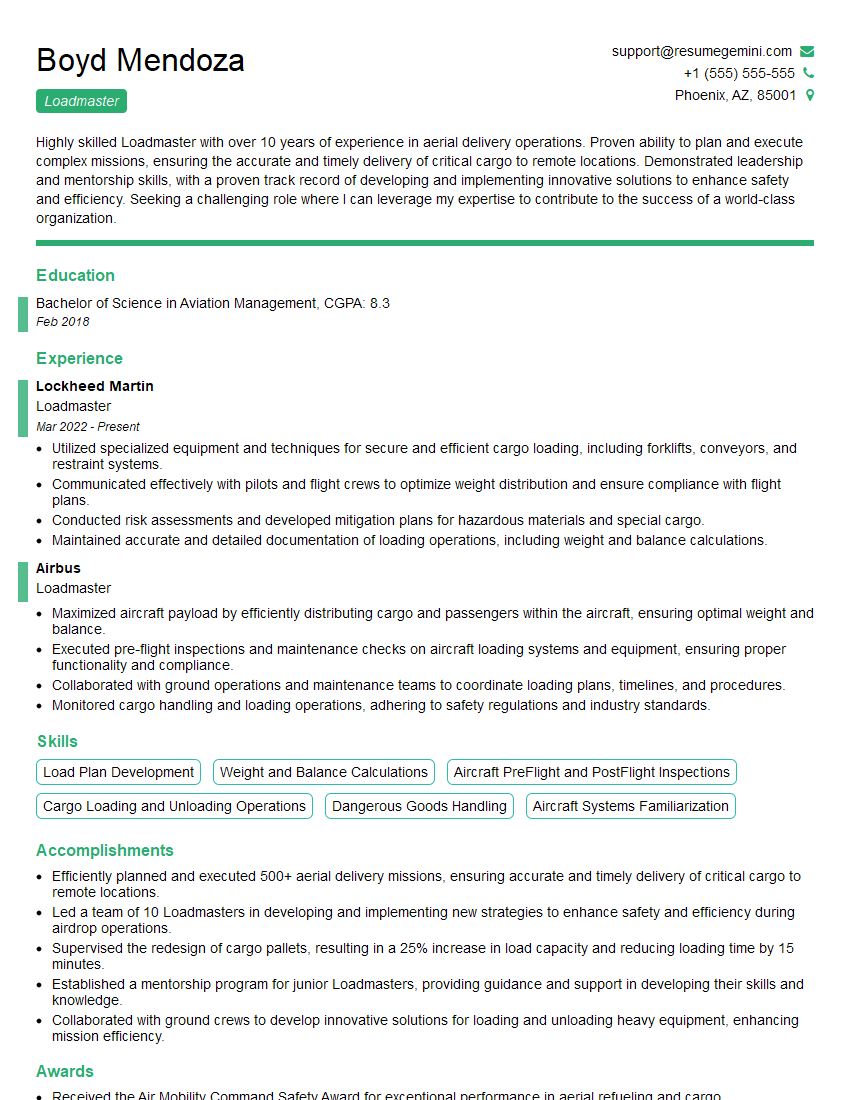
Loadmaster Resume Sample

Airworthiness Inspector Resume Sample
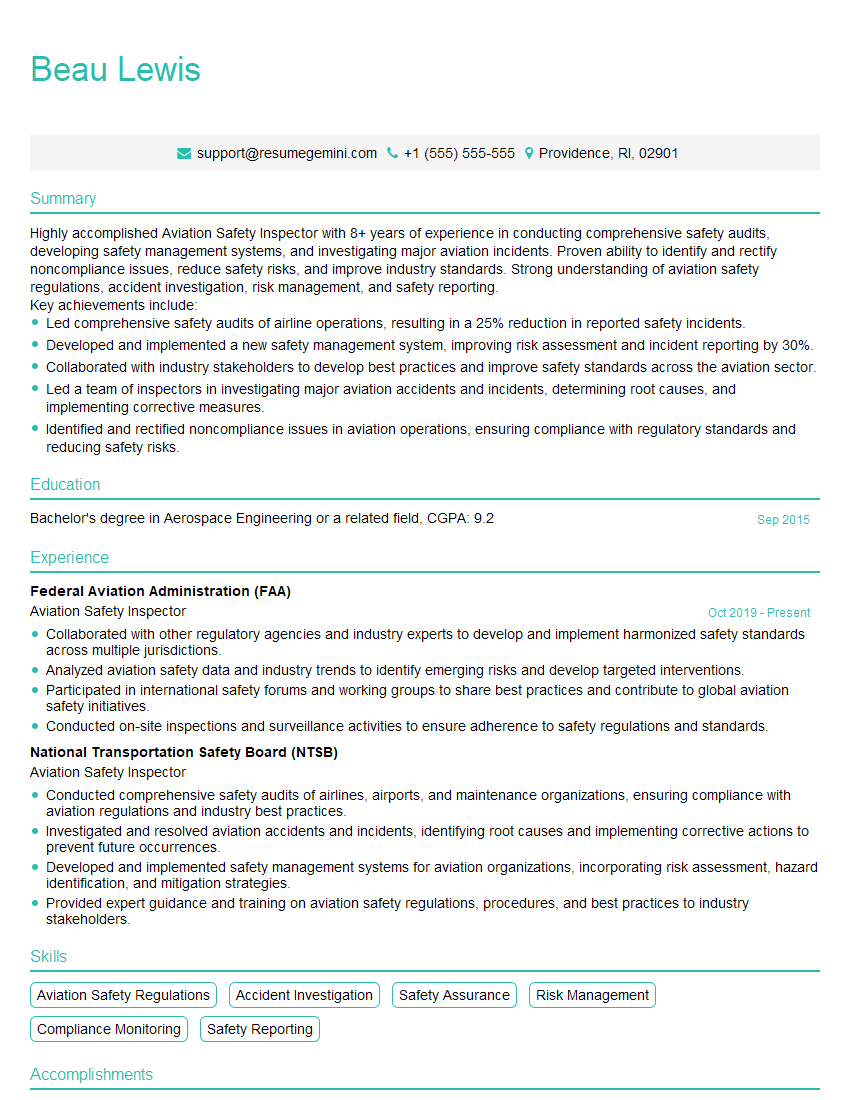
Aviation Safety Inspector Resume Sample
Explore more articles
Users Rating of Our Blogs
Share Your Experience
We value your feedback! Please rate our content and share your thoughts (optional).
What Readers Say About Our Blog
Very informative content, great job.
good