Unlock your full potential by mastering the most common Load Planning and Engineering interview questions. This blog offers a deep dive into the critical topics, ensuring you’re not only prepared to answer but to excel. With these insights, you’ll approach your interview with clarity and confidence.
Questions Asked in Load Planning and Engineering Interview
Q 1. Explain the concept of cube utilization in load planning.
Cube utilization in load planning refers to how efficiently you fill the available space within a transportation unit—be it a truck trailer, railcar, or shipping container. It’s not just about weight, but also about maximizing volume. High cube utilization means you’re getting the most out of your transportation investment, reducing costs per unit of cargo.
Imagine you’re packing a moving truck. Simply throwing boxes in haphazardly might fill it by weight, but leave significant empty space. Efficient cube utilization ensures you strategically place items to minimize wasted space, potentially fitting more items without exceeding weight limits. This is crucial for profitability, especially with high-value, low-weight goods.
Calculating cube utilization involves determining the total cubic volume of the cargo and dividing it by the available cubic volume of the transport unit. For example, if your cargo has a total volume of 100 cubic meters and your truck trailer has 120 cubic meters of space, your cube utilization is 83.3%. The goal is always to strive for the highest possible percentage, ideally close to 100%, without compromising safety or load stability.
Q 2. Describe different load securing methods and their applications.
Securing cargo is paramount for safety and preventing damage during transit. Methods vary based on the type of cargo, transportation mode, and journey conditions. Some common methods include:
- Strapping: Using strong straps (often steel or polyester) to tightly bind cargo to the vehicle or to itself. This is widely used for palletized goods and larger items.
- Dunnage: Using materials like wood, foam, or inflatable airbags to fill gaps and prevent shifting. Think of it as cushioning and bracing.
- Blocking and Bracing: Employing wood or other materials to create a rigid structure around and between items, preventing movement. Common in heavy-duty or irregular-shaped cargo transportation.
- Load Locks: These are structural components built into trailers or containers to restrain cargo during transit, particularly effective for preventing shifting during turns or braking.
- Shrink Wrap: Using plastic film to tightly encapsulate the cargo, often used for palletized goods. It adds an extra layer of security but doesn’t offer much in terms of heavy duty load restraint.
The choice of method depends on specific factors. For example, fragile items might necessitate extensive dunnage and bracing, whereas heavy machinery might require robust strapping and load locks. Always consult regulations and best practices for your specific industry and transportation mode.
Q 3. How do you optimize load plans for different transportation modes (e.g., truck, rail, sea)?
Optimizing load plans differs significantly across transportation modes. Here’s a comparison:
- Trucks: Focus is on maximizing cube utilization while ensuring weight distribution stays within legal limits and the center of gravity remains stable. Software plays a significant role in visualizing and optimizing truck load plans to minimize empty space and secure the cargo.
- Rail: Railcars offer larger volumes but stricter weight restrictions and often require specialized loading equipment. Optimizing rail loads requires careful consideration of weight distribution across multiple railcars, to evenly distribute weight across the entire train and reduce stress on the tracks and rolling stock. Efficient cube utilization is crucial to reducing the number of cars required, minimizing transport costs.
- Sea: Shipping containers have standardized dimensions, simplifying planning but still demanding careful consideration of weight and balance to prevent instability during voyages. Special attention must be paid to the handling of hazardous materials and ensuring proper ventilation if needed.
In all modes, software tools are valuable. They offer 3D visualizations, weight and dimension calculations, and the ability to simulate various loading configurations to identify the most efficient and safe option before the actual loading commences. This significantly reduces the time spent in the yard and minimizes errors and rework.
Q 4. What are the key factors to consider when determining the weight distribution of a load?
Determining proper weight distribution is vital for safe and efficient transportation. Key factors include:
- Legal Weight Limits: Each vehicle type (truck, railcar) and jurisdiction have weight restrictions on axles, the gross vehicle weight, and the total weight of the cargo. Exceeding these limits is illegal and dangerous.
- Vehicle Capacity: Knowing the weight capacity of the vehicle is crucial. This information is generally found in the vehicle’s documentation.
- Cargo Weight and Distribution: The weight of individual items and their placement relative to each other significantly affect overall distribution. Heavier items should be strategically placed to maintain balance. Use of a weight distribution analysis tool is crucial to visualizing how weights influence stability and compliance.
- Center of Gravity: Maintaining a stable center of gravity is paramount to prevent tipping or swaying. This is discussed in detail in the next question.
- Road Conditions: For road transportation, expected road conditions, including steep inclines or curves, should be factored into weight distribution.
Proper weight distribution involves more than just making sure the load is within legal limits. It’s about optimizing stability and efficiency to ensure a smoother and safer journey. Poor weight distribution can lead to accidents, damage, and increased fuel consumption.
Q 5. Explain the importance of considering center of gravity in load planning.
The center of gravity (CG) is the point where the weight of an object is considered to be concentrated. In load planning, maintaining a low and stable CG is critical. A high or improperly located CG increases the risk of instability, leading to rollovers, swerving, or even accidents.
Imagine a stack of boxes. If all the heavy boxes are at the top, the CG is high and unstable. If they’re distributed evenly or placed lower, the CG is lower and more stable. Similarly, in load planning, heavier items should be positioned low and closer to the vehicle’s center, ensuring the CG remains within safe limits. Software aids in calculating the CG based on the weight and position of each item, providing real-time feedback and preventing potential hazards.
Failure to consider the CG can lead to serious consequences, from minor damage to major accidents. Regulations often specify CG limits for different vehicle types and cargo categories. Understanding and properly managing CG is a non-negotiable aspect of responsible load planning.
Q 6. How do you handle unexpected delays or changes in shipment requirements?
Unexpected delays and changes are inevitable in transportation. My approach involves proactive planning and flexible communication:
- Contingency Planning: Building in buffer time and alternative routes into the plan anticipates potential problems. This includes having backup transport options or storage facilities available if needed.
- Real-time Tracking and Monitoring: Using GPS tracking and communication systems to continuously monitor the shipment’s progress enables quick identification of delays. This allows for timely adjustments to the plan and proactive notification to stakeholders.
- Flexible Communication Protocols: Maintaining open and clear communication channels with all involved parties (drivers, shippers, receivers) is essential. A well-defined communication plan ensures everyone is informed of changes and can work together to find solutions.
- Risk Assessment and Mitigation: Identifying potential problems beforehand allows us to develop mitigation strategies. For example, if a certain route is prone to delays, an alternate route can be identified and prepared.
- Documentation and Reporting: Maintaining detailed records of every change and decision made allows us to learn from experiences and improve future planning.
Addressing unexpected events calmly and efficiently through collaboration minimizes disruptions and maintains a high level of service. A well-defined crisis management plan for unexpected circumstances is essential.
Q 7. Describe your experience with load planning software and tools.
I have extensive experience with various load planning software and tools, including [mention specific software names, e.g., 3D load planning software, transportation management systems (TMS)]. These tools provide features like:
- 3D visualization: Allowing accurate representation of cargo within the transport unit, enabling effective space optimization.
- Weight and dimension calculations: Automatic calculation of total weight, volume, and center of gravity, ensuring compliance with regulations and vehicle limitations.
- Route optimization: Suggestions for efficient routes based on distance, time, and cost.
- Reporting and analytics: Generating reports on cube utilization, cost analysis, and other key metrics to track performance and identify areas for improvement.
Proficiency with these tools enables me to create highly efficient and safe load plans. The ability to effectively utilize such software increases productivity and improves the accuracy of load plans, minimizing errors and ensuring compliance with regulations.
Q 8. How do you ensure compliance with regulations and safety standards in load planning?
Ensuring compliance with regulations and safety standards in load planning is paramount. It’s not just about following rules; it’s about preventing accidents, protecting cargo, and ensuring legal operations. My approach involves a multi-step process.
- Thorough Regulatory Research: I begin by identifying all applicable regulations. This includes international, national, and local rules governing transportation of goods, including weight limits, dimensional restrictions, and hazardous materials handling (e.g., IATA, IMDG, DOT regulations).
- Documentation Review: I meticulously review all shipping documentation, including the bill of lading, commercial invoice, and any special permits or certifications required for the cargo (e.g., certificates of origin, phytosanitary certificates).
- Software and Technology: I utilize specialized software to verify compliance. These programs often include built-in regulatory databases and checks to ensure load plans meet all legal requirements.
- Regular Audits and Updates: Keeping up-to-date with changes in regulations is crucial. I maintain a schedule of regular audits and updates to ensure our load planning procedures remain compliant.
- Training and Awareness: I ensure all team members involved in the load planning process receive adequate training on safety standards and relevant regulations. This fosters a strong safety culture.
For example, if I’m shipping lithium-ion batteries, I wouldn’t just focus on weight and dimensions; I’d meticulously check the UN number, packaging instructions, and any specific transportation requirements according to the IMDG code or IATA regulations.
Q 9. Explain your process for creating a load plan from initial request to final execution.
My process for creating a load plan is systematic and thorough, ensuring efficiency and safety. It starts with the initial request and culminates in successful execution.
- Initial Request and Information Gathering: I start by gathering comprehensive information about the shipment, including origin and destination, cargo details (type, quantity, dimensions, weight, and hazardous nature if applicable), delivery deadlines, and any special handling instructions.
- Load Planning Software: I input the gathered data into specialized software. These programs optimize space utilization and ensure the load is structurally sound and complies with safety regulations. The software generates a preliminary plan that I then carefully review.
- Weight and Dimension Calculations: I independently verify the total weight and dimensions, factoring in packaging, securing materials, and any additional equipment required. This is critical for ensuring the shipment fits within transportation limits and meets weight restrictions.
- Securing and Stability Assessment: I meticulously plan the securing method for the cargo to ensure its stability throughout transit. This may involve using straps, dunnage, or other specialized equipment based on the cargo’s characteristics. I utilize various techniques to avoid shifting during transportation, especially important for unevenly distributed weight.
- Documentation and Communication: I create comprehensive documentation including detailed load plans, securing methods, and any special handling instructions. This documentation is communicated to all parties involved in the shipment, ensuring everyone is on the same page.
- Monitoring and Adjustment: Once the shipment is underway, I may still monitor it, making adjustments where necessary based on any unforeseen issues or feedback from carriers.
Imagine shipping a fragile piece of art. The software might suggest a specific placement and indicate the need for extra cushioning and bracing to prevent damage during transit. My role is to critically evaluate this suggestion and ensure it’s the safest and most efficient method.
Q 10. How do you calculate the total weight and dimensions of a shipment?
Calculating the total weight and dimensions of a shipment is fundamental to load planning. Inaccuracy can lead to overloading, instability, and potential legal issues. My process involves several steps:
- Individual Item Measurements: I start by obtaining the precise dimensions (length, width, height) and weight of each individual item or unit in the shipment. This information is usually provided by the shipper but I always double-check.
- Packaging Dimensions and Weight: I then add the dimensions and weight of the packaging materials. This includes pallets, crates, boxes, etc. The weight of the packaging can be significant.
- Securing Materials: Next, I account for the weight of any securing materials, such as straps, dunnage, and blocking. This ensures the total weight is accurately reflected.
- Total Weight Calculation: I sum the weights of all individual items, packaging, and securing materials to arrive at the total weight of the shipment.
- Total Dimension Calculation: Similarly, I calculate the overall dimensions of the shipment, considering packaging and any necessary overhang. This is crucial to ensure the shipment fits within the vehicle’s dimensions.
- Verification: Finally, I cross-check my calculations to ensure accuracy. I often use more than one method to verify the results, including using load planning software for an independent calculation.
For example, if you’re shipping 100 boxes, each weighing 10kg and measuring 50x30x20cm, the total weight would be 1000kg. However, you must also consider the weight and dimensions of the pallet and any additional packaging, which significantly affects the overall dimensions and weight.
Q 11. What are the common challenges faced in load planning, and how do you overcome them?
Load planning presents many challenges, and effective problem-solving is essential. Here are some common issues and my strategies for overcoming them:
- Space Optimization: Fitting the maximum amount of cargo safely and efficiently into the available space is often a puzzle. I use advanced software and techniques like 3D modeling to visualize space utilization and optimize placement of items.
- Weight Distribution: Uneven weight distribution can lead to instability. I address this by strategically placing heavier items lower and distributing weight evenly across the load. Center of gravity calculations are key.
- Conflicting Requirements: Sometimes, shipment requirements conflict—for example, a time-sensitive shipment might require faster, less space-efficient transportation. I prioritize shipments based on predefined criteria, like urgency and value.
- Last-Minute Changes: Unexpected changes to the shipment can disrupt carefully crafted plans. I maintain flexibility and use agile methods to adapt to new information. Having contingency plans helps.
- Communication Barriers: Poor communication among different stakeholders can lead to errors. I ensure clear and frequent communication across all teams and stakeholders, using visual tools such as load diagrams to aid understanding.
For instance, I once had to re-plan a load due to a last-minute increase in the volume of fragile items. By carefully adjusting item placement and using additional padding, I ensured that the shipment arrived safely and on time, minimizing disruption.
Q 12. Explain your experience with different types of cargo and their specific handling requirements.
Experience with diverse cargo types and their specific handling requirements is a core competency. I’ve worked with various types, including:
- General Cargo: This includes everyday goods with varying fragility and weight, requiring standard packaging and securing techniques. I meticulously plan for weight distribution and secure them using appropriate methods to avoid damage or shifting.
- Oversized and Heavy Lift Cargo: These shipments require specialized handling, including permits, escorts, and potentially specialized equipment for loading and unloading. Detailed route planning is crucial to ensure safe transportation.
- Hazardous Materials (Hazmat): Handling Hazmat necessitates strict adherence to regulations (e.g., IMDG Code, IATA regulations). I ensure proper packaging, labeling, documentation, and securing, paying close attention to segregation requirements to prevent dangerous interactions.
- Temperature-Sensitive Cargo (Pharmaceuticals, Perishables): Maintaining temperature control is critical. I ensure the selection of suitable temperature-controlled vehicles and monitor conditions throughout transit, using data loggers to record temperatures.
- Liquid Cargo: Proper containment and prevention of spills are key. I ensure secure tank containers or drums, with appropriate sealing and spill containment measures in place.
For example, when handling pharmaceuticals, I would ensure the use of refrigerated containers and monitor the temperature throughout the entire journey, utilizing real-time tracking and temperature sensors to ensure the cargo arrives at its destination in perfect condition.
Q 13. How do you prioritize shipments when facing capacity constraints?
Prioritizing shipments during capacity constraints requires a strategic approach that balances customer needs with operational efficiency. I use a multi-faceted approach:
- Urgency and Delivery Deadlines: Time-sensitive shipments with strict deadlines usually get priority. This often involves expedited shipping options or re-planning existing routes.
- Value and Importance: High-value or critical shipments that might significantly impact the business or the customer often take precedence. This necessitates a detailed risk assessment.
- Contractual Obligations: Prior commitments and contractual agreements are honored. Understanding the implications of delaying particular shipments is critical.
- Customer Relationships: Relationships with existing clients are also considered. Loyal clients or those with large shipment volumes may receive preferential treatment.
- Profitability: The potential profit margins of each shipment can also be a deciding factor when resources are scarce.
I often use a weighted scoring system to rank shipments based on these criteria. For instance, a high-value, time-sensitive shipment for a key client would receive a much higher score than a smaller, less urgent shipment.
Q 14. How do you handle hazardous materials in load planning?
Handling hazardous materials in load planning demands meticulous attention to detail and strict adherence to regulations. My approach involves:
- Hazmat Identification and Classification: I accurately identify and classify all hazardous materials according to the appropriate regulatory framework (e.g., UN numbers, hazard classes). This involves checking Safety Data Sheets (SDS) and other relevant documentation.
- Packaging and Labeling: I ensure that all hazardous materials are properly packaged and labeled according to regulations, including the use of UN-approved packaging and clear, accurate hazard labels.
- Segregation and Compatibility: I carefully plan the placement of hazardous materials to ensure that incompatible materials are segregated to prevent dangerous reactions. This often involves physical separation and potentially the use of special barriers.
- Emergency Response Planning: I develop an emergency response plan in case of spills or accidents, outlining procedures for containment and notification of relevant authorities.
- Documentation and Permits: I ensure all required documentation and permits are obtained and readily available during transportation. This includes shipping papers, emergency response plans, and any necessary permits for transporting specific hazardous materials.
- Driver Training: Drivers are thoroughly trained on handling hazardous materials, including emergency procedures and safety protocols.
For example, when shipping flammable liquids, I would ensure they are packaged in UN-approved containers, clearly labeled, and segregated from oxidizers or other incompatible materials. Emergency response information would be readily available to the driver, and the route would be planned to avoid areas with high risk of accidents.
Q 15. What metrics do you use to measure the efficiency of your load plans?
Measuring the efficiency of load plans involves assessing how well we utilize available space, minimize transportation costs, and optimize delivery times. We use a combination of key metrics:
- Cubic Utilization: This measures the percentage of available cubic space in a vehicle that’s actually filled with cargo. A higher percentage indicates better space optimization. For example, a 95% cubic utilization shows excellent space management.
- Weight Utilization: Similar to cubic utilization, this metric tracks the percentage of the vehicle’s weight capacity used. Maximum weight utilization is crucial, especially for heavy goods, to prevent overloading and ensure safety.
- Delivery Time Efficiency: This metric focuses on how quickly goods reach their destinations compared to planned schedules. We analyze delivery times to identify delays and optimize routes for faster delivery.
- Cost per Unit Transported: This reflects the total transportation cost divided by the number of units delivered. A lower cost per unit signifies improved efficiency and cost savings.
- On-Time Delivery Rate: The percentage of shipments delivered on or before the scheduled delivery date, indicating the reliability and efficiency of the load planning process. A high rate implies strong logistical planning.
By regularly tracking these metrics, we can identify areas for improvement and fine-tune our load planning strategies for maximum efficiency.
Career Expert Tips:
- Ace those interviews! Prepare effectively by reviewing the Top 50 Most Common Interview Questions on ResumeGemini.
- Navigate your job search with confidence! Explore a wide range of Career Tips on ResumeGemini. Learn about common challenges and recommendations to overcome them.
- Craft the perfect resume! Master the Art of Resume Writing with ResumeGemini’s guide. Showcase your unique qualifications and achievements effectively.
- Don’t miss out on holiday savings! Build your dream resume with ResumeGemini’s ATS optimized templates.
Q 16. Describe your experience with route optimization techniques.
Route optimization is central to efficient load planning. My experience encompasses various techniques, including:
- Shortest Path Algorithms (e.g., Dijkstra’s Algorithm): These algorithms find the shortest distance between points, minimizing travel time and fuel consumption. I’ve used these extensively in planning routes with numerous delivery stops.
- Vehicle Routing Problem (VRP) Solutions: VRP algorithms consider factors like multiple vehicles, time windows for deliveries, and capacity constraints. I’ve implemented software solutions incorporating VRP to optimize delivery schedules and reduce the number of vehicles needed.
- GIS (Geographic Information Systems) and Mapping Software: Utilizing GIS software allows for visualization of routes, considering real-time traffic conditions, road closures, and other geographical constraints. This provides a dynamic approach to route optimization.
- Savings Algorithms: These algorithms focus on combining individual routes to create more efficient larger routes resulting in fewer total trips. These are particularly effective for larger scale operations.
For example, in a recent project, implementing a VRP solution reduced our delivery fleet size by 15% while maintaining on-time delivery rates, resulting in significant cost savings.
Q 17. How do you collaborate with other teams (e.g., operations, sales) during the load planning process?
Effective collaboration is key to successful load planning. My approach involves:
- Regular Meetings and Communication: Consistent communication with operations and sales teams ensures alignment on shipment schedules, inventory levels, and customer requirements. This helps to prevent bottlenecks and unexpected delays.
- Shared Data and Systems: Utilizing shared platforms and databases allows all teams to access real-time information regarding order details, inventory, vehicle availability, and delivery status. This ensures transparency and avoids conflicting information.
- Joint Problem-Solving: When challenges arise (e.g., unexpected delays, inventory shortages), collaborative problem-solving sessions with relevant teams are crucial for finding the best solution quickly and efficiently.
- Feedback Loops: I actively seek feedback from operations and sales teams on the effectiveness of load plans. This feedback informs improvements to our processes and ensures the plans meet practical needs.
For instance, collaboration with the sales team helps anticipate demand surges and adjust load plans proactively, avoiding last-minute adjustments that can be costly and inefficient.
Q 18. Explain your understanding of different types of packaging and their impact on load planning.
Understanding different packaging types and their impact on load planning is vital. The size, weight, fragility, and stacking capabilities of packages directly influence space utilization and vehicle loading patterns. Here’s a breakdown:
- Pallets: Standardized pallets allow for efficient stacking and handling by forklifts, optimizing space and minimizing damage. The type of pallet (e.g., wood, plastic) also influences weight and durability.
- Boxes: Cardboard boxes come in various sizes, strengths, and materials. Optimizing box sizes and using strong materials to reduce damage and waste is important.
- Containers: Specialized containers (e.g., reusable plastic containers, insulated containers) are used for specific products to protect them during transport. The dimensions and material of containers impact space utilization.
- Loose Items: Items not packaged in boxes or on pallets require careful planning to prevent damage and shifting during transport. This often requires more attention and use of specialized padding.
For example, using standardized pallet sizes can significantly improve cubic utilization compared to using a mix of oddly-sized packages. Careful consideration of packaging dimensions helps optimize space and avoid wasted space in the vehicle.
Q 19. How do you manage inventory levels to ensure efficient load planning?
Efficient load planning relies heavily on accurate inventory management. I use a combination of methods:
- Real-time Inventory Tracking: Utilizing a robust inventory management system (IMS) allows us to accurately track inventory levels in real-time, enabling precise forecasting and load planning.
- Demand Forecasting: Analyzing historical sales data and market trends helps us predict future demand, allowing proactive adjustments to inventory levels and load plans. This helps to avoid overstocking and stockouts.
- Just-in-Time (JIT) Inventory: For certain products, implementing a JIT inventory system minimizes storage costs and reduces the risk of obsolescence, streamlining the planning process. This approach requires a highly accurate prediction of demand.
- Safety Stock Management: Maintaining a certain level of safety stock helps mitigate the impact of unforeseen events (e.g., production delays, increased demand) that may disrupt the supply chain. Balancing safety stock with storage costs is important.
For example, accurate demand forecasting allows us to optimize inventory levels, ensuring that we have enough stock to meet demand without excessive storage costs, making load planning more efficient.
Q 20. What is your approach to reducing transportation costs through optimized load planning?
Reducing transportation costs is a key goal of optimized load planning. My approach involves:
- Consolidation of Shipments: Combining multiple smaller shipments into larger, consolidated loads reduces the number of vehicles required, leading to significant cost savings in transportation, fuel, and labor.
- Route Optimization (as discussed previously): Optimizing routes minimizes fuel consumption, reduces mileage, and lowers transportation expenses.
- Negotiation with Carriers: Developing strong relationships with carriers and negotiating favorable rates based on consistent volume and optimized loads can lead to reduced costs.
- Load Balancing: Distributing weight evenly across vehicles to optimize fuel efficiency and prevent overloading (which can result in fines and delays).
- Vehicle Selection: Choosing appropriate vehicle sizes based on shipment volume and weight further reduces unnecessary costs by selecting the most efficient type of truck.
For example, consolidating multiple shipments bound for the same region into a single truckload reduced transportation costs by 20% in one of my previous projects.
Q 21. Explain your experience with load planning in different geographical regions.
My experience with load planning spans diverse geographical regions, each presenting unique challenges and opportunities. These include:
- Regulations and Compliance: Different regions have varying regulations concerning vehicle weight limits, dimensions, permits, and hazardous material transportation. Adhering to these regulations is critical for avoiding delays and fines.
- Infrastructure and Road Conditions: Road conditions, traffic patterns, and available infrastructure (e.g., port facilities, highway networks) vary greatly across regions. Planning routes needs to consider these factors.
- Local Customs and Practices: Understanding local customs and practices concerning delivery times, handling procedures, and documentation requirements is essential for smooth operations. This may include considerations of local holidays and cultural differences.
- Climate and Weather Conditions: Extreme weather conditions can significantly impact transportation times and routes. Contingency plans and adaptive route planning are often necessary.
For example, in planning shipments to mountainous regions, I account for steeper inclines and winding roads, which may require adjusting vehicle selection and travel time estimates. Similarly, I have integrated weather forecasting data into my route planning process to proactively adjust for potential delays caused by severe weather.
Q 22. How do you deal with discrepancies between planned and actual load weights or dimensions?
Discrepancies between planned and actual load weights or dimensions are a common challenge in logistics. Addressing them requires a systematic approach combining proactive planning and reactive problem-solving. My process begins with a thorough review of the initial planning documentation – comparing planned weight and dimensions against the actual values obtained through weighing and measuring at the loading dock.
If discrepancies are within an acceptable tolerance (predefined based on factors like vehicle capacity and safety regulations), adjustments can be made on the fly, perhaps involving minor route adjustments or load shifting. However, significant discrepancies necessitate further investigation. This might involve verifying the accuracy of the initial measurements, examining the packing process for potential errors, or contacting the shipper for clarification on discrepancies in declared weights and sizes. In situations where adjustments can’t safely be made, a revised plan needs to be developed and communicated to all relevant parties, potentially including rescheduling delivery or deploying a more suitable vehicle. This process ensures compliance with safety regulations and efficient delivery.
For example, if a planned load is 10,000 lbs but weighs 10,500 lbs upon weighing, and this exceeds safety regulations for the assigned truck, the extra 500lbs may need to be removed, the shipment split between multiple trucks, or a different, larger vehicle secured. Each solution requires recalculation of costs and delivery times.
Q 23. Describe your experience with using GPS tracking and other real-time data for load monitoring.
GPS tracking and real-time data are invaluable tools in load monitoring. In my experience, utilizing systems that integrate GPS, temperature sensors (for temperature-sensitive goods), and other relevant sensors provides comprehensive visibility into the shipment’s journey. I’ve used systems that provide real-time location updates, speed monitoring, and even alerts for unauthorized stops or deviations from planned routes. This allows for proactive intervention in case of delays or potential issues.
For instance, if a truck deviates significantly from its planned route, I can immediately investigate the reason— whether it’s due to traffic, an accident, or a driver error. This allows us to promptly reroute, dispatch support, or notify the customer about potential delays. Moreover, real-time data on temperature or other environmental conditions enables us to prevent damage to goods and ensure product quality. This proactive monitoring enhances efficiency, minimizes disruptions, and improves customer satisfaction.
Q 24. How do you ensure the accuracy and completeness of load planning documentation?
Accuracy and completeness of load planning documentation are paramount for operational efficiency and legal compliance. My approach focuses on using standardized templates, detailed checklists, and rigorous data validation processes. Every piece of information—from cargo weight and dimensions to delivery addresses and special handling instructions—is meticulously documented and cross-checked. I use digital tools with built-in validation checks to minimize manual errors. For instance, we employ software that automatically flags potential conflicts, such as overweight loads for specific vehicles or routing conflicts based on the vehicle’s size.
Version control is crucial: all changes and updates are documented, enabling traceability and accountability. We implement a multi-level review process where different team members verify the accuracy and completeness of the plan before its execution. After each delivery, actual data, such as delivery times, are recorded and compared to planned data to identify areas for improvement in our processes. This feedback loop ensures that our documentation processes continuously evolve for increased accuracy and efficiency.
Q 25. What are your strategies for continuous improvement in load planning processes?
Continuous improvement in load planning is an ongoing process that requires a commitment to data-driven decision-making. My strategies include regular performance reviews, leveraging data analytics, and embracing feedback. We track key performance indicators (KPIs) such as on-time delivery rate, fuel efficiency, and cost per shipment. By analyzing this data, we identify areas where improvements can be made—for example, we may notice a specific route consistently results in delays.
We then investigate the root cause and explore solutions, such as optimizing routes using advanced routing software or adjusting delivery schedules to mitigate congestion. We actively seek feedback from drivers, customers, and other stakeholders to gather insights and identify areas of improvement. We also use data analytics to explore different route options and load optimization strategies, for example using algorithms to maximize load space and minimize transportation costs. Regular training sessions for our team ensure everyone remains up-to-date with the latest techniques and best practices.
Q 26. Explain your proficiency in relevant software (e.g., TMS, WMS).
I am proficient in several Transportation Management Systems (TMS) and Warehouse Management Systems (WMS), including [Insert specific TMS and WMS software names, e.g., Oracle Transportation Management, SAP TM, Manhattan Associates WMS]. My expertise extends beyond basic data entry and retrieval. I’m adept at configuring these systems to optimize our operations, including defining custom reports, setting up automated workflows, and integrating them with other enterprise systems. For example, I can use a TMS to optimize route planning, consolidating shipments, and generating accurate delivery schedules.
In a WMS, I’m proficient in managing inventory, tracking orders, and optimizing warehouse layout and workflows to minimize picking times and improve overall efficiency. Understanding the capabilities of these systems and leveraging their advanced features enables us to streamline our processes, gain better insights into our operations, and make more informed decisions.
Q 27. How do you balance cost optimization with on-time delivery in your load planning?
Balancing cost optimization and on-time delivery is a crucial aspect of effective load planning. It’s not about choosing one over the other, but rather finding the optimal balance between the two. My approach is based on a holistic view of the transportation process. I begin by identifying all relevant cost factors—fuel, driver wages, vehicle maintenance, and potential penalties for late deliveries.
Then, I explore different scenarios, considering various route options, load consolidation strategies, and potential use of different types of vehicles. Advanced routing software helps analyze traffic patterns, identify optimal routes, and estimate delivery times, factoring in variables like weather and road conditions. Sometimes, choosing a slightly longer but less congested route can lead to faster, more reliable deliveries, offsetting the added fuel costs with the avoidance of delays. The goal is to identify the most cost-effective solution that consistently meets our on-time delivery targets, striking a delicate balance between efficiency and cost-effectiveness.
Q 28. Describe a situation where you had to make a critical decision regarding load planning under pressure.
One instance where I had to make a critical load planning decision under pressure involved a major client’s urgent shipment of perishable goods. A severe weather system unexpectedly hit, causing major highway closures and significant delays on the originally planned route. The original plan was entirely disrupted, threatening the shipment’s timely arrival and potentially leading to substantial product spoilage. The pressure was immense as the client relied on these goods for a critical time-sensitive operation.
I quickly assembled my team, assessed the situation, and explored alternative routes, leveraging real-time traffic data and weather forecasts. We identified a detour which, while longer, avoided the affected areas. We also negotiated with a carrier for a more immediate pickup to shorten the delivery window. This involved a slight increase in cost, but it was far less than the potential cost of lost goods and customer dissatisfaction. The timely delivery, even with the detour, prevented significant financial losses for the client and preserved our reputation for reliability and problem-solving.
Key Topics to Learn for Load Planning and Engineering Interview
- Load Optimization Techniques: Explore different algorithms and methods for optimizing load distribution across vehicles or transportation networks. Consider factors like weight, volume, and center of gravity.
- Route Planning and Optimization: Understand the practical application of route optimization software and algorithms, considering factors like distance, traffic, and delivery time windows. Be prepared to discuss real-world scenarios and challenges.
- Freight Consolidation and Consolidation Strategies: Discuss the principles of freight consolidation to maximize efficiency and minimize transportation costs. Understand the trade-offs between different consolidation approaches.
- Dimensional Weight vs. Actual Weight: Explain the difference and its impact on transportation costs. Be ready to provide examples of how this affects load planning decisions.
- Safety Regulations and Compliance: Demonstrate understanding of relevant safety regulations and compliance requirements related to load securing and transportation. Discuss practical applications and potential consequences of non-compliance.
- Software and Tools: Familiarize yourself with commonly used software and tools in load planning and engineering. Be prepared to discuss your experience with relevant technologies.
- Problem-Solving and Analytical Skills: Highlight your ability to analyze complex situations, identify constraints, and develop effective solutions in a time-efficient manner. Be ready to discuss your problem-solving approach with examples.
- Communication and Teamwork: Emphasize your ability to communicate effectively with colleagues, clients, and stakeholders. Discuss your experience working in a team environment to achieve common goals.
Next Steps
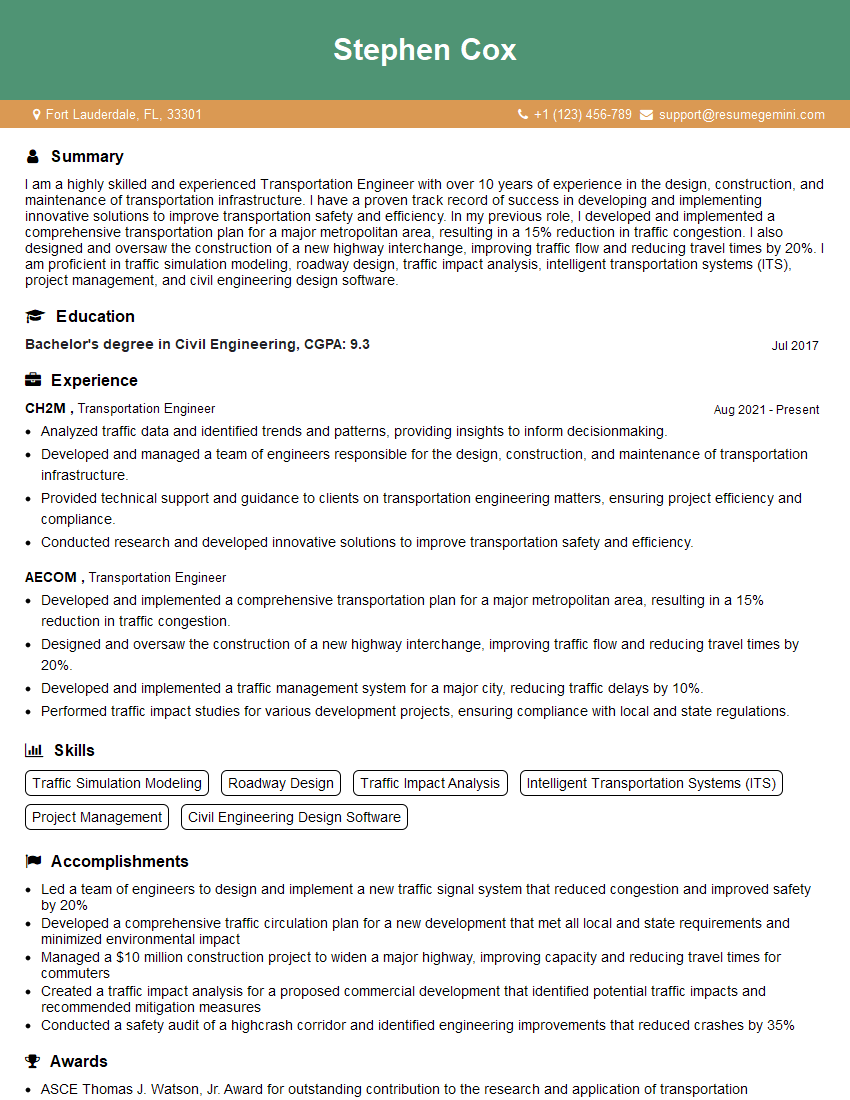
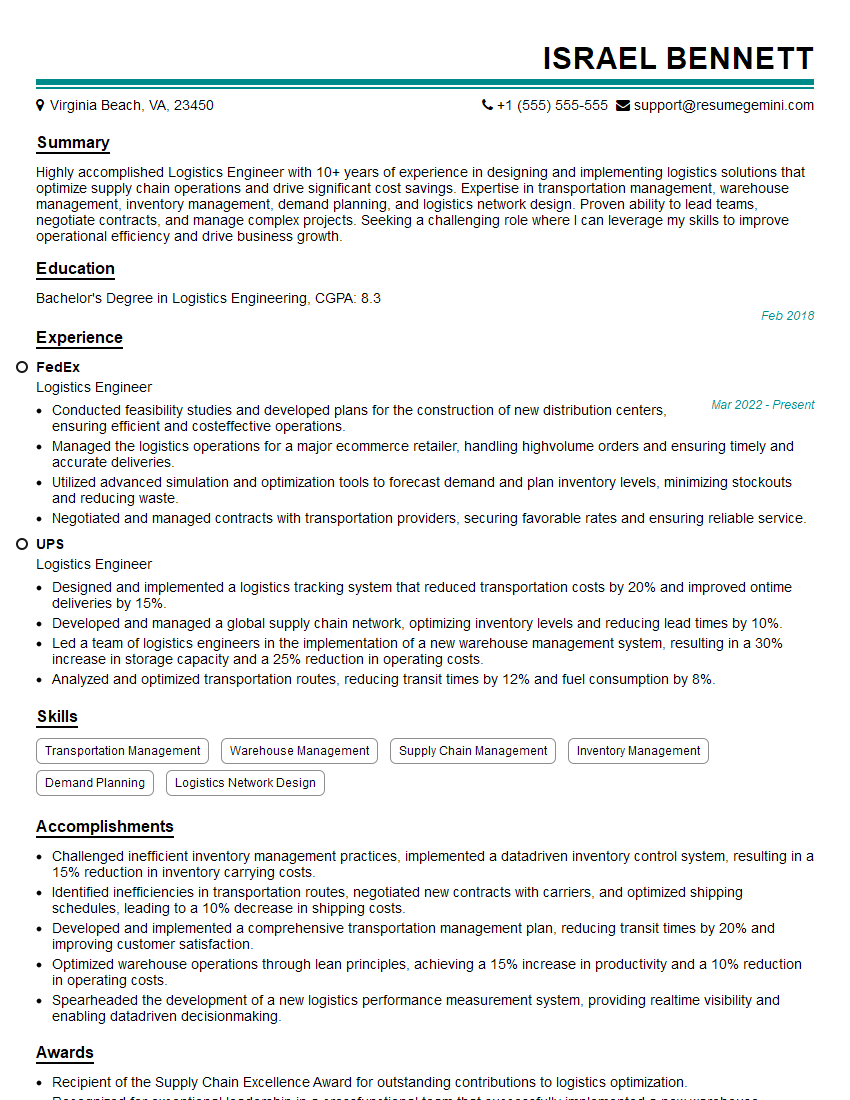
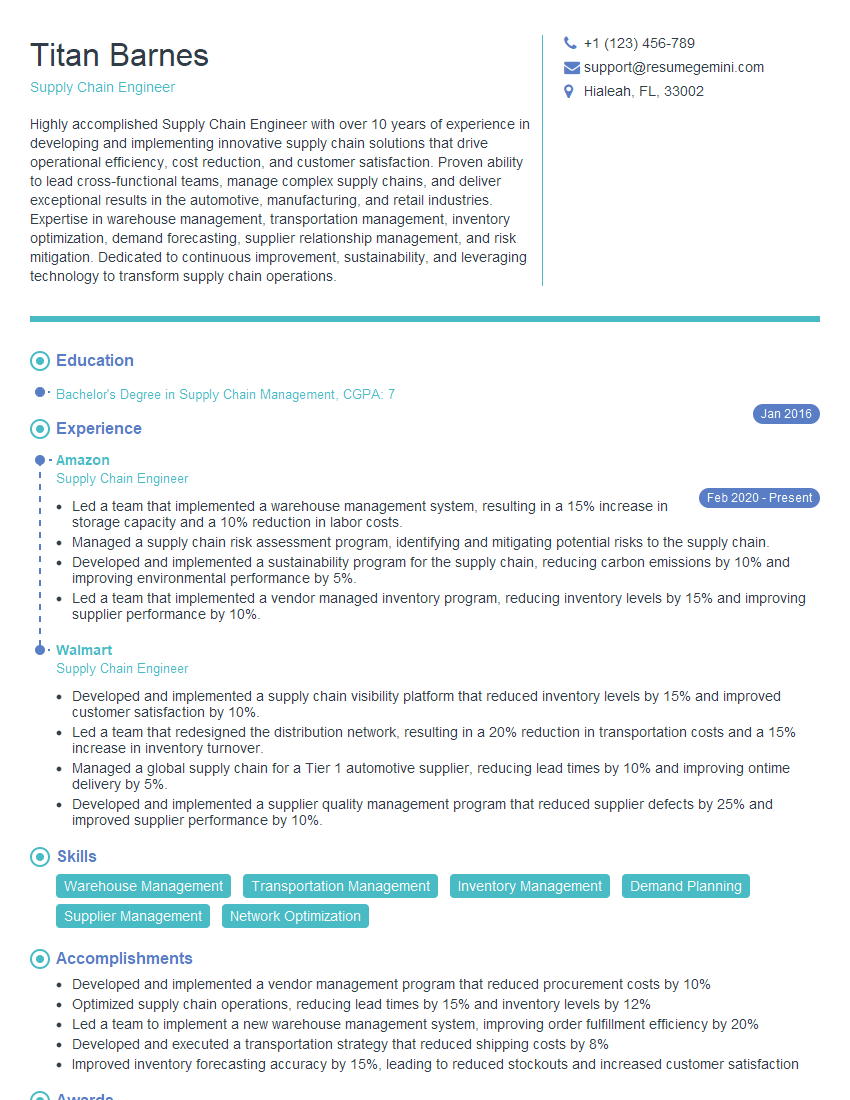
Mastering Load Planning and Engineering opens doors to exciting career opportunities with significant growth potential in logistics, supply chain management, and transportation industries. A strong resume is crucial for showcasing your skills and experience to potential employers. Creating an ATS-friendly resume is essential for getting your application noticed. To enhance your resume-building experience and increase your chances of landing your dream job, we strongly recommend using ResumeGemini. ResumeGemini provides a user-friendly platform and offers examples of resumes tailored to Load Planning and Engineering to help you create a professional and impactful document.
Explore more articles
Users Rating of Our Blogs
Share Your Experience
We value your feedback! Please rate our content and share your thoughts (optional).
What Readers Say About Our Blog
Very informative content, great job.
good