Every successful interview starts with knowing what to expect. In this blog, we’ll take you through the top Loading and Unloading Equipment interview questions, breaking them down with expert tips to help you deliver impactful answers. Step into your next interview fully prepared and ready to succeed.
Questions Asked in Loading and Unloading Equipment Interview
Q 1. Describe your experience with various types of loading and unloading equipment.
My experience encompasses a wide range of loading and unloading equipment, from the ubiquitous forklift and pallet jack to more specialized machinery like reach stackers, side loaders, and conveyors. I’m proficient in operating and maintaining these machines, understanding their capabilities and limitations. For example, I’ve used forklifts extensively in warehouse environments for palletized goods, and reach stackers in container yards for efficient stacking and retrieval. My experience also extends to understanding the various attachments available for these machines, such as clamps for handling unusual loads and rotators for precise placement. I’m familiar with both manual and automated systems, appreciating the benefits and challenges of each.
I’ve also worked with specialized equipment for specific industries, such as crane systems for oversized loads in construction and pneumatic conveyors for handling bulk materials in manufacturing. This broad experience allows me to assess the optimal equipment for any given loading or unloading task, considering factors like load type, weight, fragility, and environmental conditions.
Q 2. Explain the safety procedures you follow when operating a forklift.
Forklift safety is paramount. My procedures begin with a pre-operational inspection, checking for fluid leaks, tire pressure, and ensuring all safety features like lights and horns are functional. I always wear appropriate safety gear including high-visibility clothing, safety shoes, and a seatbelt. Before operating the forklift, I conduct a thorough assessment of the area, checking for obstructions, uneven ground, and the presence of other personnel. I maintain a safe speed, avoiding sudden stops and turns. When handling loads, I ensure they are stable and properly secured, and I never exceed the forklift’s weight capacity. Additionally, I’m mindful of overhead clearances and follow traffic patterns within the facility, using hand signals or radio communication when necessary.
Safe load handling is key – I always check load stability before lifting. Think of it like building a tower of blocks – each layer needs to be secure. Improperly stacked pallets, for instance, can lead to a dangerous imbalance and potential tipping. After completing my work, I park the forklift in a designated area, ensuring it’s switched off and the forks are lowered to the ground.
Q 3. How do you ensure the efficient and safe unloading of fragile goods?
Unloading fragile goods requires a meticulous approach. I start by carefully reviewing the shipping documentation to understand the contents and any specific handling instructions. This often includes identifying fragile items marked with appropriate symbols. I select the appropriate equipment based on the item’s size, weight, and fragility – often this means manual handling with appropriate padding and support. I use soft padding materials like bubble wrap or air pillows to protect the goods during transit. I avoid dropping or jarring the items, employing slow and controlled movements. For heavier items, I often use specialized equipment like pallet jacks equipped with cushioned forks or air ride suspension to minimize vibrations.
Consider it like handling a delicate piece of art – you wouldn’t just throw it around! Each item needs its own level of care, and experience teaches you to assess the appropriate techniques.
Q 4. What methods do you use to optimize the loading process for maximum space utilization?
Optimizing the loading process for maximum space utilization involves strategic planning and execution. This involves several key steps. Firstly, I analyze the dimensions of the goods and the vehicle being loaded. I use load planning software or diagrams to visualize the most efficient arrangement, often using nesting techniques to maximize space. This means fitting smaller items into the spaces left over by larger ones. For palletized goods, I ensure proper stacking to create a stable and secure load, following weight distribution guidelines. Sometimes this involves rotating or re-orienting boxes to optimize the fit. I work closely with the shipping department to ensure accuracy and efficiency.
Think of it as a Tetris game, but with real-world consequences – the better you fit the pieces, the less space you’ll waste, reducing fuel consumption and transport costs.
Q 5. How do you handle damaged goods during loading and unloading?
Handling damaged goods requires careful documentation and reporting. I immediately identify and carefully separate damaged goods from undamaged ones to prevent further damage. I document the extent of the damage using photographs and detailed descriptions, noting the type of damage, location, and any possible causes. This information is crucial for insurance claims and identifying potential issues in the handling process. Damaged goods are usually segregated for return, repair, or disposal according to company policy. It’s important to maintain a clear chain of custody to trace the damage back to its origin if possible. This could be a problem in shipping, handling, or even manufacturing.
Q 6. Describe your experience with inventory management related to loading and unloading.
My experience with inventory management in the context of loading and unloading is extensive. I’m proficient in using inventory management systems (IMS) to track incoming and outgoing goods. This includes verifying quantities against delivery manifests, confirming the condition of goods, and updating inventory levels in the system in real-time. I understand the importance of accurate record-keeping to prevent discrepancies and minimize losses. I often participate in cycle counting or inventory audits to verify the accuracy of the inventory data. My proficiency in using scanners and handheld devices to track goods during the loading and unloading process ensures efficient and reliable inventory control. For example, I can utilize barcode scanning to speed up the process of checking items against the manifest.
Q 7. What are the common causes of accidents during loading and unloading, and how can they be prevented?
Common causes of accidents during loading and unloading include inadequate training, improper equipment use, unsafe working conditions, and lack of communication. For example, operating a forklift without proper training can lead to collisions, tipping, or crushing injuries. Improperly secured loads can lead to items shifting during transport, causing damage or injury. Unsafe working conditions, such as inadequate lighting or obstructed walkways, increase the risk of accidents. Poor communication between drivers, loaders, and other workers can lead to misunderstandings and collisions.
Prevention strategies include comprehensive safety training programs, regular equipment inspections, and implementing clear safety procedures. Creating a strong safety culture with open communication and a focus on proactive risk assessment is crucial. Regular safety meetings and toolbox talks can address specific risks and reinforce safe work practices. The use of personal protective equipment (PPE), such as high-visibility vests and safety helmets, should be strictly enforced.
Q 8. Explain your understanding of weight distribution and its importance in loading.
Weight distribution is crucial in loading because it directly impacts safety, efficiency, and the structural integrity of the vehicle or storage unit. Uneven weight distribution can lead to instability, making the load susceptible to shifting during transit, potentially causing accidents or damage. Think of it like balancing a tray of drinks – if the weight is all on one side, it’s going to tip over.
Optimal weight distribution involves strategically placing heavier items lower and towards the center of gravity. This lowers the center of mass, increasing stability. Lighter items can then be placed on top or around the heavier ones. For example, when loading a truck with pallets of bricks (heavy) and boxes of paper (light), the bricks would be loaded first, near the bottom and center, followed by the paper. We often use specialized software or load planning tools to visualize the weight distribution and ensure it’s within safe limits before loading commences.
Furthermore, proper weight distribution minimizes stress on the vehicle’s suspension and tires, extending their lifespan and reducing maintenance costs. Ignoring this can lead to premature wear and tear, resulting in costly repairs and potential downtime.
Q 9. How do you prioritize tasks during peak loading and unloading periods?
During peak periods, efficient task prioritization is paramount. I use a combination of methods to manage this effectively. My approach involves prioritizing urgent orders with tight deadlines, considering the type of goods (perishable items take precedence), and the mode of transportation. I also factor in the specific loading equipment available and the skill sets of my team.
I frequently utilize a Kanban-style system or a simple priority matrix to visually manage tasks. This allows for real-time tracking of progress and ensures that all team members understand what needs to be done and in what order. Regular communication with drivers and warehouse personnel is also crucial for coordinating efforts and addressing any unforeseen delays or challenges.
For instance, if we receive an urgent shipment of fresh produce, that will be prioritized over a less time-sensitive pallet of dry goods. We’ll allocate the fastest loading dock and most experienced team members to handle it quickly and efficiently to prevent spoilage.
Q 10. Describe your experience with different types of pallets and their handling.
I have extensive experience with various pallet types, including standard wooden pallets, plastic pallets, and specialized pallets for specific goods like hazardous materials. Understanding the differences in their construction, weight capacity, and suitability for different materials is crucial for safe and efficient handling.
- Standard Wooden Pallets: These are the most common and widely used, offering good strength and stability for most goods. However, they can be susceptible to damage and require proper maintenance.
- Plastic Pallets: More durable and hygienic than wooden pallets, they are suitable for applications requiring enhanced cleanliness and resistance to moisture. They are often more expensive upfront but can offer long-term cost savings due to their extended lifespan.
- Specialized Pallets: These include options designed for specific goods, such as chemical-resistant pallets for hazardous materials or heat-resistant pallets for hot products. They require specialized handling procedures.
My experience includes operating various forklifts, pallet jacks, and conveyor systems tailored for different pallet types. I always ensure that the correct equipment is used for each pallet type to prevent damage to both the goods and the equipment.
Q 11. How familiar are you with loading and unloading regulations and compliance?
I am very familiar with loading and unloading regulations and compliance, including those related to weight limits, load securing, hazardous materials, and transportation safety. This includes adherence to local, national, and international regulations.
My knowledge covers aspects such as the proper use of load restraints, ensuring that goods are securely fastened to prevent shifting during transit. I am also aware of the documentation required for hazardous materials, including proper labeling, handling procedures, and emergency response plans. I regularly review updates to regulations to stay compliant with current standards. Safety is always my top priority, and this extends to understanding and implementing all safety regulations and best practices.
For example, I know that exceeding weight limits is strictly prohibited and could result in fines, accidents, or damage to equipment. Similarly, the improper handling of hazardous materials could have severe consequences for individuals and the environment.
Q 12. How do you ensure the accurate recording of loading and unloading activities?
Accurate recording of loading and unloading activities is essential for inventory management, traceability, and accountability. We use a combination of manual and digital methods to ensure accuracy.
Manual records might involve paper-based checklists and manifests, while digital systems include warehouse management systems (WMS) and handheld scanners. Every item is scanned upon receiving and during the loading process, verifying quantity against the order. This data is then integrated into our central inventory system, providing real-time updates. Any discrepancies are immediately flagged and investigated. We also maintain detailed logs of each shipment, including the date, time, destination, driver, and any relevant comments. This allows us to trace the movement of goods throughout the entire process.
This meticulous record-keeping is critical for identifying and addressing errors promptly, preventing stock discrepancies and providing crucial information for audits and customer inquiries. We also conduct regular reconciliation of our physical inventory against our digital records.
Q 13. What is your experience with using handheld scanners for inventory management?
I have extensive experience using handheld scanners for inventory management. These devices are essential for efficient and accurate tracking of goods throughout the loading and unloading processes. My experience includes using various types of scanners, from barcode scanners to RFID readers.
With barcode scanners, we can quickly scan each item or pallet to verify its identity and quantity against the order. This eliminates manual data entry, reducing errors and improving efficiency. RFID readers offer even greater efficiency, allowing us to track multiple items simultaneously, particularly beneficial during high-volume operations.
For example, when unloading a truck, I can quickly scan each pallet as it comes off the truck, updating the system with the received quantity. This real-time data provides immediate insights into inventory levels and allows for faster processing of incoming shipments.
Q 14. How do you handle discrepancies between the order and the actual goods received?
Discrepancies between the order and the actual goods received are handled systematically to ensure accuracy and accountability. My first step is to verify the discrepancy. This often involves double-checking the paperwork, physical inventory, and the digital records. If the discrepancy is minor (a few missing items), we may contact the supplier to initiate a replacement order.
For more significant discrepancies, a thorough investigation is launched, involving reviewing all associated documents and potentially inspecting the entire shipment. We then generate a discrepancy report detailing the differences, including the quantity, item details, and potential causes (e.g., damage during transit, incorrect packing). This report is shared with the relevant parties (supplier, customer, logistics team) to determine the best course of action, such as issuing a credit, replacing the missing items, or adjusting the invoice.
Thorough documentation is critical in resolving discrepancies. Detailed records of the investigation, the findings, and the corrective actions taken are kept for future reference. It’s a collaborative process involving communication with all stakeholders to resolve the issue and prevent similar occurrences.
Q 15. What is your experience with different types of loading docks and their equipment?
My experience encompasses a wide range of loading dock types and their associated equipment. I’ve worked extensively with conventional docks, which are the most common, featuring levelers and dock seals to ensure a smooth transition between the truck and the warehouse floor. I’m also familiar with hydraulic dock levelers, which adjust to varying truck heights, and dock shelters, which provide weather protection and improve energy efficiency. I’ve also worked with specialized docks designed for specific cargo, such as refrigerated docks for temperature-sensitive goods, and those equipped with conveyors for automated loading and unloading of palletized items.
In terms of equipment, I have hands-on experience with various forklifts (sit-down, stand-up, reach trucks), pallet jacks, conveyors (roller, belt, and chain), dock plates, and loading ramps. For example, during my time at Acme Distribution, we utilized a sophisticated conveyor system that integrated with our warehouse management system, significantly accelerating the unloading of inbound shipments and the loading of outbound orders. I’ve also used specialized equipment like crane systems and vacuum lifters for handling unusually large or heavy loads.
Career Expert Tips:
- Ace those interviews! Prepare effectively by reviewing the Top 50 Most Common Interview Questions on ResumeGemini.
- Navigate your job search with confidence! Explore a wide range of Career Tips on ResumeGemini. Learn about common challenges and recommendations to overcome them.
- Craft the perfect resume! Master the Art of Resume Writing with ResumeGemini’s guide. Showcase your unique qualifications and achievements effectively.
- Don’t miss out on holiday savings! Build your dream resume with ResumeGemini’s ATS optimized templates.
Q 16. How familiar are you with load securing techniques?
Load securing is critical for safety and preventing damage during transit. My understanding of load securing techniques is comprehensive, encompassing the use of various securing devices such as ratchet straps, bungee cords, load bars, and edge protectors. I am familiar with the importance of properly distributing weight, choosing the right securing method based on the cargo type and transportation mode, and ensuring compliance with relevant regulations (e.g., OSHA standards). For instance, I’ve trained numerous warehouse staff on the proper use of ratchet straps, emphasizing the need for proper tensioning and securing points to prevent shifting during transit. I’ve also experienced first-hand the devastating consequences of inadequate load securing, which has reinforced my commitment to strict adherence to best practices. The focus is always on preventing cargo from shifting or falling, which could result in property damage, injuries, or even fatalities.
Q 17. Describe your experience with various loading and unloading software or systems.
Throughout my career, I’ve utilized various loading and unloading software and systems, ranging from simple inventory management systems to sophisticated Warehouse Management Systems (WMS). I’m proficient in using WMS software to track incoming and outgoing shipments, manage inventory levels, assign loading and unloading tasks, and optimize warehouse operations. I have experience with systems that integrate with transportation management systems (TMS), providing real-time visibility into the location and status of shipments. For example, at Global Logistics, we used a WMS that automated the creation of loading manifests, assigned loading docks based on available resources, and monitored the progress of each loading process in real-time. This significantly reduced delays and improved overall efficiency.
I’m also familiar with using handheld scanners to track inventory and update shipment information directly into the WMS. These systems not only increase efficiency but also minimize human error, enhancing accuracy in tracking and reporting.
Q 18. How do you maintain the safety and efficiency of loading and unloading processes?
Maintaining safety and efficiency in loading and unloading processes requires a multi-faceted approach. Safety starts with training: ensuring all personnel are properly trained on the safe operation of equipment, load securing techniques, and hazard identification. Implementing clear procedures and checklists for each step of the process is crucial, reducing the chances of errors and accidents. Regular equipment maintenance and inspections are essential to prevent malfunctions that could lead to injuries or delays. Moreover, a clean and well-organized warehouse layout significantly reduces the risk of accidents and improves efficiency by minimizing the distance equipment needs to travel.
Regarding efficiency, process optimization is paramount. This involves analyzing the workflow, identifying bottlenecks, and implementing improvements. For example, we implemented a cross-docking system at one warehouse, which significantly reduced handling time and storage space requirements. Utilizing technology, such as WMS and automated equipment, also greatly improves overall efficiency.
Q 19. Explain your experience with troubleshooting loading and unloading equipment malfunctions.
Troubleshooting loading and unloading equipment malfunctions requires a systematic approach. I start by identifying the problem, which often involves checking warning lights, error codes, and listening for unusual noises. Then, I carefully assess the situation, determining the potential causes and prioritizing the steps to restore functionality. Sometimes it’s a simple fix, like replacing a blown fuse or tightening a loose connection. In other cases, it might involve more complex repairs or the need to call in a technician for specialized equipment.
For example, during a busy peak season, a forklift’s hydraulic system failed. I quickly assessed the situation, ensured the area was safe, and initiated the repair process by contacting the maintenance team. While waiting for the repair, I reorganized the loading schedule to minimize disruption and ensure operations continued as smoothly as possible. My ability to troubleshoot quickly and efficiently minimizes downtime and ensures the smooth continuation of operations.
Q 20. How do you ensure the security of goods during loading and unloading?
Ensuring the security of goods during loading and unloading is crucial. This begins with physical security measures such as secure loading docks, access control systems, and adequate lighting. Furthermore, employing strict inventory control procedures, such as regular stock checks and reconciliation, helps prevent theft. Properly documented procedures and accountability for all personnel involved also helps maintain security. Regular monitoring of loading and unloading activities, including CCTV surveillance, can act as a strong deterrent to theft.
For valuable or sensitive goods, additional security measures may be implemented, such as using sealed containers or employing security personnel. Regular security audits and training for warehouse staff on security protocols are also critical in maintaining a secure environment.
Q 21. What is your experience with working in a fast-paced warehouse environment?
I thrive in fast-paced warehouse environments. My experience working in high-volume distribution centers has honed my ability to manage multiple priorities simultaneously, adapt to changing demands, and remain calm under pressure. I’m skilled in prioritizing tasks, delegating responsibilities effectively, and coordinating the efforts of multiple teams to ensure smooth operations, even during peak seasons or unexpected disruptions. I’m adept at problem-solving quickly and efficiently to mitigate delays and maintain productivity.
For instance, during a particularly busy holiday season, a major snowstorm caused a significant backlog in inbound shipments. By working closely with the transportation department and effectively communicating with the warehouse team, I was able to reorganize the loading and unloading schedule, optimize space utilization, and successfully manage the increased workload, ensuring on-time deliveries were maintained.
Q 22. Describe your experience with managing a team during loading and unloading operations.
Managing a team during loading and unloading operations requires a blend of strong leadership, effective communication, and a keen eye for safety and efficiency. My experience involves overseeing teams of varying sizes, from small crews to larger coordinated efforts. This includes assigning tasks based on individual skill sets and experience, ensuring all team members understand safety protocols and procedures, and motivating them to work collaboratively towards a shared goal. I’ve found success using a combination of clear instructions, regular check-ins, and providing constructive feedback to maintain productivity and morale. For instance, during a particularly busy period unloading a shipment of fragile ceramics, I delegated tasks according to each team member’s strengths, pairing experienced handlers with newer team members for training and support. This strategy not only accelerated the unloading process but also fostered a supportive team environment that minimized errors and damage.
- Task delegation: Matching individual skills to specific tasks.
- Safety emphasis: Prioritizing safety protocols and training.
- Communication: Regular updates and feedback.
- Motivation: Fostering a collaborative and supportive team environment.
Q 23. How do you adapt your loading and unloading strategies to different product types?
Adapting loading and unloading strategies to different product types is crucial for efficiency and safety. The strategy changes significantly based on the product’s fragility, size, weight, and handling requirements. For example, fragile items like glassware require careful handling, specialized padding, and slow, deliberate movement. Heavy machinery demands the use of appropriate lifting equipment like forklifts or cranes, and secure lashing to prevent shifting during transit. Bulk goods often necessitate the use of conveyors and other automated systems for speed and efficiency. I consider the specific needs of each product – reviewing weight limitations, stacking requirements, and potential hazards – before implementing a plan. For instance, I once handled a shipment containing both palletized boxes of electronics and oversized reels of cable. My strategy involved using forklifts for the electronics and specialized equipment for the cables, carefully scheduling the unloading to avoid any collision or congestion. This attention to detail ensures safe and efficient operation.
- Fragile goods: Requires careful handling, specialized padding.
- Heavy machinery: Requires forklifts, cranes, secure lashing.
- Bulk goods: Often involves conveyors and automated systems.
- Mixed shipments: Needs careful planning and scheduling.
Q 24. How do you communicate effectively with other departments during loading and unloading?
Effective communication with other departments is vital for smooth loading and unloading operations. I maintain open lines of communication with receiving, shipping, inventory management, and transportation teams. This involves regular updates on arrival times, expected unloading times, and any potential delays or issues. I utilize various communication channels including email, phone calls, and real-time updates via shared platforms to ensure everyone is informed and coordinated. For example, if a delay occurs due to unforeseen circumstances, I immediately inform the relevant parties to adjust their schedules accordingly and to prevent bottlenecks in the overall supply chain. Proactive communication prevents problems and ensures a coordinated and efficient workflow.
- Regular updates: Providing timely information on arrival and unloading times.
- Proactive communication: Addressing potential delays or issues immediately.
- Multiple channels: Utilizing email, phone calls, and shared platforms.
- Collaboration: Working closely with all relevant departments.
Q 25. Explain your understanding of different types of containers and their handling.
My understanding of different container types and their handling is extensive. I’m familiar with various types, including standard shipping containers (20ft and 40ft), reefer containers (temperature-controlled), open-top containers, flat-rack containers, and tank containers. Each type has unique handling requirements. Standard containers are easily handled by forklifts and cranes. Reefer containers require specialized equipment and monitoring systems to maintain temperature. Open-top containers allow for loading and unloading of oversized cargo, requiring specific safety measures. Flat-rack containers are ideal for large and oddly shaped loads and necessitate secure fastening to prevent damage. Tank containers need specialized handling to prevent leakage and require familiarity with different types of hazardous materials. Safety procedures specific to each container type are paramount, including securing the container before moving it, using appropriate lifting equipment, and ensuring proper ventilation if necessary.
- Standard containers: Handled by forklifts and cranes.
- Reefer containers: Requires temperature control and monitoring.
- Open-top containers: Used for oversized cargo and requires specific safety measures.
- Flat-rack containers: Requires secure fastening to prevent shifting.
- Tank containers: Needs specialized handling to prevent leakage and awareness of hazardous materials.
Q 26. How do you contribute to a safe and productive work environment?
Contributing to a safe and productive work environment is my top priority. This involves implementing and enforcing strict safety protocols, conducting regular safety briefings, and ensuring all team members are trained and equipped with the necessary personal protective equipment (PPE). I am vigilant about identifying and mitigating potential hazards, such as uneven surfaces, obstructed pathways, and unsafe loading practices. In addition to safety, productivity is enhanced through optimized workflow, efficient task allocation, and the use of appropriate technology. For example, we implemented a new inventory management system that reduced loading and unloading times significantly by streamlining the process. I believe a safe environment breeds productivity and motivates individuals to perform at their best.
- Safety protocols: Implementing and enforcing strict guidelines.
- PPE: Ensuring all team members have necessary protective equipment.
- Hazard mitigation: Identifying and addressing potential risks proactively.
- Workflow optimization: Improving efficiency and reducing delays.
Q 27. What are your salary expectations for this role?
Based on my experience and the requirements of this role, my salary expectations are in the range of [Insert Salary Range]. I am open to discussing this further, taking into account the overall compensation package and benefits offered.
Q 28. Do you have any questions for me?
Yes, I do. I would like to know more about the company’s specific safety protocols and training programs. I am also interested in learning about the company culture and opportunities for professional development and advancement within the organization.
Key Topics to Learn for Loading and Unloading Equipment Interview
- Safety Procedures and Regulations: Understanding and applying OSHA regulations, safe lifting techniques, and hazard identification related to various loading and unloading equipment.
- Equipment Operation and Maintenance: Practical knowledge of operating forklifts, cranes, conveyor belts, and other relevant equipment, including basic maintenance checks and troubleshooting common issues.
- Load Planning and Optimization: Efficiently planning load distribution to maximize space utilization, minimize damage, and ensure stability during transport. This includes understanding weight limits and center of gravity principles.
- Inventory Management and Tracking: Familiarity with inventory control systems, tracking methods, and documentation procedures for accurate record-keeping of loaded and unloaded goods.
- Logistics and Supply Chain Understanding: Basic comprehension of the supply chain process, the role of loading and unloading in overall efficiency, and potential bottlenecks to identify areas for improvement.
- Problem-solving and Decision-Making: Demonstrating the ability to quickly assess situations, identify potential hazards, and make effective decisions under pressure, particularly in addressing unexpected equipment malfunctions or logistical challenges.
- Communication and Teamwork: Highlighting your ability to communicate effectively with colleagues, supervisors, and potentially clients regarding loading and unloading procedures and any arising issues.
Next Steps
Mastering loading and unloading equipment operations is crucial for career advancement in logistics, warehousing, and transportation. A strong understanding of these skills demonstrates your commitment to safety, efficiency, and problem-solving – highly valued attributes in this field. To significantly enhance your job prospects, focus on creating an ATS-friendly resume that showcases your expertise effectively. ResumeGemini is a trusted resource that can help you build a professional and impactful resume tailored to the specific requirements of loading and unloading equipment roles. Examples of resumes tailored to this field are available through ResumeGemini, helping you present your skills and experience in the best possible light.

Operations Manager Resume Sample
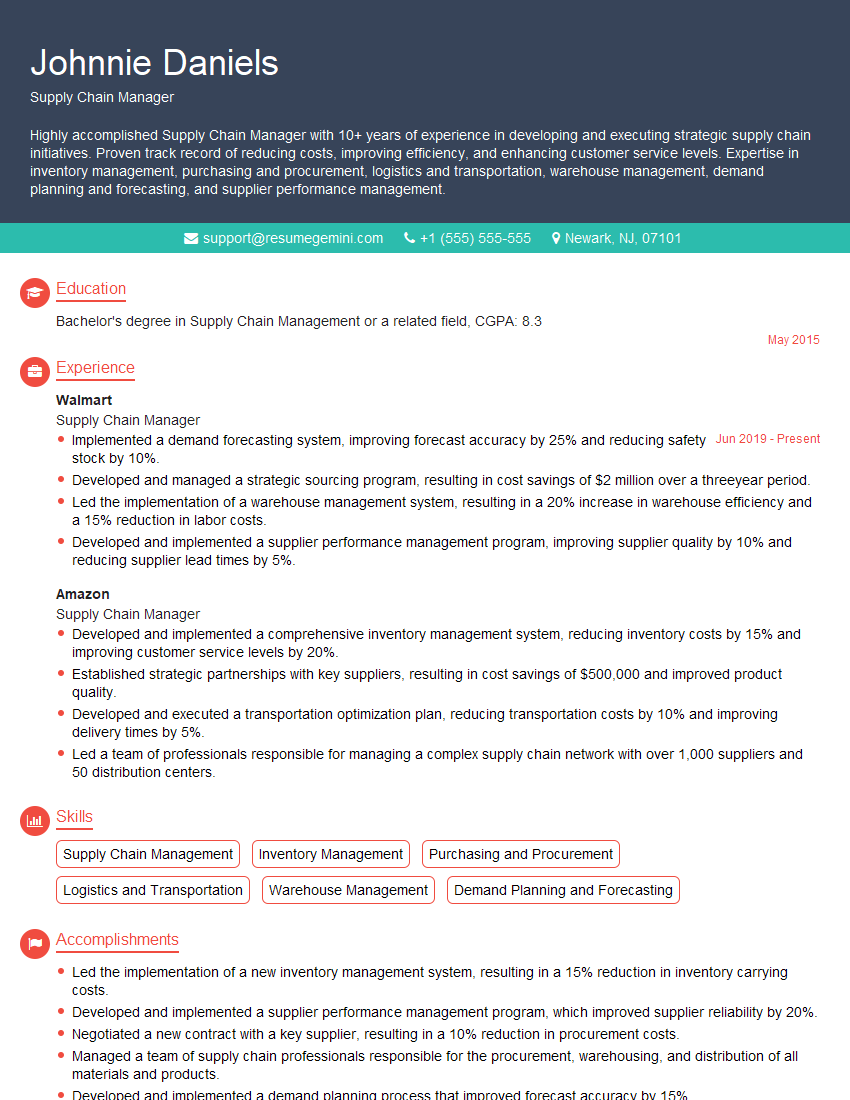
Supply Chain Manager Resume Sample
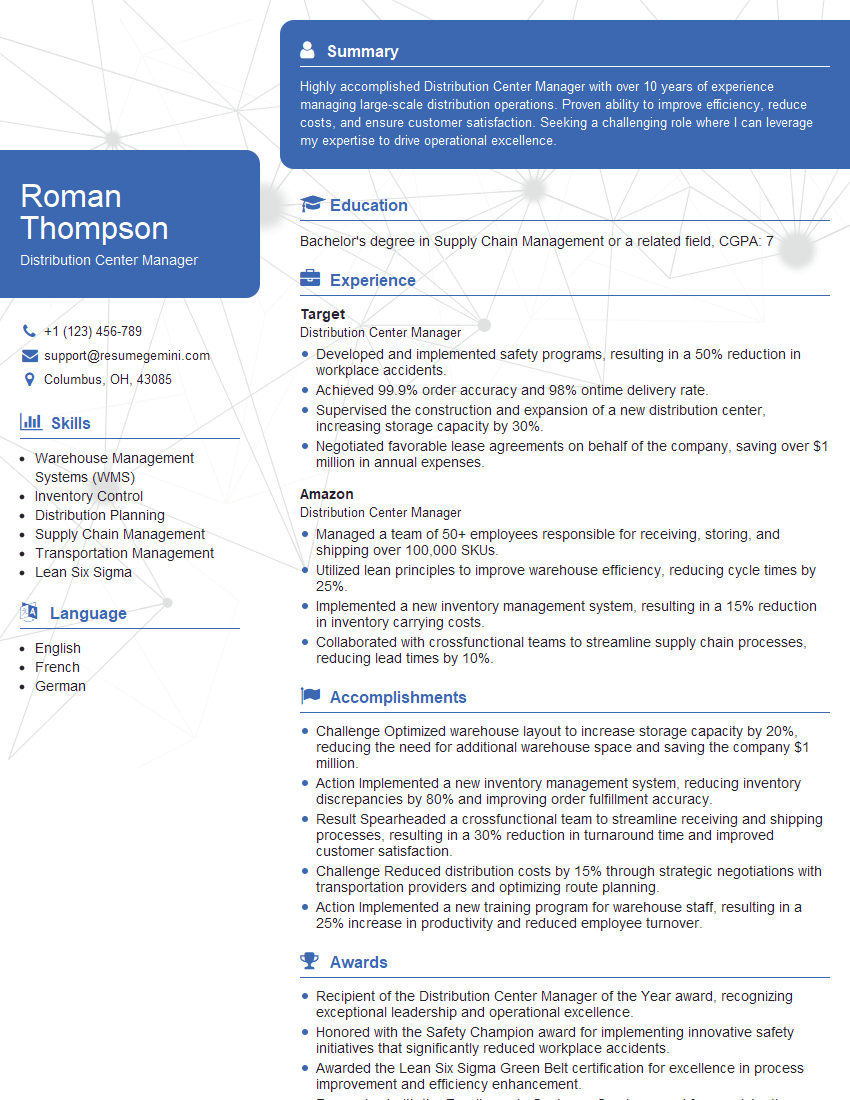
Distribution Center Manager Resume Sample

Warehouse Manager Resume Sample

Transportation Coordinator Resume Sample

Warehouse Supervisor Resume Sample
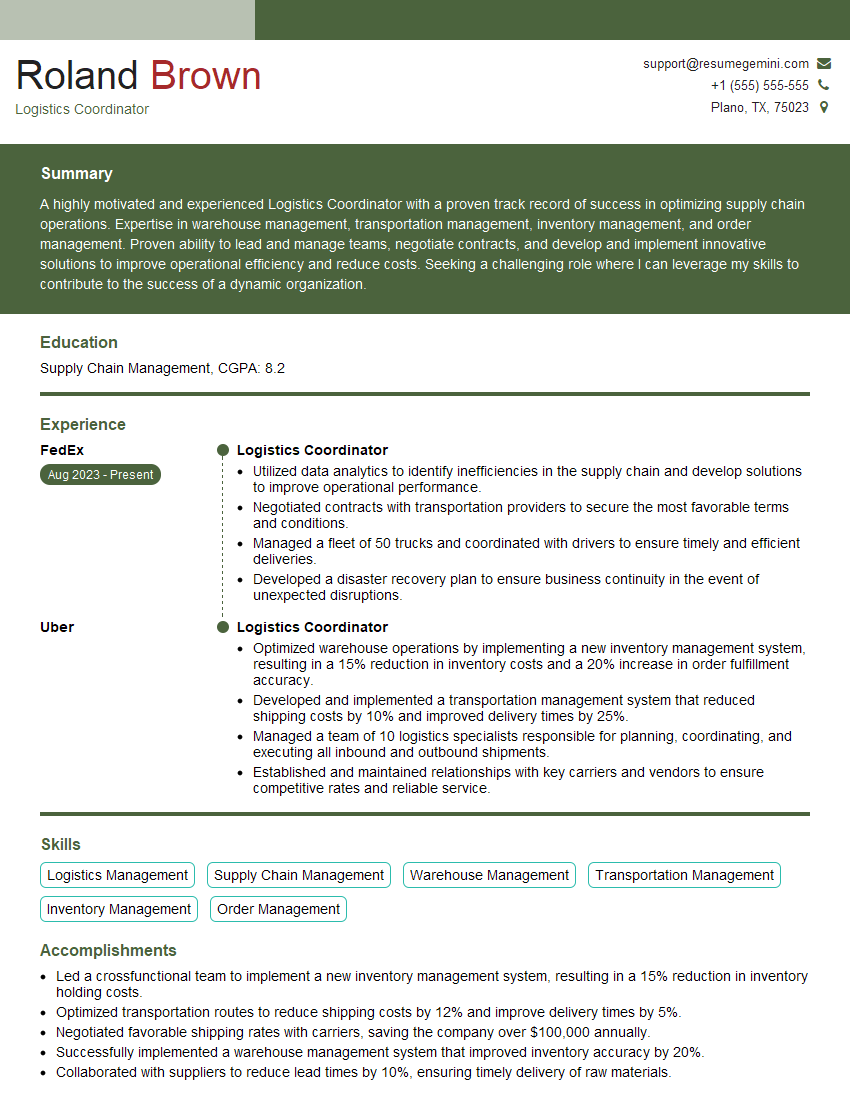
Logistics Coordinator Resume Sample
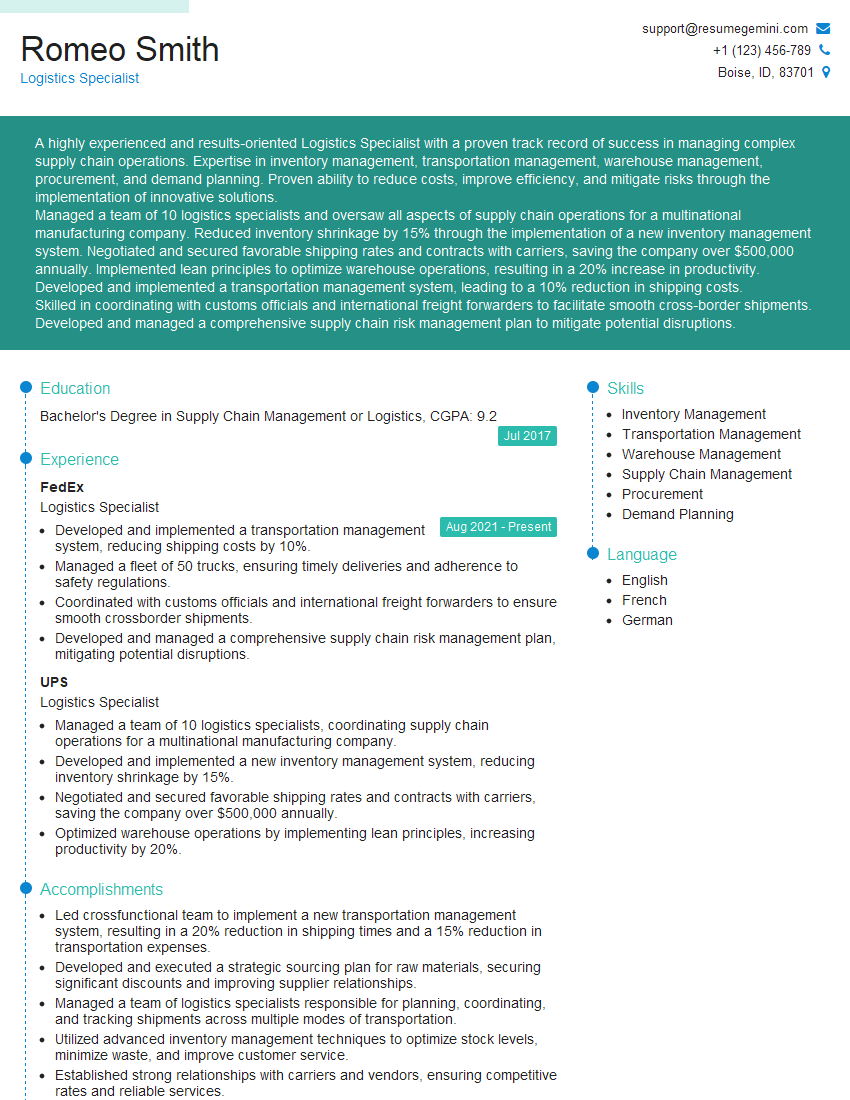
Logistics Specialist Resume Sample

Equipment Operator Resume Sample

Crane Operator Resume Sample

Inventory Control Specialist Resume Sample

Shipping and Receiving Clerk Resume Sample

Shipping and Receiving Supervisor Resume Sample
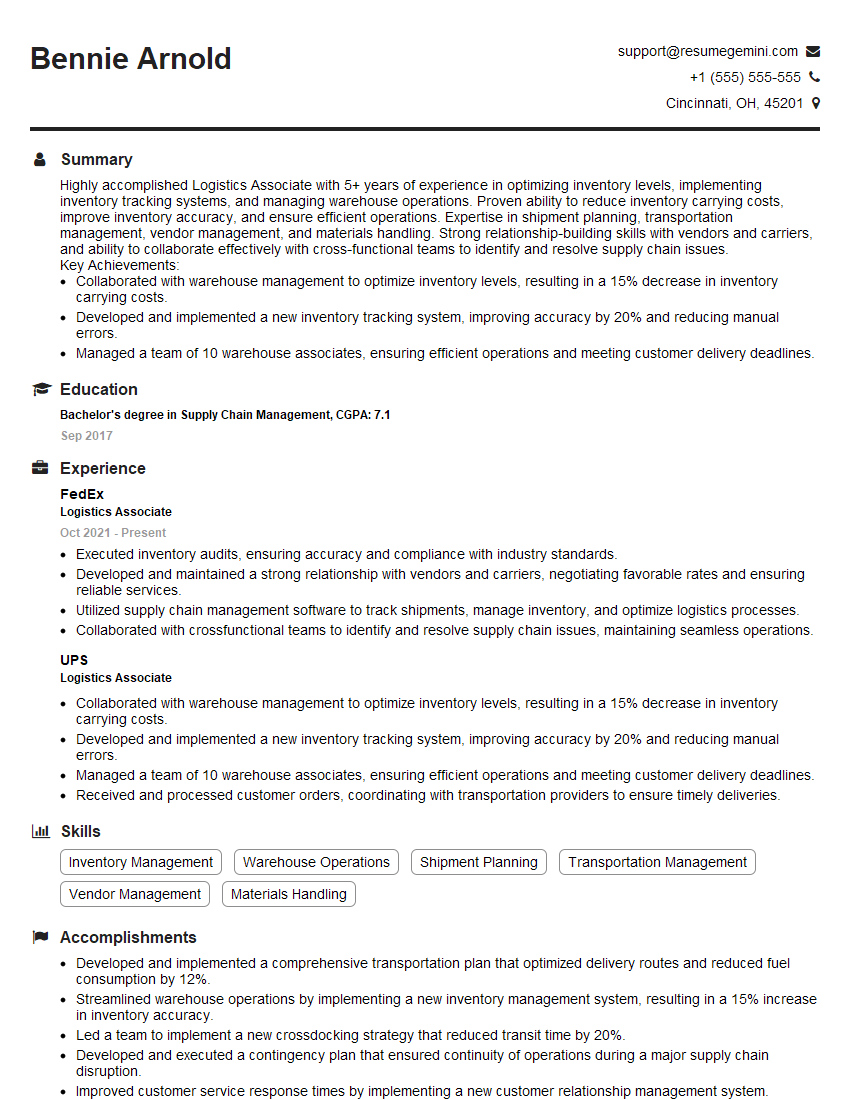
Logistics Associate Resume Sample
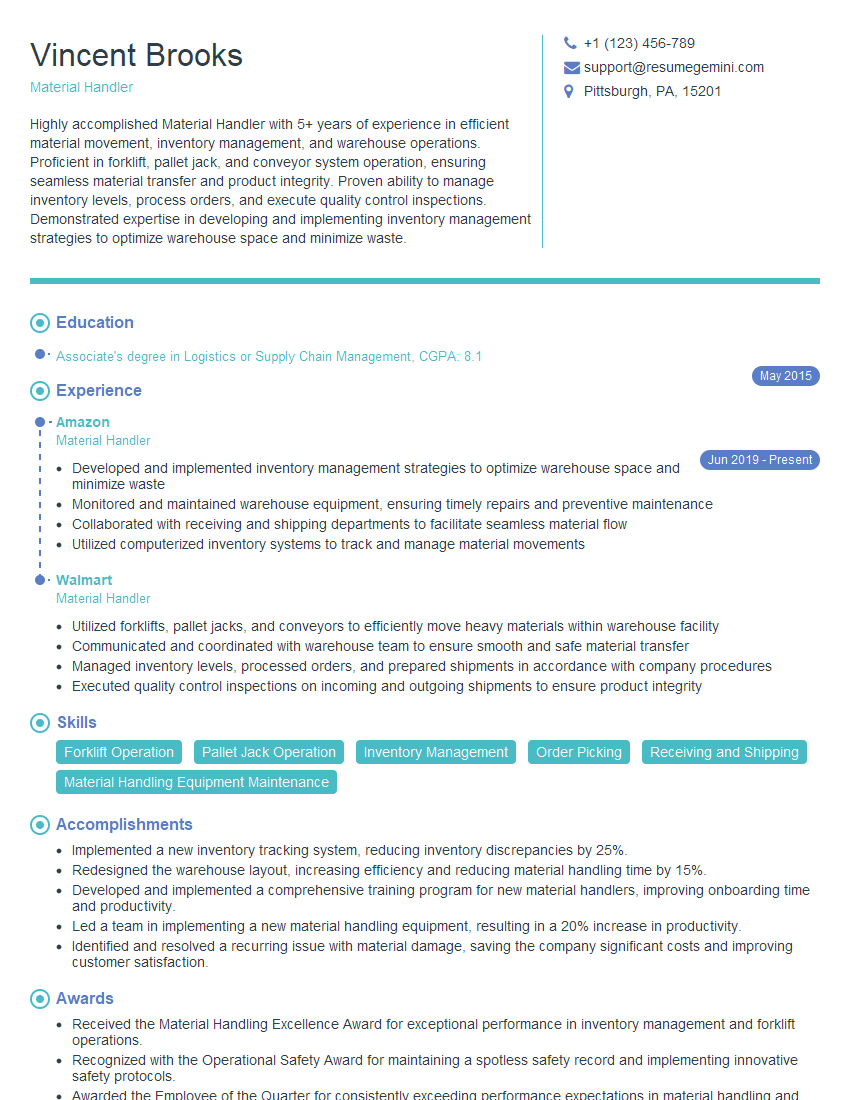
Material Handler Resume Sample

Order Picker Resume Sample

Heavy Equipment Operator Resume Sample
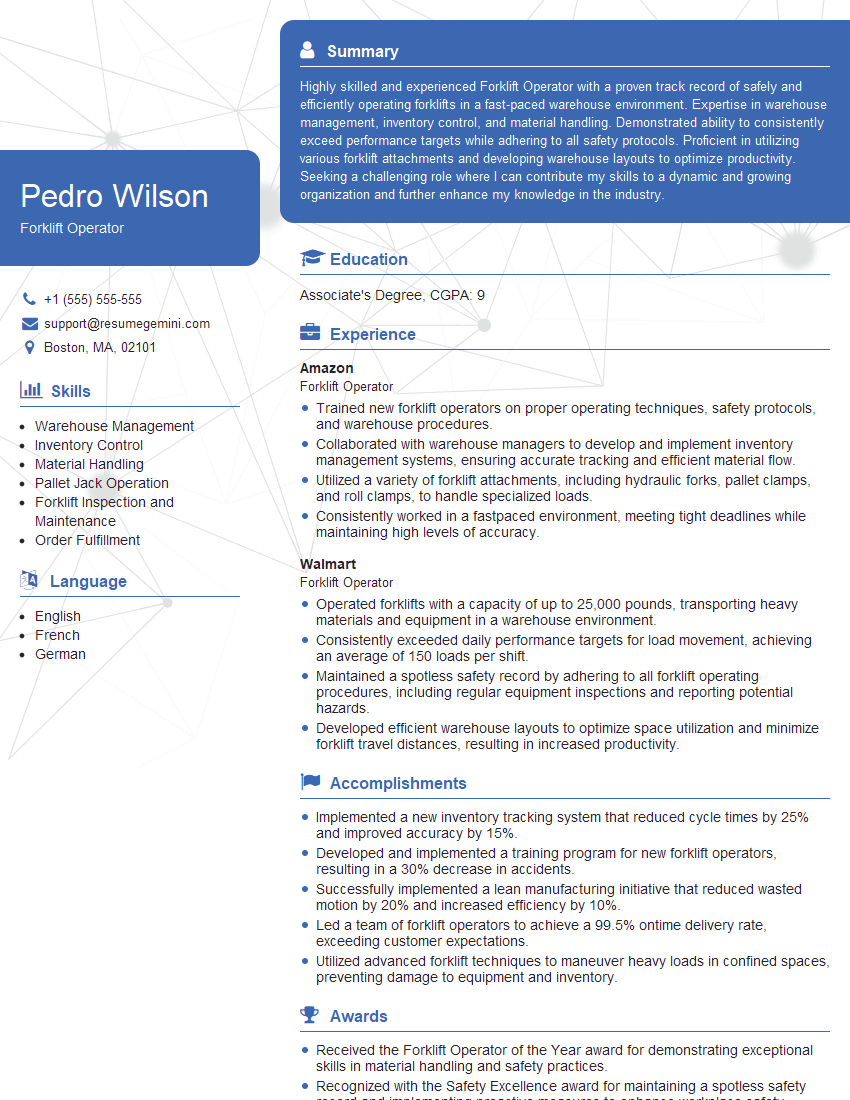
Forklift Operator Resume Sample

Rigger Resume Sample
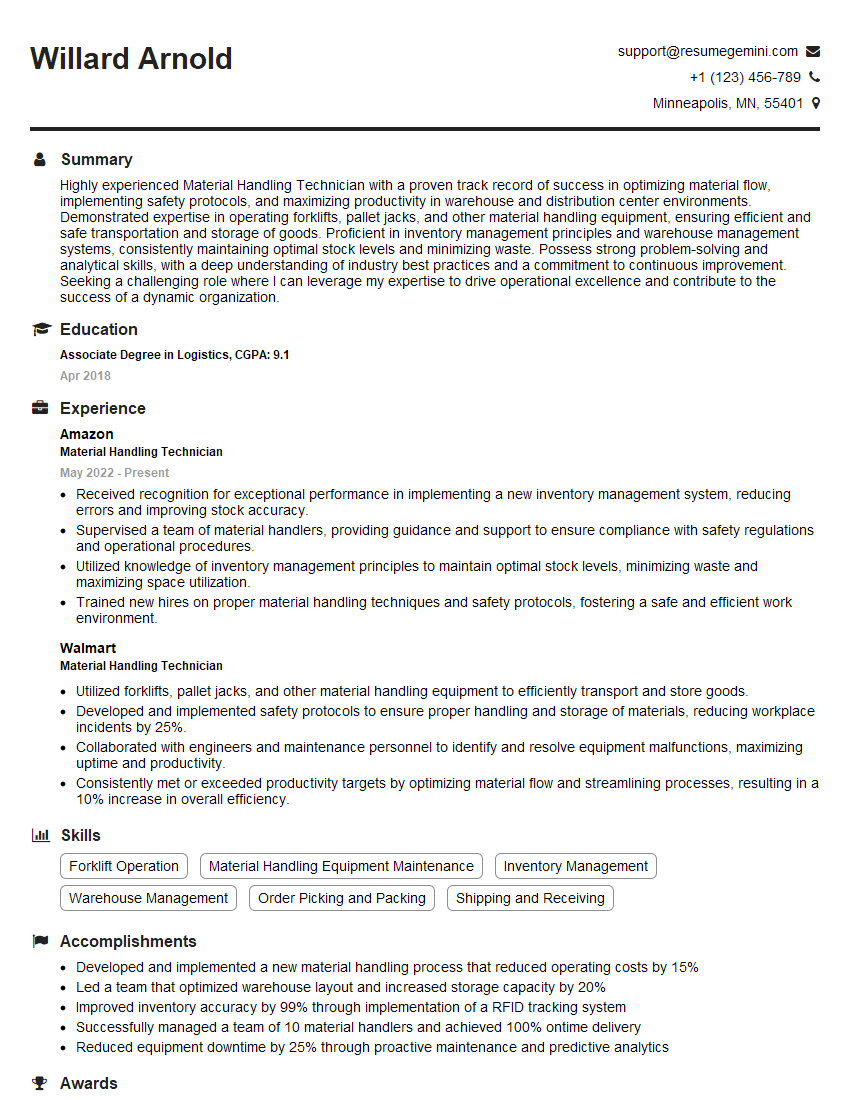
Material Handling Technician Resume Sample

Freight Handler Resume Sample
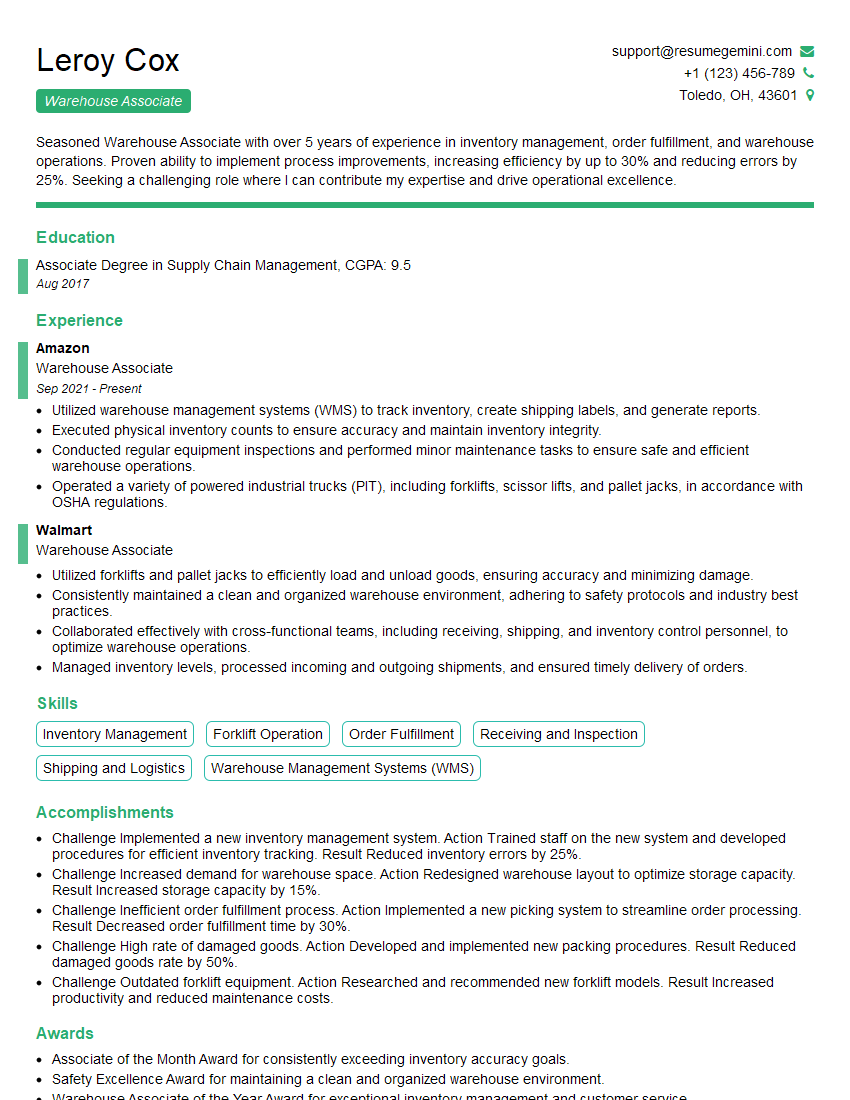
Warehouse Associate Resume Sample
- Operations Manager
- Supply Chain Manager
- Distribution Center Manager
- Warehouse Manager
- Transportation Coordinator
- Warehouse Supervisor
- Logistics Coordinator
- Logistics Specialist
- Equipment Operator
- Crane Operator
- Inventory Control Specialist
- Shipping and Receiving Clerk
- Shipping and Receiving Supervisor
- Logistics Associate
- Material Handler
- Order Picker
- Heavy Equipment Operator
- Forklift Operator
- Rigger
- Material Handling Technician
- Freight Handler
- Warehouse Associate
Explore more articles
Users Rating of Our Blogs
Share Your Experience
We value your feedback! Please rate our content and share your thoughts (optional).
What Readers Say About Our Blog
Very informative content, great job.
good