Every successful interview starts with knowing what to expect. In this blog, we’ll take you through the top Loading and unloading materials using winches and other equipment interview questions, breaking them down with expert tips to help you deliver impactful answers. Step into your next interview fully prepared and ready to succeed.
Questions Asked in Loading and unloading materials using winches and other equipment Interview
Q 1. Describe your experience operating various types of winches.
My experience encompasses a wide range of winches, from hand-operated units used for lighter loads in construction to powerful hydraulic winches employed in heavy lifting and marine applications. I’ve operated electric winches on various construction sites, managing loads for building projects, and have significant experience with pneumatic winches in industrial settings for material handling. I’m also proficient with specialized winches such as those used in arboriculture for tree removal and those found on recovery vehicles. Each winch type requires a different approach to operation, demanding a thorough understanding of its capabilities and limitations. For example, a hand winch requires precise control and careful attention to avoid overloading, while a hydraulic winch demands awareness of pressure gauges and fluid levels to maintain safe operation. I’m comfortable working with winches with various braking systems, from simple mechanical brakes to more sophisticated systems incorporating load-holding brakes.
Q 2. Explain the different types of winch cables and their applications.
Winch cables are typically made from steel wire rope, but different types exist, each suited to specific applications.
- Steel Wire Rope: This is the most common type, offering high strength and durability. Different constructions (e.g., 6×19, 6×36) offer varying flexibility and resistance to abrasion. A 6×19 construction is more flexible but less resistant to abrasion compared to a 6×36.
- Synthetic Fiber Rope (e.g., nylon, polyester): These are lighter and more flexible than steel wire rope, offering better shock absorption, but they have lower tensile strength and are susceptible to UV degradation and abrasion. They are often used in less demanding applications or where shock absorption is critical.
The choice of cable depends entirely on the load, the environment, and the specific demands of the job. For example, a steel wire rope with a high tensile strength is essential for heavy lifting, while synthetic rope might be preferable in a situation where shock absorption is critical, such as pulling a vehicle out of mud.
Q 3. How do you ensure the safe operation of a winch?
Safe winch operation hinges on several key factors. First and foremost is a thorough understanding of the winch’s capacity and limitations. Never exceed the safe working load (SWL), which is clearly marked on the winch. Secondly, proper rigging techniques are crucial. The load must be securely attached and evenly distributed to prevent swaying or slippage. Regular inspections of the cable and other components are essential to identify any wear or damage. Using appropriate personal protective equipment (PPE), such as gloves, eye protection, and hearing protection, is also non-negotiable. Furthermore, maintaining a safe working distance from the moving cable and load prevents potential injuries. Finally, having a clear communication plan with other team members is essential in coordinated lifting operations.
Q 4. What are the common safety hazards associated with winch operation?
Several hazards are associated with winch operation. The most significant is the risk of crushing or entanglement from the moving cable or load. A snapped cable can cause serious injury or damage. Overloading the winch can lead to catastrophic equipment failure. Improper rigging can cause loads to drop unexpectedly. Other hazards include electrical shock (with electric winches), pinched fingers, and entanglement in moving parts. Exposure to extreme weather conditions can also increase the risk of accidents. Working near unstable terrain adds another layer of complexity, requiring cautious operation.
Q 5. What steps do you take to inspect a winch before operation?
Before operating any winch, I perform a detailed inspection, checking for the following:
- Cable condition: Inspecting for kinks, broken wires, corrosion, and overall wear. A damaged cable poses a significant risk and should be immediately replaced.
- Brake function: Testing the brake mechanism to ensure it holds the load securely. A faulty brake could result in uncontrolled movement of the load.
- Drum condition: Checking for damage or corrosion on the drum itself, ensuring that the cable is properly spooled and free from uneven winding.
- Sheave and hook condition: Inspecting for wear, damage, and proper lubrication of the sheave and hook, as well as the condition of the shackles and any other connecting hardware.
- Hydraulic fluid levels (if applicable): Checking the fluid levels in hydraulic winches and ensuring there are no leaks in the system.
If any issues are found, the winch is taken out of service until the problem is resolved.
Q 6. How do you calculate the safe working load of a winch?
The safe working load (SWL) of a winch is usually specified by the manufacturer on a data plate affixed to the winch itself. It represents the maximum load that the winch can safely lift or pull under ideal conditions. Calculating it independently requires advanced engineering knowledge, considering factors like the cable’s tensile strength, the winch’s drum diameter, the gear ratio, and the winch’s mechanical efficiency. Improper calculation could lead to serious damage or injury. It’s crucial to always rely on the manufacturer’s SWL and never exceed it.
For example, if a winch’s data plate states that the SWL is 10,000 lbs, operating it with a load exceeding this amount is extremely dangerous and could lead to cable breakage, winch failure, or severe injury.
Q 7. Explain the importance of proper rigging techniques.
Proper rigging techniques are paramount to safe winch operation. Rigging refers to the method of attaching the load to the winch cable. Incorrect rigging can lead to loads shifting, swaying, or falling. Key aspects include:
- Using appropriate slings and shackles: Choosing the correct type and size of slings and shackles to match the load’s weight and shape.
- Distributing the load evenly: Ensuring that the load is evenly distributed across all attachment points to prevent uneven stress on the cable or slings.
- Avoiding kinks and sharp bends in the cable: Kinks and sharp bends weaken the cable and can lead to breakage.
- Securing the load properly: Making sure the load is securely attached and will not shift or become dislodged during operation.
- Using appropriate hitches: Employing the correct knot or hitch to safely secure the load and the cable.
Improper rigging can lead to catastrophic failures. For instance, using a sling rated for less than the load’s weight will undoubtedly result in sling failure, leading to the load falling and possibly causing serious injury or damage. Using a correct hitch is as crucial, a poorly tied knot will result in the load falling.
Q 8. Describe different types of rigging hardware and their uses.
Rigging hardware is crucial for safely lifting and moving loads. Different components serve specific purposes. Let’s look at some key examples:
- Shackles: These are U-shaped metal connectors with a pin through the bow. They’re used to connect slings to hooks or other rigging points. Different types exist, like bow shackles (most common), D-shackles (for side loading), and screw pin shackles (providing better pin security). I often use screw pin shackles when dealing with high-stress situations.
- Slings: These are flexible elements used to support and lift loads. We’ll discuss different sling types later. They connect the load to the lifting equipment.
- Hooks: These are critical for attaching slings to cranes, winches, or other lifting devices. They come in various sizes and strengths, with safety latches to prevent accidental disengagement. I always double-check the latch before any lift.
- Swivels: These prevent twisting and kinking of slings and chains during lifting, which is essential to distribute weight evenly and avoid premature failure. Especially critical with long lifts.
- Chain Slings: Durable and strong, but require regular inspection for wear and damage. They’re frequently used for heavy loads. I always check for excessive wear, elongation, or kinks.
- Eye Bolts: Used to create a secure attachment point on a load. They should be properly sized and rated for the load weight.
Each piece of hardware has a specific weight limit (SWL) – knowing this is paramount to safe rigging.
Q 9. How do you select the appropriate rigging hardware for a specific load?
Selecting appropriate rigging hardware involves a careful assessment of several factors:
- Weight of the load: The hardware’s SWL must exceed the load’s weight, with a significant safety margin (usually a factor of 5 or more, depending on safety regulations and risk assessment).
- Type of load: The load’s shape, size, and material properties influence rigging choices. A delicate object might need soft slings, while a heavy steel beam needs strong chains.
- Lifting environment: Environmental conditions like temperature, humidity, and potential exposure to chemicals can affect hardware performance. For example, using a corrosion-resistant shackle in a marine environment is crucial.
- Angle of lift: Slings are often used at angles, which reduces their effective lifting capacity. This reduction is factored into the SWL calculation. You need to calculate the correct SWL based on the sling angle.
For instance, lifting a 1000kg steel plate requires a sling with a considerably higher SWL to account for factors like shock loads and uneven weight distribution. I always consult load charts and rigging manuals for specific guidelines based on the circumstances.
Q 10. How do you assess the stability of a load before lifting?
Assessing load stability is critical before any lift. I follow these steps:
- Visual inspection: Examine the load for any loose components, sharp edges, or potential points of failure. A poorly secured load is a serious hazard.
- Secure attachment points: Identify and utilize properly rated attachment points on the load. If no suitable points exist, I will arrange for them to be added safely.
- Weight distribution: Ensure the weight is evenly distributed to prevent tipping or imbalance during the lift. Sometimes this means adding extra support.
- Center of gravity: Locate the center of gravity to ensure the load is balanced and won’t swing or shift during lifting.
- Clearance assessment: Verify that there is sufficient clearance to lift and move the load without encountering obstacles. This includes overhead obstructions and ground-level impediments.
Imagine lifting a large, irregularly shaped piece of machinery. I would first secure it with multiple slings, carefully positioning them to balance the load and ensure no points of stress exceed the SWL of the sling or attachment points. I’d then visually check for clearance issues to avoid collision.
Q 11. What actions do you take if you notice a problem with a winch during operation?
If I notice a problem with a winch during operation, immediate action is paramount. My response depends on the nature of the problem:
- Unusual noises: Grinding, squealing, or unusual sounds usually indicate wear, damage, or lubrication issues. I would immediately stop operation and investigate. This could involve checking for frayed cables or worn parts.
- Overheating: This is a significant safety concern, signaling potential mechanical failure or overload. I would immediately shut down the winch, allowing it to cool down before inspection and repair.
- Slow operation or lack of response: This suggests a power supply issue or mechanical malfunction. I’d immediately turn off the winch and investigate the power source and mechanical components.
- Cable slippage or breakage: This would necessitate immediate shutdown and potentially lowering the load slowly and carefully using alternative methods if appropriate and safe to do so.
Safety is my top priority. In any of these scenarios, I would report the issue to my supervisor and ensure the winch is properly inspected and repaired before further use. I would never compromise safety for expediency.
Q 12. How do you handle a load that becomes unstable during lifting?
If a load becomes unstable during lifting, my immediate response is dictated by safety. I would:
- Stop the lift immediately: This prevents further movement and potential accidents.
- Assess the situation: Identify the cause of instability (e.g., uneven weight distribution, inadequate rigging, environmental factors).
- Take corrective action: This might involve readjusting slings, adding support, or using additional rigging equipment. If the load is too unstable, I would consider lowering it carefully.
- Ensure safety of personnel: Clear the area around the unstable load, ensuring personnel are a safe distance from potential hazards.
- Communicate clearly: Report the situation to my supervisor and other team members, outlining the steps taken to stabilize the load. A clear communication plan is essential in these situations.
Imagine a situation where a load swings unexpectedly due to wind. I’d immediately stop the lift, assess the wind’s impact, and either wait for calmer conditions or consider alternative rigging techniques to secure the load better. Communication to my team would be vital in this scenario.
Q 13. Describe your experience with different types of lifting slings.
My experience encompasses various lifting slings, each suitable for different applications:
- Polyester Slings: These are synthetic slings offering good strength-to-weight ratio and high resistance to abrasion. They’re often used for general lifting purposes.
- Nylon Slings: Another synthetic option, known for high elasticity and shock absorption. However, they are susceptible to UV degradation.
- Chain Slings: Durable and strong, often used for heavy or abrasive loads. Require careful inspection for wear and damage.
- Wire Rope Slings: Very strong and capable of handling very heavy loads, but require experienced handling and regular inspections for fraying or kinking.
- Mesh Slings: Used for delicate or irregularly shaped loads to evenly distribute the weight.
The selection depends entirely on the load’s characteristics, the environment, and any specific regulations involved. For example, I’d choose a chain sling for heavy steel beams and a soft sling for a delicate piece of equipment. Proper sling selection is crucial for safety and productivity.
Q 14. How do you ensure proper communication during lifting operations?
Clear and consistent communication is critical during lifting operations. I use a combination of techniques:
- Pre-lift briefing: Before each lift, I hold a briefing to review the lifting plan, including load weight, rigging configuration, and safety procedures. This ensures everyone is on the same page.
- Hand signals: Established hand signals are used to communicate directions to crane operators and other team members. These are standardized signals to avoid miscommunication.
- Two-way radios: Radios allow continuous communication, particularly when visual contact is limited.
- Designated signal person: A designated person gives clear and concise signals, guiding the crane operator. This centralizes communication and improves efficiency.
- Post-lift debrief: After each lift, I conduct a brief debrief to identify any issues or areas for improvement. This helps us continuously improve our safety procedures.
Imagine a complex lift involving multiple cranes and rigging equipment. Using a combination of hand signals, radio communication, and a designated signal person ensures everyone is synchronized, increasing safety and efficiency. Clear, open communication removes ambiguity and prevents errors.
Q 15. What are the regulations and safety standards related to winch operation?
Winch operation is governed by stringent safety regulations and standards, varying slightly by location and industry but generally encompassing aspects of equipment inspection, operator training, and safe operating procedures. These regulations aim to minimize the risk of accidents, injuries, and property damage.
- Regular Inspections: Winches, rigging, and load-bearing components must be inspected regularly for wear and tear, damage, and proper functionality. Documentation of these inspections is crucial.
- Operator Certification: Operators are typically required to hold certifications demonstrating their competency in safe winch operation, load handling, and emergency procedures. This often involves practical assessments and theoretical knowledge testing.
- Safe Operating Procedures (SOPs): Detailed SOPs outlining pre-operational checks, load handling techniques, emergency protocols, and communication procedures are essential. These SOPs should be readily available and followed meticulously.
- Load Limits and Capacity: Operators must never exceed the winch’s rated load capacity. This information is usually prominently displayed on the winch itself.
- Environmental Considerations: Regulations also address weather conditions and environmental factors that might influence winch operation, such as wind speed and visibility.
Ignoring these regulations can lead to serious consequences, including fines, accidents, and potential legal liabilities. For example, a failure to properly inspect a winch’s braking system could result in a runaway load, causing damage or injury.
Career Expert Tips:
- Ace those interviews! Prepare effectively by reviewing the Top 50 Most Common Interview Questions on ResumeGemini.
- Navigate your job search with confidence! Explore a wide range of Career Tips on ResumeGemini. Learn about common challenges and recommendations to overcome them.
- Craft the perfect resume! Master the Art of Resume Writing with ResumeGemini’s guide. Showcase your unique qualifications and achievements effectively.
- Don’t miss out on holiday savings! Build your dream resume with ResumeGemini’s ATS optimized templates.
Q 16. Explain your understanding of load charts and their importance.
Load charts are essential documents that specify the safe working load (SWL) for different configurations of a winch and its associated rigging. They detail the maximum weight that can be safely lifted or moved under various conditions, factoring in factors like rope angle, type of rigging, and environmental conditions.
Think of a load chart as an instruction manual tailored to your specific winch and lifting arrangement. Ignoring the load chart can lead to catastrophic failure of the system – a winch may appear strong enough to handle a particular weight, but without the correct load chart considerations for rigging, angles, and weather, failure is almost inevitable.
The importance of load charts lies in ensuring the safety of personnel and equipment. By adhering to the SWL specified in the chart, operators can avoid overloading the system, preventing accidents and ensuring the longevity of the equipment. Always consult the relevant load chart before commencing any lifting operation, making sure it’s accurate and appropriate for your specific setup.
Q 17. How do you handle different types of cargo using winches?
Handling different cargo types requires adapting techniques to the specific characteristics of the load. For example:
- Palletted Goods: These are relatively straightforward to handle. We would use appropriate slings or lifting beams, ensuring they are correctly positioned and secured to distribute the weight evenly.
- Bulk Materials: Bulk materials (gravel, sand) require specialized handling equipment like buckets or containers. The winch is then used to lift and move these containers.
- Oversized or Irregular Loads: These require careful planning and specialized rigging. Multiple points of attachment might be needed to ensure stability and prevent the load from swaying during lifting or lowering. A load study might even be required beforehand to determine the correct rigging plan and lifting capacity.
- Hazardous Materials: Hazardous materials necessitate strict adherence to safety protocols, including specialized equipment, protective clothing, and potentially the involvement of trained personnel experienced in handling such materials. The winch operation must carefully control the speed and position of the lift to avoid any spills or accidents.
Each type of cargo presents unique challenges, emphasizing the need for operator training and familiarity with a range of lifting techniques. The selection of appropriate slings, shackles, and other rigging hardware also plays a crucial role in safe handling. Using the wrong equipment or technique can cause damage to the cargo or lead to accidents.
Q 18. Describe your experience with load securing techniques.
Load securing is paramount to preventing accidents during transport and handling. Effective load securing involves several crucial aspects:
- Proper Lashing: Using appropriate straps, chains, or ropes to secure the load to the transport vehicle or support structure. These restraints must be tightened correctly to prevent movement during transit. Proper tension is critical, and using appropriate tensioning devices ensures even load distribution.
- Blocking and Chocking: This involves using blocks and chocks to prevent load movement. This is especially crucial for loads that might shift during transit.
- Weight Distribution: Ensuring even weight distribution is key, especially for larger loads, to minimize stress on the winch and rigging components and prevent tipping or instability.
- Load Inspection: Prior to, during, and after the securement process, thorough inspections are performed to ensure the load is adequately secured and hasn’t shifted.
I’ve encountered instances where improper load securing resulted in loads shifting during transport, causing damage to the cargo and the vehicle. This underscores the importance of meticulously following established procedures and always erring on the side of caution when securing loads.
Q 19. How do you address unexpected weather conditions during lifting operations?
Unexpected weather conditions, such as high winds, heavy rain, or snow, can significantly impact lifting operations. Safety is the primary concern, and operations should be suspended immediately if conditions become unsafe. The decision to continue or suspend operations is usually made based on weather forecasts, real-time observations, and risk assessments.
Specific actions might include:
- Wind Speed Limits: Many operations have defined wind speed limits. Beyond these limits, operations are ceased, and all personnel are moved to safe locations.
- Visibility: Poor visibility can impair operators’ ability to safely position and control the load. Operations are stopped if visibility is limited.
- Ground Conditions: Snow, ice, or heavy rain can make the ground slippery and unstable. Operations are stopped, and the ground is assessed for safety before resumption.
- Communication: Clear communication between the winch operator, ground crew, and any other involved personnel is essential to ensure everyone is aware of the changing conditions and the necessary precautions.
In one instance, high winds forced us to postpone a lift until conditions improved. This prevented a potential accident and protected both personnel and equipment.
Q 20. Explain the process of attaching and detaching loads to a winch.
Attaching and detaching loads from a winch involves a systematic procedure, prioritizing safety at every step:
- Pre-lift Inspection: A thorough check of the winch, rigging, and load is performed to ensure everything is in good working order and correctly secured.
- Attachment: The load is securely attached using appropriate slings, hooks, and other rigging equipment, distributing the weight evenly to avoid stress concentrations. The type of attachment method will depend on the cargo’s shape and weight.
- Test Lift: A small test lift is usually performed to verify that the load is secure and the system is functioning correctly.
- Lifting Operation: The load is carefully lifted and positioned, with constant monitoring to ensure its stability and to correct for any swaying or unintended movements. Communication is critical between winch operator and ground crew.
- Detachment: Once the load is in the desired position, the detachment process is reversed; the load is lowered gently and slowly, and only released once it is safely on the ground.
- Post-operation Check: A final inspection of equipment and the work area is performed before proceeding to any other operation.
Improper attachment or detachment can lead to accidents. For example, incorrect sling placement could result in the load slipping or the sling failing, causing the load to fall.
Q 21. What are the emergency procedures for winch malfunctions?
Emergency procedures for winch malfunctions vary based on the specific nature of the problem, but general principles include:
- Immediate Stop: The winch operation must be stopped immediately if a malfunction occurs. This may involve using emergency brakes or other fail-safes.
- Assessment: The nature and extent of the malfunction are assessed; this could involve visual inspection or testing.
- Safe Detachment: If the load is suspended, it must be safely detached and lowered using alternative means if available. This may require using backup equipment or manual methods.
- Reporting: The incident must be reported to the relevant authorities or supervisors, and a detailed record of the event created. This information is valuable for future investigations.
- Maintenance: The malfunctioning winch must be taken out of service for repairs or maintenance. The cause of the failure should be identified and addressed to prevent future occurrences.
In one scenario, a sudden brake failure necessitated the immediate use of backup winches and a controlled lowering of a suspended load. Fortunately, no one was injured, due to strict adherence to the emergency procedures.
Q 22. How do you perform pre-operational and post-operational checks on a winch?
Pre-operational and post-operational checks on a winch are crucial for safety and operational efficiency. Think of it like a pre-flight checklist for an airplane – you wouldn’t take off without it! Before using any winch, I meticulously inspect the following:
- Mechanical Inspection: Checking for any visible damage to the drum, cable, housing, and brake system. This includes looking for cracks, fraying, corrosion, or loose bolts. I pay particular attention to the cable’s condition, checking for kinks, broken strands, or excessive wear.
- Functional Test: I’ll manually engage and disengage the brake to ensure it functions smoothly and holds securely. A slow, controlled spool-out and spool-in of the cable under no load is also vital to detect any binding or unusual noises.
- Hydraulic/Electric Systems (if applicable): For hydraulic winches, I check fluid levels, pressure, and for any leaks. For electric winches, I inspect the power supply, connections, and control switches for damage or wear.
- Safety Devices: I verify that all safety features, such as overload protection devices and emergency stops, are functioning correctly. This is non-negotiable.
Post-operational checks mirror many of the pre-operational checks, but also include:
- Cable Rewinding: Ensure the cable is neatly and evenly wound on the drum to prevent damage and ensure smooth operation next time.
- Cleanliness: Removing any mud, debris, or corrosive materials that may have accumulated during operation helps extend the winch’s lifespan.
- Documentation: Recording the operational details, including any issues encountered during the process, is essential for maintenance scheduling and tracking.
For example, once I discovered a small crack in a winch drum during a pre-operational check that prevented its use and allowed us to replace it before any accidents occurred. This highlights how crucial these checks are!
Q 23. Describe your experience with different types of winch brakes.
Winch brakes are critical for load control and safety. I’ve worked extensively with several types:
- Band Brakes: These are relatively simple and reliable, using a band wrapped around a drum to create friction. They’re cost-effective but require regular adjustment to compensate for wear.
- Cone Brakes: These use a cone-shaped surface pressing against a rotating drum, providing increased braking force and better heat dissipation than band brakes. I’ve found them ideal for heavier loads.
- Disc Brakes: Similar to those in cars, these brakes offer excellent stopping power, precise control, and good heat dissipation. They’re more complex and expensive but offer superior performance in demanding situations.
- Hydraulic Brakes: These utilize hydraulic pressure to activate the brake mechanism. They offer precise control and are well-suited for larger winches and heavier loads. Regular fluid checks and maintenance are crucial here.
My experience has shown that selecting the right brake type depends heavily on the application. For instance, a construction site using a winch for hoisting heavy materials would benefit from a powerful disc or hydraulic brake, while a smaller winch for utility tasks might suffice with a reliable band brake.
Q 24. How do you maintain a winch to ensure its safe operation?
Winch maintenance is paramount for safe operation and longevity. My maintenance routine includes:
- Regular Inspections: Frequent visual inspections for wear, damage, or corrosion. This includes cables, drums, brakes, and all mechanical components.
- Lubrication: Regular lubrication of moving parts is vital to reduce friction, wear, and tear. I use appropriate lubricants recommended by the manufacturer, ensuring proper application to prevent contamination.
- Cable Inspection and Replacement: Careful examination of the cable for fraying, broken strands, or kinks is crucial. A damaged cable is a significant safety hazard and needs immediate replacement.
- Brake Adjustment and Repair: Periodic adjustment of the brakes is essential to maintain their effectiveness. Any brake issues should be addressed immediately by a qualified technician.
- Hydraulic/Electric System Maintenance: For hydraulic winches, this involves regular fluid checks, pressure tests, and leak detection. Electric winches require inspection of wiring, connections, and motor components.
I maintain detailed logs of all maintenance activities, including dates, inspections performed, and any repairs or replacements carried out. This history is invaluable for predicting future maintenance needs and ensuring compliance with safety regulations.
Q 25. Explain your understanding of friction and its impact on winch operation.
Friction is a fundamental force affecting winch operation. It’s the resistance to motion between two surfaces in contact. In winches, friction plays a dual role:
- Braking: Friction in the brake system is essential for controlling the speed and stopping the load. Without sufficient friction, the winch could lose control, leading to accidents.
- Drum/Cable Interaction: Friction between the cable and the drum allows the cable to grip and transfer the pulling force. Too much friction can cause excessive wear and damage; too little can lead to slippage and loss of control.
Understanding friction’s impact is crucial for efficient winch operation. Proper lubrication minimizes undesirable friction, reducing wear and tear and improving energy efficiency. Conversely, controlling friction in the braking system ensures the load can be safely managed. For example, if the cable-drum friction is too low, the winch may slip during heavy lifting, making accurate load management challenging.
Q 26. How do you calculate the required winch capacity for a given load?
Calculating the required winch capacity involves considering several factors. It’s not a simple calculation, but rather a process that requires understanding the physics involved.
The basic formula is: Required Winch Capacity = (Load Weight + Safety Factor) x Mechanical Advantage
- Load Weight: This is the weight of the object being lifted or pulled.
- Safety Factor: This is a multiplier (typically between 1.5 and 2) to account for unforeseen circumstances, such as sudden jolts or unexpected loads. It’s crucial for safety and should never be ignored.
- Mechanical Advantage: This factor accounts for any mechanical advantage provided by pulleys or other lifting systems. A simple system might have a mechanical advantage of 1; a system with multiple pulleys could have a higher value.
Example: Let’s say we need to lift a 1000kg load using a winch and a pulley system that provides a mechanical advantage of 2. Using a safety factor of 1.7, the required winch capacity would be:
Required Winch Capacity = (1000 kg + 1.7) x 2 = 3400 kg
Therefore, a winch with a capacity of at least 3400kg is necessary. Always round up to the nearest higher capacity rating available.
Q 27. Describe your experience working with different types of load indicators.
Load indicators are essential safety features providing real-time feedback on the load being handled. I’ve experience with several types:
- Mechanical Load Indicators: These typically use a dial gauge or a mechanical lever system to indicate the load. They are simple and reliable but can be less accurate than electronic systems.
- Electronic Load Cells: These use strain gauges to measure the force applied to a load cell and convert it into a digital signal. This data is displayed on a digital readout, providing precise and accurate load measurement. They’re more accurate but require power and calibration.
- Digital Displays: Many modern winches have integrated digital displays showing the load in real-time, along with other parameters like cable length and winch speed. This allows for remote monitoring of the operation.
The choice of load indicator depends on factors like precision requirements, budget, and complexity of the operation. For instance, critical lifting operations in industrial settings often necessitate precise electronic load cells, while less demanding applications might benefit from simpler mechanical indicators.
Q 28. How do you handle situations where the load exceeds the winch capacity?
If a load exceeds the winch capacity, immediate action is required to prevent accidents. The primary response is to stop the operation immediately and assess the situation. Never attempt to lift a load exceeding the rated capacity of the winch. Doing so can lead to cable breakage, winch damage, or serious injury.
The solution depends on the specific circumstances:
- Reduce the Load: If possible, break down the load into smaller, manageable components that are within the winch’s capacity.
- Use a More Powerful Winch: If the load can’t be reduced, a winch with a higher capacity is needed.
- Utilize Assistance: Additional equipment, such as counterweights or additional winches, may be used to distribute the load.
- Alternative Lifting Methods: In some cases, entirely different lifting methods, such as a crane, may be necessary.
Safety is paramount. In any situation where the load exceeds capacity, it’s essential to consult with experienced colleagues or supervisors before proceeding. Improper handling of oversized loads can have devastating consequences.
Key Topics to Learn for Loading and Unloading Materials using Winches and Other Equipment Interview
- Understanding Winch Mechanics: Explore the different types of winches (electric, hydraulic, manual), their operational principles, and safety mechanisms. Consider load capacity, braking systems, and speed control.
- Safe Lifting Techniques: Master the proper procedures for rigging, attaching loads securely, and conducting load assessments to prevent accidents. Understand the importance of load distribution and center of gravity.
- Equipment Operation and Maintenance: Become familiar with pre-operational checks, routine maintenance procedures, and troubleshooting common issues related to winches and associated equipment (e.g., slings, chains, hooks).
- Material Handling Procedures: Study best practices for loading and unloading various materials (e.g., timber, steel, containers) considering their weight, shape, and fragility. Understand the impact of weather conditions.
- Safety Regulations and Compliance: Familiarize yourself with relevant safety regulations, protocols, and industry standards related to material handling and winch operation. Understand your responsibilities and reporting procedures.
- Problem-Solving and Troubleshooting: Develop your ability to identify and address potential problems during loading and unloading operations, focusing on quick and safe solutions while adhering to safety guidelines.
- Communication and Teamwork: Understand the importance of clear communication with colleagues and supervisors, particularly in coordinating lifting operations and ensuring everyone’s safety.
Next Steps
Mastering the skills of loading and unloading materials using winches and other equipment opens doors to diverse and rewarding career opportunities within logistics, construction, and manufacturing. A strong resume is crucial for showcasing your expertise and securing your desired position. Building an ATS-friendly resume is key to getting your application noticed. ResumeGemini is a trusted resource to help you craft a compelling and effective resume tailored to highlight your skills and experience in this specialized field. Examples of resumes specifically designed for candidates with experience in loading and unloading materials using winches and other equipment are available to guide you. Invest the time in building a professional resume – it’s an investment in your future career success.

Warehouse Supervisor Resume Sample

Logistics Coordinator Resume Sample

Maintenance Technician Resume Sample

Crane Operator Resume Sample

Shipping and Receiving Clerk Resume Sample

Material Handler Resume Sample

Production Operator Resume Sample

Construction Laborer Resume Sample

Roughneck Resume Sample

Heavy Equipment Operator Resume Sample
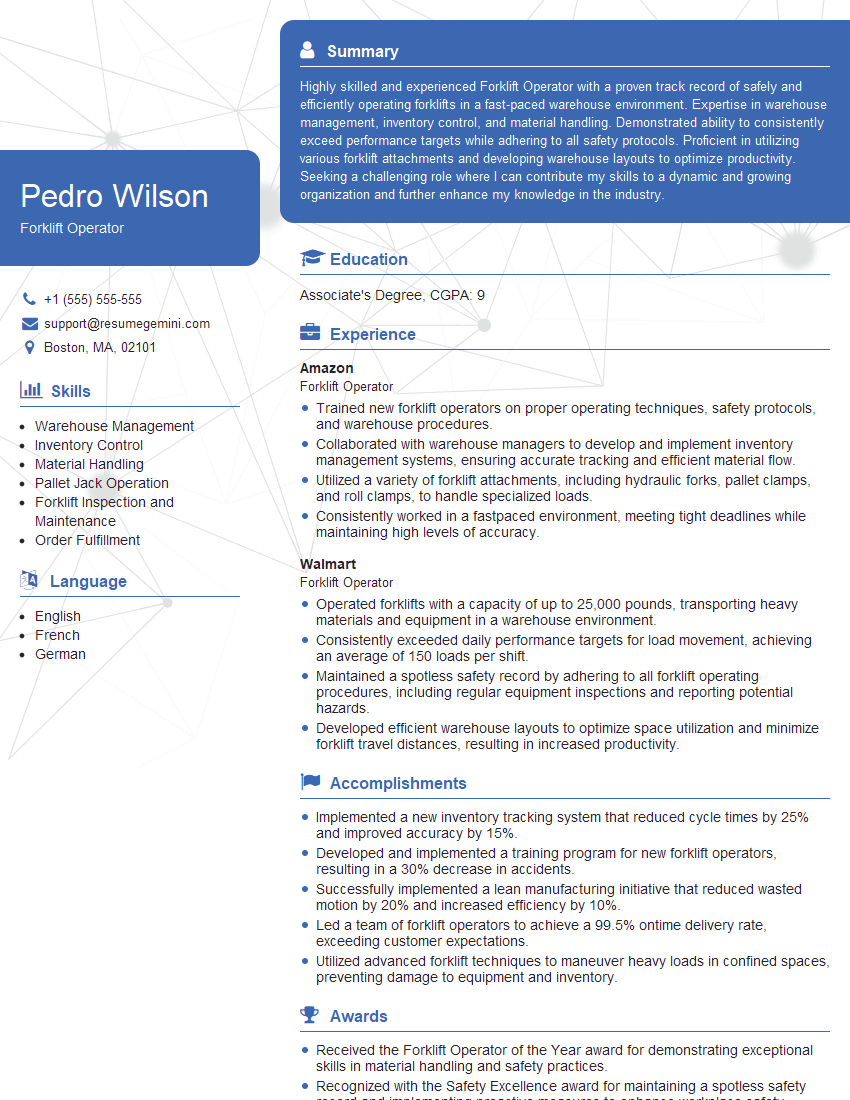
Forklift Operator Resume Sample

Rigger Resume Sample

Equipment Mechanic Resume Sample

Winch Operator Resume Sample

Dockworker Resume Sample

Freight Handler Resume Sample
Explore more articles
Users Rating of Our Blogs
Share Your Experience
We value your feedback! Please rate our content and share your thoughts (optional).
What Readers Say About Our Blog
Very informative content, great job.
good