Feeling uncertain about what to expect in your upcoming interview? We’ve got you covered! This blog highlights the most important Lobster Grading and Sorting interview questions and provides actionable advice to help you stand out as the ideal candidate. Let’s pave the way for your success.
Questions Asked in Lobster Grading and Sorting Interview
Q 1. Explain the different grades of lobsters and their criteria.
Lobster grading systems vary slightly depending on location and market demands, but generally involve categorizing lobsters based on size and weight. Common grades often include descriptions like ‘small’, ‘medium’, ‘large’, ‘jumbo’, and sometimes even ‘extra jumbo’. The criteria usually center around the lobster’s tail length and overall weight. For example, a ‘medium’ lobster might fall within a specific weight range (e.g., 1-1.5 pounds) and have a tail length within a certain range. These ranges are standardized to some degree within the industry to ensure consistent understanding across markets. The larger the lobster, and thus the higher the grade, the higher the market value.
- Small: Typically the smallest commercially viable size, often having restrictions due to conservation efforts.
- Medium: A commonly sold size, good balance of meat yield and price.
- Large: Higher meat yield than medium, commands a premium price.
- Jumbo: The largest commercially available size, considered a luxury item.
It’s crucial to remember that these size and weight criteria can be adjusted based on regulations or specific customer preferences. Some markets may prioritize live weight, while others might use cooked weight as the grading basis.
Q 2. Describe the process of visually inspecting lobsters for quality.
Visual inspection is paramount in lobster grading. It’s a skilled process that involves a trained eye to assess several key features. We start by checking the overall appearance of the lobster. A high-quality lobster will have a hard, shiny shell with vibrant color. The shell color varies depending on the species; for example, American lobsters typically range from dark greenish-brown to reddish-brown. A dull, discolored, or soft shell is a red flag. We then assess the meat fullness of the tail. A plump tail suggests a healthy and meaty lobster. We gently feel the tail to assess firmness, looking for any unusual softness or sponginess. This physical assessment often involves lifting the tail to check if it’s firmly attached to the body. Any looseness is a potential issue.
Inspecting the claws is another important step. Healthy claws will be firm, heavy, and tightly closed. A missing claw or a damaged claw can impact the grade. We look for signs of parasites or disease—more on that later. Lastly, we check for any signs of shell damage, which includes cracks, chips, or punctures, which we’ll discuss in the next answer. The whole process takes a practiced eye, often requiring years of experience to develop the skill to accurately assess the lobster’s quality with a quick and accurate inspection.
Q 3. How do you identify a lobster with shell damage?
Identifying shell damage is straightforward if you know what to look for. We carefully examine the entire lobster’s shell for any visible cracks, chips, or punctures. These imperfections can be anywhere on the carapace (the main body shell), claws, or tail. Sometimes, these damages are minor and superficial, easily overlooked by an untrained eye. But such damages provide easy entry points for bacteria, leading to spoilage and impacting the quality and shelf life of the lobster. Significant damage often results in a lower grade or even rejection, as it affects both the lobster’s appearance and its marketability. Even small cracks can indicate a compromised shell that might affect the quality and freshness.
For example, a crack near the tail section could indicate potential damage to the tail meat, affecting the overall desirability of the lobster. Similarly, a chipped claw might make it less desirable to consumers, even if the meat inside is unaffected. The assessment of shell damage needs to take into account both the severity and location of the damage.
Q 4. What are the key indicators of a diseased or unhealthy lobster?
Identifying diseased or unhealthy lobsters requires careful observation and knowledge of common lobster ailments. Several indicators point toward health problems. A lethargic lobster, one that is unusually sluggish or unresponsive, is a major concern. This inactivity, along with an abnormally soft or discolored shell, may suggest underlying health problems. We also check for any visible signs of parasites or fungal infections, often manifesting as white patches or unusual growths on the shell or appendages. An unusual smell, such as a strong ammonia odor, is another clear sign of disease. This odor often indicates decaying tissue, a direct consequence of bacterial infection or improper handling. A lobster with a bloated abdomen could also signify internal infection or poor health. Unusual behavior, like difficulty moving or unusual posture, also signals potential issues. In cases of suspected disease, the lobster is typically rejected to prevent the spread of infections to other healthy lobsters.
Q 5. Explain the process of sorting lobsters by size and weight.
Sorting lobsters by size and weight is crucial for efficient processing and marketing. The process typically begins with a visual assessment to group lobsters into approximate size categories. This initial sorting can be done manually, often with experienced personnel quickly separating lobsters based on their overall size. For more precise sorting, we use calibrated scales to determine the weight of each lobster. This is usually performed in a conveyor belt system, where lobsters are weighed individually and automatically sorted into pre-defined weight ranges. Different size and weight categories are designated for different markets, where specific sizes and weights are more in demand. Some companies may use specialized sorting equipment such as automated sizing systems and weigh-sorters. These systems can efficiently sort hundreds of lobsters per hour with high accuracy, providing a standardized and consistent sizing and weighing procedure. Following the initial size and weight sorting, further processing can be done based on specific market demands.
Q 6. What tools and equipment are used in lobster grading and sorting?
Lobster grading and sorting employs a range of tools and equipment. The simplest tools are hand-held scales for weighing individual lobsters. For larger operations, we use automated weighing systems integrated into conveyor belts. These systems often incorporate sensors to accurately measure size and weight, automatically diverting lobsters into designated bins based on their measurements. Measuring devices such as calipers can be used for more precise length measurements, particularly important when meeting specific regulatory size requirements. Additional tools include various sized containers and crates for storing and transporting lobsters according to their size. Finally, safety equipment like gloves and protective eyewear is essential to prevent injuries when handling live lobsters.
Q 7. How do you ensure accurate and efficient grading and sorting?
Ensuring accurate and efficient grading and sorting requires a multi-pronged approach. Firstly, well-trained personnel are essential. Experience and expertise allow graders to quickly and accurately assess lobster quality. Regular training and refresher courses help maintain consistency and accuracy. Secondly, properly calibrated equipment is crucial. Regular calibration of scales and other measuring devices is vital to ensure reliable measurements. Thirdly, standardized grading protocols are implemented. Following established guidelines and specifications guarantees consistency across the sorting process. Lastly, a robust quality control system is in place to check the accuracy of the grading and sorting process. Random samples are checked throughout the day to ensure that the process is running smoothly and accurately. By combining skilled personnel, accurate equipment, clear protocols, and robust quality control, we maximize the efficiency and accuracy of lobster grading and sorting, ensuring a high-quality product reaches the market.
Q 8. What are the common challenges in lobster grading and how do you overcome them?
Lobster grading presents several challenges, primarily stemming from the inherent variability in lobster size, weight, and quality. Inconsistencies in measurement, subjective assessment of shell condition, and the speed required for high-volume processing can all lead to errors.
- Measurement Inaccuracy: Manual measurements can be prone to human error, leading to misclassifications and potential financial losses. We overcome this by implementing calibrated digital scales and measuring tools, and by training graders extensively using standardized procedures and regular calibration checks.
- Subjective Quality Assessment: Assessing aspects like shell condition (e.g., presence of barnacles or damage), meat yield, and overall freshness can be subjective. To address this, we use detailed grading charts with clear visual aids and descriptions for each grade, ensuring consistent interpretation across the team. We also incorporate regular quality control checks and blind grading exercises to identify and correct inconsistencies.
- High-Volume Processing: The need for speed in processing large quantities of lobsters can compromise accuracy. We solve this through optimized workflow design, incorporating automated sorting equipment where feasible, and cross-training team members to maintain efficiency while preserving quality control.
Q 9. How do you maintain hygiene and food safety standards during processing?
Maintaining hygiene and food safety during lobster processing is paramount. We adhere to strict HACCP (Hazard Analysis and Critical Control Points) principles, ensuring every stage, from receiving live lobsters to packaging, meets the highest safety standards.
- Chilling and Storage: Lobsters are immediately chilled upon arrival and maintained at safe temperatures throughout the process. We regularly monitor temperatures using calibrated equipment and maintain detailed records.
- Sanitation Procedures: All equipment and surfaces are thoroughly cleaned and sanitized between batches using food-grade detergents and sanitizers. Employees are required to wear appropriate protective gear and follow strict handwashing protocols.
- Waste Management: Waste is disposed of appropriately to prevent contamination. We implement stringent procedures for shell disposal and cleaning to prevent bacterial growth.
- Traceability: Each batch of lobsters is identified and tracked through the entire process, facilitating rapid response in case of a contamination issue. This allows us to pinpoint the source and implement corrective actions quickly.
Q 10. Describe your experience with different lobster species and their grading requirements.
My experience encompasses grading several lobster species, each with unique characteristics that influence grading criteria.
- American Lobster (Homarus americanus): Grading focuses primarily on size (tail weight), shell condition, and meat yield. We use a combination of size categories and quality grades to classify them. For example, a large lobster with an intact shell and high meat yield would receive a premium grade.
- European Lobster (Homarus gammarus): Similar grading parameters as the American lobster, though size standards might vary slightly based on market demands. The emphasis on consistent size and quality remains.
- Spiny Lobster (Panulirus spp.): Grading considerations might shift from tail weight to overall size and the condition of the shell. The presence of damage and parasites can significantly impact the grade.
The grading standards are adapted based on species-specific characteristics and market preferences, always ensuring compliance with relevant regulations.
Q 11. What are the legal and regulatory requirements for lobster grading in your region?
Legal and regulatory requirements for lobster grading in our region are stringent and ensure fair trade practices and consumer safety.
- Size Limits: Regulations mandate minimum size limits for harvesting and selling lobsters, protecting juvenile populations. Our grading process strictly adheres to these legal minimums, ensuring compliance.
- Grading Standards: Specific grading standards might be outlined by government bodies or industry associations. We strictly follow these guidelines, using standardized measurement techniques and quality assessment criteria.
- Record-Keeping: Detailed records of grading and processing activities are legally mandated for traceability and accountability. We maintain comprehensive records, easily accessible for audits.
- Packaging and Labeling: Clear labeling requirements ensure customers have complete information about the product, including species, size, and origin. We maintain accurate labeling practices to avoid penalties.
Q 12. How do you handle discrepancies or inconsistencies in grading?
Discrepancies or inconsistencies in grading are addressed through a multi-step process aiming for fairness and accuracy.
- Review Process: Any disagreements between graders are reviewed by a senior grader, ensuring consistent interpretation of grading standards. This review process is regularly documented.
- Calibration and Retraining: Persistent inconsistencies might indicate a need for recalibration of measuring instruments or retraining of graders. We conduct regular calibration checks and provide refresher training as needed.
- Quality Control Checks: Regular random sampling and quality control checks help identify systematic errors and improve accuracy. This data is analyzed to identify trends and take corrective actions.
- Appeals Process: A formal appeals process is in place for handling disputes. This ensures fairness and transparency.
Q 13. Explain your experience with traceability and record-keeping systems.
Traceability and record-keeping are fundamental to our operations. We use a sophisticated system to track each lobster from the moment it is received to when it is shipped.
- Batch Tracking: Each incoming batch is given a unique identifier, which is tracked throughout the grading and processing stages using barcodes or RFID tags.
- Database Management: All data is entered into a centralized database, providing real-time visibility into inventory, grading results, and processing information. This data enables us to generate detailed reports for compliance purposes and for internal performance analysis.
- Data Security: Data security is a priority, with appropriate access controls and regular backups to prevent data loss. We follow industry best practices for data protection.
Q 14. How do you ensure the efficient flow of lobsters through the grading process?
Efficient flow through the grading process is crucial for maximizing throughput and minimizing handling time.
- Optimized Workflow: Our facility layout and workflow are designed to minimize unnecessary movement of lobsters. We use conveyor belts, sorting tables, and other equipment to streamline the process.
- Cross-Trained Staff: Team members are cross-trained to perform multiple tasks, allowing for flexible deployment of personnel to meet changing demands.
- Automated Sorting: Where feasible, we use automated sorting equipment to improve speed and consistency. This reduces reliance on manual grading for basic size and weight separations.
- Continuous Improvement: We regularly review the grading process and look for areas of improvement. Data analysis plays a crucial role in identifying bottlenecks and inefficiencies.
Q 15. What is your understanding of the market demand for different lobster grades?
Market demand for lobster grades is heavily influenced by size, quality, and ultimately, price. The highest demand is typically for larger, high-quality lobsters, often categorized as ‘select’ or ‘jumbo’. These command premium prices in high-end restaurants and catering businesses. Medium-sized lobsters are also in consistent demand, catering to a broader market including restaurants with varied menus and retail consumers. Smaller lobsters, while sometimes less profitable, still have a market for certain applications, such as processing into lobster meat for soups or other products. Demand fluctuates seasonally, with peak demand often aligning with holiday seasons and peak tourist seasons. For example, during the summer months, demand for live lobsters for grilling or boiling increases significantly in coastal regions. This variability requires a robust understanding of market trends to optimize grading and pricing strategies.
Career Expert Tips:
- Ace those interviews! Prepare effectively by reviewing the Top 50 Most Common Interview Questions on ResumeGemini.
- Navigate your job search with confidence! Explore a wide range of Career Tips on ResumeGemini. Learn about common challenges and recommendations to overcome them.
- Craft the perfect resume! Master the Art of Resume Writing with ResumeGemini’s guide. Showcase your unique qualifications and achievements effectively.
- Don’t miss out on holiday savings! Build your dream resume with ResumeGemini’s ATS optimized templates.
Q 16. How do you identify and handle undersized or oversized lobsters?
Undersized and oversized lobsters are handled differently due to regulations and market demands. Undersized lobsters, those that haven’t reached the legal minimum size for harvest, are immediately returned to the water to ensure sustainability. We meticulously measure each lobster using a gauge to ensure compliance. Oversized lobsters, while not explicitly illegal, might not fetch the best price. Sometimes, these may be processed separately or set aside for specific market segments that appreciate larger sizes. Proper handling minimizes stress on both undersized and oversized lobsters. For example, we ensure quick and gentle handling to prevent injury during measurement and release or processing.
Q 17. Describe your experience working within a team environment in a fast-paced setting.
In a fast-paced lobster processing plant, teamwork is paramount. I’ve consistently demonstrated strong collaboration skills by coordinating efficiently with sorting teams, quality control personnel, and packaging teams. For example, during peak season, we often face significant volume increases. By openly communicating and sharing work distribution strategies, we effectively manage the workload and maintain a smooth processing flow. I’ve learned the importance of actively listening to colleagues’ input and contributing solutions to shared challenges. A recent instance involved a sudden equipment malfunction that threatened to disrupt the entire line. By quickly collaborating with the maintenance team and temporarily re-routing lobsters to a backup line, we minimized downtime and kept the production running efficiently.
Q 18. How do you prioritize tasks and manage your time effectively during peak seasons?
Peak seasons demand meticulous prioritization and time management. My approach involves breaking down tasks into smaller, manageable units, focusing on high-priority items—like sorting premium grade lobsters promptly to maintain freshness—first. I utilize checklists and time-blocking techniques to schedule activities efficiently and avoid bottlenecks. For instance, I schedule the sorting of smaller, less-demanding grades during periods of lower activity to balance workload distribution. Moreover, utilizing technology and process optimization strategies are essential. By leveraging sorting machines and streamlining the workflow, we can ensure maximum efficiency, particularly in high-demand periods.
Q 19. How do you deal with a malfunctioning piece of equipment during processing?
Equipment malfunction is a significant concern in lobster processing. My response involves immediately implementing a structured approach. First, I assess the severity of the malfunction and determine if the situation poses immediate safety risks. If so, I initiate emergency shutdown procedures and notify the appropriate personnel. Secondly, I contact the maintenance team, providing them with a clear description of the problem. In the meantime, I re-route or temporarily halt the impacted part of the process to minimize downtime. For example, if a sorting machine malfunctions, I might temporarily divert the lobster flow to a manual sorting station. Effective communication and quick thinking are crucial in these instances to prevent significant production disruptions.
Q 20. What are the potential hazards associated with lobster handling and processing?
Lobster handling and processing present various hazards. Sharp claws can cause injuries, and improper handling can lead to bruising or stress on the lobsters themselves, affecting quality. The processing environment often involves working with water and potentially slippery surfaces, increasing the risk of falls. Also, machinery and equipment pose potential hazards if not used or maintained correctly. Additionally, shellfish poisoning is a potential hazard and strict hygiene practices are essential to ensure food safety.
Q 21. How do you ensure the safety of yourself and your coworkers during processing?
Safety is my top priority. I consistently follow all safety regulations and company protocols, including using appropriate personal protective equipment (PPE) such as cut-resistant gloves and safety footwear. I actively participate in safety training and am familiar with emergency procedures. Furthermore, I monitor my work environment for potential hazards, promptly reporting any issues to the supervisor. I encourage my coworkers to adhere to safety protocols and actively participate in creating a safe work environment. A team-based approach to safety ensures everyone works together to prevent accidents and mitigate risks.
Q 22. What are the different methods for weighing and measuring lobsters?
Weighing and measuring lobsters is crucial for accurate grading and pricing. We primarily use two methods:
Digital Scales: These provide precise weight measurements in grams or pounds, essential for determining the lobster’s size and market value. For example, a high-quality digital scale with a tare function allows us to quickly weigh multiple lobsters, subtracting the weight of the container each time for efficient processing.
Measuring Devices: While weight is key, length is also important, especially for regulatory compliance and species identification. We utilize calibrated rulers or calipers to measure the carapace length (the distance from the eye socket to the rear edge of the carapace) to the nearest millimeter or quarter-inch. This is particularly crucial for ensuring adherence to minimum size regulations in various fisheries.
Both methods are vital components of our grading process, ensuring consistency and accuracy in determining the market value of each lobster.
Q 23. Explain your knowledge of different lobster species and their characteristics.
My experience encompasses various lobster species, each with unique characteristics impacting grading and handling. The most common commercially important species include:
American Lobster (Homarus americanus): This species is highly sought after for its large size, sweet meat, and distinctive reddish-brown coloration. Grading focuses on weight and carapace length, with larger individuals commanding higher prices.
European Lobster (Homarus gammarus): Similar in appearance to the American lobster but often slightly smaller, these lobsters have a slightly different taste profile. Grading criteria remain largely similar, prioritizing weight and size.
Spiny Lobsters (Panulirus species): These lobsters are characterized by their spiny exoskeletons and lack of large claws. Grading for these lobsters often considers factors such as weight, overall length, and the condition of their shell.
Understanding these species’ differences – in terms of size, shell characteristics, and meat quality – allows for effective and appropriate grading, handling and packaging.
Q 24. How do you handle damaged or perished lobsters during processing?
Damaged or perished lobsters are immediately separated from the live stock to prevent cross-contamination and maintain product quality. Our procedure involves:
Immediate Removal: Damaged lobsters are swiftly removed from the main processing area and placed in designated containers.
Inspection and Classification: We assess the extent of damage or the cause of perishing (e.g., disease, injury). This helps identify potential problems with harvesting or handling practices.
Segregation and Disposal: Perished lobsters are disposed of according to local regulations and guidelines, often through responsible recycling or rendering processes to minimize waste. Damaged lobsters that are still salvageable might be processed separately at reduced prices for certain markets.
Maintaining strict hygiene protocols at every stage is essential to prevent the spread of any bacteria or pathogens.
Q 25. What are the ethical considerations associated with lobster harvesting and processing?
Ethical considerations are paramount in lobster harvesting and processing. Key aspects include:
Sustainable Harvesting: Adhering to catch limits, size restrictions, and seasonal closures ensures the long-term health of lobster populations. We actively support initiatives promoting sustainable fishing practices.
Animal Welfare: Minimizing stress and pain during capture, handling, and processing is crucial. This includes using appropriate handling techniques, ensuring quick and humane dispatch, and maintaining proper water quality. We regularly train our staff on best practices for humane handling.
Transparency and Traceability: Openly communicating our sourcing practices and ensuring traceability throughout the supply chain helps maintain consumer trust and accountability.
Ethical practices contribute not only to environmental sustainability but also to consumer confidence in the quality and integrity of the product.
Q 26. How do you maintain a clean and organized workspace?
Maintaining a clean and organized workspace is vital for efficient processing and food safety. We follow a rigorous system:
Regular Cleaning: All surfaces and equipment are thoroughly cleaned and sanitized regularly, following strict hygiene protocols.
Designated Areas: Specific areas are designated for receiving, weighing, grading, and packing to prevent cross-contamination.
Waste Management: Efficient waste management systems are in place, separating waste according to type for responsible disposal or recycling.
Proper Storage: Live lobsters are stored in appropriate tanks with maintained water quality, and graded lobsters are stored in designated areas with appropriate temperature control.
A clean and organized workspace ensures a smoother operation, increased efficiency, and enhances food safety.
Q 27. Describe your experience using various grading scales and classification systems.
My experience encompasses various grading scales and classification systems, including:
Weight-based grading: This is the most common system, categorizing lobsters into size classes based on weight (e.g., small, medium, large, jumbo).
Size-based grading (carapace length): This complements weight-based grading, particularly for regulatory compliance and ensuring minimum size regulations are met.
Quality grading: This involves assessing the lobster’s overall condition, including shell integrity, meat quality, and freshness. Visual inspection plays a crucial role here.
We use a combination of these methods, adapting to specific market demands and regulatory requirements. For example, certain markets may prioritize large lobsters, while others may prefer a specific weight range. The ability to adapt to these different systems ensures that we meet our customers’ specific requirements.
Q 28. What are your strategies for continuous improvement in lobster grading and sorting?
Continuous improvement is a priority in lobster grading and sorting. My strategies include:
Data Analysis: Tracking key metrics like grading times, waste rates, and customer feedback helps identify areas for improvement.
Technology Integration: Exploring and implementing new technologies, such as automated weighing and grading systems, can improve efficiency and accuracy.
Staff Training: Regular training on best practices for handling, grading, and maintaining quality standards ensures consistency and improves skills.
Benchmarking: Comparing our processes with industry best practices enables the identification of opportunities for optimization.
By constantly evaluating and refining our methods, we ensure we provide the highest quality products and services.
Key Topics to Learn for Lobster Grading and Sorting Interview
- Lobster Species Identification: Understanding the different species of lobster (e.g., American, European, Spiny) and their key characteristics for accurate grading.
- Size and Weight Grading: Mastering the use of grading tools and scales to accurately determine lobster size and weight according to industry standards and customer specifications.
- Quality Assessment: Developing the ability to identify factors impacting lobster quality, including freshness, shell condition, meat yield, and presence of defects. This includes understanding visual cues and employing tactile assessment.
- Grading Standards and Regulations: Familiarizing yourself with relevant industry standards, regulations, and best practices related to lobster grading and handling. This may include understanding certifications and traceability requirements.
- Sorting and Packaging Techniques: Learning efficient and safe methods for sorting lobsters according to grade and preparing them for packaging and transport, minimizing damage and maintaining quality.
- Hygiene and Safety Procedures: Understanding and adhering to strict hygiene and food safety protocols throughout the grading and sorting process to maintain product quality and prevent contamination.
- Problem-Solving in Grading: Developing skills to identify and resolve discrepancies in grading, address inconsistencies, and maintain accuracy in high-volume processing.
- Technology in Lobster Handling: Exploring the use of automated grading systems and other technologies used in modern lobster processing facilities.
Next Steps
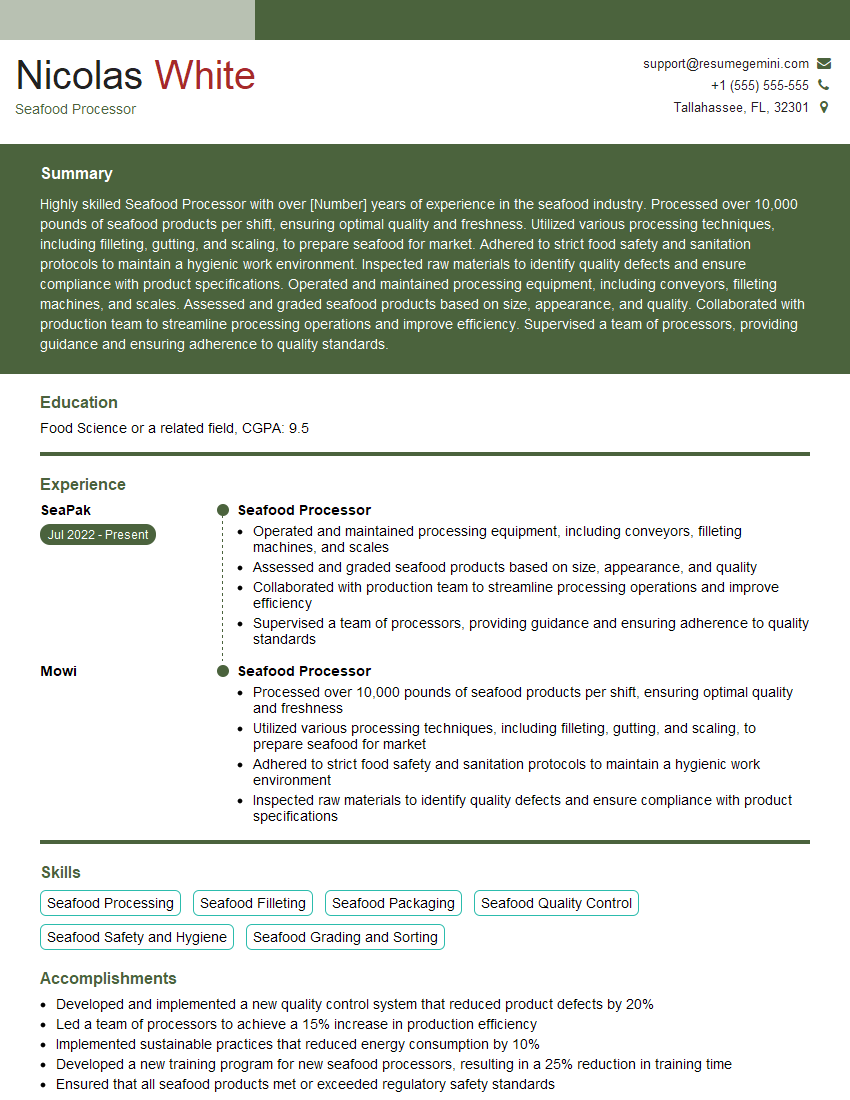
Mastering lobster grading and sorting opens doors to rewarding careers in the seafood industry, offering opportunities for advancement and specialized roles within processing, quality control, and management. To significantly boost your job prospects, creating a strong, ATS-friendly resume is crucial. ResumeGemini is a trusted resource to help you build a professional and impactful resume that highlights your skills and experience effectively. Examples of resumes tailored to the Lobster Grading and Sorting industry are provided to guide you in showcasing your qualifications. Take advantage of these resources to build a resume that gets noticed.

Explore more articles
Users Rating of Our Blogs
Share Your Experience
We value your feedback! Please rate our content and share your thoughts (optional).
What Readers Say About Our Blog
Very informative content, great job.
good