Interviews are opportunities to demonstrate your expertise, and this guide is here to help you shine. Explore the essential Lobster Trap Maintenance interview questions that employers frequently ask, paired with strategies for crafting responses that set you apart from the competition.
Questions Asked in Lobster Trap Maintenance Interview
Q 1. Describe the different types of lobster traps commonly used.
Lobster traps come in various designs, but the most common are the single-chamber and double-chamber traps. Single-chamber traps are simpler, with a single entrance and a central holding area. They’re often favoured for smaller-scale operations or specific types of lobster fishing. Double-chamber traps, on the other hand, provide more space, allowing for greater catches. They usually have two separate holding areas, accessed through different entrances, which can be advantageous for sorting lobsters by size during retrieval. Beyond these basic designs, there are variations concerning the trap’s construction materials (wood, wire, or a combination), size, and the type of netting used. For instance, some traps might have a funnel-shaped entrance to guide lobsters inside, while others might feature a more open design. The choice of trap depends on factors like the target species, fishing regulations, and the fishing grounds.
- Single-Chamber Trap: Simpler design, suitable for smaller operations.
- Double-Chamber Trap: Larger capacity, often used for commercial fishing, facilitating size sorting.
Q 2. Explain the process of inspecting a lobster trap for damage.
Inspecting a lobster trap is crucial for ensuring its structural integrity and efficiency. The process should be thorough and methodical. Start by visually examining the entire trap, both inside and out. Pay close attention to the frame, checking for any cracks, splits, or rot, particularly in wooden traps. Next, scrutinize the netting, looking for tears, holes, or areas where the netting is weakened or damaged. Examine the entrance funnels, ensuring they are intact and functioning correctly. Check all the fasteners, such as nails, staples, or wire ties, to ensure they are secure. Finally, give the trap a gentle shake to detect any loose parts. You should note down every damage identified for quick repair.
Think of it like giving your car a regular check-up—it’s preventative maintenance that can prevent bigger problems down the line.
Q 3. What are the common signs of wear and tear in a lobster trap?
Wear and tear in a lobster trap is inevitable, given the harsh marine environment. Common signs include:
- Rotting Wood: In wooden traps, this is a major concern, especially near the waterline where moisture is concentrated. Look for discoloration, softness, and cracking.
- Broken or Loose Frame Members: The wooden or metal frame can weaken or break over time due to stress and impact.
- Torn or Damaged Netting: This is another common issue, caused by snags on rocks or debris, or by the lobsters themselves. Holes and tears will allow lobsters to escape.
- Rust or Corrosion: Metal parts, such as fasteners or hinges, are vulnerable to rust, especially in saltwater environments.
- Loose or Missing Fasteners: Nails, staples, or wire ties can become loose or fall out, compromising the trap’s structural integrity.
- Fouling: Marine organisms like barnacles and algae can accumulate on the trap, adding weight and reducing efficiency. This is more of a maintenance issue but can contribute to accelerated wear if not addressed.
Q 4. How do you repair a damaged wooden lobster trap frame?
Repairing a damaged wooden lobster trap frame requires carpentry skills and the right tools. For smaller cracks, wood filler or epoxy can be used to reinforce the damaged area. Larger cracks or broken pieces may require more extensive repairs. You might need to replace damaged sections entirely, using wood of similar type and dimension. Always ensure that the repair is structurally sound and that the mended joints are secure, using strong adhesives, screws, and/or marine-grade nails. Remember to allow the repair to dry completely before using the trap. If you’re dealing with significant rot, it might be more cost-effective to replace the whole frame rather than piecemeal repairs.
Think of it like fixing a broken chair leg; you need to ensure it’s sturdy enough to support the weight. You might need to add extra bracing for a particularly weak spot.
Q 5. How do you repair a torn or damaged net in a lobster trap?
Repairing a torn net involves carefully patching the hole or tear. Start by removing any loose or damaged netting around the affected area. Then, use a needle and heavy-duty twine or net repair material to sew a patch over the hole. The patch should be larger than the hole itself to ensure adequate strength. Use a sturdy knot to secure the ends of the twine or repair material. If the damage is extensive, you may need to replace a section of the net, which requires more skill and involves carefully cutting out the damaged portion and weaving in a new piece. Make sure the repair seamlessly integrates with the existing net to avoid further tearing.
Think of it like mending a hole in your fishing net – a strong patch prevents fish from escaping.
Q 6. What materials are typically used for repairing lobster traps?
The materials used for repairing lobster traps depend on the type of damage and the material of the trap itself. Common materials include:
- Wood: For wooden frame repairs, use wood of similar type and quality.
- Marine-grade plywood: Good for patching larger holes in wooden frames.
- Epoxy resin and wood filler: Effective for filling small cracks and holes in wood.
- Heavy-duty twine or netting: Used for repairing torn nets; the type should match the original netting material.
- Marine-grade nails, screws, and staples: These fasteners should be corrosion-resistant to withstand the marine environment.
- Wire ties: These can be helpful for securing repairs.
- Netting repair tape: A quick solution for smaller tears in netting.
Always opt for materials that are durable and resistant to the harsh conditions encountered in saltwater environments.
Q 7. Describe the proper techniques for cleaning and maintaining a lobster trap.
Cleaning and maintaining a lobster trap is essential for its longevity and efficiency. After each fishing trip, remove any debris, seaweed, or other marine organisms that have accumulated on the trap. A pressure washer is useful for this, but you need to be gentle to avoid damaging the net. Thoroughly rinse the trap with fresh water to remove salt residue that can cause corrosion and damage. Inspect the trap for any damage during the cleaning process, addressing any issues promptly. Periodically, give the wooden traps a coat of marine-grade varnish or paint to protect them from rot and the elements. This acts as a protective barrier against moisture and helps extend the life of your traps. If you’re dealing with significant build-up of marine life, use a scraping tool to remove them but do it with care to prevent the damage of the trap structure.
Think of it as regular car washing – it helps prevent corrosion and keeps the machinery in better working condition.
Q 8. What are the safety precautions you would take when working with lobster traps?
Safety is paramount when working with lobster traps. Think of it like this: you’re dealing with heavy gear in a potentially harsh marine environment. Before even touching a trap, I always perform a thorough equipment check. This includes ensuring all ropes, floats, and the trap itself are in good condition, free from fraying or damage. I wear appropriate safety gear, which includes waterproof gloves to protect my hands from sharp edges and barnacles, sturdy boots with good grip to prevent slips and falls on the deck of the boat, and a life jacket, especially if working from a small vessel. I also never work alone; having a buddy system is crucial for both safety and efficiency. Finally, I’m always mindful of the weather conditions and avoid working in rough seas or storms.
- Gear Check: Inspecting ropes, floats, and the trap for damage before each use.
- Personal Protective Equipment (PPE): Waterproof gloves, sturdy boots, and a life jacket.
- Buddy System: Never working alone.
- Weather Awareness: Avoiding working in unsafe weather conditions.
Q 9. How do you identify and address potential hazards in a lobster trap?
Identifying hazards in a lobster trap is a multi-step process. First, I visually inspect the trap for any damage – broken wood, rusted metal, or damaged netting. Sharp edges or protruding wires are serious concerns and need immediate attention. Second, I check the bait – making sure it hasn’t spoiled or attracted unwanted species. Spoiled bait can attract harmful bacteria and negatively impact the marine environment. Third, I check for any entanglement of marine life in the trap itself – this is common, and gently freeing any trapped animals is critical for their well-being. Finally, I check the buoy line for any signs of wear or damage, ensuring it’s securely attached and strong enough to withstand the elements. Replacing damaged components is critical to safety and maintaining the integrity of the trap.
- Visual Inspection: Checking for structural damage, sharp edges, or rust.
- Bait Assessment: Inspecting bait for spoilage and unwanted organisms.
- Entanglement Check: Freeing any trapped marine animals.
- Line Inspection: Checking buoy line for wear and tear.
Q 10. Explain the importance of proper bait placement in a lobster trap.
Proper bait placement is crucial for successful lobster trapping. Think of it as presenting a delicious meal to a hungry customer. The bait needs to be strategically positioned within the trap to attract lobsters and encourage them to enter. I typically use a combination of strong-smelling bait like herring or mackerel, placing it in areas of the trap that will maximize its effectiveness. The bait should be secured in such a way that it won’t escape easily while still allowing lobsters to access it. Overly abundant or poorly placed bait can attract unwanted species or even foul the trap, rendering it useless. This is similar to an over-stocked buffet – no one knows where to start.
For example, I often use a bait bag and distribute the pieces strategically throughout the trap to attract lobsters from all directions.
Q 11. What are the regulations regarding lobster trap size and construction?
Regulations regarding lobster trap size and construction vary depending on the location and governing body. However, common regulations include restrictions on the overall dimensions of the trap, the size of the escape vents (designed to allow undersized lobsters to escape), and the type of materials used in its construction. Many jurisdictions require escape vents of a specific size and number to ensure sustainability and protect lobster populations. These regulations are in place to prevent overfishing and protect the lobster population. Failure to comply can result in fines or other penalties.
For instance, in many areas, there are minimum and maximum size requirements for the trap itself, and the mesh size of the netting is often specified. These are all aimed at protecting the juvenile lobsters which are not yet ready to be caught.
Q 12. How do you ensure your lobster traps comply with environmental regulations?
Ensuring compliance with environmental regulations is paramount in lobster trapping. This involves adhering to all rules related to trap size, escape vents, and fishing seasons. I regularly check and maintain my traps to ensure that they meet the regulations. This often includes ensuring escape vents remain clear and functional, and that I’m only using allowed materials in their construction. I also keep meticulous records of my catches and ensure that I’m not exceeding any catch limits set by local regulations. In addition, responsible disposal of any discarded bait is essential to minimize the environmental impact of my fishing operations. By following these practices, I’m actively contributing to the sustainability of lobster populations.
Q 13. What are the different types of lobster trap buoys and their purpose?
Lobster trap buoys serve the crucial purpose of marking the location of submerged traps. There are several types, each with its own advantages and disadvantages. Some common types include:
- Standard Buoys: These are the most basic type, typically made of plastic or foam, and are often brightly colored for easy visibility. They provide basic flotation and marking.
- GPS Buoys: These incorporate GPS technology, allowing for precise location tracking of the traps, making retrieval much easier, especially in large-scale operations.
- Surface Buoys: These buoys float on the surface of the water and are attached to the trap via a buoy line, indicating to the fisherman their location.
- Sub-surface Buoys: These are designed to remain just below the surface. These are often chosen to prevent theft or accidental damage of the buoy.
The choice of buoy depends on factors such as the fishing area, weather conditions, and the scale of the operation. For instance, GPS buoys are beneficial for large commercial operations, while standard buoys suffice for smaller-scale activities.
Q 14. Explain the process of setting and retrieving lobster traps.
Setting and retrieving lobster traps is a two-part process that requires both skill and attention to detail. Setting the traps usually begins with carefully selecting a suitable location with good lobster habitat. The traps are then lowered to the seabed using ropes and buoys. The precise method depends on the boat and gear used. Smaller vessels might use hand-lining, while larger boats may employ more advanced techniques such as hydraulic winches. Precise positioning and recording the GPS coordinates of the location of each trap is critical for successful retrieval.
Retrieving the traps involves navigating back to the marked locations using buoys, GPS, or a combination of both. The traps are hauled aboard the vessel, usually using a hauling device. The lobsters are removed, and any undersized individuals are carefully returned to the ocean. Finally, the traps are inspected for damage and prepped for resetting. The entire process demands efficiency, precision, and safety awareness.
Q 15. How do you prevent ghost fishing with your lobster traps?
Preventing ghost fishing, where lost or abandoned traps continue to catch and kill marine life, is paramount. It’s about responsible fishing practices and diligent trap maintenance.
- Regular Inspections: Thoroughly examine your traps before each deployment. Check all ropes, connectors, and latches for wear and tear. A weak point can lead to a lost trap.
- High-Quality Materials: Invest in durable, high-quality materials that are less prone to breaking. Stronger ropes and corrosion-resistant metal components will extend the life of your traps and reduce the risk of failure.
- Redundancy: Use multiple attachment points for critical components, like the buoy line. If one fails, the others will hold. Think of it like having a backup parachute.
- Proper Buoyancy: Ensure your floats provide sufficient buoyancy. Under-buoyed traps are more susceptible to sinking, becoming lost, and ghost fishing. Regularly check your floats for damage or deflation.
- Trap Marking: Clearly and durably mark your traps with your name and contact information. This is crucial for recovery in case of entanglement or loss. Consider using durable paint or engraved metal tags.
- End-of-Season Retrieval: Most importantly, meticulously retrieve all traps at the end of the fishing season. This prevents traps from becoming lost or damaged over time, eliminating a major cause of ghost fishing. This is the single most effective prevention method.
Career Expert Tips:
- Ace those interviews! Prepare effectively by reviewing the Top 50 Most Common Interview Questions on ResumeGemini.
- Navigate your job search with confidence! Explore a wide range of Career Tips on ResumeGemini. Learn about common challenges and recommendations to overcome them.
- Craft the perfect resume! Master the Art of Resume Writing with ResumeGemini’s guide. Showcase your unique qualifications and achievements effectively.
- Don’t miss out on holiday savings! Build your dream resume with ResumeGemini’s ATS optimized templates.
Q 16. Describe methods for improving the efficiency of lobster traps.
Improving the efficiency of lobster traps involves optimizing their design and deployment strategies to maximize catch while minimizing effort.
- Bait Placement: Strategic placement of bait within the trap can significantly increase the catch rate. Experiment with different locations and bait types to find what works best in your area.
- Trap Design: Consider using funnel entrances that encourage lobsters to enter but make it difficult for them to exit. Also, the size and shape of the trap influence how effectively it attracts and holds lobsters. Research designs that are successful in your region.
- Trap Placement: The location of your traps is critical. Research the preferred habitats of lobsters in your area and focus on placing your traps strategically in those zones. Underwater topography, water depth, and bottom type all play a role.
- Gear Ratio: Using appropriate gear ratio between the trap and the buoy makes it easier to haul. Avoid over-sized buoys that become unwieldy.
- Sorting Options: Employing escape gaps in your trap can help prevent the capture of undersized lobsters, while allowing the release of other marine life.
- Regular Maintenance: Keeping traps clean and in good repair increases their efficiency. Traps clogged with debris will be less attractive to lobsters.
Q 17. What are the signs of a malfunctioning lobster trap?
Identifying a malfunctioning lobster trap early can prevent loss, minimize damage, and avoid wasted effort.
- Missing or Damaged Floats: A trap without sufficient buoyancy will sink, making retrieval difficult or impossible.
- Broken or Weak Ropes/Connectors: Inspect all ropes and connectors for fraying, breakage, or excessive wear. These can easily lead to trap loss.
- Damaged Entry/Exit Points: Holes or damage to the funnel entrances can allow lobsters to escape, reducing catch efficiency.
- Rust or Corrosion: Corrosion weakens the trap’s structure and makes it susceptible to failure. This is particularly concerning with metal components.
- Entangled or Obstructed Traps: A trap that is tangled with debris or other fishing gear will not function properly and is a significant safety hazard.
- Undetectable Damage: Sometimes, damage can be internal or submerged and less easily detected. Regular thorough visual checks are needed.
A regular preventative maintenance schedule can identify issues early on.
Q 18. How do you handle a lobster trap that becomes entangled?
Entanglement is a serious issue. Safety is always priority number one, so be extremely cautious and potentially work with others if the tangle is complex or involves heavy equipment.
- Assess the Situation: Before attempting any action, carefully evaluate the extent of the entanglement and the potential risks involved.
- Safety First: Wear appropriate safety gear, including gloves and possibly a safety harness.
- Appropriate Tools: Use the right tools for the job, whether it’s cutting tools, grappling hooks, or specialized disentanglement equipment.
- Careful Disentanglement: Gently and methodically work to free the trap, avoiding damage to both the trap and surrounding marine environment.
- Seek Assistance: If the entanglement is complex or beyond your capabilities, seek assistance from fellow fishermen, marine authorities, or specialized salvage services. This is sometimes safer and more efficient.
- Environmental Awareness: Be mindful of the impact of your actions on the surrounding marine life and ecosystem.
Q 19. Explain the process of replacing trap components like floats or weights.
Replacing components requires some basic mechanical skills and the right tools. Let’s take floats and weights as examples.
- Floats: To replace a float, simply detach the old float from the rope, ensuring no knot slips. Then, attach the new float using a strong knot suitable for marine environments. A bowline or a double fisherman’s knot are both reliable.
- Weights: Replacing weights often involves releasing existing weights which are commonly secured with wire or strong cord. Carefully unfasten, then attach the new weights securely using wire or strong rope, leaving enough slack for mobility but ensuring the weights are firmly attached. Regularly inspect the condition of the wire/cord to prevent sudden weight loss.
Always use high-quality replacement parts designed for marine use. The right components are crucial for the trap’s longevity and effectiveness.
Q 20. How do you maintain the structural integrity of a lobster trap over time?
Maintaining structural integrity is key to extending the lifespan of your lobster traps and preventing loss or damage at sea.
- Regular Inspections: Inspect your traps frequently for signs of wear and tear, such as cracks, splits, or broken laths. Repair or replace damaged components promptly.
- Proper Storage: Store your traps in a dry, protected environment when not in use. This prevents corrosion and degradation from sun, wind, and rain.
- Cleaning: Regularly clean your traps to remove encrusted debris, barnacles, and other organisms. These can weaken the structure over time.
- Material Selection: Choose high-quality, durable materials to build your traps. Marine-grade materials are designed to withstand harsh conditions.
- Reinforcement: Use metal straps or other reinforcements at stress points to strengthen the overall structure. This is especially important near hinges and entry/exit points.
- Preventative Maintenance: Address small issues promptly. A tiny crack ignored today can lead to a major structural failure tomorrow.
Q 21. What are some common problems with lobster trap deployment and retrieval?
Deployment and retrieval are often where problems arise. Careful planning and execution are key.
- Entanglement: Traps can become entangled during deployment, particularly in rocky or heavily vegetated areas. Careful planning of placement and using lines of appropriate length and strength will mitigate this.
- Difficult Retrieval: Traps can become difficult to retrieve due to strong currents, heavy growth, or snagging on underwater obstacles. Careful consideration of the location, buoys suitable for the currents, and having sufficient retrieval strength are critical. Using GPS markings for placement and retrieval is highly recommended.
- Weather Conditions: Severe weather can make deployment and retrieval dangerous or impossible. It’s crucial to monitor weather forecasts and postpone operations if conditions become unsafe.
- Gear Failure: Problems with ropes, floats, or other equipment can hinder deployment and retrieval. Using appropriate equipment, in good condition, and with redundancy systems will minimize failure.
- Underwater Obstructions: Deploying traps in areas with significant underwater obstacles (rocks, wrecks, etc.) increases the risk of entanglement or damage. Knowing the underwater topography is crucial.
Q 22. How do you prevent corrosion and rust in metal lobster traps?
Preventing corrosion and rust in lobster traps is crucial for extending their lifespan and maintaining their effectiveness. Think of it like protecting your car from the elements – regular maintenance is key. We primarily use two strategies: protective coatings and material selection.
Protective Coatings: Before deploying the traps, we apply a high-quality marine-grade paint or a galvanized coating. This creates a barrier between the metal and the corrosive saltwater environment. Regular touch-ups after hauling are vital, especially in areas showing signs of wear. We often use specialized epoxy paints that are durable and resistant to chipping.
Material Selection: While traditional traps are made of galvanized steel, increasingly, we’re seeing the use of stainless steel or other corrosion-resistant materials. These options are more expensive upfront, but their longer lifespan often justifies the cost. However, even stainless steel benefits from a protective coating to further extend its life.
For example, I once worked with a fleet that switched from galvanized steel to stainless steel traps. Their maintenance costs decreased significantly, leading to a better return on investment.
Q 23. Describe techniques for identifying and addressing biofouling on lobster traps.
Biofouling – the accumulation of organisms like barnacles, mussels, and algae on the traps – significantly reduces their efficiency by increasing drag and weight, making them harder to haul and potentially damaging the netting. Identifying and addressing this is a critical part of trap maintenance.
Identification: Regular visual inspection after each haul is essential. We look for any noticeable growths on the trap’s frame, netting, and any other components. The level of biofouling will vary depending on water temperature, salinity, and the season.
Addressing Biofouling: There are several techniques. Power washing with freshwater is the most common method, effectively removing loose organisms. For tougher biofouling, we might use a specialized cleaning solution that’s environmentally safe and effective against marine organisms. In extreme cases, we might even need to use scrapers to remove stubborn growths. It’s important to thoroughly rinse the traps afterwards to remove any chemical residue.
I remember one instance where heavy biofouling significantly reduced the catch rate. After implementing a more rigorous cleaning schedule and using a stronger, yet environmentally friendly, cleaning agent, we saw a considerable increase in lobster numbers.
Q 24. What is the importance of regular maintenance for lobster traps?
Regular maintenance is paramount for maximizing the lifespan, catch rates, and overall profitability of lobster traps. Neglecting maintenance leads to a cascade of problems.
Increased Costs: Ignoring minor repairs often leads to major, more expensive repairs down the line. A small hole in the netting, left unattended, can become a significant tear, requiring extensive repairs or even trap replacement.
Reduced Catch Rates: Damaged traps may not function correctly, leading to fewer lobsters being caught. Biofouling and corrosion also impact the traps’ performance, decreasing their ability to attract and hold lobsters.
Safety Hazards: A poorly maintained trap can become a safety hazard for both the fishermen and the environment. Rust and weakened parts could pose a risk of injury, while damaged traps could potentially entangle marine life.
Think of it like maintaining your car; regular oil changes, tire rotations, and other preventative maintenance greatly extend the car’s life and prevent costly unexpected repairs.
Q 25. How do you manage your inventory and repair of lobster traps?
Efficient inventory and repair management are key to a successful lobster fishing operation. We use a combination of physical and digital methods to manage our traps.
Physical Inventory: We maintain a detailed record of each trap, including its unique identification number, date of purchase, and any previous repairs. We visually inspect traps during and after each haul, noting any damage.
Digital Inventory: We also use a spreadsheet or database software (like Microsoft Excel or Access) to track the location of each trap, its condition, and the date of its last maintenance. This helps us track the lifespan of each trap.
Repairs: Our repair process involves identifying the damage, sourcing the necessary parts (netting, wood, metal etc.), and carrying out the repair, documenting the work completed and date.
This systematic approach ensures we know the condition of each trap, allowing for proactive maintenance and minimizing downtime.
Q 26. How do you determine when a lobster trap needs to be replaced?
Determining when a lobster trap needs replacement is a judgment call based on several factors.
Severe Damage: If a trap is significantly damaged beyond economical repair – for instance, extensive rust, large holes in the netting that cannot be easily repaired, or structural damage to the frame – it’s time for replacement.
Repair History: A trap that has undergone numerous repairs might be more prone to future damage. If the cumulative cost of repairs surpasses the cost of a new trap, replacement is often the more economical option.
Age: Even without visible damage, traps degrade over time due to exposure to the elements. After a certain age (this varies depending on material and maintenance), traps may start to weaken, increasing the risk of failure and necessitating replacement.
We weigh the cost of repair against the cost of a new trap, considering the trap’s age, the extent of the damage and its impact on catch efficiency. Replacing a trap, although costly, sometimes prevents more costly problems and downtime in the long run.
Q 27. How do you assess the effectiveness of your lobster traps?
Assessing the effectiveness of lobster traps involves a multi-faceted approach focusing on both the quantity and quality of the catch.
Catch Rates: We meticulously track the number of lobsters caught per trap per haul. We compare the catch rates of different traps, looking for inconsistencies that might indicate a problem with a particular trap (e.g., damage, poor baiting). We analyze catch data over time to identify trends and patterns.
Lobster Size and Quality: We also assess the size and quality of the lobsters caught. If we’re consistently catching smaller or lower-quality lobsters in a particular trap, it might indicate a problem with the trap’s design or placement.
Bait Retention: We observe how effectively each trap retains its bait. Quick bait loss points to potential damage or design issues.
By analyzing this data, we can identify traps that are underperforming and make necessary adjustments to improve their efficiency, such as making repairs, repositioning, or changing the type of bait.
Q 28. Describe your experience with different types of fishing grounds and their impact on trap maintenance.
Different fishing grounds present unique challenges to trap maintenance. The type of seabed, water currents, and the presence of debris all affect trap longevity and necessitate different maintenance strategies.
Rocky Bottoms: Traps deployed in rocky areas are more prone to damage from abrasion. We may need to reinforce vulnerable parts of the trap, or use traps with more robust frames.
Sandy Bottoms: In sandy areas, traps might become partially buried, hindering their effectiveness and possibly accelerating corrosion. Regular checks and adjustments may be required.
Strong Currents: Strong currents put more stress on traps, potentially damaging them. We use heavier lines and more durable construction in these areas.
Debris: Areas with significant debris increase the risk of snagging and damage to traps. Regular inspection and cleaning are crucial in these environments.
For instance, I once worked in a location with extremely strong currents. We had to switch to a heavier-duty trap design and use stronger ropes to prevent damage and loss of traps. Adapting to the specific challenges of each fishing ground is crucial for effective trap maintenance.
Key Topics to Learn for Lobster Trap Maintenance Interview
- Trap Construction and Materials: Understanding the different types of lobster traps, their construction materials (wood, wire, plastic), and their strengths and weaknesses. Consider the impact of material choice on trap durability and effectiveness.
- Baiting and Deployment Strategies: Learn about optimal bait types, placement techniques, and efficient deployment methods for maximizing catches while minimizing damage to traps or the environment. Discuss practical experience with different baiting strategies.
- Trap Inspection and Repair: Mastering the techniques for regularly inspecting traps for damage (e.g., holes, broken parts, fouling), and performing necessary repairs efficiently and effectively. Discuss problem-solving approaches for unexpected repairs at sea.
- Regulations and Safety: Familiarize yourself with relevant fishing regulations, licensing requirements, and safety procedures for handling lobster traps and working in maritime environments. Discuss your understanding of responsible fishing practices.
- Maintenance Scheduling and Preventative Care: Develop an understanding of creating a preventative maintenance schedule to extend the lifespan of lobster traps and minimize downtime. Discuss the cost-benefit analysis of proactive maintenance.
- Troubleshooting Common Issues: Prepare to discuss common problems encountered with lobster traps (e.g., gear entanglement, escapement, damage from storms) and your strategies for addressing them quickly and effectively. Highlight your problem-solving skills.
- Environmental Considerations: Demonstrate awareness of the environmental impact of lobster trapping and best practices for minimizing negative consequences such as bycatch or habitat damage.
Next Steps
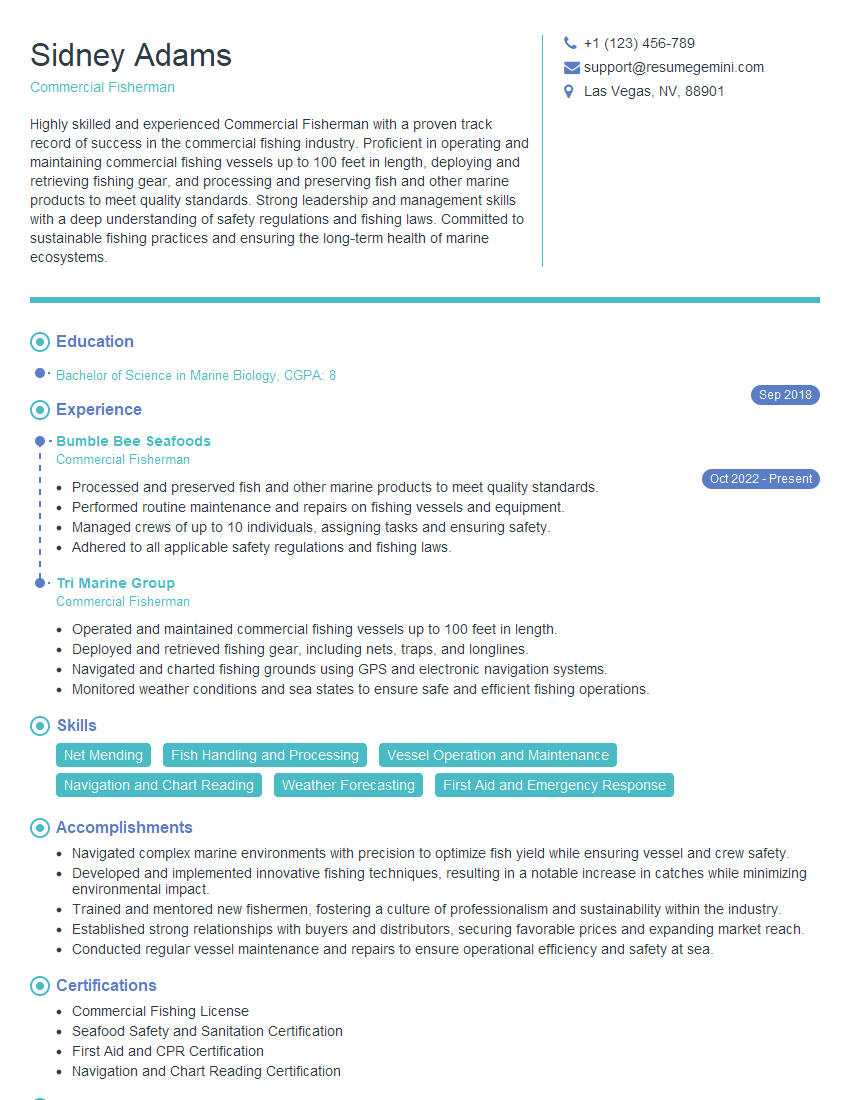
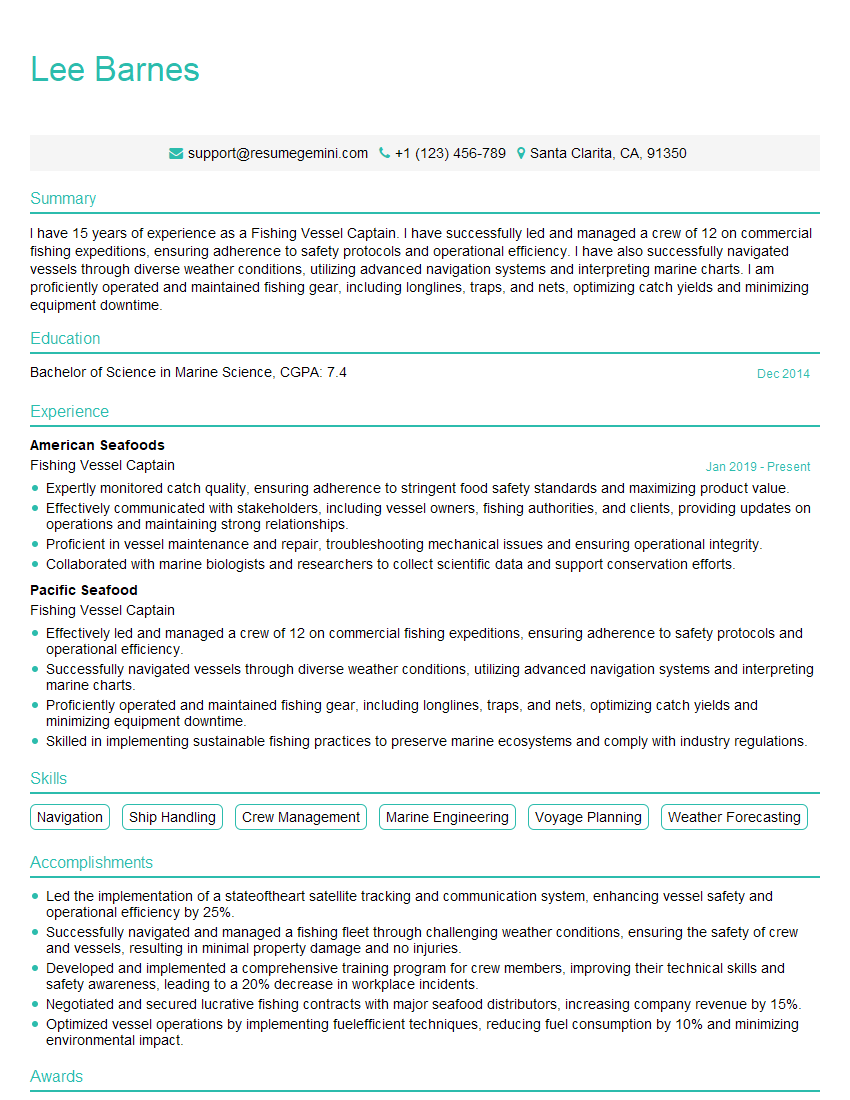
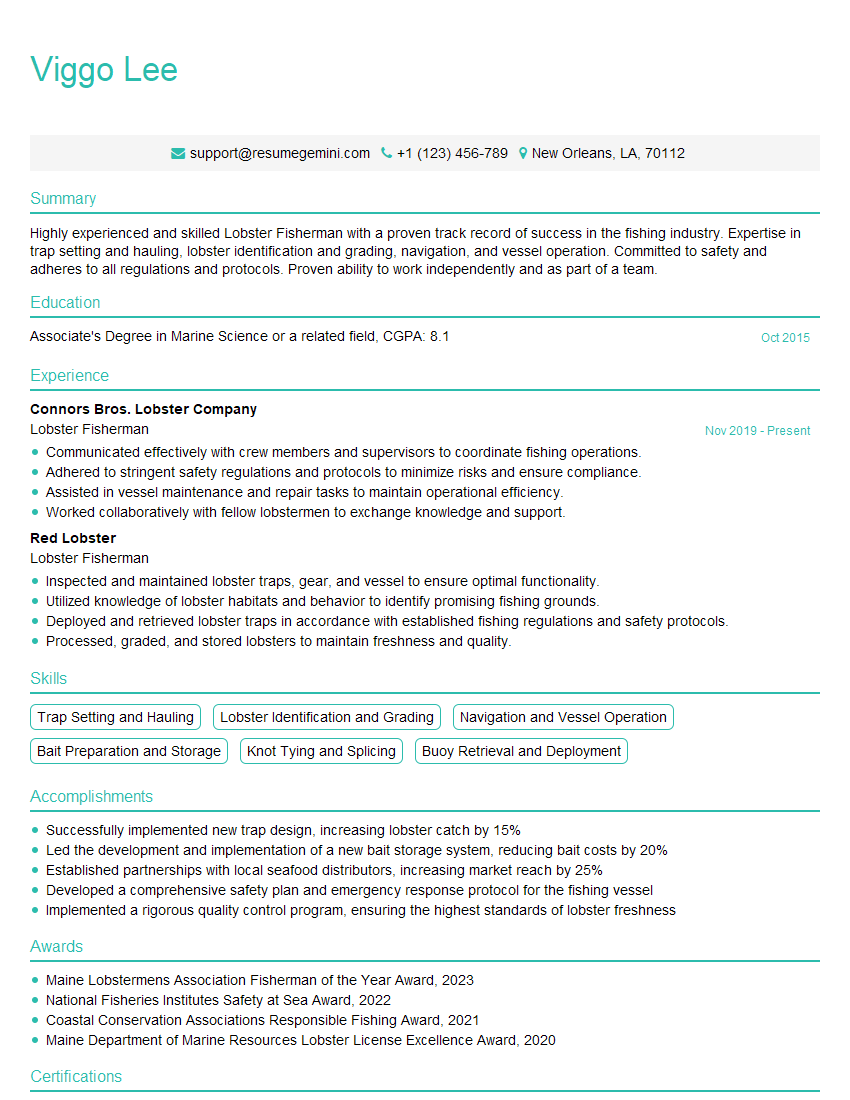
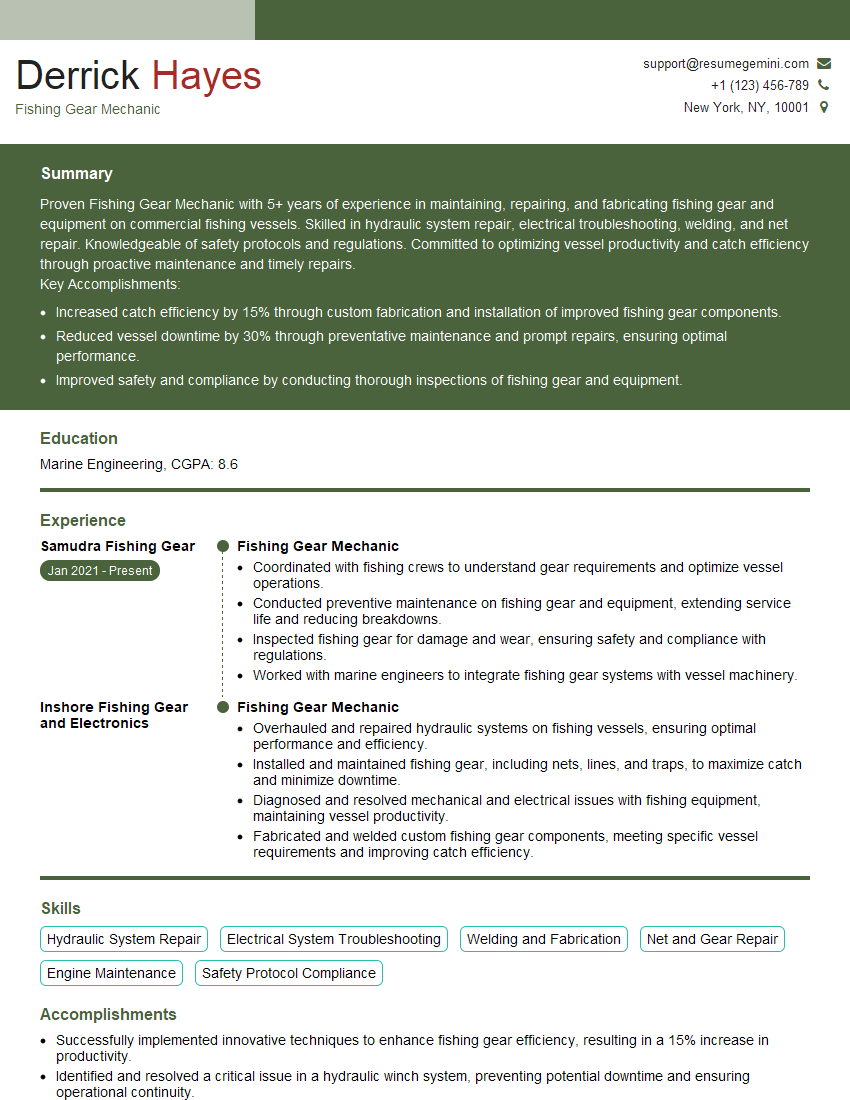
Mastering lobster trap maintenance is crucial for a successful and rewarding career in the fishing industry. It showcases practical skills, problem-solving abilities, and a commitment to sustainable practices. To significantly increase your job prospects, create an ATS-friendly resume that highlights your relevant experience and skills. ResumeGemini is a trusted resource to help you build a professional and effective resume. They offer examples of resumes tailored to Lobster Trap Maintenance to guide you, ensuring your application stands out.

Explore more articles
Users Rating of Our Blogs
Share Your Experience
We value your feedback! Please rate our content and share your thoughts (optional).
What Readers Say About Our Blog
Very informative content, great job.
good