Every successful interview starts with knowing what to expect. In this blog, we’ll take you through the top Lockout/Tagout Training interview questions, breaking them down with expert tips to help you deliver impactful answers. Step into your next interview fully prepared and ready to succeed.
Questions Asked in Lockout/Tagout Training Interview
Q 1. Describe the purpose of Lockout/Tagout (LOTO) procedures.
Lockout/Tagout (LOTO) procedures are designed to prevent the unexpected release of energy during maintenance or repair activities on machinery and equipment. Think of it as a safety protocol that ensures workers aren’t injured by suddenly reactivated equipment. The primary purpose is to protect workers from serious injury or death by isolating energy sources before any work is performed.
Q 2. What are the five steps involved in the LOTO process?
The five steps involved in the LOTO process are:
- Preparation: Planning the work, identifying the energy sources, gathering the necessary LOTO devices (locks, tags, etc.), and verifying that the equipment is shut down.
- Lockout/Tagout: Physically disconnecting the energy source and applying the lockout/tagout devices. This is where the locks and tags are applied to prevent unauthorized operation. This step requires thorough knowledge of the equipment’s energy sources and isolation procedures.
- Verification: Verifying that the energy source has been effectively isolated by attempting to restart the equipment. This crucial step ensures the safety of the worker.
- Work Performance: Performing the maintenance or repair work on the equipment.
- Removal of LOTO Devices: Carefully removing the lockout/tagout devices only after verifying that all work is complete and that the equipment is safe to re-energize. This should be a systematic and carefully documented procedure.
Q 3. Explain the difference between lockout and tagout.
While both lockout and tagout are used to prevent accidental equipment start-up, they differ in their function. Lockout involves using a physical device, like a padlock, to prevent the operation of an energy isolating device. It provides the highest level of physical security. Tagout uses a warning tag to indicate that equipment is under repair and should not be operated. While tags alert workers, they don’t physically prevent the equipment from being started. Imagine a padlock (lockout) as a gate you can’t open, and a brightly colored sign (tagout) as a warning that you shouldn’t go near.
Q 4. What are the different types of energy sources that require LOTO?
LOTO procedures are necessary for a wide range of energy sources, including:
- Electrical: This includes high-voltage and low-voltage systems, which can deliver fatal shocks or burns.
- Mechanical: This encompasses stored energy in compressed springs, hydraulic or pneumatic systems, flywheels, and rotating shafts, all capable of causing serious injuries.
- Thermal: This relates to hot surfaces, steam, and molten materials, leading to burns.
- Hydraulic: High-pressure hydraulic systems capable of causing crushing injuries from sudden release.
- Pneumatic: Compressed air or gas systems that can cause impact injuries from suddenly pressurized air.
- Chemical: This includes storage tanks, pipes, and systems containing hazardous chemicals capable of poisoning or causing severe burns.
- Gravitational: This covers elevated or suspended objects capable of falling and causing crushing injuries.
In essence, any energy source capable of causing injury needs appropriate LOTO procedures.
Q 5. Who is responsible for performing LOTO?
Responsibility for performing LOTO depends on the company’s safety policies. However, generally, the authorized employee who is qualified and has received proper LOTO training is responsible for performing the procedure. This responsibility cannot be delegated to an unqualified person. Supervision might also be necessary, especially in complex situations, to ensure procedures are followed correctly. Management has the overall responsibility for establishing and enforcing the LOTO program.
Q 6. What are the potential hazards if LOTO procedures are not followed?
Failure to follow LOTO procedures can have catastrophic consequences, including:
- Serious injury or death: Unexpected release of energy can cause severe burns, crushing injuries, electrocution, and other life-threatening accidents.
- Equipment damage: Accidental start-up during maintenance can cause damage to machinery and equipment.
- Production downtime: Accidents can lead to prolonged downtime and expensive repairs.
- Legal penalties and fines: Companies failing to comply with LOTO regulations can face significant fines and legal action.
In short, neglecting LOTO procedures poses immense safety and economic risks.
Q 7. Explain the importance of proper energy isolation in LOTO.
Proper energy isolation in LOTO is paramount because it’s the cornerstone of worker safety. If energy isn’t completely isolated, there’s a potential for unexpected release, leading to serious injuries. It ensures that all energy sources to the equipment are disconnected, completely preventing the possibility of movement or activation. For example, simply turning off a machine’s power switch might not be enough – stored energy in capacitors or flywheels could still cause harm. Effective isolation guarantees a safe working environment, allowing workers to perform maintenance without fear of accidents.
Q 8. How often should LOTO procedures be reviewed and updated?
LOTO procedures should be reviewed and updated at least annually, or more frequently depending on several factors. Think of it like a car’s annual inspection – you need to ensure everything is still working safely and efficiently. Changes in equipment, processes, or personnel can necessitate more frequent updates. For example, a new machine installation obviously requires an immediate LOTO procedure review. Additionally, any near-miss incidents or accidents involving energy control should trigger an immediate review and potential updates to prevent future occurrences. Regular reviews also ensure compliance with evolving OSHA regulations and best practices.
A comprehensive review should include:
- Equipment changes: New machinery, modifications to existing equipment, or even changes to tooling can alter the LOTO requirements.
- Process updates: Alterations to production processes may impact the energy sources requiring isolation.
- Regulatory updates: OSHA standards and best practices evolve, so regular checks are essential to remain compliant.
- Incident reviews: Any near misses or accidents should be analyzed, and procedures updated to address identified weaknesses.
- Employee feedback: Regular input from employees who utilize the LOTO procedures can reveal potential improvements and hazards.
Q 9. Describe the role of the authorized employee in LOTO.
The authorized employee is the key figure in LOTO, responsible for performing the lockout/tagout procedure. They are trained and qualified to identify all energy sources, properly isolate them, and verify the effectiveness of the lockout/tagout devices. Think of them as the ‘energy control expert’ for a specific piece of equipment. They must understand the system they’re working on intimately. Their responsibilities include:
- Identify energy sources: Accurately pinpoint all potential sources of hazardous energy, such as electrical, mechanical, hydraulic, pneumatic, thermal, and chemical energy.
- Isolate energy sources: Use appropriate lockout/tagout devices (locks, tags, etc.) to completely disconnect the energy source.
- Verify isolation: Test and verify that energy has been successfully isolated using approved methods (e.g., testing for residual energy). This ensures the equipment cannot unexpectedly restart.
- Apply LOTO devices: Properly attach personal lockout devices to ensure no one can inadvertently start the equipment while work is being performed.
- Remove LOTO devices: Only remove devices after verifying the work area is safe and all other employees have clear permission to do so.
The authorized employee’s actions directly impact worker safety, making their training and competence absolutely crucial.
Q 10. What are the responsibilities of the affected employee in LOTO?
The affected employee is anyone whose job might be impacted by the LOTO process – the worker whose routine is affected when the equipment is shut down. They are not responsible for the LOTO procedure itself. However, their cooperation is essential for the process to be effective. Their responsibilities mainly involve:
- Notify authorized employee: They inform the authorized employee of their need to work on the equipment and the work to be performed.
- Cooperate with LOTO process: Follow instructions provided by the authorized employee, including any necessary work restrictions.
- Understand limitations: They must be aware of their limitations and not attempt to bypass or circumvent the LOTO process.
Imagine a scenario where a maintenance worker (authorized employee) needs to service a machine. The operator (affected employee) needs to understand they can’t just turn it on while the maintenance is in progress; they must wait for the authorized employee to remove the LOTO devices.
Q 11. What is the importance of training in LOTO procedures?
LOTO training is paramount because it directly impacts worker safety. It provides employees with the knowledge and skills to properly implement and understand LOTO procedures, minimizing the risk of serious injury or fatality. Think of it as a life-saving skill. Thorough training should cover:
- Hazard recognition: Identifying potential energy sources and hazards.
- LOTO procedures: Steps for applying and removing LOTO devices.
- Energy control methods: Techniques for isolating different types of energy.
- Verification techniques: How to confirm energy isolation.
- Safe work practices: Adherence to safety rules and regulations.
- Emergency procedures: Steps to take in case of an accident.
Regular refresher training is crucial to maintain competence and address any changes in equipment or procedures. Poorly trained employees can easily misinterpret procedures or fail to recognize hazards, creating dangerous situations.
Q 12. Explain the concept of ‘point of operation’ in LOTO.
The ‘point of operation’ in LOTO refers to the specific location where work is performed on equipment and where the risk of injury is highest. This is the area where energy must be completely controlled to prevent accidental startup or release of energy. For example, on a power press, the point of operation is where the press’s moving parts meet the workpiece. This is the area that requires the most stringent LOTO measures. It’s critical to identify this point accurately because LOTO devices must be applied at a location that will effectively prevent the release of hazardous energy at that specific point.
Different equipment has different points of operation. It requires a thorough understanding of the machine’s operation to properly identify the most hazardous point and properly apply the LOTO procedure. Misidentification could lead to serious accidents.
Q 13. What are the key elements of an effective LOTO program?
An effective LOTO program is a comprehensive system designed to protect workers from the unexpected release of hazardous energy during maintenance and servicing. It needs multiple integrated components. Key elements include:
- Written procedures: Clear, concise, and easy-to-understand procedures specific to each piece of equipment.
- Employee training: Regular and thorough training for all authorized and affected employees.
- Lockout/Tagout devices: High-quality and appropriately rated devices for various energy sources.
- Periodic inspections: Regular inspections of LOTO devices and procedures to ensure effectiveness.
- Recordkeeping: Maintaining accurate records of training, inspections, and any incidents or near misses.
- Energy control procedures: Clear steps outlining how to isolate energy for each type of energy source.
- Enforcement: A system for ensuring compliance with LOTO procedures and holding employees accountable.
- Periodic audits: Regular audits of the LOTO program to ensure compliance with regulations and effectiveness.
These elements, working together, create a robust and effective system to protect workers.
Q 14. How do you verify the effectiveness of energy isolation?
Verifying energy isolation is crucial to ensure the safety of workers performing maintenance. This involves more than just turning off a switch. It demands a methodical approach to prove that the energy is truly isolated and cannot be re-energized unexpectedly. Techniques vary depending on the type of energy source. Some common methods include:
- Visual inspection: Check the physical state of the equipment to confirm that it’s in a safe, de-energized state.
- Testing devices: Use appropriate instruments (voltmeters, pressure gauges, etc.) to verify that no energy is present.
- Operational checks: Attempt to operate the equipment manually or automatically to confirm it’s inoperable. Always follow prescribed procedures and use the appropriate testing devices.
- Lockout/Tagout device verification: Ensure that lockout devices are securely attached and preventing the release of energy.
For instance, after shutting down a circuit breaker, you should use a voltmeter to verify that no voltage is present before starting any work. Never rely solely on a visual inspection; always use the proper testing methods specific to the equipment and energy type. Never assume energy is isolated without verifying.
Q 15. How would you handle a situation where a lockout device is accidentally removed?
If a lockout device is accidentally removed, it’s a serious safety violation that requires immediate action. Think of it like this: the lockout is the only thing standing between an energized machine and a potentially catastrophic accident. Removing it without proper authorization is like removing a crucial safety net.
- Immediately stop all work involving the equipment in question. Safety first!
- Investigate the incident to understand how the lockout device was removed. Was it accidental? Was there a process failure? Was there malicious intent?
- Report the incident to the appropriate supervisor and safety personnel. This ensures accountability and allows for a thorough investigation.
- Reinstate the lockout, ensuring all energy sources are properly isolated and verified as de-energized before anyone is allowed to work near the equipment again.
- Conduct a thorough review of the lockout/tagout (LOTO) procedures to identify weaknesses in the process that allowed the accidental removal to occur. This may include retraining, improved device security, or revisions to the LOTO program itself.
- Implement corrective actions to prevent future occurrences. This might involve better training, improved communication, or stricter enforcement of procedures.
Career Expert Tips:
- Ace those interviews! Prepare effectively by reviewing the Top 50 Most Common Interview Questions on ResumeGemini.
- Navigate your job search with confidence! Explore a wide range of Career Tips on ResumeGemini. Learn about common challenges and recommendations to overcome them.
- Craft the perfect resume! Master the Art of Resume Writing with ResumeGemini’s guide. Showcase your unique qualifications and achievements effectively.
- Don’t miss out on holiday savings! Build your dream resume with ResumeGemini’s ATS optimized templates.
Q 16. What are some common mistakes made during LOTO procedures?
Common mistakes during LOTO procedures often stem from complacency, rushing, or inadequate training. Here are some frequent errors:
- Improper energy isolation: Failing to identify and isolate all energy sources, leaving residual energy that could cause injury.
- Incorrect lockout device application: Using incorrect or insufficient lockout devices, or failing to properly secure them to energy isolation points.
- Insufficient verification: Not properly testing for the absence of energy after isolation and before beginning work.
- Unauthorized removal of lockout devices: Someone removing a device without proper authorization or notification.
- Lack of communication: Inadequate communication among team members regarding LOTO procedures, leading to misunderstandings or conflicts.
- Inadequate training: Workers not properly trained on the specific LOTO procedures for the equipment they use.
- Rushing the process: Failing to take the time necessary to perform each step correctly, potentially compromising safety.
For example, failing to properly test for residual energy after locking out a hydraulic press could result in unexpected movement, causing a serious injury.
Q 17. How do you ensure that all energy sources are controlled during LOTO?
Ensuring all energy sources are controlled is the cornerstone of effective LOTO. It involves a systematic approach involving identification, isolation, and verification. Think of it like draining a swimming pool before you need to work inside it — if you don’t drain all the water, it can create problems.
- Identify all potential energy sources: This includes electrical, mechanical, hydraulic, pneumatic, thermal, chemical, and gravitational energy. Don’t assume—thoroughly investigate each machine’s energy sources.
- Isolate each energy source: This involves disconnecting or shutting down each identified source using appropriate procedures (e.g., turning off breakers, closing valves, blocking moving parts). Use proper safety procedures for each energy source.
- Lockout each energy source individually: Employ the correct lockout devices for each isolation point and ensure they are securely attached. Different types of energy sources require different types of lockout devices.
- Verify that energy isolation is complete: After lockout, test to confirm that each energy source is de-energized and unable to re-energize. This often involves using test equipment specific to the energy source being controlled.
This methodical process, using energy isolation procedures specific to the equipment and energy sources, minimizes the risk of accidental energization.
Q 18. Describe your experience with different types of lockout devices.
My experience encompasses a wide range of lockout devices, each suited to specific energy sources. These devices are chosen based on the type of energy and the isolation point.
- Padlocks: The most common, used for locking out electrical breakers, valves, and other switchgear. Different keyways prevent unauthorized access.
- Lockout hasps: Allow multiple padlocks to be used on a single isolation point, ensuring collaboration among multiple workers.
- Circuit breakers with lockout capabilities: Built-in mechanisms prevent the circuit from being re-energized.
- Valve lockout devices: Specialized clamps or devices designed to secure valves in a closed position.
- Cable locks: Used to secure moving parts or other mechanical energy sources.
- Tagout devices: Though not a physical lockout, they are a crucial visual warning that work is being performed, and equipment is not to be operated.
In a recent project, we utilized a combination of padlocks, lockout hasps, and valve lockout devices to effectively control the energy sources of a large industrial pump system. The selection was determined based on the specific isolation points and types of energy involved.
Q 19. How do you document LOTO procedures and activities?
Documentation is critical for LOTO compliance and incident investigation. It serves as a record of procedures followed, ensuring accountability and traceability. Think of it as a detailed audit trail for safety.
- LOTO Program Documentation: This includes a written LOTO program, outlining procedures, responsibilities, and training requirements. It should be readily accessible to all personnel.
- Equipment-Specific Procedures: Detailed step-by-step procedures for isolating and locking out energy sources for each piece of equipment.
- LOTO Checklists: Forms employees use to confirm that all steps have been performed correctly.
- Incident Reports: Documentation of any accidental removals, near misses, or other incidents relating to LOTO procedures.
- Training Records: Verification of employee participation in LOTO training programs.
- Periodic Inspection Reports: Records of regular inspections to ensure that lockout devices are in good working order and procedures are being followed.
We maintain electronic and hard-copy records of all LOTO procedures, utilizing a digital management system to track personnel certifications, incident reports, and equipment-specific lockout procedures.
Q 20. How would you address resistance from employees to follow LOTO procedures?
Resistance to LOTO procedures is often due to a lack of understanding, perceived inconvenience, or insufficient training. Addressing this requires a multifaceted approach focused on education, communication, and fostering a safety-first culture.
- Education and Training: Provide comprehensive, hands-on training that emphasizes the importance of LOTO and its role in preventing serious injuries and fatalities. Explain how LOTO is not a hindrance but a necessary safeguard.
- Open Communication: Create an environment where employees feel comfortable voicing concerns about LOTO procedures without fear of retribution. Engage in dialogues about challenges and implement improvements collaboratively.
- Demonstrate Value: Highlight real-world examples of how LOTO has prevented accidents and injuries. Show employees that it’s not just a set of rules but a crucial life-saving practice.
- Lead by Example: Supervisors and management should actively demonstrate their commitment to LOTO procedures by adhering to them and leading the safety effort.
- Incentivize Compliance: Recognize and reward employees who consistently follow LOTO procedures.
- Involve Employees in the Process: Get workers’ input on LOTO procedures to improve their efficiency and ease of implementation.
In the past, I successfully overcome employee resistance by establishing a safety committee that included workers. This allowed them to express concerns, and the solutions we implemented were more likely to be adopted and adhered to.
Q 21. Explain the role of periodic inspections in maintaining LOTO compliance.
Periodic inspections are essential for maintaining LOTO compliance and preventing accidents. Regular checks ensure that lockout devices are in good working order, procedures are being followed, and any potential hazards are identified and addressed. Think of it as a regular checkup for your safety system.
- Device Inspection: Regularly inspect lockout devices for damage, wear, or defects. Replace or repair damaged devices immediately.
- Procedure Verification: Check that LOTO procedures are being followed correctly and that any necessary updates or modifications are implemented.
- Energy Source Verification: Confirm that all energy isolation points and lockout devices are functioning correctly.
- Employee Training Reinforcement: Periodic inspections provide opportunities to refresh employee training and answer any questions or concerns they may have.
- Documentation Review: Examine LOTO documentation to ensure accuracy, completeness, and compliance with regulations.
A well-structured inspection program with regular, documented checks, including a review of inspection reports, is crucial to ensure the long-term effectiveness and safety of the LOTO system. Any deficiencies identified during inspections should be addressed promptly.
Q 22. Describe your experience with different types of energy sources (hydraulic, pneumatic, electrical, etc.) and their corresponding lockout procedures.
My experience with Lockout/Tagout (LOTO) encompasses a wide range of energy sources. Understanding the specific hazards associated with each is critical. For electrical energy, the procedure involves de-energizing the circuit breaker, verifying the absence of voltage with a non-contact voltage tester, and applying a lock and tag to the breaker. Failure to properly de-energize could lead to electrocution. For pneumatic systems, I’ve worked with systems utilizing compressed air. The lockout procedure involves isolating the air supply, using valves and then locking them out to prevent the accidental release of pressurized air. This prevents unexpected movement of machinery and potential injuries. Similarly, hydraulic systems require isolating the hydraulic pump and relieving the pressure before locking out any valves or actuators. Untrained handling here can lead to dangerous releases of high-pressure fluid. Finally, for mechanical energy such as rotating machinery, I’ve used physical devices to block movement, coupled with locks and tags to prevent disengagement of these mechanical restraints. The key is ensuring the energy source is completely isolated and incapable of restarting before any work begins.
Each energy source necessitates a unique approach, but the core principle of LOTO remains consistent: ensuring complete isolation and verification before commencing any maintenance or repair tasks.
Q 23. How do you ensure the safety of co-workers during LOTO procedures?
Ensuring coworker safety during LOTO procedures is paramount. This involves a multifaceted approach. Firstly, I always conduct a thorough job briefing before commencing any work, clearly outlining the procedures, potential hazards, and the roles of each team member. This briefing includes a detailed walkthrough of the lockout and tagout process. We use a system of authorized personnel only working on the locked out equipment. Secondly, I emphasize the importance of visual verification. Before anyone starts working, we collectively verify that the equipment is completely de-energized and locked out. Thirdly, I establish clear communication channels. This includes utilizing designated communication methods (e.g., radios) to prevent confusion and ensure everyone is aware of any changes or potential issues. Finally, we establish a strict ‘challenging’ system where any individual can question an action they believe to be unsafe. This fosters a culture of safety and mutual responsibility, reinforcing that everyone has the authority to stop work if they observe unsafe practices. The goal is to create a teamwork environment where everyone feels safe and is accountable for safety practices.
Q 24. What are the relevant OSHA regulations or standards for LOTO?
The primary OSHA standard governing LOTO is 29 CFR 1910.147. This standard mandates the establishment and implementation of energy control programs. It details the specific requirements for energy isolation, lockout devices, verification procedures, and employee training. Key aspects covered include:
- Energy Isolation: Identifying and isolating all potential energy sources.
- Lockout Devices: Specifying the use of effective lockout devices, ensuring that only authorized personnel can remove them.
- Tagout Devices: Defining the proper use of tags in situations where lockout is not feasible.
- Training: Requiring comprehensive training programs for all affected employees.
- Periodic Inspections: Mandating regular inspections of the LOTO system to maintain its effectiveness.
Non-compliance with this standard can result in serious penalties, including fines and potential legal action. It is crucial for every organization to understand and adhere to this regulation.
Q 25. Describe a situation where you had to troubleshoot a LOTO-related problem. What was your approach?
During a routine maintenance procedure on a large conveyor system, we encountered a problem with one of the lockout devices. The device wouldn’t engage properly on the pneumatic control valve. My approach was systematic. First, I immediately stopped all work and ensured everyone cleared the area. Second, I visually inspected the device, checking for any visible damage or obstructions. Finding none, I then checked the valve itself for any mechanical issues. I found that the valve stem was slightly bent, preventing the lock from properly engaging. Third, I communicated the issue to my supervisor, documenting the situation. Fourth, we developed a temporary workaround involving an additional mechanical block in conjunction with the LOTO device, effectively isolating the pneumatic line. This ensured the safety of my team before we could arrange a proper repair of the valve. Finally, we immediately initiated corrective actions to replace the damaged valve and implement preventative maintenance checks. This entire process reinforced the importance of thorough equipment inspection as part of the LOTO process.
Q 26. What are the limitations of a LOTO system?
While LOTO is a critical safety system, it has limitations. One significant limitation is the possibility of residual energy. Even after seemingly isolating the energy source, some systems may retain residual energy that could pose a hazard. For example, capacitors in electrical systems can store a charge even after the main power is disconnected. Proper training and procedures are critical to address this. Another limitation involves equipment complexity. In highly complex systems with multiple interconnected energy sources, ensuring complete isolation can be challenging and requires meticulous planning and execution. Moreover, LOTO does not always address all hazards. It primarily focuses on preventing the release of stored energy, but other hazards, such as chemical exposure or confined space entry risks, may still need to be addressed through other safety procedures and proper risk assessments.
Q 27. How do you stay updated on changes and best practices in LOTO?
Staying updated on LOTO best practices is crucial. I regularly attend industry conferences and workshops, actively participate in professional organizations dedicated to safety, and subscribe to relevant safety publications and journals. OSHA itself publishes updates and interpretations of 29 CFR 1910.147 which I closely follow. I also actively seek out online resources and training materials from reputable sources. Moreover, I regularly review and update our company’s LOTO program, incorporating best practices and addressing any identified deficiencies. Staying current on industry standards and best practices ensures we maintain the highest level of safety in our operations. This continuous learning approach allows us to adapt to technological advancements and implement the most effective LOTO procedures.
Key Topics to Learn for Lockout/Tagout Training Interview
- Energy Isolation Procedures: Understanding the different types of energy sources (electrical, mechanical, hydraulic, pneumatic, etc.) and the specific procedures for isolating each.
- Lockout/Tagout Device Selection and Application: Knowing which lockout/tagout devices are appropriate for different types of energy sources and equipment, and how to correctly apply them to ensure complete energy isolation.
- Lockout/Tagout Program Development and Implementation: Understanding the key components of a comprehensive LOTO program, including hazard identification, energy control procedures, training requirements, and auditing.
- Practical Application: Be prepared to discuss real-world scenarios and explain how you would apply LOTO procedures in various situations, including troubleshooting and emergency procedures.
- Regulatory Compliance: Familiarity with OSHA (or relevant regional) standards and regulations pertaining to Lockout/Tagout procedures and their implications for workplace safety.
- Teamwork and Communication: Understanding the importance of clear communication and teamwork in ensuring the safe application of LOTO procedures, especially in collaborative work environments.
- Troubleshooting and Problem-Solving: Demonstrate the ability to identify potential issues with LOTO procedures and develop effective solutions to ensure worker safety.
- Inspection and Maintenance: Understanding the importance of regular inspection and maintenance of lockout/tagout devices and procedures to maintain their effectiveness.
Next Steps
Mastering Lockout/Tagout Training is crucial for advancing your career in industries prioritizing safety. A strong understanding of LOTO procedures demonstrates your commitment to workplace safety and your ability to contribute to a safer work environment. This expertise is highly sought after by employers, significantly enhancing your job prospects. To make your qualifications shine, invest in a strong, ATS-friendly resume. ResumeGemini is a trusted resource to help you create a professional and impactful resume that highlights your LOTO training and experience. They offer examples of resumes tailored specifically to Lockout/Tagout Training roles, providing a valuable head-start in your job search.
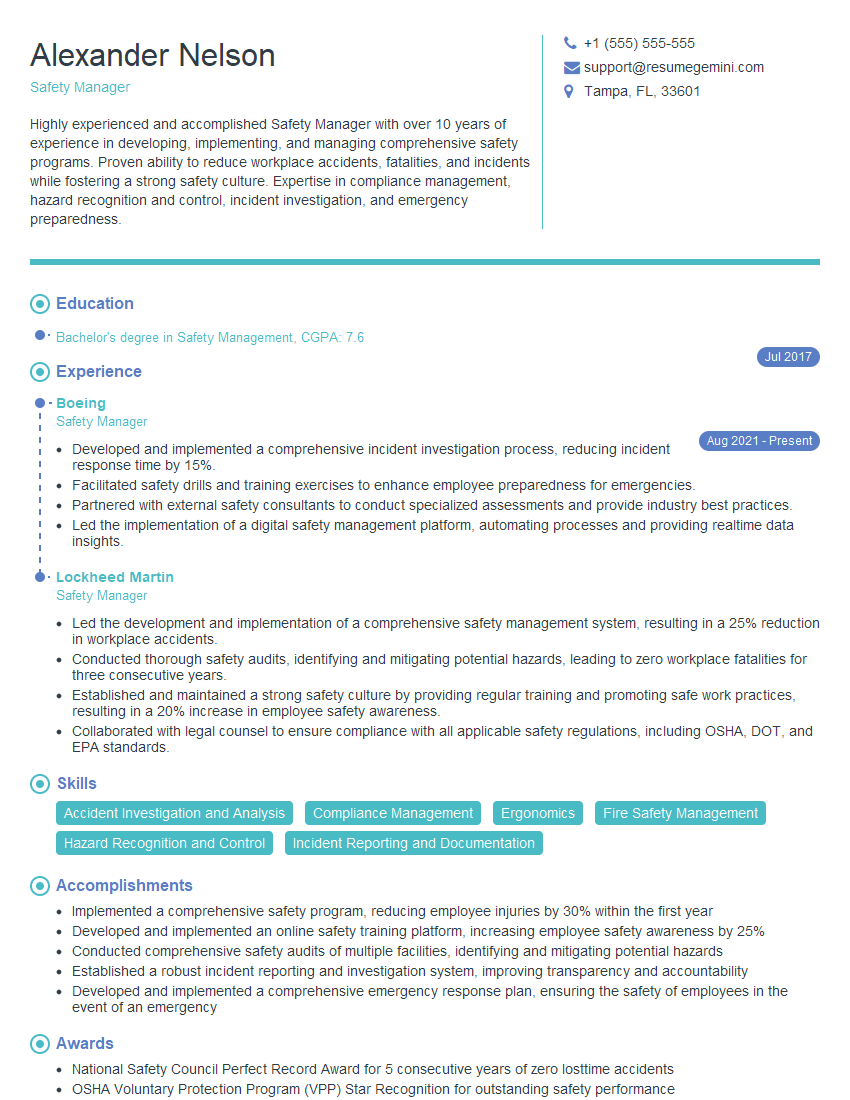
Safety Manager Resume Sample

Facility Manager Resume Sample

Operations Manager Resume Sample
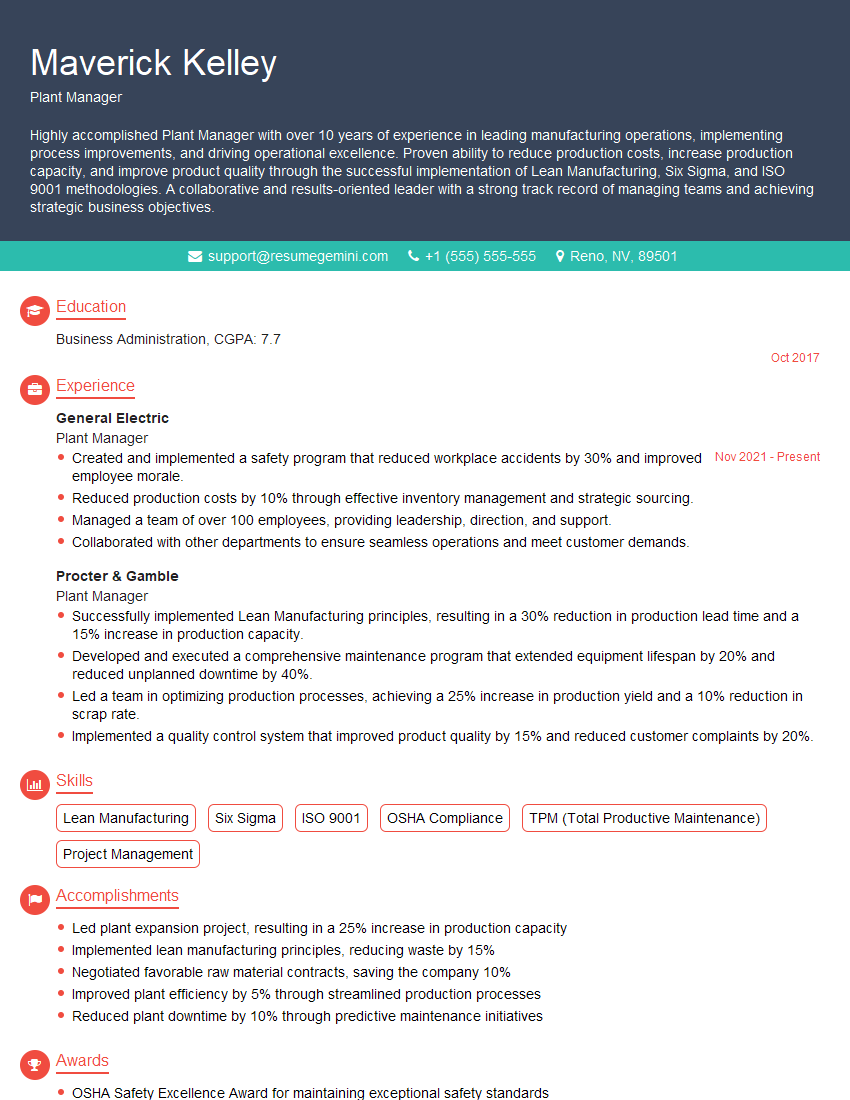
Plant Manager Resume Sample
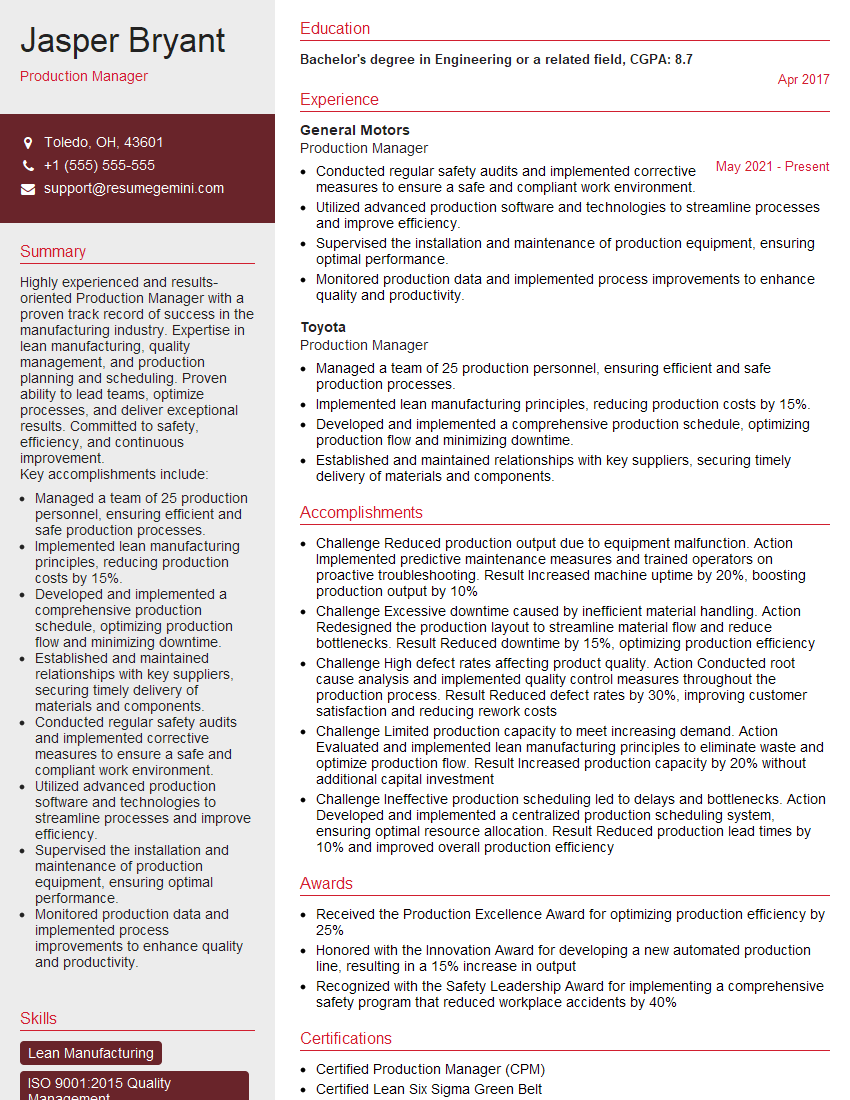
Production Manager Resume Sample

Maintenance Manager Resume Sample

Training Coordinator Resume Sample

Compliance Manager Resume Sample

Compliance Officer Resume Sample

Regulatory Compliance Specialist Resume Sample

Risk Management Specialist Resume Sample

Process Safety Engineer Resume Sample

Safety Consultant Resume Sample

Safety Engineer Resume Sample
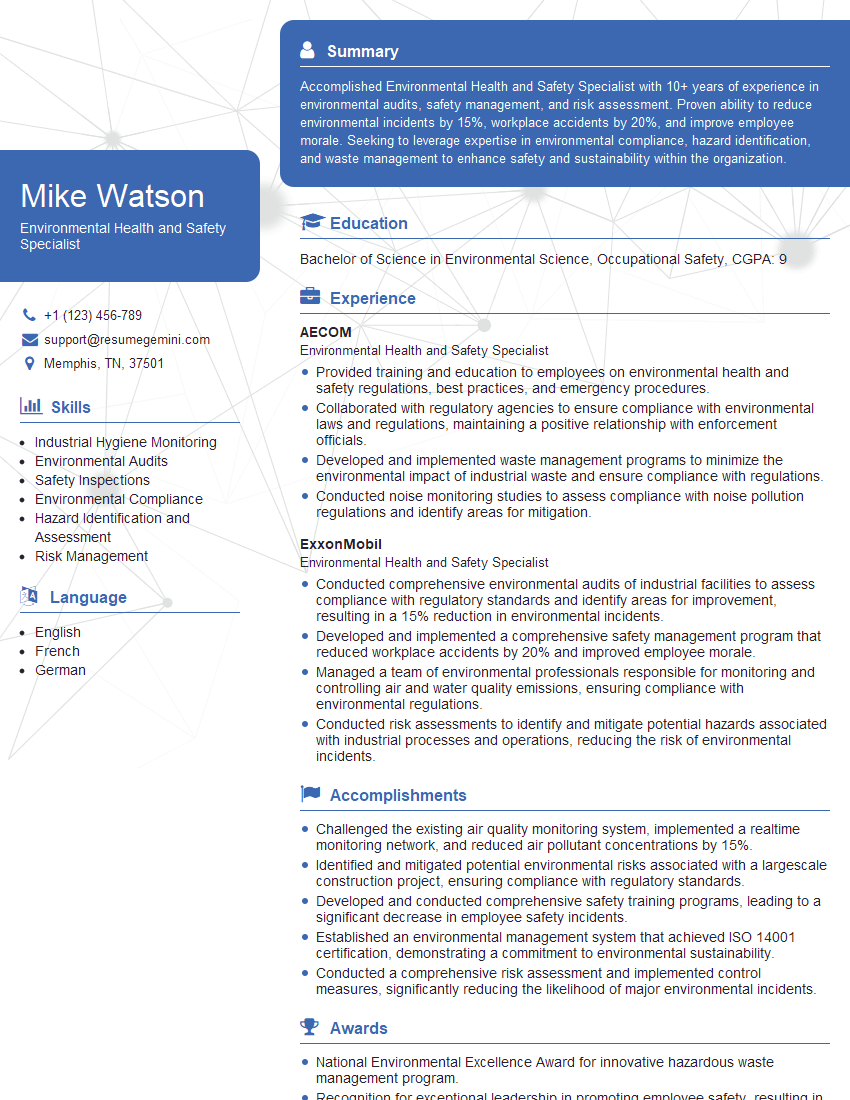
Environmental Health and Safety Specialist Resume Sample

Industrial Hygienist Resume Sample
- Safety Manager
- Facility Manager
- Operations Manager
- Plant Manager
- Production Manager
- Maintenance Manager
- Training Coordinator
- Compliance Manager
- Compliance Officer
- Regulatory Compliance Specialist
- Risk Management Specialist
- Process Safety Engineer
- Safety Consultant
- Safety Engineer
- Environmental Health and Safety Specialist
- Industrial Hygienist
Explore more articles
Users Rating of Our Blogs
Share Your Experience
We value your feedback! Please rate our content and share your thoughts (optional).
What Readers Say About Our Blog
Very informative content, great job.
good