Interviews are more than just a Q&A session—they’re a chance to prove your worth. This blog dives into essential Log Forestry interview questions and expert tips to help you align your answers with what hiring managers are looking for. Start preparing to shine!
Questions Asked in Log Forestry Interview
Q 1. Describe your experience with different harvesting methods (clear-cutting, selective cutting, etc.).
My experience encompasses a wide range of harvesting methods, each chosen strategically based on factors like forest type, terrain, and desired outcomes. Clear-cutting, while sometimes controversial, is efficient for establishing even-aged stands and is suitable for species that thrive in full sunlight. I’ve overseen numerous clear-cuts, ensuring meticulous planning to minimize environmental impact, including buffer zones and careful consideration of water courses.
Selective cutting, on the other hand, is ideal for maintaining biodiversity and creating uneven-aged forests. This method involves removing only specific trees, leaving a diverse canopy. I’ve implemented selective cutting techniques in old-growth forests, prioritizing the removal of mature trees while preserving the health and longevity of the ecosystem. Another method I’m proficient in is shelterwood cutting, where a portion of the mature trees are left to provide shade and shelter for regeneration. This method helps in smooth transitions during forest regeneration.
Finally, I have extensive experience with thinning, where we remove smaller, less desirable trees to improve the growth of remaining trees. This not only increases timber quality but also reduces competition for resources, leading to healthier and more productive forests. Each method requires careful planning, execution, and post-harvest management to ensure sustainable forestry practices.
Q 2. Explain the importance of sustainable forestry practices.
Sustainable forestry is paramount to ensuring the long-term health and productivity of our forests. It’s not just about harvesting timber; it’s about managing the entire ecosystem in a responsible way that balances economic needs with ecological integrity. Think of it like managing a bank account – you can withdraw some funds (timber), but you must also make deposits (reforestation, conservation) to ensure the account doesn’t run dry.
Key aspects of sustainable forestry include:
- Reforestation and Afforestation: Replanting harvested areas and establishing new forests.
- Biodiversity Conservation: Maintaining a variety of tree species and habitats to support a diverse range of plants and animals.
- Soil and Water Protection: Preventing erosion and maintaining water quality through careful planning and execution of harvesting operations.
- Reduced-Impact Logging: Utilizing techniques that minimize damage to the forest during harvesting operations.
- Carbon Sequestration: Recognizing the vital role forests play in absorbing atmospheric carbon dioxide.
By adopting these practices, we ensure the forest remains a valuable resource for generations to come, providing timber, clean water, biodiversity, and other ecosystem services.
Q 3. What are the key safety regulations you adhere to during logging operations?
Safety is the absolute top priority in all logging operations. We adhere strictly to all relevant safety regulations and company policies, which are often more stringent than the minimum legal requirements. This includes regular safety training for all personnel, pre-job briefings, and ongoing risk assessments.
Specific regulations we rigorously follow include:
- Personal Protective Equipment (PPE): Mandatory use of hard hats, safety glasses, hearing protection, steel-toe boots, and high-visibility clothing.
- Fall Protection: Implementing comprehensive fall protection measures, especially when working at heights.
- Emergency Response Procedures: Establishing clear emergency procedures and ensuring that all personnel are trained in first aid and emergency response techniques.
- Safe Operation of Machinery: Regular maintenance and inspections of equipment, coupled with operator training and certification.
- Environmental Awareness: Recognizing and mitigating risks associated with working in potentially hazardous environments, such as steep slopes or unstable terrain.
We also maintain meticulous records of all safety incidents, conducting thorough investigations to identify root causes and implement corrective actions to prevent recurrence. A culture of safety is fostered through open communication, feedback mechanisms, and regular safety audits.
Q 4. How do you ensure efficient log transportation and minimize damage?
Efficient log transportation and damage minimization are critical for profitability and sustainability. We employ a multi-faceted approach to optimize these processes. Proper planning is key – this includes establishing well-maintained forest roads and considering the weight and dimensions of the logs before transportation begins.
Techniques we use include:
- Strategic Road Planning: Designing and maintaining forest roads that are suitable for the size and weight of the logging equipment and the volume of logs being transported.
- Appropriate Equipment: Utilizing forwarders and skidders equipped with appropriate bunks and winches to minimize log damage during transport.
- Careful Loading and Unloading: Ensuring logs are properly secured and loaded onto trucks to prevent shifting during transit.
- Regular Maintenance: Keeping equipment in excellent condition to prevent breakdowns and potential damage.
- Driver Training: Ensuring drivers are properly trained on safe driving techniques and responsible handling of loads.
By implementing these strategies, we minimize damage to the logs and the environment, reducing costs and enhancing sustainability.
Q 5. What experience do you have with various logging equipment (e.g., harvesters, forwarders)?
My experience with logging equipment is extensive. I am proficient in operating and maintaining a variety of harvesting machines, including harvesters and forwarders. Harvesters are sophisticated machines that fell, limb, and delimb trees, often cutting them into pre-determined lengths. I’m experienced with different harvester heads, each suited to varying tree sizes and species. I’ve worked with brands such as John Deere, Komatsu, and Ponsse, understanding their unique features and capabilities.
Forwarders play a vital role in transporting logs from the harvesting site to a landing area. I’m familiar with the operation and maintenance of various forwarder models, proficient in maneuvering them across challenging terrain while minimizing ground disturbance. This experience ensures efficient and safe log extraction, critical for minimizing environmental impact and operational costs. In addition to harvesters and forwarders, I have experience operating and maintaining skidders and other auxiliary equipment used in logging operations.
Q 6. How do you assess the volume and quality of logs?
Assessing log volume and quality is crucial for accurate pricing and efficient resource management. We employ several techniques to achieve this.
Volume Assessment: This can be done using:
- Scaling Sticks and Tapes: Traditional methods using calibrated tools to measure log diameter and length.
- Log Scaling Software: Utilizing computer software that calculates volume based on measurements taken in the field.
- Volume Estimation Models: Employing statistical models that predict log volume based on factors like tree species, diameter, and height.
Quality Assessment: involves evaluating several factors:
- Species: Identifying the tree species, as different species command different prices.
- Diameter and Length: Larger diameter and longer logs generally fetch higher prices.
- Knots, Rot, and Defects: Evaluating the presence and extent of defects that can reduce log value.
- Straightness: Assessing the straightness of the log, as crooked logs are less valuable.
By combining volume and quality assessments, we provide a comprehensive evaluation of each log’s value, ensuring fair compensation and efficient resource allocation.
Q 7. Describe your experience with log scaling and measurement techniques.
Log scaling and measurement techniques are fundamental to accurate timber volume determination. My experience encompasses both traditional and modern methods. Traditional methods involve using scaling sticks and diameter tapes to measure log diameter at both ends and the length of the log. These measurements are then used, usually in conjunction with a log scaling table or formula, to calculate the volume.
I’m proficient in various scaling rules such as the Doyle, Scribner, and International 1/4-inch rules, each having its own specific formula. The choice of rule depends on the species and the intended use of the timber. For example, the Doyle rule tends to underestimate volume for smaller logs, while the Scribner rule is more accurate for larger logs. The International 1/4-inch rule is often preferred for its consistent and reliable results across different log sizes.
Modern techniques often involve the use of laser scanners or other electronic measuring devices that provide rapid and highly accurate measurements, minimizing manual error and reducing the time required for scaling. The data is then entered into a computer system for automated volume calculation. I am well-versed in these technologies and can integrate them effectively with traditional methods to ensure accurate and efficient log scaling.
Q 8. Explain your understanding of forest inventory and growth modeling.
Forest inventory is the process of collecting and analyzing data about a forest’s resources, like tree species, size, density, and volume. Growth modeling uses this data, along with ecological understanding, to predict future forest conditions. Think of it like taking a census of a forest, then using that information to forecast its future population.
For example, we might use inventory data from ground surveys and aerial imagery (LiDAR) to create a detailed map showing the location and characteristics of each tree. This detailed inventory is crucial for sustainable forestry. Growth models, often employing sophisticated algorithms and statistical techniques, then predict how these trees will grow (in height, diameter, etc.) over a specific time period, considering factors like species, site quality, and climate.
These models allow us to make informed decisions about harvesting strategies, ensuring we don’t over-harvest and maintain forest health. For example, we might use a growth model to determine the optimal rotation age – the time between harvests – for a particular stand of timber, balancing yield with ecological sustainability.
Q 9. How do you manage risks associated with weather conditions during logging operations?
Managing weather risks in logging involves proactive planning and real-time adaptation. We use weather forecasts extensively – not just daily predictions, but detailed hourly forecasts including wind speed, rainfall, and lightning risk. This informs decisions about when and where to work.
- Pre-logging planning: We select logging sites and schedules to minimize exposure to high-risk weather periods, such as hurricane seasons or periods of high winds.
- Safety protocols: We have strict procedures for suspending operations during severe weather, including lightning storms and high winds. Crew members are trained to recognize and respond to hazardous conditions. We utilize communication systems to allow for rapid response to changes in weather.
- Equipment maintenance: Ensuring that all equipment is in top working order and regularly inspected reduces the chance of weather-related malfunctions. For example, ensuring proper drainage and structural integrity of equipment during periods of high rainfall.
- Emergency preparedness: We have emergency plans in place, including communication systems and evacuation procedures, to deal with unexpected severe weather events.
For instance, during a period of high winds, we might choose to suspend operations altogether, as falling trees pose a significant safety hazard. This proactive approach prioritizes safety and minimizes potential damage to equipment and the environment.
Q 10. What is your approach to managing a logging crew and ensuring their safety?
Managing a logging crew and ensuring their safety is paramount. It’s not just about giving orders; it’s about fostering a culture of safety and mutual respect.
- Safety training: All crew members undergo regular, comprehensive safety training. This includes training on the safe use of equipment, hazard identification, first aid, and emergency procedures. Refresher training is done frequently.
- Clear communication: Open and clear communication is vital. I make sure everyone understands their roles, responsibilities, and the safety procedures. Daily briefings are held to address any potential hazards for that day’s operations.
- Supervision and oversight: I provide on-site supervision to monitor adherence to safety protocols and provide immediate guidance. I ensure that all equipment is properly maintained and used according to manufacturer guidelines.
- Incentivizing safety: We promote a safety-first culture by rewarding safe work practices and recognizing individuals who actively contribute to a safe work environment.
- Regular safety meetings: Frequent meetings are held to discuss safety incidents, identify areas for improvement and receive feedback from crew members. This fosters a culture of open communication and continuous improvement.
For example, before any task begins, we do a detailed risk assessment and communicate the necessary safety precautions to the crew. If a crew member notices a potential hazard, they are empowered to halt work until the issue is resolved.
Q 11. Describe your experience with forest road construction and maintenance.
Forest road construction and maintenance are crucial for efficient and sustainable logging. Poor roads lead to increased costs, environmental damage, and safety risks.
My experience includes overseeing the design, construction, and maintenance of forest roads, incorporating best practices for erosion control, water management, and minimizing environmental impact. This involves working with engineers and contractors to ensure roads meet the required standards for carrying heavy logging equipment and are properly graded and drained to prevent erosion and damage during wet weather.
Maintenance involves regular inspections, grading, culvert cleaning, and pothole repair. The goal is to ensure road stability and longevity, maximizing efficiency and minimizing long-term damage to the forest.
For instance, I have experience in selecting appropriate road construction materials (like gravel types) based on local geology and soil conditions, and in applying erosion control measures like using gabions and water bars to prevent soil erosion and sedimentation of nearby streams.
Q 12. How do you handle conflicts with landowners or environmental groups?
Handling conflicts with landowners or environmental groups requires strong communication and a collaborative approach. It’s essential to understand their concerns and address them respectfully and transparently.
- Open communication: I actively engage in dialogue, listening to their concerns and providing clear explanations of our logging practices.
- Transparency: I provide readily available documentation outlining our plans, demonstrating compliance with regulations and environmental protection measures.
- Collaboration: I seek to find common ground and negotiate solutions that satisfy both parties’ needs, perhaps involving adjustments to logging plans to minimize negative impact on specific areas or habitats.
- Mediation: If necessary, I am willing to involve a neutral third party to mediate disagreements.
- Legal compliance: We make sure that all our operations fully comply with all relevant environmental regulations and laws.
For example, if a local environmental group expresses concern about a logging operation’s potential impact on a sensitive wetland, we might adjust our plan to avoid that area, employing alternative logging routes or harvesting methods. A collaborative approach often leads to solutions that satisfy both economic needs and environmental concerns.
Q 13. What is your experience with GPS and GIS technologies in forestry?
GPS and GIS technologies are indispensable in modern forestry, significantly improving efficiency, accuracy, and sustainability. GPS allows for precise location tracking of trees, equipment, and logging activities, while GIS provides powerful tools for data visualization, analysis, and planning.
I have extensive experience using GPS to map forests, plan logging operations, and monitor the progress of harvesting activities. This involves using handheld GPS units, and integrating data into GIS software (such as ArcGIS or QGIS). This allows for detailed planning and monitoring of logging operations, ensuring precise harvesting and reduced environmental impact.
For example, we use GIS to create detailed maps showing the location of valuable trees, sensitive areas (such as streams and wetlands), and existing infrastructure. This information helps optimize logging routes to minimize disturbance to sensitive areas and maximize efficient timber extraction. We can also use GIS to analyze harvest data and create post-harvest maps showing the extent of logging activity, aiding in evaluating the efficacy of logging plans.
Q 14. Explain your understanding of forest ecology and its impact on logging practices.
Understanding forest ecology is fundamental to sustainable logging practices. It’s about recognizing the complex interactions between trees, soil, water, and wildlife and how logging activities can impact these relationships.
My understanding of forest ecology guides my decision-making processes. For instance, I consider the role of different tree species in maintaining biodiversity, soil health, and water quality. I am familiar with various forest types and their unique ecological characteristics. This ecological understanding is critical for developing sustainable logging plans that minimize the negative impacts of logging and promote forest regeneration.
For example, before planning a logging operation, I would assess the forest’s ecological conditions, identifying sensitive areas, such as riparian zones (areas around streams) or habitats for endangered species. This informs the design of a harvesting plan that minimizes disturbance to these areas. Post-harvest, we employ measures like replanting native species to facilitate forest regeneration and promote long-term ecological resilience.
Q 15. How do you develop and implement a sustainable harvesting plan?
Developing a sustainable harvesting plan is crucial for responsible forestry. It’s like creating a detailed recipe for harvesting timber while ensuring the forest’s health and productivity for future generations. This involves a multi-step process:
- Inventory and Assessment: We begin with a thorough inventory of the forest, using techniques like LiDAR and aerial photography to map tree species, size, density, and overall forest health. This data helps determine the volume of timber available for harvest.
- Harvesting Methods Selection: Based on the inventory, we choose the most appropriate harvesting method. Options include clearcutting (removing all trees in an area), selective harvesting (removing specific trees), or shelterwood harvesting (leaving some trees for seed production and shade). The choice depends on factors like species, terrain, and environmental goals.
- Road Network Planning: Efficient road networks are essential for minimizing soil compaction and environmental impact. We strategically plan road locations to optimize timber extraction and minimize disturbance to the remaining forest.
- Silvicultural Practices: Sustainable harvesting plans incorporate silvicultural practices—techniques for managing forest growth. This might involve planting seedlings after harvest, promoting natural regeneration, or managing understory vegetation to enhance growth of remaining trees.
- Environmental Impact Assessment: We conduct a thorough assessment to identify potential environmental impacts, such as soil erosion, water quality changes, and habitat disruption. Mitigation strategies are developed to minimize these impacts.
- Monitoring and Evaluation: Ongoing monitoring is key to ensure the plan’s effectiveness. We track indicators like tree regeneration rates, water quality, and wildlife populations to make adjustments as needed.
For example, in a recent project, we implemented a selective harvesting plan in a mixed-conifer forest to maintain biodiversity. By carefully selecting individual trees for harvest, we preserved the forest structure and minimized disturbance to wildlife habitat.
Career Expert Tips:
- Ace those interviews! Prepare effectively by reviewing the Top 50 Most Common Interview Questions on ResumeGemini.
- Navigate your job search with confidence! Explore a wide range of Career Tips on ResumeGemini. Learn about common challenges and recommendations to overcome them.
- Craft the perfect resume! Master the Art of Resume Writing with ResumeGemini’s guide. Showcase your unique qualifications and achievements effectively.
- Don’t miss out on holiday savings! Build your dream resume with ResumeGemini’s ATS optimized templates.
Q 16. What is your experience with different types of wood and their properties?
My experience spans a wide range of wood species, each with unique properties impacting its application. Think of it like having a toolbox filled with different tools—each best suited for a specific job.
- Softwoods: Species like Pine, Fir, and Spruce are known for their relatively lightweight, easy-to-work-with properties. They are commonly used in construction, lumber, and paper production. Pine, for instance, is often chosen for its strength-to-weight ratio in framing applications.
- Hardwoods: Oak, Maple, Cherry, and Walnut are examples of hardwoods known for their durability, density, and intricate grain patterns. They’re preferred for furniture, flooring, and fine woodworking due to their aesthetics and strength. Oak, for instance, is highly valued for its resistance to wear and tear.
- Understanding Properties: I’m familiar with key properties like density, strength (compressive, tensile, shear), hardness, and moisture content, which significantly impact the final use of the wood. For example, understanding the moisture content is crucial to prevent warping and cracking during drying and processing.
My experience includes working with both domestically sourced and imported woods, allowing me to adapt to various applications and market demands.
Q 17. Describe your experience with forest certification programs (e.g., FSC, SFI).
Forest certification programs like the Forest Stewardship Council (FSC) and Sustainable Forestry Initiative (SFI) are vital for ensuring responsible forest management. They’re like quality control stamps for sustainably harvested timber.
My experience includes working with projects certified under both FSC and SFI. This involves understanding and adhering to their respective standards, which cover various aspects of forest management, including:
- Sustainable Harvesting Practices: Adherence to scientifically-based harvesting plans that maintain forest health and biodiversity.
- Environmental Protection: Minimizing impacts on water quality, soil erosion, and wildlife habitats.
- Social Responsibility: Respecting the rights of local communities and workers.
- Chain of Custody: Tracking timber from the forest to the final product to ensure traceability and transparency.
I’m proficient in the documentation and auditing processes required for certification, ensuring compliance with all relevant standards. This experience allows me to deliver products that meet the growing demand for sustainably sourced timber and contribute to responsible forest management practices.
Q 18. How do you address environmental concerns related to logging?
Addressing environmental concerns is paramount in log forestry. It’s not just about harvesting trees; it’s about ensuring the long-term health of the forest ecosystem. My approach involves a proactive and multi-faceted strategy:
- Minimizing Habitat Fragmentation: Careful planning of road networks and harvesting patterns to reduce the impact on wildlife movement and habitat connectivity.
- Protecting Water Quality: Implementing best management practices to prevent erosion and sedimentation in streams and rivers.
- Reducing Greenhouse Gas Emissions: Utilizing efficient harvesting and transportation techniques to minimize fuel consumption and carbon emissions.
- Promoting Biodiversity: Employing silvicultural techniques that maintain a diversity of tree species and forest structure.
- Reforestation and Afforestation: Planting trees to restore harvested areas and expand forested land.
For example, in one project, we implemented riparian buffers (vegetated areas along waterways) to protect water quality and provide habitat for aquatic species. This demonstrated our commitment to environmental stewardship.
Q 19. What is your experience with log processing and yard management?
Log processing and yard management are crucial for efficient timber handling and value maximization. Imagine it as the post-harvest stage where we prepare the raw material for its final destination. My experience encompasses:
- Log Scaling and Grading: Accurately measuring and classifying logs based on species, diameter, length, and quality, ensuring fair pricing and efficient allocation.
- Debarking and Processing: Supervising the debarking process and overseeing the cutting, sawing, and chipping of logs into various products, according to market demands.
- Yard Layout and Organization: Designing and managing efficient log yard layouts to optimize storage, minimize handling, and prevent damage.
- Inventory Management: Utilizing inventory tracking systems to monitor log quantities, species, and quality, ensuring timely processing and delivery.
- Equipment Maintenance: Overseeing the maintenance and repair of log processing equipment to ensure optimal performance and minimize downtime.
I have experience with both manual and automated log handling systems, adapting my approach to the specific requirements of each project and maximizing efficiency.
Q 20. Explain your knowledge of timber sales contracts and negotiations.
Timber sales contracts are legally binding agreements outlining the terms and conditions of timber harvesting and sale. Negotiating these contracts requires a deep understanding of market dynamics, forestry practices, and legal considerations. My experience includes:
- Understanding Market Conditions: Analyzing market trends for various timber products to determine fair pricing and contract terms.
- Crucial Contract Clauses: Negotiating key aspects of the contract, including volume, species, price, payment terms, harvesting timelines, and liability clauses.
- Risk Management: Identifying and mitigating potential risks associated with timber sales, such as market fluctuations, environmental concerns, and unforeseen circumstances.
- Compliance and Legal Aspects: Ensuring that the contract complies with all relevant laws and regulations.
- Relationship Building: Establishing strong relationships with landowners and buyers to foster trust and transparency.
In a recent negotiation, I successfully secured a favorable contract for a landowner by leveraging my market knowledge and negotiating favorable payment terms and risk-sharing provisions.
Q 21. Describe your experience with using forest management software.
Forest management software is indispensable for efficient and sustainable forestry operations. It’s like having a sophisticated digital toolbox that streamlines various tasks. My experience includes using several software packages, including GIS (Geographic Information Systems) platforms for mapping and data analysis, and dedicated forest management software for planning, inventory, and reporting.
Specific applications include:
- Data Management: Inputting and managing large datasets related to forest inventory, harvesting plans, and operational activities.
- Spatial Analysis: Using GIS software to analyze forest spatial data, creating maps, and identifying suitable areas for harvesting or reforestation.
- Growth and Yield Modeling: Utilizing software to predict the future growth of the forest under various management scenarios.
- Harvest Scheduling and Planning: Developing optimal harvesting schedules to meet operational goals and environmental objectives.
- Reporting and Compliance: Generating reports required for forest certification and regulatory compliance.
I am proficient in using these tools to optimize forest management strategies, improve decision-making, and enhance efficiency in all aspects of forest operations. The use of such software has been critical in creating cost-effective and sustainable forestry plans.
Q 22. How do you ensure compliance with all relevant regulations and permits?
Compliance with regulations and permits in log forestry is paramount. It’s not just about avoiding fines; it’s about responsible stewardship of our forests. My approach involves a multi-step process starting before any logging even begins.
- Pre-harvest planning: This includes a thorough review of all applicable federal, state, and local regulations, such as those concerning endangered species protection (e.g., the Endangered Species Act), water quality standards (e.g., Clean Water Act), and forest management plans. I meticulously research and obtain all necessary permits, including harvesting permits, right-of-way access permits, and any permits required for specific operations like stream crossings.
- On-site monitoring: During logging operations, I ensure adherence to permit conditions. This includes regular inspections to verify compliance with stipulations on areas to be avoided, buffer zones around sensitive habitats, and erosion control measures. I maintain detailed records of these inspections.
- Post-harvest reporting: After logging is complete, I file all required reports, including documenting any deviations from the original plan and the steps taken to mitigate any unforeseen impacts. Accurate and transparent reporting demonstrates our commitment to responsible forestry.
For example, in a recent project near a protected salmon stream, we secured a permit that required us to implement specific erosion controls and maintain a 100-foot buffer zone. Through meticulous planning and on-site monitoring, we not only met but exceeded the permit requirements, resulting in minimal environmental impact.
Q 23. Describe your experience with biomass harvesting and utilization.
Biomass harvesting and utilization are increasingly important for sustainable forestry. My experience encompasses the entire process, from harvesting to end-use.
- Harvesting: I’m proficient in utilizing various techniques for harvesting biomass, including whole-tree harvesting and chipping on-site, depending on the species and intended use. This minimizes waste and maximizes resource recovery.
- Processing: I’m familiar with different processing methods for biomass, such as chipping, pelletizing, and densification, to prepare it for various applications.
- Utilization: I understand the different end-uses for biomass, including bioenergy (e.g., generating electricity or heat), biofuels, and even as a soil amendment. I’ve worked on projects supplying biomass to power plants and also to agricultural operations.
For instance, I managed a project where we harvested logging residues (branches, tops, etc.) that would typically have been left in the forest. We processed these residues into wood pellets, reducing waste and providing a renewable energy source for a local community. This project showcased the economic and environmental benefits of biomass utilization.
Q 24. What is your experience with forest health monitoring and disease control?
Forest health monitoring and disease control are crucial for long-term forest productivity and ecosystem health. My experience involves proactive monitoring and implementing preventative and responsive measures.
- Monitoring: I use a variety of techniques, including visual assessments, remote sensing (using aerial imagery and satellite data), and sampling to identify signs of disease or pest infestations. Early detection is key to effective management.
- Disease Identification: I’m skilled at identifying various tree diseases and insect pests common in my region, understanding their life cycles and spread patterns.
- Control Measures: I implement control measures ranging from sanitation harvesting (removing infected trees) to biological control (introducing beneficial insects) and chemical treatments (when absolutely necessary and according to strict guidelines).
In one instance, we detected an early outbreak of pine beetle infestation through regular monitoring. By promptly implementing a targeted sanitation harvesting program, we contained the infestation, preventing it from spreading and causing widespread damage to the forest.
Q 25. How do you manage and minimize the impact of logging on wildlife habitats?
Minimizing the impact of logging on wildlife habitats requires careful planning and execution. My strategy focuses on habitat preservation and restoration.
- Pre-harvest surveys: Before any logging begins, I conduct thorough surveys to identify sensitive wildlife habitats, including nesting sites, denning areas, and migration corridors. This information guides the logging plan.
- Selective logging: I utilize selective logging techniques to minimize habitat disruption. This involves carefully choosing which trees to harvest, leaving behind sufficient trees for cover and food sources.
- Buffer zones: I establish buffer zones around sensitive habitats to provide a transition area between logged and undisturbed areas, allowing wildlife to adjust.
- Post-harvest restoration: After logging, I implement restoration measures, such as planting trees and creating habitat features that benefit wildlife.
In a recent project near a black bear habitat, we carefully planned our logging operation to avoid disrupting denning areas and migration routes. We left behind strategically placed trees for cover and maintained a significant buffer zone around the critical habitat. This allowed the bears to remain undisturbed while still allowing for responsible timber harvesting.
Q 26. Describe your approach to addressing challenges related to soil erosion and water quality.
Soil erosion and water quality are significant concerns in log forestry. My approach centers on preventative measures and proactive mitigation.
- Erosion Control: I employ various erosion control methods, including maintaining riparian buffer zones (vegetated areas along streams), using water bars and ditches to divert water flow, and avoiding logging during periods of high rainfall.
- Water Quality Protection: I minimize sediment runoff into streams by implementing best management practices during road construction and logging operations. This includes using proper road drainage systems and stabilizing stream crossings.
- Reforestation: Reforestation efforts help stabilize the soil and prevent erosion, while also improving water quality by filtering pollutants.
For example, in a mountainous region prone to erosion, we utilized contour logging techniques to minimize slope disturbance and installed water bars at regular intervals along skid trails to prevent runoff. These measures significantly reduced erosion and protected water quality.
Q 27. How do you handle emergency situations and accidents during logging operations?
Safety is my top priority. A robust emergency response plan is essential for managing accidents and emergencies during logging operations.
- Pre-planning: This includes designating emergency contact information, establishing communication protocols, and identifying evacuation routes.
- Training: I ensure all personnel receive thorough training in first aid, CPR, and emergency procedures. Regular safety meetings are conducted to review protocols.
- Equipment Maintenance: Proper maintenance of equipment is crucial for preventing accidents. I ensure regular inspections and repairs to maintain equipment in safe operating condition.
- Emergency Response: In the event of an accident or emergency, I follow established protocols, contacting emergency services immediately, and implementing the appropriate response depending on the situation.
We maintain a detailed emergency response plan that’s regularly reviewed and updated. It includes contact information for emergency services, local authorities, and our company’s safety officer. Every employee is trained on this plan, making them a vital part of ensuring a safe working environment.
Q 28. What are your career goals within the log forestry industry?
My career goals involve furthering my expertise in sustainable forestry and contributing to the industry’s shift towards environmentally responsible practices.
- Leadership Roles: I aspire to take on leadership roles within log forestry, managing larger-scale projects and mentoring younger professionals.
- Technological Advancement: I want to stay at the forefront of technological advancements in the field, exploring and implementing innovative techniques in harvesting, processing, and forest management.
- Advocacy: I intend to advocate for sustainable practices and policies within the log forestry industry, promoting responsible environmental stewardship.
Ultimately, I aim to contribute to a future where log forestry is not only economically viable but also environmentally sound, ensuring the long-term health and sustainability of our forests.
Key Topics to Learn for Log Forestry Interview
- Sustainable Forestry Practices: Understanding principles of sustainable harvesting, reforestation, and forest management. Practical application includes discussing your knowledge of selective logging techniques and their environmental impact.
- Log Harvesting Techniques: Familiarize yourself with various harvesting methods (e.g., clear-cutting, shelterwood, selection cutting) and their suitability for different forest types and terrain. Practical application involves explaining the trade-offs between efficiency and environmental considerations in your choice of harvesting method.
- Log Transportation and Logistics: Understanding the challenges and logistics involved in transporting logs from the harvesting site to processing facilities. Practical application might include discussing efficient routing strategies, minimizing environmental impact during transportation, and addressing safety concerns.
- Forest Health and Disease Management: Knowledge of common forest diseases and pests, and strategies for prevention and control. Practical application involves describing your experience or understanding of techniques to mitigate risks to forest health.
- Forest Economics and Business Management: Understanding the financial aspects of log forestry, including cost analysis, profitability, and market trends. Practical application includes demonstrating your ability to analyze the economic viability of different forestry projects.
- Health and Safety Regulations: Deep understanding of relevant safety regulations and procedures in log forestry operations. Practical application involves discussing your experience in maintaining a safe work environment and adhering to safety protocols.
- GIS and Remote Sensing in Forestry: Familiarity with using Geographic Information Systems (GIS) and remote sensing techniques for forest inventory, planning, and monitoring. Practical application involves describing your experience with analyzing spatial data to support decision-making in forest management.
Next Steps
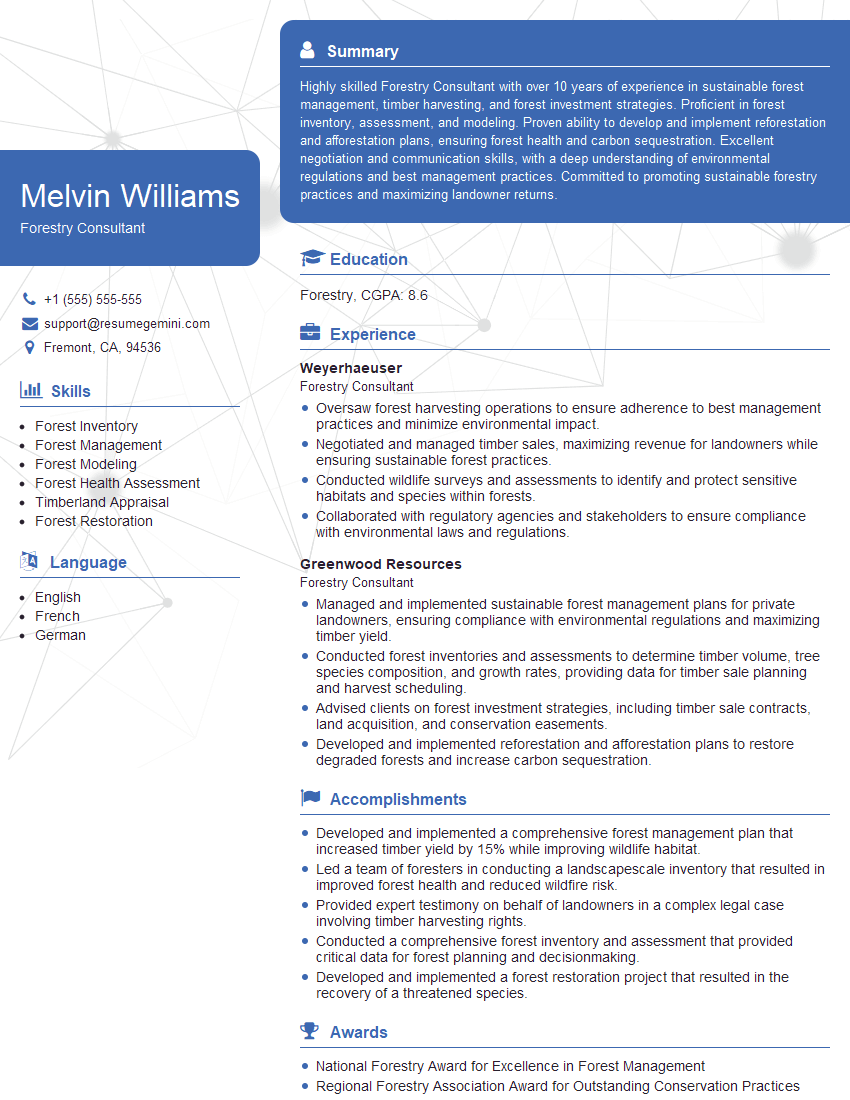
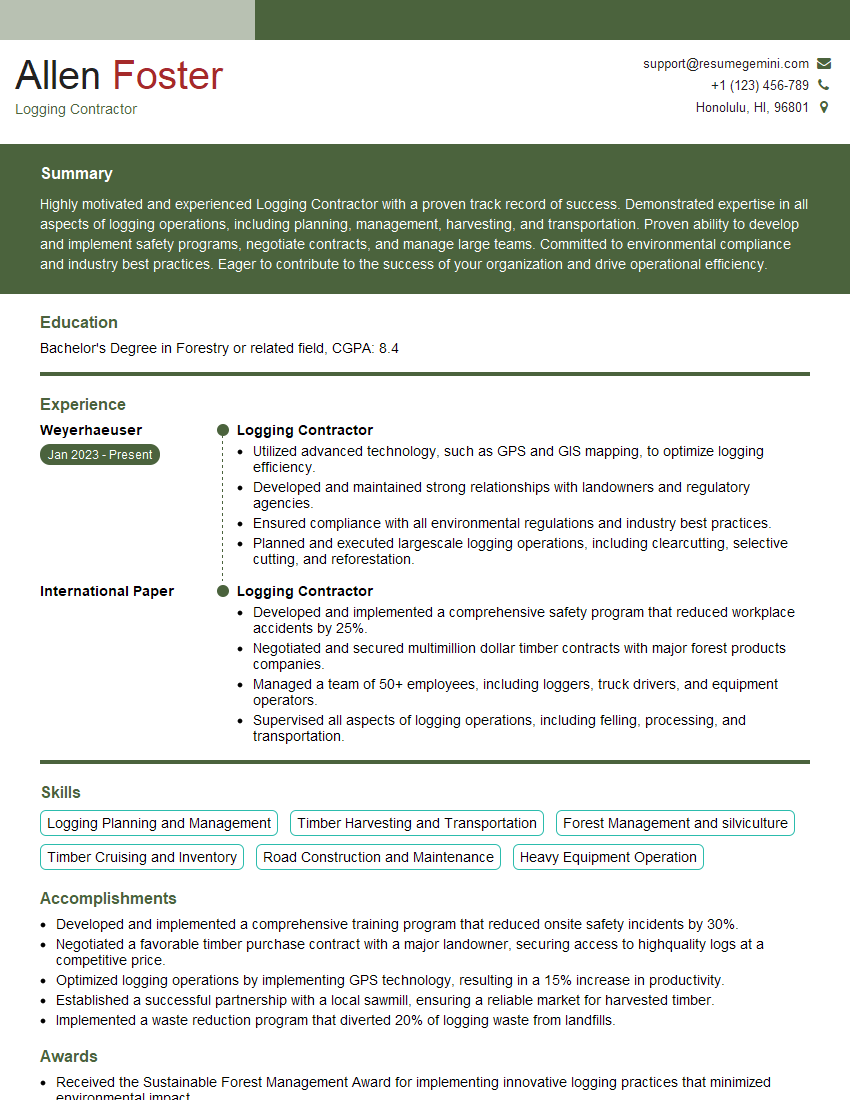
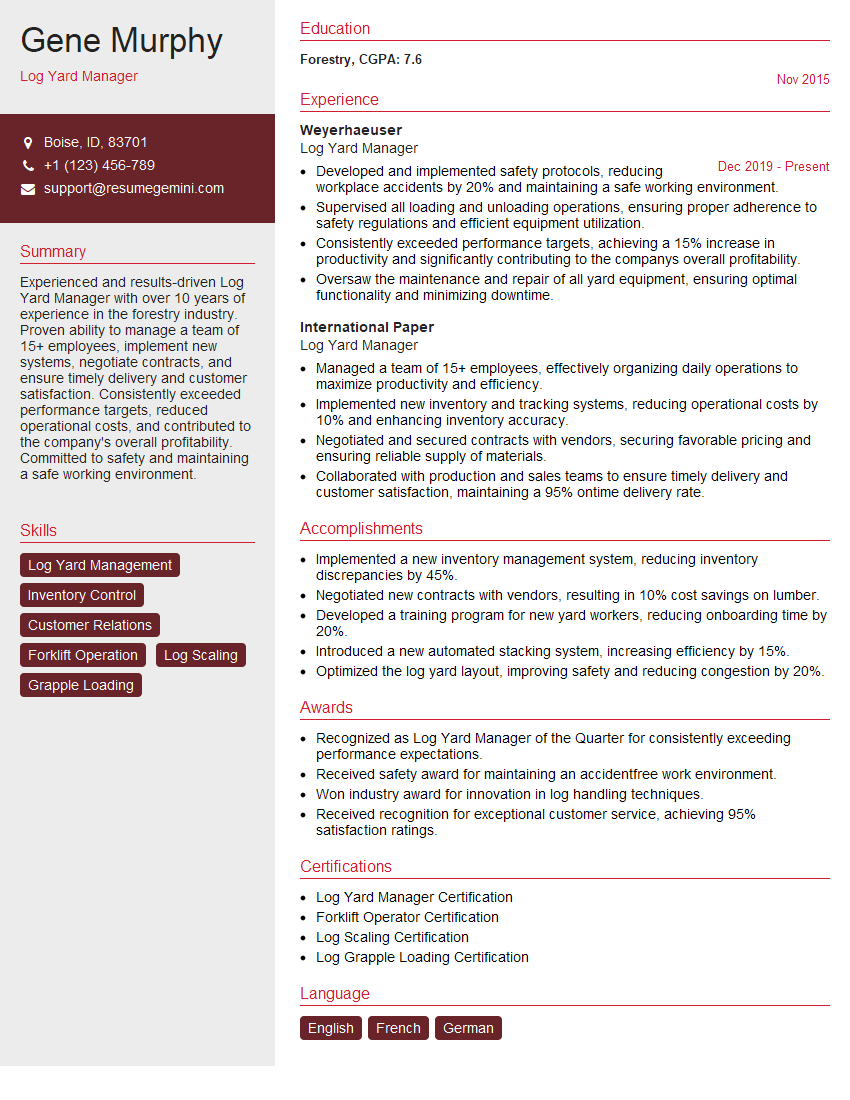
Mastering Log Forestry opens doors to a rewarding career with opportunities for growth and specialization. To maximize your job prospects, creating a strong, ATS-friendly resume is crucial. ResumeGemini is a trusted resource to help you build a professional resume that highlights your skills and experience effectively. Examples of resumes tailored to the Log Forestry sector are available to help guide your process. Invest time in crafting a compelling resume – it’s your first impression on potential employers!





Explore more articles
Users Rating of Our Blogs
Share Your Experience
We value your feedback! Please rate our content and share your thoughts (optional).
What Readers Say About Our Blog
Very informative content, great job.
good