Interviews are opportunities to demonstrate your expertise, and this guide is here to help you shine. Explore the essential Log Yard Operations interview questions that employers frequently ask, paired with strategies for crafting responses that set you apart from the competition.
Questions Asked in Log Yard Operations Interview
Q 1. Describe your experience with different log species and their handling requirements.
Understanding the properties of different log species is crucial for efficient and safe log yard operations. Different species have varying densities, moisture content, and susceptibility to decay, all impacting handling.
- Softwoods (e.g., Pine, Fir, Spruce): Generally lighter and easier to handle, but prone to breakage if mishandled. Requires careful stacking to prevent damage. I’ve found that using specialized grapples with gentler clamping pressure is key here.
- Hardwoods (e.g., Oak, Maple, Beech): Denser and heavier, requiring more powerful equipment for handling. They’re less prone to breakage but can be more challenging to maneuver, especially in tight spaces. Experience taught me the importance of strategic placement and efficient loader techniques to manage these denser logs.
- Exotic Woods: These can present unique challenges. Some may be incredibly heavy or have unusual shapes, requiring specialized equipment and handling procedures. For example, I once worked with a shipment of ironwood logs – incredibly dense and requiring extreme care to prevent damage to equipment and personnel.
My experience encompasses working with numerous species, adapting my handling techniques based on the specific characteristics of each. Proper identification and a thorough understanding of each species’ properties are paramount to prevent losses from damage or decay.
Q 2. Explain your process for ensuring the efficient flow of logs through the yard.
Efficient log flow is the backbone of a productive log yard. My process focuses on optimizing every stage, from receiving to dispatch.
- Organized Receiving: Clear designation of inbound areas and prompt unloading to prevent bottlenecks. We use a system of pre-assigned areas based on species and quality, preventing unnecessary sorting later.
- Strategic Sorting: Efficient sorting based on species, grade, and destination simplifies subsequent processing. I implemented a color-coded system for identifying different log grades, improving accuracy and speed.
- Optimized Storage: Proper stacking techniques (e.g., proper air circulation to minimize decay) and utilizing yard space effectively. We use a combination of inventory management software and physical markers to track and manage our storage efficiently.
- Efficient Loading: Planning loading sequences according to order priorities and optimizing the use of loading equipment. Minimizing movement and maximizing load capacity through careful planning.
- Regular Monitoring: Continuous monitoring of the workflow to identify and address any potential blockages. I use daily reports and on-site observations to make sure everything stays on track.
This systematic approach ensures a smooth, continuous flow of logs, minimizing delays and improving overall efficiency. Regular reviews and adjustments to the process help maintain and improve performance over time.
Q 3. How do you manage inventory in a log yard, including tracking and reporting?
Accurate inventory management is critical for profitability and operational efficiency. We use a combination of manual and technological solutions.
- Log Tracking System: Each log lot is assigned a unique identification number upon arrival, noting species, grade, volume, and source. This information is entered into our inventory management software.
- Regular Inventory Counts: Physical inventory counts are conducted regularly to verify accuracy and identify discrepancies. This is crucial for reconciling physical stock with our recorded data.
- Reporting & Analysis: The software generates comprehensive reports on inventory levels, log movements, and value. This allows for data-driven decision-making in purchasing, storage, and sales.
- Software Integration: Our inventory system integrates with our order management system, allowing for seamless tracking of log movement from the yard to the mill or customer. This prevents errors and ensures efficient processing.
This multi-faceted approach ensures precise inventory control, preventing losses and providing accurate data for financial reporting and operational planning. Investing in the right inventory management system is a key component of this strategy.
Q 4. What safety procedures do you implement to prevent accidents in a log yard?
Safety is paramount in log yard operations. We implement a comprehensive safety program encompassing preventative measures, training, and emergency response.
- Hazard Identification & Risk Assessment: Regular assessments of potential hazards, including falling logs, heavy machinery, and uneven terrain. We then work to implement controls.
- Personal Protective Equipment (PPE): Mandatory use of safety helmets, high-visibility clothing, safety boots, and hearing protection. Regular inspections ensure proper functioning and fit.
- Training & Education: Comprehensive safety training for all personnel, covering safe operating procedures for equipment, hazard recognition, and emergency response. Refresher courses are provided regularly.
- Safe Operating Procedures: Clear and concise procedures for all activities, including log handling, equipment operation, and yard maintenance. These are readily accessible to all employees.
- Emergency Response Plan: Well-defined emergency response plan covering accidents, injuries, and equipment malfunctions. This includes emergency contact information and procedures for contacting emergency services.
We actively promote a safety-conscious culture. Regular safety meetings, toolbox talks, and accident investigations help identify and mitigate potential hazards, making a safe working environment a priority.
Q 5. How do you optimize log storage to maximize space utilization and minimize degradation?
Optimizing log storage maximizes yard space and minimizes degradation. This involves a strategic approach to both layout and techniques.
- Space Optimization: Careful planning of storage areas to minimize wasted space. We use a combination of software modeling and on-site surveys to ensure the most effective use of our available land.
- Stacking Techniques: Proper stacking techniques to ensure stability and minimize log damage. This includes careful consideration of log size, species, and moisture content. We avoid overhanging stacks and maintain sufficient space between them for air circulation.
- Species-Specific Storage: Separating different log species to prevent cross-contamination and to better manage decay based on susceptibility to rot.
- Drainage: Ensuring proper drainage to prevent waterlogging and decay, particularly in wet climates. This is addressed through proper grading and drainage channels.
- Regular Inspection: Regular inspection of stored logs for signs of decay or insect infestation. Prompt action is taken to address any issues, preventing further losses.
By combining efficient space planning with appropriate stacking and maintenance procedures, we minimize log degradation and maximize the utilization of our log yard. This is a dynamic process, regularly adapting to changing yard needs and weather patterns.
Q 6. Explain your experience with different log handling equipment (e.g., loaders, grapples).
Experience with various log handling equipment is essential for efficient and safe log yard operation. I have extensive experience with various types of equipment.
- Wheel Loaders: Proficient in operating various sizes and models of wheel loaders, ranging from smaller skid steers for detailed work to larger machines for efficient bulk movement. My experience includes mastering various attachments, including different types of grapples and forks, for handling various log sizes and species.
- Log Grapples: Expertise in utilizing various log grapple designs, selecting the optimal grapple type based on log size, species, and handling requirements. I understand the importance of grapple pressure and rotation for safe and efficient log handling.
- Forwarders & Skidders: I’m familiar with the operation and maintenance of forwarders and skidders, particularly their role in transporting logs from the harvesting site to the yard. Understanding their capabilities allows for better overall yard planning and efficiency.
- Maintenance & Repair: My experience includes basic preventative maintenance and troubleshooting of common equipment issues. This is vital for ensuring continuous operation and minimizing downtime. Knowing when to call in specialized repair is also essential.
Choosing and utilizing the right equipment for the job is critical. My experience covers both selecting the right equipment and mastering safe and efficient operation of a wide variety of machines to maximize productivity and minimize risk.
Q 7. How do you manage log yard maintenance and repairs?
Log yard maintenance is crucial for safety, efficiency, and the longevity of the facility. Our maintenance program is proactive and comprehensive.
- Regular Inspections: Routine inspections of all yard infrastructure, including roads, drainage systems, and storage areas. Identifying and addressing potential problems early helps prevent larger, more costly repairs.
- Equipment Maintenance: Regular scheduled maintenance of all equipment according to manufacturer recommendations. This preventative approach helps extend the life of equipment and reduces downtime due to failures.
- Road Maintenance: Regular grading and maintenance of access roads to maintain smooth traffic flow and prevent damage to equipment.
- Drainage System Maintenance: Regular cleaning and maintenance of drainage systems to prevent waterlogging and ensure proper drainage. This is vital in reducing issues of decay and promoting safer working conditions.
- Emergency Repairs: A quick response system for emergency repairs, ensuring rapid restoration of functionality after unexpected damage or equipment failures.
A well-maintained log yard is a safe and efficient log yard. Our proactive maintenance approach minimizes downtime, reduces costs, and promotes a safe working environment for all personnel. It’s a critical investment.
Q 8. Describe your experience with log scaling and measurement techniques.
Log scaling and measurement are crucial for accurate inventory and pricing. My experience encompasses various techniques, from traditional manual methods to advanced technologies. Manual scaling involves physically measuring log diameter and length using calipers and measuring tapes, then applying formulas to calculate volume. This is labor-intensive but provides a hands-on understanding of the logs. I’m also proficient in using electronic scaling tools that utilize laser technology for quicker and more precise measurements, minimizing human error. These devices often connect directly to inventory management systems. For example, in one project, using laser scanning significantly reduced measurement time by 40%, leading to improved operational efficiency and reduced labor costs. Furthermore, I understand different scaling rules and standards (e.g., Doyle, Scribner, International 1/4-inch) and their implications for volume calculations, ensuring accurate reporting for clients and regulatory compliance.
Q 9. How do you ensure the quality control of logs throughout the yard operations?
Quality control in a log yard is paramount to maintain product value. My approach involves a multi-step process, starting with initial inspection upon log arrival. We check for defects like rot, cracks, insect damage, and degrade. This often involves visual inspection supplemented by occasionally using moisture meters to assess internal condition. Throughout the yard, regular patrols identify potential issues like broken logs or shifting piles. We employ a rigorous sorting system (explained in detail in response to Question 5) to separate logs by grade and species. Regularly scheduled quality audits, including random sampling and detailed assessments, ensure adherence to standards. Documentation plays a vital role, meticulously recording all aspects of the logs from origin to sale. For example, during a recent audit, identifying a batch of logs with higher-than-acceptable moisture content enabled us to address the issue promptly and prevent significant financial loss. This proactive approach minimizes risk and ensures consistent high-quality output.
Q 10. What strategies do you use to prevent log theft or damage?
Preventing log theft and damage requires a layered security approach. This starts with physical security measures, including perimeter fencing, security cameras with surveillance monitoring, and adequate lighting. Access control is strictly managed, with authorized personnel only having access to specific areas. We also use GPS tracking on log trucks during transportation, creating a clear chain of custody. Employing regular patrols and robust inventory management helps us detect discrepancies quickly. Furthermore, good relationships with local law enforcement and community engagement are crucial in deterring potential theft. For instance, we implemented a system of coded log markings that aid in identification if theft occurs. This proactive, multi-faceted approach minimizes risks and protects valuable assets.
Q 11. How do you handle log transportation and logistics?
Log transportation and logistics involve coordinating the movement of logs from the forest to the mill or processing plant. This includes selecting appropriate trucking companies with suitable equipment (log trucks), scheduling pickups and deliveries, optimizing routes to minimize transportation costs and time, and ensuring compliance with transportation regulations. Effective communication with all stakeholders – truck drivers, dispatchers, and receiving facilities – is crucial. We use route optimization software to determine the most efficient routes, taking into account factors like road conditions and weight limits. We meticulously track shipments using GPS tracking and maintain comprehensive delivery records. This systematic approach allows us to manage logistics effectively, minimizing delays and ensuring timely delivery, minimizing transportation costs while maintaining product quality.
Q 12. Describe your experience with different log sorting methods.
Log sorting methods vary depending on the size and scale of the operation. Manual sorting involves physically inspecting and categorizing each log based on species, diameter, length, and quality. This is suitable for smaller yards but can be time-consuming. Mechanized sorting systems, using conveyors, rollers, and automated scanners, greatly enhance efficiency, especially with large volumes. These systems often incorporate optical scanners that quickly identify species and assess quality, guiding logs to designated areas. For example, a recent upgrade to a computerized sorting system reduced our sorting time by 60%, freeing up personnel for other crucial tasks. Sophisticated systems even integrate with inventory management software for real-time tracking and optimization. The choice of sorting method depends on factors like volume, budget, and required accuracy.
Q 13. How do you manage waste and environmental concerns within a log yard?
Environmental responsibility is a cornerstone of our log yard operations. We minimize waste by implementing efficient processing methods and reclaiming usable wood scraps for things like biomass energy or mulch. We have systems in place to manage runoff, preventing soil erosion and water contamination. Careful planning of log placement minimizes soil compaction. We comply with all relevant environmental regulations, such as those related to air and water quality. Regular inspections and audits ensure we meet our environmental targets. For instance, implementing a new water filtration system effectively reduced water pollution from our yard operations, showing our dedication to sustainability. We also actively participate in reforestation initiatives, balancing resource extraction with ecological responsibility.
Q 14. Explain your experience with using log yard management software.
My experience with log yard management software is extensive. I’ve worked with several systems, from simple inventory tracking applications to comprehensive enterprise resource planning (ERP) solutions. These systems provide real-time visibility into inventory levels, facilitating efficient log tracking from entry to sale. They streamline processes like scaling, sorting, and order fulfillment. Data analysis features enable better decision-making, allowing us to optimize processes, predict demand, and manage resources efficiently. For example, implementing a specific ERP system provided a 25% increase in operational efficiency by streamlining inventory tracking and improving order fulfillment accuracy. These software tools are indispensable for modern log yard management, enhancing operational efficiency and reducing costs.
Q 15. How do you handle conflicts or disagreements within your team?
Conflict resolution is crucial in a high-pressure environment like a log yard. My approach is proactive and focuses on open communication and collaborative problem-solving. I believe in addressing disagreements directly but respectfully, ensuring everyone feels heard.
- Open Dialogue: I facilitate a meeting where all involved parties can clearly express their perspectives. This often reveals misunderstandings that can be easily resolved.
- Focus on Shared Goals: I remind the team of our collective objectives, highlighting how resolving the conflict benefits everyone. For instance, a disagreement over loading procedures could be addressed by emphasizing the importance of safety and efficiency.
- Mediation and Compromise: If needed, I act as a mediator, helping to find common ground and acceptable compromises. Sometimes, this means finding a solution that isn’t ideal for anyone individually, but works best for the overall team.
- Documentation: Once a resolution is reached, I ensure it’s documented to avoid future conflicts stemming from the same issue. This keeps a record for future reference and transparency.
For example, I once had a dispute between the loading crew and the trucking team about delivery schedules. By facilitating open discussion and emphasizing the importance of on-time deliveries to maintain client relationships, we were able to adjust the loading process to meet the trucking company’s needs, improving overall efficiency.
Career Expert Tips:
- Ace those interviews! Prepare effectively by reviewing the Top 50 Most Common Interview Questions on ResumeGemini.
- Navigate your job search with confidence! Explore a wide range of Career Tips on ResumeGemini. Learn about common challenges and recommendations to overcome them.
- Craft the perfect resume! Master the Art of Resume Writing with ResumeGemini’s guide. Showcase your unique qualifications and achievements effectively.
- Don’t miss out on holiday savings! Build your dream resume with ResumeGemini’s ATS optimized templates.
Q 16. Describe a time you had to solve a complex problem in a log yard setting.
One time, a major storm caused significant damage to the log yard, scattering logs and blocking access roads. This created a major bottleneck in our operations. The problem was multifaceted, involving damaged equipment, scattered inventory, and significant safety concerns.
My solution involved a multi-step approach:
- Safety First: We immediately assessed the damage and secured the area, ensuring the safety of all personnel. This included removing any unstable logs and marking hazardous areas.
- Damage Assessment: We conducted a thorough inventory of the damaged logs, evaluating the extent of the damage and determining their salvage value.
- Resource Allocation: We prioritized the repair of essential equipment and reallocated personnel to clear access roads and reorganize the log piles.
- Communication: We kept all stakeholders, including clients and suppliers, informed of the situation and our progress. Transparency was key to maintaining trust and minimizing disruption.
- Efficiency Improvements: After the immediate crisis was resolved, we reviewed our storm preparedness plan and implemented improvements to prevent similar disruptions in the future.
This situation highlighted the importance of proactive planning, effective communication, and resource management in overcoming unexpected challenges in log yard operations.
Q 17. How do you train and supervise new log yard employees?
Training new employees is a critical aspect of maintaining a safe and productive work environment. My training program is a mix of theoretical learning and hands-on experience.
- Safety First: Training begins with comprehensive safety instruction, covering equipment operation, hazard recognition, and emergency procedures. This often involves a combination of classroom instruction and practical demonstrations.
- Log Yard Procedures: New hires learn about all operational procedures, including log sorting, stacking, loading, and inventory management. This might involve shadowing experienced employees and participating in simulated scenarios.
- Equipment Operation: They receive training on operating all relevant machinery, such as loaders, forklifts, and trucks, with a focus on safety and proficiency. This includes both theoretical instruction and supervised practice.
- Mentorship Program: Each new employee is paired with an experienced worker who serves as a mentor and provides ongoing support and guidance.
- Regular Evaluation: Performance is continuously assessed, and additional training is provided as needed. We use both formal performance reviews and informal check-ins to track progress and address any challenges.
I emphasize a hands-on, learn-by-doing approach while ensuring that safety is always the top priority. Regular feedback and mentorship help new employees integrate quickly and efficiently.
Q 18. What is your understanding of log grading and classification standards?
Log grading and classification are fundamental to log yard operations. Understanding these standards is crucial for determining log value, managing inventory, and meeting customer specifications. Standards vary by region and species, but typically involve assessing several key factors:
- Species: Identifying the tree species (e.g., Douglas fir, pine, redwood) is crucial, as each has different properties and value.
- Diameter and Length: These dimensions are measured to determine the volume and potential yield of lumber.
- Quality: This involves assessing the log for defects such as knots, rot, and cracks. The severity of these defects influences the grade and value.
- Straightness: Straight logs are generally more valuable as they produce higher-quality lumber.
Grading standards are often established by industry organizations or government agencies. These standards provide a common framework for assessing log quality and facilitating fair and transparent transactions. Knowledge of these standards is essential for accurate pricing, inventory management, and ensuring customer satisfaction.
Q 19. How do you ensure compliance with environmental regulations and safety standards?
Environmental compliance and safety are paramount in log yard operations. My approach involves a multi-pronged strategy:
- Permitting and Reporting: We maintain all necessary permits and licenses and meticulously track and report environmental data as required by regulatory authorities. This includes logging and waste management.
- Erosion Control: We implement effective erosion and sediment control measures, such as using silt fences and maintaining vegetated buffers, to protect water quality.
- Waste Management: We have a comprehensive waste management plan that addresses the responsible disposal or recycling of waste materials, including wood debris, oil, and other hazardous materials. We minimize waste generation wherever possible.
- Safety Training: All employees receive regular safety training on topics such as hazard identification, equipment operation, and emergency procedures. Safety meetings are a regular occurrence.
- Equipment Maintenance: We maintain all equipment to meet safety standards, minimizing the risk of accidents and environmental damage.
- Regular Inspections: We conduct regular safety and environmental inspections to identify and address potential hazards and ensure ongoing compliance.
By implementing these measures, we not only meet regulatory requirements but also create a safer and more sustainable work environment.
Q 20. How do you manage the budget and resources of a log yard?
Budget and resource management are critical for the profitability and sustainability of a log yard. My approach combines careful planning, efficient operations, and regular monitoring.
- Budgeting: We develop a detailed annual budget, forecasting all expenses and revenues. This includes personnel costs, equipment maintenance, fuel, and materials.
- Inventory Management: We use an inventory management system to track log volume, quality, and value, optimizing storage and minimizing losses.
- Cost Control: We regularly monitor expenses and identify opportunities to improve efficiency and reduce costs. This may include negotiating better rates with suppliers or streamlining operational processes.
- Resource Allocation: We allocate resources effectively based on market demand, projected sales, and operational needs. This ensures that resources are used efficiently and productively.
- Performance Monitoring: We regularly track key performance indicators (KPIs), such as operational costs, inventory turnover, and customer satisfaction, to identify areas for improvement and adjust the budget and resource allocation as needed.
By combining careful planning, efficient operations, and regular monitoring, I ensure that resources are utilized effectively to maximize profitability while maintaining a sustainable and environmentally responsible operation.
Q 21. How do you utilize data analysis to improve log yard efficiency?
Data analysis plays a crucial role in improving log yard efficiency. By collecting and analyzing data from various sources, we can identify areas for improvement and optimize operations.
- Inventory Tracking: We use inventory management software to track log volume, grade, and location, enabling more efficient storage and retrieval.
- Production Monitoring: We collect data on loading and unloading times, equipment downtime, and labor productivity to pinpoint bottlenecks and areas for optimization.
- Predictive Analytics: We use historical data to predict future demand and adjust our inventory levels and resource allocation accordingly.
- Safety Data Analysis: We analyze safety data to identify trends and implement preventative measures to reduce accidents and injuries.
- Cost Analysis: We track various costs, including labor, equipment, and materials, to identify areas for cost reduction.
For example, by analyzing data on loading times, we identified a process improvement that reduced loading time by 15%, increasing efficiency and reducing labor costs. The use of data-driven decision-making is vital for continuous improvement in log yard operations.
Q 22. Describe your experience with using GPS technology in log yard operations.
GPS technology has revolutionized log yard operations, improving efficiency and accuracy significantly. In my previous role, we utilized GPS tracking systems on our heavy equipment, such as forklifts and log loaders. This allowed real-time monitoring of equipment location, facilitating optimized yard layouts and reducing unproductive travel time. For example, we could instantly identify the nearest forklift to a specific log stack, minimizing delays in loading and transport. We also integrated GPS data with our inventory management system, creating a dynamic map showcasing the exact location of each log pile. This enhanced inventory control, reduced searching time, and minimized the risk of misplacing valuable timber. Further, GPS data analysis helped us identify bottlenecks and optimize traffic flow within the yard, enhancing overall productivity and safety.
Q 23. How do you prioritize tasks and manage multiple responsibilities in a fast-paced environment?
Prioritization and multitasking are crucial in a log yard. I employ a combination of techniques, including the Eisenhower Matrix (urgent/important), to categorize tasks. This helps me focus on high-impact activities first. For example, fulfilling urgent customer orders takes precedence over long-term inventory organization. I also use project management software to track deadlines and delegate tasks effectively. Furthermore, I proactively communicate with my team, ensuring everyone understands priorities and potential roadblocks. Regular team meetings and open communication channels ensure everyone is informed and working collaboratively towards shared goals. Thinking of it like a conductor leading an orchestra – each instrument (task) has a role, but the conductor ensures harmony and efficiency. Visual aids like Kanban boards can also be beneficial for visualizing workflow and progress.
Q 24. What are your strategies for improving the overall productivity of a log yard?
Improving log yard productivity involves a multifaceted approach. First, optimizing yard layout is key. Strategic placement of log stacks based on species, size, and order frequency reduces unproductive travel time. Second, efficient equipment maintenance and scheduling reduce downtime. Preventive maintenance prevents costly breakdowns. Third, investing in advanced technology like automated sorting systems and inventory management software significantly improves operational efficiency. For example, implementing a barcoding system for log identification reduces manual errors and speeds up order fulfillment. Finally, continuous improvement through data analysis—monitoring key performance indicators (KPIs) such as loading/unloading times and inventory turnover—helps identify areas for improvement. A regular review of processes and employee feedback is crucial for ongoing optimization. Think of it like constantly fine-tuning a machine for peak performance.
Q 25. How do you communicate effectively with clients, suppliers, and other stakeholders?
Effective communication is essential. I utilize various methods depending on the audience. With clients, I focus on clear, concise updates on order status and proactive communication regarding potential delays. With suppliers, I maintain open lines of communication regarding delivery schedules and quality control. Internal communication relies on regular team meetings, email updates, and clear task assignments. Active listening, clear articulation, and the ability to adapt my communication style are paramount. For example, when communicating with a client facing a delay, I’ll offer alternative solutions and clearly explain the reasons for the delay. With suppliers, I’ll prioritize building strong relationships based on mutual trust and transparency. Clear and consistent communication fosters strong relationships with all stakeholders.
Q 26. Describe your experience with implementing new technologies or processes in a log yard.
In my previous role, I successfully implemented a new inventory management system using RFID technology. This replaced a manual system prone to errors. The process involved a phased approach: first, extensive training for the team, followed by a pilot program in a smaller section of the yard, and finally, a complete rollout across the entire facility. We carefully documented all procedures, addressing any issues promptly. This resulted in a significant reduction in inventory discrepancies and improved order fulfillment times. Another example involves the integration of a new yard management software that streamlined workflows and automated various tasks. This involved working closely with IT and training staff to ensure a smooth transition. Careful planning, thorough testing, and continuous staff feedback are essential during technology implementation.
Q 27. What are your salary expectations for this role?
My salary expectations are in line with the industry standard for a position with my experience and skillset, considering the responsibilities and challenges of this role. I’m open to discussing this further and believe a competitive compensation package is crucial to attracting and retaining top talent.
Q 28. Do you have any questions for me?
Yes, I have a few questions. First, what are the company’s future growth plans for the log yard? Second, what opportunities exist for professional development and training within the company? And finally, can you describe the company culture and teamwork environment?
Key Topics to Learn for Log Yard Operations Interview
- Log Yard Layout and Organization: Understanding efficient space utilization, traffic flow, and inventory management within the log yard. Practical application: Designing a plan to optimize log stacking for efficient retrieval.
- Inventory Management and Tracking: Mastering log identification, quantity tracking, and quality control methods. Practical application: Developing a system to minimize losses due to misidentification or damage.
- Log Handling Equipment and Safety: Familiarizing yourself with various types of machinery used (forklifts, loaders, etc.) and adhering to strict safety protocols. Practical application: Describing safe operating procedures for a specific piece of equipment and outlining risk mitigation strategies.
- Log Grading and Sorting: Understanding different log species, grades, and sizes, and the processes involved in sorting and classifying them. Practical application: Explaining the criteria used to determine log quality and value.
- Logistics and Transportation: Knowledge of inbound and outbound log transportation, scheduling, and associated documentation. Practical application: Optimizing delivery routes and schedules to minimize transportation costs and delays.
- Maintenance and Repair: Understanding basic maintenance procedures for log handling equipment and recognizing the signs of potential malfunctions. Practical application: Describing preventative maintenance procedures to minimize downtime.
- Environmental Considerations: Awareness of environmental regulations and best practices related to log yard operations, including waste management and erosion control. Practical application: Discussing methods to minimize environmental impact of yard operations.
- Problem-solving and Decision-making: Demonstrating your ability to troubleshoot issues efficiently and make sound judgments in dynamic situations. Practical application: Describing a scenario where you successfully solved a problem related to log yard operations.
Next Steps
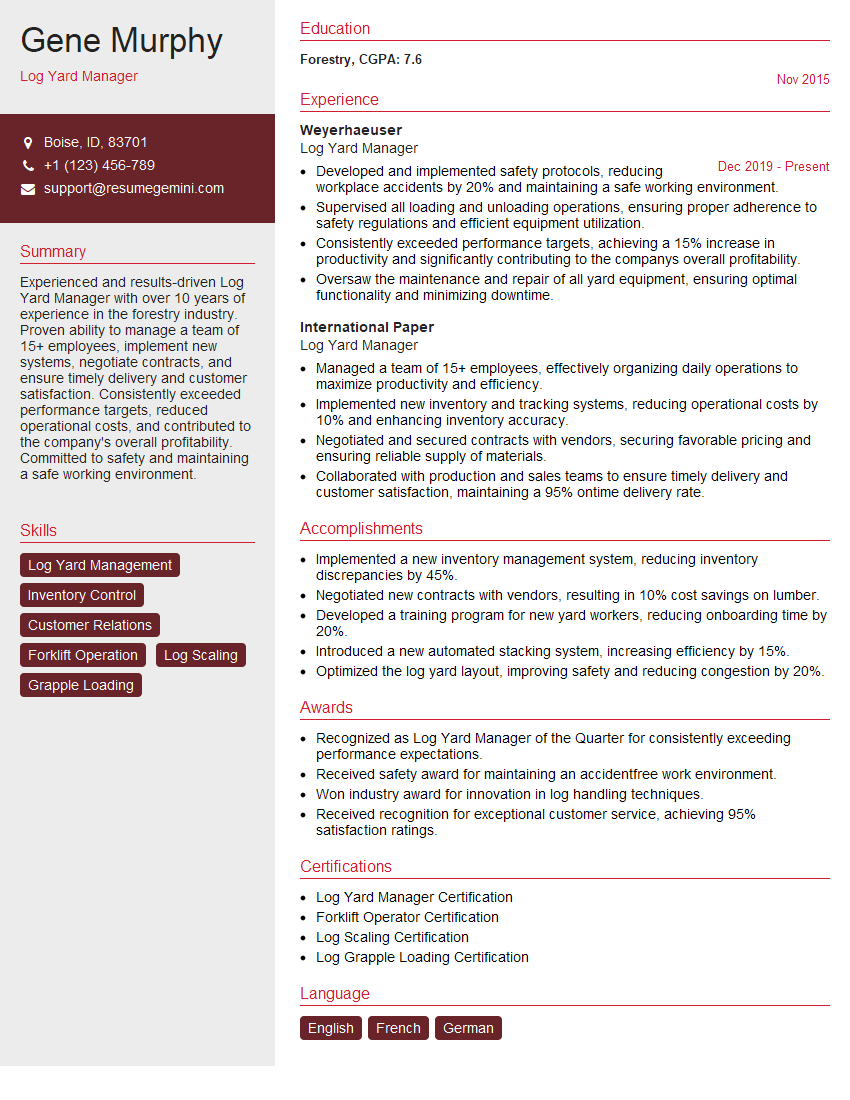
Mastering Log Yard Operations opens doors to a rewarding career with excellent growth potential. This expertise is highly sought after in the industry, leading to increased earning potential and opportunities for advancement. To significantly boost your job prospects, crafting an ATS-friendly resume is crucial. ResumeGemini is a trusted resource that can help you build a professional and impactful resume designed to get noticed. Examples of resumes tailored specifically to Log Yard Operations are available to help guide your resume creation process.
Explore more articles
Users Rating of Our Blogs
Share Your Experience
We value your feedback! Please rate our content and share your thoughts (optional).
What Readers Say About Our Blog
Very informative content, great job.
good