Feeling uncertain about what to expect in your upcoming interview? We’ve got you covered! This blog highlights the most important Radiation Protection Regulations interview questions and provides actionable advice to help you stand out as the ideal candidate. Let’s pave the way for your success.
Questions Asked in Radiation Protection Regulations Interview
Q 1. Explain ALARA principle and its practical application in a nuclear power plant.
ALARA, which stands for As Low As Reasonably Achievable, is a fundamental principle in radiation protection. It emphasizes that radiation exposure should be kept as low as possible, taking into account economic and social factors. In a nuclear power plant, this principle is implemented through a multi-layered approach.
- Engineering Controls: This includes designing the plant with inherent safety features like robust shielding, remote handling systems for radioactive materials, and redundant safety systems to minimize accidental releases.
- Administrative Controls: These involve strict procedures for handling radioactive materials, regular training for personnel on radiation safety protocols, and implementing robust work permits to ensure tasks are carried out safely and with minimal exposure.
- Time, Distance, Shielding: The cornerstone of ALARA. Minimizing time spent in radiation areas, maximizing distance from radiation sources, and using appropriate shielding materials (like lead, concrete, or water) are crucial.
For example, during maintenance activities involving radioactive components, workers will utilize remote-controlled robots to minimize their time near the source. Furthermore, the plant’s design will incorporate thick concrete walls and lead shielding to reduce radiation levels in accessible areas.
Q 2. Describe the different types of radiation and their relative biological effects.
Ionizing radiation, capable of removing electrons from atoms, comes in several forms, each with differing biological effects.
- Alpha particles: Heavy, positively charged particles with low penetration power. They are dangerous if ingested or inhaled, causing significant damage to nearby cells. Think of them as a slow, heavy truck—lots of damage if it hits you, but it won’t go far.
- Beta particles: Lighter, negatively charged particles with greater penetration than alpha particles. They can penetrate skin but are usually stopped by thin shielding. They’re like a speeding motorcycle; more penetrating than a truck, but still easily stopped.
- Gamma rays and X-rays: High-energy electromagnetic radiation with high penetration power. They require substantial shielding, like thick lead or concrete. Imagine these as bullets—they can penetrate deeply and cause damage throughout the body.
- Neutrons: Uncharged particles that can penetrate deeply and cause significant damage. They require specialized shielding, often containing materials like water or boron. They’re like a hidden sniper; hard to detect and very dangerous.
The biological effects depend on the type, energy, and dose of radiation, as well as the organ exposed. Alpha particles, though less penetrating, are more damaging per unit of energy deposited due to their high linear energy transfer (LET).
Q 3. What are the regulatory requirements for handling and disposing of radioactive waste?
Regulatory requirements for handling and disposing of radioactive waste are stringent and vary depending on the level of radioactivity. Generally, they involve:
- Classification: Waste is categorized according to its radioactivity level (e.g., low-level, intermediate-level, high-level). This determines the handling and disposal methods.
- Packaging and Transportation: Stringent regulations govern the packaging and transportation of radioactive waste to ensure safety during transit. Specialized containers and vehicles are required.
- Storage and Disposal: Low-level waste might be disposed of in near-surface repositories or deep geological repositories. High-level waste requires specialized long-term storage facilities, often involving vitrification (solidification in glass) to immobilize the radioactive material. These facilities require rigorous monitoring and security.
- Licensing and Monitoring: Organizations handling radioactive waste must obtain licenses from regulatory authorities, demonstrating compliance with all safety standards. Regular monitoring and inspections ensure that waste is managed safely.
For example, spent nuclear fuel from reactors requires extremely secure long-term storage in facilities designed to prevent leakage and manage heat generation.
Q 4. Explain the concept of effective dose and its calculation.
Effective dose is a measure of the overall health risk from exposure to ionizing radiation, accounting for the different sensitivities of various organs and tissues to radiation. It’s expressed in sieverts (Sv) or millisieverts (mSv).
The calculation involves:
- Organ Dose: Determining the radiation dose received by each organ.
- Tissue Weighting Factors (wT): Each organ has a weighting factor representing its relative radiosensitivity. The weighting factors are established by international radiation protection organizations.
- Radiation Weighting Factors (wR): These factors account for the different biological effects of different types of radiation (alpha, beta, gamma, etc.).
The effective dose (E) is calculated as:
E = Σ wT × wR × DT,Rwhere DT,R is the absorbed dose in organ T from radiation type R.
For example, a chest X-ray might result in an effective dose of around 0.1 mSv, while a CT scan of the abdomen might be closer to 10 mSv.
Q 5. What are the different methods for radiation monitoring and personnel dosimetry?
Radiation monitoring and personnel dosimetry employ various methods to assess radiation levels and individual exposures.
- Area Monitoring: Utilizes instruments like Geiger-Müller counters, ionization chambers, and scintillation detectors to measure ambient radiation levels. These provide real-time data on radiation fields.
- Environmental Monitoring: This involves sampling air, water, and soil to assess the presence of radioactive contaminants.
- Personnel Dosimetry: This uses devices like thermoluminescent dosimeters (TLDs), optically stimulated luminescence (OSL) dosimeters, and film badges to measure the radiation dose received by individuals. These are worn by personnel working in radiation areas.
For instance, a nuclear medicine technician working with radioactive isotopes will wear a personal dosimeter to monitor their cumulative radiation exposure. Area monitoring ensures that radiation levels in the work area remain below regulatory limits.
Q 6. Discuss the role of shielding in radiation protection.
Shielding plays a critical role in radiation protection by absorbing or attenuating radiation, reducing the dose received by personnel and the environment. The effectiveness of shielding depends on several factors:
- Type of Radiation: Different shielding materials are effective against different types of radiation. For example, lead is excellent for shielding against gamma rays and X-rays, while concrete is effective for neutrons.
- Shielding Material: The density and atomic number of the shielding material determine its effectiveness. Higher density materials generally provide better shielding.
- Thickness of Shielding: The thickness of the shielding material is crucial. Increased thickness leads to greater attenuation of radiation.
- Radiation Energy: Higher energy radiation requires thicker shielding.
In a nuclear power plant, thick concrete walls, lead shielding around radioactive components, and water pools surrounding spent fuel assemblies are all examples of shielding strategies to reduce radiation exposure.
Q 7. Describe the regulatory requirements for the design and operation of radiation-producing devices.
Regulatory requirements for the design and operation of radiation-producing devices are extensive and vary by country and the type of device. Generally, these regulations cover:
- Licensing: The use of radiation-producing devices requires a license from the relevant regulatory authority. The licensing process involves demonstrating compliance with safety standards.
- Safety Design: Devices must be designed with inherent safety features to minimize radiation exposure. This includes features like interlocks, shielding, and safety systems to prevent accidental exposure.
- Operational Procedures: Detailed operational procedures must be developed and followed to ensure safe operation and maintenance of the devices. Regular training and competency assessments are essential for personnel.
- Radiation Monitoring: Regular monitoring of radiation levels around the device is required to ensure that exposure remains below regulatory limits. This often involves area monitoring and personnel dosimetry.
- Emergency Preparedness: Organizations operating radiation-producing devices must have comprehensive emergency response plans in place to manage incidents and mitigate the consequences of accidental releases.
For example, medical X-ray machines are subject to strict regulations regarding shielding, beam alignment, and personnel training to ensure patient and staff safety. Similar regulations apply to industrial radiography equipment and other radiation sources.
Q 8. What are the emergency procedures in case of a radiation incident?
Emergency procedures following a radiation incident are crucial for minimizing harm and preventing further exposure. They are multifaceted and depend heavily on the nature and scale of the incident. A typical response would involve immediate evacuation of personnel from the affected area, establishing a perimeter to control access, and initiating a thorough radiation survey to determine the extent of contamination.
Immediate Actions: The first priority is to protect people. This involves moving individuals to a safe location, providing initial medical assessment and decontamination if necessary, and contacting emergency services.
Assessment and Containment: Once the immediate danger is addressed, a detailed assessment is conducted to identify the source of radiation, the extent of the contamination, and the individuals who might have been exposed. This may involve using specialized radiation detection equipment to map contamination levels. Containment strategies, such as isolating the contaminated area or removing the source of radiation, are implemented.
Long-term Response: Long-term procedures often include detailed health monitoring for exposed individuals, remediation of contaminated areas, and investigations to determine the cause of the incident and prevent similar occurrences in the future. These post-incident procedures might involve complex environmental clean-up and long-term radiation monitoring.
Example: Imagine a spill of radioactive material in a laboratory. The immediate response would be evacuation of the lab, followed by a survey using Geiger counters to pinpoint the contaminated area. Then, specialized personnel would clean up the spill, following strict protocols to minimize further exposure. Post-incident, exposed personnel might undergo blood tests to monitor for any health effects.
Q 9. Explain the legal responsibilities of a Radiation Protection Officer.
A Radiation Protection Officer (RPO) carries significant legal responsibilities, ensuring compliance with national and international radiation safety regulations. These responsibilities are critical for protecting workers and the public.
- Developing and Implementing Radiation Safety Programs: The RPO is responsible for creating, implementing, and maintaining a comprehensive radiation safety program, tailored to the specific workplace and activities. This involves risk assessments, emergency preparedness plans, and training programs.
- Monitoring Radiation Exposure: Regular monitoring of radiation levels and individual worker exposures is a key responsibility. This involves using radiation detectors, reviewing dosimetry reports, and ensuring that exposure limits are not exceeded.
- Ensuring Compliance with Regulations: The RPO must ensure that all activities involving ionizing radiation are conducted in strict accordance with national and international regulations. This includes proper licensing and permitting, equipment maintenance, and waste management.
- Record Keeping: Meticulous record-keeping is essential. The RPO maintains detailed records of radiation exposures, safety inspections, training records, and any incidents or accidents.
- Incident Reporting: The RPO must promptly report any radiation incidents or accidents to the relevant regulatory authorities.
- Training and Education: Training workers on radiation safety procedures is a core responsibility. This ensures personnel understand the risks and how to mitigate them.
Legal Consequences of Non-Compliance: Failure to fulfill these responsibilities can lead to significant legal consequences, including hefty fines, suspension of operations, and even criminal charges in cases of serious negligence or violations resulting in harm.
Q 10. How do you ensure compliance with radiation safety regulations in a workplace?
Ensuring compliance with radiation safety regulations in the workplace requires a multi-pronged approach, focusing on prevention, monitoring, and response. It’s a continuous process, not a one-time event.
- Risk Assessment: Thorough risk assessments are the cornerstone. These identify potential radiation sources, hazards, and the probability and severity of exposure.
- Radiation Safety Program: A comprehensive written program is essential. This document outlines procedures for handling radioactive materials, using radiation-generating equipment, and managing radiation waste. It should clearly define roles and responsibilities, including emergency procedures.
- Training and Education: Regular training for all personnel working with ionizing radiation is critical. The training should cover radiation safety principles, proper handling procedures, emergency protocols, and the use of protective equipment.
- Monitoring and Measurement: Continuous monitoring of radiation levels in the workplace is crucial. This involves using appropriate radiation detection instruments and maintaining detailed records of measurements. Personal dosimeters track individual exposures.
- Equipment Maintenance: Regular maintenance of radiation-generating equipment and safety devices is essential to prevent malfunctions and potential exposures.
- Waste Management: Proper handling and disposal of radioactive waste are essential to prevent contamination and environmental pollution. This includes following strict protocols for packaging, labeling, and transporting the waste.
- Audits and Inspections: Regular internal audits and external inspections help identify areas for improvement and ensure continuous compliance.
Example: In a hospital using X-ray machines, compliance might involve regular checks on the machine’s shielding, training staff on proper X-ray techniques, using personal dosimeters for workers, and maintaining detailed records of all radiation procedures and exposures.
Q 11. Describe the different types of radiation detectors and their applications.
Various radiation detectors are used depending on the type of radiation and the application. The choice depends on factors like sensitivity, energy range, and portability.
- Geiger-Müller Counters: These are widely used for detecting beta and gamma radiation. They’re relatively inexpensive, portable, and easy to use, making them suitable for general radiation surveys. They provide a count rate, indicating the intensity of radiation.
- Scintillation Detectors: These are highly sensitive detectors used for measuring a wider range of radiation types, including alpha, beta, and gamma. They convert radiation energy into light pulses which are then measured electronically. They are often used in more sophisticated monitoring applications.
- Ionization Chambers: These are used for measuring higher radiation levels, particularly in areas where significant exposure is expected. They measure the ionization current produced by radiation, providing a measure of the radiation dose rate.
- Proportional Counters: These are similar to Geiger-Müller counters but are more sensitive and can distinguish between different types of radiation based on the pulse size. They are often used in specific applications where high sensitivity and energy discrimination are needed.
- Thermoluminescent Dosimeters (TLDs): These are personal dosimeters that use special crystals to store radiation energy. After exposure, they are heated, and the released light is measured to determine the accumulated radiation dose.
Applications: Geiger counters are commonly used for environmental monitoring, while scintillation detectors are used in nuclear medicine and research. Ionization chambers are used in radiation therapy and industrial applications. Proportional counters find application in radiation research and spectroscopy. TLDs are used for personnel monitoring to track cumulative radiation dose.
Q 12. Explain the concept of radiation exposure limits and their justification.
Radiation exposure limits are legally mandated dose limits set to minimize the risk of harmful health effects from ionizing radiation. These limits are based on extensive research into the biological effects of radiation and are designed to balance the benefits of using radiation technologies with the need to protect human health.
Justification: The justification for these limits rests on the stochastic and deterministic effects of radiation.
- Stochastic Effects: These are probabilistic effects whose probability of occurrence increases with dose, but whose severity is independent of the dose. Examples include cancer and genetic effects. Limits are set to keep the probability of these effects low.
- Deterministic Effects: These are effects that have a threshold dose below which no effect is observed. Severity increases with dose above the threshold. Examples include radiation burns and acute radiation syndrome. Limits are set to prevent these effects.
Limits vary depending on the context: Limits are different for occupational exposures (workers) and public exposures. Occupational limits are generally higher than public limits because workers are presumed to benefit from the work involving radiation, and radiation protection measures are in place. Pregnant workers have even lower limits. Limits are often expressed in Sieverts (Sv) or milliSieverts (mSv).
Example: The annual occupational limit for radiation workers is often set at 20 mSv, while the annual limit for the public is significantly lower, typically 1 mSv. These differences reflect the different levels of protection required for different groups.
Q 13. What are the risks associated with exposure to ionizing radiation?
Exposure to ionizing radiation carries several risks, depending on the dose and the type of radiation. The risks range from minor to life-threatening.
- Acute Radiation Syndrome (ARS): High doses of radiation received over a short period can cause ARS, characterized by nausea, vomiting, fatigue, and potentially death. The severity depends on the dose received.
- Cancer: Ionizing radiation increases the risk of developing various cancers, including leukemia, thyroid cancer, and lung cancer. The risk is directly related to the total radiation dose received.
- Genetic Effects: Radiation can damage DNA, potentially leading to genetic mutations that can be passed on to future generations. These mutations could cause birth defects or increase the risk of genetic diseases.
- Cataracts: High doses of radiation can cause cataracts, clouding of the lens of the eye, leading to impaired vision.
- Infertility: Exposure to high levels of radiation can affect fertility, either temporarily or permanently.
- Birth Defects: Exposure to radiation during pregnancy can lead to birth defects in the developing fetus. The risk is highest during the early stages of pregnancy.
Severity depends on factors such as: The dose of radiation, the type of radiation, the duration of exposure, and the age and health of the exposed individual.
Example: A high-dose radiation accident, such as a nuclear power plant accident, could result in ARS, cancer, and other severe health effects in the exposed population. Lower doses received over longer periods might subtly increase the risk of cancer over a lifetime.
Q 14. What are the different types of radiation licenses and permits?
The specific types of radiation licenses and permits vary depending on the country and regulatory authority. However, they generally fall into categories based on the type and quantity of radioactive material, the use of radiation-generating equipment, and the nature of the activity.
Examples of License Categories:
- Licenses for Possession of Radioactive Materials: These licenses authorize the possession and use of specified radioactive materials for various purposes, such as medical, research, or industrial applications. The license conditions specify the permitted quantity, handling procedures, and safety measures.
- Licenses for Operation of Radiation-Generating Equipment: These licenses are required to operate equipment that generates ionizing radiation, such as X-ray machines, accelerators, and nuclear reactors. The license will specify the equipment’s use, the required safety protocols, and the frequency of inspections.
- Licenses for Disposal of Radioactive Waste: These licenses regulate the disposal of radioactive waste, specifying the methods, packaging, transportation, and the disposal site.
- Permits for Specific Activities: In some cases, permits may be needed for specific activities involving radiation, such as the transportation of radioactive materials or the use of radiation in a specific location.
The licensing process typically involves: An application, a site-specific safety assessment, demonstrating compliance with regulations, and the payment of fees. The regulatory body conducts inspections to ensure ongoing compliance with license conditions.
Example: A hospital needs a license to operate its X-ray machines, specifying training requirements for staff, radiation safety protocols, and maintenance procedures. A research laboratory would need a license to possess and use radioactive isotopes, outlining the safeguards for handling and storage.
Q 15. Describe the process for conducting a radiation safety audit.
A radiation safety audit is a systematic and independent examination of a facility’s radiation protection program to ensure compliance with regulations and best practices. It’s like a thorough health check for your radiation safety procedures. The process typically involves several key steps:
- Planning and Scoping: Defining the audit’s objectives, scope (which areas and activities will be reviewed), and the timeline. This involves identifying the relevant regulations and standards.
- Document Review: Examining relevant documents such as radiation safety procedures, training records, radiation monitoring data, and emergency plans. This helps identify potential areas of weakness before on-site observation.
- On-site Observation: Direct observation of radiation work practices, including the handling and use of radioactive materials, radiation monitoring procedures, and the implementation of safety measures. This is where we see how theory translates into practice.
- Interviews: Conducting interviews with personnel at different levels to assess their understanding of radiation safety procedures and their adherence to them. This provides a crucial human element to the assessment.
- Evaluation and Reporting: Analyzing the findings from the document review, observation, and interviews to identify strengths and weaknesses in the radiation protection program. This step creates a comprehensive report with specific recommendations for improvement.
- Follow-up: Monitoring the implementation of the recommendations made in the audit report. This ensures continuous improvement and sustained compliance.
For example, an audit might uncover inadequate shielding around an X-ray machine, leading to a recommendation for improved shielding design and implementation. Or, it might reveal deficiencies in worker training, resulting in a recommendation for additional training sessions. A thorough audit isn’t just about finding problems; it’s about identifying opportunities for improvement and fostering a strong culture of safety.
Career Expert Tips:
- Ace those interviews! Prepare effectively by reviewing the Top 50 Most Common Interview Questions on ResumeGemini.
- Navigate your job search with confidence! Explore a wide range of Career Tips on ResumeGemini. Learn about common challenges and recommendations to overcome them.
- Craft the perfect resume! Master the Art of Resume Writing with ResumeGemini’s guide. Showcase your unique qualifications and achievements effectively.
- Don’t miss out on holiday savings! Build your dream resume with ResumeGemini’s ATS optimized templates.
Q 16. Explain the importance of training and education in radiation protection.
Training and education are paramount in radiation protection because they directly impact worker safety and public health. Think of it like learning to drive – you need proper training to understand the rules of the road and operate the vehicle safely. Without adequate training, workers may unknowingly expose themselves or others to harmful levels of radiation.
Effective training programs cover topics such as:
- Radiation physics and biology: Understanding the nature of radiation and its biological effects.
- Radiation safety principles: Learning about ALARA (As Low As Reasonably Achievable) principles, time, distance, and shielding.
- Radiation protection procedures: Learning the proper procedures for handling radioactive materials, using radiation-emitting equipment, and responding to emergencies.
- Regulatory requirements: Understanding the applicable regulations and standards.
- Emergency response procedures: Knowing how to respond to radiation accidents or spills.
Regular refresher training is also crucial, ensuring that workers stay updated on the latest safety procedures and regulations. Failure to provide adequate training can lead to accidents, regulatory violations, and potentially serious health consequences. For instance, improper handling of radioactive sources can lead to contamination and radiation exposure to individuals, requiring costly cleanup and medical intervention.
Q 17. How do you assess the potential risks associated with a particular radiation source?
Assessing the potential risks associated with a radiation source involves a comprehensive evaluation that considers several factors. It’s like assessing the risks of climbing a mountain – you need to consider the height, terrain, weather conditions, and your own physical fitness before embarking on the climb.
Here’s a step-by-step approach:
- Identify the radiation source: Determine the type of radiation (alpha, beta, gamma, X-rays, neutrons), its activity (amount of radiation emitted), and its physical form (sealed source, unsealed source).
- Assess the pathways of exposure: Identify how individuals might be exposed to the radiation, such as external exposure (radiation from a distance), internal exposure (inhalation or ingestion of radioactive materials), or skin contamination.
- Estimate the dose: Utilize models and calculations to estimate the potential dose to individuals based on the identified exposure pathways. This frequently involves dose rate measurements with appropriate instruments.
- Consider the duration and frequency of exposure: How long and how often will individuals be exposed to the source? Continuous exposure is more dangerous than intermittent exposure.
- Evaluate the individual’s susceptibility: Age, health status, and pregnancy can all affect an individual’s susceptibility to radiation. Certain individuals, like pregnant women or children, are more sensitive to radiation.
- Determine the level of risk: Compare the estimated dose to relevant regulatory limits and guidance levels to determine the level of risk.
For example, a sealed source used in industrial gauging would be assessed differently than a large, unsealed source used in research. The former involves careful control over access and shielding, while the latter would necessitate more comprehensive safety protocols.
Q 18. What are the regulatory requirements for transporting radioactive materials?
Transporting radioactive materials is strictly regulated to minimize the risk of accidents and radiation exposure to the public and transportation workers. It’s like shipping hazardous chemicals – strict regulations are in place to ensure safe handling and containment.
Regulatory requirements typically cover:
- Packaging: Radioactive materials must be packaged according to stringent standards to prevent leakage and damage during transit. The type of packaging depends on the specific radioactive material and its activity.
- Labeling and marking: Packages must be clearly labeled and marked to indicate the type and quantity of radioactive material contained within. These labels warn handlers about the potential hazards.
- Transportation documentation: Detailed documentation is required, including information about the contents, the shipper and receiver, the mode of transport, and the planned route.
- Mode of transport: Regulations specify the allowed modes of transportation (road, rail, air, sea) and any special requirements for each mode.
- Emergency response planning: Shippers must have plans in place to respond to accidents or spills during transport.
Failure to comply with these regulations can lead to serious consequences, including fines, legal action, and potential harm to the public. For example, improperly packaged radioactive material could leak during transit, leading to environmental contamination and radiation exposure.
Q 19. Describe the different types of radiation monitoring equipment and their limitations.
Various radiation monitoring equipment helps us measure and assess radiation levels, much like a doctor uses different instruments to diagnose a patient. Each instrument has its strengths and weaknesses.
Common types include:
- Geiger-Müller (GM) counters: These are simple, portable instruments that detect ionizing radiation. They’re relatively inexpensive and easy to use but lack precision and are not energy specific.
- Scintillation detectors: These provide more accurate measurements than GM counters and are capable of energy discrimination. However, they are typically more expensive and less portable.
- Ionization chambers: These are highly accurate instruments used for measuring higher radiation levels. They are less sensitive than GM counters but offer greater precision.
- Neutron detectors: Used for measuring neutron radiation, requiring specialized designs due to neutrons’ unique interaction properties.
- Personal dosimeters: These are worn by workers to monitor their individual radiation exposure over time. Different types exist like thermoluminescent dosimeters (TLDs), film badges, and electronic personal dosimeters (EPDs). They offer a time-integrated measurement but have limited real-time detection capabilities.
Limitations: Each instrument has limitations. GM counters lack energy discrimination, meaning they cannot differentiate between various types of radiation. Many detectors have specific energy ranges they are most efficient within. Calibration and proper use are critical for accurate results. Environmental factors can also affect readings. A dosimeter might not account for unexpected high-dose events.
Q 20. Explain the concept of bioassay and its applications in radiation protection.
Bioassay is the process of analyzing biological samples (e.g., urine, blood, feces) to determine the amount of radioactive material in a person’s body. It’s like a blood test that reveals the internal presence of radioactive substances. This is a crucial aspect of internal radiation dose assessment.
Applications in radiation protection include:
- Monitoring internal contamination: Detecting the presence and amount of radioactive materials that have been inhaled, ingested, or absorbed through the skin.
- Assessing the effectiveness of decontamination procedures: Bioassay helps assess whether decontamination efforts have been successful in removing radioactive material from the body.
- Estimating radiation dose: By measuring the amount of radioactive material in the body, the dose received can be estimated, helping in medical management and prognosis.
- Monitoring workers exposed to radioactive materials: Regular bioassays are important for workers regularly exposed to radiation, providing insights into their internal dose and allowing for preventative action.
For example, if a worker is involved in an incident involving inhaled radioactive particles, bioassay of their urine can provide critical information about the amount of internal contamination and guide treatment decisions. This can prevent long-term health issues associated with internal radioactive material buildup.
Q 21. Discuss the importance of record-keeping and documentation in radiation safety.
Record-keeping and documentation are essential in radiation protection because they provide a verifiable history of radiation safety practices and allow for the assessment of potential risks and compliance with regulations. Think of it as a meticulous diary of all radiation-related activities; it’s a cornerstone of accountability and continuous improvement.
Important records include:
- Radiation surveys and monitoring data: Records of radiation levels measured in different areas of the facility.
- Personnel dosimetry records: Records of individual worker radiation exposure.
- Training records: Documentation of worker training on radiation safety procedures.
- Waste management records: Documentation of the handling, storage, and disposal of radioactive waste.
- Emergency response records: Documentation of emergency response drills and actual incidents.
- Calibration and maintenance records: Records of instrument calibration and maintenance.
These records are not only essential for demonstrating compliance with regulations but also for identifying trends, evaluating the effectiveness of radiation protection programs, and investigating potential radiation incidents. Accurate and well-maintained records allow for continuous improvement in radiation safety practices and provide a crucial audit trail.
Q 22. What are the different types of radiation protection barriers and their effectiveness?
Radiation protection barriers are crucial for reducing exposure to ionizing radiation. Their effectiveness depends on the type of radiation, its energy, and the barrier’s material and thickness. Different barriers are used to shield against different types of radiation.
- Shielding Materials:
- Lead: Highly effective against gamma rays and X-rays due to its high atomic number. Commonly used in X-ray rooms and nuclear facilities.
- Concrete: Offers good protection against neutrons and gamma rays, particularly when reinforced with materials like steel or boron. Its density and thickness determine its effectiveness.
- Water: Effective in slowing down neutrons through scattering and absorption. Used in nuclear reactor pools and as shielding around radioactive materials.
- Steel: Used in conjunction with other materials, particularly to provide structural support for shielding. It can also partially attenuate gamma and X-rays.
- Barrier Types:
- Distance: The simplest and often most effective barrier. Radiation intensity decreases rapidly with distance from the source (inverse square law).
- Time: Limiting the time spent near a radiation source drastically reduces exposure. ALARA principle (As Low As Reasonably Achievable) emphasizes minimizing exposure time.
- Shielding: Physical barriers made of materials that absorb or attenuate radiation. Thickness calculations are vital and depend on factors such as the radiation’s energy and type.
Example: In a medical X-ray room, lead shielding is used in the walls, doors, and around the X-ray tube to protect patients and staff. The thickness of the lead is carefully calculated to ensure adequate shielding for the specific X-ray energy used.
Q 23. How do you investigate and report a radiation exposure incident?
Investigating and reporting a radiation exposure incident requires a swift, systematic approach to ensure the safety of all personnel and to comply with regulations. The process typically involves these steps:
- Immediate Actions: Evacuate the area if necessary, ensure the safety of personnel, and take preliminary measurements to assess the extent of the exposure.
- Initial Assessment: Gather information about the incident including date, time, location, individuals involved, suspected source of radiation, and any unusual readings from radiation detection instruments.
- Personnel Monitoring: Conduct immediate bioassays (urine, feces, nasal swabs) and whole-body counting (if necessary) to assess internal contamination and external dose. Check personal dosimeters.
- Source Identification and Characterization: Identify the source of the radiation, determine its activity, and ascertain the radiation type and energy.
- Dose Reconstruction: Estimate the dose received by each individual involved. This involves using dosimeter readings, physical measurements, and modeling techniques.
- Medical Evaluation: Provide medical evaluation and treatment to exposed individuals, if necessary. Monitor their health over time.
- Report Preparation: Prepare a comprehensive report detailing the circumstances of the incident, assessment results, and the actions taken. This report is usually submitted to the relevant regulatory authorities.
- Corrective Actions: Identify the root cause of the incident and implement corrective actions to prevent similar incidents in the future.
Example: A spill of radioactive material would trigger a rapid response involving area evacuation, personnel monitoring, and decontamination procedures, followed by a thorough investigation and the filing of a detailed report with regulatory bodies.
Q 24. Explain the concept of criticality safety and its significance.
Criticality safety is the prevention of accidental nuclear chain reactions, which can lead to significant radiation releases and potential harm. It’s centered around controlling the amount and arrangement of fissile material (like uranium-235 or plutonium-239) to prevent a criticality excursion – an uncontrolled chain reaction.
Significance: Criticality accidents release intense bursts of radiation, posing immediate and long-term health risks to exposed personnel. The consequences can include severe radiation sickness, long-term health issues like cancer, and even death. Damage to equipment and the environment can also result.
Control Measures: A robust criticality safety program employs several strategies:
- Subcriticality: Maintaining fissile material below the critical mass and configuration that would sustain a chain reaction. This involves strict limits on the amount of material, its geometry, and its surroundings.
- Administrative Controls: Procedures and work instructions to manage fissile material safely. This includes strict material control and accounting practices, personnel training, and comprehensive work permits.
- Engineering Controls: Utilizing physical barriers like neutron absorbers (e.g., cadmium, boron) and geometric constraints to reduce the probability of criticality.
- Neutron Poisons: Adding materials that absorb neutrons to the fissile material to prevent chain reaction.
Example: In a nuclear fuel processing facility, criticality safety is maintained through strict limits on the concentration of uranium solution, the use of neutron-absorbing materials in the equipment, and rigorous procedures for handling and processing the material.
Q 25. Describe the different types of radiation detectors and their applications.
Various radiation detectors are employed to measure and monitor different types of ionizing radiation. The choice of detector depends on the type of radiation, the energy range, and the desired measurement accuracy.
- Geiger-Müller (GM) Counters: Simple, portable, and relatively inexpensive detectors used for detecting alpha, beta, and gamma radiation. They provide a qualitative measurement of radiation levels and are widely used for surveys.
- Scintillation Detectors: Use a scintillating material that emits light when radiation interacts with it. The light is then detected by a photomultiplier tube, providing a more precise measurement than GM counters. They are used for various applications, from medical imaging to environmental monitoring.
- Ionization Chambers: Measure radiation by collecting the ions produced by radiation interacting with a gas. They are used for accurate measurements of dose rates, especially in high-radiation environments.
- Proportional Counters: Similar to ionization chambers but can distinguish between different types of radiation based on the size of the produced signal. They are sensitive and useful in various fields such as nuclear spectroscopy and health physics.
- Neutron Detectors: Special detectors designed to detect neutrons, often using materials that react with neutrons to produce charged particles that are then detected. Examples include boron-lined counters and helium-3 proportional counters.
Applications: These detectors find applications in various areas such as:
- Nuclear power plants: Monitoring radiation levels and ensuring worker safety.
- Medical facilities: Monitoring radiation from X-ray and radiotherapy equipment.
- Environmental monitoring: Measuring radiation levels in the environment.
- Nuclear research: Investigating properties of radioactive materials.
Q 26. What are the common causes of radiation accidents and how can they be prevented?
Radiation accidents stem from various causes, often involving human error or equipment malfunction. Effective prevention requires a multi-faceted approach.
- Human Error:
- Improper handling of radioactive materials: Spills, contamination of surfaces, improper disposal.
- Failure to follow safety procedures: Neglecting to use appropriate personal protective equipment (PPE), ignoring safety protocols, inadequate training.
- Equipment malfunction: Failures in radiation shielding or safety interlocks.
- Equipment Malfunction:
- Failures in radiation shielding: Degradation of shielding materials or inadequate design.
- Malfunctioning safety systems: Failure of alarms, interlocks, or other safety features.
- Natural Disasters:
- Earthquakes or floods can damage facilities and lead to uncontrolled release of radiation.
Prevention Strategies:
- Comprehensive Safety Programs: Establish and rigorously enforce strict safety procedures, radiation protection protocols, and emergency response plans.
- Regular Inspections and Maintenance: Regular inspections and maintenance of equipment, including radiation shielding and safety systems.
- Training and Education: Thorough training and education of personnel on radiation safety procedures, emergency response plans, and proper handling of radioactive materials.
- Robust Quality Assurance: Implement robust quality assurance programs to ensure compliance with regulations and best practices.
- Emergency Preparedness: Establish and regularly practice emergency response plans to handle potential accidents efficiently and effectively.
Example: A radiation spill could result from a failure to properly secure a container of radioactive material, highlighting the importance of training and adherence to safety protocols.
Q 27. Describe your experience with radiation protection programs and regulatory compliance.
Throughout my career, I have been deeply involved in the development, implementation, and oversight of radiation protection programs across diverse settings. This has included:
- Developing and implementing radiation safety manuals: I’ve created detailed safety manuals outlining procedures for handling radioactive materials, using radiation equipment, conducting surveys, and responding to emergencies, ensuring these manuals align with relevant regulations.
- Conducting radiation surveys and assessments: I’ve regularly conducted surveys to assess radiation levels in various work environments, ensuring compliance with regulatory limits. These assessments include area monitoring, wipe tests, and personnel dosimetry reviews.
- Training and education: I’ve designed and delivered training programs for personnel on radiation safety topics. These programs emphasize practical applications and emergency response procedures.
- Regulatory compliance oversight: I’ve been involved in ensuring ongoing compliance with regulatory requirements, including recordkeeping, reporting, and responding to regulatory inspections.
- Incident investigation and reporting: I have extensive experience in investigating radiation exposure incidents, assessing their impact, implementing corrective actions, and reporting to the relevant authorities.
I have worked in both academic and industrial settings, and these experiences have provided me with a broad understanding of radiation protection principles and regulations across multiple industries, ensuring a consistently high standard of safety and compliance.
Q 28. Explain your understanding of the NRC regulations or equivalent international regulations.
My understanding of the NRC (Nuclear Regulatory Commission) regulations, and their international equivalents, is comprehensive. I am familiar with the detailed regulations governing the use, handling, storage, and disposal of radioactive materials, including:
- Licensing and permitting: The requirements for obtaining licenses and permits for activities involving radioactive materials.
- Radiation protection standards: The limits on occupational and public exposure to ionizing radiation, along with the associated ALARA principle.
- Shielding and containment requirements: The regulations and guidance for designing and maintaining adequate shielding and containment for radioactive materials.
- Emergency planning and response: Regulations regarding the development and implementation of comprehensive emergency plans to manage radiation accidents.
- Waste management: Regulations governing the handling, storage, and disposal of radioactive waste.
- Recordkeeping and reporting requirements: The meticulous recordkeeping and detailed reporting requirements mandated by the NRC.
I am also familiar with equivalent international regulations such as those set forth by the IAEA (International Atomic Energy Agency) and the EURATOM Basic Safety Standards. These regulations, while differing in specific details, share the fundamental goals of protecting workers, the public, and the environment from the harmful effects of ionizing radiation. My expertise spans the practical application of these regulations across various sectors, ensuring effective and compliant radiation safety programs.
Key Topics to Learn for Radiation Protection Regulations Interview
- Fundamental Radiation Physics: Understanding ionizing radiation types (alpha, beta, gamma, X-rays, neutrons), their interactions with matter, and associated health effects. Practical application: Calculating radiation doses and shielding requirements.
- Radiation Dosimetry and Measurement: Principles of radiation detection and measurement techniques. Practical application: Interpreting dosimeter readings and ensuring compliance with regulatory limits.
- Regulatory Frameworks and Standards: Familiarization with national and international regulations (e.g., ALARA principle, ICRP recommendations). Practical application: Applying regulatory requirements to specific workplace scenarios.
- Radiation Protection Practices: Time, distance, shielding principles; personal protective equipment (PPE); emergency response procedures. Practical application: Designing and implementing radiation safety programs.
- Internal and External Radiation Hazards: Understanding the different pathways of radiation exposure and their mitigation strategies. Practical application: Assessing risk and implementing control measures for various radiation sources.
- Waste Management and Disposal: Safe handling, storage, and disposal of radioactive waste according to regulatory guidelines. Practical application: Developing and implementing waste management plans.
- Risk Assessment and Management: Conducting radiation risk assessments and developing appropriate control measures. Practical application: Implementing ALARA principle in diverse workplace scenarios.
- Radiation Safety Training and Education: Understanding the importance of comprehensive training programs for radiation workers. Practical application: Developing and delivering radiation safety training.
Next Steps
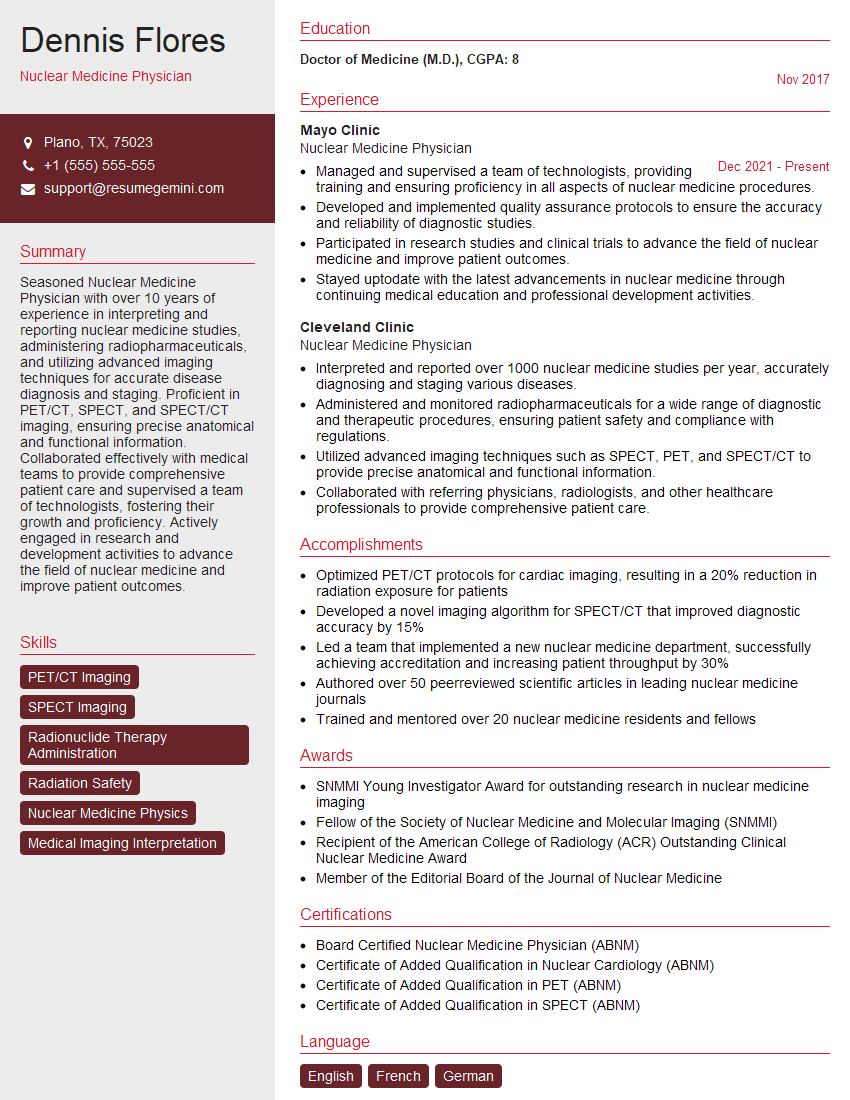
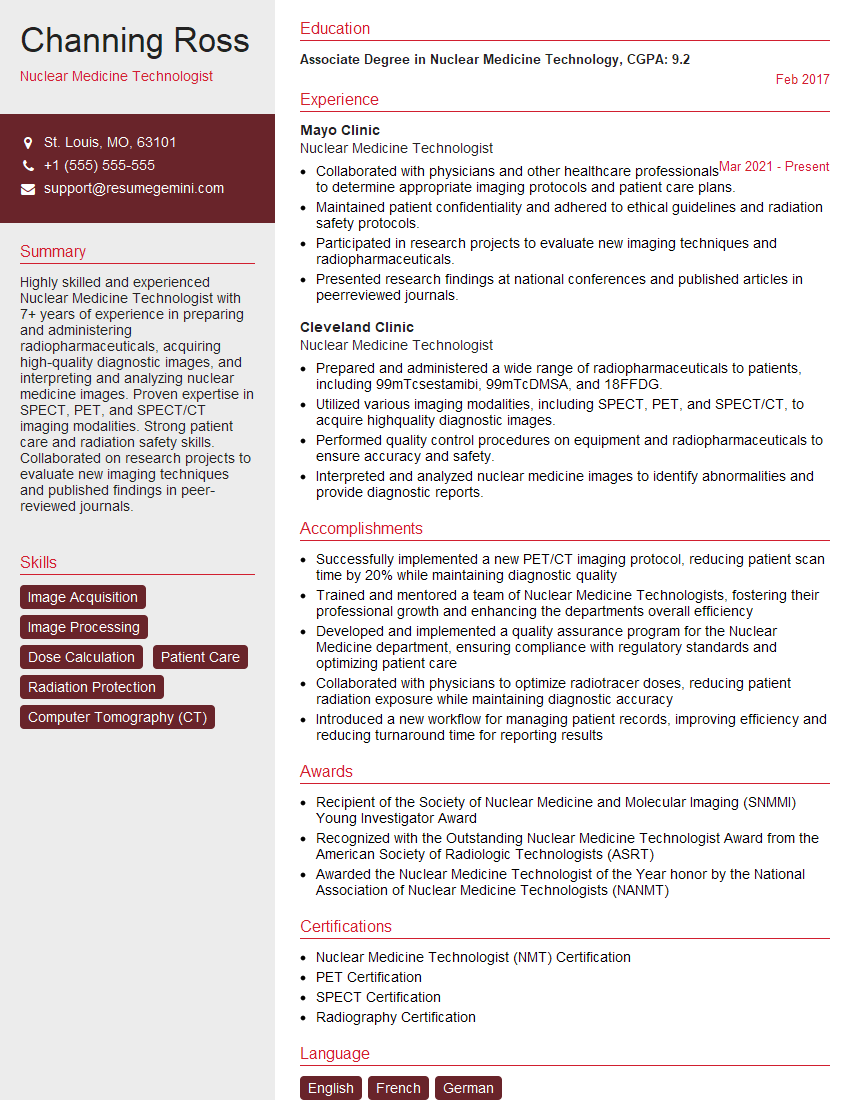
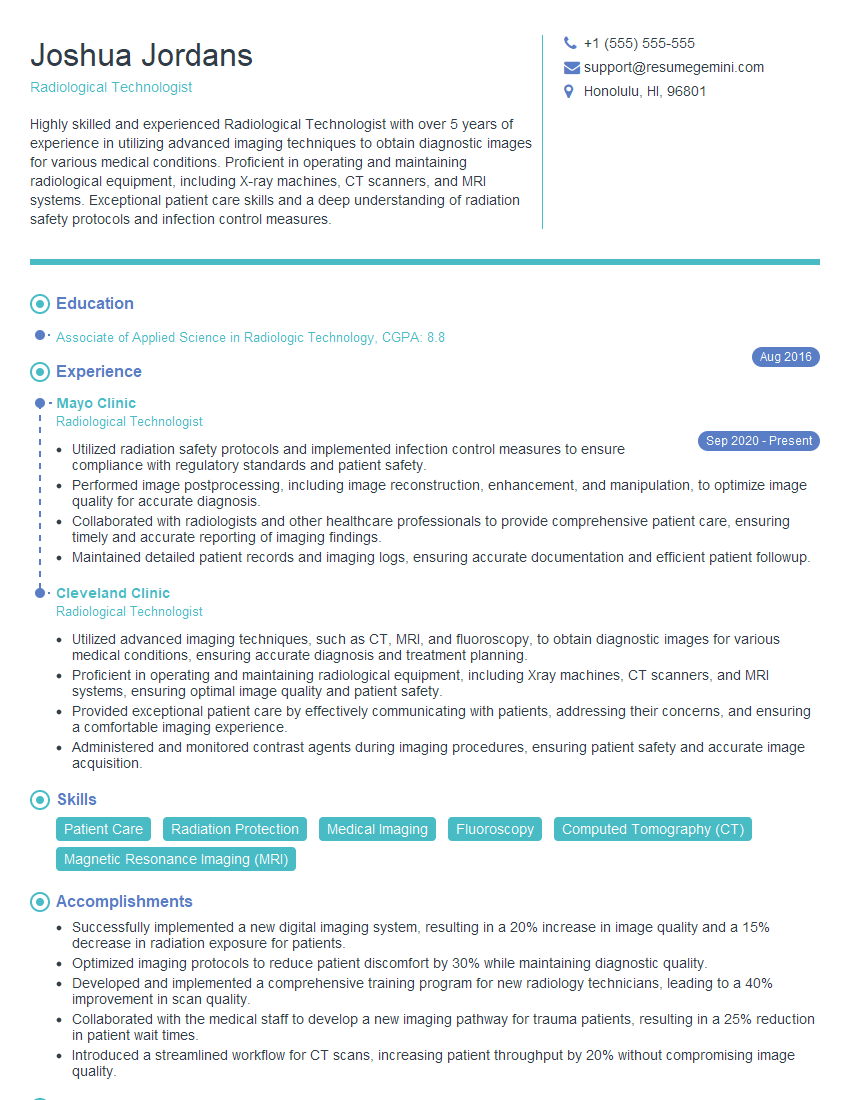
Mastering Radiation Protection Regulations is crucial for career advancement in this vital field. A strong understanding of these regulations demonstrates your commitment to safety and opens doors to more challenging and rewarding opportunities. To maximize your job prospects, creating an ATS-friendly resume is essential. ResumeGemini can help you craft a professional and impactful resume that highlights your skills and experience effectively. ResumeGemini provides examples of resumes tailored to Radiation Protection Regulations, ensuring your application stands out from the competition. Invest the time to build a compelling resume – it’s your first impression with potential employers.




Explore more articles
Users Rating of Our Blogs
Share Your Experience
We value your feedback! Please rate our content and share your thoughts (optional).
What Readers Say About Our Blog
Very informative content, great job.
good