Preparation is the key to success in any interview. In this post, we’ll explore crucial Logistics and Inventory Management interview questions and equip you with strategies to craft impactful answers. Whether you’re a beginner or a pro, these tips will elevate your preparation.
Questions Asked in Logistics and Inventory Management Interview
Q 1. Explain the difference between FIFO and LIFO inventory methods.
FIFO (First-In, First-Out) and LIFO (Last-In, First-Out) are two common methods for managing inventory accounting. They dictate the order in which inventory is assumed to be sold, impacting the cost of goods sold and ending inventory values on financial statements.
FIFO: Imagine a bakery. The first loaf of bread baked (the oldest) is the first one sold. This means the cost of goods sold reflects the cost of the oldest inventory. This usually leads to a higher net income during periods of inflation because older, cheaper inventory is expensed first.
LIFO: Sticking with the bakery, LIFO would mean the last loaf baked (the newest) is the first one sold. The cost of goods sold would reflect the cost of the newest inventory. This can result in a lower net income during inflation because the more expensive recent inventory is expensed. LIFO is not permitted under IFRS (International Financial Reporting Standards).
Key Differences Summarized:
- Cost of Goods Sold (COGS): FIFO reflects older costs; LIFO reflects newer costs.
- Net Income: During inflation, FIFO generally leads to higher net income, while LIFO leads to lower net income.
- Ending Inventory: FIFO reflects newer costs; LIFO reflects older costs.
- Tax Implications: LIFO can result in lower tax liability during inflation (though this is less relevant depending on current tax laws and regulations).
The choice between FIFO and LIFO depends on factors like industry, tax implications, and management’s goals. For example, a company experiencing rapid inflation might prefer LIFO to minimize its tax burden, while a company focused on reporting higher profits might choose FIFO.
Q 2. How do you calculate inventory turnover rate?
Inventory turnover rate measures how efficiently a company sells its inventory over a specific period. A higher turnover rate generally indicates strong sales and efficient inventory management, while a low rate might suggest slow sales or overstocking.
The formula is:
Inventory Turnover Rate = Cost of Goods Sold / Average InventoryCost of Goods Sold (COGS): The direct costs associated with producing goods sold during a period (e.g., materials, labor, manufacturing overhead).
Average Inventory: The average value of inventory throughout the period. It’s typically calculated as (Beginning Inventory + Ending Inventory) / 2.
Example:
Let’s say a company had a COGS of $1,000,000 and beginning inventory of $200,000 and ending inventory of $250,000. The average inventory would be ($200,000 + $250,000) / 2 = $225,000. The inventory turnover rate would then be $1,000,000 / $225,000 = 4.44. This indicates the company sold and replaced its entire inventory 4.44 times during the period.
Interpreting the turnover rate requires industry benchmarks. A high turnover rate could signify excellent sales, but it could also mean insufficient stock and lost sales opportunities. Conversely, a low rate might indicate slow-moving products, overstocking, or poor demand forecasting.
Q 3. What are the key performance indicators (KPIs) you track in logistics?
In logistics, I track several key performance indicators (KPIs) to ensure efficiency and effectiveness. These KPIs can be categorized into different aspects of the supply chain. Some of the most important include:
- On-Time Delivery Rate: Percentage of shipments delivered on or before the scheduled delivery date. This directly reflects customer satisfaction and operational reliability.
- Order Fulfillment Cycle Time: Time taken from order placement to delivery. Minimizing this time is crucial for customer satisfaction and competitive advantage.
- Inventory Turnover Rate (as discussed above): Measures how efficiently inventory is managed and sold.
- Warehouse Productivity: Measures the efficiency of warehouse operations, often expressed as units picked or shipped per labor hour.
- Transportation Costs: Total cost of transportation per unit shipped. Constant monitoring and optimization are essential for cost control.
- Damage Rate: Percentage of damaged goods during transit or storage. Reducing damage rates protects product integrity and minimizes losses.
- Perfect Order Rate: Percentage of orders delivered completely, accurately, and on time. This is a comprehensive measure of overall logistics effectiveness.
- Freight Costs per Unit: This tracks efficiency in transportation planning and negotiation.
The specific KPIs I focus on depend on the industry and company objectives. For instance, in e-commerce, on-time delivery and order fulfillment cycle time are critically important. In manufacturing, warehouse productivity and inventory turnover are key focuses. Regularly reviewing and analyzing these KPIs allows for proactive identification of areas for improvement and optimization.
Q 4. Describe your experience with warehouse management systems (WMS).
I have extensive experience with Warehouse Management Systems (WMS), having implemented and managed multiple WMS deployments across various industries. My experience spans from selecting and implementing the appropriate WMS software to training staff and ongoing optimization.
I’m familiar with both cloud-based and on-premise WMS solutions, and I understand the complexities of integrating a WMS with other enterprise systems such as ERP (Enterprise Resource Planning) and TMS (Transportation Management Systems). I have a solid understanding of various WMS functionalities, including:
- Inventory Management: Accurate tracking of inventory levels, locations, and movements within the warehouse.
- Receiving and Put-Away: Streamlining the inbound process, including directing goods to optimal storage locations.
- Order Fulfillment: Optimizing picking, packing, and shipping processes to ensure timely order completion.
- Reporting and Analytics: Generating key performance indicators (KPIs) to monitor warehouse performance and identify areas for improvement.
- Labor Management: Tracking employee productivity and optimizing workflows to increase efficiency.
In one previous role, we implemented a new WMS that resulted in a 20% reduction in order fulfillment cycle time and a 15% increase in warehouse productivity. This success was achieved through careful planning, thorough staff training, and ongoing system optimization and monitoring.
Q 5. How do you manage inventory discrepancies?
Inventory discrepancies—the differences between the recorded inventory and the physical inventory—are a common challenge in logistics. Managing these discrepancies requires a systematic approach.
My approach involves the following steps:
- Regular Cycle Counting: Conducting frequent, smaller counts of inventory instead of relying on large, infrequent physical inventories. This allows for early detection and correction of errors.
- Root Cause Analysis: Investigating the cause of discrepancies. Common causes include data entry errors, theft, damage, or inaccurate picking and putaway processes. Addressing the root cause is crucial to prevent future discrepancies.
- Improved Data Management: Ensuring data accuracy is crucial. This includes implementing robust data entry procedures, using barcode scanning or RFID technology, and regularly auditing inventory data.
- Inventory Reconciliation: Regularly reconciling inventory records with physical counts to identify and correct discrepancies.
- Process Improvement: Implementing procedures to minimize errors. This may involve improved training, better warehouse layout, and use of technology.
- Technology Integration: Leveraging technology like WMS to improve accuracy and reduce manual data entry.
For instance, in a previous role, we discovered a high discrepancy rate due to manual data entry errors. By implementing barcode scanning, we significantly reduced errors and improved data accuracy. This led to a reduction in inventory discrepancies by over 30%.
Q 6. Explain your experience with different transportation modes (e.g., air, sea, rail, road).
I have extensive experience with various transportation modes, understanding their strengths and limitations and selecting the optimal mode for different scenarios. My experience includes:
- Road Transportation: Trucking is the most common mode, offering flexibility and reach. I have experience negotiating rates, managing carrier relationships, and optimizing routes for efficiency and cost-effectiveness.
- Rail Transportation: Suitable for large volumes and long distances, rail transport is more cost-effective for bulk shipments. I understand the complexities of scheduling, handling, and tracking rail shipments.
- Air Transportation: The fastest mode but also the most expensive. I’ve worked with air freight for time-sensitive shipments requiring expedited delivery, ensuring timely customs clearance and efficient handling.
- Sea Transportation: Ideal for large volumes of low-value goods across international distances. I am experienced in managing ocean freight, including choosing the right vessel type, securing space, and handling customs documentation.
In one project, we optimized a multi-modal transportation strategy for a client, utilizing a combination of rail and road transportation to reduce overall shipping costs by 18% without sacrificing delivery times. This involved careful analysis of lead times, cost factors, and route optimization.
Q 7. How do you optimize warehouse layout for efficiency?
Optimizing warehouse layout is critical for maximizing efficiency and minimizing costs. My approach is based on applying principles of lean warehousing and material handling.
Key considerations include:
- Product Location: Frequently accessed items should be placed in easily accessible locations (e.g., closer to shipping docks). Less frequently accessed items can be placed further away.
- Workflow Optimization: Designing a layout that minimizes the distance traveled during receiving, storage, picking, and shipping. This often involves a U-shaped or straight-line workflow.
- Safety: Ensuring adequate space for aisles, maneuvering equipment, and worker safety. Clear signage and safety measures are crucial.
- Technology Integration: Optimizing the layout to facilitate the use of technology like automated guided vehicles (AGVs) or conveyor systems to streamline operations.
- Scalability: Designing a layout that can accommodate future growth and changes in inventory levels or product lines.
- Slotting Optimization: Algorithmic approaches are used to assign optimal locations for SKUs based on picking frequency, size, and other factors.
In a previous project, we redesigned a warehouse layout, incorporating slotting optimization and implementing a new picking system. This resulted in a 25% reduction in picking time and improved warehouse space utilization by 10%.
Q 8. Describe your experience with demand forecasting and planning.
Demand forecasting and planning is the cornerstone of efficient logistics. It involves predicting future customer demand for products or services to optimize inventory levels, production schedules, and resource allocation. My experience encompasses using various forecasting methods, from simple moving averages to sophisticated statistical models like ARIMA and exponential smoothing.
For example, in my previous role at a retail company, we used a combination of historical sales data, market trends analysis (e.g., seasonality, promotional campaigns), and external factors (e.g., economic indicators, competitor actions) to forecast demand for our seasonal clothing line. We employed ARIMA modeling to account for complex patterns in the data and then utilized the forecast to optimize inventory levels at different distribution centers, minimizing stockouts and excess inventory.
Furthermore, I’m proficient in using collaborative planning, forecasting, and replenishment (CPFR) processes, which involve actively collaborating with key suppliers to create a shared demand forecast and streamline the entire supply chain. This collaborative approach significantly enhances forecasting accuracy and minimizes bullwhip effect, that amplification of demand variability as you move upstream in the supply chain.
Q 9. How do you handle supply chain disruptions?
Handling supply chain disruptions requires a proactive and adaptable approach. My strategy centers on risk mitigation, contingency planning, and robust communication. The first step involves identifying potential vulnerabilities within the supply chain – this could range from natural disasters to geopolitical instability, supplier bankruptcy, or pandemics.
Once identified, we develop contingency plans that include alternative suppliers, transportation routes, and production facilities. For instance, during a recent port strike, we had a pre-arranged agreement with a different port and transportation company that allowed us to minimize delays and keep our production running smoothly. This requires cultivating strong relationships with multiple suppliers and having flexible contracts.
Real-time monitoring of supply chain performance using dashboards and key performance indicators (KPIs) such as on-time delivery, inventory levels, and transportation costs are crucial. Finally, open and transparent communication with all stakeholders – customers, suppliers, and internal teams – is essential for managing expectations and finding collaborative solutions during disruptions.
Q 10. What is your experience with lean manufacturing principles?
Lean manufacturing principles are integral to optimizing operational efficiency and minimizing waste. My experience involves implementing lean methodologies such as Kaizen (continuous improvement), 5S (sort, set in order, shine, standardize, sustain), and Kanban (visual signaling system for inventory management).
In a previous project, we implemented a Kanban system in our warehouse to streamline the picking and packing processes. This reduced lead times, improved workflow visibility, and significantly reduced inventory holding costs. We also used value stream mapping to analyze the entire production process, identifying bottlenecks and areas for improvement. By eliminating non-value-added activities, we improved overall efficiency and reduced waste.
The core philosophy of lean manufacturing is to continuously identify and eliminate waste in all forms, including overproduction, waiting, transportation, inventory, motion, over-processing, and defects. This holistic approach results in a more agile and responsive organization, better equipped to handle market fluctuations and customer demands.
Q 11. Explain your knowledge of inventory control techniques.
Inventory control techniques are crucial for balancing the cost of holding inventory with the risk of stockouts. My experience includes using various techniques such as ABC analysis, Economic Order Quantity (EOQ), and Just-in-Time (JIT) inventory management.
ABC analysis categorizes inventory items based on their value and consumption, allowing for focused management of high-value items (A-items) that require more attention. EOQ helps determine the optimal order quantity that minimizes total inventory costs. JIT aims to minimize inventory levels by receiving materials only when needed, reducing storage costs and waste.
In practice, we often employ a hybrid approach. For high-demand, fast-moving items (A-items), we might use JIT principles and close collaboration with suppliers. For slower-moving items (C-items), a more traditional approach with safety stock might be appropriate. Regular inventory audits and cycle counting are essential to ensure inventory accuracy and prevent discrepancies.
Q 12. How do you prioritize shipments based on urgency and delivery deadlines?
Prioritizing shipments based on urgency and delivery deadlines requires a systematic approach. I typically use a combination of techniques, including prioritization matrices (e.g., urgency/importance matrices), scheduling algorithms, and transportation management systems (TMS).
A prioritization matrix helps visually categorize shipments based on their urgency and importance, allowing for quick identification of critical shipments. Advanced scheduling algorithms within a TMS can optimize delivery routes and schedules to meet deadlines while considering various constraints, such as vehicle capacity and driver availability. This might involve employing techniques such as first-in, first-out (FIFO), last-in, first-out (LIFO), or more sophisticated algorithms that consider multiple factors simultaneously.
For example, in the event of a natural disaster affecting a specific region, shipments of essential supplies would be given top priority, potentially utilizing expedited shipping methods. Effective communication with customers regarding potential delays and proactive management of expectations are also critical elements of the process.
Q 13. Describe your experience with procurement processes.
My experience with procurement processes encompasses all stages, from sourcing and supplier selection to contract negotiation and payment processing. I’m proficient in using various sourcing strategies, including competitive bidding, negotiations, and strategic partnerships.
Supplier selection involves rigorous evaluation based on factors such as cost, quality, reliability, and capacity. Contract negotiation involves securing favorable terms and conditions, including pricing, payment terms, and service level agreements. I utilize purchase order (PO) systems to manage the entire procurement lifecycle, ensuring compliance and traceability.
Furthermore, I understand the importance of implementing robust procurement policies and procedures to mitigate risks, such as supplier disruptions or fraud. This includes implementing checks and balances, utilizing e-procurement systems, and maintaining detailed records of all transactions.
Q 14. How do you manage relationships with suppliers?
Managing supplier relationships is crucial for a resilient and efficient supply chain. My approach focuses on building strong, collaborative relationships based on mutual trust, open communication, and shared goals. This involves regular communication, performance reviews, and collaborative problem-solving.
I believe in fostering long-term relationships with key suppliers, which leads to better pricing, improved quality, and greater reliability. This also requires continuous monitoring of supplier performance through KPIs, such as on-time delivery, quality metrics, and responsiveness. When issues arise, I proactively address them through collaborative discussions and find mutually agreeable solutions.
A key aspect is fair and equitable treatment of suppliers. This includes providing clear expectations, timely payments, and fair pricing. By building strong, collaborative partnerships, we create a more resilient supply chain that can withstand disruptions and achieve sustained success.
Q 15. What is your experience with customs regulations and documentation?
My experience with customs regulations and documentation is extensive. I’ve handled import and export procedures for various goods across multiple countries, including navigating complex regulations related to tariffs, duties, and prohibited items. This involves meticulous documentation, ensuring all required paperwork is accurate and submitted on time to avoid delays and penalties. For example, I’ve successfully managed the import of sensitive electronics from Asia, requiring specific certifications and adherence to strict export control regulations. In another instance, I streamlined the export of agricultural products to the EU, coordinating with customs brokers to ensure compliance with phytosanitary regulations. My approach focuses on proactive compliance, thorough understanding of relevant legislation, and leveraging technology to streamline the process, minimizing risk and maximizing efficiency.
- Proactive Research: I always begin by thoroughly researching the specific customs regulations for the origin and destination countries.
- Accurate Documentation: This includes creating and verifying Commercial Invoices, Packing Lists, Bills of Lading, Certificates of Origin, and any other necessary documentation.
- Broker Collaboration: Working closely with customs brokers is crucial for navigating complexities and ensuring timely clearance.
- Technology Integration: I utilize software solutions to automate data entry, track shipments, and manage customs documents, minimizing errors.
Career Expert Tips:
- Ace those interviews! Prepare effectively by reviewing the Top 50 Most Common Interview Questions on ResumeGemini.
- Navigate your job search with confidence! Explore a wide range of Career Tips on ResumeGemini. Learn about common challenges and recommendations to overcome them.
- Craft the perfect resume! Master the Art of Resume Writing with ResumeGemini’s guide. Showcase your unique qualifications and achievements effectively.
- Don’t miss out on holiday savings! Build your dream resume with ResumeGemini’s ATS optimized templates.
Q 16. How do you ensure accurate inventory data?
Ensuring accurate inventory data is paramount for efficient logistics and supply chain management. My approach is multifaceted and relies on a combination of technology, processes, and human oversight. Think of it like running a well-stocked and organized store – you wouldn’t want to promise a product you don’t have! We use a combination of techniques. First, we implement a robust inventory management system (IMS), often integrated with our Warehouse Management System (WMS). This system tracks inventory levels in real-time, using barcode scanning or RFID technology to monitor stock movements. Regular cycle counting – physically verifying inventory against the system – is crucial. We also employ regular audits to identify discrepancies and refine our processes. For instance, we might discover a particular location consistently shows inventory discrepancies, indicating a problem with picking or scanning in that area. By analyzing these discrepancies, we can refine our processes and improve data accuracy. Furthermore, data reconciliation with our sales and purchasing systems ensures we have a complete and accurate picture of our inventory.
- Real-time Tracking: Using technology like barcodes and RFID for precise inventory movement tracking.
- Cycle Counting: Regularly verifying physical inventory against system records.
- Inventory Management System (IMS): Utilizing software for accurate data entry, tracking, and reporting.
- Data Reconciliation: Regularly comparing inventory data with sales and purchase order data.
- Audits: Conducting regular audits to identify discrepancies and improve accuracy.
Q 17. Explain your approach to risk management in logistics.
My approach to risk management in logistics is proactive and multi-layered. It’s not just about reacting to problems; it’s about anticipating and mitigating them before they arise. Think of it as building a strong castle – you need strong walls, moats, and a vigilant guard! I use a framework that incorporates risk identification, assessment, mitigation, and monitoring. For risk identification, we analyze potential disruptions across the supply chain, from supplier failures to natural disasters. Assessment involves evaluating the likelihood and impact of each risk. Mitigation involves developing strategies to reduce the likelihood or impact of identified risks; this could involve diversifying suppliers, securing alternative transportation routes, or implementing robust inventory management strategies. Finally, continuous monitoring is essential to identify emerging risks and adapt our strategies. For example, during the recent global supply chain disruptions, we implemented strategies such as increased safety stock levels and diversified sourcing, mitigating delays and cost increases. This proactive approach allows us to react effectively and minimize the impact of unforeseen circumstances.
- Risk Identification: Identifying potential disruptions across the supply chain.
- Risk Assessment: Evaluating the likelihood and potential impact of each identified risk.
- Risk Mitigation: Developing strategies to reduce the likelihood or impact of risks, such as diversification and alternative planning.
- Risk Monitoring: Continuous monitoring and adaptation of strategies to account for emerging risks.
Q 18. How do you improve warehouse efficiency and reduce costs?
Improving warehouse efficiency and reducing costs requires a holistic approach. It’s about optimizing every aspect of warehouse operations, from layout to staffing. We start with analyzing warehouse layout and workflow to identify bottlenecks. This might involve implementing lean principles, optimizing storage locations, and improving material handling processes. Technology plays a critical role, from implementing WMS software to utilizing automated guided vehicles (AGVs) or robots for tasks like picking and packing. Employee training and efficient staffing are also crucial – a well-trained team can significantly improve productivity. Furthermore, we focus on optimizing inventory levels to reduce storage costs and minimize obsolescence. We also analyze transportation costs, negotiating rates with carriers and exploring options like consolidated shipping to reduce expenses. For example, we implemented a new warehouse layout based on zone picking, resulting in a 15% increase in order fulfillment speed. This saved us both time and money, and improved our customer satisfaction rates.
- Lean Principles: Implementing lean manufacturing principles to eliminate waste and improve efficiency.
- Technology Integration: Utilizing WMS, AGVs, and robots to automate tasks.
- Optimized Layout and Workflow: Analyzing and improving warehouse layout and processes to eliminate bottlenecks.
- Employee Training and Development: Investing in employee training to improve productivity.
- Inventory Optimization: Optimizing inventory levels to reduce storage costs and waste.
- Transportation Cost Analysis: Negotiating rates with carriers and exploring options like consolidated shipping.
Q 19. How do you handle returns and damaged goods?
Handling returns and damaged goods requires a structured process to minimize losses and maintain customer satisfaction. We have a dedicated returns department that processes returns efficiently, using barcode scanners to track returned items and quickly assess their condition. For damaged goods, we have a clear process for inspecting, documenting the damage, and determining whether the items can be repaired, salvaged, or discarded. This process involves documenting the reason for damage, whether it occurred during transit or in the warehouse. We have clear procedures for reporting damages to insurance companies if necessary. Proper documentation is crucial, both for tracking and for potential insurance claims. We utilize our IMS to track returned and damaged goods, allowing us to analyze the root causes of these issues and implement preventative measures. For instance, if a high percentage of damages is linked to a particular supplier or carrier, we can take steps to mitigate this in the future.
- Dedicated Returns Department: Handling returns efficiently and accurately.
- Damage Assessment: A thorough process for assessing damage and determining next steps.
- Documentation: Meticulous documentation of all returns and damages, including photos and reasons.
- Root Cause Analysis: Analyzing returns and damages to identify root causes and implement preventative measures.
- Insurance Claims: Following established procedures for reporting damages to insurance companies.
Q 20. What is your experience with different types of warehousing (e.g., public, private, contract)?
I have experience with all three major types of warehousing – public, private, and contract. Public warehousing offers flexibility and scalability, ideal for businesses with fluctuating storage needs. I’ve utilized public warehouses for overflow storage during peak seasons or for specific regional needs. Private warehousing provides greater control and customization, but requires a larger capital investment. We’ve used private warehousing for products requiring specialized handling or high security. Contract warehousing offers a balance between the two, providing customized solutions without the full commitment of private warehousing. We’ve used contract warehousing for a specific product line requiring specialized temperature control. The choice depends on specific business needs, considering factors such as volume, storage requirements, budget, and level of control required. Each type presents its own advantages and disadvantages, and the optimal choice depends on the specific circumstances of the business.
- Public Warehousing: Flexible and scalable, suitable for businesses with varying storage needs.
- Private Warehousing: Provides greater control and customization, but requires significant investment.
- Contract Warehousing: Offers a balance, providing customized solutions without the full commitment of private warehousing.
Q 21. How do you measure the effectiveness of your logistics strategies?
Measuring the effectiveness of logistics strategies is crucial for continuous improvement. We use a range of Key Performance Indicators (KPIs) to track performance across various aspects of our logistics operations. These KPIs are designed to provide a clear and comprehensive picture of our overall performance. We monitor metrics such as on-time delivery rates, order fulfillment cycle times, inventory turnover rates, warehouse space utilization, transportation costs, and customer satisfaction levels. Regular reporting and analysis of these KPIs provide insights into areas for improvement. For instance, if our on-time delivery rate falls below our target, we can investigate the root causes, such as transportation delays or warehouse inefficiencies. We utilize data visualization tools to present this data clearly and concisely to stakeholders, allowing for informed decision-making and strategy adjustments.
- On-time Delivery Rate: Percentage of orders delivered on time.
- Order Fulfillment Cycle Time: Time taken to process and fulfill an order.
- Inventory Turnover Rate: Number of times inventory is sold and replaced in a given period.
- Warehouse Space Utilization: Efficiency of warehouse space usage.
- Transportation Costs: Cost per unit transported.
- Customer Satisfaction: Measured through surveys and feedback.
Q 22. Describe a time you had to solve a complex logistics problem.
One of the most challenging logistics problems I faced involved a major port strike that unexpectedly disrupted our supply chain. We were importing crucial components for a major client’s product launch, and the strike threatened significant delays and potentially huge financial penalties.
To solve this, I first implemented a rapid risk assessment, identifying the critical path and alternative sourcing options. This involved contacting secondary suppliers, exploring air freight as an emergency alternative (much more expensive, but essential to meet the deadline), and negotiating with the client to understand their flexibility regarding the delivery schedule. We also proactively communicated the situation transparently to the client, gaining their cooperation in exploring alternative solutions. Simultaneously, we engaged in continuous monitoring of the port situation, actively seeking updates from port authorities and our shipping partners. Finally, we developed a detailed contingency plan that outlined various scenarios, from partial delays to complete shipment rerouting. This proactive and multi-faceted approach mitigated the impact significantly, minimizing the delays and avoiding major financial losses. The client was impressed with our swift response and problem-solving capabilities.
Q 23. How do you stay updated on industry best practices and technologies?
Staying current in logistics and inventory management requires a multi-pronged approach. I regularly attend industry conferences and webinars, such as those hosted by organizations like the Council of Supply Chain Management Professionals (CSCMP). These events provide valuable insights into the latest trends and technologies. I actively participate in online professional communities and forums, engaging in discussions and learning from the experiences of other professionals. Key publications like the Journal of Business Logistics and Supply Chain Management Review are essential for staying abreast of research and best practices. I also dedicate time to exploring new technologies through online courses and tutorials, focusing on areas like AI-powered forecasting, blockchain in supply chain transparency, and advanced analytics platforms. Finally, I actively seek out case studies and white papers from leading logistics companies, analyzing their successful strategies and adapting relevant approaches to my own work.
Q 24. How do you use data analytics in logistics and inventory management?
Data analytics is crucial for optimizing logistics and inventory management. I use data analytics to improve forecasting accuracy, identifying trends and patterns in historical sales data to predict future demand more precisely. This minimizes stockouts and overstocking, directly impacting profitability. I also use data to optimize warehouse layouts and improve efficiency. For example, analyzing the movement of goods within the warehouse allows me to identify bottlenecks and optimize picking routes, reducing handling time and labor costs. Furthermore, I leverage data analytics to monitor key performance indicators (KPIs) such as inventory turnover rate, order fulfillment time, and transportation costs. Identifying trends in these metrics enables me to pinpoint areas for improvement and track the effectiveness of implemented changes. For instance, SQL queries help me analyze warehouse data to optimize picking paths and identify slow-moving inventory. Similarly, I use tools like Tableau or Power BI to visualize key metrics and present findings to stakeholders effectively. Ultimately, data-driven decision-making ensures more efficient and cost-effective logistics operations.
Q 25. What are your strengths and weaknesses in logistics and inventory management?
My strengths lie in my strategic thinking abilities, coupled with my strong analytical and problem-solving skills. I’m adept at identifying and addressing complex logistical challenges, developing effective solutions, and implementing them efficiently. My experience in leading teams and managing projects successfully adds to my strengths. I excel in fostering collaboration and communication within a team to achieve common goals.
While I am proficient in many areas, my continuous improvement focus lies in further developing my expertise in specific emerging technologies like blockchain and AI in the supply chain. Though I have exposure, deeper practical experience would enhance my ability to leverage these technologies fully for optimized logistics solutions. I am actively working towards expanding my knowledge in this area through online learning and professional development opportunities.
Q 26. How do you manage a team in a fast-paced logistics environment?
Managing a team in a fast-paced logistics environment requires a clear and consistent communication strategy combined with empowering leadership. I believe in fostering a culture of open communication, encouraging team members to share ideas and concerns openly. Regular team meetings, both formal and informal, ensure everyone is informed and aligned with the company’s goals. Clear roles and responsibilities are crucial to avoid ambiguity and ensure everyone understands their contributions. I use a combination of collaborative tools (project management software, communication platforms) to facilitate workflow, monitor progress, and manage issues effectively. Moreover, I empower my team by delegating tasks appropriately based on their skills and providing them with the autonomy to make decisions within their scope of responsibility. Providing timely feedback and acknowledging their contributions helps to boost morale and motivation. In high-pressure situations, my focus is on maintaining calm and providing clear direction, ensuring everyone is focused on the task at hand. This collaborative and empowering approach helps to build a resilient and productive team capable of handling the demands of a dynamic logistics environment.
Q 27. What is your experience with using logistics software?
I have extensive experience working with various logistics software solutions, including Transportation Management Systems (TMS), Warehouse Management Systems (WMS), and Enterprise Resource Planning (ERP) systems. My expertise encompasses the entire spectrum, from system implementation and configuration to data analysis and reporting. I am proficient in using TMS software for route optimization, shipment tracking, and carrier management, significantly improving delivery efficiency and reducing transportation costs. Similarly, my experience with WMS software allows me to optimize warehouse processes, manage inventory levels effectively, and improve order fulfillment accuracy. I am comfortable working with different ERP systems, integrating them with logistics modules for a seamless flow of information across various departments. I am also adept at using data analytics tools integrated within these systems to analyze performance metrics, identify areas for improvement, and track the impact of implemented changes. My ability to quickly learn and adapt to new software makes me a valuable asset in managing and optimizing logistics operations.
Q 28. Describe your understanding of the different types of inventory (raw materials, work-in-progress, finished goods).
Understanding the different types of inventory is fundamental to effective inventory management.
- Raw Materials: These are the basic inputs used in the production process. Think of the raw cotton for a textile company or the steel for an automobile manufacturer. Managing raw material inventory effectively involves accurate forecasting of demand, efficient procurement processes, and optimal storage conditions to minimize spoilage or deterioration.
- Work-in-Progress (WIP): This refers to materials and components that are currently undergoing the production process but are not yet finished goods. For example, a partially assembled car on a production line would be considered WIP. Effective WIP management focuses on optimizing production flow, minimizing bottlenecks, and tracking the progress of individual items to ensure timely completion.
- Finished Goods: These are completed products ready for sale to customers. For example, the finished cars ready for shipment to dealerships. Managing finished goods inventory involves balancing the need to meet customer demand with minimizing storage costs and the risk of obsolescence. This requires accurate demand forecasting, effective warehousing strategies, and efficient order fulfillment processes.
Proper classification and management of these inventory types are crucial for optimizing production, reducing costs, and improving overall supply chain efficiency. Understanding the unique characteristics of each type and employing appropriate management techniques is key to success.
Key Topics to Learn for Logistics and Inventory Management Interview
- Supply Chain Management Fundamentals: Understanding the entire flow of goods, from origin to consumer, including planning, sourcing, production, and distribution. Consider the impact of various logistical models and their suitability for different business contexts.
- Inventory Control Techniques: Explore methods like FIFO, LIFO, and weighted-average cost, and their implications on financial reporting and operational efficiency. Practice calculating inventory turnover and understanding its significance.
- Warehouse Management Systems (WMS): Familiarize yourself with the functionality of WMS software and how it optimizes warehouse operations, including receiving, putaway, picking, packing, and shipping. Be prepared to discuss the benefits of automation and integration with other systems.
- Transportation Management: Learn about different modes of transportation (road, rail, sea, air) and their cost-effectiveness and suitability for various cargo types. Analyze factors influencing transportation decisions, like lead times, cost, and risk.
- Demand Forecasting and Planning: Understand how accurate demand forecasting impacts inventory levels and reduces waste. Explore different forecasting methods and their limitations.
- Inventory Optimization Strategies: Learn about techniques to minimize holding costs while ensuring sufficient stock to meet demand. Consider safety stock levels, reorder points, and economic order quantity (EOQ).
- Logistics Metrics and KPIs: Understand key performance indicators (KPIs) used to measure the efficiency and effectiveness of logistics and inventory management processes. Be ready to discuss how these metrics are used to identify areas for improvement.
- Risk Management in Logistics: Analyze potential risks within the supply chain, such as disruptions, delays, and security breaches. Explore mitigation strategies to minimize impact.
- Lean Principles and Six Sigma methodologies in Logistics and Inventory Management: Understand how these methodologies can be implemented to improve efficiency, reduce waste, and enhance overall performance.
Next Steps
Mastering Logistics and Inventory Management opens doors to exciting career opportunities with significant growth potential. A strong understanding of these concepts positions you as a valuable asset to any organization. To maximize your job prospects, focus on creating an ATS-friendly resume that highlights your skills and experience effectively. ResumeGemini is a trusted resource that can help you build a professional and impactful resume. We provide examples of resumes tailored to Logistics and Inventory Management to guide you. Invest time in crafting a compelling resume – it’s your first impression with potential employers.
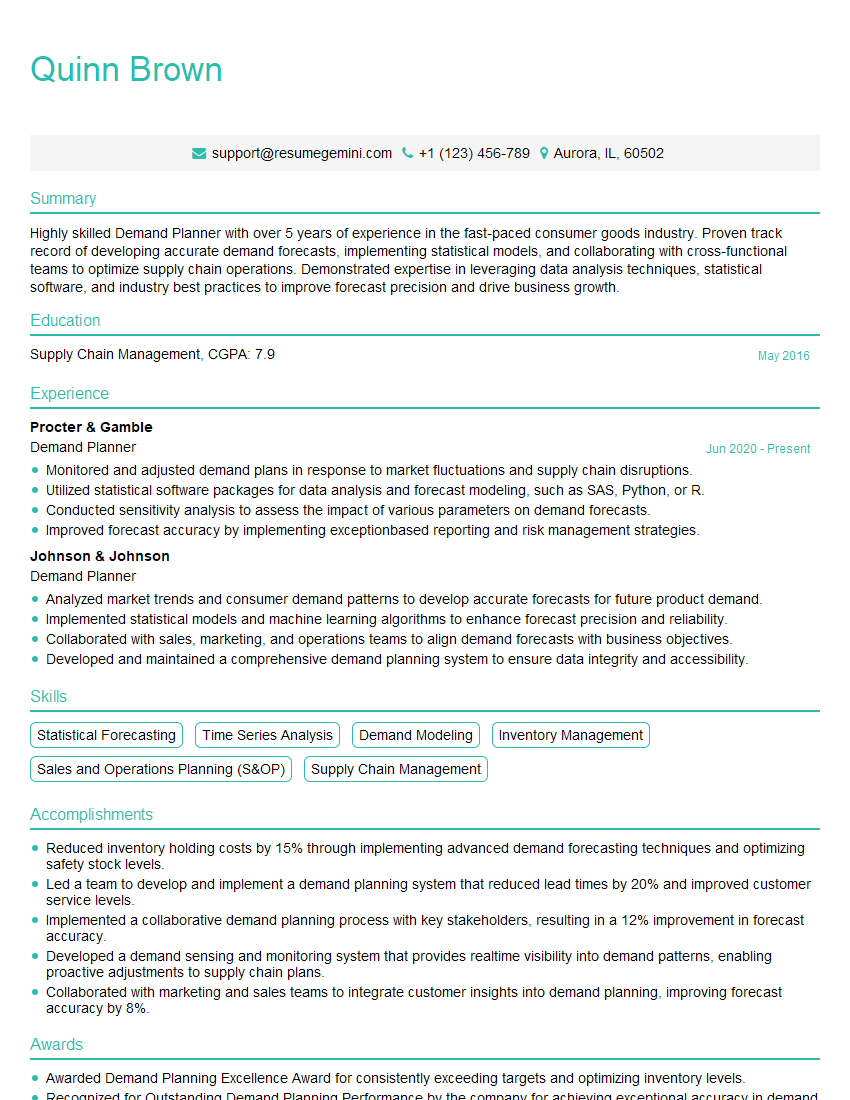
Demand Planner Resume Sample
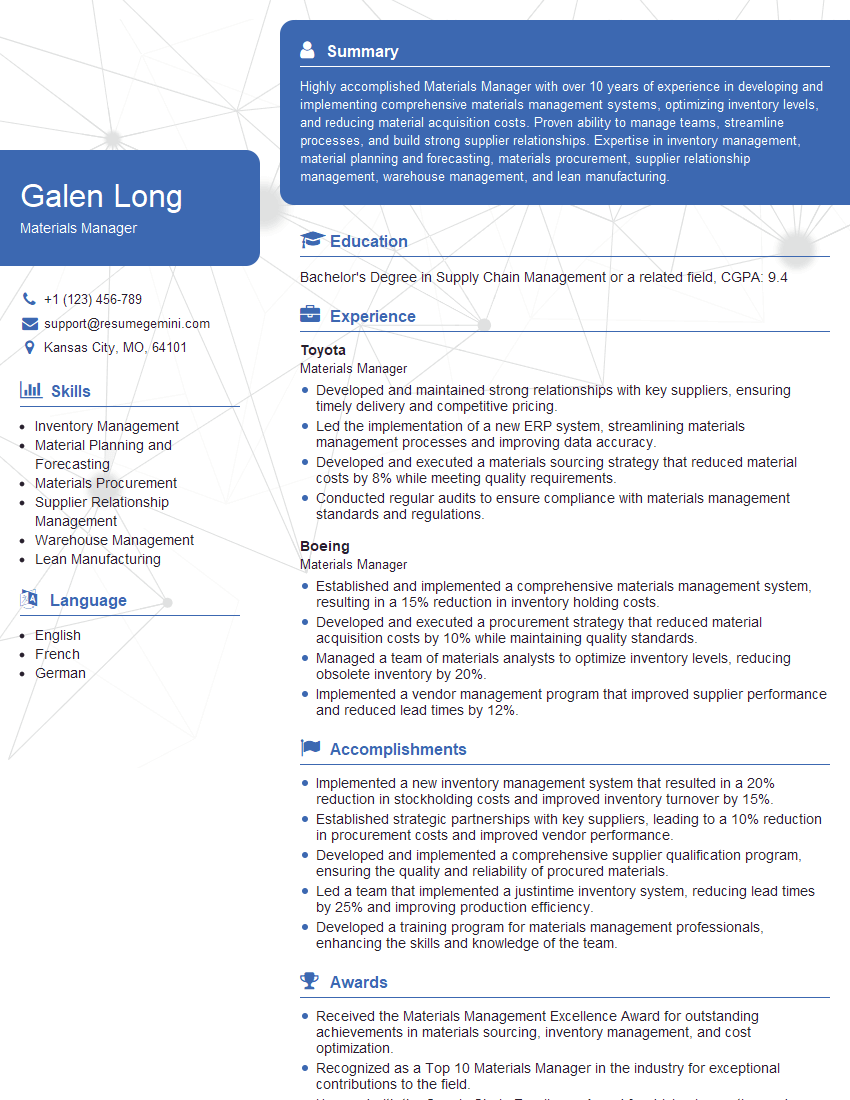
Materials Manager Resume Sample

Procurement Manager Resume Sample
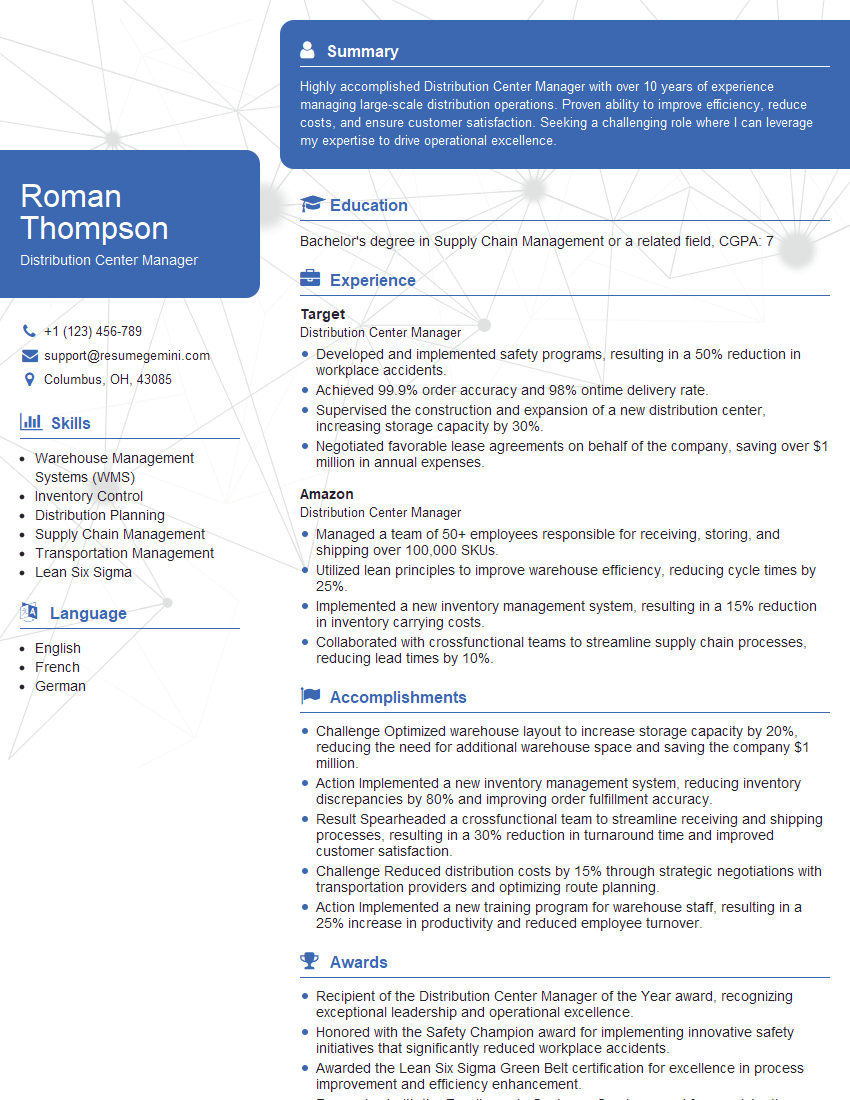
Distribution Center Manager Resume Sample
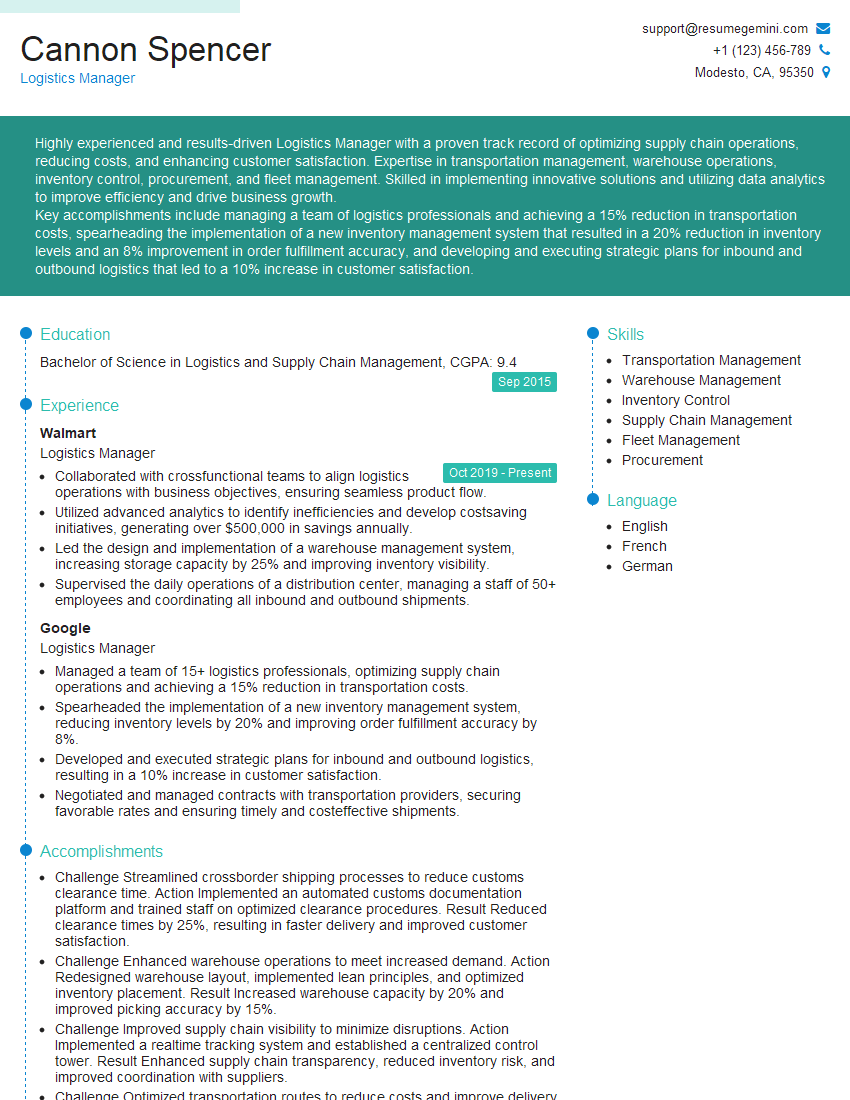
Logistics Manager Resume Sample
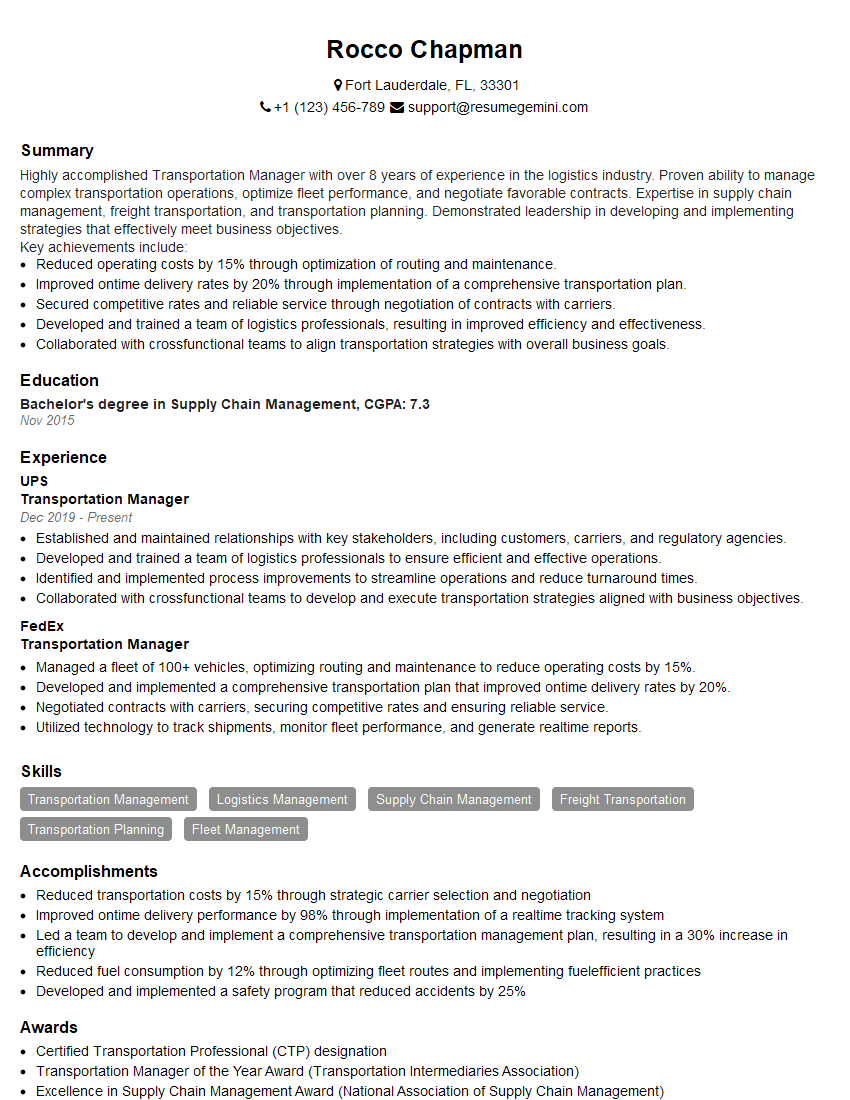
Transportation Manager Resume Sample
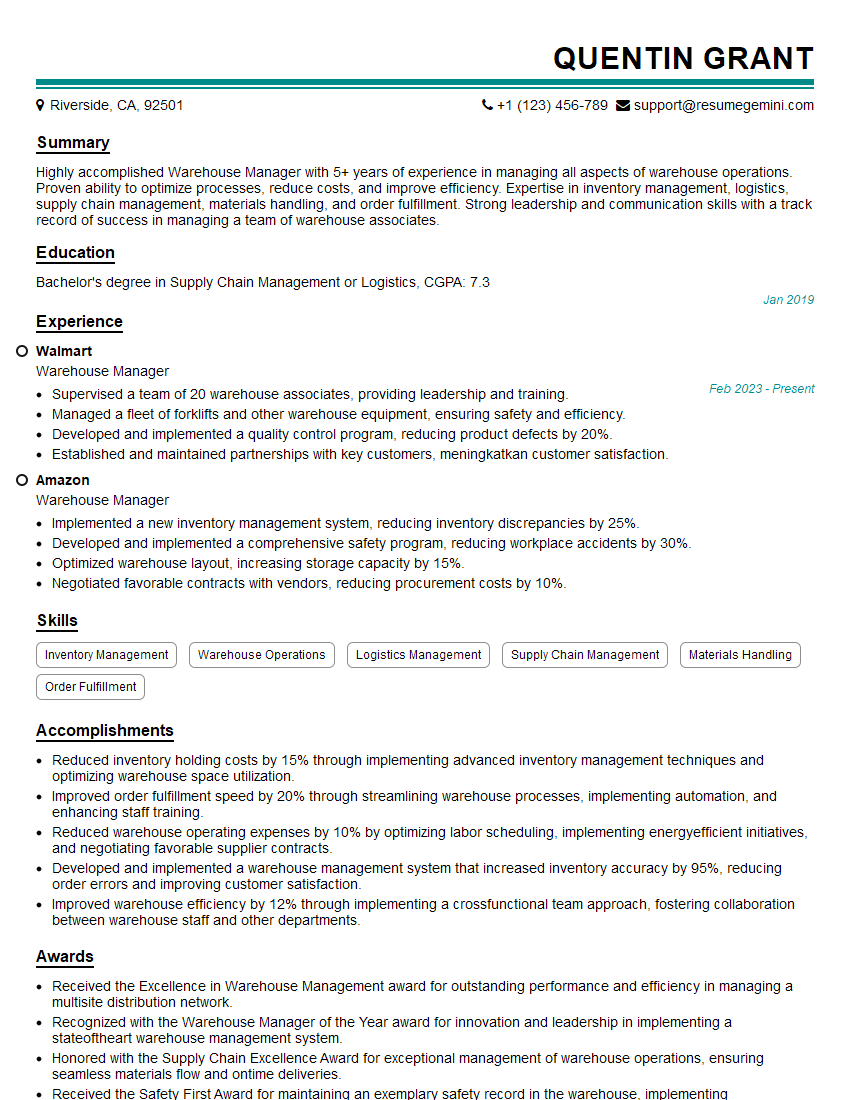
Warehouse Manager Resume Sample
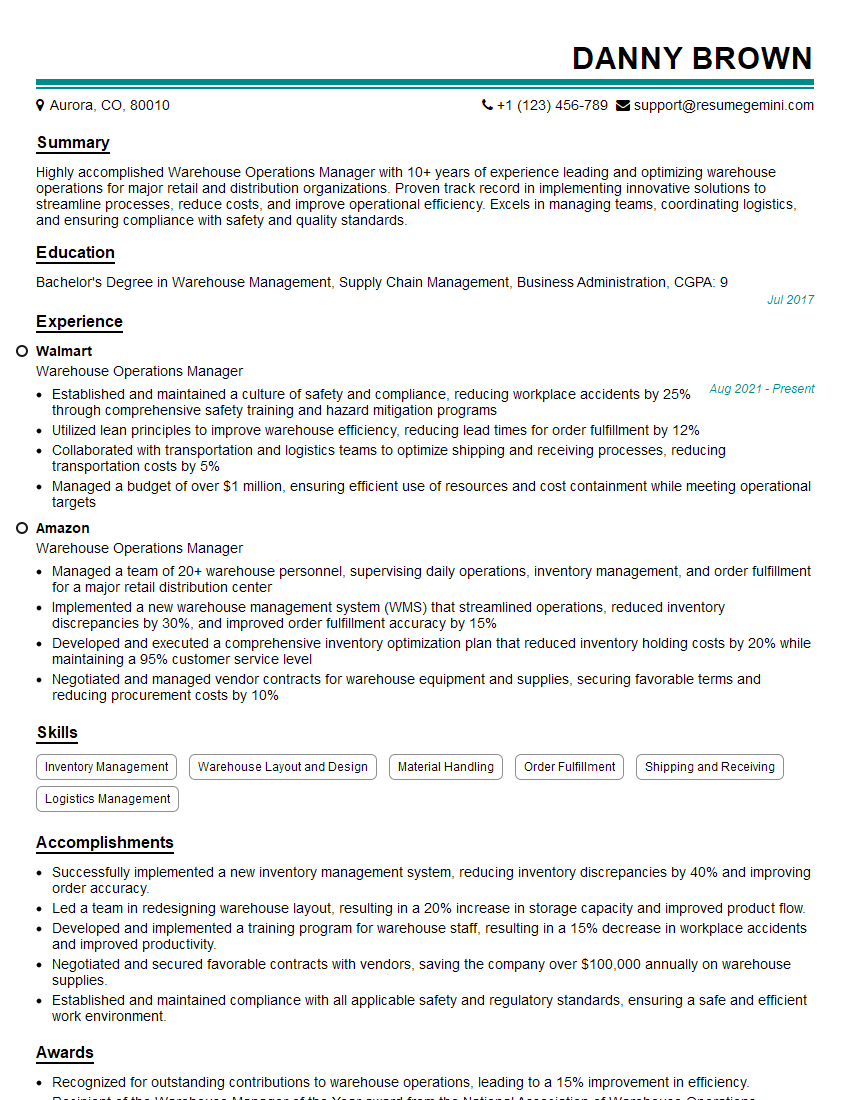
Warehouse Operations Manager Resume Sample
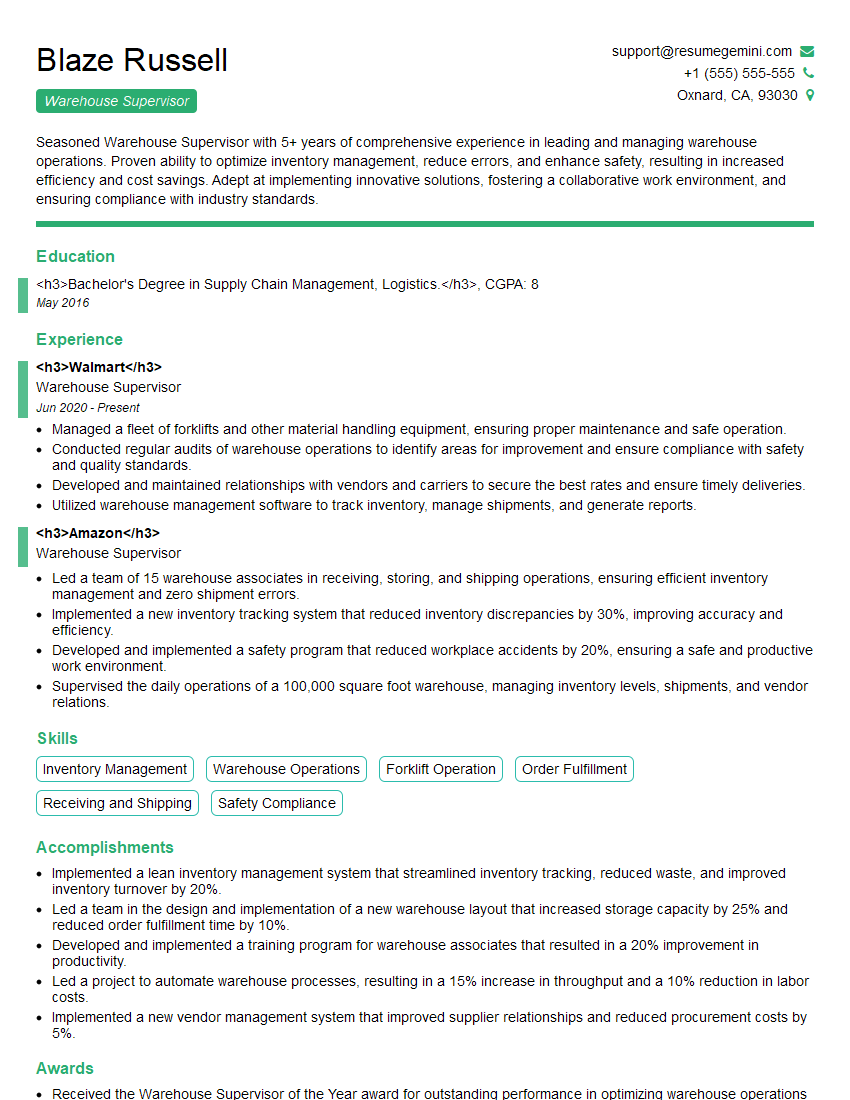
Warehouse Supervisor Resume Sample
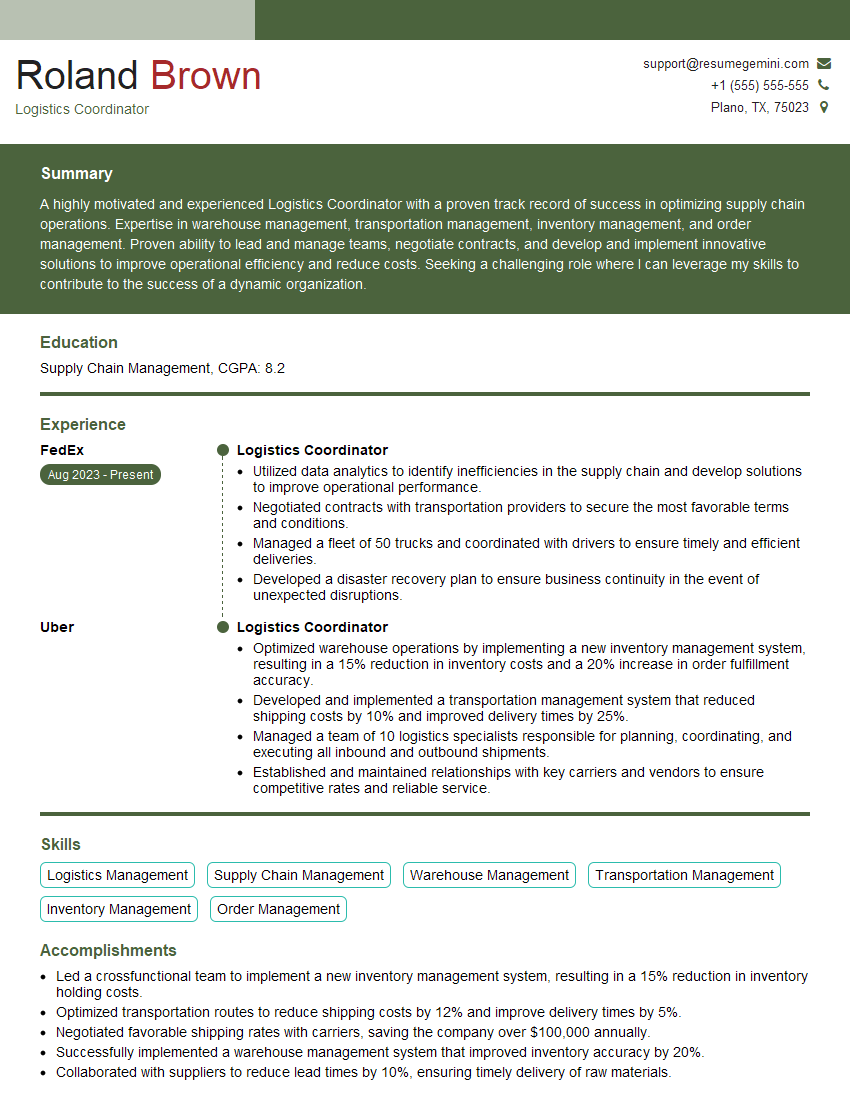
Logistics Coordinator Resume Sample
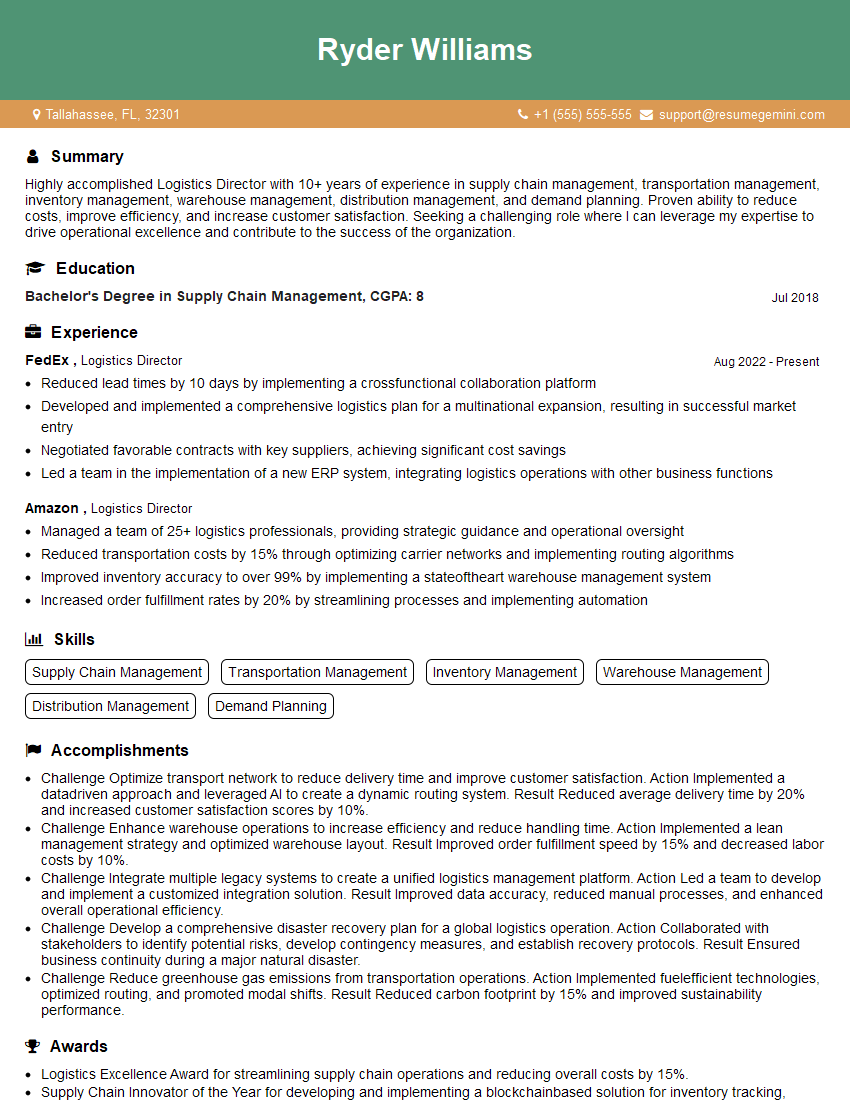
Logistics Director Resume Sample
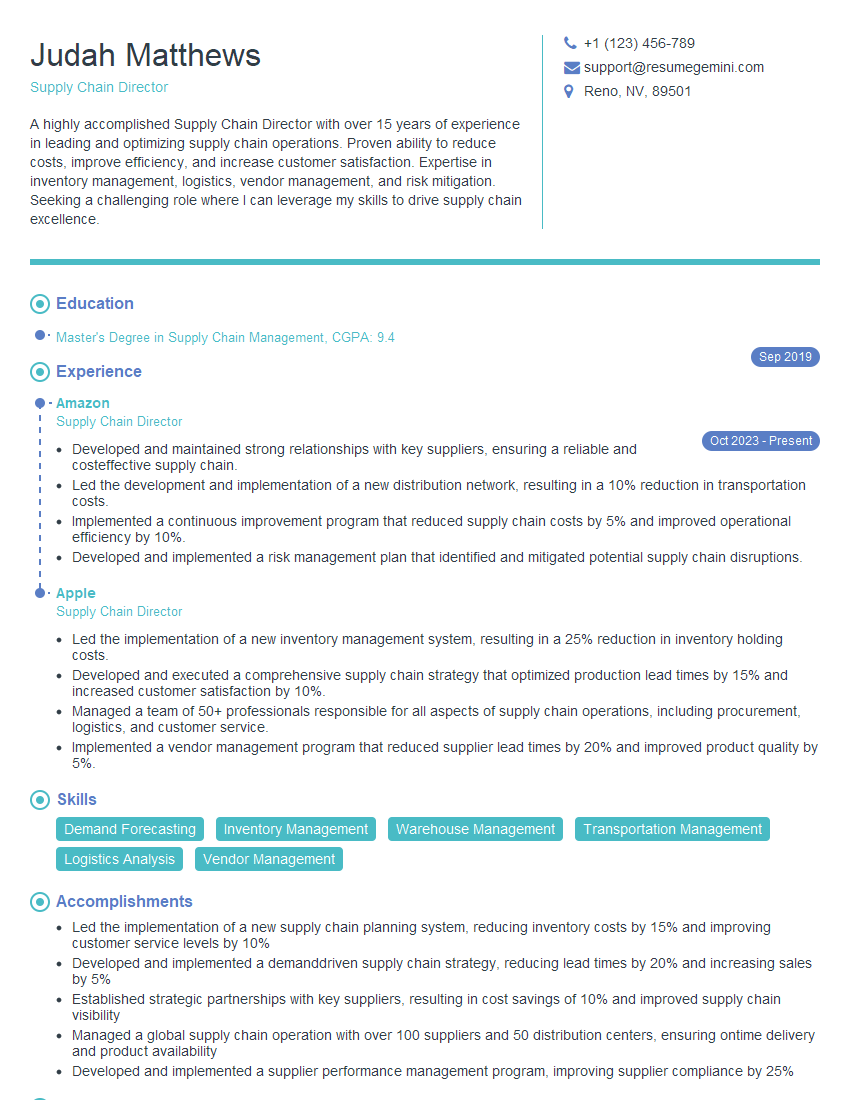
Supply Chain Director Resume Sample
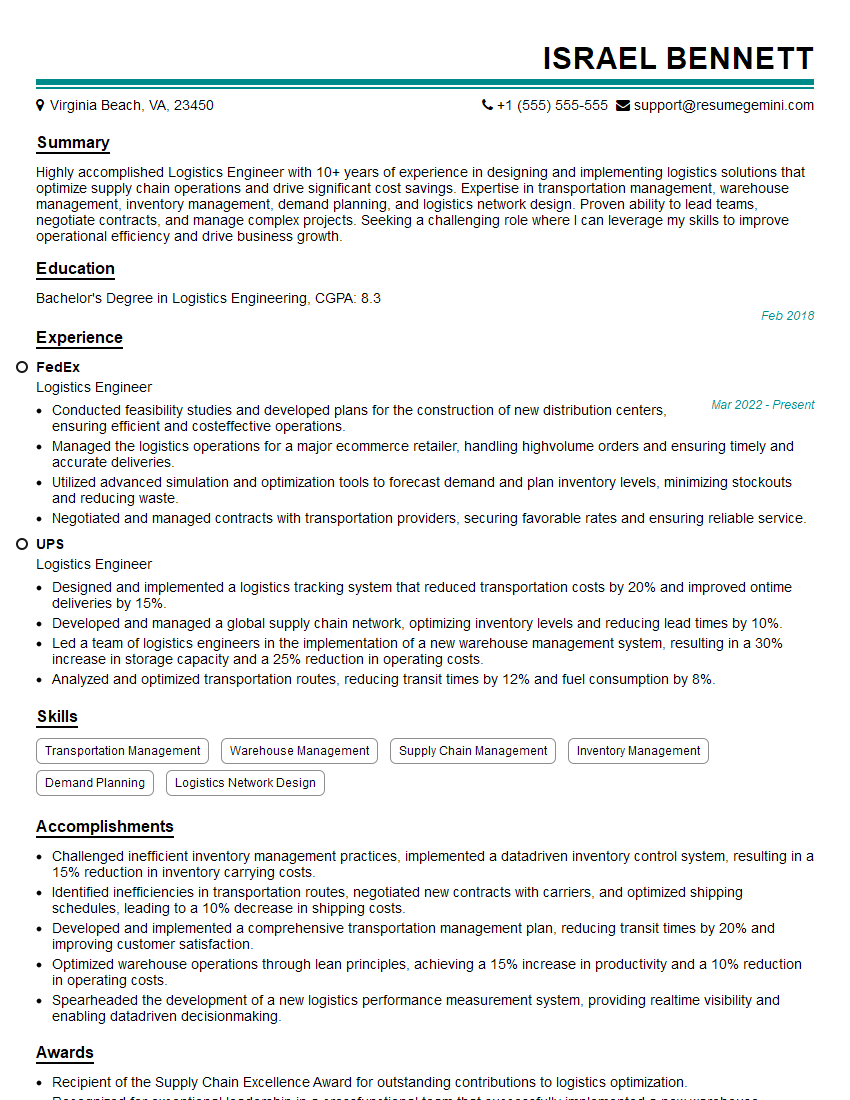
Logistics Engineer Resume Sample
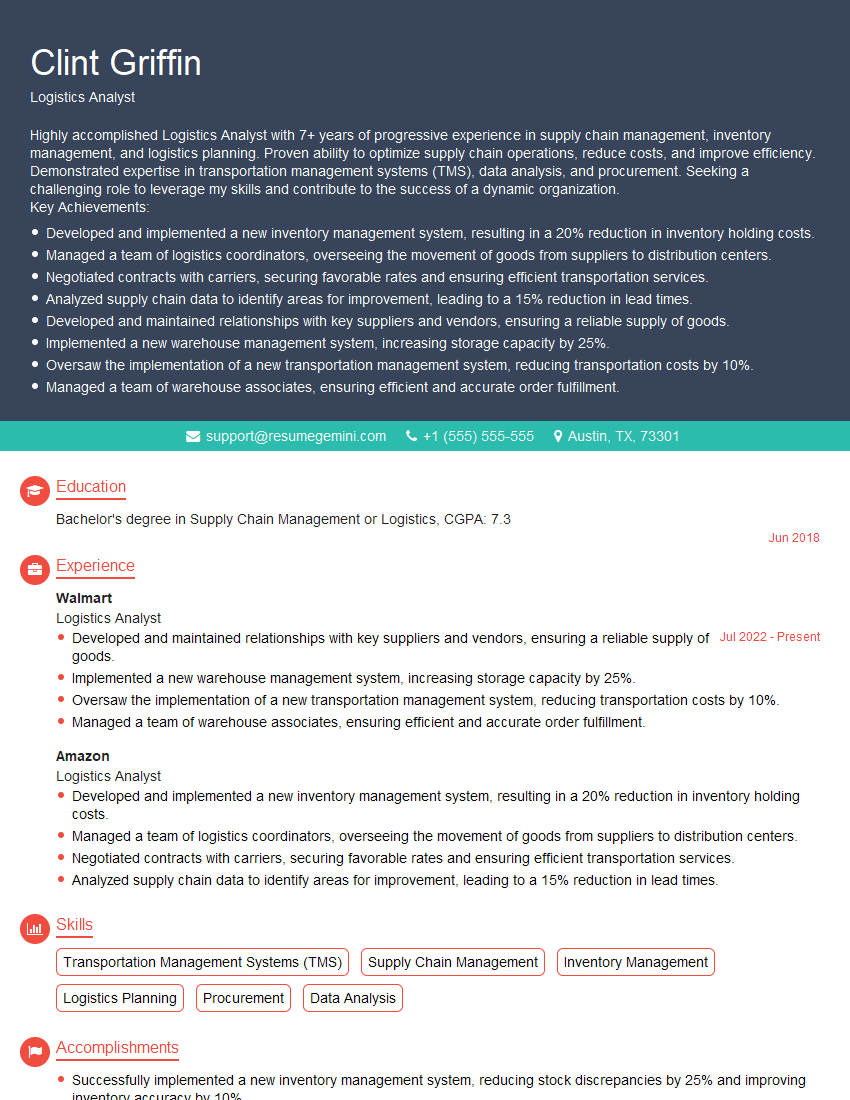
Logistics Analyst Resume Sample
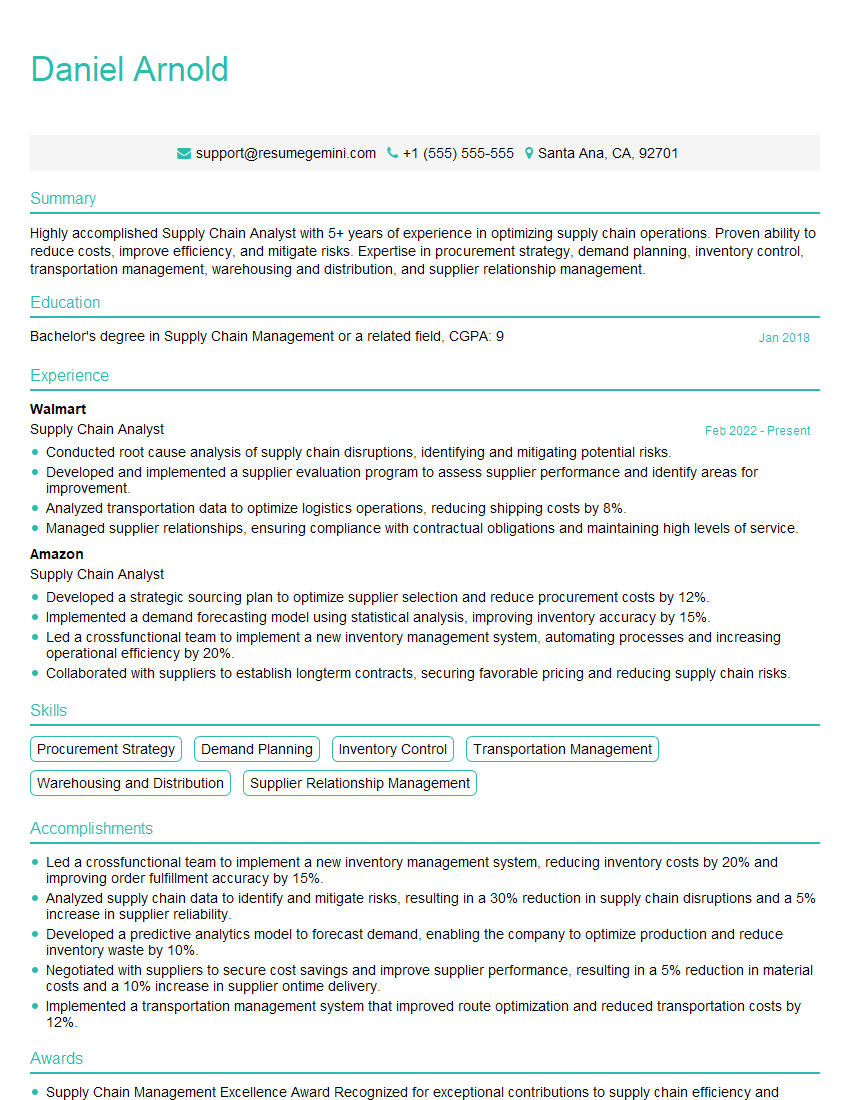
Supply Chain Analyst Resume Sample
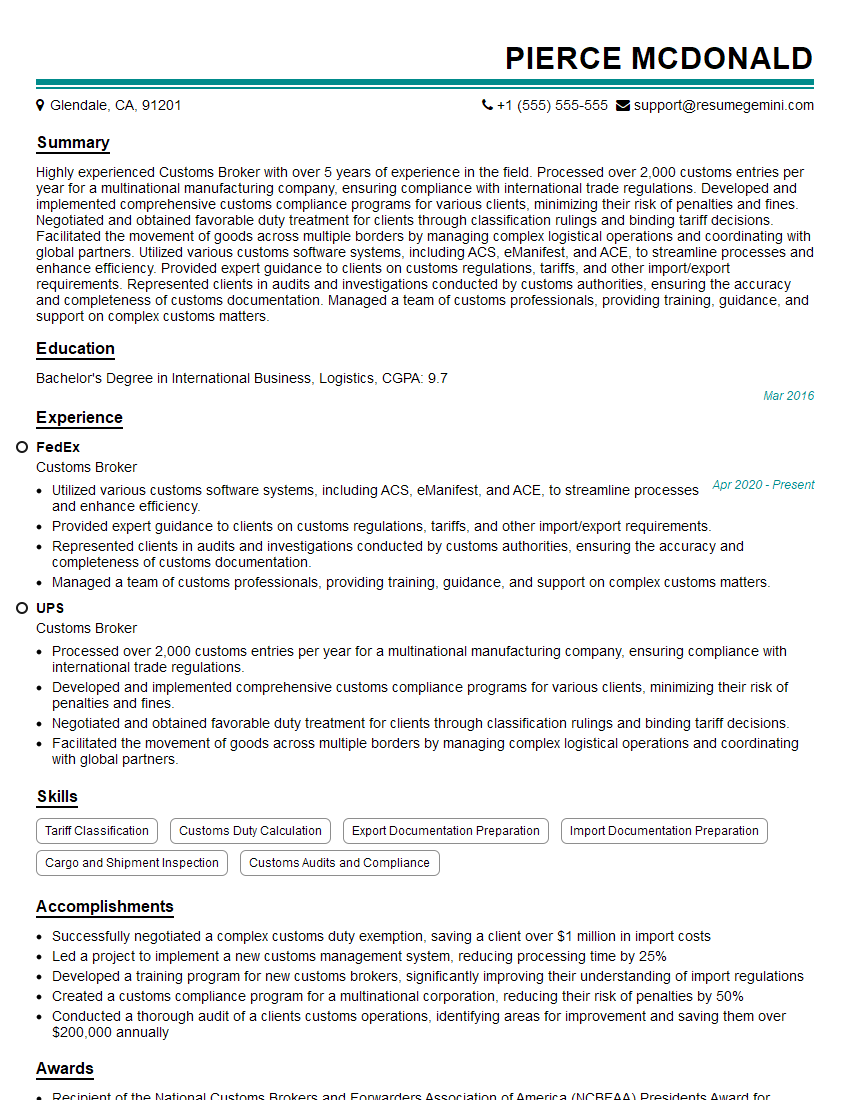
Customs Broker Resume Sample
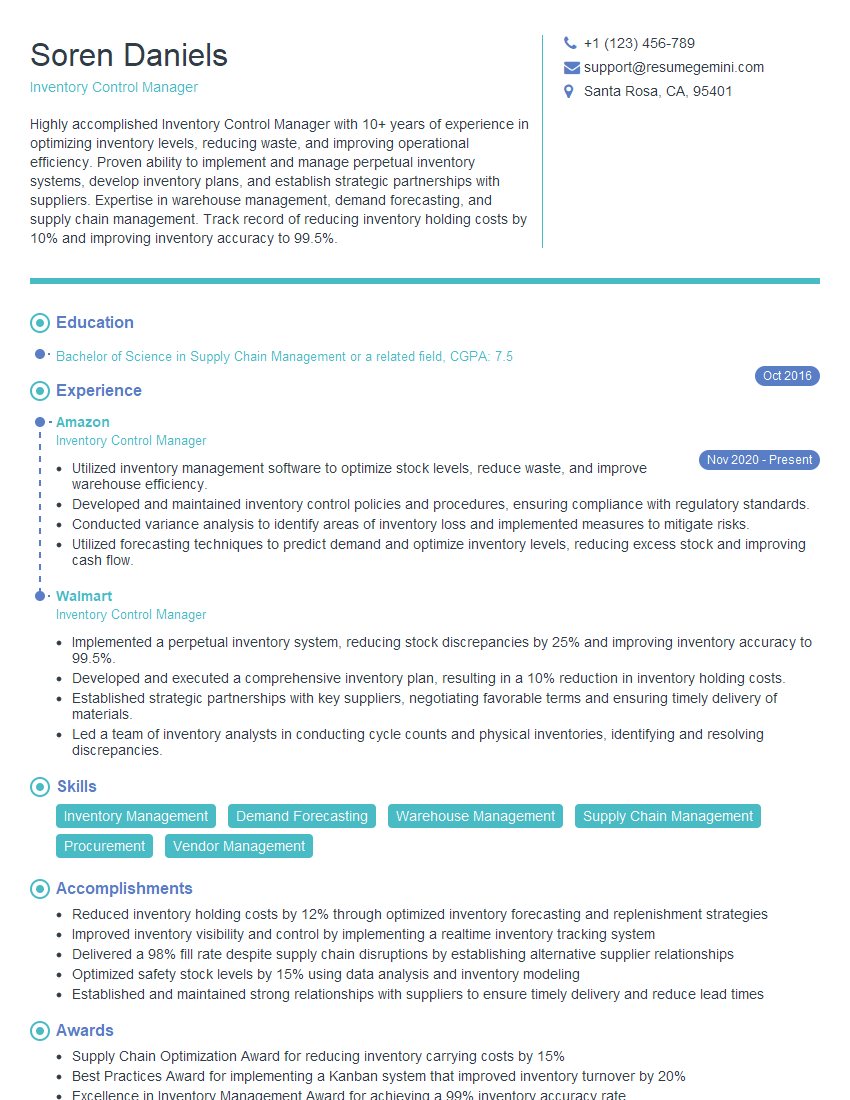
Inventory Control Manager Resume Sample
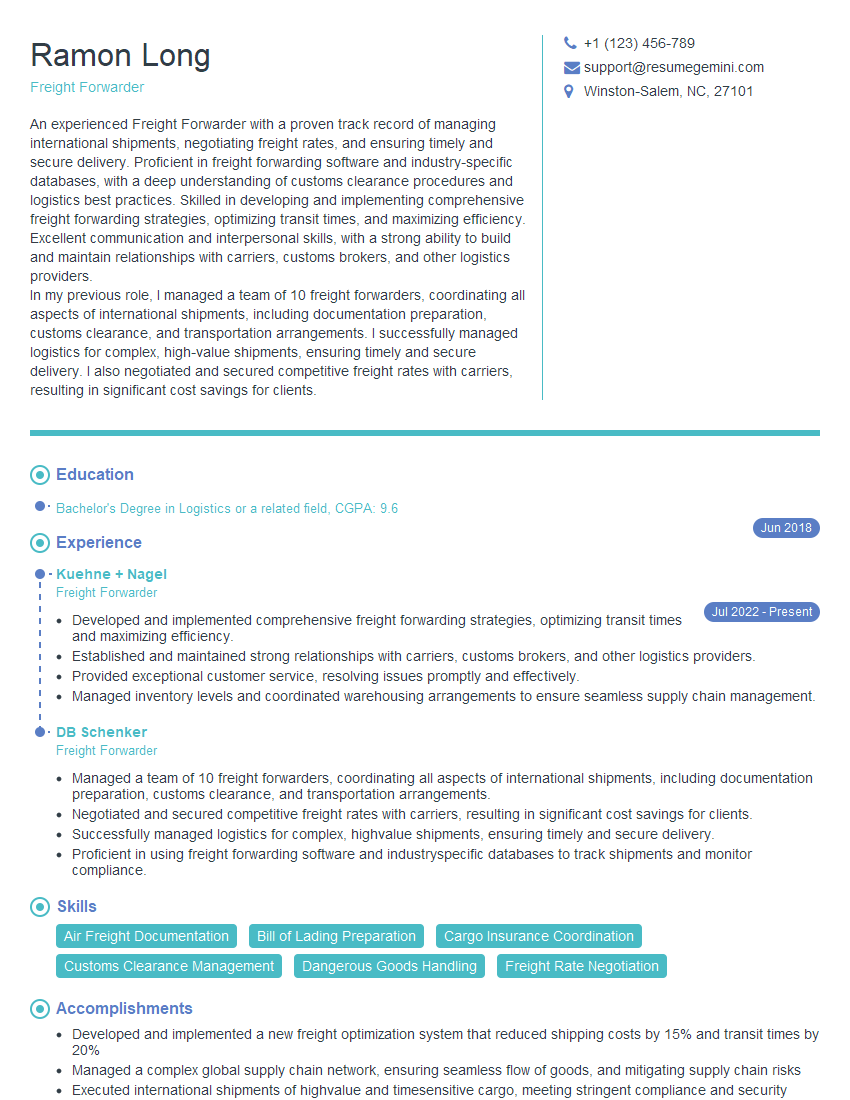
Freight Forwarder Resume Sample
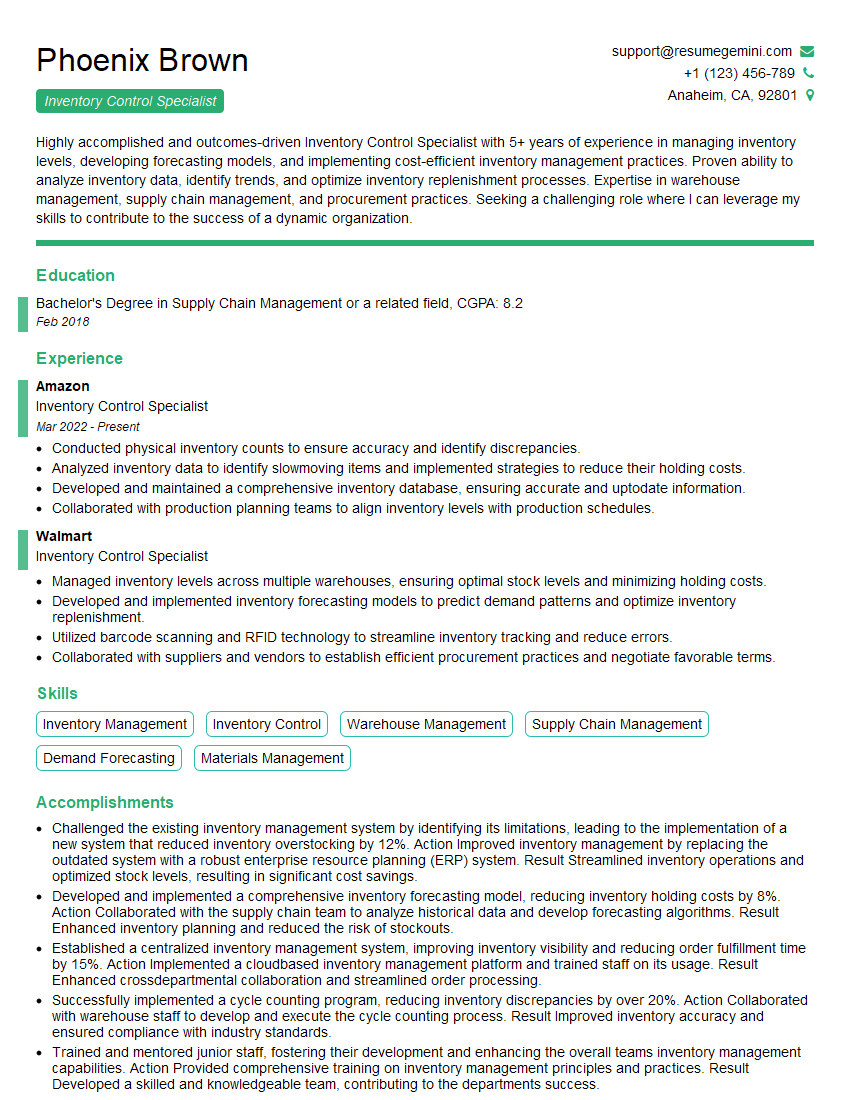
Inventory Control Specialist Resume Sample
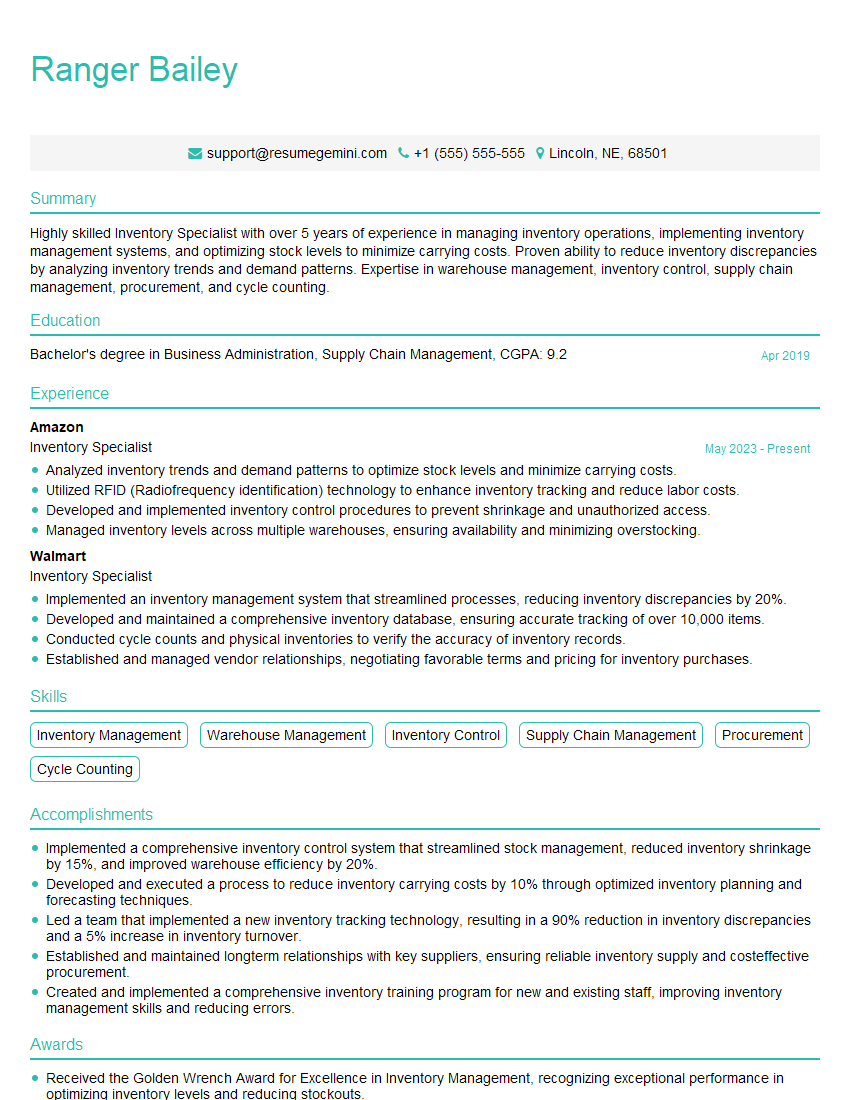
Inventory Specialist Resume Sample
- Demand Planner
- Materials Manager
- Procurement Manager
- Distribution Center Manager
- Logistics Manager
- Transportation Manager
- Warehouse Manager
- Warehouse Operations Manager
- Warehouse Supervisor
- Logistics Coordinator
- Logistics Director
- Supply Chain Director
- Logistics Engineer
- Logistics Analyst
- Supply Chain Analyst
- Customs Broker
- Inventory Control Manager
- Freight Forwarder
- Inventory Control Specialist
- Inventory Specialist
Explore more articles
Users Rating of Our Blogs
Share Your Experience
We value your feedback! Please rate our content and share your thoughts (optional).
What Readers Say About Our Blog
Very informative content, great job.
good