The right preparation can turn an interview into an opportunity to showcase your expertise. This guide to Loop Analysis interview questions is your ultimate resource, providing key insights and tips to help you ace your responses and stand out as a top candidate.
Questions Asked in Loop Analysis Interview
Q 1. Explain the difference between open-loop and closed-loop control systems.
The core difference between open-loop and closed-loop control systems lies in their feedback mechanisms. An open-loop system operates without feedback; it simply executes a pre-programmed sequence of actions regardless of the outcome. Think of a toaster: you set the time, it runs for that duration, and you get the result, regardless of whether the bread is perfectly toasted. The system doesn’t check if the toast is done.
In contrast, a closed-loop system, also known as a feedback control system, incorporates a feedback mechanism that monitors the output and compares it to the desired setpoint (the target value). Based on this comparison, the system adjusts its actions to minimize the difference between the actual output and the desired setpoint. Consider a cruise control system in a car: it monitors the vehicle’s speed and adjusts the engine throttle to maintain the set speed, constantly compensating for changes in road incline or wind resistance.
Essentially, open-loop systems are simpler but less accurate, while closed-loop systems are more complex but provide much greater precision and adaptability to changing conditions.
Q 2. Describe the concept of feedback in a control loop.
Feedback in a control loop is the crucial mechanism that allows the system to self-correct and maintain the desired output. It involves continuously measuring the actual output of the system and comparing it to the desired setpoint. The difference between these two values, known as the error signal, is then used by the controller to adjust the system’s input, driving the output closer to the setpoint.
Imagine you’re trying to fill a glass of water: your eyes provide visual feedback. If the glass is almost full, you slow down the flow of water; if it’s far from full, you increase it. This constant adjustment based on visual feedback ensures the glass is filled to the desired level. This is analogous to how feedback functions in a control loop.
Q 3. What are the primary components of a feedback control loop?
A typical feedback control loop consists of four primary components:
- Setpoint: The desired value or target output of the system. For example, a desired temperature of 70°F in a thermostat.
- Process/Plant: The system or process being controlled. This could be a chemical reactor, a robotic arm, or even a simple heating element.
- Sensor/Transducer: This component measures the actual output of the process and converts it into a measurable signal (e.g., temperature, pressure, position). This signal is then fed back to the controller.
- Controller: The brain of the system, responsible for comparing the measured output with the setpoint and making necessary adjustments to the process input to minimize the error.
These components interact in a continuous cycle, constantly monitoring and adjusting the system to maintain the desired output.
Q 4. Explain the role of a controller in a control loop.
The controller is the heart of a feedback control loop. Its primary function is to analyze the error signal (the difference between the setpoint and the measured output) and calculate the necessary corrective action. It does this by manipulating the input to the process, aiming to drive the error signal towards zero. The sophistication of the controller dictates the loop’s performance and stability.
A simple analogy is a thermostat: the setpoint is the desired temperature, the sensor measures the actual temperature, and the controller (the thermostat itself) turns the heater on or off based on the difference between these two values. The controller’s algorithm dictates how aggressively it corrects the temperature.
Q 5. What are the different types of controllers used in loop analysis?
Many types of controllers exist, each with its own strengths and weaknesses. Some of the most common include:
- Proportional (P) controllers: The controller output is proportional to the error signal.
- Integral (I) controllers: The controller output is proportional to the integral of the error signal over time.
- Derivative (D) controllers: The controller output is proportional to the rate of change of the error signal.
- Proportional-Integral (PI) controllers: Combine P and I actions.
- Proportional-Integral-Derivative (PID) controllers: Combine P, I, and D actions. This is the most widely used type of controller.
- Advanced controllers: These include model predictive control (MPC), fuzzy logic controllers, and neural network controllers, offering more sophisticated control strategies.
Q 6. Describe the characteristics of a Proportional (P), Integral (I), and Derivative (D) controller.
Let’s examine the characteristics of P, I, and D controllers individually:
- Proportional (P) controller: The output is directly proportional to the error.
Output = Kp * Error, whereKpis the proportional gain. A largerKpleads to faster response but can cause oscillations or instability. It addresses the current error but doesn’t correct for accumulated errors. - Integral (I) controller: The output is proportional to the accumulated error over time.
Output = Ki * ∫Error dt, whereKiis the integral gain. It eliminates steady-state error but can lead to slow response and overshoot. It corrects for accumulated errors, even small ones over long periods. - Derivative (D) controller: The output is proportional to the rate of change of the error.
Output = Kd * d(Error)/dt, whereKdis the derivative gain. It anticipates future error and reduces overshoot and oscillations but is sensitive to noise.
Understanding these individual characteristics is crucial in designing effective PID controllers.
Q 7. Explain the concept of PID tuning and its importance.
PID tuning is the process of adjusting the proportional (Kp), integral (Ki), and derivative (Kd) gains of a PID controller to achieve optimal performance. Optimal performance is defined by a balance between speed of response, accuracy, and stability. A poorly tuned PID controller can lead to instability (oscillations), sluggish response, or significant steady-state error.
The importance of PID tuning cannot be overstated. A well-tuned PID controller ensures the controlled system responds efficiently to changes in the setpoint and disturbances while remaining stable. This translates to improved product quality, increased efficiency, and enhanced safety in industrial processes and automation systems.
Various tuning methods exist, including Ziegler-Nichols methods, trial-and-error, and more advanced techniques that use optimization algorithms. The choice of method depends on the complexity of the system and the available resources. Accurate tuning significantly impacts the efficiency and stability of the entire system.
Q 8. What are some common methods for tuning PID controllers?
PID controller tuning aims to find the optimal values for Proportional (P), Integral (I), and Derivative (D) gains to achieve desired system performance. Several methods exist, each with strengths and weaknesses. Common approaches include:
- Trial and Error: This involves manually adjusting the gains, observing the system response, and iteratively refining the values. It’s simple but time-consuming and may not yield optimal results.
- Ziegler-Nichols Methods (discussed in the next question): These are well-established methods that provide initial gain settings based on system characteristics.
- Relay Feedback Tuning: This method uses a relay to induce oscillations in the system, from which the ultimate gain and period are determined. These values are then used to calculate the PID gains.
- Auto-tuning algorithms: Many modern controllers incorporate sophisticated algorithms that automatically adjust the PID gains based on real-time system performance. These methods often utilize advanced optimization techniques.
- Internal Model Control (IMC): IMC tuning uses a model of the process to design the controller, resulting in a robust and well-performing control system. This method is more advanced and requires a good process model.
The best method depends on factors like the complexity of the system, the availability of information, and the desired level of performance. Often, a combination of methods is used, starting with a simple method like Ziegler-Nichols and then refining the gains through trial and error or auto-tuning.
Q 9. What is Ziegler-Nichols tuning method?
The Ziegler-Nichols method is a widely used heuristic approach for tuning PID controllers. It relies on determining the ultimate gain (Ku) and the ultimate period (Tu) of the system. The ultimate gain is the gain at which the system starts to oscillate continuously, and the ultimate period is the period of these oscillations. These values are found experimentally by gradually increasing the proportional gain until sustained oscillations occur.
Once Ku and Tu are known, the PID gains are calculated using specific formulas. There are two main Ziegler-Nichols methods:
- Step Response Method: This method uses the system’s response to a step input to determine the parameters for tuning the PID controller. It requires a stable plant.
- Ultimate Gain Method (Oscillation Method): This method uses the ultimate gain and period from oscillation to tune PID parameters. This involves creating a sustained oscillation in the system and observing its characteristics.
Example (Ultimate Gain Method): Let’s say we find Ku = 2 and Tu = 10 seconds. The Ziegler-Nichols tuning rules provide the following PID gains:
Kp = 0.6 * Ku = 0.6 * 2 = 1.2Ti = Tu / 2 = 10 / 2 = 5 secondsTd = Tu / 8 = 10 / 8 = 1.25 seconds
These gains provide a starting point. Fine-tuning might be necessary to achieve optimal performance.
Q 10. Explain the concept of stability in a control loop.
Stability in a control loop refers to the system’s ability to maintain a desired output in response to disturbances or changes in the input. A stable system will eventually settle to a steady-state value after a disturbance, while an unstable system will exhibit unbounded oscillations or drift away from the setpoint. Think of a self-balancing robot: a stable system will correct for small disturbances and remain upright, while an unstable one will topple over.
Instability can manifest in several ways: continuous oscillations (limit cycles), increasing oscillations leading to saturation, or a slow but continuous drift away from the desired setpoint. The key is that the system’s response to disturbances should eventually settle, rather than grow without bound.
Q 11. How do you determine the stability of a control system using loop analysis?
Loop analysis techniques provide powerful tools for assessing the stability of a control system. The most common methods use frequency-domain analysis, such as Bode and Nyquist plots (discussed later). These methods analyze the system’s response to sinusoidal inputs at various frequencies.
In essence, you examine the system’s open-loop transfer function. If the open-loop system is unstable, the closed-loop system will likely be unstable as well. Stability is determined by analyzing characteristics such as gain and phase margins (explained below). Other methods include Root Locus analysis, which examines the location of the closed-loop poles in the complex plane to assess stability.
For example, a common criterion is the Routh-Hurwitz criterion which utilizes the coefficients of the characteristic polynomial to determine stability without requiring frequency response plots.
Q 12. What is a Bode plot and how is it used in loop analysis?
A Bode plot is a graphical representation of a system’s frequency response. It consists of two plots: one showing the magnitude (gain) in decibels (dB) and the other showing the phase shift (in degrees) as a function of frequency (usually in logarithmic scale). It’s a powerful tool for understanding how a system behaves at different frequencies.
In loop analysis, the Bode plot of the open-loop transfer function is used to assess stability and determine the gain and phase margins. The plot reveals how the gain and phase shift vary with frequency, allowing engineers to identify potential instability issues such as resonant frequencies or excessive phase lag at high gain. By examining the Bode plot, you can determine the frequency at which the system might start oscillating and take corrective action by adjusting the controller parameters.
For instance, a large phase lag near the frequency where the gain crosses 0 dB can indicate a system close to instability. A steep slope in the magnitude plot near the crossover frequency can also suggest an instability risk.
Q 13. What is a Nyquist plot and how is it used in loop analysis?
A Nyquist plot is another graphical representation of a system’s frequency response, but instead of plotting magnitude and phase separately, it plots the complex frequency response in the complex plane. The plot traces the locus of the open-loop transfer function as the frequency varies from zero to infinity. The plot is particularly useful for analyzing systems with time delays and non-minimum phase characteristics which can be challenging to analyze with Bode plots.
In loop analysis, the Nyquist plot is used to determine stability based on the number of encirclements of the critical point (-1, 0) in the complex plane. The Nyquist stability criterion states that the number of clockwise encirclements of the critical point by the Nyquist plot is equal to the number of unstable poles in the closed-loop transfer function.
Imagine plotting the open-loop frequency response as a curve in a complex plane. If this curve encircles the -1 point, this can indicate instability. The distance of the curve from the -1 point provides a measure of stability margin.
Q 14. Explain the concept of gain margin and phase margin.
Gain margin and phase margin are crucial stability indicators derived from Bode or Nyquist plots. They quantify how far the system is from instability.
Gain margin is the amount of gain increase (in dB) that can be applied to the system before it becomes unstable. It’s determined at the frequency where the phase crosses -180 degrees (or -π radians). A higher gain margin indicates greater stability; a gain margin of 0 dB means the system is on the verge of instability. Think of it as a safety buffer; the higher the gain margin, the more extra gain you can add before the system goes unstable.
Phase margin is the amount of additional phase lag (in degrees) that can be added to the system at the frequency where the gain crosses 0 dB (or 1) before it becomes unstable. A positive phase margin indicates stability, while a phase margin of 0 degrees indicates instability. A higher phase margin indicates better damping and a faster settling time, leading to a more robust system.
In summary, both gain and phase margins provide a quantitative measure of a control system’s robustness to variations and disturbances.
Q 15. How do gain margin and phase margin relate to system stability?
Gain margin and phase margin are crucial indicators of a control system’s stability, derived from the system’s frequency response. They tell us how much extra gain or phase shift the system can tolerate before becoming unstable. Imagine a tightrope walker: gain margin is how much heavier the walker can get before losing balance, and phase margin is how much the rope can be unexpectedly shifted before the walker falls.
Gain margin is the amount of gain increase (in dB) at the gain crossover frequency (the frequency where the magnitude of the open-loop transfer function is 1 or 0dB) before the system becomes unstable. A higher gain margin indicates a more stable system, generally suggesting a larger tolerance for variations in system parameters or external disturbances. A gain margin of 6dB or more is generally considered good practice.
Phase margin is the amount of additional phase lag (in degrees) at the phase crossover frequency (the frequency where the phase of the open-loop transfer function is -180 degrees) needed to bring the system to the stability threshold. A larger phase margin means the system is less sensitive to delays and phase shifts, contributing to better stability. A phase margin of 45 degrees or more is often recommended for robust stability.
Both margins are typically obtained from Bode plots, which graphically represent the frequency response of a system.
Career Expert Tips:
- Ace those interviews! Prepare effectively by reviewing the Top 50 Most Common Interview Questions on ResumeGemini.
- Navigate your job search with confidence! Explore a wide range of Career Tips on ResumeGemini. Learn about common challenges and recommendations to overcome them.
- Craft the perfect resume! Master the Art of Resume Writing with ResumeGemini’s guide. Showcase your unique qualifications and achievements effectively.
- Don’t miss out on holiday savings! Build your dream resume with ResumeGemini’s ATS optimized templates.
Q 16. What is a root locus plot and how is it used in loop analysis?
A root locus plot is a graphical representation of the locations of the closed-loop poles of a control system as a parameter (usually the gain) is varied. It’s a powerful tool in loop analysis because it visually displays how the system’s stability and response change with variations in the gain. Think of it as a map showing how the system ‘behaves’ under different conditions.
The plot shows the paths (loci) that the closed-loop poles trace as the gain changes from zero to infinity. The plot helps us:
- Determine the range of gain values for stability (poles in the left-half of the s-plane indicate stability).
- Assess the system’s transient response (pole location dictates speed and damping of response).
- Design controllers by manipulating the root locations to achieve desired performance (e.g., faster response, reduced overshoot).
For instance, if a root locus plot shows poles moving into the right-half plane as the gain increases, it indicates the system will become unstable beyond a certain gain value.
Q 17. Explain the concept of sensitivity in a control loop.
Sensitivity in a control loop refers to how much the output of the system changes in response to variations in the system’s parameters or disturbances. Imagine a self-driving car: high sensitivity means a small change in sensor reading (e.g., a slight variation in the distance to an object) can lead to a large change in steering or braking.
We often consider two types of sensitivities:
- Sensitivity to plant variations (SP): How much the closed-loop transfer function changes due to uncertainties in the plant model (the system being controlled).
- Sensitivity to disturbances (Sd): How much the output is affected by external disturbances that affect the system.
A low sensitivity is desirable, meaning the system’s output remains relatively unaffected by these changes or disturbances. This equates to robustness and reliability.
Q 18. How do you analyze the sensitivity of a control system?
Analyzing the sensitivity of a control system usually involves calculating sensitivity functions. These functions quantitatively represent the system’s response to variations. We can use various techniques, including:
- Calculating the sensitivity function: This involves mathematical derivation of the sensitivity function using the open-loop and closed-loop transfer functions of the system. For example, the sensitivity function to plant variations is often expressed as SP = 1/(1+GH), where G is the controller transfer function and H is the feedback transfer function.
- Bode plots: These graphically represent the magnitude and phase of the sensitivity functions across a range of frequencies. Regions of high sensitivity are areas where the magnitude of the sensitivity function is significantly greater than 1.
- Simulation: Simulating the system with different parameter values and disturbances allows for the observation of the system’s behavior and helps quantify sensitivity.
By examining these results, we can identify areas where the system is most vulnerable to variations or disturbances, allowing for improvements to the control design.
Q 19. What is robustness in a control system?
Robustness in a control system describes its ability to maintain performance in the face of uncertainties and disturbances. A robust system is like a sturdy ship that can withstand rough seas – its performance remains reliable even under challenging conditions. These uncertainties can arise from variations in the plant model, external disturbances, or sensor noise. A non-robust system might perform well under ideal conditions but fail to deliver consistent results when faced with real-world variations.
Q 20. How do you ensure robustness in a control system design?
Ensuring robustness in a control system design involves various strategies:
- Robust control design techniques: These methods explicitly account for uncertainties during the design process, such as H-infinity control or μ-synthesis. These techniques aim to optimize the system’s performance across a range of possible uncertainties.
- Gain and phase margin optimization: Ensuring sufficient gain and phase margins provides a buffer against uncertainty.
- Feedback control: Effective feedback mechanisms constantly monitor the system’s output and make corrections to compensate for disturbances or variations.
- Adaptive control: Employing adaptive control allows the system to adjust its parameters automatically in response to changes in the plant or environment.
- Careful model identification and validation: Thoroughly identifying and validating the plant model helps to reduce uncertainty in the system model.
The choice of technique depends on the specific application, the level of uncertainty, and the desired performance specifications.
Q 21. What are some common challenges in loop analysis?
Several challenges complicate loop analysis:
- Model uncertainty: Accurate modeling of real-world systems is difficult, and uncertainties in the system model can affect analysis results. Real systems are often complex and nonlinear, while analysis often relies on simplified linear models.
- Nonlinearity: Many real-world systems exhibit nonlinear behavior, which can significantly complicate analysis and design. Linear techniques are often not applicable in such cases.
- Time delays: Delays in the system can introduce instability and degrade performance. These delays are often difficult to model accurately.
- High dimensionality: Analyzing high-order systems with many states can be computationally intensive and challenging.
- Dealing with noise and disturbances: Noise and disturbances are present in almost all real-world systems, affecting measurement accuracy and system performance.
Addressing these challenges often requires advanced control techniques, robust design methods, and careful consideration of the system’s specific characteristics.
Q 22. How do you handle nonlinearities in a control loop?
Handling nonlinearities in control loops is crucial because most real-world systems aren’t perfectly linear. Linear control theory relies on the principle of superposition – the response to multiple inputs is the sum of the responses to each input individually. Nonlinearities violate this principle.
We address nonlinearities using several techniques:
- Linearization: This involves approximating the nonlinear system with a linear model around an operating point. This is valid only for small deviations from the operating point. Think of it like using a tangent line to approximate a curve – it works well close to the point of tangency but becomes less accurate further away.
- Gain Scheduling: This technique creates multiple linear controllers, each valid for a different operating region. The controller switches between these linear controllers based on the system’s operating point. Imagine a car’s engine control – the controller adjusts differently depending on whether you’re idling, accelerating, or cruising.
- Nonlinear Control Techniques: These include methods like sliding mode control, feedback linearization, and model predictive control (MPC). These techniques directly address the nonlinearity and often offer better performance than linearization or gain scheduling, especially for large deviations from the operating point. MPC, for example, explicitly considers the nonlinear model and optimizes control actions over a prediction horizon.
The choice of method depends on the severity of the nonlinearity, the required performance, and computational constraints. Simple linearization may suffice for mildly nonlinear systems, while more sophisticated methods are necessary for highly nonlinear systems.
Q 23. Explain the concept of disturbance rejection in a control loop.
Disturbance rejection refers to the ability of a control system to maintain its desired output despite external disturbances affecting the system. These disturbances can be anything from variations in temperature or load changes in a motor to unexpected gusts of wind affecting an aircraft. A well-designed control system minimizes the impact of these disturbances on the controlled variable.
Imagine you’re trying to maintain a specific temperature in a room. Opening a window (a disturbance) will cause the temperature to drop. A good control system (your thermostat and heating/cooling system) will quickly compensate for this change and restore the desired temperature.
Q 24. How do you design a controller to effectively reject disturbances?
Designing a controller for effective disturbance rejection involves understanding the nature of the disturbances and utilizing appropriate control strategies. Key approaches include:
- High Gain Feedback: Increasing the feedback gain amplifies the controller’s response to errors, making it more aggressive in correcting deviations caused by disturbances. However, excessively high gain can lead to instability.
- Integral Action (I): An integral term in the controller integrates the error over time. This ensures that even persistent disturbances, which might lead to steady-state errors with proportional control alone, are eventually eliminated. Think of it as persistently trying to eliminate any remaining error.
- Feedforward Control: If the disturbance can be measured or predicted, a feedforward controller can counteract its effect before it significantly impacts the system’s output. This is anticipatory control; it acts proactively instead of reactively.
- Robust Control Design: Techniques such as H-infinity control are designed to be less sensitive to uncertainties and disturbances in the system model.
The best approach often involves a combination of these techniques. For instance, a PID controller (Proportional-Integral-Derivative) combines proportional, integral, and derivative actions for effective disturbance rejection and precise control.
Q 25. What is the difference between feedforward and feedback control?
Feedforward and feedback control are two fundamental control strategies. They differ significantly in how they address the control problem.
- Feedback Control: This method measures the controlled variable and compares it to the desired setpoint. The difference (error) is used to adjust the manipulated variable to reduce the error. It’s a reactive approach; the controller acts only after a disturbance has impacted the system.
- Feedforward Control: This method anticipates disturbances and compensates for them before they affect the controlled variable. It uses a model of the system and the disturbance to predict the disturbance’s effect and preemptively adjust the manipulated variable to counteract it. It’s a proactive approach.
Think of a car’s cruise control: Feedback control monitors the speed and adjusts the throttle to maintain it. Feedforward control might anticipate a hill and adjust the throttle in advance to maintain speed without waiting for the car to slow down.
Q 26. When is feedforward control more appropriate than feedback control?
Feedforward control is more appropriate than feedback control when:
- Disturbances are measurable and predictable: If you can accurately measure or predict the disturbance, feedforward control can effectively compensate for it before it affects the system. Example: Knowing the slope of a hill in advance allows feedforward cruise control to preemptively adjust throttle.
- Fast disturbance dynamics: If disturbances change rapidly, feedback control might be too slow to react effectively. Feedforward control can be quicker, acting proactively.
- System’s response to disturbances is well-understood: Accurate system modeling is essential for effective feedforward control. If the system’s behavior is poorly understood, feedback control is a safer bet.
However, feedforward control is often used in conjunction with feedback control to achieve the best performance. The feedback controller handles uncertainties and unexpected disturbances, while feedforward control deals with predictable ones.
Q 27. Describe your experience with using simulation software for loop analysis.
I have extensive experience using simulation software like MATLAB/Simulink, and Python with control libraries such as `control` for loop analysis. These tools allow for modeling various control systems, including nonlinear elements, and testing different control strategies under diverse conditions.
In my previous role, we used Simulink extensively to design and simulate a closed-loop control system for a robotic arm. We modeled the arm’s dynamics, including friction and inertia, and simulated different controllers to determine optimal parameters and tuning strategies. The simulation helped us avoid costly and time-consuming physical testing, allowing for rapid prototyping and analysis.
Specifically, I’m proficient in using Simulink’s tools for:
- Creating block diagrams of control systems
- Analyzing system stability using Bode plots, Nyquist plots, and root locus techniques
- Designing and tuning PID controllers and other advanced control algorithms
- Simulating the system’s response to various inputs and disturbances
This simulation experience significantly improves the efficiency and effectiveness of my control system designs.
Q 28. Explain a situation where you had to troubleshoot a control loop problem.
In a previous project involving a temperature control system for a chemical reactor, we encountered oscillations in the reactor temperature. Initially, the system used a simple proportional controller. The oscillations indicated poor tuning and instability.
My troubleshooting steps were:
- Data Analysis: We carefully reviewed the logged data to identify the frequency and amplitude of the oscillations. This confirmed the instability and highlighted the need for better controller tuning.
- System Modeling: We developed a simplified model of the reactor’s thermal dynamics to better understand its behavior and response to control actions.
- Controller Tuning: We implemented a PID controller, carefully adjusting the proportional, integral, and derivative gains through iterative simulation and experimentation. The integral term was crucial in eliminating the offset observed with the proportional controller alone, and the derivative helped dampen the oscillations.
- Testing and Validation: After tuning the PID controller, we performed extensive testing on the system, validating its stability and performance under various operating conditions.
Through this systematic approach, we successfully eliminated the oscillations and achieved stable temperature control within the desired range. This experience highlighted the importance of comprehensive system understanding, proper controller design, and thorough testing in control system development.
Key Topics to Learn for Loop Analysis Interview
- Fundamental Loop Structures: Understanding different loop types (for, while, do-while) and their appropriate use cases in various programming languages. This includes considerations for loop termination conditions and efficient iteration.
- Loop Optimization Techniques: Explore methods for improving loop performance, such as loop unrolling, vectorization, and minimizing redundant calculations. Be prepared to discuss the trade-offs involved in different optimization strategies.
- Nested Loops and Complexity Analysis: Analyze the time and space complexity of nested loops and understand how to identify potential performance bottlenecks. Practice estimating the runtime of algorithms involving nested loops.
- Debugging and Troubleshooting Loops: Develop strategies for effectively identifying and resolving common loop-related errors, such as infinite loops, off-by-one errors, and incorrect loop conditions. Be prepared to discuss debugging techniques and tools.
- Loop Invariants and Correctness Proofs: Understand the concept of loop invariants and how they can be used to formally prove the correctness of loop algorithms. This demonstrates a deeper understanding of loop behavior.
- Practical Applications: Be ready to discuss how loop analysis applies to real-world scenarios, such as data processing, algorithm implementation, and system optimization. Examples could include searching, sorting, and matrix operations.
- Advanced Loop Constructs: Familiarize yourself with advanced loop constructs or patterns specific to your target language or frameworks (e.g., iterators, generators, stream processing).
Next Steps
Mastering loop analysis is crucial for success in many software engineering roles, demonstrating a strong foundation in algorithmic thinking and problem-solving. A well-crafted resume is key to showcasing these skills to potential employers. To maximize your job prospects, focus on creating an Applicant Tracking System (ATS)-friendly resume that highlights your relevant experience and accomplishments. ResumeGemini is a trusted resource to help you build a professional and impactful resume. We provide examples of resumes tailored specifically to highlight Loop Analysis expertise, enabling you to present your qualifications effectively.
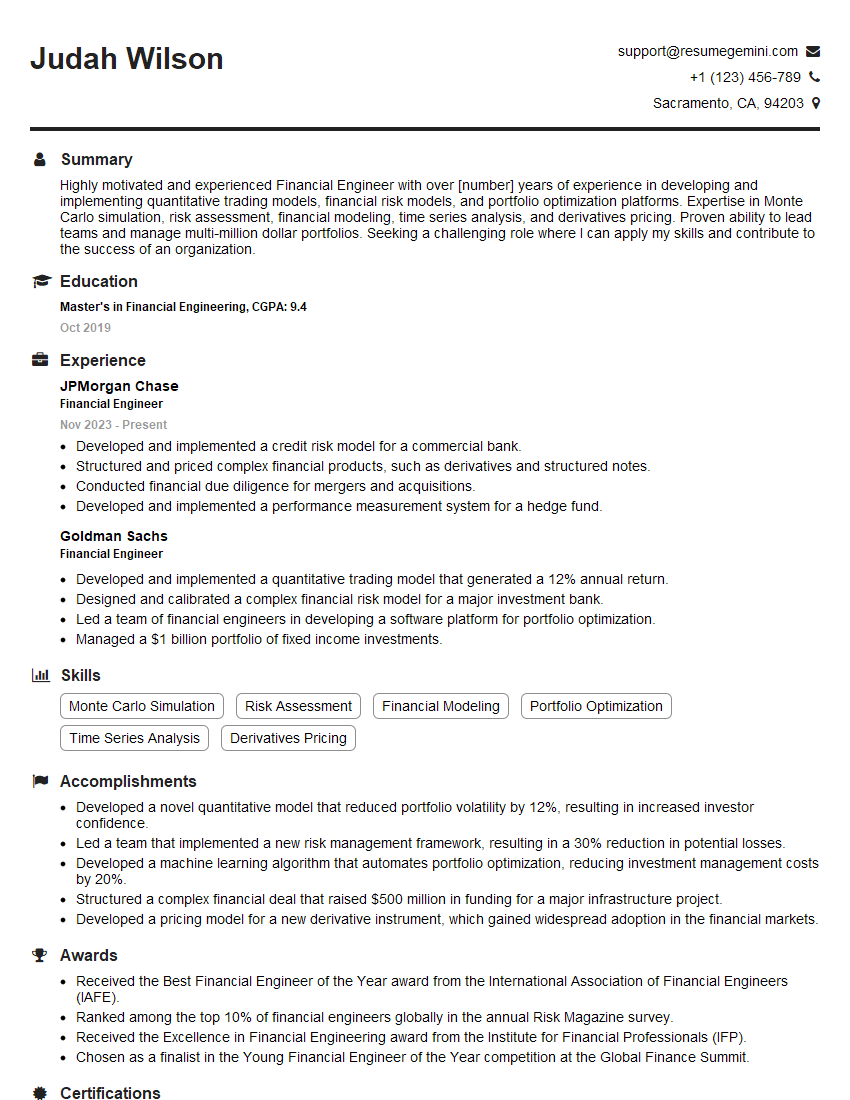
Financial Engineer Resume Sample
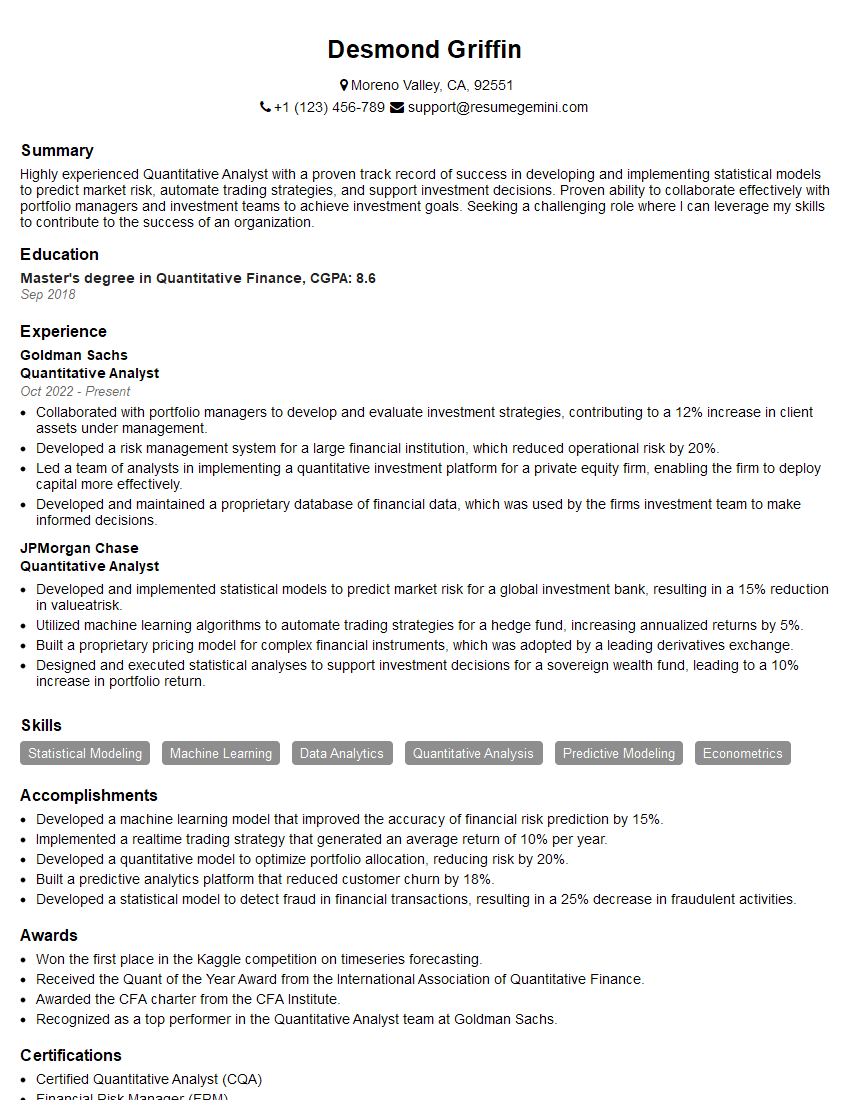
Quantitative Analyst Resume Sample
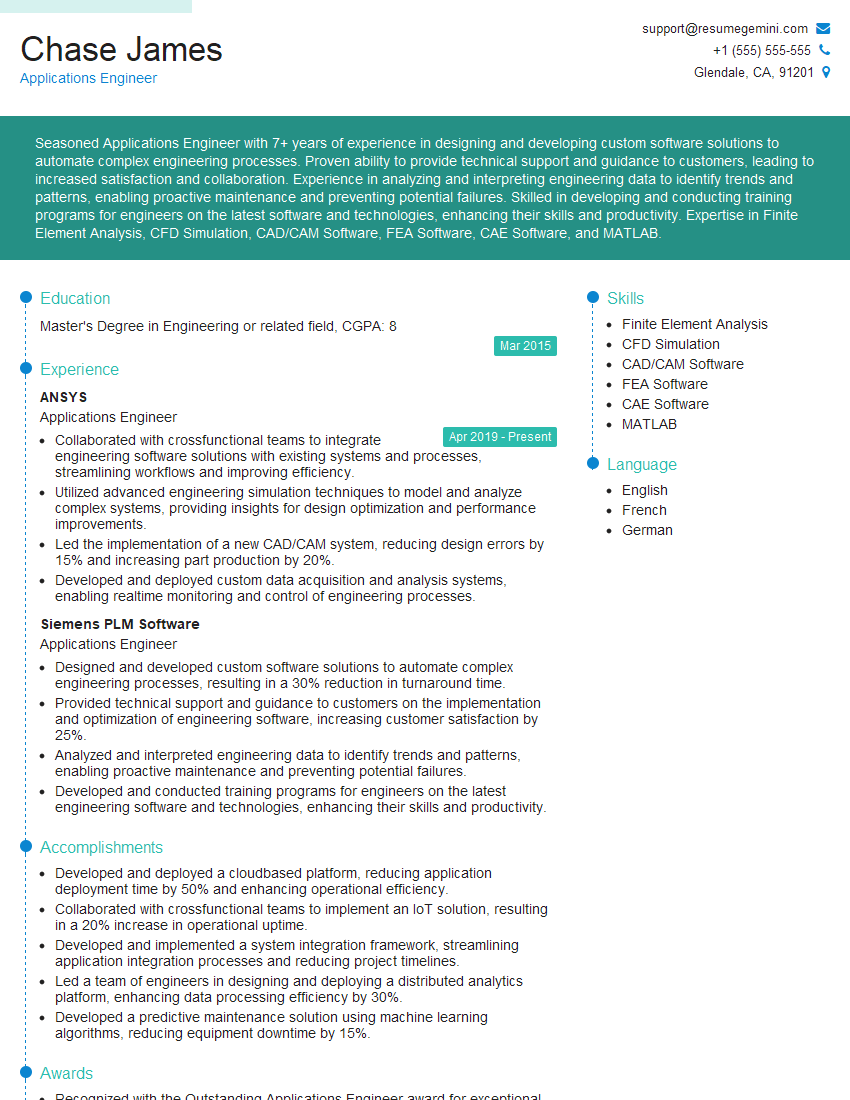
Applications Engineer Resume Sample

Data Scientist Resume Sample

Research Scientist Resume Sample
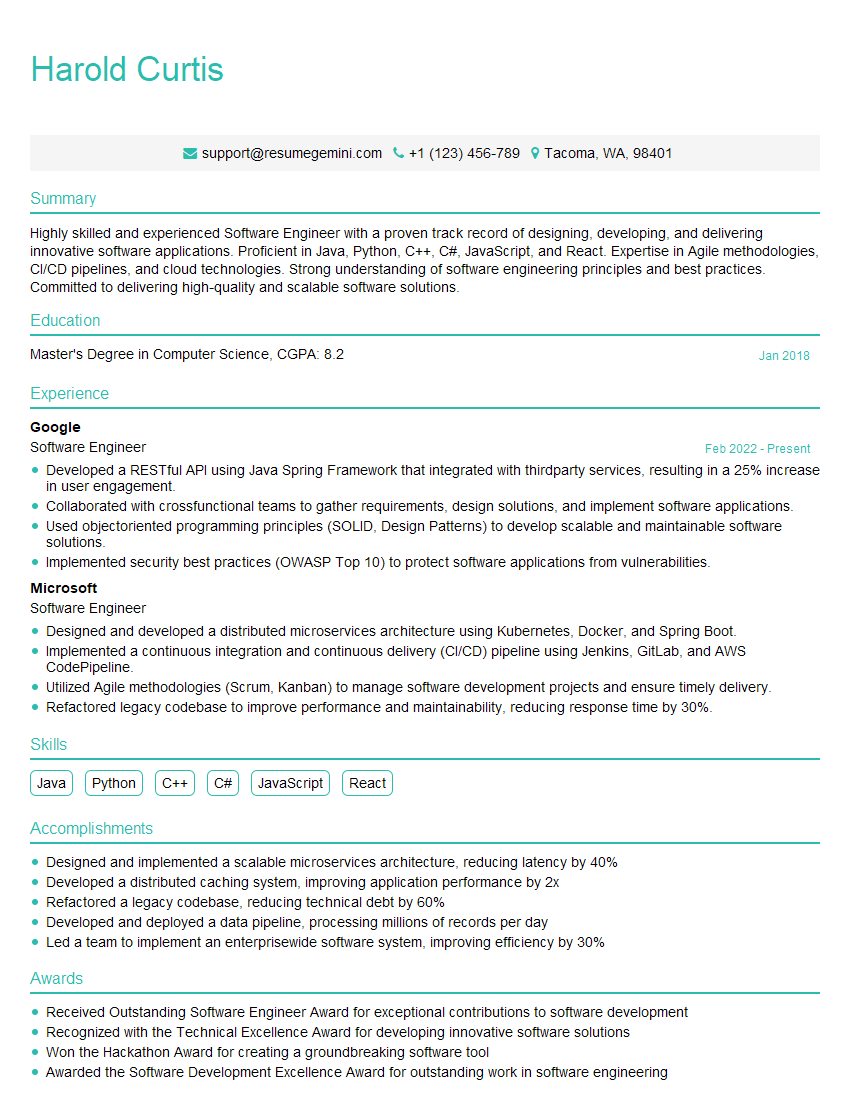
Software Engineer Resume Sample
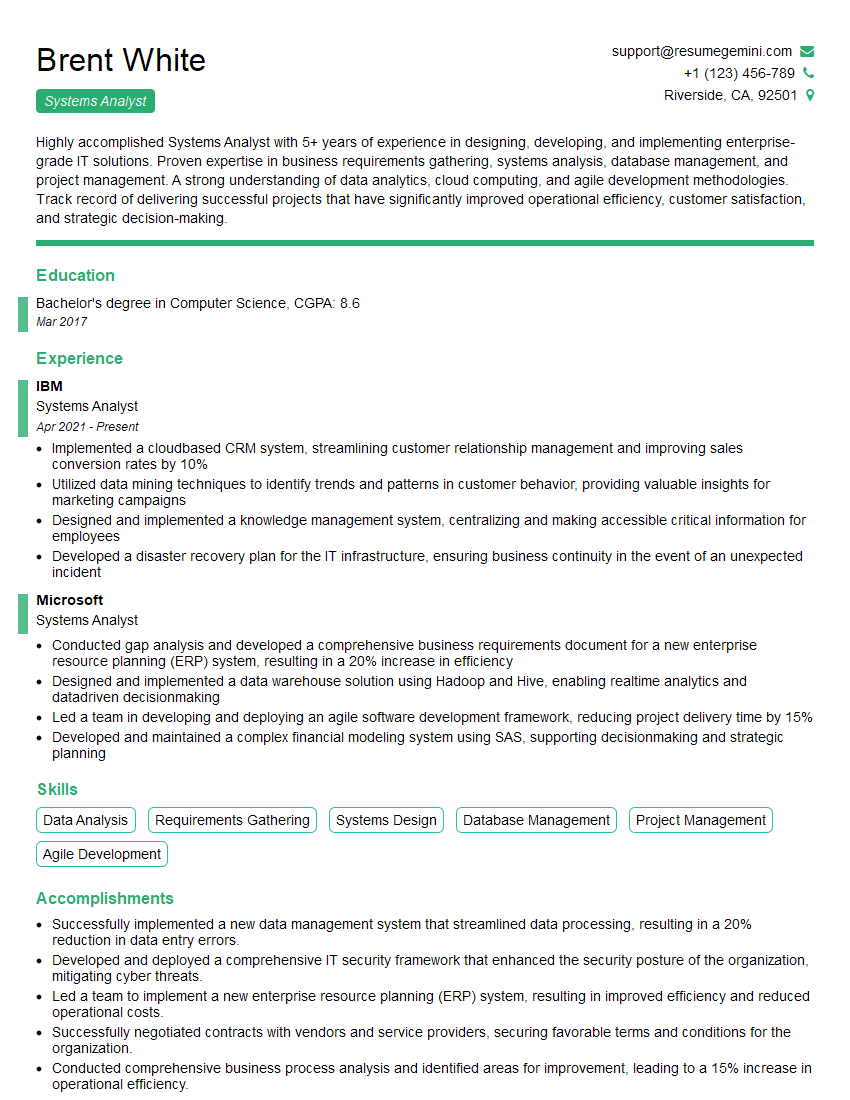
Systems Analyst Resume Sample
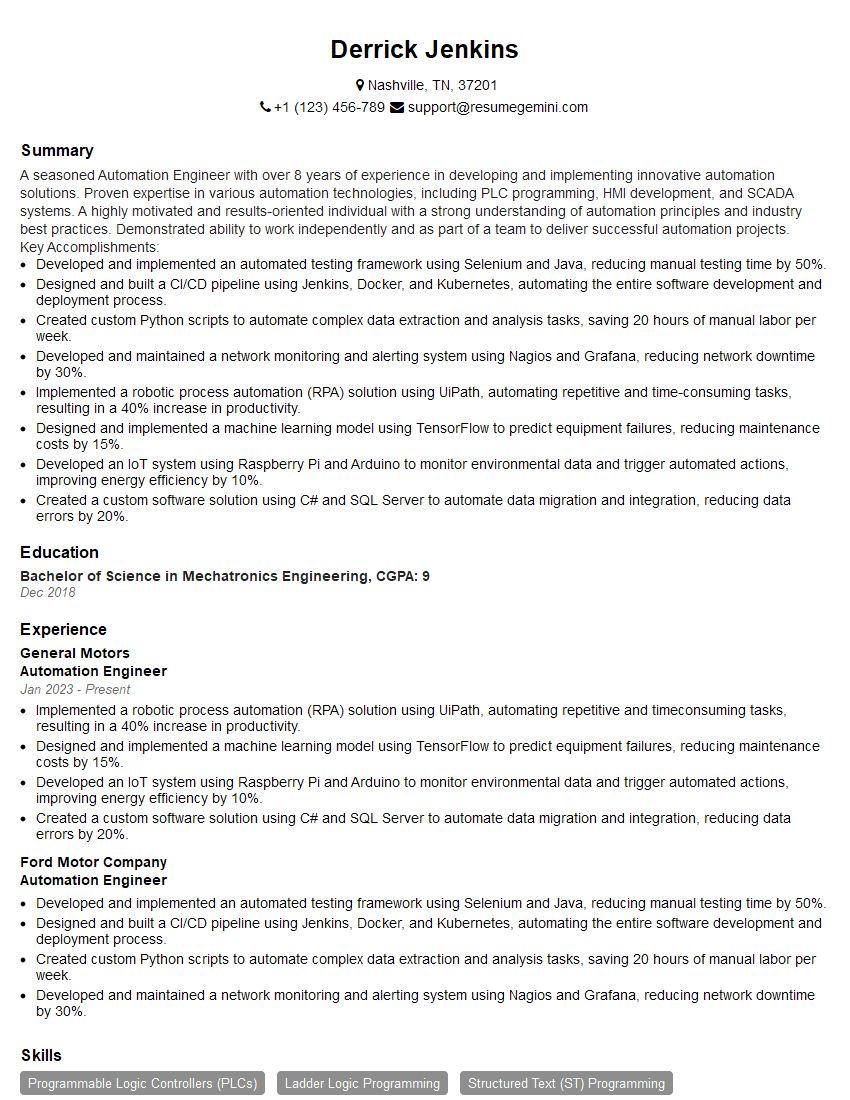
Automation Engineer Resume Sample

Test Engineer Resume Sample

Aerospace Engineer Resume Sample
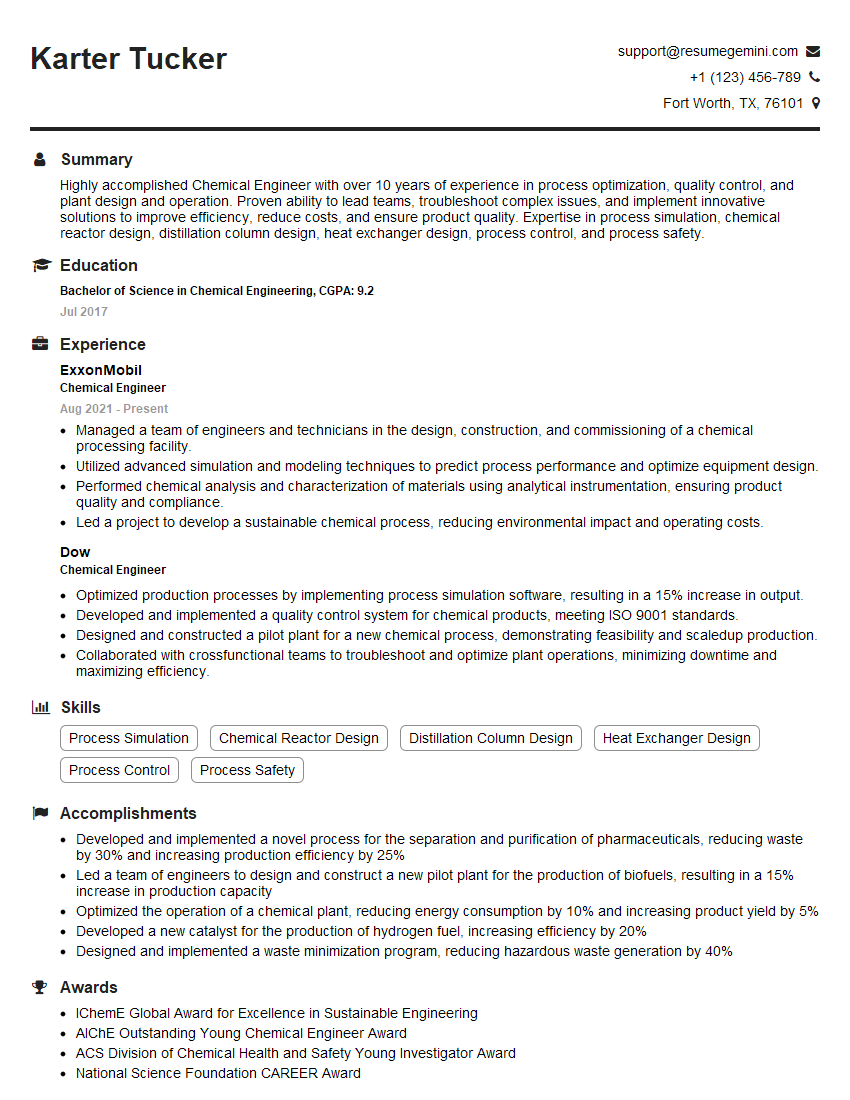
Chemical Engineer Resume Sample
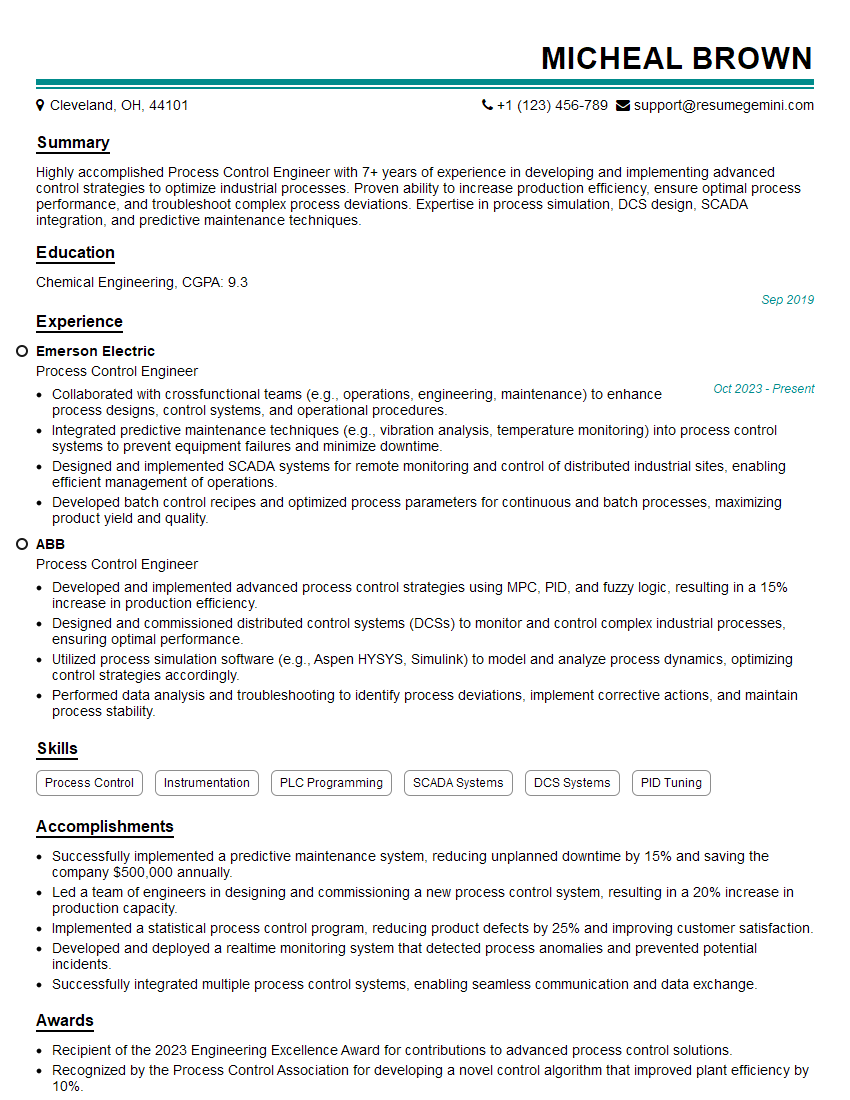
Process Control Engineer Resume Sample
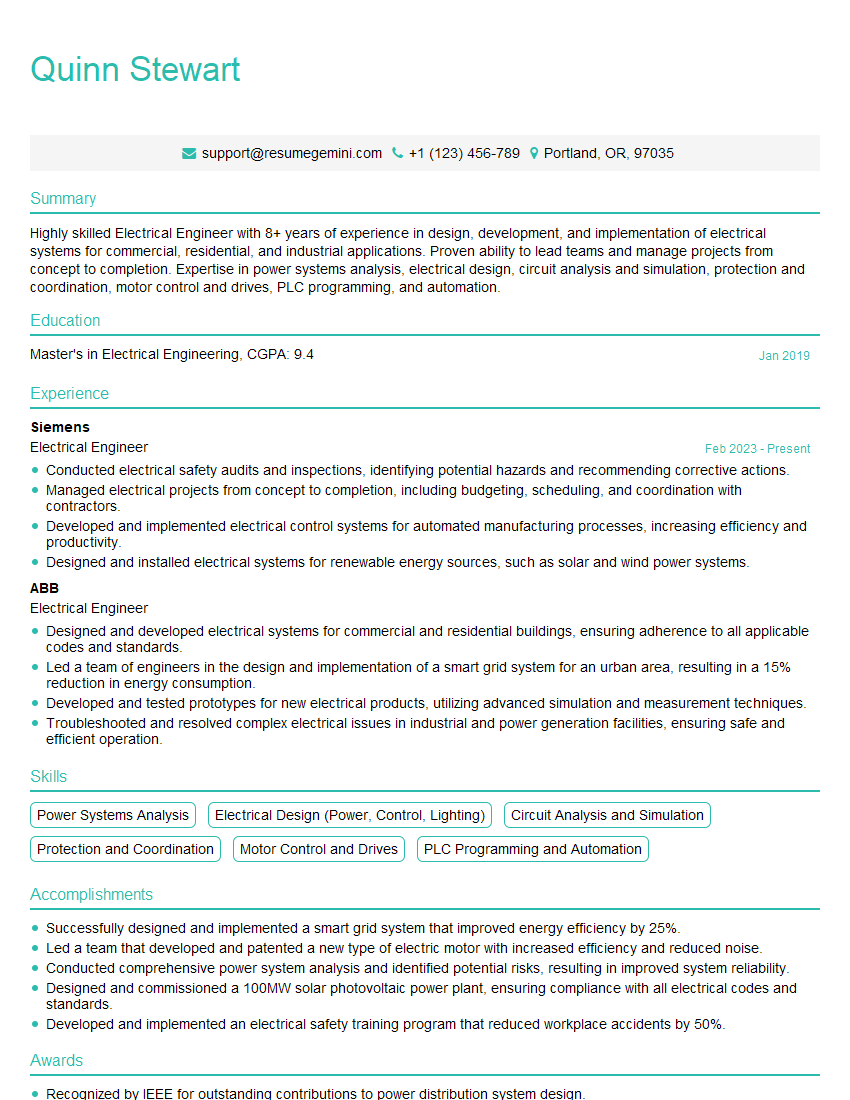
Electrical Engineer Resume Sample
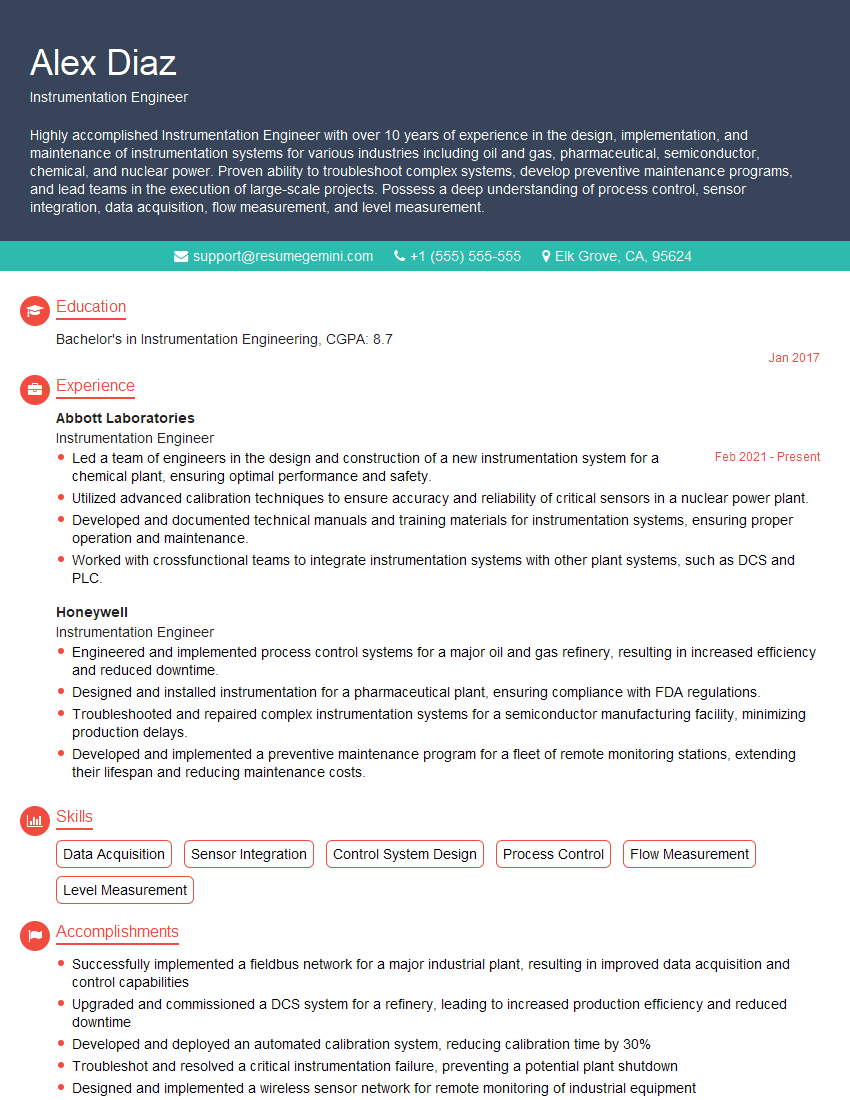
Instrumentation Engineer Resume Sample
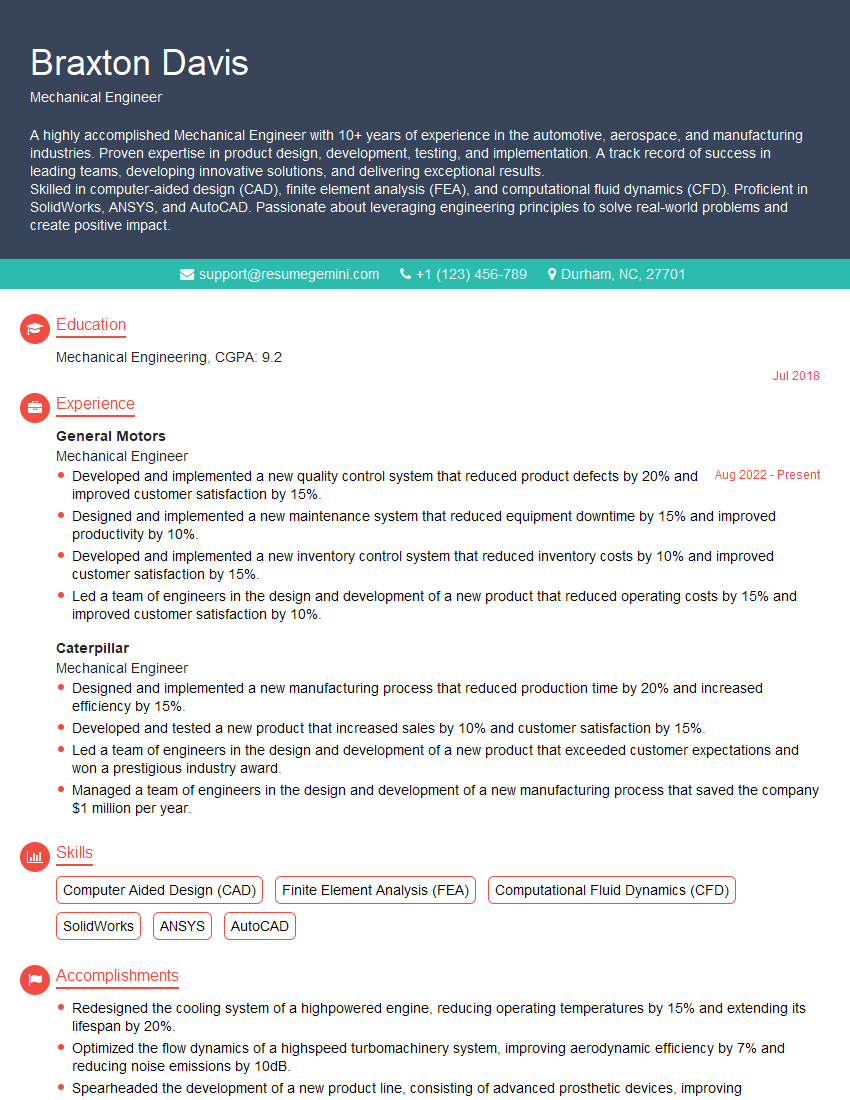
Mechanical Engineer Resume Sample
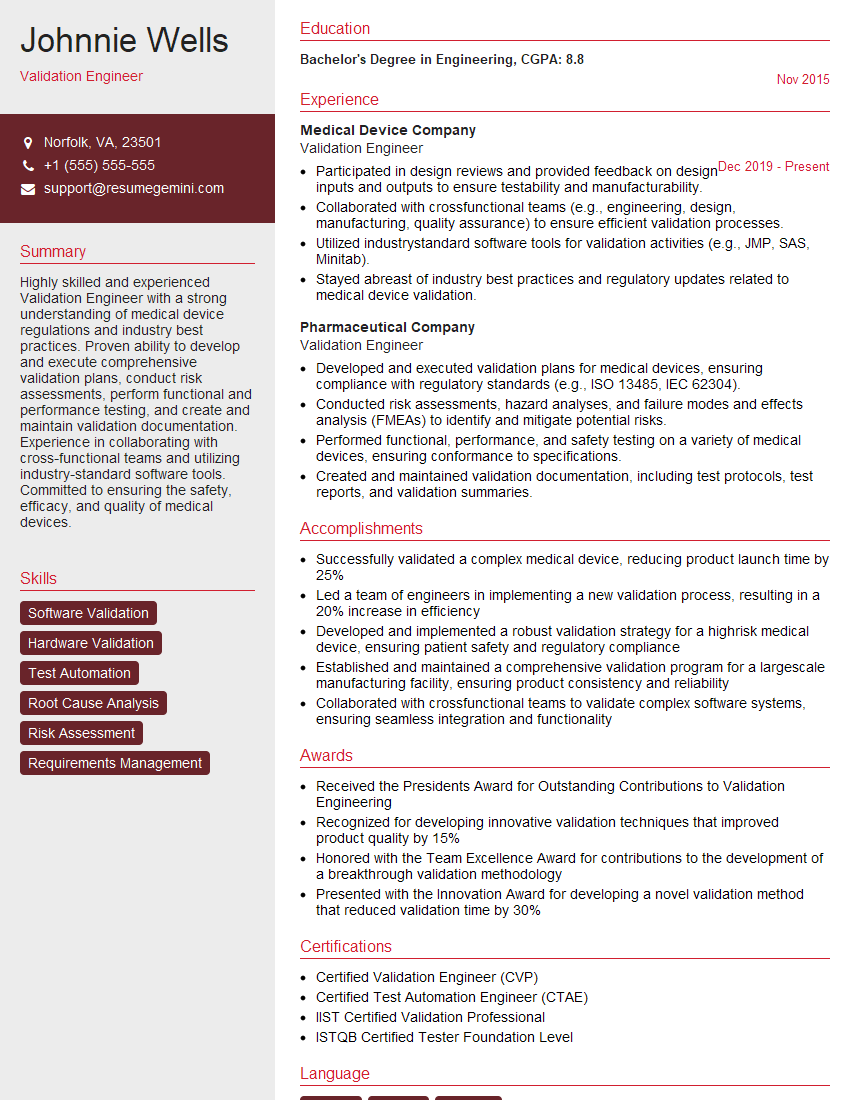
Validation Engineer Resume Sample
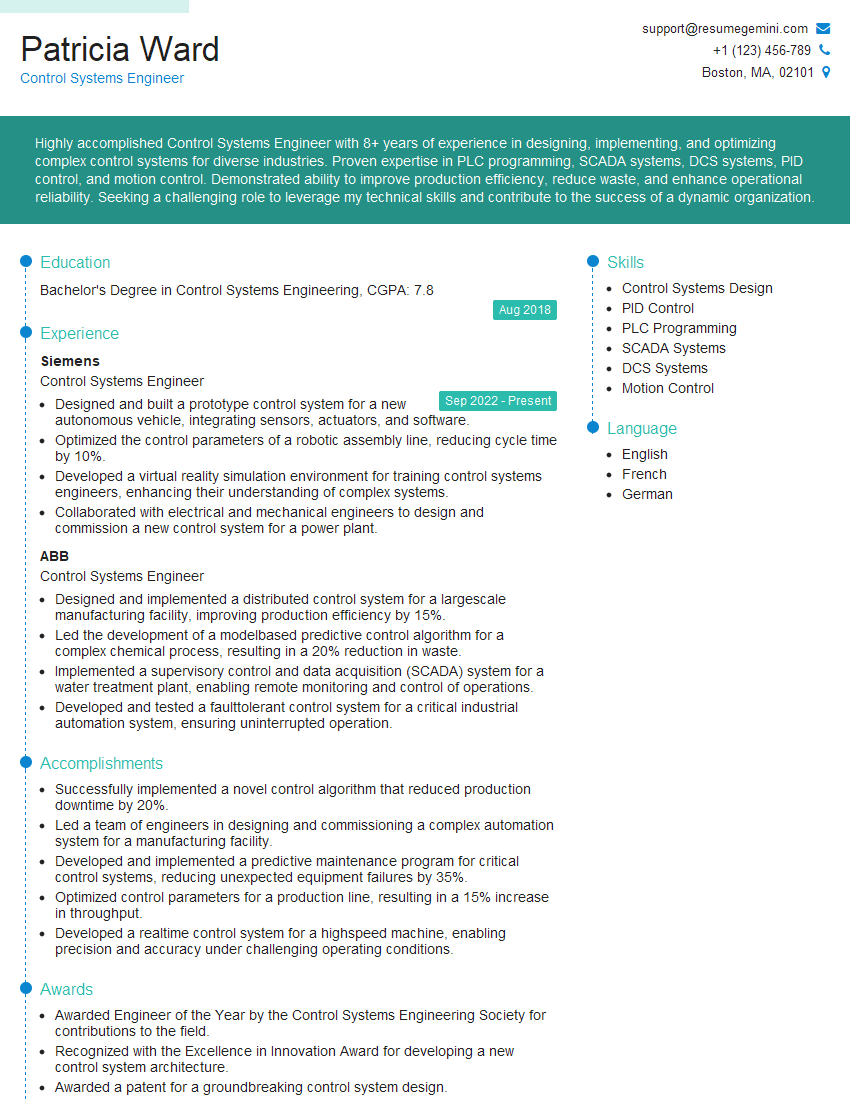
Control Systems Engineer Resume Sample

Robotics Engineer Resume Sample
- Financial Engineer
- Quantitative Analyst
- Applications Engineer
- Data Scientist
- Research Scientist
- Software Engineer
- Systems Analyst
- Automation Engineer
- Test Engineer
- Aerospace Engineer
- Chemical Engineer
- Process Control Engineer
- Electrical Engineer
- Instrumentation Engineer
- Mechanical Engineer
- Validation Engineer
- Control Systems Engineer
- Robotics Engineer
Explore more articles
Users Rating of Our Blogs
Share Your Experience
We value your feedback! Please rate our content and share your thoughts (optional).
What Readers Say About Our Blog
Very informative content, great job.
good