Preparation is the key to success in any interview. In this post, we’ll explore crucial GHG Emissions Accounting interview questions and equip you with strategies to craft impactful answers. Whether you’re a beginner or a pro, these tips will elevate your preparation.
Questions Asked in GHG Emissions Accounting Interview
Q 1. Explain the difference between Scope 1, Scope 2, and Scope 3 emissions.
Scope 1, 2, and 3 emissions categorize greenhouse gas (GHG) emissions based on their source and the organization’s control over them. Think of it like concentric circles around a company.
- Scope 1: Direct Emissions – These are emissions from sources that are owned or controlled by the company. This includes things like emissions from company-owned vehicles, on-site combustion of fuels (like natural gas in a boiler), and fugitive emissions from refrigerants. Imagine this as the innermost circle, directly under the company’s control.
- Scope 2: Indirect Emissions from Electricity – These are emissions from the generation of purchased electricity, heat, or steam consumed by the company. For example, the emissions from the power plant that provides electricity to your office building. This is the next circle out, less directly controlled, but still significantly influenced by purchasing decisions.
- Scope 3: Other Indirect Emissions – This is the broadest category, encompassing all other indirect emissions that occur in a company’s value chain. This includes emissions from upstream activities like the extraction and transportation of raw materials, and downstream activities like transportation of products to customers, use of sold products, and end-of-life disposal. This is the outermost circle, representing the largest portion of emissions and often the most challenging to account for, requiring collaboration with suppliers and customers.
For instance, a clothing company’s Scope 1 emissions might be from its factory’s boilers, Scope 2 from the electricity used in the factory, and Scope 3 from the emissions from cotton farming, transportation of fabrics, and the eventual disposal of the clothing by consumers.
Q 2. Describe the process of conducting a GHG emissions inventory.
Conducting a GHG emissions inventory involves a systematic process to quantify an organization’s GHG emissions. It’s like taking an environmental audit of your company’s impact.
- Define Boundaries: Clearly define the organizational boundaries, geographical location, and time period for the inventory.
- Data Collection: Gather data on energy consumption, fuel use, waste generation, and other emission sources. This may involve reviewing invoices, utility bills, operational data, and working with various departments.
- Emission Factors: Use appropriate emission factors to convert activity data (e.g., kilograms of fuel consumed) into GHG emissions (e.g., tons of CO2e). These factors are often sourced from internationally recognized databases and standards.
- Calculations: Calculate emissions for each emission source and categorize them into Scope 1, 2, and 3. Spreadsheets and specialized software are commonly used for these calculations.
- Quality Assurance/Control: Ensure data accuracy and completeness through peer reviews and validation procedures. It’s crucial to check for errors and inconsistencies.
- Reporting: Document the entire process and present the findings in a clear and concise report, often following standardized reporting frameworks.
For example, a manufacturing company might collect data on natural gas consumption in their kilns (Scope 1), electricity purchases (Scope 2), and transportation of goods (Scope 3) to compile their inventory. This meticulous process ensures that the emission numbers are accurate and reliable.
Q 3. What are the key international standards for GHG accounting (e.g., GHG Protocol)?
Several key international standards guide GHG accounting, ensuring consistency and comparability across organizations. The most prominent is the Greenhouse Gas Protocol, a widely accepted and comprehensive framework for measuring and managing GHG emissions.
The GHG Protocol Corporate Standard provides detailed guidance on quantifying Scope 1, 2, and 3 emissions, while the GHG Protocol Product Standard outlines methods for assessing emissions associated with the lifecycle of specific products. These standards offer clear methodologies, data collection approaches, and reporting formats, promoting transparency and accountability in GHG accounting. Other relevant standards include ISO 14064 (on greenhouse gas accounting and reporting) and various regional or industry-specific guidelines.
Q 4. How do you calculate carbon intensity?
Carbon intensity measures the amount of GHG emissions produced per unit of output. It’s essentially a ratio showing the efficiency of an activity or organization in terms of emissions. The lower the carbon intensity, the more efficient the process.
The formula is simple:
Carbon Intensity = Total GHG Emissions (in tons of CO2e) / Output (in relevant units)For example, a manufacturing company might calculate its carbon intensity as the total GHG emissions (in tons of CO2e) divided by the number of units produced. A lower carbon intensity would indicate that the company is producing more goods with less emissions, improving its environmental performance.
The ‘relevant units’ depend on the context. It could be revenue, production volume (kilograms, liters, etc.), distance traveled, or even passenger-kilometers in transportation.
Q 5. What are some common methodologies for estimating emissions from indirect sources (Scope 3)?
Estimating emissions from indirect sources (Scope 3) often requires using various methodologies, as direct measurement is usually not feasible. It’s a bit like detective work, using available data to infer emissions.
- Tier 1: Activity Data and Emission Factors: This involves using company-specific activity data (e.g., amount of purchased materials) and associated emission factors obtained from databases or industry reports. This is the most straightforward approach.
- Tier 2: Location-Based Data: This method relies on regional or national average emission factors for specific activities. For example, using average emissions from transportation in a specific region to estimate the emissions associated with purchased goods.
- Tier 3: Company-Specific Data: This involves working directly with suppliers or other stakeholders to obtain detailed emission data, usually considered the most accurate but also the most challenging to implement.
For instance, a retailer estimating Scope 3 emissions from transportation might use Tier 1 data (amount of goods transported multiplied by emissions per kilometer) if they have detailed logistics information or Tier 2 data (amount of goods transported multiplied by regional average emissions per kilometer) if they lack detailed information.
Q 6. Explain the concept of carbon offsetting and its limitations.
Carbon offsetting involves compensating for GHG emissions by investing in projects that reduce or remove emissions elsewhere. Imagine it like balancing the scales, offsetting your emissions with actions that reduce the total amount in the atmosphere.
Common types of offset projects include renewable energy development, afforestation (planting trees), and methane capture from landfills. However, carbon offsetting has limitations:
- Additionality: Ensuring that the offset project would not have happened without the investment is crucial. Otherwise, it’s just accounting for existing reductions.
- Permanence: Offset projects need to ensure long-term emission reductions. For example, a forest could be destroyed by fire, negating the carbon sequestered.
- Measurement and Verification: Accurate measurement and verification of emission reductions are critical, and this can be challenging.
- Potential for Greenwashing: Companies might use offsets to appear environmentally responsible while not reducing their own emissions, creating a false sense of sustainability.
Therefore, carbon offsetting should be considered a complementary strategy to genuine emission reduction efforts, not a replacement.
Q 7. What are some common emission reduction strategies for different sectors (e.g., transportation, energy)?
Emission reduction strategies vary significantly across sectors, but common themes include efficiency improvements, technological advancements, and behavioral changes.
- Transportation: Shifting to electric vehicles, improving fuel efficiency, promoting public transport, and encouraging cycling and walking.
- Energy: Transitioning to renewable energy sources (solar, wind), improving energy efficiency in buildings and industries, and deploying carbon capture and storage technologies.
- Manufacturing: Improving energy efficiency in production processes, using recycled materials, and designing products for durability and recyclability.
- Agriculture: Implementing sustainable farming practices (e.g., no-till farming), reducing food waste, and improving livestock management.
- Waste Management: Increasing recycling rates, improving landfill management (methane capture), and promoting waste reduction strategies.
For example, a transportation company might electrify its fleet, while a manufacturing company might invest in energy-efficient machinery. Successful strategies often involve a combination of measures tailored to the specific sector and its unique challenges.
Q 8. How do you verify the accuracy of GHG emissions data?
Verifying the accuracy of GHG emissions data is crucial for credible climate action. It involves a multi-faceted approach encompassing data quality checks, consistency assessments, and independent verification.
Firstly, data quality checks involve scrutinizing the source data for completeness, accuracy, and consistency. This includes examining emission factors used (e.g., ensuring they’re from reputable sources and appropriate for the specific activity), reviewing measurement methodologies, and checking for data entry errors. For example, discrepancies in energy consumption figures should be investigated and reconciled with utility bills or internal monitoring systems.
Secondly, consistency assessments focus on ensuring that the data adheres to established standards and methodologies, such as the GHG Protocol. This involves comparing data from different years to identify trends and inconsistencies. For example, a sudden jump in emissions without a corresponding increase in production needs investigation.
Finally, independent verification provides an external, unbiased assessment of the data and its accuracy. This often involves third-party audits, which can range from simple reviews of documentation to more extensive on-site inspections and data analyses.
In summary, accuracy verification is an iterative process involving detailed checks, comparisons, and external review, aiming for transparency and reliability in the reported data.
Q 9. What software or tools are you familiar with for GHG accounting?
My experience spans several software and tools used for GHG accounting. I’m proficient in industry-leading platforms such as:
- CDP Climate Change Information Request software: Used extensively for data collection, analysis, and reporting to CDP (formerly the Carbon Disclosure Project), which facilitates standardized reporting.
- Environmental accounting software packages (e.g., Sphera, Envista): These platforms offer comprehensive capabilities, including data entry, calculations, reporting, and data visualization, often incorporating best-practice GHG methodologies.
- Spreadsheet software (e.g., Microsoft Excel, Google Sheets): While less sophisticated, spreadsheets are still widely used for simpler GHG inventories, especially for smaller organizations. I am experienced in creating and maintaining complex spreadsheet models that accurately calculate emissions and track data over time.
- Specific sector-focused tools: For example, there are specialized software for energy-intensive industries for calculating emissions from combustion processes, based on fuel type and efficiency factors.
Beyond software, I’m also familiar with various databases containing emission factors (e.g., EPA’s eGRID database) and other relevant datasets that inform accurate calculations.
Q 10. How do you handle data uncertainties and gaps in GHG inventories?
Data uncertainties and gaps are unavoidable in GHG accounting, especially when dealing with Scope 3 emissions. Handling them requires a transparent and consistent approach.
For data uncertainties, I employ sensitivity analysis. This involves varying uncertain parameters (e.g., emission factors, activity data) within a reasonable range to understand the impact on the overall emissions estimate. The results are presented with ranges, rather than single point estimates, demonstrating the level of uncertainty. For example, if the emission factor for a specific process has a significant uncertainty range, I’ll clearly reflect this uncertainty in the final report.
To address data gaps, I employ a combination of strategies:
- Default emission factors: When data is missing, I use default factors from reputable sources, acknowledging their limitations and associated uncertainties in the reporting.
- Data estimation techniques: Depending on the context, statistical methods like regression analysis can be applied to estimate missing values based on available data and relevant correlations.
- Proxy data: I might use analogous data from similar processes or organizations to fill gaps, again with transparency about the limitations of this approach.
- Assumption documentation: Every assumption used to fill data gaps is clearly stated in the methodology section, ensuring transparency.
This comprehensive approach ensures that uncertainty is not masked but is clearly communicated, promoting the integrity and credibility of the GHG inventory.
Q 11. Explain the role of life cycle assessments (LCA) in GHG accounting.
Life Cycle Assessments (LCAs) play a critical role in comprehensive GHG accounting, particularly for understanding Scope 3 emissions. An LCA evaluates the environmental impacts of a product or service across its entire life cycle, from raw material extraction to disposal or recycling.
In GHG accounting, LCAs provide a more holistic view than focusing solely on direct emissions (Scope 1 and 2). They enable the identification and quantification of indirect emissions embedded in purchased goods and services (Scope 3). For example, an LCA of a manufactured product might reveal significant emissions associated with the raw material sourcing, transportation, manufacturing processes, and end-of-life disposal phases, far beyond direct emissions from the company’s facilities.
The results of an LCA can inform decision-making related to product design, supply chain optimization, and GHG reduction strategies. By pinpointing emission hotspots, businesses can prioritize areas for intervention and measure the effectiveness of their sustainability efforts.
The limitations of LCA include the complexity of data collection and the potential for uncertainties due to incomplete data. However, the insights derived from well-conducted LCAs are invaluable for driving more comprehensive and effective GHG management.
Q 12. What are the key challenges in measuring and managing Scope 3 emissions?
Measuring and managing Scope 3 emissions present significant challenges due to their indirect and often complex nature. These emissions occur across a vast supply chain and value chain, often beyond the direct control of a reporting organization.
- Data availability and accuracy: Obtaining reliable data from multiple tiers of the supply chain can be difficult. Many suppliers may lack the capability or incentive to collect and report their emissions data.
- Data collection complexity: The sheer volume and diversity of activities contributing to Scope 3 emissions makes data collection, aggregation, and verification a substantial undertaking.
- Lack of standardization: The lack of consistent methodologies for calculating and reporting Scope 3 emissions can hinder comparability and credibility.
- Engaging suppliers: Successfully engaging suppliers to participate in emissions data collection requires building trust, incentivizing participation, and providing guidance and support.
Addressing these challenges requires a collaborative approach involving partnerships with suppliers, the implementation of robust data management systems, and potentially leveraging data aggregation platforms. Setting clear targets, providing transparency in expectations, and establishing incentives for participation are also crucial for successful Scope 3 management.
Q 13. How does climate change policy influence GHG accounting and reporting?
Climate change policies significantly influence GHG accounting and reporting by establishing legal requirements, creating market incentives, and fostering greater transparency. Policies such as carbon pricing mechanisms (e.g., carbon taxes, emissions trading schemes) incentivize companies to reduce emissions and accurately account for their carbon footprint.
Mandatory GHG reporting regulations (e.g., the EU’s CSRD) require organizations to disclose their emissions, driving improvements in data collection and reporting practices. These regulations frequently specify reporting standards, methodologies, and verification procedures. For example, the EU’s CSRD will require more extensive Scope 3 reporting, pushing organizations to engage with their supply chains and improve data quality.
Furthermore, policies promoting renewable energy adoption and energy efficiency improvements indirectly impact GHG accounting by altering the emissions profile of businesses. The integration of sustainability into financial reporting also increases the scrutiny of GHG data, leading to more rigorous accounting practices.
In essence, climate change policies act as catalysts for improved GHG accounting, moving beyond voluntary initiatives to ensure greater accuracy, transparency, and accountability in emissions reporting.
Q 14. Describe your experience with carbon footprint reporting frameworks (e.g., GRI, CDP).
I have extensive experience using various carbon footprint reporting frameworks, including the Global Reporting Initiative (GRI) Standards and the CDP (formerly Carbon Disclosure Project) Climate Change questionnaire. I understand the specific requirements, metrics, and methodologies associated with each framework.
My experience with GRI Standards involves applying the relevant environmental performance indicators to quantify and report GHG emissions, including Scope 1, 2, and 3 emissions. I’ve used GRI’s guidance to ensure consistency and comparability in reporting and to effectively communicate the environmental performance of various organizations.
With the CDP Climate Change questionnaire, I’ve facilitated data collection, analysis, and reporting of GHG emissions, as well as other climate-related information (e.g., climate change governance, risk assessment, and mitigation strategies). I’m familiar with the data requirements and the scoring methodology used by CDP to assess corporate climate performance.
My expertise extends to understanding the strengths and limitations of each framework and adapting my approach to meet the specific needs of different organizations and stakeholder expectations. This includes navigating the complexities of reporting on complex Scope 3 emissions according to both GRI and CDP guidelines.
Q 15. What are the key differences between operational and value chain emissions?
Operational emissions are direct GHG emissions from sources owned or controlled by a company, while value chain emissions encompass all GHG emissions associated with a company’s entire product or service lifecycle, including its supply chain and the use of its products.
Think of it like this: Operational emissions are what happens *inside* your factory – the energy used to power the machines, the fuel burned by your delivery trucks. Value chain emissions include everything *outside* the factory – the emissions from suppliers producing your raw materials, the emissions from transporting your product to the customer, and even the emissions generated from the product’s use and eventual disposal by the end consumer.
- Operational Emissions Example: A clothing manufacturer’s direct energy consumption in its factory.
- Value Chain Emissions Example: The emissions from cotton farming (supplier), the transport of cotton to the factory, the energy used in the factory, the transport of clothes to retailers, and finally, the emissions from the disposal of the clothes by the customer.
Understanding both is crucial for a complete picture of a company’s environmental footprint and for developing effective emission reduction strategies. Focusing solely on operational emissions risks overlooking a significant portion of a company’s impact.
Career Expert Tips:
- Ace those interviews! Prepare effectively by reviewing the Top 50 Most Common Interview Questions on ResumeGemini.
- Navigate your job search with confidence! Explore a wide range of Career Tips on ResumeGemini. Learn about common challenges and recommendations to overcome them.
- Craft the perfect resume! Master the Art of Resume Writing with ResumeGemini’s guide. Showcase your unique qualifications and achievements effectively.
- Don’t miss out on holiday savings! Build your dream resume with ResumeGemini’s ATS optimized templates.
Q 16. Explain the importance of data quality in GHG accounting and reporting.
Data quality is paramount in GHG accounting and reporting. Inaccurate or incomplete data leads to flawed conclusions, undermines credibility, and hinders effective emission reduction efforts. Imagine trying to navigate with a faulty GPS – you’ll likely end up in the wrong place! Similarly, unreliable GHG data can misdirect mitigation strategies.
High-quality data needs to be:
- Accurate: Reflecting the true emissions generated.
- Complete: Covering all relevant emission sources and activities.
- Consistent: Employing consistent methodologies and units of measurement across time.
- Reliable: Traceable and verifiable.
Poor data quality can stem from various sources, including inaccurate measurement, incomplete data collection, inconsistent reporting practices, and the use of inappropriate emission factors. Ensuring data quality requires rigorous data collection procedures, thorough data validation, and the use of appropriate quality assurance/quality control (QA/QC) measures.
Q 17. How do you ensure the completeness and accuracy of your GHG inventory?
Ensuring completeness and accuracy involves a multi-stage process. It’s not just about collecting data; it’s about designing a robust system that minimizes errors and ensures reliable results.
- Define Scope: Clearly define the organizational boundary and the activities included in the inventory. This ensures you’re not missing crucial emissions sources.
- Data Collection: Utilize a combination of methods, including direct measurement (e.g., using flow meters for energy consumption), estimations based on activity data and emission factors, and data from internal management systems.
- Data Validation: Cross-check data from different sources. Look for outliers and investigate potential inconsistencies. Use data plausibility checks and peer reviews.
- Quality Assurance/Quality Control (QA/QC): Implement a QA/QC plan to ensure data accuracy, consistency, and completeness throughout the process.
- Documentation: Maintain detailed records of data sources, methodologies, and assumptions. This is crucial for transparency and auditability.
- Regular Review and Updates: Regularly update the inventory to reflect changes in operations, activities, and methodologies. Annual updates are often necessary.
For example, in a manufacturing plant, we would measure energy consumption from meters, fuel consumption from invoices, and waste generation from records. We’d then use appropriate emission factors to convert these quantities into GHG emissions (e.g., tons of CO2e).
Q 18. Describe your experience with different GHG accounting methodologies (e.g., IPCC, UNFCCC).
I have extensive experience with various GHG accounting methodologies, primarily the IPCC (Intergovernmental Panel on Climate Change) guidelines and the UNFCCC (United Nations Framework Convention on Climate Change) reporting requirements. The IPCC guidelines provide a comprehensive framework for GHG inventory development, offering detailed methodologies for different sectors and emission sources. The UNFCCC focuses on national-level reporting, with specific requirements for reporting GHG emissions under the Paris Agreement.
The IPCC methodology uses a tiered approach. Tier 1 uses default emission factors, Tier 2 uses activity-specific emission factors, and Tier 3 employs process-based modelling for more accurate calculations. I’ve applied all three tiers, selecting the appropriate level based on data availability and the desired accuracy. I’ve also worked with other methodologies like the Greenhouse Gas Protocol, which offers comprehensive corporate accounting and reporting standards. The choice of methodology depends on the specific project goals and data availability.
My experience extends to adapting these methodologies to various sectors, including manufacturing, transportation, and agriculture, requiring me to tailor the approach based on industry-specific considerations and available data.
Q 19. What are some common challenges encountered during a GHG inventory project?
GHG inventory projects frequently encounter several challenges:
- Data Availability and Quality: Accessing reliable and complete data can be a major hurdle, particularly for value chain emissions. Data may be scattered across various departments or sources, or it might be incomplete, inconsistent, or of poor quality.
- Data Collection Difficulties: Collecting data from various sources – including suppliers, distributors, and customers – can be challenging and time-consuming. Access to accurate data from supply chains might require significant effort and collaboration.
- Allocation of Emissions: Allocating emissions from shared resources (like electricity grids) or joint operations can be complex and require careful consideration of appropriate allocation methods.
- Defining Scope Boundaries: Deciding what emissions to include in the inventory requires careful consideration. This can become complex in large organizations with diverse operations and supply chains.
- Choosing Appropriate Emission Factors: Selecting accurate and relevant emission factors is crucial. Factors can vary significantly depending on factors such as location, technology, and fuel type.
Overcoming these challenges requires strong project management, stakeholder engagement, and the use of appropriate data management tools and techniques.
Q 20. How do you communicate complex GHG data to both technical and non-technical audiences?
Communicating complex GHG data effectively requires tailoring the message to the audience. For technical audiences, I use precise language, detailed charts, and data tables. For non-technical audiences, I rely on clear, concise language, visuals like graphs and infographics, and relatable analogies. Storytelling is a powerful tool for making data more engaging and memorable.
For example, I’d use a detailed data table showing emission reductions by specific processes for engineers, while I’d explain emission reductions as a percentage decrease or equivalent to the emissions from a certain number of cars for senior management or the public.
Key communication techniques include:
- Visualizations: Graphs, charts, and infographics make data easier to understand.
- Analogies and metaphors: Relate complex concepts to familiar experiences.
- Storytelling: Use narratives to engage the audience and make the data more meaningful.
- Interactive presentations: Use dynamic tools to make data exploration more engaging.
The ultimate goal is to ensure the message is clear, concise, accurate, and relevant to the audience’s needs and understanding.
Q 21. Explain the concept of materiality in GHG reporting.
Materiality in GHG reporting refers to the significance of a company’s GHG emissions in relation to its overall business operations and its impact on stakeholders. Only emissions that are considered materially significant need to be reported in detail.
Materiality is determined by considering factors such as:
- Magnitude of emissions: Are the emissions large enough to have a substantial impact?
- Stakeholder expectations: What are the concerns and expectations of investors, customers, and other stakeholders regarding the company’s environmental performance?
- Regulatory requirements: Are there any legal or regulatory requirements concerning GHG reporting?
- Business strategy: How do GHG emissions relate to the company’s overall business strategy and goals?
A materiality assessment helps to focus reporting efforts on the most important emissions, improving the efficiency and effectiveness of GHG reporting. It ensures that the reported data is relevant and useful to stakeholders in making informed decisions.
For example, a small bakery’s energy use might be material for its operations but not significant in the larger context of global emissions. Conversely, a large energy company’s emissions would be highly material due to their scale and impact.
Q 22. How do you ensure that your GHG accounting aligns with relevant regulations and standards?
Ensuring alignment with regulations and standards in GHG accounting is paramount for accuracy and credibility. This involves a multi-step process. First, I meticulously identify all applicable regulations and standards, such as the Greenhouse Gas Protocol, ISO 14064, and any industry-specific guidelines or government mandates relevant to the organization or project. Second, I meticulously map the organization’s activities to the scope of these standards, clearly defining the boundaries of the inventory. This includes specifying the operational boundaries, reporting periods, and emission sources included (scopes 1, 2, and 3). Third, I select appropriate methodologies and emission factors consistent with the chosen standards and ensure consistent application throughout the entire accounting process. For example, if using the Greenhouse Gas Protocol, I would follow its guidance on calculating emissions from different sources like electricity consumption, fugitive emissions, and transportation. Finally, I maintain thorough documentation of the methodology used, data sources, and any assumptions made, which facilitates transparency and enables verification of the results. This rigorous approach ensures compliance and builds confidence in the reported emissions data.
Q 23. What are some emerging trends in GHG accounting and reporting?
The field of GHG accounting is constantly evolving. Several key trends are shaping the future. One major trend is the increasing demand for greater transparency and assurance. We’re seeing a rise in the use of independent verification and assurance providers to bolster the credibility of reported emissions. Another is the growing focus on Scope 3 emissions. While historically challenging to quantify, organizations are increasingly recognizing the importance of understanding and reducing their indirect emissions throughout their value chain. This necessitates more sophisticated data collection and analysis techniques. We also see increased use of technology. Software solutions are emerging to streamline data collection, calculations, and reporting, enhancing efficiency and accuracy. Furthermore, the integration of GHG accounting with other sustainability metrics is becoming increasingly important. This allows for a more holistic view of environmental performance and supports better decision-making. Finally, the incorporation of climate-related financial disclosures, such as TCFD recommendations, is driving standardization and improving the quality of GHG reporting.
Q 24. Describe your experience with data analysis and visualization tools for GHG data.
My experience with data analysis and visualization tools for GHG data is extensive. I’m proficient in using various software packages, including spreadsheet software like Excel, specialized GHG accounting software such as [mention specific software e.g., ClimateWatch], and data visualization tools such as Tableau and Power BI. I leverage these tools to manage large datasets, perform complex calculations, identify trends, and create compelling visual representations of GHG emission data. For instance, I use spreadsheet software for initial data entry and calculations, employing formulas and macros to streamline the process. Then, I utilize dedicated GHG accounting software to ensure accuracy and compliance with standards. Finally, I create interactive dashboards in Tableau or Power BI to visualize the data effectively. These dashboards allow stakeholders to easily understand emission trends, identify emission hotspots, and track progress towards reduction targets. My ability to analyze and present data effectively is crucial for making informed decisions and communicating insights to both technical and non-technical audiences.
Q 25. How do you incorporate feedback and suggestions during the GHG inventory process?
Incorporating feedback is a critical part of ensuring the accuracy and completeness of the GHG inventory. I actively solicit feedback throughout the process. This begins with a clear communication plan, defining roles and responsibilities for data collection and review. I establish regular check-in points with stakeholders from different departments to gather their input and address any questions or concerns. I use collaborative platforms and tools, such as shared spreadsheets or project management software, to facilitate feedback collection and version control. I treat all feedback seriously and document all changes and revisions made as a result of feedback. Formal reviews and quality assurance checks are conducted to ensure accuracy. Following the inventory completion, a summary report is shared, highlighting key findings and areas for improvement, inviting further feedback from stakeholders for future iterations. This iterative approach leads to a more robust and reliable GHG inventory.
Q 26. What is your experience with using different emission factors and calculation tools?
My experience with emission factors and calculation tools spans various methodologies and data sources. I’m familiar with using both default emission factors from reputable sources like the IPCC, EPA, and Intergovernmental Panel on Climate Change and industry-specific factors. I understand the importance of selecting emission factors that accurately reflect the specific activities and technologies involved. I’m proficient with different calculation tools, from simple spreadsheet calculations to sophisticated software packages that automate data processing and calculations. I’m also capable of performing activity data calculations, such as energy consumption, fuel use, and waste generation using various methods. For example, I’ve worked extensively with tools and datasets associated with different regulatory frameworks, including those used for carbon offsetting verification. Selecting the right tools and factors is a crucial step in ensuring the accuracy and reliability of the emissions inventory.
Q 27. How do you address inconsistencies or discrepancies in data sources when conducting a GHG inventory?
Inconsistencies in data sources are common challenges in GHG accounting. Addressing them requires a systematic approach. First, I prioritize data quality by identifying and evaluating the credibility and reliability of each source. I look at the methodology used for data collection, the data’s temporal and geographical resolution, and the level of uncertainty associated with the data. Second, I cross-reference data from multiple sources whenever possible to identify discrepancies and patterns. If discrepancies occur, I investigate the root cause. This may involve contacting data providers, reviewing data collection protocols, or conducting site visits. Third, I employ data reconciliation techniques to adjust or estimate values. These techniques involve applying statistical methods, expert judgment, and best-available information to create a more consistent dataset. Finally, I carefully document all assumptions and uncertainties related to data quality and reconciliation. This transparency is crucial for building confidence in the reported results. The goal is always to produce a reliable inventory that accurately reflects emissions, acknowledging limitations where appropriate.
Q 28. Describe a situation where you had to resolve a complex data issue related to GHG emissions.
In a previous project, we encountered a significant discrepancy in electricity consumption data reported by the facility’s energy management system compared to the utility bill. The difference was substantial, representing a large variation in reported Scope 2 emissions. We initially suspected an issue with data recording, such as incorrect meter readings or data entry errors. After a thorough investigation, we discovered a discrepancy caused by a significant difference between billed electricity and the actual energy consumption of the facility due to a misallocation of energy use from a secondary facility. By working with the facility managers to correctly allocate the energy consumption based on detailed facility data, we were able to resolve the discrepancy and establish the accurate energy consumption figure. We documented the investigation process and the resulting data correction, highlighting the importance of careful data validation and cross-checking. This experience emphasized the importance of careful data validation, thorough investigation of discrepancies, and clear documentation of the reconciliation process.
Key Topics to Learn for GHG Emissions Accounting Interview
- Greenhouse Gas Inventory Methods: Understand the different methodologies for calculating GHG emissions (e.g., Tier 1, Tier 2, Tier 3), their applications, and limitations. Be prepared to discuss the advantages and disadvantages of each.
- Data Collection and Analysis: Mastering data gathering techniques, including direct measurement, estimations, and data reconciliation. Practice interpreting and analyzing emission data to identify trends and areas for improvement.
- Emission Factors and Activity Data: Develop a strong understanding of how emission factors are used to calculate emissions from various sources. Be comfortable working with different units and converting between them.
- Scope 1, 2, and 3 Emissions: Clearly differentiate between these three scopes and know how to account for emissions within each. Be ready to discuss the challenges associated with Scope 3 accounting.
- Carbon Footprint and Life Cycle Assessment (LCA): Familiarize yourself with the concepts of carbon footprint and LCA, and their applications in GHG accounting. Understand their differences and how they can be used together.
- Verification and Assurance: Understand the importance of verification and assurance processes in ensuring the accuracy and credibility of GHG accounting reports. Be prepared to discuss relevant standards and protocols.
- Reporting Frameworks and Standards: Be proficient in at least one major GHG accounting and reporting framework (e.g., GHG Protocol, ISO 14064). Understand the reporting requirements and best practices.
- Software and Tools: Familiarize yourself with common software and tools used in GHG accounting (mentioning specific software is optional, focus on general knowledge). Demonstrate an understanding of how technology facilitates the process.
- Problem-Solving and Case Studies: Practice applying your knowledge to real-world scenarios. Prepare to discuss how you would approach different challenges in GHG accounting, such as data gaps or inconsistencies.
Next Steps
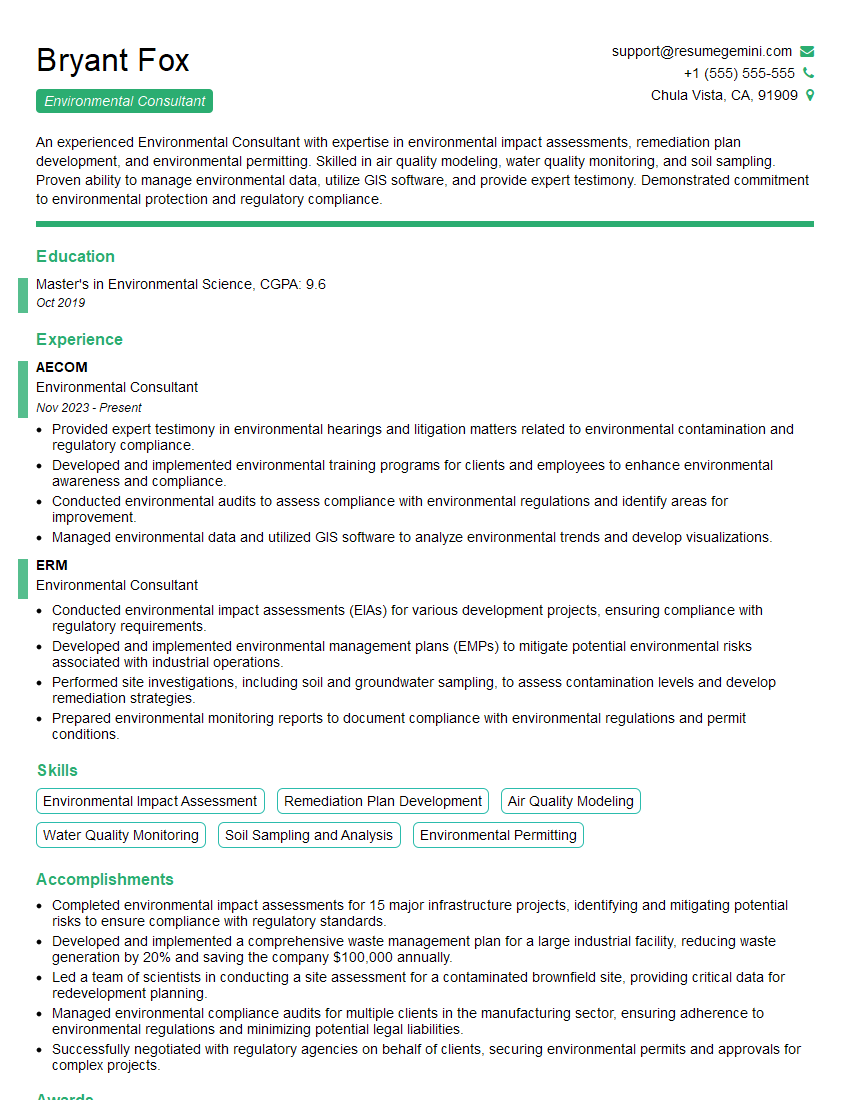
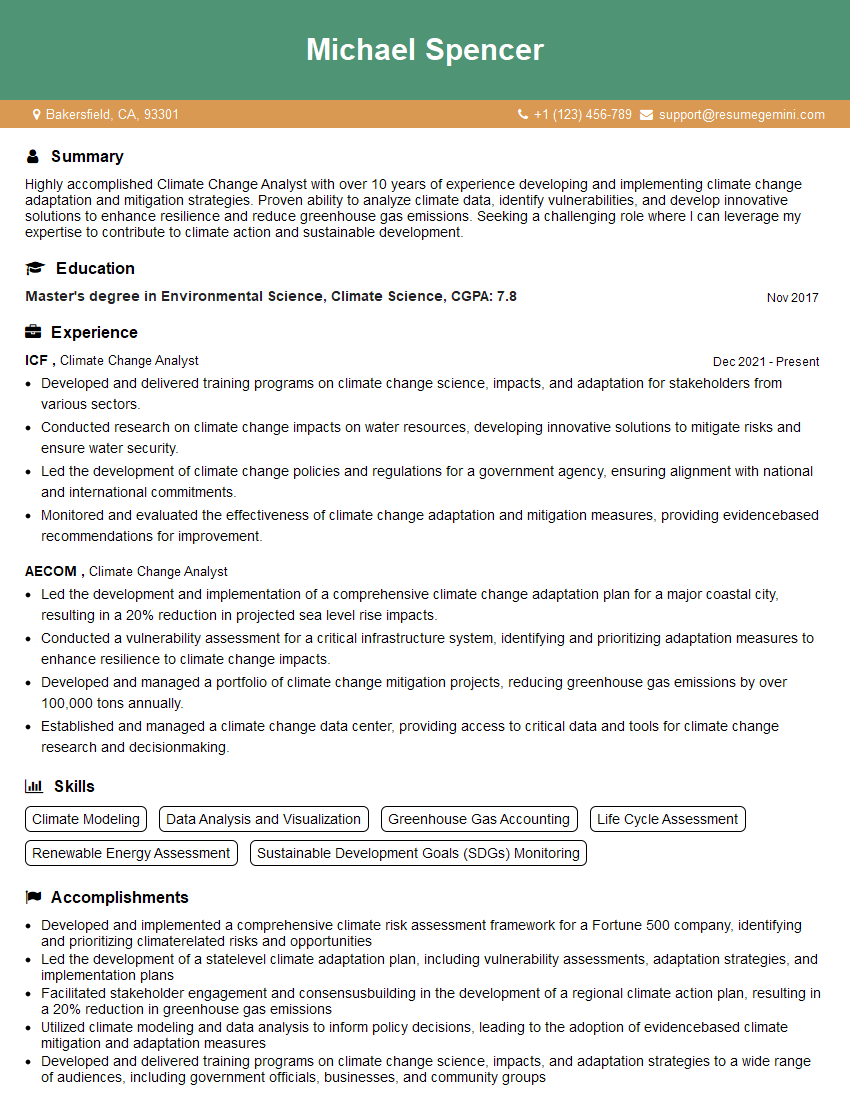
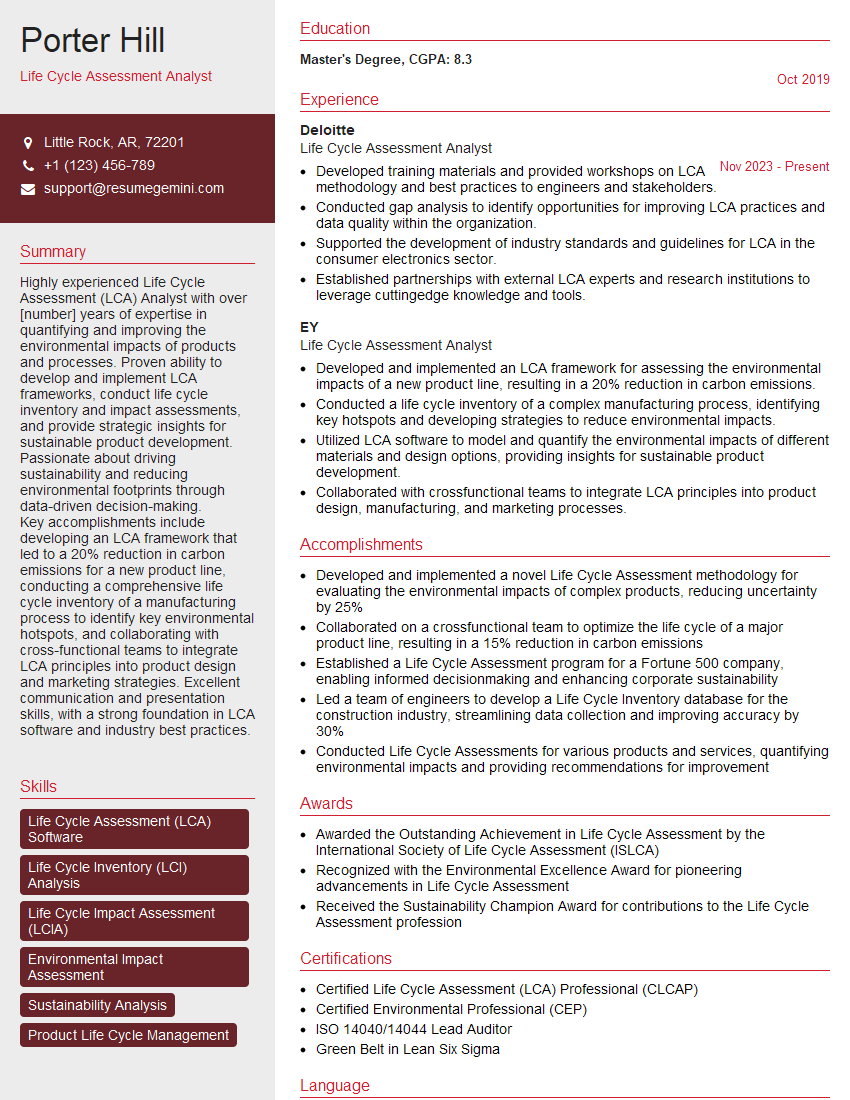
Mastering GHG Emissions Accounting opens doors to exciting career opportunities in sustainability, environmental consulting, and corporate responsibility. A strong understanding of this field is highly sought after, making you a valuable asset in today’s environmentally conscious business world. To maximize your job prospects, creating an ATS-friendly resume is crucial. ResumeGemini is a trusted resource to help you build a professional and effective resume that highlights your skills and experience. Examples of resumes tailored to GHG Emissions Accounting are available to help you get started.



Explore more articles
Users Rating of Our Blogs
Share Your Experience
We value your feedback! Please rate our content and share your thoughts (optional).
What Readers Say About Our Blog
Very informative content, great job.
good