Unlock your full potential by mastering the most common Loss Prevention Consulting interview questions. This blog offers a deep dive into the critical topics, ensuring you’re not only prepared to answer but to excel. With these insights, you’ll approach your interview with clarity and confidence.
Questions Asked in Loss Prevention Consulting Interview
Q 1. Describe your experience in developing and implementing loss prevention strategies.
Developing and implementing loss prevention strategies requires a holistic approach, blending proactive measures with reactive incident response. My experience spans various sectors, primarily retail, where I’ve designed and overseen programs resulting in significant reductions in shrinkage. This involves a deep understanding of the organization’s specific vulnerabilities and the creation of tailored solutions.
For example, in a previous role at a large grocery chain, we saw a spike in shoplifting incidents during peak hours. We responded by implementing a combination of strategies: increased visibility of security personnel during those times, improved CCTV coverage with advanced analytics capable of identifying suspicious behavior, and employee training on theft deterrence techniques. The result was a 20% decrease in shoplifting incidents within six months. Beyond retail, I’ve also worked on loss prevention strategies for warehousing and logistics, focusing on inventory management and supply chain security. In each case, the process begins with a thorough risk assessment to pinpoint the most significant threats.
Q 2. How would you assess the current level of risk within a retail environment?
Assessing risk in a retail environment involves a multi-faceted approach, going beyond simply looking at historical data. I utilize a structured methodology that considers internal and external factors. This starts with a comprehensive review of historical loss data, analyzing trends and patterns in shrinkage, theft, and damage. This data helps identify hotspots and potential vulnerabilities.
Next, I conduct physical security assessments of the store layout, including vulnerabilities in entrances/exits, blind spots in CCTV coverage, and the ease of access to high-value merchandise. This often involves walking the store as a potential shoplifter might. I then evaluate internal controls, examining employee procedures, inventory management systems, and security protocols for weaknesses. Finally, I assess external factors like the local crime rate, the presence of known organized retail crime (ORC) groups, and even weather conditions that might impact security. This holistic approach allows for a complete risk profile, guiding the prioritization of loss prevention initiatives.
Q 3. What are the key performance indicators (KPIs) you would use to measure the effectiveness of a loss prevention program?
Key Performance Indicators (KPIs) are crucial for measuring the effectiveness of a loss prevention program. They need to be specific, measurable, achievable, relevant, and time-bound (SMART). The KPIs I focus on include:
- Shrinkage Rate: This is the percentage of inventory lost due to theft, damage, or error. A decrease in this rate is a primary measure of success.
- Loss per Incident: Tracking the average value lost per theft incident helps understand the effectiveness of interventions.
- Number of Incidents: Monitoring the frequency of theft and other loss events provides insight into overall trends.
- Employee Theft Rate: This helps quantify internal theft issues.
- Return Rate Analysis: While some returns are legitimate, patterns might reveal fraudulent activities.
- Security System Effectiveness: Monitoring the number of alerts from Electronic Article Surveillance (EAS) systems and CCTV analytics, and their accuracy in detecting theft attempts.
By regularly tracking and analyzing these KPIs, I can identify areas where the loss prevention program is effective and areas needing improvement. Regular reporting on these metrics is critical for demonstrating the value of the program to stakeholders.
Q 4. Explain your understanding of various types of theft (internal, external, organized).
Understanding the various types of theft is essential for effective loss prevention. There are three main categories:
- Internal Theft (Employee Theft): This involves theft committed by employees, ranging from opportunistic pilfering to organized schemes. Motivations can include financial hardship, resentment towards the employer, or even addiction. It often requires a different investigative approach compared to external theft.
- External Theft (Shoplifting): This refers to theft by customers or outsiders. This can range from opportunistic shoplifting by individuals to organized retail crime (ORC) rings.
- Organized Retail Crime (ORC): This is a significant and growing threat. ORC groups often operate professionally, targeting high-value goods, and using sophisticated methods to avoid detection. They may involve multiple individuals working together across various locations and jurisdictions.
Recognizing these distinctions allows for the development of targeted prevention strategies. For instance, employee theft requires robust background checks, ethical training, and strong internal controls, while external theft demands improved security systems and staff training on recognizing suspicious behavior. ORC requires collaboration with law enforcement and other retailers to share intelligence and coordinate responses.
Q 5. How do you investigate and resolve incidents of employee theft?
Investigating employee theft requires a sensitive yet thorough approach, balancing the need for evidence gathering with protecting the company’s reputation and avoiding legal issues. I follow a structured process:
- Initial Report and Assessment: A thorough review of the initial report, gathering all relevant information, including dates, times, witnesses, and the value of the missing items.
- Evidence Gathering: This may include reviewing CCTV footage, examining inventory records, conducting interviews with colleagues, and potentially using forensic accounting techniques if necessary. I always ensure I adhere to all legal and ethical guidelines.
- Interviews: Conducting interviews with potential suspects requires a professional and impartial approach. I avoid leading questions and document all conversations accurately.
- Disciplinary Action: Depending on the severity and evidence, disciplinary actions can range from warnings and suspension to termination. Legal counsel is often involved in such matters.
- Preventive Measures: After resolving the incident, I work on implementing preventive measures to reduce the likelihood of similar incidents in the future. This could involve strengthening inventory controls, improving security measures, or reinforcing ethics training for employees.
Throughout the process, maintaining confidentiality and ensuring fairness are paramount. It’s crucial to document everything meticulously to protect the company’s interests and meet legal requirements.
Q 6. What technologies are you familiar with using in loss prevention (e.g., CCTV, EAS, analytics)?
I am proficient in utilizing a range of technologies in loss prevention. My experience encompasses:
- CCTV Systems: I’m experienced with the installation, configuration, and analysis of CCTV systems, including advanced features like video analytics (e.g., motion detection, facial recognition, object recognition) to proactively identify suspicious activities and streamline investigations.
- Electronic Article Surveillance (EAS) Systems: I understand how to design and implement EAS systems effectively, considering factors such as store layout, product placement, and the types of merchandise to be protected. I can also troubleshoot issues with EAS tags and gates.
- Loss Prevention Software and Analytics: I am familiar with using various software packages designed for loss prevention, including those capable of analyzing retail data to identify loss patterns and trends, allowing for data-driven decision-making.
- RFID Technology: I have experience with RFID systems and their application in inventory management, aiding in the early detection of discrepancies and preventing losses related to inventory shrinkage.
I also stay updated on emerging technologies like AI-powered surveillance and predictive analytics to enhance loss prevention strategies. My expertise lies not only in using these technologies individually but also in integrating them seamlessly to create a comprehensive loss prevention ecosystem.
Q 7. Describe your experience in conducting internal audits to identify vulnerabilities.
Conducting internal audits is a crucial aspect of a proactive loss prevention strategy. I employ a systematic approach, using a checklist to ensure thoroughness and consistency. This involves:
- Planning and Scoping: Defining the audit’s scope, objectives, and timeframe. This includes identifying the specific areas or processes to be reviewed, such as inventory management, cash handling procedures, or security protocols.
- Data Gathering: Collecting relevant data through document review, interviews, and observation. This step might involve reviewing transaction records, employee time sheets, security camera footage, and physical inspection of the premises.
- Vulnerability Identification: Analyzing the collected data to identify weaknesses, inefficiencies, or areas where controls are inadequate. This is where my experience in identifying common vulnerabilities comes into play.
- Reporting and Recommendation: Preparing a comprehensive report outlining the findings, including specific vulnerabilities identified and their potential impact. I provide actionable recommendations for improvement, prioritized based on their potential impact and feasibility.
- Follow-Up and Remediation: Following up on the implementation of the recommendations to ensure that the vulnerabilities are addressed effectively and that any necessary changes are made to prevent future losses. A post-implementation review is a critical part of this.
These audits help identify hidden vulnerabilities before they can result in significant losses. They also serve as a valuable tool for continuous improvement, ensuring the loss prevention program remains effective and adapts to evolving threats.
Q 8. How do you balance loss prevention efforts with customer experience and employee morale?
Balancing loss prevention with positive customer experience and high employee morale is a crucial aspect of successful retail operations. It’s not about choosing one over the other; it’s about finding a delicate balance. Think of it like a three-legged stool – if one leg (customer experience, employee morale, or loss prevention) is weak, the whole thing collapses.
Customer Experience: Visible security measures shouldn’t create a heavy-handed or intimidating atmosphere. Subtle security technologies, strategically placed security personnel who engage positively with customers, and well-designed store layouts that encourage natural surveillance are crucial. For example, placing mirrors strategically to improve visibility is more effective than having a guard standing menacingly at the entrance.
Employee Morale: Employees are often the first line of defense against loss. They need to feel valued, trusted, and empowered to report suspicious activity without fear of reprisal. Training programs should focus on loss prevention strategies alongside de-escalation and customer service skills. Regular feedback and recognition for contributions to loss prevention are essential. Feeling micromanaged or treated with suspicion can significantly lower morale.
Loss Prevention: Implementing a comprehensive loss prevention program, utilizing technology and data analysis, allows for proactive strategies rather than solely relying on reactive measures. This balance leads to more efficient and effective loss prevention. For example, investing in robust video analytics can provide insights to improve store layout and customer flow, preventing losses rather than simply detecting them after they occur.
Ultimately, a successful approach involves open communication, employee empowerment, and a focus on creating a safe and welcoming environment for both customers and employees.
Q 9. What is your approach to training employees on loss prevention procedures?
My approach to employee training on loss prevention procedures is multifaceted and focuses on practical application and ongoing reinforcement. It’s not a one-time lecture; it’s a continuous process.
Initial Training: This includes a comprehensive overview of loss prevention concepts, company policies, and procedures. We use interactive training modules, videos, and role-playing exercises to engage employees and enhance understanding. For example, we’d simulate scenarios involving shoplifting or employee theft, allowing employees to practice their responses in a safe environment.
On-the-Job Training: Mentorship and shadowing experienced loss prevention personnel provide practical, real-world experience. New employees learn to recognize suspicious behavior, utilize security equipment, and handle difficult situations effectively.
Ongoing Reinforcement: Regular refresher training, online modules, and team meetings keep employees updated on new procedures, techniques, and legal changes. This ensures that knowledge remains current and that everyone is aligned with best practices.
Feedback and Recognition: Creating a culture where employees feel comfortable reporting incidents and sharing observations is key. Regular feedback and recognition for their contributions to loss prevention significantly boosts morale and reinforces the importance of their role.
Effective training ultimately empowers employees to be proactive participants in loss prevention, improving both security and morale.
Q 10. How familiar are you with relevant legal regulations related to loss prevention and security?
I am very familiar with the relevant legal regulations concerning loss prevention and security. This includes a deep understanding of laws pertaining to surveillance, search and seizure, data privacy (GDPR, CCPA etc.), and employee monitoring. It is crucial that all loss prevention activities are conducted within the bounds of the law to avoid legal repercussions and maintain ethical standards.
Surveillance: Laws governing the use of CCTV and other surveillance technologies vary by jurisdiction. It’s essential to comply with notification requirements and ensure that surveillance practices are transparent and reasonable. Improper surveillance can lead to privacy violations and lawsuits.
Search and Seizure: Legally conducting searches of employees or customers requires careful adherence to specific procedures and probable cause requirements. Improper searches can result in legal challenges and damage to reputation.
Data Privacy: The collection and use of personal data gathered through loss prevention technologies must comply with relevant data privacy regulations. This includes secure storage, appropriate data retention policies, and transparent communication with individuals about data collection practices.
Staying current on legal updates and best practices is a continuous process. I regularly attend legal updates and leverage resources such as legal counsel to ensure compliance and avoid legal pitfalls.
Q 11. Explain your understanding of shrinkage and its contributing factors.
Shrinkage refers to the difference between the recorded inventory of a business and the actual inventory on hand. This loss represents a significant financial burden for businesses. It’s essentially the money that disappears from the till because products or goods are lost or stolen.
Employee Theft: This can range from outright stealing to more subtle forms of theft, such as unauthorized discounts or altering inventory records.
Shoplifting: This is a major contributor to shrinkage and includes organized theft rings as well as opportunistic shoplifters.
Administrative Errors: Mistakes in ordering, receiving, pricing, and inventory management can significantly contribute to shrinkage. Poor inventory management systems also contribute here.
Damage and Spoilage: Products can be damaged during handling, storage, or display, leading to unsaleable goods. Perishable items can also spoil, resulting in losses.
Vendor Fraud: This involves dishonest practices by suppliers, such as short-shipping or providing damaged goods.
Understanding the contributing factors to shrinkage is crucial for developing effective loss prevention strategies. By analyzing data and investigating incidents, we can identify specific areas of weakness and implement targeted solutions.
Q 12. Describe your experience in analyzing loss prevention data to identify trends and patterns.
Analyzing loss prevention data is fundamental to identifying trends and patterns. I utilize various data analysis techniques to extract valuable insights.
Data Sources: This includes data from point-of-sale (POS) systems, CCTV footage, alarm systems, inventory management software, and incident reports.
Techniques: I employ various methods such as:
Descriptive Statistics: Calculating key metrics such as shrinkage rate, theft frequency, and average loss per incident.
Trend Analysis: Identifying seasonal patterns, time of day variations, or specific days of the week with higher losses.
Spatial Analysis: Pinpointing areas within the store with higher incidents of theft or damage.
Predictive Modeling: Using historical data to predict future losses and proactively allocate resources.
Tools: I utilize specialized loss prevention software, data visualization tools (like Tableau or Power BI), and statistical software packages (like R or Python) to perform these analyses.
For example, if data analysis reveals a significant increase in shoplifting incidents on weekends after 6 PM, it would indicate the need to increase security personnel during those specific times. This data-driven approach allows for efficient resource allocation and targeted interventions.
Q 13. How do you develop and manage a budget for loss prevention initiatives?
Developing and managing a loss prevention budget requires a strategic approach balancing cost-effectiveness with impact. It’s not just about cost; it’s about return on investment (ROI).
Needs Assessment: This involves analyzing current loss levels, identifying vulnerabilities, and assessing the potential ROI of various loss prevention initiatives. This may involve reviewing past loss data, conducting security assessments, and consulting with stakeholders.
Prioritization: Based on the needs assessment, we prioritize initiatives based on their potential impact and cost-effectiveness. We may focus on high-impact, cost-effective solutions before moving to more complex or expensive ones.
Budget Allocation: This involves allocating funds to different loss prevention initiatives, including technology upgrades, personnel costs, training programs, and security enhancements. The budget should reflect a balance between proactive and reactive measures.
Monitoring and Evaluation: Regular monitoring of the budget and evaluation of the effectiveness of different initiatives is crucial. This allows for adjustments and optimization throughout the year. We track key performance indicators (KPIs) such as shrinkage rate and incident frequency.
The key is to demonstrate the value of loss prevention investments by showing a clear correlation between the budget allocated and the reduction in losses. This justifies the investments and ensures continued support for loss prevention programs.
Q 14. What strategies would you employ to reduce shoplifting in a retail store?
Reducing shoplifting requires a multi-pronged strategy combining technology, employee training, and environmental design.
Technology: CCTV systems with advanced analytics, electronic article surveillance (EAS) tags, and sensor technology can deter shoplifting and help identify offenders. AI-powered video analytics can provide real-time alerts for suspicious behavior.
Employee Training: Well-trained employees are crucial. They need to be vigilant and know how to observe and react to suspicious behavior without creating a hostile environment. De-escalation training is vital in handling confrontations.
Environmental Design: Store layout is crucial. Well-lit areas, clear sightlines, and strategically placed security personnel can deter theft. Product placement, especially high-value items, should be carefully considered. Utilizing design features that facilitate natural surveillance can be a cost effective approach.
Customer Service: Providing excellent customer service improves the overall shopping experience and reduces the likelihood of shoplifting. A positive shopping experience reduces the likelihood that a customer might resort to theft.
Security Personnel: Visible, but not overly aggressive, security personnel can significantly deter shoplifters. Training security personnel in de-escalation and conflict resolution is key.
A successful shoplifting reduction strategy integrates these elements into a comprehensive approach. It is critical to ensure that all strategies are implemented ethically and legally.
Q 15. How would you respond to a suspected internal theft situation?
Responding to suspected internal theft requires a methodical and discreet approach. My first step would be to gather evidence without alerting the suspected individual. This might involve reviewing security footage, analyzing sales data for discrepancies, or conducting inventory checks. I would then document all findings meticulously, ensuring chain of custody is maintained. Simultaneously, I’d consult with HR and legal counsel to determine the appropriate course of action, which could involve a formal investigation, interviewing witnesses, or potentially involving law enforcement depending on the severity and the evidence gathered.
For instance, if we notice consistent shortages of high-value items from a specific area, coupled with unusual activity on employee timecards around those times, this would raise strong suspicion. We’d analyze security camera footage from that area, looking for any anomalies or suspicious behavior. If evidence is substantial, we would follow our company’s internal investigation protocol before involving external authorities.
Career Expert Tips:
- Ace those interviews! Prepare effectively by reviewing the Top 50 Most Common Interview Questions on ResumeGemini.
- Navigate your job search with confidence! Explore a wide range of Career Tips on ResumeGemini. Learn about common challenges and recommendations to overcome them.
- Craft the perfect resume! Master the Art of Resume Writing with ResumeGemini’s guide. Showcase your unique qualifications and achievements effectively.
- Don’t miss out on holiday savings! Build your dream resume with ResumeGemini’s ATS optimized templates.
Q 16. Describe your experience in working with law enforcement agencies.
I have extensive experience collaborating with law enforcement agencies, primarily in cases involving significant theft or organized retail crime. This typically involves providing them with the evidence I’ve collected, such as video footage, point-of-sale data, and witness statements. I work closely with detectives to ensure the information is presented in a clear, concise and legally admissible format. I’ve assisted in several successful prosecutions by carefully documenting the crime scene and maintaining a complete record of the investigative process. My role isn’t just about providing data; it’s about facilitating a successful investigation through effective communication and collaboration.
For example, in one case involving a sophisticated shoplifting ring, I worked with the local police department to analyze patterns in the thefts, identifying the suspects and their methods. By providing detailed data on the timing and methods of the crimes, we were able to significantly aid in their arrest and conviction.
Q 17. What are your methods for identifying and mitigating vulnerabilities in the supply chain?
Identifying and mitigating supply chain vulnerabilities requires a holistic approach. I utilize a risk assessment framework focusing on three key areas: physical security, technological security, and procedural security. Physical security includes evaluating warehouse security, transportation methods and the security of suppliers’ facilities. Technological security involves assessing the vulnerability of our systems to cyberattacks and data breaches, which could compromise sensitive supply chain information. Finally, procedural security focuses on employee training, background checks, and the strength of our internal controls.
For example, we might use vulnerability assessments to identify weaknesses in our IT systems that could be exploited by malicious actors seeking to disrupt the flow of goods or steal sensitive data. We’d then implement measures such as stronger passwords, multi-factor authentication, and regular security audits to mitigate these risks. In addition, thorough vetting of our suppliers, including on-site audits of their security measures, is crucial to prevent issues stemming from external vulnerabilities.
Q 18. How would you assess the effectiveness of existing security measures?
Assessing the effectiveness of existing security measures involves a multi-faceted evaluation. I use key performance indicators (KPIs) such as shrink rates, theft incidents, and the number of security breaches. I also conduct regular security audits, both physical and technological, to identify areas for improvement. This involves reviewing security footage, testing alarm systems, and interviewing staff to assess their understanding and adherence to security protocols.
For example, a high shrink rate in a specific department might indicate a weakness in its security measures. We’d then investigate potential causes, such as insufficient staff, inadequate surveillance, or flaws in inventory control procedures. This systematic approach, combining quantitative data with qualitative assessments, provides a comprehensive understanding of the current security landscape and highlights areas for strengthening.
Q 19. What is your experience with loss prevention technology such as video analytics and RFID?
My experience with loss prevention technologies is extensive. I’ve worked extensively with video analytics to identify patterns and behaviors indicative of theft or other security breaches. This includes using advanced analytics to detect anomalies in traffic flow, dwell times, or interactions between individuals and merchandise. RFID technology has been invaluable in tracking inventory, identifying discrepancies, and detecting potential instances of theft or shrinkage. I understand how to leverage these technologies to enhance security and improve operational efficiency.
For instance, we can integrate RFID tags into high-value merchandise and use RFID readers at exits to detect any unauthorized removal. The data collected can be analyzed to pinpoint areas where theft is most prevalent, allowing us to deploy resources more effectively. Similarly, video analytics can be used to monitor suspicious behavior, allowing for prompt intervention and potentially preventing theft before it occurs.
Q 20. How do you handle conflict resolution within a team or with external stakeholders?
Conflict resolution is a crucial skill for a loss prevention consultant. My approach is based on open communication, active listening, and finding mutually agreeable solutions. I believe in fostering a collaborative environment where everyone feels comfortable expressing their concerns and perspectives. I utilize various conflict resolution techniques such as mediation and negotiation to help parties reach a consensus. When dealing with external stakeholders, maintaining professionalism and strong communication are paramount to building trust and ensuring productive collaborations.
In one instance, there was a disagreement between the security team and the store management regarding the implementation of new security protocols. By facilitating open dialogue, understanding each party’s concerns, and proposing a compromise, I was able to resolve the conflict and ensure that the new protocols were implemented smoothly and effectively.
Q 21. Describe a time you had to manage a crisis situation related to loss prevention.
During a major inventory discrepancy, suspected to be due to organized theft, I had to manage a crisis situation. My immediate actions involved activating the emergency response protocol, gathering my team, and coordinating with law enforcement. We simultaneously initiated a thorough internal investigation, reviewing security footage, analyzing point-of-sale data and conducting staff interviews. We implemented temporary security measures while the investigation was ongoing to minimize further losses. Effective communication with all stakeholders, including staff, management, and law enforcement, was crucial throughout the crisis to ensure transparency and cooperation.
The crisis highlighted the importance of having well-defined emergency protocols and a strong communication plan. Following the investigation, we implemented several enhancements to our security procedures, improving inventory control systems and enhancing staff training on theft prevention.
Q 22. How do you prioritize tasks and manage your time effectively in a fast-paced environment?
In the fast-paced world of Loss Prevention, effective time management is paramount. I utilize a prioritized task management system, often employing a combination of methods. First, I identify tasks based on urgency and importance using a matrix (urgent/important, important/not urgent, etc.). This helps me quickly assess which tasks demand immediate attention and which can be scheduled. Then, I break down large projects into smaller, manageable tasks, assigning deadlines to each. Tools like project management software help me track progress and ensure accountability. For example, I might prioritize addressing a security breach (urgent and important) over developing a new training module (important but not urgent). I also allocate specific time blocks for focused work, minimizing interruptions, and regularly review my schedule to adjust priorities as needed. Finally, I leverage time-blocking techniques to dedicate specific periods to particular tasks, enhancing concentration and preventing task-switching.
Q 23. What are your salary expectations for this role?
My salary expectations are commensurate with my experience and skills in Loss Prevention Consulting, and also reflect the responsibilities and compensation range for similar roles within this organization and the industry as a whole. I am open to discussing a competitive salary package that aligns with my qualifications and the value I bring to the team.
Q 24. What are your long-term career goals within the field of loss prevention?
My long-term career goals involve becoming a recognized leader in the Loss Prevention field. I envision myself heading a team, contributing to the development of innovative loss prevention strategies, and potentially mentoring junior consultants. I am particularly interested in leveraging data analytics and technology to enhance security and loss prevention measures. For instance, I would like to specialize in predictive analytics, using data to anticipate potential threats and losses, proactively mitigating risks rather than simply reacting to incidents. Ultimately, I aspire to contribute to a safer and more secure environment across various industries.
Q 25. How do you stay current with industry best practices and emerging threats?
Staying abreast of industry best practices and emerging threats is crucial in Loss Prevention. I actively engage in several strategies to achieve this. I subscribe to industry publications, such as Loss Prevention Magazine and attend relevant conferences and webinars. I am also a member of professional organizations like the Loss Prevention Research Council, providing access to cutting-edge research and networking opportunities. Furthermore, I regularly review government and industry reports on security threats and emerging trends, such as those published by the FBI and other relevant agencies. I also closely monitor news and media sources for reports on security breaches and fraud incidents across various industries. This multi-faceted approach ensures that my knowledge remains current and relevant.
Q 26. Explain your proficiency in data analysis and reporting.
My proficiency in data analysis and reporting is a significant strength. I am adept at extracting, cleaning, and analyzing large datasets using various software tools, including SQL, Excel, and specialized analytics platforms. For example, I can use SQL queries to extract relevant data from a company’s database to analyze theft patterns, identifying trends and hotspots. I then use tools like Excel to create visual dashboards and reports, effectively communicating complex data to stakeholders. I also have experience using advanced analytics techniques to identify patterns and anomalies, predicting potential loss scenarios and optimizing loss prevention strategies. My reporting is always clear, concise, and tailored to the audience, ensuring actionable insights are easily understood.
Q 27. Describe your experience in developing and presenting loss prevention reports to senior management.
I have extensive experience developing and presenting loss prevention reports to senior management. I understand that these reports must be compelling, data-driven, and actionable. I typically begin by defining key performance indicators (KPIs) aligned with the organization’s strategic goals. Then, I gather and analyze relevant data, identifying trends and key findings. I use clear, concise language and visual aids (charts, graphs) to present my findings in an easily understandable format during presentations. I avoid technical jargon and focus on communicating the impact of loss prevention efforts on the bottom line. For example, I might present a report demonstrating a reduction in shrink due to the implementation of a new security measure, quantifying the cost savings achieved. The goal is to not just present data, but to tell a story that showcases the effectiveness of our loss prevention program and justifies ongoing investment.
Q 28. How do you ensure compliance with relevant health and safety regulations?
Ensuring compliance with health and safety regulations is paramount. I am familiar with OSHA regulations and other relevant industry standards. My approach includes regularly reviewing and updating safety protocols, providing training to staff on proper procedures, and conducting regular safety inspections. I also maintain detailed records of all safety incidents and corrective actions taken. For instance, I would implement a system to ensure that all security personnel are properly trained on the use of security equipment, adhering to all safety guidelines. Moreover, I advocate for a safety-first culture, promoting proactive risk assessment and mitigation throughout the organization. I believe that a safe working environment is fundamental to effective loss prevention and overall business success.
Key Topics to Learn for Loss Prevention Consulting Interview
- Retail Loss Prevention Strategies: Understanding shrinkage, theft prevention techniques (e.g., surveillance, employee screening), and inventory management strategies.
- Loss Prevention Technology: Familiarity with CCTV systems, POS data analysis, electronic article surveillance (EAS) systems, and their practical application in identifying and mitigating losses.
- Risk Assessment and Mitigation: Developing and implementing risk assessments to identify vulnerabilities and develop proactive loss prevention plans. This includes understanding loss patterns and trends.
- Investigative Techniques: Understanding basic investigative principles, evidence gathering, and reporting procedures for internal investigations into theft or fraud.
- Data Analysis and Reporting: Ability to analyze loss data, identify trends, and create effective reports to communicate findings and recommendations to stakeholders.
- Compliance and Regulations: Understanding relevant laws and regulations related to loss prevention, such as data privacy and workplace safety.
- Budgeting and Financial Management: Understanding the financial aspects of loss prevention, including cost-benefit analysis of security measures and budget allocation.
- Communication and Collaboration: Effective communication skills to collaborate with various teams (store management, security personnel, law enforcement) and present findings clearly and concisely.
- Problem-Solving and Critical Thinking: Applying analytical skills to identify the root causes of losses and developing innovative solutions to prevent future occurrences.
Next Steps
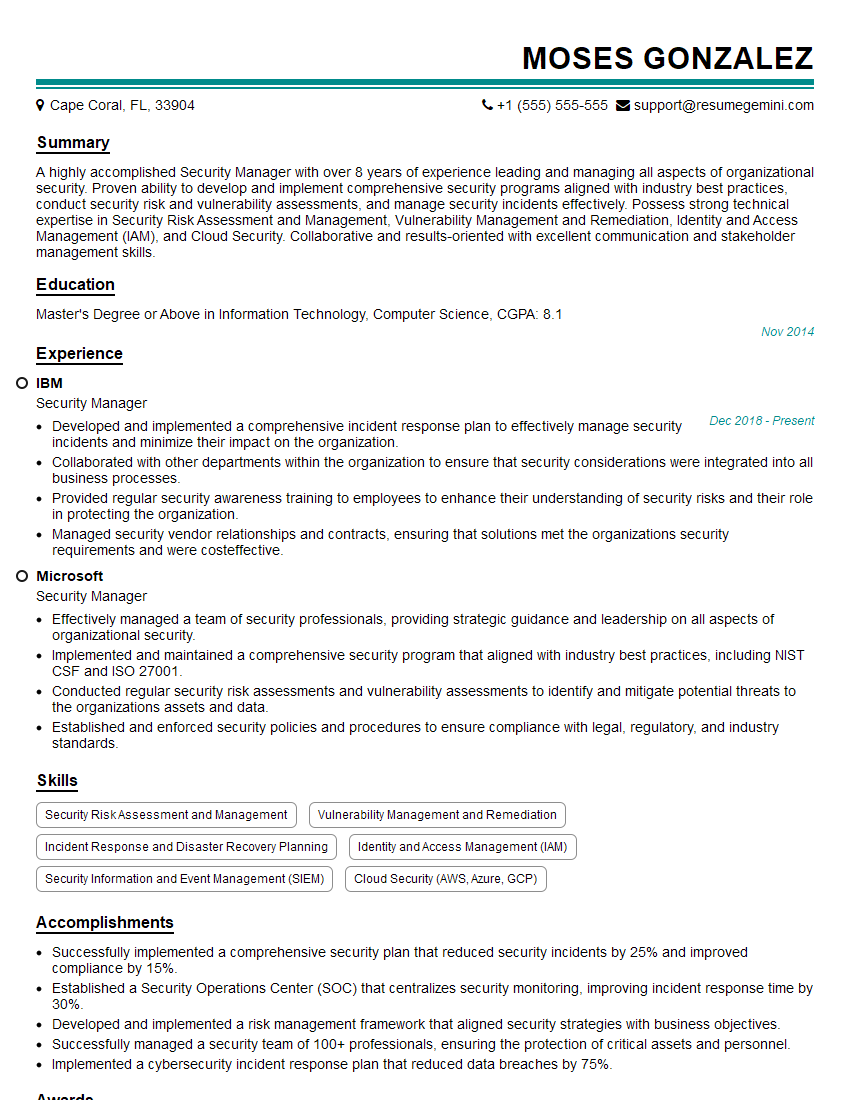
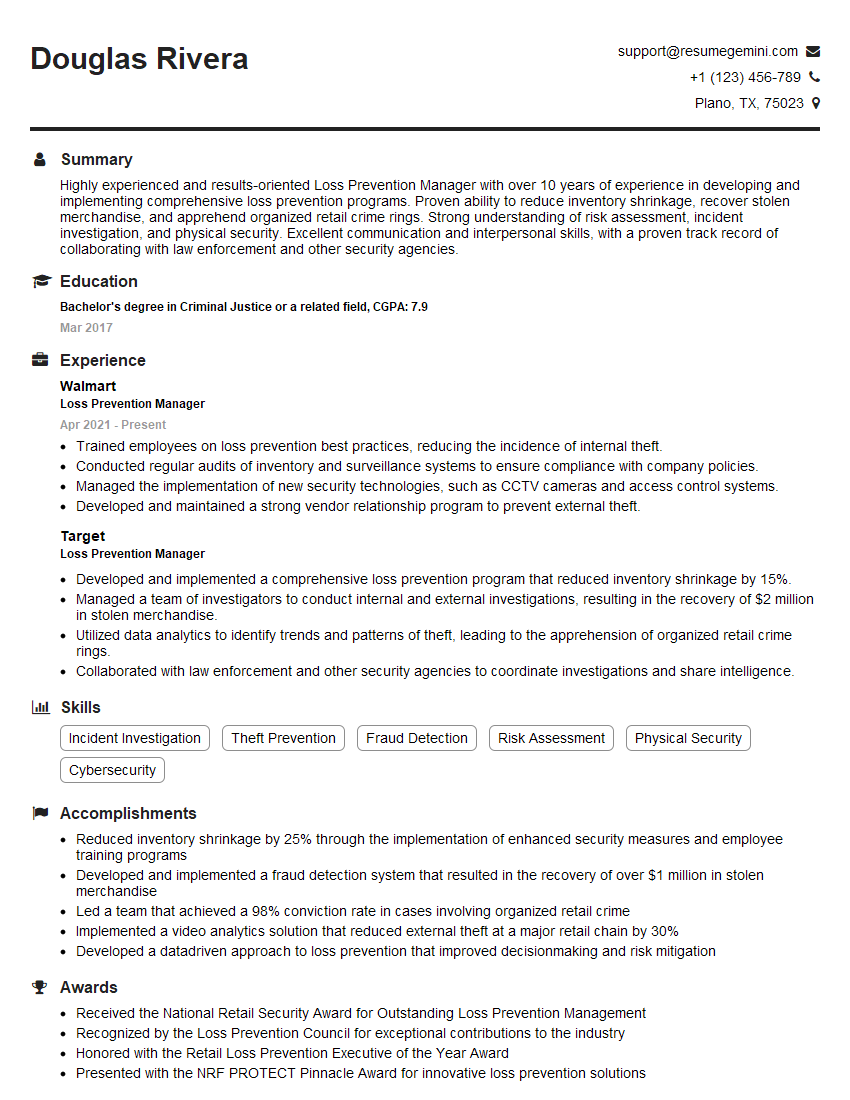
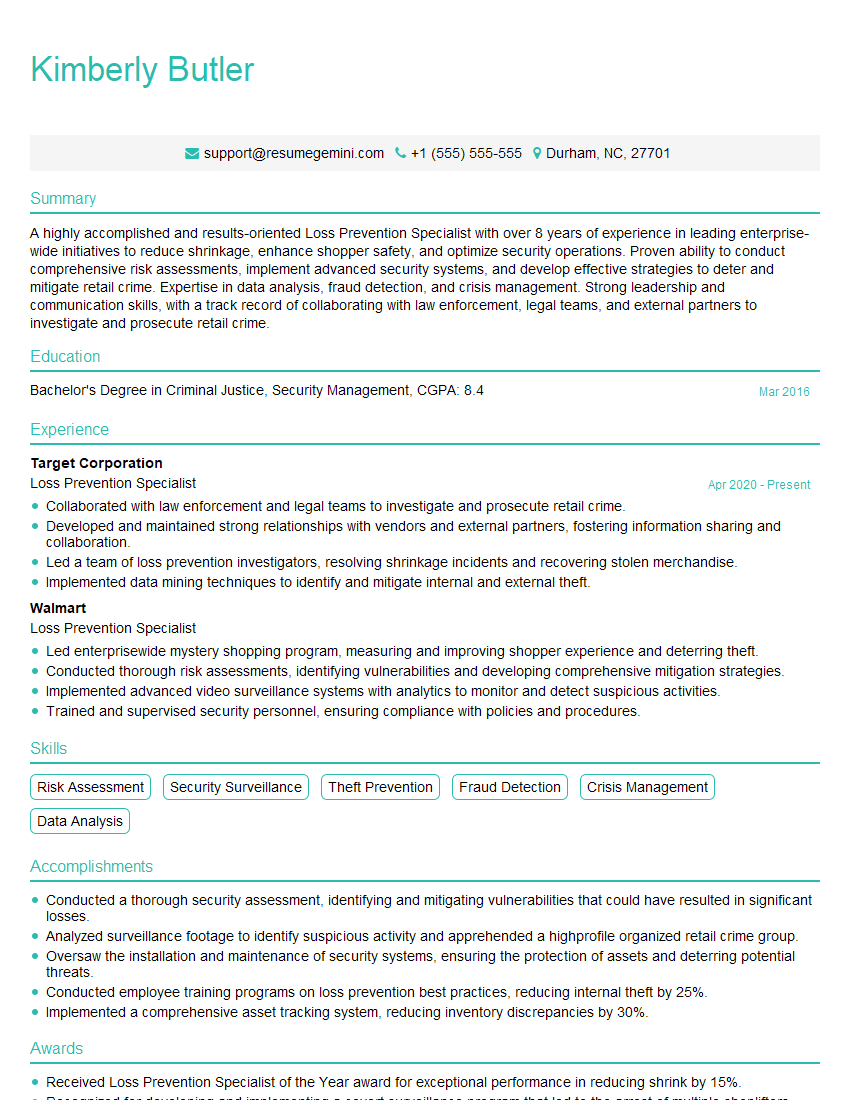
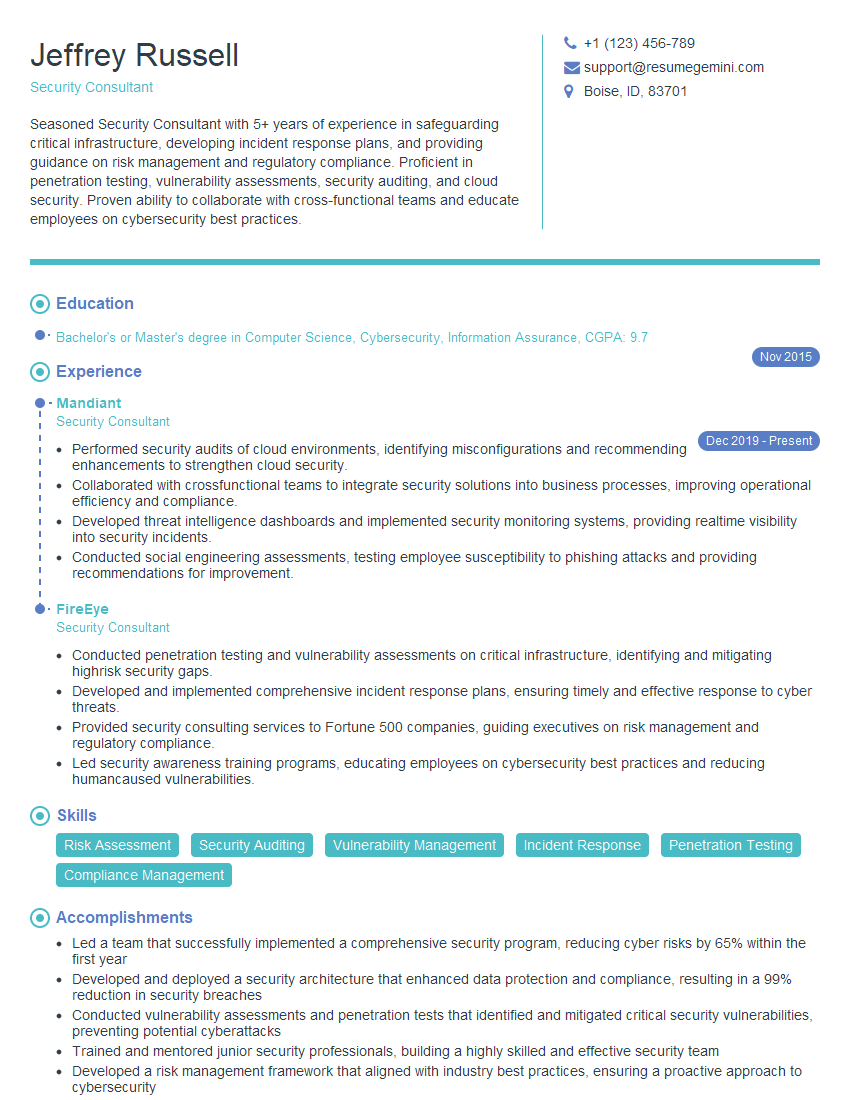
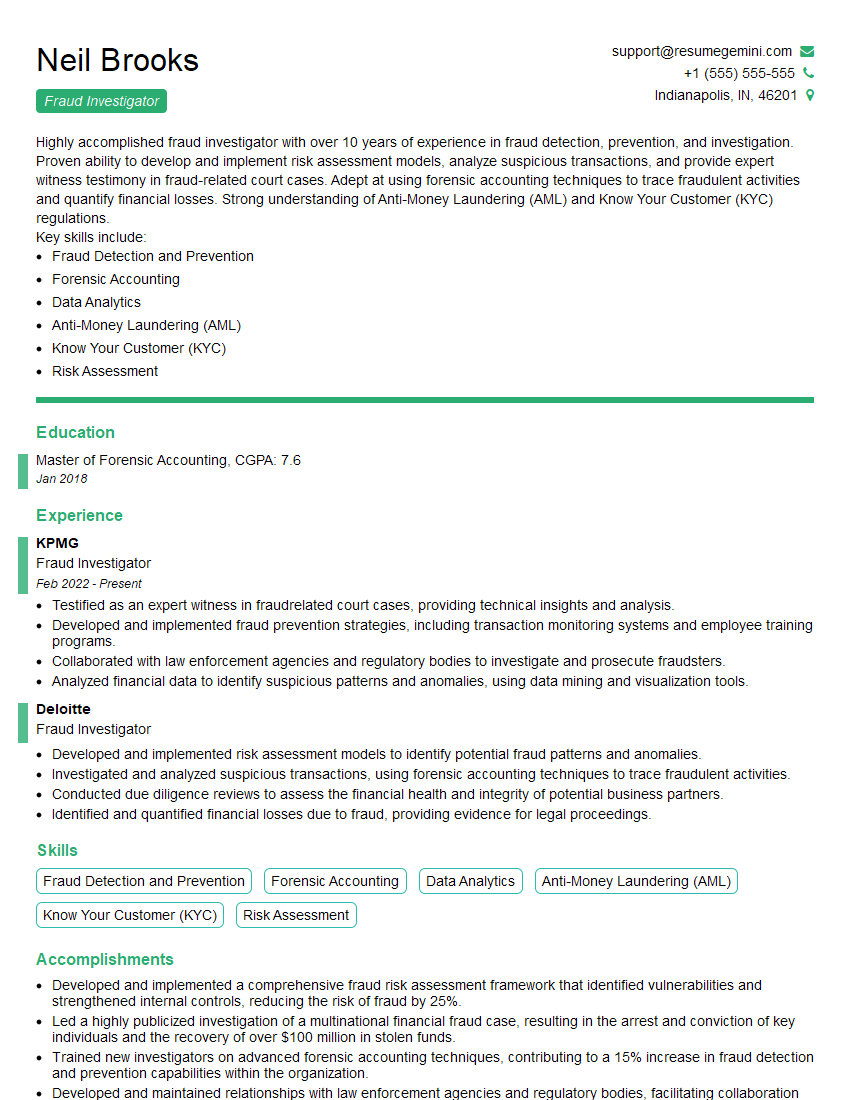
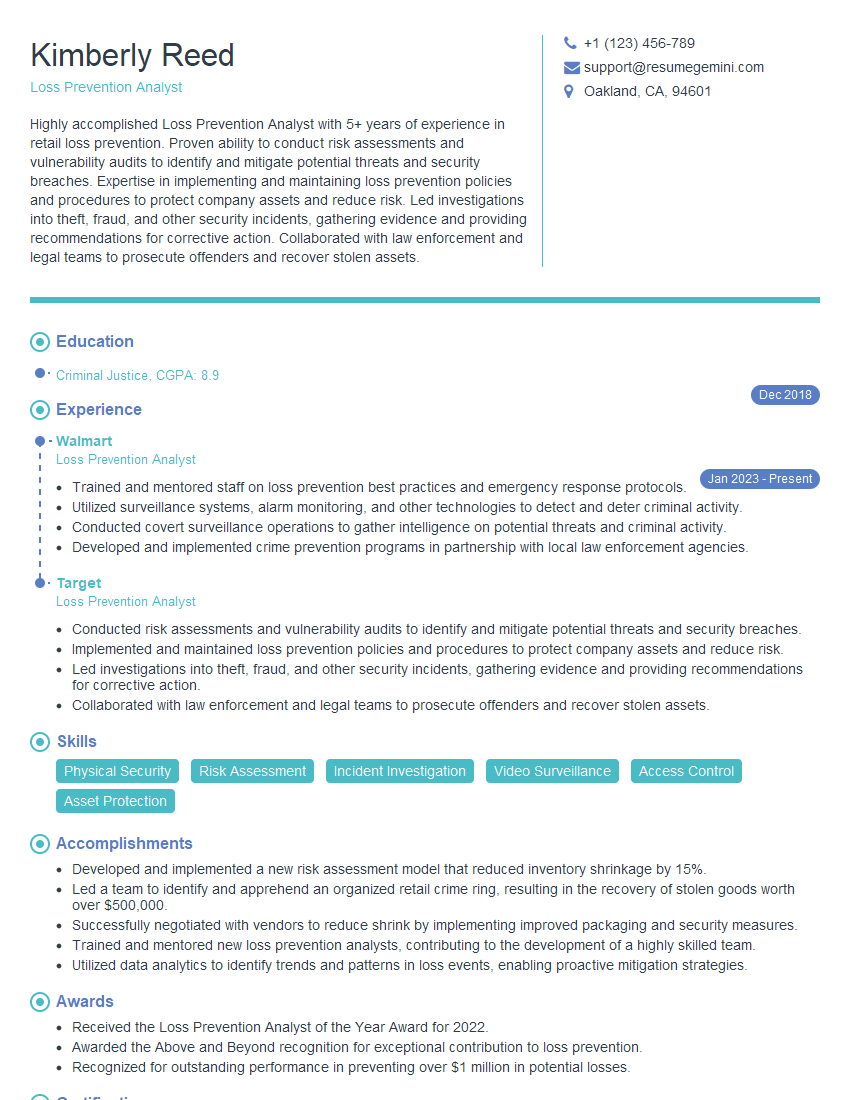
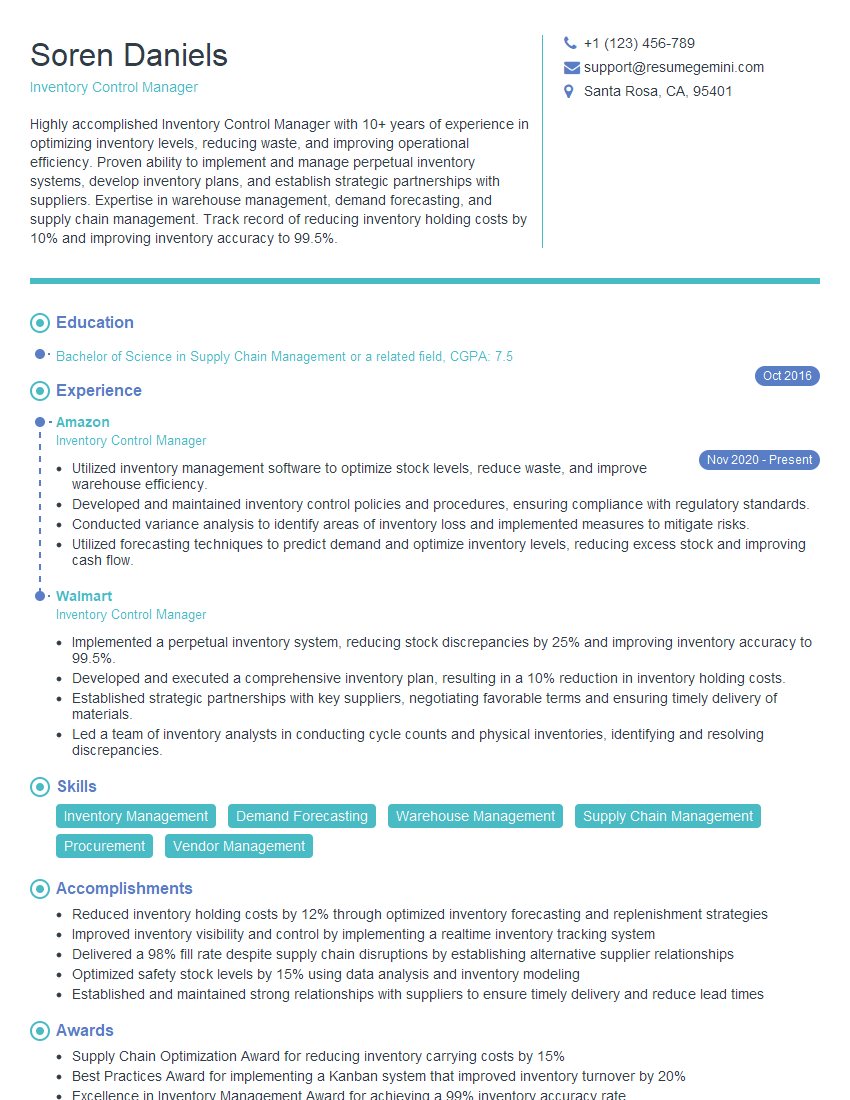
Mastering Loss Prevention Consulting opens doors to exciting career opportunities in a dynamic and growing field. Building a strong foundation in these key areas will significantly increase your interview success rate and pave the way for a rewarding career. To further enhance your job prospects, creating an ATS-friendly resume is crucial. This ensures your application gets noticed by recruiters and hiring managers. We highly recommend using ResumeGemini, a trusted resource for building professional and effective resumes. ResumeGemini provides examples of resumes tailored specifically to Loss Prevention Consulting, giving you a head start in crafting your application materials.
Explore more articles
Users Rating of Our Blogs
Share Your Experience
We value your feedback! Please rate our content and share your thoughts (optional).
What Readers Say About Our Blog
Very informative content, great job.
good