Feeling uncertain about what to expect in your upcoming interview? We’ve got you covered! This blog highlights the most important Whitewater Rafting interview questions and provides actionable advice to help you stand out as the ideal candidate. Let’s pave the way for your success.
Questions Asked in Whitewater Rafting Interview
Q 1. Describe the different classes of whitewater rapids.
The International Scale of River Difficulty classifies whitewater rapids into six classes, ranging from calm water to extremely difficult and dangerous. Each class represents a significant increase in challenge.
- Class I: Easy, slow-moving water with small riffles and waves. Think of a gentle stream, perfect for beginners.
- Class II: Moderate, with some small waves and easy maneuvering. You might encounter some rocks, but navigation is relatively straightforward.
- Class III: Challenging, with stronger currents, larger waves, and more complex maneuvers. Requires good paddling skills and experience. Expect some unavoidable obstacles.
- Class IV: Very challenging, with powerful currents, large waves, and potentially hazardous obstacles. Requires expert skills, precise boat handling, and swift decision-making. Rescue skills are crucial.
- Class V: Extremely challenging, with extreme currents, massive waves, and significant hazards. Requires the highest level of skill and experience. Risk of serious injury is high.
- Class VI: Extremely difficult, virtually unrunnable. These rapids pose an extreme risk of death and are generally only attempted by extreme risk-takers with specialized equipment and exceptional skills. Often involve significant drops and unforgiving consequences.
For example, a family float trip might stick to Class I or II, while experienced rafters might tackle Class IV or V runs, always keeping safety as their paramount concern.
Q 2. Explain the proper procedures for pre-trip safety checks.
Pre-trip safety checks are crucial for minimizing risks. They should be systematic and involve the entire team. These checks should always be performed regardless of the experience level of the team.
- Equipment Inspection: Check the raft for any punctures, tears, or loose seams. Inspect all paddles for cracks or breaks. Ensure life jackets fit properly and are in good condition. Verify that all safety equipment, including throw bags, helmets, and first-aid kits are present, accessible and in good working order.
- River Briefing: Discuss the planned route, including known hazards and potential rescue points. Review communication protocols and emergency procedures. Every member of the team should understand the plan.
- Personal Gear Check: Each participant should check their own gear – appropriate clothing (layers are essential!), waterproof bags for personal items, and any personal medication. Participants should be aware of how to self-rescue.
- Team Briefing: Ensure that everyone understands the paddling commands, the roles in the raft, and the plan in case of an emergency or separation.
- Weather Check: Review weather forecasts and potential risks of flash flooding or rapidly changing conditions.
Imagine a situation where a seam on the raft is compromised; a thorough pre-trip check would have identified and addressed this, preventing potential problems on the river.
Q 3. What are the signs of a potential river hazard?
River hazards are diverse, and recognizing their signs can be the difference between a thrilling adventure and a serious accident. Early detection allows for mitigating risk and appropriate response.
- Strainers: These are submerged or partially submerged trees or debris that can trap rafters. Look for branches or logs sticking out of the water or partially hidden beneath the surface.
- Holes/Hydraulics: These are recirculating currents that can trap a boat or swimmer. Look for areas where water is churning rapidly and violently, often accompanied by whitewater swirling backward.
- Rocks/Obstacles: These are obvious hazards but their potential danger can be amplified by current speed and water level. Inspect the river visually and from a safe vantage point to assess the size and location of rocks.
- Low Head Dams: These are seemingly innocuous low-level dams that can create powerful recirculating currents, extremely dangerous to anyone caught within. Look for unusual water levels or sudden changes in water depth.
- Waterfalls/Dams: These are very obvious but warrant caution and careful planning. Never underestimate the power of falling water, especially at higher volume flows.
- Swiftwater: While expected, changes in the flow rate indicate potential hazards.
- Weather Changes: Sudden rain can drastically increase water levels, changing river conditions swiftly and increasing the risk of flash floods.
For example, spotting a strainer early allows for a safe route adjustment, avoiding a potential entrapment.
Q 4. Outline the steps involved in a swiftwater rescue.
Swiftwater rescue requires a calm, coordinated approach and specialized training. Improvisation is dangerous.
- Assessment: Quickly assess the situation: location of the victim, type of emergency, river conditions, and available resources.
- Safety First: Ensure the safety of rescuers. Never put yourself in harm’s way to make a rescue.
- Communication: Establish clear communication with the victim and other rescuers. This may include verbal communication and non-verbal cues to maintain situational awareness.
- Approach: Approach the victim from a safe location, upstream and away from the main current whenever possible. Utilize the appropriate rescue techniques, taking into account the environment.
- Rescue Technique: Use appropriate rescue equipment, such as throw bags, ropes, and personal floatation devices. Different scenarios require different techniques (e.g. reaching, throwing, swimming rescue). Proper training and experience dictates technique.
- Extraction: Once the victim is secured, safely extract them from the water using established protocols. The exact method depends on the situation and the location.
- Post-Rescue: Provide first aid as needed. Report the incident and conduct a post-incident analysis to learn and improve.
For example, a throw bag is used to extend rescue equipment to someone in a safe area, preventing the rescuer from entering the swift water unnecessarily. This also works for situations where the victim is pinned against an object where getting close would endanger both the victim and the rescuer.
Q 5. How do you assess river conditions before a trip?
Assessing river conditions is paramount and involves multiple methods.
- Gauge Readings: Check river flow gauges, which provide data on water levels and discharge rates. Knowing the historic flow rates enables a better understanding of the river’s behavior under various conditions.
- Visual Inspection: Observe the river visually from several vantage points. Look for visible hazards, water clarity, and the overall character of the flow. This includes noting water color, signs of debris, and the presence of any rapids or other obstacles.
- Local Knowledge: Gather information from local river guides, outfitters, or other experienced rafters. Talking to locals provides valuable insight into current conditions and potential dangers. They often provide detailed information on sections to avoid and better approaches to difficult sections of the river.
- Weather Forecasts: Check weather forecasts for potential rainfall and snowmelt, which can significantly impact water levels and flow rates. Unexpected changes in water flow rate is a key concern, and weather reports are integral for risk mitigation.
- Hydrological Data: Access relevant hydrological data from sources such as government agencies or river monitoring organizations. This helps understand past and present river conditions and predict future trends.
For example, knowing that recent heavy rainfall has significantly increased the river flow would inform my decision to postpone the trip or choose a less challenging route.
Q 6. Explain your experience with different types of rafting boats.
My experience encompasses various rafting boat types, each suited for different conditions and group sizes.
- Self-Bail Rafts: These rafts have open bottoms, allowing water to drain naturally. Excellent for warmer conditions and gentler rivers where flipping is less likely.
- Closed-Top Rafts: These rafts are fully enclosed, keeping passengers drier in cold or wet conditions. A greater degree of protection from the elements and more protection from river hazards.
- Duckies (inflatable kayaks): These offer a more challenging and intimate experience on rivers, but require strong paddling skills. Their maneuverability is an advantage, but also requires more intense control and balance.
- Catarafts: These inflatable rafts are designed for higher volume rivers and provide a stable platform in challenging conditions. Generally more robust and durable than standard rafts.
- Pack Rafts: These lightweight and easily portable rafts can be ideal for remote adventures. They are however less stable than other options.
I’ve utilized each type in appropriate settings, choosing a boat tailored to the specific river conditions and group’s skill level. For instance, I’d select catarafts for Class IV rapids due to their robustness, while a calmer river with beginners might be best suited for a self-bailing raft.
Q 7. Describe your experience with different paddling techniques.
Proficient paddling is fundamental to safe and enjoyable rafting. I am experienced in various techniques:
- High Angle Paddling: Used for maintaining stability and powering through rapids and strong currents. It involves angling the paddle blade more vertically for increased power.
- Low Angle Paddling: Utilized for steering and fine control in slower sections. The blade is angled more horizontally to maintain greater control and directional accuracy.
- Power Strokes: These are strong, efficient strokes used for propulsion and maintaining speed. These focus on maximizing the power from each stroke with minimal fatigue.
- Sweep Strokes: Used for turning the raft. This stroke involves a wide arc with the paddle to change the trajectory of the raft efficiently.
- Draw Strokes: Used to pull the boat’s stern towards the paddle. This is an important technique for navigation in tighter spaces or for adjusting the raft’s position relative to obstacles.
- Back Paddles: This is used to steer and slow down the raft. The paddle is positioned in reverse to slow momentum and counteract any current pulls.
Understanding and executing these techniques correctly is crucial. For example, using high-angle paddling during a challenging rapid allows the team to power through the current and maintain their position in the raft. This ensures better control and minimizes the risk of collisions with obstacles. Each stroke and maneuver must be coordinated by the entire team for optimal results.
Q 8. How do you manage a group of diverse skill levels on a rafting trip?
Managing a diverse skill group in whitewater rafting requires careful planning and execution. It’s all about creating a safe and enjoyable experience for everyone, from novice paddlers to seasoned veterans. I begin by conducting a thorough pre-trip assessment, gauging each participant’s experience level and comfort in the water. This might involve a short questionnaire or informal conversation. Based on this, I divide the raft into manageable groups, ensuring that more experienced paddlers are strategically placed to assist those with less experience.
For example, I might place beginners near the center of the raft, the most stable position, with experienced paddlers at the front and back for steering and support. Throughout the trip, I provide continuous instruction and feedback, tailoring my approach to each individual’s needs. Simple commands are given clearly and concisely and demonstrations of proper paddling techniques are regularly shown. I emphasize teamwork and communication, encouraging participants to support each other and work together as a cohesive unit. Safety is always paramount, and I establish clear communication protocols, so everyone knows what to expect in various scenarios, such as navigating rapids or dealing with unexpected obstacles.
On particularly challenging rapids, I might even assign specific roles to individuals – some focus on paddling, others on bracing, and others on keeping a lookout for obstacles. Post-rapid, I provide constructive feedback and encourage open communication to address any anxieties or concerns. Ultimately, the goal is to build confidence and create a positive, collaborative environment where everyone feels supported and empowered.
Q 9. What is your experience with river navigation and map reading?
River navigation and map reading are fundamental skills for any experienced whitewater rafting guide. My experience in this area encompasses years of practical application, including extensive training in topographic map interpretation, compass navigation, and GPS usage. I’m proficient in using various river maps, including those showing water flow rates, rapids classifications, and potential hazards. I can accurately interpret river features from maps, such as riffles, pools, and eddy lines, to plan optimal routes and predict water flow patterns. This is crucial for anticipating changes in the river’s behavior and making informed decisions about safety and efficiency.
For instance, I can readily identify the location of strainers, large rocks, or submerged logs which pose a significant risk to the rafts. By studying river maps, I can select the safest and most enjoyable route for the given water conditions and skill level of the group. GPS technology supplements the maps and improves accuracy and route-finding, especially in unfamiliar terrain. I also teach my clients the basics of map reading and navigation, empowering them to become more engaged participants and better understand the environment.
Q 10. How do you handle challenging or unpredictable situations on the river?
Handling unpredictable situations on the river demands quick thinking, decisive action, and a calm demeanor. My training emphasizes risk assessment, swift problem-solving, and effective communication. The first step is always to assess the situation: identify the problem, its potential consequences, and available resources. Then, a plan is formed taking into consideration safety and the most efficient way of dealing with the problem. This might involve changing course, seeking shelter in an eddy, or implementing specific rescue techniques.
For example, if a raft capsizes, I would immediately initiate a rescue plan, directing clients towards safety and ensuring everyone is accounted for and wearing their life jackets and helmets. I’m trained to execute various rescue maneuvers including swiftwater rescue techniques and have practiced extensively in controlled environments. If a client suffers an injury, I utilize my first aid and CPR skills to provide immediate treatment while simultaneously organizing extraction and contact with emergency services. Communication is key; clear, concise directions to the team are vital during emergencies. After the event, a thorough debriefing is conducted, analyzing what happened and discussing how to avoid similar incidents in the future. This fosters a culture of continuous improvement and enhances overall safety.
Q 11. Describe your knowledge of different types of whitewater equipment.
My knowledge of whitewater equipment is comprehensive and covers rafts, paddles, personal flotation devices (PFDs), helmets, throw bags, and other essential safety gear. I’m familiar with the different types of rafts, their construction, and their suitability for varying river conditions. For example, I know the difference between self-bailing rafts (which drain water automatically) and non-self-bailing rafts, and I choose the appropriate type based on the anticipated level of water and the skill of the group. PFDs vary in buoyancy and style; I can select the proper size and type for everyone.
Helmets must meet safety standards and fit properly; I check each one for damage before each trip. Throw bags, essential for rescues, must be properly maintained and readily accessible. I know how to inspect and maintain all this gear, ensuring it is in optimal condition. I’m also familiar with specialized equipment such as dry bags for personal belongings and other rescue equipment.
Q 12. Explain your experience with trip planning and logistics.
Trip planning and logistics are critical to a successful rafting adventure. My experience includes developing detailed itineraries, obtaining necessary permits and licenses, arranging transportation, managing gear, and coordinating with support staff. I start by carefully assessing the river conditions, considering water levels, weather forecasts, and potential hazards. Then, I create an itinerary that balances exciting whitewater sections with calmer stretches, ensuring a comfortable pace for all skill levels.
Logistics involve reserving campsites, arranging shuttle transportation, securing the necessary equipment, and coordinating meals. Risk mitigation plays a central role; I develop contingency plans for unexpected events, such as weather changes or injuries. For example, I might have alternative routes planned depending on river conditions, and I always carry backup gear and a comprehensive first aid kit. Detailed communication with clients is vital – providing them with a thorough trip briefing and answering all their questions before we even hit the water. A well-planned trip runs smoothly, maximizing enjoyment and minimizing risks.
Q 13. How do you maintain raft equipment and ensure its safety?
Maintaining raft equipment and ensuring its safety is a continuous process. After each trip, a thorough inspection and cleaning are carried out. This includes checking for punctures, wear and tear, and proper inflation. Rafts are carefully cleaned, dried, and stored properly to prevent mold and mildew. Paddles are inspected for cracks and damage, and repairs or replacements are made as needed. PFDs are inspected, cleaned, and stored according to manufacturer’s instructions.
Regular maintenance prevents accidents and ensures the longevity of the equipment. I’m proficient in basic repairs, such as patching punctures and replacing worn-out parts. For more extensive repairs, I utilize the services of reputable repair shops. Safety is never compromised; any damaged or questionable equipment is immediately taken out of service.
Q 14. What is your experience with wilderness first aid and CPR?
I hold current certifications in wilderness first aid and CPR. My training encompasses a wide range of medical scenarios, from minor injuries to life-threatening situations, and covers assessment, stabilization, treatment, and evacuation procedures. I’m proficient in managing various injuries, including fractures, sprains, hypothermia, and shock. I’m also skilled in CPR techniques, including rescue breathing and chest compressions.
Furthermore, my training emphasizes risk mitigation and prevention. I know how to prepare for emergencies, including assembling and organizing a comprehensive first aid kit and developing communication protocols for contacting emergency services in remote areas. This extensive first aid and CPR training ensures that I can respond effectively to medical emergencies during whitewater rafting trips, and provide prompt and appropriate care to participants.
Q 15. Explain your knowledge of Leave No Trace principles.
Leave No Trace (LNT) principles are fundamental to responsible outdoor recreation. They’re a set of seven guidelines designed to minimize human impact on natural environments. Think of it as being a respectful guest in nature’s home.
- Plan Ahead and Prepare: This involves knowing the area, packing appropriately, and having a detailed itinerary, including an emergency plan. For rafting, this means checking weather forecasts, water levels, and having appropriate gear for all conditions.
- Travel and Camp on Durable Surfaces: Stick to established trails and campsites to avoid damaging vegetation. In rafting, this means staying in designated areas and avoiding walking through sensitive riparian zones.
- Dispose of Waste Properly: Pack it in, pack it out – everything! This applies to trash, food scraps, and even human waste. We use specialized waste bags for our trips and always ensure proper disposal.
- Leave What You Find: Resist the urge to pick flowers, move rocks, or take anything from the natural environment. This includes leaving any historical or cultural artifacts undisturbed.
- Minimize Campfire Impacts: Campfires are generally discouraged, especially in dry conditions. If permitted, use existing fire rings and keep fires small. We prefer camp stoves for our trips for safety and environmental protection.
- Respect Wildlife: Observe animals from a distance, never feed them, and protect their habitat. This also includes keeping a safe distance from wildlife, especially bears, during rafting expeditions.
- Be Considerate of Other Visitors: Share the trails and waterways respectfully. Yield to other users and minimize noise to keep the environment peaceful.
For example, on a recent trip, we had to adjust our route to avoid a nesting bird. We also thoroughly cleaned up our campsites, leaving them as pristine as we found them. Adhering to LNT principles ensures the pristine beauty of these environments is preserved for future generations.
Career Expert Tips:
- Ace those interviews! Prepare effectively by reviewing the Top 50 Most Common Interview Questions on ResumeGemini.
- Navigate your job search with confidence! Explore a wide range of Career Tips on ResumeGemini. Learn about common challenges and recommendations to overcome them.
- Craft the perfect resume! Master the Art of Resume Writing with ResumeGemini’s guide. Showcase your unique qualifications and achievements effectively.
- Don’t miss out on holiday savings! Build your dream resume with ResumeGemini’s ATS optimized templates.
Q 16. Describe your experience with risk assessment and mitigation.
Risk assessment and mitigation are crucial for safe whitewater rafting. It’s a systematic process of identifying potential hazards, analyzing their likelihood and severity, and implementing measures to reduce or eliminate them.
My experience involves conducting pre-trip assessments considering factors like:
- River Conditions: Water level, flow rate, presence of obstacles (rocks, debris), weather forecasts.
- Client Skill Levels: Matching clients to appropriate river sections and providing personalized instruction.
- Equipment Condition: Regular inspection and maintenance of rafts, paddles, life vests, and safety gear.
- Emergency Preparedness: Having communication systems, first-aid kits, and emergency action plans in place.
Mitigation strategies include:
- Route Selection: Choosing appropriate river sections based on client experience and river conditions.
- Safety Briefing: Thoroughly instructing clients on safety procedures, river etiquette, and emergency signals.
- Swiftwater Rescue Techniques: Providing comprehensive training to guides in swiftwater rescue and self-rescue techniques.
- Contingency Planning: Having backup plans in case of weather changes or equipment failures.
For example, during a trip with novice rafters, we chose a calmer section of the river and provided extra instruction on basic paddling techniques. Similarly, if adverse weather is predicted, we have alternative plans, such as adjusting the route or postponing the trip.
Q 17. How do you communicate effectively with clients and your team?
Effective communication is the cornerstone of safe and enjoyable rafting trips. I utilize a multi-faceted approach:
- Clear and Concise Instructions: I use plain language, avoiding technical jargon. I demonstrate techniques and ensure everyone understands before we begin.
- Active Listening: I pay attention to clients’ concerns, questions, and non-verbal cues. This ensures everyone feels comfortable and heard.
- Regular Check-ins: Throughout the trip, I check in with clients and team members to assess their well-being and address any issues promptly.
- Nonverbal Communication: Using hand signals and visual cues during rafting is essential, especially in loud environments.
- Positive and Encouraging Approach: Building confidence and fostering a positive team environment is paramount.
With my team, I encourage open communication, feedback sessions, and a culture of mutual respect. We use pre-trip briefings to coordinate our actions and post-trip debriefings to discuss what went well and areas for improvement. Open communication fosters a safe and effective team environment.
Q 18. Explain your experience with conflict resolution in a group setting.
Conflict resolution is an inevitable part of group activities. My approach emphasizes collaboration and finding solutions that benefit everyone:
- Active Listening and Empathy: Understanding the perspectives of all involved parties is critical.
- Neutral Facilitation: I act as a mediator, helping individuals communicate their concerns without interrupting.
- Collaborative Problem Solving: We work together to brainstorm solutions, focusing on finding common ground.
- Fair and Equitable Outcomes: The solution should be acceptable to all parties involved, prioritizing safety and fairness.
- Maintaining Professionalism: I ensure respectful interactions, even during disagreements.
For example, I once had a conflict between two clients with differing paddling styles. By actively listening to their concerns and collaboratively discussing solutions, we agreed on a strategy that balanced their individual needs while ensuring the overall safety of the group. Addressing conflict promptly and directly maintains a positive and productive environment.
Q 19. How do you handle difficult or upset clients?
Handling upset clients requires patience, empathy, and a focus on finding solutions. My approach involves:
- Active Listening: I let the client express their feelings without interruption.
- Empathy and Validation: I acknowledge their concerns and demonstrate understanding.
- Problem-Solving: I work collaboratively with the client to address their concerns, offering possible solutions.
- Apology (when appropriate): If a mistake was made, I offer a sincere apology.
- Follow-up: If needed, I follow up to ensure the client’s concerns have been addressed.
For example, if a client feels uncomfortable during a rapid, I would immediately stop the raft, reassure them, offer options (such as a break or a different route), and provide additional support.
Q 20. Describe your experience with emergency communication protocols.
Emergency communication protocols are essential for whitewater rafting. We utilize a multi-layered approach:
- Pre-Trip Briefing: Clients are briefed on emergency procedures, including communication protocols, meeting points, and emergency signals.
- Two-Way Radios: Guides have two-way radios for constant communication within the team and with a base station.
- Satellite Phones: For remote areas with limited cell service, satellite phones provide backup communication.
- Emergency Contact List: We collect emergency contact information from each client and inform relevant authorities of our itinerary.
- Pre-determined Emergency Action Plans: We have well-defined plans for various scenarios, including swiftwater rescue, medical emergencies, and weather-related incidents.
Our team regularly practices emergency drills to ensure everyone is familiar with the protocols. Knowing the procedures and having reliable communication methods increases response times and improves the likelihood of successful outcomes in emergency situations.
Q 21. What are the common causes of rafting accidents, and how can they be prevented?
Rafting accidents can stem from several causes, many preventable through diligent preparation and adherence to safety protocols:
- Inadequate Swiftwater Rescue Skills: Lack of proper training among guides can lead to ineffective rescue attempts.
- Improper Equipment Usage: Incorrect use of life vests, paddles, or rafts can increase the risk of capsizing or injury.
- Ignoring Weather Conditions: Sudden changes in weather can create hazardous river conditions.
- Overestimation of Skills: Attempting rapids beyond one’s skill level can lead to accidents.
- Lack of Communication: Poor communication among guides and clients can lead to confusion and mistakes.
- Substance Use: Alcohol or drug impairment significantly increases the risks involved.
Prevention strategies include:
- Comprehensive Training: Thorough swiftwater rescue training is vital for all guides.
- Regular Equipment Checks: Regular maintenance and inspections ensure equipment is in optimal condition.
- Weather Monitoring: Constant monitoring and adaptation to changing weather conditions.
- Matching Client Skills to River Conditions: Selecting routes appropriate for clients’ experience levels.
- Clear and Consistent Communication: Open communication between guides and clients is crucial.
- Strict Adherence to Safety Protocols: Enforcing safety rules and regulations.
For instance, a pre-trip assessment that identifies a client lacking sufficient paddling skills might lead to assigning them a buddy or providing additional instruction. We never compromise safety for expediency.
Q 22. How do you ensure the safety of clients with varying levels of experience?
Ensuring client safety across varying experience levels is paramount in whitewater rafting. We achieve this through a tiered approach: pre-trip assessments, group segregation, and continuous on-water supervision.
- Pre-trip Assessments: Before each trip, clients complete a detailed questionnaire regarding their swimming ability, previous rafting experience, and any medical conditions. This allows us to accurately assess their skill level and place them in appropriate groups.
- Group Segregation: We divide participants into groups based on their experience and comfort level. Beginners are placed with experienced guides who provide extensive instruction and support, while intermediate and advanced groups have more autonomy, but still under the watchful eye of a guide.
- Continuous On-water Supervision: Our guides maintain constant vigilance, providing real-time instruction and assistance. They actively scan the river for hazards and ensure everyone follows safety protocols. For example, we frequently conduct drills on self-rescues and raft maneuvering to build client confidence and competence.
For instance, on a recent trip, we had a group with a mix of first-timers and seasoned rafters. We split them into two groups, ensuring that the beginners felt comfortable and safe while the experienced rafters had a more challenging but still controlled experience. This approach ensures everyone feels challenged yet secure.
Q 23. Describe your familiarity with local regulations and permits.
I am intimately familiar with all local, state, and federal regulations governing commercial whitewater rafting operations within our operating area. This includes, but isn’t limited to, permits for operating on specific river sections, commercial use licenses, environmental impact assessments, and safety regulations regarding passenger capacity and equipment.
We maintain meticulous records of all permits and licenses, ensuring that our operations are fully compliant. For example, we actively participate in river stewardship programs to contribute to the long-term health of the waterways. Our company undergoes regular audits to verify compliance with all applicable regulations.
A deep understanding of these regulations is critical, not only for legal compliance but also to ensure the safety and well-being of our clients and the preservation of the natural environment.
Q 24. What is your experience with river ecology and conservation?
My experience with river ecology and conservation is extensive. I’ve participated in river cleanups, habitat restoration projects, and educational programs focused on responsible river use. We actively promote Leave No Trace principles during all trips, educating clients about minimizing their environmental impact.
Understanding river ecology is essential for responsible guiding. It allows us to identify sensitive areas, avoid damaging habitats, and educate our clients on the importance of environmental stewardship. For instance, we avoid camping in areas with fragile ecosystems and always properly dispose of waste. We also actively monitor the river’s health, noting changes in water quality or wildlife populations to report to the appropriate authorities.
Q 25. Explain your experience with water safety and drowning prevention techniques.
Water safety and drowning prevention are the cornerstones of our operation. All our guides are certified in swiftwater rescue techniques and have extensive experience in handling various water emergencies. We utilize multiple layers of safety protocols, including:
- Personal Floatation Devices (PFDs): Every participant wears a properly fitted PFD at all times.
- Swim Tests: We conduct swim tests for clients to evaluate their abilities and adjust our approach based on their swimming skills.
- Safety briefings: Thorough briefings are given before every trip, covering essential safety procedures, equipment use, and potential hazards.
- Constant Supervision: Guides constantly monitor clients, providing assistance as needed.
- Emergency Response Plan: A comprehensive emergency response plan is in place, including protocols for swift water rescues, first aid, and communication with emergency services.
We regularly practice rescue techniques and conduct emergency drills to ensure that our guides are fully prepared to respond effectively in any situation. For example, during one trip, a client unexpectedly fell overboard. Our guide immediately implemented rescue protocols and safely recovered the client, demonstrating the importance of our rigorous training.
Q 26. Describe your understanding of hydraulics and river currents.
My understanding of hydraulics and river currents is fundamental to my guiding practice. I can identify different types of river features, such as hydraulics (holes), strainers, and eddies, and can teach clients how to navigate these features safely.
I use this knowledge to plan safe routes, choosing sections appropriate to the skill level of the group. I also use this understanding to predict water behavior and anticipate potential hazards. For instance, I can identify a hydraulic and instruct clients how to avoid it, or how to safely escape one if they are caught.
The ability to read water and understand its dynamics is crucial for risk mitigation and ensures the safety of our clients. It’s not just about avoiding danger; it’s also about skillfully using the river’s currents to make the trip more efficient and enjoyable.
Q 27. How do you adapt your leadership style to different group dynamics?
Adapting my leadership style to different group dynamics is a key skill. I employ a flexible approach, adjusting my communication and guidance to best suit the specific needs of the group. Some groups thrive on structured leadership, while others prefer a more collaborative approach. I aim to create a safe and inclusive environment where everyone feels comfortable participating.
For example, with a group of adventurous and experienced rafters, I might adopt a more hands-off approach, empowering them to make decisions and navigate challenges independently. In contrast, with a group of beginners, I provide more detailed instructions and support, focusing on building their confidence and skill.
Active listening and observation are crucial. I gauge the group’s energy levels, communication styles, and comfort levels to adapt my approach accordingly. Building rapport and trust are essential for fostering a positive and safe experience.
Q 28. How do you deal with unexpected weather changes during a rafting trip?
Dealing with unexpected weather changes requires a proactive and decisive approach. We continuously monitor weather forecasts before and during trips. We have a detailed protocol that outlines actions to be taken in various weather scenarios. This includes having backup plans in place, such as alternative routes or early termination of a trip.
For example, if thunderstorms are predicted, we’ll either postpone the trip, or shorten the trip duration to avoid exposure. We always carry emergency supplies including rain gear and communication devices. The safety of our clients is always the top priority. We make decisions based on objective weather data and a thorough risk assessment, ensuring the well-being of our clients.
Communication is crucial. We maintain clear and frequent communication with the group, keeping them informed about any changes and ensuring that everyone understands the safety plan. Transparent and prompt communication builds trust and reduces anxiety.
Key Topics to Learn for Whitewater Rafting Interview
- River Reading & Navigation: Understanding water flow, reading currents, identifying hazards (rocks, strainers, hydraulics), and planning safe routes. Practical application: Describe a scenario where you had to navigate a challenging rapid and explain your decision-making process.
- Safety Procedures & Risk Management: Knowledge of rescue techniques (self-rescue, swimmer rescue), emergency protocols, and risk assessment for various river conditions. Practical application: Explain your understanding of the different levels of risk involved in different types of rafting trips and how you would mitigate them.
- Boat Handling & Teamwork: Mastering paddling techniques, effective communication within the raft crew, and maintaining boat control in challenging conditions. Practical application: Describe your experience working as part of a team to navigate a difficult section of river.
- Client Management & Communication: Understanding client needs, providing clear and concise instructions, maintaining a positive attitude, and handling challenging client situations. Practical application: Describe a situation where you had to manage a difficult or anxious client and how you resolved the situation.
- Equipment Knowledge & Maintenance: Familiarity with different types of rafts, paddles, safety gear, and their proper maintenance and repair. Practical application: Describe your experience with routine maintenance and repair of rafting equipment.
- Environmental Awareness & Sustainability: Understanding the environmental impact of rafting and the importance of Leave No Trace principles. Practical application: Describe your understanding of responsible river stewardship and how you would implement it in your work.
Next Steps
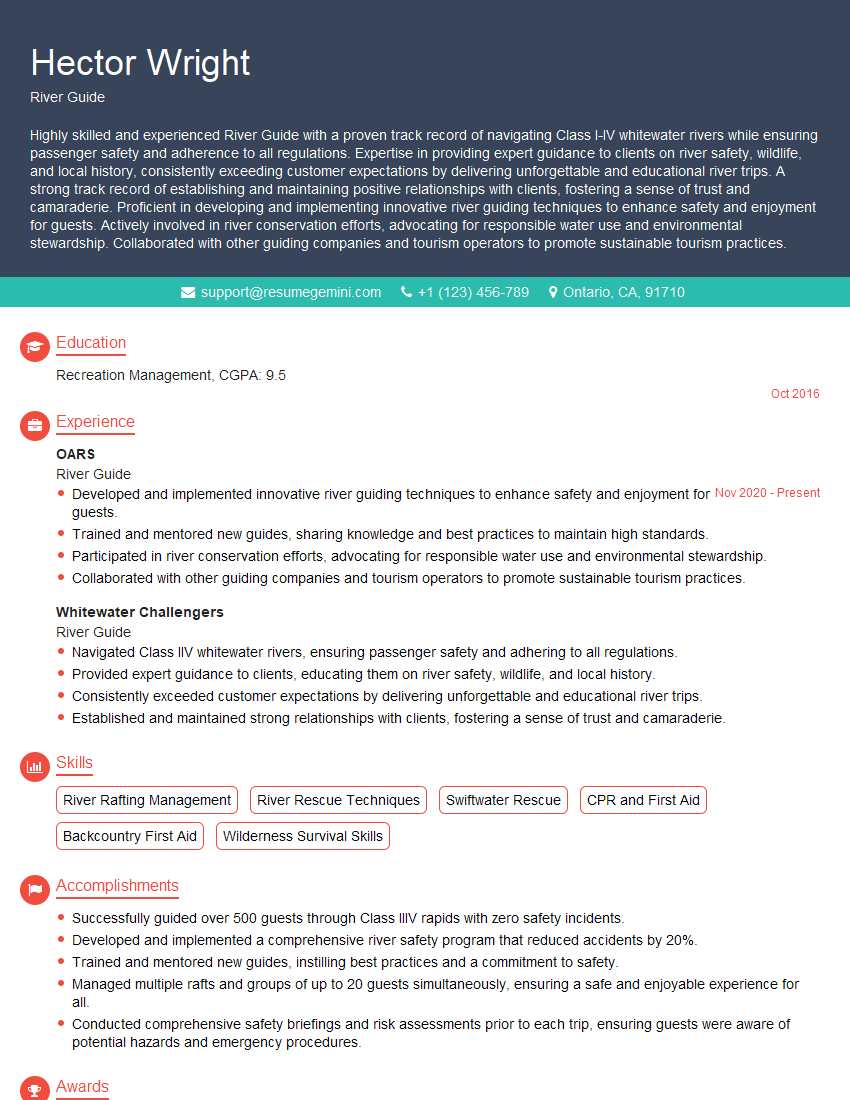
Mastering whitewater rafting skills opens doors to exciting and rewarding careers, offering opportunities for personal and professional growth. A strong resume is key to showcasing your expertise and securing your dream job. To increase your chances of getting noticed by potential employers, build an ATS-friendly resume that highlights your key skills and experience. ResumeGemini is a trusted resource for crafting professional and impactful resumes, helping you present your qualifications effectively. Examples of resumes tailored to the Whitewater Rafting industry are available to help guide you.
Explore more articles
Users Rating of Our Blogs
Share Your Experience
We value your feedback! Please rate our content and share your thoughts (optional).
What Readers Say About Our Blog
Very informative content, great job.
good