Every successful interview starts with knowing what to expect. In this blog, we’ll take you through the top Machine Binding interview questions, breaking them down with expert tips to help you deliver impactful answers. Step into your next interview fully prepared and ready to succeed.
Questions Asked in Machine Binding Interview
Q 1. Explain the difference between perfect binding and saddle stitching.
Perfect binding and saddle stitching are two common bookbinding methods, but they differ significantly in their construction and the types of documents they suit best. Think of it like this: perfect binding is like gluing a stack of papers together to create a spine, whereas saddle stitching is like stapling through folded pages.
- Perfect Binding: This method involves applying adhesive to the spine of a block of leaves (sheets of paper), creating a flat, smooth spine. It’s ideal for books with a substantial page count (typically over 40 pages) and often uses a cover that wraps around the glued spine. Think of softcover paperback books – most of those use perfect binding.
- Saddle Stitching: This involves folding sheets of paper in half or more and then stapling them along the fold line (the spine). This method is suitable for documents with a lower page count (typically under 40 pages), such as brochures, magazines, or booklets. It results in a spine with a visible row of staples.
The key difference lies in the spine: perfect binding offers a flat, professional look suitable for longer documents, while saddle stitching is quicker, cheaper, and best for shorter documents with a less formal appearance.
Q 2. Describe the setup process for a perfect binding machine.
Setting up a perfect binding machine is a multi-step process requiring precision and attention to detail. The exact steps vary slightly depending on the specific machine model, but the general procedure includes:
- Preparing the Book Blocks: Ensure the book blocks are accurately trimmed and have a consistent spine thickness. Inconsistent spine thickness will lead to uneven glue application and an unprofessional finish.
- Adjusting the Glue System: This involves setting the correct amount of glue to be applied, the temperature of the glue, and the speed of the glue roller. These settings are crucial for achieving strong binding without excess glue.
- Setting the Clamps: The clamps hold the book block firmly in place during the glue application and pressing phases. Proper adjustment ensures even pressure across the spine.
- Cover Feeder Setup: The cover feeder needs to be aligned correctly to ensure the cover is precisely positioned and applied to the glued book block.
- Pressing Unit Adjustment: The pressing unit applies pressure to the glued spine to ensure strong adhesion. The pressure needs to be sufficient to hold the pages but not so strong that it damages the cover or pages.
- Testing and Calibration: Before beginning a large production run, always run a few test books to check all parameters. Adjust the settings as needed to ensure the desired quality and consistency.
Proper setup ensures efficient operation and minimizes errors or jams during production. Think of it like baking a cake – you wouldn’t skip preheating the oven or measuring the ingredients!
Q 3. How do you troubleshoot common jams in a saddle stitch machine?
Troubleshooting saddle stitch machine jams requires a systematic approach. Jams can stem from various issues, such as misfed paper, incorrectly set stitch length, or mechanical problems.
- Identify the Jam Location: Carefully examine the machine to determine where the jam has occurred. Is it near the feed tray, the stitching mechanism, or the stapler?
- Clear the Jam: Gently remove any jammed pages or paper scraps, being careful not to damage the machine components. Never force anything.
- Check Paper Feed: Ensure the paper is properly aligned and fed into the machine. Misaligned paper is a common cause of jams.
- Examine the Stitching Mechanism: Inspect the needles, clamps, and other moving parts for any obstructions or damage. Clean any debris.
- Adjust Stitch Length: If the stitching mechanism is struggling, adjust the stitch length. A stitch length that is too long or too short may lead to jams.
- Check Stapler Function: Ensure the stapler is functioning correctly and that the staples are properly loaded.
- Lubricate Moving Parts: Regular lubrication of moving parts prevents friction and reduces the chance of jams. Follow the manufacturer’s recommendations for lubrication.
A methodical approach prevents further damage to both the machine and the materials being processed.
Q 4. What are the safety precautions when operating binding machinery?
Safety is paramount when operating any binding machinery. These machines involve moving parts and sharp objects, so adherence to safety protocols is non-negotiable.
- Guards and Shields: Never operate the machine with any safety guards or shields removed. These are designed to protect you from moving parts.
- Personal Protective Equipment (PPE): Wear appropriate PPE, including safety glasses to protect your eyes from flying debris, and gloves to protect your hands.
- Proper Training: Always receive proper training before operating any binding machine. Understanding the machine’s functions and potential hazards is crucial.
- Machine Maintenance: Regularly inspect the machine for any damage or wear and tear. Report any issues immediately.
- Emergency Stop Button: Know the location of the emergency stop button and how to use it. Be prepared to use it in case of an emergency.
- Loose Clothing and Jewelry: Avoid loose clothing and jewelry that could get caught in moving parts.
- No Horseplay: Never engage in horseplay or distractions while operating the machine.
Prioritizing safety ensures a hazard-free working environment and prevents accidents. Following these guidelines isn’t just a good idea; it’s essential.
Q 5. What types of paper are best suited for perfect binding?
The ideal paper for perfect binding depends on the desired finish and budget, but generally, papers with a good balance of stiffness and flexibility are preferable. Think about the overall feel and weight you want the book to have.
- Offset Printing Papers: These are commonly used due to their excellent printability and a good balance of strength and flexibility.
- Uncoated Papers: These offer a natural feel and good ink absorption, but may not be as durable as coated papers.
- Coated Papers: These provide a smoother finish and better print quality, but can be more challenging to glue effectively. Proper glue selection is crucial.
- Avoid excessively thin or flimsy paper: Thin paper can be prone to tearing during the glue application and pressing processes, compromising the final product.
Experimentation and understanding your machine’s capabilities help in selecting the right paper stock for optimal results. Too thin and the pages will tear; too thick, and it may be difficult for the glue to adhere properly.
Q 6. How do you adjust the stitch length on a saddle stitch machine?
Adjusting the stitch length on a saddle stitch machine is usually a simple process, but the exact method depends on the machine model. Generally, it involves locating a control dial or lever that adjusts the distance between the staples.
Consult your machine’s manual for specific instructions. Most machines have clear markings or diagrams showing how to adjust the stitch length. Usually, you’ll find a dial or lever with markings indicating different stitch lengths, often measured in millimeters or another appropriate unit.
Once the adjustment is made, always test run a few samples to confirm that the stitch length is correct and that the staples are securely fastened without causing jams. A too-short stitch may leave the booklet loose; a too-long stitch might make it hard to close the booklet properly. Find the ‘sweet spot’ for the paper weight and booklet size you’re using.
Q 7. Explain the importance of maintaining consistent spine thickness in perfect binding.
Maintaining consistent spine thickness in perfect binding is crucial for a professional-looking and durable finished product. Inconsistent thickness results in uneven glue application and can lead to several issues.
- Uneven Glue Application: If the spine is thicker in some areas, the glue will be spread thinner in those places, resulting in poor adhesion and potential for pages to come loose.
- Poor Cover Adhesion: Uneven spine thickness can lead to gaps between the cover and the text block, making the book look unprofessional and reducing its durability.
- Page Distortion: Significant variations in spine thickness can cause distortion of the pages, particularly if some areas have excess glue resulting in uneven pressure during the binding process.
- Machine Malfunction: Extreme variations might even cause the binding machine to malfunction, leading to jams and potential damage.
Achieving consistent spine thickness requires careful preparation of the pages and precise trimming before binding. Think of it like building a brick wall – every brick needs to be the same size for a stable and visually appealing structure.
Q 8. How do you identify and address quality issues in bound products?
Identifying and addressing quality issues in bound products involves a multi-step process focusing on both the binding itself and the overall presentation. We start with a visual inspection, checking for things like crooked spines, uneven covers, misaligned pages, or damage to the cover material. This initial visual check helps pinpoint the primary problem area.
Next, we delve into the specifics. For instance, if pages are misaligned, we examine the feeding mechanism and the accuracy of the cutting and folding processes preceding binding. If the spine is crooked, it might indicate an issue with the machine’s clamping system or improper setup. Loose stitches or staples signal problems with the binding mechanism’s settings or potentially faulty staples. For perfect binding, we carefully examine the adhesive application and the strength of the glued bond. Any imperfections are carefully documented and their root causes are identified. Solutions can involve adjusting machine settings, replacing worn parts, re-training operators, or even sourcing higher-quality materials.
For example, I once encountered a consistent problem with pages falling out of saddle-stitched brochures. By meticulously examining the stitching, we found the staple length was slightly insufficient for the paper thickness. A simple change in staple length resolved the issue, highlighting the importance of proper material and machine setting selection.
Q 9. Describe the process of setting up different paper sizes on a binding machine.
Setting up different paper sizes on a binding machine depends greatly on the specific machine’s model. However, the general principles remain consistent. Most machines require adjusting several key parameters. First, you’ll need to adjust the paper guides. These guides ensure the paper is fed correctly into the machine. You must align them precisely to match the dimensions of your paper. The settings are usually adjustable by turning knobs or moving levers. Next, you need to configure the cutting mechanism if the machine includes a trimming function. The cutting blades need precise adjustment to ensure clean cuts along the correct lines of your document.
Many machines also have settings for the stitch length or glue application (depending on the binding method). These are calibrated to match the paper thickness and the number of pages. It’s crucial to consult your machine’s manual for precise instructions, as misalignment can result in damaged documents or machine malfunctions. Finally, a test run is essential before committing to binding a large batch. This test run allows you to fine-tune your settings to ensure optimal results.
For instance, switching from A4 to A5 usually involves narrowing the paper guides significantly and potentially adjusting the stitch length for saddle stitching or the glue amount in perfect binding to maintain proper margins and a clean finish.
Q 10. What are the advantages and disadvantages of different binding methods?
Various binding methods each present a unique set of advantages and disadvantages. Let’s consider three common methods: Saddle Stitch, Perfect Binding, and Spiral Binding.
- Saddle Stitch: This involves folding sheets and securing them with staples down the center fold. It’s inexpensive and fast, ideal for smaller booklets, but limited in page count due to the thickness restriction of the staples. It also isn’t suitable for large volumes.
- Perfect Binding: This method uses adhesive to bind the pages together, creating a smooth spine. It’s suitable for larger documents and allows for a more professional finish. However, it’s more expensive than saddle stitching and requires specialized equipment. The spine can also be prone to cracking over time, especially with repeated use.
- Spiral Binding: Also known as coil binding, this involves punching holes down the spine and inserting a plastic or metal coil. It allows for documents to lay flat, perfect for calendars or notebooks, and offers durability. However, it’s less aesthetically pleasing than the other methods and can be more time-consuming.
The best method depends entirely on the document’s requirements – page count, budget, desired aesthetic, and intended use. For example, a high-volume marketing brochure would likely benefit from perfect binding, while a small instruction manual would be fine with saddle stitching.
Q 11. How do you calculate the required number of staples for a saddle-stitched document?
Calculating the required number of staples for a saddle-stitched document is relatively straightforward. It depends on the page count, paper thickness, and the staple capacity of the machine. First, determine the number of sections your document will have after folding (e.g., a 24-page document would typically fold into 3 sections). Each section needs at least one staple, usually two for added security, especially for thicker pages.
For example, if you have a 24-page document using 80gsm paper, and your machine uses a duplex (double-staple) configuration, you would need 2 staples per section. This results in a total of 6 staples (2 staples/section * 3 sections). The paper thickness will also influence this slightly. Thicker paper often requires longer or more robust staples to ensure a secure hold. Always test with a sample to verify the stability and secure hold of the staples. If you are using a very thick paper or have concerns about the document’s use, it’s safer to use a slightly larger number of staples than initially calculated.
Q 12. How do you maintain and clean a binding machine?
Maintaining and cleaning a binding machine is crucial for its longevity and consistent performance. Regular cleaning prevents jams, ensures smooth operation, and maintains the quality of the bound products. This involves several steps.
- Daily Cleaning: After each use, remove any paper scraps, dust, or debris from the paper path, staple trays (if applicable), and the binding area. Use a soft brush or compressed air for effective cleaning.
- Weekly Cleaning: More thorough cleaning is needed weekly. This involves inspecting and cleaning the components of the binding mechanisms, like the stitching or gluing units (depending on the machine type). Check for any wear and tear on the components and lubricate as needed, following the manufacturer’s instructions.
- Monthly Maintenance: Consider a more in-depth cleaning and inspection monthly. This could involve disassembling specific parts for a deeper cleaning. Check all the belts, gears, and moving parts for any wear or damage. Any lubrication is very important at this stage.
It’s vital to consult the manufacturer’s manual for specific instructions on cleaning and maintenance, as different models may have unique requirements and different types of lubricants are needed.
Q 13. Explain the function of the different components of a perfect binding machine.
A perfect binding machine comprises several key components working in coordination to create a professional-looking bound document. Let’s explore the key parts:
- Feeding System: This mechanism accurately feeds the gathered pages into the machine.
- Three Knife Trimmer: This trims the edges of the book block to ensure a neat and even finish. It also provides precision cutting of the spine to create a straight line for glue application.
- Spine Preparation Unit: This unit prepares the spine for the application of adhesive by roughening the spine to increase the surface area and improve glue adhesion.
- Glue Application System: This applies a controlled and even layer of hot melt glue to the spine. Accuracy in glue amount is crucial for reliable binding without excess glue which would result in a messy spine.
- Cover Feeder: This feeds the cover into the machine, ensuring precise alignment with the book block.
- Pressing Unit: Once the glue is applied, this unit applies pressure to adhere the cover to the book block, ensuring a robust bond.
- Delivery System: This system neatly delivers the bound book to the operator.
The precise functioning of each component is crucial for efficient and high-quality perfect binding. A malfunction in any part can result in defects or hinder the entire process.
Q 14. What are the signs that a binding machine needs maintenance?
Several signs indicate that your binding machine needs maintenance. Ignoring these can lead to decreased quality, damage to your documents, or even more significant and costly repairs down the line. These warning signs include:
- Inconsistent Binding: If the binding quality becomes inconsistent, with pages falling out or uneven spines, it’s a clear indication that the machine needs attention.
- Jams and Paper Misfeeds: Frequent jams or misfeeds suggest issues with the feeding mechanism, rollers, or paper guides.
- Unusual Noises: Grinding or squeaking sounds during operation indicate worn or damaged parts needing lubrication or replacement.
- Poor Cutting Quality (If applicable): Jagged or uneven cuts from the trimmer necessitate blade adjustment or replacement.
- Reduced Glue Adhesion (for perfect binding): If the glue isn’t binding properly, the glue application system likely needs inspection or cleaning.
- Slow Operation: If the machine runs slower than usual, it might be due to worn parts or lubrication issues.
Addressing these signs promptly through regular maintenance will prevent bigger problems and ensure the consistent production of high-quality bound products. Remember to always consult your machine’s manual for specific maintenance guidelines.
Q 15. How do you handle a paper jam effectively and safely?
Handling a paper jam requires a methodical approach prioritizing safety. Never force anything! First, turn off the machine and unplug it. This prevents electrical shocks and further damage. Then, carefully examine the machine’s jam-clearing instructions; these are usually depicted with clear diagrams in the manual. Most machines have readily accessible access panels to reach the jammed pages. Gently pull out the jammed sheets, avoiding tearing them. If the paper is tightly lodged, use tweezers or a blunt object to carefully separate the sheets, being mindful not to damage the rollers or other internal components. Once the jam is cleared, inspect the rollers for any debris or damage. Clean them with a soft cloth if necessary. Finally, plug the machine back in and test it with a few sheets to ensure the jam is completely resolved.
Think of it like untangling a complex knot: patience and careful manipulation are key. Rushing the process can lead to more damage.
Career Expert Tips:
- Ace those interviews! Prepare effectively by reviewing the Top 50 Most Common Interview Questions on ResumeGemini.
- Navigate your job search with confidence! Explore a wide range of Career Tips on ResumeGemini. Learn about common challenges and recommendations to overcome them.
- Craft the perfect resume! Master the Art of Resume Writing with ResumeGemini’s guide. Showcase your unique qualifications and achievements effectively.
- Don’t miss out on holiday savings! Build your dream resume with ResumeGemini’s ATS optimized templates.
Q 16. Describe your experience with different types of binding adhesives.
My experience encompasses a wide range of binding adhesives, each with its own strengths and weaknesses. Hot melt adhesives are popular for their speed and strong bond, especially in high-volume production. They’re ideal for perfect binding where a strong spine is needed to hold the pages together. However, they require specialized equipment and can be messy if not handled correctly. PUR (polyurethane reactive) adhesives offer exceptional flexibility and durability, resulting in a more durable and lay-flat spine, perfect for high-quality books. They’re also resistant to water and aging. However, PUR systems necessitate more specialized cleaning and maintenance. Finally, I’ve worked extensively with EVA (ethylene-vinyl acetate) hot melt adhesives, which offer a good balance between cost and performance. They are less expensive than PUR but still provide a strong bond suitable for many applications. The choice of adhesive always depends on the project’s specific requirements – budget, required durability, and the desired finish.
Q 17. How do you ensure the accurate alignment of pages during the binding process?
Accurate page alignment is paramount for a professional-looking bound product. This begins with the preparation stage. Ensuring the pages are cleanly cut and collated in the correct order is fundamental. Many modern binding machines feature automated alignment systems – these use sensors and clamps to accurately position the pages before binding. For machines lacking automated systems, careful manual alignment is needed. I use a combination of visual inspection and precision tools like rulers and guides to ensure perfectly aligned pages. During perfect binding, the spine’s thickness is critical for proper alignment; slight variations can cause problems. Consistent pressure and adhesive application across the spine further enhance alignment. Regular maintenance and calibration of the machine are also essential to maintain accuracy.
Think of it like constructing a building; a solid foundation (proper preparation and alignment) ensures a stable and aesthetically pleasing final product.
Q 18. What are some common causes of binding errors?
Binding errors can stem from various sources. Improper paper preparation, such as misaligned pages or uneven stacks, often leads to crooked spines and inconsistent binding. Problems with the adhesive, like insufficient application or improper temperature, can result in weak bonds or uneven adhesion. Mechanical issues with the binding machine, such as worn rollers or misaligned components, can also cause binding errors. Finally, human error during the operation of the machine can also lead to mistakes. For example, incorrect settings or improper handling of materials can cause jams or poorly bound documents. Regular preventative maintenance is key in reducing these errors.
- Paper issues: misaligned pages, curled pages, inconsistent paper stock.
- Adhesive issues: incorrect temperature, insufficient quantity, improper type of adhesive.
- Machine malfunctions: worn rollers, misalignment, faulty sensors.
- Operator errors: incorrect settings, poor handling of materials.
Q 19. How do you troubleshoot problems with cover attachment in perfect binding?
Troubleshooting cover attachment problems in perfect binding often involves a systematic approach. First, check the adhesive application. Insufficient adhesive or uneven distribution will lead to poor cover adhesion. Then, examine the cover itself; if the cover is too thick or its spine is not correctly scored, it might not adhere properly. Also, ensure the cover is correctly positioned and that the spine is uniformly pressed during the binding process. Another potential issue is the temperature of the adhesive; if it’s too cool, it may not bond effectively, resulting in a loose cover. Finally, check the machine’s rollers and pressure plates for wear or misalignment; worn rollers can lead to inconsistent pressure, causing poor cover attachment. Always consult the machine’s manual for specific troubleshooting steps and recommended adjustments.
Q 20. What are the quality control checks you perform on bound products?
Quality control is integral to my process. It begins with inspecting the raw materials – ensuring the paper is of appropriate quality, the covers are correctly printed and cut, and the adhesive is fresh and appropriate for the job. During the binding process, I monitor for jams, misalignments, and other potential issues. Once the books are bound, I visually inspect for crooked spines, uneven cover attachment, and any visible adhesive residue. I also check for any pages that are loose or missing. Finally, I conduct a random sampling for durability and binding strength – carefully testing the integrity of the binding by flexing the spine. A comprehensive quality control approach ensures that the final product consistently meets the highest standards.
Q 21. Describe your experience working with different types of binding machines.
My experience encompasses a range of binding machines, from small tabletop models suitable for low-volume work to high-speed industrial machines used in large-scale production environments. I’ve worked with both manual and automated systems, including perfect binding machines, saddle stitch machines, wire-O binding machines, and coil binding machines. Each machine has its strengths and weaknesses. For example, perfect binding machines are excellent for creating high-quality books, while saddle stitch is best for magazines and documents requiring a simpler binding method. Wire-O and coil binding offer flexibility for various document thicknesses. My experience enables me to select the appropriate machine for any given project, optimizing for efficiency and quality. Understanding the nuances of each machine, including its maintenance requirements and operational capabilities, is crucial for effective and efficient binding.
Q 22. How familiar are you with different types of book covers?
Book cover types are crucial for machine binding, as they influence the binding method’s suitability. We encounter various types, each with unique characteristics affecting the binding process.
- Hardcovers: These are rigid covers, typically made of cardboard or chipboard, covered with cloth, leather, or other materials. They require case binding, a more complex process involving separate cover and text block creation.
- Softcovers: These use thinner, flexible covers, often paperboard or cardstock. They’re suitable for perfect binding, saddle stitching, or wire-o binding.
- Dust Jackets: These are an additional protective layer over a hardcover, usually made of paper. While not directly part of the binding process, their presence needs to be considered during handling and machine setup.
- Spiral/Coil Binding: This uses a plastic or metal coil to bind the pages, allowing for the book to lay flat. These covers are often made of heavier material to accommodate the coil mechanism
Understanding the cover type is fundamental for selecting the appropriate binding machine and method, ensuring a professional finish.
Q 23. How do you handle discrepancies in the number of pages in a document?
Discrepancies in page counts are a common issue in the printing and binding process. I address this through a multi-step approach. First, I verify the discrepancy’s source: was it a printing error, a design flaw, or a counting mistake?
- Printing Error: If the issue stems from the printer, I immediately liaise with the print team to determine the cause and rectify it. This might involve reprinting affected sections or the entire document.
- Design Flaw: If the problem originates in the design stage, the designer is contacted to resolve pagination problems and re-export the corrected document for binding.
- Counting Mistake: If a manual count discrepancy exists, a thorough recount is performed. This is usually done by two people independently for greater accuracy.
Regardless of the cause, the ultimate goal is to ensure the final product matches the client’s specifications. Sometimes, minor discrepancies can be accommodated; however, major issues warrant corrective actions and, in some rare cases, a reprint is necessary.
Q 24. What are the different types of glue used in machine binding?
The choice of glue is crucial for the strength and longevity of the bound book. Several glue types are used in machine binding, each with its advantages and disadvantages:
- Hot Melt Glue: This is a thermoplastic adhesive that’s melted and applied at high temperatures. It sets quickly and provides a strong bond, but requires specialized equipment and careful temperature control to avoid scorching the pages. It’s commonly used in perfect binding.
- PUR (Polyurethane Reactive) Glue: A high-performance adhesive offering exceptional bond strength and flexibility. It’s ideal for binding thicker books and those that require lay-flat capabilities. It’s more expensive than hot melt, but its durability justifies the cost.
- Case Binding Adhesives: This category includes a range of adhesives designed for specific aspects of case binding, such as adhering the cover boards and attaching the spine liner. The choice depends on the cover material and the desired bond strength.
The selection of the appropriate glue depends entirely on the specific binding method, the type of paper, and the intended use of the finished product. I always consider factors like the book’s thickness, the desired flexibility, and budget constraints when making a glue selection.
Q 25. How do you ensure efficient production rates on a binding machine?
Efficient production hinges on several factors beyond just the machine’s speed. Optimizing the entire workflow is key.
- Machine Maintenance: Regularly scheduled maintenance, including cleaning and lubrication, is crucial to preventing breakdowns and ensuring optimal machine performance.
- Operator Skill: Well-trained operators can significantly improve efficiency by mastering the machine’s controls and optimizing the binding process.
- Workflow Optimization: This includes streamlining the process from document preparation to final output. Things like efficient material handling, pre-processing, and proper sequencing of tasks will reduce delays.
- Proper Setup: Correctly setting up the machine for the specific binding type and paper size minimizes waste and maximizes speed.
- Material Quality: Using high-quality materials such as appropriately-sized paper and suitable covers enhances the binding process, reducing jams and delays.
For example, in one instance, we improved our throughput by 15% simply by implementing a new pre-trimming process, reducing material waste and machine downtime.
Q 26. Describe your experience with troubleshooting mechanical issues on binding machines.
Troubleshooting mechanical issues on binding machines is a daily occurrence. My approach involves a systematic process:
- Identify the Problem: First, accurately pinpoint the malfunction. Is it a feeding issue, a glue problem, or a mechanical failure?
- Safety First: Before attempting any repairs, always disconnect the power to the machine. Safety is paramount.
- Visual Inspection: Carefully examine the machine for any obvious issues, such as loose components, broken parts, or obstructions.
- Consult Manuals/Diagrams: Refer to the machine’s operational and maintenance manuals to understand the internal mechanisms and potential causes of failure.
- Systematic Testing: If the issue isn’t obvious, I would conduct step-by-step tests to isolate the problem. For example, I might test each component individually.
- Repair or Replacement: Once the problem’s source is identified, I proceed with the repair or replacement of the faulty component.
- Documentation: After the repair, I thoroughly document the issue, the solution, and the parts replaced for future reference.
I recall an instance where a binding machine repeatedly jammed due to a worn roller. By replacing the roller, the problem was solved, demonstrating the importance of regular maintenance and prompt action to prevent major disruptions.
Q 27. How do you prioritize tasks in a high-volume binding environment?
Prioritization in a high-volume binding environment demands a structured approach. I use a combination of methods:
- Urgency and Importance: I use an urgency/importance matrix to categorize tasks. Urgent and important tasks take precedence (e.g., rush orders).
- Job Scheduling Software: Specialized software helps optimize workflow, scheduling jobs based on due dates and machine availability.
- First-In, First-Out (FIFO): This simple system ensures fair processing, prioritizing jobs based on their arrival time, though exceptions are made for rush orders.
- Communication: Clear communication with clients regarding expected turnaround times is crucial to managing expectations and workflow.
Effective communication and a well-defined prioritization system keep production running smoothly, even under pressure.
Q 28. What are your preferred methods for documenting maintenance and repairs?
Accurate and accessible documentation of maintenance and repairs is essential for operational efficiency and troubleshooting. My preferred methods include:
- Digital Logbook: A digital logbook, potentially a shared spreadsheet or dedicated software, allows easy access to records and facilitates collaboration among team members. This records date, time, issue, solution, and parts used.
- Maintenance Schedules: A preventive maintenance schedule ensures proactive upkeep, reducing the likelihood of breakdowns. This would include planned servicing.
- Digital Photography/Video: Images and videos documenting machine conditions before and after repairs provide clear visual records. This can be exceptionally helpful for complex repairs.
Maintaining detailed records reduces downtime by enabling quick problem identification and preventing recurring issues. It also aids in tracking maintenance costs and planning for future upgrades or replacements.
Key Topics to Learn for Your Machine Binding Interview
- Machine Operation & Maintenance: Understanding the mechanical components, troubleshooting common malfunctions, and performing preventative maintenance procedures.
- Binding Techniques & Processes: Familiarity with various binding methods (e.g., perfect binding, saddle stitching, wire-o binding), their applications, and the associated equipment.
- Materials & Supplies: Knowledge of different paper types, adhesives, covers, and other materials used in the binding process, including their properties and selection criteria.
- Quality Control & Assurance: Implementing quality checks throughout the binding process to ensure consistent results and adherence to specifications. This includes identifying and resolving defects.
- Safety Procedures & Regulations: Understanding and adhering to all safety protocols related to machinery operation, material handling, and workplace safety.
- Production Efficiency & Optimization: Analyzing workflow, identifying bottlenecks, and suggesting improvements to increase productivity and reduce waste.
- Troubleshooting & Problem-Solving: Developing effective strategies for diagnosing and resolving machine malfunctions, material issues, and quality control problems.
- Data Analysis & Reporting: Understanding how to track production metrics, analyze data, and generate reports to monitor performance and identify areas for improvement.
Next Steps: Unlock Your Career Potential
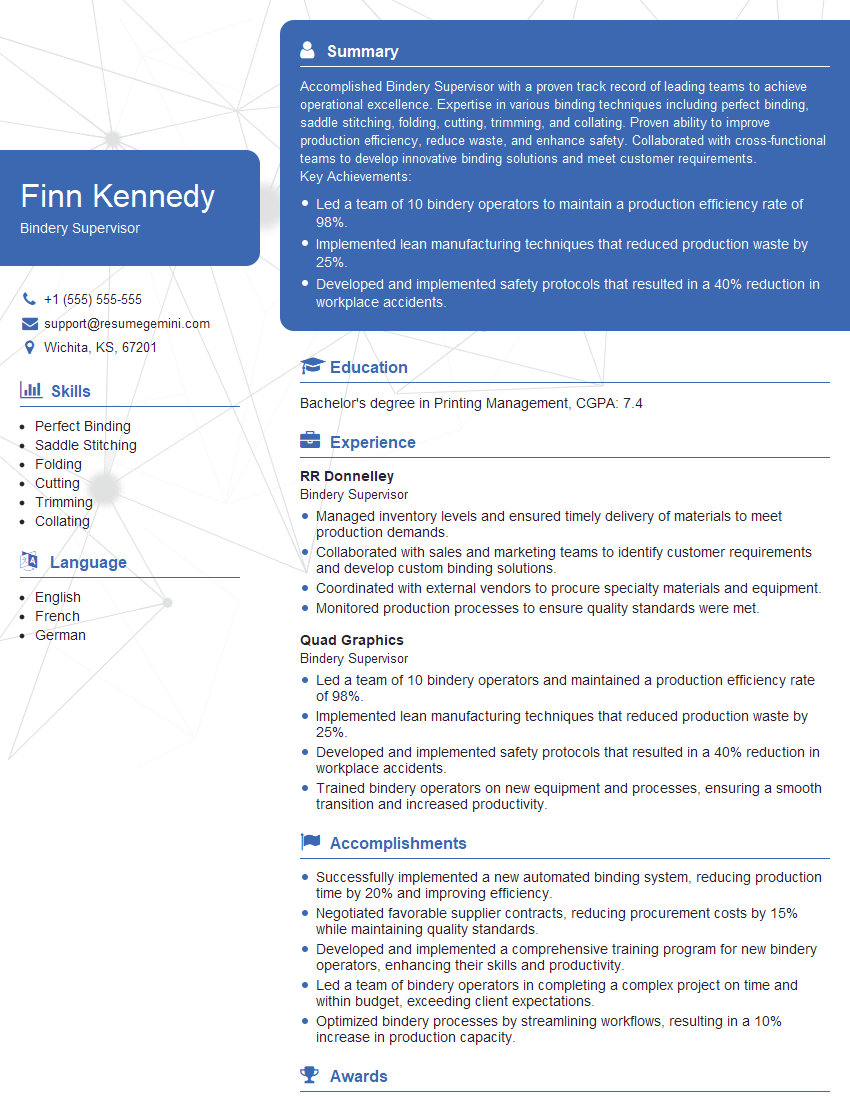
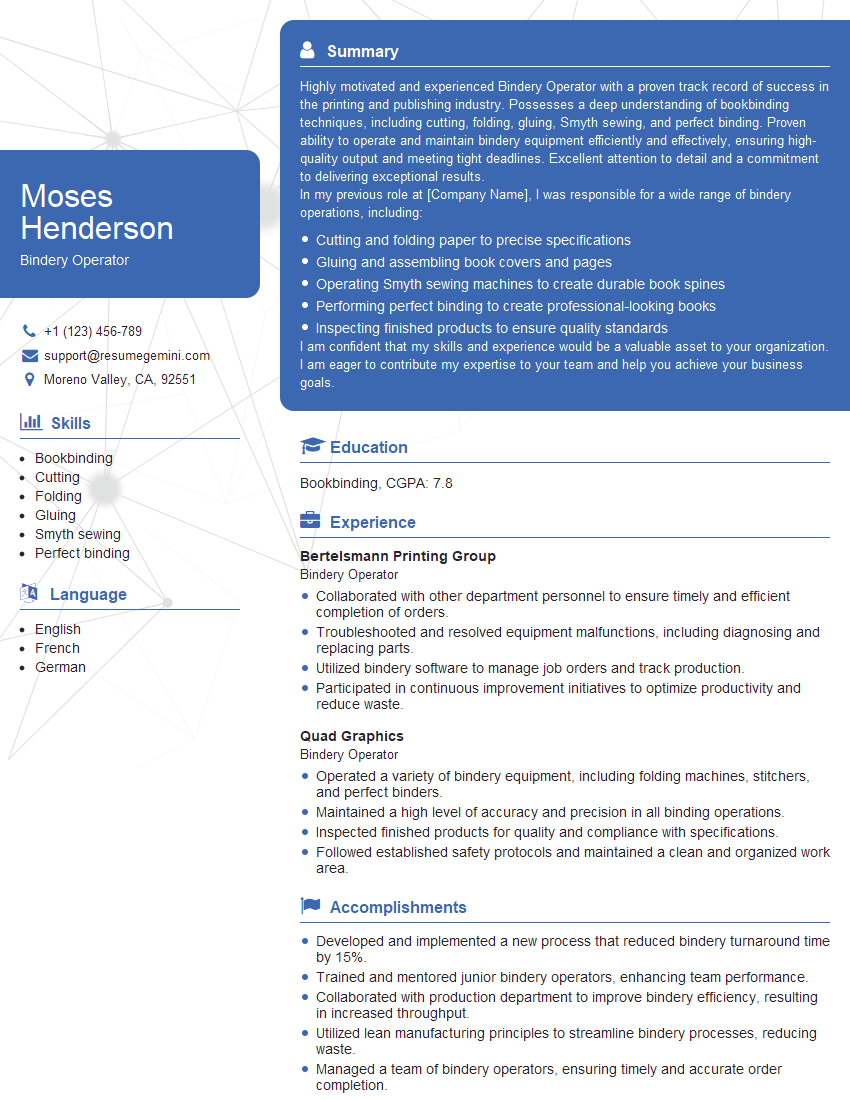
Mastering Machine Binding opens doors to exciting opportunities in the printing and publishing industries. A strong understanding of these techniques positions you for advancement and higher earning potential. To maximize your job prospects, invest time in creating an ATS-friendly resume that highlights your skills and experience effectively. ResumeGemini is a trusted resource to help you build a professional and impactful resume. We offer examples of resumes tailored to the Machine Binding field to help guide you. Take the next step towards your dream career – build your best resume today!
Explore more articles
Users Rating of Our Blogs
Share Your Experience
We value your feedback! Please rate our content and share your thoughts (optional).
What Readers Say About Our Blog
Very informative content, great job.
good