Interviews are opportunities to demonstrate your expertise, and this guide is here to help you shine. Explore the essential Machine Operation (e.g., saws, grinders) interview questions that employers frequently ask, paired with strategies for crafting responses that set you apart from the competition.
Questions Asked in Machine Operation (e.g., saws, grinders) Interview
Q 1. Explain the safety procedures for operating a band saw.
Operating a band saw safely requires a multi-faceted approach, prioritizing both personal protection and machine maintenance. Before even turning the machine on, a thorough inspection is crucial. This involves checking the blade for any damage – cracks, chips, or dullness are major safety hazards. Ensure the blade is correctly tensioned and tracking properly; a misaligned blade can easily bind and cause kickback, potentially injuring the operator. Next, check the blade guards are in place and functioning correctly. They are not optional! These guards are designed to minimize exposure to the moving blade.
Always wear appropriate safety gear: safety glasses (or a face shield for added protection), hearing protection (the saw can be surprisingly loud), and cut-resistant gloves. Never wear loose clothing or jewelry, as these can get caught in the moving parts. Secure your hair if it’s long. Before starting a cut, firmly clamp the workpiece to the table, preventing movement during operation. Feed the wood slowly and steadily; forcing the material can lead to binding and kickback. Keep your fingers well clear of the blade at all times, and never reach across the blade while it’s running. When finished, turn the machine off and allow it to come to a complete stop before attempting any adjustments or cleaning.
Imagine trying to cut a piece of soft wood and a piece of hard wood. For the soft wood, a slow, steady feed is ideal, avoiding excessive force. However, if you approach a section of hard wood the same way, a sudden bind and forceful kickback could result. Being sensitive to the wood type and adjusting accordingly is key.
Q 2. Describe the different types of grinding wheels and their applications.
Grinding wheels are classified by their abrasive material (e.g., aluminum oxide, silicon carbide), bond type (how the abrasive is held together), and grain size (determining the level of surface finish). Different applications demand specific wheel types.
- Aluminum Oxide Wheels: These are versatile and commonly used for grinding steel and other metals. They offer a good balance of cutting ability and durability. For instance, you’d use an aluminum oxide wheel to sharpen a metal drill bit or deburr a metal casting.
- Silicon Carbide Wheels: Ideal for grinding harder materials such as stone, ceramics, and some non-ferrous metals, silicon carbide wheels are known for their sharp cutting action. You might use a silicon carbide wheel to sharpen a masonry chisel or grind a ceramic component.
- Resinoid Wheels: These are used for cutting, shaping and grinding of a variety of materials where a cleaner finish is needed. These are particularly useful for intricate work.
- Vitrified Wheels: These are durable grinding wheels offering high performance and accurate dimensions, commonly used in industrial processes.
Choosing the wrong wheel for the job can be extremely dangerous. Using a silicon carbide wheel on steel will likely damage or destroy the wheel. The correct wheel selection should always be determined by the material and the specific task at hand. Always consult the manufacturer’s guidelines and safety data sheets.
Q 3. How do you ensure the accuracy of cuts on a CNC milling machine?
Accuracy on a CNC milling machine hinges on several factors, starting with proper machine calibration and setup. This includes verifying the machine’s coordinate system, ensuring the workpiece is securely clamped and accurately positioned relative to the machine’s zero point, and checking the tool length compensation. The accuracy of the CNC program itself is paramount; programming errors directly translate into inaccurate cuts. Therefore, meticulous CAM (Computer-Aided Manufacturing) programming and thorough simulation before executing the program are vital. The quality of the cutting tools is another critical element; dull or damaged cutters will produce inaccurate and rough surfaces.
Regular machine maintenance, including lubrication of moving parts and periodic calibration checks, is critical for maintaining accuracy over time. Finally, environmental factors such as temperature fluctuations can affect the machine’s accuracy. Maintaining a stable and controlled environment can improve precision. Imagine creating a precise mold; any slight deviation from the programming can ruin the entire project. The tighter the tolerances, the more critical each step becomes.
Q 4. What are the common causes of machine malfunctions and how do you troubleshoot them?
Machine malfunctions can stem from various sources, broadly categorized as mechanical, electrical, or software issues. Mechanical problems include worn-out bearings, loose or broken parts, or improper lubrication. Electrical issues might involve faulty wiring, motor problems, or power supply problems. Software glitches, if applicable to the machine, can cause inaccurate movements or unexpected stops.
Troubleshooting begins with a systematic approach: First, carefully assess the problem, noting the exact symptoms and when they occurred. For instance, does the machine make unusual noises? Does it stall? Does it fail to respond to controls? Then, check for obvious issues, like loose connections or frayed wires, checking safety interlocks and emergency stops. If the problem is mechanical, a visual inspection and possibly a test run with minimal load might pinpoint the fault. Electrical problems might require the use of a multimeter to check voltages and currents. Software issues would likely need review of the program and logs to debug the fault. If the problem persists after these steps, consulting the machine’s manual or contacting a qualified technician is essential. Ignoring minor issues can often lead to catastrophic machine failure, posing significant safety and productivity risks. Remember, a quick fix may just mask a more serious issue.
Q 5. How do you maintain and clean different types of cutting tools?
Maintaining cutting tools is essential for extending their lifespan and ensuring consistent performance. The cleaning and maintenance process depends heavily on the type of cutting tool and the material being cut.
- Cleaning: After each use, remove chips and debris from the tool using brushes, compressed air, or appropriate solvents. Avoid harsh chemicals that may damage the tool’s surface.
- Sharpening: Regular sharpening is crucial for maintaining cutting edge sharpness. The sharpening method varies depending on the tool; some tools require specialized grinders or sharpening stones, others benefit from honing.
- Lubrication: For some cutting tools, applying appropriate lubricant (like cutting fluid) during operation can extend their life and improve performance. This is particularly important for high-speed or high-temperature operations.
- Storage: Store cutting tools in a clean, dry environment, preferably in a protective case or rack, to prevent damage or corrosion.
Imagine a chef’s knife. A dull knife is dangerous and inefficient. Similarly, a dull cutting tool on a machine is more likely to cause issues and ultimately damage the material being processed. Regular maintenance not only increases safety but also dramatically improves the quality of the finished product and significantly reduces the amount of waste material.
Q 6. Describe your experience with different types of saw blades and their uses.
Saw blades come in a variety of types, each suited to different materials and cutting applications.
- Circular Saw Blades: These are used in circular saws for ripping (cutting with the grain) and crosscutting (cutting against the grain). Different tooth configurations (e.g., number of teeth, tooth shape, and set) are optimized for specific materials – fine teeth for precision cuts in softer wood, and coarser teeth for rougher cuts in hardwoods. Certain blades are designed for metal cutting.
- Band Saw Blades: These continuous loops of thin steel with teeth are used in band saws for intricate curves and straight cuts. The blade’s width, tooth size, and material (high-speed steel, bi-metal) are selected based on material thickness and the desired cut quality.
- Jigsaw Blades: Used in jigsaws for intricate cuts in wood, metal, and plastics, they come in various materials, shapes, and tooth designs depending on the application. For example, a wood-cutting blade has a larger, coarser tooth than a metal-cutting blade.
Choosing the correct blade for the job is crucial for both safety and performance. Using the wrong blade can lead to damage to the blade, the material being cut, or even injury to the operator. Think about cutting plywood with a blade intended for metal – a complete disaster. The right blade ensures clean, efficient cuts every time.
Q 7. Explain the importance of proper lubrication in machine operation.
Proper lubrication is vital in machine operation for several reasons. First, it reduces friction between moving parts, minimizing wear and tear and extending the lifespan of the machine’s components. Reduced friction also leads to less heat generation, preventing overheating and potential damage. Lubrication also helps to protect parts from corrosion and keeps them clean. This is particularly important in machines dealing with metal shavings or other abrasive materials.
The type of lubricant used will depend on the specific machine and its components, considering factors such as operating speed and temperature. Using the incorrect lubricant can have adverse effects, such as gumming up moving parts or providing insufficient lubrication. For example, applying grease where an oil is required can lead to the seizing of components. Regular lubrication schedules and procedures, as outlined in the machine’s manual, should be followed diligently. Think of it like lubricating your car’s engine; without proper lubrication, the engine would quickly seize. The same principle applies to industrial machinery.
Q 8. How do you interpret engineering drawings and blueprints related to machine operation?
Interpreting engineering drawings and blueprints is fundamental to safe and efficient machine operation. It’s like reading a recipe for a complex machine part. The drawings provide a visual representation of the dimensions, tolerances, materials, and assembly instructions. I start by understanding the drawing’s scale and identifying the views (top, front, side). I then meticulously examine the dimensions, noting tolerances (the acceptable range of variation from the specified dimension), and surface finishes. For example, a dimension might be specified as 10.000 +/- 0.005 mm, indicating the acceptable range is between 9.995 mm and 10.005 mm. This information dictates the precision required during machining. I also carefully study any notes, symbols, or special instructions, like the type of material (e.g., aluminum alloy 6061), surface treatments (e.g., anodizing), or heat treatments. Finally, I review the assembly drawings to understand how the part fits within the larger machine assembly. I’ve used this process numerous times, from interpreting blueprints for simple jigs to complex CNC machining programs.
For example, when working on a milling machine, I’d use the drawing to determine the exact coordinates for each cut, ensuring accuracy and preventing errors that could damage the workpiece or the machine.
Q 9. What are the safety precautions when using abrasive grinding wheels?
Safety is paramount when using abrasive grinding wheels. Think of it like handling a very powerful, fast-spinning cutting tool; even a small mistake can have serious consequences. Before operation, I always inspect the wheel for cracks, chips, or damage. Any defects necessitate immediate replacement. I ensure the wheel is correctly mounted on the machine, securely fastened, and the correct speed is selected based on the wheel’s specifications (this information is usually marked on the wheel itself). Safety guards should always be in place and functioning correctly. I wear appropriate personal protective equipment (PPE), including safety glasses (ideally a face shield), hearing protection, and a respirator to prevent dust inhalation, especially with materials like asbestos or certain metals. Never wear loose clothing or jewelry that could get caught in the machine. The workpiece should be firmly secured to avoid kickback, which can cause serious injury. Finally, I always use a steady and controlled approach, avoiding excessive force, and never reach across the wheel while it’s spinning. Regular maintenance of the grinder, checking for things like wheel alignment and wear, is essential. A poorly maintained grinder is a safety hazard.
Q 10. Describe your experience with different types of grinding machines (e.g., surface grinder, cylindrical grinder).
My experience encompasses a range of grinding machines. I’ve extensively used surface grinders for achieving precise flatness and surface finishes on workpieces. This involves setting up the workpiece on the magnetic chuck, selecting the correct grinding wheel based on the material and desired finish, and carefully controlling the feed rate and depth of cut to avoid burns and maintain accuracy. I’ve worked with various cylindrical grinders as well, from centerless grinders for high-volume production to external cylindrical grinders for precise diameters. The setup for cylindrical grinding demands a keen understanding of wheel dressing and truing processes to ensure the finished product meets the required tolerance. I’ve also had experience with internal grinders, which require even more precision and patience given the confined space and the need to achieve accurate internal diameters.
For instance, on one project, using a surface grinder, I had to finish a steel plate to within 0.001 mm of flatness – a testament to the precision these machines offer when operated correctly.
Q 11. How do you ensure the quality and precision of your work?
Ensuring quality and precision is a continuous process. It begins with understanding the specifications and tolerances required for the workpiece. Then, it’s about meticulous preparation – selecting the right tools, setting up the machine precisely, and carefully planning the process. I use various methods to check the progress during machining. This includes using dial indicators to check alignment, micrometers to measure dimensions, and surface finish gauges to verify surface quality. Regular calibration of measuring instruments is critical to maintain accuracy. After completion, a thorough final inspection is performed using precision measuring instruments to ensure that all tolerances have been met. Documentation plays a crucial role as well. I always maintain records of the machine settings, measuring results, and any issues encountered during the process. This ensures that the quality of my work remains consistent and traceable. I see quality control not as an afterthought but as an integral part of the entire workflow. Think of it as building a house – you wouldn’t skip measuring the foundation and framing, right? It’s the same principle in machining.
Q 12. Describe your experience with using measuring instruments (e.g., calipers, micrometers).
I’m proficient in using various measuring instruments, including calipers, micrometers, dial indicators, and height gauges. Calipers are used for quick measurements of external and internal dimensions, while micrometers provide a higher level of precision for smaller and more critical dimensions. Dial indicators are essential for checking alignment and surface flatness, while height gauges are used for precise vertical measurements. Understanding how to use these tools properly and interpret their readings is essential. For example, understanding the vernier scale on a caliper, or the thimble reading on a micrometer, is crucial for accurate measurements. Regular calibration and maintenance of these instruments are critical to maintain accuracy and prevent errors. Misreading a micrometer by even a few thousandths of an inch can lead to a significant error in the final product, especially in aerospace or automotive applications where tolerances are exceptionally tight. Regular calibration ensures that the tools we rely on are providing correct results.
Q 13. What is your experience with different types of cutting fluids?
Cutting fluids, or coolants, play a vital role in machining operations. They serve multiple purposes, including lubrication to reduce friction and heat generation, cooling to prevent overheating and workpiece damage, and chip evacuation to keep the cutting area clear. I’ve worked with various types, including soluble oils (water-miscible), synthetic fluids, and straight oils. The choice of cutting fluid depends on the material being machined, the type of operation (milling, turning, grinding), and the machine itself. Soluble oils are commonly used in many operations due to their cost-effectiveness and good performance. Synthetic fluids offer better performance in certain applications, like high-speed machining, but are generally more expensive. Straight oils are primarily used for specific applications. Selecting the wrong cutting fluid can lead to poor surface finish, tool wear, and even damage to the machine or the workpiece. Understanding the properties and limitations of different cutting fluids is crucial for achieving optimal results and ensuring machine longevity.
Q 14. How do you handle material handling and storage procedures?
Material handling and storage procedures are critical for safety and efficiency. I follow strict procedures to prevent accidents and damage to materials. This includes using appropriate material handling equipment (forklifts, hand trucks, cranes) based on the weight and size of the materials. Materials are always handled carefully to prevent damage or injury. Storage areas are kept organized and clean, with materials stored correctly according to their type and weight to prevent collapse or damage. Proper labeling is essential to identify materials and prevent mix-ups. For example, heavy materials are placed lower, and lighter materials are placed on top, preventing accidents and maximizing storage space. Flammable or hazardous materials are stored in designated areas according to safety regulations, with appropriate signage and safety precautions in place. Regular inspections of the storage areas are conducted to ensure that materials are stored correctly and that there are no potential hazards.
Q 15. Explain your experience with preventative maintenance on machines.
Preventative maintenance is crucial for maximizing machine lifespan and minimizing downtime. It’s about proactively identifying and addressing potential issues before they lead to costly repairs or production halts. My approach involves a multi-pronged strategy.
- Scheduled Inspections: I meticulously follow manufacturer-recommended schedules for lubrication, cleaning, and component checks. This includes visual inspections for wear and tear, checking fluid levels, and tightening loose bolts.
- Lubrication: Proper lubrication is vital. I use the correct type and amount of lubricant for each machine component, following manufacturer specifications. Incorrect lubrication can lead to premature wear and failure.
- Cleaning: Regular cleaning removes debris and contaminants that can interfere with machine operation and cause damage. This is especially crucial for machines working with metal shavings or dust.
- Record Keeping: Maintaining detailed records of all maintenance activities is essential. This helps track the machine’s history, identify trends, and predict future maintenance needs. I use both digital and physical logs to document everything.
For example, while working with a CNC milling machine, I discovered a slight misalignment in the spindle during a routine inspection. Addressing this minor issue early prevented significant damage to the cutting tools and the workpiece itself. Early detection saved the company thousands of dollars in potential repairs and lost production.
Career Expert Tips:
- Ace those interviews! Prepare effectively by reviewing the Top 50 Most Common Interview Questions on ResumeGemini.
- Navigate your job search with confidence! Explore a wide range of Career Tips on ResumeGemini. Learn about common challenges and recommendations to overcome them.
- Craft the perfect resume! Master the Art of Resume Writing with ResumeGemini’s guide. Showcase your unique qualifications and achievements effectively.
- Don’t miss out on holiday savings! Build your dream resume with ResumeGemini’s ATS optimized templates.
Q 16. Describe your experience working with different types of materials (e.g., steel, aluminum, wood).
My experience encompasses a wide range of materials, each demanding specific machining techniques and safety precautions.
- Steel: Working with steel requires robust cutting tools and appropriate cutting parameters to prevent tool breakage and ensure a smooth finish. I’m adept at selecting the right cutting fluids and speeds for different grades of steel.
- Aluminum: Aluminum is softer than steel, but it’s prone to work hardening, requiring careful tool selection and feed rates. I’m familiar with the techniques to avoid surface imperfections.
- Wood: Machining wood demands different tools and strategies. Understanding the grain direction is essential to prevent tear-out and ensure clean cuts. I’m experienced with various woodworking machinery, including lathes, planers, and routers.
In one project, I was required to machine both steel and aluminum components for a single assembly. This involved understanding the material properties and adjusting the machine settings accordingly, ensuring precision and quality in both components. I can seamlessly transition between these diverse materials and adapt my approach as required.
Q 17. How do you identify and address machine vibrations?
Machine vibrations can indicate several problems, from simple imbalance to serious mechanical issues. Identifying the source requires a systematic approach.
- Visual Inspection: Look for loose components, worn bearings, or misalignment.
- Sound Analysis: Listen carefully to the machine’s operating sound. Unusual noises, such as grinding or squealing, often pinpoint the problem area.
- Vibration Measurement: Using a vibration meter, I can precisely measure the amplitude and frequency of the vibrations. This data helps pinpoint the source and severity of the problem.
Addressing vibrations involves fixing the root cause. This might involve balancing rotating components, replacing worn bearings, tightening loose bolts, or correcting misalignment. For instance, I once identified excessive vibration in a lathe caused by a worn bearing. Replacing the bearing immediately resolved the issue and prevented further damage.
Q 18. What is your understanding of different types of machine guarding?
Machine guarding is critical for operator safety. Different types of guards are used depending on the specific hazard.
- Fixed Guards: These are permanently attached to the machine and offer the highest level of protection. Examples include full enclosure guards for dangerous rotating parts.
- Interlocked Guards: These guards prevent the machine from operating unless the guard is securely in place. The interlock mechanism ensures the machine stops if the guard is opened.
- Adjustable Guards: These guards can be adjusted to accommodate different workpiece sizes, but they must still provide adequate protection.
- Presence-sensing Devices: These devices use sensors to detect the presence of an operator’s hand or body near hazardous areas. The machine automatically stops if a hazard is detected.
Understanding the different types of guarding and selecting the appropriate guard for each machine is crucial. I’m proficient in implementing and maintaining safety guarding systems in accordance with OSHA and industry best practices.
Q 19. How familiar are you with different types of machine controls (e.g., PLC, HMI)?
I have significant experience working with various machine controls, including PLCs (Programmable Logic Controllers) and HMIs (Human-Machine Interfaces).
- PLCs: I understand PLC programming languages like ladder logic and can troubleshoot PLC programs to identify and rectify malfunctions. I’m comfortable reading and modifying existing programs and creating new ones as needed.
- HMIs: I can configure and operate HMIs to monitor machine parameters and control machine functions. I know how to create user-friendly interfaces that provide clear information to operators.
For example, I once used an HMI to diagnose a problem with a production line. The HMI showed an error code that pointed to a faulty sensor. Replacing the sensor quickly restored production. My ability to work with these control systems allows me to quickly identify and address complex issues.
Q 20. Describe a time you had to fix a machine malfunction independently.
During a night shift, the main production grinder unexpectedly stopped working. The initial diagnostics showed an error code related to the hydraulic system. Our maintenance team was unavailable until the morning.
I systematically examined the hydraulic system, checking fluid levels, pressure, and connections. I discovered a leak in a hydraulic line. Using the spare parts available, I carefully replaced the damaged section of the line. After bleeding the system and performing a few more checks, I managed to restart the grinder. My swift independent action avoided significant delays and costly downtime. This demonstrated not only my troubleshooting skills but also my resourcefulness and problem-solving abilities under pressure.
Q 21. How do you calculate cutting speeds and feeds for different materials?
Calculating cutting speeds and feeds is crucial for efficient and safe machining. The calculation depends on the material being machined, the cutting tool, and the desired surface finish. There are established formulas, but experience plays a key role in optimizing the parameters.
A common formula for cutting speed (V) is: V = (πDN)/60, where D is the diameter of the workpiece and N is the rotational speed in RPM. Feed rate (f) is usually expressed in mm/rev or inches/rev. Selecting the appropriate values requires considering the material’s machinability, the tool’s geometry, and the desired surface finish.
For example, when machining harder materials like high-speed steel, I’d use lower cutting speeds and feeds to prevent tool wear. For softer materials like aluminum, I can use higher speeds and feeds to increase productivity. Ultimately, experience and consultation of the manufacturer’s recommendations are crucial for optimal results and machine longevity.
Q 22. Explain your experience with using different types of tooling.
My experience with tooling spans a wide range, from basic hand tools to sophisticated CNC machine tooling. I’m proficient with various types of saw blades, including circular saw blades for cutting wood and metal, band saw blades for intricate cuts, and jigsaw blades for precision work. With grinders, I’ve worked extensively with both bench grinders for sharpening and deburring and angle grinders for material removal and surface finishing. I understand the importance of selecting the right tool for the job, considering factors like material properties, desired finish, and the required precision. For example, using a coarse-grit grinding wheel on a delicate piece would lead to damage, whereas a fine-grit wheel is ideal for polishing. Similarly, selecting the correct tooth count and type of saw blade dramatically affects cutting speed and finish.
- Circular Saws: Experience with various blade types (carbide-tipped, high-speed steel) for different materials (wood, metal, plastics).
- Band Saws: Proficient in blade changes and tension adjustments for precise, intricate cuts.
- Jigsaws: Skilled in using various blades for curves and intricate shapes.
- Grinders (Bench and Angle): Experienced in using various grinding wheels and attachments for sharpening, deburring, and surface finishing.
Q 23. How do you maintain proper ergonomics while operating machinery?
Maintaining proper ergonomics is crucial to prevent injuries and ensure consistent performance. It’s about working *smart*, not just *hard*. I always start by setting up the machine correctly, ensuring everything is within easy reach. This reduces strain and awkward postures. For example, I adjust the height of my workbench to avoid excessive bending or reaching. I also take regular breaks to stretch and move around, preventing muscle fatigue. While operating machinery, I keep my body aligned, avoid twisting motions, and use my body weight effectively. Using appropriate safety equipment like anti-vibration gloves when using power tools helps reduce repetitive strain injuries. I’ve found that paying close attention to these details dramatically reduces discomfort and increases productivity.
- Proper posture: Maintaining a neutral spine and avoiding prolonged awkward positions.
- Regular breaks: Taking short breaks to stretch and relieve muscle tension.
- Equipment adjustments: Adjusting the machine height and position for optimal comfort.
- Proper lifting techniques: Using my legs and avoiding twisting when handling heavy materials.
- Protective gear: Wearing appropriate safety equipment such as gloves and eye protection.
Q 24. Describe your understanding of different types of machine setup procedures.
Machine setup procedures vary depending on the specific machine, but there are common principles. It always starts with a thorough safety check, ensuring all guards are in place and the machine is properly grounded. Then comes the alignment and calibration phase, involving precision measurements to ensure the machine is ready to produce accurate parts. For instance, setting up a milling machine involves precise alignment of the workpiece, checking the zero points, and setting the spindle speed and feed rate according to the material and desired finish. Incorrect setup leads to inaccurate parts or even machine damage. I meticulously follow the manufacturer’s instructions and use measuring tools such as calipers, micrometers, and dial indicators to ensure precise alignment.
- Safety checks: Inspecting all safety guards and ensuring proper grounding.
- Alignment and calibration: Using measuring tools to ensure precise alignment and setup.
- Tooling selection: Choosing the appropriate tooling for the material and the operation.
- Workpiece setup: Securely clamping or fixturing the workpiece in the machine.
- Test run: Performing a test run to verify the setup before starting full production.
Q 25. What is your experience with different types of quality control checks?
Quality control is a critical part of my workflow. It begins with visual inspection of the raw material to ensure it meets the specifications. During the machining process, I regularly check the dimensions of the workpiece using various measuring instruments to identify any deviations. I also perform functional checks where applicable, ensuring the finished part functions as intended. For example, when machining a gear, I’d check the tooth profile and spacing for accuracy. Statistical Process Control (SPC) charts are used to track key measurements over time and to identify trends. Any out-of-spec parts are immediately flagged and investigated to determine the root cause, ensuring corrective actions are taken. Documentation is key—I meticulously record all measurements and inspections.
- Visual inspection: Checking for surface defects, cracks, or other imperfections.
- Dimensional measurements: Using measuring tools (calipers, micrometers) to verify dimensions.
- Functional testing: Testing the finished part to ensure it functions correctly.
- Statistical Process Control (SPC): Using SPC charts to monitor process performance and identify trends.
- Documentation: Maintaining detailed records of all inspections and measurements.
Q 26. How do you ensure the accuracy of measurements while operating a machine?
Accuracy of measurements is paramount. I use a variety of precision instruments, such as dial calipers, micrometers, and digital indicators. Regular calibration of these tools is crucial to ensure their accuracy. I also understand the importance of proper measuring techniques, avoiding parallax errors and using the right tool for the specific task. For instance, a micrometer offers higher precision than a caliper for smaller dimensions. It’s not just about the tools; it’s also about attention to detail. Repeated measurements and comparisons help identify and correct any potential errors. For critical dimensions, I use multiple tools and compare measurements to validate accuracy. Understanding the limitations of each measuring tool and choosing the most appropriate one is essential.
- Precision measuring instruments: Using dial calipers, micrometers, and digital indicators.
- Proper measuring techniques: Avoiding parallax errors and using appropriate measuring techniques.
- Regular calibration: Regularly calibrating measuring instruments to ensure accuracy.
- Multiple measurements: Taking multiple measurements to verify accuracy and identify potential errors.
- Tool selection: Choosing the correct measuring tool for the specific task.
Q 27. Explain your experience with working in a team environment within a machine operation setting.
Teamwork is essential in a machine operation setting. In my previous roles, I’ve collaborated with machinists, engineers, and quality control personnel. Effective communication is key—we regularly discuss project requirements, potential challenges, and solutions. I value the expertise of others and actively participate in brainstorming sessions to improve efficiency and solve problems. For instance, when dealing with a complex project, I’ve collaborated with engineers to optimize the machining process, reducing lead times and improving part quality. I’m comfortable providing guidance and support to less experienced team members, sharing my knowledge and skills. This collaborative approach fosters a positive work environment, leading to higher quality products and improved team morale.
- Communication: Effective communication with team members to share information and ideas.
- Collaboration: Working effectively with others to achieve common goals.
- Mentorship: Providing guidance and support to less experienced team members.
- Problem-solving: Working collaboratively to identify and solve problems.
- Respectful teamwork: Working respectfully with all team members, valuing diverse perspectives.
Q 28. What are your strategies for continuous improvement in your machine operation skills?
Continuous improvement is vital in this field. I actively seek opportunities to enhance my skills through various avenues. This includes attending workshops and training courses on new technologies and machining techniques. I also stay updated on industry best practices and new tooling advancements by reading trade publications and attending industry conferences. Critically analyzing my own work, identifying areas for improvement, and adopting best practices help refine my skills. I’m also keen on exploring lean manufacturing principles, which focus on eliminating waste and optimizing processes. It’s an ongoing process, and I continuously evaluate my performance, looking for ways to improve accuracy, efficiency, and safety.
- Training and development: Attending workshops and training courses on new technologies and techniques.
- Industry best practices: Staying updated on industry best practices through reading trade publications and attending conferences.
- Self-assessment and improvement: Regularly assessing my own work and identifying areas for improvement.
- Lean manufacturing principles: Applying lean manufacturing principles to optimize processes and reduce waste.
- Knowledge sharing: Sharing knowledge and best practices with other team members.
Key Topics to Learn for Machine Operation (e.g., saws, grinders) Interview
- Safety Procedures and Regulations: Understanding and adhering to all safety protocols, including lockout/tagout procedures, personal protective equipment (PPE) usage, and emergency response plans. This demonstrates responsibility and commitment to a safe work environment.
- Machine Operation Fundamentals: Grasping the basic principles of operation for various machines (saws, grinders, etc.), including starting, stopping, adjusting settings, and performing routine maintenance. Practical experience and the ability to explain your process are crucial.
- Material Selection and Handling: Knowing which materials are appropriate for different machines and techniques for safely handling and loading materials. Demonstrate your understanding of material properties and their impact on the machining process.
- Quality Control and Inspection: Understanding the importance of quality control, including techniques for inspecting finished products for defects and ensuring adherence to specifications. Showcasing your attention to detail is essential.
- Troubleshooting and Problem-Solving: Ability to identify and diagnose common machine malfunctions, perform basic repairs, and implement preventative maintenance strategies. Highlight your problem-solving skills and ability to think critically under pressure.
- Blueprint Reading and Interpretation: Understanding technical drawings and specifications to accurately set up and operate machines. This shows your ability to follow instructions precisely.
- Measurement and Tool Usage: Proficiency in using various measuring instruments (calipers, micrometers) and hand tools relevant to machine operation. Demonstrate your precision and accuracy.
Next Steps
Mastering machine operation skills opens doors to rewarding careers with excellent growth potential. Proficiency in operating saws, grinders, and other machinery is highly sought after in many industries, offering opportunities for advancement and increased earning potential. To significantly boost your job prospects, create an ATS-friendly resume that highlights your skills and experience effectively. ResumeGemini is a trusted resource that can help you build a professional resume that grabs the attention of recruiters. We provide examples of resumes tailored to Machine Operation roles, showcasing how to best present your qualifications. Take the next step in your career journey – build a standout resume with ResumeGemini.

Manufacturing Technician Resume Sample

Machinist Resume Sample

Equipment Operator Resume Sample

Saw Operator Resume Sample
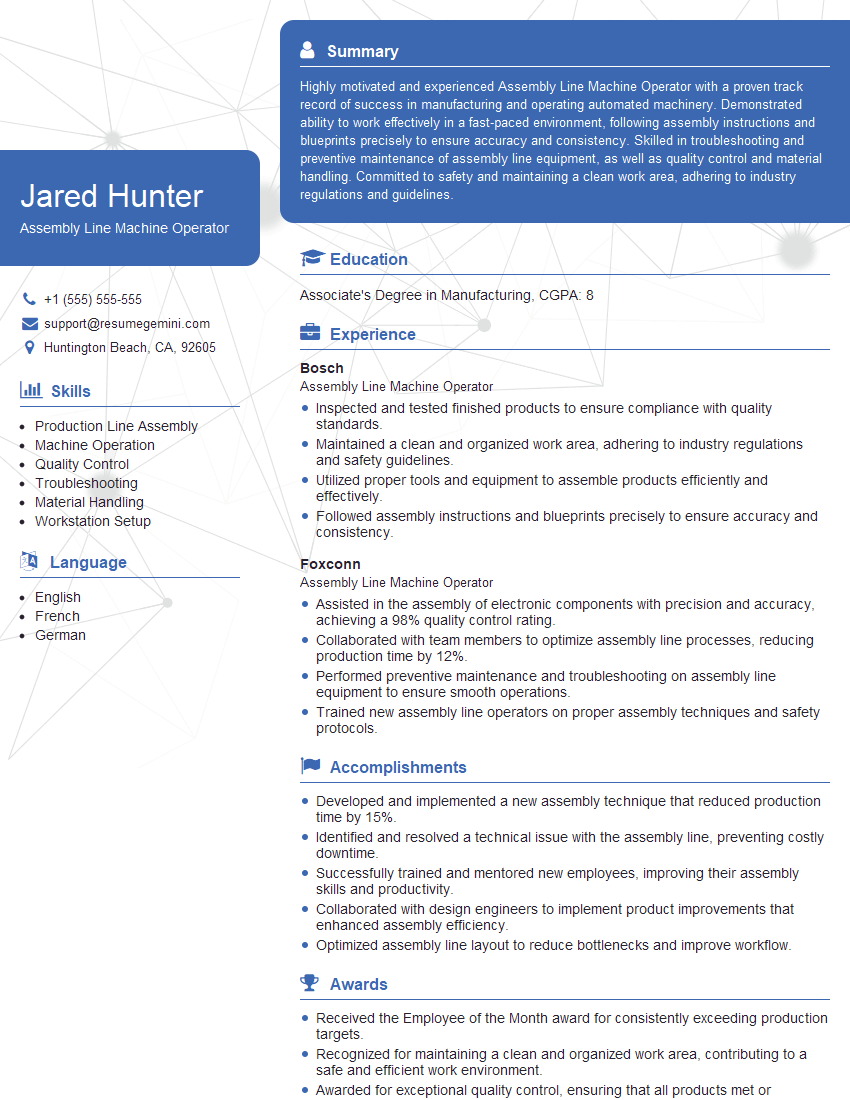
Assembly Line Machine Operator Resume Sample

Mill Operator Resume Sample
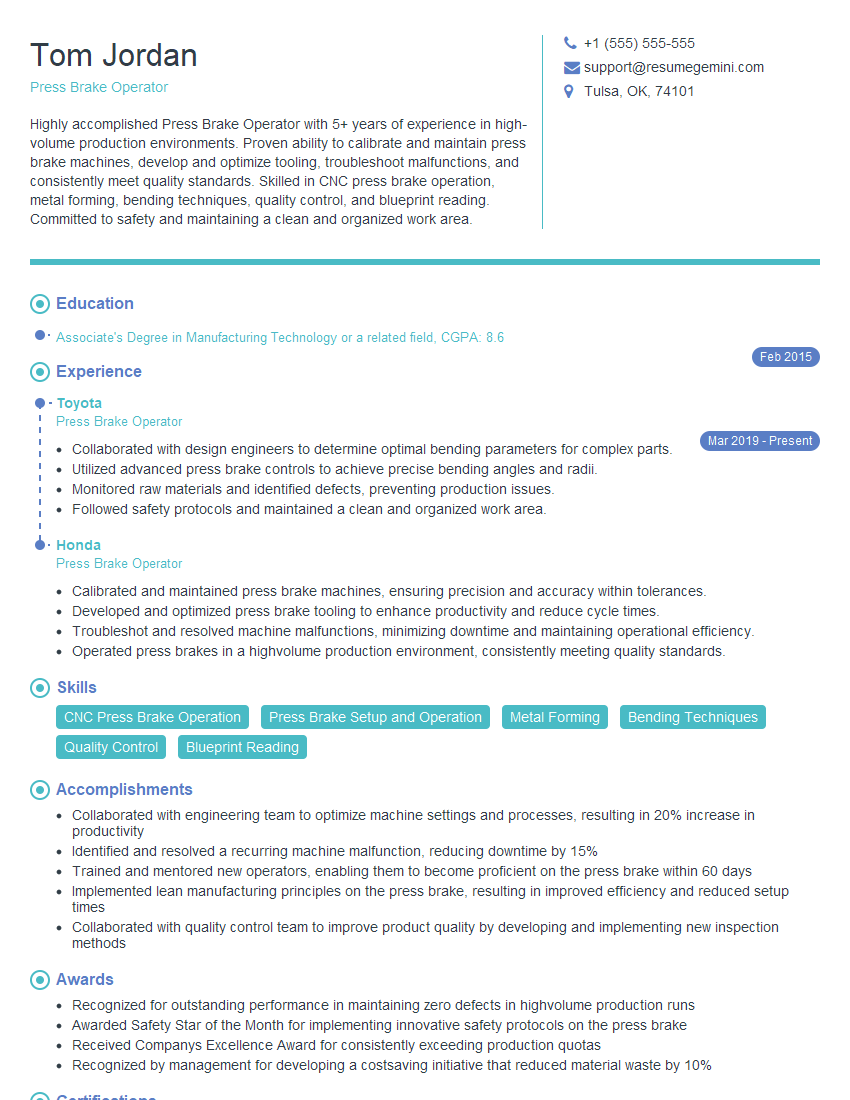
Press Brake Operator Resume Sample

Grinding Machine Operator Resume Sample

Lathe Operator Resume Sample

Precision Machinist Resume Sample

Tool and Die Maker Resume Sample

Welding Machine Operator Resume Sample
Explore more articles
Users Rating of Our Blogs
Share Your Experience
We value your feedback! Please rate our content and share your thoughts (optional).
What Readers Say About Our Blog
Very informative content, great job.
good