Are you ready to stand out in your next interview? Understanding and preparing for Magic Performance interview questions is a game-changer. In this blog, we’ve compiled key questions and expert advice to help you showcase your skills with confidence and precision. Let’s get started on your journey to acing the interview.
Questions Asked in Magic Performance Interview
Q 1. Describe your experience performing close-up magic.
Close-up magic is my bread and butter. It’s about intimacy and creating a truly memorable experience for each spectator, often one-on-one. My experience spans over 15 years, performing at corporate events, private parties, restaurants, and even street festivals. I’ve honed my skills to seamlessly blend deception with engaging storytelling, creating an atmosphere of wonder and shared disbelief. For example, during a recent corporate event, I performed a card trick where a spectator’s chosen card seemingly materialized inside a sealed lemon. The close proximity and personal interaction amplified the astonishment, making it a highlight of the evening.
I’ve learned to adapt my performance style to different personalities and settings. A boisterous group may require a more energetic, participatory approach, while a more reserved audience appreciates subtle nuances and understated wonder. This adaptability, learned through experience, is key to success in close-up magic.
Q 2. What are your preferred magic styles or genres?
My preferred magic styles blend several genres. I love the elegance and precision of card magic, the visual impact of coin magic, and the inherent mystery of mentalism. I often weave these together into a cohesive performance, surprising the audience with unexpected shifts in style and presentation. For instance, I might start with a classic card trick, then seamlessly transition into a seemingly unrelated mental feat, culminating in a final, visually stunning coin routine. This variety keeps the audience engaged and prevents the performance from becoming predictable.
Q 3. How do you adapt your performance to different audiences?
Adapting to different audiences is paramount. I assess the group’s age, size, and overall demeanor before the show begins. A children’s party requires a more playful, interactive style, filled with colorful props and easy-to-understand tricks. A corporate event, on the other hand, might benefit from a more sophisticated, slightly less participatory style, emphasizing elegance and precision. The language used and the level of humor are also adapted to suit the specific audience. I’ve learned that observation and flexibility are essential for tailoring the performance to resonate with each unique group.
Q 4. Explain your process for developing a new magic routine.
Developing a new routine is a multi-step process. It begins with the selection of a core effect—the central magical feat. Then, I craft a narrative that builds anticipation and context around the effect. This narrative often involves storytelling, audience interaction, and carefully chosen misdirection. The next step is meticulous rehearsal. I practice the routine repeatedly, refining the timing, movements, and phrasing until it flows smoothly and naturally. Finally, I test the routine on various audiences to assess its impact and make necessary adjustments. This iterative process, involving constant refinement and adaptation, is crucial for creating a polished and engaging routine.
Q 5. How do you handle technical difficulties during a performance?
Technical difficulties are inevitable, so preparedness is key. I always have backup props and plan for contingencies. For instance, if a card trick relies on specific cards, I might have several decks as backup. If a prop malfunctions, I’m prepared to seamlessly shift to a different routine. More importantly, I’ve learned to handle unexpected setbacks with grace and humor. Turning a minor mishap into a lighthearted anecdote can disarm the audience and maintain the overall atmosphere of wonder. The ability to think on your feet and improvise is a vital skill for any magician.
Q 6. Describe your experience with stage illusions.
My experience with stage illusions is limited, though I have assisted with the setup and operation of several larger-scale illusions. While my focus is primarily on close-up magic, I appreciate the engineering and theatrical aspects of stage illusions. The scale and grandeur require a very different skill set – a team, precise timing, and significant technical expertise. I find the collaboration aspect fascinating, and it’s certainly a field I’d like to explore further in the future, possibly through collaboration with established illusionists.
Q 7. What is your approach to audience interaction?
Audience interaction is the heart of my performances. I strive to create a conversational, engaging atmosphere. I select spectators carefully, making sure to involve individuals who seem enthusiastic and comfortable. My approach is less about forcing participation and more about gently guiding the audience into the magic. I use humor, storytelling, and carefully chosen words to create a sense of shared experience and wonder. This approach turns spectators into active participants, transforming the show into a collaborative journey of mystery and revelation.
Q 8. How do you market your magic services?
My marketing strategy is multifaceted, focusing on both online and offline presence. Online, I maintain a professional website showcasing my repertoire, client testimonials, and high-quality performance videos. I actively engage on social media platforms like Instagram and Facebook, sharing behind-the-scenes content, short magic clips, and interacting with potential clients. Offline, I network extensively within the event planning community, attending industry events and building relationships with wedding planners, corporate event organizers, and party hosts. I also utilize print marketing materials such as brochures and business cards distributed strategically at relevant venues. Crucially, I rely heavily on word-of-mouth referrals, as satisfied clients are my best advertising.
Q 9. What is your rate for a typical performance?
My rates vary depending on several factors: the length of the performance, the complexity of the show (involving larger illusions versus close-up magic), the location, and the date (peak seasons command higher rates). For a typical one-hour performance of close-up magic at a private event, my rate starts at $1500. For a larger stage show, the price naturally increases significantly, with a bespoke quote provided after a detailed discussion of the client’s needs and expectations. Travel expenses beyond a certain radius are also added to the final cost.
Q 10. How do you manage your props and equipment?
Maintaining my props and equipment is crucial to the success of my performances. I use a combination of hard and soft cases for transport and storage, ensuring delicate items are well-protected. Each prop has a designated storage location, and I maintain a detailed inventory list to track its condition and any required maintenance. Regular cleaning and inspection are key, and I perform routine checks after every performance. For specialized items needing repair, I have established relationships with trusted artisans and technicians who can handle complex restorations or modifications. I even have a dedicated ‘repair kit’ with common tools and supplies for on-the-spot fixes.
Q 11. Describe your experience working with other performers.
Collaborating with other performers has been a rewarding experience. I’ve worked with musicians, comedians, and other magicians on various occasions. Effective teamwork hinges on clear communication and mutual respect. Before any joint performance, we meticulously coordinate the flow of the show, ensuring seamless transitions between acts. This often involves careful scheduling of rehearsals and open discussions to address any potential conflicts or overlaps. For instance, in a recent corporate event, I partnered with a jazz trio, and we designed the event so that my magic acts complemented their musical interludes, creating a cohesive and engaging spectacle.
Q 12. How do you maintain the mystery and wonder of your magic?
Preserving the magic’s wonder is paramount. I achieve this by focusing on several key aspects: Firstly, I never reveal my secrets. My performances are designed to be engaging and surprising, leaving the audience captivated rather than dissecting the methods. Secondly, presentation is crucial; the atmosphere, my demeanor, and the storytelling woven into the act all contribute to the mystery. Finally, I constantly update my repertoire, introducing new illusions and techniques to keep my performances fresh and unexpected. This prevents predictability and ensures the audience maintains a sense of wonder and anticipation.
Q 13. What safety precautions do you take during your performances?
Safety is my top priority. Before each performance, I meticulously inspect all my props and equipment, ensuring everything is in perfect working order. I carefully consider the performance space, identifying and mitigating any potential hazards. For illusions involving fire or sharp objects, I employ strict safety protocols and even have designated assistants for handling sensitive equipment. I also have a comprehensive emergency plan in place, addressing potential scenarios such as power outages or medical emergencies. The safety of both myself and the audience always comes first.
Q 14. How do you handle hecklers or disruptive audience members?
Handling hecklers requires tact and a sense of humor. I usually attempt to incorporate their comments into the act, turning a potentially negative situation into a positive one. For example, if someone calls out a prediction, I might playfully acknowledge it and then reveal a surprising twist. My approach always prioritizes diffusing the tension with charm and wit, while maintaining control of the performance. In rare cases, if the heckling becomes disruptive or inappropriate, I’ll gently but firmly address it, sometimes with the help of event staff, to ensure the enjoyment of the rest of the audience.
Q 15. What is your experience with children’s magic shows?
I have extensive experience performing magic shows for children of all ages. My approach focuses on creating a fun, engaging, and interactive experience. I understand the importance of tailoring the performance to their attention spans and understanding. This means incorporating plenty of audience participation, vibrant colors, and age-appropriate humor. I frequently use classic tricks with a modern twist, adding elements of silliness and wonder to keep them captivated. For example, I might perform a disappearing handkerchief routine, but I’ll add a silly story about a mischievous bunny who loves to steal handkerchiefs. The key is to create a memorable and magical experience that leaves them wanting more.
I’ve performed at numerous birthday parties, school events, and community festivals, consistently receiving positive feedback from both children and parents. My experience has taught me how to manage a diverse group of children, keeping them engaged and excited throughout the entire performance.
Career Expert Tips:
- Ace those interviews! Prepare effectively by reviewing the Top 50 Most Common Interview Questions on ResumeGemini.
- Navigate your job search with confidence! Explore a wide range of Career Tips on ResumeGemini. Learn about common challenges and recommendations to overcome them.
- Craft the perfect resume! Master the Art of Resume Writing with ResumeGemini’s guide. Showcase your unique qualifications and achievements effectively.
- Don’t miss out on holiday savings! Build your dream resume with ResumeGemini’s ATS optimized templates.
Q 16. How do you incorporate storytelling into your routines?
Storytelling is integral to my magic performances. It’s not just about the tricks; it’s about creating a narrative that transports the audience to another world. I weave captivating tales around my routines, using the magic tricks as visual representations of the story’s progression. For instance, in a card trick, I might tell a story of a brave knight searching for a magical princess, with each card representing a different challenge he faces. The successful completion of the trick signifies the knight’s triumph, adding an emotional layer to the experience.
This approach makes the magic more relatable and memorable. Instead of simply showing a trick, I’m sharing a journey, allowing the audience to connect with the characters and the narrative emotionally. This storytelling technique works well with all age groups, adding depth and engagement to the performance.
Q 17. What is your experience with corporate events?
My experience with corporate events is extensive and encompasses a variety of settings, from product launches and trade shows to holiday parties and team-building exercises. I understand the importance of tailoring my performance to fit the specific goals and atmosphere of a corporate event. My performances aim to be professional, engaging, and memorable, helping create a positive and engaging experience for attendees. I’ve performed close-up magic for smaller, intimate gatherings and larger-scale illusions for larger audiences. I understand the nuances of corporate etiquette and can adapt my style to suit a formal or informal setting.
For example, in a product launch, I might incorporate the product into a magic trick, highlighting its features in a creative and memorable way. In a team-building exercise, I might use magic as a tool to foster collaboration and communication among participants. The ability to adapt my act for diverse corporate environments is a key strength.
Q 18. How do you customize your performances for specific events?
Customization is key to successful event magic. I always begin by discussing the specific needs and objectives of the event with the client. This includes understanding the target audience (age, interests, professional background), the event’s theme, and the desired atmosphere. Once I have a clear understanding of these aspects, I carefully select and tailor my routines accordingly.
For a children’s birthday party, the focus will be on fun, colorful tricks and audience participation, while a corporate event might emphasize elegance and sophistication. I might incorporate company logos or branding into my routines, or tailor the themes of my storytelling to reflect the client’s values or mission. This collaborative approach ensures a performance that is relevant, engaging, and perfectly suited to the occasion.
Q 19. What is your experience with different types of magic props?
Over my career, I’ve worked with a vast array of magic props, ranging from classic playing cards and coins to more elaborate illusions and custom-designed apparatus. My expertise extends to understanding the strengths and limitations of different props and how to maintain and care for them. I understand the importance of high-quality materials and craftsmanship to ensure a smooth and effective performance.
Examples include using specialized decks of cards for intricate card manipulations, employing custom-made gimmicks for close-up illusions, and managing larger stage props for more spectacular effects. I regularly source new and innovative props to keep my performances fresh and exciting. Understanding the mechanics and psychology behind each prop is essential to execute the magic flawlessly and create a believable illusion.
Q 20. Describe your understanding of misdirection techniques.
Misdirection is a crucial element in magic performance. It’s the art of subtly guiding the audience’s attention away from the actual method of the trick. This isn’t about deception; it’s about creating a compelling narrative that keeps the audience engaged and focused on the unexpected result. Effective misdirection involves a combination of psychological techniques, such as using gestures, body language, and verbal cues to direct attention to irrelevant aspects of the performance.
For example, while performing a coin vanish, I might use a flourish with my other hand to draw the audience’s attention while secretly palming the coin. Another strategy involves creating a surprising element or unexpected sound at the moment of the secret move. The goal is to create a seamless illusion, diverting attention from the true method to enhance the magical effect and maintain the audience’s wonder.
Q 21. What are some common challenges in magic performance, and how do you overcome them?
Several challenges can arise in magic performance. Technical difficulties with props, unexpected audience reactions, or even simple mishaps can occur. One common challenge is managing audience interaction, particularly with younger children or large, diverse groups.
To overcome these challenges, thorough preparation is crucial. I always have backup props and contingency plans for technical issues. I practice my routines extensively to ensure smooth execution, even under pressure. For audience management, I employ techniques to engage and control the group while maintaining a fun and friendly atmosphere. Adaptability and a quick wit are essential in handling unexpected situations gracefully and maintaining the overall flow of the performance. The ability to improvise and maintain a positive demeanor is paramount to delivering a successful show, even when things don’t go exactly as planned.
Q 22. What software or tools do you use to enhance your performances?
Technology plays a crucial role in modern magic. I utilize a range of software and tools to enhance my performances, focusing on both the illusion itself and the overall presentation. For example, I use video editing software like Adobe Premiere Pro and After Effects to create compelling pre-show videos and post-show highlight reels, building excitement and extending the magical experience beyond the stage.
Furthermore, I incorporate lighting control software such as QLC+ to precisely synchronize lighting effects with my illusions, creating dramatic reveals and enhancing the visual impact. For more complex illusions involving intricate mechanisms or electronics, I rely on CAD software (Computer-Aided Design) to design and refine the mechanics, ensuring seamless operation. Finally, I use audio editing software, such as Audacity, to perfect sound effects and musical accompaniment, creating a truly immersive and engaging experience.
Q 23. How do you ensure the safety of yourself and your audience during dangerous illusions?
Safety is paramount in my performances. When dealing with potentially dangerous illusions, I employ a multi-layered approach. Firstly, I meticulously design and construct illusions with safety as the primary concern. This involves using high-quality materials, redundant safety mechanisms (e.g., backup ropes, multiple locking systems), and rigorous testing before every performance. Secondly, I work with a trusted team of assistants who are thoroughly trained in safety procedures and are responsible for monitoring the illusion and providing immediate assistance if needed. Thirdly, I rehearse each illusion extensively, anticipating potential problems and developing contingency plans. Finally, clear communication with my audience is crucial; I only perform illusions within a clearly defined safe space, and I make sure the audience understands and respects the boundaries of the performance area. For instance, during an escape illusion, my assistants and I clearly demarcate a safe zone for the audience, ensuring they maintain a safe distance.
Q 24. How do you handle unexpected situations during a live performance?
Improvisation is a key skill for any magician. I approach unexpected situations during a live performance with a calm and methodical approach. My strategy is based on three core principles: Assessment, Adaptation, and Recovery.
- Assessment: Quickly assess the nature and severity of the unexpected event. Is it a technical malfunction, an audience member’s interruption, or a change in the performance environment?
- Adaptation: Based on my assessment, I adapt my performance to mitigate the impact of the unexpected event. This might involve seamlessly incorporating the unexpected event into the narrative, using a pre-planned contingency routine, or gracefully redirecting the audience’s attention.
- Recovery: Once the immediate issue is resolved, I smoothly transition back into the planned flow of the performance, minimizing any disruption to the overall experience. I often use humor to deflect minor mishaps and maintain the audience’s engagement.
For example, if a prop malfunctions, I might use a self-deprecating joke to diffuse the tension and then cleverly incorporate the mishap into the story, turning a potential setback into an unexpected moment of comedic relief.
Q 25. Describe your understanding of magic history and its traditions.
My understanding of magic history is deep-rooted in the study of its evolution across cultures and eras. I’ve extensively researched the contributions of historical figures like Houdini, Robert-Houdin, and Dai Vernon, understanding their innovative techniques and the influence of their work on modern magic. I appreciate the rich traditions surrounding magic, from the secretive societies and codes of conduct of the past to the modern-day emphasis on showmanship and audience interaction. I believe understanding the history of magic is crucial; it provides context, inspiration, and a framework for appreciating the continuous development and refinement of magical techniques.
The historical context informs my creative process, allowing me to consciously choose to either honor or subvert existing traditions in my performances, leading to unique and innovative acts. I respect the ethical codes that have evolved over time, and always strive to maintain the integrity and mystery of magic in my work.
Q 26. How do you continuously improve your magic skills and craft?
Continuous improvement is essential for any magician. I dedicate significant time to refining my existing skills and learning new ones. This involves regular practice, studying the work of other magicians (both historical and contemporary), and attending workshops and conventions.
I actively seek feedback from audiences and fellow magicians, using constructive criticism to identify areas for improvement. I also experiment with new techniques and incorporate elements from other performing arts, such as storytelling and theater, to enhance my overall presentation. I regularly review recordings of my performances, analyzing my movements, timing, and audience interaction to identify areas needing refinement. This iterative process of practice, feedback, and analysis ensures that my magic continues to evolve and improve.
Q 27. What are your long-term career goals in the field of magic?
My long-term career goals involve establishing myself as a leading figure in the world of magic. This encompasses performing at prestigious venues internationally, creating and producing my own original shows, and potentially mentoring aspiring magicians. I aspire to push the boundaries of magical artistry, creating innovative and unforgettable experiences for audiences worldwide. I’m also passionate about using my platform to promote the art of magic and its positive impact on society. This could involve educational outreach programs or collaborations with other artists to explore the intersection of magic and other creative disciplines.
Q 28. What are your salary expectations for this role?
My salary expectations are commensurate with my experience, skill set, and the demands of the role. I am confident that my contributions would significantly benefit your organization. I am open to discussing a competitive compensation package based on the specifics of the position and the organization’s compensation structure. A detailed discussion would provide a clearer understanding of mutual expectations.
Key Topics to Learn for Magic Performance Interview
- Understanding the Magic Performance Framework: Grasp the core principles and architecture behind Magic Performance. Explore its design philosophy and key functionalities.
- Practical Application of Magic Performance Techniques: Develop scenarios demonstrating how you would apply Magic Performance concepts to solve real-world problems. Consider examples from your past projects or experiences.
- Performance Optimization Strategies within Magic Performance: Study techniques for identifying and resolving performance bottlenecks. Understand the tools and methodologies used for performance analysis and improvement within the Magic Performance environment.
- Troubleshooting and Debugging in Magic Performance: Practice identifying and resolving common errors and issues that might arise within a Magic Performance system. Familiarize yourself with debugging tools and techniques.
- Security Considerations in Magic Performance: Understand the security implications of Magic Performance and best practices for securing applications built using this framework. Explore common vulnerabilities and mitigation strategies.
- Integration with other Systems: Explore how Magic Performance integrates with other systems and technologies. Understand the APIs and protocols involved in data exchange and system interactions.
Next Steps
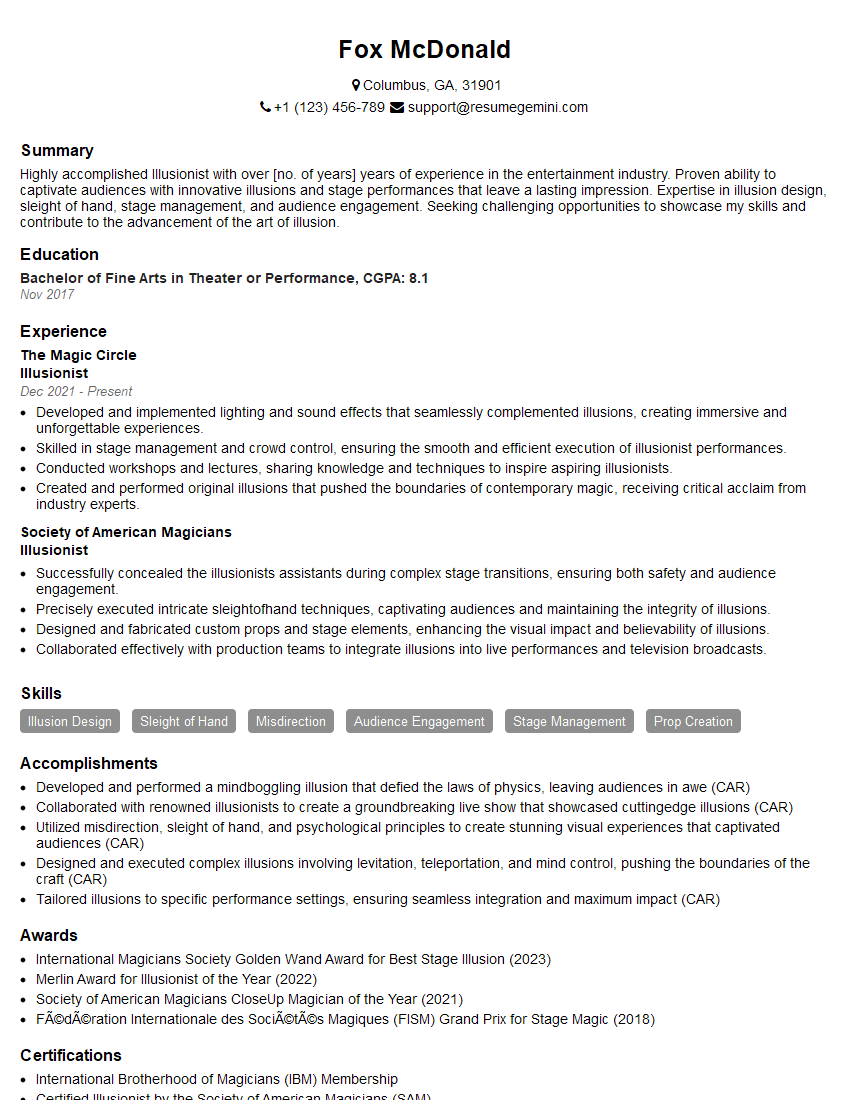
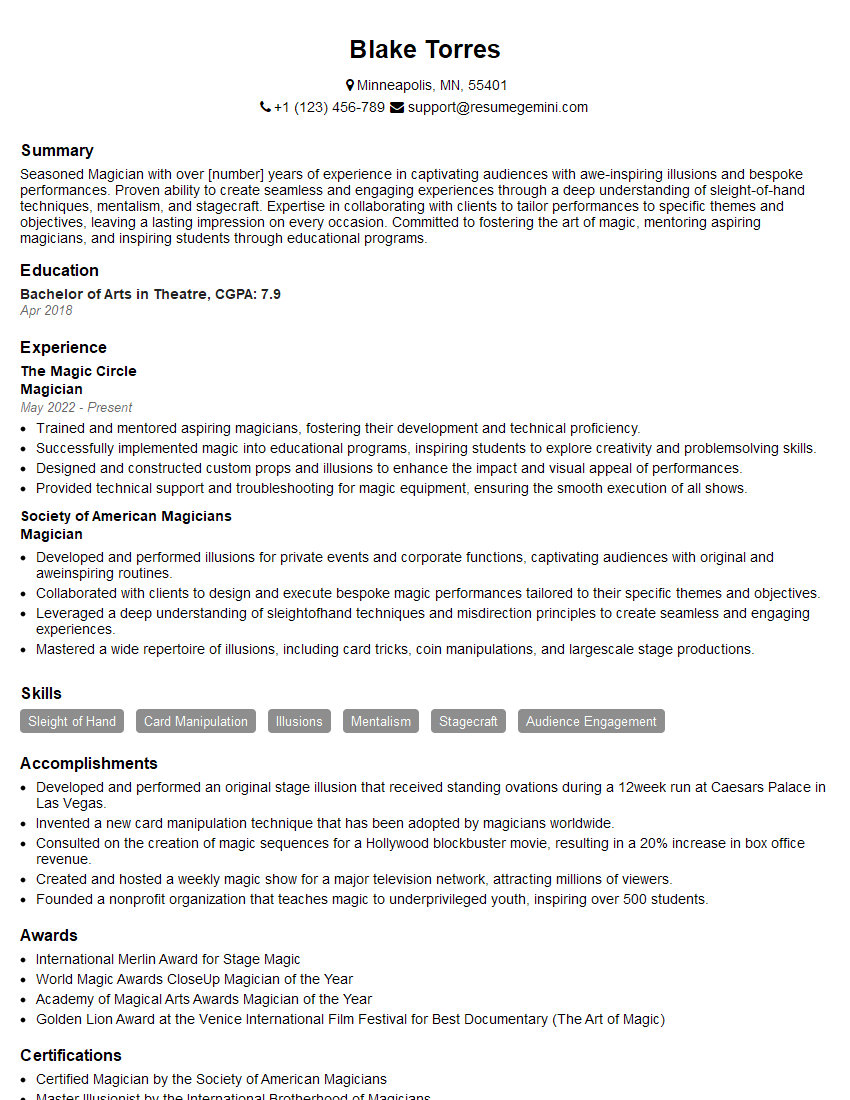
Mastering Magic Performance significantly enhances your career prospects, opening doors to high-demand roles in software development and performance engineering. To maximize your job search success, it’s crucial to present your skills effectively through an ATS-friendly resume. ResumeGemini is a trusted resource that can help you build a professional and impactful resume, significantly increasing your chances of landing your dream job. Examples of resumes tailored to Magic Performance are available below to guide you.
Explore more articles
Users Rating of Our Blogs
Share Your Experience
We value your feedback! Please rate our content and share your thoughts (optional).
What Readers Say About Our Blog
Very informative content, great job.
good