Interviews are opportunities to demonstrate your expertise, and this guide is here to help you shine. Explore the essential Cutting and Embossing Techniques interview questions that employers frequently ask, paired with strategies for crafting responses that set you apart from the competition.
Questions Asked in Cutting and Embossing Techniques Interview
Q 1. Explain the difference between blind embossing and debossing.
Blind embossing and debossing are both relief printing techniques that create raised or indented designs on a material, but they achieve this in opposite ways. Think of it like pushing a thumb into soft clay:
- Blind embossing creates a raised design. The image is pushed up from the surface, leaving a three-dimensional impression. Imagine creating a raised logo on a business card. That’s embossing.
- Debossing creates a sunken design. The image is pressed into the surface, resulting in a recessed image. Think of the indented lettering you often see on credit cards – that’s debossing.
Both techniques use pressure to deform the material, but the direction of the pressure differs, resulting in contrasting raised or indented designs.
Q 2. Describe the various types of die-cutting tools and their applications.
Die-cutting tools are the heart of the process, determining the shape and precision of the cut. Several types exist, each suited for specific applications:
- Steel Rule Dies: These are durable, versatile dies made from hardened steel, ideal for high-volume production. They’re frequently used in packaging and commercial printing. Think of cookie cutters, but much more precise and robust.
- Magnetic Dies: These are more economical and adaptable, excellent for short runs and prototypes. The cutting elements are held magnetically to a base plate, allowing for easy changes. They are perfect for quick design changes and experimentation.
- Laser Dies: These use laser technology to cut intricate designs, offering superior accuracy and detail. Ideal for intricate designs and delicate materials where a sharp cut is needed.
- Rotary Dies: These cylindrical dies are used for continuous cutting, ideal for high-speed production lines, commonly found in large-scale manufacturing.
The choice of die depends heavily on the project’s requirements, the volume, material, and the level of detail required. For example, a steel rule die would be excellent for cutting thousands of identical boxes, while a magnetic die might be better for creating a small batch of unique greeting cards.
Q 3. How do you troubleshoot common issues encountered during die-cutting?
Troubleshooting die-cutting issues requires a systematic approach. Common problems include:
- Incomplete Cuts: This might result from a dull blade, improper pressure settings, or the material being too thick for the die. Solution: Sharpen or replace blades, adjust machine pressure, or use a more appropriate die.
- Misaligned Cuts: This can be due to incorrect registration or a misaligned die. Solution: Check the machine’s registration system and ensure the die is properly seated. Recheck your registration marks.
- Material sticking to the Die: This is common with sticky materials. Solution: Use release agents, such as silicone sheets, to prevent sticking.
- Broken Dies: This occurs from excessive pressure or using unsuitable materials. Solution: Careful inspection and replacement of broken components.
Always check the simplest things first – like blade sharpness and machine settings – before delving into more complex issues. A methodical approach, combined with experience, allows for quick diagnosis and resolution.
Q 4. What are the safety precautions you follow when operating cutting and embossing machines?
Safety is paramount when operating cutting and embossing machines. Here are some essential precautions:
- Always wear safety glasses: Flying debris can cause eye injuries.
- Keep hands clear of moving parts: The machine’s moving components can cause severe injury. Never reach into the machine while it is operating.
- Properly use the safety guards: These are provided to protect the operator.
- Regular maintenance: Ensure the machine is in good working condition. Broken or damaged parts can cause malfunction and safety hazards.
- Follow the manufacturer’s instructions: Each machine has specific operating procedures to ensure safe operation.
A safe working environment is achieved through consistent vigilance and adherence to safety protocols. Never compromise safety for speed or convenience.
Q 5. Explain the process of setting up a die-cutting machine for a specific job.
Setting up a die-cutting machine involves several steps, tailored to the specific job. First, select the appropriate die for the material and design. Then:
- Mount the die: Carefully place the die onto the machine’s cutting platform, ensuring proper alignment.
- Adjust the pressure: Set the pressure based on the material’s thickness and the die’s design. Too little pressure results in incomplete cuts, too much can damage the die or machine. Experiment to find the ideal pressure.
- Check the registration: Ensure the die is correctly aligned with the material using registration marks. Accurate registration is crucial for precise cuts and embossing.
- Test cut: Perform a test run on a scrap piece of material to verify the settings before proceeding with the main job. This helps prevent errors and waste.
- Run the job: Once satisfied with the test results, proceed with the actual cutting and embossing job.
Proper setup is essential for accurate and efficient production. Taking your time to carefully prepare ensures quality results.
Q 6. How do you ensure accurate registration during cutting and embossing?
Accurate registration is crucial for aligning the die with the material, ensuring precise cuts and embossed designs. Several methods ensure this:
- Registration Marks: Pre-printed marks on the material act as guides for aligning the die. These marks should be precisely aligned with corresponding features on the die.
- Registration Pins: Physical pins or guide posts on the die and the machine help in precise positioning of the material.
- Automated Systems: Some advanced machines have automated registration systems that automatically align the material with the die using sensors and software.
Regardless of the method, precision is key. Inaccurate registration leads to misaligned cuts or embossed elements, impacting the final product’s quality and aesthetics. Think of it like framing a picture; the picture (your design) needs to be perfectly centered in the frame (the die).
Q 7. What materials are commonly used for cutting and embossing, and what are their properties?
A wide range of materials can be used for cutting and embossing, each with unique properties:
- Paper: A common and versatile material available in various weights, textures, and finishes. Thicker papers require greater cutting force.
- Cardstock: Heavier than paper, offering more rigidity and strength for embossed designs. It’s a popular choice for cards and invitations.
- Leather: Requires specialized dies and machines due to its thickness and resilience. The result is a luxurious, high-end feel.
- Fabric: Requires specialized dies and cutting techniques to avoid fraying. It offers a unique textural outcome.
- Metal Foils: Used for adding metallic accents, requiring specialized dies and machines. The result is a shiny, eye-catching finish.
- Wood Veneer: Thinner sheets of wood that allow for embossed wood grain effects.
The choice of material depends on the desired outcome and the project’s requirements. Understanding each material’s properties is critical for selecting the appropriate die and machine settings.
Q 8. Describe your experience with different types of embossing foil.
Embossing foil comes in a variety of types, each with unique properties affecting the final look and feel. The choice depends heavily on the substrate (the material being embossed), the desired effect, and the embossing machine’s capabilities.
- Hot Foil: This is the most common type, using heat and pressure to transfer a metallic or pigmented film onto the material. Different foil types include standard metallics (gold, silver, etc.), holographic foils for a shimmering effect, and specialty foils with textures like linen or pearlescent finishes. The choice impacts the gloss, durability, and overall aesthetic. For example, a matte gold foil offers a more subtle, sophisticated look compared to a highly reflective silver.
- Cold Foil: Unlike hot foil, this doesn’t require heat. Instead, a specialized adhesive is used to bond the foil to the substrate. It’s often used for intricate designs or delicate materials where high heat could cause damage. Cold foil can produce more precise details and is suitable for substrates sensitive to heat, such as certain plastics or thin papers.
- Specialty Foils: This category encompasses a wide range of unique options, such as textured foils (e.g., wood grain, leather), color-shifting foils that change hue depending on the viewing angle, and even glow-in-the-dark foils. The creative possibilities are extensive.
My experience spans working with all these foil types extensively, selecting the most appropriate foil for diverse projects, from simple business cards to complex packaging designs.
Q 9. How do you maintain and clean cutting and embossing equipment?
Maintaining cutting and embossing equipment is crucial for consistent performance and longevity. Cleaning and lubrication are paramount. After each use, I always:
- Remove all scraps and debris: This prevents jamming and damage to the machine’s components. Compressed air can effectively clean hard-to-reach areas.
- Clean the dies: I use a soft brush and appropriate cleaning solution (avoid harsh chemicals) to remove any adhesive residue, ink, or foil scraps. For intricate dies, a small detail brush or even a toothpick is useful.
- Lubricate moving parts: This prevents friction and wear, extending the lifespan of the equipment. I use a specialized lubricant recommended by the manufacturer. Over-lubrication can also cause issues, so it is essential to use the correct amount.
- Inspect for damage: I visually check the dies and cutting plates for any damage, wear, or misalignment. Any issues should be addressed promptly to prevent defects in future projects.
Regular maintenance, like this, is similar to maintaining a car – preventative care goes a long way in avoiding major problems down the line.
Q 10. What are the common causes of defects in cutting and embossing, and how do you prevent them?
Defects in cutting and embossing can stem from several sources. Identifying the root cause is vital for prevention.
- Incorrect pressure settings: Too little pressure leads to incomplete cuts or embossing, while excessive pressure can damage the material or the dies. This is often material dependent.
- Improper die alignment: Misaligned dies result in uneven cuts or embossing, especially noticeable in intricate designs. Regular calibration and inspection are essential.
- Dull or damaged dies: Worn-out dies produce inconsistent results and should be replaced or sharpened (if possible).
- Material issues: The substrate’s thickness, moisture content, or texture can impact the cutting and embossing process. Using inappropriate materials can lead to inconsistent results.
- Incorrect speed settings: Too fast of a speed can lead to skipped sections, especially with complex dies. Too slow a speed can cause extra pressure build up.
Preventing these defects involves meticulous preparation, including: checking material suitability, calibrating the machine regularly, using sharp and properly aligned dies, and adjusting the pressure and speed settings based on the material and design complexity. Trial runs are also useful for fine-tuning the settings.
Q 11. Explain the concept of ‘kiss cutting’.
Kiss cutting is a partial cutting technique where the blade only cuts through the top layer of a material, leaving the backing intact. Think of it like lightly scoring the surface. This is extremely useful for creating stickers, labels, or other applications where the item needs to be easily peeled off its backing.
It’s called ‘kiss cutting’ because the blade ‘kisses’ the surface, lightly cutting through only the desired layer. This requires precise blade adjustments and pressure settings. Too much pressure will cut all the way through, while too little pressure won’t cut at all.
For example, creating custom stickers involves kiss-cutting the sticker design from a sheet of adhesive-backed vinyl, leaving the vinyl backing intact so the stickers can be easily peeled and applied.
Q 12. How do you determine the correct pressure and speed settings for different materials?
Determining the correct pressure and speed settings is crucial for achieving optimal results and avoiding defects. This is highly material-dependent.
The process usually involves:
- Trial and error: Start with the manufacturer’s recommended settings as a baseline, then adjust incrementally based on the results. This often involves making test cuts or embossing on scrap material.
- Material properties: Thicker, harder materials typically require higher pressure and may benefit from slower speeds to prevent damage. Delicate materials may require lower pressure and possibly faster speeds to avoid tearing.
- Die complexity: Intricate designs often need slower speeds to ensure clean cuts or embossing. Simple designs allow for slightly faster processing.
- Machine capabilities: Different machines have varying ranges of pressure and speed settings. Staying within the operational limits of your equipment is essential.
Think of it like baking – you can’t use the same recipe and temperature for a cake as you would for a cookie. Each material reacts differently, and fine-tuning the settings ensures consistent, high-quality output.
Q 13. Describe your experience with different types of dies (e.g., steel rule, magnetic, etc.).
Different die types offer unique advantages and disadvantages. My experience includes working extensively with several types:
- Steel Rule Dies: These are durable and versatile, capable of handling a wide range of materials and complex designs. They’re created by precisely cutting shapes into a steel rule and are generally the most common. They last a long time and require proper maintenance to prevent damage.
- Magnetic Dies: These consist of magnetic strips arranged to create the cutting or embossing shape. They are easier to change than steel rule dies and are ideal for smaller runs or rapid prototyping. However, they might not be as durable for long-term heavy use.
- Photopolymer Dies: These are often created through laser etching, offering intricate detail, suitable for detailed designs and delicate materials. While these are great for intricate designs, they can sometimes be more sensitive to pressure and can be more expensive.
The choice of die depends on factors like project volume, design complexity, material type, budget, and the need for reusability. Steel rule dies are the workhorse in many shops, providing the best balance between durability and cost-effectiveness, particularly for large print runs. Magnetic and Photopolymer are great for niche needs.
Q 14. How do you handle complex designs or intricate cutting patterns?
Handling complex designs and intricate cutting patterns requires a strategic approach:
- Die Selection: Choosing the appropriate die type is paramount. For incredibly intricate details, photopolymer dies often offer the best results.
- Multiple Passes: For very deep cuts or detailed embossing, multiple passes with adjusted pressure and speed settings may be necessary. This allows for gradual cutting or embossing, reducing the risk of damaging the material or the die. This is a common practice when dealing with thicker materials.
- Test Cuts: Always conduct test cuts on scrap material before processing the final product. This ensures the settings are optimal and allows you to make adjustments as needed.
- Machine Calibration: Regularly calibrating the machine guarantees accuracy and reduces defects in the final product. The accuracy of the machine is crucial when doing intricate patterns.
- Material Selection: Select a material that’s suitable for the complexity of the design. Delicate designs may require thinner, more pliable materials. Thick, stiff materials can be challenging to cut precisely.
Think of it like building a complex structure – a carefully planned, step-by-step approach is essential to achieving the desired outcome without errors.
Q 15. How do you measure the effectiveness of your cutting and embossing process?
Measuring the effectiveness of a cutting and embossing process involves a multi-faceted approach focusing on quality, efficiency, and cost-effectiveness. We assess several key performance indicators (KPIs).
- Defect Rate: This is the percentage of finished pieces with imperfections like miscuts, incomplete embossing, or damaged material. A low defect rate indicates a well-controlled process. For example, a target might be less than 1% defects.
- Throughput: This measures the number of units produced per unit of time (e.g., pieces per hour). Higher throughput signifies efficiency. We regularly track and analyze throughput to identify bottlenecks and optimize the process.
- Material Waste: Minimizing material waste is crucial. We monitor scrap material and analyze causes to implement improvements like better die placement or material handling.
- Machine Uptime: A high machine uptime percentage indicates less downtime due to maintenance or malfunctions. We use preventive maintenance schedules to ensure smooth operation and minimize interruptions.
- Cost per Unit: This combines material costs, labor costs, and machine operating costs to determine the overall cost-effectiveness. We continually look for ways to optimize costs without compromising quality.
By monitoring these KPIs, we gain valuable insights into process performance and identify areas for improvement. Regular analysis and adjustments are crucial for maintaining high effectiveness.
Career Expert Tips:
- Ace those interviews! Prepare effectively by reviewing the Top 50 Most Common Interview Questions on ResumeGemini.
- Navigate your job search with confidence! Explore a wide range of Career Tips on ResumeGemini. Learn about common challenges and recommendations to overcome them.
- Craft the perfect resume! Master the Art of Resume Writing with ResumeGemini’s guide. Showcase your unique qualifications and achievements effectively.
- Don’t miss out on holiday savings! Build your dream resume with ResumeGemini’s ATS optimized templates.
Q 16. Describe your experience with different types of embossing techniques (e.g., foil stamping, blind embossing, etc.).
I have extensive experience across various embossing techniques. Each method offers unique aesthetic qualities and requires specialized tools and skills.
- Blind Embossing: This creates a raised or recessed design without the use of foil or ink. The result is a subtle textural effect. I’ve worked extensively with blind embossing on greeting cards, stationery, and high-end packaging, often using heavy-duty presses for precise, deep embossing.
- Foil Stamping: This adds a metallic or colored foil to the design, creating a luxurious and eye-catching effect. I’m adept at using different foil types (gold, silver, colored foils) and have experience with both hot foil stamping (using heat and pressure) and cold foil stamping (using a special adhesive and UV curing). This technique is frequently used for branding, invitations, and specialty packaging.
- Debossing: This is the opposite of embossing, where the design is pressed inward, creating a sunken effect. I’ve used debossing to create subtle, elegant designs on leather goods and high-end packaging. Debossing adds a sophisticated touch without being overly prominent.
My experience encompasses optimizing these techniques for different materials, including paper, cardstock, plastics, and even leather. I understand the intricacies of die design and pressure settings necessary to achieve the desired results consistently.
Q 17. How do you troubleshoot a jammed die-cutting machine?
Troubleshooting a jammed die-cutting machine requires a systematic approach, prioritizing safety. Never attempt repairs without proper training and safety precautions.
- Safety First: Turn off and unplug the machine. Ensure the machine is completely de-energized before proceeding.
- Visual Inspection: Carefully inspect the machine for any obvious obstructions like paper jams, misplaced materials, or foreign objects. Look for any signs of damage to the dies or cutting blades.
- Material Removal: If material is jammed, carefully remove it. Use appropriate tools to avoid damaging the machine or injuring yourself.
- Die Inspection: Check the die for any damage, misalignment, or debris. A damaged die can cause jams.
- Pressure Adjustment: Sometimes, incorrect pressure settings can contribute to jamming. Consult the machine’s manual to verify correct pressure.
- Lubrication: Proper lubrication is critical. Check for and address any lubrication issues.
- Professional Help: If the problem persists or you are unsure how to proceed, contact a qualified technician or service provider.
Preventative maintenance, including regular cleaning and lubrication, is crucial to minimize jamming incidents. Keeping the machine’s operating environment clean and organized also helps prevent jams.
Q 18. What is your experience with quality control procedures related to cutting and embossing?
Quality control (QC) is integral to my cutting and embossing workflow. It’s a multi-step process that begins before production and continues throughout.
- Pre-Production Checks: This includes verifying the accuracy of the dies, checking material quality, and confirming that the machine settings are correct. I’ll always run a test sample before a full production run.
- In-Process Monitoring: During production, I visually inspect samples at regular intervals to identify any defects or inconsistencies early. This allows for immediate corrective action.
- Post-Production Inspection: Once production is complete, a thorough inspection is conducted to identify and classify any defects. This detailed analysis helps track trends, identify root causes of errors and inform process improvements.
- Statistical Process Control (SPC): We use SPC techniques to monitor process variation and ensure consistent quality over time. Control charts help identify patterns and prevent deviations from standards.
- Documentation: Maintaining detailed records of QC checks, defects, and corrective actions is vital. These records provide valuable data for continuous improvement.
By implementing these QC procedures, we maintain a high level of quality, reduce waste, and ensure customer satisfaction. A proactive QC approach is far more cost-effective than reactive problem-solving after defects have been produced.
Q 19. How familiar are you with different types of cutting and embossing software?
I’m proficient in various cutting and embossing software packages, with expertise in both vector-based and raster-based programs.
- Adobe Illustrator: This is my primary tool for creating vector artwork for dies, ensuring precision and scalability. I’m comfortable with all aspects, including design, layout, and export for die-cutting machines.
- CorelDRAW: I am also proficient in CorelDRAW, offering a complementary skillset for creating and manipulating vector graphics for die-cutting applications.
- Esko Suite (Artwork, Studio, ArtiosCAD): I have experience using various components of the Esko suite, particularly for prepress and workflow management in commercial printing environments. This includes creating and optimizing dies for high-volume production.
- Software Specific to Cutting Machines: I’m experienced with the software provided by various cutting machine manufacturers (e.g., Cricut Design Space, Silhouette Studio). I am comfortable learning and adapting to new software packages as needed.
My software skills extend beyond the creation of designs to include effective file preparation and management, ensuring compatibility with different cutting machines and die-making processes. I understand the importance of correctly setting up bleed and margins to avoid issues during production.
Q 20. Describe your experience with setting up and maintaining cutting and embossing templates.
Setting up and maintaining cutting and embossing templates is a meticulous process requiring precision and attention to detail. The lifespan and performance of the templates directly impact the quality of the final product.
- Template Creation: I meticulously design templates using appropriate software, ensuring accurate dimensions and precise alignment of cutting and embossing elements. I pay careful attention to kerning, spacing, and registration marks.
- Die Cutting: The actual creation of the dies (often outsourced to specialists) requires clear specifications and communication to ensure the final product aligns precisely with the template.
- Material Selection: Selecting the correct material for the templates (steel rule dies, laser-cut dies, etc.) is vital for durability, precision, and longevity. The choice depends on the application and the material being processed.
- Storage and Maintenance: Proper storage is essential to prevent damage or deformation of the dies. This involves using protective cases, avoiding exposure to moisture, and handling them carefully to avoid bending or damage. Regular inspection for wear and tear is also critical.
- Cleaning: Regular cleaning of dies after use is important to remove any debris or sticky residue which may affect the precision of the cut or emboss. Using appropriate solvents or cleaning tools prevents damage.
By following these best practices, I ensure the longevity and accuracy of the templates, minimizing production errors and maintaining a high level of consistency in the final product.
Q 21. How do you ensure consistency in quality across multiple production runs?
Consistency across multiple production runs is paramount. It requires careful planning, meticulous execution, and continuous monitoring.
- Standardized Procedures: Establishing and adhering to standardized operating procedures (SOPs) for every step of the process is fundamental. This ensures that every run follows the same exact steps.
- Material Control: Using the same batch of material whenever possible minimizes variability caused by differences in material properties. Strict inventory control procedures ensure material consistency.
- Regular Calibration: Regular calibration of the cutting and embossing machines is crucial. This involves checking pressure, speed, and alignment settings to ensure they meet specifications.
- Process Monitoring and Control: Using statistical process control (SPC) methods to continuously monitor key parameters allows for early detection and correction of any variations.
- Regular Maintenance: A robust preventive maintenance program is key. Scheduled cleaning, lubrication, and inspections prevent equipment malfunctions and maintain consistent performance.
- Operator Training: Well-trained operators are vital. Providing comprehensive training ensures everyone understands and follows SOPs consistently.
By implementing these strategies, we consistently achieve high-quality results across multiple production runs, minimizing variation and delivering a product that meets our exacting standards every time.
Q 22. Explain your experience working with different paper weights and textures.
Paper weight and texture significantly impact cutting and embossing results. Lighter papers, like 65lb cardstock, are easier to cut and emboss, creating delicate details. Heavier papers, such as 110lb cover stock, offer a more robust and substantial feel but require more pressure and potentially different tooling. Texture also plays a critical role; smooth papers yield clean, crisp cuts and impressions, while textured papers (like linen or cotton) can present challenges, potentially leading to inconsistencies in the embossing. For example, a deeply textured paper might not emboss as cleanly as a smooth paper, requiring adjustments to pressure and potentially different die designs.
My experience spans working with a wide range of paper weights, from delicate tissue papers for intricate dies to thick board for sturdy packaging. I’ve learned to adapt my techniques depending on the paper. For instance, when working with heavy papers, I might use a more aggressive die or increase the pressure in my embossing machine to achieve the desired depth and clarity. Conversely, with lighter papers, I prioritize gentler techniques to prevent tearing or distortion.
Q 23. Describe your troubleshooting experience with inconsistent embossing impressions.
Inconsistent embossing impressions are often caused by several factors. Troubleshooting involves a systematic approach. First, I examine the die itself for any damage, warping, or inconsistencies in the design. Next, I check the machine’s pressure settings, ensuring they are appropriate for the paper weight and die. Sometimes, the problem lies in the paper itself – uneven thickness or moisture content can lead to variations in the embossing. Finally, I consider the placement of the paper in the machine, ensuring it’s correctly aligned and positioned to receive even pressure.
For example, I once encountered inconsistent embossing on a large batch of invitations. After carefully eliminating other possibilities, I discovered the problem stemmed from slightly uneven thickness in the paper stock. Switching to a different supplier solved the problem. My approach emphasizes methodical checks; I’ll usually start with the easiest-to-check areas – paper alignment and machine settings – before examining more complex issues like die condition.
Q 24. What is your experience with rotary die cutting?
Rotary die cutting is a high-speed, efficient method using a continuously rotating cylinder engraved with the cutting and embossing design. My experience includes operating various rotary die-cutting machines, from smaller tabletop models to larger industrial presses. This process excels in high-volume production, delivering consistent and precise results. The process allows for intricate designs and a high degree of precision, ideal for large-scale projects or mass production items. However, the setup and tooling costs for rotary die cutting can be significantly higher than for other methods.
For instance, I’ve utilized rotary die cutting for large-scale production of greeting cards and packaging. The speed and efficiency provided by rotary die cutting made it ideal for fulfilling large orders while maintaining a high level of quality and consistency.
Q 25. How do you manage waste materials generated during cutting and embossing?
Waste management in cutting and embossing is critical for environmental responsibility and efficient operation. My approach involves several strategies. Firstly, I prioritize using paper suppliers committed to sustainable forestry practices and recycled materials. Secondly, I carefully plan my projects to minimize waste through efficient die design and precise cutting. Thirdly, I diligently separate different waste streams – paper scraps, plastic packaging, and metal offcuts – for appropriate recycling or disposal.
We often use scrap paper for test runs or smaller projects and participate in paper recycling programs to divert as much waste as possible from landfills. The reduction of waste is integral to the process and is something I always consider during project planning and implementation.
Q 26. What are your preferred methods for inspecting finished products for quality?
Quality inspection is crucial. My process involves a multi-stage approach. First, I conduct a visual inspection, looking for any imperfections such as misaligned embossing, uneven cuts, or damage to the paper. Next, I perform a tactile examination, checking for inconsistencies in texture or depth of embossing. Finally, if needed, I employ precision measuring tools to ensure dimensions meet specifications. This methodical approach helps identify even subtle defects.
I often use a calibrated light box to highlight subtle imperfections and compare the finished product against a sample to ensure consistency. This attention to detail ensures high-quality output and customer satisfaction.
Q 27. How do you stay updated with the latest advancements in cutting and embossing techniques?
Staying updated is vital in this rapidly evolving field. I actively participate in industry events, workshops, and online communities. I subscribe to relevant trade publications and follow key players in the industry on social media. This continuous learning ensures I remain proficient in the latest techniques and technologies, including advancements in die-cutting materials, software, and equipment.
For example, I recently attended a workshop on the use of digital die-cutting systems, significantly enhancing my skills and introducing me to cutting-edge software and tools. I constantly seek out new knowledge to improve my skills and stay ahead in the industry.
Q 28. Describe your experience with custom die creation and design.
I have extensive experience in custom die creation and design. This involves collaborating with clients to understand their vision, translating their concepts into accurate technical specifications, and then overseeing the die-making process. I’m proficient in various design software and collaborate effectively with die-makers. This includes designing both simple and intricate designs, taking into account the physical limitations of the materials and machinery.
A recent project involved designing a custom die for a client’s logo embossing. The client’s logo was quite intricate and required careful consideration of the die construction to avoid any distortion or breakage. Through meticulous planning and collaboration with the die-maker, we successfully produced a high-quality die that met the client’s expectations.
Key Topics to Learn for Cutting and Embossing Techniques Interview
- Die Cutting Fundamentals: Understanding various die-cutting methods (e.g., steel rule, magnetic, kiss-cut), die construction, and material compatibility.
- Embossing Techniques: Mastering different embossing methods (e.g., blind embossing, debossing, register embossing) and their applications in various materials.
- Material Selection and Preparation: Knowing the properties of different materials (paper, cardstock, leather, etc.) and how to prepare them for optimal cutting and embossing results.
- Machine Operation and Maintenance: Familiarity with different cutting and embossing machines (manual, automated), their functionalities, and basic maintenance procedures.
- Troubleshooting and Problem Solving: Identifying and resolving common issues such as misaligned cuts, inconsistent embossing, and material jams.
- Design and Layout Considerations: Understanding how design elements influence the cutting and embossing process, and incorporating best practices for efficient production.
- Quality Control and Inspection: Implementing quality control measures to ensure consistent and high-quality results, and identifying defects.
- Safety Procedures and Regulations: Adhering to safety protocols when operating machinery and handling materials.
- Industry Trends and Innovations: Staying updated on the latest advancements in cutting and embossing techniques and technologies.
- Project Management and Workflow: Understanding project timelines, resource allocation, and efficient workflow management within a production environment.
Next Steps
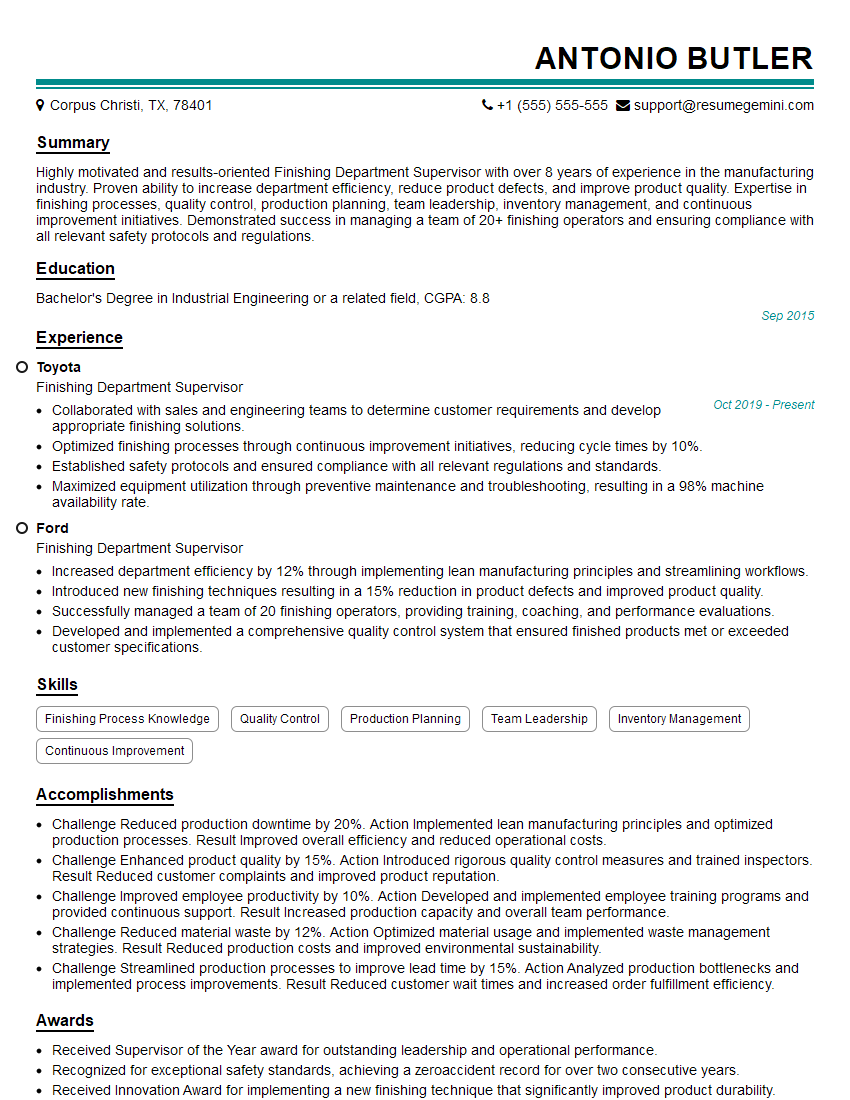
Mastering cutting and embossing techniques opens doors to exciting career opportunities in various creative industries. A strong understanding of these skills demonstrates your practical abilities and problem-solving skills, making you a highly valuable asset. To enhance your job prospects, crafting an ATS-friendly resume is crucial. ResumeGemini is a trusted resource that can help you build a professional and impactful resume tailored to highlight your expertise in Cutting and Embossing Techniques. Examples of resumes specifically designed for this field are available through ResumeGemini, showcasing how to best present your skills and experience to potential employers.

Explore more articles
Users Rating of Our Blogs
Share Your Experience
We value your feedback! Please rate our content and share your thoughts (optional).
What Readers Say About Our Blog
Very informative content, great job.
good