Unlock your full potential by mastering the most common Mail Room Duties interview questions. This blog offers a deep dive into the critical topics, ensuring you’re not only prepared to answer but to excel. With these insights, you’ll approach your interview with clarity and confidence.
Questions Asked in Mail Room Duties Interview
Q 1. Describe your experience with various mail sorting methods.
Mail sorting is the backbone of efficient mailroom operations. Over the years, I’ve utilized several methods, adapting my approach based on volume and urgency. Manual sorting, for example, involves physically reviewing each piece of mail and categorizing it based on department, individual, or postal code. This is effective for smaller volumes but can become time-consuming with larger quantities. I’ve also extensively used automated sorting machines, which utilize optical character recognition (OCR) technology to read addresses and sort mail accordingly. These machines dramatically increase speed and accuracy, especially for high-volume mailrooms. Additionally, I’ve implemented color-coded systems, where different colored labels or folders represent various departments or recipients. This simplifies manual sorting and allows for quicker distribution.
For example, in a previous role, we transitioned from a primarily manual system to an automated one. The result was a 70% reduction in processing time and a significant improvement in accuracy, reducing misdirected mail almost to zero. This illustrates the effectiveness of adapting sorting methods to suit the needs of the mailroom.
Q 2. How familiar are you with different mail classes (First Class, Priority, etc.)?
I’m very familiar with the various mail classes offered by postal services. Understanding these classes is crucial for accurate postage and timely delivery. First-Class Mail is the most common, used for letters, postcards, and envelopes, ensuring delivery within a specific timeframe. Priority Mail offers faster delivery than First-Class Mail, with options for tracking and insurance. Express Mail provides the fastest delivery possible, often with next-day service. There are also other classes like Certified Mail (requires signature confirmation), Registered Mail (provides high security for valuable items), and Package Services (for various sizes and weights of packages). Knowing the differences between these classes allows me to process mail correctly, select appropriate postage, and provide the necessary tracking information to the recipient or sender.
For instance, if I receive a package labeled ‘Express Mail’, I know that it requires immediate handling and priority placement for delivery, ensuring it meets its time-sensitive delivery requirements. Similarly, certified mail requires specific handling and documentation, ensuring secure delivery and confirmation of receipt.
Q 3. What is your experience with using postage meters?
I possess significant experience operating various postage meters. These machines automate the process of applying postage to mail, improving efficiency and accuracy. I’m proficient in setting up and maintaining postage meters, ensuring they are properly calibrated and have sufficient postage. I can also generate reports on postage usage, which is valuable for budget management. My experience extends to troubleshooting common issues, such as jams or meter malfunctions. I’m adept at replenishing postage and maintaining the meter’s operational status. Furthermore, I am familiar with both electronic and manual postage meter functionalities.
In a previous role, I successfully resolved a postage meter malfunction that was causing significant delays in mail processing. By identifying the issue – a paper jam – I quickly cleared the jam and resumed operations, minimizing disruption to the workflow. This demonstrates my ability to troubleshoot and solve problems effectively.
Q 4. Explain your process for handling registered or certified mail.
Handling registered or certified mail requires meticulous attention to detail and adherence to strict procedures. Upon receipt, I carefully inspect the mail for any damage or irregularities. I then record the details of the mail piece, including the tracking number, sender’s and recipient’s information, and any special instructions. I obtain a signature upon delivery, carefully documenting the recipient’s signature and date. A copy of the signature is then kept on file for record-keeping purposes. For registered mail, the security and tracking are paramount. For certified mail, the proof of delivery is crucial for confirmation of receipt.
For example, when handling certified mail, a clear and accurate record-keeping system is crucial. If there is a dispute about delivery, the documentation, which includes the signature and tracking information, is crucial in resolving it. This attention to detail and adherence to procedure protects both the sender and the recipient.
Q 5. How do you ensure the confidentiality of sensitive mail?
Maintaining the confidentiality of sensitive mail is a top priority. I adhere to strict protocols to protect sensitive information, including secure storage of mail until delivery, and only authorized personnel access to sensitive materials. I never leave sensitive mail unattended, and I utilize secure methods for disposal of confidential documents. This includes using designated shredders for documents that require secure destruction. Further, I strictly follow any specific instructions from the sender or organization regarding the handling and storage of confidential information.
In practice, this might involve segregating sensitive mail into secure areas, using locked cabinets or designated secure mailboxes. It also includes being vigilant about who has access to the mailroom and ensuring all personnel are trained on confidentiality procedures.
Q 6. Describe your experience with package handling and delivery.
My experience includes efficient handling and delivery of a wide range of packages. This includes proper sorting and organization of packages based on size, weight, and destination. I’m skilled in using various shipping labels and understanding different courier services. I’m familiar with packaging requirements to avoid damage during transit. This includes properly securing items within packages and using appropriate protective materials. I am also experienced in preparing packages for shipping via different carriers, ensuring they meet size and weight restrictions. Additionally, I can manage and track shipments, ensuring timely and accurate delivery.
For example, I’ve had experience handling fragile items such as electronics, ensuring proper packaging to avoid damage during shipping. Similarly, I’ve managed larger, heavier packages that required specialized handling and often coordination with external delivery services.
Q 7. How do you manage a high volume of mail efficiently?
Managing high-volume mail efficiently requires a combination of strategies. First and foremost is efficient sorting, using a combination of automated and manual methods as described earlier. Prioritization is key – urgent mail (express mail, certified mail) needs to be processed immediately. This is often coupled with a clear workflow system with designated areas for different mail types. Furthermore, team collaboration and clear communication are vital, especially during peak times. Finally, regular review of processes and identifying bottlenecks help optimize efficiency over time. This could involve adjusting workflows, improving technology, or re-evaluating staffing levels.
In practice, this means utilizing sorting machines, color-coded systems, and designating specific team members for particular tasks. Regularly reviewing processing times and identifying bottlenecks helps improve efficiency and minimizes delays. It’s a continuous process of optimization.
Q 8. What is your experience with using mail tracking systems?
Mail tracking systems are essential for ensuring efficient and accountable mail handling. My experience encompasses using various systems, from simple spreadsheet-based tracking to sophisticated software solutions that integrate with our organization’s internal systems. For example, in my previous role, we utilized a system that allowed us to scan each piece of outgoing mail, generating a unique tracking number. This number could then be used to monitor the mail’s progress, from its origin point to its final destination, providing real-time updates on delivery status. This was invaluable for tracking important documents and ensuring timely delivery to clients. Another system I’ve used allowed for automated alerts in case of delays or delivery failures, enhancing our proactive response capabilities. The key is adapting to the specific software and utilizing its features to optimize mail management.
In a smaller setting, I’ve also used simpler systems, like detailed spreadsheets, effectively tracking mail items using custom-designed columns for tracking number, recipient, date sent, delivery confirmation, and notes. This method proves surprisingly effective in smaller mailrooms where the volume is manageable.
Q 9. How do you prioritize mail based on urgency and delivery deadlines?
Prioritizing mail hinges on understanding urgency and deadlines. I approach this systematically. First, I visually scan the mail for clear indicators of urgency, such as markings like ‘Urgent’ or ‘Time-Sensitive,’ or the presence of expedited shipping labels. Next, I identify deadlines mentioned within the correspondence itself or on accompanying documentation. Finally, I categorize the mail based on this information. High-priority items, such as legal documents or time-sensitive financial statements, are processed immediately. I then work my way down through medium-priority and finally low-priority items, ensuring that all mail is processed, but that the most urgent needs are met first.
Think of it like a triage system in a hospital – the most critical patients are seen first. Similarly, in a mailroom, we need to address the most urgent needs promptly to minimize any potential negative consequences due to delayed delivery. This often involves close collaboration with the relevant departments to understand their specific needs and prioritization.
Q 10. Describe your experience with meter readings and mail reconciliation.
Meter readings and mail reconciliation are crucial for accurate cost accounting and efficient mail operations. Meter readings, which involve recording the postage meter’s usage, provide data on the postage spent. Reconciliation involves matching the meter readings with the actual postage used, verifying the accuracy of postage expenses. I have extensive experience in performing both meter readings and reconciliation, ensuring that our postage costs were accurately tracked and accounted for. Discrepancies are investigated thoroughly; for example, if a significant difference was detected, I would cross-reference with the outgoing mail logs to identify any potential errors or missing entries. This process not only ensures financial accuracy but also helps identify potential operational inefficiencies. In one instance, during reconciliation, I discovered a discrepancy due to a faulty meter, leading to prompt repairs and preventing further cost overruns.
Q 11. How familiar are you with different types of mail delivery services (e.g., USPS, FedEx, UPS)?
I am thoroughly familiar with various mail delivery services, including USPS, FedEx, and UPS. I understand their respective service offerings, pricing structures, and tracking capabilities. This knowledge enables me to select the most appropriate service based on factors like delivery speed, cost, and the nature of the mail being sent. For instance, for time-sensitive documents, I would typically opt for FedEx or UPS Express services, while standard mail might be handled through USPS. I’m also adept at preparing packages correctly for each carrier, ensuring that they meet all size and weight requirements, including proper labeling and customs documentation when required for international shipping. My experience includes generating shipping labels using various online platforms and managing pickup schedules for each delivery service.
Q 12. What is your experience with maintaining accurate mail logs and records?
Maintaining accurate mail logs and records is paramount for accountability and efficient mailroom operations. I have experience maintaining both physical and digital logs, ensuring that every piece of mail is meticulously recorded. These logs typically include information such as date received/sent, sender/recipient, tracking number (if applicable), and any relevant notes about the mail’s handling. Accuracy is ensured through double-checking entries and implementing a system of cross-referencing with other documentation. For example, we employed a system where each mail log entry had to be signed and dated by two people before being considered finalized. Maintaining meticulous records enables efficient tracking, simplifies reconciliation processes, and assists in identifying any potential errors or discrepancies quickly.
Q 13. Describe your experience with handling returned mail.
Handling returned mail requires a systematic approach to identify the reason for return and take appropriate action. Upon receiving returned mail, I first examine the reason for its return, often indicated by a return label or stamp. Common reasons include incorrect addresses, insufficient postage, or the recipient’s refusal to accept the item. Based on the reason, I will either attempt to re-address and resend the mail, contact the sender to request further instructions, or dispose of it according to company policy. For instance, if the return is due to an incorrect address, I would use available resources, like online directories, to find the correct address and resend the item. If the sender is unavailable, I would maintain a record of the returned mail and notify the appropriate department, keeping careful documentation of all actions taken.
Q 14. How do you deal with damaged or lost mail?
Dealing with damaged or lost mail requires immediate action and thorough documentation. In the case of damaged mail, I would assess the extent of the damage and determine whether the contents are still usable. If the damage is significant, I would photograph the damage as evidence and notify the sender immediately, providing them with the photographic evidence and explaining the situation. Depending on the content of the mail and the company’s policy, we might offer to resend the item or provide compensation. For lost mail, thorough investigation is crucial, using tracking numbers and engaging with the appropriate carrier. If the mail is uninsured and cannot be located, I document the incident, notify the sender, and adhere to established company protocols for lost mail handling. In both cases, comprehensive documentation is vital for accountability and to prevent similar incidents in the future.
Q 15. What is your experience with using mailroom equipment (e.g., scales, franking machines)?
My experience with mailroom equipment is extensive. I’m proficient in operating various scales, ensuring accurate weight measurements for postage calculations. This includes both traditional mechanical scales and digital models offering features like tare weight functionality (subtracting the weight of the packaging). I’m also highly skilled in using franking machines, from loading and maintaining the machine to programming different postage options and managing the meter readings. For example, I’ve routinely used Pitney Bowes franking machines to process high volumes of mail efficiently, adapting to different postal regulations and streamlining the postage process. I understand the importance of regular maintenance checks on these machines to prevent jams and ensure accurate postage application. I’m also comfortable troubleshooting minor malfunctions, like paper jams or connectivity issues, and know when to call for professional maintenance.
Career Expert Tips:
- Ace those interviews! Prepare effectively by reviewing the Top 50 Most Common Interview Questions on ResumeGemini.
- Navigate your job search with confidence! Explore a wide range of Career Tips on ResumeGemini. Learn about common challenges and recommendations to overcome them.
- Craft the perfect resume! Master the Art of Resume Writing with ResumeGemini’s guide. Showcase your unique qualifications and achievements effectively.
- Don’t miss out on holiday savings! Build your dream resume with ResumeGemini’s ATS optimized templates.
Q 16. How do you handle inquiries about missing or delayed mail?
Handling inquiries about missing or delayed mail requires a systematic approach. First, I would politely acknowledge the inquiry and obtain as much detail as possible: sender’s information, recipient’s information, tracking number (if available), mailing date, and a description of the contents. Then, I would meticulously check the mailroom’s internal tracking systems and logs to see if there’s any record of the mail item. If found, I’d inform the inquirer of its status and the expected delivery date. If not found, I would initiate a search within the mailroom itself, and possibly check with delivery services for updates on its location. For example, I once helped locate a missing package by reviewing security footage from our mailroom and coordinating with the delivery courier. In cases where the mail is confirmed lost, I would assist the inquirer in filing a claim or initiating a trace with the postal service and offer support throughout the process. Maintaining clear and detailed records is crucial to solving these inquiries efficiently.
Q 17. How do you maintain a clean and organized mailroom environment?
Maintaining a clean and organized mailroom is paramount for efficiency and safety. My approach involves a multi-pronged strategy. First, I establish a clear organizational system for incoming and outgoing mail. This usually involves designated areas for sorting, processing, and storage. I use color-coded bins and labels to categorize mail by department or recipient. Second, I implement a regular cleaning schedule, including sweeping or vacuuming floors, wiping down surfaces, and emptying trash receptacles frequently. Third, I ensure that equipment is kept clean and in good working order. This includes regular dusting of scales and franking machines, as well as reporting any maintenance needs promptly. Finally, I establish a system for managing supplies to prevent clutter, using organized shelving and inventory management to track stock levels. Think of it like running a well-oiled machine – every element has its place, contributing to smooth operations.
Q 18. What safety procedures do you follow in the mailroom?
Safety is a top priority in the mailroom. My approach adheres to several key procedures. First, I’m always mindful of proper lifting techniques to prevent injury when handling heavy packages. I use dollies and other lifting aids when needed. Second, I’m careful to maintain a clean and clutter-free workspace to prevent accidents and trips. Third, I’m trained to identify and handle hazardous materials, following company protocols for handling and disposal. This includes knowing what to do in the event of a spill or leak. Fourth, I wear appropriate personal protective equipment (PPE) when handling potentially hazardous items such as sharp objects or packages with unknown contents. Finally, I regularly review safety guidelines and participate in any safety training provided by the company.
Q 19. What software are you familiar with for mail management?
I’m familiar with several software applications for mail management. I have experience using Microsoft Excel to track mail volume, postage costs, and inventory levels. I also have experience with dedicated mailroom management software (the specific software depends on the company), including systems that integrate with other office applications. These systems usually include features like address verification, postage rate calculation, tracking, and reporting. For example, I’ve used a system that automatically generates reports on mail volume, helping management make informed decisions regarding mailroom staffing and resource allocation. My skills allow me to quickly adapt and learn new mailroom software as needed.
Q 20. How would you handle a situation where you receive a suspicious package?
Receiving a suspicious package requires immediate and decisive action. My first step would be to avoid direct contact with the package. I would then alert my supervisor or security personnel immediately, describing the package and its characteristics (e.g., unusual odor, unknown sender, threatening markings). Following company protocol, I would ensure the package is isolated in a secure area, away from other mail and personnel. I would then cooperate fully with law enforcement or security professionals who would be called to handle the situation safely and appropriately. Never attempt to open or handle a suspicious package yourself – safety is paramount. This situation calls for a professional response to ensure the safety of everyone in the workplace. Think of it like this: prevention is always better than cure when dealing with potential threats.
Q 21. Describe your experience with inventory management in a mailroom setting.
My experience with inventory management in a mailroom setting includes maintaining accurate records of all supplies, such as envelopes, stamps, packaging materials, and labels. I’ve used both manual and computerized inventory tracking systems, regularly updating stock levels and ordering new supplies as needed. This includes using spreadsheets or databases to forecast demand, minimizing waste and ensuring we always have enough materials on hand. For instance, I’ve implemented a system that alerts me when stock levels fall below a certain threshold, allowing for timely replenishment and avoiding disruptions to mail operations. Effective inventory management translates to cost savings and ensures smooth, uninterrupted mailroom operations. It’s all about optimizing supply chain efficiency within the mailroom context.
Q 22. What is your experience with the proper disposal of confidential documents?
Proper disposal of confidential documents is paramount to maintaining data security and complying with regulations. My approach involves a multi-step process, beginning with secure storage. I ensure all sensitive documents are kept in locked cabinets or designated secure areas until disposal. For disposal, I utilize a cross-cut shredder, reducing documents to confetti-like pieces, making reconstruction impossible. This is crucial for preventing identity theft or data breaches. After shredding, the shredded material is placed in secure containers and then sent to a reputable waste management company specializing in confidential waste disposal. This ensures the material is properly processed and doesn’t end up in the general waste stream. We also follow strict internal procedures on marking, handling, and disposing of documents with varying confidentiality levels, from simple redaction to complete incineration where necessary.
For example, in my previous role, we handled sensitive employee data. We had a rigorous system involving numbered bags for each shredding batch, a log book documenting the date, time, and contents of each bag, and signed confirmation from the waste management company upon pickup. This level of detail is essential for audit trails and regulatory compliance.
Q 23. How do you manage your time effectively when handling multiple mail tasks simultaneously?
Effective time management in a mailroom is key to efficiency and accuracy. I prioritize tasks based on urgency and importance. For example, express mail takes precedence over regular mail. I use a combination of techniques, including time blocking, where I allocate specific time slots for different activities – sorting, stamping, distribution, etc. I also utilize batch processing; I don’t process one letter at a time, but instead, gather similar items (e.g., all outgoing mail requiring stamps) before processing them together. This minimizes wasted motion and improves overall speed. Furthermore, I’m adept at multitasking without compromising quality. I can efficiently sort mail while simultaneously prepping outgoing packages, for example, switching between tasks seamlessly. Regularly reviewing my workload and adjusting my approach as needed helps to avoid bottlenecks and ensure timely completion of all tasks.
Q 24. Explain your problem-solving skills related to mail processing challenges.
Problem-solving in a mailroom involves quick thinking and adaptability. One instance involved a large shipment of misdirected mail. Instead of panicking, I systematically examined the labels, identifying the pattern of the error. It turned out to be a simple alphabetical sorting mistake in the central distribution system. I then meticulously resorted the mail based on the corrected pattern, ensuring all items reached their intended destinations within the same day. Another challenge involved a malfunctioning postage meter. Instead of waiting for IT, I identified the issue – a paper jam – and resolved it myself, using the troubleshooting guide. I am proactive in finding solutions, whether by using my own knowledge or by quickly accessing relevant resources. I’m also adept at identifying recurring problems and suggesting process improvements to prevent them from happening again. For example, if I notice a lot of mail is getting returned due to incorrect addresses, I might suggest updating the address database or implementing stricter address verification protocols.
Q 25. Describe a time you had to deal with a difficult customer or coworker in the mailroom.
In a previous role, I encountered a coworker who was consistently late and often left tasks incomplete, impacting the efficiency of the entire team. I approached the situation diplomatically by first discussing my concerns privately. I explained how their actions impacted our shared workload and overall team goals, focusing on the impact rather than placing blame. I proposed a collaborative solution, offering to help them prioritize tasks and improve their time management. While it took some time, through open communication and mutual support, we were able to improve their performance and teamwork. The key was to focus on finding a solution rather than escalating the conflict.
Q 26. How do you stay updated on changes in postal regulations and procedures?
Staying updated on postal regulations and procedures is crucial for maintaining compliance and efficiency. I regularly consult the official websites of the USPS and other relevant postal services, reviewing their newsletters, updates, and announcements. I also attend industry conferences and workshops when possible, expanding my knowledge and networking with other professionals in the field. Additionally, I subscribe to relevant industry publications and online forums, which provide insights and discussions on current trends and regulatory changes. Staying informed is an ongoing process, and continuous learning ensures that I’m always implementing best practices and adhering to the latest regulations.
Q 27. What are your strengths and weaknesses related to mail room duties?
My strengths include meticulous attention to detail, excellent organizational skills, and a proactive approach to problem-solving. I thrive in fast-paced environments and am adept at managing multiple tasks simultaneously. I am also a team player, willing to assist colleagues and contribute to a positive work environment. My weakness, which I am actively working on, is delegating tasks effectively. Sometimes I tend to take on too much responsibility, but I’m learning to trust colleagues and distribute workloads more evenly for increased team efficiency.
Q 28. Why are you interested in this mail room position?
I’m interested in this mailroom position because of the opportunity to utilize my established skills in a challenging and dynamic environment. I’m confident my experience in managing high volumes of mail, maintaining accuracy, and ensuring timely delivery aligns perfectly with the requirements of this role. I am also drawn to the prospect of contributing to the smooth and efficient operation of this organization. The chance to further develop my skills and learn new procedures within a well-established team is particularly appealing.
Key Topics to Learn for Mail Room Duties Interview
- Mail Sorting and Distribution: Understanding efficient sorting techniques based on different mail classes (e.g., first-class, priority, bulk), postal codes, and delivery routes. Practical application: Describe your experience or strategy for quickly and accurately sorting high volumes of mail.
- Metering and Postage: Knowledge of postage meter operation, including refilling, maintenance, and troubleshooting common issues. Practical application: Explain how you would handle a postage meter malfunction and ensure minimal disruption to mail processing.
- Mail Receiving and Processing: Procedures for receiving incoming mail, including opening, stamping, and date-stamping. Practical application: Describe your approach to handling sensitive or confidential mail.
- Inventory Management: Tracking and managing mail supplies, such as envelopes, stamps, and packaging materials. Practical application: Explain how you would maintain accurate inventory records and identify when to reorder supplies.
- Record Keeping and Data Entry: Accurate recording of mail volume, postage costs, and other relevant data. Practical application: Describe your experience with using mail tracking software or databases.
- Compliance and Regulations: Familiarity with postal regulations, including address formatting, prohibited items, and security protocols. Practical application: Explain how you would ensure compliance with all relevant regulations and handle any discrepancies.
- Customer Service and Communication: Responding to inquiries regarding mail delivery, addressing issues, and providing helpful information. Practical application: Describe a situation where you had to resolve a customer issue related to mail delivery.
- Health and Safety: Adherence to safety procedures for handling mail and operating equipment. Practical application: Describe your understanding of workplace safety protocols within a mailroom environment.
Next Steps
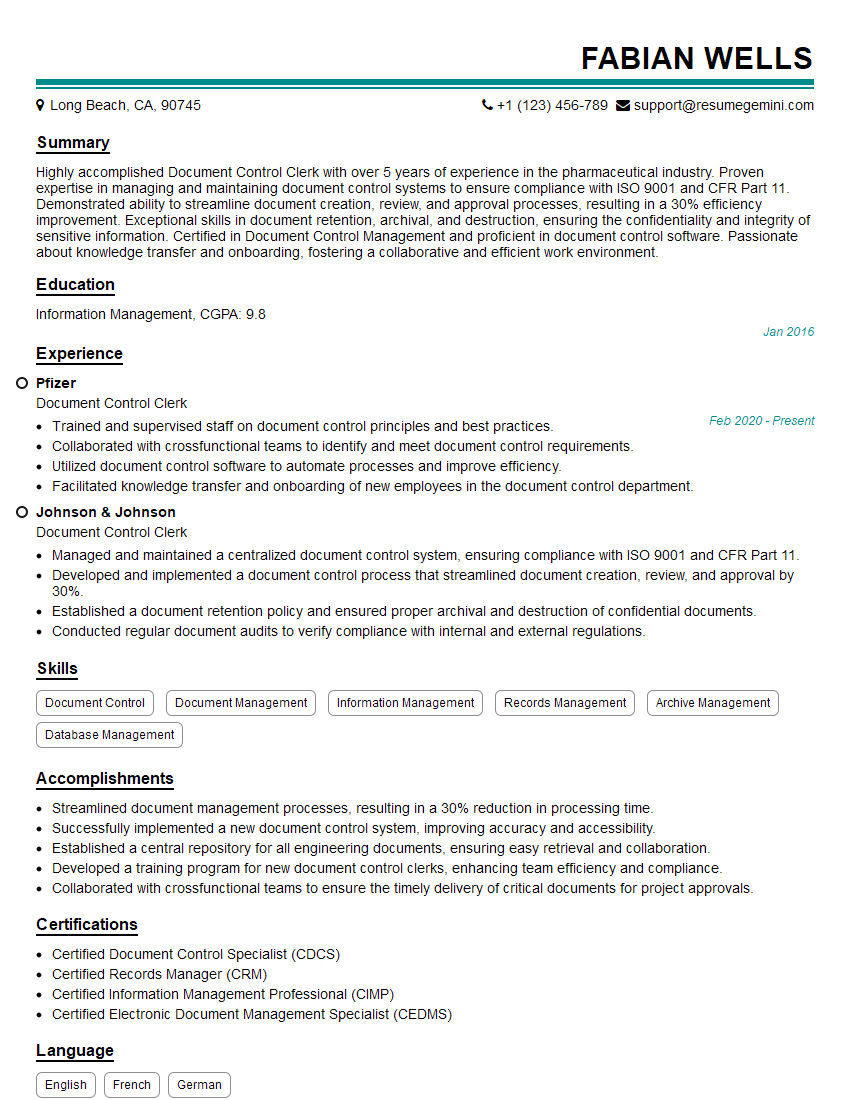
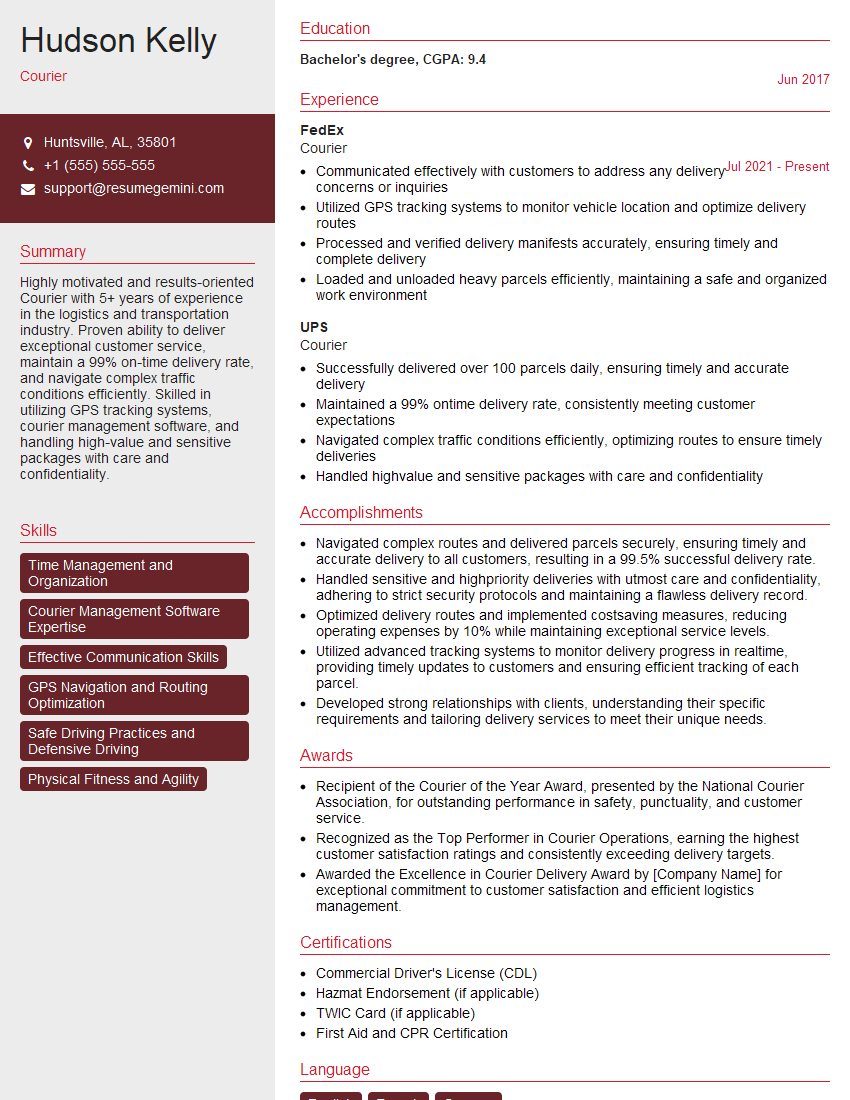
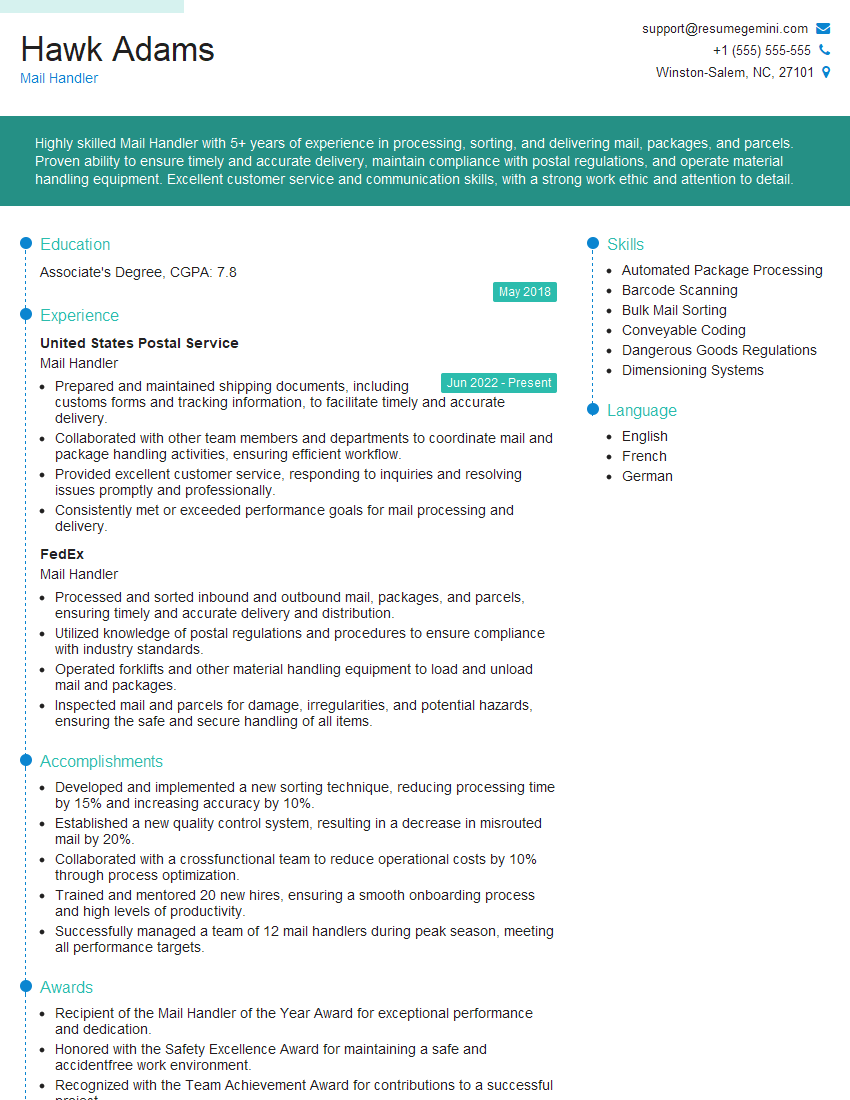
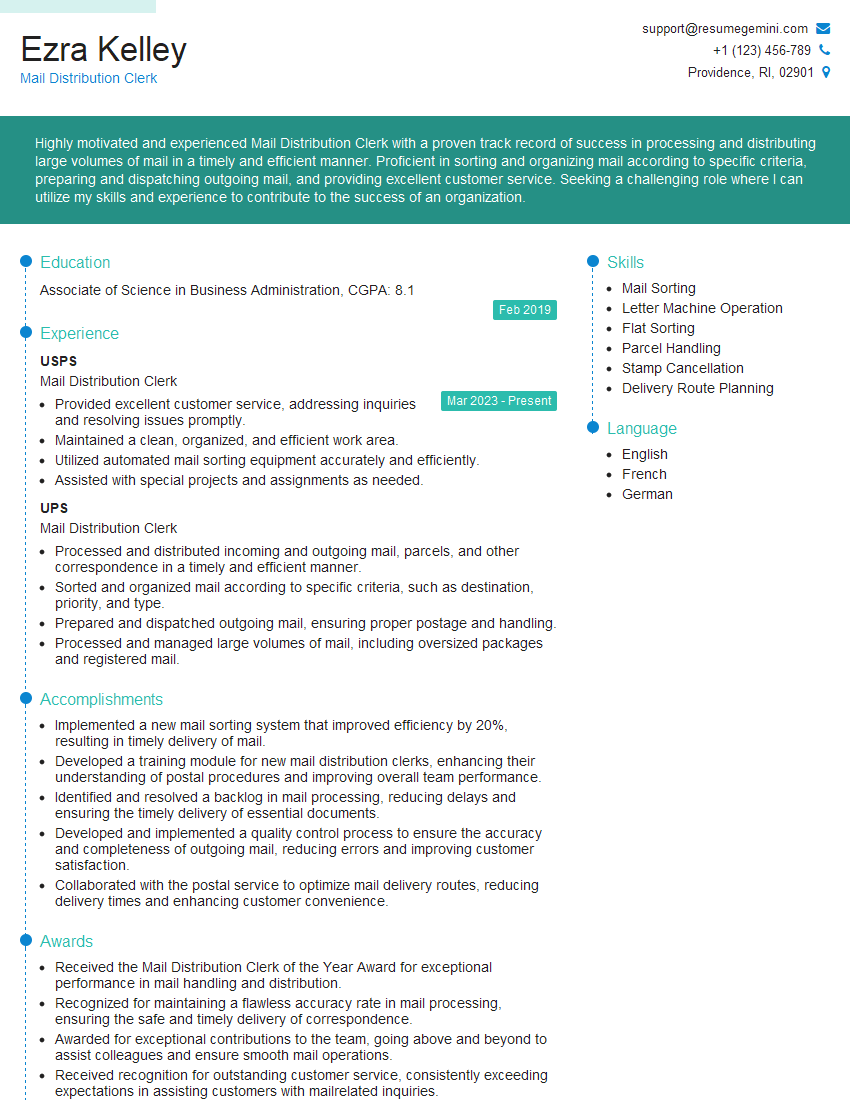
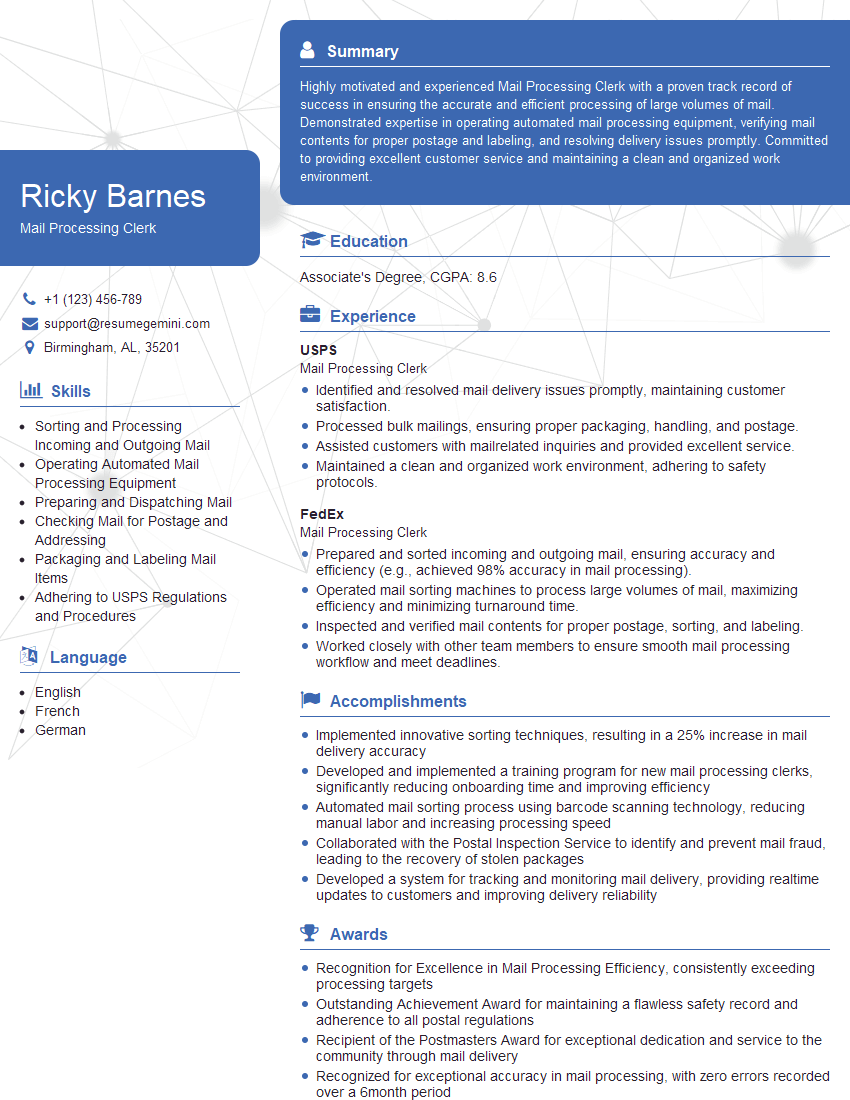
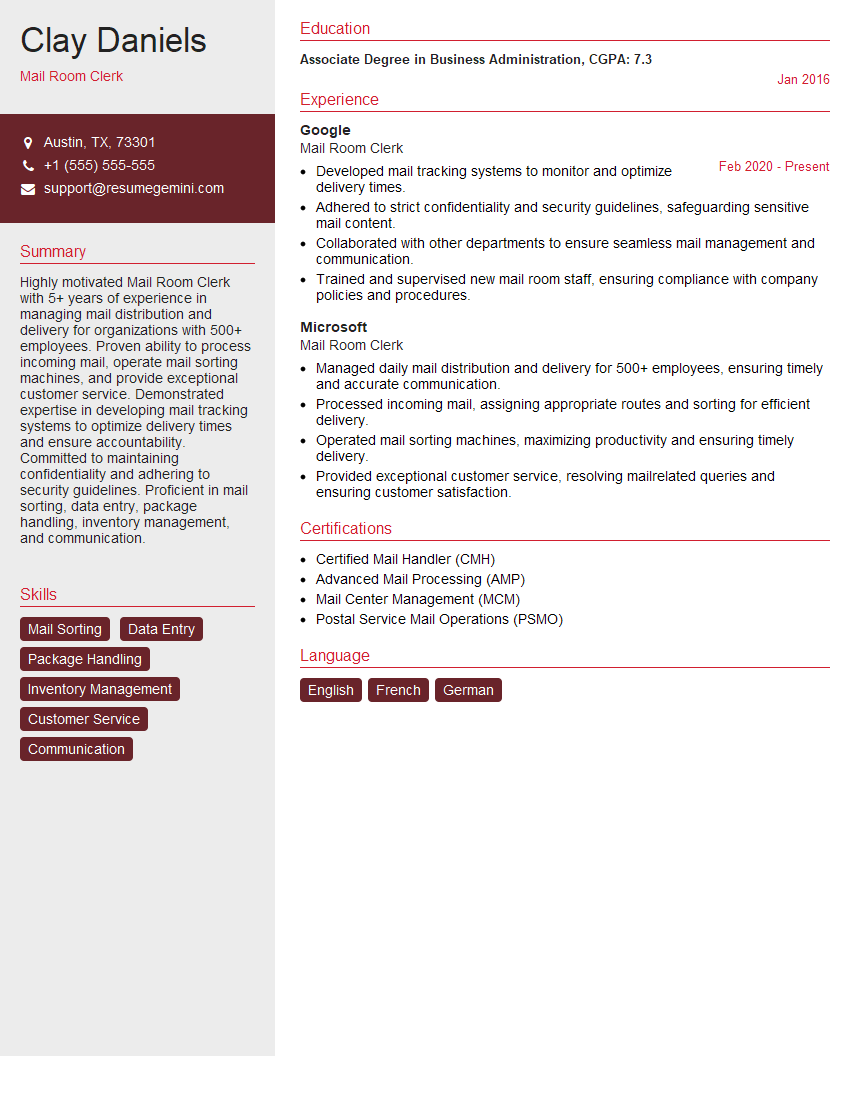
Mastering mail room duties provides a strong foundation for a successful career, demonstrating essential organizational, communication, and problem-solving skills applicable across various industries. Building an ATS-friendly resume is crucial for maximizing your job prospects. ResumeGemini can help you craft a compelling and effective resume that highlights your skills and experience. Examples of resumes tailored to Mail Room Duties are available to help guide your resume creation process.


Explore more articles
Users Rating of Our Blogs
Share Your Experience
We value your feedback! Please rate our content and share your thoughts (optional).
What Readers Say About Our Blog
Very informative content, great job.
good