Unlock your full potential by mastering the most common Maintain drilling records interview questions. This blog offers a deep dive into the critical topics, ensuring you’re not only prepared to answer but to excel. With these insights, you’ll approach your interview with clarity and confidence.
Questions Asked in Maintain drilling records Interview
Q 1. Describe your experience maintaining drilling records in compliance with industry regulations.
Maintaining drilling records in compliance with industry regulations is paramount for safety, efficiency, and legal reasons. My experience encompasses meticulous record-keeping adhering to standards set by organizations like the American Petroleum Institute (API) and relevant governmental bodies. This includes ensuring all data is accurately logged, properly timestamped, and readily retrievable. For instance, in a recent project, I implemented a system to track daily drilling parameters (ROP, mud weight, torque, etc.) in real-time, instantly flagging any deviations from pre-set limits, immediately preventing potential issues. This proactive approach not only prevented costly equipment failures but ensured full compliance with safety protocols. My attention to detail ensures that all records are organized and easily accessible for audits, demonstrating our commitment to regulatory compliance.
Q 2. Explain the different types of drilling records you are familiar with.
Drilling records encompass a wide range of data. I’m familiar with several types, including:
- Daily Drilling Reports (DDRs): These are fundamental records summarizing daily drilling activities, including footage drilled, time spent, equipment performance, and any incidents. Think of them as the daily diary of the well.
- Mud Logs: These document the properties of the drilling mud, providing critical insights into subsurface formations encountered. They’re crucial for formation evaluation and wellbore stability.
- Wireline Logs: These are obtained through specialized tools lowered into the wellbore to gather data on the geological formations. Examples include gamma ray, density, and porosity logs. These are invaluable for reservoir characterization.
- Directional Surveys: These track the well’s trajectory, ensuring it stays on the planned path. Essential for directional drilling and horizontal wells.
- Mechanical and Equipment Logs: These records track the performance of drilling equipment, helping to prevent failures and optimize operations.
- Incident Reports: Comprehensive documents detailing any accidents, near-misses, or equipment malfunctions during drilling operations.
The specific types of records kept will vary depending on the type of well being drilled (exploration, production, etc.) and the project requirements.
Q 3. How do you ensure the accuracy and completeness of drilling records?
Accuracy and completeness are non-negotiable in drilling records. My approach involves a multi-layered strategy. Firstly, I implement rigorous data validation procedures. This includes range checks (ensuring data falls within realistic limits), cross-referencing data from multiple sources, and plausibility checks. Secondly, I maintain a system for real-time data entry, minimizing the chances of errors. This often involves utilizing specialized software with automated alerts for inconsistencies. Thirdly, regular audits are conducted to verify the integrity of the records. Lastly, I insist on clear communication among all personnel involved in data collection, ensuring everyone understands their responsibility in maintaining accurate records. For example, if a discrepancy arises between a DDR and a wireline log, a thorough investigation is carried out to identify the source of the discrepancy and correct it.
Q 4. What software or systems have you used for managing drilling data?
Throughout my career, I’ve worked with various software and systems for managing drilling data. These include:
- WellCAD: A comprehensive well logging and interpretation software package.
- Petrel: A powerful reservoir simulation and modeling platform that incorporates drilling data.
- Drilling information management systems (IMS): These dedicated platforms are designed for real-time data capture, storage, and analysis. They typically offer functionalities like automated data validation and reporting.
My proficiency extends to both cloud-based and on-premise systems, allowing me to adapt to different project requirements. I’m also comfortable working with relational databases like SQL Server or Oracle, allowing for advanced data querying and analysis.
Q 5. How do you handle discrepancies or inconsistencies in drilling records?
Handling discrepancies is a critical aspect of maintaining drilling records. My approach is systematic and thorough. First, I identify the nature of the inconsistency, carefully comparing different data sources to pinpoint the root cause. This may involve reviewing original field measurements, comparing data from different loggers, or consulting with field personnel. Once the source of the problem is determined, I either correct the inaccurate data, properly documenting the correction and the rationale behind it, or flag the discrepancy as unresolved, indicating the ongoing investigation. Clear communication with the relevant teams is crucial to resolve discrepancies promptly and accurately. Maintaining a detailed audit trail for all corrections and investigations is vital for accountability and transparency. For example, if a discrepancy exists between the recorded mud weight and the pressure readings, I would examine the calibration of the equipment and potentially adjust accordingly.
Q 6. Describe your experience with data entry and validation in drilling records.
Data entry and validation are crucial for ensuring data quality. My experience encompasses careful data input, ensuring accuracy and consistency. This includes using standardized input formats and checking data against pre-defined limits. For example, if the reported rate of penetration (ROP) is significantly higher than expected for the given formation, I would verify the data. I utilize various techniques for data validation, such as range checks, consistency checks, and plausibility checks. Automated tools and software are used whenever possible to expedite the process and reduce errors. I pay close attention to units of measurement and ensure consistency throughout the dataset. Regular quality control checks are performed to minimize inconsistencies and improve overall data integrity.
Q 7. How do you prioritize tasks when dealing with a large volume of drilling data?
Prioritizing tasks when dealing with large volumes of drilling data requires a structured approach. I typically prioritize tasks based on urgency and importance. High-priority tasks include addressing critical safety issues, ensuring real-time data accuracy, and meeting regulatory reporting deadlines. Less urgent tasks, such as long-term data analysis or historical record organization, are scheduled accordingly. I often use project management tools to track tasks, set deadlines, and monitor progress. For example, I would prioritize the timely processing of daily drilling reports (DDRs) as these directly impact safety and operational efficiency. This would be followed by tasks such as wireline log interpretation, which is crucial for reservoir characterization but may have a longer timeline. Effective prioritization is crucial for efficient data management and informed decision-making.
Q 8. Explain your understanding of wellbore stability and its relevance to drilling records.
Wellbore stability refers to maintaining the integrity of the borehole during drilling operations. It’s crucial because instability can lead to wellbore collapse, stuck pipe, and ultimately, costly delays and potential safety hazards. Drilling records are intrinsically linked to wellbore stability because they document the parameters that influence it. For example, mud weight, formation pressure, and the type of drilling fluid are all recorded and directly impact the stability of the wellbore. If we see a sudden increase in torque and drag recorded in the drilling data, combined with a known shale formation, it might indicate a loss of wellbore stability due to swelling clay. Analyzing these records helps us understand the reasons for instability and implement corrective measures, such as adjusting mud weight or incorporating specialized drilling fluids.
Q 9. How do you identify and address potential data entry errors in drilling records?
Identifying data entry errors in drilling records requires a multi-pronged approach. Firstly, I use automated checks within the data entry software. These often flag inconsistencies, like impossible values (e.g., negative mud weight) or improbable changes in parameters (e.g., a sudden, inexplicable jump in the rate of penetration). Secondly, I perform visual inspection of the data for trends and outliers. Plotting data against time often reveals anomalies that automated checks might miss. For instance, a sudden spike in the rotary speed might indicate human error rather than a legitimate operational change. Finally, I implement a system of cross-checking data from different sources. Comparing the drilling records against information from mud logging reports or other instruments helps to validate the data and identify discrepancies. Addressing errors involves immediate correction with detailed notes documenting the mistake and the correction. Data is always audited, which involves regularly reviewing and comparing historical data against recent records.
Q 10. Describe your experience with different types of drilling fluids and how they’re documented.
My experience encompasses a wide range of drilling fluids, including water-based muds (WBM), oil-based muds (OBM), and synthetic-based muds (SBM). Each type is meticulously documented in the drilling records. For WBMs, we’d record the specific type and concentration of polymers, weighting agents (like barite), and any additives used for controlling rheology, filtration, or inhibition. For OBMs and SBMs, the type and proportion of oil or synthetic base fluid, along with emulsifiers and other additives, are carefully noted. We also meticulously document the fluid properties throughout the drilling process – parameters such as density, viscosity, pH, and filtration rate are regularly measured and recorded. This data is essential for understanding the fluid’s performance and its impact on wellbore stability, formation evaluation, and cuttings transport. For example, a change in mud weight can significantly alter the pressure exerted on the formation which could be critical in areas with high pressure formations.
Q 11. How familiar are you with regulatory requirements related to drilling records?
I am very familiar with the regulatory requirements surrounding drilling records, which vary depending on location and the specific regulatory body (e.g., the Bureau of Safety and Environmental Enforcement (BSEE) in the US, or equivalent bodies in other countries). These regulations mandate detailed and accurate record-keeping, including information on well location, drilling parameters, fluid properties, and any incidents or non-compliances. My understanding encompasses rules concerning data retention periods, record format, and submission requirements. I am proficient in ensuring compliance with reporting deadlines for both daily and final well reports. A good understanding of these rules is crucial in avoiding penalties, ensuring the safety of the operation, and protecting the environment.
Q 12. How do you ensure the security and confidentiality of drilling data?
Ensuring the security and confidentiality of drilling data is paramount. We utilize several measures. Firstly, access to drilling records is restricted using role-based access control within our data management systems. Secondly, all data is encrypted both during transmission and at rest. This prevents unauthorized access even if the system is compromised. Thirdly, we have strict protocols for data backup and recovery to mitigate against data loss. Fourthly, all personnel involved in handling drilling data undergo training on data security and confidentiality, and sign non-disclosure agreements if appropriate. Finally, regular audits are conducted to ensure that our security protocols remain effective and up-to-date, and we actively monitor our system for any suspicious activities.
Q 13. What are the key performance indicators (KPIs) you monitor when reviewing drilling records?
When reviewing drilling records, I focus on key performance indicators (KPIs) that reflect both efficiency and safety. These include the rate of penetration (ROP), which indicates drilling efficiency; the amount of non-productive time (NPT), indicating downtime and potential problems; the torque and drag on the drillstring, signaling potential wellbore instability; the amount of drilling fluid used and its properties. Monitoring these KPIs allows us to identify areas for improvement, such as optimizing drilling parameters or preventing problems early. For instance, consistently low ROP might indicate the need for a change in bit or drilling fluid, while high NPT suggests a need for improved planning or preventative maintenance. By meticulously analyzing these, we’re able to constantly improve our procedures and reduce the overall cost and risks associated with drilling.
Q 14. Explain your process for generating reports from drilling records.
My process for generating reports from drilling records involves several steps. First, I identify the specific information required for the report. This could range from a simple daily drilling report to a comprehensive well completion report. Next, I extract the relevant data from the database using appropriate queries, often using SQL or other database query languages. SELECT ROP, Torque, Drag FROM DrillingData WHERE WellID = 'Well-123' is an example of a SQL query. Then, I process and analyze this data using spreadsheet software or specialized reporting tools. This may involve calculating averages, creating graphs, and identifying trends. Finally, I present the results in a clear and concise report format, using charts and tables to illustrate key findings. The final report will always include appropriate headers, footers and relevant well data to ensure traceability and accuracy.
Q 15. How do you utilize drilling records for performance analysis and improvement?
Drilling records are a treasure trove of information that can significantly boost operational efficiency and profitability. I use them for performance analysis by systematically reviewing parameters like drilling rate, bit wear, mud properties, and wellbore stability. For instance, if we consistently observe slow drilling rates in a specific formation, I would analyze the corresponding data points – mud weight, rotary speed, torque, and weight on bit – to pinpoint the contributing factors. This might reveal a need for optimized mud rheology or a different bit type. Further, tracking pump pressures over time can signal potential issues like stuck pipe or formation fracturing, allowing for proactive interventions.
Improvement comes from identifying trends and patterns. For example, by plotting the drilling rate against bit wear, I can determine the optimal bit life before replacement, minimizing downtime and maximizing efficiency. I also compare drilling performance across different wells and formations to identify best practices and areas for improvement. This comparative analysis helps us establish benchmarks and optimize our drilling strategies across various projects.
Career Expert Tips:
- Ace those interviews! Prepare effectively by reviewing the Top 50 Most Common Interview Questions on ResumeGemini.
- Navigate your job search with confidence! Explore a wide range of Career Tips on ResumeGemini. Learn about common challenges and recommendations to overcome them.
- Craft the perfect resume! Master the Art of Resume Writing with ResumeGemini’s guide. Showcase your unique qualifications and achievements effectively.
- Don’t miss out on holiday savings! Build your dream resume with ResumeGemini’s ATS optimized templates.
Q 16. Describe your experience working with geological data and how it integrates with drilling records.
Geological data is fundamental to interpreting drilling records. It provides the context necessary for understanding the observed drilling parameters. For example, knowing the lithology (rock type) from the geological logs helps explain variations in drilling rate. A hard, dense formation like granite will naturally result in slower penetration rates compared to a softer, more porous sandstone. Similarly, the presence of faults or fractures, identified through geological interpretation, can explain unexpected changes in wellbore stability, mud loss, or even drilling equipment failures.
I utilize this integration by overlaying the drilling data (e.g., rate of penetration, torque, weight on bit) onto geological logs (e.g., gamma ray, porosity, density). This visual representation reveals correlations between formation properties and drilling performance, allowing for more accurate predictions and informed decision-making. For instance, a sudden increase in torque in a section identified as a fault zone in the geological logs might prompt a change in drilling parameters to prevent equipment damage.
Q 17. How do you handle missing or incomplete data in drilling records?
Missing or incomplete data in drilling records is a common challenge. My approach is multi-pronged. First, I meticulously investigate the cause of the missing data. Was there a sensor malfunction? Were there communication issues? Understanding the reason for incompleteness guides my strategy for addressing it.
If the missing data is minor and doesn’t significantly affect the analysis, I might use interpolation techniques to estimate the missing values based on neighboring data points. For example, if a single data point for drilling rate is missing, I can interpolate it based on the values before and after. However, if significant portions of data are missing or if the data gap is large, I may need to rely on other sources such as well logs or similar well data for comparison and estimation. If the data gap is irretrievably lost, I would clearly document this in the record to maintain transparency and prevent misinterpretations.
Data validation is critical. I employ checks to ensure the data’s consistency and plausibility. For example, if the recorded mud weight is significantly outside the acceptable range, I would investigate the discrepancy, potentially by checking the source data or contacting the rig crew.
Q 18. Describe your experience collaborating with different teams regarding drilling data.
Collaboration is paramount in drilling data management. I regularly interact with various teams, including geologists, drilling engineers, mud engineers, and rig personnel. My role involves translating complex data into actionable insights for these teams. For instance, I might present a detailed analysis of drilling performance to the drilling engineers, highlighting areas where optimization is possible. Similarly, I would collaborate with geologists to interpret geological anomalies based on drilling data, aiding in formation evaluation and reservoir characterization.
Effective communication is key. I typically use clear visualizations like charts and graphs to present my findings. Regular meetings and data sharing platforms help to keep everyone informed and aligned. In one project, I had to work closely with the mud engineers to adjust mud properties based on observations of wellbore instability indicated in the drilling data. This collaborative effort led to significant cost and time savings.
Q 19. How do you ensure the timely completion of drilling record maintenance?
Timely completion of drilling record maintenance is crucial for operational efficiency and accurate decision-making. I achieve this through a combination of strategies. First, I establish clear procedures and workflows for data collection and entry. This includes standardizing data formats and using automated data transfer systems wherever possible.
Second, I maintain a robust quality control system to ensure data accuracy and completeness. This involves regular data audits and validation checks. Third, I utilize project management tools to track progress and identify potential delays. This allows proactive interventions and prevents bottlenecks. Regular communication with the field teams is essential to address any data entry issues promptly.
In practice, daily review of incoming data and reporting any inconsistencies or missing information are essential. By consistently following these steps, I ensure that the records are both accurate and up-to-date, enabling better decision-making in real-time.
Q 20. What are the potential consequences of inaccurate drilling records?
Inaccurate drilling records can have severe consequences, ranging from minor inefficiencies to significant financial losses and even safety hazards. For instance, incorrect data on mud weight could lead to wellbore instability, causing casing collapse or stuck pipe, resulting in costly repairs and extended downtime.
Similarly, errors in reporting drilling parameters could lead to misinterpretations of formation properties, resulting in poor well design or incorrect reservoir estimations. In the worst-case scenario, inaccurate data could compromise well integrity, leading to environmental incidents or even accidents. This highlights the importance of accurate and reliable drilling records.
Q 21. Explain your experience in using specialized software for drilling data analysis.
I have extensive experience using specialized software for drilling data analysis. My proficiency includes packages like Petrel, DecisionSpace, and Landmark’s OpenWorks. These tools allow me to perform sophisticated data analysis, including trend identification, forecasting, and visualization. For instance, I use Petrel to integrate drilling data with other geoscience datasets (e.g., seismic, well logs) to create a comprehensive geological model.
I am also proficient in using programming languages like Python with libraries like Pandas and Matplotlib for data manipulation, analysis, and visualization. This allows me to create custom scripts to automate data processing tasks and develop advanced analytical models. In one project, I used Python to develop a predictive model for optimal drilling parameters, which led to a substantial reduction in drilling time and cost.
Q 22. How do you handle data backups and disaster recovery for drilling records?
Data backups and disaster recovery are paramount in drilling record management, as these records are crucial for operational safety, regulatory compliance, and future well operations. My approach is multifaceted, employing both on-site and off-site backups.
On-site backups: We utilize a robust RAID system (Redundant Array of Independent Disks) for data redundancy, ensuring data availability even if one or more hard drives fail. Regular incremental backups are scheduled, minimizing downtime and storage space.
Off-site backups: A complete backup is replicated to a geographically separate secure location – a cloud-based solution or a separate data center – using a secure transfer protocol like SSH or FTPS. This safeguards against local disasters like fires or floods.
Disaster Recovery Plan: A detailed disaster recovery plan outlines procedures for restoring data in case of a system failure or disaster. This plan includes restoring backups to a new server or system, testing the restoration process regularly to ensure its effectiveness, and identifying and designating recovery personnel.
Think of it like having a crucial document – you wouldn’t just keep one copy on your desk! This layered approach safeguards valuable drilling data.
Q 23. Describe your experience with data migration related to drilling records.
Data migration for drilling records requires meticulous planning and execution to maintain data integrity. I’ve been involved in several migrations, ranging from legacy databases to modern cloud-based solutions.
Assessment Phase: This involves thoroughly analyzing the existing data structure, identifying any data quality issues (missing values, inconsistencies), and defining the target system. This helps in choosing the right migration strategy.
Data Cleaning and Transformation: Before migration, it’s essential to clean and transform the data to align with the new system’s structure. This might involve data validation, standardization, and conversion of data formats.
Migration Strategy: We typically adopt a phased approach, migrating data in smaller batches. This allows for better monitoring, error detection, and correction. Parallel processing is often used to speed up large migrations.
Validation and Testing: After each phase, we perform rigorous data validation and testing to ensure data accuracy and completeness in the new system. This helps prevent data loss or corruption.
For example, migrating from a paper-based system to a digital one requires meticulous scanning, OCR (Optical Character Recognition) for data extraction, and verification of the extracted data before import into a new database. A successful migration is like smoothly moving furniture to a new house—with careful planning, everything arrives safely and in order.
Q 24. How do you ensure the integrity of drilling records during a well intervention?
Maintaining drilling record integrity during a well intervention is crucial for safety and operational efficiency. It requires a strict protocol to ensure that all modifications and updates are accurately documented and auditable.
Real-time Updates: During an intervention, all actions, such as equipment changes, procedures followed, and any anomalies observed, are documented in real-time, often using digital logging software that directly integrates with the well control systems.
Version Control: Changes to the drilling records should be tracked using version control, allowing us to trace back modifications and ensure accountability. This is similar to using revision history in a document editor.
Data Validation: Regular checks are performed to ensure data consistency and accuracy. These checks might include cross-referencing data from multiple sources.
Secure Access Control: Access to the drilling records should be restricted to authorized personnel only, ensuring the data remains secure and tamper-proof.
Imagine a surgeon meticulously documenting every step of an operation – the same level of precision and accuracy is needed for drilling record management during well interventions.
Q 25. What is your approach to quality control and quality assurance for drilling records?
Quality control and quality assurance (QC/QA) for drilling records are vital to ensure data reliability and regulatory compliance. My approach encompasses several key elements:
Data Validation Rules: We establish rules for data entry, ensuring consistency and accuracy. For example, data type validation (ensuring numbers are entered in numerical fields) and range checks (checking values are within acceptable limits) can be implemented.
Regular Audits: Periodic audits are conducted to review the accuracy and completeness of the records. This may involve comparing the digital records with physical logs and investigating any discrepancies.
Training and Competency: Personnel involved in data entry and management receive thorough training on the proper procedures and industry standards. This helps to prevent errors and ensure consistency.
Data Reconciliation: We reconcile data from various sources (e.g., mud logs, drilling reports, and sensor readings) to identify any inconsistencies or errors. This cross-referencing helps verify data accuracy.
Think of QC/QA as a safety net, catching potential errors before they impact the safety or efficiency of drilling operations.
Q 26. Describe your experience with different drilling techniques and their associated record-keeping.
My experience spans various drilling techniques, each with unique record-keeping requirements.
Rotary Drilling: Records include drilling parameters (RPM, weight on bit, torque), mud properties, rate of penetration (ROP), and geological data (formation lithology). Data is often logged in real-time using drilling software.
Directional Drilling: This adds measurements of wellbore inclination, azimuth, and toolface, requiring specialized software and procedures for data recording and analysis. Real-time tracking of the wellbore trajectory is critical.
Underbalanced Drilling: This technique requires detailed records of pressure monitoring, gas readings, and fluid properties to maintain wellbore stability and prevent unwanted influxes.
Horizontal Drilling: Records emphasize wellbore trajectory, formation evaluation, and reservoir characteristics. Detailed geosteering data is typically recorded and analyzed to optimize well placement.
Each method demands a tailored approach to recording data, ensuring all relevant parameters are accurately captured and stored for analysis and future reference. The level of detail is directly related to the complexity and risks associated with the specific drilling technique.
Q 27. How do you stay updated with the latest industry standards and best practices in drilling record management?
Staying updated is crucial in the dynamic drilling industry. I utilize several strategies to maintain my knowledge:
Industry Publications: I regularly read industry journals, magazines, and technical papers to keep abreast of the latest technologies and best practices. This allows me to adopt the most efficient and safest methods.
Conferences and Workshops: Attending industry conferences and workshops provides invaluable opportunities to learn from experts, network with peers, and understand emerging trends.
Professional Organizations: Membership in professional organizations (such as SPE – Society of Petroleum Engineers) provides access to training materials, publications, and networking events, keeping me connected to the latest standards and advancements.
Online Resources: I regularly consult online databases, industry websites, and regulatory bodies to stay informed about updated guidelines and regulations.
Continuous learning is an integral part of my professional development, ensuring I apply the most up-to-date methods in drilling record management.
Key Topics to Learn for Maintain Drilling Records Interview
- Data Entry and Accuracy: Understanding the importance of precise data entry for drilling parameters, including depth, pressure, rate of penetration, and fluid properties. This includes proficiency in using relevant software and hardware.
- Data Management Systems: Familiarity with various drilling data management systems (DDMS) and their functionalities, including data import, export, and reporting. Practical application involves efficiently organizing and retrieving data for analysis.
- Regulatory Compliance: Knowledge of relevant health, safety, and environmental regulations related to drilling records and reporting requirements. This includes understanding the implications of inaccurate or incomplete record-keeping.
- Data Analysis and Interpretation: Ability to interpret drilling data to identify trends, anomalies, and potential problems. This involves practical application in problem-solving scenarios, such as identifying kick indicators or optimizing drilling parameters.
- Reporting and Communication: Understanding the different types of drilling reports and their purpose, and the ability to clearly communicate technical information to both technical and non-technical audiences.
- Software Proficiency: Demonstrating familiarity with specific software commonly used in the industry for managing drilling data (mention specific software if applicable to the target audience – e.g., Petrel, WellView).
- Troubleshooting and Problem Solving: Ability to identify and resolve issues related to data entry, data integrity, and reporting inconsistencies. This includes proactive measures to prevent future errors.
Next Steps
Mastering the art of maintaining drilling records is crucial for career advancement in the energy sector. Accurate and efficient record-keeping is fundamental to operational safety, regulatory compliance, and informed decision-making. To significantly enhance your job prospects, focus on building an ATS-friendly resume that highlights your skills and experience. ResumeGemini is a trusted resource that can help you create a compelling resume tailored to the industry. Examples of resumes tailored to maintaining drilling records are available, showcasing how to effectively present your qualifications for this crucial role.
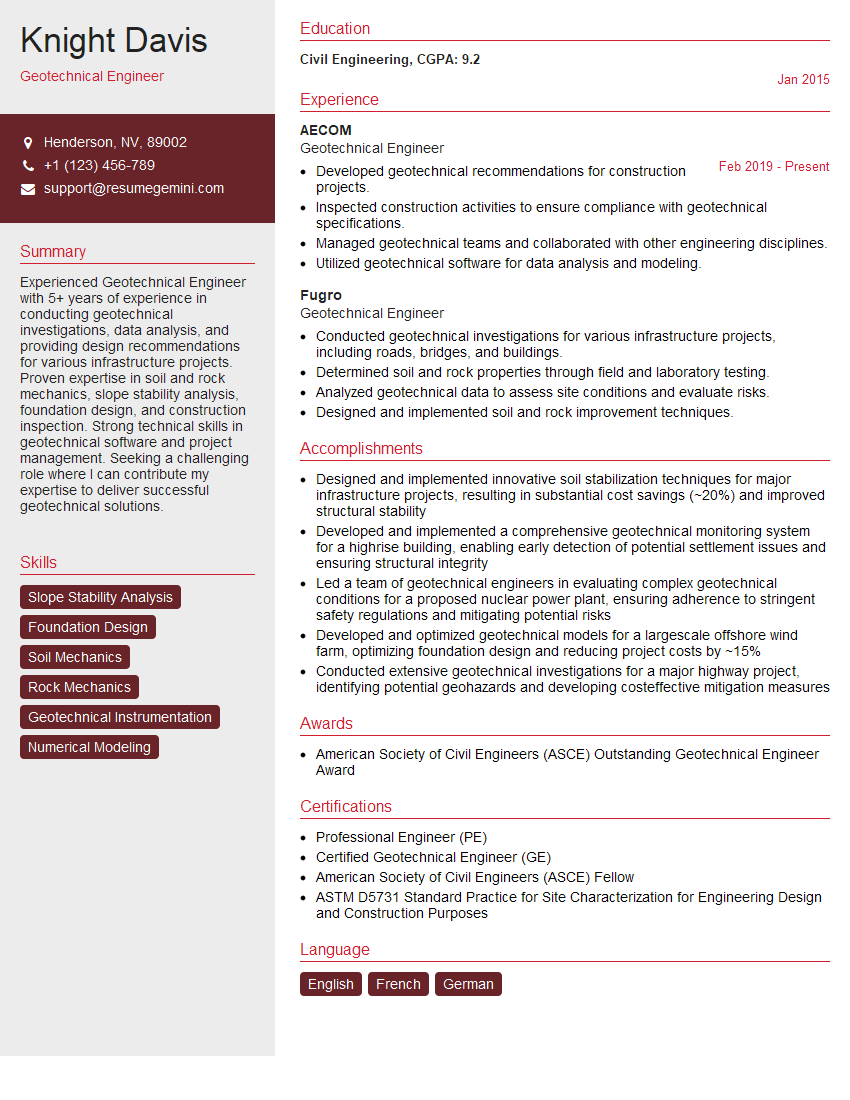
Geotechnical Engineer Resume Sample

Reservoir Engineer Resume Sample
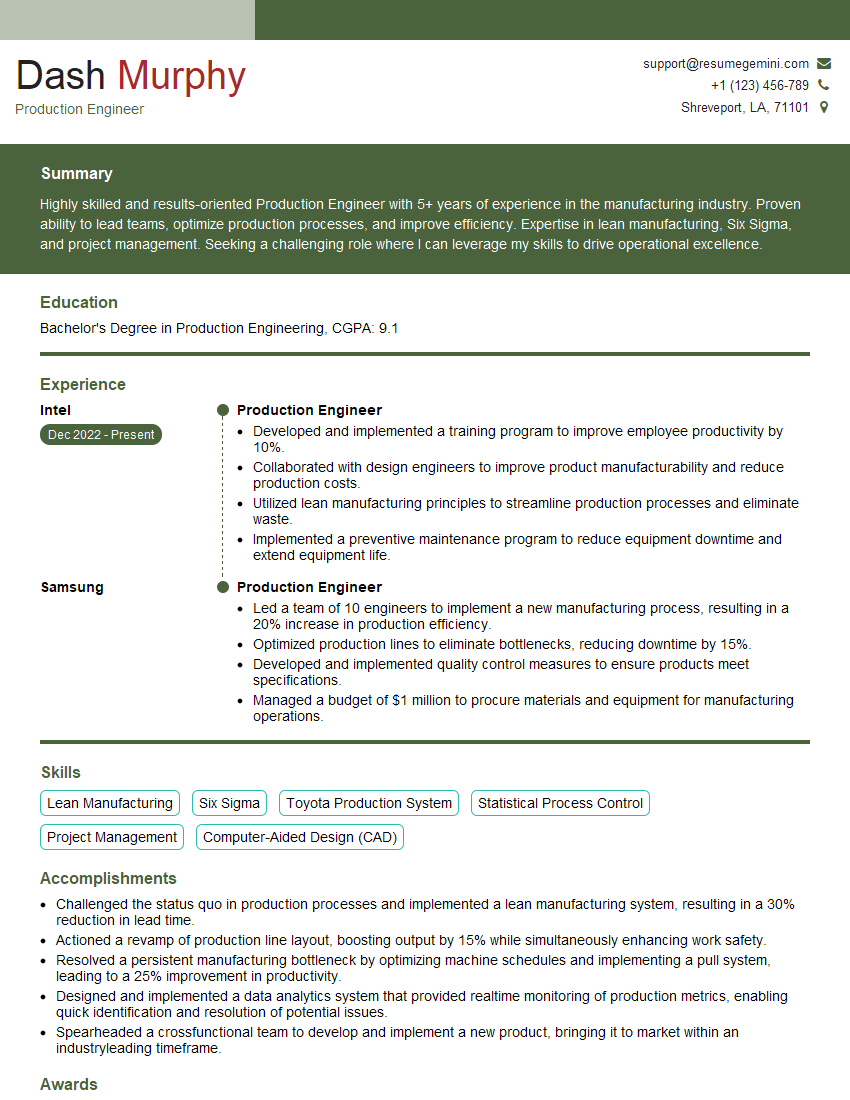
Production Engineer Resume Sample

Completion Engineer Resume Sample
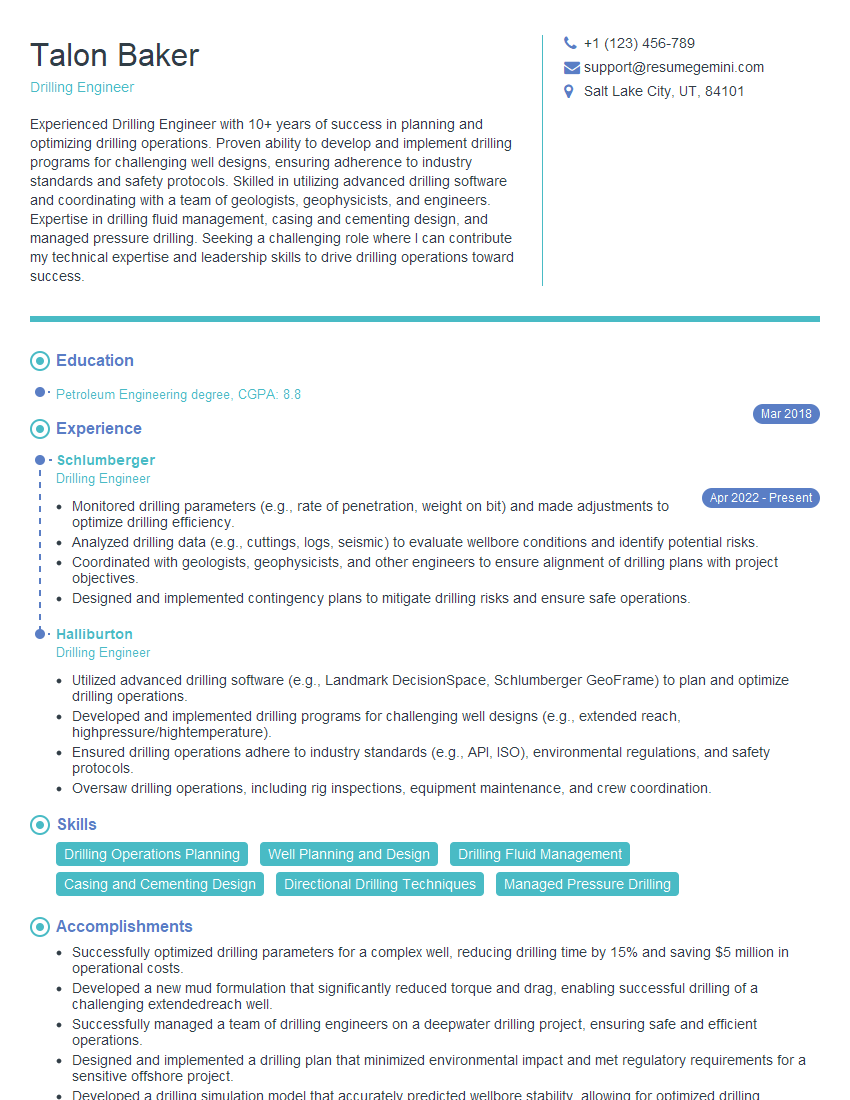
Drilling Engineer Resume Sample

Mud Engineer Resume Sample
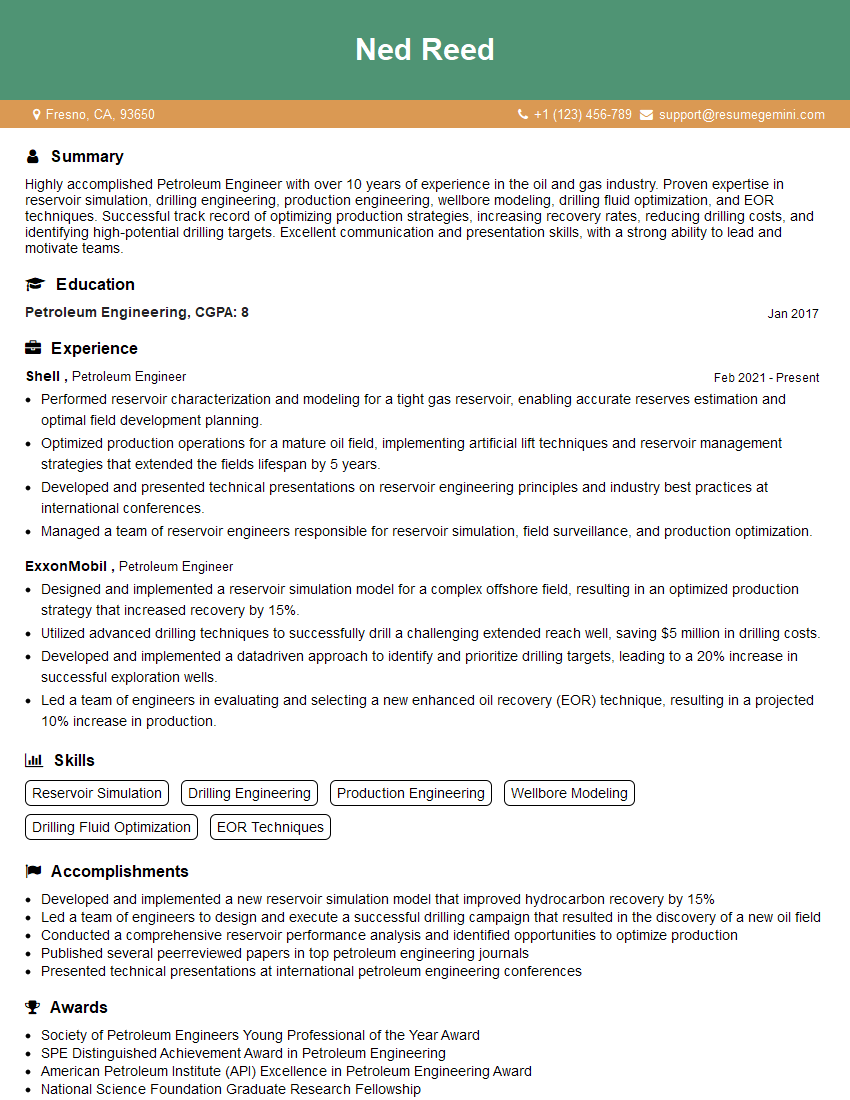
Petroleum Engineer Resume Sample

Directional Driller Resume Sample

Drilling Supervisor Resume Sample
Explore more articles
Users Rating of Our Blogs
Share Your Experience
We value your feedback! Please rate our content and share your thoughts (optional).
What Readers Say About Our Blog
Very informative content, great job.
good