Every successful interview starts with knowing what to expect. In this blog, we’ll take you through the top Basic Underwater Demolition/SEAL (BUD/S) Training Phase interview questions, breaking them down with expert tips to help you deliver impactful answers. Step into your next interview fully prepared and ready to succeed.
Questions Asked in Basic Underwater Demolition/SEAL (BUD/S) Training Phase Interview
Q 1. Describe the three phases of BUD/S training.
BUD/S training is divided into three phases: Phase 1, Hell Week, and Phases 2 and 3. Phase 1 focuses on building a foundation of physical and mental toughness. Think of it as the base layer of a strong building. It emphasizes physical conditioning, basic swimming skills, and introduction to tactical training. This phase is designed to weed out those who lack the fundamental physical and mental resilience required to progress. Hell Week, the infamous Phase 1 culmination, is a grueling five and a half days of relentless physical and mental challenges, designed to push candidates to their absolute limits and evaluate their willpower. Phases 2 and 3 build upon this foundation, delving into more specialized skills such as underwater demolition, land warfare tactics, and advanced diving procedures. It’s like constructing the upper floors – building upon the established groundwork.
Q 2. Explain the importance of land navigation in BUD/S.
Land navigation is crucial in BUD/S because SEALs often operate in remote, challenging environments where GPS might be unreliable or unavailable. Mastering land navigation ensures mission success. Candidates are trained in using maps, compasses, and celestial navigation techniques to precisely locate themselves and navigate to specific points, even in the dark or under adverse weather conditions. This skill translates directly to real-world operational scenarios where precise navigation is paramount for infiltration, exfiltration, and successful mission completion. Imagine a SEAL team needing to infiltrate a target area undetected – flawless land navigation is essential to avoid enemy patrol routes and ensure mission success.
Q 3. What are the key physical fitness requirements for BUD/S?
BUD/S demands exceptional physical fitness. Candidates must excel in a range of areas, including swimming (long distances and underwater), running (long distances at various paces), calisthenics (e.g., push-ups, pull-ups, sit-ups), and overall endurance. The physical standards are exceptionally high, and a candidate must already be in peak physical condition before entering BUD/S. Think of it like a marathon runner preparing for an ultramarathon – they already have a strong base of fitness, but need to push themselves further still. Specific examples include the 500-meter swim, numerous repetitions of calisthenics exercises, and the challenging long-distance runs often performed in the sand.
Q 4. Detail your understanding of the BUD/S indoctrination phase.
The BUD/S indoctrination phase is more than just an introduction; it’s a psychological and physical assessment designed to weed out candidates who lack the mental fortitude, teamwork skills, and willingness to endure extreme hardship. Instructors employ various techniques to test candidates’ limits, including sleep deprivation, constant physical exertion, and relentless harassment. The goal isn’t merely to break candidates, but to identify those possessing the grit to persevere and excel under pressure. This phase sets the tone for the rest of the training, emphasizing the importance of teamwork, resilience, and the ability to push past physical and mental barriers.
Q 5. Describe a specific challenge you faced during a physically demanding task and how you overcame it.
During a particularly grueling surf session in Phase 1, my arms and shoulders were completely fatigued. The instructor was relentless, pushing us to complete another set of extremely difficult exercises while continuously in the ocean. I felt like I was about to drown, but quitting never crossed my mind. I broke it down: I focused on small, manageable steps, breathing deeply, and reminding myself that every small movement brought me closer to the end. I drew on my mental strength and the support of my teammates to push through. That experience taught me the invaluable lesson of breaking down overwhelming tasks into smaller, achievable goals, a strategy I continue to employ in all challenging situations.
Q 6. How do you manage stress and pressure in high-stakes situations?
Managing stress and pressure in high-stakes situations requires a multifaceted approach. First, meticulous preparation is key. Thorough training and understanding of the tasks at hand allow one to react effectively. Second, maintaining a positive mental attitude and focusing on the present moment – one task at a time – are vital. Third, I rely heavily on controlled breathing and mindfulness techniques to reduce stress responses. Finally, teamwork is paramount. Trusting and supporting my teammates, and knowing they’re there for me, significantly reduces individual pressure. It’s like climbing a mountain – a solid plan, mental resilience, and the support of my climbing partners are all necessary for a successful summit.
Q 7. Explain your understanding of underwater demolition techniques.
Underwater demolition techniques are crucial for SEALs. They involve the safe and efficient placement of explosives underwater for various purposes, such as breaching obstacles, creating pathways, or destroying enemy structures. This requires a deep understanding of hydrodynamics, explosives, and underwater safety protocols. Training involves mastering the precise placement of charges, calculating detonation timing, and ensuring safety for both the demolition team and the surrounding environment. Precision is paramount, as improper placement could endanger the team and damage surrounding infrastructure. It’s a highly technical and dangerous skill requiring extensive training and a profound understanding of physics and engineering principles.
Q 8. Describe your experience with small unit tactics and leadership.
My experience with small unit tactics and leadership is extensive, honed through years of training and operational deployments. In BUD/S, we constantly practice operating in small teams, often under immense stress and with limited resources. This necessitates strong leadership and flawless execution of plans. For example, during a nighttime land navigation exercise, our four-man team was tasked with navigating challenging terrain while avoiding detection. I took the lead, leveraging my knowledge of map reading and compass navigation, delegating tasks effectively, and ensuring consistent communication among team members. This resulted in successful mission completion ahead of schedule. My leadership style focuses on empowerment and shared responsibility – ensuring each team member understands their role, feels confident in their abilities, and is actively involved in decision-making. We also frequently practiced various infiltration and exfiltration techniques, close-quarters combat, and reconnaissance missions. These experiences instilled in me a deep understanding of tactical planning, risk assessment, and the crucial importance of adaptability in dynamic situations.
Q 9. What is your understanding of maritime operations?
Maritime operations encompass a broad range of activities conducted in, on, or under the water. My understanding extends from basic seamanship skills – such as boat handling, navigation, and weather awareness – to advanced techniques like underwater demolition, combat diving, and amphibious assault operations. BUD/S instilled in me a deep appreciation for the unique challenges presented by the maritime environment. This includes the unpredictable nature of the sea, the limitations of visibility and communication underwater, and the critical need for precise planning and execution in every operation. I’ve had extensive hands-on experience with various watercraft, including RHIBs (Rigid-hulled inflatable boats) and larger support vessels. I’m proficient in various navigation techniques, utilizing both traditional charts and modern GPS systems. My training has covered topics such as maritime law, search and rescue procedures, and the environmental considerations inherent in maritime operations.
Q 10. Explain the importance of teamwork in BUD/S.
Teamwork is not merely important in BUD/S; it’s the very foundation upon which success is built. The training is designed to push individuals to their absolute limits, but the true test lies in overcoming those challenges as a cohesive unit. Each student relies on their teammates for support, encouragement, and even survival. A classic example is the Hell Week portion of the training, where sleep deprivation, physical exhaustion, and constant pressure test the bonds of the team. Students who excel are those who prioritize the well-being and success of their teammates. Trust, communication, and mutual respect are paramount. A single weak link can jeopardize the entire team. Throughout the different phases of training, from underwater demolition to combat swimming, the emphasis is always on supporting each other, fostering a sense of camaraderie, and learning to effectively leverage individual strengths to accomplish collective goals. In the real world, this translates to highly effective and resilient operational teams.
Q 11. How do you handle failure and setbacks?
Failure is an inevitable part of BUD/S. It’s not a matter of *if* you fail, but *how* you respond to it. The instructors deliberately design challenges to break you down, both physically and mentally, to see how you react under extreme pressure. My approach to failure is threefold: analysis, adaptation, and perseverance. First, I meticulously analyze the reasons for failure, identifying areas for improvement. This could involve refining my technique, improving my physical conditioning, or strengthening my mental fortitude. Second, I adapt my approach based on that analysis. This might involve changing my strategy, seeking guidance from instructors, or working with teammates to overcome weaknesses. Finally, I persevere. Giving up is not an option. I draw strength from the knowledge that this training is designed to break individuals, but only those who refuse to be broken succeed. Each failure is a valuable learning opportunity, strengthening resilience and improving future performance.
Q 12. Describe your experience with combat diving procedures.
My experience with combat diving procedures includes various aspects of underwater demolition and reconnaissance operations. This involves the safe handling and use of explosives underwater, underwater navigation and communication, and various techniques for infiltration and exfiltration from waterborne environments. This included extensive training in underwater equipment maintenance, underwater search and recovery procedures, and various types of underwater communication systems. We practiced various scenarios, such as planting and disabling underwater explosives, conducting underwater reconnaissance missions, and responding to underwater emergencies. I’m proficient in utilizing various diving apparatus, including SCUBA and closed-circuit rebreathers, understanding their limitations and capabilities in different operational environments. Safety is paramount in combat diving; therefore, rigorous adherence to procedures and protocols is essential.
Q 13. What is your understanding of explosive ordnance disposal (EOD) principles?
My understanding of Explosive Ordnance Disposal (EOD) principles is foundational, stemming from the underwater demolition aspects of BUD/S. While I haven’t received formal EOD training, I possess a working knowledge of explosive properties, detonation mechanisms, and safe handling procedures. This includes understanding the different types of explosives, their sensitivities, and the factors that influence their detonation. In BUD/S, we practiced handling explosives underwater, requiring a high degree of precision and awareness of safety protocols. This included understanding the effects of water pressure on explosives and the importance of proper detonation procedures to minimize risk. This foundation provides a solid basis for further specialized training in EOD, if required. Safety procedures are always paramount, emphasizing a cautious and deliberate approach to handling any explosive device.
Q 14. Explain your knowledge of advanced swimming techniques.
BUD/S emphasizes advanced swimming techniques essential for survival and operational effectiveness in various aquatic environments. This goes beyond simple strokes. We’ve mastered techniques such as underwater swimming with and without equipment, combat swimming, and various rescue techniques, including assisting a distressed swimmer. We practiced different types of underwater kicking techniques for speed and efficiency, and different breathing techniques to manage our air supply effectively underwater. We also underwent extensive training on different types of currents and how to navigate them safely. Proficiency in these techniques ensures survival in challenging conditions and allows for effective operational capabilities in diverse environments. My training has emphasized efficiency, speed, and stamina in the water, crucial aspects for successful completion of underwater missions.
Q 15. Detail your experience with close-quarters combat (CQC).
Close-Quarters Combat (CQC) in BUD/S is less about flashy moves and more about controlled aggression and efficient lethality in confined spaces. It emphasizes maximizing the use of available space, utilizing cover effectively, and employing decisive strikes. We’re trained extensively in various hand-to-hand combat techniques, weapon retention, and weapon manipulation in close proximity. Think about it like a chess match, not a brawl; every move needs to be calculated and purposeful.
My experience includes extensive training in various CQC techniques, including the use of firearms, knives, and empty-hand combat. This training involved countless repetitions of drills under increasingly stressful conditions – low light, simulated combat, and close-quarters engagements with instructors who tested our reactions and ability to think clearly under extreme pressure. For example, a common drill involved navigating a confined space while simultaneously engaging multiple simulated threats. Success wasn’t simply about defeating the opponent; it was about efficiency and preservation of self and mission success. The emphasis is always on neutralizing the threat quickly and safely.
Career Expert Tips:
- Ace those interviews! Prepare effectively by reviewing the Top 50 Most Common Interview Questions on ResumeGemini.
- Navigate your job search with confidence! Explore a wide range of Career Tips on ResumeGemini. Learn about common challenges and recommendations to overcome them.
- Craft the perfect resume! Master the Art of Resume Writing with ResumeGemini’s guide. Showcase your unique qualifications and achievements effectively.
- Don’t miss out on holiday savings! Build your dream resume with ResumeGemini’s ATS optimized templates.
Q 16. How would you lead a team under duress?
Leading a team under duress relies heavily on clear communication, decisive action, and unwavering confidence. Panic is contagious, and as a leader, my primary responsibility is to prevent it from spreading. This starts with pre-mission planning and team cohesion. During an operation, my leadership style shifts from being directive to adaptive; I listen to my team, and understand that the environment will dictate how decisions need to be made. This includes adapting to changing circumstances and understanding when to delegate tasks.
For instance, during a simulated hostage rescue scenario, we were ambushed, losing communication with command. I had to swiftly assess the situation, relaying concise instructions, assigning roles based on each team member’s strengths, and adapting our plan. It was crucial to maintain calm demeanor while making critical decisions under pressure, inspiring confidence in my team by demonstrating calm efficiency. Clear, concise commands are vital, using established communication protocols, and prioritizing the safety of everyone involved remains paramount.
Q 17. Describe a time you had to make a quick decision under pressure.
During a Hell Week evolution, we were tasked with a seemingly impossible land navigation exercise under intense physical and mental exhaustion. We were severely dehydrated and sleep-deprived. At one point, we realized we were hopelessly lost and several team members began to falter. I had to make a quick decision: continue pushing forward using our limited resources or find a more advantageous location.
After assessing the situation – our dwindling energy, lack of water, and the growing risk of further disorientation – I decided to prioritize finding a sheltered location, where we could rest briefly, reassess our plan and conserve energy. This was a calculated risk as it deviated from the primary mission objective, but it proved essential to our team’s survival. We ultimately regrouped, replanned and completed the exercise. This showed me the importance of making tough, situationally-driven decisions, understanding that sometimes the best path to achieving the primary objective is deviating from it momentarily.
Q 18. Explain your understanding of survival techniques in harsh environments.
BUD/S survival training emphasizes the ability to thrive in harsh environments through a combination of practical skills and mental fortitude. It’s about maximizing your resources and adapting to any situation. We’re trained in finding and purifying water, building shelters, signaling for help, and procuring food. Understanding the local environment and potential dangers (flora, fauna, weather) is critical.
Examples of survival skills include fire starting with minimal resources, finding edible plants, constructing improvised shelters from natural materials, and utilizing rudimentary navigation techniques. We also undertake extensive training in land navigation, which is essential for survival, especially in remote and unfamiliar environments. It’s not just about knowing how to survive; it’s about the mental toughness to face adverse conditions and maintain a positive attitude that empowers your survival, and your team’s.
Q 19. How do you prioritize tasks under time constraints?
Prioritizing tasks under time constraints requires a structured approach. I typically use a combination of the Pareto Principle (80/20 rule) and a threat assessment matrix. This means I first identify the 20% of tasks that yield 80% of the results, focusing on those crucial tasks that most directly affect mission success. I then assess the remaining tasks based on their urgency and impact, and prioritize accordingly.
The threat assessment matrix evaluates potential threats and their urgency, and assesses potential gains and losses. For example, in a fast-paced tactical scenario, I might prioritize securing the immediate area over gathering intelligence – my highest priority is the safety of my team. This is also where strong delegation plays a crucial role, assigning tasks based on individual skills and the urgency of each task.
Q 20. Describe your experience with military communication protocols.
Military communication protocols are critical for effective coordination and mission success. BUD/S instills a deep understanding of various communication methods, from hand signals and radio procedures to more advanced techniques. We are trained to use clear, concise, and unambiguous language; avoiding jargon or slang that could be misinterpreted under stress. Security is paramount, so we are trained to use appropriate encryption and security measures when necessary.
Understanding the chain of command is essential; communication usually flows up and down this chain. For example, using phonetic alphabet (Alpha, Bravo, Charlie…) ensures clarity and reduces miscommunications; and using standardized reporting formats (SITREP, SALUTE) to ensure all critical information is relayed efficiently. Furthermore, we are trained to maintain radio discipline, ensuring the use of brevity codes and using clear radio procedures, vital for situations where speed and accuracy are key.
Q 21. What is your understanding of reconnaissance and surveillance techniques?
Reconnaissance and surveillance (R&S) are fundamental to mission planning and execution. It involves gathering information about an area of interest or a potential enemy. BUD/S training emphasizes both human intelligence (HUMINT) and technical surveillance techniques. HUMINT involves gathering information through observation and interacting with people, while technical surveillance involves using equipment to gather information discreetly, such as cameras, sensors, or listening devices.
R&S techniques involve meticulous planning, including route selection, observation points, and contingency plans for unexpected events. For example, I’ve used observation techniques to study an enemy’s patrol patterns, and then used this intelligence to inform the approach and execution of a subsequent operation. Understanding terrain, concealment techniques, and minimizing your own footprint are critical components. The gathered intel allows for more effective planning and execution of any subsequent mission, mitigating risks and increasing chances of success.
Q 22. Explain your knowledge of first aid and medical treatment in a field setting.
BUD/S training instills a comprehensive understanding of battlefield first aid, emphasizing rapid assessment and immediate life-saving interventions. Our training goes beyond basic first aid; we’re trained to provide advanced trauma management in austere environments where resources are limited.
This includes techniques like controlling bleeding using tourniquets and pressure dressings, managing airway obstructions, treating shock, and stabilizing fractures. We learn to prioritize injuries based on severity using the MARCH protocol (Massive hemorrhage, Airway, Respiration, Circulation, Hypothermia/Head injury) to ensure we address the most life-threatening issues first.
For example, during a field exercise, I once had to treat a teammate with a severe leg laceration resulting in significant blood loss. I quickly applied a tourniquet, checked his airway, and initiated measures to prevent shock, all while coordinating an evacuation.
We regularly practice these skills under stress, simulating real-world scenarios with limited visibility, noise, and under the pressure of time. This rigorous training allows us to remain calm and efficient under pressure, a crucial element of battlefield medicine.
Q 23. Describe your experience with different types of small arms.
My experience encompasses a wide array of small arms, including the M4 carbine, M9 pistol, M16 rifle, and various specialized weapons used in NSW operations. BUD/S emphasizes marksmanship proficiency across a spectrum of ranges and conditions. We don’t just learn to fire; we learn to master these weapons. We spend countless hours on the range, focusing on accuracy, speed, and weapon manipulation under stress.
Beyond proficiency, we undergo extensive training in weapons maintenance, cleaning, and troubleshooting, crucial skills in any operational setting. We also undergo advanced training in tactical shooting techniques, incorporating movement, cover, and concealment to maintain an advantage in close-quarters combat (CQB) and long-range engagements.
For instance, during a live-fire exercise, I had to engage targets at varying distances while maneuvering through an obstacle course. This type of training replicates realistic combat scenarios, honing not only marksmanship but also tactical awareness and decision-making under pressure.
Q 24. How would you handle a conflict within your team?
Conflict resolution within a team is paramount to mission success. In BUD/S, we are trained to communicate openly and directly, fostering an environment of mutual respect and trust. However, even with the best training, conflicts can arise.
My approach involves a structured, three-step process. First, I try to identify the root cause of the conflict, ensuring all involved parties feel heard and understood. This involves active listening and clarifying the perspectives of each individual. Second, we collaborate to find a mutually agreeable solution. This often involves compromise and finding common ground. Finally, I ensure the issue is resolved and addressed proactively to prevent recurrence. If the conflict escalates beyond my capacity to resolve, I refer it to the appropriate chain of command.
For example, during a challenging training exercise, a disagreement arose about the best approach to a problem. I facilitated a discussion, highlighting each team member’s point of view and guiding them towards a consensus based on a shared understanding of the mission objectives.
Q 25. What is your understanding of operational security (OPSEC)?
Operational Security (OPSEC) is the process of identifying, analyzing, and controlling critical information to protect against adversaries. It’s about minimizing the risk of compromise to protect missions, personnel, and assets. It’s fundamental to our success.
My understanding of OPSEC encompasses several key aspects: information protection (what we say, what we do, what we write), physical security (protecting our equipment and facilities), communications security (encryption and secure channels), and personnel security (protecting identities and backgrounds). We are trained to constantly evaluate our actions and communications, always considering the potential for adversaries to gather and exploit intelligence.
For instance, before a mission, we meticulously review the communication plan, ensuring we use encrypted channels and avoid disclosing sensitive information. We also review the operational plan to eliminate any aspects that could reveal our intentions or capabilities to our adversaries.
Q 26. Explain your experience with map reading and compass navigation.
Map reading and compass navigation are essential skills in NSW operations. BUD/S provides extensive training in land and water navigation, including the use of topographic maps, plotting coordinates, and employing various compass techniques. We learn to orient ourselves using celestial and terrestrial references, even in challenging conditions with limited visibility.
Beyond basic skills, we are trained in advanced navigation techniques, such as resection and intersection, to determine our location accurately. This includes the ability to use GPS effectively while understanding its limitations and relying on traditional navigation methods as backups.
For example, during a land navigation exercise, I had to navigate through a dense forest using only a map and compass. By correctly interpreting map symbols and employing compass techniques, I successfully reached the designated point. This experience honed my skills in precise navigation under challenging conditions.
Q 27. Describe your understanding of the different types of boats and watercraft used in NSW operations.
NSW operations utilize a variety of boats and watercraft, each designed for specific roles and environments. My understanding includes rigid-hull inflatable boats (RHIBs) for high-speed insertion and extraction, combat rubber raiding craft (CRRCs) for covert operations, and specialized vessels for underwater demolition and reconnaissance. We also receive training on operating and maintaining these vessels.
The training also covers the essential aspects of boat handling, including navigation, maintenance, and safety procedures. We’re trained to operate in various sea conditions, from calm waters to rough seas. Knowledge of the operational capabilities and limitations of each craft is critical for mission planning and execution.
For example, I’ve had experience operating RHIBs in high-speed maneuvers, understanding the capabilities and limitations of the vessel in challenging waters. This type of hands-on training ensures we’re capable of operating and maintaining different types of watercraft effectively.
Q 28. How do you maintain physical and mental fitness under extreme conditions?
Maintaining peak physical and mental fitness under extreme conditions is the cornerstone of BUD/S training and continued operational effectiveness. The physical demands are relentless, pushing the limits of endurance and resilience. We employ a holistic approach, integrating both physical and mental conditioning strategies.
Physically, we maintain rigorous training schedules focusing on strength, endurance, and cardiovascular health. This includes daily physical training (PT), swimming, and various specialized exercises. Nutrition plays a critical role; we prioritize a balanced diet to fuel our training and recovery.
Mentally, resilience is paramount. We are taught stress management techniques, including mindfulness and mental visualization, to help us cope with the immense pressure and stress of training and operations. Sleep hygiene, proper nutrition, and effective stress management techniques are fundamental to ensuring peak cognitive performance, especially under duress.
For example, during a grueling Hell Week, I employed mental strategies to overcome fatigue and pain. Focusing on short-term goals and visualizing success helped me complete the training. Proper hydration and nutrition also ensured my body was able to recover between exercises.
Key Topics to Learn for Basic Underwater Demolition/SEAL (BUD/S) Training Phase Interview
- Physical and Mental Endurance: Understand the rigorous physical demands of BUD/S, including swimming, running, calisthenics, and the mental fortitude required to overcome extreme challenges. Consider how you’ve demonstrated resilience and perseverance in past experiences.
- Teamwork and Leadership: Discuss your ability to work effectively within a team, contribute to group success, and demonstrate leadership qualities under pressure. Highlight instances where you’ve led or supported a team to achieve a common goal.
- Tactical Skills and Procedures: Familiarize yourself with basic military tactics, navigation, and communication techniques relevant to BUD/S training. Be prepared to discuss your understanding of operational security and decision-making in high-stress situations.
- Stress Management and Adaptability: Explain your strategies for managing stress and adapting to rapidly changing circumstances. Reflect on times you’ve faced unexpected challenges and successfully navigated them.
- Problem-Solving and Critical Thinking: Describe your approach to problem-solving, emphasizing analytical skills and the ability to make sound judgments under pressure. Provide examples where you’ve effectively addressed complex issues.
- Water Proficiency and Survival Skills: Highlight your experience and skills in various aquatic environments. Discuss your understanding of water safety procedures and survival techniques relevant to maritime operations.
- Understanding the BUD/S Curriculum: Demonstrate a solid understanding of the phases and challenges involved in BUD/S training. This shows initiative and genuine interest.
Next Steps
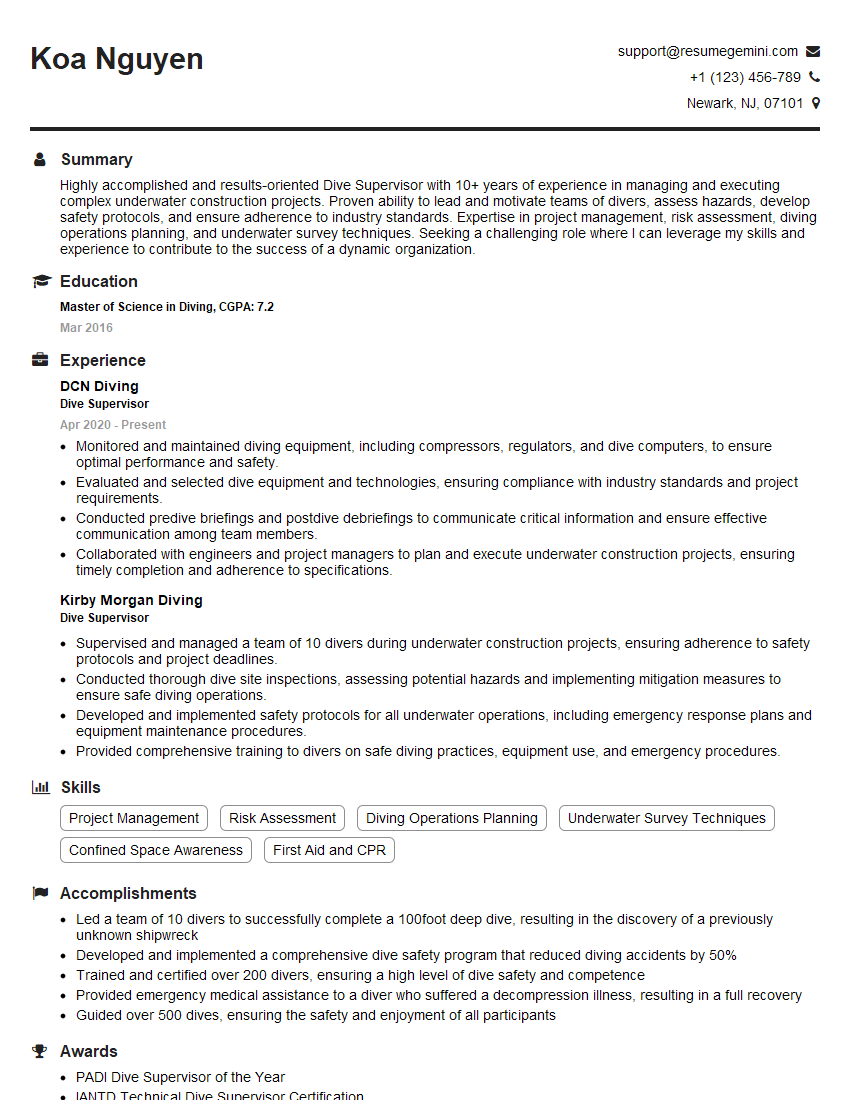
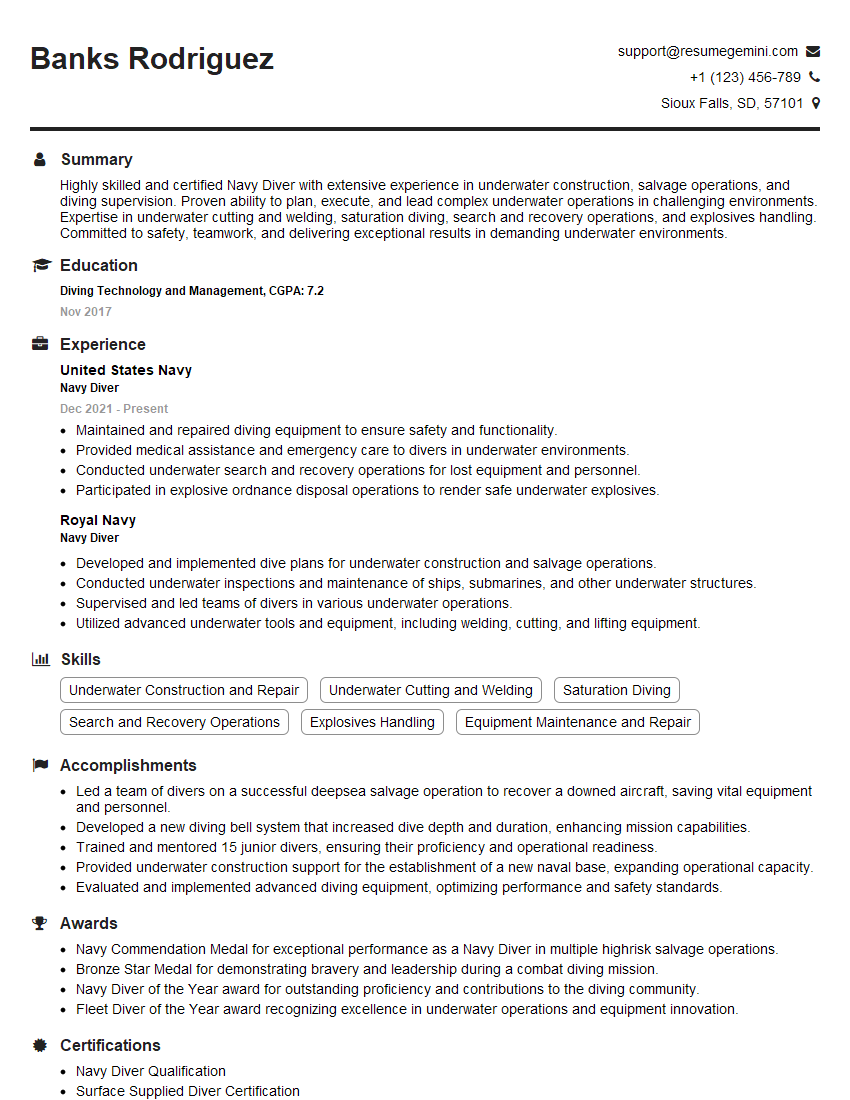
Mastering the knowledge and skills associated with the Basic Underwater Demolition/SEAL (BUD/S) Training Phase significantly enhances your career prospects, particularly in fields requiring exceptional physical and mental resilience, teamwork, and leadership. To maximize your chances of success, crafting a compelling and ATS-friendly resume is crucial. ResumeGemini is a trusted resource that can help you build a professional and effective resume tailored to highlight your unique qualifications. Examples of resumes specifically tailored to the BUD/S Training Phase are available to help guide you. Take the next step towards showcasing your capabilities – build a resume that reflects your dedication and potential.
Explore more articles
Users Rating of Our Blogs
Share Your Experience
We value your feedback! Please rate our content and share your thoughts (optional).
What Readers Say About Our Blog
Very informative content, great job.
good