Preparation is the key to success in any interview. In this post, we’ll explore crucial Maintain Inventory Levels interview questions and equip you with strategies to craft impactful answers. Whether you’re a beginner or a pro, these tips will elevate your preparation.
Questions Asked in Maintain Inventory Levels Interview
Q 1. Explain the difference between FIFO and LIFO inventory methods.
FIFO (First-In, First-Out) and LIFO (Last-In, First-Out) are two common methods for accounting for inventory costs. They differ fundamentally in how they assign costs to goods sold and remaining inventory.
FIFO assumes that the oldest items in your inventory are the first ones sold. Imagine a bakery – the croissants baked first are likely the first ones sold. This means the cost of goods sold reflects the cost of the oldest inventory, and the value of your remaining inventory reflects the cost of the most recently purchased items.
LIFO, on the other hand, assumes the opposite: the most recently acquired items are the first ones sold. Think of a stack of pancakes – you eat the top one (the last one added) first. This means the cost of goods sold reflects the cost of the newest inventory, and the remaining inventory is valued at the cost of the oldest items.
Impact on Financial Statements: During periods of inflation, LIFO generally results in a higher cost of goods sold, leading to lower net income and lower taxes. FIFO, conversely, results in a lower cost of goods sold and higher net income during inflation. The choice of method can significantly impact a company’s financial reporting and tax liability.
Example: Let’s say you purchased 10 units at $10 each and later 10 units at $12 each. If you sell 15 units:
- FIFO: Cost of goods sold = (10 units * $10) + (5 units * $12) = $160. Remaining inventory value = (5 units * $12) = $60.
- LIFO: Cost of goods sold = (10 units * $12) + (5 units * $10) = $170. Remaining inventory value = (5 units * $10) = $50.
The choice between FIFO and LIFO depends on various factors, including industry practices, tax implications, and management’s goals. It’s crucial to choose the method that best reflects the actual flow of goods and accurately represents the company’s financial position.
Q 2. What are the key performance indicators (KPIs) you use to monitor inventory levels?
Monitoring inventory levels effectively requires tracking several key performance indicators (KPIs). These metrics provide insights into inventory efficiency, potential issues, and areas for improvement.
- Inventory Turnover Ratio: This measures how many times your inventory is sold and replaced over a specific period (e.g., a year). A higher ratio generally indicates strong sales and efficient inventory management.
Inventory Turnover = Cost of Goods Sold / Average Inventory - Days Inventory Outstanding (DIO): This shows how many days it takes to sell your inventory. A lower DIO suggests faster sales and less risk of obsolescence.
DIO = (Average Inventory / Cost of Goods Sold) * Number of Days - Holding Cost Percentage: This represents the percentage of your inventory value tied up in storage, insurance, taxes, and other holding costs. A lower percentage is desirable.
Holding Cost Percentage = (Total Holding Costs / Total Inventory Value) * 100 - Stockout Rate: This KPI measures the frequency of running out of stock for particular items. A high stockout rate points to potential issues with forecasting or ordering processes.
- Inventory Accuracy: This reflects the degree to which your recorded inventory levels match the physical count. High accuracy is critical for accurate financial reporting and efficient operations.
By regularly monitoring these KPIs, businesses can gain valuable insights into inventory performance, identify bottlenecks, and make data-driven decisions to optimize their inventory management strategies.
Q 3. How do you handle inventory discrepancies?
Inventory discrepancies, the difference between the recorded inventory and the physical count, are a common challenge. Addressing them promptly and accurately is crucial for maintaining financial integrity and efficient operations.
My approach involves a systematic process:
- Identify the Discrepancy: Conduct a thorough physical inventory count and compare it to the system records. Document the differences clearly, noting the specific items and quantities involved.
- Investigate the Cause: Determine the root cause of the discrepancy. Possible reasons include data entry errors, theft, damage, inaccurate stock transfers, or counting mistakes. A detailed investigation often reveals patterns or systemic issues.
- Reconcile the Inventory: Adjust the inventory records to reflect the actual physical count. This might involve making corrections in the inventory management system or creating adjustment entries in the accounting system.
- Implement Preventative Measures: Once the cause is identified, implement measures to prevent future discrepancies. This could involve improving data entry processes, enhancing security measures, implementing stricter counting procedures, or upgrading the inventory management system.
- Document the Entire Process: Maintain detailed records of the entire process, including the investigation, reconciliation, and preventative actions taken. This documentation is valuable for tracking improvements and providing insights for future inventory management.
For example, if a significant discrepancy is consistently found in a particular area of the warehouse, it may point to a security breach or procedural flaw that needs immediate attention.
Q 4. Describe your experience with inventory forecasting techniques.
Accurate inventory forecasting is essential for maintaining optimal stock levels. I have extensive experience utilizing various forecasting techniques, adapting my approach based on the specific product, market conditions, and data availability.
My experience encompasses:
- Simple Moving Average: This method averages demand over a specified period to predict future demand. It’s simple but less responsive to recent trends.
- Weighted Moving Average: Similar to the simple moving average, but assigns different weights to periods, giving more emphasis to recent data.
- Exponential Smoothing: This method assigns exponentially decreasing weights to older data, making it more responsive to recent trends.
- ARIMA (Autoregressive Integrated Moving Average): This sophisticated statistical model is used for time series data, capturing complex patterns and seasonal variations. It is highly effective but requires specialized statistical software and expertise.
- Causal Forecasting: This approach uses external factors such as economic indicators, marketing campaigns, or seasonality to predict demand. For example, predicting increased demand for umbrellas during the rainy season.
The selection of the appropriate forecasting technique is crucial, as an incorrect method can lead to overstocking or stockouts. I always assess the data’s characteristics, historical trends, and the level of accuracy required before choosing a method. Regularly evaluating the forecast accuracy and adjusting the method as needed is also critical for effective inventory management.
Q 5. What software or systems have you used for inventory management?
Throughout my career, I’ve utilized a range of inventory management software and systems, both enterprise-level and smaller-scale solutions. My experience includes:
- SAP ERP: A comprehensive enterprise resource planning (ERP) system with robust inventory management capabilities, including advanced forecasting, planning, and reporting tools.
- Oracle NetSuite: Another leading ERP system providing integrated inventory management, enabling real-time tracking, order management, and demand planning.
- Microsoft Dynamics 365: A flexible ERP system with strong inventory management features tailored to various business sizes and industries.
- Fishbowl Inventory: A popular small-business inventory management software that integrates with QuickBooks. This demonstrates my ability to adapt to different systems based on business needs.
My expertise extends beyond simply using these systems. I understand how to configure them to align with specific business requirements, optimize workflows, and leverage their features for improved efficiency and accuracy. I’m also proficient in extracting and analyzing data from these systems for reporting and decision-making purposes. My experience with multiple systems gives me a broader understanding of best practices and capabilities.
Q 6. How do you identify and address slow-moving or obsolete inventory?
Slow-moving and obsolete inventory represents a significant cost to a business, tying up capital and increasing storage costs. Identifying and addressing this issue is crucial for maintaining profitability.
My approach involves:
- ABC Analysis: Classify inventory items based on their value and consumption rate (A: high value, high consumption; B: medium value, medium consumption; C: low value, low consumption). This prioritizes efforts on high-value items.
- Regular Inventory Reviews: Conduct periodic reviews to analyze sales trends and identify items with low turnover. This helps to proactively address potential obsolescence.
- Sales Data Analysis: Analyze sales data to identify items that haven’t sold in a specific period. This helps pinpoint slow-moving items requiring action.
- Market Research: Investigate market trends and competitor activity to assess the viability of continuing to stock slow-moving items. Is the product still in demand? Are there substitutes?
- Disposition Strategies: Develop strategies for handling slow-moving or obsolete inventory. Options include discounts, promotions, liquidation sales, or disposal.
For example, if a product consistently shows low sales over several months and market analysis indicates declining demand, we might consider discounting the product heavily to liquidate inventory or remove it from our product catalog altogether.
Q 7. Explain your process for cycle counting inventory.
Cycle counting is a crucial inventory management technique that involves regularly counting a small portion of your inventory rather than a full physical count annually. This approach enhances accuracy and efficiency.
My cycle counting process involves:
- Develop a Cycle Counting Schedule: Create a schedule that systematically covers all inventory items over a specified period (e.g., a year). The frequency of counting depends on the item’s value and turnover rate.
- Assign Counting Responsibilities: Assign specific inventory areas or items to team members. Provide training on proper counting techniques to ensure consistency and accuracy.
- Use a System for Tracking: Utilize a barcode scanning system or other technology to expedite the counting process and reduce errors. The data should directly feed into the inventory management system.
- Resolve Discrepancies: Immediately investigate and resolve any discrepancies identified during the count. Address root causes to prevent future issues.
- Document and Analyze Results: Maintain detailed records of the cycle counts, including dates, items counted, discrepancies found, and corrective actions taken. Analyze this data to identify areas requiring improvement.
For instance, high-value items might be counted weekly, while low-value items might be counted monthly. Regular cycle counting provides a continuous inventory accuracy check and minimizes the disruption of a complete annual physical inventory.
Q 8. How do you ensure accurate inventory data in your system?
Accurate inventory data is the bedrock of effective inventory management. It prevents stockouts, minimizes waste, and optimizes profitability. I ensure accuracy through a multi-pronged approach.
- Real-time tracking: Implementing a robust inventory management system (IMS) with real-time updates is crucial. This system should integrate with point-of-sale (POS) systems and other relevant data sources to automatically record every transaction – from receiving shipments to fulfilling orders. This eliminates manual data entry errors, a major source of inaccuracy.
- Regular cycle counting: Instead of relying on a single, large annual physical inventory count, I advocate for frequent cycle counting. This involves regularly counting a small subset of inventory items. Identifying discrepancies early allows for prompt investigation and correction, preventing small errors from snowballing into larger problems.
- Barcoding and RFID: Utilizing barcodes or Radio-Frequency Identification (RFID) tags allows for quick and accurate identification of items, minimizing human error during the counting and tracking process. RFID offers additional advantages in tracking inventory movement in real-time.
- Data validation and reconciliation: Regularly comparing data from the IMS with physical counts and purchase orders ensures data integrity. Any discrepancies require immediate investigation and reconciliation to identify the root cause and prevent future errors.
- Employee training: Thoroughly training staff on proper inventory procedures, including handling and scanning techniques, is vital for minimizing errors. Regular audits of processes and procedures ensure continued adherence to best practices.
For example, in my previous role, implementing a new IMS with RFID technology reduced our inventory discrepancy rate from 5% to less than 1% within six months.
Q 9. How do you manage inventory in a fast-paced environment?
Managing inventory in a fast-paced environment requires agility and a highly responsive system. Think of it like air traffic control – constant monitoring and adjustments are key.
- Real-time visibility: A robust IMS with real-time data is absolutely essential. This allows for immediate identification of low-stock items and potential bottlenecks.
- Automated replenishment: Implementing automated ordering systems, based on pre-defined thresholds and forecasting models, reduces manual intervention and ensures timely replenishment. This is especially crucial when demand fluctuates rapidly.
- Flexible supply chains: Establishing relationships with multiple suppliers ensures that you have backup options in case of disruptions. This could include near-shoring or diversifying your sourcing.
- Agile forecasting: Employing advanced forecasting techniques that account for short-term fluctuations in demand, such as machine learning models, is vital. These models can adapt to changing market conditions more effectively than traditional methods.
- Efficient warehouse management: Optimized warehouse layout and processes, including fast picking and packing methods, are vital for quickly fulfilling orders.
For instance, I helped a company facing rapid growth by implementing an automated replenishment system tied to sales data. This reduced lead times by 30% and significantly improved customer satisfaction.
Q 10. What are some common challenges in inventory management, and how have you overcome them?
Inventory management presents several challenges. I’ve encountered and overcome many, including:
- Inaccurate demand forecasting: Poor forecasting leads to either stockouts or excessive inventory holding costs. I overcome this by using more sophisticated forecasting methods (e.g., exponential smoothing, ARIMA models) and incorporating market intelligence.
- Inventory shrinkage: Theft, damage, and obsolescence reduce available inventory. Implementing robust security measures, regular cycle counting, and FIFO (First-In, First-Out) inventory management minimize these losses. Analyzing slow-moving items helps identify potential candidates for discounts or write-offs.
- Supply chain disruptions: Unexpected delays or shortages from suppliers can cripple operations. Diversifying suppliers, building strong relationships, and maintaining safety stock help mitigate these risks. Having contingency plans for various scenarios is vital.
- Lack of visibility: Poor data visibility hinders effective decision-making. Implementing a comprehensive IMS with real-time data provides the necessary clarity and allows for proactive adjustments.
- Inefficient processes: Manual processes are slow, prone to error, and costly. Automating tasks, streamlining workflows, and optimizing warehouse layout significantly improve efficiency.
For example, I solved a significant inventory shrinkage problem by implementing a combination of improved security cameras and a more rigorous cycle counting program, reducing losses by 40%.
Q 11. Describe your experience with implementing or improving inventory management processes.
I have extensive experience in implementing and improving inventory management processes across various industries. My approach is data-driven and focuses on measurable improvements.
- Project 1: Implementing a new IMS: In a previous role, I led the implementation of a new cloud-based IMS, replacing an outdated legacy system. This involved selecting the appropriate software, managing the migration of data, training staff, and integrating the system with other enterprise applications. The result was improved data accuracy, reduced manual effort, and enhanced reporting capabilities.
- Project 2: Optimizing warehouse layout: I redesigned a warehouse layout to improve workflow efficiency and reduce picking times. This involved analyzing order patterns, optimizing storage locations, and implementing a new pick-to-light system. The outcome was a 20% reduction in order fulfillment time.
- Project 3: Implementing ABC analysis: I implemented an ABC analysis to prioritize inventory management efforts. This involved categorizing inventory items based on their value and consumption rate. This allowed us to focus our attention on the most critical items, optimizing inventory control and reducing holding costs for less important items.
In each project, I followed a structured approach including needs assessment, solution design, implementation, testing, training, and ongoing monitoring and improvement.
Q 12. How do you collaborate with other departments to optimize inventory levels?
Collaboration is paramount in optimizing inventory levels. I work closely with various departments, including:
- Sales & Marketing: Understanding sales forecasts and marketing campaigns is crucial for accurate demand planning. Regular communication ensures that inventory levels align with anticipated demand.
- Purchasing: Close collaboration ensures timely procurement of materials and prevents stockouts. Sharing demand forecasts and inventory levels allows for proactive purchasing decisions.
- Finance: Close cooperation on budgeting and cost analysis is essential. We work together to balance inventory holding costs with the risk of stockouts and potential lost sales.
- Operations: Efficient warehouse management and logistics are crucial for minimizing storage costs and optimizing order fulfillment times. We collaborate on warehouse layout, picking strategies, and shipping methods.
For example, I established a cross-functional team comprising members from sales, purchasing, and operations to develop a more accurate demand forecasting model. This resulted in a significant reduction in inventory holding costs while maintaining adequate stock levels.
Q 13. How do you determine the economic order quantity (EOQ)?
The Economic Order Quantity (EOQ) is the optimal order size that minimizes the total inventory costs, including ordering costs and holding costs. It’s a crucial concept for reducing costs.
The EOQ formula is:
EOQ = √[(2DS)/H]Where:
- D = Annual demand
- S = Ordering cost per order
- H = Holding cost per unit per year
To determine the EOQ, I would gather data on annual demand, ordering costs (including transportation and administrative expenses), and holding costs (including storage, insurance, and obsolescence). These values are then plugged into the formula to calculate the optimal order quantity. It’s important to note that this is a simplified model and several assumptions, such as constant demand and lead time, are made. More advanced models are often necessary in real-world scenarios.
For instance, if a company has an annual demand of 10,000 units, an ordering cost of $100 per order, and a holding cost of $10 per unit per year, the EOQ would be:
EOQ = √[(2 * 10,000 * 100) / 10] = 1414 unitsQ 14. Explain the concept of safety stock and how it’s calculated.
Safety stock is the extra inventory kept on hand to buffer against unexpected fluctuations in demand or lead times. It acts as a cushion, preventing stockouts.
Calculating safety stock requires considering several factors:
- Demand variability: How much does demand fluctuate from period to period? This is often measured using standard deviation.
- Lead time variability: How much does the time it takes to receive an order vary? This also involves considering standard deviation.
- Service level: What percentage of the time do you want to avoid stockouts? This is expressed as a probability (e.g., 95% service level).
There are various methods for calculating safety stock, but a common one is based on the standard deviation of lead time demand:
Safety Stock = Z * σLTDWhere:
- Z = Z-score corresponding to the desired service level (e.g., 1.645 for a 95% service level)
- σLTD = Standard deviation of lead time demand
Lead time demand is the product of lead time and average demand. The standard deviation of lead time demand accounts for both demand and lead time variability. This calculation provides the optimal level of safety stock to meet the desired service level.
For example, if the standard deviation of lead time demand is 100 units and a 95% service level (Z = 1.645) is desired, the safety stock would be 164.5 units (approximately 165 units).
Q 15. How do you handle inventory shortages?
Handling inventory shortages requires a proactive and multi-faceted approach. It begins with accurate demand forecasting to minimize the likelihood of shortages in the first place. However, even with the best forecasting, unexpected events can occur. When a shortage arises, the first step is to identify the root cause: was it poor forecasting, a supplier issue, an unexpected surge in demand, or a problem with internal processes?
Once the cause is identified, we can implement solutions. This might involve expediting orders from existing suppliers, exploring alternative suppliers, prioritizing allocation to critical customers, and potentially implementing a backorder system to manage customer expectations. For example, during a recent unexpected surge in demand for a particular product, we immediately contacted our supplier to expedite the next shipment and communicated transparently with our customers about expected delivery delays. This minimized customer frustration and protected our reputation.
Furthermore, we use this experience to refine our demand forecasting models, perhaps incorporating external factors like seasonality or market trends more accurately. Regular review of safety stock levels is crucial to buffer against future unforeseen circumstances.
Career Expert Tips:
- Ace those interviews! Prepare effectively by reviewing the Top 50 Most Common Interview Questions on ResumeGemini.
- Navigate your job search with confidence! Explore a wide range of Career Tips on ResumeGemini. Learn about common challenges and recommendations to overcome them.
- Craft the perfect resume! Master the Art of Resume Writing with ResumeGemini’s guide. Showcase your unique qualifications and achievements effectively.
- Don’t miss out on holiday savings! Build your dream resume with ResumeGemini’s ATS optimized templates.
Q 16. What is your experience with inventory audits?
Inventory audits are vital for maintaining accurate inventory records and ensuring the physical inventory matches the system records. My experience involves conducting both cyclical audits (smaller, more frequent checks of specific areas) and full physical inventory counts (a complete count of all inventory). I’ve led teams through these processes, utilizing both manual and technological methods.
During a recent full inventory count, we utilized barcode scanners to significantly expedite the process and reduce human error. We compared the scanned data to our inventory management system, highlighting discrepancies for investigation. These discrepancies might result from data entry errors, misplaced items, or theft. We then implemented corrective actions to address the root cause of each discrepancy, ensuring data integrity moving forward. Thorough documentation and analysis of audit results are key to identifying trends and areas for improvement in inventory management processes.
Q 17. How do you use data analytics to improve inventory management?
Data analytics plays a crucial role in enhancing inventory management efficiency and accuracy. We leverage data to gain insights into various aspects of the inventory cycle, from demand forecasting to identifying slow-moving items. Tools like business intelligence software allow us to visualize trends and patterns in sales data, helping us make data-driven decisions.
For instance, by analyzing historical sales data and incorporating external factors, we can develop more accurate demand forecasts. We can also identify slow-moving items (items that are not selling well) using sales data and ABC analysis (explained in a later answer) to optimize inventory levels and reduce storage costs. Furthermore, analyzing lead times from suppliers helps us optimize reorder points and safety stock, minimizing the risk of shortages or excess inventory.
We use dashboards to visualize key metrics like inventory turnover rate, stockout rates, and carrying costs, providing a holistic view of our inventory performance and identifying areas for improvement. This data-driven approach minimizes waste and maximizes efficiency.
Q 18. Describe your experience with ABC analysis of inventory.
ABC analysis is a crucial inventory management technique that categorizes inventory items based on their value and consumption. It’s based on the Pareto principle (80/20 rule), suggesting that 80% of your revenue comes from 20% of your items. In practice, this means classifying inventory into three categories:
- A-items: High-value items representing a small percentage of total items but a large percentage of total value. These require close monitoring and tight control.
- B-items: Moderate value items, requiring moderate control.
- C-items: Low-value items, requiring minimal control.
We use ABC analysis to allocate resources effectively. A-items receive more attention in terms of forecasting, demand planning, and safety stock management. B-items receive moderate attention, and C-items can be managed with simpler methods, freeing up resources for the higher-value A-items. For example, we might use more sophisticated forecasting techniques for A-items and simpler methods for C-items. This ensures that resources are focused on the most valuable inventory, maximizing efficiency and minimizing risk.
Q 19. How do you manage inventory across multiple locations?
Managing inventory across multiple locations presents unique challenges, primarily involving maintaining accurate stock levels at each location and ensuring efficient allocation of goods. A centralized inventory management system is crucial for this. This system should provide a real-time overview of inventory across all locations, enabling efficient stock transfers and preventing overstocking in some locations while others experience shortages.
We utilize a sophisticated inventory management software that allows for real-time tracking of inventory across all our warehouses. This system facilitates efficient stock transfers between locations based on demand and stock levels. For example, if warehouse A has a surplus of product X, and warehouse B is running low, the system can automatically suggest and even initiate a transfer to optimize inventory levels. Regular reporting and analysis help us identify inefficiencies in the distribution network and make necessary adjustments.
Q 20. What are the benefits of using a barcode scanning system for inventory management?
Barcode scanning systems significantly improve inventory management accuracy and efficiency. They automate the data entry process, minimizing human error and speeding up inventory counts, stock movements, and receiving processes. The benefits include:
- Reduced data entry errors: Manual data entry is prone to mistakes; barcode scanning eliminates this.
- Improved accuracy: Real-time updates ensure accurate inventory records.
- Increased efficiency: Inventory counts and stock movements are significantly faster.
- Better tracking: Enhanced traceability of goods throughout the supply chain.
- Reduced labor costs: Automation reduces the time and personnel needed for inventory management tasks.
In our organization, we implemented a barcode scanning system, resulting in a 30% reduction in inventory counting time and a significant decrease in data entry errors. This improvement allowed our staff to focus on more strategic tasks, improving overall efficiency.
Q 21. How do you handle returns and damaged goods in your inventory?
Handling returns and damaged goods requires a well-defined process to ensure accurate inventory management and minimize losses. Returned goods should be inspected to determine their condition, and damaged goods need to be assessed to determine whether they can be salvaged, repaired, or disposed of.
We have a dedicated returns process involving inspection, quality checks, and appropriate disposition of goods. Returned items in good condition are restocked, while damaged goods may be repaired or marked down for sale. Items that cannot be salvaged are appropriately disposed of according to environmental regulations. The entire process is documented, ensuring traceability and providing insights into return rates and damage causes. This data helps us identify issues in our supply chain or product quality and implement corrective actions. We also use this data to refine our quality control procedures and improve product packaging to reduce future damage.
Q 22. Explain your experience with just-in-time (JIT) inventory management.
Just-in-Time (JIT) inventory management is a strategy that aims to minimize inventory holding costs by receiving goods only when they are needed for production or sale. Instead of maintaining large stockpiles, JIT relies on precise demand forecasting and efficient supply chain coordination to ensure materials arrive just as they’re required.
In my experience, successfully implementing JIT requires a high degree of collaboration with suppliers. This involves establishing strong, reliable relationships built on trust and transparency. We utilized Kanban systems in one project, using visual signals to trigger replenishment orders only when inventory levels fell below a predetermined threshold. This prevented overstocking while ensuring continuous production. Another key element was implementing robust quality control measures at every stage to minimize waste and defects, which are particularly costly in a JIT environment because there’s little buffer stock to fall back on. For example, a simple defect requiring a part replacement could bring the entire production line to a standstill in a JIT system. This highlights the need for meticulous quality management.
Q 23. How do you maintain accurate inventory records in a manual system?
Maintaining accurate inventory records in a manual system requires discipline and a well-defined process. Think of it like meticulously keeping a household ledger. Every item received should be recorded with a unique identifier (like a serial or lot number), quantity, date received, and supplier information. Similarly, every item shipped or used should be documented with the same level of detail. Regular physical stock counts – ideally cyclical counts rather than one large annual count – are crucial to verify the accuracy of the records. Discrepancies between the physical count and the recorded inventory should be investigated and adjusted immediately. Using a simple spreadsheet with clear columns for each data point can help organize this information. For example, a column for ‘Item ID’, ‘Quantity on Hand’, ‘Date of Last Count’, and ‘Location’ can help in tracking inventory.
Implementing a robust system of internal controls is paramount. This might involve assigning responsibility for inventory management to specific individuals and requiring multiple sign-offs on transactions to ensure accountability and prevent errors or fraud. Finally, regular training for personnel handling inventory is vital to ensure they understand and adhere to the established procedures.
Q 24. What are your strategies for minimizing inventory carrying costs?
Minimizing inventory carrying costs involves a multifaceted approach. These costs include storage, insurance, taxes, obsolescence, and the opportunity cost of capital tied up in inventory. My strategies focus on several key areas:
- Accurate Demand Forecasting: Sophisticated forecasting models, considering historical data, seasonality, and market trends, allow for more precise ordering quantities, reducing excess inventory.
- Efficient Warehouse Management: Optimizing warehouse layout and using technology like barcode scanning and RFID tagging improves inventory tracking and reduces the risk of stock loss or damage.
- Supplier Relationship Management: Developing strong relationships with reliable suppliers allows for just-in-time delivery, minimizing the need to hold large buffers of stock.
- Inventory Optimization Techniques: Implementing techniques like Economic Order Quantity (EOQ) calculations helps determine optimal order sizes that balance ordering costs with holding costs.
- Regular Inventory Reviews: Conducting periodic reviews to identify slow-moving or obsolete items and taking steps to liquidate them prevents further cost accumulation.
For example, implementing a Kanban system can significantly reduce carrying costs by signaling replenishment only when needed, thereby optimizing inventory levels.
Q 25. Describe your understanding of inventory turnover rate.
Inventory turnover rate is a key performance indicator (KPI) that measures how efficiently a company sells its inventory over a period. It represents the number of times inventory is sold and replaced over a specific time frame. A higher turnover rate generally indicates strong sales and efficient inventory management, while a low rate might signify overstocking, slow-moving products, or weak demand. The formula for calculating inventory turnover rate is:
Inventory Turnover Rate = Cost of Goods Sold / Average InventoryThe ‘average inventory’ is typically calculated as the average of the beginning and ending inventory values for the period. For example, if a company has a cost of goods sold of $1,000,000 and an average inventory of $200,000, its inventory turnover rate is 5. This means the company sells and replaces its entire inventory 5 times during the period.
Q 26. How do you handle seasonal fluctuations in inventory demand?
Handling seasonal fluctuations requires a proactive strategy. Forecasting plays a crucial role. We use historical sales data and market trend analysis to predict peaks and troughs in demand for seasonal items. This forecasting informs production planning and inventory stocking decisions. For instance, retailers preparing for holiday shopping adjust inventory levels months in advance, anticipating increased demand for specific products. The goal is to have sufficient inventory to meet peak demand without excessive overstocking during slow periods.
Another strategy is to implement flexible manufacturing or sourcing options. This allows scaling production up or down to match fluctuating demands. For example, a company might use contract manufacturers during peak seasons to augment its production capacity and avoid overinvesting in permanent infrastructure that sits idle for much of the year. Finally, effective inventory management software can help us track inventory levels, monitor sales trends, and proactively adjust our ordering strategies to anticipate and accommodate seasonal shifts.
Q 27. What are the implications of inaccurate inventory data?
Inaccurate inventory data has significant negative implications across various aspects of a business. Firstly, it leads to poor decision-making. Incorrect stock levels can result in lost sales due to stockouts or excessive carrying costs due to overstocking. Secondly, it impacts financial reporting, causing inaccurate cost of goods sold calculations and affecting the overall profitability assessment. Inaccurate data can also damage customer relationships, leading to dissatisfied customers if orders are delayed or canceled due to inventory discrepancies. Moreover, it can lead to inefficiencies in production and warehouse operations, affecting resource allocation and overall productivity. For example, inaccurate inventory data can trigger unnecessary purchasing, increasing the risk of obsolescence and waste.
Q 28. How would you approach implementing a new inventory management system?
Implementing a new inventory management system requires a structured approach. It’s not just about choosing the software; it involves a holistic process.
- Needs Assessment: Clearly define the business requirements and objectives for the new system. What pain points are we trying to address? What functionalities are essential? This involves interviewing stakeholders across different departments.
- System Selection: Research and evaluate different inventory management systems (IMS) based on the needs assessment. Consider factors like cost, scalability, integration with existing systems, and user-friendliness.
- Data Migration: Plan and execute the migration of existing inventory data into the new system. This is a critical step, and inaccuracies during migration can negate the benefits of the new system.
- Training and Implementation: Provide comprehensive training to all users on the new system’s functionalities. A phased implementation approach, starting with a pilot group, can minimize disruption and allow for iterative improvements.
- Testing and Optimization: Thoroughly test the new system to identify and resolve any bugs or issues. Continuously monitor and optimize the system’s performance based on real-world usage and feedback from users.
Throughout the entire process, change management is vital. Engaging employees and addressing their concerns proactively is key to successful adoption of the new system.
Key Topics to Learn for Maintain Inventory Levels Interview
- Demand Forecasting: Understanding and applying various forecasting methods (e.g., moving average, exponential smoothing) to predict future demand and optimize inventory levels.
- Inventory Control Techniques: Mastering techniques like Economic Order Quantity (EOQ), Just-in-Time (JIT) inventory, and safety stock calculations to minimize costs and prevent stockouts.
- Inventory Management Software: Familiarity with common inventory management systems (e.g., ERP systems) and their applications in tracking, analyzing, and managing inventory data.
- Inventory Accuracy and Cycle Counting: Understanding the importance of accurate inventory data and methods for maintaining accuracy through regular cycle counting and reconciliation.
- Warehouse Management: Knowledge of warehouse layout, storage strategies, and efficient picking and packing processes to optimize inventory flow.
- Supply Chain Management Principles: Understanding the broader context of inventory management within the overall supply chain and its impact on procurement, logistics, and customer service.
- Inventory Turnover and Cost Analysis: Analyzing key inventory metrics like turnover rate, holding costs, and stockout costs to identify areas for improvement and cost reduction.
- Problem-Solving and Decision-Making: Demonstrating the ability to analyze inventory data, identify issues, and develop effective solutions to maintain optimal inventory levels.
- Data Analysis and Reporting: Skills in using data analysis tools and techniques to track key performance indicators (KPIs) related to inventory management and generate meaningful reports.
Next Steps
Mastering inventory management is crucial for career advancement in logistics, supply chain, and operations roles. A strong understanding of these concepts demonstrates valuable skills sought after by employers. To significantly boost your job prospects, create a compelling and ATS-friendly resume that highlights your relevant experience and skills. ResumeGemini is a trusted resource to help you build a professional and impactful resume. Examples of resumes tailored to Maintain Inventory Levels positions are available to guide you through the process.

Operations Manager Resume Sample
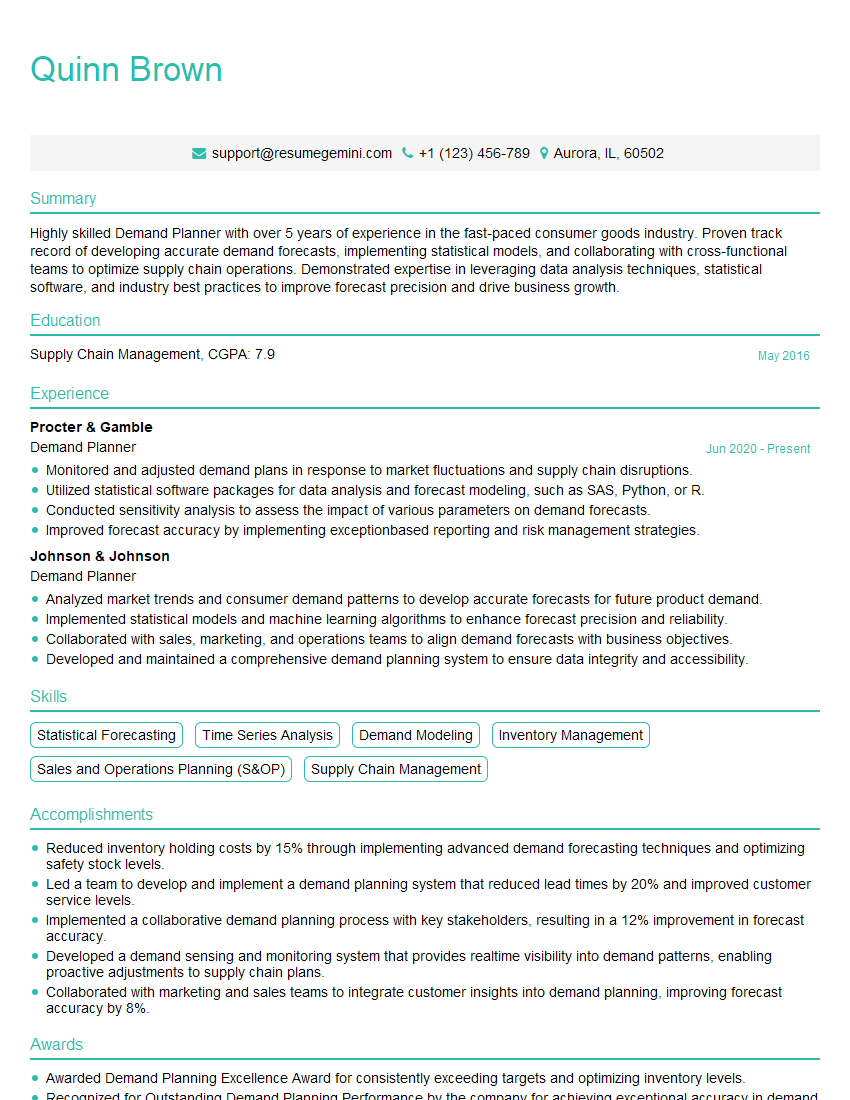
Demand Planner Resume Sample
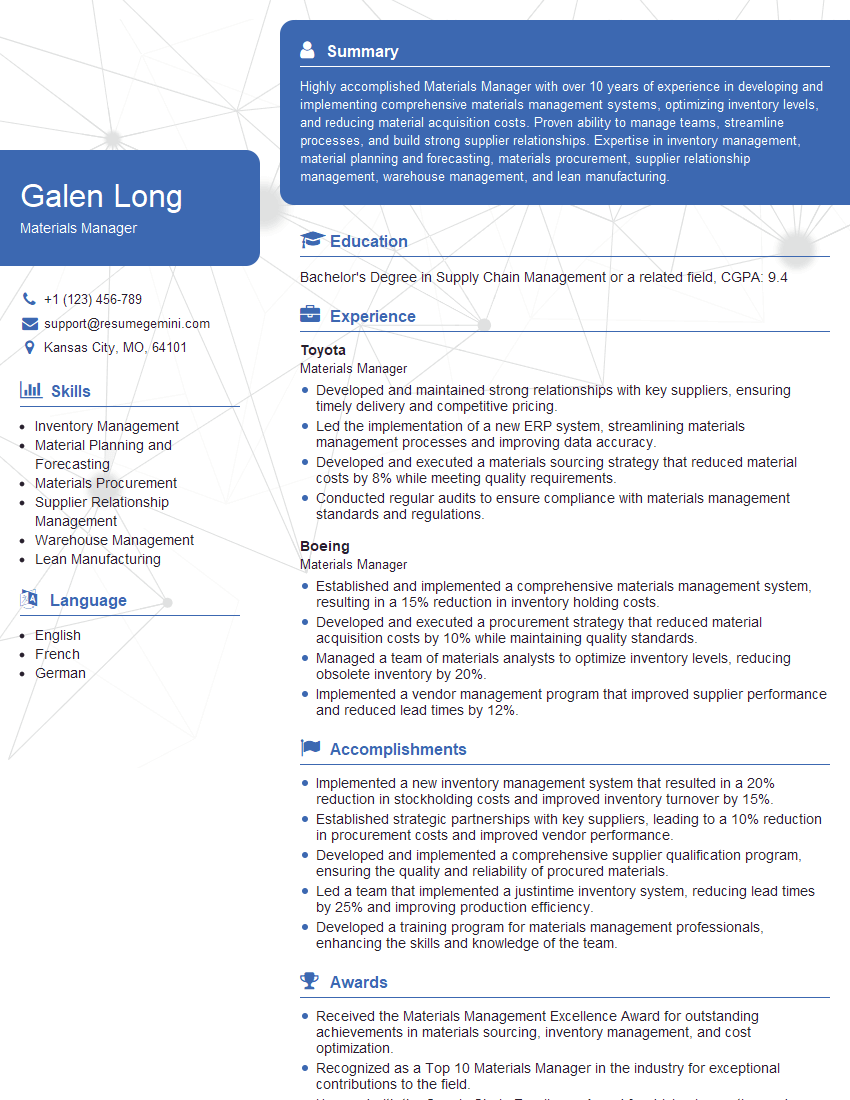
Materials Manager Resume Sample
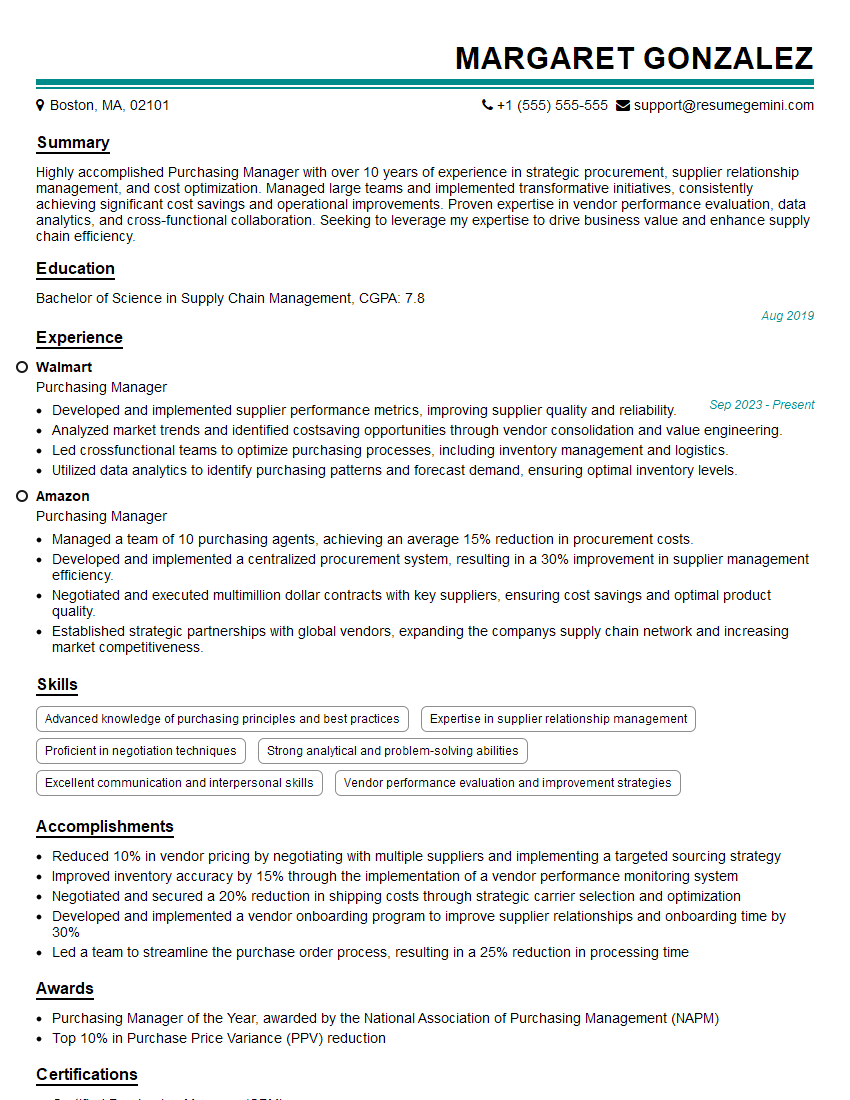
Purchasing Manager Resume Sample
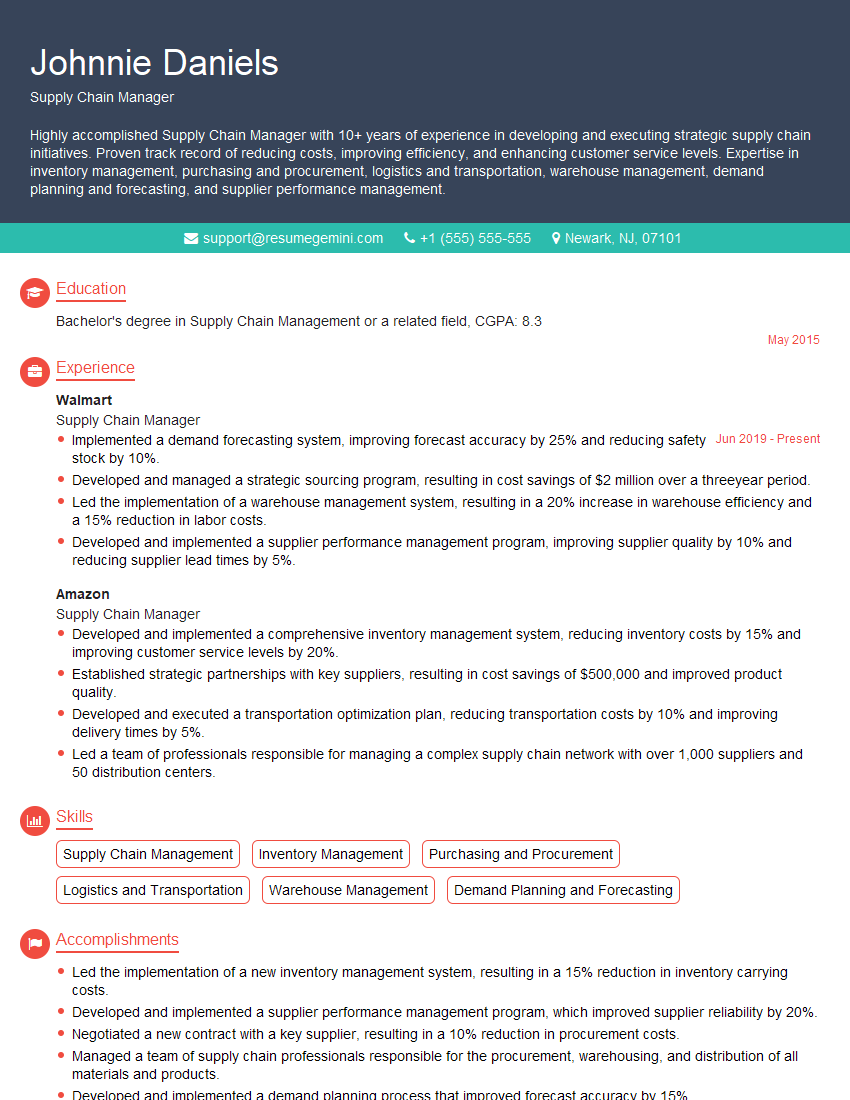
Supply Chain Manager Resume Sample
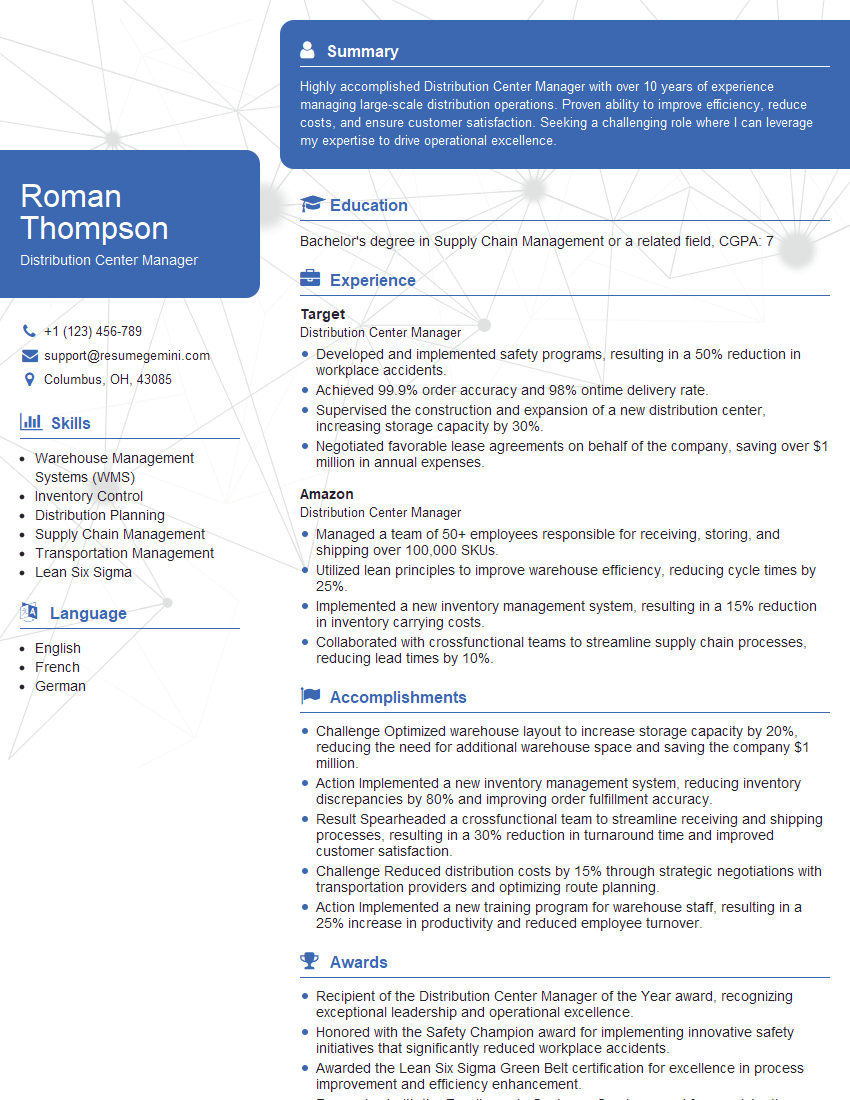
Distribution Center Manager Resume Sample
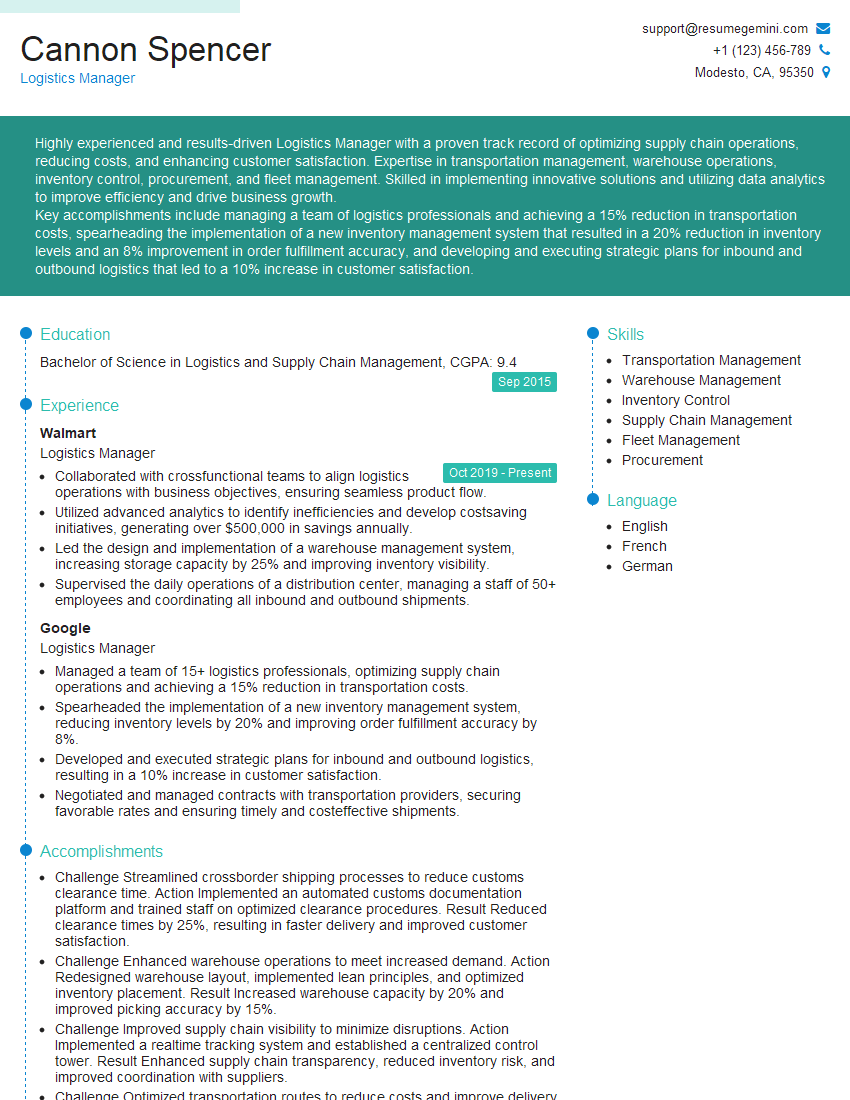
Logistics Manager Resume Sample
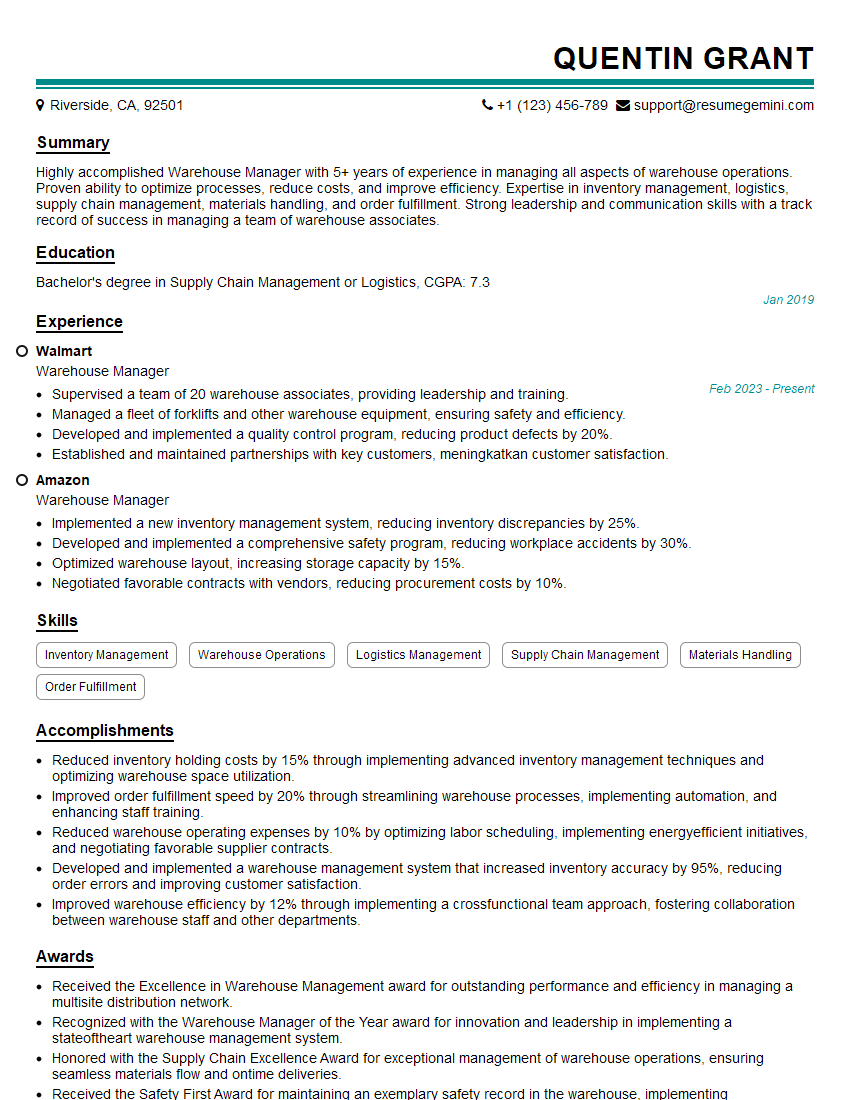
Warehouse Manager Resume Sample
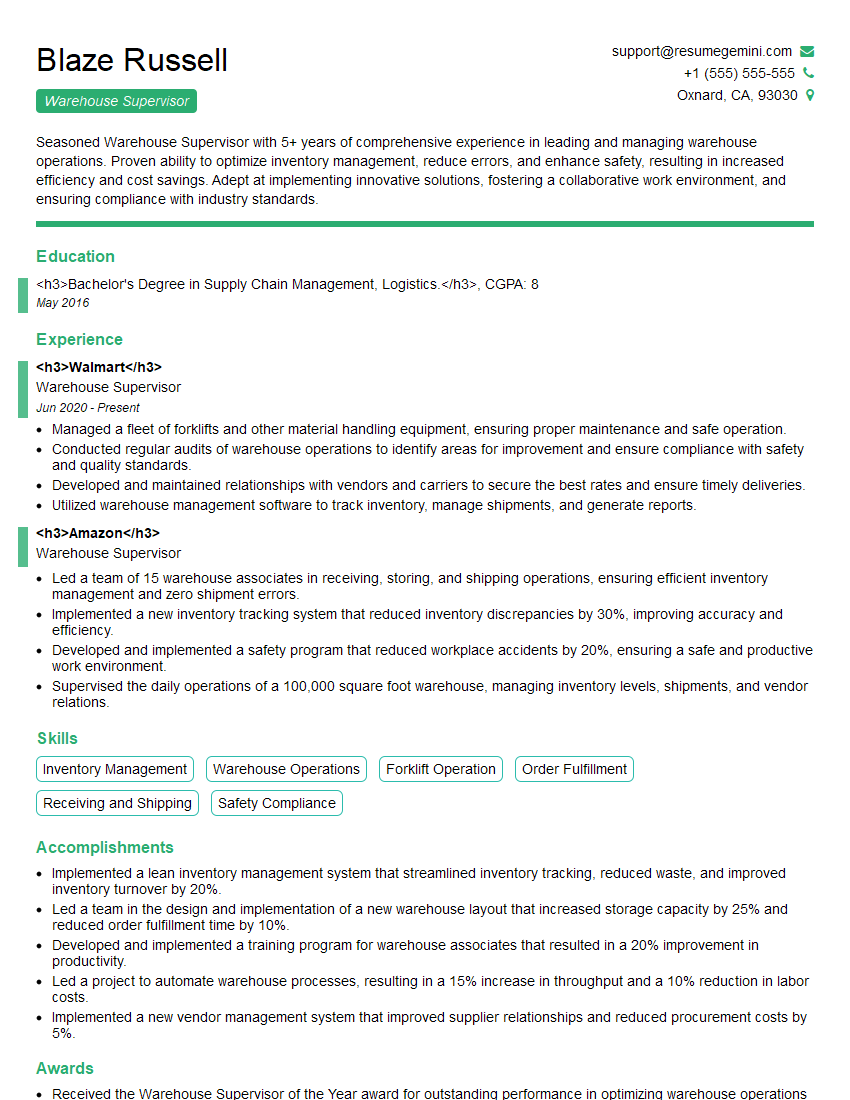
Warehouse Supervisor Resume Sample
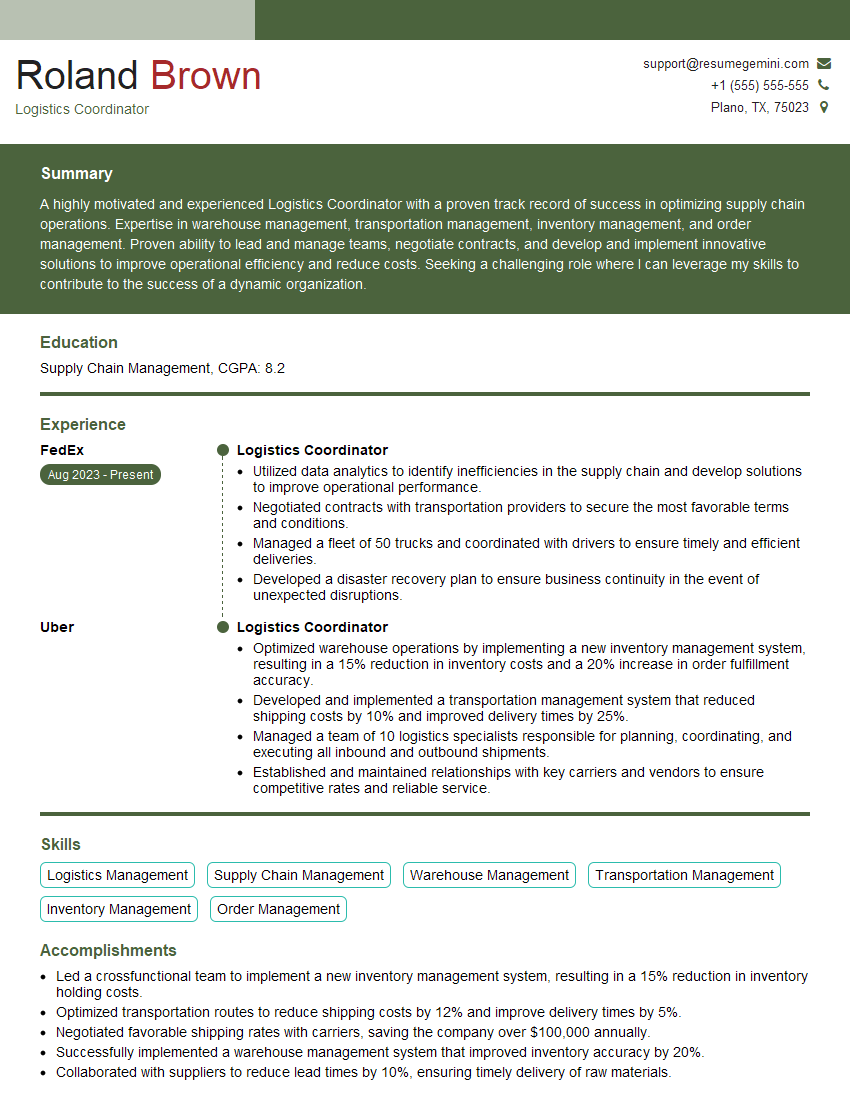
Logistics Coordinator Resume Sample
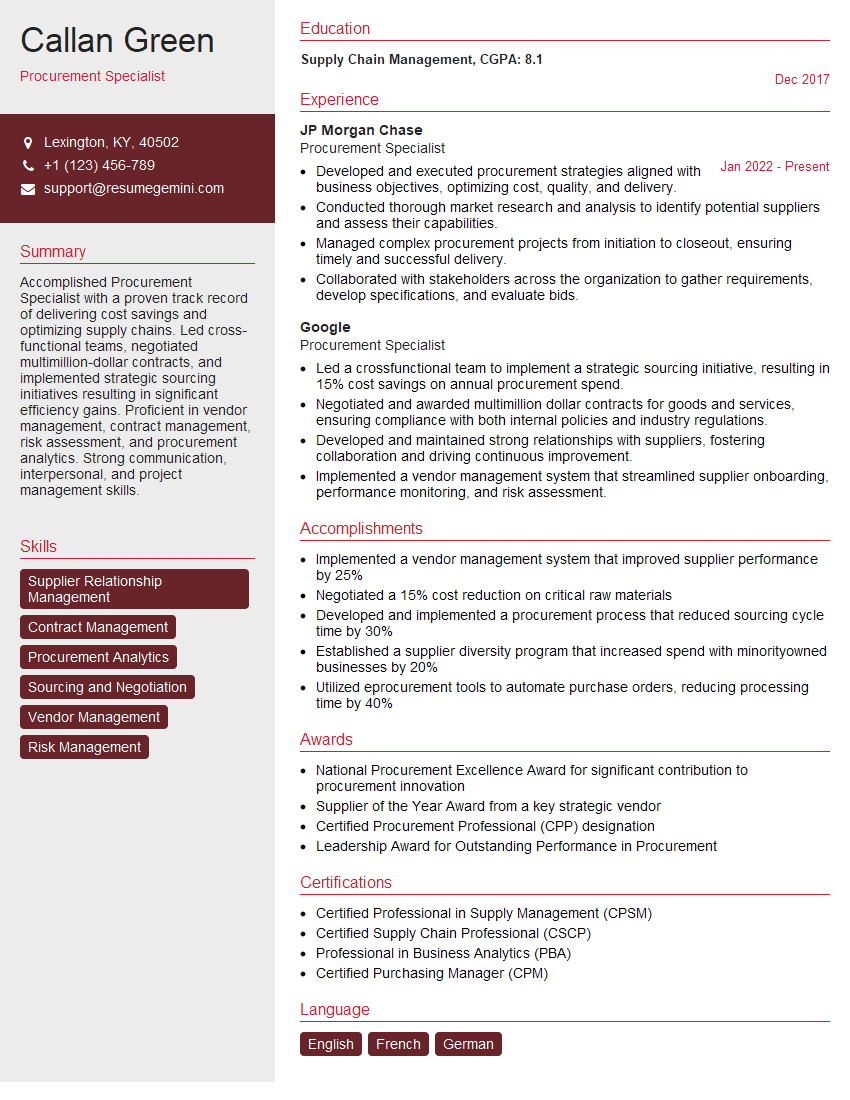
Procurement Specialist Resume Sample
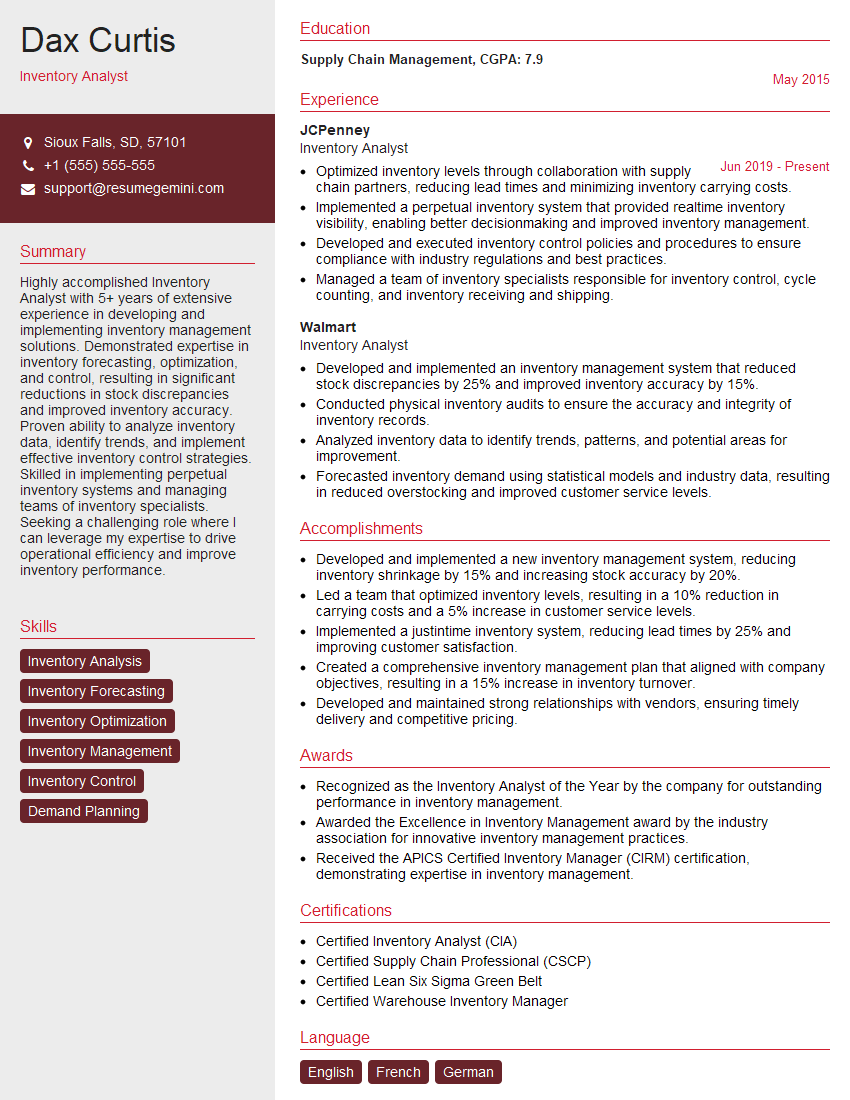
Inventory Analyst Resume Sample
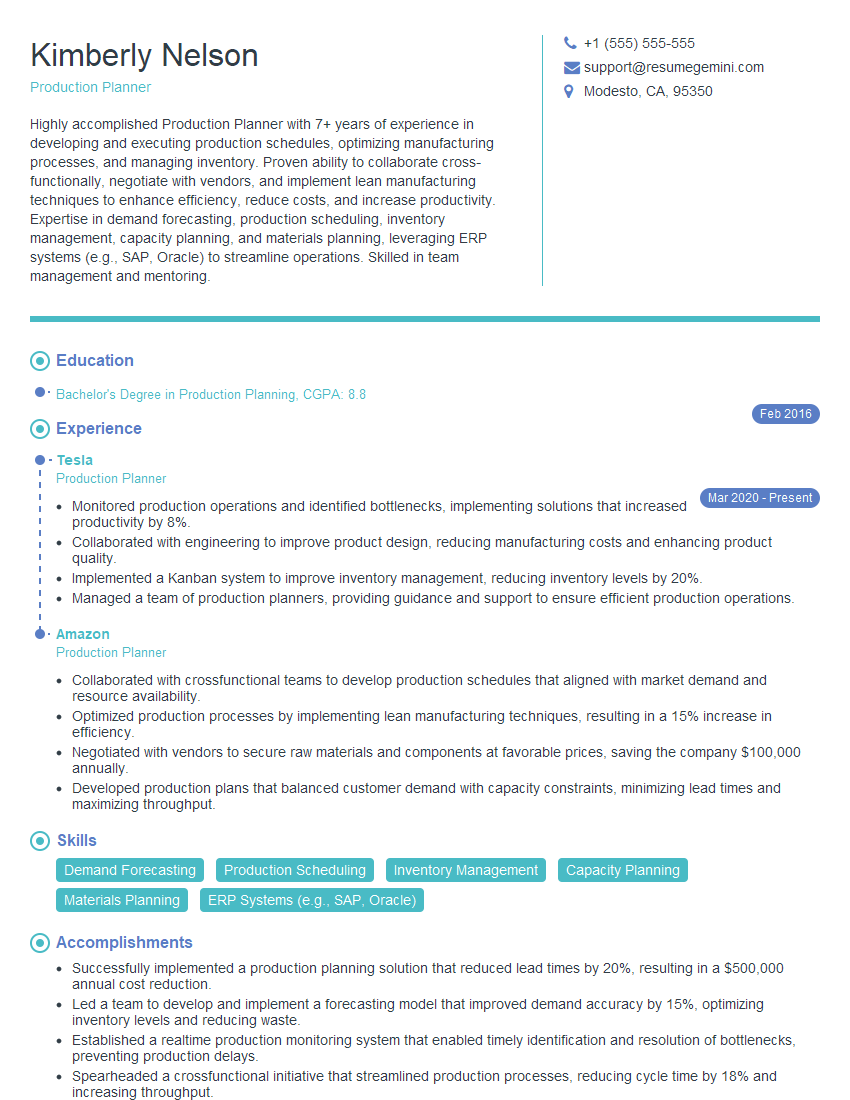
Production Planner Resume Sample

Inventory Manager Resume Sample
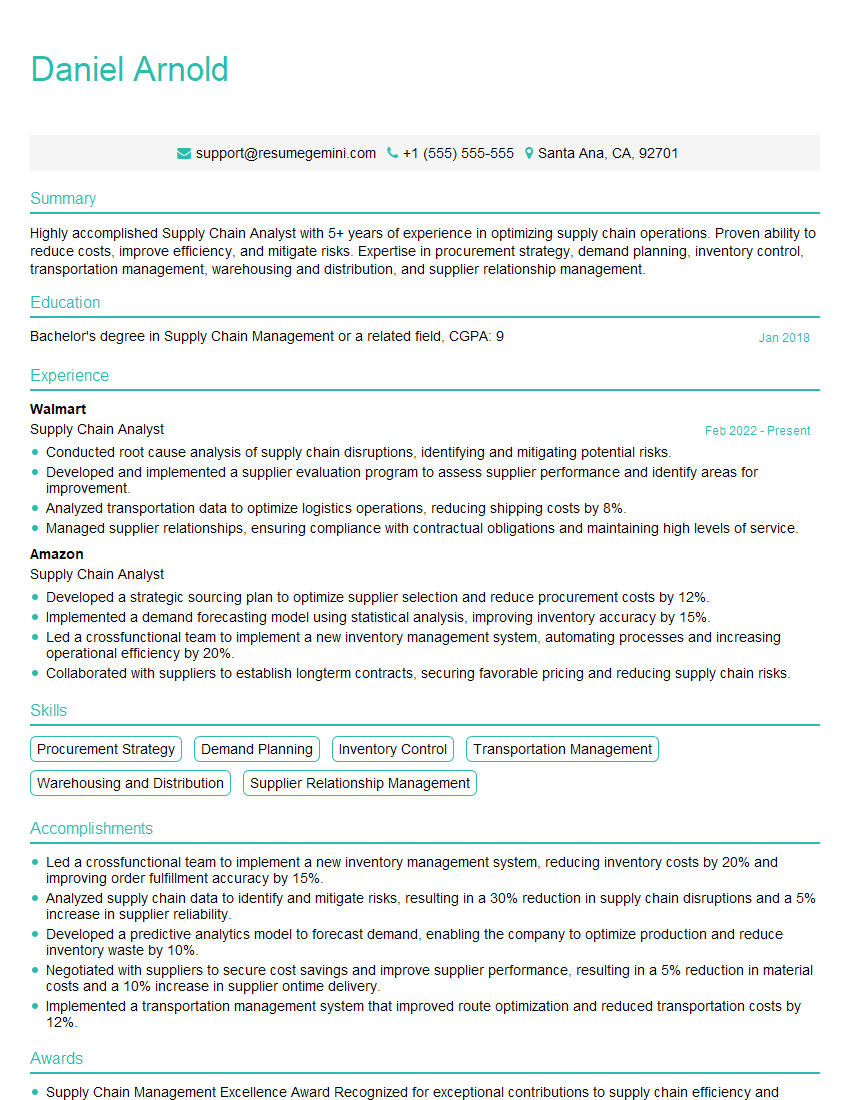
Supply Chain Analyst Resume Sample
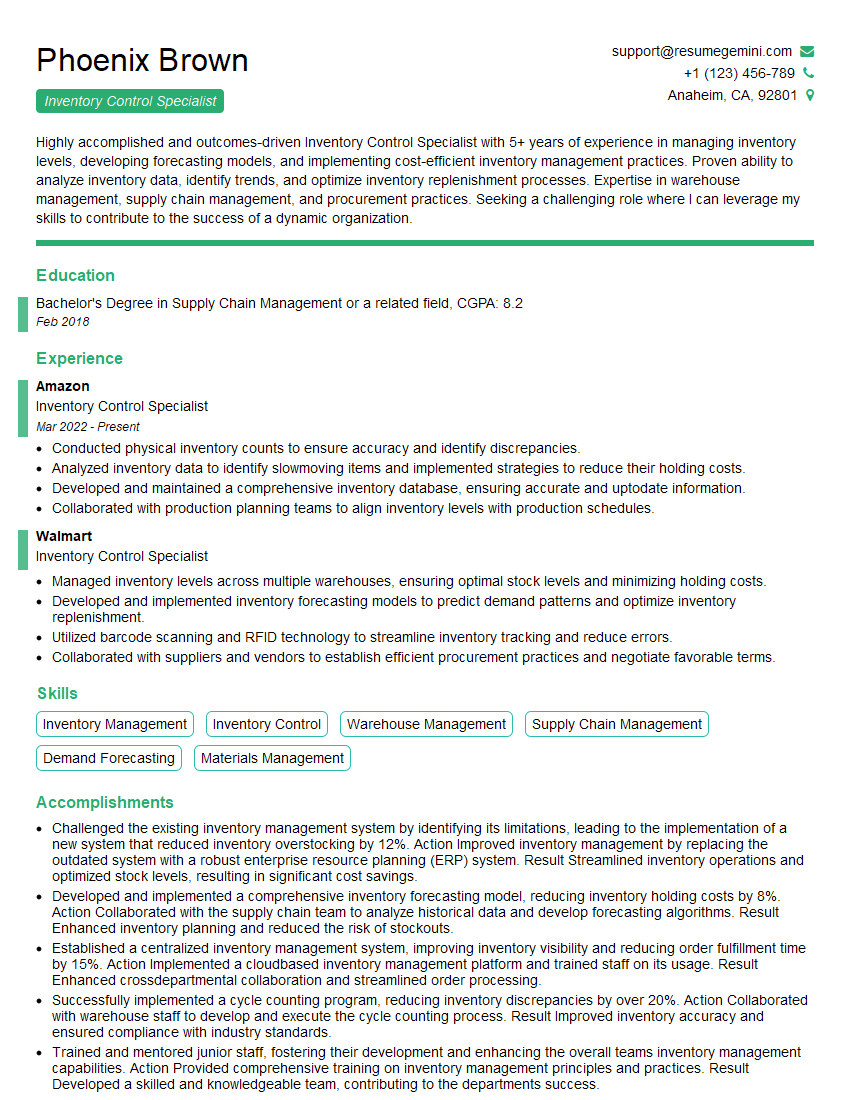
Inventory Control Specialist Resume Sample
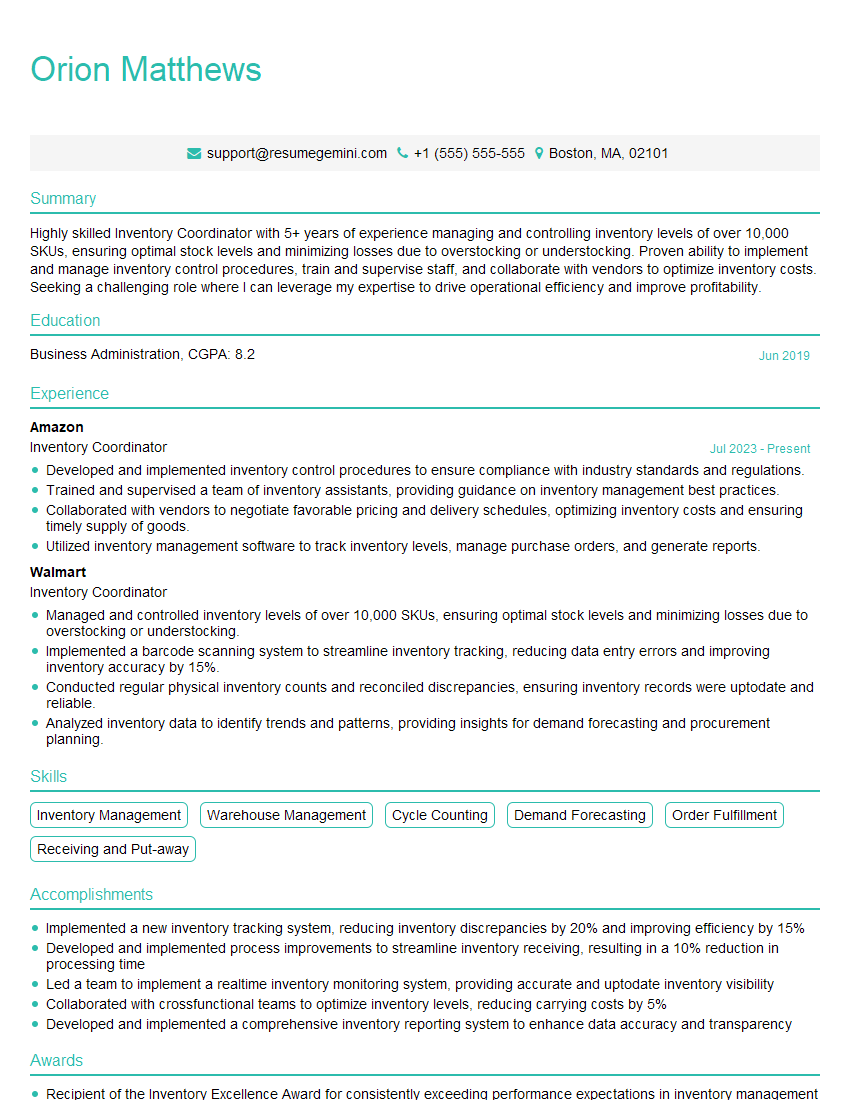
Inventory Coordinator Resume Sample
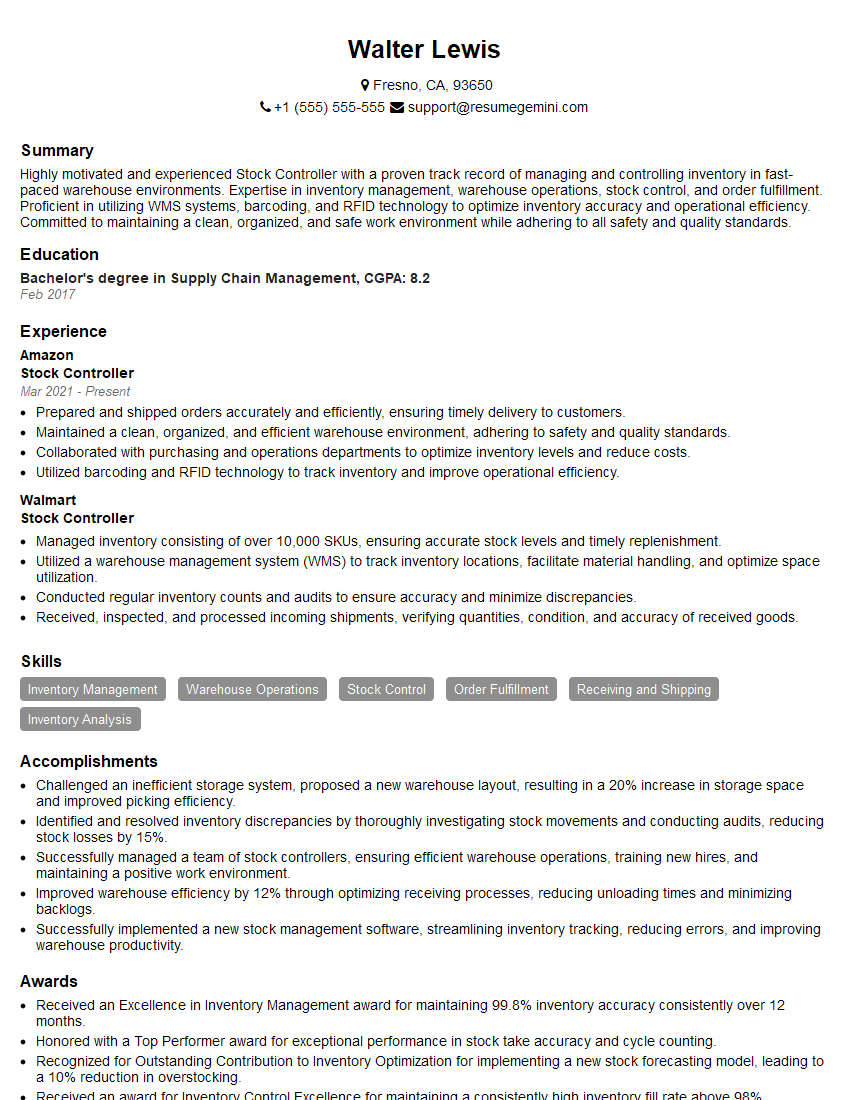
Stock Controller Resume Sample
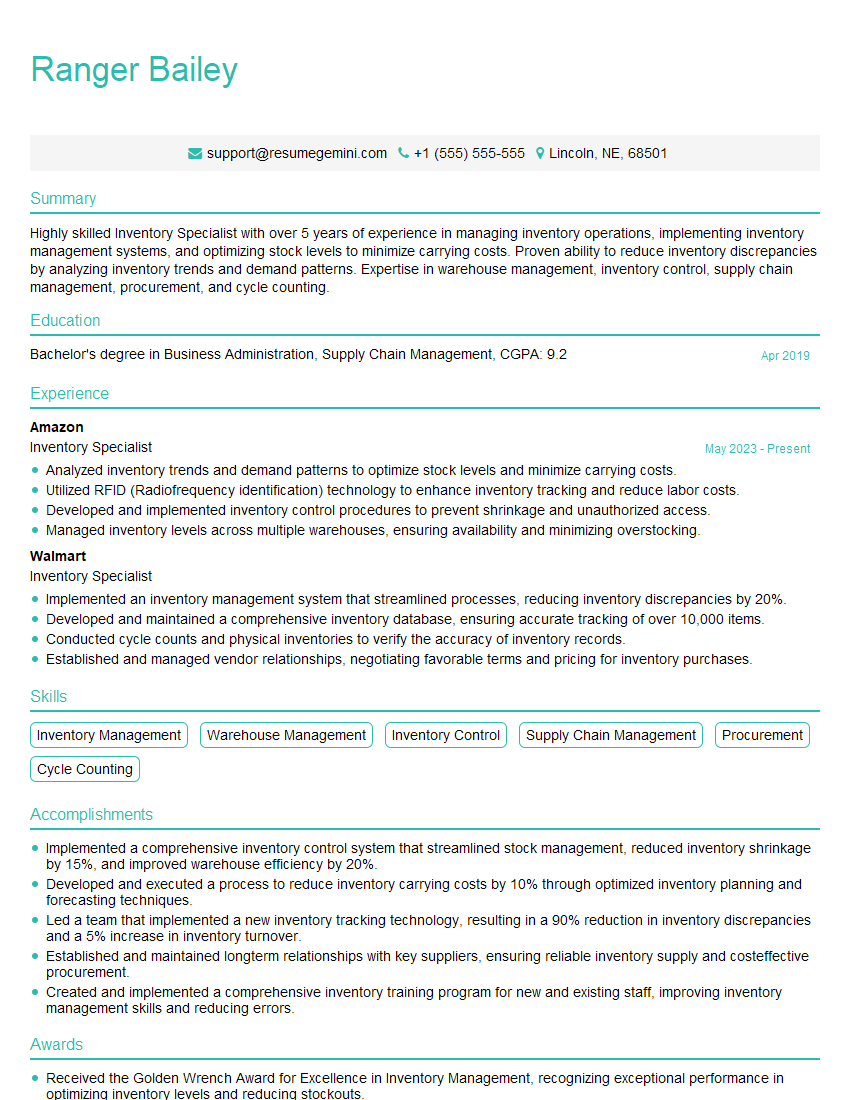
Inventory Specialist Resume Sample
- Operations Manager
- Demand Planner
- Materials Manager
- Purchasing Manager
- Supply Chain Manager
- Distribution Center Manager
- Logistics Manager
- Warehouse Manager
- Warehouse Supervisor
- Logistics Coordinator
- Procurement Specialist
- Inventory Analyst
- Production Planner
- Inventory Manager
- Supply Chain Analyst
- Inventory Control Specialist
- Inventory Coordinator
- Stock Controller
- Inventory Specialist
Explore more articles
Users Rating of Our Blogs
Share Your Experience
We value your feedback! Please rate our content and share your thoughts (optional).
What Readers Say About Our Blog
Very informative content, great job.
good