Unlock your full potential by mastering the most common Maintaining Shingle Inventory interview questions. This blog offers a deep dive into the critical topics, ensuring you’re not only prepared to answer but to excel. With these insights, you’ll approach your interview with clarity and confidence.
Questions Asked in Maintaining Shingle Inventory Interview
Q 1. Explain your experience with managing shingle inventory using a specific inventory management system (e.g., ERP, inventory software).
In my previous role, I managed shingle inventory using an ERP system called SAP. This system allowed for comprehensive tracking of every shingle from the moment it arrived at our warehouse until it was loaded onto a job site. The system’s features were crucial for effective inventory management. We utilized the system’s barcode scanning capabilities to track incoming shipments, ensuring accuracy in our records. For example, upon receiving a delivery of CertainTeed Landmark shingles, each pallet was scanned, updating our inventory database instantly. This minimized manual data entry and reduced errors. The system also generated automated reports on stock levels, allowing us to anticipate potential shortages and plan re-orders proactively. Furthermore, SAP’s reporting functionality allowed for detailed analysis of inventory turnover rates, helping us identify slow-moving items and adjust our purchasing strategies accordingly. The system also integrated with our sales and project management systems providing a seamless flow of information from order placement to project completion.
Q 2. How do you track shingle damage or spoilage during storage and what preventative measures do you implement?
Tracking shingle damage is paramount to minimizing waste and maintaining inventory accuracy. We employed a two-pronged approach: visual inspection and detailed documentation. During both receiving and periodic stock checks, each pallet was visually inspected for signs of damage such as crushing, water damage, or discoloration. Any damaged shingles were immediately documented with photographs and detailed descriptions within the ERP system, flagging them as unusable and initiating a return or replacement process with the manufacturer. Preventative measures were equally important. We ensured proper stacking techniques were followed, with pallets stacked according to manufacturer recommendations to avoid compression and maintain airflow. The warehouse itself was kept clean and dry to prevent moisture damage. This included regular checks of the roof and walls for leaks and adequate ventilation to minimize humidity. Regular pest control measures were also in place to protect against insect infestation.
Q 3. Describe your experience forecasting shingle demand based on historical sales data and market trends.
Forecasting shingle demand is vital for maintaining optimal stock levels and avoiding both stockouts and overstocking. I combined historical sales data with market trend analysis to create accurate forecasts. The ERP system provided historical data on sales volumes, broken down by shingle type, color, and season. This data was analyzed using time series forecasting techniques to identify patterns and trends. For example, I noticed a consistent increase in demand for grey shingles during the spring and summer months. In addition to analyzing past sales data, market trends were also taken into account. We monitored competitor activity, analyzed new home construction permits in our service area, and reviewed local economic indicators to gauge overall demand. This holistic approach, combining quantitative and qualitative information, yielded far more accurate forecasts than relying solely on historical data. Based on these forecasts, we could adjust our purchasing strategy, ensuring we had the right amount of shingles available to meet anticipated demand.
Q 4. What methods do you use to optimize shingle storage space and minimize waste?
Optimizing shingle storage is critical for maximizing space utilization and minimizing waste. We used a first-in, first-out (FIFO) storage system, ensuring that older shingles were used before newer ones. This helped to reduce the risk of spoilage or obsolescence. We strategically organized the warehouse, grouping similar shingle types together to improve efficiency in picking and packing. Pallets were stacked to a height that balanced safety and storage density, taking into account the structural integrity of the pallets and the weight of the shingles. Regular audits of our storage practices were conducted to identify and address any inefficiencies. This involved reviewing warehouse layout, optimizing pallet stacking, and identifying areas for improvement in space utilization. We also minimized waste by implementing a rigorous process for handling returns and damaged products, allowing us to either salvage reusable materials or promptly return damaged goods to the manufacturer for credit.
Q 5. How do you handle discrepancies between physical shingle counts and inventory records?
Discrepancies between physical counts and inventory records are inevitable, but they need to be addressed promptly to maintain accuracy. We performed regular cycle counts, verifying physical inventory against the ERP system’s records. These cycle counts were not just random; we prioritized high-value and fast-moving items for more frequent checks. When a discrepancy was found, a thorough investigation was launched. This might involve re-checking the physical count, verifying the accuracy of previous transactions recorded in the system, investigating potential losses due to theft or damage, or checking for possible data entry errors. Once the root cause was identified, corrective actions were implemented to prevent similar occurrences in the future. For example, if a data entry error was found, staff received further training on accurate data entry procedures. If theft was suspected, security measures were upgraded.
Q 6. How do you prioritize ordering shingles to meet project deadlines and prevent stockouts?
Prioritizing shingle orders to meet project deadlines requires a strategic approach. We integrated the ERP system with our project management software. This allowed us to track shingle requirements for each project based on the projected start and completion dates. The system generated a prioritized list of orders based on project deadlines and criticality, ensuring that the most urgent requirements were met first. This information was used to create purchase orders, tracking shipments and ensuring timely delivery to the job site. We maintained a safety stock level for commonly used shingles to mitigate the risk of unforeseen delays. This buffer stock provided a cushion against minor supply chain disruptions without incurring excessive holding costs. We also fostered strong relationships with our suppliers, keeping them informed of our forecast needs and discussing potential lead time issues proactively. This collaborative approach helped to ensure consistent supply and reduced the risk of stockouts.
Q 7. What metrics do you use to measure the efficiency of your shingle inventory management?
Several key metrics were used to measure the efficiency of our shingle inventory management. These included:
- Inventory Turnover Rate: This measures how quickly shingles are sold, indicating the efficiency of our inventory management. A higher turnover rate suggests efficient sales and minimal stock holding.
- Stockout Rate: This shows the percentage of times we ran out of a particular shingle. A low stockout rate indicates effective demand forecasting and purchasing.
- Inventory Holding Costs: This tracks the costs associated with storing shingles, including warehouse rent, utilities, and insurance. Minimizing these costs is a key goal.
- Inventory Accuracy: This represents the percentage of times the physical count matched the inventory records. High accuracy indicates effective inventory tracking and control.
- Order Fulfillment Rate: This measures the percentage of orders fulfilled on time and in full. It reflects the efficiency of our order processing and supply chain management.
Regular monitoring of these metrics helped us identify areas for improvement and fine-tune our inventory management strategies.
Q 8. How do you ensure accurate tracking of shingle batches and their associated documentation?
Accurate shingle batch tracking is paramount. We use a combination of methods to ensure complete traceability. Each batch receives a unique identifier, typically a lot number, printed on the packaging and entered into our inventory management system (IMS). This IMS is crucial; it’s the central repository for all data related to each batch, including the manufacturing date, quantity, color, and any relevant certifications. We also maintain detailed receiving documentation – bills of lading, packing slips – which are meticulously cross-referenced with the IMS entries. This two-pronged approach – physical labeling and digital record-keeping – minimizes errors and provides a comprehensive audit trail. For example, if a quality issue arises, we can quickly pinpoint the affected batch and trace it back to its origin.
Furthermore, regular audits of both physical inventory and the IMS are conducted to verify accuracy and identify discrepancies early on. Any discrepancies are immediately investigated and rectified, preventing them from snowballing into bigger problems. This process is supported by barcode scanning technology, which significantly speeds up the inventory process and reduces human error.
Q 9. Describe your experience with cycle counting and its impact on inventory accuracy.
Cycle counting is a cornerstone of our inventory accuracy strategy. Instead of a full, disruptive inventory count, we count a small portion of our inventory – a specific section or product type – on a regular, scheduled basis. This allows us to identify discrepancies early and proactively. For instance, we might count all asphalt shingles of a particular color on Mondays, and then a different color the following week. The frequency of cycle counting depends on the velocity of the item; fast-moving items get counted more often.
The impact on inventory accuracy is significant. By frequently reconciling physical counts with our IMS, we minimize the possibility of large, unexpected discrepancies. Any differences found are investigated and adjusted in the system. This iterative process makes our inventory data more reliable and assists in identifying potential issues with our receiving or storage processes. The data from cycle counts is also used to refine our forecasting models for ordering and to improve the overall efficiency of our warehouse operations.
Q 10. How do you manage obsolete or slow-moving shingle inventory?
Managing obsolete or slow-moving shingles requires a strategic approach. We regularly review our inventory reports to identify items that haven’t moved in a specified period (say, six months to a year). The primary strategy is to aggressively market these items – offering discounts, promoting them to specific customer segments (e.g., smaller projects or contractors working on budget), or bundling them with other products. If marketing efforts fail to move the inventory, we might consider returning them to the manufacturer, if feasible, under a return authorization.
In cases where neither marketing nor returns are viable options, we may write down the value of the obsolete inventory to reflect its reduced market worth. This impacts our financial reporting but prevents us from holding onto products with no realistic prospect of sale. Finally, careful forecasting of future demand based on sales trends and market analysis helps us prevent the accumulation of obsolete inventory in the first place, minimizing the need for these reactive measures.
Q 11. Explain your experience with implementing and maintaining FIFO (First-In, First-Out) or LIFO (Last-In, First-Out) inventory systems.
We primarily utilize a FIFO (First-In, First-Out) inventory system for shingles. FIFO ensures that the oldest shingles are sold first, minimizing the risk of spoilage or degradation due to prolonged storage. Implementing FIFO requires careful tracking of each batch’s arrival date and prioritizing the older batches for shipment. This is managed through our IMS, which automatically flags the oldest inventory when orders are processed.
While LIFO (Last-In, First-Out) can be advantageous in certain contexts (such as accounting for fluctuating costs), it presents greater risks for perishable goods like certain specialized shingle coatings that may degrade over time. Maintaining accurate stock rotation using FIFO ensures that our customers receive the highest quality product and minimizes potential warranty claims due to material aging.
Q 12. How do you handle returns and exchanges of damaged or defective shingles?
Handling returns and exchanges of damaged or defective shingles involves a clear and documented process. When a return is initiated, we carefully inspect the shingles to determine the cause of damage. If the damage is due to a manufacturing defect, we work with the manufacturer to process a claim and replace the defective shingles. Documentation is crucial here: photos, detailed descriptions of the damage, and the original purchase order are all essential.
If the damage is due to mishandling during transportation or on the job site, we may still offer an exchange or credit, depending on our relationship with the customer and the extent of the damage. This involves a thorough assessment of the situation, with clear communication to the customer about the resolution process. Every return is documented, and the related information is updated in our IMS to maintain accurate inventory records.
Q 13. Describe a time you identified and resolved a significant inventory discrepancy.
During a recent annual inventory count, we discovered a significant discrepancy in our stock of a specific high-demand shingle color. The physical count showed a much lower quantity than what our IMS indicated. After an initial investigation, we determined that a labeling error during a large shipment had led to incorrect inventory placement and miscounting. Several pallets had been inadvertently mislabeled and stored in the wrong location.
Our resolution involved a complete recount of the affected area, relabeling of misidentified pallets, and an updated IMS record. We implemented a stricter quality control check on incoming shipments and introduced improved labeling procedures to avoid similar errors in the future. The entire incident highlighted the importance of regular audits and the need for robust error detection and correction mechanisms within our system.
Q 14. How do you collaborate with other departments (e.g., purchasing, sales) to ensure efficient shingle inventory management?
Collaboration is crucial for efficient shingle inventory management. We maintain close communication with the purchasing department to provide accurate sales forecasts and inventory levels, which informs their ordering decisions. This helps to avoid stockouts of popular items and minimizes excess inventory of slow-moving products. With the sales department, we share real-time inventory data, enabling them to accurately respond to customer inquiries and manage expectations regarding order fulfillment times.
We also work closely with warehouse operations to ensure efficient storage, handling, and retrieval of shingles. Regular meetings with representatives from all these departments are held to review inventory performance, identify potential issues, and brainstorm improvements to our processes. This coordinated approach ensures that we’re all working from the same data and towards the same objective: optimizing inventory levels to meet customer demand while minimizing costs and waste.
Q 15. What are your preferred methods for maintaining accurate shingle inventory records?
Maintaining accurate shingle inventory records is crucial for efficient operations and profitability. My preferred method involves a multi-pronged approach combining physical inventory checks with a robust digital system.
Firstly, I employ a meticulous system of physical inventory counts. This involves regularly checking stock levels, noting any damage or discrepancies, and updating counts immediately. I use a clearly labeled inventory system to track everything from bundles to individual shingles.
Secondly, I leverage a dedicated inventory management software (more on that in a later answer). This software allows for real-time tracking of stock, automating many of the manual processes of inventory counting and reconciliation. This digital tracking complements the physical checks, ensuring accuracy and minimizing discrepancies. A periodic cycle count—checking specific areas at different times—helps to verify accuracy and catch potential issues before they become major problems.
Finally, I incorporate regular reconciliation processes to ensure the physical counts align with the software data. This helps identify any inconsistencies or errors early, enabling prompt corrective action and preventing inventory-related losses. Think of it like balancing your checkbook—regular reconciliation is key.
Career Expert Tips:
- Ace those interviews! Prepare effectively by reviewing the Top 50 Most Common Interview Questions on ResumeGemini.
- Navigate your job search with confidence! Explore a wide range of Career Tips on ResumeGemini. Learn about common challenges and recommendations to overcome them.
- Craft the perfect resume! Master the Art of Resume Writing with ResumeGemini’s guide. Showcase your unique qualifications and achievements effectively.
- Don’t miss out on holiday savings! Build your dream resume with ResumeGemini’s ATS optimized templates.
Q 16. What is your experience with various types of asphalt shingles and their specific storage requirements?
My experience encompasses a wide range of asphalt shingle types, from traditional 3-tab shingles to architectural shingles with varying thicknesses, designs, and materials. Understanding their specific storage requirements is paramount to maintaining their quality and preventing damage.
- 3-Tab Shingles: These are generally more robust and less prone to damage, although they still need to be protected from moisture.
- Architectural Shingles: These are more intricate and susceptible to damage from moisture, extreme temperatures, and physical impacts. They often require more careful handling and stacking.
- Premium Shingles: These higher-end shingles sometimes have more specific storage requirements, as detailed in the manufacturer’s documentation. This might include temperature control or specific pallet stacking procedures.
Proper storage involves keeping shingles dry, off the ground, and protected from the elements. Pallets should be stacked correctly to prevent damage. Proper ventilation is also important to avoid moisture buildup, which can lead to mold and mildew. Imagine stacking books—you wouldn’t just throw them haphazardly into a pile, but carefully arrange them to prevent damage. The same care applies to shingles.
Q 17. How do you ensure the security and safety of your shingle inventory?
Shingle inventory security and safety are top priorities. My strategies incorporate both physical and procedural measures.
- Secure Storage: Shingles are stored in a locked, weatherproof facility with restricted access, only accessible to authorized personnel.
- Surveillance: Security cameras monitor the storage area, providing a deterrent against theft and assisting in investigations if needed.
- Inventory Management System: The software tracks not only quantities but also the movement of shingles, creating an audit trail that helps identify potential losses or discrepancies.
- Regular Inspections: Periodic inspections of the storage area and inventory are conducted to identify any signs of damage, theft, or unusual activity.
- Employee Training: Employees are trained on security procedures and are accountable for maintaining the integrity of the inventory.
These combined measures create a robust system that minimizes risks and safeguards our valuable inventory.
Q 18. What software or tools do you use to manage shingle inventory?
I utilize a cloud-based inventory management software that is specifically designed for building materials. This software allows for real-time tracking of inventory levels, automated ordering, and comprehensive reporting features.
The software integrates barcode scanning, making inventory counts efficient and accurate. It helps with forecasting demand, preventing stockouts, and optimizing order quantities. For example, if we anticipate a surge in demand for a particular shingle color, the software helps us adjust orders accordingly. This data-driven approach to inventory management significantly enhances efficiency and minimizes waste.
The specific software is [Software Name Redacted for Confidentiality] which provides excellent reporting features, allowing me to generate reports on inventory levels, sales trends, and profit margins.
Q 19. Explain your experience with managing multiple shingle types and colors simultaneously.
Managing multiple shingle types and colors simultaneously requires a highly organized and efficient system. My experience involves using a detailed inventory management software (as mentioned previously) that is capable of tracking numerous SKUs (Stock Keeping Units). Each shingle type and color is assigned a unique SKU, allowing for precise tracking and reporting.
The software’s reporting capabilities provide valuable insights into sales trends for different shingle colors and types, enabling accurate forecasting and optimized stock levels. For instance, if a specific color is consistently underperforming, we might adjust our purchasing strategy or consider marketing initiatives to improve sales. We also use dedicated storage areas for each type or color to ensure ease of retrieval and minimize confusion.
Imagine a well-organized library—each book is cataloged and shelved according to a specific system. The same principle applies here—a well-defined system minimizes confusion and enables efficient inventory management.
Q 20. Describe your experience with implementing and maintaining inventory control procedures.
Implementing and maintaining inventory control procedures is an ongoing process that requires attention to detail and consistent effort. It begins with clearly defined roles and responsibilities, ensuring each team member understands their role in maintaining accurate records and handling inventory. The process is based on the use of standardized forms for tracking inventory movements, including receiving, storage, and shipping.
Regular cycle counting, as mentioned before, is integral to maintaining inventory accuracy. These regular checks help to identify discrepancies early and prevent significant stock losses. We also have established procedures for handling damaged or obsolete shingles. These procedures might involve returning defective shingles to the supplier or implementing a disposal program in accordance with environmental regulations. We regularly review and update our procedures to adapt to changing needs and incorporate best practices.
Think of it as a machine that needs regular maintenance—consistent effort ensures smooth operation and prevents breakdowns.
Q 21. How do you identify and mitigate risks associated with shingle theft or damage?
Identifying and mitigating risks associated with shingle theft or damage requires a proactive approach. My experience has shown that a multi-layered security system is the most effective strategy.
- Physical Security: This includes secure storage, surveillance systems (CCTV cameras), perimeter fencing, and lighting.
- Access Control: Limited access to the storage area, with authorized personnel only having access, helps restrict access to unauthorized individuals.
- Inventory Management System: The software acts as a deterrent and allows for the tracking of any discrepancies.
- Employee Training: Employees are trained to recognize and report suspicious activity.
- Insurance: Comprehensive insurance coverage protects against potential losses from theft or damage.
Regular audits, both internal and potentially external, help to identify vulnerabilities in the security system and suggest areas for improvement. By taking a proactive, layered approach to security, we minimize the risks and safeguard our inventory. It’s about creating a hostile environment for thieves while making sure our employees are aware of their role in security.
Q 22. How do you stay updated on changes in building codes and regulations regarding shingle storage?
Staying current on building codes and regulations for shingle storage is crucial for compliance and avoiding potential legal issues. I achieve this through a multi-pronged approach.
- Subscription to industry publications and online resources: I regularly subscribe to publications like Roofing Contractor and utilize online resources from organizations like the National Roofing Contractors Association (NRCA) to access the latest updates on building codes and best practices for shingle handling and storage.
- Attendance at industry conferences and workshops: Attending these events allows me to network with other professionals and learn about changes directly from code enforcement officials and material suppliers. I actively participate in Q&A sessions to clarify any ambiguities.
- Regular review of local and state building codes: I maintain a database of relevant codes specific to my operating region and periodically check for updates on government websites and through notifications from relevant agencies. This ensures I’m always aware of any changes impacting shingle storage requirements.
- Collaboration with building inspectors: Maintaining a strong relationship with local building inspectors allows me to get early insights into impending code changes and address any potential compliance challenges proactively.
By employing this comprehensive approach, I guarantee that our shingle storage practices always remain compliant and up-to-date, minimizing risks and ensuring operational efficiency.
Q 23. Describe your experience with physical inventory counts and reconciliation.
Physical inventory counts and reconciliation are fundamental to accurate inventory management. My experience involves a systematic process designed to minimize errors and ensure data integrity.
- Scheduled Counts: We conduct regular, scheduled physical inventory counts, typically monthly or quarterly, depending on the volume and turnover rate of our shingles. The frequency depends on the type of shingle and the demand. For high-demand shingles, more frequent counts are implemented.
- Counting Methodology: We use a standardized counting method, typically involving a two-person team to verify accuracy. Each pallet is counted and checked against our inventory management system. This is then cross-referenced with purchase orders and sales records.
- Data Entry and Reconciliation: The counted data is entered into our inventory management system. The system automatically compares the physical count to the recorded inventory. Discrepancies are investigated to identify causes (e.g., damage, theft, data entry errors). Any discrepancies are documented, analyzed and corrected before final reconciliation. We utilize FIFO (First-In, First-Out) accounting principles.
- Cycle Counting: To supplement full inventory counts, we implement cycle counting. This involves regularly counting smaller sections of the inventory, reducing the time and disruption of a full count while providing continuous monitoring of inventory accuracy.
Through this meticulous approach, we maintain a high degree of accuracy in our inventory records, minimizing stockouts and waste. For instance, a recent reconciliation revealed a minor discrepancy attributed to a data entry error which was quickly resolved.
Q 24. What measures do you take to ensure the quality and condition of stored shingles?
Maintaining the quality and condition of stored shingles is paramount. Damage can lead to significant financial losses and reputational damage. My approach focuses on:
- Proper Storage Conditions: Shingles are stored on level, dry surfaces, ideally under a roof or in a covered storage area. This protects them from moisture, UV damage, and extreme temperature fluctuations. Pallet racking is used to optimize space and prevent damage from stacking too high.
- Protection from the Elements: When outdoor storage is necessary, tarps or other weatherproof coverings are used to safeguard shingles from rain, snow, and excessive sunlight. Proper ventilation is also crucial to prevent condensation build-up.
- First-In, First-Out (FIFO) System: We strictly adhere to a FIFO system, ensuring that older shingles are used first to minimize the risk of deterioration. This is achieved through careful organization and tracking of inventory.
- Regular Inspections: Regular inspections of stored shingles are conducted to check for signs of damage, water damage, or pests. Any damaged shingles are immediately identified and separated from the rest to avoid contamination.
- Pest Control: Preventative measures are taken to deter pests such as rodents and insects. Regular cleaning and the use of appropriate pest control methods as needed are crucial.
This proactive approach ensures we maintain a high-quality inventory of shingles, reducing waste and delivering consistently superior products to our customers.
Q 25. How do you manage the impact of weather conditions on shingle storage?
Weather significantly impacts shingle storage. To mitigate these effects, we employ several strategies:
- Covered Storage: Whenever feasible, shingles are stored in covered areas to protect them from direct exposure to rain, snow, and intense sunlight. This significantly reduces the risk of moisture damage and color fading.
- Elevated Storage: Storing shingles off the ground prevents moisture absorption from the soil and makes it easier to perform regular inspections for potential damage.
- Weather Monitoring: We monitor weather forecasts closely, particularly during periods of extreme weather. This allows us to take proactive steps like securing tarps or relocating pallets to better-protected areas if necessary.
- Protective Coverings: If outdoor storage is unavoidable, we use high-quality, waterproof tarps that are securely fastened to protect the shingles from precipitation.
- Proper Ventilation: Even in covered storage areas, adequate ventilation is crucial to prevent moisture build-up and condensation.
For example, during a recent heavy rainfall, our weather monitoring system alerted us, enabling us to take immediate action to secure the outdoor shingle storage area with additional tarps and protect the shingles from significant water damage. This preventative action saved considerable financial loss.
Q 26. How would you handle a sudden surge in shingle demand?
Handling a sudden surge in shingle demand requires a rapid and coordinated response. My approach involves:
- Immediate Inventory Assessment: The first step is to accurately assess the current inventory levels and compare them to the immediate demand. This informs our subsequent actions.
- Prioritize Existing Orders: Existing customer orders must be fulfilled first. We’ll allocate shingles based on order priority and delivery deadlines.
- Expedite Orders with Suppliers: We immediately contact our suppliers to expedite existing orders and place new orders to meet the increased demand. This requires strong relationships with suppliers to secure prioritized delivery.
- Inventory Optimization: If possible, we may prioritize the most in-demand shingle types and temporarily reduce our stock of less popular variations. This ensures we have sufficient stock of the critical items.
- Customer Communication: Open and honest communication with customers about potential delays or lead time increases is crucial to manage expectations and maintain positive relationships. Transparency fosters trust.
- Temporary Storage Solutions: If our existing storage capacity is exceeded, we would explore temporary storage solutions, such as renting additional warehouse space.
During a past period of unexpectedly high demand due to a major hurricane, our swift response and proactive communication with both suppliers and customers ensured we met the needs of all affected parties while minimizing disruptions.
Q 27. Describe your experience with negotiating favorable terms with shingle suppliers.
Negotiating favorable terms with shingle suppliers requires a strategic and collaborative approach. My experience involves:
- Building Strong Relationships: Establishing strong, long-term relationships with key suppliers is crucial. This involves regular communication, demonstrating reliability, and consistently meeting our obligations.
- Market Research: Understanding market trends and competitor pricing helps me to leverage better terms. I regularly analyze market data to know the prevailing price ranges.
- Volume Discounts: Negotiating volume discounts is a primary strategy. By committing to larger orders, we can secure lower prices per unit.
- Payment Terms: We negotiate favorable payment terms, such as extended payment periods or discounts for early payment. This improves our cash flow management.
- Delivery Schedules: We work with suppliers to establish reliable and timely delivery schedules that align with our operational needs. This minimizes disruptions and stockouts.
- Quality Assurance: The quality of the shingles is non-negotiable. We establish clear quality standards and ensure suppliers meet these criteria.
For example, by establishing a strong relationship with a key supplier, we successfully negotiated a substantial volume discount resulting in considerable cost savings over the past year. This partnership ensures the timely delivery of high-quality products at competitive prices.
Q 28. How do you balance the costs of holding inventory with the risk of stockouts?
Balancing inventory holding costs with the risk of stockouts is a constant challenge requiring a delicate equilibrium. My approach involves:
- Economic Order Quantity (EOQ): I utilize the EOQ model to determine the optimal order quantity that minimizes total inventory costs, including ordering costs and holding costs. This model considers factors like demand, ordering costs, and holding costs.
- Safety Stock: Maintaining a calculated level of safety stock helps to mitigate the risk of stockouts due to unexpected demand fluctuations or supply chain disruptions. The safety stock level is calculated based on historical demand variability and lead times.
- Demand Forecasting: Accurate demand forecasting is crucial. We use statistical techniques and historical data to predict future demand, enabling us to order appropriately and minimize both overstocking and stockouts.
- Inventory Turnover Rate: Regularly monitoring the inventory turnover rate provides insights into the efficiency of our inventory management. A high turnover rate indicates efficient inventory management, whereas a low rate might suggest overstocking.
- Regular Review and Adjustment: The balance between holding costs and stockout risks is not static. We regularly review our inventory management strategy, adjusting our ordering policies and safety stock levels as needed based on current market conditions and performance data.
By continuously monitoring and adjusting our inventory management strategy, we aim to achieve an optimal balance – minimizing the financial burden of holding excess inventory while simultaneously mitigating the detrimental impact of stockouts on customer service and profitability.
Key Topics to Learn for Maintaining Shingle Inventory Interview
- Inventory Management Systems: Understanding different inventory management software and techniques (e.g., FIFO, LIFO), and their application to shingle stock.
- Stock Forecasting and Ordering: Accurately predicting shingle demand based on sales data, weather patterns, and project timelines to optimize ordering and minimize waste.
- Warehouse Management: Efficient organization and storage of shingles to prevent damage, ensure easy retrieval, and maximize space utilization. This includes understanding proper stacking procedures and safety protocols.
- Quality Control and Damage Assessment: Identifying and handling damaged shingles, implementing procedures for damage prevention, and maintaining accurate records of stock condition.
- Waste Reduction Strategies: Implementing strategies to minimize shingle waste through accurate ordering, efficient use of materials on job sites, and proper disposal of damaged shingles.
- Data Analysis and Reporting: Using inventory data to generate reports on stock levels, consumption rates, and potential issues. This includes understanding key performance indicators (KPIs) relevant to shingle inventory.
- Compliance and Regulations: Understanding any relevant industry regulations, safety standards, and environmental considerations related to shingle storage and disposal.
- Problem-Solving and Decision-Making: Demonstrating the ability to analyze inventory discrepancies, identify root causes of problems, and develop effective solutions to optimize inventory management.
Next Steps
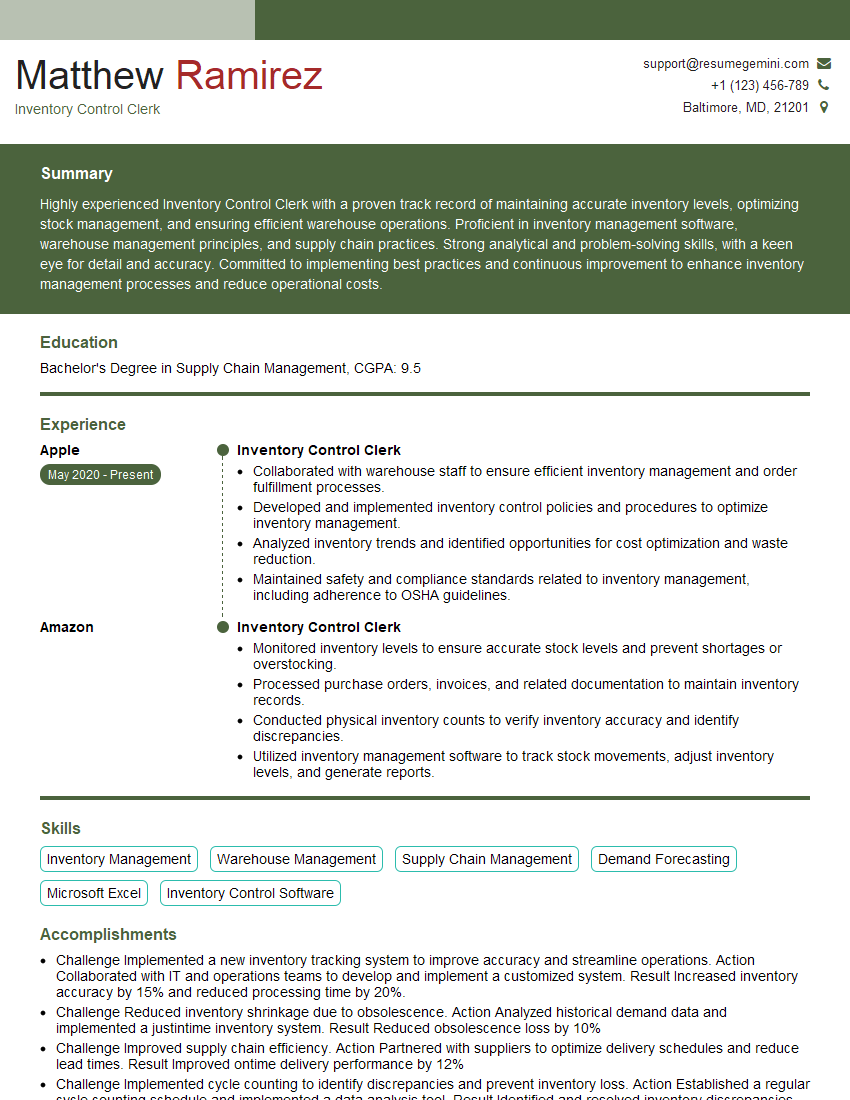
Mastering shingle inventory management is crucial for career advancement in the construction and roofing industries. A strong understanding of these principles showcases your organizational skills, attention to detail, and ability to contribute to efficient project execution and profitability. To significantly enhance your job prospects, it’s vital to create an ATS-friendly resume that highlights your skills and experience. We strongly recommend using ResumeGemini, a trusted resource for building professional resumes, to craft a compelling document that catches the eye of recruiters. ResumeGemini provides examples of resumes tailored to Maintaining Shingle Inventory to help guide you in showcasing your qualifications effectively. Invest the time to build a top-notch resume—it’s your first impression with potential employers.
Explore more articles
Users Rating of Our Blogs
Share Your Experience
We value your feedback! Please rate our content and share your thoughts (optional).
What Readers Say About Our Blog
Very informative content, great job.
good