Cracking a skill-specific interview, like one for Man-to-Man Defense Techniques, requires understanding the nuances of the role. In this blog, we present the questions you’re most likely to encounter, along with insights into how to answer them effectively. Let’s ensure you’re ready to make a strong impression.
Questions Asked in Man-to-Man Defense Techniques Interview
Q 1. Explain the fundamental principles of man-to-man defense.
Man-to-man defense is the foundation of many defensive systems. Its core principle is assigning each defender a specific offensive player to guard throughout the possession. This requires constant attention, anticipation, and reaction to the offensive player’s movements. The goal is to prevent that player from scoring or getting a good shot off, while also disrupting their passing lanes and overall offensive rhythm. Think of it like a shadow – the defender stays close, mirroring the offensive player’s actions, always ready to contest shots and passes.
Successful man-to-man hinges on three key elements: positioning (staying between your player and the basket), footwork (maintaining balance and leverage), and fundamentals (proper stance, hand placement, and anticipation).
Q 2. Describe different stances used in man-to-man defense and their advantages.
Several stances are crucial in man-to-man defense, each with specific advantages:
- Athletic Stance: Feet shoulder-width apart, knees slightly bent, weight balanced, and eyes focused on the offensive player. This is a versatile base for quick movements and reactions. It’s like a coiled spring, ready to explode in any direction.
- Defensive Slide Stance: Similar to the athletic stance, but with one foot slightly ahead of the other, ready for a quick lateral movement. It provides a powerful base for side-to-side movement while maintaining balance.
- Low Stance: A lower stance used when guarding a low post player or when anticipating a drive to the basket. This provides greater leverage and makes it harder for the offensive player to shoot over you. It’s similar to a wrestler’s stance; low to the ground, and strong.
The choice of stance depends heavily on the situation and the offensive player’s tendencies. A guard might require a more agile athletic stance, while a post player might necessitate a low stance to contest shots effectively.
Q 3. How do you teach proper footwork in man-to-man defense?
Teaching proper footwork is paramount. I start with basic drills focusing on staying low, balanced, and using short, controlled steps. We practice shuffling, crossovers, and lateral slides to develop agility and quickness. I emphasize keeping the feet shoulder-width apart and avoiding crossing over feet too often, as this can cause a loss of balance. It’s about controlled power and precise movements, not frantic running. Think of it like a boxer’s footwork: precise, controlled, and ready to react to any opponent’s move.
Drills include:
- Cone Drills: Shuffling laterally around cones to develop side-to-side movement.
- Mirror Drills: Mirroring a partner’s movements to develop responsiveness.
- Sprint-Shuffle Drills: Combining sprints with shuffling to improve transition speed and agility.
Q 4. What are some common defensive slides and how are they executed?
Defensive slides are crucial for staying in front of an offensive player. Two common slides are:
- Lateral Slide: Used to move side-to-side, maintaining proper defensive positioning. It involves short, quick steps, keeping the feet shoulder-width apart and the weight balanced. Imagine sliding smoothly, almost like ice skating.
- Closeout Slide: Used to close the gap between the defender and the offensive player who receives the ball. This involves a controlled sprint with a transition to a lateral slide as the offensive player starts to dribble.
Proper execution requires controlled movements, keeping the defensive stance and maintaining proper positioning between the offensive player and the basket. Practice is key to mastering the technique and transitioning smoothly between slides and different stances.
Q 5. Explain the concept of ‘help defense’ within a man-to-man system.
Help defense is critical in man-to-man. It means providing assistance to a teammate who is being attacked. This often involves anticipation and quick reaction. If a teammate is being driven on, a nearby defender might ‘hedge’ – briefly stepping into the driving lane to force a change of direction or disrupt the drive. Once the ball is passed, the help defender recovers to their original assignment. Another example of help defense is rotating to cover a teammate when they are forced to help on a drive, in case of a pass to a cutter.
Effective help defense requires strong communication and trust between teammates. It’s a delicate balance; too much help can leave another player open, while too little help can lead to an easy score.
Q 6. How do you adjust man-to-man defense against different offensive player types (e.g., post players, guards)?
Adjusting to different offensive players is essential. Against a post player, I’d use a low, strong stance, focusing on denying post position, using my hands effectively to disrupt their moves. Against quicker guards, I would employ more agile movements, focusing on staying close and preventing penetration, ready for quick changes of direction and lateral slides.
Understanding each player’s strengths and weaknesses is crucial. Studying game footage helps me prepare a game plan for every player on the opposing team. This allows for proactive defense rather than reactive defense.
Q 7. Describe your approach to teaching defensive rotations and communication.
Teaching rotations and communication starts with visual aids, diagrams, and film sessions to illustrate defensive rotations. We practice different rotation scenarios during drills, emphasizing clear communication and quick reactions. We use verbal cues such as ‘switch,’ ‘hedge,’ and ‘recover’ to ensure seamless transitions. I encourage players to communicate constantly, reminding them that a strong defense relies on a unified team effort.
Communication drills involving passing scenarios help players practice recognizing what is happening around them and communicating effectively. This ensures everyone on the court is on the same page and understands the assignment.
Q 8. How do you identify and correct defensive mistakes during a game?
Identifying and correcting defensive mistakes in a man-to-man setting requires a keen eye and a systematic approach. During a game, I constantly assess players’ positioning, footwork, and reactions to offensive moves. Mistakes often fall into categories like being too far from your assigned player (giving them an easy shot), being too close (allowing them to easily drive past you), not maintaining proper defensive posture (leading to poor balance and reaction time), or failing to communicate effectively with teammates (allowing for easy screens and cuts).
My correction strategy involves a combination of on-court cues, halftime adjustments, and post-game film analysis. During the game, I might use simple hand signals or brief verbal instructions to correct minor errors like foot positioning. For larger issues, such as consistent mismatches or failure to react to screens, a halftime strategy session will re-emphasize fundamentals and work through specific play scenarios. Post-game film review allows for detailed breakdown, identification of patterns, and individual coaching focused on refining technique and decision-making. For instance, if a player consistently gets beat off the dribble, we review the film to identify whether it’s a footwork issue, a defensive stance problem, or a lack of anticipation.
Q 9. Explain the importance of anticipation and reading offensive players in man-to-man.
Anticipation and reading offensive players are absolutely crucial in man-to-man defense. It’s about predicting the next move before it happens. Imagine trying to catch a fly ball – you don’t just wait for it to arrive; you anticipate its trajectory and position yourself accordingly. Similarly, in basketball, if you simply react to the offensive player’s actions, you’ll constantly be playing behind the play. Successful defense involves consistently scanning the court, reading body language (such as shoulder shifts, head fakes, and subtle foot movements), and using that information to predict the offensive player’s next move. This allows you to maintain a more advantageous defensive position and to stay ahead of the offensive player’s maneuvers.
For example, a player who repeatedly hesitates before driving to the basket may be setting up a jump shot. Recognizing this pattern allows me to stay slightly further back and disrupt their shooting rhythm. Or, if an offensive player consistently crosses over to their right, anticipating that move allows me to stay on their right side and maintain control. Strong anticipation stems from diligent film study and game observation, learning the offensive player’s tendencies.
Q 10. How do you incorporate conditioning into your man-to-man defense training?
Conditioning is not just about running sprints; it’s about building stamina, agility, and strength specifically tailored to the demands of man-to-man defense. We incorporate various exercises that focus on lateral movement, quick changes of direction, and maintaining defensive posture while fatigued. Think of it like this: a marathon runner needs endurance, but a boxer needs quick bursts of intense energy. Man-to-man defense is the latter. Our training includes:
- Shuttle runs: Develop lateral quickness and agility.
- Cone drills: Improve agility and footwork for staying in front of the offensive player.
- Defensive slides: Reinforce proper defensive posture and movement.
- Interval training: Alternating between high-intensity bursts and periods of rest, mirroring the stop-and-go nature of the game.
- Strength training: Focusing on core strength, leg strength, and overall body strength for stamina.
We consistently emphasize the importance of maintaining proper defensive stance while executing these drills, ensuring that endurance doesn’t come at the expense of proper technique.
Q 11. What are some effective drills for improving individual man-to-man defense skills?
Effective drills for improving individual man-to-man skills are crucial for building a strong defense. Here are some examples:
- 1-on-1 drills: Basic, but essential. Players work on individual defensive techniques against an offensive player.
- Mirror drills: Players work in pairs, mimicking each other’s movements. This improves awareness and improves reactions to quick changes in direction.
- Defensive slide drills: Focus on proper footwork and maintaining a low center of gravity while staying in front of the offensive player.
- Ball-handling drills against pressure: Offensive players try to get by defenders while dribbling. Defensive players practice defending the ball handle.
- Cone drills: Navigating cones while maintaining defensive posture helps build lateral quickness and agility.
- Closeout drills: Practice quickly closing out on jump shooters without fouling.
Each drill should be progressed in difficulty to gradually challenge the players. For example, 1-on-1 drills can start with stationary offensive players, then progress to players moving with a dribble, and finally, incorporating screens and fakes.
Q 12. Describe different strategies for defending pick-and-roll plays.
Defending the pick-and-roll requires a clear strategy and excellent communication. The most common approaches include:
- Switching: The defender guarding the ball-handler switches with the defender guarding the screener. This is effective when the ball-handler is a better shooter than the screener, or when quick switches are executed effectively.
- Hedging: The defender guarding the ball-handler briefly “hedges” or steps towards the screener, briefly disrupting the pick-and-roll action, then recovers to their original assignment. This is often used when the ball-handler is not a great shooter.
- Iceing: The defender guarding the ball-handler forces the ball-handler to go further away from the screen (towards the sideline). This gives more space for the recovery to the primary assignment.
- Show-and-recover: A combination of hedging and recovery, allowing the defender to briefly show pressure on the ball handler before recovering to their assignment. This gives more time to recover without potentially losing the initial assignment completely.
The choice of strategy depends on various factors, including the offensive players’ strengths, the team’s overall defensive scheme, and the game situation. It’s crucial to have clear communication between the defenders to execute these strategies effectively.
Q 13. How do you handle offensive screens (ball screens and off-ball screens)?
Handling screens effectively is about maintaining proper positioning, anticipation, and communication. For ball screens (screens involving the ball-handler), the key is to fight through the screen while staying low, keeping your eyes on the ball-handler, and communicating with your teammate. You aim to stay between your man and the basket, preventing easy drives and shots.
Off-ball screens require similar principles, but with a focus on staying connected to your man. You must anticipate the screen, using your peripheral vision and anticipation of your player’s movement. If the screen is set, you must navigate around it without losing sight of your assigned player. Utilizing techniques like using a hard hedge (forcing a change of pace) and fighting through the screen to stay with your player help maintain control. Communication with the player guarding the screener helps maintain the continuity of the defense.
In both cases, anticipation and proper footwork are critical. Improper footwork can lead to being beaten to the basket or losing sight of your assignment.
Q 14. What are some common mistakes players make in man-to-man defense?
Common mistakes in man-to-man defense include:
- Poor defensive stance: Not staying low, balanced, and athletic, leading to slow reactions.
- Lack of anticipation: Reacting instead of predicting offensive moves.
- Poor footwork: Incorrect lateral movement, leading to getting beat easily.
- Giving too much space: Allowing the offensive player easy shots or drives.
- Being too close: Allowing the offensive player to easily fake you out.
- Lack of communication: Not communicating effectively with teammates about screens and cuts.
- Fouling: Reaching, grabbing, or committing unnecessary fouls.
- Losing focus: Getting distracted, losing sight of your player.
Addressing these mistakes requires constant practice, reinforcement of fundamentals, and continuous feedback. Regular film sessions help identify individual weaknesses and enable coaches to provide tailored instruction.
Q 15. How do you motivate players to improve their man-to-man defensive performance?
Motivating players to improve their man-to-man defense requires a multifaceted approach focusing on both intrinsic and extrinsic motivation. It’s not just about drills; it’s about fostering a growth mindset.
Intrinsic Motivation: This focuses on the player’s internal drive. We emphasize the importance of individual pride in defensive performance and highlight the direct impact of strong defense on winning games. I often use positive reinforcement, praising effort and improvement, even in small steps. For example, celebrating a successful defensive possession where a player fought through a screen or contested a shot well is crucial. I also help players set personal goals, making defense something they want to excel at, not just something they have to do.
Extrinsic Motivation: This involves external rewards and recognition. Public acknowledgement of improved defensive stats, featuring players who consistently show defensive prowess in team meetings, or creating friendly competitions with small prizes can drive motivation. We track defensive metrics like steals, deflections, and points allowed per possession, making it tangible and measurable. But intrinsic motivation always takes precedence.
Individualized Coaching: Each player learns differently. Some respond well to film analysis, others to hands-on drills. I use individual feedback sessions to tailor my coaching, focusing on each player’s specific strengths and weaknesses. For instance, a player with great footwork but weak anticipation might need more drills focused on reading the offense. A player who struggles with physicality might need to work on strength and conditioning in addition to defensive techniques.
Career Expert Tips:
- Ace those interviews! Prepare effectively by reviewing the Top 50 Most Common Interview Questions on ResumeGemini.
- Navigate your job search with confidence! Explore a wide range of Career Tips on ResumeGemini. Learn about common challenges and recommendations to overcome them.
- Craft the perfect resume! Master the Art of Resume Writing with ResumeGemini’s guide. Showcase your unique qualifications and achievements effectively.
- Don’t miss out on holiday savings! Build your dream resume with ResumeGemini’s ATS optimized templates.
Q 16. How do you assess a player’s defensive abilities?
Assessing a player’s defensive abilities requires a holistic approach combining observation, quantitative data, and film study. It’s not just about steals; it’s about the whole picture.
Observation during Practices and Games: I observe their footwork, stance, hand positioning, anticipation, and ability to stay in front of their opponent. Do they consistently maintain a low center of gravity? Do they effectively use their hands without fouling? Do they anticipate the offensive player’s moves effectively? This gives me an immediate sense of their defensive fundamentals.
Quantitative Data: We track key metrics such as steals, blocks, deflections, defensive rebounds, points allowed when guarding a specific player and opponent field goal percentage. While not a complete picture, these statistics help quantify performance and provide a tangible measure of progress.
Film Study: Detailed film analysis is crucial. We review games to look for patterns. For example, is the player consistently beaten off the dribble to their right? Does the player struggle with certain offensive sets? This provides specific areas for improvement and informs our practice plans.
Communication and Feedback: I continuously give players feedback after each practice and game, both positive and constructive, ensuring they understand their strengths and weaknesses.
Q 17. How do you adapt your man-to-man defense based on the opponent’s offensive style?
Adapting our man-to-man defense to the opponent’s offensive style is crucial. We use scouting reports to identify their strengths and weaknesses and adjust our defensive scheme accordingly. It’s like playing chess – you have to anticipate your opponent’s moves.
Identifying Offensive Strengths: We analyze the opponent’s tendencies—do they rely on pick-and-rolls, isolation plays, or quick cuts? Do they have specific players who are particularly adept at driving to the basket or shooting from three-point range? We carefully study their offensive game plans.
Adjusting Defensive Assignments: We might switch defensive assignments based on matchups. For example, if our quicker guard is better at defending a fast point guard, we would assign him to that player. This dynamic assignment is critical.
Strategic Adjustments: Based on their offensive strengths, we might adjust our defensive strategies. If an opponent excels at pick-and-rolls, we might focus on better screen coverage techniques. If they use a lot of off-ball movement, we need to improve communication and help-side defense.
In-Game Adjustments: Throughout the game, we continuously assess our defensive effectiveness and make adjustments if needed. If a certain strategy isn’t working, we might change our approach to exploit opponent weaknesses.
Q 18. Describe your philosophy on man-to-man defense.
My philosophy on man-to-man defense is rooted in the belief that it fosters individual accountability, enhances communication, and develops well-rounded players. It’s not just about defense; it’s about building character and team unity.
Individual Responsibility: Man-to-man defense emphasizes individual responsibility for guarding a specific player. This fosters ownership and promotes intense individual effort.
Improved Communication: The system necessitates constant communication among teammates regarding the positioning of offensive players, creating cohesiveness and awareness.
Developing Well-Rounded Players: Playing man-to-man defense improves a player’s decision-making, anticipation, and footwork – crucial aspects of the game that translate to other areas.
Adaptability: Man-to-man allows us to adapt our strategies according to an opponent’s strengths and weaknesses, making the defense more versatile.
Q 19. What are the advantages and disadvantages of man-to-man defense compared to zone defense?
Both man-to-man and zone defenses have their advantages and disadvantages. The best choice often depends on the team’s personnel, the opponent’s style, and the specific game situation.
Man-to-Man Advantages:
- Higher intensity and individual accountability.
- Potential for more steals and deflections.
- Better ability to adapt to different offensive schemes.
Man-to-Man Disadvantages:
- Requires more skilled and disciplined players.
- Can be vulnerable to quick offensive players or strong offensive set plays.
- Greater risk of fouling.
Zone Advantages:
- Easier to learn and implement for less-skilled players.
- Can be effective at protecting the paint.
- Can be less fatiguing to players.
Zone Disadvantages:
- Less individual accountability.
- Can be exploited by good three-point shooters.
- Less adaptable to different offensive styles.
Q 20. How do you use film study to improve your team’s man-to-man defense?
Film study is invaluable for improving man-to-man defense. It allows us to identify individual and team weaknesses, refine our strategies, and highlight successes to reinforce positive behavior.
Identifying Individual Weaknesses: We break down film to identify specific defensive flaws for each player. For example, is a player consistently late to react to screens, giving up open shots? This detailed analysis pinpoints areas that need work.
Analyzing Offensive Schemes: We analyze the opponents’ offensive sets to understand their patterns and tendencies. What are their go-to plays? This allows us to prepare specific defensive schemes for these plays.
Evaluating Team Communication: Film allows us to assess our team’s communication. Are players calling out screens effectively? Are they providing sufficient help-side defense? Poor communication is often apparent in film.
Reinforcing Positive Behavior: We also highlight successful defensive plays – a perfect hedge on a screen, a timely steal, or strong contest on a shot. This reinforces positive habits and motivates players.
Developing Personalized Drills: Based on the film analysis, we develop specific drills to address identified weaknesses. This targeted approach maximizes practice efficiency.
Q 21. Explain the importance of communication in man-to-man defense.
Communication is absolutely critical in man-to-man defense. It’s the glue that holds the defense together, enabling effective teamwork and coordinated movement. Poor communication leads to breakdowns and easy baskets for the opposition.
Calling Screens: Players must clearly communicate when screens are set, indicating the type of screen (ball screen, off-ball screen) and which player is being screened. This avoids confusion and ensures proper screen coverage.
Switching Assignments: Efficient switching is essential in many situations. Players must call out switches clearly to avoid mismatches and confusion.
Help-Side Defense: Communication is crucial for providing help-side defense. Players must alert their teammates to the position of their man to allow timely help defense without leaving their own player unguarded. The call of “help!” should be a prompt for rotations.
Communication regarding offensive tendencies: If a player recognizes a particular offensive tendency, like a specific dribble move that leads to a certain shot, they must communicate this to their teammates.
Post-Play Communication: After each possession, there should be a brief team assessment of what went well and what needs improvement. This ongoing feedback loop helps refine the defensive approach.
Q 22. How do you teach players to stay disciplined in man-to-man defense?
Maintaining discipline in man-to-man defense is paramount. It’s about consistently executing fundamentals, regardless of fatigue or opponent skill. We achieve this through a multi-pronged approach.
- Fundamental Drills: Repetitive drills focusing on proper footwork (slide, shuffle, sprint), stance (athletic, balanced), and hand positioning (active, ready to contest).
- Mental Toughness Training: We incorporate mental exercises to build resilience against frustration. This includes visualization techniques, positive self-talk, and practicing maintaining focus even under pressure.
- Communication Emphasis: Constant communication is crucial. Players are taught to call out screens, switches, and rotations, keeping everyone aware of their assignments and avoiding confusion.
- Consistent Feedback: During practices and games, I provide immediate and constructive feedback, reinforcing positive actions and correcting mistakes. This ensures players understand the importance of adherence to the defensive scheme.
- Individualized Coaching: Recognizing that players have varying strengths and weaknesses, I tailor my coaching to address specific disciplinary challenges. Some players might need more encouragement, while others might benefit from stricter accountability.
Think of it like a musician practicing scales – consistent repetition builds muscle memory and mental discipline, leading to flawless execution on game day.
Q 23. Describe your strategy for defending fast breaks in a man-to-man system.
Fast breaks are high-risk, high-reward situations. Our man-to-man strategy during fast breaks prioritizes transition defense and minimizing easy scores.
- Immediate Transition: The key is speed and organization. Players are trained to immediately sprint back on defense, prioritizing getting back into their defensive positions quickly.
- Designated Outlets: We identify specific players on our team to act as the primary defenders against the quickest transition players of the opposing team. These designated players should be the fastest and most defensively capable.
- Defensive Communication: Clear communication is crucial to coordinate efforts during the transition. Players call out who they’re guarding and potential passing lanes.
- Help-Side Defense: While the primary defender is engaging the ball handler, other defenders position themselves strategically to provide help if needed, preventing easy layups or open shots.
- Prioritizing the Ball: The focus is on disrupting passing lanes and forcing difficult shots rather than solely focusing on a specific player.
We use the analogy of a ‘wall’ – each player forms a part of a cohesive defensive unit, making it difficult for the offense to penetrate.
Q 24. How do you implement different defensive pressures within a man-to-man scheme?
We adjust defensive pressure based on the game situation and opponent’s strengths and weaknesses. We employ different pressures within our man-to-man scheme to disrupt the flow of the game.
- Full-Court Press: Used strategically, often at the start of a game or when we need to change momentum, this puts immense pressure on the offense’s ball-handling and passing. It’s high-energy and demands exceptional stamina.
- Half-Court Trap: This involves two defenders trapping the ball handler near half-court. It’s used to force turnovers or disrupt the offense’s rhythm. Requires excellent communication and timing.
- Three-Quarter Court Press: A less intense press than full-court, this allows for a more controlled pressure while still disrupting the opponent’s transition game.
- Denial Defense (Tight Man): Here, the defender maintains extremely close proximity to their assigned player, making it difficult for them to receive the ball or make a move.
- Switching: We employ switching in specific situations, such as to prevent certain players from getting favorable matchups. The switch must be communicated and executed cleanly.
The choice of pressure depends on factors such as opponent’s pace, skill level, and our team’s fatigue. The goal is to use pressure effectively, not just relentlessly.
Q 25. What are some key metrics you use to evaluate the effectiveness of your man-to-man defense?
Evaluating man-to-man defense effectiveness requires a holistic approach, combining quantitative and qualitative measures.
- Points Allowed per Possession (PPP): A key metric indicating defensive efficiency. A lower PPP indicates a more effective defense.
- Field Goal Percentage (FG%) Allowed: Shows how well we’re preventing opponents from making shots.
- Turnovers Forced: High turnover numbers suggest effective defensive pressure and disruption.
- Offensive Rebounds Allowed: Limiting offensive rebounds minimizes second-chance scoring opportunities for the opponent.
- Defensive Rating: This overall metric factors in points allowed, possessions, and pace to offer a comprehensive assessment.
- Qualitative Assessment: Observation of individual and team defensive effort, communication, and execution of defensive schemes is equally crucial.
We use video analysis extensively to review individual player performances and identify areas for improvement.
Q 26. How do you deal with defensive fatigue during a game?
Defensive fatigue is inevitable, especially in high-intensity games. Our strategies for managing fatigue are both preventative and reactive.
- Strategic Substitutions: Rotating players regularly allows for rest and prevents burnout. We maintain a deep bench with players who can contribute effectively at a high level.
- Conditioning Programs: Our off-season and in-season training focuses heavily on building stamina and endurance, preparing players for the physical demands of the game.
- Hydration and Nutrition: Players are educated about proper hydration and nutrition strategies to optimize their energy levels throughout the game and recovery periods.
- Tactical Adjustments: If a player shows signs of fatigue, we might adjust their defensive assignment to a less demanding role, or switch to a different defensive strategy altogether, for example to a zone defense.
- Time-Outs: Utilizing time-outs strategically allows for brief periods of rest and regrouping, providing opportunities for players to catch their breath and receive instructions.
Managing fatigue is as much about preventing it as it is about mitigating its effects. It’s a proactive approach, not just a reactive one.
Q 27. How do you incorporate technology (e.g., video analysis) to enhance man-to-man defense training?
Technology plays a vital role in enhancing our man-to-man defense training. Video analysis is a cornerstone of our approach.
- Game Film Review: We meticulously review game footage to identify defensive breakdowns, missed assignments, and successful plays. This allows for targeted feedback and improvement.
- Individual Player Analysis: We analyze individual players’ defensive performance using video slow-motion and advanced analytics to identify areas for improvement such as footwork and positioning.
- Opponent Scouting: Video analysis of opposing teams helps us understand their offensive tendencies and tailor our defensive strategies accordingly. This allows us to anticipate their moves and exploit their weaknesses.
- Drill Evaluation: We use video to review defensive drills, ensuring proper technique and execution. This provides a visual record to help players track their progress.
- Data-Driven Insights: We integrate data analytics to analyze defensive statistics, helping identify patterns and trends and tailor our approach based on objective data.
Think of it like having a ‘coach’s eye in the sky’ – technology helps us gain valuable insights we wouldn’t otherwise have access to, leading to a more refined defensive approach.
Q 28. Describe a situation where your man-to-man defense was particularly successful and explain why.
One game that stands out was our regional final against a team renowned for their high-scoring offense and exceptional ball handlers. We had meticulously scouted them and identified their weaknesses, which was their limited ability to make outside shots and tendency to drive inside.
Our strategy was to employ a tight man-to-man defense, focusing on denying penetration and forcing them into taking contested jump shots. We also implemented a switching strategy designed to prevent their star player from getting favorable matchups.
The result was a resounding victory. We held them to well below their season average, forcing numerous turnovers and limiting their high-percentage shots. Our disciplined man-to-man defense, combined with smart rotations and effective communication, neutralized their offensive strengths and exposed their vulnerabilities. The success wasn’t just about individual brilliance; it was a testament to the team’s collective effort and commitment to our defensive system.
Key Topics to Learn for Man-to-Man Defense Techniques Interview
- Footwork and Positioning: Mastering fundamental footwork (slide, shuffle, backpedal) and optimal defensive positioning relative to the offensive player. Understanding the importance of maintaining proper balance and stance.
- Hand Placement and Defensive Techniques: Proper hand placement to effectively deny the ball while maintaining a legal defensive stance. Learning various techniques for contesting shots, including the use of hands, arms, and body positioning.
- Anticipation and Reaction Time: Developing skills in reading offensive players, anticipating their moves, and reacting swiftly and effectively to changes in their direction or play style. Understanding how to use your body to create defensive advantages.
- Communication and Teamwork: The importance of clear and concise communication with teammates, particularly when switching assignments or coordinating defensive strategies. Understanding how individual defense contributes to the overall team defensive performance.
- Defensive Transition and Recovery: Techniques for effectively transitioning from defense to offense after a steal or turnover. Practicing quick recovery from poor defensive positioning or mistakes. Understanding when to risk and when to prioritize team defense.
- Understanding Offensive Strategies and Countermeasures: Knowledge of common offensive plays and strategies, and how to counter them effectively using man-to-man defense. Thinking one step ahead of the opponent.
Next Steps
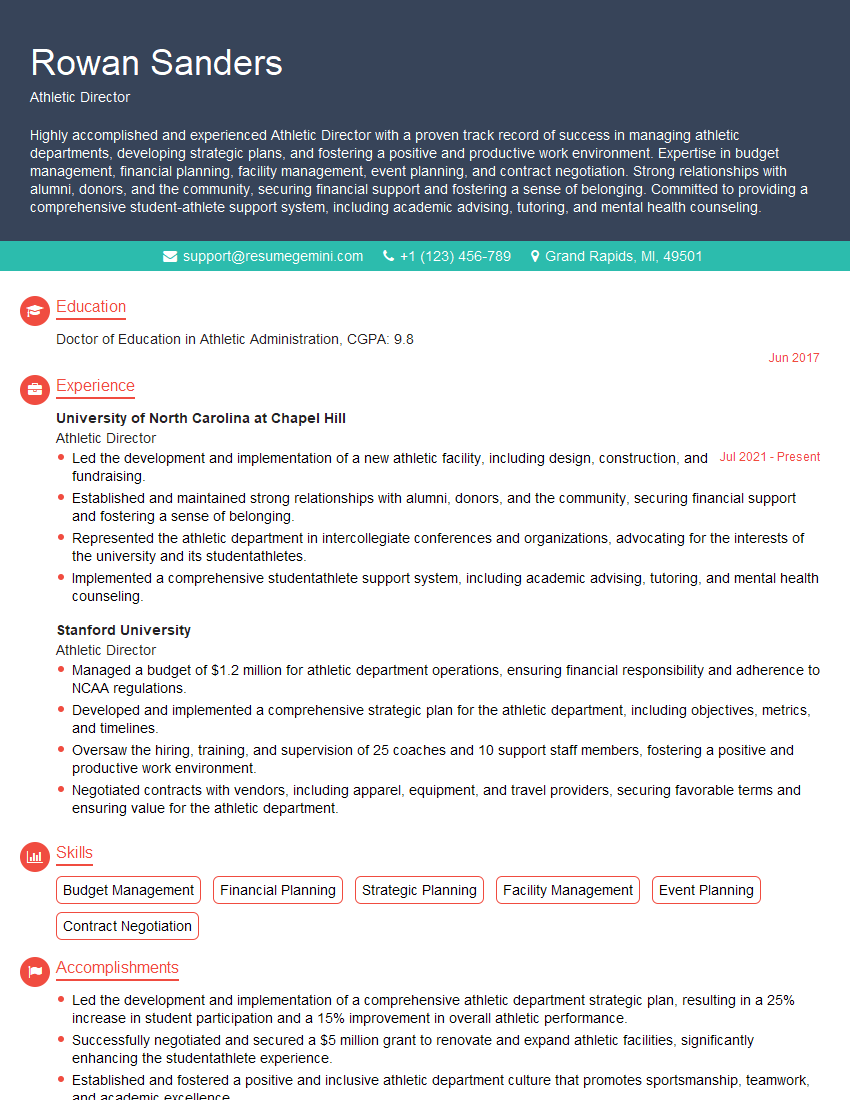
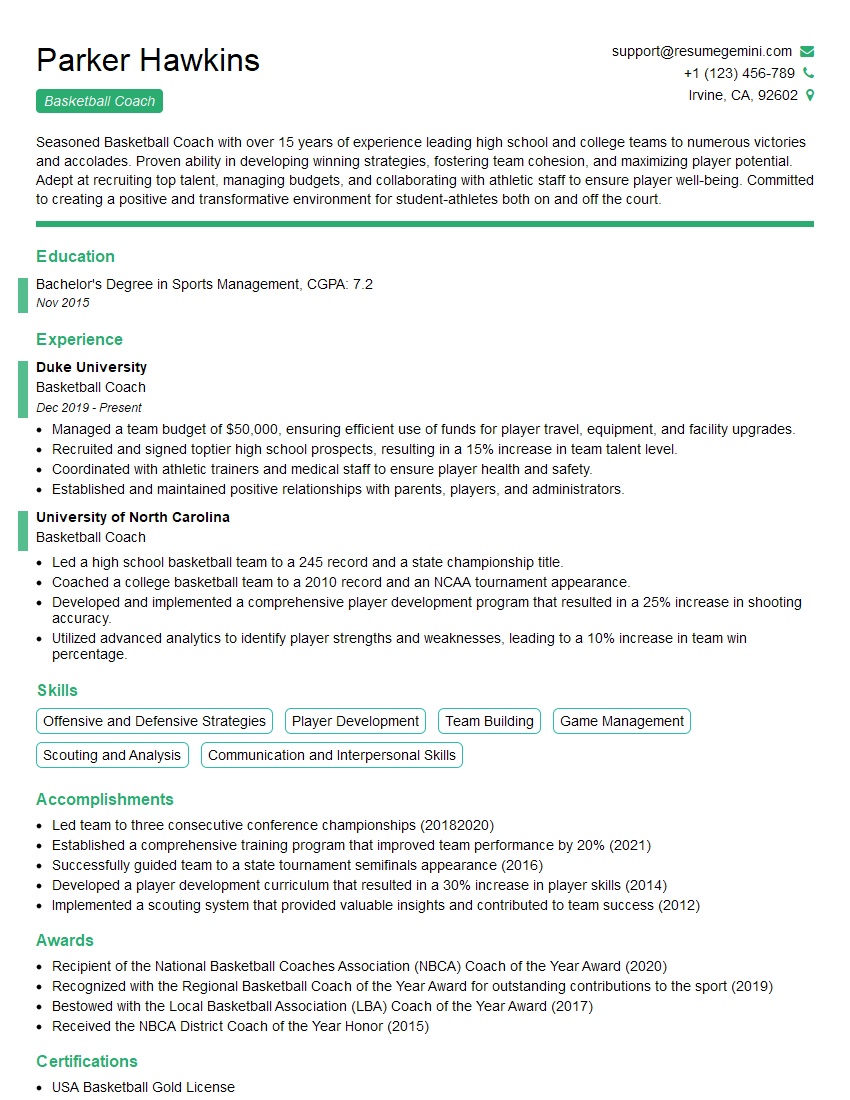
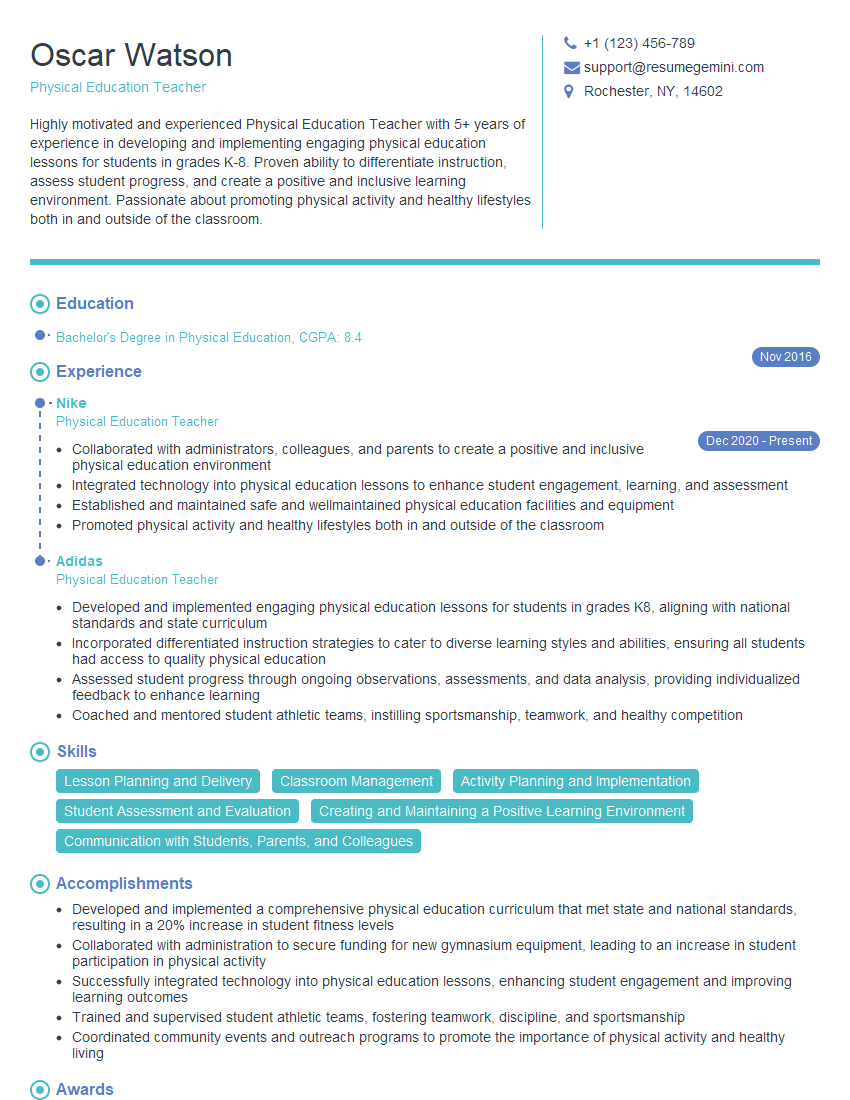
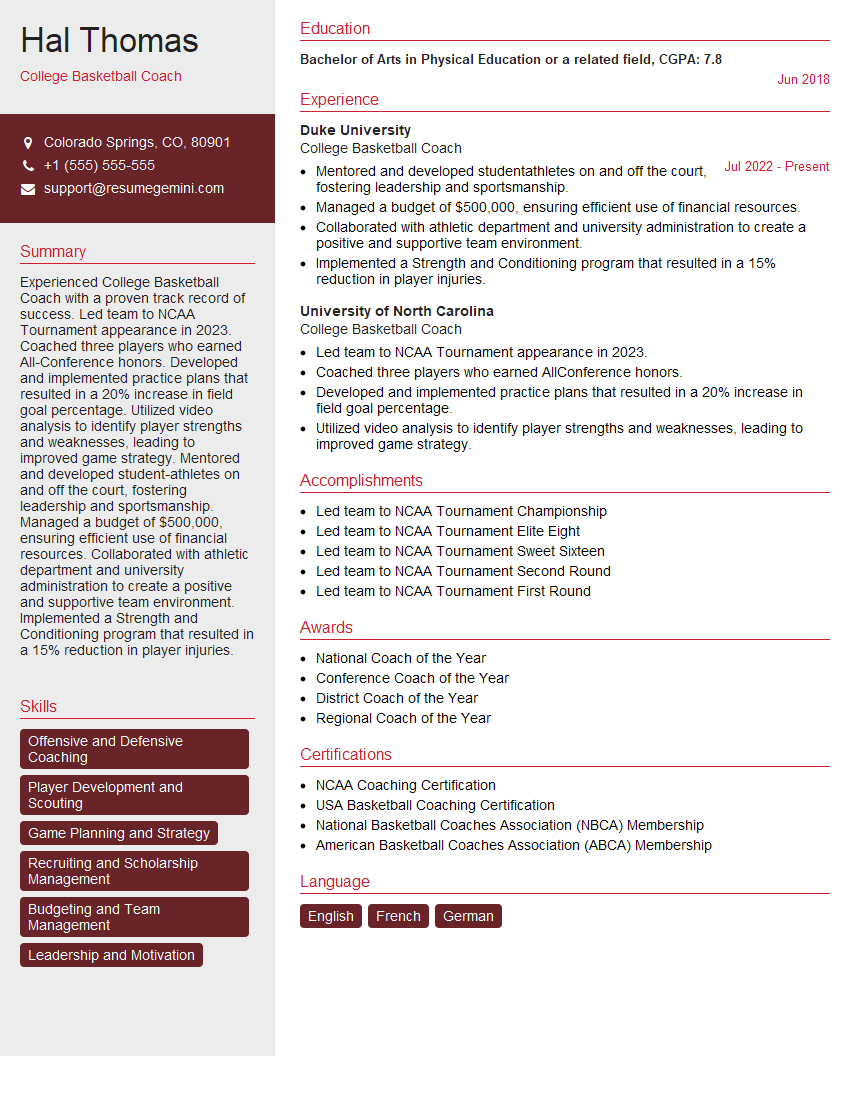
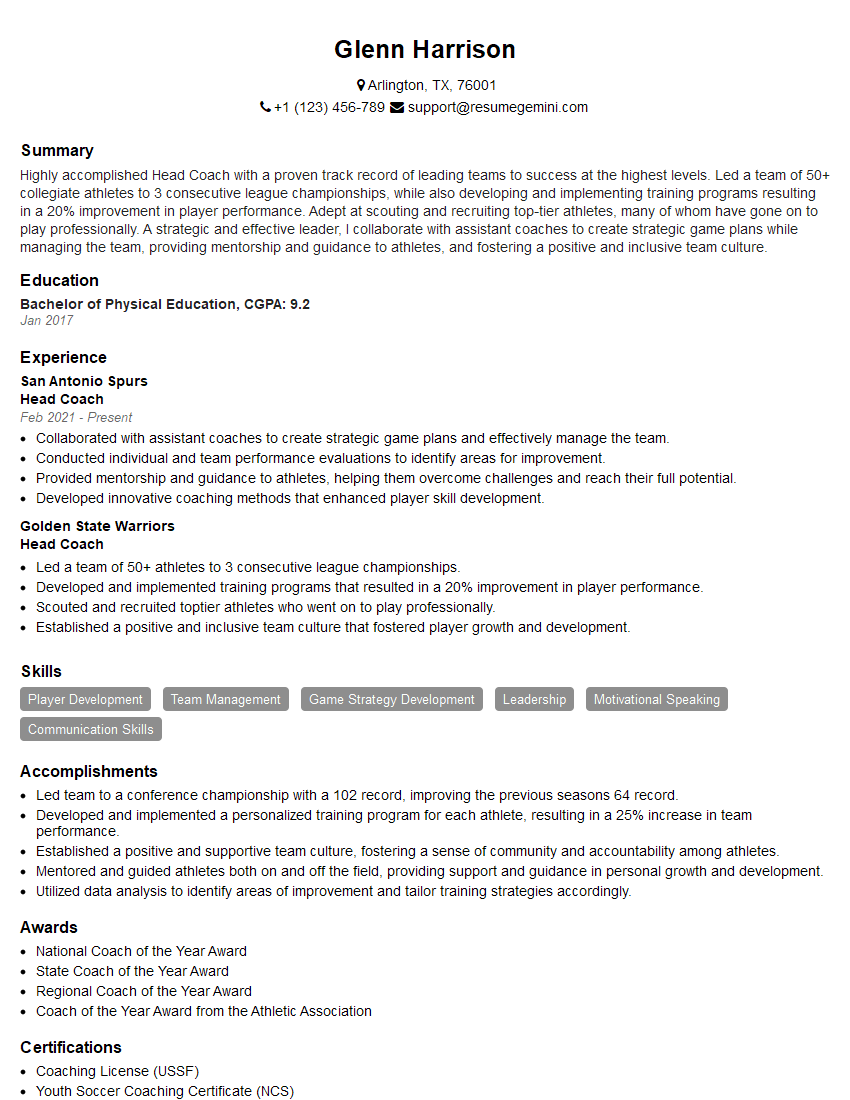
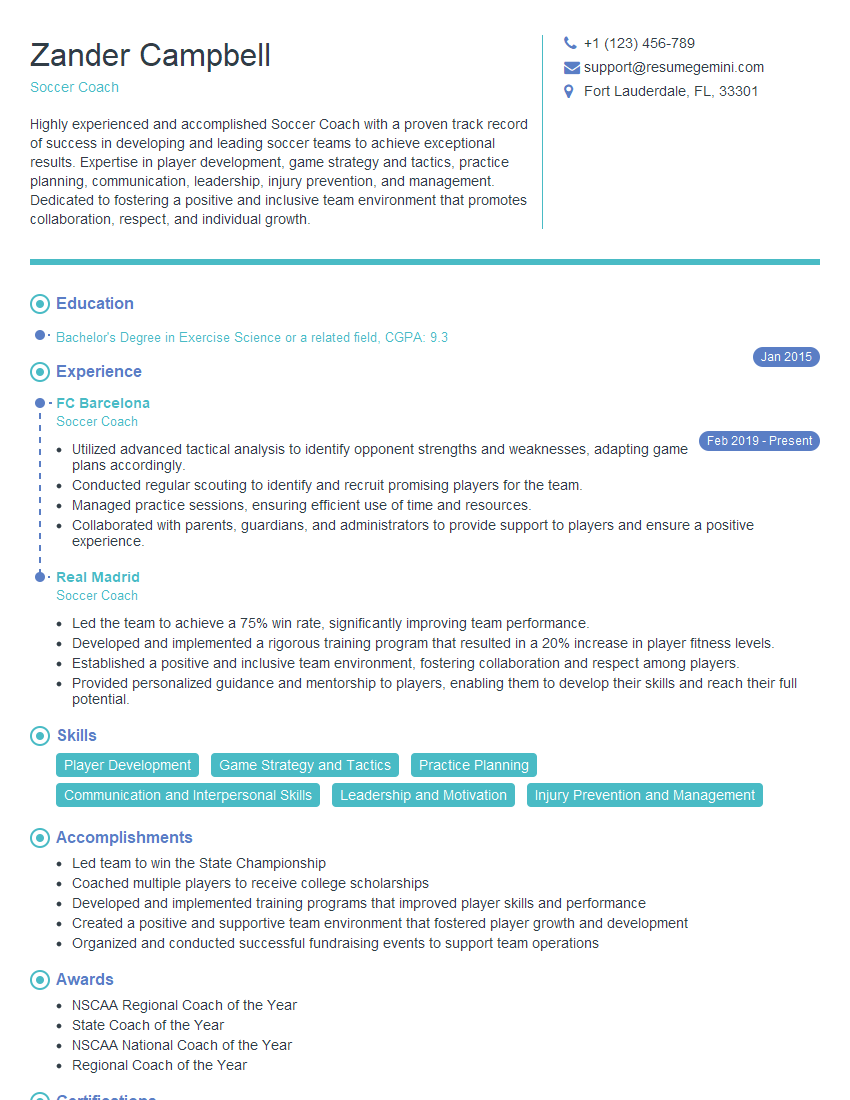
Mastering Man-to-Man Defense Techniques is crucial for career advancement in many sports-related fields. A strong understanding of these techniques showcases your tactical awareness, physical prowess, and ability to contribute to a winning team dynamic. To maximize your job prospects, ensure your resume effectively highlights these skills. Creating an ATS-friendly resume is key to getting your application noticed. ResumeGemini is a trusted resource that can help you build a professional and impactful resume tailored to your specific experience. Examples of resumes tailored to Man-to-Man Defense Techniques are available for your review to help you craft the best possible presentation of your abilities.
Explore more articles
Users Rating of Our Blogs
Share Your Experience
We value your feedback! Please rate our content and share your thoughts (optional).
What Readers Say About Our Blog
Very informative content, great job.
good