The right preparation can turn an interview into an opportunity to showcase your expertise. This guide to Managing Administrative and Financial Aspects of Judging interview questions is your ultimate resource, providing key insights and tips to help you ace your responses and stand out as a top candidate.
Questions Asked in Managing Administrative and Financial Aspects of Judging Interview
Q 1. Describe your experience managing a court budget.
Managing a court budget requires meticulous planning, execution, and monitoring. My experience encompasses all phases, from initial budget formulation based on projected caseloads and operational needs, to the allocation of funds across various departments like judicial staff salaries, court technology, security, and maintenance. I’ve successfully managed budgets ranging from [Insert Budget Range], consistently staying within allocated funds while ensuring the court maintained efficient operations. For example, in [Court Name], I implemented a streamlined procurement process which resulted in a 15% reduction in administrative costs within a single fiscal year.
This involved identifying areas of potential savings, negotiating better contracts with vendors, and implementing cost-effective solutions without compromising the quality of services provided. It was crucial to prioritize essential services while identifying areas where strategic cost reductions could be made without impacting the core functionality of the court.
Q 2. How would you handle a budget shortfall in the court system?
A budget shortfall requires a multi-pronged approach. First, I would conduct a thorough review of all expenditures to identify areas for potential cuts. This includes analyzing staffing levels, contract obligations, and discretionary spending. Prioritization is key; essential services – like judge salaries and essential case processing – are non-negotiable.
Second, I’d explore alternative funding sources, including seeking additional funding from the legislative body or exploring grant opportunities relevant to the court’s needs (e.g., grants for technology upgrades or specialized training). Third, I’d engage in open communication with all stakeholders – judges, court staff, and administrative personnel – to explain the situation and collaboratively devise solutions. This might include temporary adjustments to non-critical programs or exploring shared services with other courts to achieve economies of scale. For example, in a previous role, we faced a significant budget shortfall which we addressed by renegotiating contracts with vendors, implementing a more efficient case management system, and securing a grant specifically for technology upgrades. This allowed us to reduce operating costs and improve efficiency.
Q 3. Explain your process for tracking court expenditures.
My process for tracking court expenditures is built on a foundation of robust accounting principles and utilizes a combination of manual and automated systems. We use a comprehensive chart of accounts to categorize all transactions, ensuring accurate and detailed tracking of spending against the budget. This allows for regular reconciliation and ensures compliance with all applicable auditing requirements.
- Monthly Reporting: Detailed reports are generated monthly, showing actual versus budgeted expenditures for each account. This enables early identification of potential overspending.
- Variance Analysis: We conduct regular variance analyses to investigate significant deviations between budgeted and actual amounts. This helps identify trends and potential problems.
- Audits: Internal and external audits are conducted regularly to verify the accuracy of financial records and compliance with financial regulations.
- Automated Systems: We leverage accounting software to automate many tasks, such as data entry, report generation, and reconciliation.
This multi-layered approach ensures transparency, accuracy, and accountability in all financial matters.
Q 4. What software or systems have you used for financial management in a judicial setting?
Throughout my career, I’ve utilized several software systems for financial management in judicial settings. These include enterprise resource planning (ERP) systems such as [Name of ERP System], specialized court management software such as [Name of Court Management Software], and general accounting software like [Name of Accounting Software]. I am proficient in using these systems for budgeting, expense tracking, accounts payable and receivable management, and generating various financial reports. My experience extends to utilizing specialized modules within these systems designed for public sector financial management, ensuring compliance with government regulations and auditing standards.
The selection of the appropriate software depends largely on the specific needs and size of the court. Larger courts often benefit from robust ERP systems, while smaller courts may find general accounting software sufficient. Irrespective of the system used, the focus remains on data accuracy, accessibility, and secure storage.
Q 5. How do you ensure compliance with financial regulations within a court environment?
Ensuring compliance with financial regulations within a court environment requires a proactive and multi-faceted approach. We establish and maintain a comprehensive system of internal controls, including segregation of duties, authorization protocols, and regular reviews of financial procedures. All financial transactions are documented meticulously, and all supporting documentation is securely archived.
We stay updated on all relevant regulations and guidelines, attending training sessions and workshops to ensure our practices remain current. Regular internal audits are conducted to identify any weaknesses in our controls and to ensure compliance. External audits are also undergone to provide an independent verification of our financial statements and procedures. We adhere strictly to all government regulations regarding procurement, contracting, and the handling of public funds. Failure to comply can result in severe penalties, so maintaining compliance is paramount.
Q 6. Describe your experience with court record management and archiving.
My experience with court record management and archiving is extensive. This involves overseeing the entire lifecycle of court records, from their creation and storage during active cases to their secure archiving and eventual disposal in accordance with legal and regulatory requirements. This encompasses both physical and electronic records. For physical records, we utilize a well-organized filing system, ensuring easy retrieval of documents. We maintain detailed inventories and utilize secure storage facilities. For electronic records, we leverage electronic case management systems (ECMS) which provide secure storage, version control, and easy access for authorized personnel.
Archiving involves the transfer of inactive records to long-term storage, following established retention schedules. This includes implementing procedures for data migration, ensuring data integrity and accessibility. We also implement robust security measures to protect sensitive information from unauthorized access or data breaches. Compliance with data privacy regulations is an integral part of our record management processes. Regular audits ensure we are meeting all legal and regulatory standards.
Q 7. How do you prioritize tasks in a fast-paced court environment?
Prioritizing tasks in a fast-paced court environment requires a structured approach. I use a combination of techniques to manage my workload effectively. First, I employ a prioritization matrix, categorizing tasks based on urgency and importance. This helps me focus on high-impact tasks that need immediate attention. Second, I leverage project management tools to track progress and deadlines. These tools allow me to allocate resources effectively and monitor progress against established timelines. For example, I use [Name of Project Management Tool] to manage deadlines and tasks, providing a visual representation of my workload and facilitating efficient task allocation.
Third, I maintain open communication with all stakeholders to ensure alignment on priorities. This helps prevent misunderstandings and ensures everyone is working towards common goals. Delegation is crucial; I effectively delegate tasks to team members based on their skills and expertise, optimizing efficiency. Finally, regular review and adjustment of priorities are essential to accommodate unforeseen events and changing circumstances in the dynamic court environment.
Q 8. Explain your approach to improving efficiency in court operations.
Improving court efficiency requires a multifaceted approach focusing on process optimization, technology integration, and resource allocation. My strategy begins with a thorough assessment of current workflows, identifying bottlenecks and inefficiencies. This involves analyzing case processing times, resource utilization, and staff workload.
For example, in a previous role, we implemented a case management system that automated routine tasks like scheduling hearings and managing document flow, significantly reducing processing times. This system also provided real-time data on case progress, enabling proactive management of backlogs.
Beyond technology, we also focused on streamlining processes. This included simplifying forms, standardizing procedures, and implementing clear communication protocols between departments. We trained staff on best practices and created a culture of continuous improvement, encouraging them to identify and suggest improvements. This collaborative approach ensures that solutions are practical and effective.
Finally, effective resource allocation is crucial. This involves analyzing staffing levels, budget allocation, and the availability of resources like courtroom space and technology. By optimizing resource allocation, we can ensure that resources are used efficiently and effectively, maximizing court productivity.
Q 9. How have you managed stakeholder relationships (e.g., judges, lawyers, staff)?
Managing stakeholder relationships in a court setting requires strong communication, empathy, and a collaborative approach. I prioritize building trust and understanding with judges, lawyers, and staff through regular communication and active listening. This involves attending meetings, actively soliciting feedback, and addressing concerns promptly and professionally.
For example, I organized regular meetings with court staff to gather input on operational issues and discuss improvements. These meetings fostered a sense of ownership and encouraged staff participation in decision-making. With lawyers, I focused on maintaining clear communication channels, ensuring timely updates on case-related matters, and providing assistance with court procedures. With judges, maintaining open communication about budgetary constraints, resource allocation, and procedural updates was paramount.
Conflict resolution is a key aspect of stakeholder management. My approach centers on facilitating open dialogue, actively listening to all perspectives, and finding common ground. I believe in fostering a collaborative environment where everyone feels heard and respected. I often employed mediation techniques to help parties reach mutually acceptable solutions.
Q 10. Describe a time you had to resolve a conflict between different departments within the court.
In one instance, a conflict arose between the court clerk’s office and the IT department regarding the implementation of a new case management system. The clerk’s office felt the system was too complex and lacked essential features, while the IT department argued it was the most efficient and cost-effective solution available.
To resolve this, I facilitated a series of meetings involving representatives from both departments. I used active listening to understand each side’s concerns, focusing on the underlying needs and priorities. This revealed that the clerk’s office’s concerns stemmed from a lack of adequate training and support, while the IT department had underestimated the training needs.
We developed a solution that addressed both concerns. We implemented a comprehensive training program for the clerk’s office staff and secured additional IT support to address system glitches promptly. The solution incorporated feedback from the clerks, leading to system modifications that improved usability. This collaborative approach led to a successful implementation and restored positive working relationships between the two departments.
Q 11. What are your experiences with grant writing or grant management in a judicial context?
My experience with grant writing and management in a judicial context includes identifying funding opportunities, crafting compelling grant proposals, and managing awarded funds. This often involves understanding the specific needs of the court, aligning them with available funding opportunities, and articulating a clear and impactful narrative in the grant proposal.
For instance, I successfully secured a grant to upgrade our court’s technology infrastructure. This required extensive research to identify relevant funding organizations, drafting a proposal that demonstrated the impact of the upgrade on court efficiency and public access to justice, and careful budget management to ensure compliance with grant requirements. This project involved strict reporting and documentation to demonstrate the effective utilization of funds. It also required establishing metrics to measure the grant’s success.
Grant management requires meticulous record-keeping, regular reporting to funding agencies, and adherence to strict financial guidelines. I have a proven track record of successfully managing grant funds, ensuring transparency and accountability in their use.
Q 12. How familiar are you with relevant court accounting standards and procedures?
I am proficient in relevant court accounting standards and procedures, including Generally Accepted Accounting Principles (GAAP) and government auditing standards. I understand the importance of accurate financial record-keeping, budget management, and compliance with all relevant regulations.
My experience includes developing and managing court budgets, preparing financial reports, and ensuring compliance with internal controls. I am familiar with the unique accounting challenges faced by courts, including the handling of court fees, fines, and other revenue streams. Understanding these standards is crucial to ensuring the accuracy and integrity of court finances.
Q 13. How do you ensure the security and confidentiality of court financial records?
Ensuring the security and confidentiality of court financial records is paramount. This requires a multi-layered approach combining physical security measures, robust access controls, and adherence to data encryption and privacy regulations.
Physical security includes secure storage facilities for physical records and controlled access to computer systems containing financial data. Access control involves implementing strict password policies, user authentication measures, and regular audits to monitor access permissions. Data encryption ensures that even if unauthorized access occurs, the data remains unreadable. Finally, strict adherence to privacy regulations, such as HIPAA or GDPR (depending on jurisdiction) is essential to protect sensitive personal information.
Regular security assessments and employee training on data security best practices are crucial to mitigate risks. We also implement robust backup and recovery mechanisms to protect against data loss.
Q 14. What strategies do you use to improve transparency and accountability in court finances?
Improving transparency and accountability in court finances involves making financial information readily available to the public while ensuring the protection of sensitive data. This includes publishing audited financial statements, budget information, and key performance indicators (KPIs) on the court’s website.
Transparency also involves establishing clear procedures for handling financial requests, conducting regular audits, and promptly addressing any irregularities. Internal controls play a crucial role in preventing fraud and ensuring the accuracy of financial reporting. We utilize a system of checks and balances across different departments to enhance accountability.
By communicating clearly and proactively with stakeholders, including the public, we foster trust and confidence in the court’s financial management. Regular communication, public forums, and accessible online resources can build trust and support.
Q 15. How would you handle a discrepancy in court financial records?
Discovering a discrepancy in court financial records requires a methodical and transparent approach. My first step would be to meticulously document the discrepancy, noting the exact amount, the accounts involved, and the dates of the transactions. Then, I’d conduct a thorough review of all supporting documentation, including invoices, receipts, bank statements, and accounting records. This detailed audit trail helps pinpoint the source of the error.
Potential causes could range from simple data entry mistakes to more complex issues like fraud or system glitches. For example, a missing decimal point could lead to a significant discrepancy, while a fraudulent transaction might involve forged signatures or altered documents. I would utilize specialized accounting software to analyze the data and identify anomalies. If the discrepancy persists after internal review, I’d engage an external auditor for an independent assessment.
Finally, I’d implement corrective measures to prevent future discrepancies, such as enhanced data validation checks, improved internal controls, and regular reconciliation procedures. This proactive approach ensures the integrity and reliability of our financial reporting.
Career Expert Tips:
- Ace those interviews! Prepare effectively by reviewing the Top 50 Most Common Interview Questions on ResumeGemini.
- Navigate your job search with confidence! Explore a wide range of Career Tips on ResumeGemini. Learn about common challenges and recommendations to overcome them.
- Craft the perfect resume! Master the Art of Resume Writing with ResumeGemini’s guide. Showcase your unique qualifications and achievements effectively.
- Don’t miss out on holiday savings! Build your dream resume with ResumeGemini’s ATS optimized templates.
Q 16. What are your experiences with performance monitoring and reporting for judicial budgets?
My experience with performance monitoring and reporting for judicial budgets involved developing and implementing comprehensive budget tracking systems. This included establishing key performance indicators (KPIs) aligned with strategic goals. For instance, we tracked case processing times, cost per case, and staff efficiency to gauge the effectiveness of budget allocation. We utilized data visualization tools to present performance data in clear, concise reports for management and stakeholders.
One example involves streamlining the process for managing travel expenses. By implementing a centralized online system for expense reporting and approval, we significantly reduced processing time and administrative overhead. This improved transparency and allowed for more accurate budget forecasting and improved resource allocation. Regular reporting on these KPIs allowed us to identify areas for improvement and make data-driven decisions to optimize resource utilization within the court’s budget.
Q 17. Describe your experience with contract negotiation and management for court services.
Contract negotiation and management for court services requires a keen understanding of legal frameworks and procurement best practices. My approach is collaborative yet rigorous, ensuring both cost-effectiveness and service quality. This involves clearly defining service level agreements (SLAs), including specific performance metrics and penalties for non-compliance.
In one case, we negotiated a contract with a technology vendor for a new case management system. We used a phased approach to implementation, starting with a pilot program to test the system’s functionality and identify any potential issues before full-scale deployment. We incorporated specific clauses in the contract regarding data security, system maintenance, and ongoing support, ensuring the court’s interests were fully protected. Regular performance reviews and communication with vendors ensured adherence to contract terms and helped resolve any arising issues promptly.
Q 18. How familiar are you with different court case management systems?
I’m familiar with a range of court case management systems, including both commercial off-the-shelf (COTS) solutions and custom-developed systems. My experience spans various platforms, from legacy systems to cloud-based solutions. Understanding the strengths and weaknesses of different systems is crucial for selecting the right technology to meet a court’s specific needs. Factors like scalability, security, integration capabilities, and user-friendliness are key considerations.
For example, I’ve worked with systems like Odyssey and Tyler Technologies, gaining hands-on experience in their data management features, workflow automation tools, and reporting capabilities. My understanding extends to the technical aspects of data migration, system integration, and user training, crucial for successful implementation and adoption.
Q 19. How would you handle a sudden increase in caseload impacting court resources?
A sudden increase in caseload requires a multi-pronged approach focusing on resource optimization and efficiency improvements. First, I would analyze the nature of the increased caseload to identify any underlying trends or factors. Then, I’d conduct a thorough assessment of existing court resources, including personnel, technology, and physical space. This assessment would identify any bottlenecks or areas where improvements are needed.
Strategies to address the increased load might include: prioritizing cases based on urgency and severity; exploring temporary staffing solutions; optimizing existing workflows to eliminate redundancies; and implementing technology solutions to streamline processes like e-filing and remote hearings. A crucial aspect is clear communication with all stakeholders, including judges, staff, and the public, to manage expectations and ensure transparency throughout the process. This proactive approach can mitigate the impact of increased caseload and maintain the court’s efficiency.
Q 20. How do you ensure compliance with data privacy regulations regarding court records?
Ensuring compliance with data privacy regulations regarding court records is paramount. We adhere strictly to regulations like GDPR and CCPA, implementing robust security measures to protect sensitive information. This involves implementing strict access control measures, using encryption for data both in transit and at rest, and regularly auditing our systems for vulnerabilities.
Our data privacy protocols include training programs for all staff on data handling procedures and best practices. We have a designated data protection officer responsible for overseeing compliance and responding to data breach incidents. We maintain detailed records of all data processing activities and regularly review and update our policies to reflect evolving legal requirements. Data minimization is a key principle, storing only the data necessary for judicial processes and disposing of it securely when no longer required.
Q 21. Describe your experience with implementing new technologies to streamline court operations.
Implementing new technologies to streamline court operations requires careful planning and execution. My experience involves leading projects to deploy electronic case filing systems, video conferencing solutions, and automated scheduling tools. Successful implementation begins with a thorough needs assessment, identifying specific challenges and areas for improvement. This involves consulting with judges, court staff, and other stakeholders to gain buy-in and ensure the technology meets their requirements.
For example, we successfully implemented a new e-filing system that reduced processing times and improved access to court records. The process involved selecting the appropriate software, migrating existing data, providing comprehensive user training, and establishing robust technical support. Post-implementation monitoring and evaluation were crucial to ensure the system was meeting its objectives and identifying any areas for improvement. A key component is ensuring seamless integration with existing systems to prevent disruptions and data silos.
Q 22. What methods do you use to analyze court data to identify areas for improvement?
Analyzing court data to pinpoint areas for improvement involves a multifaceted approach combining quantitative and qualitative methods. Think of it like a doctor diagnosing a patient – you need various tests and observations to get the full picture.
Quantitative Analysis: I leverage data analytics tools to examine case processing times, backlog data, budget expenditures, and staff productivity. For example, I might use statistical software to identify correlations between specific case types and processing delays, revealing potential bottlenecks. This could show that domestic violence cases consistently take longer than others, prompting investigation into the underlying reasons.
Qualitative Analysis: This involves surveys, interviews with judges, court staff, and even attorneys to gather feedback and identify operational challenges not readily apparent in numerical data. For instance, interviews might reveal that a lack of adequate training on a new case management system is contributing to inefficiencies.
Benchmarking: Comparing our court’s performance metrics against similar courts regionally and nationally provides valuable context. This allows us to identify best practices and areas where we can improve.
By combining these methods, I create a comprehensive report that identifies key areas needing attention, proposes actionable solutions, and provides a framework for monitoring progress.
Q 23. How do you prioritize budget allocations based on court needs and priorities?
Prioritizing budget allocation requires a strategic approach that balances competing needs and aligns with the court’s overall goals. It’s like managing a household budget – you need to make tough choices about where to allocate limited resources.
Needs Assessment: I start by conducting a thorough assessment of the court’s operational needs, considering factors like caseload growth, technological upgrades, staff training requirements, and maintenance needs. This involves consulting with judges, court staff, and IT personnel.
Prioritization Matrix: I then use a prioritization matrix to rank needs based on urgency, impact, and cost. For example, replacing aging technology critical to case processing would rank higher than upgrading office furniture.
Strategic Alignment: The final budget allocation must align with the court’s strategic plan and its long-term objectives. This ensures that resources are directed towards initiatives that support the court’s mission and goals.
Contingency Planning: A crucial element is building a contingency fund to address unexpected expenses or emergencies. This could be anything from sudden equipment failure to a need for additional security measures.
The result is a transparent and well-justified budget that effectively allocates resources to maximize operational efficiency and improve court services.
Q 24. Describe your experience with risk management in a court setting.
Risk management in a court setting is paramount, encompassing a wide range of potential threats to the court’s operations, security, and reputation. It’s about proactively identifying and mitigating risks before they materialize. Think of it as building a strong defense against potential problems.
Identifying Risks: I use a combination of methods, including risk assessments, internal audits, and incident reports, to identify potential risks. These could range from cybersecurity threats to natural disasters to internal fraud.
Assessing Risks: Once identified, risks are assessed based on their likelihood and potential impact. This helps to prioritize mitigation efforts. A high likelihood, high-impact risk like a cyberattack requires immediate attention.
Mitigation Strategies: For each significant risk, I develop and implement mitigation strategies. This might involve upgrading security systems, developing emergency response plans, or implementing stricter internal controls.
Monitoring and Review: The risk management process is not a one-time event; it’s an ongoing cycle. Regular monitoring and review allow for adjustments to strategies as new risks emerge or circumstances change.
By proactively managing risks, I ensure the court’s operations remain secure, efficient, and resilient in the face of unexpected challenges.
Q 25. What is your understanding of the ethical considerations in managing court finances?
Ethical considerations in managing court finances are paramount, requiring adherence to the highest standards of transparency, accountability, and integrity. It’s about maintaining public trust and ensuring the court operates with fairness and impartiality.
Transparency: All financial transactions must be transparent and readily auditable. This involves maintaining detailed records, adhering to established accounting principles, and ensuring compliance with all relevant regulations.
Accountability: Clear lines of responsibility and authority are essential. Every expenditure must be justified and supported by appropriate documentation. Regular financial reports are crucial for accountability.
Conflict of Interest: Avoiding conflicts of interest is vital. This includes carefully vetting contracts, procurement processes, and all financial dealings to ensure impartiality and prevent any potential bias.
Confidentiality: Maintaining the confidentiality of sensitive financial information is crucial. Access to such information must be restricted to authorized personnel only.
By upholding these ethical principles, the court builds public trust, ensures its financial integrity, and maintains a reputation for fairness and impartiality.
Q 26. How do you stay informed about changes in laws and regulations impacting court administration?
Staying informed about changes in laws and regulations impacting court administration is crucial for maintaining compliance and operational efficiency. Think of it as constantly updating your software to ensure optimal performance.
Professional Organizations: I actively participate in professional organizations dedicated to court administration, attending conferences, webinars, and reading publications to stay abreast of legislative developments and best practices.
Legal Databases: I use legal databases and online resources to monitor changes in relevant laws and regulations at both the state and federal levels.
Government Agencies: I maintain close contact with relevant government agencies to receive updates on regulatory changes and compliance requirements.
Continuing Education: I participate in regular continuing education programs to maintain my knowledge and skills in court administration and financial management.
This multifaceted approach ensures that the court’s administrative practices remain compliant and efficient.
Q 27. Describe your experience mentoring or training staff in financial management or administrative procedures.
I have extensive experience mentoring and training staff in financial management and administrative procedures. I believe in a hands-on, supportive approach, focusing on practical application and continuous improvement.
On-the-Job Training: I provide on-the-job training, guiding staff through real-world scenarios and offering personalized feedback and coaching.
Workshops and Seminars: I’ve developed and delivered workshops and seminars on topics ranging from budgeting and financial reporting to record-keeping and administrative software.
Mentorship Program: I’ve established a mentorship program pairing experienced staff with newer employees, fostering a collaborative learning environment.
Performance Evaluations: I use performance evaluations as an opportunity to identify areas for improvement and provide individualized training plans.
My approach emphasizes practical skills development, continuous learning, and building a culture of collaboration and professional growth within the court.
Key Topics to Learn for Managing Administrative and Financial Aspects of Judging Interview
- Court Administration: Understanding court procedures, case management systems, and efficient workflow optimization. Practical application: Discuss strategies for improving case processing times while maintaining accuracy and fairness.
- Budget Management: Developing and managing budgets for court operations, including tracking expenses, forecasting needs, and ensuring compliance with financial regulations. Practical application: Explain how you would identify and address potential budget overruns.
- Financial Reporting & Compliance: Preparing accurate financial reports, ensuring compliance with auditing standards, and managing financial risk. Practical application: Describe your experience with financial reporting software and your approach to ensuring data accuracy.
- Human Resource Management (within the court context): Overseeing personnel matters, including recruitment, training, and performance management of court staff. Practical application: Outline a strategy for improving staff morale and productivity.
- Legal and Ethical Considerations: Understanding the legal and ethical implications of financial decisions within a judicial setting, maintaining confidentiality and ensuring impartiality. Practical application: Describe a scenario where you had to navigate a difficult ethical dilemma related to court finances.
- Technology and Data Management: Utilizing technology to improve court administration and financial processes, including data analysis and reporting. Practical application: Discuss your experience with implementing new technologies to streamline workflows.
- Risk Management: Identifying and mitigating financial and operational risks within the court system. Practical application: Explain your approach to proactively identifying and addressing potential risks.
Next Steps
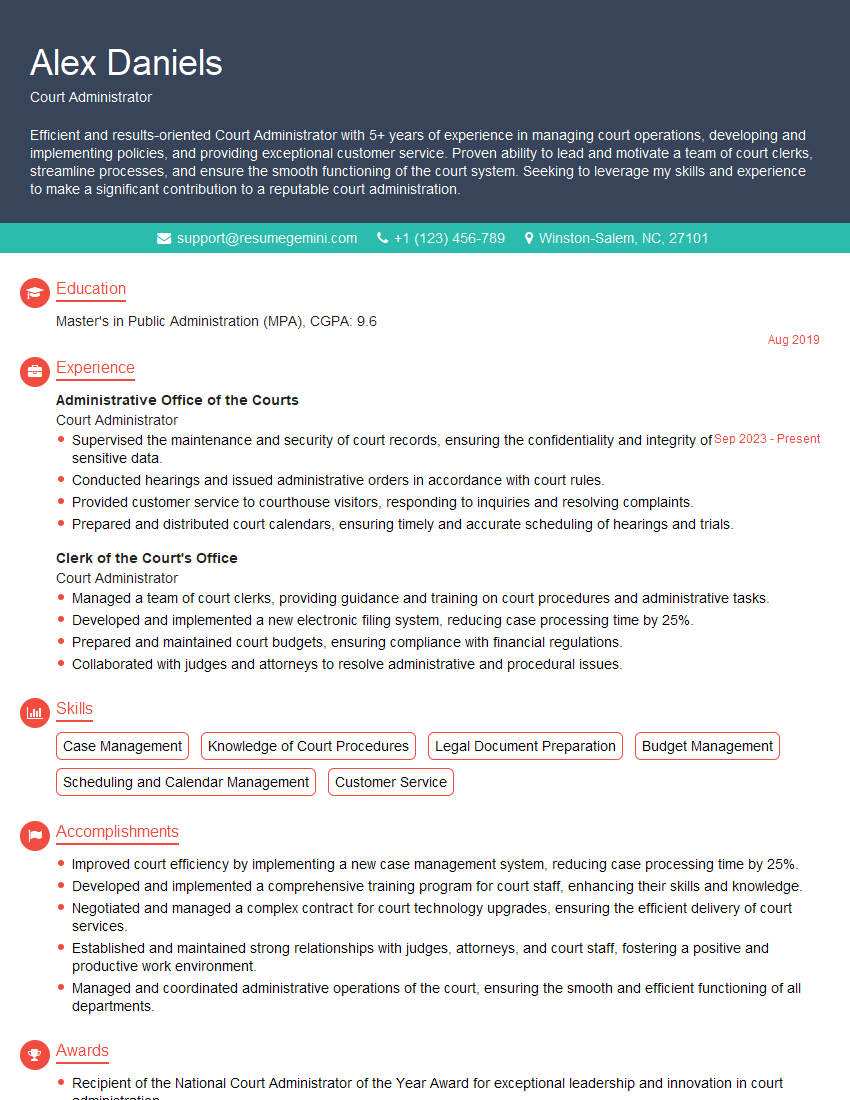
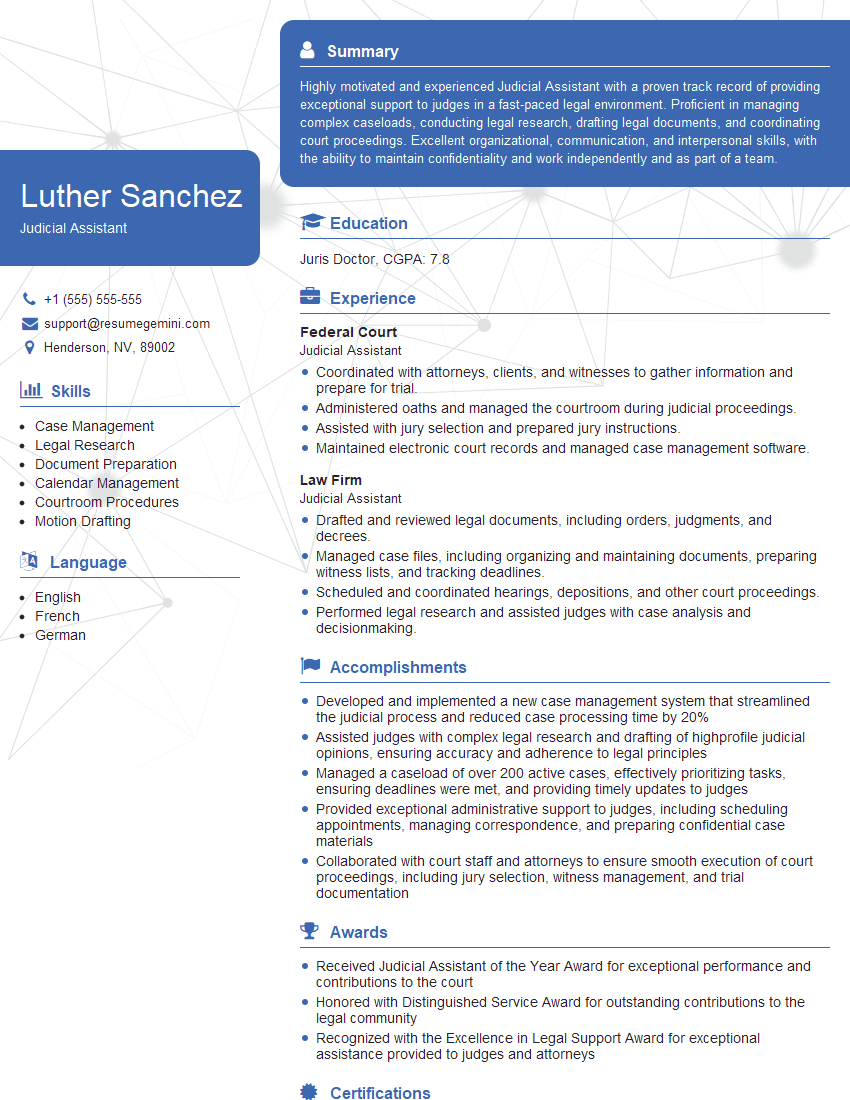
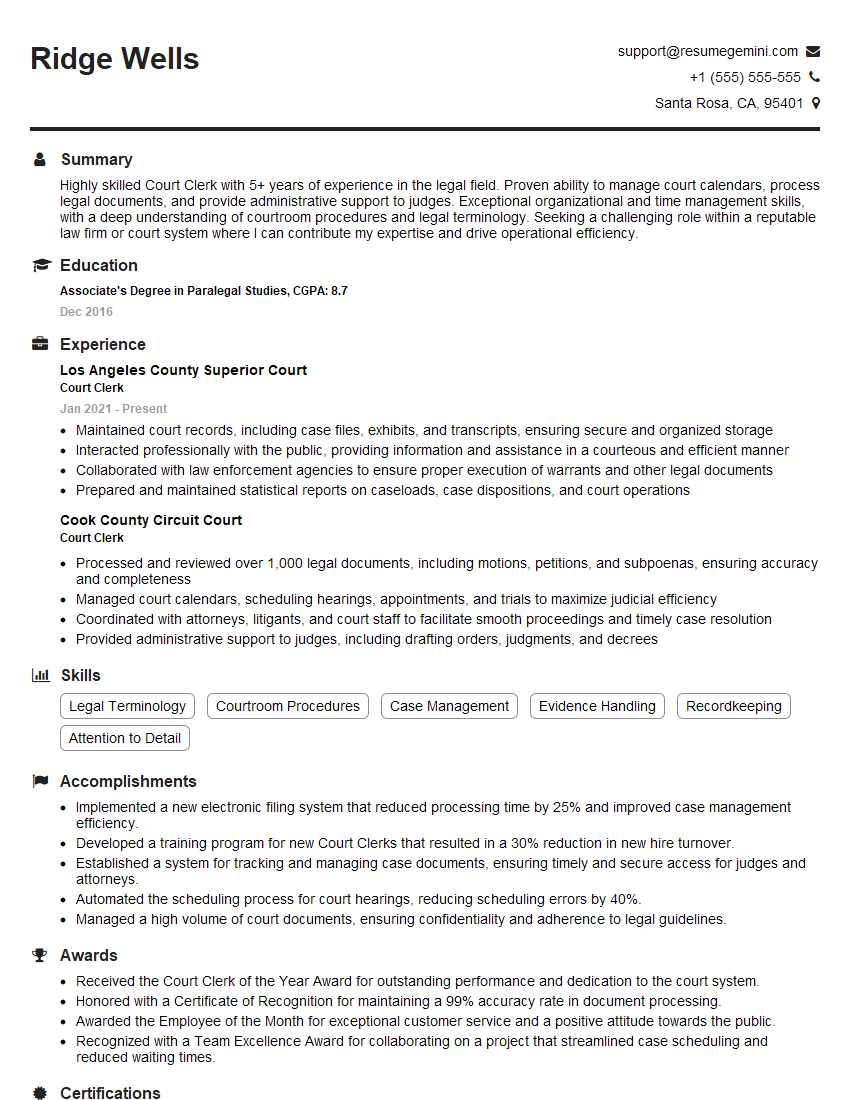
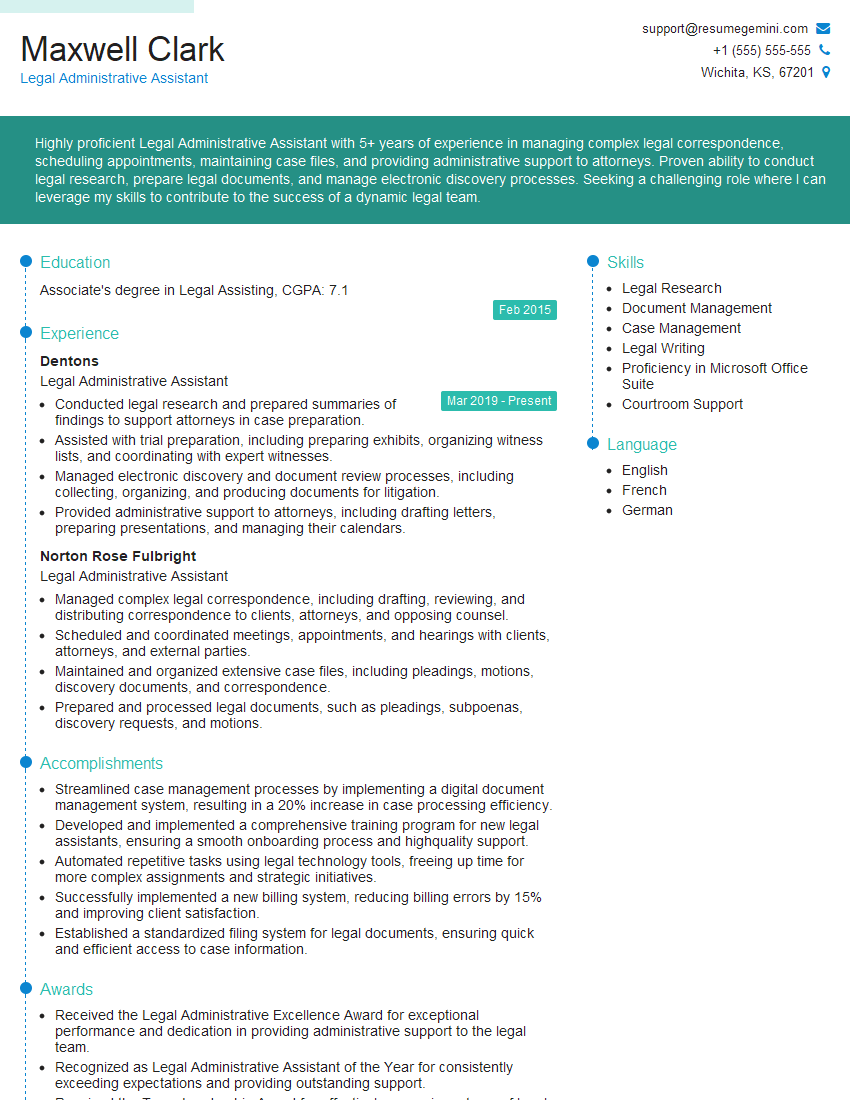
Mastering the administrative and financial aspects of judging is crucial for career advancement in the legal field, opening doors to leadership roles and increased responsibility. A strong, ATS-friendly resume is your key to unlocking these opportunities. To build a compelling and effective resume that highlights your skills and experience in this specialized area, we encourage you to utilize ResumeGemini. ResumeGemini offers a user-friendly platform and expert guidance to create a professional document that showcases your qualifications effectively. Examples of resumes tailored to Managing Administrative and Financial Aspects of Judging are available for your review to help inspire your own.
Explore more articles
Users Rating of Our Blogs
Share Your Experience
We value your feedback! Please rate our content and share your thoughts (optional).
What Readers Say About Our Blog
Very informative content, great job.
good