Preparation is the key to success in any interview. In this post, we’ll explore crucial Marine Civil Engineering interview questions and equip you with strategies to craft impactful answers. Whether you’re a beginner or a pro, these tips will elevate your preparation.
Questions Asked in Marine Civil Engineering Interview
Q 1. Explain the difference between wave diffraction and wave refraction.
Wave diffraction and refraction are two distinct phenomena that describe how waves interact with coastal structures and the seabed. Imagine throwing a pebble into a calm pond – the ripples spreading outwards demonstrate wave propagation. Now, picture that pond with a large obstacle, like an island. Diffraction and refraction explain how the ripples behave around this obstacle.
Wave Diffraction refers to the bending of waves as they pass around an obstacle or through an opening. Think of it like light bending around a corner. The wave energy spreads out, reducing its intensity but still reaching areas behind the obstacle. In marine engineering, diffraction is crucial when designing breakwaters, as it explains how wave energy can still reach the sheltered area, albeit with reduced power.
Wave Refraction, on the other hand, is the bending of waves as they approach a coastline of varying depths. As waves enter shallower water, their speed decreases, causing the wave crests to bend and realign parallel to the shoreline. This concentration of wave energy can lead to increased erosion in certain areas and necessitates careful consideration during coastal protection projects.
In short: Diffraction is bending around obstacles, while refraction is bending due to changing water depths. Both processes need to be carefully modeled to accurately predict wave behavior near coastal structures.
Q 2. Describe the process of designing a breakwater.
Designing a breakwater is a complex process involving several key steps. We begin with a thorough understanding of the wave climate, using historical data and wave prediction models to determine the design wave height, period, and direction. This is paramount, as the breakwater needs to withstand the worst anticipated storm conditions.
Next, we assess the seabed conditions – soil type, strength, and potential for liquefaction are critical. The foundation design depends heavily on these findings; we might opt for a rock-fill structure on stable bedrock or use a more complex piled foundation if the seabed is weaker.
The structural design then involves selecting the appropriate breakwater type (e.g., rubble-mound, caisson, vertical wall). Each type has its strengths and weaknesses; for example, rubble-mound breakwaters are robust but require considerable material, while vertical wall breakwaters are efficient in wave reflection but more vulnerable to impact.
Hydrodynamic modeling is employed to predict wave transformation and energy dissipation around the structure. This ensures the breakwater provides sufficient protection without causing unwanted wave reflection or scour. Finally, environmental impact assessments are carried out to minimize any negative effects on marine life and the surrounding ecosystem.
The entire design process is iterative, involving numerous simulations and refinements to arrive at an optimal solution that balances cost-effectiveness, safety, and environmental considerations.
Q 3. What are the key considerations for designing a stable seabed for offshore structures?
Designing a stable seabed for offshore structures is crucial for their long-term integrity. Key considerations include:
- Soil Characterization: A detailed geotechnical investigation is essential to determine the soil type, shear strength, consolidation properties, and potential for liquefaction. This often involves extensive in-situ testing (e.g., cone penetration tests, borehole sampling) and laboratory testing.
- Foundation Design: The foundation design must accommodate the anticipated loads from the structure and environmental forces (waves, currents). This might involve using piles, caissons, or other foundation types, chosen based on soil conditions and structural requirements.
- Scour Protection: Waves and currents can erode the soil around the foundation, causing instability. Measures to mitigate scour include rock berms, geotextiles, or specially designed foundation elements.
- Settlement Analysis: Predicting and managing settlement is vital. Excessive settlement can lead to structural damage. This requires careful analysis of soil consolidation properties and foundation design optimization.
- Seismic Considerations: In seismically active regions, the design needs to account for earthquake-induced ground motions and soil liquefaction. This often involves advanced dynamic analysis and specialized foundation design techniques.
For instance, a jacket structure for an offshore wind turbine in a soft clay seabed would require extensive piling and scour protection, unlike a gravity-based platform on a rock foundation which may require less extensive work.
Q 4. How do you account for soil liquefaction in marine geotechnical design?
Soil liquefaction, where saturated sandy soils lose their strength due to seismic shaking, is a serious threat to marine structures. We account for it through several strategies:
- Site-Specific Assessment: Thorough geotechnical investigations are crucial to identify liquefaction potential. This involves assessing soil properties, groundwater levels, and the potential for seismic activity.
- Liquefaction Analysis: We utilize advanced geotechnical software to perform liquefaction analysis using methods like the Simplified Procedure or more rigorous techniques such as the cyclic stress ratio approach. This helps to determine the liquefaction susceptibility of the soil layers.
- Ground Improvement: If liquefaction is deemed a significant risk, ground improvement techniques are employed. These might include vibrocompaction, deep soil mixing, or stone columns to densify the soil and increase its resistance to liquefaction.
- Foundation Design: The foundation design must accommodate the reduced soil bearing capacity during liquefaction. This often requires deeper foundations, larger footings, or the use of techniques like pile foundations that can transfer loads beyond the liquefiable layers.
- Seismic Design: The entire structure must be designed to withstand the dynamic forces induced by seismic activity, including the impact of liquefaction on its stability.
Ignoring liquefaction in the design could lead to catastrophic failure of the structure during an earthquake, highlighting the importance of thorough assessment and mitigation.
Q 5. What are the common types of marine piling and their applications?
Marine piling is essential for supporting various offshore and coastal structures. Several types exist, each suited to specific applications:
- Timber Piles: Relatively inexpensive and easy to install, suitable for less demanding applications in less aggressive environments. However, their lifespan is limited by marine borer attacks and decay.
- Steel Piles: Durable, strong, and versatile. They can be driven or jetted into the seabed and are commonly used for wharves, jetties, and offshore platforms. Corrosion protection is crucial in marine environments.
- Concrete Piles: Highly durable and resistant to corrosion and marine borers. Often used for bridges, seawalls, and offshore structures where long-term stability is paramount. They can be precast or cast-in-place.
- Composite Piles: Combine the advantages of steel and concrete, using steel casings filled with concrete. They offer high strength and durability with increased resistance to corrosion.
The choice of piling type depends on factors like soil conditions, environmental exposure, load requirements, and cost considerations. For example, a large offshore wind turbine foundation may require large-diameter steel piles or even a combination of pile types, while a smaller jetty might only need timber piles in a sheltered location.
Q 6. Explain the principles of wave energy dissipation.
Wave energy dissipation refers to the reduction of wave power as waves interact with coastal structures or the seabed. This is achieved through several mechanisms:
- Friction: Waves lose energy due to friction with the seabed and coastal structures. Rougher surfaces lead to greater energy dissipation.
- Breaking: Waves break when their height exceeds a critical limit, dissipating a significant amount of energy. This is a major mechanism for natural wave energy dissipation on beaches.
- Reflection: Vertical structures like seawalls can reflect a portion of the incoming wave energy back into the sea. However, this can exacerbate wave action in certain areas.
- Refraction and Diffraction: As waves approach the coastline or encounter obstacles, they undergo refraction and diffraction, causing energy spreading and reduction.
- Overtopping: Waves overtopping a structure (like a breakwater) lose energy in the process.
- Energy Absorption: Some structures, such as porous breakwaters, are designed to absorb wave energy through flow through the structure’s voids.
The design of coastal protection schemes utilizes these principles to minimize wave impact and protect the coastline and structures. For example, a rubble-mound breakwater relies primarily on wave breaking and friction for energy dissipation, whereas a submerged breakwater utilizes wave transmission and energy dissipation in shallower water depths. The design strategy for a particular site depends on many factors including wave conditions and environmental concerns.
Q 7. Describe different methods for coastal erosion control.
Coastal erosion control involves various methods, depending on the specific causes and characteristics of the erosion. Common techniques include:
- Beach Nourishment: Adding sand or other sediment to the beach to widen it and provide a buffer against erosion. This is a common but relatively expensive method.
- Seawalls: Vertical structures built parallel to the shoreline to reflect wave energy. While effective at protecting property, seawalls can accelerate erosion in adjacent areas.
- Revetments: Sloped structures built parallel to the shoreline, typically made of rock or concrete. They dissipate wave energy more gently than seawalls.
- Groynes: Structures built perpendicular to the shoreline to trap sediment transported by longshore currents, effectively widening the beach.
- Breakwaters: Offshore structures designed to reduce wave energy reaching the coastline. They provide a quieter area behind them, promoting sediment deposition and beach growth.
- Dune Stabilization: Protecting and stabilizing existing dunes through planting vegetation, fencing, or other measures. Dunes act as natural barriers against erosion.
- Managed Retreat: Allowing the coastline to retreat naturally in areas where protecting the existing shoreline is too costly or environmentally damaging.
The selection of the appropriate method often involves a combination of techniques and requires careful consideration of environmental impacts and cost-effectiveness. For instance, a combination of beach nourishment and dune stabilization may be a more sustainable and effective strategy than building a massive seawall. This highlights that sustainable engineering requires a holistic and balanced approach.
Q 8. How do you assess the environmental impact of marine construction projects?
Assessing the environmental impact of marine construction projects requires a multi-faceted approach. We need to consider the potential effects on various ecosystems and comply with relevant regulations. This involves a comprehensive Environmental Impact Assessment (EIA).
The EIA process typically includes:
- Baseline studies: Detailed surveys of the existing marine environment, including water quality, benthic habitats, fish populations, and marine mammals. This establishes a ‘before’ picture.
- Impact prediction: Using models and expert judgment to predict the likely impacts of the project on the various environmental components, such as noise pollution, habitat loss, sediment plumes, and changes in water currents.
- Mitigation measures: Developing and implementing strategies to reduce or eliminate the negative environmental impacts. This could include things like using quieter construction methods, implementing sediment control measures, and establishing protected zones.
- Monitoring and evaluation: Post-construction monitoring is crucial to track the actual impacts and verify the effectiveness of mitigation measures. This allows for adaptive management and corrective actions if necessary.
For example, constructing a new port may involve dredging, which can release suspended sediment and harm sensitive benthic communities. A well-designed EIA would predict this impact, propose mitigation strategies like using a less disruptive dredging method or creating artificial reefs, and then monitor water quality and benthic life to confirm the effectiveness of these measures.
Q 9. What are the key factors influencing the selection of a suitable dredging method?
Selecting the appropriate dredging method depends heavily on factors such as the type and volume of material to be removed, water depth, environmental sensitivity, cost constraints, and the required accuracy of dredging.
- Material type: Dredging soft clays requires different equipment than removing hard rock.
- Water depth: Shallow water might allow for simpler methods like bucket dredging, while deep-water projects require specialized techniques like trailing suction hopper dredging (TSHD).
- Environmental sensitivity: In environmentally sensitive areas, less disruptive methods like mechanical dredging or environmental dredging are preferred to minimize turbidity and habitat disruption.
- Cost: Each method has associated capital and operational costs. A cost-benefit analysis is crucial for selection.
- Accuracy: Some projects require precise dredging to create specific depths and shapes, necessitating techniques offering higher accuracy, such as cutter suction dredging.
For instance, a project in a coral reef area would favor a method with minimal environmental impact, possibly using a remotely operated vehicle (ROV) for precise removal of sediment around the coral, even if more expensive than a traditional TSHD.
Q 10. Explain the design considerations for a floating dock.
Designing a floating dock involves careful consideration of several factors to ensure stability, functionality, and longevity.
- Hydrostatic stability: The dock must have sufficient buoyancy to support its intended load and remain stable in various water conditions (waves, currents, tides). This involves precise calculations of displacement and center of gravity.
- Mooring system: A robust mooring system is essential to secure the dock in place. The type of mooring depends on factors such as water depth, wave climate, and environmental conditions. This could involve piles, anchors, or a combination of both.
- Structural integrity: The dock must withstand various loading scenarios, including wave action, vessel impacts, and the weight of vehicles and people. Material selection and structural design must account for fatigue and potential corrosion.
- Environmental considerations: Design must minimize environmental impact, considering factors such as water quality, noise pollution, and the potential for entanglement of marine life.
- Accessibility and functionality: The dock must provide safe and convenient access for vessels and users, with appropriate walkways, fenders, and gangways.
For example, a floating dock in a high-wave-energy environment might require a more robust structure with specialized fendering to protect against vessel impacts, and a more extensive mooring system to keep it securely in place.
Q 11. Describe the different types of marine concrete and their applications.
Marine concrete needs to withstand harsh environments, requiring specialized mixes and additives. Several types are used:
- Ordinary Portland Cement (OPC) concrete: The most common type, but susceptible to chloride attack and alkali-aggregate reaction in marine conditions. Often needs additional protection.
- Sulfate-resisting cement concrete: Employs specialized cement blends to resist sulfate attack, common in seawater.
- High-performance concrete (HPC): Higher strength and durability compared to OPC, achieved through optimized mix design and the use of supplementary cementitious materials like fly ash or slag.
- Fiber-reinforced concrete: Incorporating fibers (steel, synthetic) increases tensile strength and crack resistance, crucial for marine structures.
- Polymer-modified concrete: Adding polymers enhances durability, strength, and resistance to freeze-thaw cycles.
Applications vary. HPC is frequently used for critical structural elements like caissons and pier foundations, while sulfate-resisting cement is favored for structures constantly exposed to seawater.
Q 12. How do you ensure the structural integrity of a marine structure under cyclic loading?
Ensuring structural integrity under cyclic loading, like waves and currents, requires careful design and construction. Key strategies include:
- Fatigue analysis: Detailed analysis to determine the structure’s response to repeated loading cycles. This identifies potential fatigue failure points.
- Material selection: Choosing materials with high fatigue resistance, such as high-strength steel or specific types of concrete.
- Detailing: Careful design of joints and connections to minimize stress concentrations and avoid premature fatigue failure. Smooth transitions and adequate reinforcement are vital.
- Redundancy: Incorporating redundancy into the structural system so that failure of one component doesn’t lead to catastrophic collapse.
- Monitoring and inspection: Regular inspections and monitoring of the structure’s condition using non-destructive testing methods to identify any signs of fatigue damage.
For offshore platforms, fatigue analysis is paramount due to constant wave action. The design must account for the wave climate, material properties, and expected service life to ensure the platform can withstand millions of load cycles without failure.
Q 13. What are the common challenges in offshore wind farm construction?
Offshore wind farm construction presents unique challenges:
- Harsh marine environment: Exposure to severe weather conditions (high waves, strong winds) impacts construction schedules and safety.
- Foundation installation: Installing foundations in deep water, sometimes on challenging seabed conditions, is complex and costly. Methods like monopiles, jackets, or floating foundations each have their own challenges.
- Turbine assembly: Assembling large turbines in offshore environments requires specialized vessels and highly skilled crews. Safety and efficiency are key considerations.
- Logistics and transportation: Transporting heavy equipment and materials to remote offshore locations requires extensive planning and specialized vessels.
- Grid connection: Connecting the wind farm to the electricity grid can involve significant infrastructure development, including subsea cables.
For example, installing foundations in very deep water might necessitate the use of dynamic positioning vessels and advanced underwater installation techniques, making the project both technically demanding and financially expensive.
Q 14. Explain the concept of scour protection around marine structures.
Scour protection is critical to prevent erosion around marine structures’ foundations. Unprotected foundations are vulnerable to undermining, leading to instability and potential collapse.
Scour protection involves several methods:
- Rock armour: Placing layers of riprap (large rocks) around the foundation to dissipate wave energy and prevent sediment erosion.
- Geotextiles: Using geotextile fabrics to filter sediment and stabilize the seabed, creating a protective layer.
- Concrete mattresses: Pre-fabricated concrete units placed around the foundation to provide a stable and erosion-resistant surface.
- Artificial reefs: Creating artificial reefs around structures can enhance the stability of the seabed and provide additional habitat.
- Combination methods: Often, a combination of methods is used to provide comprehensive scour protection tailored to specific site conditions.
The choice of method depends on factors such as water depth, wave climate, seabed conditions, and the type of structure. For example, a bridge pier in a high-energy environment might require a combination of rock armour and concrete mattresses for robust protection against scour.
Q 15. Describe the methods for monitoring the structural health of marine structures.
Monitoring the structural health of marine structures is crucial for ensuring safety and longevity. It involves a multi-faceted approach combining regular inspections with advanced monitoring technologies.
Visual Inspections: Regular divers’ inspections, drone surveys, and remotely operated vehicle (ROV) observations are fundamental. These identify visible damage like cracks, corrosion, or fouling.
Non-Destructive Testing (NDT): Techniques like ultrasonic testing (UT), magnetic particle inspection (MPI), and radiographic testing (RT) help detect internal flaws without damaging the structure. For example, UT can reveal hidden cracks in a pile.
Structural Health Monitoring (SHM): Sensors embedded in the structure collect data on strain, stress, displacement, and acceleration. This data, analyzed using sophisticated algorithms, provides real-time insights into the structure’s condition and can predict potential failures. Imagine sensors on a bridge pier detecting subtle movements indicating foundation issues.
In-situ Testing: Load tests on piles or foundations verify their capacity and assess degradation. These involve applying controlled loads and measuring the resulting deformations.
Corrosion Monitoring: Techniques like electrochemical monitoring and corrosion coupons assess the rate of corrosion and guide mitigation strategies. This is especially vital for steel structures exposed to seawater.
The choice of monitoring methods depends on factors like the structure’s type, age, environmental conditions, and risk tolerance. A comprehensive monitoring program typically involves a combination of these techniques.
Career Expert Tips:
- Ace those interviews! Prepare effectively by reviewing the Top 50 Most Common Interview Questions on ResumeGemini.
- Navigate your job search with confidence! Explore a wide range of Career Tips on ResumeGemini. Learn about common challenges and recommendations to overcome them.
- Craft the perfect resume! Master the Art of Resume Writing with ResumeGemini’s guide. Showcase your unique qualifications and achievements effectively.
- Don’t miss out on holiday savings! Build your dream resume with ResumeGemini’s ATS optimized templates.
Q 16. What are the regulatory requirements for marine construction projects?
Marine construction projects are subject to stringent regulations to ensure safety, environmental protection, and adherence to industry best practices. These regulations vary depending on location but commonly include:
Environmental Regulations: These address issues like dredging, wastewater discharge, noise pollution, and the protection of marine life. For instance, permits might be required to minimize sediment plumes during dredging operations.
Building Codes and Standards: Structures must meet design standards like those from the American Concrete Institute (ACI) or the American Institute of Steel Construction (AISC), tailored for the marine environment’s harsh conditions.
Safety Regulations: These govern aspects like worker safety, emergency procedures, and equipment maintenance, often referencing OSHA or similar national bodies.
Navigation Safety Regulations: Projects near navigable waters must comply with regulations governing safe passage for ships, including temporary navigational aids and lighting requirements.
Permitting and Licensing: Various permits are required from local, regional, and national authorities before construction can begin. This process can be complex and time-consuming, involving environmental impact assessments and stakeholder consultations.
Failure to comply with these regulations can lead to project delays, penalties, and legal action. It’s crucial to engage experts in regulatory compliance early in the project lifecycle.
Q 17. How do you manage risks associated with marine construction projects?
Managing risks in marine construction is paramount given the inherent complexities and harsh environment. A robust risk management framework involves:
Hazard Identification: This systematic process identifies potential hazards, including weather events, equipment failure, environmental damage, and personnel injury. Brainstorming sessions with experienced engineers and safety professionals are key.
Risk Assessment: Each identified hazard is assessed based on its likelihood and potential impact. This often involves a matrix combining probability and severity scores.
Risk Mitigation: Strategies are developed to reduce or eliminate identified risks. Examples include using robust equipment, implementing stringent safety protocols, developing contingency plans for bad weather, and employing specialized construction techniques.
Contingency Planning: Detailed plans should address potential disruptions, outlining alternative approaches and resource allocation. For example, a plan for dealing with a sudden storm might include securing equipment and evacuating personnel.
Monitoring and Review: The effectiveness of risk mitigation measures is continuously monitored, with regular reviews and adjustments as needed.
Effective risk management requires proactive engagement from all stakeholders, clear communication, and a culture of safety. Regular safety meetings and training are crucial for keeping risks to a minimum.
Q 18. Explain the importance of hydrographic surveys in marine engineering.
Hydrographic surveys are essential for marine engineering projects as they provide a detailed map of the seabed’s topography, features, and underwater obstructions. This information is critical for:
Site Selection and Design: Accurately determining seabed depth, slope, and composition informs the design of foundations, pipelines, and other marine structures, ensuring stability and minimizing environmental impact.
Construction Planning: Understanding the seabed’s characteristics is vital for planning dredging, installation, and other construction activities. For instance, a rocky seabed might necessitate specialized drilling equipment.
Navigation Safety: Hydrographic surveys identify underwater hazards that could pose risks to navigation, helping to ensure the safety of vessels and other marine traffic.
Environmental Impact Assessment: Data from surveys helps assess the potential environmental consequences of a project, informing mitigation strategies and enabling compliance with environmental regulations.
Cable and Pipeline Routing: Accurate seabed mapping is critical for planning the routes of subsea cables and pipelines, avoiding obstructions and minimizing the environmental footprint.
Modern hydrographic surveys utilize advanced technologies like multibeam echosounders and sonar, providing high-resolution data for precise mapping. The accuracy of these surveys is crucial for the success and safety of marine engineering projects.
Q 19. Describe the different types of marine pipelines and their design considerations.
Marine pipelines transport various substances, including oil, gas, water, and chemicals, under the sea. Design considerations vary depending on the transported substance and the environment.
Rigid Pipelines: Typically made of steel, these are strong and suitable for high-pressure applications. Their design must account for buoyancy, water pressure, and potential seabed movement. They often need protective coatings to mitigate corrosion.
Flexible Pipelines: These are made of flexible materials like polyethylene or reinforced polymers. They are less susceptible to seabed movement but may have lower pressure ratings than rigid pipelines. Their flexibility is advantageous in complex seabed terrains.
Design Considerations: Regardless of the type, all marine pipelines must consider:
Hydrostatic Pressure: The pressure exerted by the water column above the pipeline.
Soil Conditions: The pipeline must be designed to withstand the loading and stability of the seabed.
Corrosion: Protective coatings and cathodic protection are crucial to prevent corrosion from seawater.
External Loads: Forces from currents, waves, ice, and anchors must be accounted for.
Internal Pressure: The pipeline’s design must handle the pressure of the transported substance.
Pipeline design involves sophisticated engineering analysis using Finite Element Analysis (FEA) to simulate the various loads and stresses. Stringent quality control and regular inspection are essential for maintaining pipeline integrity.
Q 20. How do you ensure the safety of personnel during marine construction?
Ensuring personnel safety during marine construction is paramount. It requires a comprehensive approach integrating safety protocols, training, and emergency response plans:
Risk Assessments and Method Statements: Detailed risk assessments identify potential hazards specific to each task and location. Method statements outline safe work practices to mitigate these risks.
Personal Protective Equipment (PPE): Providing appropriate PPE, such as life jackets, helmets, and safety footwear, is essential. Regular inspections ensure PPE is in good condition.
Training and Competence: All personnel should receive adequate training in marine safety procedures, including emergency response and the use of specialized equipment.
Emergency Response Plan: A detailed plan outlines procedures for dealing with various emergencies, including medical emergencies, equipment failures, and severe weather events. Regular drills ensure personnel are familiar with the plan.
Communication Systems: Effective communication systems, such as radios and emergency beacons, ensure swift communication during emergencies.
Vessel Safety: Workboats and other vessels must be well-maintained and meet safety standards. Crew members should have the necessary seamanship skills and safety training.
Weather Monitoring: Close monitoring of weather conditions is crucial. Work should be suspended in adverse conditions.
A strong safety culture, fostered through leadership commitment and regular safety meetings, is fundamental to preventing accidents and injuries.
Q 21. What are the different types of marine corrosion and how are they mitigated?
Marine corrosion is a significant challenge, threatening the integrity of marine structures. Several types exist:
Uniform Corrosion: This occurs evenly across a surface, typically due to exposure to seawater. It’s relatively predictable and manageable.
Pitting Corrosion: Localized corrosion forming small pits, often initiated by imperfections or contaminants on the surface. It can be difficult to detect and can lead to structural weakening.
Crevice Corrosion: Concentrated corrosion within confined spaces, such as gaps between bolted plates or under marine growth. The restricted oxygen flow accelerates the corrosion process.
Galvanic Corrosion: Occurs when two dissimilar metals are in contact in an electrolyte (like seawater). The more active metal corrodes preferentially. For example, steel in contact with zinc will corrode faster than if it were alone.
Stress Corrosion Cracking (SCC): Corrosion aggravated by tensile stress, leading to cracking. This is particularly concerning in high-stress components.
Mitigation Strategies:
Protective Coatings: Applying coatings like paints, epoxy resins, or zinc provides a barrier between the metal and the seawater.
Cathodic Protection: Using sacrificial anodes or impressed current cathodic protection (ICCP) reduces corrosion by making the structure cathodic, preventing electron loss and thus corrosion.
Material Selection: Choosing corrosion-resistant materials, such as stainless steel or special alloys, is a key preventative measure.
Design Considerations: Designing structures to minimize crevice formation and ensure proper drainage reduces corrosion risk.
Regular Inspection and Maintenance: Regular inspections identify corrosion early, allowing for timely repairs or mitigation measures.
Effective corrosion mitigation requires a holistic approach considering material selection, design, protective measures, and regular maintenance.
Q 22. Explain the use of finite element analysis in marine structural design.
Finite Element Analysis (FEA) is a crucial computational tool in marine structural design. It allows us to predict the behavior of complex structures under various loading conditions, far beyond what’s possible with simpler analytical methods. Imagine trying to calculate the stress on an irregularly shaped offshore platform – FEA excels at this.
Essentially, FEA breaks down a large, complex structure into smaller, simpler elements (think of it like a Lego model). Each element has defined properties like material strength and geometry. The software then solves a system of equations to determine the stress, strain, and displacement at each element under the applied loads (waves, wind, currents, etc.). This provides a detailed picture of the structure’s response, highlighting potential weak points and allowing for optimized design.
For example, during the design of a floating wind turbine foundation, FEA helps us analyze the effects of extreme wave conditions, ensuring the structure can withstand the forces without failure. We can simulate different materials, geometries, and mooring systems to optimize the design for strength, stability, and cost-effectiveness. The results help us refine the design, making it stronger and safer while reducing material usage.
Q 23. Describe your experience with different types of marine instrumentation.
My experience encompasses a wide range of marine instrumentation, from basic sensors to sophisticated monitoring systems. I’ve worked extensively with:
- Strain gauges: These measure the deformation of a structure under load, providing critical data for assessing stress levels. I’ve used them on offshore platforms to monitor structural integrity under wave action.
- Accelerometers: These measure vibrations and accelerations, useful for detecting seismic activity or equipment malfunction. I’ve integrated them into subsea pipelines to detect potential leaks or damage.
- Pressure sensors: Essential for measuring hydrostatic pressure, they are crucial in monitoring water depth and the structural integrity of submerged structures. I’ve used them extensively in the design of underwater tunnels.
- GPS and Inertial Navigation Systems (INS): Used for precise positioning and motion tracking, especially crucial for offshore platforms and floating structures. These help us understand how the structure moves in response to environmental loads.
- Acoustic Doppler Current Profilers (ADCPs): These measure water currents, vital for understanding hydrodynamic loading on structures. They’ve been key in the design of bridge piers and coastal defense structures.
Beyond individual sensors, I have significant experience integrating these into comprehensive monitoring systems, allowing for real-time data acquisition and analysis, crucial for proactive maintenance and structural health monitoring.
Q 24. How do you incorporate sustainability considerations into marine engineering design?
Sustainability is paramount in modern marine engineering. We strive for environmentally responsible design through several key strategies:
- Material Selection: Choosing sustainable materials with reduced environmental impact. This might involve using recycled steel, minimizing cement consumption in concrete structures, or exploring the use of bio-based composites.
- Lifecycle Assessment: Analyzing the entire lifecycle of a structure—from material extraction to construction, operation, and eventual decommissioning—to identify and minimize environmental impacts at each stage.
- Energy Efficiency: Designing structures with reduced energy consumption during construction and operation. For example, optimizing the design of offshore platforms to reduce energy demands for power generation.
- Waste Reduction: Implementing strategies to minimize waste during construction and demolition. This includes careful planning, prefabrication techniques, and recycling of construction materials.
- Environmental Impact Mitigation: Designing features to minimize the structure’s impact on the surrounding marine ecosystem. This could involve designing structures to minimize disturbance of marine life or implementing measures to prevent pollution.
For example, during the design of a new port facility, we carefully consider the use of locally sourced materials to reduce transportation emissions and minimize disruption to the surrounding ecosystem through careful habitat management and mitigation strategies.
Q 25. What are the common failure modes of marine structures?
Marine structures face a unique set of challenges, leading to several common failure modes:
- Fatigue failure: Repeated cyclic loading from waves, currents, and wind can lead to fatigue cracks and eventual failure. This is particularly relevant for offshore structures and ship hulls.
- Corrosion: The corrosive marine environment accelerates material degradation, weakening structures over time. This requires careful material selection, protective coatings, and regular inspection.
- Scour: Erosion of seabed material around foundations can reduce their support and lead to instability. This is a major concern for bridge piers and offshore platforms.
- Impact damage: Collisions with vessels or floating debris can cause significant damage. Proper design needs to account for the potential for such impacts.
- Buckling: Slender structural elements can buckle under compressive loads. Careful design and selection of materials with high compressive strength are necessary.
- Settlement: Uneven settlement of foundations can lead to structural distress and cracking.
Understanding these failure modes is critical for designing robust and durable marine structures. A thorough risk assessment and appropriate mitigation strategies are essential for preventing failures.
Q 26. Explain the principles of hydrodynamic loading on marine structures.
Hydrodynamic loading refers to the forces exerted by water on marine structures. These forces are complex and depend on various factors, including wave characteristics (height, period, direction), currents, and the shape and size of the structure.
The principles involve:
- Wave theory: Understanding wave propagation, breaking, and the resulting water particle motion is fundamental. Different wave theories (linear, nonlinear) are applied depending on the wave conditions and structure characteristics.
- Morison’s equation: A widely used empirical equation for calculating wave forces on slender structures. It considers both drag (resistance due to water flow) and inertia (resistance due to acceleration of water particles).
- Diffraction and reflection: Waves don’t always flow smoothly around structures; they can be diffracted (bent) and reflected, creating complex pressure distributions on the structure’s surface. Numerical methods, such as Boundary Element Method (BEM), are used to model these effects accurately.
- Current loading: Steady currents exert drag forces on structures, which must be considered in the design. This is particularly important for bridges and pipelines.
Accurate assessment of hydrodynamic loading is crucial for designing structures that can withstand the forces without failure. Computational fluid dynamics (CFD) simulations are increasingly used to model these complex interactions precisely.
Q 27. Describe your experience with marine project management software.
My experience with marine project management software includes extensive use of tools like Primavera P6, MS Project, and specialized marine engineering software packages. These tools are crucial for effective project planning, scheduling, resource allocation, and cost control.
Primavera P6, for example, is excellent for creating detailed project schedules, tracking progress against milestones, and managing resource allocation. I’ve utilized it extensively for managing large-scale projects such as the construction of offshore wind farms. The software allows for the creation of complex network diagrams, critical path analysis, and resource leveling, all crucial for efficient project delivery.
Specialized marine software packages often incorporate features specific to the maritime sector, such as modules for analyzing hydrodynamic loading, structural analysis, and environmental impact assessments. These tools provide a centralized platform for managing various aspects of marine projects, enhancing collaboration and decision-making.
Q 28. How would you approach solving a problem of unexpected settlement in a marine structure?
Unexpected settlement in a marine structure is a serious issue that requires a systematic approach to solve. The solution depends on the magnitude of the settlement and its cause. My approach would involve:
- Investigation: Thoroughly investigate the cause of the settlement. This would involve geotechnical investigations to assess soil conditions, review construction records, and potentially conduct in-situ testing to understand the soil behavior.
- Monitoring: Implement a robust monitoring program to track further settlement and assess its impact on the structure. This could involve installing inclinometers, settlement gauges, and other monitoring equipment.
- Analysis: Analyze the collected data to determine the severity of the settlement and potential risks. Finite element analysis may be used to model the behavior of the structure under the observed settlement.
- Remedial Measures: Based on the investigation and analysis, implement appropriate remedial measures. This might involve:
- Grouting: Injecting grout into the soil to consolidate the ground and increase its bearing capacity.
- Underpinning: Installing new foundation elements to support the existing structure.
- Soil stabilization: Improving soil properties through techniques such as deep soil mixing or vibro-compaction.
- Structural strengthening: Strengthening the existing structure to better withstand the effects of settlement.
- Documentation: Meticulously document all investigation, analysis, and remediation work, providing a comprehensive record for future reference.
The specific solution would depend on the circumstances of the case, but a thorough investigation and a well-planned remediation strategy are crucial for ensuring the long-term stability and safety of the structure.
Key Topics to Learn for Your Marine Civil Engineering Interview
- Coastal Structures: Design and analysis of breakwaters, seawalls, and revetments. Consider wave forces, soil mechanics, and material selection in your preparation.
- Port and Harbor Engineering: Understand the planning, design, and construction of ports, including dredging, navigation channels, and terminal facilities. Think about practical applications like optimizing port layout for efficiency.
- Offshore Structures: Explore the design and analysis of fixed and floating platforms, considering environmental loads (wind, waves, currents) and structural integrity.
- Subsea Engineering: Familiarize yourself with subsea pipelines, cables, and risers, including installation methods and risk mitigation strategies.
- Marine Geotechnical Engineering: Master the principles of soil mechanics as applied to marine environments, including soil properties, foundation design, and slope stability analysis. Think about how different soil types impact construction.
- Environmental Considerations: Understand the environmental impact of marine civil engineering projects and mitigation strategies, including dredging impacts and habitat restoration.
- Project Management & Cost Estimation: Practice applying your technical knowledge to project timelines, budgeting, and risk assessment within the context of marine projects.
- Numerical Modeling & Simulation: Familiarize yourself with software and techniques used for simulating marine environments and structural behavior. Focus on understanding the principles behind the simulations, not necessarily the specific software.
Next Steps
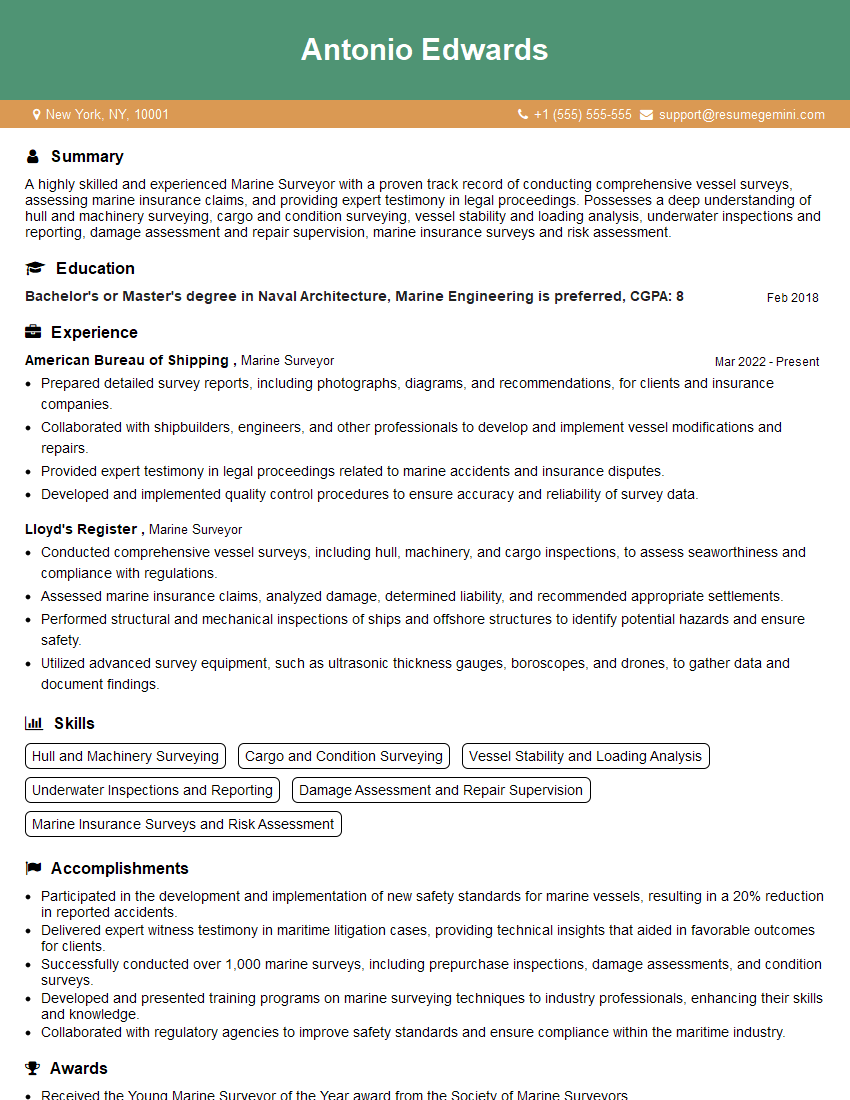
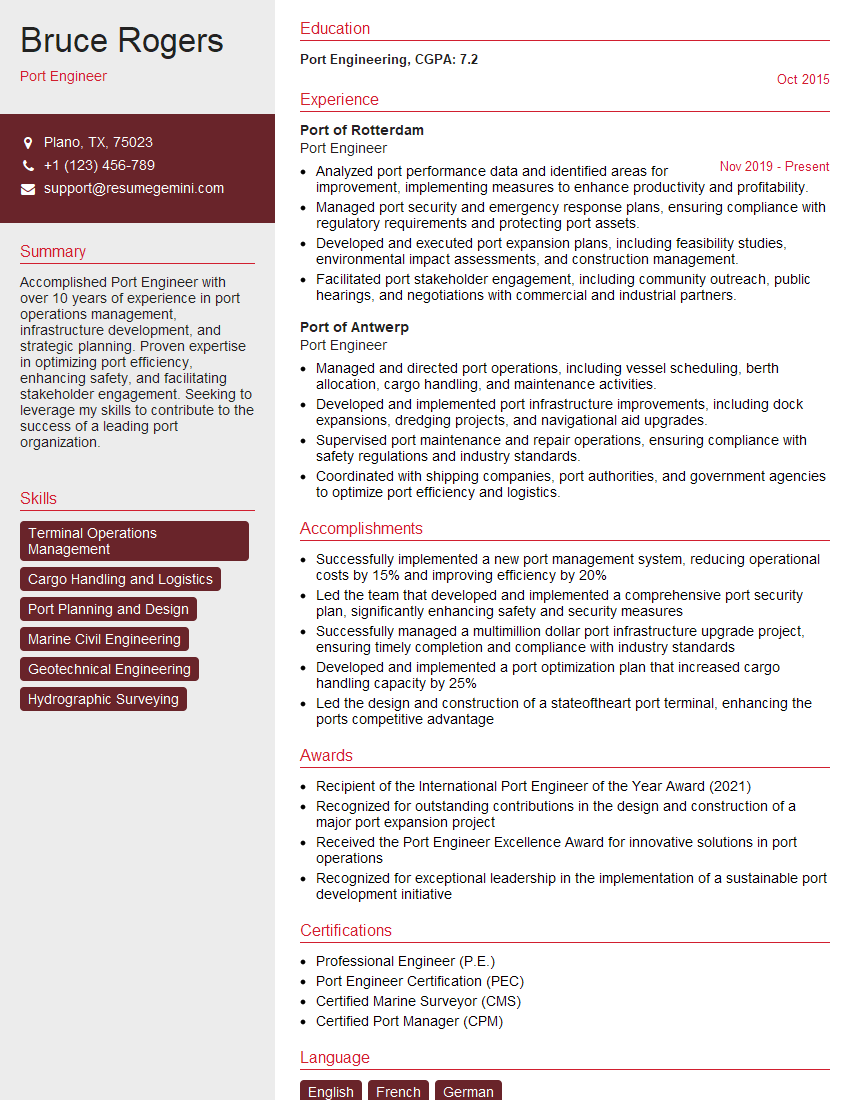
Mastering Marine Civil Engineering opens doors to a dynamic and rewarding career, offering opportunities for innovation and impactful contributions to global infrastructure. To maximize your job prospects, creating a strong, ATS-friendly resume is crucial. This ensures your qualifications are effectively highlighted to potential employers. We recommend using ResumeGemini, a trusted resource for building professional resumes that stand out. ResumeGemini provides examples of resumes specifically tailored to Marine Civil Engineering, helping you showcase your skills and experience effectively. Take the next step towards securing your dream role!
Explore more articles
Users Rating of Our Blogs
Share Your Experience
We value your feedback! Please rate our content and share your thoughts (optional).
What Readers Say About Our Blog
Very informative content, great job.
good