Are you ready to stand out in your next interview? Understanding and preparing for Marketing and Social Media Management interview questions is a game-changer. In this blog, we’ve compiled key questions and expert advice to help you showcase your skills with confidence and precision. Let’s get started on your journey to acing the interview.
Questions Asked in Marketing and Social Media Management Interview
Q 1. Explain your experience with SEO best practices.
SEO, or Search Engine Optimization, is the practice of increasing the quantity and quality of traffic to your website through organic search engine results. My experience encompasses a holistic approach, focusing on both on-page and off-page optimization.
On-page optimization involves refining elements directly within your website’s control, such as keyword research and implementation within page titles, meta descriptions, header tags (H1-H6), and image alt text. I utilize tools like SEMrush and Ahrefs to identify relevant keywords with high search volume and low competition. For example, instead of simply using ‘shoes’ as a keyword, I’d delve deeper, identifying long-tail keywords like ‘best waterproof hiking shoes for women’ or ‘stylish vegan leather sneakers’. This improves targeting and relevance.
Off-page optimization focuses on building your website’s authority and reputation through external factors. This includes building high-quality backlinks from reputable websites, engaging in social media promotion, and creating valuable content that others will naturally link to. For instance, I’ve secured backlinks for clients by collaborating with influencers in their niche, guest posting on relevant blogs, and participating in online communities. I meticulously monitor backlink profiles, ensuring they are diverse and high-quality to avoid penalties from search engines.
Finally, I constantly monitor performance using Google Search Console and Google Analytics, analyzing keyword rankings, organic traffic, and click-through rates (CTR) to identify areas for improvement and refine strategies. This iterative process is crucial for sustained SEO success.
Q 2. How do you measure the success of a social media campaign?
Measuring social media campaign success goes beyond simply looking at likes and shares. A robust evaluation uses a blend of quantitative and qualitative metrics, tailored to specific campaign goals.
Quantitative metrics might include:
- Reach: The number of unique users who saw your content.
- Engagement: Likes, comments, shares, and click-through rates (CTR) indicating audience interest.
- Website traffic: Tracking how many users clicked through from social media to your website.
- Conversions: Did the campaign lead to sales, leads, sign-ups, or other desired actions? (e.g., tracking a specific UTM parameter in your campaign links)
- Brand mentions: Monitoring mentions of your brand across social media to understand sentiment and reach.
Qualitative metrics involve a deeper dive into the why behind the numbers:
- Sentiment analysis: Assessing the overall tone of comments and mentions (positive, negative, or neutral).
- Audience feedback: Engaging with comments and messages to understand audience perceptions and needs.
- Competitor analysis: Benchmarking your campaign performance against competitors’ efforts.
For example, a campaign aiming to increase brand awareness might prioritize reach and engagement, while a campaign focusing on lead generation will focus heavily on conversions and website traffic. By combining these quantitative and qualitative insights, I can gain a comprehensive understanding of the campaign’s effectiveness and identify areas for optimization in future campaigns.
Q 3. Describe your approach to content marketing strategy.
My approach to content marketing strategy is audience-centric and data-driven. It begins with a thorough understanding of the target audience, their needs, pain points, and preferred content formats.
I use several tools and techniques to create a detailed buyer persona. Once the ideal customer profile is established, I create a content calendar that addresses audience needs and aligns with business goals. This involves carefully selecting relevant keywords using tools like SEMrush, brainstorming various content formats (blog posts, infographics, videos, podcasts), and scheduling publication across different platforms.
Content pillars are a crucial component of my strategy, acting as overarching themes that connect multiple pieces of content. For example, if a client sells organic skincare products, content pillars could include ‘ingredients’, ‘skin conditions’, and ‘natural beauty routine’.
I emphasize content promotion through a mix of organic and paid strategies, leveraging social media, email marketing, influencer outreach and SEO optimization to maximize reach and impact. Throughout the process, I closely monitor analytics to track the performance of each piece of content, adjusting the strategy as needed to ensure optimal results. Regular content audits ensure that content stays fresh, relevant and aligned with the ever changing customer landscape.
Q 4. What are the key performance indicators (KPIs) you track for social media?
The key performance indicators (KPIs) I track for social media are highly dependent on the specific campaign goals. However, some core metrics are consistently monitored:
- Reach and Impressions: How many unique users saw your content and how many times was it displayed?
- Engagement Rate: The percentage of users who interacted with your posts (likes, comments, shares, etc.) – This reflects audience interest and content relevance.
- Website Click-Through Rate (CTR): The percentage of users who clicked from your social media post to your website, demonstrating effective lead generation.
- Conversion Rate: Percentage of users who completed a desired action after interacting with your social media content (e.g., purchase, sign-up, download).
- Follower Growth: The rate at which your follower count increases, indicative of brand awareness and audience building.
- Sentiment Analysis: The overall sentiment expressed towards your brand on social media (positive, negative, neutral).
I utilize social media analytics dashboards provided by platforms like Facebook, Instagram, Twitter, and LinkedIn, as well as third-party tools like Hootsuite and Sprout Social to track these KPIs. Regular reporting and analysis of this data allow for optimization of future campaigns and content strategies.
Q 5. How do you handle negative comments or reviews on social media?
Handling negative comments or reviews on social media requires a prompt, professional, and empathetic approach. My strategy involves these key steps:
- Respond promptly: Acknowledge the comment within 24 hours, showing you value your audience’s feedback.
- Empathize and validate: Express understanding of the customer’s concerns or frustrations, even if you don’t agree with their perspective. Phrases like, ‘I understand your frustration,’ or ‘I’m sorry to hear you had this experience,’ are effective.
- Take ownership (if applicable): If the negative feedback is due to a genuine error on your part, take responsibility and offer a sincere apology.
- Offer a solution: If possible, offer a practical solution to address the issue raised. This could be a refund, replacement, or a promise to investigate the problem further.
- Move the conversation offline: If the comment becomes too personal or inappropriate, politely ask the user to contact you directly via email or phone for further discussion.
- Monitor and track: Continue monitoring the conversation to ensure the situation is resolved and to prevent any further escalation.
It’s important to avoid getting defensive or engaging in arguments. The goal is to address the issue professionally, demonstrate your commitment to customer satisfaction, and potentially turn a negative experience into a positive one. Publicly resolving complaints demonstrates transparency and fosters trust with your audience.
Q 6. What social media platforms are you most familiar with, and why?
I’m most familiar with Facebook, Instagram, Twitter, LinkedIn, and TikTok. My choice isn’t arbitrary; each platform serves distinct purposes and reaches different audiences.
- Facebook: Offers broad reach and is excellent for building a strong brand community, running targeted advertising campaigns, and sharing longer-form content.
- Instagram: Ideal for visual storytelling and reaching younger audiences. Its strong emphasis on image and video makes it perfect for showcasing products or services.
- Twitter: Excellent for real-time engagement, sharing quick updates, and participating in industry conversations. It’s a powerful tool for brand monitoring and crisis management.
- LinkedIn: Primarily focused on professionals, making it an ideal platform for B2B marketing, recruitment, and thought leadership content.
- TikTok: A rapidly growing platform ideal for reaching a younger demographic through short-form video content. It’s perfect for creative, engaging content and building viral trends.
My familiarity with these platforms extends beyond basic usage; I have in-depth knowledge of their advertising capabilities, analytics dashboards, and best practices for content creation and community management. I adapt my approach to each platform based on the specific audience and goals of the campaign.
Q 7. Describe your experience with paid social media advertising.
My experience with paid social media advertising includes developing and managing campaigns across various platforms, focusing on strategies that maximize ROI.
I start by defining clear objectives—whether it’s increasing brand awareness, driving website traffic, generating leads, or boosting sales. Based on these objectives, I select the most appropriate platform(s) and ad formats. For instance, a campaign focused on brand awareness might leverage video ads on Instagram and Facebook, while a lead generation campaign might utilize lead form ads on LinkedIn or Facebook.
I conduct thorough keyword research and audience targeting to ensure ads reach the right people. I leverage audience insights from each platform to create detailed target profiles, including demographics, interests, behaviors, and connections. This allows for highly targeted ad delivery, reducing wasted ad spend.
I meticulously track campaign performance using platform-provided analytics and third-party tools. I regularly monitor metrics like click-through rates (CTR), conversion rates, cost per click (CPC), and cost per acquisition (CPA) to identify areas for optimization. A/B testing of ad creatives and targeting parameters ensures continuous improvement of campaign performance. For example, I might A/B test different ad copy, images, or call-to-actions to determine what resonates best with the target audience. This iterative process is crucial for maximizing the return on ad spend and achieving the desired campaign outcomes.
Q 8. How do you stay up-to-date with the latest trends in social media marketing?
Staying current in the ever-evolving landscape of social media marketing requires a multi-pronged approach. It’s not enough to just passively scroll through feeds; you need a proactive strategy.
- Industry Publications and Blogs: I regularly read publications like MarketingProfs, Social Media Examiner, and Hubspot’s marketing blog. These offer in-depth analyses of trends, algorithm updates, and best practices.
- Social Media Listening: I actively monitor what’s trending on various platforms. Tools like Brandwatch and Talkwalker help analyze conversations around specific keywords and brands, identifying emerging trends and potential opportunities.
- Industry Events and Webinars: Attending conferences like Social Media Marketing World and participating in webinars offered by platforms like LinkedIn Learning and Udemy keeps me updated on the latest strategies and tools.
- Following Key Influencers: I follow leading social media marketers, analysts, and platform representatives on Twitter, LinkedIn, and other platforms to gain insights and participate in relevant discussions.
- Platform Updates: I directly check the news and blog sections of each social media platform (Facebook, Instagram, Twitter, TikTok, etc.) to understand algorithm changes and new feature releases. This is crucial for adapting strategies quickly.
Essentially, it’s a combination of formal learning and informal observation, ensuring I remain adaptable and effective in my work.
Q 9. Explain your understanding of search engine optimization (SEO).
Search Engine Optimization (SEO) is the practice of increasing the quantity and quality of traffic to your website through organic search engine results. It’s about making your website more visible to people searching for products or services relevant to your business. Think of it like this: SEO is about getting your business found in the digital Yellow Pages, without paying for an advertisement.
- On-Page Optimization: This involves optimizing elements within your website, such as keyword research and implementation in page titles, meta descriptions, headers, and content itself.
- Off-Page Optimization: This focuses on building your website’s authority and reputation through activities like link building (getting other websites to link to yours), social media marketing, and building brand awareness.
- Technical SEO: This aspect deals with the technical aspects of your website, ensuring it’s easily crawlable and indexable by search engines. This includes site speed optimization, mobile-friendliness, and proper use of structured data (schema markup).
For example, if a client sells handmade jewelry, I’d conduct keyword research to find terms like “handmade earrings,” “artisan necklaces,” etc. We’d then integrate those keywords naturally into the website’s content, meta descriptions, and image alt text. We’d also work on building high-quality backlinks from relevant websites in the craft or jewelry industry.
Q 10. How do you develop a social media strategy for a new client or product?
Developing a social media strategy starts with a deep understanding of the client or product and their target audience. It’s a collaborative process, involving research, planning, and execution.
- Audience Research: Who are we trying to reach? What are their demographics, interests, and online behavior? Which platforms do they use most frequently? This forms the foundation of our strategy.
- Competitive Analysis: Who are the competitors? What are they doing on social media? What are their strengths and weaknesses? Understanding the competitive landscape helps us identify opportunities to differentiate.
- Goal Setting: What are the client’s objectives? Are we aiming for increased brand awareness, lead generation, website traffic, or sales? These goals must be measurable and achievable.
- Platform Selection: Based on audience research and goals, we choose the most suitable platforms. For example, a younger audience might be best reached on TikTok or Instagram, while a professional audience might be better targeted on LinkedIn.
- Content Strategy: What type of content will resonate with our target audience? We’ll create a content calendar that includes a mix of formats like images, videos, stories, and text-based posts.
- Engagement Strategy: How will we interact with our audience? This includes responding to comments and messages, running contests, and fostering a sense of community.
- Measurement and Analysis: How will we track our progress towards our goals? We’ll use analytics tools to monitor key metrics and make data-driven adjustments to the strategy.
For example, for a new organic skincare product, we might target environmentally conscious millennials on Instagram and Facebook using high-quality images and videos showcasing the natural ingredients and sustainable packaging. We’d track metrics like engagement rate, reach, and website clicks to optimize our campaigns over time.
Q 11. What is your experience with A/B testing in marketing campaigns?
A/B testing is a crucial element in optimizing marketing campaigns. It involves creating two versions of a marketing element (e.g., ad copy, subject line, landing page) and comparing their performance to see which performs better. It’s a scientific approach to improving conversion rates and engagement.
My experience with A/B testing includes using various platforms like Google Optimize and Optimizely. I’ve conducted A/B tests on various elements such as:
- Ad copy: Testing different headlines, calls to action, and overall messaging to see which resonates best with the target audience.
- Images and videos: Comparing the effectiveness of different visuals in attracting clicks and engagement.
- Landing pages: Optimizing the layout, design, and copy of landing pages to improve conversion rates.
- Email subject lines: Testing different subject lines to identify those that lead to higher open rates.
For instance, when running a Facebook ad campaign for a client, I might A/B test two different ad creatives – one featuring a lifestyle image and another featuring a product close-up – to determine which performs better in terms of clicks and conversions. The data from the A/B test informs future ad strategy, maximizing the ROI of the campaign.
Q 12. Describe your understanding of marketing analytics and reporting.
Marketing analytics and reporting are vital for understanding the performance of marketing campaigns and making data-driven decisions. It’s about translating raw data into actionable insights.
My understanding encompasses:
- Data Collection: Utilizing various tools to collect data from different sources, including social media platforms, website analytics (Google Analytics), email marketing platforms (Mailchimp, Constant Contact), and CRM systems.
- Key Metrics: Identifying relevant metrics based on campaign objectives. This could include website traffic, engagement rate, conversion rate, click-through rate, customer acquisition cost (CAC), and return on investment (ROI).
- Data Analysis: Using data analysis techniques to interpret the collected data, identify trends, and draw conclusions. This often involves using spreadsheets, data visualization tools (e.g., Tableau, Data Studio), and statistical analysis.
- Reporting: Creating clear and concise reports that communicate key findings to stakeholders. These reports should be visually appealing and easily understandable, even for those without a deep understanding of data analysis.
I regularly use Google Analytics to track website traffic, user behavior, and conversion rates. I also use social media analytics dashboards to monitor engagement, reach, and sentiment. My reporting typically includes visualizations like charts and graphs to highlight key performance indicators (KPIs) and provide actionable recommendations.
Q 13. How do you create engaging content for social media?
Creating engaging social media content requires understanding your audience and what resonates with them. It’s about telling stories, sparking conversations, and providing value.
- Know Your Audience: What are their interests, pain points, and aspirations? Tailor your content to address their needs and interests.
- Variety of Content Formats: Use a mix of formats, including images, videos, stories, live streams, and text-based posts to keep your audience engaged.
- High-Quality Visuals: Use professional-looking images and videos that are visually appealing and consistent with your brand.
- Storytelling: Connect with your audience on an emotional level by telling stories that are relatable and memorable.
- Interactive Content: Encourage engagement by using polls, quizzes, Q&A sessions, and other interactive elements.
- Use of Trending Topics: Stay up-to-date on current trends and incorporate them into your content where appropriate (while remaining authentic to your brand).
- Consistent Posting Schedule: Maintain a consistent posting schedule to keep your audience engaged and increase visibility.
For example, if I’m managing social media for a pet food company, I might share user-generated content of pets enjoying the food, create informative videos about pet nutrition, run polls asking about pet preferences, and host live Q&A sessions with a veterinarian.
Q 14. Explain your experience with email marketing best practices.
Email marketing, when done effectively, can be a powerful tool for nurturing leads, building relationships, and driving sales. Best practices focus on building a strong list, delivering valuable content, and respecting subscribers.
- Building a Targeted List: Focus on acquiring email addresses from people who have genuinely expressed interest in your brand or product. Offer valuable incentives for sign-ups, such as discounts or exclusive content.
- Segmentation: Segment your email list based on demographics, interests, and behavior to personalize your messaging and improve engagement.
- Compelling Subject Lines: Craft subject lines that are concise, attention-grabbing, and relevant to the content of the email.
- High-Quality Content: Deliver valuable content that provides information, entertainment, or solves a problem for your subscribers. Avoid spamming or overly promotional emails.
- Mobile Optimization: Ensure your emails are responsive and easily readable on all devices.
- Clear Call to Action (CTA): Include a clear and compelling call to action that directs subscribers to take the desired action (e.g., visit your website, make a purchase).
- A/B Testing: Regularly test different subject lines, email content, and CTAs to optimize your campaigns.
- Compliance and Unsubscribe Options: Always comply with relevant regulations (like CAN-SPAM) and provide a clear and easy-to-use unsubscribe option.
For example, a clothing retailer might segment its email list by gender and style preference to send targeted promotions and product recommendations. They would A/B test different subject lines to improve open rates and ensure their emails are mobile-friendly for easy viewing on smartphones.
Q 15. How do you build and maintain relationships with influencers?
Building and maintaining influencer relationships is crucial for successful social media marketing. It’s not just about one-off collaborations; it’s about cultivating genuine, long-term partnerships.
- Identifying the Right Influencers: I start by thoroughly researching influencers whose audience aligns with my target demographic and brand values. I look beyond follower count and consider engagement rates, audience demographics, and the overall quality of their content. Tools like HypeAuditor and Upfluence are invaluable here.
- Personalized Outreach: Generic outreach emails rarely work. I personalize each message, showing I’ve done my homework and understand their content and audience. I highlight the mutual benefits of a collaboration, focusing on how it adds value to both our audiences.
- Building Trust and Rapport: I don’t just ask for favors. I engage authentically with their content, participate in their conversations, and offer support. Building a genuine relationship takes time and effort, but it’s worth it.
- Transparency and Open Communication: Clear communication is paramount. I set clear expectations upfront regarding campaign goals, deliverables, timelines, and payment terms. I also provide regular updates and actively seek their feedback.
- Ongoing Engagement: Even after a campaign ends, I continue to nurture the relationship. I share their content, engage with their posts, and look for opportunities for future collaborations. This ongoing engagement keeps the relationship strong and ensures future opportunities.
For example, I once worked with a food blogger who had a highly engaged audience interested in healthy recipes. Instead of just sending her a product to review, I developed a recipe specifically tailored to her audience using our products. This collaborative approach resulted in a much more authentic and impactful campaign.
Career Expert Tips:
- Ace those interviews! Prepare effectively by reviewing the Top 50 Most Common Interview Questions on ResumeGemini.
- Navigate your job search with confidence! Explore a wide range of Career Tips on ResumeGemini. Learn about common challenges and recommendations to overcome them.
- Craft the perfect resume! Master the Art of Resume Writing with ResumeGemini’s guide. Showcase your unique qualifications and achievements effectively.
- Don’t miss out on holiday savings! Build your dream resume with ResumeGemini’s ATS optimized templates.
Q 16. How do you handle a crisis or negative publicity on social media?
Handling a social media crisis requires a swift, transparent, and empathetic response. The key is to mitigate damage and protect the brand’s reputation.
- Monitor Social Media: I use social listening tools to identify potential issues quickly. This allows for early intervention, preventing small problems from escalating into major crises.
- Assess the Situation: I determine the severity of the issue, its potential impact, and the key stakeholders involved.
- Develop a Response Strategy: This often involves creating a prepared statement acknowledging the issue and expressing empathy. The statement should clearly outline the steps being taken to address the problem.
- Communicate Proactively: I respond to comments and messages promptly and directly, showing that I am listening and actively engaged in finding solutions. Transparency and authenticity are critical during this phase.
- Take Ownership and Apologize (when necessary): If the company is at fault, a sincere apology can go a long way in repairing damaged trust. Avoid making excuses or shifting blame.
- Monitor the Conversation: I continue to monitor the social media conversation to gauge the impact of the response and identify any further issues.
For instance, if a product malfunction was reported, I wouldn’t ignore the complaints. I would address them promptly, offering a solution (e.g., a replacement or refund), and actively engage with users who experienced the problem. I would also proactively update my audience with transparent information about investigating the root cause of the issue.
Q 17. Describe your experience using marketing automation tools.
I have extensive experience with marketing automation tools, such as HubSpot, Marketo, and Mailchimp. These tools are invaluable for streamlining marketing processes, improving efficiency, and generating better results.
- Email Marketing Automation: I utilize automation to personalize email campaigns, segment audiences, and automate follow-up sequences. This enhances engagement and converts leads more effectively. For example, I’ve set up automated welcome emails for new subscribers and triggered emails based on user behavior, like abandoned cart reminders in e-commerce.
- Social Media Management: Tools like Hootsuite and Buffer allow me to schedule posts in advance, saving time and ensuring consistent brand presence across multiple platforms. I can also track performance metrics, helping optimize the content strategy.
- Lead Nurturing: Automation enables the creation of personalized nurturing workflows that guide leads through the sales funnel. This increases the chances of converting leads into customers.
- Data Analytics: Automation platforms collect valuable data, enabling me to track campaign performance, identify areas for improvement, and refine my marketing strategy based on results.
In a recent campaign, I used HubSpot to create a series of automated emails that nurtured leads from a webinar. This resulted in a significant increase in conversions compared to previous campaigns that relied on manual follow-up.
Q 18. What are your strengths and weaknesses in social media marketing?
My strengths lie in my ability to develop creative and data-driven social media strategies, coupled with my strong analytical skills to track and optimize campaigns. I’m also a highly effective communicator, able to build rapport with both influencers and clients. My proficiency in using various social media management and marketing automation tools significantly enhances my efficiency.
A potential weakness could be staying abreast of the rapidly evolving social media landscape. However, I proactively mitigate this by dedicating time to continuous learning through industry publications, online courses, and attending relevant conferences. I also actively participate in relevant professional communities to exchange best practices and remain updated on the latest trends.
Q 19. How do you measure the ROI of a marketing campaign?
Measuring the ROI of a marketing campaign is crucial for demonstrating its effectiveness. It goes beyond simply looking at vanity metrics like likes and follows.
- Define Clear Objectives: Before launching a campaign, I establish specific, measurable, achievable, relevant, and time-bound (SMART) goals. This provides a clear benchmark for measuring success.
- Track Key Metrics: I use a combination of quantitative and qualitative metrics to assess campaign performance. This could include website traffic, leads generated, sales conversions, brand mentions, engagement rate, and customer satisfaction.
- Attribution Modeling: Determining which marketing activities contributed to conversions is crucial. I use attribution models to allocate credit to various touchpoints in the customer journey.
- Calculate ROI: Using the collected data, I calculate the return on investment (ROI) by comparing the campaign’s costs to the revenue generated or other quantifiable benefits.
- Continuous Optimization: After analyzing the results, I identify areas for improvement and refine the strategy for future campaigns.
For example, I once tracked the ROI of an email marketing campaign by comparing the cost of the campaign to the revenue generated from sales attributed to that campaign. This allowed us to determine that the campaign provided a significant return on investment, justifying further investment in similar strategies.
Q 20. Describe your experience with content repurposing.
Content repurposing is a highly effective strategy for maximizing the value of existing content. It involves transforming existing content into new formats to reach a wider audience and improve engagement.
- Identifying Suitable Content: I select high-performing content that’s still relevant and has the potential to resonate with a broader audience.
- Repurposing Techniques: This can include transforming a blog post into a series of social media posts, creating an infographic from data in a report, turning a webinar into a series of short videos, or creating podcasts from blog content.
- Optimizing for Different Platforms: Each platform has its own best practices. I adapt the content to align with the specific platform’s guidelines and user expectations.
- Tracking Performance: I monitor the performance of the repurposed content to identify what works best and refine the approach for future repurposing efforts.
For example, a successful blog post could be repurposed into shorter social media posts, an infographic, and short video clips for platforms like Instagram and TikTok. This allows for reaching various audience segments across multiple channels while reducing the workload of creating completely new content from scratch.
Q 21. How do you use social listening to inform marketing strategy?
Social listening is the process of monitoring online conversations to understand what people are saying about your brand, your competitors, and your industry. It’s crucial for informing marketing strategy.
- Identify Relevant Keywords and Hashtags: I identify keywords and hashtags related to my brand, industry, competitors, and target audience. This allows for comprehensive monitoring.
- Utilize Social Listening Tools: I use social listening tools like Brandwatch, Talkwalker, and Sprout Social to track mentions across various platforms. These tools offer valuable insights into audience sentiment, trends, and emerging issues.
- Analyze Sentiment: I analyze the sentiment expressed in online conversations to identify positive, negative, and neutral feedback. This provides valuable information regarding brand perception.
- Identify Emerging Trends: Social listening helps detect emerging trends, providing early warning of potential opportunities and threats. This allows for proactive adjustments to the marketing strategy.
- Improve Customer Service: Social listening identifies customer service issues early on, providing the opportunity to address complaints and resolve issues before they escalate.
- Inform Content Strategy: By understanding what topics resonate most with the audience, I can create content that’s relevant and engaging.
For example, if social listening reveals a negative sentiment surrounding a particular product feature, I can use this insight to address customer concerns, improve the product, and create content addressing these issues. Conversely, discovering a trending topic related to my brand allows for quick creation of relevant content to capitalize on the opportunity.
Q 22. What is your experience with different social media advertising platforms?
My experience spans several major social media advertising platforms, including Facebook Ads, Instagram Ads, LinkedIn Ads, Twitter Ads, and Google Ads (specifically focusing on YouTube and display advertising). I’m proficient in utilizing each platform’s unique targeting options, ad formats, and campaign structures to achieve various marketing goals. For example, I’ve successfully run highly targeted Facebook Ads campaigns for a small business, leveraging detailed demographics and interests to reach their ideal customer profile and generate leads. On the other hand, I’ve managed larger-scale LinkedIn campaigns for B2B clients, focusing on account-based marketing and utilizing LinkedIn’s professional networking capabilities to connect with decision-makers.
I understand the nuances of each platform’s algorithm and constantly adapt my strategies to stay ahead of the curve. This includes A/B testing ad creatives, optimizing bidding strategies, and leveraging platform-specific features like retargeting and dynamic creative optimization (DCO) to maximize ROI. My expertise goes beyond simply running campaigns; I’m adept at analyzing campaign performance, identifying areas for improvement, and iteratively refining strategies for ongoing success.
Q 23. Describe your experience with data analysis in marketing.
Data analysis is the backbone of effective marketing. My experience encompasses a wide range of analytical techniques, from basic descriptive statistics to more advanced methods like regression analysis and cohort analysis. I routinely use data to understand campaign performance, customer behavior, and market trends. For instance, I might analyze website traffic data from Google Analytics to identify high-performing content and understand user engagement patterns. This data then informs content creation, SEO strategies, and even paid media campaigns.
I leverage tools like Google Analytics, Google Data Studio, and social media platform analytics dashboards to visualize data and derive meaningful insights. I can interpret key metrics such as conversion rates, click-through rates (CTR), cost per acquisition (CPA), customer lifetime value (CLTV), and engagement rates to make data-driven decisions. I’m comfortable communicating complex analytical findings to both technical and non-technical audiences, presenting clear and actionable recommendations based on data-driven evidence. For example, I once used cohort analysis to identify a segment of customers with a high churn rate, allowing us to proactively address their concerns and improve customer retention.
Q 24. How do you adapt your marketing strategies to different audiences?
Adapting marketing strategies to different audiences is crucial for success. I approach this by first identifying and deeply understanding each target audience’s unique characteristics. This includes demographics, psychographics (values, attitudes, lifestyles), behaviors, and needs. Each audience segment requires a tailored messaging approach, using different channels and content formats to resonate effectively.
For example, a marketing campaign targeting young adults on TikTok would differ significantly from a campaign targeting professionals on LinkedIn. TikTok may emphasize short-form video content, influencer marketing, and trending audio, whereas LinkedIn might focus on thought leadership articles, professional networking, and targeted advertising. I create buyer personas to represent each key audience segment, helping to guide my content and channel strategy decisions. Furthermore, I employ A/B testing to validate my assumptions and optimize campaigns for each audience group, ensuring that the messaging, visuals, and channels are appropriately tailored to maximize engagement and conversion.
Q 25. Explain your understanding of marketing funnels.
Marketing funnels represent the journey a customer takes from initial awareness of a product or service to becoming a loyal customer. Understanding this journey is fundamental for effective marketing. The funnel typically consists of several stages:
- Awareness: Introducing the brand and product/service to potential customers.
- Interest: Piquing customer interest and providing valuable information.
- Decision: Guiding customers towards making a purchase decision.
- Action: Facilitating the purchase and onboarding the customer.
- Loyalty: Fostering customer relationships and encouraging repeat purchases.
By analyzing each stage of the funnel, marketers can identify bottlenecks and optimize their strategies. For instance, low conversion rates at the decision stage might indicate a need for clearer calls to action or stronger value propositions. I regularly use funnel analytics to measure performance at each stage and identify areas for improvement. This allows for a data-driven approach to enhancing marketing effectiveness across the customer journey.
Q 26. What is your experience with Google Analytics or similar tools?
I have extensive experience with Google Analytics and similar web analytics tools. I use these platforms to track website traffic, user behavior, and campaign performance. My skills extend beyond basic reporting; I can set up advanced tracking and segmentation, utilizing custom dimensions and metrics to gain deeper insights into user interactions.
For example, I can use Google Analytics to track the effectiveness of specific marketing campaigns by setting up custom UTM parameters in URLs. This allows me to see which campaigns are driving the most valuable traffic and conversions. I also use Google Analytics to understand user demographics, geographical location, device usage, and other key characteristics to inform future marketing strategies. Beyond Google Analytics, I’m also familiar with other tools like Adobe Analytics and Mixpanel, and I can adapt my skills to different analytical platforms as needed.
Q 27. How do you leverage social media for customer service?
Social media platforms are increasingly important channels for customer service. I leverage these platforms to provide quick, efficient, and personalized support to customers. This includes responding to inquiries, resolving issues, and proactively engaging with customers to build positive relationships.
Effective social media customer service requires a proactive and responsive approach. We need to monitor brand mentions and relevant hashtags to identify potential issues or opportunities for engagement. I often create dedicated social media teams and establish clear processes for handling customer inquiries, ensuring timely and appropriate responses. This not only improves customer satisfaction but also enhances brand reputation and builds trust. Furthermore, addressing customer concerns publicly can demonstrate transparency and build confidence among other followers.
Q 28. Describe your process for creating a marketing budget.
Creating a marketing budget requires a strategic approach. I start by defining clear marketing objectives and identifying the key activities needed to achieve them. This might involve things like content creation, social media advertising, SEO, email marketing, or event sponsorships. Then, I research and estimate the cost of each activity. For example, I would determine the cost per click (CPC) for paid advertising campaigns or the cost of hiring a freelance writer for content creation.
Next, I allocate budget resources to different activities based on their potential ROI and alignment with overall marketing goals. A commonly used budgeting method is percentage of sales, where a certain percentage of projected revenue is allocated to marketing. However, I also employ zero-based budgeting where each expense is justified and prioritized each budget cycle. After the budget is established, it’s crucial to track actual spending against the allocated budget, regularly monitoring performance metrics to ensure that investments are yielding the desired results. This process allows for real-time adjustments and optimizations to maximize the impact of the allocated funds.
Key Topics to Learn for Marketing and Social Media Management Interview
- Digital Marketing Fundamentals: Understanding SEO, SEM, PPC, email marketing, and content marketing strategies. Practical application: Explain how you’d develop a multi-channel marketing campaign for a new product launch.
- Social Media Strategy & Planning: Defining target audiences, setting measurable goals, and developing content calendars. Practical application: Describe your approach to building a social media presence for a brand with a limited budget.
- Social Media Analytics & Reporting: Tracking key performance indicators (KPIs), interpreting data, and drawing actionable insights. Practical application: Explain how you would measure the success of a social media campaign and use that data to optimize future efforts.
- Content Creation & Management: Developing engaging content across various platforms, adhering to brand guidelines, and managing content workflows. Practical application: Describe your experience creating and scheduling social media content using various scheduling tools.
- Community Management & Engagement: Building and nurturing online communities, responding to customer inquiries, and managing brand reputation. Practical application: Explain how you would handle a negative comment or crisis on social media.
- Paid Social Media Advertising: Creating and managing paid social media campaigns, optimizing ad performance, and understanding budgeting strategies. Practical application: Discuss your experience with different social media advertising platforms and their targeting options.
- Marketing Automation & Tools: Familiarity with marketing automation platforms and social media management tools. Practical application: Explain your experience with tools like Hootsuite, Buffer, or Sprout Social.
- Brand Building & Storytelling: Understanding brand voice, developing compelling narratives, and creating consistent brand messaging across all platforms. Practical application: Discuss how you would craft a brand story to resonate with a specific target audience.
- Data Analysis & Interpretation: Understanding various marketing analytics dashboards and drawing meaningful insights from data to improve marketing performance. Practical application: Explain how you’d use Google Analytics or other analytics platforms to inform your marketing decisions.
Next Steps
Mastering Marketing and Social Media Management opens doors to exciting career opportunities and significant professional growth. In today’s competitive job market, a strong resume is crucial. Creating an ATS-friendly resume that highlights your skills and experience is key to increasing your chances of landing your dream job. ResumeGemini is a trusted resource to help you build a professional and impactful resume. We provide examples of resumes tailored to Marketing and Social Media Management to guide you through the process. Let ResumeGemini help you present your qualifications effectively and confidently navigate your job search.
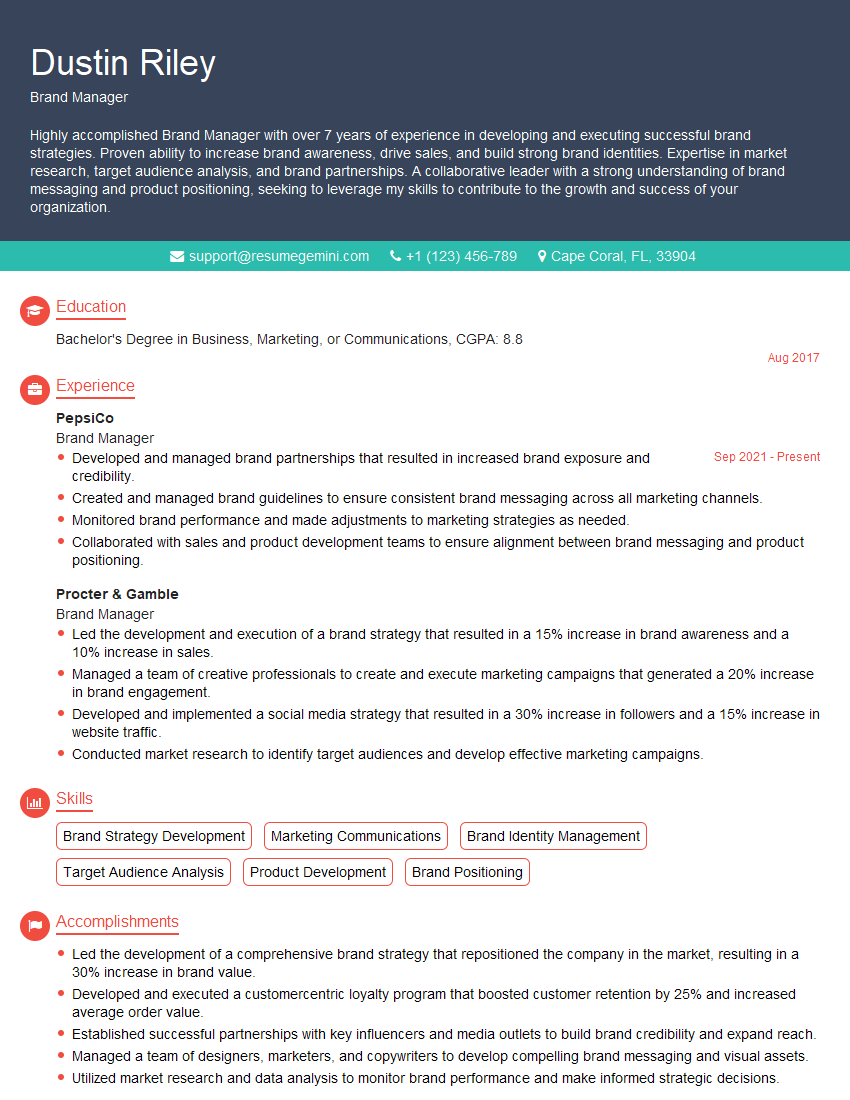
Brand Manager Resume Sample
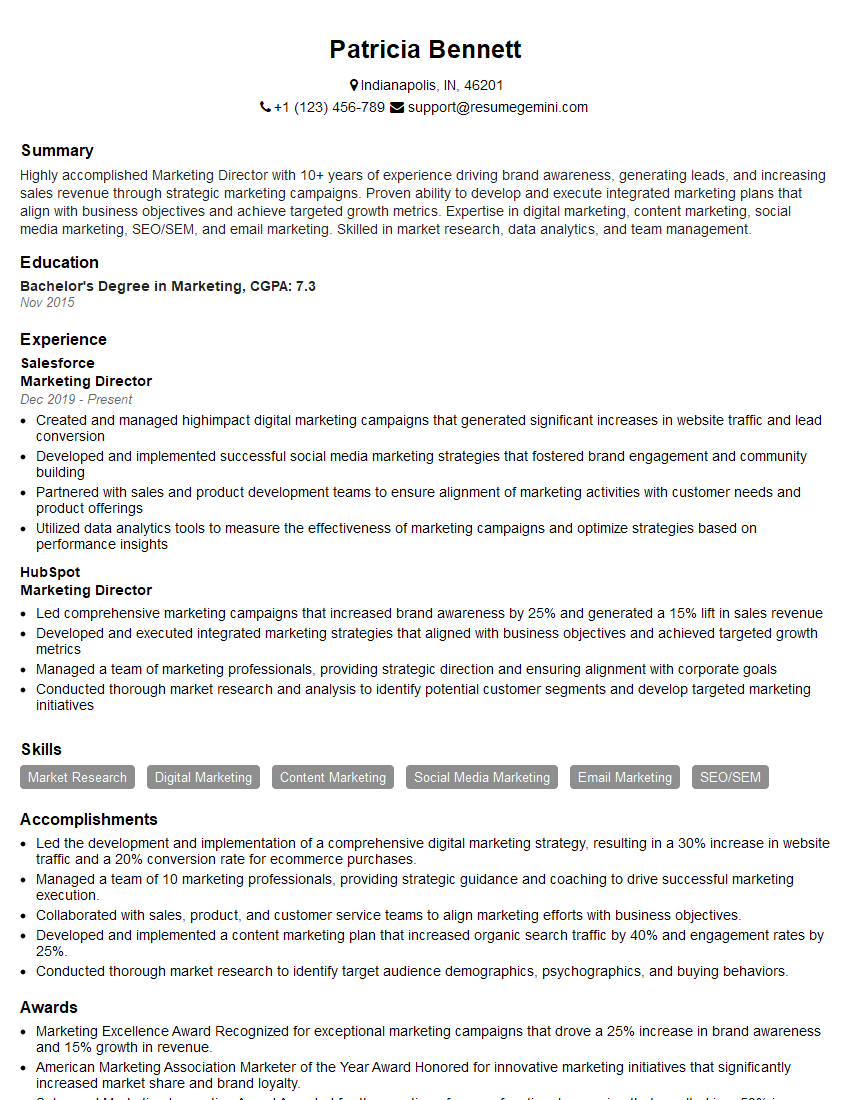
Marketing Director Resume Sample
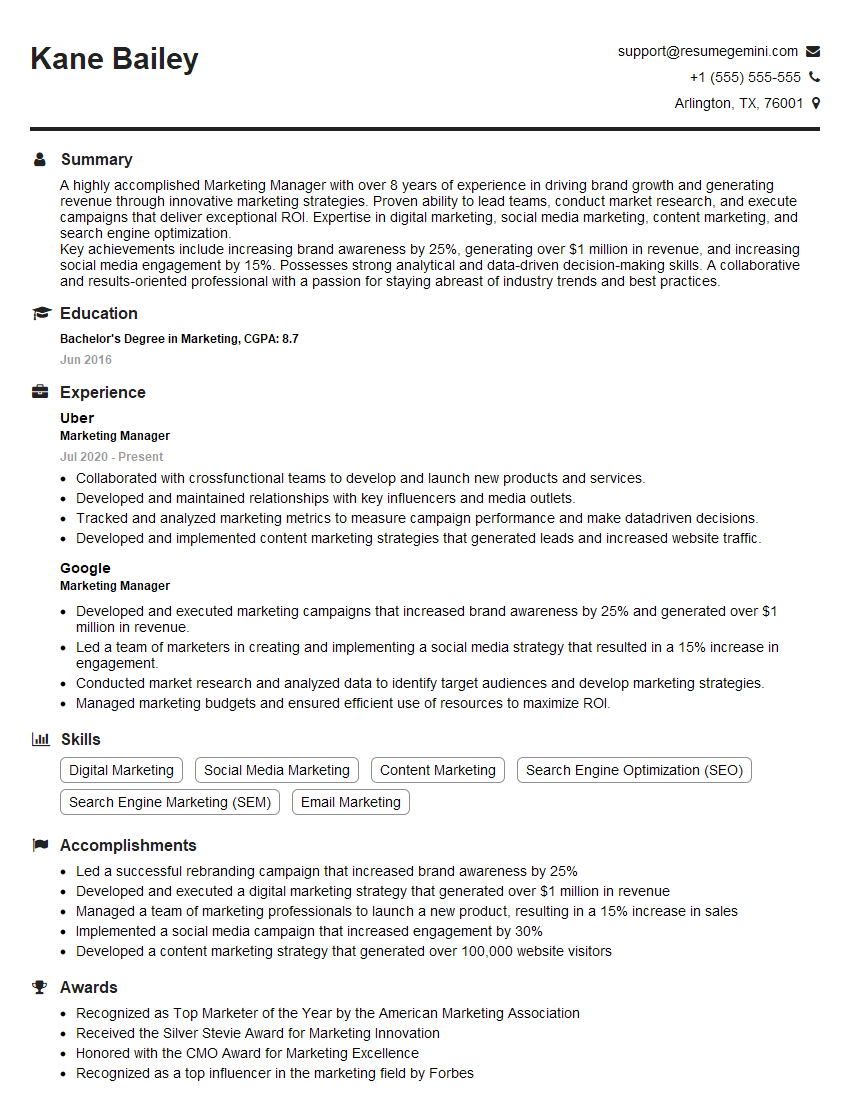
Marketing Manager Resume Sample
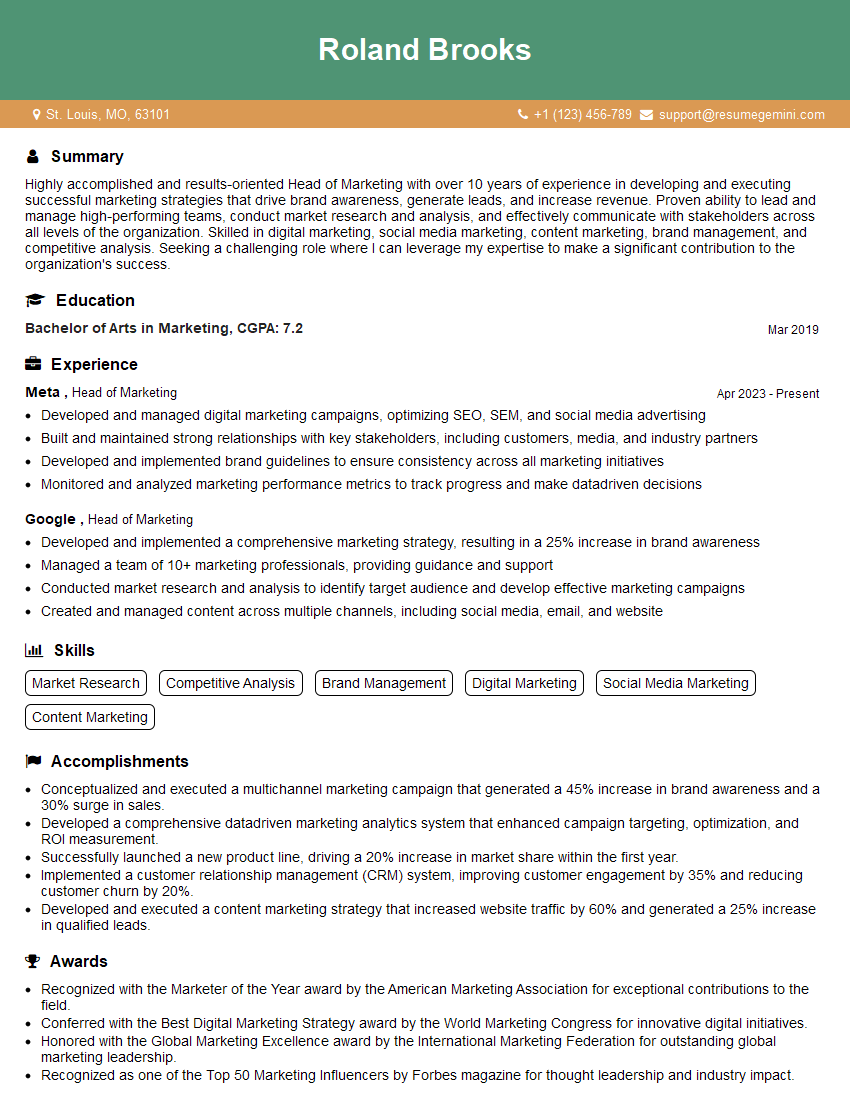
Head of Marketing Resume Sample
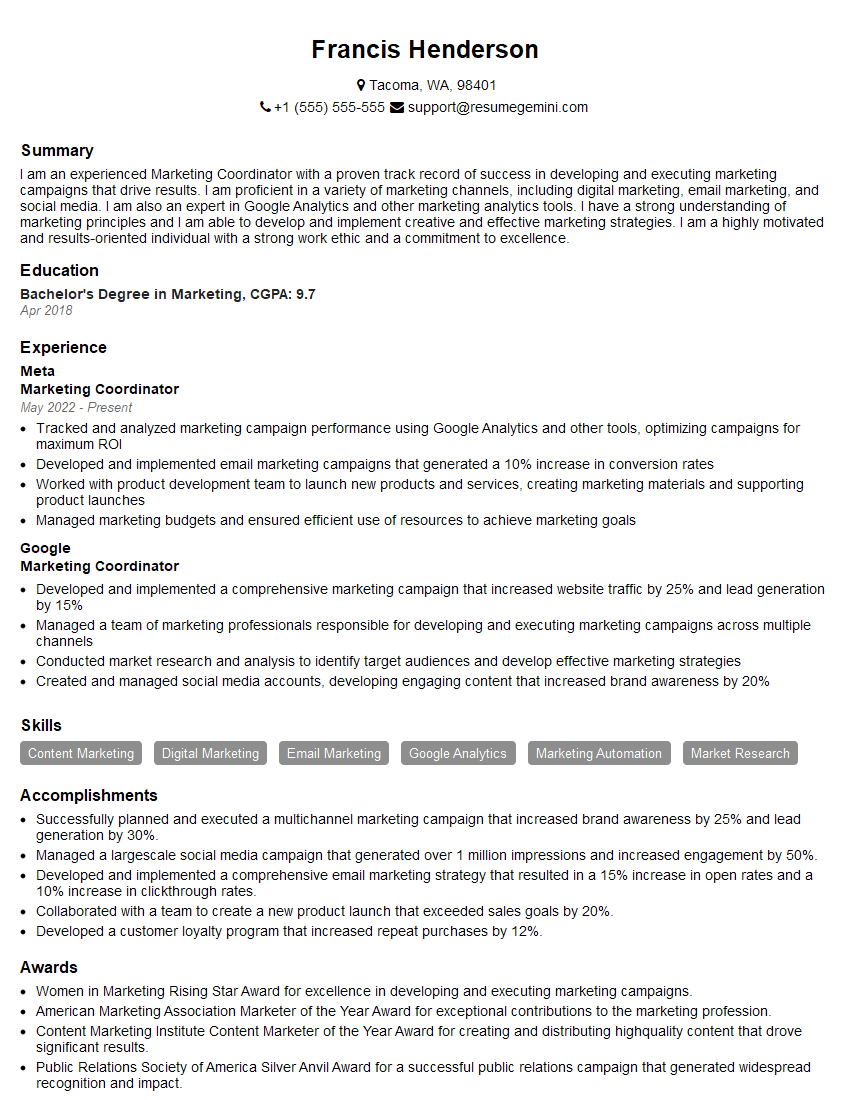
Marketing Coordinator Resume Sample

Marketing Communications Manager Resume Sample
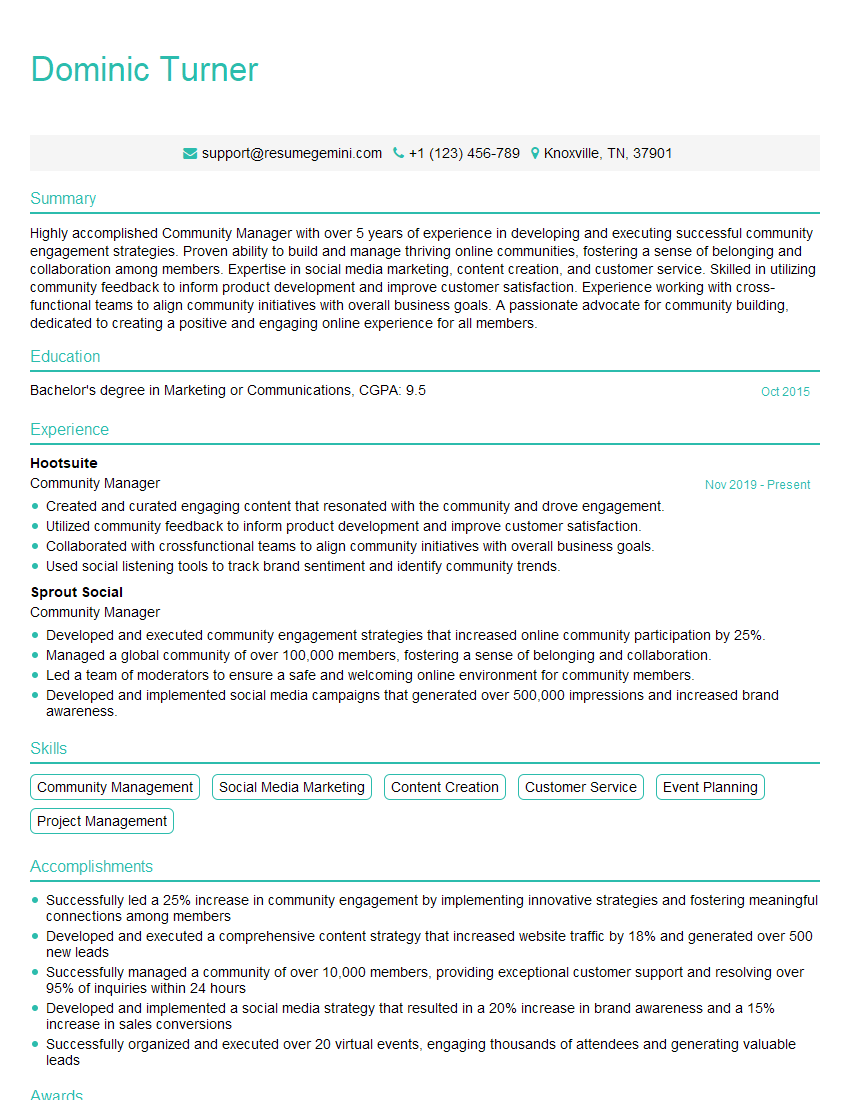
Community Manager Resume Sample
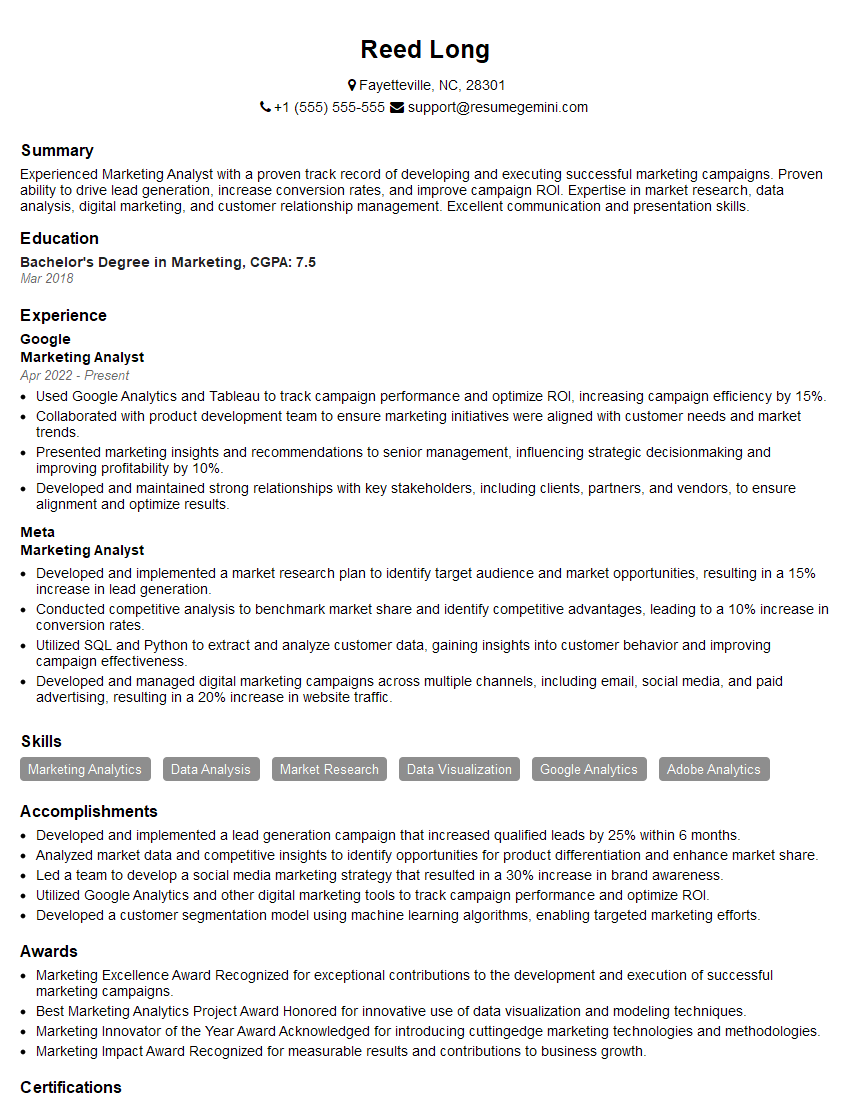
Marketing Analyst Resume Sample

Social Media Manager Resume Sample
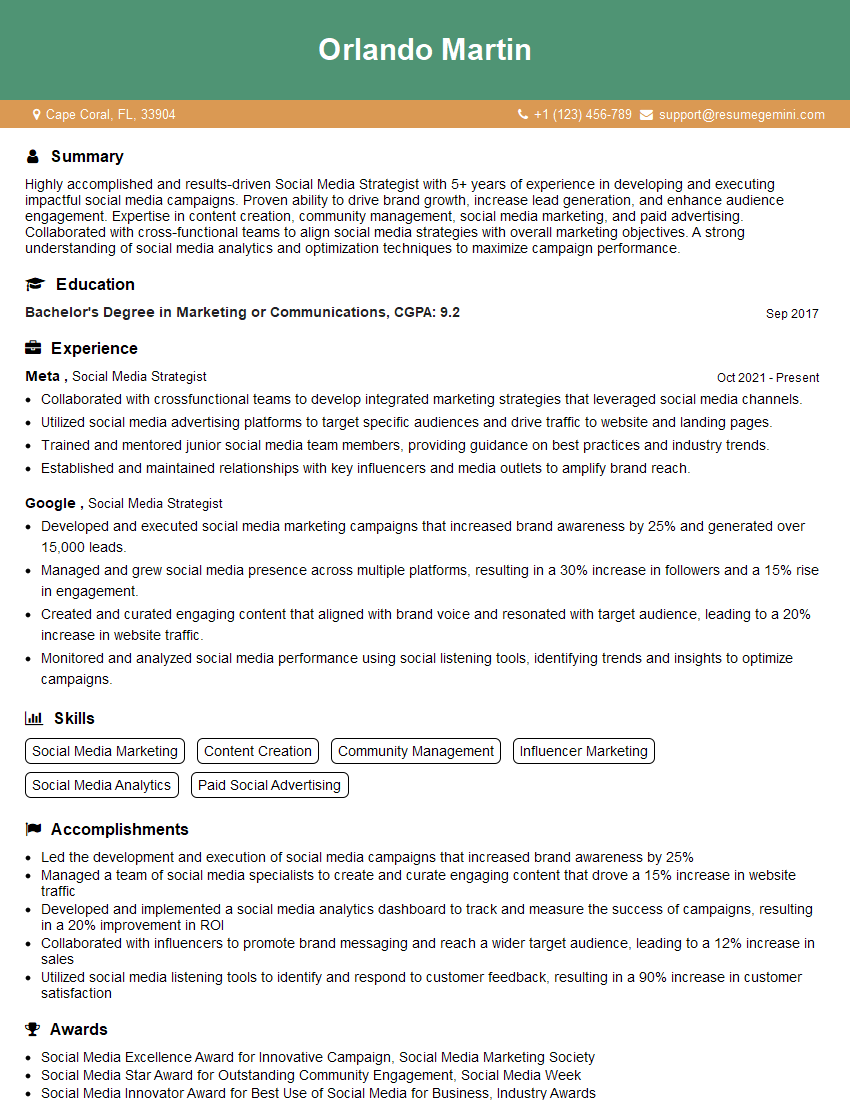
Social Media Strategist Resume Sample
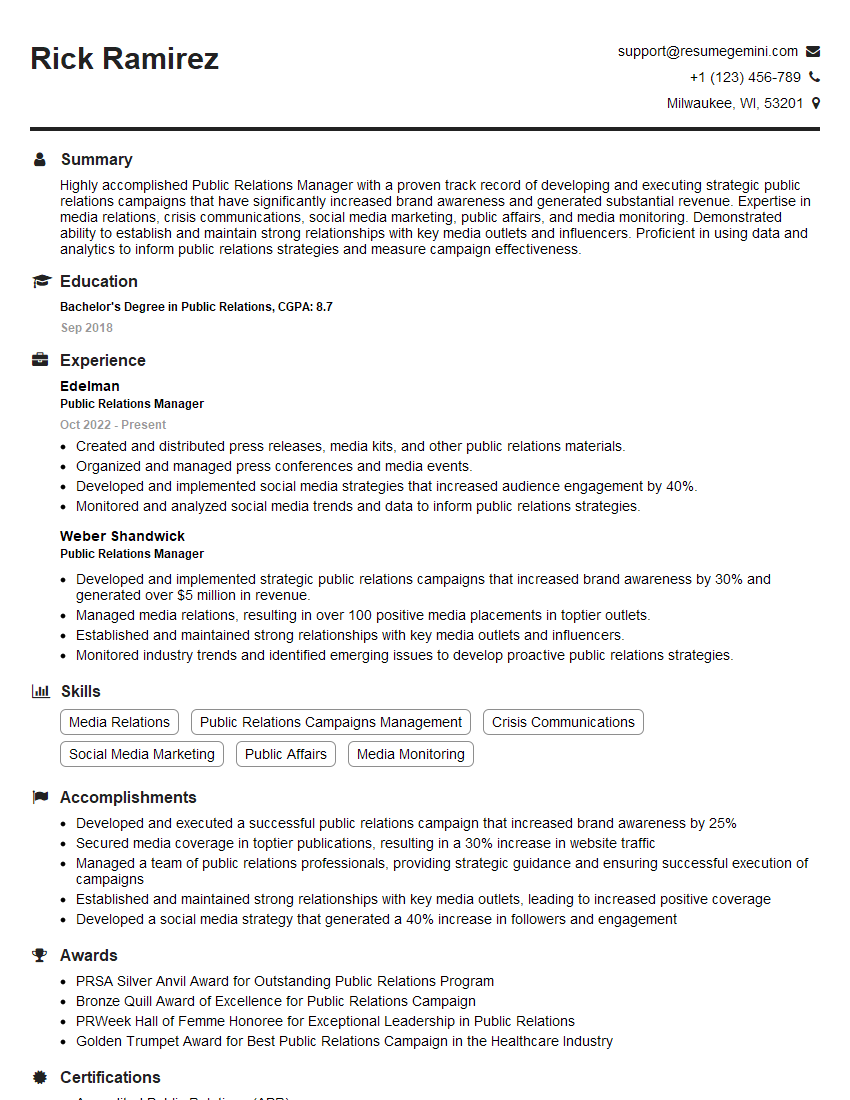
Public Relations Manager Resume Sample

Growth Hacker Resume Sample
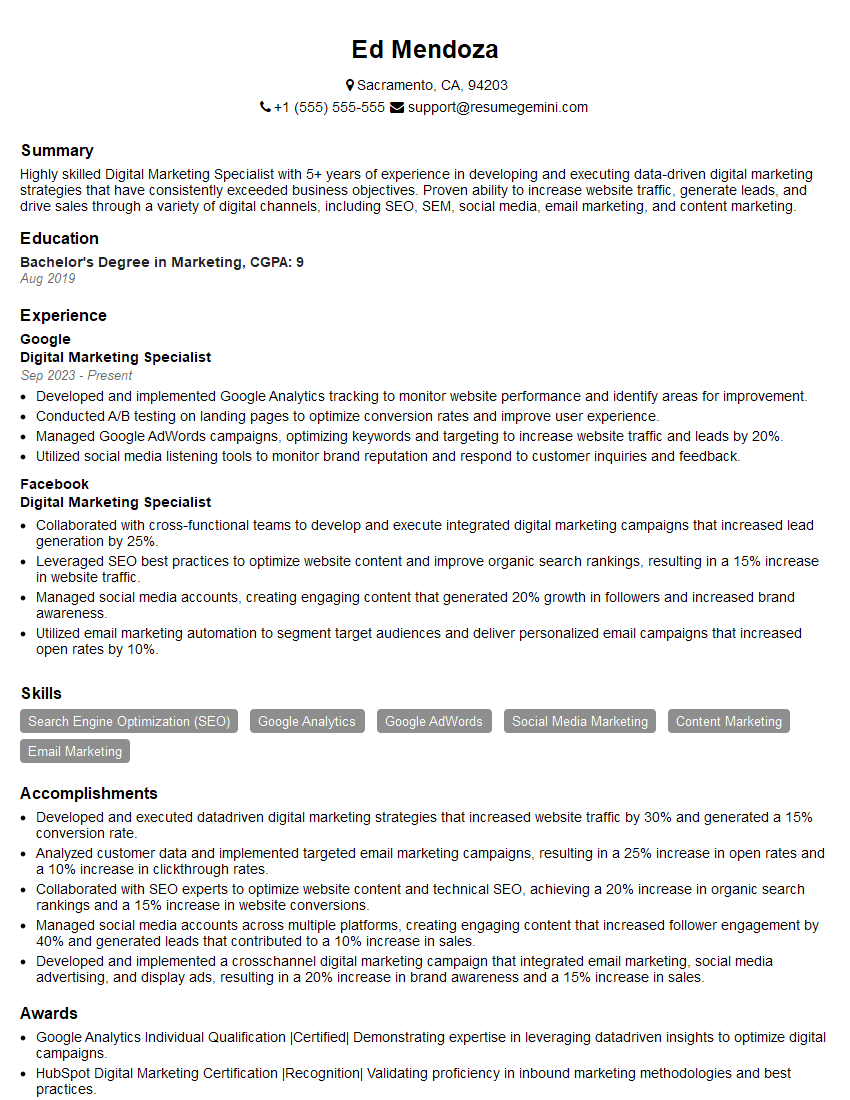
Digital Marketing Specialist Resume Sample

Content Creator Resume Sample
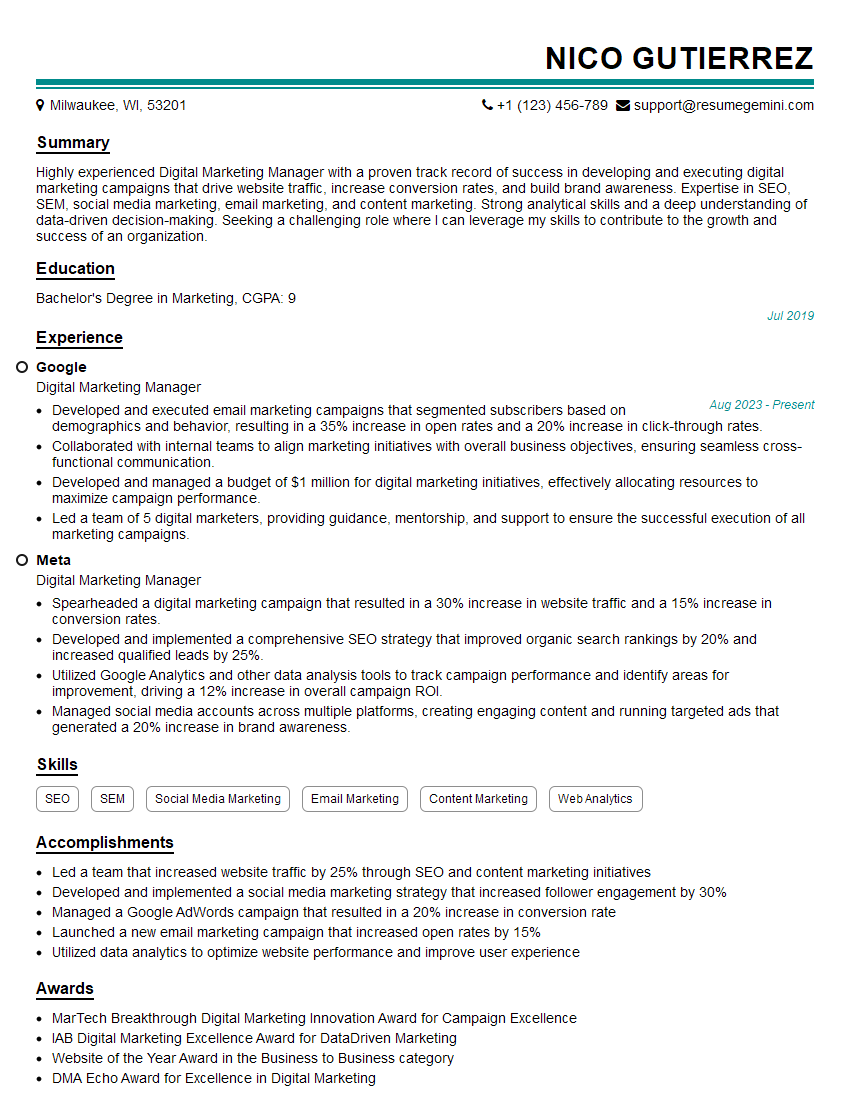
Digital Marketing Manager Resume Sample
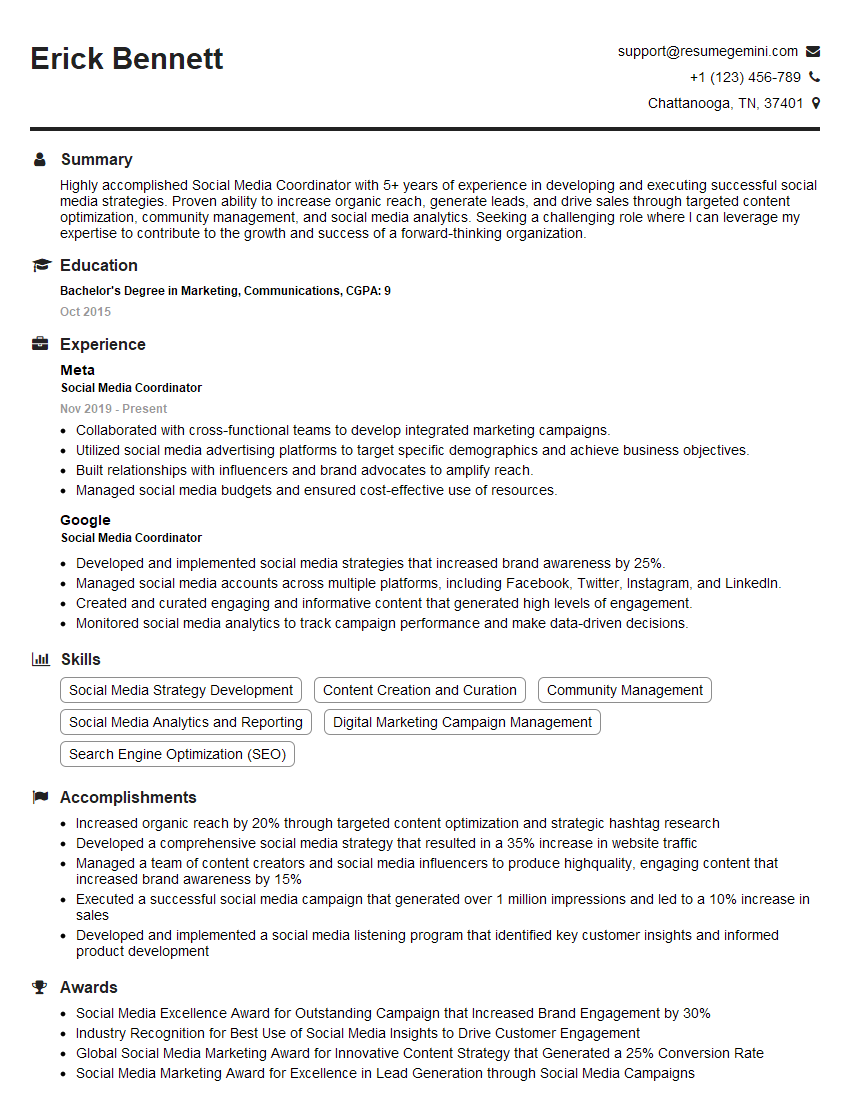
Social Media Coordinator Resume Sample
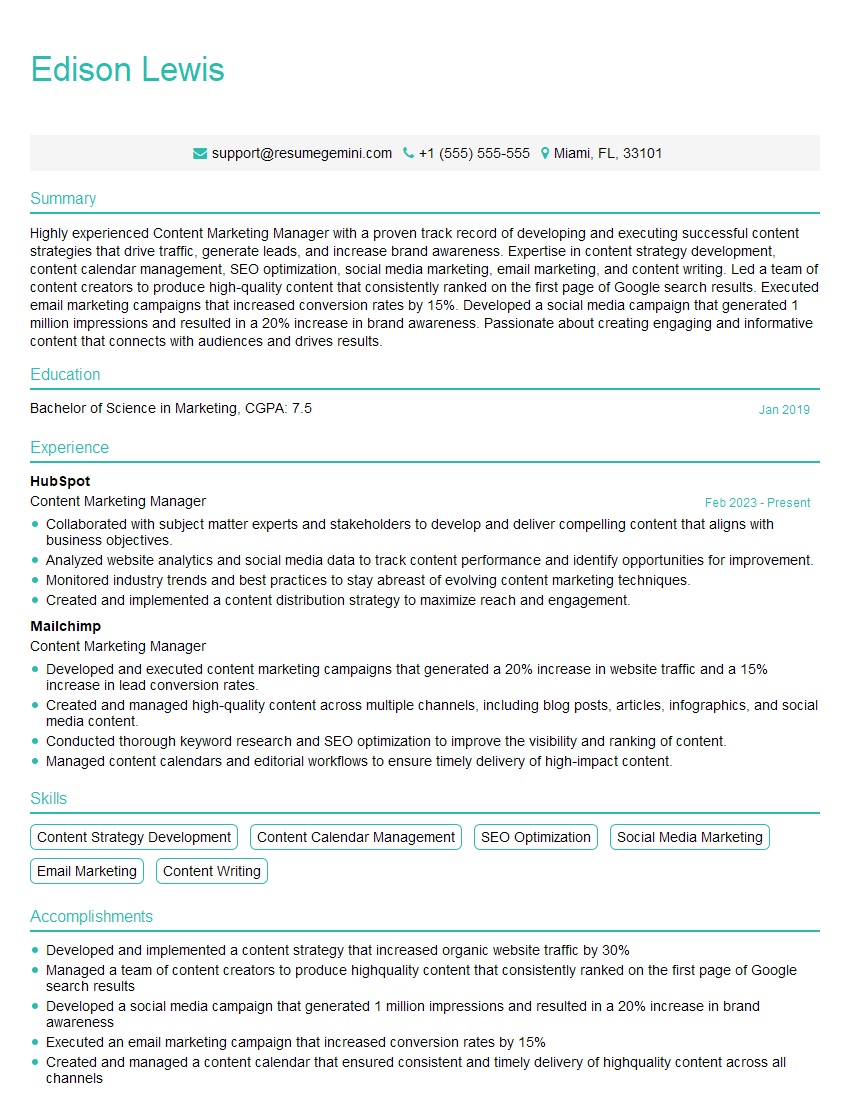
Content Marketing Manager Resume Sample

Social Media Marketing Manager Resume Sample

Influencer Marketing Manager Resume Sample
- Brand Manager
- Marketing Director
- Marketing Manager
- Head of Marketing
- Marketing Coordinator
- Marketing Communications Manager
- Community Manager
- Marketing Analyst
- Social Media Manager
- Social Media Strategist
- Public Relations Manager
- Growth Hacker
- Digital Marketing Specialist
- Content Creator
- Digital Marketing Manager
- Social Media Coordinator
- Content Marketing Manager
- Social Media Marketing Manager
- Influencer Marketing Manager
Explore more articles
Users Rating of Our Blogs
Share Your Experience
We value your feedback! Please rate our content and share your thoughts (optional).
What Readers Say About Our Blog
Very informative content, great job.
good