The thought of an interview can be nerve-wracking, but the right preparation can make all the difference. Explore this comprehensive guide to Mask Making and Costume Design interview questions and gain the confidence you need to showcase your abilities and secure the role.
Questions Asked in Mask Making and Costume Design Interview
Q 1. What materials are best suited for creating realistic masks?
Creating realistic masks requires careful material selection. The best materials mimic the texture and appearance of human skin or other desired surfaces. For realistic human masks, silicone is a popular choice because it’s flexible, durable, and can be pigmented to match various skin tones. It allows for incredibly fine detail and can be molded to create lifelike features. Another excellent option is latex, which is less expensive than silicone but can be less durable and requires careful handling due to its potential for allergic reactions. For animal masks, materials like foam latex, which allows for more robust construction and sculpting, or even high-quality resin for a harder, more rigid finish, might be better suited. The choice ultimately depends on the desired level of realism, budget, and the specific needs of the project. For example, a highly realistic historical figure mask would likely benefit from silicone, while a theatrical monster mask might leverage foam latex for its ease of sculpting and durability.
Q 2. Describe your process for creating a mold for a mask.
Mold making is a crucial step. The process typically begins with creating a sculpture of the desired mask shape, often using clay or a similar material. This sculpture is then prepared for molding. For silicone molds, a release agent is applied to prevent the silicone from sticking to the sculpture. Next, multiple layers of silicone are poured over the sculpture, allowing each layer to cure completely before adding the next. This creates a strong, durable mold. Once cured, the mold is carefully removed from the sculpture. This two-part mold (or multi-part if necessary for complex shapes) now allows for the casting of the mask material. Alternatively, for smaller projects, a plaster mold can be used, which is a cheaper, simpler process, but less durable for multiple castings. The key is ensuring the mold is accurately capturing every detail of the original sculpture. For a very detailed mask, one might use a method like a mother mold – a mold of a mold – for more consistency and quality across several casts.
Q 3. How do you ensure the comfort and fit of a mask?
Comfort and fit are paramount. I address this through several techniques. First, the mask’s design considers the natural contours of the face. The size and shape are carefully planned during the sculpture phase. Second, I often incorporate padding inside the mask to distribute pressure points and create a more comfortable experience. The materials chosen for this padding are breathable and hypoallergenic, like foam or soft cotton. For enhanced comfort and a better fit, adjustable straps or other fastening mechanisms are integrated into the design. This allows for some degree of customization and ensures the mask fits a range of head sizes. Finally, testing the mask on various individuals is crucial to identify and adjust any areas of discomfort. This feedback loop allows for refinement and results in a more comfortable final product. For example, a poorly fitting mask could cause headaches or even restrict breathing.
Q 4. Explain the different types of costume construction techniques.
Costume construction employs diverse techniques depending on the desired look and functionality.
- Drafting and Pattern Making: Creating precise patterns from measurements to ensure proper garment fit.
- Sewing: Machine sewing and hand sewing are used for various fabric manipulations, from basic seams to complex embellishments.
- Draping: Sculpting fabric directly onto a dress form to create unique and flowing shapes, often seen in haute couture.
- Boning and Stays: Using rigid materials to structure garments, common in historical or fantasy costumes.
- Millinery: The art of hat making, incorporating various materials and techniques to create headwear.
- Embellishment: Adding decorative elements like beading, embroidery, and appliqué to enhance costume details.
Q 5. What are the key considerations when designing a costume for a specific historical period?
Designing historically accurate costumes requires extensive research. This involves studying period paintings, photographs, surviving garments, and written accounts. Key considerations include:
- Silhouette: The overall shape and form of the garments, which dramatically varies between periods.
- Fabric: Utilizing materials authentic to the era; this could involve sourcing period-appropriate fabrics or finding modern equivalents with similar properties.
- Construction Techniques: Employing period-accurate construction methods to create a truly authentic look.
- Accessories and Details: Incorporating period-specific accessories like jewelry, footwear, and hairstyles to complete the look.
Q 6. How do you manage time constraints and deadlines in costume design?
Time management in costume design is critical. I begin with detailed planning: creating a timeline that breaks down the project into manageable tasks. This involves establishing realistic deadlines for each phase, from initial design concepts to final alterations. Prioritization is key – identifying essential elements and focusing resources on these first. I often employ techniques like batching similar tasks together (e.g., completing all sewing for one costume before moving to another) to improve efficiency. Communication with clients and other collaborators is essential to manage expectations and address any unforeseen delays. If absolutely necessary, compromise may be considered, but only after careful evaluation of how it would affect the overall integrity of the costume. Sometimes a simplification in detail must take precedence over a more elaborate design when time is scarce.
Q 7. Describe your experience with different fabric types and their properties.
My experience encompasses a wide range of fabrics.
- Silk: Luxurious, delicate, and drapes beautifully, ideal for elegant costumes.
- Cotton: Durable, breathable, and readily available in various weights and textures, suitable for many applications.
- Linen: Strong, slightly stiff, and has a natural texture, often used for historical costumes.
- Wool: Warm, durable, and available in numerous weights and weaves. Good for winter costumes and outerwear.
- Velvet: Luxurious, soft, and has a pile surface, ideal for creating a rich, textured look.
- Synthetic Fabrics: Offer variety in properties, often more affordable and easier to maintain than natural fibers. Useful for costumes requiring specific qualities like water resistance or stretch.
Q 8. How do you incorporate special effects into a mask or costume?
Incorporating special effects into masks and costumes is where the magic truly happens! It can range from subtle enhancements to completely transformative illusions. Think about the shimmer of a dragon’s scales, the glowing eyes of a fantastical creature, or the realistic wounds of a zombie. The key is to understand the effect you want to achieve and choose the appropriate technique.
Lighting: Fiber optics, EL wire (electroluminescent wire), and small LED lights can create amazing glowing effects. For example, I once integrated tiny LEDs into a dragon mask to simulate flickering flames in its nostrils. Careful placement and wiring are crucial here.
Prosthetics and Makeup: Silicone prosthetics can add realistic texture and dimension. Combine this with skilled makeup application – using techniques like airbrushing for a seamless finish – and you can create stunningly believable effects. For instance, I’ve used this to craft realistic-looking scars and wounds for horror characters.
Mechanical Effects: Simple mechanisms, like hidden servos or springs, can add movement to a mask or costume. Imagine a mask with subtly moving jaws or blinking eyes. It requires meticulous planning and execution, often involving miniature engineering skills.
Materials: The choice of material significantly impacts the effect. Using iridescent fabrics, reflective paints, or specialized plastics like dichroic glass can create unique visual illusions. A recent project involved using dichroic glass to create a mask that seemed to change color with the lighting.
Q 9. What software or tools are you proficient in for 3D modeling or pattern making?
My digital toolbox is quite extensive. For 3D modeling, I’m proficient in Blender, a powerful and open-source software ideal for creating intricate designs and complex organic shapes, perfect for character masks and costume elements. I also frequently use ZBrush for its sculpting capabilities, particularly useful for adding fine details and textures.
On the pattern-making side, I rely heavily on Adobe Illustrator for creating precise 2D patterns and technical drawings. While I can certainly draft patterns by hand for simpler projects, Illustrator allows for scalability, easy modification, and accurate grading – crucial for creating multiple sizes of a costume. It’s also invaluable for creating detailed instructions and documentation for the manufacturing process.
Q 10. Explain your process for draping and pattern cutting.
Draping and pattern cutting are fundamental to creating well-fitting and functional costumes. Draping involves directly manipulating fabric on a dress form to create the desired shape and silhouette. It’s like sculpting with fabric! Think of it as a 3D sketch of your design. Pattern cutting then translates that 3D form into 2D patterns that can be sewn together. My process is iterative.
Draping: I begin by draping muslin (a lightweight cotton fabric) onto a dress form that matches the body type of the wearer. I meticulously manipulate the fabric to achieve the desired shape, pinning as I go. This gives me a tangible representation of the garment.
Pattern Making: Once the draped muslin is perfect, I carefully take it apart, noting all the seams and markings. This is then used to create the final pattern pieces. I typically use Illustrator to refine these patterns, ensuring accuracy and making adjustments for seam allowances and ease.
Testing and Refinement: The pattern is then used to cut out the final fabric and construct a toile (a test garment). This is crucial for identifying any fit issues and making adjustments before using the expensive final fabrics.
Q 11. How do you handle alterations and fittings during production?
Alterations and fittings are an essential part of the process, especially when working with bespoke designs. My approach is proactive and collaborative.
Initial Fitting: A thorough fitting is always scheduled once the main components of the costume are constructed. I use this opportunity to check for fit, length, and overall drape. Pins are used to mark adjustments directly on the garment.
Communication: Open communication with the client or wearer is key. I explain the nature of any needed adjustments and involve them in the decision-making process.
Documentation: I meticulously document all alterations and adjustments, including detailed notes and sketches. This ensures consistency if the costume needs further modifications or if it’s ever reproduced.
Final Fitting: After alterations are made, a final fitting ensures everything is perfect before the costume is finalized.
Q 12. Describe your experience with various sewing techniques.
My sewing repertoire is extensive, ranging from basic hand stitches to complex machine techniques. I’m proficient in various sewing methods, including:
Hand Stitching: From running stitch to blind hem stitch, hand stitching provides precision for detailed work and repairs.
Machine Stitching: I use various machine stitches, including straight stitch, zigzag stitch, and decorative stitches, choosing the appropriate stitch for the fabric type and the intended effect.
Specialty Techniques: I’m skilled in techniques like French seams (for a clean finish), bound seams, and various types of closures (zippers, hooks and eyes, buttons).
Working with Different Fabrics: I have experience working with a wide range of fabrics – silks, brocades, leathers, furs, and even more unconventional materials like foam and plastics – tailoring my techniques to each fabric’s unique properties.
Q 13. How do you collaborate effectively with other members of a design team?
Effective collaboration is paramount. My approach centers around clear communication, mutual respect, and a shared vision. I believe in open dialogue and encourage input from all team members.
Regular Meetings: Frequent meetings – at various stages of the project – allow for the sharing of ideas, updates on progress, and the identification of potential challenges early on.
Shared Platforms: We use collaborative project management software to keep track of timelines, tasks, and relevant documentation. This enhances transparency and accountability.
Constructive Feedback: I actively solicit and provide constructive feedback throughout the process, fostering a culture of mutual learning and improvement.
Respect for Expertise: I value the expertise of each team member and actively seek their input based on their skillset.
Q 14. How do you solve problems related to fitting and movement in costumes?
Fitting and movement issues are often intertwined. Solving them requires careful consideration of the design, materials, and construction techniques.
Pattern Adjustments: If a costume is too tight or restrictive, I will adjust the patterns to allow for more ease of movement. This might involve adding darts, gores, or shaping seams.
Material Selection: Using lightweight and flexible materials will improve comfort and movement. For example, a heavy velvet might be unsuitable for a fast-paced dance costume; a lighter silk or stretch fabric would be better.
Construction Techniques: Strategic seaming and the use of techniques like gathers and pleats can increase flexibility. I also consider incorporating stretch fabrics or elastic to enhance movement.
Testing and Iteration: I always incorporate testing and movement trials during the process. This allows me to identify and address any restrictions early, before the costume is finalized.
Q 15. Explain your approach to researching and developing character concepts.
My approach to character concept development is a multi-faceted process that begins with a deep dive into the narrative. I start by understanding the character’s backstory, personality, role within the story, and even their potential emotional arc. This isn’t just about reading a script; it’s about actively inhabiting the character’s world and visualizing their essence. I often create mood boards, collecting images, textures, and even color palettes that capture the character’s vibe. For example, if I’m designing a villainous sorceress, my mood board might include images of gothic architecture, dark gemstones, and swirling nebulae – all contributing to a visual representation of her power and mystique. From these initial explorations, sketches begin to emerge, gradually refining the character’s visual identity, considering not only their clothing but also the form and function of their mask, ensuring both visual harmony and practical wearability.
Then I move to the technical aspects: material selection is crucial. Will the character need a mask that’s lightweight for agility, or one that’s more robust for protection? Consideration of the character’s environment – a bustling city versus a harsh desert – influences material choice. The entire process is iterative; I continuously refine the design based on feedback and practical limitations, always aiming for a cohesive and compelling visual outcome that perfectly encapsulates the character’s identity.
Career Expert Tips:
- Ace those interviews! Prepare effectively by reviewing the Top 50 Most Common Interview Questions on ResumeGemini.
- Navigate your job search with confidence! Explore a wide range of Career Tips on ResumeGemini. Learn about common challenges and recommendations to overcome them.
- Craft the perfect resume! Master the Art of Resume Writing with ResumeGemini’s guide. Showcase your unique qualifications and achievements effectively.
- Don’t miss out on holiday savings! Build your dream resume with ResumeGemini’s ATS optimized templates.
Q 16. Describe your experience working with different budgets and resources.
My experience spans a wide range of budgetary constraints. On high-budget projects, access to specialized materials, advanced fabrication techniques, and skilled artisans becomes a reality. For instance, a recent high-budget theatrical production allowed me to utilize laser-cutting for intricate mask details and commission hand-stitched costumes from master tailors. This allows for a level of detail and craftsmanship that elevates the final product significantly.
Conversely, working with limited resources necessitates a more resourceful and creative approach. This often involves leveraging readily available materials – repurposing fabrics, utilizing upcycled elements, and developing clever construction techniques to achieve the same visual impact with less financial investment. For example, I once created a series of masks for a low-budget student film using readily available craft foam, carefully sculpting and painting them to create a surprisingly effective and believable result. This creative resourcefulness has become a core strength, allowing me to adapt to varying budgetary requirements without compromising artistic integrity.
Q 17. How do you ensure the safety and durability of your creations?
Safety and durability are paramount considerations throughout the design and construction phases. For masks, I prioritize using breathable materials where appropriate, ensuring sufficient visibility and airflow to prevent overheating or discomfort. Harmful materials are avoided, and rigorous testing is performed to guarantee structural integrity. I use strong adhesives and construction techniques, ensuring that the masks can withstand the rigors of wear and tear. For example, I might reinforce stress points with additional layers of fabric or utilize flexible, yet robust, materials like leather or resin where necessary.
Costume durability is addressed through the use of high-quality materials and reinforced seams. Careful consideration is given to the overall construction, avoiding elements that might be prone to tearing or damage. Any potential hazards, like loose embellishments or sharp edges, are identified and addressed during the production process. For both masks and costumes, regular quality checks and inspections at each stage ensure these crucial safety and durability standards are consistently met.
Q 18. What is your process for maintaining accurate records of designs and materials?
Maintaining accurate records is essential for my workflow. I utilize a digital design portfolio, meticulously documenting each project with detailed sketches, technical drawings, material specifications, and photographs at each stage of production. This allows for easy reference during construction, ensures consistency across multiple pieces within a project (such as several variations of a mask for different characters), and simplifies future replication or modification of existing designs. The digital format allows for easy sharing with collaborators and clients, while a comprehensive physical archive of fabric swatches, material samples, and construction notes provides a tangible backup for important information.
Q 19. How do you address challenges related to color matching and fabric sourcing?
Color matching and fabric sourcing present unique challenges in costume and mask design. I overcome the color-matching hurdle by using advanced color-matching software and utilizing physical fabric swatches, comparing them to my design references under a variety of lighting conditions. For example, a color that looks accurate indoors may appear drastically different under stage lights. I often create custom color blends through mixing paints or dyeing fabrics to attain the exact shade needed. This can be especially crucial when replicating a specific historical palette or creating a unique character aesthetic.
Fabric sourcing requires extensive research and networking within the textile industry. I develop relationships with fabric suppliers, knowing that access to specific materials might require advance planning and sourcing from various suppliers. Online fabric databases and industry directories are invaluable tools. For unusual fabrics or colors, I may even need to explore custom fabric production, which demands advanced planning and a clear understanding of the required specifications.
Q 20. Describe your experience with hand-painting and detailing techniques on masks and costumes.
Hand-painting and detailing techniques are crucial for adding personality and depth to my creations. I employ a range of methods, from delicate brushstrokes to more textured applications like sponge painting or dry brushing. I’ve used airbrushing to create subtle gradients on masks and costumes, providing a level of detail that enhances the visual impact. The choice of technique depends entirely on the desired effect and character design. For example, a finely detailed, realistic portrait on a mask would require a very different approach than the stylized, graphic designs found on a fantastical costume.
I often layer different paint types and techniques to achieve depth and complexity. Glazing and washes add dimension and subtle color variations, mimicking the look of aged or weathered surfaces. These skills are honed through practice, experimentation, and a continuous search for new techniques to expand my expressive capabilities. This allows me to capture nuanced character expressions and create truly unique and bespoke designs.
Q 21. What are your preferred methods for applying paint and finishes to masks?
My preferred methods for applying paint and finishes to masks vary depending on the material. For hard surfaces like resin or wood, I use acrylic paints, applying them in thin layers to avoid cracking or peeling. I often seal the finished product with a protective clear coat to enhance durability and add a professional finish. For fabric masks, fabric paints or dyes are often necessary, and the application technique requires careful consideration to prevent bleeding or uneven application.
For example, on a leather mask, I might use leather-specific paints and sealants to maintain the leather’s flexibility and durability. With delicate materials like paper mache, I might opt for water-based paints and apply them with thin washes, ensuring the underlying structure doesn’t weaken. The approach always depends on the specific materials used, and a thorough understanding of their properties and limitations is key to a successful and long-lasting finish.
Q 22. How do you approach the creation of unique and believable character masks?
Creating believable character masks starts with thorough character development. I delve deep into the character’s backstory, personality, and role within the narrative. This informs every design choice, from the mask’s shape and materials to its color and texture. For instance, a mischievous goblin might have a small, asymmetrical mask with sharp angles and vibrant colors, while a wise elder might have a large, smooth mask with muted tones and intricate detailing. I use reference images, sketches, and even 3D modeling to explore different options before settling on the final design. The process is iterative; I often create multiple prototypes to refine the expression and fit of the mask before reaching the final product. Consider a mask for a tragic queen: the initial concept might be a dramatic, elongated face, but through sculpting and experimenting with different materials, it might evolve into a more subtly expressive piece that uses subtle cracks and a muted color palette to convey her sadness.
Q 23. Describe your experience with sculpting techniques used in mask making.
My sculpting experience encompasses a wide range of techniques, from traditional methods like clay modeling and carving to digital sculpting using software like ZBrush. For clay sculpting, I utilize various tools to achieve different textures and forms—from simple hand tools to specialized sculpting instruments for fine detail work. I’m skilled in building armatures to support larger, more complex masks and ensure structural integrity. For example, I might use a wire armature for a large, elaborate dragon mask to prevent sagging during the drying process. Digital sculpting provides the flexibility to quickly iterate and refine designs, and it allows me to experiment with forms and textures that would be more challenging to achieve with traditional methods. The digital model can then be used to create a mold for casting in other materials, like resin or latex. I find that blending these techniques allows for a flexible and efficient workflow.
Q 24. How do you manage the challenges of working with delicate or intricate materials?
Working with delicate materials, such as lace, feathers, or thin metals, requires patience and precision. I use specialized adhesives and support structures during construction to prevent damage. For example, when working with delicate lace, I’ll often back it with a thin, stable fabric to give it support. When incorporating feathers, I use a combination of glue and stitching to secure them in place without damaging the delicate plumes. For intricate metalwork, I might employ techniques like soldering or riveting to create durable and secure joints. It’s all about understanding the properties of each material and selecting appropriate techniques and adhesives to ensure the final product is both beautiful and structurally sound. Pre-testing the adhesive on a scrap piece of the same material is crucial before applying it to the main piece.
Q 25. What strategies do you employ to maintain a high level of quality control?
Maintaining quality control involves meticulous attention to detail throughout the entire process. I begin with carefully sourced, high-quality materials. I meticulously inspect each stage of production, from the initial concept sketches to the final finishing touches. I employ checklists and detailed documentation to ensure consistency and track progress. Regularly testing the structural integrity of the mask during construction is critical, especially when working with multiple layers or complex designs. Furthermore, I have established a rigorous quality assurance process which includes a final inspection before delivery, to ensure the mask meets both my standards and the client’s expectations. This meticulous approach ensures that each piece I create reflects my commitment to excellence.
Q 26. Describe your problem-solving skills in relation to technical difficulties during production.
Problem-solving is a core part of my work. I’ve encountered countless technical challenges, from cracks in a clay sculpture to a malfunctioning mold. My approach is systematic: I first identify the problem, then analyze its cause, and finally, develop and implement a solution. For example, if a clay sculpture cracks during drying, I might repair it using a suitable filler and strengthen the underlying structure. If a mold is defective, I will analyze the cause (poor construction, improper curing, etc.) and create a new mold. Documenting solutions to recurring problems is crucial. This creates a knowledge base that improves future projects. I also actively seek advice from other artisans and utilize online forums and resources to expand my problem-solving toolbox.
Q 27. How do you balance artistic vision with practical considerations in your work?
Balancing artistic vision with practical considerations is crucial. My creative ideas must be feasible within the constraints of the materials, budget, and timeframe. I frequently use prototyping to bridge this gap. For instance, I might initially envision a highly intricate mask, but after considering the cost and production time, I might simplify the design while still maintaining the artistic integrity. This iterative process of refinement ensures the final product is both aesthetically pleasing and practically achievable. Communication with the client is key to managing expectations and ensuring a collaborative process.
Q 28. How do you stay updated with current trends and innovations in your field?
Staying current requires continuous learning. I actively participate in workshops and conferences related to mask making and costume design. I subscribe to industry publications and follow influential artists and designers on social media. Attending theater productions and film screenings offers valuable inspiration and exposure to innovative techniques and styles. Experimenting with new materials and technologies is also a valuable part of staying ahead of the curve. The field of mask making is constantly evolving, and continuous learning is crucial to maintaining my expertise.
Key Topics to Learn for Mask Making and Costume Design Interview
- Material Selection & Properties: Understanding various materials (fabric, leather, foam, resin, etc.) and their suitability for different mask and costume designs. Consider factors like durability, flexibility, and cost-effectiveness.
- Pattern Making & Draping: Developing accurate patterns for masks and costumes, adapting existing patterns, and mastering draping techniques to create unique silhouettes and shapes.
- Construction Techniques: Proficiency in sewing, gluing, molding, painting, and other relevant techniques crucial for building high-quality masks and costumes. Demonstrate understanding of different stitching methods and finishing techniques.
- Character Development & Conceptualization: Ability to translate conceptual designs into tangible creations. Discuss your process for interpreting briefs and bringing characters to life through your craftsmanship.
- Historical & Cultural Influences: Showcasing knowledge of different mask-making and costume design traditions across cultures and historical periods. Highlight any specialized knowledge or expertise.
- Problem-Solving & Adaptation: Demonstrate your ability to troubleshoot issues during the design and creation process, adapt to unexpected challenges, and find creative solutions within constraints.
- Budgeting & Time Management: Discuss your experience in managing projects within budget and time constraints, emphasizing your efficiency and organizational skills.
- Collaboration & Communication: Highlight your ability to effectively collaborate with designers, actors, and other team members, demonstrating strong communication and teamwork skills.
Next Steps
Mastering Mask Making and Costume Design opens doors to exciting careers in theatre, film, fashion, and more! A strong portfolio is essential, but a well-crafted resume is your first impression. An ATS-friendly resume significantly increases your chances of getting your application noticed. ResumeGemini is a trusted resource to help you create a professional and impactful resume that showcases your skills and experience effectively. We provide examples of resumes tailored to Mask Making and Costume Design to help guide you.
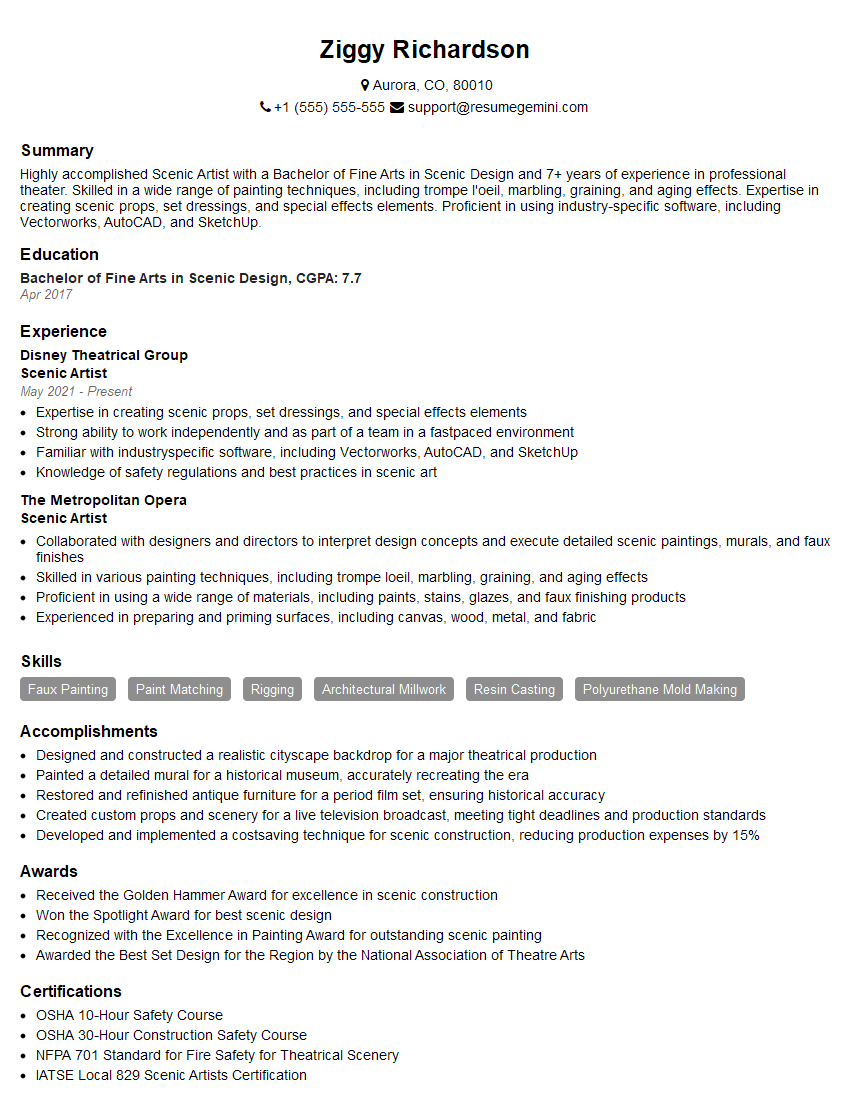
Scenic Artist Resume Sample
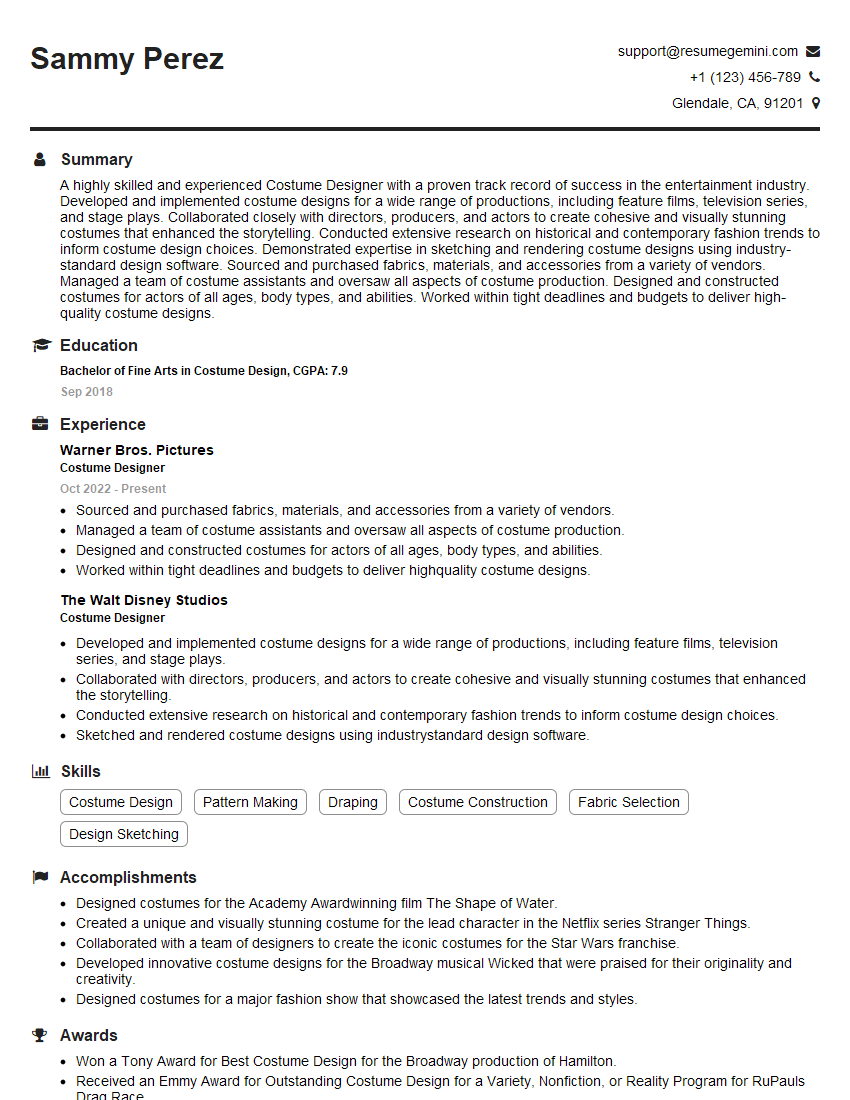
Costume Designer Resume Sample
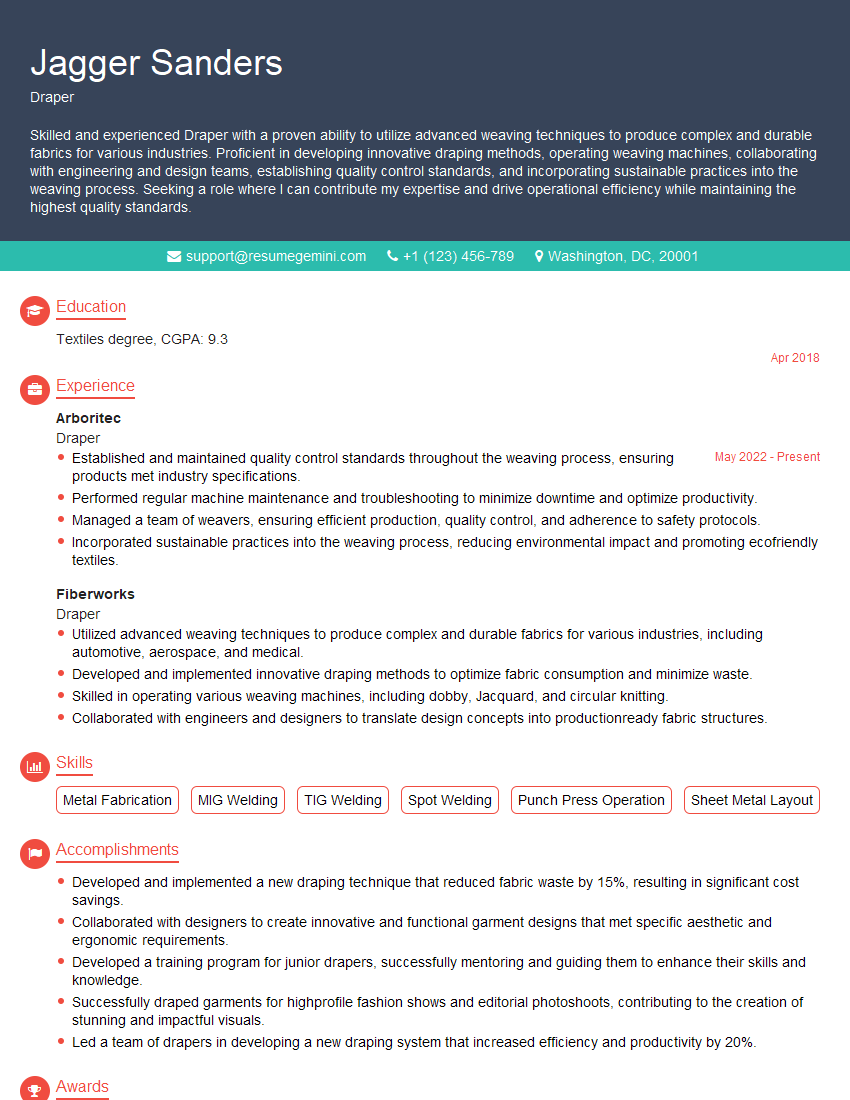
Draper Resume Sample
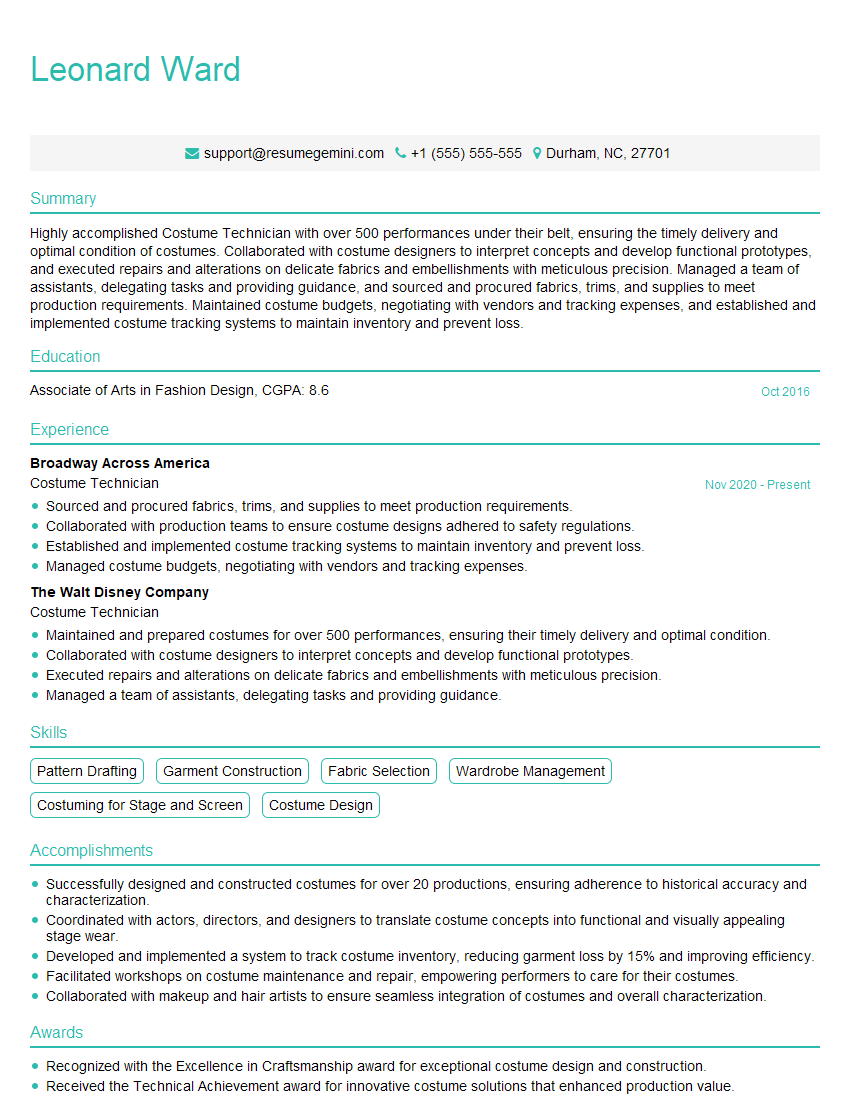
Costume Technician Resume Sample
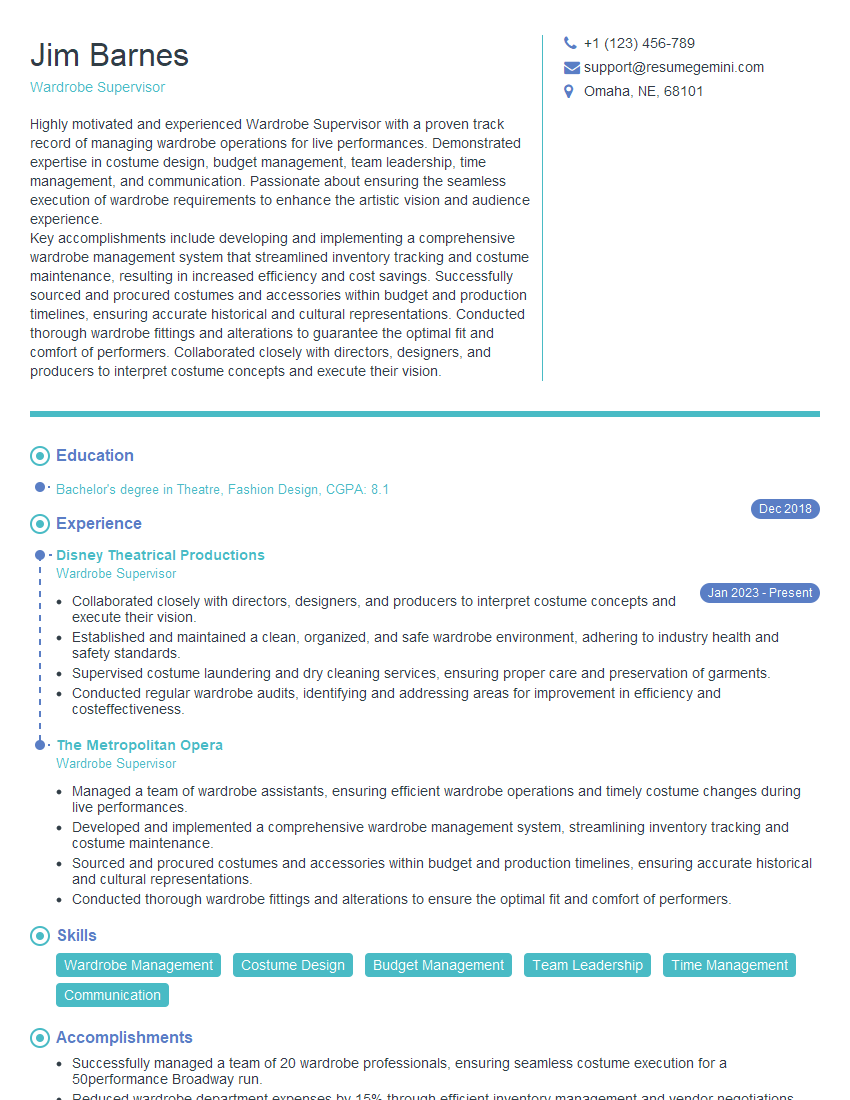
Wardrobe Supervisor Resume Sample
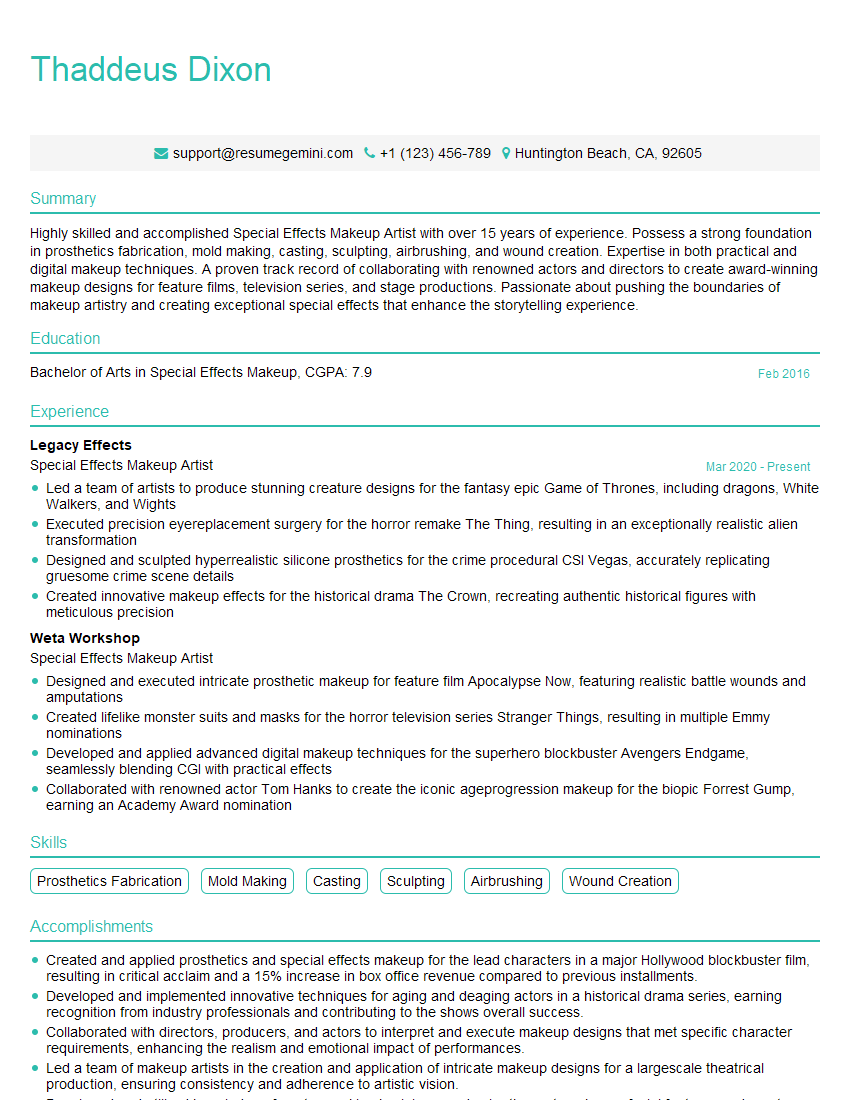
Special Effects Makeup Artist Resume Sample
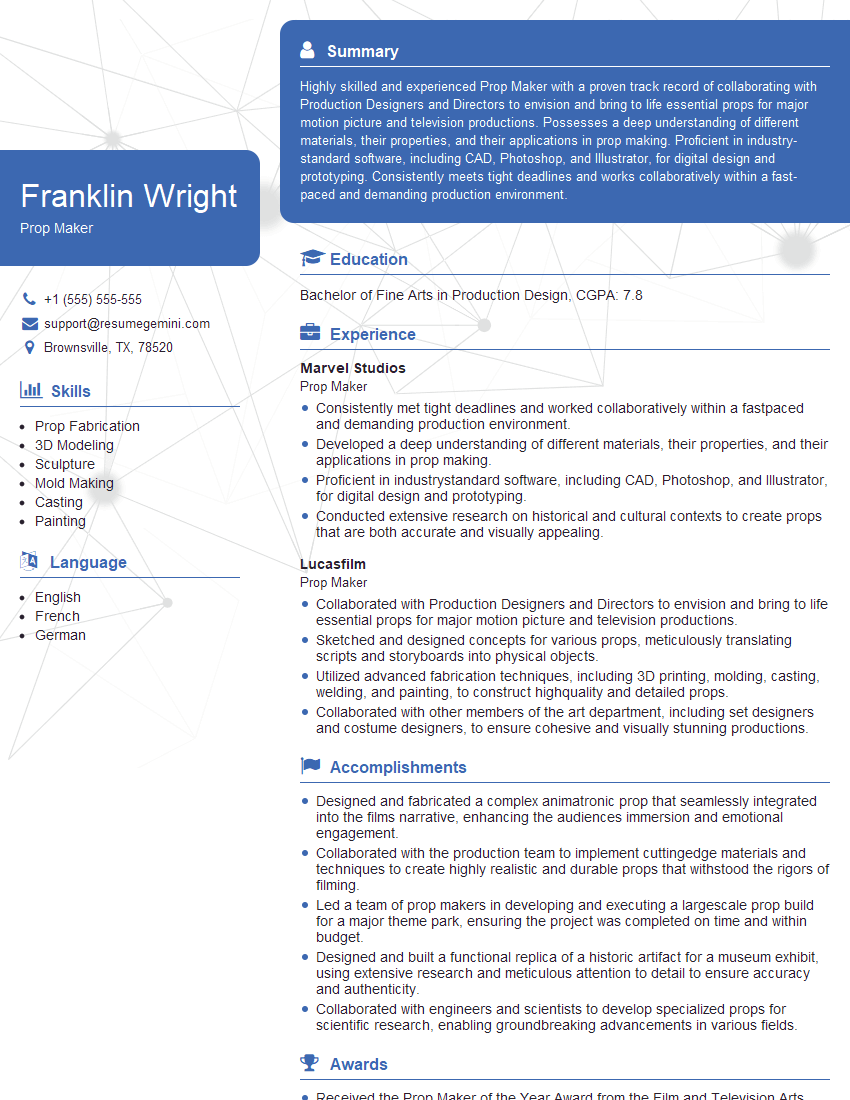
Prop Maker Resume Sample
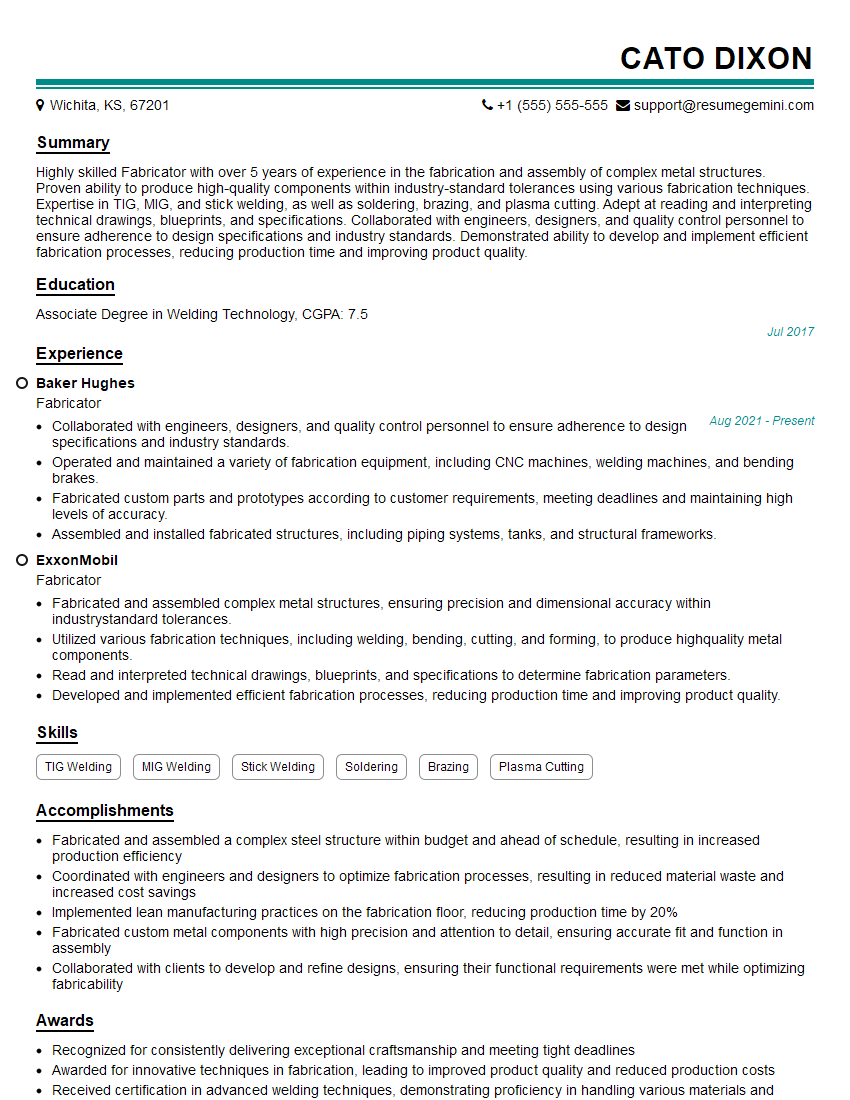
Fabricator Resume Sample
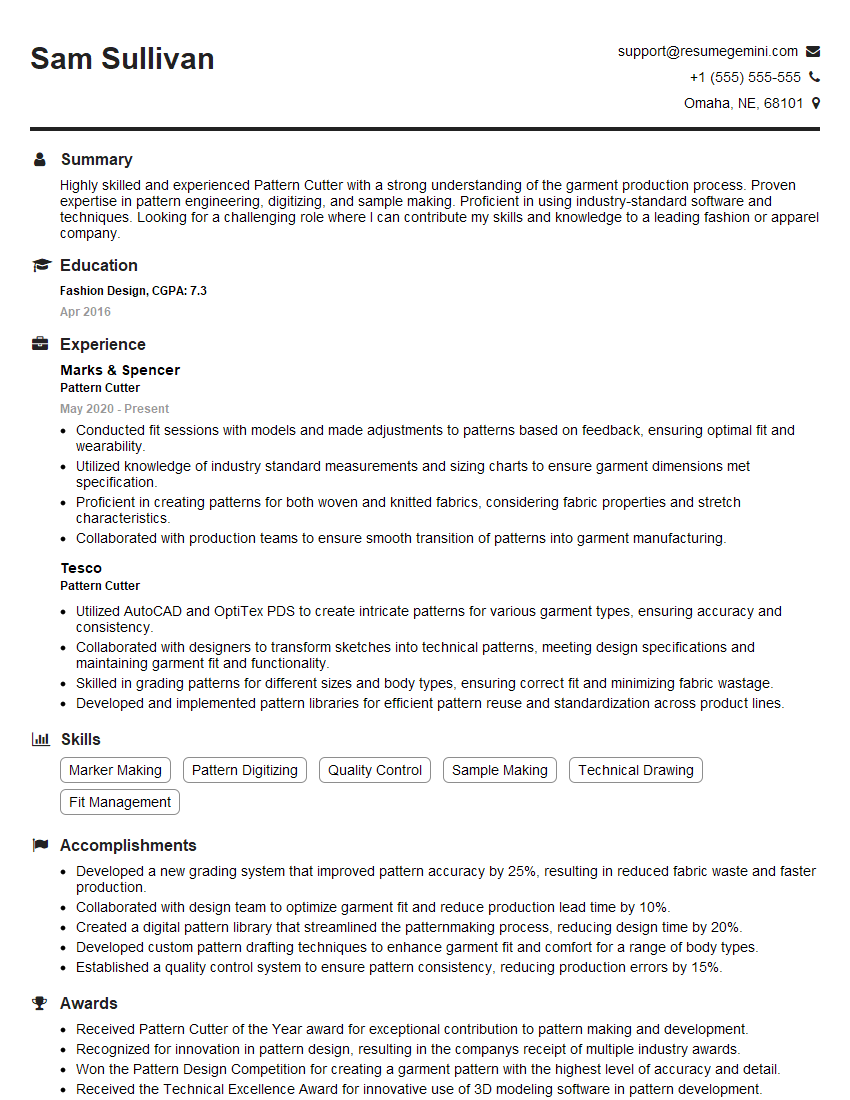
Pattern Cutter Resume Sample
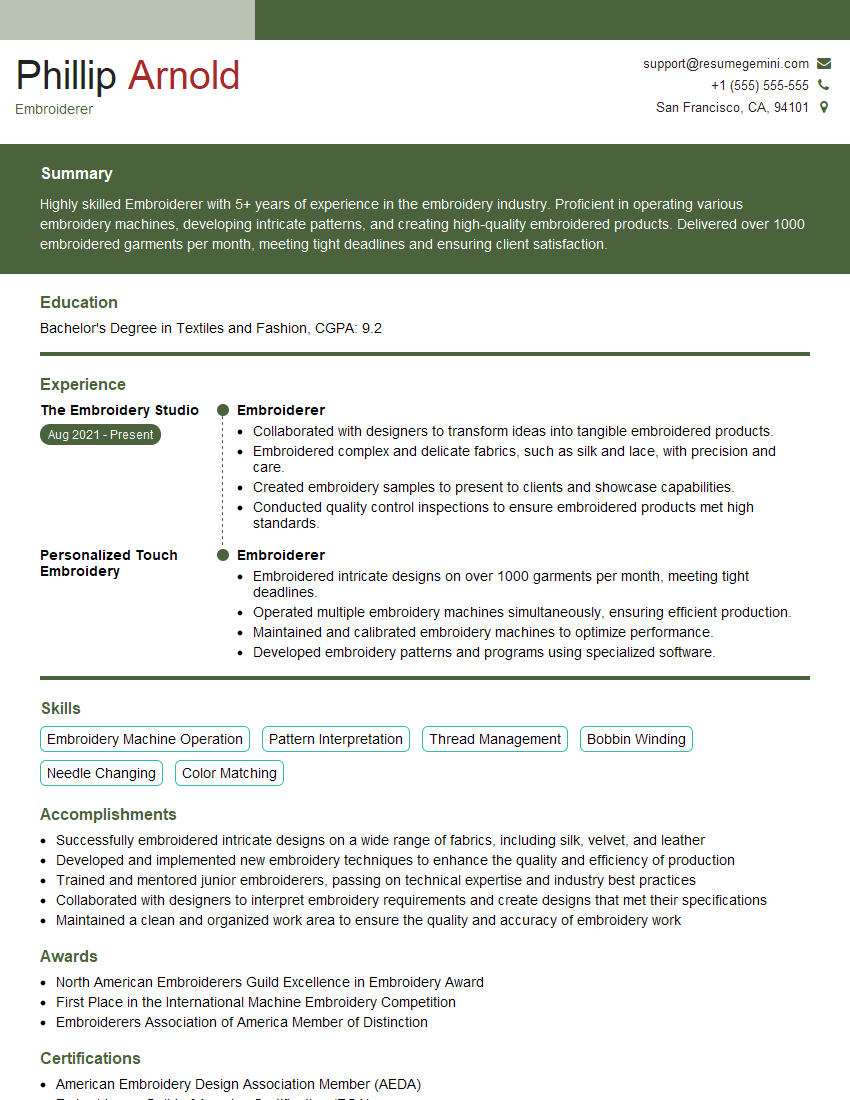
Embroiderer Resume Sample
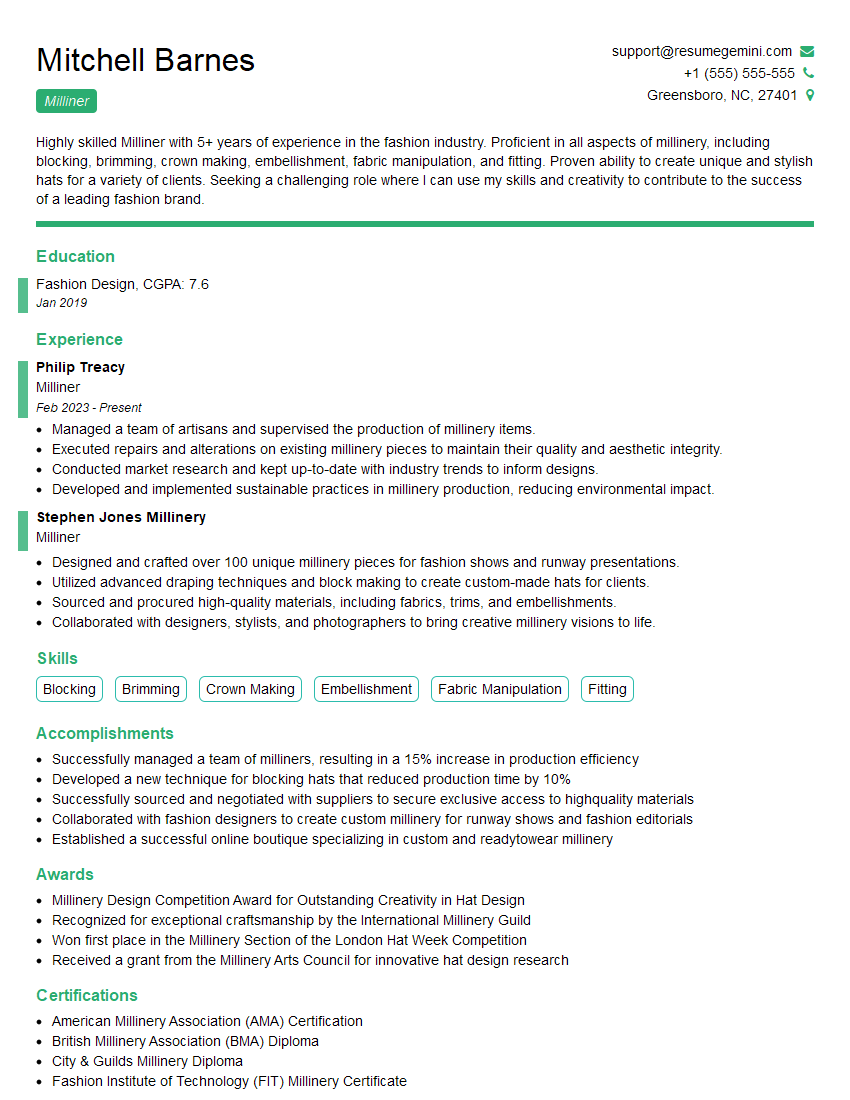
Milliner Resume Sample
Explore more articles
Users Rating of Our Blogs
Share Your Experience
We value your feedback! Please rate our content and share your thoughts (optional).
What Readers Say About Our Blog
Very informative content, great job.
good