The right preparation can turn an interview into an opportunity to showcase your expertise. This guide to Weather Information Systems interview questions is your ultimate resource, providing key insights and tips to help you ace your responses and stand out as a top candidate.
Questions Asked in Weather Information Systems Interview
Q 1. Explain the difference between numerical weather prediction (NWP) and statistical forecasting.
Numerical Weather Prediction (NWP) and statistical forecasting are two distinct approaches to predicting weather. NWP uses complex mathematical equations based on fundamental physical laws governing atmospheric processes to simulate the future state of the atmosphere. Think of it as solving a giant physics problem to predict the weather. Statistical forecasting, on the other hand, relies on historical weather data and statistical relationships to predict future weather patterns. It’s like identifying patterns from past weather events to predict future ones. NWP models are computationally intensive, requiring powerful supercomputers, while statistical models are computationally less demanding. NWP provides more detailed and potentially higher-resolution forecasts, but is also more prone to errors stemming from model imperfections and initial condition uncertainties. Statistical methods provide more stable forecasts, but may not capture the complexities of smaller-scale weather events. The most sophisticated weather services often use a combination of both approaches, leveraging the strengths of each.
Q 2. Describe the process of data assimilation in weather forecasting.
Data assimilation is the crucial process of combining observations from various sources with a numerical weather prediction model’s forecast. Imagine it as merging a puzzle with a sketch; the sketch (the model forecast) provides a framework, and the puzzle pieces (observations) fill in the details and correct potential errors. The process involves sophisticated algorithms that adjust the model’s initial state, making it more consistent with available observations. This reduces the errors that can propagate through the forecast and increase its accuracy. Various techniques are used such as variational methods (like 4D-Var) or ensemble Kalman filters that statistically integrate data from different sources and times into the model. The end result is an improved initial condition for the NWP model, leading to a more accurate forecast.
Q 3. What are the main sources of weather data used in modern forecasting systems?
Modern weather forecasting relies on a diverse range of data sources for comprehensive and accurate predictions. These include:
- Surface Observations: Data from weather stations on the ground, including temperature, humidity, pressure, wind speed and direction, precipitation, and visibility. This forms the foundation of weather analysis.
- Upper-Air Observations: Data from radiosondes (weather balloons), which measure atmospheric conditions at various altitudes. These provide vertical profiles of temperature, humidity, and wind, crucial for understanding atmospheric dynamics.
- Satellite Data: Measurements from geostationary and polar-orbiting satellites, providing global coverage of cloud cover, temperature, moisture, and other atmospheric parameters. Satellite data is vital for monitoring remote areas and large-scale weather systems.
- Radar Data: Radar systems detect precipitation and estimate its intensity and movement. Doppler radar adds the ability to measure wind speed and direction within storms.
- Aircraft Observations: Data collected by aircraft in flight, providing valuable information on in-flight conditions and wind patterns, particularly within jet streams.
- Ocean Buoys and Ships: These provide surface observations from maritime areas, crucial for understanding oceanic influences on weather.
The integration of these diverse data sources, through data assimilation, is key to generating accurate and reliable weather forecasts.
Q 4. How do weather models handle uncertainty and error?
Weather models inherently contain uncertainties and errors due to incomplete data, model imperfections, and the chaotic nature of the atmosphere. Several methods are used to address this:
- Ensemble Forecasting: Running the same model multiple times with slightly varied initial conditions and model parameters generates an ensemble of forecasts. Analyzing the spread of these forecasts gives an estimate of the uncertainty inherent in the prediction.
- Probabilistic Forecasting: Instead of providing a single deterministic forecast, models produce probabilities of different weather outcomes. For example, instead of predicting a temperature of 25°C, a probabilistic forecast might state a 70% chance of temperatures between 23°C and 27°C.
- Error Correction Schemes: Statistical techniques are employed to adjust model output based on past forecast errors. This involves comparing model predictions to observed data and using this information to improve future forecasts.
- Data Assimilation Techniques: As mentioned previously, data assimilation plays a crucial role in reducing errors by better representing the initial atmospheric state.
By acknowledging and quantifying uncertainties, forecasters can provide more nuanced and reliable information to users.
Q 5. Explain the concept of model resolution and its impact on forecast accuracy.
Model resolution refers to the spatial scale at which a weather model represents the atmosphere. Higher resolution means the model uses a finer grid, representing smaller areas with greater detail. This impacts forecast accuracy because higher resolution allows the model to better capture smaller-scale weather phenomena like thunderstorms, tornadoes, and local wind patterns that are missed in coarser-resolution models. However, higher resolution comes at the cost of increased computational expense, requiring more powerful computers and longer processing times. Imagine trying to draw a map: a high-resolution map will show more details of streets, buildings, and other features, while a low-resolution map only shows broader regions. Similarly, higher-resolution weather models capture more detail, often resulting in more accurate, but potentially more computationally intensive forecasts.
Q 6. Discuss the different types of weather sensors and their applications.
A wide array of weather sensors are used to collect data, each with specific applications:
- Thermometers: Measure air temperature.
- Barometers: Measure atmospheric pressure.
- Hygrometers: Measure humidity.
- Anemometers: Measure wind speed.
- Wind Vanes: Indicate wind direction.
- Rain Gauges: Measure rainfall amount.
- Radiosondes: Measure temperature, humidity, wind, and pressure at various altitudes using weather balloons.
- Satellite Sensors: Measure a range of atmospheric parameters such as temperature, moisture, and cloud properties from space.
- Radar Systems: Detect precipitation and measure wind speed and direction within storms.
- LIDAR (Light Detection and Ranging): Measures atmospheric properties like aerosols and clouds using laser pulses.
The type of sensor used depends on the specific meteorological variable being measured and the application. For example, a network of surface stations might use thermometers, barometers, and rain gauges for local weather monitoring, while weather satellites use sophisticated sensors to provide global coverage of atmospheric conditions.
Q 7. What are the limitations of current weather forecasting technologies?
Despite significant advancements, limitations persist in current weather forecasting technologies:
- Chaotic Nature of the Atmosphere: Small initial uncertainties can lead to large forecast errors over time, limiting predictability, particularly beyond a few days.
- Subgrid-Scale Processes: Many important weather processes, such as turbulence and cloud microphysics, occur at scales smaller than the model grid. These processes are often parameterized (approximated) rather than explicitly resolved, potentially introducing errors.
- Data Gaps and Uncertainties: Incomplete or uncertain observations, especially over sparsely instrumented regions, can significantly impact forecast accuracy.
- Model Imperfections: Weather models are simplifications of complex atmospheric processes, and inherent imperfections in the model equations or parameterizations can introduce systematic biases.
Addressing these limitations requires ongoing research and development in areas such as improved model physics, advanced data assimilation techniques, higher-resolution models, and better integration of various data sources. These will continue to push the boundaries of weather forecasting accuracy and extend the predictability horizon.
Q 8. How are weather forecasts used in different sectors (e.g., aviation, agriculture, energy)?
Weather forecasts are crucial across various sectors, impacting decision-making and operational efficiency. Let’s explore a few key examples:
- Aviation: Airlines rely heavily on weather forecasts for flight planning, routing, and safety. Forecasts of wind speed, turbulence, icing, and precipitation are essential for determining optimal flight paths, fuel consumption, and passenger safety. For instance, a strong headwind forecast might lead to a longer flight time and increased fuel costs, influencing scheduling decisions. Severe weather warnings prevent flights from taking off or cause diversions.
- Agriculture: Farmers use weather information to optimize planting and harvesting schedules, irrigation strategies, and pest control. Accurate predictions of temperature, rainfall, and sunshine duration are crucial for maximizing crop yields. For example, a forecast of impending frost can prompt farmers to take protective measures, preventing crop damage. Similarly, forecasts of heavy rainfall help farmers decide whether to delay harvesting or take steps to mitigate waterlogging.
- Energy: The energy sector, particularly renewable energy sources, depends heavily on weather forecasts. Wind farms adjust their operations based on wind speed forecasts to maximize energy generation. Solar power companies use solar irradiance forecasts to optimize energy production and grid management. Hydropower plants use rainfall and river flow forecasts for efficient dam management and electricity generation. Accurate forecasts are vital for optimizing the supply and demand of electricity, ensuring grid stability.
In essence, timely and accurate weather forecasts are an integral part of risk management and resource optimization across numerous industries.
Q 9. Explain the concept of ensemble forecasting.
Ensemble forecasting is a powerful technique that addresses the inherent uncertainty in weather prediction. Instead of producing a single forecast, it runs multiple simulations of the weather model, each with slightly different initial conditions or model parameters. This generates an ‘ensemble’ of forecasts, offering a range of possible future weather scenarios rather than a single definitive prediction.
Imagine trying to predict the trajectory of a billiard ball after you strike it. A single prediction might be inaccurate due to slight variations in the initial strike, the table’s surface imperfections, or even air currents. An ensemble approach would simulate the trajectory multiple times, each with slightly different initial conditions, providing a range of possible outcomes. This range gives us a better understanding of the uncertainty associated with the prediction.
These multiple forecasts are then statistically analyzed to provide probabilities of different weather events. For example, an ensemble forecast might show a 70% chance of rain and a 30% chance of sunshine. This probabilistic approach provides a more nuanced and realistic assessment of future weather conditions, improving decision-making in various sectors.
Q 10. Describe the role of GIS in weather information systems.
Geographic Information Systems (GIS) play a vital role in weather information systems by providing the spatial context for weather data. GIS allows us to visualize weather data on maps, linking it to geographic features like terrain, land use, and population density.
Imagine trying to understand the impact of a hurricane. A GIS would overlay the hurricane’s predicted path on a map showing coastal populations, infrastructure, and flood-prone areas. This allows us to assess the potential impact much more effectively than simply looking at numerical weather data alone. This integration is critical for targeted warnings, emergency response planning, and damage assessments.
Specific GIS functionalities used include:
- Spatial analysis: Analyzing the spatial distribution of weather phenomena, identifying areas at highest risk.
- Data visualization: Creating maps and charts showing weather patterns and their impact on various geographic features.
- Data integration: Combining weather data with other geographic data sets (e.g., elevation, population density) for comprehensive analysis.
- Modeling and simulation: Using GIS to model the spread of pollutants or wildfire based on weather conditions.
GIS essentially bridges the gap between raw numerical weather data and actionable intelligence, making it an indispensable component of modern weather information systems.
Q 11. What are some common data formats used in meteorology (e.g., GRIB, NetCDF)?
Meteorology employs various data formats to efficiently store and exchange vast amounts of weather data. Two prominent examples are:
- GRIB (GRIdded Binary): A widely used binary format for storing gridded weather data, characterized by its efficiency in representing data on a grid. It’s highly compressed, making it ideal for transmission and storage of large datasets, such as those from weather satellites or numerical weather prediction models.
Example: GRIB files often contain variables like temperature, wind speed, and precipitation on a global or regional grid. - NetCDF (Network Common Data Form): A self-describing, multi-dimensional array-oriented data format that is used for storing and sharing array-oriented scientific data. It’s particularly suitable for storing datasets with multiple variables and dimensions (e.g., time, latitude, longitude, pressure level). It’s more flexible than GRIB in handling various data types and metadata.
Example: NetCDF can be used to store atmospheric profiles, oceanographic data, and climate model output.
Other formats include BUFR (BUddy-to-Buddy Format for coded weather data) and HDF5 (Hierarchical Data Format version 5).
Q 12. How do you validate and quality control weather data?
Validating and quality controlling weather data is critical for ensuring the reliability of weather forecasts and analyses. This involves several steps:
- Data consistency checks: Examining the data for inconsistencies, such as missing values, unrealistic values (e.g., temperature exceeding physical limits), or jumps in data that don’t correspond to physical processes.
- Comparison with other data sources: Comparing the data from one source against data from other sources (e.g., comparing satellite data with ground-based observations) to identify discrepancies and potential errors.
- Spatial and temporal consistency checks: Assessing whether the data shows reasonable spatial and temporal patterns. For example, temperature shouldn’t change dramatically over short distances or time periods unless there’s a physical explanation.
- Statistical analysis: Applying statistical methods to detect outliers and anomalies. This might involve identifying data points that deviate significantly from the expected distribution.
- Calibration and bias correction: Adjusting the data to account for known biases in the measuring instruments or observation methods.
These processes help filter out erroneous or unreliable data, improving the overall accuracy and reliability of weather information systems. The specific methods applied depend on the type of data, the data source, and the intended application.
Q 13. Explain the concept of spatial and temporal interpolation in weather data.
Spatial and temporal interpolation are crucial techniques used to estimate weather variables at locations and times where direct measurements aren’t available.
Spatial interpolation estimates values at unsampled locations based on the values at nearby sampled locations. Imagine having temperature measurements at a few weather stations; spatial interpolation would estimate the temperature at locations between those stations. Common methods include:
- Inverse Distance Weighting (IDW): Estimates the value at a point based on the inverse of its distance to the nearest sampled locations.
- Kriging: A more sophisticated method that accounts for the spatial autocorrelation of the data, providing a more accurate estimate, especially when dealing with spatially correlated data.
Temporal interpolation estimates values at unsampled times based on the values at nearby sampled times. For instance, if you have hourly temperature measurements, temporal interpolation could estimate the temperature at 15-minute intervals. Simple methods include linear interpolation, while more sophisticated methods consider the temporal trends and variations in the data.
These techniques are essential for creating continuous fields of weather variables, allowing for detailed analysis and visualization. The choice of method depends on the data characteristics and the desired accuracy.
Q 14. Describe different methods for visualizing weather data.
Visualizing weather data is essential for effective communication and understanding of weather patterns. Numerous methods exist, each suited to different purposes:
- Maps: Displaying weather data spatially, such as using color shading to represent temperature or precipitation amounts. Isopleths (lines of equal value) are commonly used to depict spatial variations, as are symbols representing weather phenomena (e.g., cloud cover, precipitation type).
- Charts and graphs: Time series plots are useful for showing temporal variations in weather variables, like temperature fluctuations throughout the day or rainfall accumulation over time. Scatter plots can display relationships between variables (e.g., temperature vs. humidity).
- Animations: Showing the evolution of weather systems over time, such as the movement of a storm system across a region. Animations are particularly effective for conveying complex changes in weather patterns.
- 3D visualizations: Providing a three-dimensional representation of atmospheric conditions, such as temperature profiles or cloud structures. These are particularly useful for understanding vertical variations in weather.
- Satellite imagery: Provides visual representations of cloud cover, land surface temperature, and other meteorological variables, providing context for numerical weather data.
- Radar imagery: Show the location and intensity of precipitation, helpful for tracking storms and issuing severe weather warnings.
The choice of visualization method depends on the data type, the audience, and the specific information being conveyed. Effective visualization makes complex weather information accessible and understandable.
Q 15. What programming languages are commonly used in weather data analysis?
Several programming languages are crucial for weather data analysis, each offering unique strengths. Python, with its extensive libraries like NumPy, Pandas, and SciPy, is a dominant player. NumPy excels in numerical computations, Pandas provides powerful data manipulation tools, and SciPy offers advanced algorithms for statistical analysis and signal processing, vital for handling the large, complex datasets common in meteorology. R is another popular choice, particularly among statisticians, offering excellent statistical modeling capabilities and visualization tools. For high-performance computing and dealing with extremely large datasets, languages like Fortran or C++ may be preferred due to their speed and efficiency. Finally, languages like MATLAB offer specialized toolboxes for data analysis and visualization.
For instance, I’ve used Python extensively to process large gridded weather data from the Global Forecast System (GFS), utilizing Pandas for data cleaning and manipulation, and SciPy for statistical analysis of precipitation patterns. In another project, I leveraged R’s statistical modeling capabilities to create predictive models for extreme weather events.
Career Expert Tips:
- Ace those interviews! Prepare effectively by reviewing the Top 50 Most Common Interview Questions on ResumeGemini.
- Navigate your job search with confidence! Explore a wide range of Career Tips on ResumeGemini. Learn about common challenges and recommendations to overcome them.
- Craft the perfect resume! Master the Art of Resume Writing with ResumeGemini’s guide. Showcase your unique qualifications and achievements effectively.
- Don’t miss out on holiday savings! Build your dream resume with ResumeGemini’s ATS optimized templates.
Q 16. Explain your experience with specific weather models (e.g., WRF, GFS).
My experience encompasses working with several weather models, including the Weather Research and Forecasting (WRF) model and the Global Forecast System (GFS). WRF is a highly versatile mesoscale model, allowing for high-resolution simulations over specific regions. I’ve utilized WRF to conduct simulations of hurricane intensification, leveraging its ability to incorporate complex physical processes. This involved setting up model configurations, specifying input parameters, and post-processing the output to analyze various meteorological variables such as wind speed, precipitation, and temperature.
The GFS, on the other hand, is a global model providing forecasts at coarser resolutions. My work with the GFS has primarily involved data assimilation and analysis of forecast products. I used GFS data to build predictive models for agricultural applications, assessing the impact of weather conditions on crop yields. This involved downloading and processing massive amounts of data, requiring careful consideration of data formats and efficient handling techniques. The key difference in using these models lies in the scale of the analysis; WRF allows for localized, high-detail studies, while GFS provides a broader, global perspective.
Q 17. Discuss your experience with weather data visualization tools (e.g., GrADS, Panoply).
I’m proficient in several weather data visualization tools, including GrADS and Panoply. GrADS (Grid Analysis and Display System) is a powerful command-line tool particularly well-suited for visualizing gridded meteorological data. I’ve used it extensively to create contour plots, vector plots, and time series animations of various meteorological parameters. Its ability to handle large datasets efficiently and produce publication-quality graphics is invaluable.
Panoply, a more user-friendly graphical tool, is also a favorite. I frequently use it for interactive exploration and visualization of netCDF and other data formats. Its simple interface and capacity to handle multiple datasets simultaneously make it ideal for comparative analysis and quick checks of data quality. For example, I’ve used Panoply to visually inspect temperature profiles and compare forecasts from different models, facilitating a rapid assessment of model performance.
Q 18. How do you handle missing data in weather datasets?
Handling missing data is a critical aspect of weather data analysis. The methods used depend on the extent and nature of the missing data. Simple methods include discarding data points with missing values if the amount is negligible. However, this isn’t ideal for larger datasets.
More sophisticated techniques involve imputation – estimating missing values based on available data. This can include simple methods like filling with the mean or median of the surrounding values, or more advanced techniques like kriging (spatial interpolation) or multiple imputation, which account for the uncertainty associated with the imputed values. For time series data, techniques like linear interpolation or more advanced time series models might be employed. The choice of imputation method heavily relies on the characteristics of the dataset and the potential impact of the imputation on the results. For example, in a project analyzing rainfall data, I used kriging to fill in missing rainfall values using nearby stations’ data, ensuring spatial coherence in the analysis. The choice of the imputation method is always documented and justified.
Q 19. Explain the concept of climate change and its impact on weather patterns.
Climate change refers to long-term shifts in temperatures and weather patterns. These shifts may be natural, but since the 1800s, human activities have been the main driver of climate change, primarily due to the burning of fossil fuels (like coal, oil, and gas) which releases greenhouse gases into the atmosphere.
The impact on weather patterns is profound. We’re seeing increased frequency and intensity of extreme weather events, such as heatwaves, droughts, floods, and intense storms. Changes in precipitation patterns lead to shifts in agricultural yields and water resources. Rising sea levels pose a significant threat to coastal communities. Understanding the complex interplay between climate change and weather is crucial for effective mitigation and adaptation strategies. For instance, by analyzing historical climate data alongside current trends, we can better predict future risks and inform policies aimed at reducing greenhouse gas emissions and building resilience to climate change impacts.
Q 20. Describe your experience working with large weather datasets.
I have extensive experience working with large weather datasets, often exceeding terabytes in size. This necessitates employing efficient data handling techniques. I frequently utilize parallel processing methods and cloud computing resources (e.g., AWS, Google Cloud) to manage and analyze this data. Chunking the data into manageable pieces, utilizing optimized data structures (like HDF5 or NetCDF), and leveraging distributed computing frameworks like Dask or Spark are crucial.
For example, during a project involving the analysis of global precipitation patterns, I processed a petabyte-scale dataset distributed across multiple cloud servers using a Dask-based workflow. This involved optimizing data transfer between servers, leveraging parallel processing capabilities, and carefully managing memory usage to ensure efficient computation. Efficient data management is paramount to avoid bottlenecks and ensure timely completion of complex analytical tasks.
Q 21. How do you ensure the accuracy and reliability of weather information systems?
Ensuring accuracy and reliability in weather information systems is paramount. This involves a multi-faceted approach encompassing data quality control, model validation, and rigorous quality assurance procedures. Data quality control starts with thorough checks of raw data for inconsistencies, outliers, and missing values, employing automated checks and manual scrutiny. Model validation involves comparing model outputs against observations, using statistical metrics to assess forecast accuracy and skill.
Regular calibration and updates of models are critical, incorporating new data and advancements in scientific understanding. Furthermore, robust quality assurance procedures, including independent audits and peer reviews, help to ensure the reliability and trustworthiness of the system. Effective communication of uncertainties and limitations associated with forecasts is also vital, enabling users to make informed decisions.
Q 22. What are the ethical considerations in providing weather information?
Ethical considerations in providing weather information are paramount, impacting public safety and societal well-being. Accuracy is the cornerstone; disseminating false or misleading information can have severe consequences, from farmers making incorrect planting decisions to individuals failing to take necessary precautions during severe weather events.
Transparency is also crucial. Users need to understand the limitations of the forecast, including the uncertainty inherent in weather prediction. Clearly communicating the confidence level associated with a forecast is essential, avoiding the impression of absolute certainty.
Data privacy is a growing concern. Weather information systems often collect location data, which needs to be handled responsibly and ethically, complying with relevant privacy regulations.
Finally, equity of access is vital. Ensuring everyone has access to timely and accurate weather information, regardless of their socioeconomic status or geographical location, is a key ethical responsibility. This might involve translating forecasts into multiple languages or making them accessible to people with disabilities.
Q 23. Describe your experience with database management systems relevant to weather data.
My experience with database management systems (DBMS) for weather data is extensive. I’ve worked with a variety of systems, including relational databases like PostgreSQL and MySQL, and NoSQL databases like MongoDB.
For example, in a previous role, I managed a PostgreSQL database containing decades of historical weather observations from various sources – ground stations, satellites, and weather balloons. We used PostGIS, a spatial extension for PostgreSQL, to efficiently store and query geospatial data, allowing for rapid retrieval of weather information based on location and time. We implemented robust indexing strategies and data partitioning techniques to optimize query performance, crucial for near real-time data analysis and forecasting.
In another project, I utilized MongoDB for storing and processing massive volumes of high-resolution weather model output. MongoDB’s flexibility and scalability proved ideal for handling the large, unstructured datasets generated by these models. We leveraged its aggregation framework to perform complex data transformations and analysis, preparing the data for use in downstream visualization and forecasting applications.
My expertise extends beyond data storage and retrieval; I’m proficient in designing database schemas optimized for weather data, ensuring data integrity, and implementing robust data quality checks.
Q 24. Explain your understanding of different coordinate systems used in meteorology.
Meteorology uses several coordinate systems, each suited for different applications. The most common are geographic coordinates (latitude and longitude), projected coordinate systems, and grid-based systems.
Geographic Coordinates: Latitude and longitude define a location on the Earth’s surface using a spherical coordinate system. It’s intuitive and universally understood but isn’t ideal for distance and area calculations due to the Earth’s curvature. Think of it like marking a spot on a globe.
Projected Coordinate Systems: These transform the spherical Earth onto a flat plane, minimizing distortion for specific regions. Examples include Universal Transverse Mercator (UTM), which divides the Earth into zones, and State Plane Coordinate Systems (SPCS), tailored to individual states or regions. They are better suited for mapping and distance calculations within a limited area, like creating a map of a hurricane’s path over a state.
Grid-based Systems: Numerical weather prediction models use regular grids, often latitude/longitude grids or those based on projected coordinate systems. These grids define a set of points where model variables are calculated. The resolution of the grid affects the accuracy and detail of the prediction. Think of it as a chessboard overlayed onto a map, where each square represents a region for weather calculation.
Understanding these coordinate systems and their transformations is vital for integrating data from different sources and ensuring accuracy in analysis and visualization.
Q 25. How do you stay up-to-date with advancements in weather information systems?
Staying current in the rapidly evolving field of weather information systems demands a multifaceted approach.
Professional Organizations: Active membership in organizations like the American Meteorological Society (AMS) provides access to publications, conferences, and networking opportunities with leading experts. Conferences are invaluable for learning about the latest research and technologies.
Peer-Reviewed Literature: Regularly reviewing leading journals like the Monthly Weather Review and the Journal of Atmospheric Sciences keeps me updated on cutting-edge research and methodologies.
Online Courses and Webinars: Platforms like Coursera and edX offer specialized courses on advanced topics in meteorology, data science, and GIS. Webinars and online seminars from technology providers often showcase new tools and techniques.
Industry News and Blogs: Following relevant industry news sources and blogs keeps me abreast of the latest developments in weather data acquisition, processing, and visualization technologies.
This multifaceted approach ensures that I’m equipped with the most up-to-date knowledge and skills to tackle the challenges of modern weather information systems.
Q 26. Describe a time you had to troubleshoot a problem in a weather information system.
During a severe weather event, our system experienced a significant drop in performance, delaying the dissemination of critical warnings. The problem was initially attributed to network congestion, but after careful investigation, we discovered a bottleneck in the database query processing.
Our initial troubleshooting steps included reviewing system logs, monitoring network traffic, and conducting database performance analysis. We used database monitoring tools to identify slow-running queries and analyze query execution plans. We discovered that a poorly indexed spatial query was responsible for the bottleneck, slowing down the retrieval of weather data for specific regions.
To resolve the issue, we optimized the database schema, creating appropriate spatial indexes and optimizing the query using more efficient spatial functions. We also implemented query caching mechanisms to reduce redundant database operations. We rigorously tested the modifications in a staging environment before deploying them to production, ensuring no further disruptions. The problem was resolved swiftly and successfully, restoring timely and accurate dissemination of weather warnings.
Q 27. What are your salary expectations?
My salary expectations are commensurate with my experience and skills in the field of weather information systems, and I am open to discussing a competitive compensation package based on the specifics of the role and the company’s compensation structure. I’m confident that my expertise will provide significant value to your organization.
Key Topics to Learn for Weather Information Systems Interview
- Data Acquisition and Processing: Understanding various data sources (satellites, radar, surface observations), data formats (GRIB, NetCDF), and preprocessing techniques for quality control and error correction. Practical application: Evaluating the accuracy and reliability of different data sources for a specific forecasting task.
- Numerical Weather Prediction (NWP) Models: Familiarity with the fundamental principles of NWP models, including model resolution, assimilation techniques, and forecast limitations. Practical application: Interpreting model output and understanding the uncertainties associated with NWP forecasts.
- Data Visualization and Interpretation: Proficiency in using meteorological visualization tools and interpreting weather charts (surface maps, upper-air charts, radar imagery). Practical application: Communicating weather information effectively to different audiences using appropriate visualizations.
- Weather Information Systems Architecture: Understanding the components of a weather information system, including data storage, processing pipelines, and user interfaces. Practical application: Designing efficient and scalable systems for handling large volumes of weather data.
- GIS and Geospatial Analysis: Applying Geographic Information Systems (GIS) techniques to analyze and visualize spatial patterns in weather data. Practical application: Creating maps showing the spatial distribution of weather phenomena.
- Data Assimilation Techniques: Understanding how observations are incorporated into NWP models to improve forecast accuracy. Practical application: Evaluating the impact of different data assimilation methods on forecast skill.
- Software and Programming Skills: Proficiency in programming languages (e.g., Python, R) and relevant software packages (e.g., GRIB API, GDAL) used in weather data analysis. Practical application: Developing custom scripts for data processing and analysis.
Next Steps
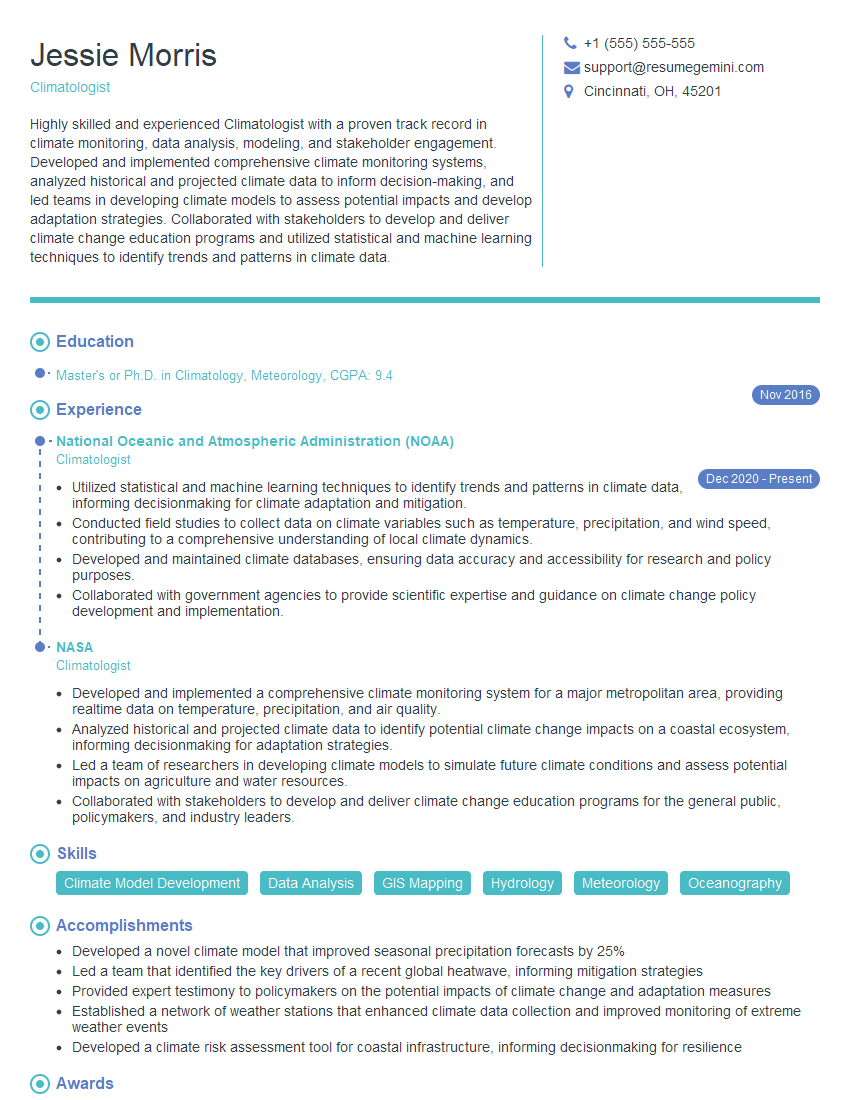
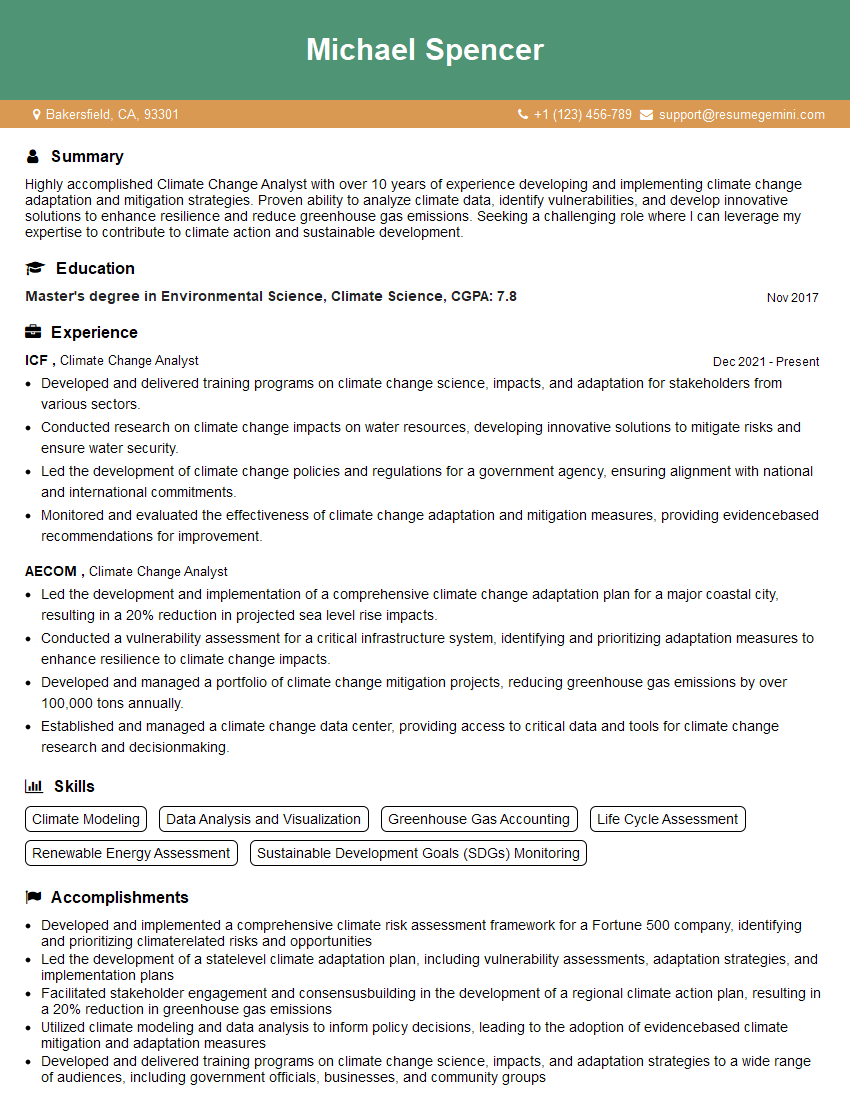
Mastering Weather Information Systems opens doors to exciting careers in meteorology, environmental science, and related fields. A strong understanding of these systems is crucial for success in today’s data-driven world. To enhance your job prospects, create a compelling and ATS-friendly resume that highlights your skills and experience. We highly recommend using ResumeGemini to build a professional resume that stands out. ResumeGemini offers valuable tools and resources, including examples of resumes tailored to Weather Information Systems, to help you present your qualifications effectively.

Explore more articles
Users Rating of Our Blogs
Share Your Experience
We value your feedback! Please rate our content and share your thoughts (optional).
What Readers Say About Our Blog
Very informative content, great job.
good