Interviews are more than just a Q&A session—they’re a chance to prove your worth. This blog dives into essential Material Safety and Handling interview questions and expert tips to help you align your answers with what hiring managers are looking for. Start preparing to shine!
Questions Asked in Material Safety and Handling Interview
Q 1. Explain the importance of Material Safety Data Sheets (MSDS).
Material Safety Data Sheets (MSDS), now often called Safety Data Sheets (SDS), are crucial documents providing comprehensive information about the hazards of a chemical product and how to handle it safely. Think of them as the instruction manual for any chemical you use. They are essential for worker safety, regulatory compliance, and preventing accidents.
An SDS details the chemical’s properties, potential health hazards (like carcinogenicity or flammability), safe handling procedures, emergency response steps, and disposal methods. For instance, an SDS for concentrated sulfuric acid would specify its corrosive nature, requiring protective eyewear, gloves, and appropriate ventilation during handling. Without this information, workers risk serious injury.
In a professional setting, readily accessible and up-to-date SDSs are a cornerstone of a robust safety program. Their importance is underscored by numerous safety regulations worldwide, mandating their provision to employees.
Q 2. Describe the different hazard classes for materials.
Materials are categorized into hazard classes based on the types of dangers they present. These classifications help in understanding the risks and implementing appropriate safety measures. Different countries might have slightly varying systems, but the general principles remain consistent.
- Flammable/Combustible Materials: These materials can easily ignite and burn, posing fire hazards. Examples include gasoline, ethanol, and certain solvents.
- Toxic/Hazardous Substances: These substances can cause harm through inhalation, ingestion, or skin contact. Examples include heavy metals like lead and mercury, and various chemicals causing respiratory problems or organ damage.
- Corrosive Materials: These materials can chemically attack and damage living tissue or other materials. Strong acids (sulfuric acid) and bases (sodium hydroxide) are prime examples.
- Oxidizers: These materials readily release oxygen, enhancing the combustion of other materials, increasing fire risk. Examples include hydrogen peroxide and potassium nitrate.
- Reactive Materials: These materials are unstable and can react violently under certain conditions, potentially causing explosions or releasing toxic fumes. Examples include alkali metals (sodium, potassium).
- Compressed Gases: These gases are stored under high pressure and can cause explosions or asphyxiation if improperly handled. Examples include propane and oxygen cylinders.
Understanding these hazard classes allows for proper segregation of materials in storage, appropriate handling procedures, and selection of the correct personal protective equipment (PPE).
Q 3. What are the key elements of a comprehensive safety program?
A comprehensive safety program is multifaceted, aiming to prevent accidents and illnesses. It’s built upon several key elements:
- Hazard Identification and Risk Assessment: Regularly identifying potential hazards and evaluating the associated risks through thorough risk assessments.
- Hazard Control Measures: Implementing a hierarchy of controls—elimination, substitution, engineering controls, administrative controls, and lastly, PPE—to mitigate identified risks.
- Training and Education: Providing employees with comprehensive training on safe work practices, hazard awareness, and the proper use of PPE.
- Emergency Preparedness and Response: Developing and practicing emergency response plans, including evacuation procedures, first aid, and spill response protocols.
- Personal Protective Equipment (PPE): Selecting, providing, and ensuring the proper use of appropriate PPE.
- Record Keeping and Reporting: Maintaining accurate records of incidents, training, and inspections. This allows for continuous improvement and analysis of safety performance.
- Communication and Consultation: Open communication between management and employees to address safety concerns and encourage participation in the program.
A strong safety program is proactive, not reactive, prioritizing prevention over cure. It fosters a safety-conscious culture where everyone feels responsible for their own safety and the safety of their colleagues.
Q 4. How do you conduct a risk assessment for a new material?
Conducting a risk assessment for a new material involves a systematic approach to identify and evaluate potential hazards. This typically involves these steps:
- Gather Information: Collect all relevant information about the new material from its SDS, supplier, and any available literature.
- Identify Hazards: Determine all potential hazards associated with the material, considering its physical, chemical, and health properties. This includes flammability, toxicity, corrosivity, reactivity, and potential for exposure routes (inhalation, ingestion, skin contact).
- Identify Exposed Workers: Determine who might be exposed to the material and the frequency, duration, and intensity of potential exposures.
- Evaluate Risks: Assess the likelihood of an incident occurring and the severity of the potential consequences. This often involves a qualitative or quantitative risk matrix.
- Implement Control Measures: Develop and implement appropriate control measures to mitigate the identified risks, following the hierarchy of controls (discussed in the next question).
- Monitor and Review: Regularly monitor the effectiveness of the implemented control measures and review the risk assessment as needed. This ensures the safety measures remain adequate.
For example, introducing a new solvent would require assessing its flammability and toxicity, identifying workers handling it, and implementing measures like ventilation, proper storage, and PPE to control the risks.
Q 5. Explain the hierarchy of hazard controls.
The hierarchy of hazard controls is a prioritized approach to managing risks, focusing on eliminating hazards whenever possible. It proceeds as follows:
- Elimination: The most effective control is completely removing the hazard. For example, substituting a hazardous chemical with a less hazardous alternative.
- Substitution: Replacing a hazardous material with a less hazardous one that still performs the required function.
- Engineering Controls: Implementing physical changes to the workplace to reduce exposure. Examples include installing ventilation systems, using enclosed processes, or providing machine guards.
- Administrative Controls: Implementing changes to work procedures, such as establishing safe work practices, providing training, and limiting exposure time.
- Personal Protective Equipment (PPE): Using PPE as the last resort, after all other controls have been implemented. PPE provides a final barrier between the worker and the hazard. This includes gloves, respirators, safety glasses, etc.
This hierarchy prioritizes inherently safer options. Relying solely on PPE is a weaker strategy because it relies on the individual worker’s adherence rather than structural safeguards.
Q 6. What are your experiences with personal protective equipment (PPE)?
My experience with personal protective equipment (PPE) is extensive. I’ve been involved in selecting, fitting, training, and inspecting PPE for various workplace hazards, ranging from simple safety glasses and gloves to respirators and full-body suits. My work involves ensuring PPE is appropriate for the specific hazard, properly fitted to individual workers, and correctly maintained.
For example, I was instrumental in implementing a new respirator program for workers exposed to airborne silica dust in a construction setting. This involved conducting a thorough risk assessment, selecting appropriate respirators based on the dust concentration, providing training on proper fit testing, use, and maintenance, and establishing a robust inspection program. I also developed and delivered training modules on the correct use and limitations of different types of PPE, emphasizing the importance of regular inspection and replacement when necessary. It was crucial to understand the various standards and regulations governing PPE selection and usage.
Q 7. Describe your experience with lockout/tagout procedures.
Lockout/Tagout (LOTO) procedures are critical for preventing accidental energy releases during maintenance or repair of equipment. My experience encompasses developing, implementing, and auditing LOTO programs across various industrial settings. I’ve worked with electrical, mechanical, hydraulic, and pneumatic systems.
In a previous role, I spearheaded an initiative to improve our LOTO program following a near-miss incident. This involved reviewing existing procedures, conducting comprehensive training for all personnel involved in LOTO procedures, creating standardized LOTO forms, and implementing a more robust inspection and auditing system to ensure compliance. The revised program included detailed step-by-step instructions, emphasizing the importance of verifying energy isolation, applying appropriate lockout devices, and ensuring proper communication and coordination between workers. This resulted in a significant reduction in near-miss incidents and enhanced workplace safety. Compliance with OSHA and other relevant regulations was always paramount.
Q 8. How do you handle a chemical spill?
Handling a chemical spill requires a swift and methodical approach prioritizing safety. The first step is always to evacuate the area, ensuring all personnel are a safe distance away. This prevents further exposure and allows for a controlled response. Next, assess the situation: What chemical is spilled? How much? What are the potential hazards (flammability, toxicity, reactivity)? This information is crucial for selecting the appropriate personal protective equipment (PPE) and cleanup methods.
For example, a small spill of a known, relatively benign chemical like dilute acetic acid might only require absorbent pads and gloves. However, a large spill of a highly toxic or flammable substance like concentrated sulfuric acid demands a far more cautious approach, including specialized protective suits, respirators, and potentially the involvement of emergency services and trained hazmat teams.
The cleanup process itself involves containment (preventing further spread), absorption (using materials like spill pads or vermiculite), and disposal (following all relevant regulations for hazardous waste). Proper documentation, including incident reports and waste disposal manifests, is essential.
It’s crucial to remember that every chemical spill is unique. Following a well-defined emergency response plan and receiving adequate hazmat training are key to handling these situations safely and effectively.
Q 9. What are the regulations surrounding the transportation of hazardous materials?
The transportation of hazardous materials is heavily regulated to protect public safety and the environment. Regulations vary depending on the mode of transport (road, rail, air, sea) and the specific hazardous material being transported. Key regulations include the Department of Transportation’s (DOT) Hazardous Materials Regulations (HMR) in the US and similar regulations internationally (e.g., ADR in Europe).
These regulations dictate packaging requirements, labeling and marking procedures, shipping papers (required documentation), driver training, and emergency response procedures. For instance, certain hazardous materials require specific types of packaging to prevent leaks and spills during transit. Each package must be clearly labeled with hazard symbols indicating the type of hazard (e.g., flammable, toxic, corrosive). Shipping papers detail the contents of the shipment and must be readily available to emergency responders in case of an incident.
Non-compliance can result in significant fines and penalties, including legal repercussions. It is crucial for shippers, carriers, and drivers to be thoroughly familiar with these regulations and to adhere to them meticulously. Regular training and updates are essential to stay current with changes and best practices.
Q 10. Explain your understanding of OSHA regulations.
OSHA (Occupational Safety and Health Administration) regulations are designed to protect workers from workplace hazards. They cover a wide range of areas, including hazard communication (SDS access and training), personal protective equipment (PPE) use, machine guarding, confined space entry, lockout/tagout procedures, and emergency response planning. OSHA’s General Duty Clause mandates that employers provide a workplace free from recognized hazards.
Understanding OSHA regulations is paramount for maintaining a safe work environment. This involves staying updated on the latest standards, conducting regular safety inspections, providing employee training, and maintaining detailed records of safety procedures and incidents. Failure to comply with OSHA regulations can result in significant fines, citations, and even workplace shutdowns.
For example, OSHA requires employers to provide employees with appropriate PPE when exposed to hazards, such as safety glasses for eye protection, hearing protection in noisy environments, and respirators in areas with airborne contaminants. Employers must also implement a comprehensive hazard communication program, ensuring employees are aware of the hazards associated with the chemicals they handle and know how to use them safely.
Q 11. Describe your experience with incident investigation and reporting.
Incident investigation and reporting are critical for preventing future accidents. My experience involves conducting thorough investigations to determine the root causes of incidents, identifying contributing factors, and developing corrective actions. This includes gathering evidence (witness statements, photos, data logs), analyzing data, and interviewing involved personnel.
For example, in one case, I investigated a near-miss incident involving a forklift collision. Through interviews and site analysis, we determined the root cause was inadequate training on forklift operation and a lack of clear traffic management procedures in the warehouse. Corrective actions included mandatory refresher training for all forklift operators and the implementation of improved traffic flow guidelines. This approach led to a significant reduction in near-miss incidents.
Reporting involves documenting findings clearly and concisely. Reports need to identify the incident, contributing factors, root causes, corrective actions, and preventive measures. These reports are crucial for improving safety performance, making recommendations for changes to safety protocols, and demonstrating compliance with regulatory requirements.
Q 12. How do you ensure compliance with safety regulations?
Ensuring compliance with safety regulations requires a proactive and multi-faceted approach. It begins with a strong safety culture where safety is prioritized at all levels of the organization. This involves regular safety audits and inspections to identify potential hazards and ensure compliance with regulations and internal safety procedures.
Effective training programs are also crucial. Employees must be adequately trained on safe work practices, the use of PPE, hazard recognition, and emergency procedures. Regular refresher training ensures that knowledge remains current and that employees are aware of changes in regulations or best practices.
Maintaining accurate records of training, inspections, and incident reports is essential for demonstrating compliance. This documentation is vital for audits and regulatory inspections. Furthermore, implementing a system for promptly addressing safety concerns and suggestions from employees fosters a collaborative environment focused on continuous improvement.
Q 13. What is your experience with safety training and education?
I have extensive experience in developing and delivering safety training programs. My approach involves tailoring training to the specific needs and risks of the audience. I utilize various methods such as classroom instruction, hands-on training, simulations, and online modules, choosing the most effective approach for each topic.
For example, I’ve developed a training program on lockout/tagout procedures that includes both classroom instruction and hands-on practice with actual equipment. This ensured that employees understand the theory and can apply the procedures correctly in real-world scenarios. I also regularly update training materials to reflect changes in regulations and best practices.
My training programs always emphasize practical application and problem-solving. I encourage active participation and provide opportunities for employees to ask questions and share their experiences, creating a safe space for discussion and learning. Post-training assessments help evaluate comprehension and identify areas where further clarification might be needed.
Q 14. How do you communicate safety information effectively?
Effective communication of safety information is crucial for a safe work environment. My approach involves using clear, concise language avoiding technical jargon whenever possible. I utilize various methods including visual aids (posters, videos, diagrams), written materials (manuals, checklists), and interactive sessions to cater to diverse learning styles.
For example, when communicating about the hazards of a specific chemical, I would use a combination of safety data sheets (SDS), infographics depicting the hazards, and a short training video demonstrating safe handling techniques. I make sure the information is accessible in multiple formats, considering employees who may have visual or auditory impairments.
Regular communication is vital. I conduct regular safety meetings, disseminate safety alerts for immediate concerns, and use various communication channels to ensure everyone receives and understands the safety information. Feedback mechanisms are essential for understanding comprehension and addressing any misunderstandings or concerns.
Q 15. How do you manage safety concerns raised by employees?
Managing employee safety concerns is paramount. My approach is built on open communication, thorough investigation, and proactive solutions. First, I ensure employees feel comfortable reporting concerns without fear of retribution. This often involves establishing clear reporting channels – perhaps an anonymous suggestion box, regular safety meetings, or a dedicated email address. Once a concern is raised, I meticulously investigate it. This includes speaking with the employee, observing the situation firsthand if possible, and reviewing relevant documentation like safety data sheets (SDS) or incident reports. The investigation aims to identify the root cause, not just the symptom. For example, if an employee reports discomfort from repetitive movements, the investigation would explore the workstation setup, task design, and available ergonomic tools. Once the root cause is understood, I collaborate with relevant stakeholders – supervisors, engineers, and the employee themselves – to develop and implement corrective actions. These actions might include implementing new safety protocols, procuring new equipment, or providing additional training. Finally, I follow up to ensure the corrective actions are effective and the concern is resolved. This process fosters a culture of safety and demonstrates a commitment to employee well-being.
Career Expert Tips:
- Ace those interviews! Prepare effectively by reviewing the Top 50 Most Common Interview Questions on ResumeGemini.
- Navigate your job search with confidence! Explore a wide range of Career Tips on ResumeGemini. Learn about common challenges and recommendations to overcome them.
- Craft the perfect resume! Master the Art of Resume Writing with ResumeGemini’s guide. Showcase your unique qualifications and achievements effectively.
- Don’t miss out on holiday savings! Build your dream resume with ResumeGemini’s ATS optimized templates.
Q 16. Describe your experience with emergency response planning.
My experience with emergency response planning encompasses developing and implementing comprehensive plans for various scenarios, from chemical spills to fire emergencies. I’ve been involved in creating plans that are compliant with OSHA regulations and tailored to specific workplace hazards. This involves identifying potential hazards, developing emergency procedures, designating roles and responsibilities (e.g., emergency response team), establishing communication protocols (e.g., alarm systems, emergency contact lists), and conducting regular drills and training exercises. For example, in a previous role, I developed an emergency response plan for a chemical manufacturing facility that included detailed procedures for handling chemical spills, evacuations, and first aid. The plan included specific procedures for different types of chemicals, designated assembly points, and detailed contact information for emergency services. Regular drills ensured that the team was well-prepared to respond effectively to any emergency. Beyond planning, I also focus on post-incident analysis to identify areas for improvement in the emergency response plan and overall safety procedures. This continuous improvement approach is essential for maintaining a safe and secure work environment.
Q 17. What is your experience with fire safety procedures?
Fire safety is a critical aspect of workplace safety, and my experience includes developing and implementing fire safety procedures aligned with NFPA standards. This involves conducting regular fire safety inspections, ensuring proper placement and maintenance of fire extinguishers and other fire safety equipment, and conducting fire drills to train employees on evacuation procedures. I’ve worked with facilities to implement fire alarm systems, sprinkler systems, and emergency lighting, ensuring they are regularly tested and maintained. I’ve also been responsible for developing and delivering fire safety training programs, covering topics such as fire prevention, extinguisher use, and emergency escape routes. For instance, at a previous facility, I discovered a violation in the fire alarm system during a routine inspection – a critical component was malfunctioning. Immediately, I reported the issue, arranged for repair, and scheduled a follow-up inspection to ensure compliance. This proactive approach prevented a potential hazard and demonstrated my commitment to maintaining a safe workplace. It also included comprehensive employee training on fire safety procedures and the proper use of fire extinguishers, with hands-on demonstrations and quizzes to reinforce understanding.
Q 18. How do you identify and assess workplace hazards?
Identifying and assessing workplace hazards requires a systematic approach, often using a combination of methods. I typically begin with a thorough walk-through inspection, observing the workplace for potential hazards. This is complemented by reviewing safety data sheets (SDS) for all hazardous materials used on-site. I also utilize input from employees – their firsthand experiences are invaluable in identifying hazards that might be overlooked during a formal inspection. A key tool I employ is Job Safety Analysis (JSA), a step-by-step breakdown of a job task to identify potential hazards and control measures. For example, in analyzing the operation of a forklift, a JSA might reveal hazards such as unstable loads, poor visibility, and potential collisions with pedestrians. Once hazards are identified, they are assessed based on their severity, likelihood, and potential impact. This assessment often uses a risk matrix, assigning a risk level to each hazard to prioritize mitigation efforts. The assessment then informs the development of control measures, which range from engineering controls (e.g., machine guards) to administrative controls (e.g., work permits) to personal protective equipment (PPE).
Q 19. Describe your experience with ergonomics and workplace design.
Ergonomics and workplace design are crucial for preventing musculoskeletal disorders and promoting employee well-being. My experience involves designing and implementing ergonomic assessments and workstation modifications to improve employee comfort and safety. I’ve conducted ergonomic assessments using various methods, including observation, interviews, and using ergonomic assessment tools. These assessments identify risk factors like awkward postures, repetitive movements, and excessive force. Based on these assessments, I recommend and implement improvements to workstation design, such as adjustable chairs, ergonomic keyboards, and monitor placement adjustments. For example, I worked with a team to redesign a packaging line to reduce the strain on workers’ backs and arms. This included adjusting conveyor belt heights, providing ergonomic tools, and implementing more frequent breaks. Beyond workstation design, I’ve also been involved in the design of new facilities and spaces, ensuring that ergonomic principles are incorporated from the initial design phase, rather than as an afterthought. This proactive approach ensures a healthier and more efficient work environment from the outset.
Q 20. What are the key aspects of a successful safety audit?
A successful safety audit is a systematic and comprehensive evaluation of a workplace’s safety performance. Key aspects include a well-defined scope, a detailed checklist tailored to specific workplace hazards, a thorough on-site inspection by qualified personnel, and objective documentation of findings. The audit should assess compliance with relevant safety regulations and standards (e.g., OSHA, NFPA). It should also evaluate the effectiveness of existing safety programs, procedures, and training. It’s critical to involve employees in the audit process, soliciting their feedback and observations. This often involves interviews or surveys to gain insights from the people who are directly involved in the day-to-day operations. The audit should identify both immediate hazards and potential long-term risks. Following the audit, a detailed report should be generated, summarizing findings, highlighting areas of compliance and non-compliance, and recommending corrective actions. A follow-up inspection is crucial to ensure that the recommended actions are implemented effectively and to verify the effectiveness of those actions in reducing identified hazards. This iterative process of auditing, reporting, and follow-up ensures continuous improvement in workplace safety.
Q 21. How do you ensure the proper storage and handling of hazardous materials?
Proper storage and handling of hazardous materials are critical for preventing accidents and protecting employees’ health and safety. This starts with proper labeling and identification of all hazardous materials, using clear and consistent labeling that adheres to GHS (Globally Harmonized System) standards. Next, materials must be stored in designated areas, away from incompatible substances, in appropriate containers that are securely sealed and protected from damage. Storage areas should be well-ventilated and protected from extreme temperatures and moisture. Handling procedures should be clearly defined, outlining specific steps for safe handling, transfer, and disposal of each material. This often includes the use of personal protective equipment (PPE) such as gloves, respirators, and eye protection. Training is paramount to ensure that all employees handling hazardous materials understand the risks and know how to handle them safely. Regular inspections of storage areas and handling procedures are essential to identify and correct any potential hazards. Finally, there should be a documented process for the disposal of hazardous materials in compliance with all relevant environmental regulations. A comprehensive program encompassing all of these measures is fundamental to safeguarding employee health and protecting the environment.
Q 22. Explain your understanding of Globally Harmonized System of Classification and Labelling of Chemicals (GHS).
The Globally Harmonized System of Classification and Labelling of Chemicals (GHS) is an internationally agreed-upon system designed to bring consistency to the classification and communication of chemical hazards. It aims to prevent workplace accidents and protect human health and the environment by ensuring everyone understands the risks associated with handling chemicals, regardless of their location or language.
Key elements of GHS include:
- Classification: Chemicals are categorized based on their hazards, such as flammability, toxicity, or corrosiveness. Specific criteria are used to determine the hazard class and category of each chemical. For example, a highly flammable liquid would be classified differently from a slightly flammable one.
- Labelling: Standardized labels include pictograms (symbols representing specific hazards), signal words (warning or danger), hazard statements (describing the nature and severity of the hazard), and precautionary statements (explaining how to minimize risks). These labels communicate the dangers clearly and concisely.
- Safety Data Sheets (SDS): GHS also standardizes SDSs, comprehensive documents providing detailed information about chemical hazards, safe handling practices, emergency procedures, and more. These sheets are crucial for informed decision-making.
In practice, GHS ensures that a chemical’s hazard is presented uniformly across different countries, eliminating confusion and promoting better safety protocols. For example, the same pictogram for flammability is universally understood, regardless of the country of origin of the chemical.
Q 23. Describe your experience with waste management procedures.
My experience with waste management procedures spans various sectors, from laboratory settings to manufacturing facilities. I’m proficient in developing and implementing comprehensive waste management plans, starting with proper segregation at the source. This involves identifying hazardous waste (like solvents, acids, and heavy metals) versus non-hazardous waste, following all relevant regulations and adhering to company policies.
My approach includes:
- Proper segregation and containment: Using appropriate containers, labelling, and storage facilities to prevent spills, leaks, or cross-contamination.
- Tracking and documentation: Maintaining meticulous records of waste generation, disposal methods, and transporter information to ensure regulatory compliance.
- Training and communication: Educating employees on proper waste handling practices and emphasizing the importance of safe disposal methods.
- Choosing appropriate disposal methods: Selecting methods that align with regulatory requirements and environmental best practices, which might include incineration, recycling, or special waste handling facilities.
For instance, in a previous role, I successfully implemented a new waste segregation system that reduced hazardous waste by 15% and significantly improved our compliance record. This involved not just changing procedures but also providing clear, accessible training for employees.
Q 24. How do you manage safety in a diverse workplace?
Managing safety in a diverse workplace requires a multifaceted approach that considers the varying levels of understanding, cultural backgrounds, and communication preferences of the workforce. It’s not enough to simply provide safety information; it’s crucial to ensure it’s understood and acted upon.
My strategy includes:
- Multilingual communication: Providing safety information and training materials in various languages.
- Culturally sensitive training: Adapting training methods to resonate with different cultural norms and learning styles.
- Inclusive communication methods: Using a variety of mediums, such as visual aids, demonstrations, and interactive workshops.
- Open communication channels: Creating a safe space for employees to voice their concerns or report hazards without fear of reprisal. This might involve feedback forms, suggestion boxes, or regular safety meetings.
- Accessibility: Ensuring safety measures and information are accessible to employees with disabilities.
For instance, in a previous role with a highly diverse workforce, we implemented a pictorial safety guide alongside written instructions, significantly improving comprehension and hazard reporting among all employees.
Q 25. How do you stay current with changes in safety regulations?
Staying current with changes in safety regulations requires proactive and ongoing effort. I leverage a variety of resources to remain informed:
- Subscription to professional journals and online resources: Regularly reviewing publications from organizations like OSHA (Occupational Safety and Health Administration) and relevant industry bodies.
- Attendance at industry conferences and workshops: Participating in these events provides access to the latest research, best practices, and updates on regulatory changes.
- Networking with other safety professionals: Sharing information and insights with colleagues helps identify emerging trends and potential risks.
- Regular review of relevant legislation and standards: This involves carefully tracking changes to national and international regulations concerning material safety and handling.
I also maintain a system for tracking these updates, ensuring that our company’s safety procedures are promptly revised and employees are adequately retrained. This is a continuous improvement cycle, ensuring we are consistently compliant and proactive.
Q 26. What are your strengths and weaknesses in relation to material safety and handling?
My strengths in material safety and handling lie in my strong analytical and problem-solving skills, coupled with my ability to communicate effectively with diverse teams. I’m adept at identifying potential hazards, developing comprehensive risk assessments, and implementing practical safety measures. My experience in creating and delivering effective safety training programs is also a considerable strength.
However, a potential weakness is my tendency towards perfectionism, which can sometimes lead to delays in decision-making when faced with incomplete information. I am actively working on mitigating this by prioritizing quick, evidence-based decisions while always aiming for thoroughness.
Q 27. Describe a time you had to handle a difficult safety situation.
In a previous role, we experienced a minor chemical spill involving a corrosive liquid. The initial response was somewhat chaotic, with employees unsure of the appropriate procedure. I immediately took control, activating the emergency response plan.
My steps included:
- Evacuating the affected area: Ensuring the safety of all personnel in the vicinity.
- Containing the spill: Using appropriate absorbent materials to prevent further spread.
- Notifying the appropriate authorities: Following established reporting procedures to comply with regulations and receive expert assistance.
- Coordinating cleanup: Overseeing the safe and thorough cleanup of the spill, adhering to all safety protocols.
- Conducting a post-incident investigation: Analyzing the event to identify contributing factors and prevent future occurrences. This involved interviews, documentation review, and a thorough assessment of the existing procedures.
The incident underscored the critical importance of clear communication, well-defined procedures, and thorough employee training in handling emergencies. The subsequent investigation led to improvements in our emergency response plan, improving our preparedness for similar events.
Q 28. How do you prioritize safety concerns in a fast-paced environment?
Prioritizing safety concerns in a fast-paced environment requires a structured approach that blends urgency with thoroughness. I use a risk-based prioritization system:
- Immediate hazards: Addressing any immediate threats to life or health first, such as active leaks or fires. This requires swift action and clear communication.
- High-probability/high-consequence hazards: Focusing next on situations with a high likelihood of causing significant harm, even if not immediate. This might include addressing faulty equipment or unsafe work practices.
- Other hazards: Tackling remaining safety concerns systematically, using risk assessments and prioritization matrices to manage workload efficiently.
Clear communication and collaboration with all stakeholders are crucial in this process. I ensure transparency by regularly updating relevant personnel on progress and any changes in priorities. The key is to maintain a balance between responding swiftly to immediate dangers and proactively mitigating potential future problems in a timely and efficient manner.
Key Topics to Learn for Your Material Safety and Handling Interview
- Hazard Identification and Risk Assessment: Understanding methods for identifying potential hazards associated with various materials (chemicals, biological agents, etc.) and assessing the associated risks. This includes learning about different risk assessment methodologies and their practical application.
- Material Safety Data Sheets (MSDS/SDS): Interpreting and utilizing information provided in SDS documents to understand material properties, hazards, and safe handling procedures. Practice applying this knowledge to real-world scenarios.
- Personal Protective Equipment (PPE): Selecting and using appropriate PPE based on identified hazards. This includes understanding the limitations of different PPE types and the importance of proper fit and maintenance.
- Safe Handling Procedures: Mastering safe practices for storing, transporting, and using hazardous materials. This involves understanding relevant regulations and best practices for preventing accidents.
- Emergency Response Procedures: Knowing how to respond to spills, leaks, and other incidents involving hazardous materials. This includes understanding the importance of emergency communication and evacuation procedures.
- Regulatory Compliance: Familiarity with relevant safety regulations and standards (OSHA, etc.) and how they apply to different industries and materials. This includes understanding the implications of non-compliance.
- Waste Management: Understanding safe disposal and management practices for hazardous waste, including proper labeling, segregation, and handling procedures.
- Communication and Training: The importance of clear communication regarding safety procedures and the role of ongoing training in maintaining a safe work environment.
Next Steps
Mastering Material Safety and Handling is crucial for career advancement in numerous industries. Demonstrating your expertise in this area showcases your commitment to safety and your ability to contribute to a safe and productive workplace. To increase your job prospects, focus on building an ATS-friendly resume that highlights your skills and experience effectively. ResumeGemini is a trusted resource that can help you craft a professional and impactful resume. They provide examples of resumes tailored to Material Safety and Handling, giving you a head start in creating a document that will impress potential employers.
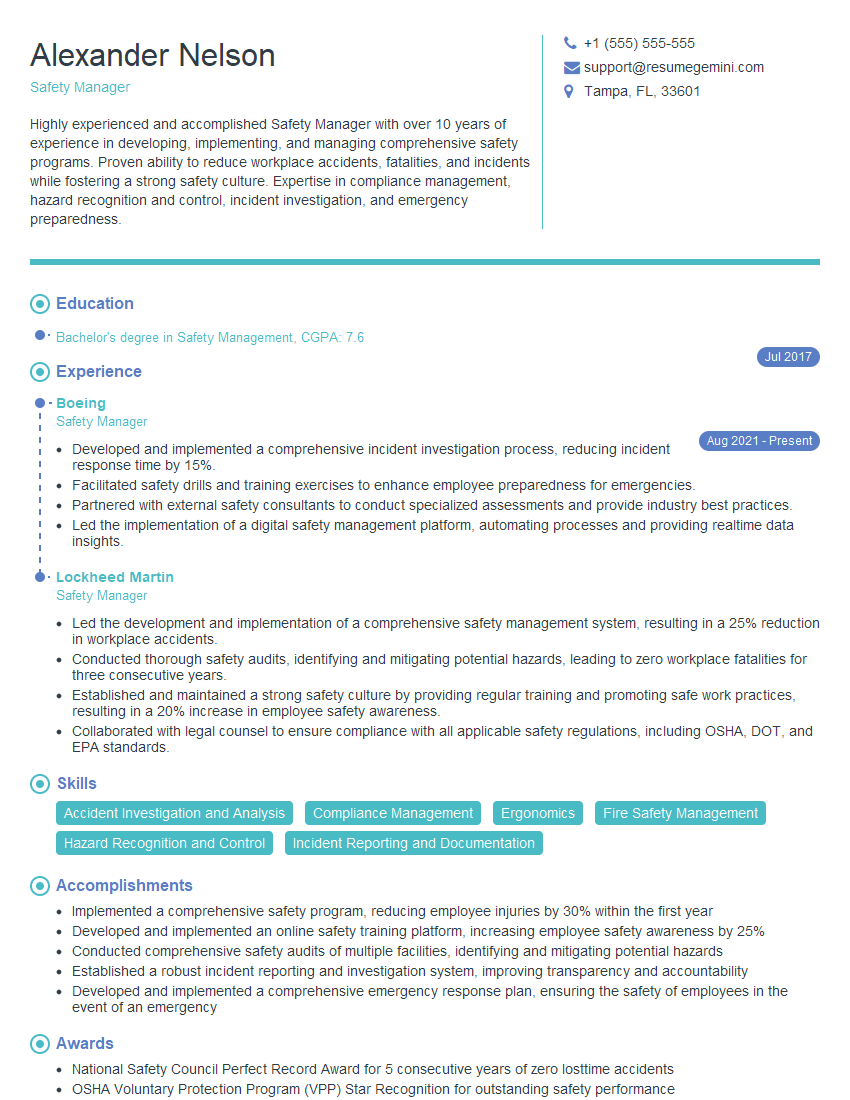
Safety Manager Resume Sample

Compliance Officer Resume Sample
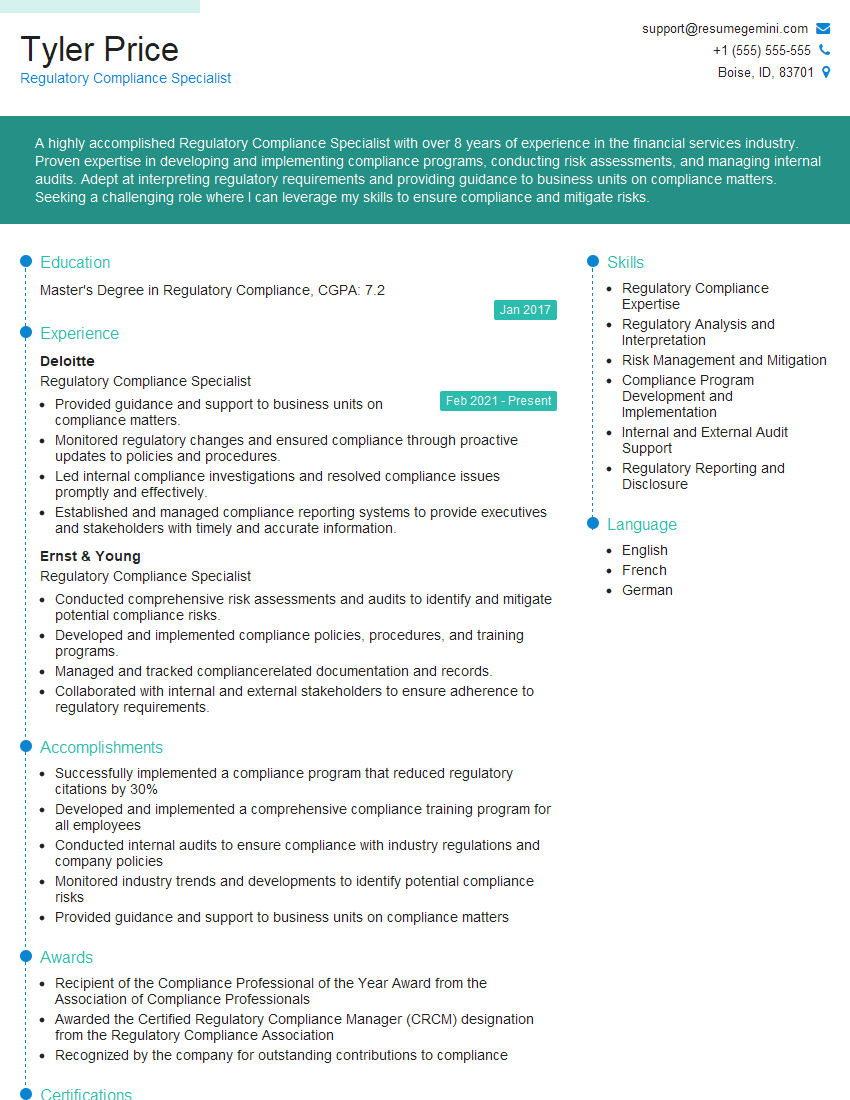
Regulatory Compliance Specialist Resume Sample
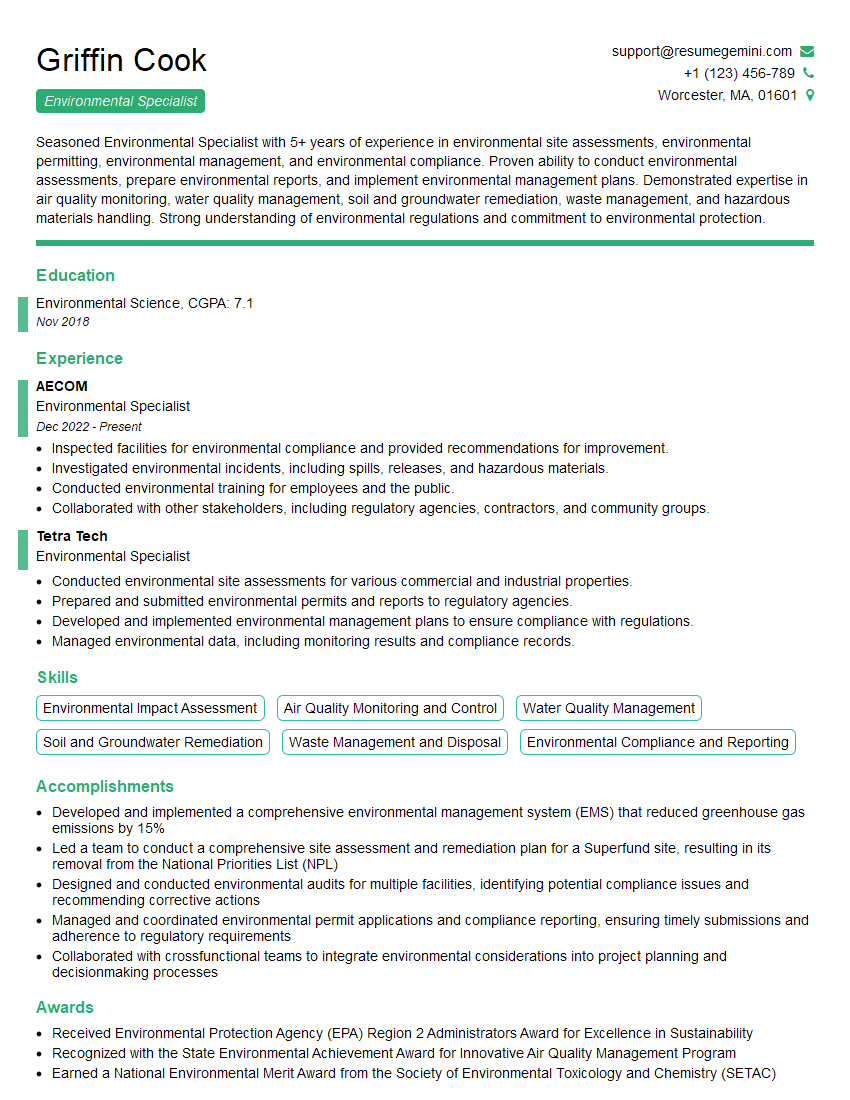
Environmental Specialist Resume Sample
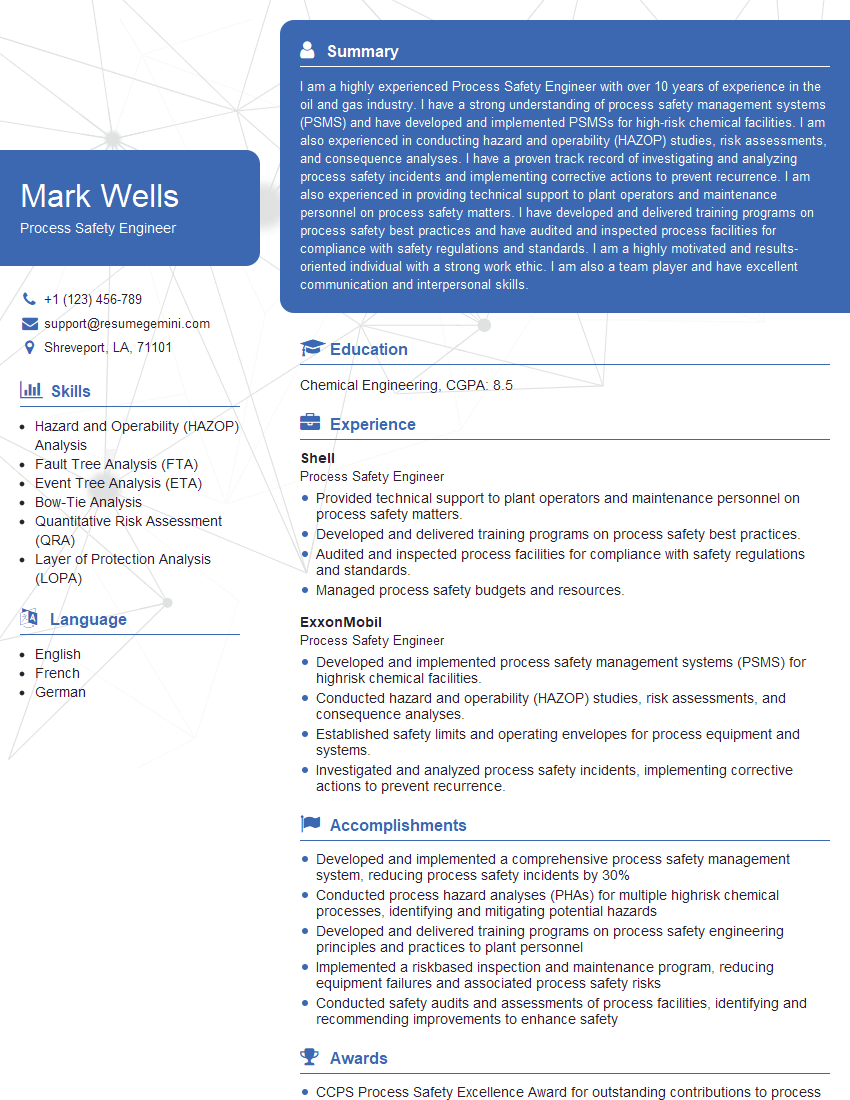
Process Safety Engineer Resume Sample
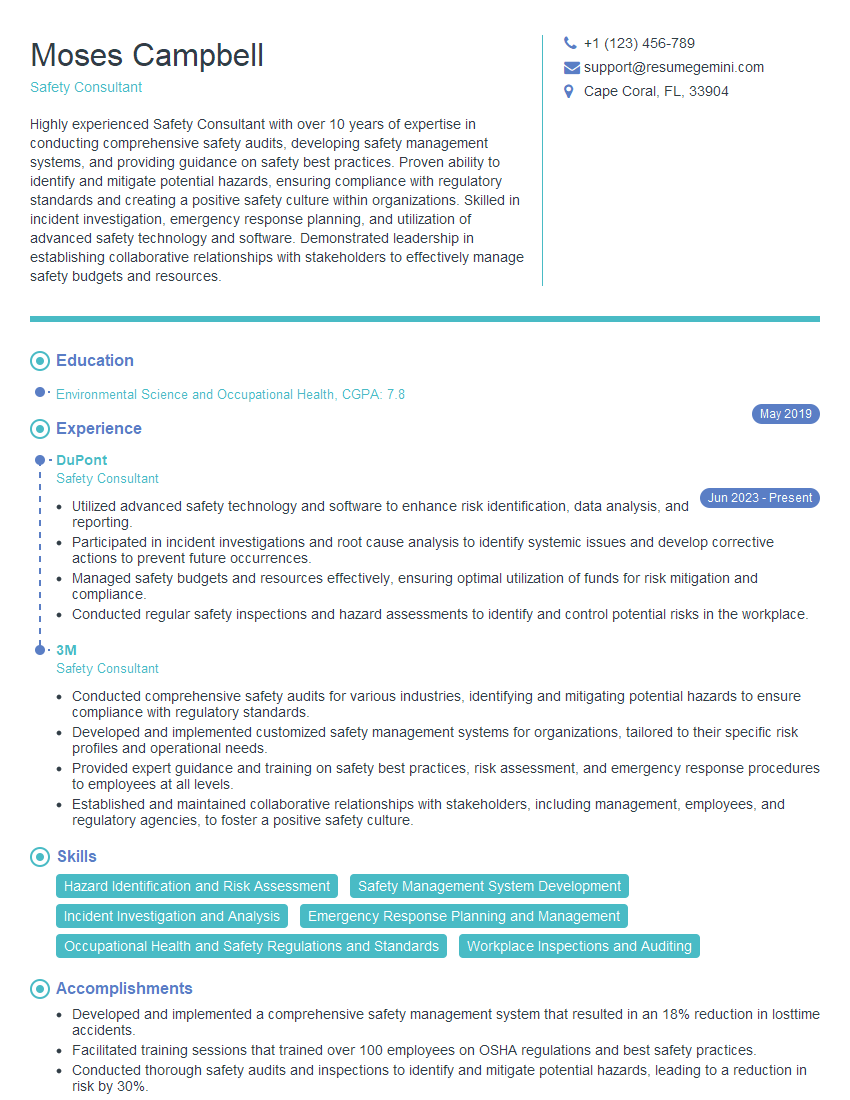
Safety Consultant Resume Sample
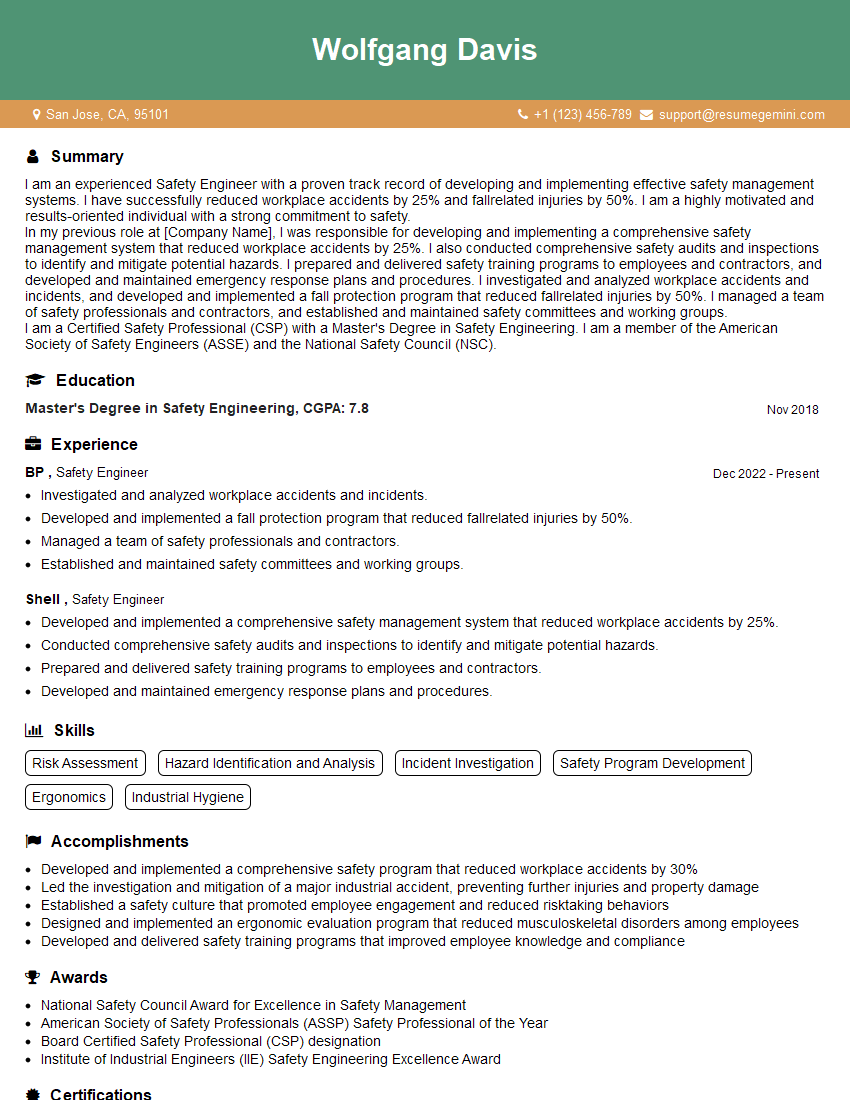
Safety Engineer Resume Sample
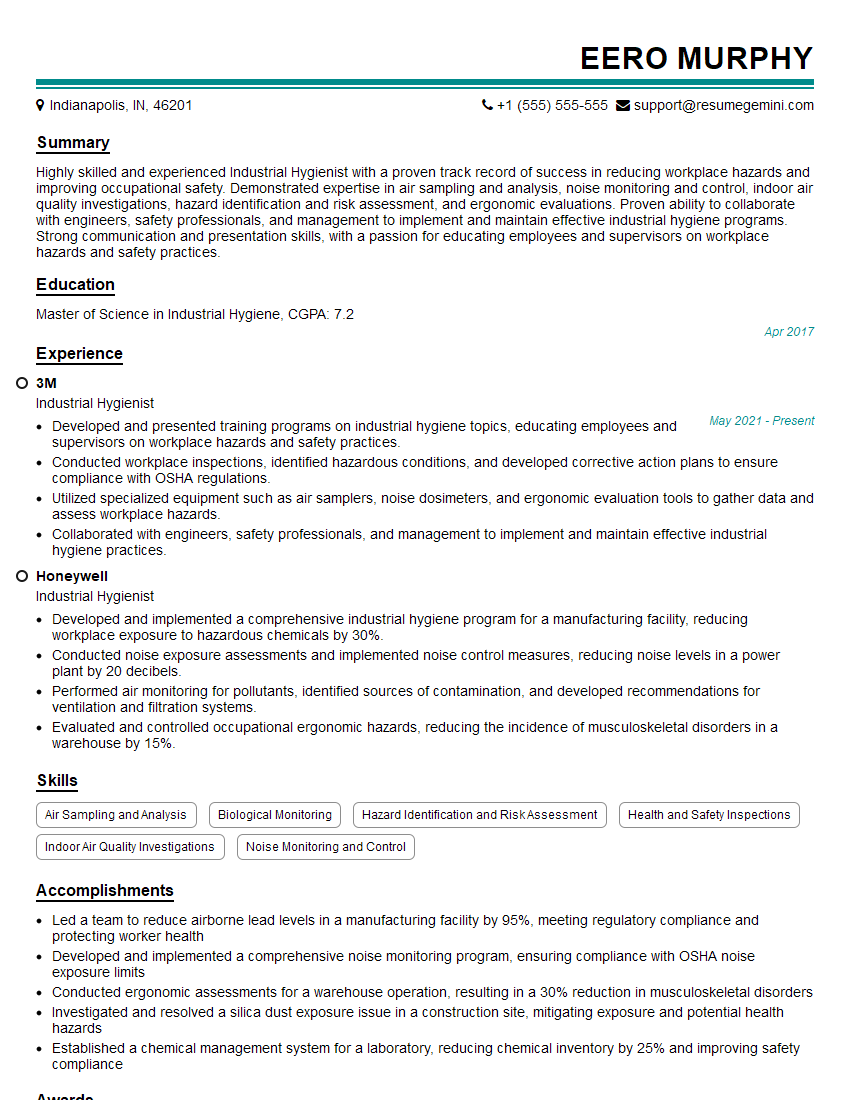
Industrial Hygienist Resume Sample

Packaging Specialist Resume Sample
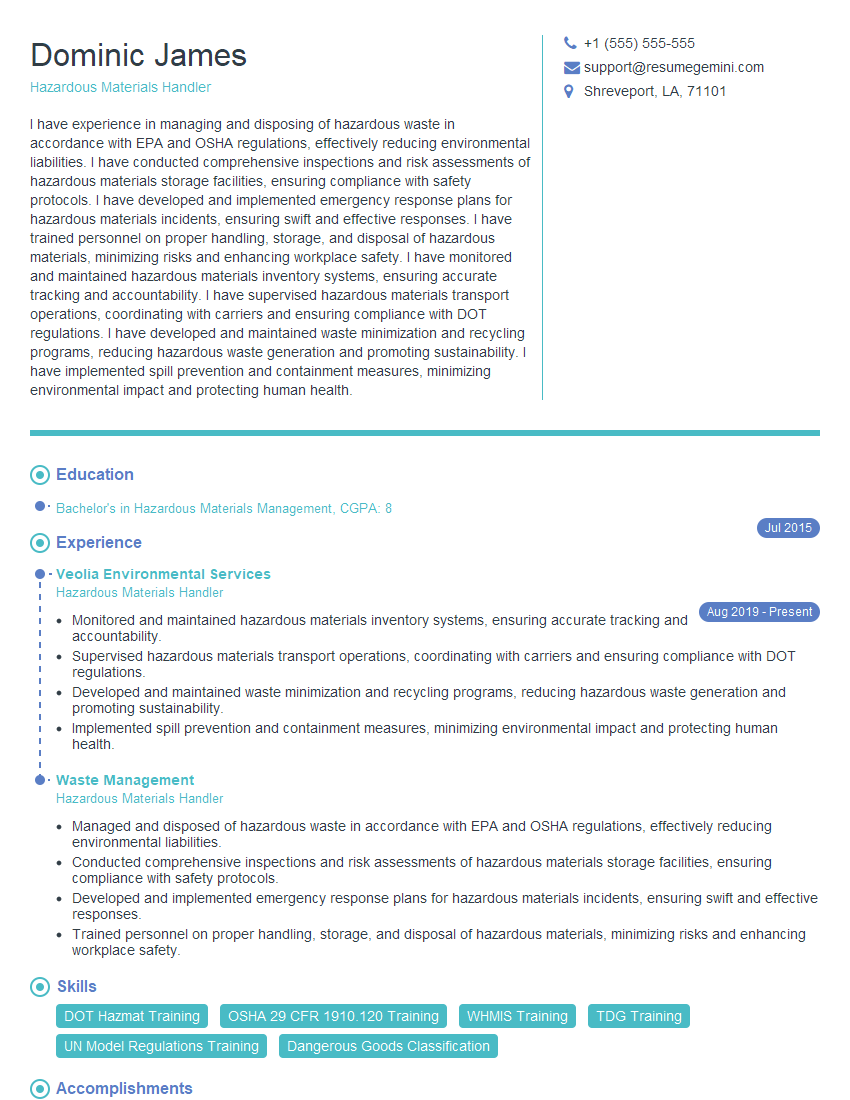
Hazardous Materials Handler Resume Sample
Explore more articles
Users Rating of Our Blogs
Share Your Experience
We value your feedback! Please rate our content and share your thoughts (optional).
What Readers Say About Our Blog
Very informative content, great job.
good