Interviews are opportunities to demonstrate your expertise, and this guide is here to help you shine. Explore the essential Materials: Metals, Plastics, Wood, Glass, Stone interview questions that employers frequently ask, paired with strategies for crafting responses that set you apart from the competition.
Questions Asked in Materials: Metals, Plastics, Wood, Glass, Stone Interview
Q 1. Explain the difference between ferrous and non-ferrous metals.
The primary difference between ferrous and non-ferrous metals lies in their iron content. Ferrous metals contain iron as a major alloying element, while non-ferrous metals do not. This fundamental difference leads to significant variations in their properties.
- Ferrous Metals: These are typically strong, durable, and relatively inexpensive. Examples include steel (an alloy of iron and carbon), cast iron, and wrought iron. Their high iron content makes them magnetic and susceptible to rust and corrosion. Think of the ubiquitous use of steel in construction, automobiles, and appliances.
- Non-Ferrous Metals: These metals offer a wider range of properties depending on the specific metal. They are often more resistant to corrosion than ferrous metals and may possess higher electrical conductivity or ductility. Examples include aluminum (lightweight and corrosion-resistant), copper (excellent electrical conductor), and brass (an alloy of copper and zinc, known for its machinability). Consider the use of aluminum in aircraft, copper in wiring, and brass in musical instruments.
Understanding this distinction is crucial in material selection for engineering applications. The choice between a ferrous and non-ferrous metal depends on the desired properties, cost considerations, and environmental factors.
Q 2. Describe the properties of various types of plastics (e.g., HDPE, PVC, ABS).
Plastics are polymers, large molecules made up of repeating units. Different types of plastics exhibit diverse properties due to variations in their molecular structure and additives.
- HDPE (High-Density Polyethylene): Known for its strength, rigidity, and chemical resistance. Commonly used in milk jugs, detergent bottles, and plastic pipes. Think of its durability – a HDPE bottle can withstand considerable pressure.
- PVC (Polyvinyl Chloride): A versatile plastic that is strong, durable, and relatively inexpensive. It’s used extensively in pipes, window frames, flooring, and wire insulation. Its resistance to water makes it ideal for plumbing applications.
- ABS (Acrylonitrile Butadiene Styrene): A tough, rigid plastic with good impact resistance. It’s frequently used in automotive parts, appliance housings, and Lego bricks. The ability to withstand impacts makes it suitable for applications where shock absorption is vital.
The properties of these and other plastics can be further modified by adding fillers, plasticizers, and other additives to enhance specific characteristics such as flexibility, impact resistance, or color.
Q 3. What are the common types of wood used in construction, and what are their characteristics?
Numerous wood types find use in construction, each with its unique properties influencing its suitability for different applications. Here are a few common examples:
- Softwoods: Typically from coniferous trees (like pine, fir, and spruce), these are generally less expensive, easier to work with, and commonly used for framing, sheathing, and less demanding applications. Pine, for example, is known for its relatively low cost and ease of machining.
- Hardwoods: From deciduous trees (like oak, maple, and cherry), these are denser, stronger, more durable, and often more aesthetically pleasing. They are used for flooring, cabinetry, and high-end furniture. Oak, for instance, is prized for its strength and water resistance.
The choice of wood depends on factors such as strength requirements, budget, aesthetic considerations, and the intended lifespan of the structure. Understanding the inherent properties of different wood types is crucial for selecting the appropriate material for a specific application.
Q 4. Explain the process of glass tempering and its effect on properties.
Glass tempering is a heat treatment process that significantly enhances the strength and durability of glass. It involves heating the glass to a high temperature (near its softening point), followed by rapid cooling (quenching) with air jets.
This process creates compressive stresses on the surface of the glass and tensile stresses in the interior. These internal stresses make the tempered glass much more resistant to impact, thermal shock, and bending. When tempered glass breaks, it shatters into small, relatively harmless, granular pieces, unlike annealed glass which fragments into sharp shards.
The resulting properties of tempered glass include increased strength (up to four times stronger than annealed glass), improved impact resistance, and enhanced thermal shock resistance. Its use in automotive windshields, shower doors, and other safety-critical applications highlights its importance.
Q 5. What are the different types of stone used in construction and their applications?
Various stones are used in construction, each offering unique properties and aesthetic appeal. The choice depends on factors like durability, cost, availability, and desired aesthetic effect.
- Granite: A hard, durable igneous rock, known for its strength, resistance to weathering, and variety of colors and patterns. Commonly used for countertops, flooring, and exterior cladding.
- Marble: A metamorphic rock known for its elegance, softness, and variety of veining. Often used for countertops, flooring, and sculptures, but its susceptibility to etching makes it less suitable for high-traffic areas.
- Limestone: A sedimentary rock that is relatively soft and porous. It’s used extensively in construction as a building stone and in landscaping, though it requires proper sealing to resist weathering.
- Sandstone: Another sedimentary rock, sandstone’s strength and aesthetic appeal make it suitable for building facades, paving, and landscaping.
Proper selection of stone requires careful consideration of its properties, maintenance needs, and suitability for the specific application.
Q 6. Describe the process of metal casting.
Metal casting is a manufacturing process involving melting a metal and pouring it into a mold, where it solidifies into the desired shape. It’s a versatile technique capable of producing complex shapes and large components.
The process generally involves several steps:
- Pattern Making: Creating a pattern (often made of wood or plastic) that represents the desired shape of the casting.
- Mold Making: Using the pattern to create a mold (e.g., sand casting, investment casting). The mold material is chosen based on the metal being cast and the desired casting quality.
- Melting: Melting the metal in a furnace to the correct temperature.
- Pouring: Pouring the molten metal into the mold cavity.
- Solidification: Allowing the metal to solidify and cool.
- Removal: Removing the solidified casting from the mold.
- Finishing: Cleaning, machining, or other finishing operations to achieve the final product.
Different casting methods exist (sand casting, die casting, investment casting), each offering unique advantages and disadvantages in terms of cost, precision, and the complexity of shapes that can be produced. The choice of casting method depends on the specific application and design requirements.
Q 7. Explain the concept of polymer degradation.
Polymer degradation refers to the breakdown of polymers into smaller molecules. This can be caused by various factors, leading to changes in the material’s properties, such as reduced strength, discoloration, and embrittlement.
Several mechanisms contribute to polymer degradation:
- Hydrolysis: The breakdown of polymers by reaction with water. This is particularly relevant for polymers susceptible to water absorption.
- Oxidation: The reaction of polymers with oxygen, leading to chain scission and crosslinking. Exposure to UV radiation accelerates this process, leading to material degradation.
- Thermal Degradation: The breakdown of polymers due to high temperatures. This can result in chain scission, depolymerization, and the formation of volatile byproducts.
- Biological Degradation: The breakdown of polymers by microorganisms. This is more common in biodegradable plastics.
Understanding polymer degradation mechanisms is crucial for predicting the lifespan of polymeric materials and selecting appropriate materials for specific applications. Factors like UV exposure, temperature, and the environment must be considered to mitigate degradation and extend the service life of polymers. For example, the use of UV stabilizers in outdoor plastics helps to slow down degradation caused by sunlight.
Q 8. How do different wood treatments affect its durability?
Wood treatments significantly impact durability by protecting against biological degradation (decay, insect infestation) and environmental damage (UV radiation, moisture). Different treatments offer varying levels of protection depending on the wood species and intended application.
Pressure Treatment: This forces preservatives deep into the wood, making it resistant to rot and insect attack. Common preservatives include chromated copper arsenate (CCA), though its use is declining due to environmental concerns, and alternatives like copper azole and micronized copper quat are becoming more prevalent. This is ideal for outdoor applications like decking or fence posts.
Surface Treatments: These involve applying coatings like paint, varnish, or stain to the wood’s surface. These provide protection against UV damage, moisture, and abrasion, but offer less protection against fungal decay compared to pressure treatment. Think of furniture or interior trim.
Oil-based treatments: These penetrate the wood to some extent, offering protection against moisture and enhancing the wood’s natural beauty. Linseed oil and tung oil are common examples. Suitable for furniture and interior woodwork.
Water-repellent treatments: These create a barrier to prevent water absorption, reducing swelling and shrinkage. Often used in combination with other treatments. Ideal for exterior applications exposed to rain.
The choice of treatment depends on factors such as the wood type, the intended use of the wood, the budget, and the environmental impact.
Q 9. Explain the process of float glass manufacturing.
Float glass manufacturing is a continuous process that produces high-quality, flat glass. The process involves melting silica sand and other materials at extremely high temperatures (around 1500°C) to form molten glass.
Melting: The raw materials are melted in a large furnace, typically using natural gas or electricity.
Float Bath: The molten glass flows onto a bath of molten tin. The tin, due to its density and surface tension, creates a perfectly flat surface, allowing the glass to form a uniform sheet.
Cooling and Annealing: The glass sheet slowly travels along the tin bath, cooling and solidifying. A controlled annealing process (slow cooling) removes internal stresses, preventing cracking or breakage.
Cutting and Finishing: Once cooled, the glass sheet is cut into desired sizes and undergoes further processing, which may include coating, tempering, or other treatments to improve its properties.
The float process produces glass with superior flatness, clarity, and surface quality compared to older methods. This makes it suitable for various applications, from windows and mirrors to solar panels and touchscreens.
Q 10. What are the different types of stone cutting techniques?
Stone cutting techniques vary greatly depending on the stone type, desired shape, and precision required. Broadly, they fall into these categories:
Wire Sawing: Uses a continuously moving steel wire with abrasive embedded in it. Suitable for large blocks and precise cuts, often used in quarrying.
Diamond Sawing: Employs diamond-tipped blades for precision cutting, ideal for intricate shapes and smaller pieces. Widely used in fabrication shops for countertops and tiles.
Abrasive Water Jet Cutting: A high-pressure jet of water mixed with abrasive particles cuts the stone precisely with minimal dust and heat. Suitable for delicate work and complex shapes.
Hand Tooling: Traditional methods using chisels, hammers, and mallets for shaping and carving. This method requires significant skill and is ideal for intricate designs and artistic pieces.
CNC Machining: Computer Numerical Control machines allow for precise and automated cutting of stone, enabling complex shapes and high production rates. This is often used in large-scale manufacturing of stone products.
The choice of technique will depend on factors such as the hardness of the stone, the desired shape and size of the finished product, and the available equipment.
Q 11. What are the common types of metal corrosion and how are they prevented?
Metal corrosion is the deterioration of a metal due to chemical reactions with its environment. Common types include:
Uniform Corrosion: Even and widespread attack across the metal surface. Think of a rusty nail exposed to the elements.
Pitting Corrosion: Localized attack forming small pits or holes in the metal. This is particularly damaging as it can lead to structural weakening.
Galvanic Corrosion: Occurs when two dissimilar metals are in contact in an electrolyte (like seawater). The less noble metal corrodes preferentially. Think of a steel bolt in a brass fitting.
Crevice Corrosion: Occurs in narrow spaces or crevices where oxygen concentration differs, leading to localized corrosion. Often found under gaskets or washers.
Stress Corrosion Cracking: A combination of tensile stress and corrosive environment causes cracks to form in the metal. Often seen in high-stress components exposed to corrosive fluids.
Corrosion prevention methods include:
Protective Coatings: Paints, plating (e.g., chrome, zinc), and other coatings act as a barrier between the metal and the environment.
Corrosion Inhibitors: Chemicals added to the environment to slow down the corrosion rate.
Cathodic Protection: An electrochemical method where a more active metal is sacrificially corroded to protect the main structure. Often used for pipelines and underground tanks.
Material Selection: Choosing corrosion-resistant materials (e.g., stainless steel) for the specific environment.
Design Modifications: Avoiding crevices, ensuring good drainage, and proper ventilation can minimize corrosion.
Q 12. Discuss the various methods for joining plastics.
Joining plastics depends heavily on the type of plastic and the required strength of the joint. Methods include:
Solvent Welding: Uses a solvent to dissolve the surface of the plastic, allowing them to fuse together. This creates a strong, nearly invisible bond but is limited to specific thermoplastic materials.
Heat Welding: Applies heat to melt the edges of the plastic, joining them together. This technique requires specialized equipment but can produce very strong joints. Works with thermoplastics.
Adhesive Bonding: A widely used method employing various adhesives designed for specific plastics. The strength of the bond depends on the adhesive’s properties and surface preparation. It’s versatile and relatively easy.
Mechanical Fastening: Using screws, rivets, or clips to join plastic parts. Simple and readily available but may weaken the plastic and be visually less appealing.
Ultrasonic Welding: Uses high-frequency vibrations to generate heat and melt the plastic at the joint interface. This is a fast and efficient method for joining thermoplastics.
Fusion Bonding: Similar to heat welding but uses hot air or a heated tool instead of a welding rod. Often used in sheet fabrication.
The selection of a joining method depends on factors such as the type of plastic, the required joint strength, the production volume, and the cost.
Q 13. How does the grain orientation affect the properties of wood?
Wood grain orientation, referring to the direction of the wood fibers, significantly influences the wood’s properties. Understanding this is crucial in selecting lumber for specific applications.
Strength and Stiffness: Wood is strongest and stiffest when the load is applied parallel to the grain. This is because the fibers are aligned, providing continuous resistance to the force. Conversely, wood is much weaker when the load is perpendicular to the grain.
Shrinkage and Swelling: Wood shrinks and swells more in the direction perpendicular to the grain than parallel to the grain. This dimensional instability can affect the performance and durability of wood products.
Splitting and Shaving: Wood tends to split more readily along the grain than across it. This needs to be considered during sawing, nailing, or other processes.
Workability: The grain orientation affects the ease of machining, finishing, and bending of the wood. Straight, even grain is generally easier to work with compared to highly figured or knotty wood.
For example, beams supporting a load should be oriented with the grain running parallel to the load for maximum strength. In contrast, wood used for veneer requires careful consideration to control shrinkage and maintain stability. The grain’s direction is something engineers and carpenters must continuously evaluate.
Q 14. Describe different types of glass defects and their causes.
Glass defects can significantly impact its quality and performance. They can range from minor aesthetic flaws to serious structural weaknesses.
Bubbles: Small air pockets trapped within the glass during manufacturing. These are usually cosmetic flaws unless they are large or numerous.
Stones: Small refractory particles that didn’t melt completely in the furnace, resulting in inclusions. These can weaken the glass structurally.
Seeds: Tiny, crystalline inclusions that appear as small spots. Often caused by impurities in the raw materials.
Streaks or Lines: Non-uniform distribution of glass components, resulting in variations in color or refractive index. Often due to improper mixing of raw materials.
Cracks and Chips: Can occur during manufacturing, handling, or processing and can lead to failure. Especially critical in applications like safety glass.
Devitrification: Partial crystallization of the glass, reducing its transparency and affecting its properties. Often caused by slow cooling.
Causes of these defects may involve problems with raw materials (impurities), improper melting, inadequate temperature control, or damage during handling and processing. Quality control measures throughout the manufacturing process are essential to minimize defects and maintain product quality.
Q 15. What are the considerations for selecting stone for a specific application?
Selecting the right stone for a specific application involves careful consideration of several key properties. Think of it like choosing the right tool for a job – a hammer wouldn’t be ideal for screwing in a screw!
- Durability and Hardness: For high-traffic areas like flooring, a hard and durable stone like granite or quartzite is essential. Softer stones like marble are more susceptible to scratching and etching. Consider the Mohs Hardness Scale – a useful tool for comparing scratch resistance.
- Aesthetics: The color, pattern, and texture of the stone significantly impact its visual appeal. Will it complement the existing design? Does the veining pattern add to the desired effect?
- Porosity and Absorption: Porous stones like limestone are more prone to staining and water damage. This is a crucial consideration for applications like kitchen countertops or outdoor paving, where exposure to liquids is high. Sealing is often necessary for porous stones.
- Maintenance Requirements: Some stones require more maintenance than others. For instance, marble is relatively sensitive and requires regular sealing and cleaning to prevent staining. Granite, on the other hand, is generally more low-maintenance.
- Budget: Different stones have different price points. The cost will depend on factors like rarity, availability, and processing. Rare stones like onyx are typically much more expensive than common stones like travertine.
- Application Specific Needs: For example, a stone used for a fireplace needs to withstand high temperatures, whereas a stone used for a sculpture needs to be easily carved.
Example: Choosing granite for a kitchen countertop provides durability and resistance to stains, while choosing marble for a bathroom might enhance its elegance but require more careful maintenance.
Career Expert Tips:
- Ace those interviews! Prepare effectively by reviewing the Top 50 Most Common Interview Questions on ResumeGemini.
- Navigate your job search with confidence! Explore a wide range of Career Tips on ResumeGemini. Learn about common challenges and recommendations to overcome them.
- Craft the perfect resume! Master the Art of Resume Writing with ResumeGemini’s guide. Showcase your unique qualifications and achievements effectively.
- Don’t miss out on holiday savings! Build your dream resume with ResumeGemini’s ATS optimized templates.
Q 16. Explain the difference between thermoplastic and thermosetting polymers.
Thermoplastic and thermosetting polymers are two major categories of plastics, differing fundamentally in their response to heat. Imagine shaping clay – thermoplastic is like repeatedly softening and reshaping the clay, while thermosetting is like baking it into a permanent shape.
- Thermoplastics: These polymers soften when heated and harden when cooled, allowing for repeated molding and reshaping without significant chemical change. Think of it like melting and re-solidifying wax. Common examples include polyethylene (PE), polypropylene (PP), and polyvinyl chloride (PVC).
- Thermosets: These polymers undergo an irreversible chemical change upon heating, forming a rigid, cross-linked structure. Once cured, they cannot be remelted or reshaped. It’s like baking a cake – once baked, you can’t unbake it! Common examples include epoxy resins, polyurethane, and polyester.
Key Differences Summarized:
| Property | Thermoplastic | Thermoset |
|---|---|---|
| Heat Response | Soften and Harden Reversibly | Undergo Irreversible Chemical Change |
| Moldability | Re-moldable | Not Re-moldable |
| Strength | Generally Less Strong | Generally Stronger |
| Examples | Polyethylene (PE), Polypropylene (PP) | Epoxy Resins, Polyester |
Q 17. How do you assess the quality of wood?
Assessing wood quality is crucial for ensuring structural integrity, durability, and aesthetic appeal. Imagine buying a car – you’d want to check its engine and bodywork, wouldn’t you?
- Species: Different wood species have varying properties like density, hardness, grain pattern, and durability. Hardwoods like oak are generally stronger and more durable than softwoods like pine.
- Grain Pattern: A straight, consistent grain usually indicates stronger, more stable wood. Irregular or knotty grain can affect strength and workability.
- Moisture Content: Excessive moisture can lead to warping, cracking, and decay. The ideal moisture content for most woodworking applications is around 6-8%.
- Knots: Knots are branches embedded in the wood. While adding character, too many large knots can weaken the wood.
- Checks and Shakes: Checks are radial cracks within the wood, while shakes are longitudinal separations between growth rings. Both indicate defects that can affect strength and durability.
- Decay and Insect Damage: Inspect for signs of rot, insect infestation, or fungal growth, which significantly compromise structural integrity.
Methods of Assessment: Visual inspection, moisture meters, and density tests are commonly used to evaluate wood quality. A professional lumber grader can provide expert assessment for critical applications.
Q 18. Explain the concept of refractive index in glass.
The refractive index of glass is a measure of how much the speed of light slows down when it passes from air into glass. Think of it like a car slowing down when entering a dense forest.
It’s defined as the ratio of the speed of light in a vacuum to the speed of light in the glass. A higher refractive index indicates a greater slowing of light, leading to greater bending (refraction) of light rays. This property is crucial for many applications.
The refractive index depends on the composition of the glass – different types of glass have different refractive indices. Lead glass, for instance, has a higher refractive index than soda-lime glass. This difference is what gives lead crystal its brilliance.
Applications: The refractive index is important in designing lenses, prisms, and optical fibers. In these applications, precise control over the refractive index is necessary to achieve the desired optical properties.
Q 19. Describe various methods for stone surface finishing.
Stone surface finishing techniques aim to enhance the stone’s aesthetic appeal, durability, and functionality. It’s like giving a gemstone a final polish to bring out its sparkle.
- Polishing: Creates a high-gloss, reflective surface using abrasive compounds and polishing pads. This is commonly used for countertops and flooring.
- Honing: Produces a smooth, matte finish with less shine than polishing. It’s often used for bathroom floors where a slip-resistant finish is desired.
- Sandblasting: Uses compressed air and abrasive particles to create a textured, non-slip surface. This is suitable for outdoor applications or areas prone to slipping.
- Flamed: Uses high-temperature flames to alter the surface texture, creating a rough, non-slip finish. Often used for exterior paving.
- Tumbled: A mechanical process that creates a softer, more aged look with rounded edges. This gives stones a more rustic appearance.
- Bush Hammered: Creates a textured surface with a hammered look. Provides both aesthetic appeal and non-slip properties.
The choice of finish depends on the type of stone, its intended use, and desired aesthetic.
Q 20. Describe various methods for metal surface treatment.
Metal surface treatments protect against corrosion, improve aesthetics, and enhance specific properties. Think of it like painting a house to protect it from the elements and improve its look.
- Painting: A decorative and protective coating that offers a wide range of colors and finishes. This is a common and cost-effective method.
- Powder Coating: An electrostatic process that applies a dry powder coating that is then cured by heating. It provides a durable, chip-resistant finish.
- Anodizing (for Aluminum): An electrochemical process that creates a thick, hard, corrosion-resistant oxide layer on the surface of aluminum. It enhances durability and provides various colors.
- Electroplating: A process of depositing a thin layer of metal onto a base metal. This can enhance corrosion resistance, improve appearance, or add a specific functionality (e.g., gold plating for jewelry).
- Hot-Dip Galvanizing (for Steel): A method of dipping steel into molten zinc to create a protective zinc coating. This offers excellent corrosion resistance.
- Passivation: A chemical treatment used to create a protective oxide layer on stainless steel, enhancing its corrosion resistance.
The selection of the treatment depends on the specific metal, the application’s environment, and the desired properties. For instance, galvanizing is ideal for outdoor steel structures, while anodizing is often chosen for aluminum parts that need both corrosion resistance and aesthetic appeal.
Q 21. How do you select the right plastic for a specific application?
Selecting the right plastic for an application involves considering a range of properties, just as you would choose the right material to build a house – wood for framing, concrete for the foundation.
- Mechanical Properties: Strength, stiffness, toughness, flexibility, and impact resistance are key considerations. A plastic for a car bumper needs high impact resistance, while a plastic for a bottle cap needs stiffness and strength.
- Thermal Properties: Melting point, heat deflection temperature, thermal conductivity, and thermal expansion determine the plastic’s behavior at different temperatures. A plastic for a coffee cup needs high heat deflection temperature.
- Chemical Resistance: The plastic’s resistance to various chemicals, solvents, and acids is crucial for applications involving chemical exposure. A plastic used for storing chemicals needs high chemical resistance.
- Electrical Properties: Insulating properties, dielectric strength, and conductivity are important for electrical applications. A plastic for electrical insulation needs high dielectric strength.
- Cost: The price per unit of the plastic plays a significant role in large-scale applications.
- Processing: The ease of processing the plastic – through techniques like injection molding, extrusion, or blow molding – is also an important factor.
Example: Polyethylene (PE) is suitable for plastic bags due to its flexibility and low cost, while polycarbonate (PC) is used in safety glasses due to its high impact resistance.
Q 22. How do you determine the strength of wood?
Determining the strength of wood is a multifaceted process, as it’s not a homogenous material like steel. Strength depends on factors like species, grain orientation, moisture content, and the presence of defects. We assess strength through various mechanical tests.
Common Tests:
- Tensile Strength: Measures the wood’s resistance to being pulled apart. A sample is clamped and pulled until it breaks; the force at failure indicates tensile strength.
- Compressive Strength: Evaluates the wood’s resistance to being crushed. A sample is compressed until failure, again measuring the force at the breaking point.
- Bending Strength (Flexural Strength): Tests the wood’s ability to withstand bending loads. A sample is supported at both ends and a load is applied in the middle until it breaks.
- Shear Strength: Measures the wood’s resistance to forces that cause it to slide or shear along the grain.
Practical Application: Knowing the strength properties is crucial in structural engineering. For example, designing a wooden beam for a house requires understanding the bending strength of the chosen wood species to ensure it can safely support the anticipated load. The orientation of the grain is also critical; wood is significantly stronger along the grain than across it.
Q 23. How do you test the chemical resistance of glass?
Testing the chemical resistance of glass involves exposing it to various chemicals for specified durations and then evaluating any resulting changes. The specific test depends on the intended application and the chemicals the glass might encounter.
Common Tests:
- Immersion Tests: Samples are fully immersed in the test chemical for a set period (e.g., 24 hours, 7 days, or longer). Changes in weight, appearance, and surface properties are assessed.
- Acid Resistance Tests: These evaluate the glass’s resistance to acids like sulfuric acid or hydrochloric acid, often measuring weight loss or changes in surface roughness.
- Alkaline Resistance Tests: These tests gauge the glass’s resistance to alkaline solutions like sodium hydroxide. Similar to acid resistance tests, changes in weight and surface properties are observed.
Practical Application: Chemical resistance testing is vital for selecting glass for specific applications, such as chemical storage containers, pharmaceutical equipment, or even cookware. For instance, borosilicate glass is chosen for laboratory glassware due to its superior resistance to chemicals compared to soda-lime glass.
Q 24. What are the common types of stone defects?
Stone, being a natural material, exhibits various defects. These can impact its strength, durability, and aesthetic appeal. Understanding these defects is vital for selecting suitable stones for specific applications.
Common Stone Defects:
- Cracks and Fractures: These weaken the stone and can lead to breakage. They may be visible or hidden within the material.
- Voids and Cavities: These are internal holes that reduce the stone’s density and strength. They can also affect the stone’s ability to absorb water, potentially causing damage in freeze-thaw cycles.
- Inclusions: Foreign materials embedded within the stone matrix. These can alter the stone’s appearance and sometimes weaken it if they are significantly different in strength or composition.
- Mineral Staining: discoloration caused by infiltrating minerals which can create an unattractive visual appearance.
- Laminations: Weak planes of separation within the stone, creating layers that easily split apart under stress.
Example: A heavily fractured granite slab would be unsuitable for a countertop, while a stone with minor inclusions might be acceptable for paving, depending on the application’s requirements.
Q 25. What are the environmental considerations in using different materials?
Environmental considerations are crucial when selecting and using materials. The impact of material extraction, manufacturing, use, and disposal on the environment must be carefully evaluated.
Material Considerations:
- Metals: Mining and smelting metals have substantial environmental impacts, including air and water pollution. Recycling helps mitigate these effects. The lifespan and end-of-life management of metal products are also crucial.
- Plastics: Plastic production relies on fossil fuels and often leads to significant plastic pollution in oceans and landfills. Bio-based plastics and improved recycling technologies are crucial areas of development.
- Wood: Sustainable forestry practices are vital to ensure responsible sourcing. Deforestation and habitat loss are significant environmental concerns related to wood use.
- Glass: Glass production is energy-intensive. Recycling glass is beneficial, as it reduces energy consumption and waste.
- Stone: Quarrying stone can lead to habitat disruption and landscape alteration. The transportation of stone also contributes to carbon emissions.
Practical Application: Choosing recycled materials, employing sustainable sourcing practices, and designing for recyclability or biodegradability are crucial steps in minimizing environmental impact throughout the material life cycle.
Q 26. Explain the concept of fatigue failure in metals.
Fatigue failure in metals occurs when a material fails under repeated cyclic loading, even if the stress level of each cycle is far below the material’s ultimate tensile strength. It’s like repeatedly bending a paperclip back and forth – eventually, it will break, even though a single bend wouldn’t break it.
Mechanism:
Fatigue failure initiates with microscopic cracks at stress concentrations (e.g., surface imperfections, inclusions). Repeated loading causes these cracks to grow slowly, gradually weakening the material. Eventually, the cracks reach a critical size, leading to catastrophic failure. The final failure is often sudden and unexpected.
Factors affecting fatigue:
- Stress level: Higher stress amplitudes lead to faster crack growth.
- Number of cycles: More cycles increase the likelihood of failure.
- Material properties: Material composition and microstructure significantly impact fatigue resistance.
- Surface finish: Smoother surfaces exhibit better fatigue resistance.
Practical Application: Fatigue analysis is essential in engineering design, particularly for components subjected to cyclic loading, such as aircraft wings, bridges, and machine parts. Design engineers incorporate safety factors to account for fatigue, often using fatigue life curves that predict the number of cycles to failure under different stress levels.
Q 27. How do you design for assembly using different materials?
Designing for assembly with different materials requires careful consideration of material properties, joining methods, and potential compatibility issues.
Key Considerations:
- Material Compatibility: Ensure that the chosen materials are compatible. For example, avoid materials that react chemically or exhibit significant differences in thermal expansion, which could lead to stress and failure.
- Joining Methods: Select appropriate joining methods based on the materials’ properties and the required strength of the joint. Common methods include mechanical fasteners (screws, bolts, rivets), adhesives, welding (for metals), and fusion bonding (for plastics).
- Dimensional Tolerances: Accurate dimensions are critical, especially when using mechanical fasteners. Loose tolerances could lead to weak joints.
- Surface Preparation: Proper surface preparation is vital for achieving strong and durable joints. This often involves cleaning, surface treatment (e.g., priming), or creating interlocking features.
Example: Assembling a wooden furniture frame with metal fasteners requires predrilling holes in the wood to prevent splitting and selecting appropriately sized screws to ensure a secure fit. The use of wood glue in conjunction with screws can enhance joint strength.
Q 28. Describe the different types of wood adhesives and their applications.
Wood adhesives are crucial for joining wood pieces, creating strong and durable bonds. The choice of adhesive depends on factors like wood type, application, and environmental conditions.
Types of Wood Adhesives:
- Polyvinyl Acetate (PVA) Emulsion Adhesives: Water-based, easy to use, and relatively inexpensive. Suitable for interior applications where high water resistance is not critical. Commonly used in furniture making.
- Polyurethane Adhesives: Offer excellent strength and water resistance, suitable for exterior applications and where strong bonds are essential. They can be one-part or two-part systems.
- Epoxy Adhesives: Two-part systems that cure to form a strong, rigid bond. Excellent for high-strength applications but can be more expensive and require precise mixing.
- Resorcinol Adhesives: High-strength, water-resistant adhesives suitable for exterior applications and demanding structural projects. Often used in marine applications.
- Animal Glue (Hide Glue): Traditional adhesive made from animal hides, offering excellent bond strength but sensitivity to moisture. Used for more traditional woodworking and restoration.
Application Considerations: When selecting an adhesive, consider the strength requirements, the need for water resistance, the type of wood, and the working environment. Always follow the manufacturer’s instructions for proper application and curing time.
Key Topics to Learn for Materials: Metals, Plastics, Wood, Glass, Stone Interview
- Metals:
- Mechanical Properties (strength, ductility, hardness): Understanding tensile testing, yield strength, and the relationship between microstructure and mechanical behavior.
- Alloying and Heat Treatments: Knowledge of common alloying elements and their effects on properties, as well as the principles behind annealing, quenching, and tempering.
- Corrosion and Degradation: Understanding different types of corrosion (e.g., galvanic, stress corrosion) and methods of prevention.
- Manufacturing Processes: Familiarity with casting, forging, rolling, machining, and other metalworking techniques.
- Plastics:
- Polymer Chemistry: Understanding different types of polymers (thermoplastics, thermosets), polymerization processes, and their properties.
- Material Selection: Choosing the right plastic for a specific application based on its properties (strength, flexibility, temperature resistance, etc.).
- Processing Techniques: Knowledge of injection molding, extrusion, thermoforming, and other plastic processing methods.
- Recycling and Sustainability: Understanding the environmental impact of plastics and sustainable alternatives.
- Wood:
- Wood Anatomy and Properties: Understanding the structure of wood, its mechanical properties, and its behavior under different conditions.
- Wood Processing: Knowledge of lumber production, drying, preservation, and finishing techniques.
- Wood Defects and Their Impact: Understanding common wood defects and their influence on material properties and applications.
- Sustainable Forestry Practices: Awareness of responsible wood sourcing and forest management.
- Glass:
- Glass Formation and Properties: Understanding the amorphous structure of glass and its unique properties (transparency, brittleness, etc.).
- Glass Manufacturing: Knowledge of different glassmaking processes (e.g., float glass, glassblowing).
- Types of Glass: Familiarity with different types of glass and their applications (soda-lime glass, borosilicate glass, etc.).
- Glass Strength and Fracture: Understanding the factors affecting glass strength and methods to enhance it.
- Stone:
- Geological Origins and Properties: Understanding different types of stone (e.g., granite, marble, sandstone) and their properties.
- Stone Processing and Fabrication: Knowledge of stone cutting, shaping, polishing, and other processing techniques.
- Durability and Weathering: Understanding the factors affecting stone durability and methods of protection.
- Applications in Construction and Design: Familiarity with the use of stone in various construction and design applications.
Next Steps
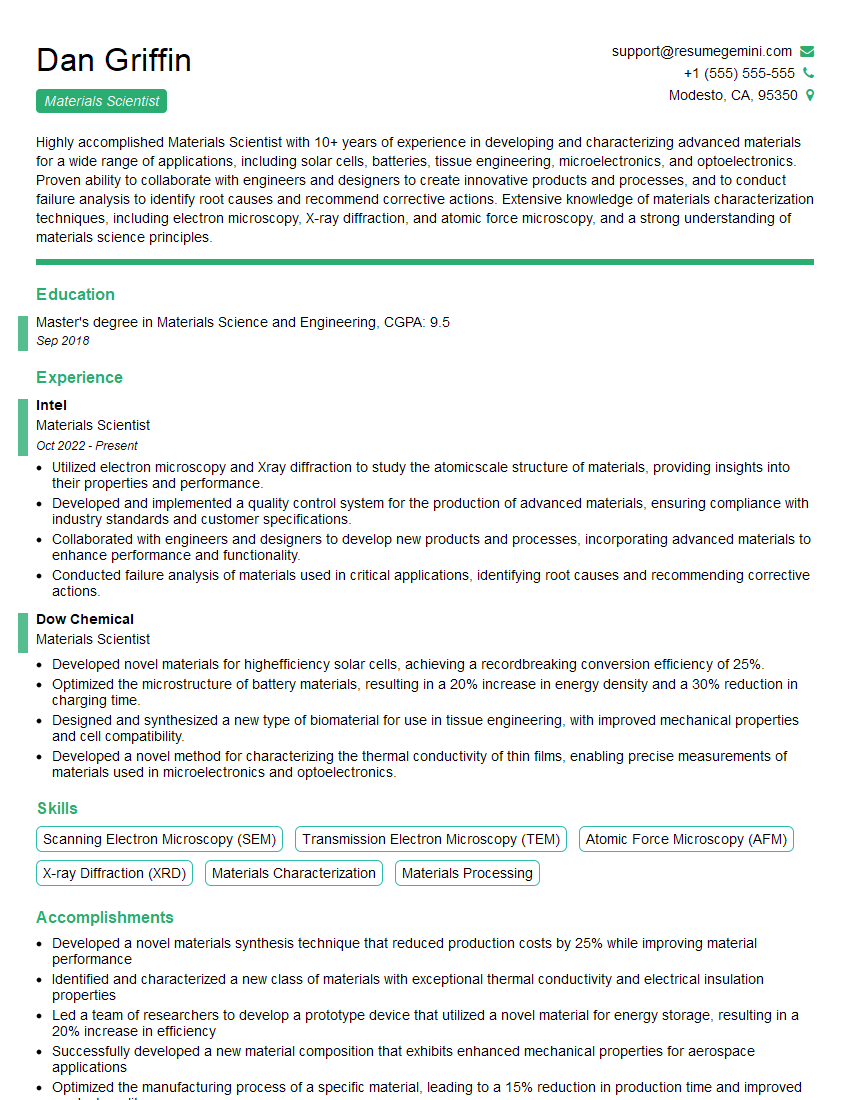
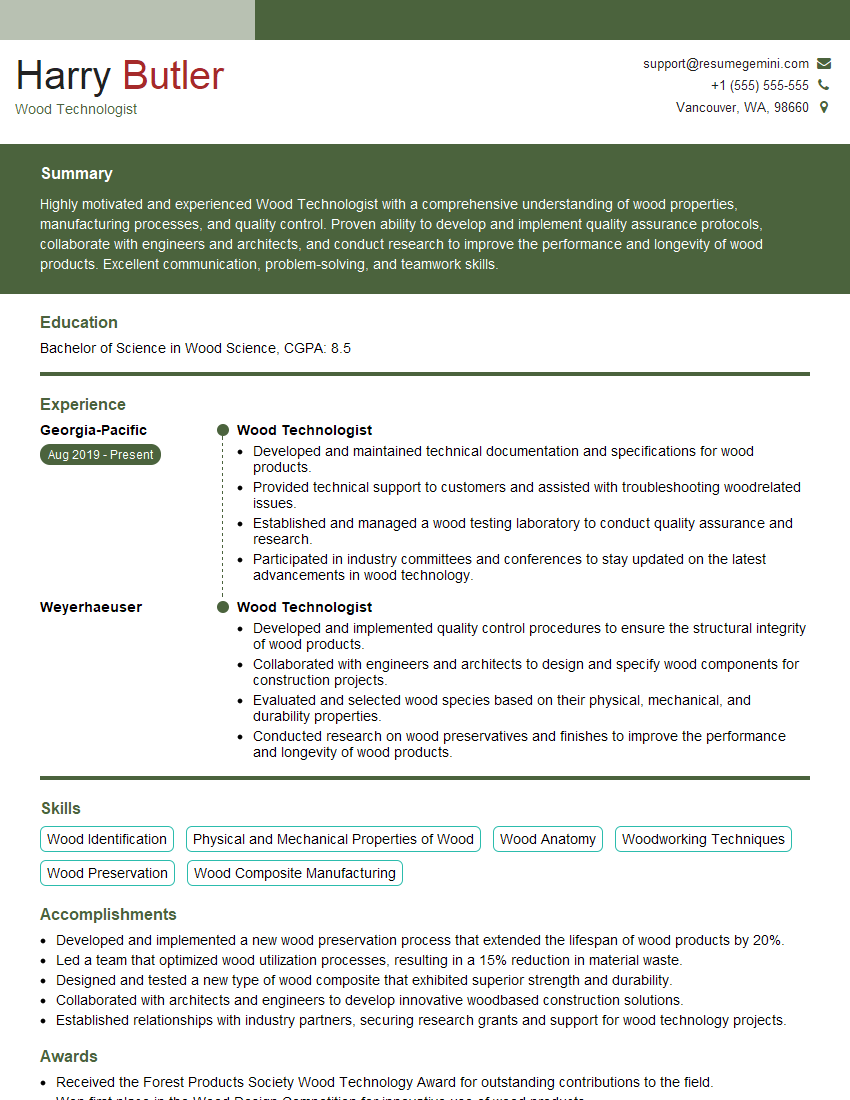
Mastering the properties, applications, and processing techniques of these materials is crucial for career advancement in engineering, manufacturing, construction, and design. An ATS-friendly resume is vital for getting your application noticed. To create a compelling and effective resume that showcases your expertise in Materials: Metals, Plastics, Wood, Glass, Stone, we highly recommend using ResumeGemini. ResumeGemini offers a powerful platform to build professional resumes and provides examples tailored to various fields, including examples specifically designed for Materials Science roles. Invest the time to craft a strong resume – it’s your first impression with potential employers.




Explore more articles
Users Rating of Our Blogs
Share Your Experience
We value your feedback! Please rate our content and share your thoughts (optional).
What Readers Say About Our Blog
Very informative content, great job.
good