Unlock your full potential by mastering the most common Manufacturing and Supply Chain Management interview questions. This blog offers a deep dive into the critical topics, ensuring you’re not only prepared to answer but to excel. With these insights, you’ll approach your interview with clarity and confidence.
Questions Asked in Manufacturing and Supply Chain Management Interview
Q 1. Explain the bullwhip effect and how to mitigate it.
The bullwhip effect is a phenomenon in supply chains where demand variability is amplified as you move upstream in the supply chain. Think of it like cracking a whip – a small movement at the end creates a much larger movement at the handle. In manufacturing, a small change in consumer demand can lead to exponentially larger swings in orders placed further back in the chain, resulting in excess inventory, stockouts, and increased costs.
Mitigation strategies focus on improving information flow and collaboration across the supply chain. This includes:
- Collaborative Forecasting and Planning: Sharing point-of-sale (POS) data with suppliers allows for more accurate demand forecasting. This reduces the reliance on individual forecasts, which can be inaccurate and lead to the bullwhip effect.
- Vendor Managed Inventory (VMI): Allowing key suppliers to manage inventory levels at your facility. This gives them a better understanding of real-time demand and allows them to optimize their own production accordingly.
- Improved Information Sharing: Implementing systems to quickly and accurately share information about sales, inventory levels, and production schedules across the entire supply chain. This can involve Electronic Data Interchange (EDI) or cloud-based platforms.
- Reducing Lead Times: Shorter lead times lessen the impact of demand variability because there’s less time for errors to propagate through the system. This requires optimization of processes and efficient logistics.
- Strategic Buffer Stock: Maintaining a strategic buffer stock at key points in the supply chain can help absorb some of the demand variability, preventing stockouts during periods of high demand.
For example, imagine a retailer experiencing a slight increase in demand for a product. Without proper information sharing, this small increase might cause the wholesaler to significantly over-order from the manufacturer, who then overproduces, leading to excess inventory across the entire supply chain.
Q 2. Describe your experience with different inventory management systems (e.g., FIFO, LIFO, JIT).
I have extensive experience with various inventory management systems. FIFO (First-In, First-Out) is ideal for perishable goods or products with short shelf lives, ensuring that the oldest items are sold first. I’ve used FIFO successfully in managing food production and pharmaceutical supply chains. The system ensures minimal waste and maintains product freshness.
LIFO (Last-In, First-Out) is typically used for non-perishable goods where inventory value is impacted by inflation. By selling the most recently acquired items first, the cost of goods sold reflects current market prices, potentially leading to lower taxable income in inflationary periods. I’ve seen this implemented effectively in industries with stable commodity pricing, like the metal industry.
Just-In-Time (JIT) inventory management minimizes inventory holding costs by receiving materials only as they’re needed for production. Successfully implementing JIT requires strong supplier relationships, precise demand forecasting, and efficient logistics. My experience with JIT implementation within an automotive parts manufacturing facility significantly reduced warehousing costs and improved production flow by optimizing material deliveries aligned with the production schedule.
Choosing the right system depends on the specific industry, product characteristics, and business goals. A key aspect of my approach is understanding the trade-offs between inventory holding costs, risk of stockouts, and the impact on financial reporting.
Q 3. How do you prioritize projects in a fast-paced manufacturing environment?
Prioritizing projects in a fast-paced manufacturing environment requires a structured approach. I typically use a combination of methods, including:
- Prioritization Matrix (e.g., Eisenhower Matrix): Categorizing projects based on urgency and importance. This helps focus on high-impact tasks first, ensuring critical projects are addressed promptly.
- Value Stream Mapping: Identifying and analyzing the flow of materials and information in a process. This reveals bottlenecks and areas for improvement, allowing for prioritization of projects that will have the greatest positive impact on the overall process efficiency.
- Resource Capacity Planning: Considering the available resources (personnel, machinery, etc.) when prioritizing projects to ensure realistic scheduling and prevent overcommitment.
- Risk Assessment: Evaluating the potential risks and consequences associated with each project. Projects with high impact and high risk should usually be given higher priority.
- Data-Driven Decisions: Using Key Performance Indicators (KPIs) and data analytics to measure the impact of projects. This helps to objectively assess the success of completed projects and make more informed decisions about future priorities.
For instance, in a situation where a critical machine is malfunctioning, preventing the completion of a major order, that repair project would immediately take priority over other projects, regardless of their pre-determined ranking.
Q 4. What are the key performance indicators (KPIs) you track in supply chain management?
The KPIs I track in supply chain management are multifaceted and depend on the specific goals and context. However, some critical metrics consistently provide insights into performance.
- On-Time Delivery (OTD): Measures the percentage of orders delivered on or before the scheduled delivery date. A high OTD rate indicates efficiency and reliability.
- Inventory Turnover Rate: Indicates how efficiently inventory is managed. A high rate suggests quick sales and lower storage costs but may also point to stockout risks if not carefully balanced.
- Lead Time: The time it takes to fulfill an order. Reducing lead times improves responsiveness and customer satisfaction.
- Fill Rate: The percentage of customer demand met from available inventory. A high fill rate suggests good inventory management and prevents stockouts.
- Customer Order Cycle Time: The total time from order placement to delivery. Shorter cycle times increase customer satisfaction.
- Logistics Costs: Includes transportation, warehousing, and handling expenses. Tracking these costs helps identify areas for optimization.
- Supply Chain Resilience: Ability to withstand and recover from disruptions. This is measured through scenario planning and business continuity testing.
By monitoring these KPIs and analyzing trends, we can identify areas needing improvement and make data-driven decisions to optimize the supply chain’s efficiency and effectiveness.
Q 5. Explain your experience with Lean Manufacturing principles.
Lean manufacturing principles are crucial for maximizing efficiency and minimizing waste. My experience with Lean involves implementing various tools and techniques, including:
- Value Stream Mapping: Visually mapping out the entire process to identify and eliminate non-value-added steps. This enhances process efficiency and reduces lead times. I’ve used this to optimize assembly line processes, significantly decreasing cycle times.
- 5S Methodology: Organizing the workplace for efficiency and safety by sorting, setting in order, shining, standardizing, and sustaining. This approach drastically improves workplace organization and reduces waste.
- Kaizen (Continuous Improvement): A philosophy of continuous improvement through small, incremental changes. I’ve facilitated Kaizen events involving cross-functional teams to tackle specific process improvement initiatives, resulting in measurable improvements.
- Kanban: A visual signaling system for managing workflow and inventory. I’ve utilized Kanban boards to optimize material flow and improve production scheduling in several manufacturing environments, minimizing waste and delays.
- Poka-Yoke (Error Proofing): Designing processes to prevent errors from occurring. I’ve designed simple yet effective error-proofing mechanisms in manufacturing lines, dramatically reducing defect rates.
Implementing Lean principles requires a cultural shift towards continuous improvement and a commitment from all levels of the organization. The results often include improved quality, reduced lead times, lower costs, and increased customer satisfaction.
Q 6. Describe a time you had to solve a supply chain disruption. What was the outcome?
During a significant port strike that impacted the timely delivery of crucial raw materials, I had to quickly implement contingency plans. The strike threatened production deadlines for a major client. My immediate response involved:
- Assessing the Impact: We identified the specific materials affected and the potential impact on production schedules.
- Exploring Alternative Suppliers: We contacted alternative suppliers to source the materials from different regions, even if it meant slightly higher costs in the short term.
- Negotiating with Existing Suppliers: We engaged in discussions with our primary suppliers to explore options like expedited shipping or alternative delivery routes.
- Prioritizing Production: We prioritized production of critical components to minimize the impact on the major client’s order.
- Communication: We maintained open and transparent communication with the client, keeping them informed of the situation and our mitigation efforts.
The outcome was successful. Although the strike caused delays, the impact was significantly minimized due to proactive measures. We successfully met the client’s deadlines with minimal disruption to their operations, strengthening our relationship and demonstrating our supply chain resilience. We also learned valuable lessons about diversifying suppliers and strengthening our risk management strategies.
Q 7. How familiar are you with Six Sigma methodologies?
I am very familiar with Six Sigma methodologies. Six Sigma is a data-driven approach to process improvement, aiming to reduce defects and variability. My experience includes applying DMAIC (Define, Measure, Analyze, Improve, Control) and DMADV (Define, Measure, Analyze, Design, Verify) methodologies to various projects.
I’ve utilized Six Sigma tools such as:
- Control Charts: To monitor process stability and identify potential deviations.
- Process Capability Analysis: To determine the ability of a process to meet specifications.
- Root Cause Analysis (RCA): Techniques like the 5 Whys or Fishbone diagrams to identify the underlying causes of defects or problems.
- Design of Experiments (DOE): To systematically determine optimal process parameters.
In a past project involving reducing defects in a packaging process, the application of Six Sigma DMAIC methodology led to a significant reduction in the defect rate, resulting in substantial cost savings and improved product quality. Six Sigma provides a structured and rigorous framework for problem-solving and achieving significant process improvements across various functions within manufacturing and supply chain management.
Q 8. What is your experience with forecasting techniques?
Forecasting is crucial in manufacturing and supply chain management, predicting future demand to optimize inventory, production, and resource allocation. I have extensive experience with various forecasting techniques, ranging from simple moving averages to sophisticated exponential smoothing and ARIMA models. My choice of technique depends heavily on the data available, the product’s lifecycle, and the desired accuracy level.
For example, in my previous role at Acme Manufacturing, we used a combination of time series analysis (specifically, exponential smoothing) for our stable, high-demand products and causal forecasting (regression analysis incorporating economic indicators) for products with more volatile demand. This hybrid approach allowed for more accurate predictions and reduced inventory holding costs significantly. We also incorporated qualitative methods, such as expert opinions and market research, to adjust forecasts and account for unexpected external factors like seasonal fluctuations or economic downturns.
Furthermore, I am proficient in using forecasting software like SAP APO and Oracle Demand Management to automate the process, analyze results, and monitor forecast accuracy over time. Continuous monitoring allows for adjustments and improvements to forecasting methodologies, ensuring the accuracy of predictions remains high.
Q 9. How do you manage supplier relationships?
Managing supplier relationships is paramount for a smooth and efficient supply chain. I believe in building strong, collaborative partnerships based on mutual trust and open communication. This involves more than just negotiating prices; it’s about fostering long-term relationships that benefit both parties.
My approach involves several key strategies: First, I rigorously vet potential suppliers, assessing their capabilities, financial stability, and ethical practices. I utilize a scoring system considering factors like on-time delivery performance, quality control measures, and responsiveness. Second, I maintain consistent communication with key suppliers, regularly sharing forecasts and collaborating on issues that may arise. This proactive approach helps identify and resolve problems early, preventing disruptions in the supply chain. Third, I regularly review supplier performance using Key Performance Indicators (KPIs) such as on-time delivery, defect rate, and lead times. This data helps to identify areas for improvement and to ensure continuous performance optimization.
For instance, in a previous project, we faced challenges with a critical supplier experiencing production delays. By promptly communicating and working closely with them, we identified the root cause (equipment malfunction), and together, we implemented a solution involving expedited repairs and alternative sourcing strategies to mitigate the impact on our production schedule.
Q 10. What are the challenges of global supply chain management?
Global supply chain management presents unique and complex challenges. These challenges include:
- Geopolitical risks: Political instability, trade wars, and natural disasters in various regions can significantly disrupt supply chains, leading to delays and increased costs.
- Supply chain visibility: Tracking goods and materials across multiple countries and time zones can be incredibly difficult. Lack of visibility increases the risk of delays and disruptions.
- Cultural differences and communication barriers: Working with suppliers and partners in different cultures requires understanding cultural nuances and effective communication strategies. Misunderstandings can lead to delays and conflicts.
- Logistics complexities: Managing international shipping, customs regulations, and various transportation modes adds a layer of complexity to global supply chains.
- Increased lead times and inventory costs: Longer lead times and increased transportation costs associated with global sourcing require effective inventory management to mitigate risk.
Mitigating these challenges requires a robust and resilient supply chain strategy. This often involves diversifying sourcing, building strategic partnerships, implementing advanced technology such as blockchain for increased visibility, and developing contingency plans to handle unforeseen disruptions. For example, using a multi-sourcing strategy helps mitigate the risk of relying solely on one supplier in a potentially volatile region.
Q 11. Explain your understanding of Total Quality Management (TQM).
Total Quality Management (TQM) is a holistic management approach focused on achieving continuous improvement in all aspects of an organization to meet and exceed customer expectations. It’s not just about producing quality products; it’s about embedding quality into every process, from design to delivery.
Key principles of TQM include:
- Customer focus: Understanding and meeting customer needs is paramount.
- Continuous improvement: Striving for ongoing incremental improvements across all processes.
- Employee empowerment: Empowering employees to identify and solve quality issues.
- Process improvement: Focusing on improving processes to reduce defects and enhance efficiency.
- Data-driven decision-making: Using data to monitor performance and make informed decisions.
In practice, TQM involves implementing tools like Six Sigma, Lean manufacturing, and Kaizen events to identify and eliminate waste, reduce defects, and improve overall efficiency. It requires a company-wide cultural shift towards quality, with everyone taking responsibility for maintaining quality standards. A successful TQM implementation results in increased customer satisfaction, reduced costs, and improved operational efficiency.
Q 12. How do you ensure quality control throughout the manufacturing process?
Ensuring quality control throughout the manufacturing process is critical for delivering high-quality products. My approach involves a multi-layered system of checks and balances:
- Incoming inspection: Inspecting raw materials and components upon arrival to ensure they meet specified quality standards.
- In-process inspection: Monitoring and inspecting products at various stages of the manufacturing process to identify and correct defects early.
- Final inspection: A thorough inspection of finished products before shipment to customers.
- Statistical Process Control (SPC): Utilizing statistical methods to monitor and control process variability and identify potential issues before they become major problems.
- Root cause analysis: Investigating the root cause of any defects or quality issues to implement corrective actions and prevent recurrence.
For example, in a previous role, we implemented a robust SPC system using control charts to monitor key process parameters in our assembly line. This allowed us to identify and address small variations before they led to significant defects, resulting in a 20% reduction in scrap and rework.
Q 13. Describe your experience with different types of production planning (e.g., MRP, ERP).
I have extensive experience with various production planning systems, including Material Requirements Planning (MRP) and Enterprise Resource Planning (ERP). MRP is a system used to determine the materials needed for production based on demand forecasts and bill of materials. It ensures that the right materials are available at the right time to meet production schedules.
ERP systems, such as SAP and Oracle, integrate various business functions, including production planning, inventory management, and supply chain management, into a single system. They provide a more comprehensive and integrated approach to production planning, offering features beyond MRP, such as capacity planning, demand forecasting, and supply chain collaboration. My experience spans both simple MRP implementations in smaller organizations to complex ERP deployments in large multinational companies. I’m proficient in configuring and optimizing these systems to improve efficiency, reduce waste, and optimize resource utilization. I also understand the importance of adapting the planning system to the specific needs of the organization and continuously refining the processes for optimal performance.
Q 14. How do you manage warehouse operations to maximize efficiency?
Optimizing warehouse operations for maximum efficiency involves several key strategies. The goal is to minimize storage costs, reduce handling time, and ensure timely order fulfillment. My approach centers around:
- Effective warehouse layout: Designing the warehouse layout to optimize product flow and minimize travel distances. This may involve applying principles of Lean manufacturing to eliminate waste and improve efficiency.
- Inventory management techniques: Implementing efficient inventory management techniques, such as ABC analysis (classifying inventory based on value and usage), to optimize stock levels and reduce storage costs.
- Warehouse Management Systems (WMS): Utilizing WMS software to automate tasks such as inventory tracking, order picking, and shipping, leading to improved accuracy and efficiency.
- Optimized picking and packing processes: Implementing optimized picking and packing processes, such as batch picking and zone picking, to reduce order fulfillment time.
- Regular performance monitoring and analysis: Tracking key performance indicators (KPIs) such as order fulfillment rate, inventory turnover, and storage costs to identify areas for improvement and ensure continuous optimization.
For example, in a previous project, we implemented a new WMS system and optimized our warehouse layout, resulting in a 15% reduction in order fulfillment time and a 10% decrease in storage costs.
Q 15. What is your approach to optimizing logistics and transportation costs?
Optimizing logistics and transportation costs requires a holistic approach, focusing on efficiency and strategic planning. It’s not just about finding the cheapest carrier; it’s about optimizing the entire flow of goods.
Route Optimization: Utilizing route planning software to identify the most efficient routes, minimizing distance and travel time. This often involves considering factors like traffic patterns, fuel costs, and driver hours of service regulations. For example, in a previous role, we implemented a dynamic route optimization system that reduced delivery times by 15% and fuel consumption by 10%.
Carrier Negotiation: Developing strong relationships with multiple carriers to leverage competitive bidding and negotiate favorable rates. This often involves analyzing shipment volume, delivery frequency, and service level agreements (SLAs) to secure the best possible pricing.
Consolidation & Load Optimization: Combining smaller shipments into larger, consolidated loads to reduce the number of shipments and maximize the utilization of transportation resources. This could involve techniques like LTL (Less-Than-Truckload) consolidation or using larger vehicles when appropriate. Imagine consolidating shipments from multiple suppliers to a central distribution center before onward distribution: a significant cost saver.
Inventory Management: Implementing effective inventory management systems to minimize excess inventory holding costs and optimize stock levels to reduce transportation frequency. This is crucial; carrying too much inventory leads to increased warehousing and transportation costs.
Technology Integration: Leveraging technology such as Transportation Management Systems (TMS) and Geographic Information Systems (GIS) to track shipments, monitor performance, and identify areas for improvement. Real-time visibility into the supply chain enables proactive problem-solving and faster response to disruptions.
Career Expert Tips:
- Ace those interviews! Prepare effectively by reviewing the Top 50 Most Common Interview Questions on ResumeGemini.
- Navigate your job search with confidence! Explore a wide range of Career Tips on ResumeGemini. Learn about common challenges and recommendations to overcome them.
- Craft the perfect resume! Master the Art of Resume Writing with ResumeGemini’s guide. Showcase your unique qualifications and achievements effectively.
- Don’t miss out on holiday savings! Build your dream resume with ResumeGemini’s ATS optimized templates.
Q 16. Explain your experience with risk management in supply chain operations.
Risk management in supply chain operations is paramount. It’s about proactively identifying, assessing, and mitigating potential disruptions that could impact the flow of goods and services.
Supplier Risk Assessment: Regularly assessing the financial stability, operational capabilities, and geopolitical risks associated with key suppliers. This often involves developing a scoring system to rank suppliers based on their risk profile. For instance, we used a weighted scoring system that considered factors like supplier financial health, geographic location, and production capacity. This allowed us to diversify our supplier base and proactively mitigate potential disruptions.
Demand Forecasting & Planning: Accurate demand forecasting is crucial to avoid stockouts and overstocking. Employing advanced forecasting techniques and incorporating market trends helps ensure a balance between supply and demand. We used a combination of statistical forecasting and machine learning to predict demand fluctuations with improved accuracy.
Inventory Risk Management: Developing strategies to manage inventory levels effectively and avoid stockouts or excess inventory. This involves implementing safety stock levels, considering lead times, and utilizing inventory optimization techniques.
Transportation Risk Management: Developing contingency plans for potential transportation disruptions, such as natural disasters or labor strikes. This might involve identifying alternative transportation modes or establishing backup logistics providers.
Business Continuity Planning: Creating comprehensive business continuity plans to ensure operational resilience in the face of unexpected events. This includes identifying critical processes, developing recovery strategies, and establishing communication protocols.
Q 17. How do you utilize technology to improve supply chain efficiency?
Technology plays a crucial role in improving supply chain efficiency. It provides real-time visibility, data-driven insights, and automation capabilities that streamline operations.
Enterprise Resource Planning (ERP) Systems: Integrating various business functions, such as planning, procurement, manufacturing, and distribution, into a single system. This enables better coordination and data sharing across different departments.
Supply Chain Management (SCM) Software: Utilizing specialized software to plan and optimize the flow of goods, manage inventory, and track shipments. We used an SCM platform to gain real-time visibility into our entire supply chain, from raw material sourcing to final delivery.
Warehouse Management Systems (WMS): Automating warehouse operations, such as receiving, putaway, picking, packing, and shipping. This improves accuracy, reduces labor costs, and optimizes space utilization.
Transportation Management Systems (TMS): Optimizing transportation routes, selecting carriers, and managing freight costs. A TMS helps reduce transportation costs and improve delivery times. For example, we leveraged a TMS to automate freight tendering, resulting in a 10% reduction in transportation costs.
Internet of Things (IoT) Devices: Tracking goods in real-time using sensors and RFID tags. This provides visibility into the location and condition of goods throughout the supply chain, enabling proactive problem-solving. We used IoT sensors on our products to monitor temperature and humidity during shipping, which significantly reduced product damage.
Q 18. Describe your experience with implementing new supply chain technologies.
Implementing new supply chain technologies requires careful planning and execution. It’s a phased approach involving thorough assessment, stakeholder engagement, and ongoing monitoring.
Needs Assessment: Identifying specific business needs and challenges that can be addressed through technology. For example, implementing a WMS to address challenges with warehouse accuracy and efficiency.
Solution Selection: Evaluating various technology solutions based on functionality, cost, and scalability. This includes comparing different vendors and considering integration with existing systems.
Implementation Planning: Developing a detailed implementation plan that outlines timelines, resources, and responsibilities. This involves careful project management and change management strategies.
Testing & Training: Thoroughly testing the new system to ensure functionality and accuracy. Providing comprehensive training to employees to ensure they can effectively use the new technology.
Ongoing Monitoring & Optimization: Continuously monitoring system performance and identifying areas for improvement. This includes regularly reviewing key performance indicators (KPIs) and making adjustments as needed.
In one instance, we successfully implemented a new ERP system, which involved a comprehensive change management program to ensure smooth user adoption. We held regular training sessions, provided ongoing support, and actively solicited feedback from users to optimize the system.
Q 19. How do you handle conflicting priorities in a dynamic supply chain environment?
Handling conflicting priorities in a dynamic supply chain environment requires a structured approach and strong communication. It’s about prioritizing based on strategic goals and utilizing effective decision-making frameworks.
Prioritization Matrix: Using a prioritization matrix to rank conflicting priorities based on their urgency and importance. This could involve techniques like the Eisenhower Matrix (urgent/important). This helps to focus on the most critical tasks first.
Scenario Planning: Developing various scenarios to anticipate potential disruptions and their impact on different priorities. This helps to prepare for various contingencies and adapt accordingly.
Communication & Collaboration: Establishing clear communication channels and fostering collaboration among different stakeholders to ensure everyone is informed and aligned on priorities. This involves regular meetings, transparent reporting, and open dialogue.
Data-Driven Decision Making: Utilizing data and analytics to inform decision-making and objectively evaluate the impact of different priorities. This ensures decisions are grounded in fact and not solely on intuition.
Flexibility & Adaptability: Maintaining flexibility to adapt to changing conditions and re-prioritize as needed. This requires a mindset of continuous improvement and a willingness to adjust plans based on new information.
Q 20. What are your strategies for continuous improvement in manufacturing and supply chain processes?
Continuous improvement in manufacturing and supply chain processes is essential for remaining competitive. It’s a journey, not a destination, involving constant evaluation, innovation, and adaptation.
Lean Principles: Implementing lean manufacturing principles to eliminate waste and improve efficiency. This involves identifying and removing non-value-added activities throughout the process. For example, we implemented 5S methodologies (sort, set in order, shine, standardize, sustain) in our warehouse, resulting in a significant improvement in efficiency and space utilization.
Six Sigma Methodology: Using Six Sigma methodologies to reduce process variability and improve quality. This involves employing statistical tools to identify and eliminate defects.
Kaizen Events: Conducting regular Kaizen events to identify and implement small, incremental improvements. This encourages employee participation and fosters a culture of continuous improvement.
Data Analysis & KPIs: Tracking key performance indicators (KPIs) and using data analysis to identify areas for improvement. Regularly monitoring these metrics provides valuable insights into process performance and highlights areas requiring attention.
Technology Adoption: Embracing new technologies to automate processes, improve efficiency, and enhance visibility. We continuously evaluate new technologies and integrate them into our operations to maintain a competitive edge.
Q 21. Describe your experience with capacity planning and resource allocation.
Capacity planning and resource allocation are critical for ensuring efficient and effective operations. It’s about aligning resources with demand to meet customer requirements and optimize utilization.
Demand Forecasting: Accurate demand forecasting is essential to determine the required capacity and resource levels. This involves using statistical models, market analysis, and historical data to predict future demand.
Capacity Analysis: Analyzing existing capacity and identifying potential bottlenecks or constraints. This involves evaluating production lines, warehouse space, and transportation capacity.
Resource Allocation: Allocating resources efficiently to meet demand and minimize costs. This involves considering factors like labor, materials, equipment, and capital investment.
Scenario Planning: Developing different capacity scenarios to anticipate various demand levels and ensure flexibility. This helps to prepare for unexpected changes in demand.
Simulation & Modeling: Utilizing simulation and modeling tools to evaluate the impact of different capacity plans and resource allocation strategies. This allows for informed decision-making and optimization of resource utilization. For example, we used discrete event simulation to optimize our production line capacity, resulting in a 10% increase in throughput.
Q 22. How do you ensure compliance with relevant regulations in the manufacturing process?
Ensuring regulatory compliance in manufacturing is paramount. It’s not just about avoiding penalties; it’s about building trust with consumers and maintaining a responsible operation. My approach is multifaceted and begins with a thorough understanding of all applicable regulations – this includes local, national, and international standards, depending on the industry and location of operations.
- Proactive Identification: I begin by identifying all relevant regulations, such as those related to environmental protection (e.g., EPA regulations in the US), workplace safety (OSHA), product safety (e.g., CE marking in Europe), and data privacy (GDPR).
- Implementation and Documentation: Next, we build robust Standard Operating Procedures (SOPs) to ensure compliance. This includes detailed documentation of processes, regular audits, and training programs for all personnel. For example, we might create a detailed SOP for waste disposal, meticulously documenting each step to minimize environmental impact.
- Continuous Monitoring and Improvement: Compliance is an ongoing process. We use a combination of internal audits, external audits (by third-party firms), and regular reviews of regulatory updates to identify gaps and areas for improvement. This allows us to stay ahead of changes and maintain consistent compliance.
- Technology Integration: Implementing a Manufacturing Execution System (MES) and other technologies can streamline compliance processes. MES systems can track materials, production processes, and waste, providing real-time data to ensure compliance is upheld.
For instance, in a previous role, we implemented a new MES system to automate the tracking of hazardous materials. This provided real-time alerts for potential compliance violations and dramatically improved our ability to manage our waste disposal processes, ensuring compliance with all relevant environmental regulations.
Q 23. How do you measure the effectiveness of your supply chain strategies?
Measuring supply chain effectiveness involves a holistic approach, looking beyond simple cost metrics. We employ Key Performance Indicators (KPIs) across several crucial areas:
- On-Time Delivery: Percentage of orders delivered on or before the promised date. A low percentage indicates inefficiencies in planning, production, or logistics.
- Inventory Turnover: The number of times inventory is sold and replaced over a period. High turnover suggests efficient inventory management, while low turnover may indicate excess inventory or slow sales.
- Lead Time: The time taken from order placement to delivery. Reducing lead time is critical for competitiveness and customer satisfaction.
- Order Fulfillment Cycle Time: The total time from order receipt to shipment. A short cycle time demonstrates efficient order processing and logistics.
- Customer Satisfaction: Gauged through surveys and feedback. High satisfaction scores demonstrate a well-functioning supply chain meeting customer needs.
- Supply Chain Costs: This includes the cost of materials, production, transportation, warehousing, and inventory holding. Effective strategies should aim to optimize these costs.
- Supplier Performance: Measured through on-time delivery, quality of materials, and adherence to agreed-upon terms. This involves regular supplier evaluations and audits.
We analyze these KPIs using data analytics tools and dashboards to track performance, identify trends, and pinpoint areas for improvement. For example, a consistently low on-time delivery rate might indicate a need to improve forecasting accuracy or optimize transportation routes. By regularly monitoring these metrics and adjusting our strategies accordingly, we ensure our supply chain remains efficient, responsive, and competitive.
Q 24. Explain your experience with different types of manufacturing processes (e.g., batch, continuous).
My experience spans a variety of manufacturing processes, each with its own unique challenges and advantages. I’ve worked extensively with both batch and continuous manufacturing, understanding their applications and optimizing their respective processes.
- Batch Manufacturing: This involves producing goods in discrete batches. It’s suitable for products with varying customer demands or requiring specialized production runs. I’ve worked with batch manufacturing in the pharmaceutical industry, where stringent quality control is crucial for each batch produced. Managing inventory and scheduling are critical in batch manufacturing to avoid stockouts or excess inventory.
- Continuous Manufacturing: This approach involves a continuous flow of materials through the production process. It’s highly efficient for high-volume, standardized products like chemicals or food processing. I’ve overseen continuous manufacturing operations in a food processing plant, emphasizing process optimization to maintain a consistent product quality and high output. In this setting, process control and maintaining consistent material flow are essential for success.
- Lean Manufacturing: In both batch and continuous environments, I’ve implemented Lean manufacturing principles to reduce waste, improve efficiency, and enhance overall productivity. This includes techniques like Kaizen (continuous improvement), 5S (sort, set in order, shine, standardize, sustain), and value stream mapping.
Understanding the nuances of these processes is critical for choosing the right approach based on product characteristics, demand patterns, and desired efficiency levels. The ability to adapt and optimize processes within these frameworks is a key skill.
Q 25. How do you collaborate with cross-functional teams within a manufacturing and supply chain context?
Collaboration is the cornerstone of successful manufacturing and supply chain management. I’ve found that effective cross-functional collaboration requires clear communication, shared goals, and a collaborative mindset. My approach involves:
- Establishing Clear Communication Channels: Regular meetings, project management tools (e.g., Asana, Jira), and transparent reporting are essential for keeping all teams informed and aligned.
- Shared Goals and Metrics: Defining clear, measurable goals shared by all involved teams ensures everyone is working towards the same objectives. Using shared KPIs as described earlier allows for tracking progress and fostering accountability.
- Active Listening and Open Dialogue: Creating a safe space for open communication ensures all voices are heard and different perspectives are considered.
- Conflict Resolution: Addressing conflicts proactively and fairly, ensuring a constructive resolution that benefits all parties.
- Utilizing Project Management Methodologies: Using methodologies such as Agile or Scrum for project management ensures tasks are well-defined, deadlines are met, and progress is consistently tracked.
In a previous project, I led a cross-functional team comprising production, procurement, quality control, and logistics to implement a new inventory management system. By fostering open communication, establishing clear roles and responsibilities, and celebrating successes along the way, the team seamlessly transitioned to the new system, achieving significant improvements in efficiency.
Q 26. What is your approach to data analysis and reporting in supply chain management?
Data analysis and reporting are fundamental to effective supply chain management. It allows for informed decision-making, identifying trends, and optimizing performance. My approach is data-driven and involves:
- Data Collection and Integration: Gathering data from various sources, including ERP systems, MES systems, CRM systems, and supplier portals. Ensuring data consistency and accuracy is vital.
- Data Cleaning and Transformation: Preparing the data for analysis by cleaning it, handling missing values, and transforming it into a suitable format.
- Data Analysis Techniques: Utilizing statistical methods, data visualization, and predictive modeling to analyze trends, patterns, and outliers. Techniques such as regression analysis, forecasting, and time-series analysis are frequently employed.
- Reporting and Visualization: Creating clear, concise, and visually appealing reports and dashboards to communicate insights to stakeholders.
- Data-Driven Decision Making: Using data-driven insights to inform decisions related to inventory management, procurement, production planning, and logistics.
For instance, by analyzing historical sales data and forecasting future demand, we were able to optimize our inventory levels, reducing holding costs while minimizing the risk of stockouts. This involved using time-series analysis and forecasting models to predict future demand with greater accuracy.
Q 27. How do you handle supplier audits and performance evaluations?
Supplier audits and performance evaluations are crucial for maintaining a robust and reliable supply chain. My approach is systematic and focuses on both proactive engagement and rigorous assessment.
- Supplier Selection and Onboarding: Thorough due diligence during supplier selection ensures we work with partners who meet our quality, ethical, and sustainability standards.
- Regular Audits: Conducting both on-site and off-site audits to verify compliance with our standards, including quality management systems (ISO 9001), environmental standards (ISO 14001), and ethical sourcing guidelines.
- Performance Evaluation Metrics: Defining key performance indicators (KPIs) to track supplier performance, including on-time delivery, quality of materials, adherence to specifications, and responsiveness to inquiries.
- Performance Reporting and Feedback: Providing regular feedback to suppliers, highlighting areas of strength and areas for improvement. This fosters collaboration and helps our partners to continuously enhance their performance.
- Continuous Improvement: Regularly reviewing our supplier management processes to ensure they remain effective and aligned with our business objectives.
In one case, a supplier’s on-time delivery rate consistently fell below our target. Through a collaborative audit and feedback process, we identified root causes in their production scheduling and helped them implement process improvements. This resulted in a significant improvement in their performance and strengthened our collaborative relationship.
Q 28. Describe a time you had to implement a cost-reduction strategy in manufacturing.
In a previous role, we faced increasing manufacturing costs that threatened our profitability. To address this, we implemented a comprehensive cost-reduction strategy focusing on several key areas:
- Value Stream Mapping: We conducted a value stream mapping exercise to identify non-value-added activities in our production process, pinpointing areas where we could eliminate waste and improve efficiency.
- Lean Manufacturing Principles: We implemented several Lean manufacturing techniques, including 5S, Kaizen events, and process standardization to optimize our production flow and reduce waste.
- Negotiating with Suppliers: We renegotiated contracts with key suppliers to secure better pricing and payment terms. This involved collaborative discussions to find solutions that benefited both parties.
- Improving Inventory Management: We optimized our inventory management system to reduce inventory holding costs and improve inventory turnover. This included improving forecasting accuracy and implementing just-in-time inventory strategies.
- Energy Efficiency Improvements: We invested in energy-efficient equipment and processes to reduce our energy consumption and related costs.
The combined effect of these initiatives resulted in a significant reduction in manufacturing costs, improving our profit margins and enhancing the competitiveness of our products. The key to success was a data-driven approach, a focus on continuous improvement, and strong collaboration across different departments.
Key Topics to Learn for Manufacturing and Supply Chain Management Interview
- Demand Planning & Forecasting: Understanding various forecasting methods (e.g., moving average, exponential smoothing) and their application in optimizing inventory levels and production schedules. Consider the impact of seasonality and external factors.
- Inventory Management: Explore different inventory control techniques (e.g., EOQ, JIT) and their practical implications for minimizing costs while ensuring timely product availability. Discuss real-world scenarios where these techniques are applied and the trade-offs involved.
- Production Planning & Scheduling: Learn about various production scheduling methods (e.g., Gantt charts, Kanban) and their suitability for different manufacturing environments. Analyze the impact of bottlenecks and capacity constraints on production efficiency.
- Supply Chain Risk Management: Understand the various risks within a supply chain (e.g., supplier disruptions, natural disasters) and strategies for mitigating these risks. Develop examples of proactive risk assessment and mitigation plans.
- Lean Manufacturing Principles: Grasp the core principles of lean manufacturing (e.g., waste reduction, continuous improvement) and how they can be implemented to enhance efficiency and productivity. Be prepared to discuss practical applications and case studies.
- Quality Control & Assurance: Understand various quality control methodologies (e.g., Six Sigma, ISO 9001) and their role in ensuring product quality and customer satisfaction. Discuss practical implementation and problem-solving approaches.
- Logistics & Transportation: Explore different modes of transportation, their cost-effectiveness, and their impact on delivery timelines. Analyze the optimization of logistics networks and the role of technology in improving efficiency.
- Supply Chain Technology & Analytics: Discuss the role of ERP systems, data analytics, and other technologies in improving supply chain visibility, efficiency, and decision-making. Prepare examples of how data-driven insights can improve supply chain performance.
Next Steps
Mastering Manufacturing and Supply Chain Management opens doors to exciting and impactful careers, offering opportunities for continuous learning and professional growth. A well-crafted resume is crucial for showcasing your skills and experience to potential employers. An ATS-friendly resume, optimized for Applicant Tracking Systems, significantly increases your chances of getting your application noticed. ResumeGemini is a trusted resource to help you build a professional and effective resume that highlights your achievements and makes you stand out from the competition. Examples of resumes tailored to Manufacturing and Supply Chain Management are available to help guide your efforts.
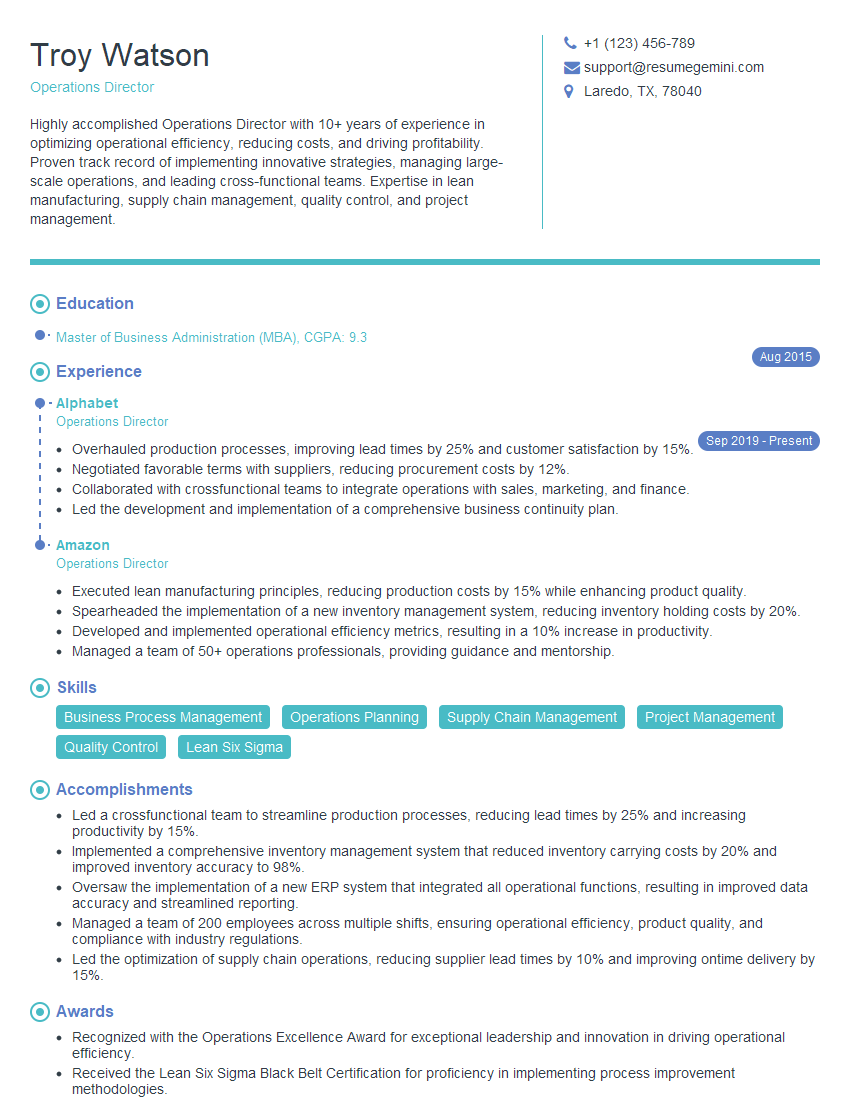
Operations Director Resume Sample

Operations Manager Resume Sample
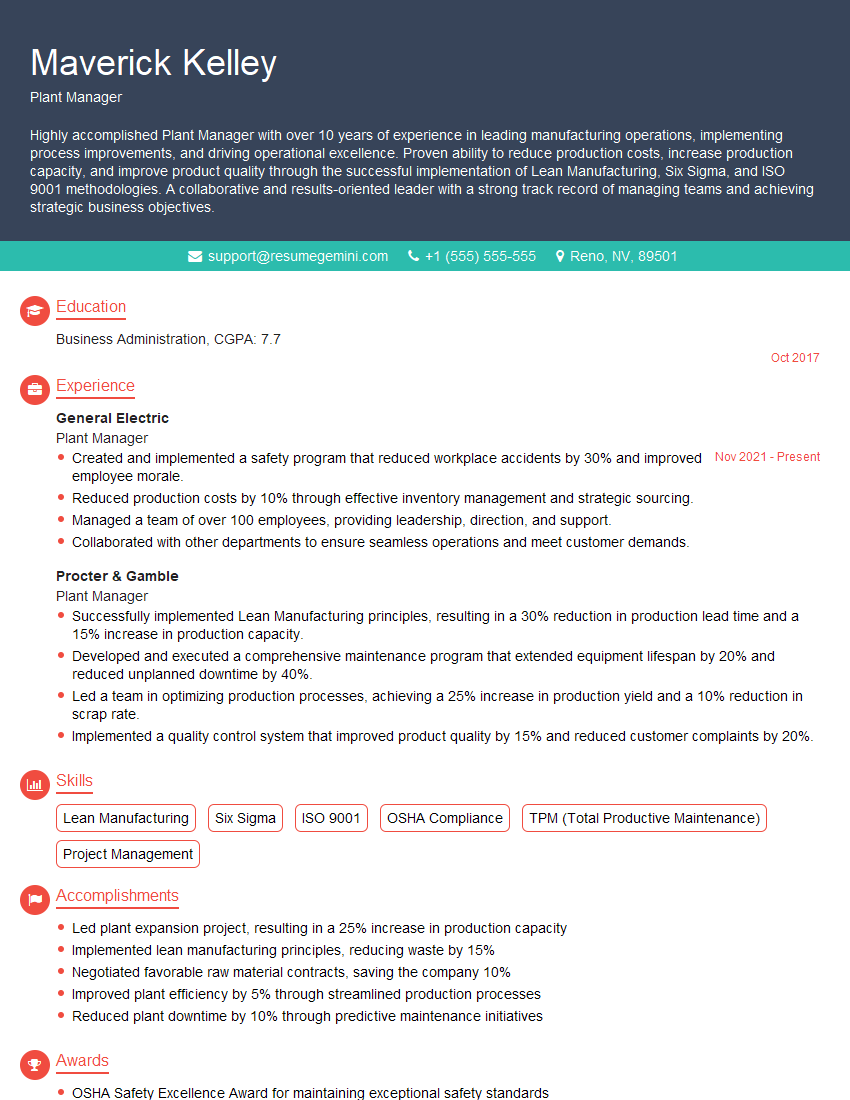
Plant Manager Resume Sample
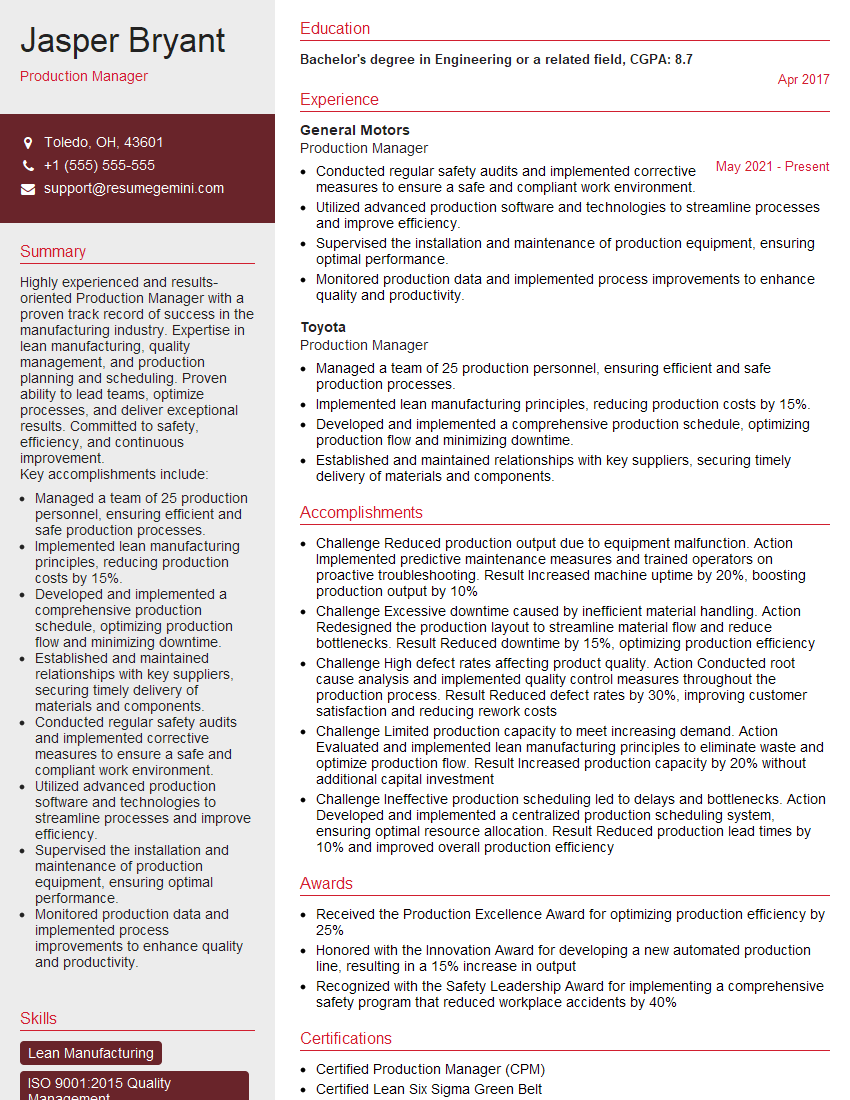
Production Manager Resume Sample
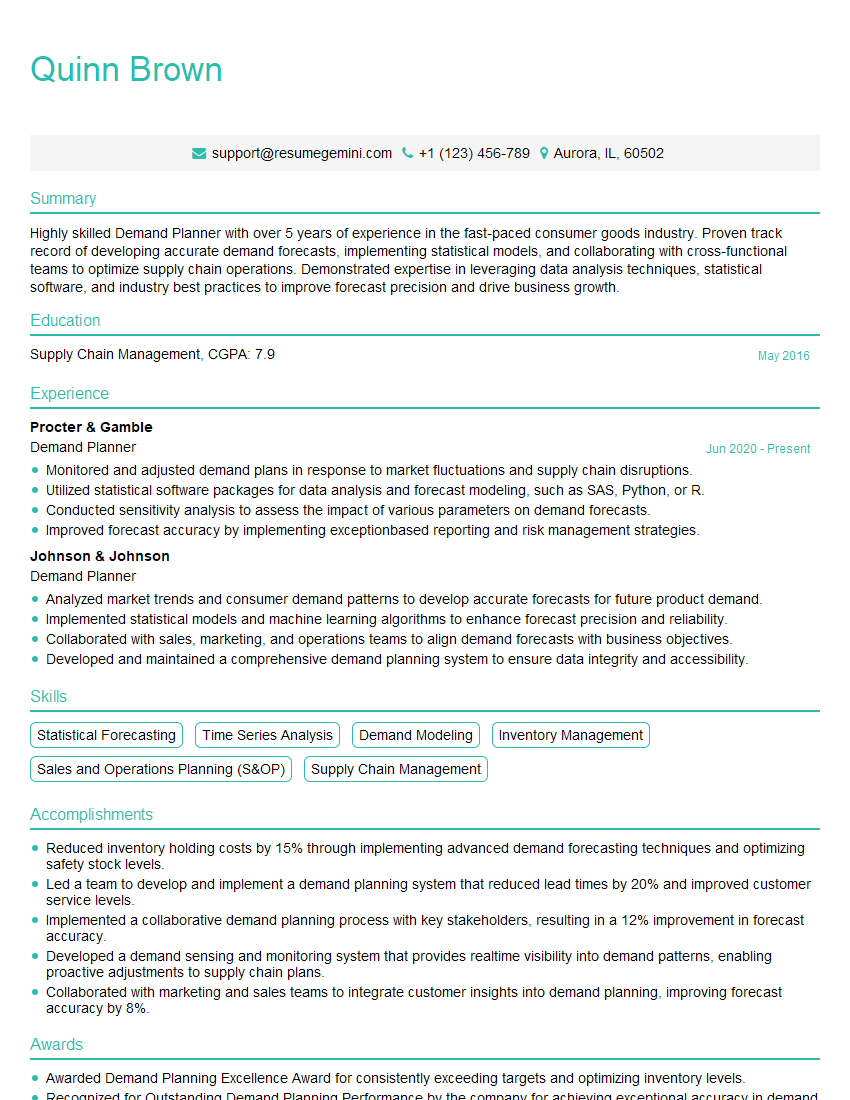
Demand Planner Resume Sample
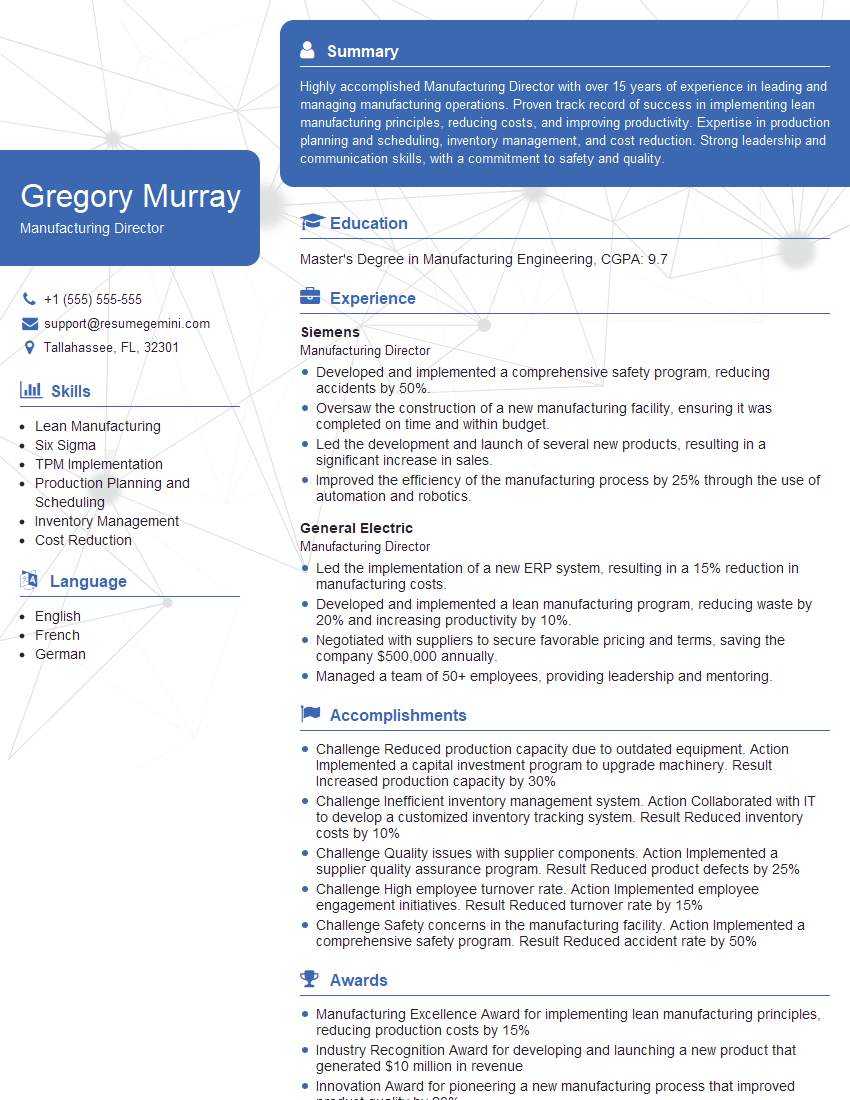
Manufacturing Director Resume Sample
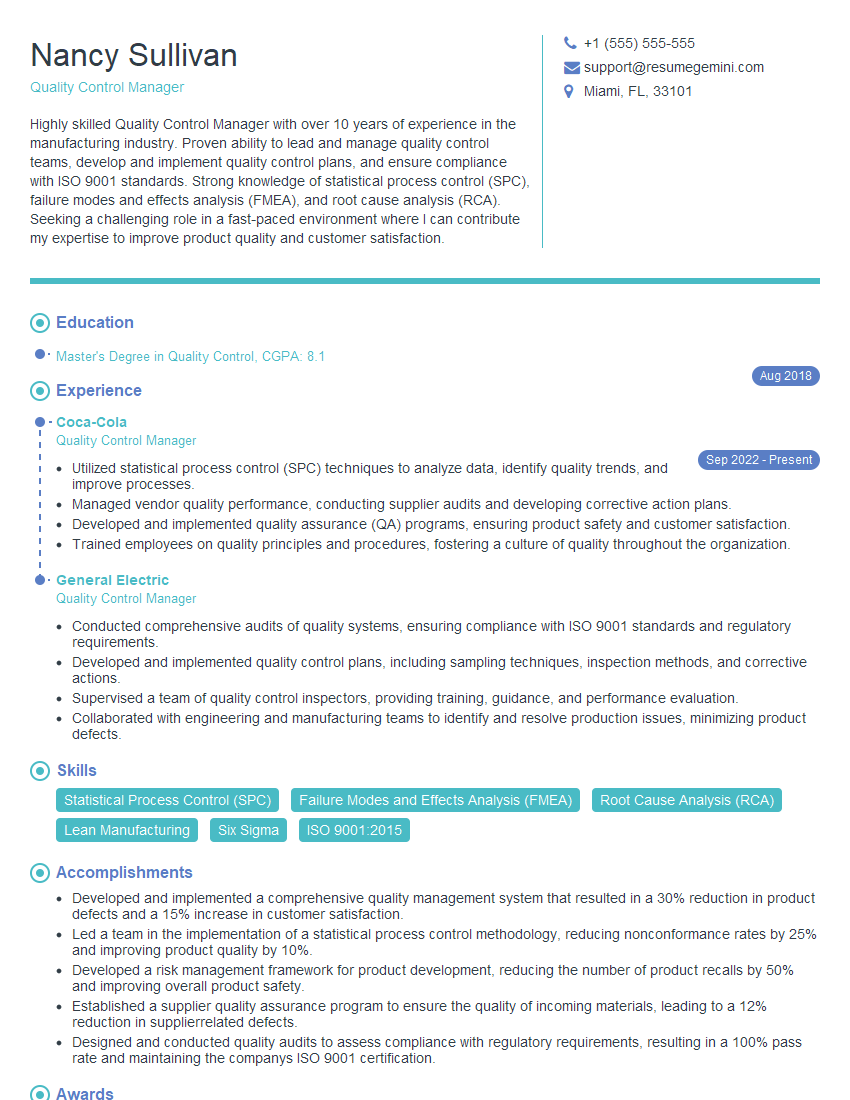
Quality Control Manager Resume Sample
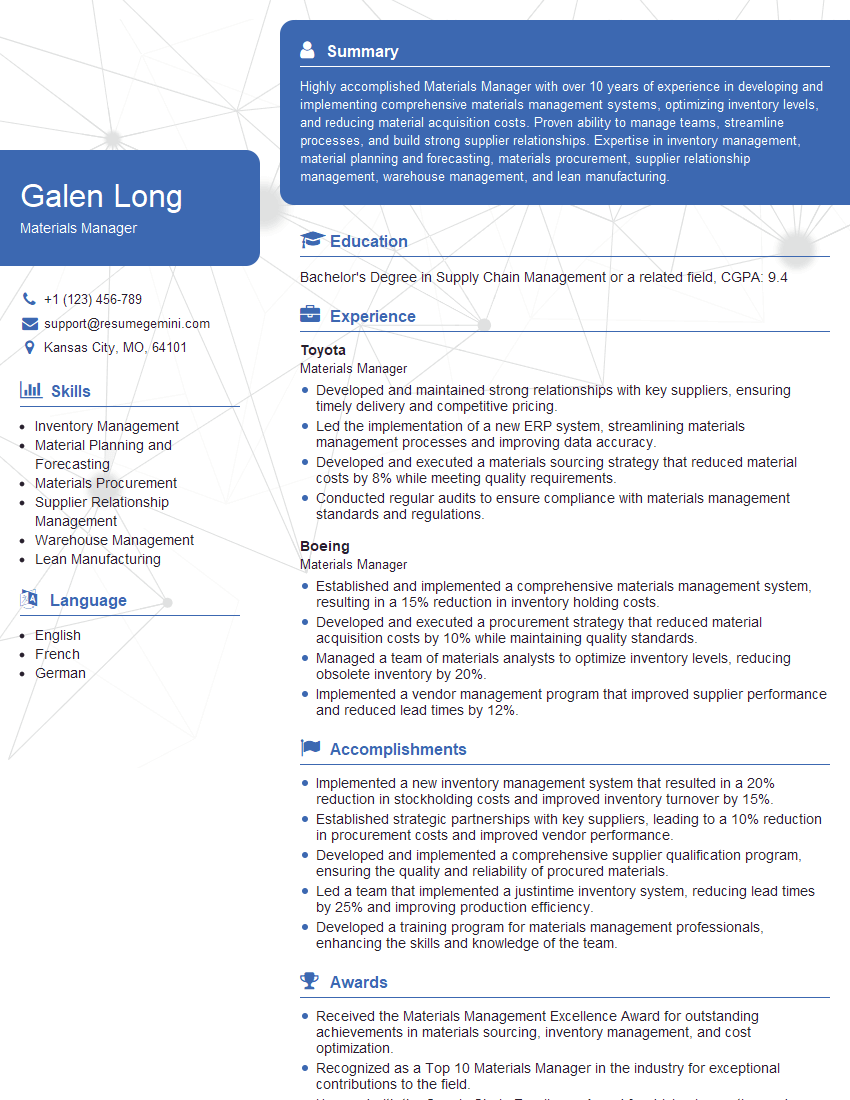
Materials Manager Resume Sample

Procurement Manager Resume Sample
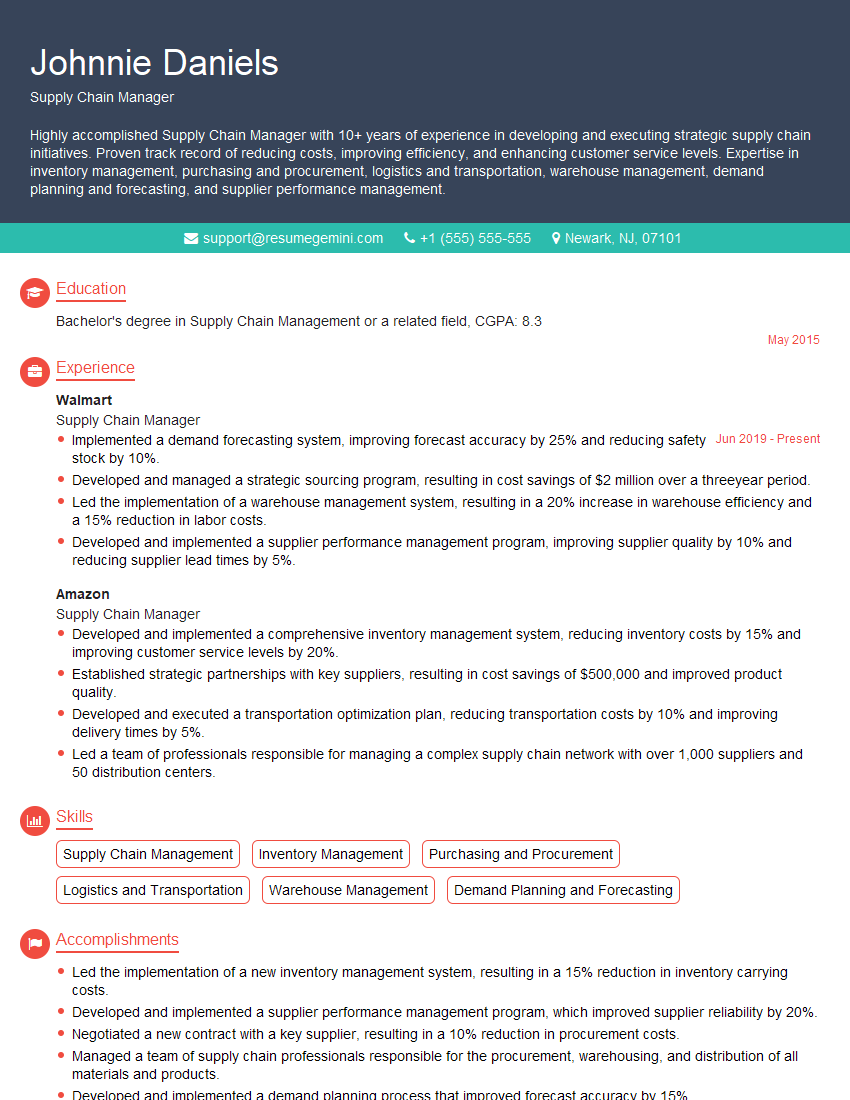
Supply Chain Manager Resume Sample
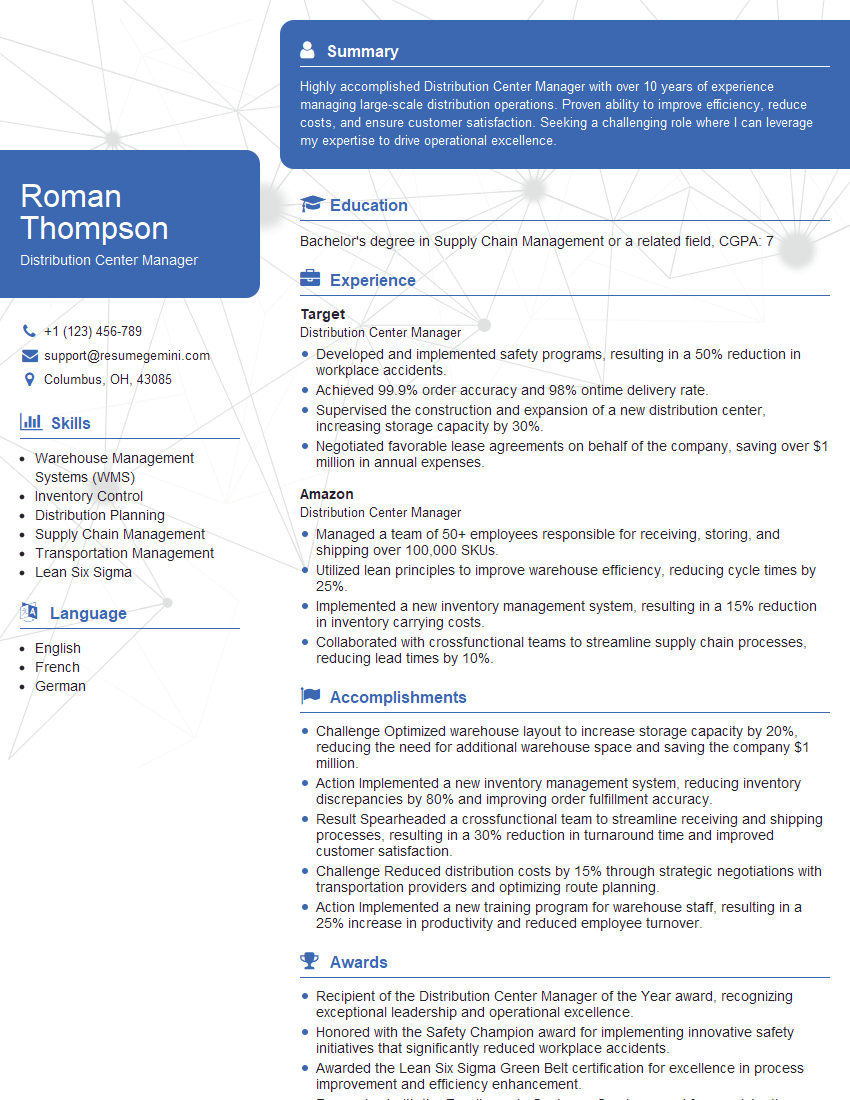
Distribution Center Manager Resume Sample
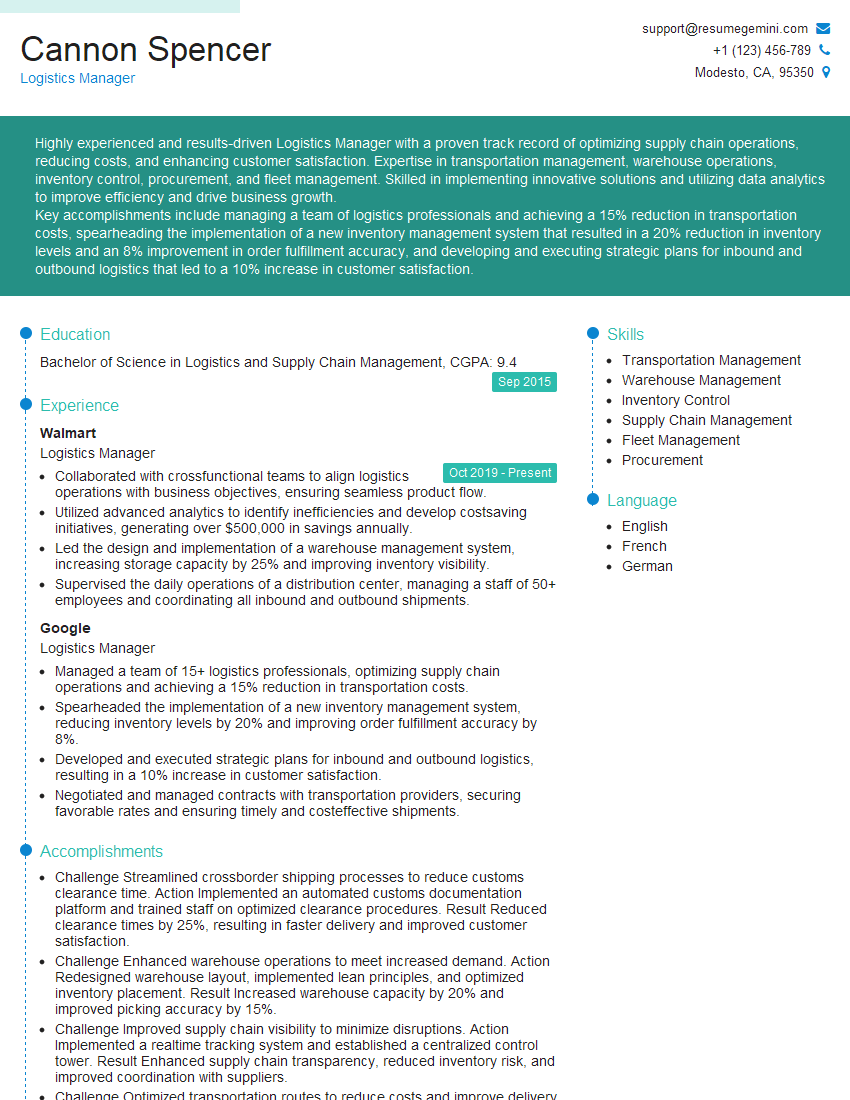
Logistics Manager Resume Sample
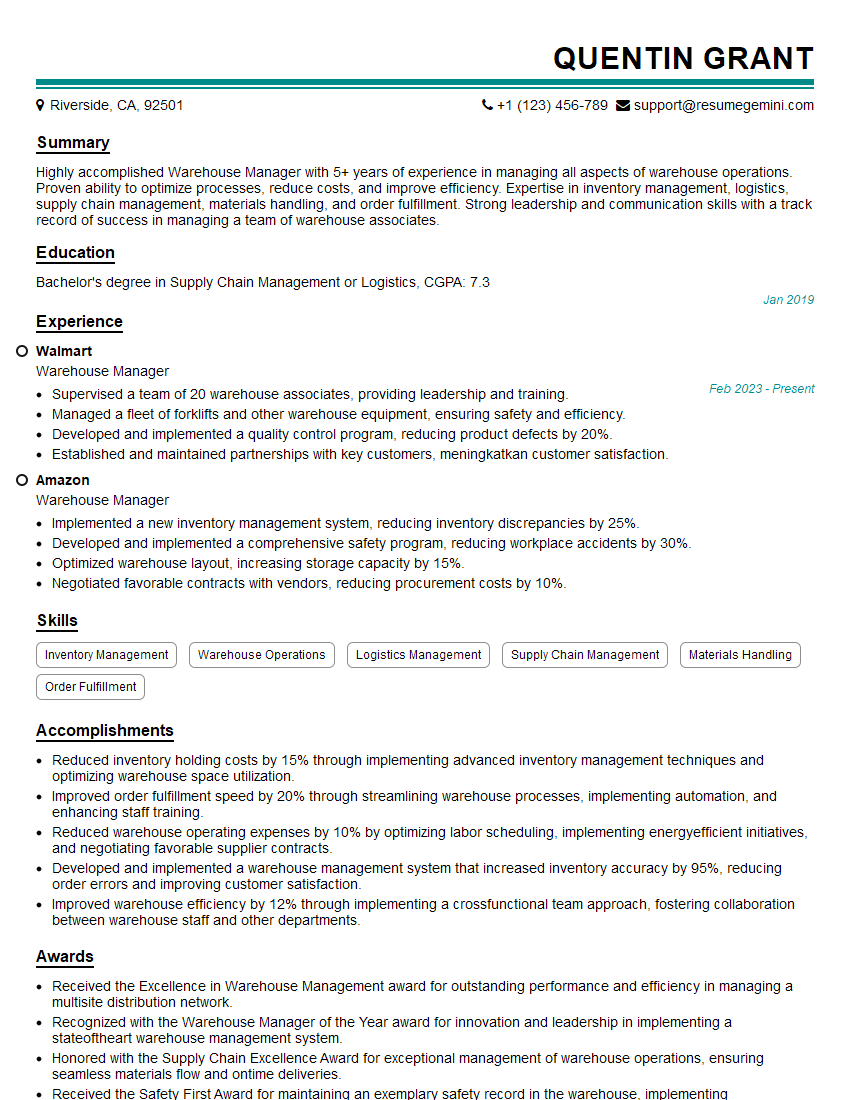
Warehouse Manager Resume Sample
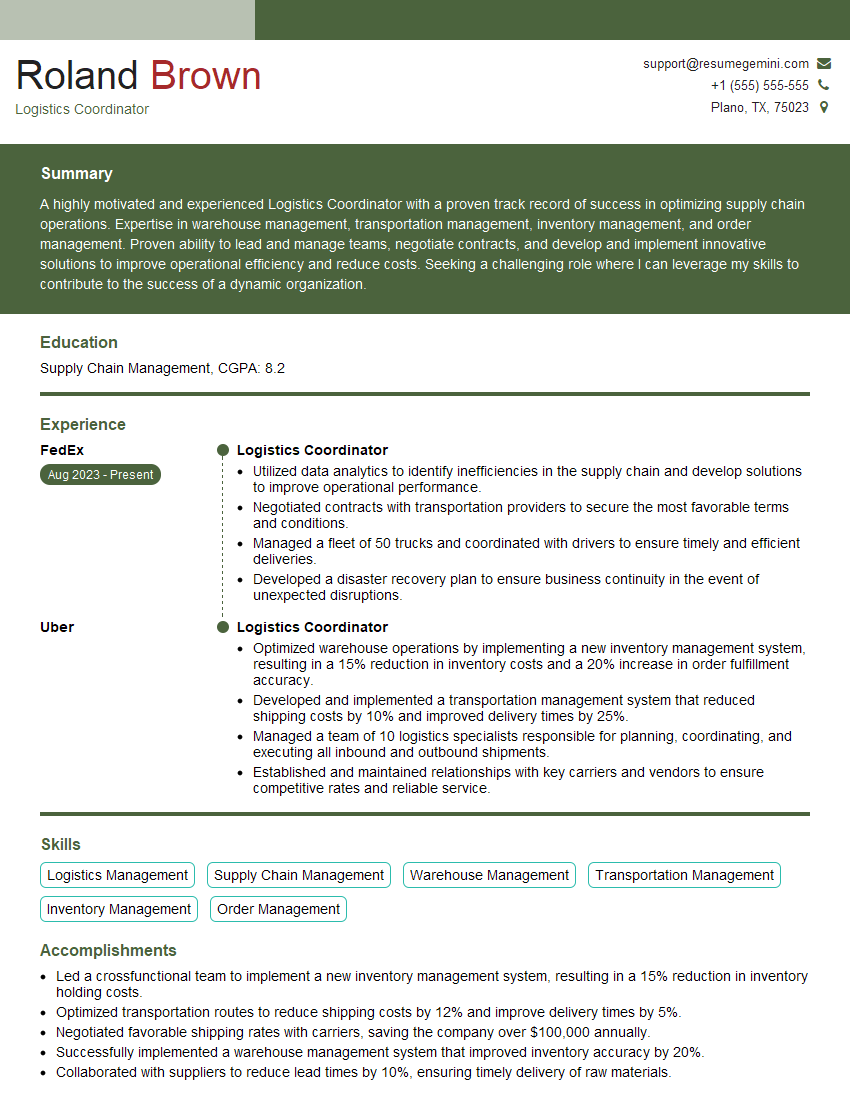
Logistics Coordinator Resume Sample
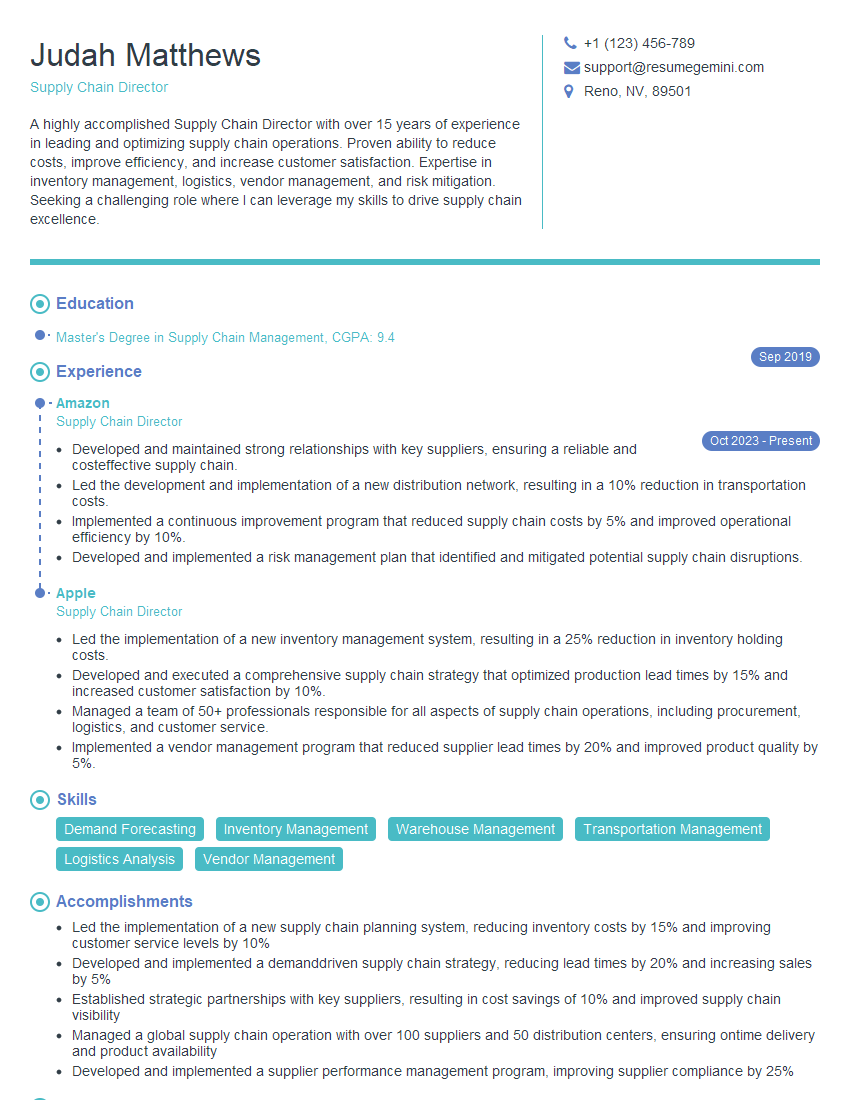
Supply Chain Director Resume Sample
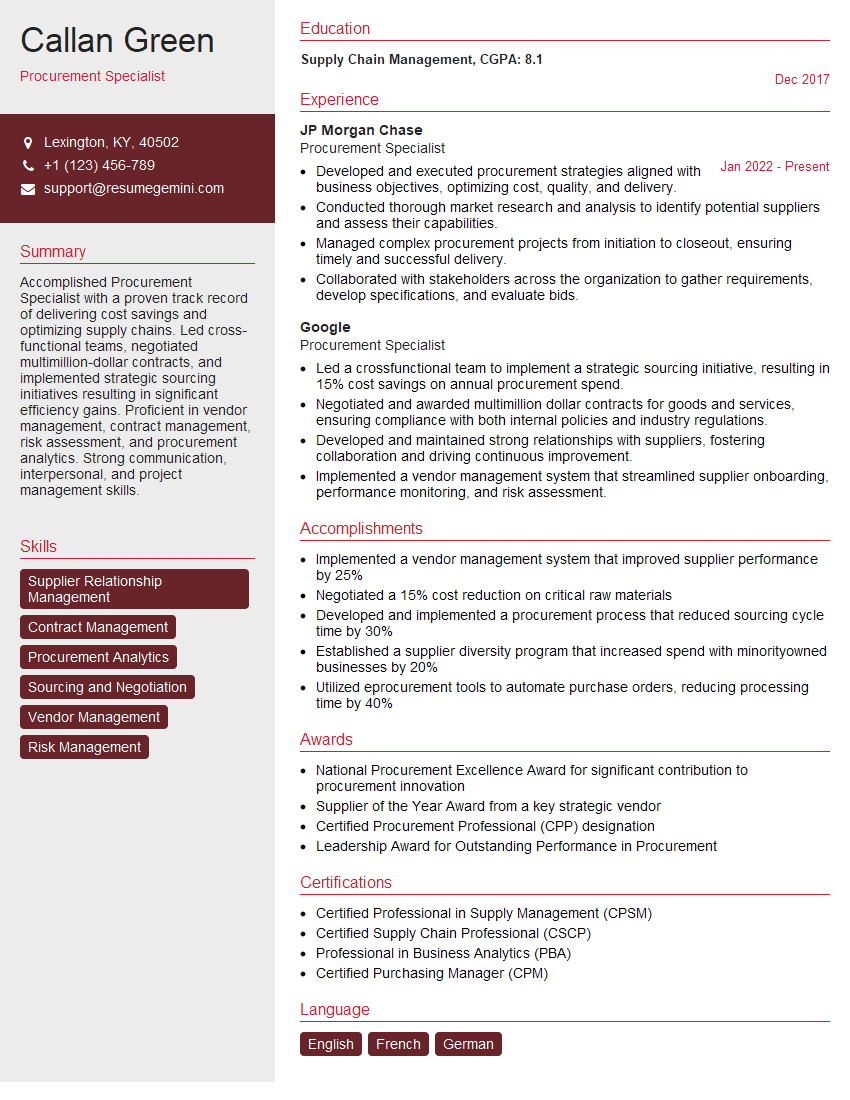
Procurement Specialist Resume Sample
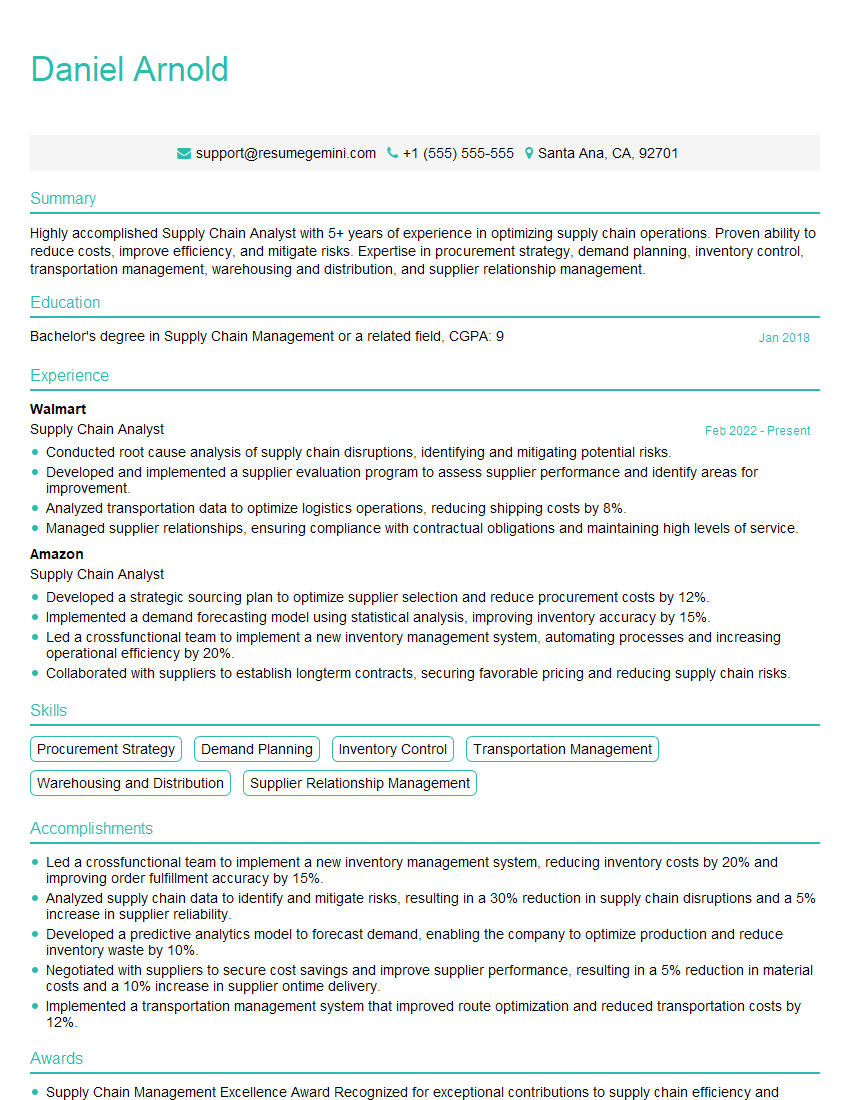
Supply Chain Analyst Resume Sample
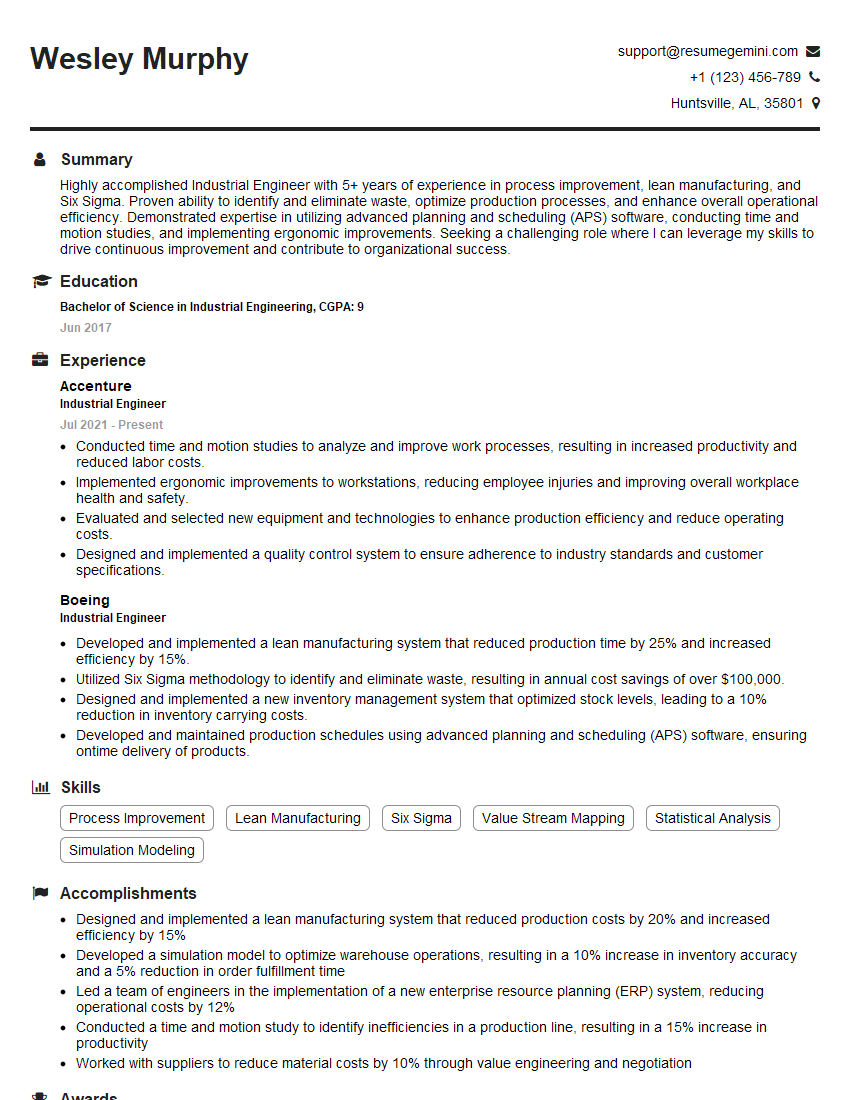
Industrial Engineer Resume Sample
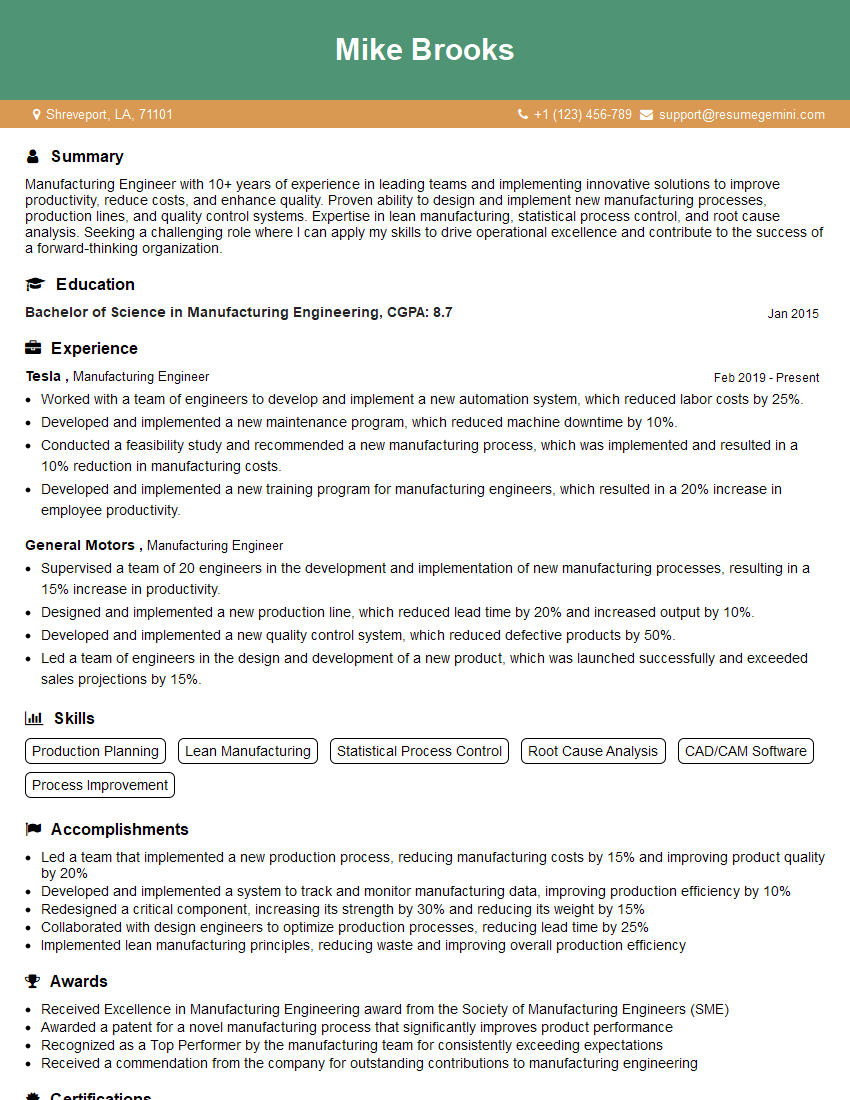
Manufacturing Engineer Resume Sample
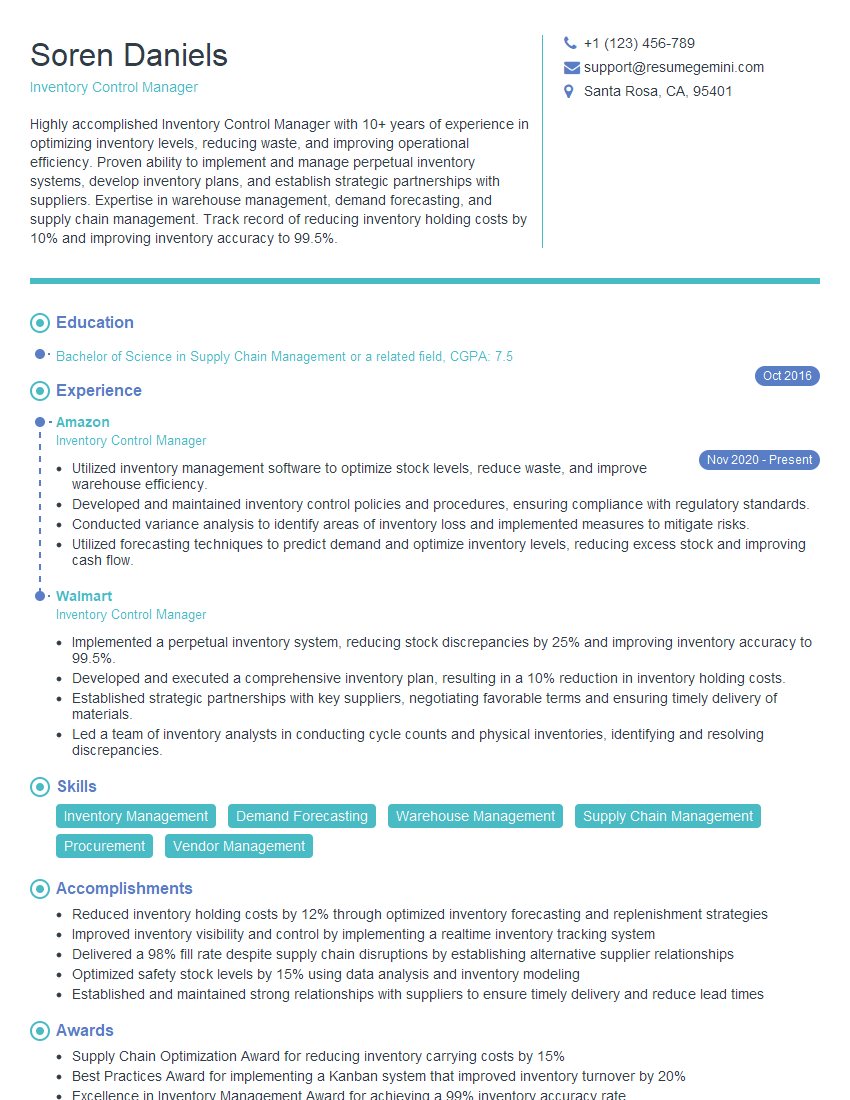
Inventory Control Manager Resume Sample
- Operations Director
- Operations Manager
- Plant Manager
- Production Manager
- Demand Planner
- Manufacturing Director
- Quality Control Manager
- Materials Manager
- Procurement Manager
- Supply Chain Manager
- Distribution Center Manager
- Logistics Manager
- Warehouse Manager
- Logistics Coordinator
- Supply Chain Director
- Procurement Specialist
- Supply Chain Analyst
- Industrial Engineer
- Manufacturing Engineer
- Inventory Control Manager
Explore more articles
Users Rating of Our Blogs
Share Your Experience
We value your feedback! Please rate our content and share your thoughts (optional).
What Readers Say About Our Blog
Very informative content, great job.
good