Preparation is the key to success in any interview. In this post, we’ll explore crucial Measuring and Fitting Techniques interview questions and equip you with strategies to craft impactful answers. Whether you’re a beginner or a pro, these tips will elevate your preparation.
Questions Asked in Measuring and Fitting Techniques Interview
Q 1. Explain the difference between a flat pattern and a draped pattern.
The key difference between flat pattern and draped pattern making lies in how the pattern is created. Flat pattern making involves creating a two-dimensional pattern on paper or fabric, based on standard body measurements and mathematical calculations. This is a more precise and repeatable method, often used for mass production. Draped pattern making, on the other hand, involves directly manipulating fabric on a dress form to create the desired shape. This is a more intuitive and artistic approach, often used for unique designs or complex silhouettes.
Think of it like this: flat pattern making is like baking a cake from a recipe – you follow precise instructions to get a consistent result. Draped pattern making is like sculpting – you shape the fabric to create a unique form.
- Flat Pattern: Uses measurements, calculations, and drafting techniques to create a pattern. More suited for structured garments.
- Draped Pattern: Uses fabric manipulation on a mannequin to achieve desired shape and drape. More suitable for flowing, unstructured designs.
Q 2. Describe your experience with various measuring tools (e.g., tape measure, measuring wheel, body scanner).
My experience with measuring tools is extensive, ranging from basic to advanced technologies. I’m proficient with standard tape measures, accurately taking measurements in both inches and centimeters. I understand the importance of consistent tension and proper placement to avoid errors. I’ve also used measuring wheels for larger areas like determining fabric yardage or measuring floor space for pattern layout. Furthermore, I have experience with 3D body scanners, which provide precise digital measurements. This technology is particularly useful for creating highly customized garments and reducing fitting issues.
For example, using a body scanner significantly speeds up the measurement process and eliminates the potential for human error associated with manual tape measuring. The data collected can then be directly integrated into CAD software for pattern making.
Q 3. How do you handle discrepancies between a standard size chart and individual body measurements?
Discrepancies between standard size charts and individual body measurements are common. I address this by carefully analyzing the differences and making informed adjustments to the pattern. If the discrepancy is minor, I might simply grade the pattern slightly, adding or subtracting ease where necessary. For more significant differences, especially in areas like bust, waist, or hip circumference, I’ll often need to perform pattern alterations, such as adjusting darts, creating control seams, or making full-blown pattern adjustments based on the individual’s unique body shape.
For instance, if a client’s bust measurement exceeds the standard size chart by 2 inches, I’d need to add fullness to the pattern’s bust area, potentially adjusting darts or adding a seam to accommodate the extra fabric.
Q 4. What methods do you use to ensure accurate garment measurements?
Ensuring accurate garment measurements involves a multi-step process. First, I always take measurements on the client themselves using a flexible tape measure, making sure the tape is snug but not pulling against the skin. Measurements are recorded clearly, noting each specific area. I then use these measurements to create a base pattern, checking against industry standards and accounting for ease. During the fitting process, I use a flexible measuring tape to assess areas needing adjustments, comparing the garment’s measurements against the client’s body measurements. This allows me to identify and correct discrepancies such as tightness, looseness, or unevenness.
For example, checking the sleeve length and shoulder width during the fitting stage helps ensure a comfortable and well-proportioned garment.
Q 5. How do you interpret and utilize a grading chart?
A grading chart is a crucial tool in apparel manufacturing. It provides a systematic way to adjust a base pattern to create different sizes. The chart specifies the incremental changes needed for each measurement point across different sizes. The process involves meticulously adding or subtracting measurements to each pattern piece according to the chart’s specifications. This ensures consistency and accuracy in producing garments across a size range.
For example, a grading chart might indicate that for each size increase, the bust circumference should increase by 1 inch, the waist circumference by 0.75 inches, and the hip circumference by 1 inch. I would then apply these increments to the relevant pattern pieces.
Q 6. Explain the process of creating a first sample garment.
Creating a first sample garment is a crucial step in the design and production process. It involves translating the final pattern into a wearable garment. This typically begins with selecting the appropriate fabric and cutting the pattern pieces accurately. I then carefully sew the garment together, paying close attention to detail and following proper sewing techniques. A muslin fitting is done on a model or client to check for any fit or design issues. This initial garment allows us to pinpoint any necessary pattern or design adjustments before mass production.
For example, after creating a muslin sample, we might discover that the sleeve cap needs to be adjusted or that the side seams need to be moved slightly to improve the fit.
Q 7. Describe your experience with different types of fabrics and their impact on fitting.
Different fabrics have vastly different properties that significantly impact fitting. For example, a stable woven fabric like cotton will behave predictably, while a draping fabric like silk will require a different approach during pattern making and fitting. Stretchy fabrics like jersey knit need to be considered differently than non-stretchy fabrics. Understanding the drape, stretch, and weight of a fabric is paramount to designing and creating garments that fit well. A fabric’s weight will affect how it hangs and drapes, potentially influencing the need for adjustments to ease or pattern design. The amount of stretch in a fabric will directly influence the need for ease allowance in pattern creation.
For instance, a garment designed for a stable fabric might become too tight if made from a less stable fabric that lacks body. Conversely, a fabric with excessive drape might require additional structural elements to create a well-fitting garment.
Q 8. How do you identify and correct common fitting issues (e.g., gaping, pulling, wrinkles)?
Identifying and correcting fitting issues is crucial for achieving a well-fitting garment. It’s a process of observation and adjustment, focusing on understanding *why* the garment fits poorly, rather than just *where* it’s wrong. Common issues like gaping, pulling, and wrinkles often point to underlying problems in the pattern or the construction.
- Gaping: This usually indicates the garment is too large in a specific area. It can be caused by incorrect seam allowances, an ill-fitting pattern, or insufficient ease (extra fabric for comfort and movement). To correct gaping, I would first pinpoint the location (e.g., neckline, armhole, waist). I might then consider taking in the seam allowance, making a dart or pleat to reduce excess fabric, or even adjusting the pattern piece itself for a better fit in future garments.
- Pulling: This means the garment is too tight and restricts movement. This often appears across seams, or around the bust or shoulders. It could result from incorrect measurements, poor pattern design, or insufficient ease. To resolve this, I would ease the seam allowance, let out the seam, or, more fundamentally, adjust the pattern to increase the size in the constricted area. A full muslin fitting is invaluable here.
- Wrinkles: Wrinkles reveal areas of excess or insufficient fabric. They might indicate a pattern that doesn’t properly accommodate the body’s curves, or that the fabric’s drape isn’t considered. Addressing wrinkles involves either removing fabric (e.g., by taking in seams or making darts), or adding fabric where it’s lacking (e.g., by letting out seams or adding fabric panels). Sometimes, simply changing the fabric can drastically improve the fit.
For example, if a blouse has gaping at the neckline, I would consider adding a small dart at the shoulder or adjusting the neckline curve itself. If a skirt pulls across the hips, I might let out the side seams or even completely redraw the hip curve on the pattern.
Q 9. What software or CAD systems are you proficient in for pattern making or grading?
My expertise in pattern making and grading extends to several leading software and CAD systems. I’m highly proficient in Adobe Illustrator for its precision and versatility in creating and manipulating vector graphics for pattern design. I also have extensive experience with Pattern Design Software such as OptiTex and Lectra Modaris, which allow for advanced pattern grading, marker making, and 3D simulation, enabling greater accuracy and efficiency in the pattern-making process. I am comfortable with both 2D and 3D CAD software approaches, understanding the benefits and limitations of each for different projects.
Q 10. Describe your experience with different fitting techniques (e.g., muslin fitting, basted fitting).
Muslin and basted fittings are essential tools in my fitting process. They provide critical feedback before investing significant time and effort into the final fabric.
- Muslin Fitting: This is the most common first fitting, where I construct a garment from inexpensive muslin fabric using the initial pattern. It helps identify major fit issues before cutting into expensive materials. Muslin’s lightweight and drapey nature aids in observing how the pattern drapes on the body.
- Basting Fitting: A basted fitting uses the actual fabric and involves basting (loosely stitching) the garment together. This fitting provides a more accurate preview of the final garment’s fit and allows for finer adjustments related to fabric drape and texture. It’s particularly helpful for fabrics with significant drape or texture.
I’ve used both methods extensively throughout my career, often combining them. A muslin fitting might reveal large fit issues, which I then address in the pattern. A subsequent basted fitting helps fine-tune details. For example, in a recent project with a silk charmeuse dress, the muslin fitting highlighted significant issues in the bodice, but only the basted fitting revealed slight wrinkles at the back which I could easily address with a small adjustment at the waist.
Q 11. How do you communicate fitting adjustments to a pattern maker or sewer?
Communicating fitting adjustments requires clear, precise instructions. I avoid ambiguous terms and use precise measurements and diagrams. My preferred method combines written notes with visual aids.
- Written Notes: I detail the specific area needing adjustment (e.g., ‘Let out the side seam at the hip by 1cm on each side’), including the direction and amount of adjustment. I also note the relevant seam or pattern piece.
- Visual Aids: I often sketch the adjustments directly onto the pattern piece or create a separate diagram illustrating the changes. This minimizes the chance of misinterpretation and ensures the pattern maker or sewer understands exactly what’s needed.
- Detailed Pattern Markings: If adjustments are subtle, I’ll use clear markings on the pattern piece itself, indicating exact points and measurements.
For instance, if a sleeve is too tight at the bicep, I wouldn’t just say ‘make it bigger’. Instead, I’d write ‘Let out the sleeve seam at the bicep by 0.5cm on each side’ and draw arrows showing the location and direction on the pattern.
Q 12. Explain the importance of taking accurate body measurements.
Accurate body measurements are the foundation of good garment fitting. Inaccurate measurements can lead to ill-fitting garments that are either too tight or too loose. The importance extends beyond just the overall size; it includes capturing the nuances of the body’s shape – the difference between waist and hip measurements, for example, significantly impacts the fit of skirts and trousers.
- Precision: Measurements should be precise, using a flexible tape measure and following standardized measurement techniques to ensure consistency.
- Multiple Measurements: Taking multiple measurements of the same area (e.g., waist) from different angles provides a more comprehensive picture.
- Understanding Body Shapes: Understanding different body types (e.g., pear, apple, hourglass) guides which measurements are most crucial for accurate pattern selection or adaptation.
Imagine trying to make a dress shirt without accurately measuring the chest circumference. The result might be a shirt that’s too tight, causing discomfort, or too loose, looking sloppy. Taking accurate measurements ensures the garment’s pattern is designed appropriately for the wearer’s unique body shape.
Q 13. How do you adapt patterns to accommodate different body types?
Adapting patterns to accommodate different body types involves understanding the principles of pattern alteration and recognizing how different body shapes affect the fit of clothing. I utilize several techniques:
- Full Bust Adjustments: For larger busts, I adjust the pattern to accommodate extra fullness and prevent pulling across the bust point.
- Waist Adjustments: I modify the waistline to align with the natural waist and accommodate variations in waist circumference.
- Hip Adjustments: Similar to waist adjustments, altering hip measurements prevents pulling across the hips.
- Shoulder Slope Adjustments: I modify shoulder seams to consider variations in shoulder slope, ensuring comfort and a proper fit.
- Grading: Grading is the systematic process of adjusting a base pattern to create different sizes. This is essential in accommodating a wide range of body types.
For example, a client with a full bust would require a full bust adjustment to ensure the garment fits comfortably and doesn’t pull across the bust point. Similarly, a client with a curvy figure might require adjustments at the waist and hips to ensure a flattering and well-fitting garment.
Q 14. Describe your experience working with fit models.
Working with fit models is a crucial part of my process, particularly for collections or designs needing a professional fit. Fit models are specifically chosen for their body shapes, representing a range of body types that a designer targets. The collaborative process helps refine the fit across several iterations.
- Collaboration: I work closely with fit models to assess the fit of garments, providing detailed feedback and instructions. They provide valuable insights into the garment’s comfort and overall appearance. Open communication is paramount.
- Data Collection: Accurate measurements are taken of the fit model. This information allows for pattern adjustments and modifications.
- Multiple Fittings: Several fittings are typically required, each refining the fit until the desired result is achieved. This iterative approach is vital for ensuring a perfect fit.
In a recent project for a bridal collection, working with fit models was essential. We conducted multiple fittings, tweaking the fit across various body types. The fit models’ feedback was invaluable in identifying and resolving potential issues, resulting in garments that flattered a range of body shapes.
Q 15. How do you ensure consistency in measurements and fit across multiple garments?
Consistency in measurements and fit across multiple garments is paramount. It’s achieved through a combination of standardized procedures, meticulous record-keeping, and the use of consistent tools. Think of it like baking a cake – you need the same recipe and precise measurements each time to get the same result.
- Standardized Measurement System: Implementing a single, clearly defined measurement system is crucial. This means using the same measuring tape (preferably a non-stretchable, flexible one), taking measurements in the same manner (e.g., always measuring across the fullest part of the bust), and recording measurements consistently (e.g., using centimeters or inches exclusively).
- Detailed Block Patterns: Starting with a well-drafted block pattern – a basic pattern for a specific body type – forms a solid foundation. All subsequent garments will be adapted from this base, ensuring consistency in fit characteristics. Any alterations made to this block are meticulously documented.
- Quality Control Checks: Regular quality control checks at each stage of production—from pattern cutting to final fitting—are essential to catch inconsistencies early. This might involve comparing measurements of multiple cut pieces from the same pattern or using digital grading software for precise scaling across sizes.
- Digital Tools: Software programs specifically designed for apparel manufacturing provide accurate grading, pattern manipulation, and automated measurements, helping eliminate human error and ensuring consistency across batches.
Career Expert Tips:
- Ace those interviews! Prepare effectively by reviewing the Top 50 Most Common Interview Questions on ResumeGemini.
- Navigate your job search with confidence! Explore a wide range of Career Tips on ResumeGemini. Learn about common challenges and recommendations to overcome them.
- Craft the perfect resume! Master the Art of Resume Writing with ResumeGemini’s guide. Showcase your unique qualifications and achievements effectively.
- Don’t miss out on holiday savings! Build your dream resume with ResumeGemini’s ATS optimized templates.
Q 16. What is your experience with quality control processes related to fitting and measurements?
My experience with quality control in fitting and measurements involves a multi-faceted approach. It’s not just about the final product but also about the entire process. I’ve worked in environments where we utilized statistical process control (SPC) techniques to monitor measurement variations and identify potential sources of error.
- Pre-production Sampling: I meticulously review samples at various production stages. This involves comparing measurements against the specifications, inspecting the garment for any construction flaws that may affect fit, and conducting fit sessions with models representing a range of sizes.
- Tolerance Ranges: Understanding and setting realistic tolerance ranges for measurements are critical. A slight variation in measurements is inevitable, but exceeding pre-defined tolerances signals a potential problem that requires immediate attention and corrective action.
- Documentation and Analysis: Thorough documentation of every measurement, fitting session, and adjustment is vital for identifying trends and patterns. Analyzing this data can reveal recurring issues and guide improvements in the design or production process.
- Feedback Mechanisms: Establishing clear feedback loops between pattern makers, sample machinists, and fit models ensures that any issues are addressed promptly. This collaborative approach is crucial for continuously improving the quality control process.
Q 17. How do you handle situations where a garment doesn’t fit correctly despite accurate measurements?
Even with accurate measurements, garments may not fit perfectly due to factors like fabric drape, body posture, or individual variations in body shape. Addressing these discrepancies involves a systematic approach.
- Re-evaluate Measurements: Double-check the original measurements and the finished garment measurements. Sometimes, minor discrepancies can be resolved by slight adjustments.
- Analyze the Fit Issues: Carefully assess where the garment is too tight or too loose. Identify specific areas needing correction, like shoulder width, bust circumference, waistline, or length.
- Fabric Drape and Stretch: The fabric’s drape and stretch significantly impact fit. A stiff fabric might pull differently than a drapey one, requiring adjustments to the pattern. Similarly, high-stretch fabrics need different ease allowances.
- Make Targeted Adjustments: Based on the analysis, make specific adjustments to the pattern, such as easing in or letting out seams, adjusting the dart placement, or altering the neckline. This often involves creating a muslin mock-up for testing the adjustments.
- Final Fitting: After making adjustments, conduct a final fitting to ensure the garment fits correctly. This step often involves multiple iterations to achieve the desired fit.
Q 18. Explain your understanding of ease and its application in pattern making.
Ease is the extra fabric added to a garment pattern to ensure comfort and ease of movement. It’s the difference between the body measurement and the finished garment measurement. Think of it like giving your body some breathing room!
- Types of Ease: There are different types of ease, including design ease (for style and drape), functional ease (for movement), and fitting ease (to accommodate body variations).
- Application in Pattern Making: Ease is added to the pattern during the design phase. The amount of ease depends on the garment type, fabric, and intended fit. For example, a snug-fitting garment requires less ease than a loose-fitting one.
- Calculating Ease: The amount of ease is typically expressed as a percentage or number of inches/centimeters added to specific body measurements. For example, a 1-inch ease allowance around the bust would mean adding 1 inch to the bust measurement when constructing the pattern.
- Importance of Ease: Incorrect ease allowances can lead to garments that are either too tight and uncomfortable or too loose and shapeless. Careful consideration of ease is crucial to achieve the desired balance between fit and style.
Q 19. How do you document fitting adjustments for future reference?
Documenting fitting adjustments is essential for maintaining consistency and improving future designs. This often involves a combination of methods:
- Detailed Sketches: Hand-drawn sketches of the adjustments on the pattern pieces, clearly indicating the location and amount of alteration (e.g., ‘Let out side seam by 1cm at hip’).
- Digital Annotation: Using digital pattern design software to mark and numerically document changes directly onto the digital pattern. This allows for easy retrieval and modification.
- Spreadsheet Records: Maintaining a spreadsheet database of alterations for specific sizes and garment styles. This facilitates identifying common adjustment patterns and trends.
- Grading Specifications: Creating updated grading specifications (the process of scaling the pattern for different sizes) to incorporate recurring alterations to ensure consistent fit across the size range.
- Photographs and Notes: Taking photographs of the muslin mock-up and the final fitting, along with written notes describing the specific fit issues and the adjustments made, is invaluable.
This comprehensive approach ensures that adjustments can be easily replicated and refined in subsequent productions.
Q 20. Describe your experience with different types of closures (e.g., zippers, buttons, hooks and eyes).
My experience encompasses various closure types, and understanding their properties is crucial for successful garment construction. Each type presents unique challenges and opportunities.
- Zippers: I’m experienced with different zipper types (e.g., invisible, separating, metal, plastic) and their application in various garment styles. I understand techniques for inserting zippers smoothly and ensuring clean finishes.
- Buttons: I’m proficient in selecting appropriate button types (e.g., size, material, shape) and techniques for buttonhole creation. I consider button spacing, button placement, and button strength in relation to the garment’s overall structure.
- Hooks and Eyes: I’m adept at using hooks and eyes, selecting suitable sizes and placements, and ensuring their durability and secure closure.
- Other Closures: My experience extends to other closures like snaps, toggles, and Velcro, understanding their strengths and limitations in various applications. Each closure impacts the overall fit and feel of the garment.
The choice of closure influences the ease of dressing and the overall aesthetic of the garment; therefore, choosing the right closure is an essential part of the design process.
Q 21. How do you address fit problems related to specific body areas (e.g., shoulders, bust, waist, hips)?
Addressing fit problems in specific body areas requires a precise understanding of body proportions and how they interact with garment construction. Each area presents its own set of challenges:
- Shoulders: Shoulder fit issues (e.g., too narrow, too wide, sloping shoulders) are addressed by adjusting the shoulder seam, modifying the sleeve cap height, and adjusting the neckline.
- Bust: Bust fit issues (e.g., too tight, too loose) often involve altering darts, adjusting the bust circumference, and making adjustments to the princess seams or other shaping techniques.
- Waist: Waist fit problems (e.g., too high, too low, too tight, too loose) require adjustment of the waistline seam, adjusting darts, and possibly altering the overall shaping of the garment.
- Hips: Hip fit issues (e.g., too tight, too loose, uneven hips) often involve adjusting the hip circumference, considering the placement and size of hip darts or other shaping techniques, and possibly adjusting the hemline.
It’s crucial to analyze each problem individually and make targeted adjustments to the pattern. A holistic approach, considering the interplay between different body areas, is essential for creating a well-fitting garment.
Q 22. What is your experience with industrial sewing machines and their impact on fit?
My experience with industrial sewing machines is extensive, spanning over 15 years. I’ve worked with a variety of machines, from single-needle to multi-needle, and understand their capabilities and limitations intimately. The type of machine significantly impacts fit. For instance, a lockstitch machine offers a strong, consistent seam crucial for durability, directly affecting the longevity of the garment’s fit. Conversely, using a serger for seams that need significant stretch requires careful consideration of its impact on the overall fit, as it can sometimes alter the drape and shape of the fabric. The stitch length and tension settings are also critical; incorrect settings can lead to puckering, distortion, and ultimately, a poor fit. I’ve often found that understanding the machine’s nuances allows me to compensate for any potential fit issues during construction, ensuring a precise and beautiful final product.
For example, when working with heavy fabrics like denim, I use a robust industrial machine designed for that purpose to prevent stitch breakage which could compromise the fit. For delicate fabrics, however, a gentler machine with adjustable settings is preferred to avoid damage and maintain a refined drape.
Q 23. Describe your process for creating a sloper.
Creating a sloper, or a basic bodice block, is fundamental to pattern making. My process begins with meticulous body measurements taken according to standardized procedures. These measurements inform the initial draft of the sloper on pattern paper. I then use a muslin to create a toile, fitting it on the client/model to assess fit and make necessary adjustments. This involves easing, shaping, and grading the muslin until the fit is nearly perfect. The process iterates; I re-cut the muslin based on the adjustments and repeat the fitting process until it sits smoothly and accurately on the body. Finally, I trace the perfected muslin onto pattern paper to create the final sloper, ready for modifications and style variations. This detailed approach ensures a precise base pattern for future garments, tailored to the individual’s unique body shape.
Think of it like building a house: you need a strong foundation (sloper) before you can add the details (style variations).
Q 24. How familiar are you with different types of seams and their effect on garment fit?
My familiarity with different seam types and their impact on garment fit is thorough. Different seams are selected depending on the desired aesthetic and functionality of the garment. For instance, a French seam is ideal for a clean, high-end finish, and it’s exceptionally durable, but it can add bulk if not carefully constructed. It’s not ideal for stretchy fabrics. A flat-felled seam, frequently used in menswear, is incredibly strong and durable, but it is less flexible than other seam types. Understanding this allows me to select the most appropriate seam for each design detail and fabric type. The seam allowance, as well as the seam type, impacts the final fit. A smaller seam allowance can create a more fitted garment, while a larger seam allowance can create a more relaxed fit. Inaccurate seam construction, like uneven stitching or improper pressing, can result in distorted seams that compromise the overall fit.
Consider a shirt: using French seams on the upper body sections would provide a neat finish and durability, while using a simpler seam for the sleeves would be both time and cost-effective.
Q 25. How do you ensure the durability and longevity of the fit in your garments?
Durability and longevity of fit are ensured through a combination of techniques. First and foremost, selecting high-quality fabrics is crucial. Fabrics that hold their shape and resist stretching or shrinking are essential for long-lasting fit. Using appropriate interfacing, which adds structural support and shape retention, is also important. Precise cutting and meticulous seam construction are paramount. Using appropriate stitching techniques, such as reinforcing seams at stress points, further enhance durability. Finally, proper garment care instructions ensure the garment retains its shape and fit over time. This combination ensures the garment maintains its form and fit throughout its lifecycle, significantly extending its wearable life.
An example would be using a durable interfacing on a collar to prevent it from losing shape over time, retaining a crisp and fitted silhouette.
Q 26. Describe a time you had to troubleshoot a complex fitting issue. What was your approach?
Once, I encountered a complex fitting issue on a tailored jacket. The back of the jacket was consistently pulling across the shoulders, despite multiple fittings and adjustments. My approach involved systematically investigating potential causes. I started by checking the pattern again, then examined the shoulder seams, ensuring they were properly balanced and smooth. Next, I scrutinized the back dart placement and its depth and angle, as these factors strongly influence the fit across the upper back. After careful analysis, I realized the dart placement was slightly off, creating the unwanted pulling. A small adjustment to the dart corrected the problem. This highlights the importance of a methodical approach to troubleshooting fit issues; systematically eliminating possibilities, one by one, is crucial. This methodology is applicable to many complex fitting challenges.
Q 27. What are some common mistakes to avoid when taking body measurements?
Several common mistakes can affect the accuracy of body measurements, leading to ill-fitting garments. One common error is inconsistent measuring techniques. Using a flexible tape measure incorrectly, not pulling the tape snugly but not too tight, can create inaccurate results. Another mistake is measuring over clothing instead of directly against the skin. This adds unnecessary bulk and leads to measurements that are significantly larger than they should be. Failing to measure in the correct posture (standing tall with good posture) can also result in skewed results. Additionally, rounding measurements up or down without precision can accumulate significant errors, impacting the final fit. Finally, neglecting to account for ease allowances, the additional fabric included for comfort and movement, can result in garments that are too tight.
Think of measuring like a chef’s precision: slight inaccuracies compound into a huge difference in the final result.
Q 28. Explain your understanding of tolerance in garment construction and its relevance to fitting.
Tolerance in garment construction refers to the acceptable range of variation in measurements during the manufacturing process. This is crucial for achieving a consistent fit. Tolerance accounts for the limitations of manufacturing processes, such as variations in fabric shrinkage, cutting inaccuracies, and seam allowances. For example, a tolerance of +/- 1/8 inch in seam allowances is common. This means that the actual seam allowance can vary by up to 1/8 inch without significantly affecting the overall fit. It’s important to consider the tolerance of each step to ensure that the final product remains within the acceptable fit range. Ignoring tolerance can result in inconsistent sizing and fitting problems, especially in mass production, where small errors can accumulate and have a noticeable impact on the final product.
Imagine building a house – you wouldn’t expect every single brick to be exactly identical; a small margin of error is tolerated while maintaining the overall structure.
Key Topics to Learn for Measuring and Fitting Techniques Interview
- Body Measurement Techniques: Understanding standard body measurement methods (e.g., tape measure usage, accurate landmark identification), and adapting techniques for different body types and garments.
- Pattern Alteration & Adjustment: Practical application of measurements to adjust existing patterns, including grading, slashing, and other modification techniques to achieve a perfect fit.
- Fitting Process & Troubleshooting: Understanding the iterative fitting process, identifying common fit issues (e.g., ease, drape, balance), and developing effective problem-solving strategies for adjustments.
- Fabric Properties & Their Impact on Fit: Knowledge of how different fabric types (drape, stretch, weight) influence garment fit and the necessary adjustments needed for optimal results.
- Advanced Fitting Techniques: Exploring specialized fitting methods for various garment types (e.g., tailored jackets, dresses, trousers), considering individual body variations and construction methods.
- Tools & Technology: Familiarity with relevant tools and technologies used in measuring and fitting (e.g., digital measuring tools, CAD software for pattern making).
- Quality Control & Standards: Understanding industry standards for fit and quality control procedures to ensure consistent and accurate results.
Next Steps
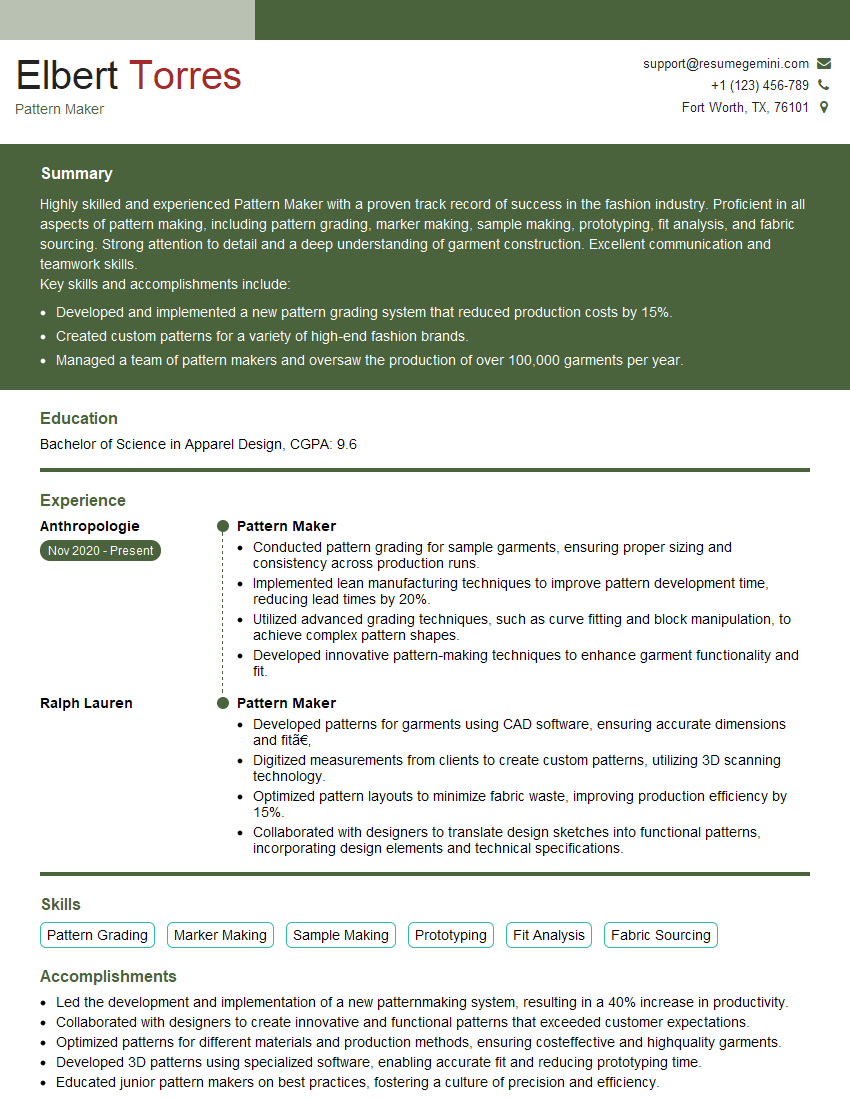
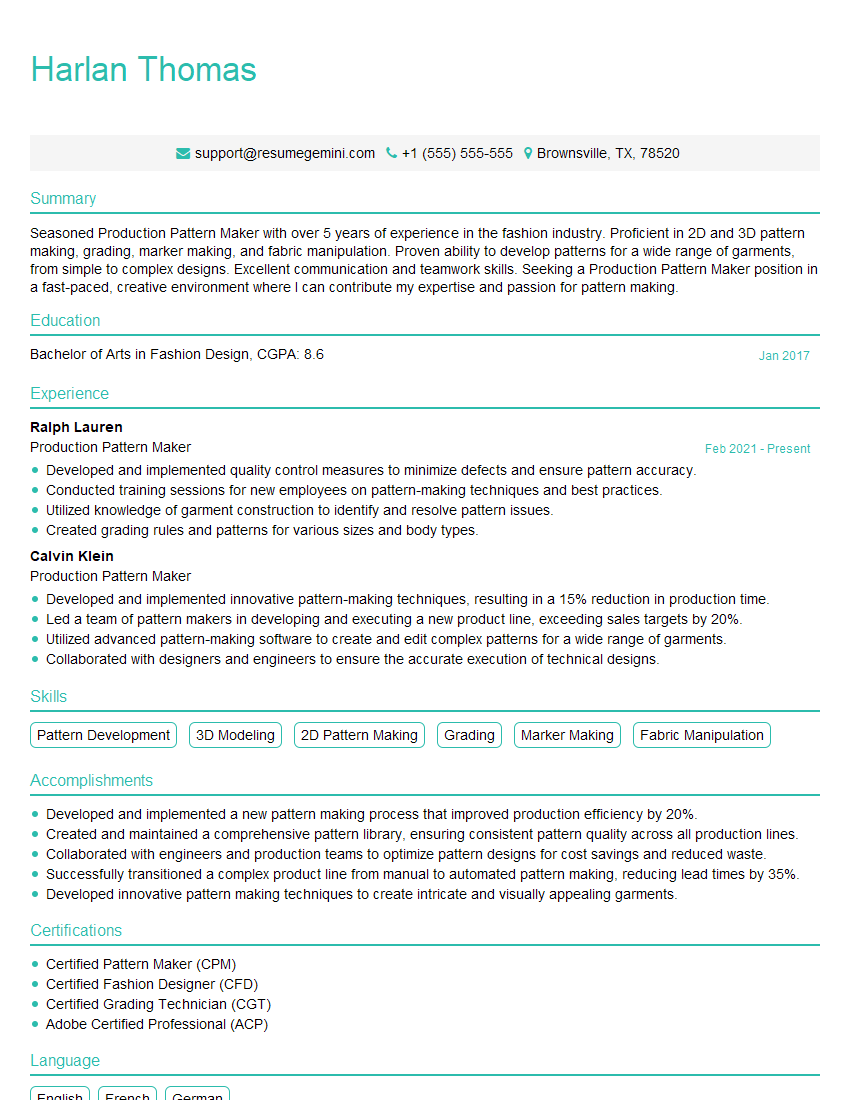
Mastering Measuring and Fitting Techniques is crucial for career advancement in the fashion and apparel industry, opening doors to specialized roles and higher earning potential. A strong resume is your key to unlocking these opportunities. Creating an ATS-friendly resume is essential for getting your application noticed by recruiters. To help you build a compelling and effective resume, we recommend using ResumeGemini. ResumeGemini provides a user-friendly platform and offers examples of resumes tailored to Measuring and Fitting Techniques to guide you through the process. This will significantly improve your chances of landing your dream job.







Explore more articles
Users Rating of Our Blogs
Share Your Experience
We value your feedback! Please rate our content and share your thoughts (optional).
What Readers Say About Our Blog
Very informative content, great job.
good