Every successful interview starts with knowing what to expect. In this blog, we’ll take you through the top Meat Processing and Inspection interview questions, breaking them down with expert tips to help you deliver impactful answers. Step into your next interview fully prepared and ready to succeed.
Questions Asked in Meat Processing and Inspection Interview
Q 1. Describe the different USDA meat grades.
The USDA grades meat based on factors like marbling (intramuscular fat), maturity, and firmness. Think of it like grading diamonds – higher grades mean more desirable characteristics. For beef, the prime grades are Prime, Choice, Select, and Standard. Prime has abundant marbling, resulting in the most tender, juicy, and flavorful cuts. Choice is still very good, with less marbling than Prime. Select has less marbling, leading to leaner but potentially less tender meat. Standard is the least desirable grade. Other meats like pork and lamb also have grading systems, but the criteria differ slightly. For instance, pork grading focuses on the lean-to-fat ratio and the quality of the lean.
- Prime: Highest quality, abundant marbling.
- Choice: Excellent quality, less marbling than Prime.
- Select: Good quality, leaner than Choice.
- Standard: Lower quality, least marbling.
Understanding these grades helps consumers make informed purchasing decisions based on their desired level of tenderness, juiciness, and flavor, and helps processors understand the value of their product.
Q 2. Explain the process of chilling and aging meat.
Chilling and aging are crucial post-mortem processes that significantly impact meat quality. Chilling rapidly lowers the meat’s temperature to inhibit bacterial growth and preserve its quality. This is usually done immediately after slaughter, often using blast chillers to reduce the core temperature to around 36-38°F (2-3°C) quickly. Think of it like quickly cooling a hot soup to prevent it from spoiling.
Aging, on the other hand, involves holding the meat under controlled temperature and humidity conditions for a specific period to enhance its tenderness, flavor, and juiciness. Dry-aging, for example, involves hanging the meat in a controlled environment to allow for surface moisture loss, which concentrates the flavor. Wet-aging, in contrast, involves aging the meat in vacuum-sealed packaging, which helps retain moisture. Aging time varies depending on the type of meat and desired outcome; it can range from a few days to several weeks. The enzymatic processes that occur during aging break down connective tissues, leading to improved tenderness. For example, a well-aged ribeye steak will be significantly more tender and flavorful than a non-aged one.
Q 3. What are the key principles of HACCP in meat processing?
HACCP, or Hazard Analysis and Critical Control Points, is a preventative system designed to identify and control biological, chemical, and physical hazards in food production. In meat processing, it’s essential for ensuring food safety. The key principles include:
- Conduct a hazard analysis: Identify potential hazards at each step of the process.
- Determine critical control points (CCPs): Identify steps where control is essential to prevent or eliminate a hazard. Examples include cooking temperature, chilling time, and sanitation.
- Establish critical limits: Set measurable limits for each CCP to ensure safety (e.g., internal temperature of cooked meat must reach 160°F (71°C)).
- Establish monitoring procedures: Regularly monitor CCPs to ensure they remain within the critical limits.
- Establish corrective actions: Define actions to take if a CCP deviates from its critical limits.
- Establish verification procedures: Verify that the HACCP system is working effectively.
- Establish record-keeping and documentation procedures: Maintain detailed records of all HACCP activities.
For example, a CCP in sausage production might be the grinding temperature, with a critical limit of below 40°F (4°C) to minimize bacterial growth.
Q 4. How do you identify and handle contaminated meat?
Identifying contaminated meat requires a multi-pronged approach. Visual inspection is the first step. Look for signs like discoloration, unusual odors, slime, or the presence of foreign materials. If contamination is suspected, sensory evaluation (smell and sight) should be followed by laboratory testing to confirm the presence and type of pathogens. This might involve culturing samples to identify specific bacteria. Handling contaminated meat involves immediate segregation from safe product. This contaminated meat is usually discarded or destroyed according to established protocols to prevent further contamination. In some cases, specific treatments like irradiation or high pressure processing may be considered if the level of contamination is low and the product can be safely salvaged, but this is usually less common than disposal
Q 5. What are the common spoilage organisms found in meat?
Common spoilage organisms in meat include various bacteria, molds, and yeasts. Some of the most prevalent bacterial culprits are:
- Pseudomonas species: These cause spoilage and off-odors, often characterized by slime formation.
- E. coli: Some strains cause severe illness.
- Salmonella: A major cause of foodborne illness.
- Listeria monocytogenes: Particularly dangerous for vulnerable populations.
- Clostridium botulinum: Produces a deadly toxin.
Molds and yeasts also contribute to spoilage, often causing discoloration and changes in texture.
Q 6. Explain the role of temperature control in preventing bacterial growth in meat.
Temperature control is paramount in preventing bacterial growth. Bacteria thrive within a specific temperature range known as the ‘danger zone,’ generally between 40°F (4°C) and 140°F (60°C). Keeping meat consistently below 40°F (4°C) significantly slows or halts bacterial growth, thus extending shelf life and ensuring safety. Think of it like a refrigerator: it keeps food cold, slowing down bacterial multiplication. Similarly, promptly cooking meat to internal temperatures above 160°F (71°C) kills most harmful bacteria. Maintaining proper cold chain management from slaughter to retail is crucial. Failure to control temperature allows rapid bacterial multiplication, increasing the risk of spoilage and foodborne illness.
Q 7. Describe various meat cutting techniques.
Meat cutting techniques vary depending on the cut of meat and the desired product. Basic techniques include:
- Fabricating: Breaking down large primal cuts into smaller sub-primal cuts (e.g., breaking down a beef side into rounds, loins, ribs, and chucks).
- Trimming: Removing excess fat, silver skin, and connective tissue to improve the appearance and quality of the meat.
- Portioning: Cutting meat into individual servings or specific weights (e.g., cutting steaks to a uniform thickness).
- Boning: Removing bones from the meat.
- Tenderizing: Using mechanical or enzymatic methods to break down tough muscle fibers and improve tenderness. This may involve pounding the meat with a mallet or using marinades containing enzymes.
Specialized techniques exist for specific cuts; for instance, butchering a whole hog requires expertise in breaking down the carcass into various cuts like hams, loins, shoulders, and ribs, each with its unique preparation steps.
Q 8. What are the different methods of meat preservation?
Meat preservation aims to extend shelf life and prevent spoilage by inhibiting microbial growth. Several methods exist, each with its pros and cons.
- Chilling: This is the most common method, rapidly lowering the meat’s temperature to just above freezing (0-4°C). It slows down bacterial growth but doesn’t stop it completely. Think of keeping your steak in the refrigerator.
- Freezing: Reduces temperature significantly below freezing, virtually halting microbial activity. However, ice crystal formation can affect texture. Freezers are crucial for long-term storage.
- Drying: Removes moisture, inhibiting microbial growth. This can be achieved through air drying, freeze-drying, or smoking. Think of jerky or salami.
- Curing: Involves adding salt, nitrates, or nitrites, along with other spices, to inhibit microbial growth and enhance flavor and color. Examples include bacon and ham.
- Canning: Meat is heated to a high temperature in sealed containers to kill microorganisms and create a vacuum seal, preventing further contamination. This method provides long-term storage but requires careful processing to avoid botulism.
- Modified Atmosphere Packaging (MAP): Uses packaging that alters the gaseous environment around the meat (reducing oxygen and increasing carbon dioxide) to slow down spoilage. This is often seen in pre-packaged meats at the grocery store.
- High Pressure Processing (HPP): Uses extremely high pressure to inactivate microorganisms without significantly altering the meat’s texture or flavor. This is a relatively newer technology.
The choice of preservation method depends on factors like the type of meat, desired shelf life, and cost considerations.
Q 9. How do you ensure the proper sanitation of meat processing equipment?
Sanitation in meat processing is paramount to prevent contamination and ensure food safety. A comprehensive sanitation program includes:
- Cleaning: Thoroughly removing all visible residues (meat, fat, etc.) from equipment surfaces using hot water and appropriate detergents. This is often done using high-pressure washers.
- Disinfection: Eliminating harmful microorganisms through the use of sanitizers like chlorine solutions or quaternary ammonium compounds. The concentration and contact time are critical for effectiveness.
- Regular Inspections: Frequent visual inspections of equipment for cleanliness and any signs of damage or wear that could compromise sanitation. This often involves checklists and documentation.
- Preventive Maintenance: Regular maintenance ensures equipment remains in optimal working condition, reducing the risk of contamination from leaks or malfunctioning parts.
- Employee Training: Proper training of employees on sanitary practices is essential. This includes handwashing techniques, proper use of cleaning and sanitizing agents, and the importance of personal hygiene.
In my experience, a well-defined Standard Operating Procedure (SOP) is key for consistent and effective sanitation. This SOP outlines the specific steps, chemicals, and contact times for cleaning and sanitizing each piece of equipment.
Q 10. What are your experiences with GMPs (Good Manufacturing Practices)?
Good Manufacturing Practices (GMPs) are a set of guidelines that ensure the production of safe and high-quality food products. My experience with GMPs is extensive. I have been involved in the implementation and maintenance of GMPs in several meat processing facilities. This includes:
- Developing and implementing GMP programs: This involved creating detailed written procedures for all aspects of meat processing, from receiving raw materials to finished product storage.
- Conducting regular GMP audits: These audits ensure compliance with established procedures and identify areas for improvement. Non-conformances are documented and corrective actions are implemented and verified.
- Employee training on GMPs: I’ve provided extensive training to employees on GMP principles, emphasizing their importance in preventing contamination and producing safe products. This training often involves hands-on exercises and regular refresher courses.
- Maintaining GMP documentation: This involves carefully maintaining records of all GMP activities, including cleaning logs, sanitation records, and audit reports.
GMP compliance is not just a regulatory requirement; it’s a commitment to producing safe and high-quality products that protects consumers and maintains a strong reputation for the company.
Q 11. Explain the importance of traceability in meat processing.
Traceability in meat processing is the ability to track a product through all stages of its production, from the farm to the consumer’s table. This is crucial for several reasons:
- Food Safety: In case of a food safety incident (e.g., contamination), traceability allows for rapid identification and removal of affected products, minimizing the risk to consumers. Imagine a recall – you need to quickly pinpoint the source of the problem and remove only the affected batches.
- Quality Control: Traceability helps identify the source of quality problems, allowing for prompt corrective actions to improve the overall quality of the product.
- Regulatory Compliance: Many regulatory agencies require comprehensive traceability systems. This demonstrates your commitment to food safety and aids in compliance.
- Consumer Confidence: Consumers are increasingly concerned about the origin and handling of their food. A robust traceability system builds consumer trust and confidence.
Effective traceability systems often use batch numbers, lot codes, and electronic tracking systems to maintain a detailed record of each product’s journey.
Q 12. How do you manage inventory in a meat processing facility?
Managing inventory in a meat processing facility requires careful planning and execution. It involves:
- Demand Forecasting: Predicting future demand based on historical sales data, market trends, and seasonal factors. This ensures sufficient inventory without excess waste.
- Inventory Tracking: Maintaining an accurate record of all inventory items, including raw materials, work-in-progress, and finished goods, using inventory management software or systems.
- FIFO (First-In, First-Out) System: Following this system ensures that the oldest inventory items are used first, minimizing spoilage and waste. This is particularly important for perishable goods like meat.
- Inventory Control: Establishing and maintaining appropriate inventory levels to meet production needs while minimizing storage costs and spoilage. This involves careful monitoring and adjusting order quantities.
- Regular Stocktaking: Periodic physical counts of inventory to verify accuracy and identify discrepancies between physical inventory and recorded inventory.
Efficient inventory management minimizes losses due to spoilage, reduces storage costs, and ensures smooth production flow. In my experience, utilizing software solutions integrated with production scheduling improves inventory accuracy and efficiency significantly.
Q 13. What are the safety regulations associated with handling meat processing equipment?
Safety regulations for handling meat processing equipment are stringent and critical to protect workers. These regulations often include:
- Lockout/Tagout Procedures: Before performing maintenance or repairs, equipment must be properly locked out and tagged out to prevent accidental startup.
- Personal Protective Equipment (PPE): Workers must use appropriate PPE, such as cut-resistant gloves, safety glasses, and hearing protection, depending on the task.
- Machine Guarding: Machines must be equipped with guards to prevent contact with moving parts. Regular inspection of guards is vital.
- Emergency Stop Systems: Equipment must have easily accessible and functioning emergency stop buttons.
- Training and Competency: Workers must receive adequate training on safe operating procedures for each piece of equipment.
- Regular Inspections and Maintenance: Equipment should be regularly inspected for safety hazards and undergo scheduled maintenance to prevent malfunctions.
Adherence to these regulations is essential not only for worker safety but also for regulatory compliance. Regular safety training and audits are crucial to maintaining a safe working environment.
Q 14. Describe your experience with food safety audits.
I have extensive experience with food safety audits, including those conducted by regulatory agencies and third-party certification bodies. These audits typically involve:
- Document Review: Auditors examine GMP documentation, sanitation records, and traceability data to verify compliance.
- Facility Inspection: A thorough inspection of the facility is conducted to evaluate sanitation, equipment maintenance, and overall hygiene.
- Interviewing Personnel: Auditors interview employees to assess their understanding of food safety procedures and their adherence to GMPs.
- Product Testing (if applicable): In some cases, product samples may be taken for testing to verify the absence of pathogens or other contaminants.
- Corrective Actions: Any non-conformances identified during the audit require the development and implementation of corrective actions to address the issues.
My experience includes successfully navigating numerous audits, addressing non-conformances promptly, and implementing corrective actions to maintain compliance. Preparing for an audit is an ongoing process requiring constant vigilance and a proactive approach to maintaining the highest standards of food safety.
Q 15. How do you handle employee injuries in a meat processing environment?
Employee safety is paramount in meat processing. Our approach to handling injuries is multi-faceted, starting with a robust preventative program. This includes comprehensive training on safe work practices, the proper use of personal protective equipment (PPE) like cut-resistant gloves and safety glasses, and regular machine maintenance to minimize hazards. We emphasize ergonomic principles to reduce repetitive strain injuries.
Should an injury occur, we have a clearly defined emergency response plan. This involves immediate first aid by trained personnel, followed by a thorough incident report documenting the circumstances, injuries sustained, and corrective actions. We collaborate with occupational health professionals and follow OSHA guidelines to ensure appropriate medical care and return-to-work strategies. For example, a laceration would necessitate immediate cleaning and bandaging, a report filed, and a review of the workstation for any contributing factors like dull blades or inadequate lighting.
Post-incident, we conduct thorough investigations to identify root causes and implement preventative measures. This might involve modifying equipment, improving training protocols, or adjusting work processes. We also maintain meticulous records of all incidents for trend analysis to further improve safety measures and reduce future injuries.
Career Expert Tips:
- Ace those interviews! Prepare effectively by reviewing the Top 50 Most Common Interview Questions on ResumeGemini.
- Navigate your job search with confidence! Explore a wide range of Career Tips on ResumeGemini. Learn about common challenges and recommendations to overcome them.
- Craft the perfect resume! Master the Art of Resume Writing with ResumeGemini’s guide. Showcase your unique qualifications and achievements effectively.
- Don’t miss out on holiday savings! Build your dream resume with ResumeGemini’s ATS optimized templates.
Q 16. What are the common signs of meat spoilage?
Recognizing spoilage in meat is critical for food safety. Common indicators include changes in color, odor, and texture. For example, fresh beef typically has a bright red color, while spoilage can lead to dulling, browning, or even greening. A sour or putrid odor is a strong indicator of bacterial growth. Changes in texture, such as becoming slimy or sticky, also point towards spoilage.
Beyond visual and olfactory clues, other signs include the presence of unusual amounts of gas within the packaging (causing bloating), and off-flavors or sliminess upon touching the meat. In poultry, discoloration and unpleasant smells are significant warnings. In processed meats like sausages, discoloration and slimy surfaces are key indicators. Temperature is crucial; meat left at unsafe temperatures will spoil much faster.
It’s vital to note that even if a small area displays spoilage, the whole piece should usually be discarded. Our facility uses strict temperature monitoring and regular inspections to catch spoilage early.
Q 17. What is your experience with different types of meat packaging?
My experience encompasses a wide range of meat packaging, from traditional methods to the latest innovations. We use various materials based on product type, shelf-life requirements, and cost-effectiveness. This includes modified atmosphere packaging (MAP), which extends shelf life by controlling the gas composition within the package; vacuum packaging, which removes air to prevent oxidation and microbial growth; and cryovac packaging, a type of vacuum packaging designed to prevent leakage and maintain quality.
We also utilize different types of packaging materials like various films (e.g., polyethylene, polypropylene) for their barrier properties against moisture and oxygen. For retail packaging, we employ clear films that allow consumers to visually assess the product quality. For wholesale or institutional applications, more robust and less visually appealing packaging may be preferred. The choice of packaging is always made considering factors like product integrity, ease of handling, storage efficiency, and cost.
For example, ground beef might be packaged in MAP using a high-oxygen atmosphere to maintain its red color, while steaks might be vacuum-sealed to extend their shelf life. We continually assess new packaging technologies to enhance product freshness and reduce waste.
Q 18. How do you ensure the accuracy of product labeling?
Accuracy in product labeling is non-negotiable, as it directly impacts consumer safety and legal compliance. We have a rigorous system in place to ensure accuracy. First, all labeling information is verified against our recipes, ingredient lists, and weight specifications. Second, we employ automated label printing systems integrated with our production lines. This process automatically prints the correct information including weight, best-by dates, nutritional information, and allergen statements onto each package.
Finally, a multi-stage quality control process includes manual verification of labels at various points throughout the production line. This includes visual checks for accuracy and completeness, and periodic spot checks by our quality assurance team to catch any discrepancies. We use barcode scanning and traceability systems to link products with their corresponding labels, aiding in identifying any labeling errors. Any discrepancy found triggers immediate corrective actions, preventing mislabeled products from reaching the market.
Our company strictly adheres to all relevant food safety regulations and labeling standards to ensure consumer confidence and compliance with the law.
Q 19. Explain your understanding of food allergens and how they are managed in meat processing.
Food allergens are a significant concern in meat processing. Common allergens in meat products include milk, eggs, soy, wheat, peanuts, tree nuts, fish, and shellfish. These can be present as ingredients (e.g., milk powder in sausages) or due to cross-contamination during processing. We employ a comprehensive allergen management program to minimize risks.
This program begins with careful ingredient sourcing and rigorous supplier verification to ensure allergen information is accurate and reliable. We maintain dedicated processing lines or equipment for allergen-free products to prevent cross-contamination. Our facility uses strict sanitation protocols, including thorough cleaning and sanitization of equipment between production runs of different products. Clear labeling of all products is vital, clearly indicating the presence of any major allergens.
Employee training is a cornerstone of our allergen management. All employees receive training on allergen awareness, proper hygiene practices, and the importance of following established procedures. We utilize color-coded equipment and separate workspaces to reduce the risk of cross-contamination and regularly review and update our allergen management plan to reflect best practices and regulatory changes.
Q 20. How do you manage waste in a meat processing facility?
Waste management is critical in meat processing, both for environmental reasons and cost-efficiency. Our approach is multifaceted and focuses on minimizing waste generation and maximizing resource recovery. We implement strict inventory management and production planning to reduce excess production. We segregate waste streams into different categories: organic waste, recyclable materials, and hazardous waste. Organic waste, including meat trimmings and bones, is often processed for rendering into animal feed or other byproducts, reducing landfill waste.
Recyclable materials such as plastic packaging and cardboard are collected and sent for recycling. Hazardous waste, such as cleaning chemicals and used oils, is managed according to local regulations, using licensed disposal services. We maintain meticulous records of all waste streams, tracking their volumes and disposal methods. This data helps us identify opportunities for waste reduction and improve the efficiency of our waste management program.
Regular audits and employee training help reinforce waste reduction procedures. We invest in technology to optimize processes and minimize waste. For instance, using advanced cutting techniques minimizes trim loss. We actively seek innovative solutions and sustainable practices to reduce our environmental footprint and enhance resource utilization.
Q 21. What is your experience with pest control in a food processing environment?
Pest control in a food processing environment is crucial for maintaining product safety and regulatory compliance. Our facility employs a comprehensive pest management program, combining preventative measures and proactive monitoring with professional pest control services. Preventative measures include maintaining impeccable sanitation, ensuring proper storage of materials, and regularly inspecting the facility for any signs of pests. We seal cracks and crevices to prevent entry points and utilize physical barriers such as screens and rodent-proof doors.
We conduct routine monitoring through the use of traps, bait stations, and visual inspections. These help us detect early signs of pest infestation, enabling timely interventions. Our facility contracts with a reputable pest control company, which conducts regular inspections and implements targeted treatments as needed. All pest control activities are documented meticulously, ensuring traceability and compliance with food safety regulations. The chosen pest control methods prioritize the safety of our employees and the integrity of our products, using only approved, low-toxicity products.
Employee training is integral. Staff is educated on pest identification, reporting procedures, and the importance of maintaining a clean and pest-free environment. We regularly review and update our pest management plan to incorporate best practices and address emerging challenges.
Q 22. Describe your experience with different cutting tools and their uses.
My experience with meat cutting tools spans over 15 years, encompassing a wide range of tools tailored to specific cuts and processes. Proper tool selection is crucial for efficiency, safety, and consistent product quality.
- Breaking Knives: These heavy-duty knives are essential for breaking down large primal cuts into smaller subprimals. I’ve used various sizes, from those designed for beef carcasses to smaller ones for pork loins. The blade’s weight and balance are key to minimizing effort and maximizing control.
- Butcher Knives: These versatile knives, in various sizes and shapes (e.g., boning, trimming, slicing), are used for a plethora of tasks, from trimming fat and removing bones to creating specific cuts like steaks or roasts. I’m proficient in using both flexible and stiff-bladed knives, selecting the appropriate type based on the meat’s texture and the required cut precision.
- Saws: Band saws and electric saws are used for cutting through bones and separating large portions of meat. Safety protocols, blade sharpness, and proper maintenance are paramount here. I’ve experienced using both types extensively, understanding their capabilities and limitations. Knowing when a band saw is appropriate for a large bone-in cut versus an electric saw for smaller, quicker cuts is crucial.
- Meat Cleavers: While less frequently used for precise cuts, these are indispensable for splitting bones, chopping through cartilage, and other heavy-duty tasks. Safety is paramount when using these powerful tools.
Throughout my career, I’ve emphasized the importance of proper knife handling, sharpening techniques, and regular maintenance to prevent injuries and ensure the tools remain effective. A dull blade is dangerous and inefficient, requiring more force and leading to ragged cuts, thus impacting meat quality.
Q 23. What are the challenges in maintaining consistent product quality in meat processing?
Maintaining consistent product quality in meat processing presents many challenges. The primary hurdles involve managing variability across several stages:
- Raw Material Variation: The inherent variability in animal characteristics (breed, age, diet, etc.) directly impacts the meat’s quality. Leanness, marbling, tenderness, and color can vary significantly even within the same species. Addressing this requires rigorous sourcing standards and careful selection of raw materials.
- Processing Parameters: Temperature control during chilling, freezing, and cooking is critical. Slight deviations can drastically alter the final product’s quality. Consistent application of processes such as curing, smoking, and brining is also important.
- Equipment Calibration and Maintenance: Malfunctioning equipment can result in inconsistent slicing thickness, irregular weight portions, and ultimately, lower quality product. Regular checks and calibration are vital.
- Human Factor: Worker skill and consistency play a major role. Training, proper protocols, and a robust quality control system are vital to ensuring that these inconsistencies are minimized.
- Hygiene and Sanitation: Contamination is a significant threat to both safety and quality. Strict adherence to sanitation protocols is essential throughout the entire process.
Addressing these challenges demands a proactive approach involving rigorous quality checks at every stage, from raw material selection to final product inspection, along with a robust data-driven quality management system.
Q 24. How do you address customer complaints related to meat quality or safety?
Addressing customer complaints regarding meat quality or safety is crucial for maintaining trust and reputation. My approach involves a systematic process:
- Prompt Acknowledgement: I acknowledge the complaint immediately, expressing empathy and assuring the customer that their concerns are being taken seriously.
- Information Gathering: I thoroughly investigate the complaint by collecting all relevant information, including the product’s batch number, date of purchase, and a detailed description of the issue. Photos or videos are also valuable.
- Root Cause Analysis: This step involves identifying the potential source of the problem – was it a processing error, transportation issue, improper storage by the consumer, or a genuine quality defect? This might require reviewing production records and tracing the product’s journey.
- Resolution: Based on the investigation, I offer a resolution, which might include a refund, replacement, or a gesture of goodwill, depending on the nature and severity of the complaint.
- Feedback Loop: I use the information gained from the complaint to identify areas for improvement and prevent similar issues in the future. This might involve refining processes, retraining staff, or improving quality control procedures.
Transparency and open communication are paramount in this process. Customers appreciate honest and timely responses.
Q 25. Explain your experience with different types of meat processing machinery.
My experience with meat processing machinery encompasses a wide range of equipment crucial for efficient and safe meat processing. Here are some examples:
- Grinders: I’m experienced in operating various grinders, from small-scale models for specialized sausages to high-capacity grinders used in large-scale production. Understanding the different plate sizes and their impact on the final product’s texture is critical.
- Mixers: I’ve worked with both horizontal and vertical mixers used for preparing sausage blends, marinades, and other meat formulations. The speed and mixing action are key to ensuring a homogeneous product.
- Stuffers: I’m proficient in using various stuffers, from manual piston-type stuffers to automated high-speed stuffers, understanding the importance of proper filling techniques to avoid air pockets and ensure consistent sausage casing.
- Slicers: Maintaining consistent slice thickness is crucial, thus I am adept at operating and maintaining various slicers for steaks, deli meats, and other products. Proper blade sharpening and adjustment are key here.
- Vacuum Sealers and Packaging Machines: I’m experienced in using various machines for maintaining product freshness, extending shelf life, and ensuring safe packaging.
Beyond operation, I’m also familiar with preventative maintenance procedures for all these machines, understanding the importance of safety and efficiency.
Q 26. How familiar are you with various meat inspection regulations (e.g., USDA, FDA)?
I am very familiar with various meat inspection regulations, including those from the USDA (United States Department of Agriculture) and the FDA (Food and Drug Administration). My understanding encompasses the following aspects:
- USDA Regulations: These primarily govern the inspection of meat and poultry products, focusing on safety, wholesomeness, and labeling. I’m familiar with the requirements for sanitary facilities, processing procedures, and labeling practices that ensure compliance with the Federal Meat Inspection Act (FMIA) and the Poultry Products Inspection Act (PPIA).
- FDA Regulations: The FDA’s regulations apply to ready-to-eat meat products and other meat-related products, focusing on food safety and labeling. I understand the regulations concerning pathogen control, allergen labeling, and the Food Safety Modernization Act (FSMA).
- HACCP: I have extensive knowledge of Hazard Analysis and Critical Control Points (HACCP) principles, a crucial food safety management system employed throughout the meat processing industry to identify and control potential hazards. Understanding critical control points (CCPs) – steps in processing where hazards can be prevented, eliminated, or reduced to safe levels – is key to maintaining food safety compliance.
Staying updated on evolving regulations and best practices is essential in this field. I regularly review updates and participate in industry training to ensure compliance.
Q 27. How do you ensure compliance with food safety regulations?
Ensuring compliance with food safety regulations is a top priority in meat processing. My approach is multifaceted:
- HACCP Implementation: Developing and implementing a comprehensive HACCP plan is fundamental. This involves identifying potential hazards, establishing CCPs, and monitoring those points throughout the process. Regular reviews and adjustments to the HACCP plan based on data and assessments are integral.
- Sanitation and Hygiene: Strict adherence to sanitation protocols is non-negotiable. This includes regular cleaning and sanitization of equipment, facilities, and tools, following established SSOPs (Sanitary Standard Operating Procedures). Employee training on proper hygiene practices is equally vital.
- Temperature Control: Precise temperature monitoring and control at all stages of processing is essential to prevent bacterial growth. This includes refrigeration, freezing, and cooking temperatures. Calibration and maintenance of temperature monitoring equipment is crucial.
- Allergen Control: Strict procedures are followed to prevent cross-contamination of allergens and ensure accurate labeling in products containing allergens.
- Traceability: Implementing a robust traceability system to track meat products throughout the processing chain is crucial. This enables rapid identification and removal of contaminated or defective products if necessary.
- Record Keeping: Maintaining detailed records of all processing steps, temperature logs, and sanitation procedures is essential for demonstrating compliance during audits.
Regular audits and internal inspections help to identify weaknesses and ensure continued compliance with food safety standards.
Q 28. Describe your experience with troubleshooting meat processing equipment malfunctions.
Troubleshooting meat processing equipment malfunctions requires a systematic approach based on a combination of experience, understanding of the equipment’s mechanics, and a methodical troubleshooting process.
- Safety First: The first step is always to ensure the safety of personnel by deactivating power sources and taking necessary precautions.
- Identify the Problem: Observe the equipment carefully to identify the exact nature of the malfunction. What is not functioning correctly? Are there any unusual noises, smells, or vibrations?
- Check for Obvious Issues: Start by examining simpler causes before proceeding to more complex ones. This might involve checking power cords, fuses, belts, and switches.
- Consult Manuals and Diagrams: Refer to the equipment’s operating manuals and diagrams to understand the components and their functions. This can help in pinpointing the likely cause of the failure.
- Systematic Testing: If the problem is not obvious, a systematic approach is required. For example, if a pump is not working, check the power supply, then the pump itself, then the valves, and so on.
- Call for Professional Help if Needed: If you cannot identify or resolve the issue, seek professional assistance from qualified technicians or maintenance personnel.
Regular preventative maintenance minimizes the likelihood of equipment malfunctions and prolongs the life of machinery, thus minimizing production downtime. Proactive maintenance and a systematic troubleshooting approach can significantly reduce both the frequency and severity of equipment-related issues in a meat processing environment.
Key Topics to Learn for Meat Processing and Inspection Interview
- Animal Handling and Stunning: Understand humane handling techniques, stunning methods, and their impact on meat quality and safety. Consider the ethical and practical implications of different approaches.
- Slaughter and Carcass Fabrication: Familiarize yourself with the different steps involved in slaughtering various animal species and the proper techniques for breaking down carcasses into primal and sub-primal cuts. Practice visualizing these processes.
- Meat Science Fundamentals: Grasp the principles of meat chemistry, including pH changes, water-holding capacity, and the factors influencing tenderness and flavor. Be prepared to discuss the impact of these factors on processing and quality.
- Food Safety and Sanitation: Master the critical control points (CCPs) in meat processing, HACCP principles, and proper sanitation protocols to prevent contamination and ensure food safety. Practice applying these principles to various scenarios.
- Inspection Procedures and Regulations: Become proficient in understanding and applying relevant regulations and guidelines related to meat inspection, including visual inspection, microbial testing, and residue analysis. Consider the legal and regulatory implications of non-compliance.
- Quality Control and Assurance: Understand the various methods used for evaluating meat quality, including sensory evaluation, instrumental analysis, and grading systems. Be prepared to discuss strategies for maintaining consistent quality throughout the processing chain.
- Processing Technologies and Equipment: Familiarize yourself with common equipment used in meat processing, such as grinders, mixers, and packaging machines. Understand the principles of operation and maintenance of these machines.
- Problem-Solving and Troubleshooting: Be prepared to discuss your approach to problem-solving in a meat processing environment, such as addressing equipment malfunctions or quality control issues. Practice analyzing scenarios and formulating solutions.
Next Steps
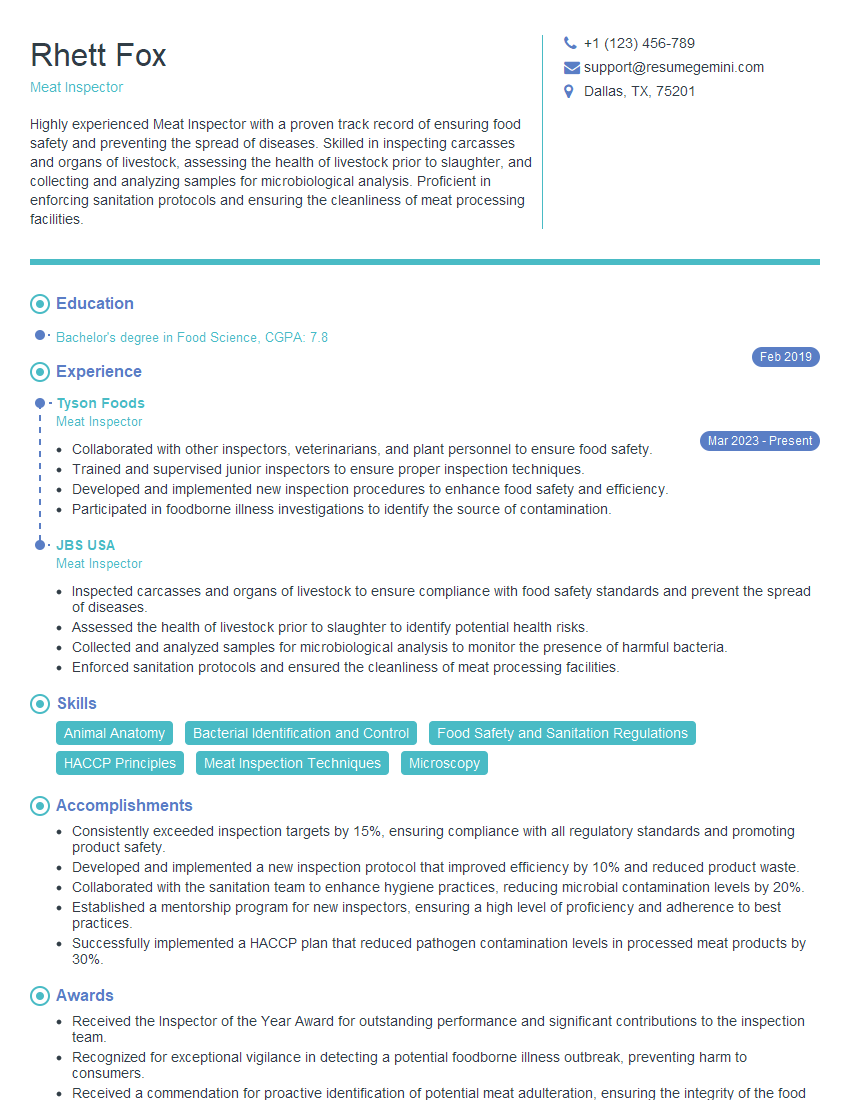
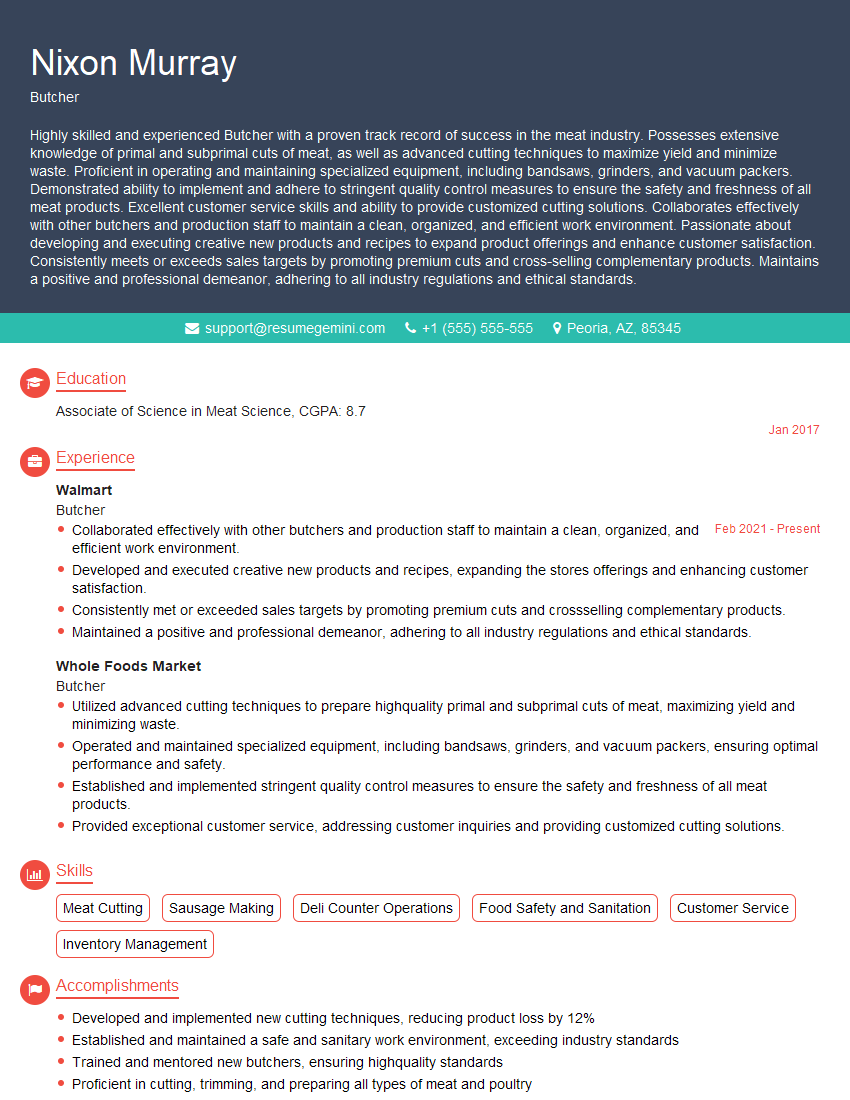
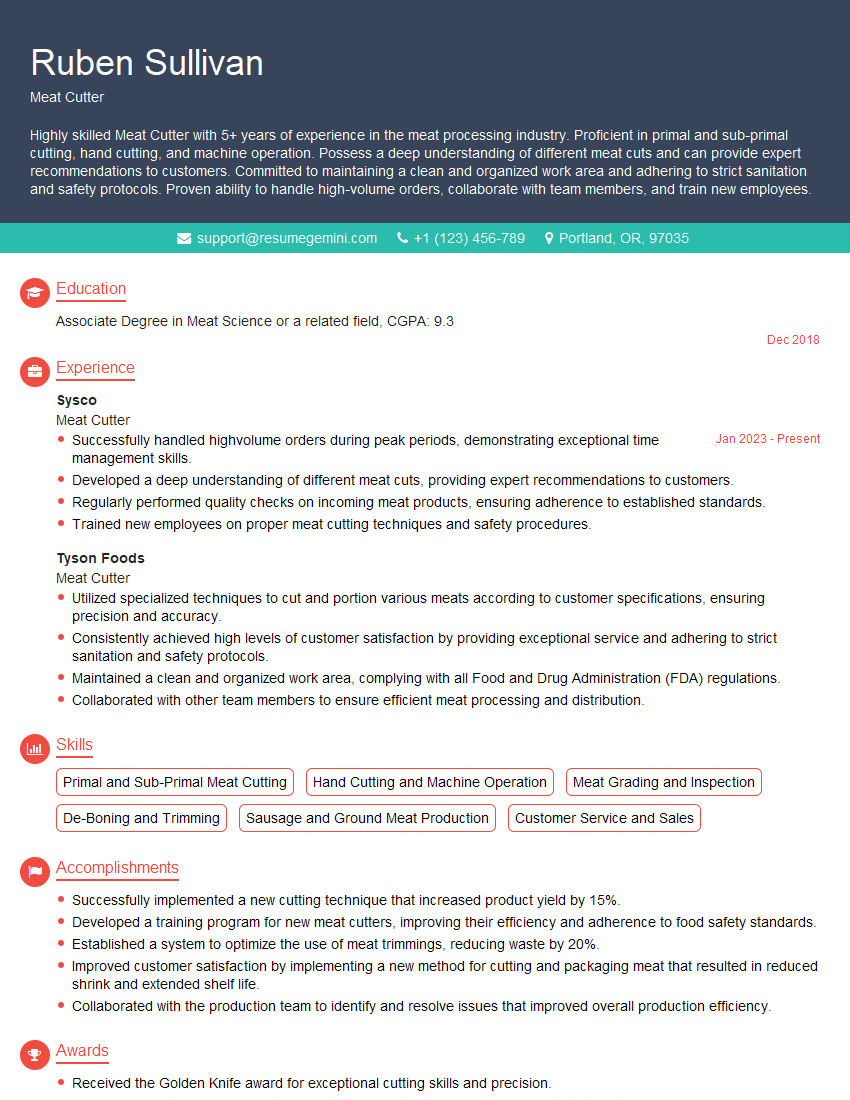
Mastering Meat Processing and Inspection opens doors to a rewarding career with excellent growth potential within the food industry. To maximize your job prospects, creating a strong, ATS-friendly resume is crucial. ResumeGemini is a trusted resource that can help you build a professional and effective resume tailored to highlight your skills and experience. Examples of resumes specifically designed for Meat Processing and Inspection professionals are available to help guide you. Invest time in crafting a compelling resume—it’s your first impression on potential employers.
Explore more articles
Users Rating of Our Blogs
Share Your Experience
We value your feedback! Please rate our content and share your thoughts (optional).
What Readers Say About Our Blog
Very informative content, great job.
good