Are you ready to stand out in your next interview? Understanding and preparing for Post-Production Techniques interview questions is a game-changer. In this blog, we’ve compiled key questions and expert advice to help you showcase your skills with confidence and precision. Let’s get started on your journey to acing the interview.
Questions Asked in Post-Production Techniques Interview
Q 1. Explain your experience with different video editing software (e.g., Premiere Pro, Final Cut Pro, Avid).
My post-production journey has spanned several industry-standard editing software packages. I’m highly proficient in Adobe Premiere Pro, which I use daily for its powerful features, extensive plugin support, and seamless integration with the Adobe Creative Cloud ecosystem. I’ve also worked extensively with Final Cut Pro, appreciating its intuitive interface and speed, particularly for projects requiring fast turnaround times. My experience with Avid Media Composer, although less frequent recently, provides a solid foundation in high-end professional workflows, especially valuable for larger collaborative projects.
For example, on a recent documentary project, Premiere Pro’s advanced audio capabilities were crucial for intricate sound mixing. Conversely, for a fast-paced promotional video, Final Cut Pro’s streamlined editing capabilities allowed for quicker delivery. Each software possesses its strengths, making the choice project-dependent.
Q 2. Describe your workflow for color correction and grading.
My color correction and grading workflow is meticulous and iterative. It begins with a thorough assessment of the footage, identifying the overall mood and desired aesthetic. I typically start with primary color correction, addressing white balance, exposure, and contrast to create a neutral base. This step lays the groundwork for the next phase: secondary color grading. This is where I use tools like curves, color wheels, and selective color adjustments to refine the image’s look and feel.
I often utilize Lumetri Color in Premiere Pro or similar tools in other software. For instance, I might use a color lookup table (LUT) as a starting point for a specific style, then fine-tune individual color channels to achieve the desired effect. Throughout the process, I frequently refer to reference images to ensure consistency and achieve the client’s artistic vision. The process involves meticulous adjustments, checking for accurate skin tones and avoiding clipping highlights or shadows.
Q 3. How do you handle large video files and optimize storage during post-production?
Managing large video files efficiently is paramount in post-production. My strategy involves a multi-pronged approach starting with utilizing high-performance storage solutions like RAID arrays or network-attached storage (NAS) systems for faster read and write speeds. This minimizes the time spent waiting for files to load.
Furthermore, I use proxy workflows. This involves creating smaller, lower-resolution versions of the original footage for editing. Once the edit is locked, I then conform the timeline to the original high-resolution files for final output. Additionally, I use efficient codecs like ProRes or DNxHD, which balance quality with manageable file sizes. Regular backups to external drives or cloud storage are crucial for data security. Finally, I employ meticulous file organization and naming conventions, which are essential for large projects with numerous clips and assets.
Q 4. What are your preferred methods for audio mixing and sound design?
My approach to audio mixing and sound design is deeply rooted in the principle of clarity and emotional impact. I typically start by cleaning up the audio tracks, removing unwanted noise and hiss using tools like noise reduction and de-essing. Then, I carefully balance levels between dialogue, sound effects, and music, ensuring that each element sits comfortably in the mix.
I rely heavily on EQ (equalization) and compression to shape the sound and achieve a polished and professional result. For sound design, I often utilize a combination of pre-recorded sound effects libraries and Foley recording (creating sound effects live to match the picture). I use software like Adobe Audition or similar DAWs (Digital Audio Workstations) to create a cohesive and immersive soundscape, understanding the importance of sound design in enhancing the emotional impact of a project. For example, subtle sounds can create suspense, while impactful sound design can heighten dramatic moments.
Q 5. Explain your experience with visual effects (VFX) compositing and software.
I possess solid experience in VFX compositing, primarily using Adobe After Effects. I’m comfortable with keying, rotoscoping, tracking, and 3D compositing techniques. I understand the importance of good planning and pre-visualization, often working closely with VFX artists on larger projects to seamlessly integrate their work into the final cut.
For example, in one project involving a complex green screen shot, I utilized After Effects’ advanced tracking tools and keying techniques to flawlessly replace the background and create a realistic composite. My workflow includes carefully preparing the footage (proper lighting, consistent background), ensuring optimal results. I am familiar with common formats like EXR and PSD for working with various layers and image data.
Q 6. How do you manage and resolve conflicts between creative visions and technical limitations?
Navigating creative differences and technical constraints requires effective communication and problem-solving skills. My approach emphasizes open dialogue with the director, producers, and other stakeholders. I strive to understand their creative vision while transparently explaining the technical limitations and potential solutions. I often present multiple options, exploring alternative approaches to achieve a compromise that respects both the artistic vision and technical feasibility.
For instance, if a director desires a specific VFX shot but the budget or time constraints are limiting, I might propose a simpler alternative while preserving the essence of the creative intent. Ultimately, effective collaboration and a willingness to explore various solutions lead to successful outcomes, even when facing challenging conflicts.
Q 7. Describe your experience with different codecs and their implications for video quality and file size.
Understanding codecs is crucial for optimizing video quality and file size. Codecs are essentially compression algorithms that determine how video and audio data is encoded and decoded. Choosing the appropriate codec has significant implications for the project’s storage requirements, rendering time, and ultimately, its visual quality.
For example, ProRes is a high-quality codec known for its excellent visual fidelity but larger file sizes. It’s ideal for high-end projects where image quality is paramount. H.264, on the other hand, offers strong compression, resulting in smaller file sizes suitable for online distribution but can sometimes compromise visual quality, particularly with complex scenes. Choosing a codec depends on the intended delivery platform (online streaming, broadcast, film) and the project’s overall requirements, always balancing quality with practicality.
Q 8. What are your strategies for ensuring consistent quality control throughout the post-production process?
Consistent quality control in post-production is paramount. My strategy is multifaceted and relies on a proactive approach rather than reactive problem-solving. It begins with establishing clear standards from the outset, defining parameters for resolution, color space, and audio levels right at the project’s inception. This prevents inconsistencies from developing later.
- Daily QC Checks: I implement daily quality checks at each stage—editing, color grading, visual effects, audio mixing—to catch errors early. This is akin to a baker checking the dough’s consistency throughout the baking process. Small adjustments are much easier to make than large-scale revisions.
- Version Control: Utilizing robust version control systems like SVN or Git ensures that all changes are tracked and reversible. This allows us to go back to previous versions if needed, minimizing the risk of losing work or accidentally implementing a flawed iteration.
- Color Pipelines & LUTs: I religiously utilize Look Up Tables (LUTs) and consistent color pipelines to ensure color accuracy and consistency throughout the project. Think of it like a recipe for color—it ensures a consistent final product across different shots and even from one day’s work to the next.
- Client Feedback Integration: Regular client review sessions are key. I use these to not only address their feedback but to also explain the technical choices and the rationale behind them, ensuring we are all on the same page.
- Automated QC Tools: Leveraging automated QC tools helps identify technical glitches like interlaced footage or incorrect frame rates before they become major problems. These tools act as a second pair of eyes, catching errors that human eyes might miss.
By combining these techniques, I ensure a smooth, efficient, and high-quality post-production workflow, minimizing costly revisions and maximizing client satisfaction.
Q 9. Explain your experience with motion graphics and animation software.
I’m proficient in a range of motion graphics and animation software, including Adobe After Effects, Cinema 4D, and Blender. My experience spans creating everything from simple lower-thirds and animated logos to complex 3D animations and visual effects.
- After Effects Expertise: I’ve extensively used After Effects for compositing, creating kinetic typography, and rotoscoping. I’m adept at utilizing expressions and scripting for automation and efficiency.
- 3D Animation Skills: My proficiency in Cinema 4D allows me to create high-quality 3D models, animations, and integrate them seamlessly into live-action footage. I’m comfortable working with different render engines and optimizing assets for performance.
- Open-Source Experience: My familiarity with Blender provides a cost-effective alternative for certain projects, particularly for creating environments and more complex animations.
For example, in a recent project, I used After Effects to create a dynamic title sequence incorporating stylized text animation and motion graphics elements. In another project, I utilized Cinema 4D to model and animate a product for a commercial, meticulously rendering the final animation to ensure realistic lighting and material properties. I constantly expand my skill set to keep up with technological advancements and industry best practices.
Q 10. How do you collaborate effectively with editors, producers, and clients during post-production?
Effective collaboration is essential for a successful post-production. My approach centers around clear communication, proactive updates, and a collaborative spirit. I view myself as a facilitator, bridging the gap between creative vision and technical execution.
- Regular Communication: I maintain open communication channels with editors, producers, and clients through daily or weekly check-ins, email updates, and detailed progress reports. I prioritize active listening to understand their expectations and concerns.
- Project Management Tools: I utilize project management software like Asana or Monday.com to track progress, assign tasks, and maintain a central repository for project files and communication.
- Client Review Sessions: I conduct regular client review sessions, providing constructive feedback and clearly articulating technical limitations or possibilities. This helps manage expectations and prevent misinterpretations.
- Feedback Incorporation: I make sure to incorporate feedback efficiently and transparently, demonstrating that client input is valued and actively implemented.
I find that by fostering a collaborative environment, where everyone feels heard and informed, we are far more likely to achieve the best possible outcome and meet the clients’ needs. I treat every project as a team effort, leveraging the strengths of each individual to produce a superior final product.
Q 11. Describe your experience with digital intermediate (DI) processes.
Digital Intermediate (DI) is an integral part of my post-production workflow. My experience encompasses all aspects of DI, from color correction and grading to mastering and delivery. I’m comfortable working with various color spaces and understanding the impact of each on the final image.
- Color Grading Expertise: I’m skilled in using color grading software like DaVinci Resolve and Baselight to achieve the desired look and feel of a project. I understand the principles of color theory and can manipulate color to enhance mood, storytelling, and visual consistency.
- HDR and Wide Color Gamut Experience: I am experienced working with High Dynamic Range (HDR) and wide color gamut workflows, mastering content for various delivery platforms like Dolby Vision and HDR10. This allows me to deliver visually stunning content for different display technologies.
- Mastering and Delivery: I am experienced in delivering final assets in various formats and resolutions, compliant with industry standards. This includes understanding the specific requirements for different platforms and ensuring optimal playback quality.
For instance, I recently worked on a feature film where I used DaVinci Resolve to meticulously color grade every shot, carefully matching color temperature and tones to create a cohesive and cinematic experience. Understanding the nuances of DI allows me to not only enhance the visual appeal but also preserve the artistic intent of the filmmakers.
Q 12. How familiar are you with different file formats and their compatibility?
Understanding file formats and their compatibility is critical in post-production. I have extensive experience working with various formats, including codecs, image sequences, and audio formats. I ensure compatibility throughout the pipeline, avoiding costly conversion problems.
- Video Codecs: I’m proficient with codecs like ProRes, DNxHD, H.264, and H.265, understanding their respective strengths and weaknesses in terms of compression, quality, and editing performance. I choose the appropriate codec based on project needs and storage limitations.
- Image Sequences: I understand the importance of using appropriate image sequences (e.g., DPX, TIFF) for VFX compositing and ensuring consistent image quality.
- Audio Formats: I’m familiar with various audio formats, including WAV, AIFF, and various compressed formats, understanding the nuances of sample rates and bit depths. I know how to handle audio properly to avoid issues during editing and mixing.
- Metadata Management: I understand the importance of metadata and how to embed and manage it correctly for seamless workflows and asset tracking.
Choosing the wrong format can lead to significant problems. For example, using a highly compressed format like H.264 during editing can introduce artifacts and make editing difficult. My experience allows me to avoid such pitfalls, ensuring a smooth and efficient post-production workflow.
Q 13. What is your experience with version control and asset management systems?
Version control and asset management are integral to my post-production process. I utilize systems to track changes, maintain organized project files, and prevent data loss or confusion.
- Version Control Systems: I’m experienced with version control systems like Git and SVN, employing branching strategies to manage parallel edits and track changes throughout the post-production process. This helps prevent accidental overwrites and allows for easy rollback to previous versions.
- Asset Management Systems: I use asset management systems like Adobe Media Encoder and other cloud-based solutions to organize and catalog project assets, ensuring easy access and efficient collaboration among the team.
- Metadata Tagging: I implement thorough metadata tagging of all project files, including descriptive keywords, to facilitate searching, organization, and retrieval of assets.
- Backup Strategies: I always implement robust backup strategies involving multiple hard drives and cloud storage, ensuring that data loss is minimized and project continuity is maintained.
These systems are not just about organization; they are about protecting the investment in the project and ensuring that the team can work efficiently and effectively. A well-organized system allows us to find what we need instantly, without wasting valuable time searching.
Q 14. How do you troubleshoot technical issues that arise during post-production?
Troubleshooting technical issues is a crucial aspect of post-production. My approach involves a systematic process to identify and resolve problems efficiently.
- Systematic Approach: When a problem arises, I start by systematically identifying the issue, gathering all relevant information, including error messages, and then attempting to replicate the problem. This helps pinpoint the source of the error.
- Software Knowledge: My in-depth knowledge of various software and hardware allows me to understand potential sources of errors. I’m proficient in using diagnostic tools provided by the software to identify issues.
- Online Resources and Communities: I leverage online forums, documentation, and communities to access information and solutions for commonly encountered problems. This often helps me quickly identify solutions or workarounds.
- Collaboration and Support: I collaborate with other team members and seek support from software vendors or technical specialists when necessary. Sometimes a fresh perspective is all that is needed to resolve a seemingly insurmountable issue.
For instance, if a codec issue arises during playback, I systematically check the file format, the codec settings, the system’s hardware capabilities, and the software version. This systematic approach allows me to resolve issues quickly, minimizing downtime and ensuring project deadlines are met.
Q 15. Explain your understanding of color spaces and color management.
Color spaces define the range of colors that can be represented digitally. Think of it like a painter’s palette – some palettes have a wider variety of colors than others. Color management is the process of ensuring consistency across different color spaces, preventing color shifts between your monitor, your editing software, and the final output (e.g., a printed poster or web video).
Common color spaces include:
- sRGB: The standard for web and most consumer displays. It’s a relatively small color gamut.
- Adobe RGB: A wider color gamut than sRGB, often used in professional photography and printing. It allows for a richer range of colors, but not all devices can accurately display the full gamut.
- Rec. 709: The standard color space for HDTV. It’s designed for broadcast television and is very important for ensuring compatibility with home viewing.
- DCI-P3: A wider color gamut used in digital cinema and high-end displays, offering even more vibrant colors.
Color management involves using color profiles (like ICC profiles) to tell your software how to interpret colors from different sources. This prevents, for example, a vibrant red in your photo looking dull on a web page due to the different color spaces involved. A failure to properly manage color can lead to significant discrepancies, resulting in a less appealing final product or even misrepresentation of the original content. In my workflow, I always ensure color profiles are accurately assigned and use color-managed workflows in my editing software (like DaVinci Resolve or Adobe Premiere Pro) to maintain color accuracy throughout the entire post-production process.
Career Expert Tips:
- Ace those interviews! Prepare effectively by reviewing the Top 50 Most Common Interview Questions on ResumeGemini.
- Navigate your job search with confidence! Explore a wide range of Career Tips on ResumeGemini. Learn about common challenges and recommendations to overcome them.
- Craft the perfect resume! Master the Art of Resume Writing with ResumeGemini’s guide. Showcase your unique qualifications and achievements effectively.
- Don’t miss out on holiday savings! Build your dream resume with ResumeGemini’s ATS optimized templates.
Q 16. Describe your experience with audio restoration and noise reduction techniques.
Audio restoration is a crucial aspect of post-production, particularly when dealing with older recordings or footage with background noise. My experience involves utilizing various noise reduction techniques, both spectral and AI-powered, to clean up audio and enhance clarity. Imagine trying to hear a faint whisper over a roaring crowd – that’s the challenge, and noise reduction is the solution.
Techniques I regularly employ include:
- Spectral Noise Reduction: This method analyzes the audio frequency spectrum to identify and reduce consistent noise. It’s effective for removing hums, hisses, and other consistent sounds. Software like iZotope RX offers advanced tools for this.
- AI-Powered Noise Reduction: Modern software leverages AI to intelligently identify and remove noise, often achieving superior results compared to traditional methods. These algorithms can adapt to more complex noise patterns.
- De-click and De-crackle: These processes target transient noise artifacts like clicks and crackles, often found in older recordings, using algorithms designed to detect and repair these imperfections.
- Dialogue Editing and Enhancement: To make the audio even clearer, I sometimes enhance the dialogue separately to balance levels and provide additional clarity.
For example, I once worked on a documentary where the original audio was severely degraded by tape hiss. Using a combination of spectral and AI-powered noise reduction in iZotope RX, I was able to significantly improve the audio quality, making the film much more watchable and enjoyable.
Q 17. How do you optimize video for different platforms and devices?
Optimizing video for different platforms and devices requires understanding the technical specifications of each platform. Think about the difference between watching a video on a tiny phone screen and a large cinema screen – the resolution, aspect ratio, and even the compression need to be adjusted.
My approach involves:
- Resolution and Aspect Ratio: Creating versions optimized for different resolutions (e.g., 1080p for web, 4K for UHD TVs), and considering various aspect ratios (16:9 for widescreen, 9:16 for mobile). I would use tools to crop or add letterboxing/pillarboxing as needed.
- Bitrate and Compression: Higher bitrates provide better quality but larger file sizes. I choose appropriate compression settings (e.g., H.264, H.265/HEVC) and bitrates for each platform to balance quality and file size. Streaming platforms like YouTube have specific encoding recommendations which I always follow.
- Frame Rate: Matching the frame rate to the platform’s capabilities (e.g., 24fps for cinematic look, 30fps or 60fps for smoother action) is key.
- Metadata: Properly embedding metadata, such as subtitles and chapters, improves accessibility and user experience.
For instance, when preparing a video for YouTube, I would optimize the resolution for 1080p or higher, use H.264 or H.265 encoding with a suitable bitrate, and ensure the aspect ratio is 16:9. For Instagram, I might create a vertically-oriented version for mobile viewing, optimized for the platform’s specific requirements.
Q 18. What are your strategies for meeting tight deadlines and managing time effectively?
Meeting tight deadlines requires meticulous planning and efficient workflow management. I use a combination of strategies to stay on track.
My approach includes:
- Detailed Breakdown of Tasks: I break down large projects into smaller, manageable tasks, assigning each a realistic timeframe.
- Prioritization: I prioritize tasks based on urgency and importance, focusing on critical elements first.
- Time Tracking: I track my time spent on each task to identify bottlenecks and refine my workflow.
- Communication: Maintaining clear communication with clients and team members is crucial to manage expectations and ensure everyone is aligned.
- Contingency Planning: I always build in some buffer time to account for unexpected delays or technical issues.
For example, if I have a week to complete a video edit, I wouldn’t just start editing. I’d first spend a day logging and organizing the footage, a day on rough cuts, a day on color grading, a day on audio mixing and a day for final export and quality checks, leaving some time as a buffer for unforeseen problems.
Q 19. Explain your understanding of keyframing and animation principles.
Keyframing is the process of setting specific points in an animation sequence where properties change. Animation principles are the guidelines that govern how to create realistic and engaging animation. It’s like creating stop-motion animation, but digitally.
Keyframes define the start and end points of a change, and the software interpolates (smooths out) the transition between them. Properties that can be keyframed include position, scale, rotation, opacity, and color.
Twelve basic principles of animation are crucial for creating effective animation:
- Squash and Stretch: Giving objects a sense of weight and flexibility.
- Anticipation: Preparing the audience for an action.
- Staging: Clearly presenting the idea.
- Straight Ahead and Pose to Pose: Two approaches to animating.
- Follow Through and Overlapping Action: Adding realism and fluidity.
- Slow In and Slow Out: Creating natural movement.
- Arcs: Making movements more natural.
- Secondary Action: Adding subtle movements to enhance the main action.
- Timing: Controlling the speed and rhythm of movement.
- Exaggeration: Enhancing the effect of animation.
- Solid Drawing: Giving objects weight and volume.
- Appeal: Making characters engaging and memorable.
Software like After Effects allows for advanced keyframing and provides tools to apply these animation principles. I use these principles regularly to create smooth, believable, and visually engaging animation in my projects, whether it’s subtle motion graphics or complex character animation.
Q 20. Describe your experience with rotoscoping or keying techniques.
Rotoscoping involves manually tracing over live-action footage to create animation or isolate elements. Keying is the process of isolating a subject from its background. Think of removing a person from a scene so you can replace the background.
My experience with rotoscoping and keying spans various software, including After Effects and DaVinci Resolve. Rotoscoping is often painstaking, requiring precise tracing, especially for complex subjects with fine details. I frequently use rotoscoping for creating masks or isolating foreground elements in composites, which requires patience and attention to detail. Keying is simpler for objects with a sharp contrast against the background, but more challenging when dealing with semi-transparent elements or difficult lighting situations. Techniques that I use include:
- Keying Techniques: Chroma key (greenscreen/bluescreen), Luma key (based on brightness), and Ultra Key (more sophisticated keying with advanced controls).
- Rotoscoping Tools: Pen tools, Bezier curves, and automated rotoscoping tools to streamline the process.
- Refinement Techniques: Using masks, mattes, and spill suppression to refine the key or rotoscope for a flawless composite.
For example, I recently used rotoscoping to isolate a character moving in front of a busy street scene, replacing the street with a fantasy background. The precise rotoscoping ensured that the character blended seamlessly into the new environment.
Q 21. How familiar are you with different rendering techniques and software?
Rendering is the process of generating a final image or video from 3D models or effects. I’m proficient with various rendering techniques and software.
My experience includes:
- Software: I have experience with software like Arnold, V-Ray, Octane Render, Redshift, and Blender’s Cycles renderer.
- Techniques: I understand different rendering techniques such as path tracing, ray tracing, scanline rendering, and rasterization. Each method has its strengths and weaknesses in terms of realism, speed, and efficiency.
- Workflow Optimization: I optimize rendering settings (resolution, sample count, etc.) to balance quality and render times.
- Render Management: Experience with render farms and distributed rendering to speed up complex projects. This allows me to break down large renders into smaller parts and process them simultaneously across multiple machines for considerable time savings.
Choosing the right renderer depends on factors like project complexity, desired realism, hardware capabilities, and deadlines. For instance, for a quick visualization, I might choose a faster rasterizer. For photorealistic renderings, a path tracing renderer like Arnold or Octane is more suitable. My expertise allows me to make informed decisions about the appropriate rendering solution for any given project.
Q 22. Explain your experience with 3D software and workflow.
My experience with 3D software encompasses a broad range of applications, primarily focusing on compositing and visual effects within the post-production pipeline. I’m proficient in industry-standard software such as Autodesk Maya, Cinema 4D, and Houdini. My workflow typically involves receiving 3D assets – models, animations, textures – from the pre-production or production team. I then integrate these assets into my compositing software, such as Nuke or After Effects, refining them, adding lighting and effects, and ultimately seamlessly merging them with live-action footage. For example, in a recent project involving a fantasy film, I used Maya to create realistic-looking fire effects, then imported and composited them into Nuke, adjusting their intensity and blending modes to achieve a cohesive visual result. This involved significant work with shaders, lighting, and particle simulations. The entire process requires meticulous attention to detail, ensuring the 3D elements are believably integrated within the overall scene, maintaining visual consistency and coherence.
Beyond compositing, my experience extends to using 3D software for generating supplemental assets. If needed, I can create simpler 3D elements such as logos, abstract shapes, or environmental details directly within After Effects or Cinema 4D. This streamlined approach is crucial for meeting tight deadlines and ensuring efficient project management. My familiarity with different 3D software packages allows me to choose the most efficient tool for the task at hand, maximizing productivity and minimizing rendering times.
Q 23. How do you incorporate feedback from clients and stakeholders into your post-production work?
Incorporating client and stakeholder feedback is a crucial and iterative process that starts early and continues throughout the post-production workflow. I establish clear communication channels from the outset, using tools like project management software and regular video conferencing calls. We often begin with a detailed creative brief to ensure everyone’s on the same page regarding the desired aesthetic and overall message.
I actively encourage feedback at various stages of production: after rough cuts, color grading previews, and before final renders. I often present several versions with differing creative choices to foster discussion and facilitate informed decisions. This collaborative approach ensures the final product reflects the client’s vision while leveraging my expertise to enhance it. For example, in a recent commercial, the client initially preferred a more vibrant color palette. After presenting a series of color graded versions, we discovered a moodier, more subdued palette was ultimately more effective in communicating the desired mood of the campaign.
I utilize annotation tools within editing software to incorporate specific feedback directly into the project, ensuring every comment is addressed and accounted for. This transparent approach not only helps to manage expectations but also fosters a productive and collaborative relationship with clients.
Q 24. Describe your experience with creating subtitles or closed captions.
My experience with creating subtitles and closed captions extends to various formats and languages. I am proficient in using industry-standard software such as Adobe Premiere Pro, Final Cut Pro, and specialized subtitling programs. The process usually starts with a script or a transcript of the audio. I then use the software to timecode the subtitles or captions precisely, ensuring they are synchronized with the dialogue and other relevant audio cues.
Accuracy and readability are paramount. I ensure the captions are concise, grammatically correct, and adhere to relevant accessibility guidelines (e.g., WCAG). I also take into account any specific stylistic requirements, such as font, size, color, and placement within the frame. I’ve worked on projects requiring multiple language translations, coordinating with translators to ensure a seamless workflow and maintain consistency in the presentation across different languages.
Furthermore, I understand the importance of delivering subtitles in various formats, such as SRT, VTT, and XML, to accommodate different platforms and streaming services. The final delivery involves quality control checks, to ensure the subtitles and captions are correctly timed and displayed, free from errors or inconsistencies.
Q 25. How do you balance creative freedom with technical constraints in your post-production work?
Balancing creative freedom with technical constraints is a core aspect of post-production work. It requires a delicate dance between artistic vision and practical limitations. My approach is to prioritize clear communication with stakeholders to establish realistic expectations early in the project.
I meticulously plan the post-production process, considering factors like budget, timeline, and available resources. This helps define the scope of the project and manage creative aspirations within achievable boundaries. For example, if a client wants a highly stylized visual effect but the budget constraints are tight, I might suggest alternative techniques that achieve a similar look but require less rendering time or specialized software. I always ensure that any compromises are made strategically, minimizing impact on the overall quality and artistic vision. I also aim to use my technical expertise to find creative solutions within the limitations. If a specific VFX technique is too resource-intensive, I might propose an alternative approach that uses readily available tools and achieves a similar result.
Ultimately, I strive to find the most efficient and effective way to realize the creative vision while adhering to technical realities, ensuring a high-quality final product is delivered on time and within budget.
Q 26. What are some common challenges you face in post-production and how do you overcome them?
Post-production often presents unforeseen challenges. One common issue is managing client expectations. Sometimes, clients might have an unrealistic vision of what’s achievable within the allocated budget and timeframe. To overcome this, I emphasize clear communication and realistic project planning from the start, providing regular updates and managing expectations proactively. Another challenge is dealing with technical glitches, such as corrupted files or software crashes. My approach involves meticulous file management and regular backups to minimize data loss. In case of a crash, I have strategies for recovery, including utilizing version control systems and having redundant backups readily available.
Another frequent challenge is dealing with tight deadlines and unexpected changes in project requirements. I mitigate this by employing agile workflows, prioritizing tasks effectively, and utilizing efficient tools and techniques. This necessitates strong time management skills and the ability to adapt quickly to shifting priorities. Finally, balancing artistic integrity with commercial considerations can be tricky. I work through these challenges by prioritizing clear communication, collaborating with the client to find solutions that satisfy both artistic and commercial goals, whilst using my professional judgment to advocate for the best possible artistic outcomes within commercial constraints.
Q 27. Explain your understanding of dynamic range and its importance in post-production.
Dynamic range refers to the ratio between the darkest and brightest parts of an image or video. In post-production, it is crucial because it determines the level of detail and nuance in both shadows and highlights. A wider dynamic range means more information is captured, resulting in a more realistic and visually appealing image. For example, a high dynamic range (HDR) image can reveal detail in both intensely bright areas like a sunlit sky and very dark areas like a shadowed street corner; a lower dynamic range image would lose detail in one or both of these regions.
In post-production, managing dynamic range involves various techniques. During color grading, we adjust the contrast and exposure to optimize the image’s overall dynamic range, ensuring it looks visually pleasing and that detail is preserved across the tonal range. We can use tools like HDR grading to manipulate the dynamic range in high-dynamic-range images, enhancing the perceived realism and depth. We also need to consider the intended delivery platform, as some platforms like streaming services or lower-end consumer displays may not fully support the full range of HDR information. Therefore, sometimes we need to tone-map HDR footage to a standard dynamic range for wider compatibility while retaining as much image quality as possible. Proper management of dynamic range contributes significantly to the overall look and feel of the final product, influencing the mood, realism, and overall visual impact.
Q 28. Describe your experience with creating and delivering master files for different distribution channels.
Creating and delivering master files for different distribution channels is a critical part of my post-production workflow. It involves understanding the technical specifications and requirements of each platform, and generating versions tailored to each. This often includes different resolutions (e.g., 4K, 1080p, 720p), frame rates, aspect ratios, and codecs (e.g., H.264, H.265, ProRes). I use professional editing and encoding software like Adobe Media Encoder or Telestream Vantage to create these versions, ensuring that the quality is maintained throughout the process.
For example, a project might need a DCP (Digital Cinema Package) for theatrical release, a master file for streaming on platforms like Netflix or Amazon Prime, and a version optimized for broadcast television. Each of these requires a specific set of technical specifications. The DCP, for instance, has specific color space and frame rate requirements. Streaming platforms might require specific codecs and bitrates for optimal delivery and playback quality, while broadcast television has its own standardized specifications.
Before delivery, I rigorously test each version on the appropriate platforms to ensure playback compatibility and adherence to quality standards. Metadata is meticulously managed, including adding relevant information such as titles, descriptions, and copyright details. This organized approach ensures a seamless distribution process and safeguards the integrity of the final product across diverse platforms.
Key Topics to Learn for Post-Production Techniques Interview
- Video Editing Software Proficiency: Understanding the nuances of industry-standard software like Adobe Premiere Pro, Avid Media Composer, or DaVinci Resolve. This includes mastering editing techniques, keyboard shortcuts, and workflow optimization.
- Color Correction and Grading: Learn the theoretical principles of color science and their practical application in achieving consistent color palettes, enhancing mood, and correcting inconsistencies. Practice with different color spaces and workflows.
- Audio Post-Production: Gain a strong understanding of audio mixing, sound design, and dialogue editing. Familiarize yourself with common audio editing software and techniques for noise reduction, equalization, and effects processing.
- Visual Effects (VFX) Fundamentals: Develop a basic understanding of compositing, keying, and motion tracking. Knowing the limitations and possibilities of VFX within a post-production pipeline is crucial.
- Workflow and Collaboration: Understand project management within a post-production team. Learn about file organization, version control, and efficient collaboration techniques.
- File Formats and Compression: Grasp the differences between various video and audio codecs, their uses, and impact on file size and quality. Understanding compression techniques is essential for efficient storage and delivery.
- Troubleshooting and Problem-Solving: Develop the ability to identify and resolve common technical issues encountered during post-production, such as glitches, audio syncing problems, and color inconsistencies.
Next Steps
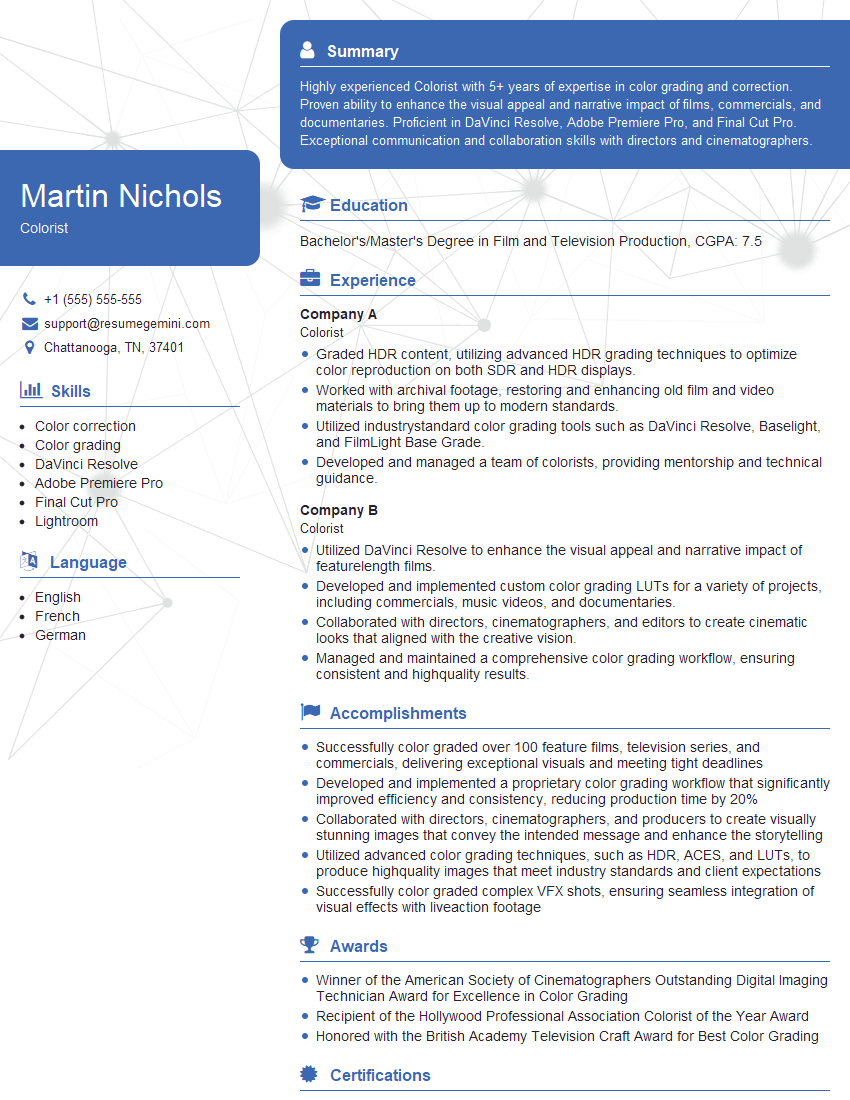
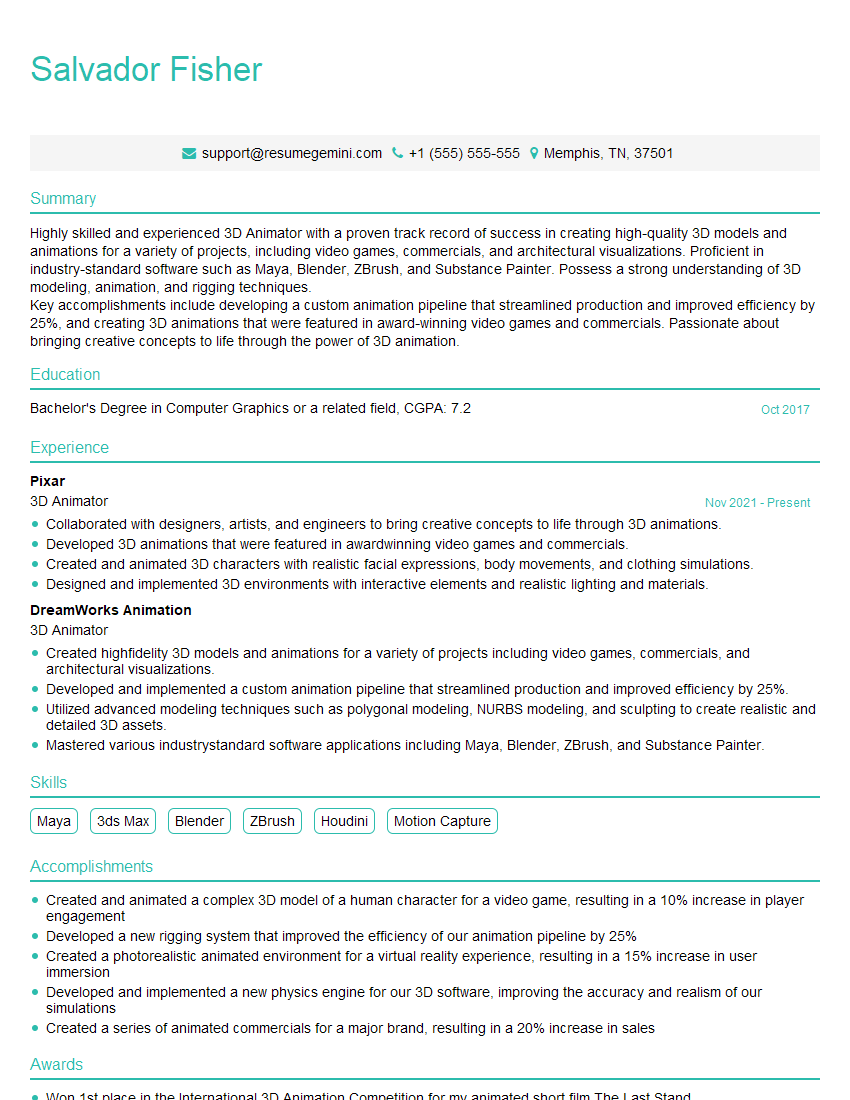
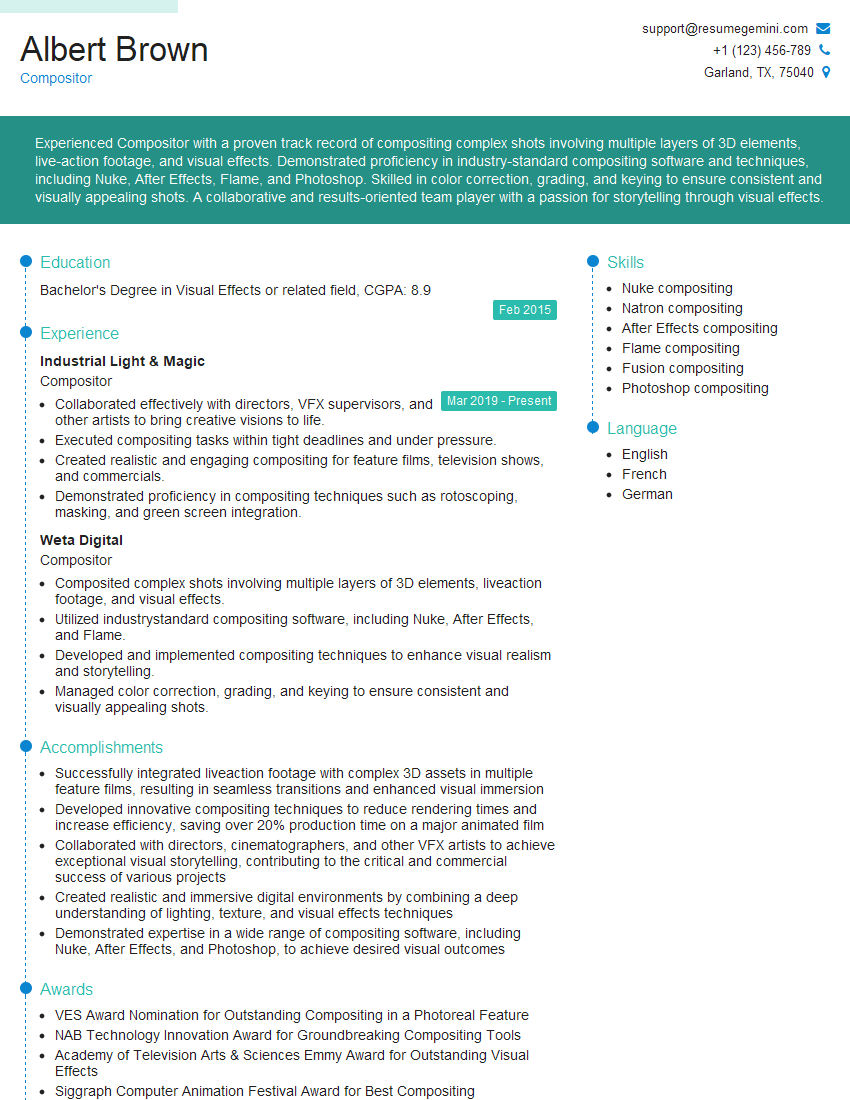
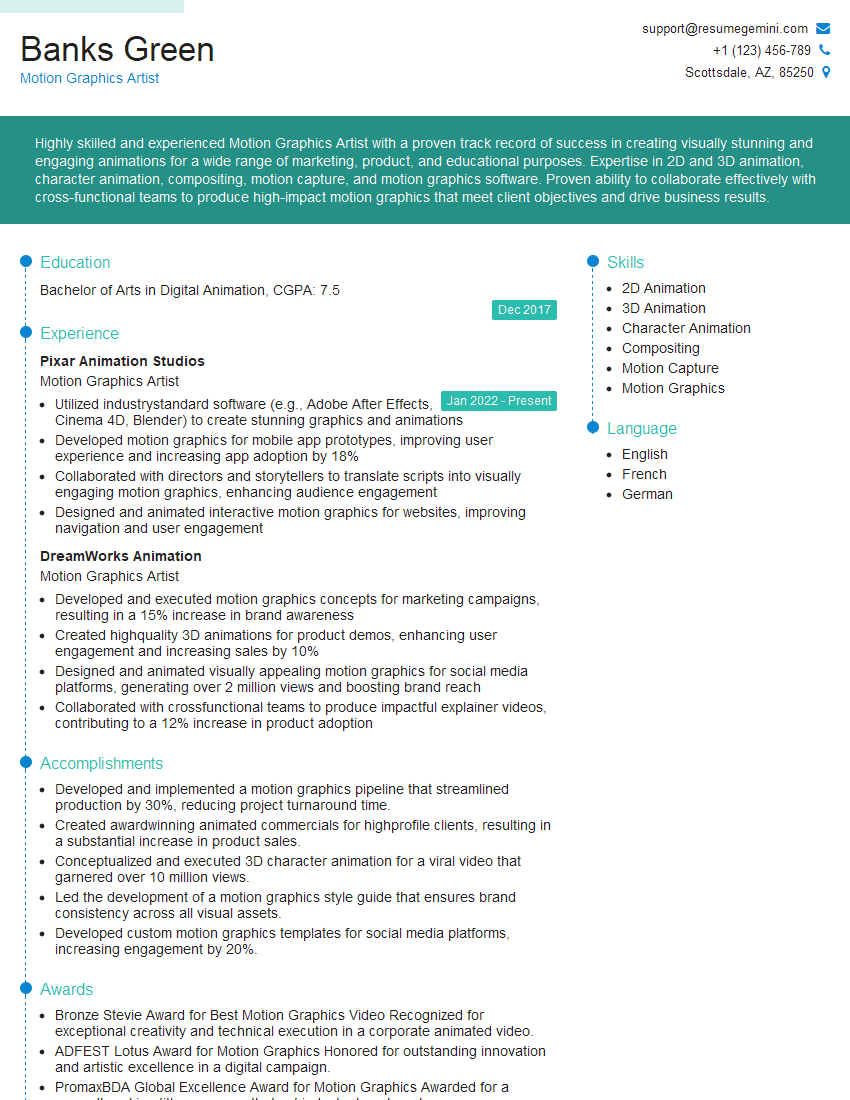
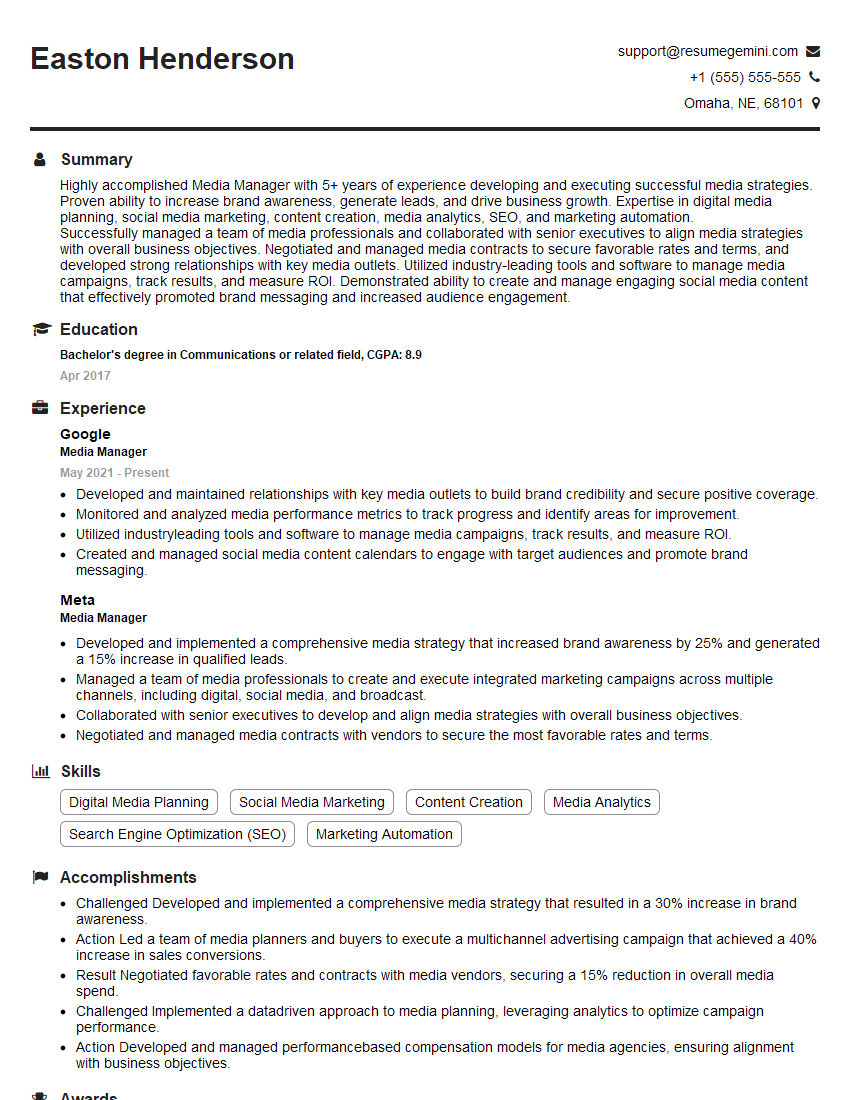
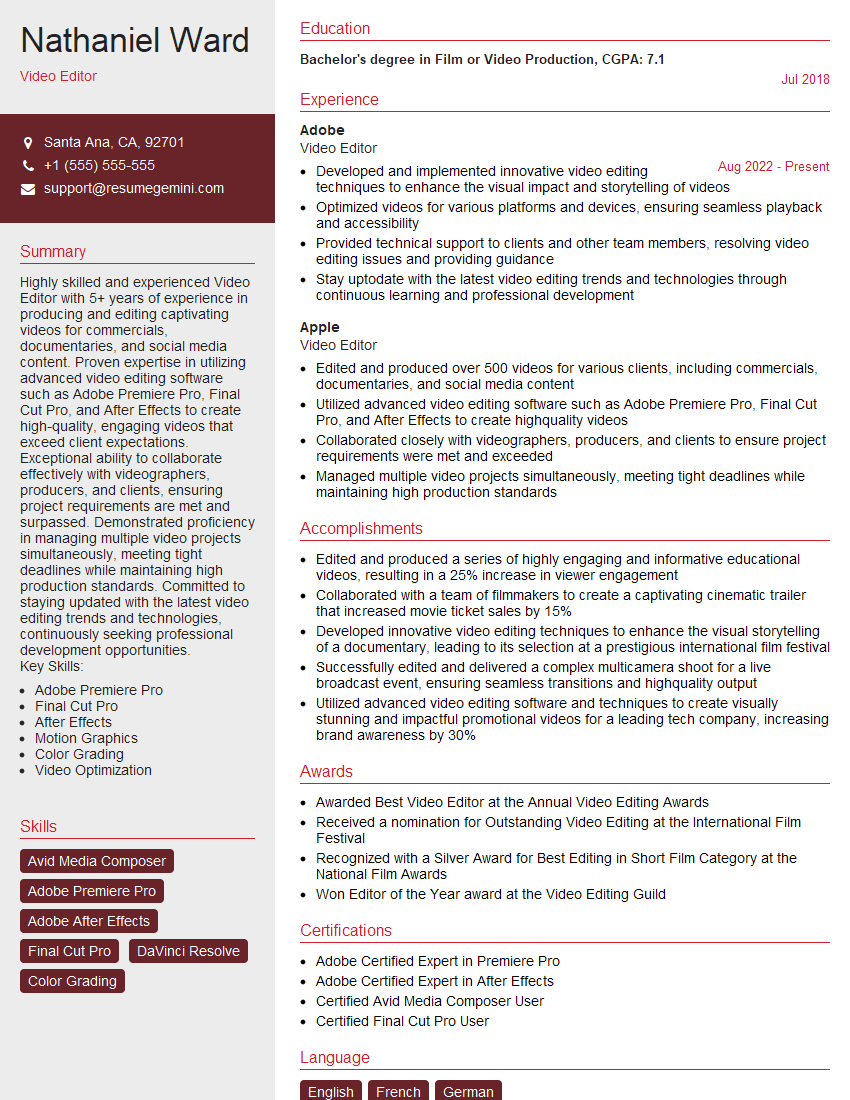
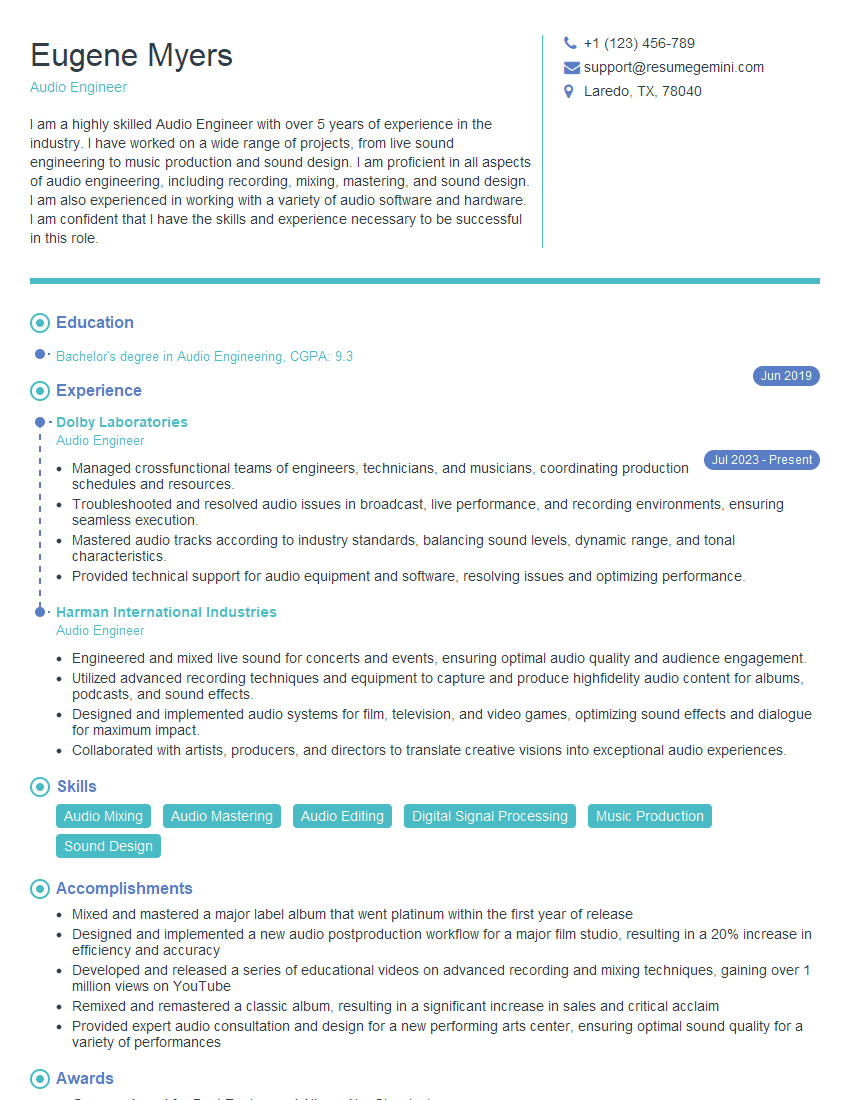
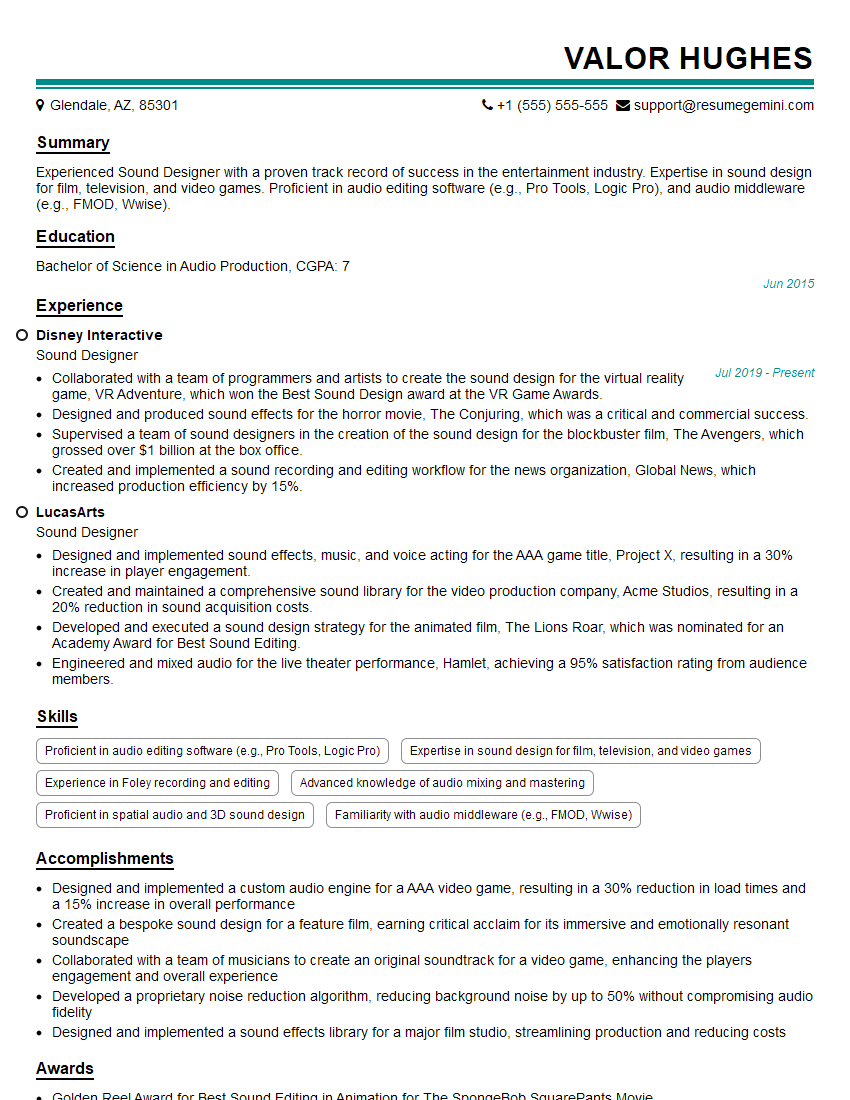
Mastering Post-Production Techniques significantly enhances your career prospects, opening doors to exciting roles in film, television, advertising, and more. A strong understanding of these techniques demonstrates valuable technical skills and a keen eye for detail. To maximize your job search success, crafting an ATS-friendly resume is crucial. This ensures your qualifications are effectively highlighted to recruiters and Applicant Tracking Systems. We highly recommend leveraging ResumeGemini as a trusted resource to build a professional and impactful resume tailored to your skills and experience. Examples of resumes specifically designed for Post-Production Techniques professionals are available to help guide you.

Explore more articles
Users Rating of Our Blogs
Share Your Experience
We value your feedback! Please rate our content and share your thoughts (optional).
What Readers Say About Our Blog
Very informative content, great job.
good