Interviews are opportunities to demonstrate your expertise, and this guide is here to help you shine. Explore the essential Medical Readiness interview questions that employers frequently ask, paired with strategies for crafting responses that set you apart from the competition.
Questions Asked in Medical Readiness Interview
Q 1. Describe your experience developing and implementing medical readiness plans.
Developing and implementing medical readiness plans involves a systematic approach that ensures a healthcare system can effectively respond to various emergencies and crises. This includes anticipating potential threats, creating detailed protocols, and establishing robust communication networks.
In my previous role at [Organization Name], I led the development of a comprehensive medical readiness plan for a large hospital system. This involved collaborating with multiple stakeholders, including clinicians, administrators, and emergency management personnel. We identified potential threats – ranging from natural disasters like hurricanes and earthquakes to pandemics and terrorist attacks – and developed tailored responses for each. The plan outlined specific roles and responsibilities, resource allocation procedures, and communication protocols to ensure coordinated and efficient responses. For example, we developed detailed procedures for patient evacuation, establishing temporary medical facilities, and managing surge capacity. We also conducted regular drills and simulations to test the plan’s effectiveness and identify areas for improvement.
Implementation involved training staff on the plan, establishing clear lines of communication, and ensuring the availability of necessary resources. This included procuring and storing essential medical supplies, maintaining functional equipment, and conducting regular equipment checks. We also established robust data management systems to track resource utilization and patient outcomes.
Q 2. Explain your process for assessing and mitigating risks to medical readiness.
Assessing and mitigating risks to medical readiness involves a proactive and iterative process of identifying potential vulnerabilities and implementing measures to reduce their impact. This process combines risk assessment methodologies with continuous monitoring and improvement strategies.
My approach begins with a thorough risk assessment, using a combination of qualitative and quantitative methods. We use tools like Failure Mode and Effects Analysis (FMEA) to systematically identify potential failures in the system and assess their potential impact. For example, we might assess the risk of a power outage disrupting critical medical equipment. This assessment considers the likelihood of the event occurring and the severity of the consequences. Based on this risk assessment, we prioritize mitigation strategies, focusing first on the most critical risks.
Mitigation strategies can range from purchasing backup generators to developing alternative communication systems. We also conduct regular audits and inspections of medical equipment, facilities, and supplies. Finally, we establish a robust system for continuous monitoring, allowing us to identify emerging risks and adapt our mitigation strategies as needed. This includes tracking key metrics like equipment uptime and supply levels. For instance, during the COVID-19 pandemic, we rapidly adjusted our plan to incorporate strategies for managing PPE shortages and providing telehealth services.
Q 3. How do you ensure the effectiveness of medical readiness training programs?
Ensuring the effectiveness of medical readiness training programs relies on a combination of well-designed curricula, realistic simulations, and robust evaluation methods. The goal is to develop competence and confidence in healthcare professionals to respond effectively in emergency situations.
Our training programs utilize a blended learning approach, combining online modules with hands-on simulations and drills. We focus on scenario-based training, exposing staff to realistic challenges and allowing them to practice their skills in a safe environment. For instance, we might simulate a mass casualty incident (MCI) to test their ability to triage patients, manage resources, and communicate effectively under pressure. Regular refresher training and competency assessments are also vital to maintain skills and knowledge. We use both summative and formative assessments, including written exams, practical skills demonstrations, and feedback from simulations. Post-training evaluations measure knowledge retention and identify areas for improvement in the training curriculum.
Furthermore, we use feedback mechanisms such as debriefing sessions after simulations, allowing participants to analyze their performance and learn from their experiences. This continuous feedback loop is crucial for refining the training program and ensuring it effectively prepares staff for real-world emergencies.
Q 4. What metrics do you use to measure the success of a medical readiness initiative?
Measuring the success of a medical readiness initiative requires a multifaceted approach, using both quantitative and qualitative metrics. This allows for a comprehensive evaluation of the program’s effectiveness in achieving its objectives.
Quantitative metrics might include:
- Resource availability (e.g., percentage of equipment functional, supply levels)
- Staff preparedness (e.g., completion rates for training programs, scores on competency assessments)
- Response times during drills and actual emergencies
- Patient outcomes during emergencies (e.g., mortality rates, length of hospital stay)
Qualitative metrics might include:
- Staff satisfaction with training and preparedness
- Feedback from drills and simulations
- Effectiveness of communication and coordination during emergencies
- Overall system resilience
By combining these metrics, we can gain a holistic understanding of the program’s performance and identify areas for improvement. For instance, a high completion rate for training programs might suggest strong staff engagement, while improved response times during drills indicate increased efficiency. Ultimately, the goal is to demonstrate a continuous improvement cycle, ensuring the medical readiness program adapts to evolving needs and effectively protects the health and safety of the community.
Q 5. Describe your experience managing medical supply chains during a crisis.
Managing medical supply chains during a crisis requires a highly organized and flexible approach, capable of adapting to rapidly changing demands and potential disruptions. It’s not just about having enough supplies; it’s about having the right supplies, in the right place, at the right time.
My experience includes leading supply chain management for [Organization Name] during the H1N1 pandemic. This involved establishing robust inventory management systems, securing diverse supply sources, and prioritizing resource allocation. We implemented a just-in-time inventory system, minimizing waste while ensuring sufficient stock levels of critical supplies. We also developed strong relationships with multiple vendors to diversify our supply sources and mitigate the risk of shortages due to any single supplier failing. We used advanced forecasting models to predict demand fluctuations and proactively adjust our inventory levels accordingly. This included developing surge capacity plans and establishing protocols for rapid procurement and distribution of additional supplies if needed. We also implemented a sophisticated tracking system, allowing real-time visibility into supply levels and locations. This system was invaluable during the peak of the pandemic, enabling us to quickly identify and address shortages.
Q 6. How would you handle a shortage of critical medical supplies during an emergency?
Handling a shortage of critical medical supplies during an emergency requires a multi-pronged approach, combining proactive planning with rapid response strategies. This involves prioritizing needs, exploring alternative supply sources, and optimizing resource utilization.
The first step is to immediately assess the severity and scope of the shortage. We would prioritize the allocation of scarce resources based on clinical need, using established triage protocols to ensure supplies reach those most in need. For example, ventilators would be prioritized for patients with the greatest chance of survival. Simultaneously, we would explore all available alternative supply sources, including contacting other healthcare facilities, national stockpiles, and international suppliers. We might also consider alternative treatment strategies that minimize reliance on the scarce resource. For example, if facing a ventilator shortage, we might prioritize non-invasive ventilation techniques. We’d also implement strict inventory control measures, reducing waste and ensuring supplies are used efficiently. This includes educating staff on proper use and disposal procedures. Finally, it is vital to communicate transparently with all stakeholders – patients, families, and the community – about the shortage and measures being taken to address it.
Q 7. Explain your experience with mass casualty incident (MCI) planning and response.
Mass casualty incident (MCI) planning and response requires a coordinated effort involving multiple agencies and healthcare professionals. It involves pre-planning for various scenarios, establishing efficient triage and treatment systems, and ensuring clear communication channels.
My experience includes participation in numerous MCI drills and real-world responses. We developed detailed MCI plans outlining roles and responsibilities, resource allocation strategies, and communication protocols for different types of incidents, such as bombings, earthquakes, or pandemics. These plans incorporated strategies for efficient patient triage using established systems like START (Simple Triage and Rapid Treatment) or SALT (Sort, Assess, Lifesaving interventions, Treatment/transport). We conducted regular drills to practice these plans, simulating various MCI scenarios to identify weaknesses and improve coordination. This included tabletop exercises, functional exercises, and full-scale simulations. This iterative process of planning, training, and evaluation ensures that our response to actual MCI events is as effective as possible. Effective communication is also critical during an MCI, so we established communication protocols using various methods such as radio, mobile phones, and designated communication centers to ensure a clear and efficient flow of information among responders.
Q 8. How do you coordinate with various stakeholders during a medical emergency?
Coordinating during a medical emergency requires a structured approach emphasizing clear communication and efficient resource allocation. Think of it like conducting an orchestra – each section (stakeholder) plays a vital role, and the conductor (emergency response coordinator) ensures harmony and effectiveness.
- Pre-Event Planning: Establishing clear roles and responsibilities, communication protocols (e.g., designated contact persons, communication channels), and escalation procedures before any crisis is crucial. This is like rehearsing the orchestra before the concert.
- Real-Time Coordination: During the emergency, a central command center becomes essential. Regular updates, situation reports, and task assignments are communicated through various channels (e.g., radio, phone, dedicated communication systems). This is the conductor leading the orchestra during the performance.
- Stakeholder Engagement: This involves active listening and respectful collaboration. Regular meetings and briefings involving hospital administration, medical staff, law enforcement, emergency management services, and public health officials are vital to ensure everyone is on the same page. It’s about each section of the orchestra understanding their part and how it contributes to the overall performance.
- Post-Event Debriefing: A critical step to identify areas for improvement and refine future responses. This analysis helps identify bottlenecks, communication breakdowns, and areas needing resource allocation improvements. This is the post-concert analysis, identifying what worked well and what could be improved.
For example, during a mass casualty incident, I would coordinate with the hospital administration to allocate resources, the medical staff to triage patients, law enforcement to manage the scene, and emergency management services to transport patients.
Q 9. What is your experience with pandemic preparedness and response?
My experience with pandemic preparedness and response spans several years, including roles in developing and implementing pandemic plans, conducting training exercises, and participating in real-time response efforts during the recent COVID-19 pandemic. This involved a multifaceted approach encompassing:
- Surge Capacity Planning: Assessing and enhancing the healthcare system’s ability to handle a sudden influx of patients. This included evaluating bed capacity, staffing levels, ventilator availability, and securing additional resources.
- Resource Allocation: Strategically distributing critical resources like personal protective equipment (PPE), ventilators, and medications based on need and risk assessment.
- Infection Control Protocols: Implementing and enforcing strict infection control measures to prevent further spread, including staff training on proper PPE use and infection prevention practices.
- Communication and Public Health Messaging: Collaborating with public health agencies to disseminate accurate and timely information to the public to mitigate panic and ensure compliance with guidelines.
- Data Tracking and Analysis: Monitoring disease spread, identifying hotspots, and utilizing this data to inform public health interventions and resource allocation.
During the COVID-19 pandemic, I was directly involved in developing protocols for managing COVID-19 patients, ensuring adequate PPE supplies, and coordinating with local and state health authorities.
Q 10. Describe your familiarity with relevant regulations and guidelines (e.g., HIPAA, JCAHO).
I possess a thorough understanding of relevant regulations and guidelines, including HIPAA (Health Insurance Portability and Accountability Act) and JCAHO (Joint Commission on Accreditation of Healthcare Organizations) standards. HIPAA focuses on patient privacy and data security, while JCAHO establishes standards for quality and safety in healthcare organizations. My familiarity encompasses:
- HIPAA Compliance: Understanding and implementing policies and procedures to protect patient health information (PHI), including access control, encryption, and data breach response protocols. This includes educating staff on HIPAA regulations and conducting regular audits to ensure compliance.
- JCAHO Standards: Applying JCAHO’s standards related to emergency preparedness, infection control, medication management, and patient safety. This involves participating in accreditation surveys and implementing corrective actions to address any identified deficiencies.
- Other Relevant Regulations: My knowledge extends to other relevant regulations, such as those related to emergency medical services (EMS), infectious disease reporting, and disaster response planning.
For instance, I’ve led HIPAA training programs for healthcare workers and have implemented robust data encryption measures to safeguard patient data. Moreover, I’ve overseen the development of emergency preparedness plans that fully comply with JCAHO standards, ensuring that our facilities are ready to meet the needs of patients during a crisis.
Q 11. How do you ensure the security and integrity of medical data during a crisis?
Ensuring the security and integrity of medical data during a crisis requires a multi-layered approach that combines technological safeguards with robust operational procedures. Imagine it as protecting a valuable treasure with both a strong vault (technology) and vigilant guards (procedures).
- Data Encryption: Encrypting all sensitive data, both at rest and in transit, using strong encryption algorithms. This ensures that even if data is accessed by unauthorized individuals, it remains unreadable.
- Access Control: Implementing strict access control measures, limiting access to data based on the principle of least privilege. This means only authorized personnel with a legitimate need can access sensitive data.
- Data Backup and Recovery: Regularly backing up data to a secure offsite location, ensuring that data can be recovered in case of a disaster or data loss.
- Incident Response Plan: Developing and regularly testing an incident response plan to effectively handle data breaches or security incidents. This includes identifying vulnerabilities, establishing reporting procedures, and outlining remediation steps.
- Employee Training: Educating staff on security best practices, including password management, phishing awareness, and the importance of reporting suspicious activity.
In practice, this means using strong password policies, regularly updating security software, and implementing multi-factor authentication. Furthermore, having a dedicated incident response team ensures swift action to contain and mitigate any security breaches.
Q 12. What is your experience with medical simulation and its role in readiness training?
Medical simulation plays a crucial role in enhancing medical readiness training by providing a safe and controlled environment to practice critical skills and decision-making under pressure. Think of it as a realistic flight simulator for healthcare professionals.
- Scenario-Based Training: Medical simulations use realistic scenarios, such as mass casualty events, to challenge participants and test their skills in responding to various situations.
- Team Training: Simulations help improve teamwork and communication by allowing healthcare professionals to work together in a simulated environment.
- Skill Development: Simulations provide opportunities to practice critical skills, such as airway management, trauma resuscitation, and medication administration, in a low-risk setting.
- Debriefing and Feedback: Post-simulation debriefings provide valuable feedback to participants, allowing them to identify areas for improvement and enhance their performance.
My experience includes designing and facilitating various simulation exercises, ranging from simple individual skills practice to complex multidisciplinary scenarios involving mass casualty events. I find simulations invaluable in reinforcing best practices and creating a culture of continuous learning.
Q 13. Describe your approach to communication and information dissemination during a crisis.
Effective communication during a crisis is paramount. It’s about delivering the right information to the right people at the right time, using the most appropriate channels. Think of it as being a skilled storyteller, conveying information clearly and efficiently.
- Multi-Channel Communication: Utilizing a variety of communication channels, such as email, text messages, phone calls, and public address systems, to ensure wide reach.
- Targeted Messaging: Tailoring messages to specific audiences, such as healthcare workers, patients, and the public, ensuring they receive the information relevant to their needs.
- Clear and Concise Messaging: Using simple, easy-to-understand language to avoid confusion and misinformation.
- Regular Updates: Providing timely updates to keep stakeholders informed about the evolving situation and actions taken.
- Feedback Mechanisms: Establishing feedback mechanisms to monitor the effectiveness of communication efforts and address any concerns.
For example, during a hospital-wide power outage, I would communicate with staff through a combination of pagers, email alerts, and announcements over the intercom system, providing regular updates on the situation and actions being taken to restore power.
Q 14. How do you prioritize competing demands during a medical emergency?
Prioritizing competing demands during a medical emergency requires a structured and systematic approach. Imagine it like being an air traffic controller, managing multiple planes simultaneously and ensuring safe landings.
- Triaging Patients: Using established triage systems, such as START (Simple Triage and Rapid Treatment) or SALT (Simple Assessment and Life Support), to prioritize patients based on the severity of their injuries and the likelihood of survival.
- Resource Allocation: Allocating resources (staff, equipment, medications) to patients based on their needs and urgency.
- Escalation Procedures: Having clear escalation procedures to address situations that are beyond the capacity of the immediate team. This may involve bringing in additional resources or requesting assistance from other organizations.
- Time Management: Managing time effectively, focusing on tasks that can save lives and minimize harm.
- Decision-Making Framework: Using a clear decision-making framework to weigh options, evaluate risks, and make well-informed decisions under pressure.
For instance, during a mass casualty event, I would prioritize patients with life-threatening injuries while simultaneously coordinating the transport of less critical patients to other facilities. This requires effective resource allocation and constant re-evaluation of the situation based on the ever-changing demands.
Q 15. How do you maintain staff morale and well-being during a crisis?
Maintaining staff morale and well-being during a crisis is paramount, as burnout and stress significantly impact performance and patient safety. It’s not just about providing basic needs; it’s about fostering a sense of community and shared purpose. My approach involves a multi-pronged strategy:
Proactive Communication: Regular, transparent updates on the situation, resource availability, and plans for the future are crucial. This helps reduce anxiety stemming from uncertainty.
Psychological First Aid (PFA): Implementing PFA training for staff allows them to support each other and receive immediate emotional support. This includes recognizing signs of stress and providing basic coping mechanisms.
Access to Resources: Providing access to mental health services (e.g., counselors, chaplains), wellness programs (e.g., yoga, mindfulness sessions), and peer support groups is vital. We should also ensure sufficient rest breaks and opportunities for debriefing.
Recognition and Appreciation: Publicly acknowledging and appreciating the hard work and dedication of staff boosts morale and reinforces a sense of teamwork. This can be through simple ‘thank you’ notes, team awards, or even informal recognition during meetings.
Leadership Presence and Support: Visible and supportive leadership that actively participates in the crisis response and demonstrates empathy builds trust and confidence amongst the team.
For example, during a large-scale influenza outbreak, we implemented daily team huddles to provide updates and address concerns. We also arranged for on-site counseling services and established a peer support network, connecting experienced staff with newer members needing additional guidance and emotional support.
Career Expert Tips:
- Ace those interviews! Prepare effectively by reviewing the Top 50 Most Common Interview Questions on ResumeGemini.
- Navigate your job search with confidence! Explore a wide range of Career Tips on ResumeGemini. Learn about common challenges and recommendations to overcome them.
- Craft the perfect resume! Master the Art of Resume Writing with ResumeGemini’s guide. Showcase your unique qualifications and achievements effectively.
- Don’t miss out on holiday savings! Build your dream resume with ResumeGemini’s ATS optimized templates.
Q 16. Describe your experience with post-incident analysis and improvement plans.
Post-incident analysis (PIA) is a critical process for continuous improvement in medical readiness. It’s not just about assigning blame; it’s about identifying weaknesses in systems and processes to prevent future incidents. My experience includes leading and participating in numerous PIAs following various events, ranging from individual patient safety incidents to large-scale disaster responses.
My process typically follows these steps:
Fact-Finding: Gathering comprehensive data through interviews, reviewing medical records, examining equipment logs, and analyzing incident reports.
Root Cause Analysis: Employing methodologies such as the ‘5 Whys’ or fault tree analysis to identify the underlying causes of the incident, not just the immediate symptoms.
Developing Improvement Plans: Based on the root cause analysis, creating specific, measurable, achievable, relevant, and time-bound (SMART) improvement plans to address identified weaknesses.
Implementation and Monitoring: Implementing the improvement plans, monitoring their effectiveness, and making adjustments as needed. This involves regular follow-up and data collection to ensure sustainable change.
Documentation and Communication: Thoroughly documenting the entire PIA process, including findings, recommendations, and implementation results. Communicating the findings and lessons learned to relevant stakeholders to prevent similar incidents in the future.
For instance, after a medication error, our PIA identified a weakness in our barcode scanning system. Our improvement plan involved upgrading the system, retraining staff, and implementing stricter medication verification procedures. This resulted in a significant reduction in medication errors within six months.
Q 17. What is your experience with developing and maintaining emergency preparedness documentation?
Developing and maintaining emergency preparedness documentation is crucial for effective response. This documentation serves as a blueprint for action and facilitates efficient coordination during crises. My experience involves creating and updating comprehensive emergency plans, policies, procedures, and training materials. This includes:
Emergency Operations Plan (EOP): Developing a detailed EOP that outlines roles, responsibilities, communication strategies, resource allocation plans, and evacuation procedures.
Standard Operating Procedures (SOPs): Creating SOPs for various scenarios, including mass casualty incidents, infectious disease outbreaks, and natural disasters.
Resource Inventory: Maintaining a regularly updated inventory of all medical supplies, equipment, and personnel, ensuring adequate resources are available during emergencies.
Training Materials: Developing and delivering training programs for staff on emergency response protocols, disaster preparedness, and the use of emergency equipment.
Regular Updates: Ensuring that all documentation is regularly reviewed, updated, and tested to reflect current best practices and address identified deficiencies. This often includes annual drills and simulations.
For example, I developed a comprehensive EOP for a large hospital, which included detailed procedures for activating the incident command system (ICS), establishing communication channels, and managing patient flow during a mass casualty event. This EOP has been successfully tested during several drills and has proven invaluable in real emergency situations.
Q 18. How familiar are you with different types of medical emergencies and their specific requirements?
Familiarity with diverse medical emergencies and their specific requirements is essential for effective medical readiness. My experience encompasses a wide range of emergencies, including:
Trauma: Managing patients with severe injuries, including those requiring immediate surgical intervention or resuscitation.
Cardiac Arrest: Implementing advanced cardiac life support (ACLS) protocols to restore spontaneous circulation.
Stroke: Recognizing stroke symptoms and administering appropriate treatments according to established guidelines.
Infectious Disease Outbreaks: Implementing infection control measures and managing patients with contagious illnesses.
Mass Casualty Incidents (MCIs): Coordinating patient triage, treatment, and transport during large-scale emergencies.
Natural Disasters: Responding to emergencies resulting from natural events such as hurricanes, earthquakes, and floods, including managing resource shortages and displacement.
Each emergency necessitates a tailored approach, considering specific needs for personnel, equipment, supplies, and communication strategies. For example, a cardiac arrest requires immediate access to defibrillators and trained personnel, while a mass casualty incident necessitates a well-defined triage system to prioritize patient care.
Q 19. Describe your experience with resource allocation during a medical crisis.
Resource allocation during a medical crisis is a complex process requiring strategic decision-making under pressure. My experience involves optimizing the use of limited resources (personnel, equipment, supplies, and facilities) to maximize patient care. This involves:
Needs Assessment: Accurately assessing the immediate and projected needs for resources based on the nature and scale of the emergency.
Prioritization: Prioritizing resource allocation based on the urgency and severity of patient needs, utilizing triage systems like START or SALT.
Strategic Procurement: Establishing efficient channels for procuring additional resources from external sources, including hospitals, agencies, and suppliers.
Inventory Management: Maintaining a real-time inventory of available resources and tracking their usage to ensure effective resource deployment and minimize waste.
Inter-agency Coordination: Collaborating with other agencies and organizations to coordinate resource allocation, sharing resources efficiently and minimizing duplication of efforts.
During a hurricane, for example, we established a central resource hub to track available beds, ventilators, and medications. This allowed us to effectively allocate resources to overwhelmed facilities and ensure that all patients received necessary care.
Q 20. How do you ensure the continuity of patient care during a disaster?
Ensuring continuity of patient care during a disaster requires proactive planning and robust contingency measures. My approach focuses on:
Patient Evacuation Plans: Developing detailed evacuation plans for patients requiring immediate transfer to safer locations. This includes considering patient vulnerabilities and logistical requirements.
Alternate Care Sites: Identifying and preparing alternative care sites in case of facility damage or overcrowding. This includes establishing temporary medical facilities and coordinating with nearby hospitals.
Communication Systems: Maintaining reliable communication systems to keep track of patients, staff, and resources. This may include redundant systems to ensure communication continuity during disruptions.
Information Sharing: Sharing vital patient information with other healthcare providers to ensure seamless handoffs and continued care.
Maintaining Essential Services: Prioritizing essential services, such as medications, oxygen, and power, to ensure patient safety and well-being.
For instance, during a wildfire, we developed a plan to evacuate patients from a threatened hospital to a nearby facility. We established clear communication protocols with both facilities to ensure patients received seamless and uninterrupted care.
Q 21. Explain your process for evaluating the effectiveness of emergency response protocols.
Evaluating the effectiveness of emergency response protocols is crucial for continuous improvement. My approach involves a systematic process of:
Regular Drills and Simulations: Conducting realistic drills and simulations to test the effectiveness of protocols under simulated emergency conditions. This allows us to identify areas for improvement without jeopardizing patient safety.
Post-Drill Debriefings: Conducting comprehensive debriefings after each drill, involving all participants to gather feedback and identify areas for improvement.
Data Analysis: Analyzing data collected from drills and real-world events, including response times, resource utilization, communication effectiveness, and patient outcomes. This data-driven approach helps identify trends and areas needing modification.
Benchmarking: Benchmarking our performance against best practices and standards established by national organizations, using relevant metrics to assess areas of strength and weakness.
Continuous Improvement: Continuously refining protocols based on data analysis, feedback, and benchmarking results, incorporating lessons learned to optimize emergency response effectiveness.
For example, after conducting a mass casualty incident drill, our analysis revealed a bottleneck in the patient triage process. By adjusting our protocols and providing additional training, we reduced triage times significantly in subsequent drills.
Q 22. How familiar are you with different levels of emergency preparedness (e.g., local, state, federal)?
Emergency preparedness operates across multiple levels, each with distinct responsibilities and capabilities. At the local level, this involves entities like county health departments and local hospitals, focusing on immediate response to incidents within their geographical area. Their plans address resource allocation, patient triage, and communication within the immediate community. State-level preparedness involves coordinating the response across multiple counties or regions, including managing resources across jurisdictions and providing support to overwhelmed local systems. The state health department plays a crucial role in this, often acting as a liaison with the federal government. Finally, the federal level, primarily through agencies like FEMA (Federal Emergency Management Agency) and HHS (Department of Health and Human Services), focuses on national-scale disasters, providing significant resources and coordinating responses across states. They establish national guidelines, distribute funding, and deploy specialized teams to supplement local and state efforts. Think of it like a layered cake: the local level is the foundation, the state level provides support and coordination, and the federal level offers the broadest resources and guidance.
For example, during a hurricane, the local hospital would activate its emergency plan, while the state health department might deploy mobile medical units to support impacted areas, and FEMA would provide logistical support and funding for long-term recovery.
Q 23. Describe your experience working with interdisciplinary teams to address medical readiness challenges.
My experience working with interdisciplinary teams on medical readiness is extensive. Effective medical readiness requires a holistic approach, encompassing medical professionals (physicians, nurses, paramedics), public health officials, logistical experts, communication specialists, and community leaders. I’ve been involved in numerous projects requiring collaboration across these disciplines. For instance, in one project focused on improving pandemic preparedness, I worked with epidemiologists to model disease spread, public health officials to develop communication strategies, logistical teams to map resource distribution, and medical professionals to refine triage protocols. This involved countless meetings, regular progress reports, and a shared commitment to a unified goal. Successful outcomes relied heavily on clear communication, mutual respect for differing perspectives, and a willingness to compromise and adapt. The key is to establish a shared understanding of the challenges, goals, and expectations from the outset.
Q 24. What software or technology do you use to support medical readiness planning and execution?
Several software and technology tools are essential for effective medical readiness planning and execution. We utilize Hospital Command Centers (HCC) software to monitor patient flow, resource availability, and staff deployment during emergencies. These systems provide real-time dashboards and reporting capabilities, enabling swift decision-making. For scenario planning and training, we use simulation software to model various disaster scenarios, testing the effectiveness of our response plans. Further, Geographic Information Systems (GIS) are crucial for mapping resources, identifying vulnerable populations, and tracking the spread of infectious diseases. Secure communication platforms are essential for disseminating information quickly and effectively, such as secure messaging systems and mass notification technologies. Finally, robust database systems help manage patient data, inventory, and staff records efficiently.
Q 25. Explain your understanding of risk assessment methodologies in the context of medical readiness.
Risk assessment in medical readiness employs a systematic approach to identifying and evaluating potential threats to healthcare systems. We use a combination of qualitative and quantitative methods. Qualitative assessments often involve expert panels or stakeholder interviews to identify potential threats (e.g., pandemics, natural disasters, terrorist attacks). Quantitative assessments use data analysis to determine the likelihood and potential impact of these threats. This might involve statistical modeling to predict the spread of an infectious disease or using historical data to estimate the impact of a natural disaster on hospital operations. A common framework is the HAZOP (Hazard and Operability Study) method, which systematically examines all aspects of a system to identify potential hazards and their consequences. The goal is to prioritize risks based on both their likelihood and potential impact, allowing resources to be allocated to the most critical areas.
Q 26. How do you incorporate lessons learned from previous incidents into future planning?
Integrating lessons learned from previous incidents is critical for continuous improvement in medical readiness. We employ a structured process: Post-incident analysis involves detailed reviews of what happened, identifying areas of success and areas needing improvement. This process often involves debriefing sessions with all involved parties. These findings are then documented in after-action reports (AARs). This documentation informs the revision of existing plans and protocols. For example, if a past incident revealed communication breakdowns, we’d update our communication plans to address those vulnerabilities. We also conduct tabletop exercises and simulations, incorporating lessons learned from previous events, to test the revised plans and identify further weaknesses. This iterative process enables us to continually refine our strategies and enhance our overall preparedness.
Q 27. Describe your experience with developing and delivering medical readiness training to various audiences.
Developing and delivering medical readiness training requires tailoring the content and approach to the specific audience. For healthcare professionals, training may focus on advanced life support, triage techniques, and disaster response protocols. For the general public, it might focus on basic first aid, emergency preparedness kits, and community evacuation plans. My training strategies involve a blended approach using didactic presentations, hands-on simulations, and interactive exercises. For example, when training hospital staff, we might use a simulated mass casualty event to practice their response. For community-based training, we employ interactive workshops and distribute informative materials. Assessment of learning is vital; this is often done through practical demonstrations, written tests, and post-training evaluations. The aim is to equip participants with the knowledge and skills to respond effectively in various emergency situations.
Q 28. How do you stay current with best practices and emerging trends in medical readiness?
Staying current with best practices and emerging trends requires a multi-pronged approach. I actively participate in professional organizations such as the National Association of County and City Health Officials (NACCHO) and the American College of Emergency Physicians (ACEP), attending conferences and webinars to stay abreast of the latest advancements. I regularly review relevant journals and publications, including the Centers for Disease Control and Prevention (CDC) Morbidity and Mortality Weekly Report (MMWR) and peer-reviewed articles on emergency medicine and public health. Furthermore, I engage in continuous learning through online courses and professional development programs offered by reputable institutions. Maintaining a strong professional network allows for the sharing of best practices and lessons learned within the field, ensuring that our response strategies remain at the forefront of innovation.
Key Topics to Learn for Medical Readiness Interview
- Emergency Response Protocols: Understanding and applying established procedures for various medical emergencies, including triage, stabilization, and communication within a team.
- Resource Management in Crisis Situations: Efficient allocation of personnel, equipment, and supplies during high-pressure scenarios, demonstrating practical problem-solving skills under stress.
- Patient Prioritization and Triage: Mastering the art of prioritizing patients based on urgency and severity of their conditions, effectively managing limited resources.
- Infection Control and Prevention: Deep understanding of infection control measures, including standard precautions, hand hygiene, and the use of personal protective equipment (PPE).
- Disaster Preparedness and Response: Knowledge of disaster response plans, including roles and responsibilities during large-scale events such as natural disasters or outbreaks.
- Ethical Considerations in Medical Emergencies: Navigating ethical dilemmas and decision-making in high-stakes situations, emphasizing patient autonomy and informed consent.
- Communication and Teamwork: Demonstrating effective communication skills, both verbal and written, and the ability to collaborate effectively within a multidisciplinary team.
- Technological Proficiency: Familiarity with relevant medical technologies and software used in emergency response and patient management.
- Continuous Learning and Professional Development: Highlighting commitment to staying current with best practices and advancements in medical readiness.
Next Steps
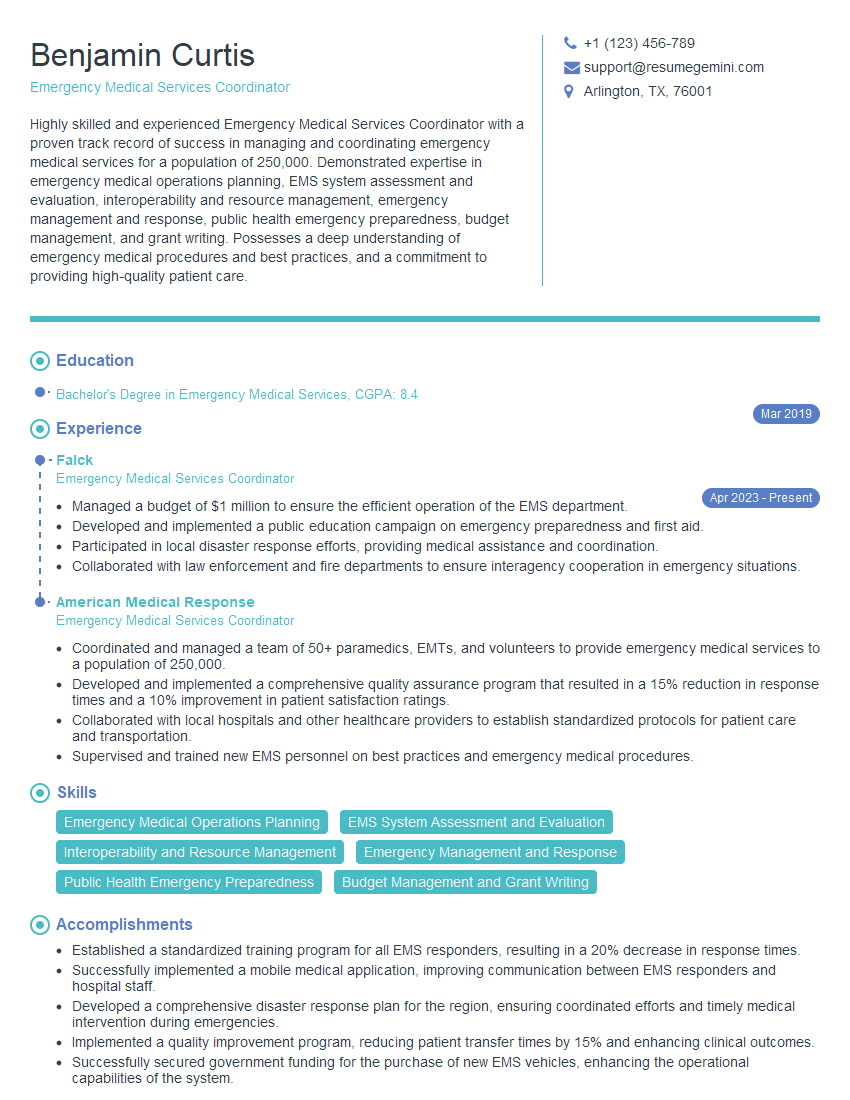
Mastering Medical Readiness is crucial for career advancement in healthcare, opening doors to specialized roles and leadership opportunities. A strong resume is your key to unlocking these possibilities. Crafting an ATS-friendly resume that showcases your skills and experience effectively is vital for getting noticed by recruiters. To help you build a compelling and impactful resume, we recommend using ResumeGemini. ResumeGemini provides the tools and resources to create a professional resume that stands out. Examples of resumes tailored specifically to Medical Readiness are available to guide you.
Explore more articles
Users Rating of Our Blogs
Share Your Experience
We value your feedback! Please rate our content and share your thoughts (optional).
What Readers Say About Our Blog
Very informative content, great job.
good