The thought of an interview can be nerve-wracking, but the right preparation can make all the difference. Explore this comprehensive guide to TroubleshootingMechanicalIssues interview questions and gain the confidence you need to showcase your abilities and secure the role.
Questions Asked in TroubleshootingMechanicalIssues Interview
Q 1. Describe your experience diagnosing and resolving mechanical failures.
My experience in diagnosing and resolving mechanical failures spans over 10 years, encompassing a wide range of industrial machinery and equipment. I’ve worked on everything from intricate robotic arms in automated assembly lines to large-scale agricultural harvesters. A particularly challenging case involved a malfunctioning conveyor belt system in a food processing plant. The initial symptom was inconsistent product movement, leading to production delays and spoilage. Through systematic troubleshooting (which I’ll detail in the next answer), I pinpointed the issue to a worn drive pulley and misaligned rollers, causing slippage. Replacing the pulley and realigning the rollers swiftly restored optimal functionality. This highlights my ability to identify root causes, even in complex systems, and to implement effective, cost-efficient solutions.
Another example involves troubleshooting a hydraulic press where the pressing force was inconsistent. By carefully analyzing the pressure readings and observing the hydraulic fluid for contamination, I identified a leak in a seal within the hydraulic cylinder. This required precision in dismantling, replacing the seal, and carefully reassembling the press, ensuring proper functionality while adhering to strict safety procedures.
Q 2. Explain the process you follow when troubleshooting a malfunctioning machine.
My troubleshooting process follows a structured approach, ensuring thoroughness and efficiency. It’s akin to a detective investigating a crime scene – systematically gathering clues to arrive at the truth.
- Gather Information: I begin by collecting information about the malfunction. This includes observing the symptoms, listening for unusual sounds (like grinding or squealing), and noting any error codes or warnings from the machine. I also interview the operators to understand the context of the failure – when did it start, what were the operating conditions, etc.
- Visual Inspection: A careful visual inspection helps identify obvious issues like loose connections, leaks, cracks, or damaged components. This often involves using magnifying glasses, borescopes, or other specialized tools depending on the system’s complexity.
- Systematic Testing: Based on the information gathered, I conduct targeted tests. This might involve checking pressures, temperatures, voltages, or currents using instruments like multimeters and pressure gauges. I might also run functional tests to isolate the faulty component or subsystem.
- Component Isolation: I systematically isolate potential trouble areas, testing components one by one to pinpoint the source of the problem. This frequently involves disconnecting components and performing checks.
- Repair or Replacement: Once the faulty component is identified, I proceed with the repair or replacement, always ensuring the correct procedure and using appropriate safety measures.
- Verification and Documentation: After repair, I thoroughly test the machine to ensure the issue is resolved and document the entire process, including the problem, the solution, and preventative measures to avoid similar issues in the future.
Q 3. What are the common causes of bearing failure and how do you identify them?
Bearing failure is a common mechanical issue with several potential root causes. Think of a bearing as a tiny highway for rotating components – if the highway is damaged, the traffic (rotation) becomes disrupted. These failures usually manifest as unusual noises (growling, rumbling, screeching), increased vibration, and eventually, complete seizure.
- Lubrication Issues: Insufficient lubrication or contamination of the lubricant are primary culprits. Lack of lubrication leads to increased friction and wear, while contamination (dirt, water) can damage the bearing surfaces.
- Overloading: Exceeding the bearing’s load capacity can cause premature failure. This could be due to design flaws, excessive operational load, or misalignment.
- Misalignment: If the shaft or housing isn’t properly aligned, it causes uneven load distribution on the bearing, leading to accelerated wear and tear.
- Corrosion: Exposure to moisture or corrosive environments can lead to rust and pitting of the bearing surfaces, compromising their integrity.
- Fatigue: Repeated cyclic loading over time eventually leads to metal fatigue, causing cracks and ultimate failure.
Identifying the cause requires a combination of visual inspection (checking for wear, damage, or corrosion), measurement of vibration levels, and sometimes, lubricant analysis to assess contamination. A temperature rise around the bearing can indicate excessive friction or inadequate lubrication.
Q 4. How do you use diagnostic tools (e.g., multimeters, oscilloscopes) to identify mechanical issues?
Diagnostic tools are crucial for precise identification of mechanical problems. They provide quantitative data to supplement visual inspections and help in pinpointing the root cause rather than relying on guesswork.
- Multimeters: These are used to measure voltage, current, and resistance. For instance, if a motor isn’t working, a multimeter can help determine if the motor is receiving power, confirming a problem with power supply rather than the motor itself.
- Oscilloscopes: These visualize electrical signals over time. This is invaluable in analyzing the signals from sensors and actuators to understand the timing and characteristics of their operation, helping in diagnosing intermittent problems in control systems.
- Vibration Analyzers: These detect and analyze the vibrations of machines, providing insight into imbalances, misalignments, and bearing problems. High vibration levels often correlate with imminent bearing failure.
- Thermal Imaging Cameras: These cameras identify hot spots, which often pinpoint areas experiencing excessive friction or other issues. A hot bearing is a prime indicator of impending failure.
- Pressure Gauges and Transducers: For hydraulic and pneumatic systems, these tools measure the pressures in different parts of the system, helping detect leaks, blockages, or pump issues.
For instance, in the case of the malfunctioning conveyor belt, I used a vibration analyzer to confirm the roller misalignment that was causing excessive vibration. And a multimeter helped me verify that the motor was receiving sufficient power, narrowing down the problem to the mechanical components.
Q 5. Describe your experience working with hydraulic and pneumatic systems.
I possess extensive experience in working with both hydraulic and pneumatic systems, involving troubleshooting, maintenance, and repair. Hydraulic systems use pressurized liquids to transfer power, while pneumatic systems use pressurized air. Both are critical in numerous applications.
In hydraulic systems, I’ve dealt with issues such as leaks (locating and repairing leaks using specialized tools), pump failures (diagnosing and replacing pumps), and valve malfunctions (testing and repairing or replacing valves). Contamination of hydraulic fluid is a frequent concern, requiring careful flushing and filtration. I’m proficient in analyzing pressure readings, using hydraulic schematics to understand the system’s flow and pressure paths.
With pneumatic systems, common issues include air leaks (detecting and sealing leaks), compressor problems (troubleshooting and maintenance of air compressors), and regulator failures (testing and replacing regulators). Understanding airflow dynamics and pressure drops is crucial for identifying blockages or restrictions in pneumatic circuits.
A notable project involved troubleshooting a hydraulically powered robotic arm experiencing erratic movement. By carefully tracing the hydraulic lines, using pressure gauges, and inspecting the hydraulic pump, I identified a faulty pressure relief valve, which was successfully replaced, restoring the robot’s precise operation.
Q 6. How do you interpret technical schematics and diagrams?
Interpreting technical schematics and diagrams is fundamental to my work. These documents are like maps that guide me through the intricate workings of a machine. I’m adept at reading various types of diagrams, including:
- P&ID (Piping and Instrumentation Diagrams): These diagrams show the flow paths of fluids (hydraulic, pneumatic, etc.) and the instrumentation used to monitor and control the system.
- Electrical Schematics: These depict the electrical connections and components of a machine, outlining the power distribution, control circuits, and sensor networks.
- Mechanical Drawings: These show the physical layout, dimensions, and tolerances of mechanical components, which is invaluable in understanding assembly procedures and part relationships.
- Hydraulic and Pneumatic Schematics: These diagrams show the flow paths, valves, actuators, and pressure regulators in hydraulic and pneumatic systems.
My ability to interpret these diagrams allows me to quickly understand the system’s architecture, trace signals, isolate components, and effectively troubleshoot problems. I often use these diagrams in conjunction with physical inspection and testing for a complete understanding.
Q 7. What safety precautions do you take when troubleshooting mechanical equipment?
Safety is paramount in my work. Troubleshooting mechanical equipment involves potential hazards, and I always prioritize safety measures to mitigate risks. My safety protocols include:
- Lockout/Tagout Procedures: Before starting any troubleshooting work, I always implement lockout/tagout procedures to isolate the power source and prevent accidental start-up of the equipment.
- Personal Protective Equipment (PPE): I consistently use appropriate PPE, such as safety glasses, gloves, hearing protection, and steel-toed shoes, depending on the task.
- Risk Assessment: I perform a thorough risk assessment before starting any job, identifying potential hazards and developing appropriate control measures.
- Proper Tool Usage: I ensure I use the correct tools for the job and that those tools are in good working order.
- Awareness of Hazardous Materials: I am aware of any hazardous materials that might be present (e.g., lubricants, hydraulic fluids) and handle them with appropriate care.
- Following Established Safety Procedures: I strictly adhere to all company safety procedures and regulations.
For example, before working on a hydraulic press, I would ensure the power is disconnected and locked out, the hydraulic system is depressurized, and I would wear safety glasses and gloves to protect myself from potential hazards like high pressure fluid or sharp components.
Q 8. Explain your experience with preventative maintenance procedures.
Preventative maintenance is the key to avoiding costly breakdowns and ensuring equipment longevity. It involves regularly scheduled inspections, lubrication, and minor repairs to prevent major problems from developing. My experience encompasses a wide range of preventative maintenance procedures, from basic lubrication schedules and visual inspections to more complex tasks like thermal imaging and vibration analysis.
- Lubrication Schedules: I’ve developed and implemented lubrication schedules for various types of machinery, ensuring the right lubricant is used at the correct intervals, based on manufacturer recommendations and operating conditions. This often involves creating detailed checklists and training personnel on proper lubrication techniques.
- Visual Inspections: I’m adept at performing thorough visual inspections, identifying signs of wear, corrosion, or damage before they escalate into major issues. This includes checking for leaks, loose fasteners, and unusual noises. Think of it like a doctor’s regular checkup – catching small problems early prevents bigger ones later.
- Predictive Maintenance Techniques: I have extensive experience using predictive maintenance techniques like vibration analysis and oil analysis to identify potential problems before they cause equipment failure. This allows for proactive repairs, minimizing downtime and maximizing operational efficiency. For example, a slight change in vibration frequency might indicate an impending bearing failure, which can be addressed before it leads to a catastrophic breakdown.
In my previous role, I implemented a new preventative maintenance program that reduced equipment downtime by 15% and extended the lifespan of critical machinery by an average of 18 months. This was achieved by combining scheduled inspections, improved lubrication practices, and the implementation of a computerized maintenance management system (CMMS).
Q 9. How do you prioritize multiple mechanical issues?
Prioritizing multiple mechanical issues requires a systematic approach that considers several factors: severity, impact on production, safety risks, and cost of repair. I use a prioritization matrix that considers these factors, assigning a weighted score to each issue.
- Severity: How critical is the issue? Will it cause immediate failure, reduce efficiency, or pose a safety hazard?
- Impact on Production: Will the malfunction disrupt operations, leading to lost production or delays? Issues impacting critical processes get higher priority.
- Safety Risks: Does the problem pose a safety risk to personnel or the environment? Safety always takes precedence.
- Cost of Repair: While not the sole determinant, the cost of repair versus the potential cost of inaction is also considered.
I typically use a simple scoring system (e.g., 1-5 for each factor) and sum the scores to create a priority ranking. Issues with the highest scores are addressed first. For instance, a leaking hydraulic line posing a fire hazard (high severity and safety risk) would take priority over a minor vibration in a less critical component.
Q 10. How do you document your troubleshooting process and findings?
Thorough documentation is crucial for effective troubleshooting and for future reference. My documentation process includes detailed records of the problem, troubleshooting steps, findings, and solutions. This is usually done using a combination of digital and physical methods.
- Problem Description: I start with a clear and concise description of the problem, including date, time, location, and any relevant symptoms. For example, ‘Machine X stopped operating at 10:00 AM on 2024-10-27, accompanied by a loud grinding noise from the transmission.’
- Troubleshooting Steps: I meticulously document every step taken during the troubleshooting process, including inspections, tests performed, and measurements taken. This is essential for identifying the root cause and for future reference.
- Findings: All observations and data collected during the troubleshooting process are documented. This could include visual observations, sensor readings, or diagnostic codes.
- Solutions Implemented: A clear description of the implemented solution, including parts replaced, adjustments made, and any changes to operating procedures.
- Photographs and Videos: Visual aids can significantly enhance documentation. I often use photographs and videos to capture the problem and the repair process.
- CMMS (Computerized Maintenance Management System): Many organizations use CMMS software to digitally manage and track all maintenance activities, including troubleshooting reports.
This comprehensive approach ensures that I can quickly recall past issues and prevent similar problems in the future, creating a knowledge base for continuous improvement.
Q 11. Describe a time you had to troubleshoot a complex mechanical problem. What was the solution?
In my previous role, I encountered a complex issue with a large industrial conveyor system. The system was experiencing frequent shutdowns due to a seemingly intermittent fault in the motor control system. The error messages were vague, and initial inspections yielded no obvious problems.
My troubleshooting started with gathering data. I analyzed the error logs, reviewed maintenance records, and monitored the system’s performance using data acquisition equipment. After several days of monitoring, a pattern emerged: the system failed only during peak load periods. This suggested a problem related to power surges or excessive current draw.
Further investigation revealed that the motor control system’s power supply was insufficient for the peak loads. The existing supply was nearing its capacity, and momentary voltage drops were causing the system to shut down as a safety precaution. The solution involved upgrading the power supply to a larger unit with improved surge protection. Following the upgrade, the conveyor system operated without any further shutdowns, highlighting the importance of thorough data analysis in complex troubleshooting scenarios.
Q 12. What are your troubleshooting strategies for vibration analysis?
Vibration analysis is a crucial tool for detecting mechanical problems before they cause major failures. My troubleshooting strategies for vibration analysis involve a systematic approach combining data acquisition, analysis, and interpretation.
- Data Acquisition: Using vibration sensors and data acquisition equipment, I collect vibration data from various points on the machine. This includes measuring acceleration, velocity, and displacement at different frequencies. The data should be collected under various operating conditions to identify potential issues.
- Spectrum Analysis: I use Fast Fourier Transform (FFT) analysis to convert the time-domain vibration signal into a frequency-domain spectrum, revealing the dominant frequencies and their amplitudes. This helps to pinpoint the source of the vibration, such as unbalanced rotating components, misalignment, or bearing defects. Each problem will have a distinct frequency signature.
- Bearing Fault Diagnosis: I’m experienced in using spectral analysis techniques to identify characteristic frequencies associated with different bearing faults, such as outer race, inner race, or rolling element damage. These characteristic frequencies can be compared with established standards and databases.
- Phase Analysis: Phase analysis helps determine the direction of the vibration, aiding in locating the source. For example, a 180-degree phase shift between two sensors indicates a misalignment problem.
- Orbit Plots: Orbit plots (also called Campbell diagrams) offer visualization of machine behavior. These plots help in determining the source and amplitude of vibration, making it easy to spot potential issues like unbalance.
It’s essential to interpret the results carefully, considering the machine’s operating characteristics and other potential factors. For instance, high vibration in a pump might indicate cavitation, and high-frequency vibrations might suggest a looseness problem.
Q 13. How familiar are you with different types of lubrication and their applications?
I’m very familiar with various types of lubricants and their applications. The selection of the right lubricant is crucial for equipment performance and longevity. Lubricants are chosen based on factors such as operating temperature, speed, load, and the type of machine component.
- Mineral Oils: These are widely used general-purpose lubricants, suitable for a wide range of applications. However, they may have limitations at extreme temperatures.
- Synthetic Oils: Synthetic oils offer superior performance compared to mineral oils, particularly at high or low temperatures. They also provide better oxidation resistance and longer lifespan.
- Greases: Greases are semi-solid lubricants consisting of oil and a thickener. They are suitable for applications where oil leakage is a concern, such as bearings operating in dusty or harsh environments.
- Specialty Lubricants: These lubricants are formulated for specific applications, such as high-temperature applications, food processing equipment, or vacuum systems. Examples include lithium-based grease, molybdenum disulfide grease, and food-grade lubricants.
For example, in a high-speed bearing application, a synthetic oil with a low viscosity would be preferred to minimize friction and heat generation. Conversely, a heavy-duty grease would be suitable for a slowly rotating bearing in a harsh environment. Choosing the wrong lubricant can lead to premature wear, friction-related failures, and shortened equipment lifespan.
Q 14. Explain your understanding of root cause analysis in mechanical troubleshooting.
Root cause analysis is a systematic approach to identifying the underlying cause of a problem, rather than just treating the symptoms. In mechanical troubleshooting, this is crucial to prevent recurrence. The goal isn’t just to fix the immediate issue but to prevent it from happening again.
I typically employ a structured approach such as the ‘5 Whys’ technique or a more formal fishbone diagram (Ishikawa diagram) to uncover the root cause.
- 5 Whys: This is an iterative questioning technique where you repeatedly ask ‘Why?’ to delve deeper into the cause of a problem. For example: Problem: The machine overheated. Why? Because the cooling fan failed. Why? Because the fan belt broke. Why? Because the belt was worn. Why? Because preventative maintenance was neglected.
- Fishbone Diagram: This diagram provides a visual representation of the potential causes of a problem, categorized into different categories (e.g., materials, methods, manpower, machinery, environment, measurement). Each branch of the ‘fishbone’ represents a possible cause, and sub-branches represent contributing factors. This is particularly useful for complex problems with multiple contributing factors.
Once the root cause is identified, corrective actions can be implemented to address the underlying issue and prevent similar problems from occurring in the future. This might involve changing maintenance procedures, upgrading components, or implementing improved quality control measures.
Q 15. How do you determine whether to repair or replace a faulty component?
The decision to repair or replace a faulty component is a crucial one, balancing cost, downtime, and long-term reliability. It’s a cost-benefit analysis, not a simple yes or no.
- Cost of Repair vs. Replacement: Compare the cost of parts, labor, and potential downtime for repair against the outright cost of a new component. Sometimes, a seemingly expensive repair is cheaper in the long run if it extends the life of a reliable, high-value component.
- Component Criticality: How essential is this component to the overall system’s operation? A critical component might necessitate replacement even if repair is cheaper, to minimize risk of further failure and downtime. For example, a failed bearing in a high-speed centrifuge demands immediate replacement.
- Availability of Parts: If replacement parts are readily available and inexpensive, replacement is often the simpler solution. However, obsolete or hard-to-find components might necessitate repair, even if more complex.
- Predictive Maintenance Data: Does your organization track data on component life cycles and failure rates? This data can provide insights into whether repair is merely a temporary fix or if the component is nearing the end of its expected lifespan.
- Repair Complexity: A simple repair might be economically feasible, while a complex repair involving specialized tools and extensive expertise might be more costly than replacement.
Example: Imagine a worn-out gear in a conveyor system. If it’s a small, inexpensive gear, replacement is straightforward. However, if it’s a large, custom-made gear requiring specialized machining, repair might be the more cost-effective option, despite the initial higher labor cost.
Career Expert Tips:
- Ace those interviews! Prepare effectively by reviewing the Top 50 Most Common Interview Questions on ResumeGemini.
- Navigate your job search with confidence! Explore a wide range of Career Tips on ResumeGemini. Learn about common challenges and recommendations to overcome them.
- Craft the perfect resume! Master the Art of Resume Writing with ResumeGemini’s guide. Showcase your unique qualifications and achievements effectively.
- Don’t miss out on holiday savings! Build your dream resume with ResumeGemini’s ATS optimized templates.
Q 16. Describe your experience with different types of mechanical fasteners and their applications.
My experience encompasses a wide range of mechanical fasteners, from simple screws and bolts to more specialized types. The selection of the appropriate fastener depends heavily on the application’s requirements for strength, durability, corrosion resistance, and ease of assembly/disassembly.
- Bolts: Commonly used for high-strength applications requiring frequent disassembly, like connecting machine components. Different grades (e.g., 5.8, 8.8, 10.9) indicate increasing tensile strength.
- Screws: Used for a variety of applications, from attaching sheet metal to securing smaller components. Types include machine screws, self-tapping screws, and wood screws.
- Rivets: Permanent fasteners ideal for joining sheets of metal where disassembly is not required. Solid rivets require hammering, while blind rivets can be installed from one side only.
- Welding: While not technically a fastener, welding provides a permanent, strong join for metal components. Different welding processes (e.g., MIG, TIG, spot welding) are chosen based on material and application.
- Keyways and Splines: Used for transmitting torque between shafts and hubs, often in rotating machinery. Keyways are simpler, but splines offer superior torque transmission and alignment.
Example: In a pump repair, I might use high-strength bolts for the main casing connections to ensure they can withstand high internal pressure. For attaching electrical components, I’d use smaller machine screws for ease of assembly.
Q 17. How do you ensure the accuracy of your repairs?
Accuracy in repairs is paramount. It’s about ensuring the repaired component functions as designed, within its specified tolerances, and doesn’t create further problems down the line. I employ a multi-pronged approach:
- Precise Measurements: Before and after the repair, I take careful measurements using calibrated instruments (e.g., micrometers, calipers) to verify dimensions and alignment.
- Visual Inspection: Thorough visual checks are performed throughout the repair process, looking for signs of damage, misalignment, or improper assembly.
- Functional Testing: After the repair, I always perform a functional test to confirm that the component is operating correctly and within its specified parameters. This might involve running the component under simulated load conditions.
- Documentation: I maintain detailed records of repairs, including parts replaced, measurements taken, and test results. This documentation helps ensure consistency and provides traceability if any issues arise later.
- Calibration of Tools: Regular calibration of measuring instruments and tools is vital. This ensures that the measurements are accurate and that the repair is performed to the correct tolerances.
Example: When repairing a hydraulic cylinder, I meticulously measure the piston rod diameter and seal clearances before and after installing new seals. I then test the cylinder under pressure to verify that it operates without leaks and performs within its rated pressure limits.
Q 18. How do you manage your time effectively when dealing with multiple mechanical issues?
Effective time management when dealing with multiple mechanical issues involves a structured approach:
- Prioritization: I assess the urgency and criticality of each issue. Critical failures requiring immediate attention take precedence over less urgent problems. A simple framework is assigning levels of severity (e.g., Critical, High, Medium, Low).
- Task Breakdown: I break down complex problems into smaller, manageable tasks. This makes the overall job less daunting and allows for better progress tracking.
- Scheduling: I create a realistic schedule that accounts for potential delays. This schedule acts as a roadmap, ensuring I allocate sufficient time for each task.
- Multitasking (Strategically): While true multitasking is generally inefficient, I can strategically perform certain tasks concurrently—for example, while waiting for a part to arrive, I might work on a less urgent problem.
- Seeking Assistance: I’m not afraid to seek help from colleagues if a particularly complex issue requires specialized knowledge or an extra set of hands.
Example: If I have a broken conveyor belt, a leaking pump, and a malfunctioning motor, I would prioritize the conveyor belt first (as it impacts overall production) and then tackle the pump (a potential safety hazard), leaving the motor repair for later, once more urgent issues are resolved.
Q 19. Describe your experience working with various types of machinery (e.g., pumps, motors, conveyors).
My experience encompasses a wide variety of machinery including pumps (centrifugal, positive displacement), motors (AC, DC, servo), and conveyors (belt, roller, screw). Understanding the operating principles of each type is essential for effective troubleshooting.
- Pumps: I’m proficient in diagnosing issues such as cavitation, seal leaks, and bearing failures. The troubleshooting approach differs significantly between centrifugal pumps (flow rate and pressure-related issues) and positive displacement pumps (internal mechanical issues).
- Motors: I can diagnose electrical faults (e.g., shorted windings, faulty capacitors) and mechanical problems (e.g., bearing wear, rotor imbalance) in AC and DC motors, as well as more complex servo motors.
- Conveyors: My experience includes troubleshooting issues such as belt tracking problems, roller alignment, and drive motor failures. The troubleshooting technique would vary depending on the type (belt, roller, screw) and material handling issues.
Example: When troubleshooting a centrifugal pump, I would check the pressure gauges, listen for cavitation sounds, and inspect the seals for leakage. A high-pitched squealing might point towards bearing failure. A failing motor might exhibit overheating, unusual vibrations, or strange noises.
Q 20. How do you handle situations where you cannot immediately identify the source of a mechanical problem?
When the source of a mechanical problem remains elusive, a systematic approach is vital. I don’t jump to conclusions; instead, I follow a structured process.
- Gather Information: I start by gathering as much information as possible, such as operator observations, error messages, and historical data.
- Visual Inspection: I conduct a thorough visual inspection, looking for any obvious signs of damage or malfunction (loose connections, broken parts, leaks).
- Systematic Testing: I proceed with systematic testing, isolating sections of the system to pinpoint the faulty component or subsystem. This could involve checking voltage, current, pressure, temperature, or vibrations.
- Diagnostic Tools: I use a variety of diagnostic tools, such as multimeters, vibration analyzers, and thermal imaging cameras, to help identify the problem.
- Consult Resources: If needed, I consult technical manuals, schematics, and online resources to gain a deeper understanding of the system’s operation.
- Seek Expert Advice: In some cases, I may need to consult with other specialists (e.g., electricians, hydraulic technicians) to resolve particularly complex problems.
Example: If a machine intermittently stops, I would start by checking the power supply, then the control system, and finally the individual mechanical components. A thermal imaging camera can help identify overheating components, which could indicate a problem with a specific motor or bearing.
Q 21. How do you stay up-to-date with the latest technologies and best practices in mechanical troubleshooting?
Staying current in this rapidly evolving field requires proactive engagement.
- Professional Development: I attend workshops, conferences, and training courses offered by industry leaders and manufacturers. This allows me to learn about new technologies, best practices, and troubleshooting techniques.
- Industry Publications: I regularly read industry journals, magazines, and online publications to stay abreast of the latest advancements and research.
- Manufacturer Resources: I utilize the resources provided by equipment manufacturers, such as online manuals, troubleshooting guides, and technical bulletins. This access provides updates and solutions for specific problems.
- Online Communities: I participate in online forums and communities of mechanical professionals, sharing knowledge and learning from others’ experiences.
- Hands-on Experience: Nothing beats hands-on experience. I actively seek opportunities to work with new technologies and equipment, both during and outside of work hours. This includes working on personal projects or volunteering my expertise.
Example: I recently attended a training course on the latest predictive maintenance techniques using vibration analysis. This knowledge directly impacts my troubleshooting approach by allowing me to anticipate potential failures before they occur.
Q 22. Explain your experience with using Computerized Maintenance Management Systems (CMMS).
Computerized Maintenance Management Systems (CMMS) are software solutions that streamline maintenance operations. My experience spans several years using various CMMS platforms, including UpKeep and Fiix. I’ve utilized them for preventative maintenance scheduling, tracking work orders, managing inventory, and generating reports on equipment performance and maintenance costs. For example, in a previous role, we used a CMMS to schedule regular lubrication of our conveyor belts, significantly reducing downtime and extending the lifespan of the equipment. This involved inputting specific maintenance tasks, assigning them to technicians, and tracking their completion. The system also allowed us to generate reports showing the total cost of maintenance over time, helping us justify investments in preventative maintenance programs. Beyond scheduling, CMMS allows for efficient tracking of parts inventory, ensuring we have the necessary components on hand to minimize delays during repairs.
Q 23. How do you work effectively with other technicians or engineers to resolve mechanical issues?
Effective teamwork is crucial in troubleshooting. I foster collaboration by clearly communicating the problem, actively listening to others’ suggestions, and leveraging each team member’s unique expertise. For instance, when diagnosing a malfunctioning hydraulic press, I would work with an electrician to rule out electrical issues before focusing on the hydraulic system itself. We would use a structured approach, dividing tasks efficiently and checking each other’s work to ensure accuracy. Open communication is key; we’d regularly update each other on our findings and discuss potential solutions. This collaborative process not only speeds up the troubleshooting process but also ensures a more thorough and reliable repair.
Q 24. Describe your experience with interpreting and implementing manufacturer’s instructions.
Interpreting and implementing manufacturer’s instructions is paramount for safe and effective repairs. I meticulously review all instructions, paying close attention to safety precautions, torque specifications, and component diagrams. Recently, I had to replace a faulty motor on a large milling machine. The manufacturer’s manual provided detailed instructions including safety procedures (lockout/tagout), precise torque settings for the mounting bolts, and wiring diagrams. I followed each step carefully, ensuring proper alignment and secure fastening. Any deviation from the manufacturer’s guidelines could lead to equipment damage or even injury, so careful and precise adherence is essential. I also maintain a library of relevant manufacturer’s manuals for quick reference.
Q 25. What are some common indicators of impending mechanical failure?
Predictive maintenance is key to preventing major failures. Common indicators of impending mechanical failure include unusual noises (grinding, squealing, knocking), excessive vibrations, unusual temperature increases (felt or measured), fluid leaks, decreased performance, and unusual smells. For example, a bearing nearing failure often emits a high-pitched squeal as the lubrication degrades. Similarly, a gradual decrease in the output of a pump could indicate wear or internal damage. Regular inspections, coupled with monitoring key performance indicators (KPIs), are critical for identifying these subtle warning signs before they escalate into catastrophic failures.
Q 26. How do you ensure the safety of yourself and others during the troubleshooting process?
Safety is my top priority. I always follow established safety protocols, including lockout/tagout procedures before working on energized equipment. I use appropriate personal protective equipment (PPE), such as safety glasses, gloves, and hearing protection. Before commencing any work, I conduct thorough risk assessments, identifying potential hazards and implementing mitigating measures. Involving other team members when lifting heavy objects or working at heights is crucial. I regularly refresh my knowledge of safety regulations and best practices to ensure my procedures remain up-to-date and effective. Safety is not just a set of rules; it’s a mindset that guides every step of the troubleshooting process.
Q 27. How do you balance the need for quick repairs with the need for thoroughness?
Balancing speed and thoroughness requires a strategic approach. While rapid repairs are often desired to minimize downtime, neglecting a thorough investigation could lead to recurring issues. I prioritize a systematic approach, starting with a quick assessment to identify the immediate problem and implement temporary fixes to restore operation if necessary. Then, a detailed investigation follows to determine the root cause. This might involve detailed inspections, testing, and data analysis. This approach ensures both a quick resolution to the immediate problem and prevents future occurrences by addressing the underlying cause. Using diagnostic tools and collaborating with colleagues aids this balance.
Q 28. Explain your understanding of torque specifications and their importance.
Torque specifications are crucial for ensuring the proper fastening of components. They define the amount of rotational force applied to a fastener, such as a bolt or screw. Improper torque can lead to loose components (resulting in failure) or over-tightened components (causing damage or stripping threads). For example, engine head bolts require precise torque values to maintain the integrity of the seal between the head and block. Using a torque wrench, which measures and controls the applied torque, is essential for achieving the specified value. Each fastener has a recommended torque setting, often listed in manufacturer’s documentation. Failure to adhere to these specifications can lead to significant problems, ranging from minor leaks to catastrophic component failure.
Key Topics to Learn for Troubleshooting Mechanical Issues Interview
- Fundamental Mechanical Principles: Understanding concepts like forces, motion, energy transfer, and material properties is crucial for diagnosing problems effectively. This forms the bedrock of your troubleshooting abilities.
- Diagnostic Techniques: Master the art of systematic troubleshooting. Learn how to effectively utilize visual inspection, listening for unusual sounds, using diagnostic tools (e.g., multimeters, pressure gauges), and interpreting data to pinpoint the root cause of mechanical malfunctions.
- Hydraulic and Pneumatic Systems: Gain a strong understanding of how these systems function, common failure points, and effective methods for identifying and resolving leaks, pressure issues, and component failures. Practical experience is invaluable here.
- Electrical Systems in Mechanical Equipment: Many modern mechanical systems integrate electrical components. Understanding basic electrical principles, wiring diagrams, and troubleshooting electrical faults is essential for comprehensive diagnosis.
- Preventive Maintenance: Demonstrate your knowledge of preventative maintenance strategies and their role in minimizing mechanical failures. This shows proactive problem-solving skills.
- Safety Procedures: Highlight your awareness and adherence to safety protocols when troubleshooting mechanical issues. This is paramount in any mechanical role.
- Root Cause Analysis: Go beyond simply fixing the immediate problem. Practice identifying the underlying causes of malfunctions to prevent recurrence. Explain different root cause analysis methodologies you’re familiar with.
- Documentation and Reporting: Clearly and concisely documenting your troubleshooting process, findings, and solutions is critical for effective communication and future reference.
Next Steps
Mastering the art of troubleshooting mechanical issues is paramount for career advancement in this field. It demonstrates your problem-solving skills, technical expertise, and ability to maintain operational efficiency. To significantly boost your job prospects, create a compelling and ATS-friendly resume that showcases your abilities. ResumeGemini is a trusted resource that can help you craft a professional and impactful resume tailored to your specific skills and experience. Examples of resumes tailored to Troubleshooting Mechanical Issues are available within ResumeGemini to guide you.

Maintenance Manager Resume Sample

Maintenance Technician Resume Sample
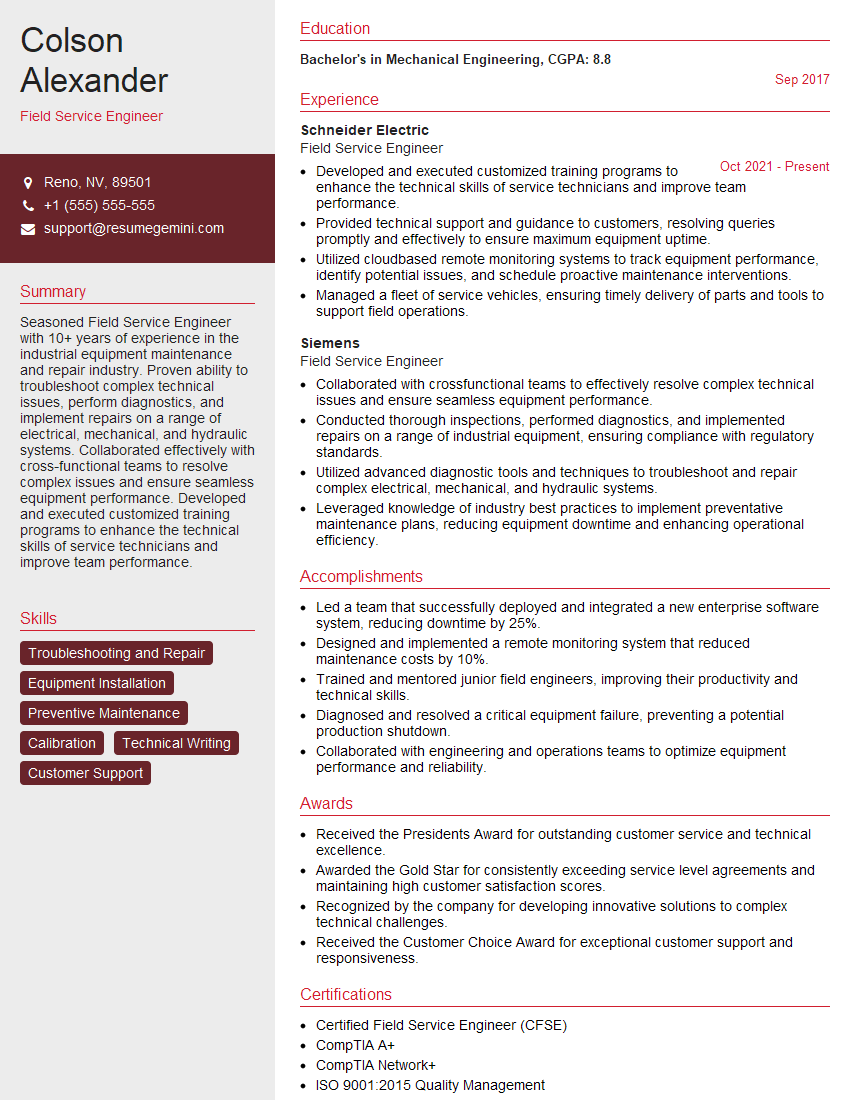
Field Service Engineer Resume Sample

Manufacturing Engineer Resume Sample
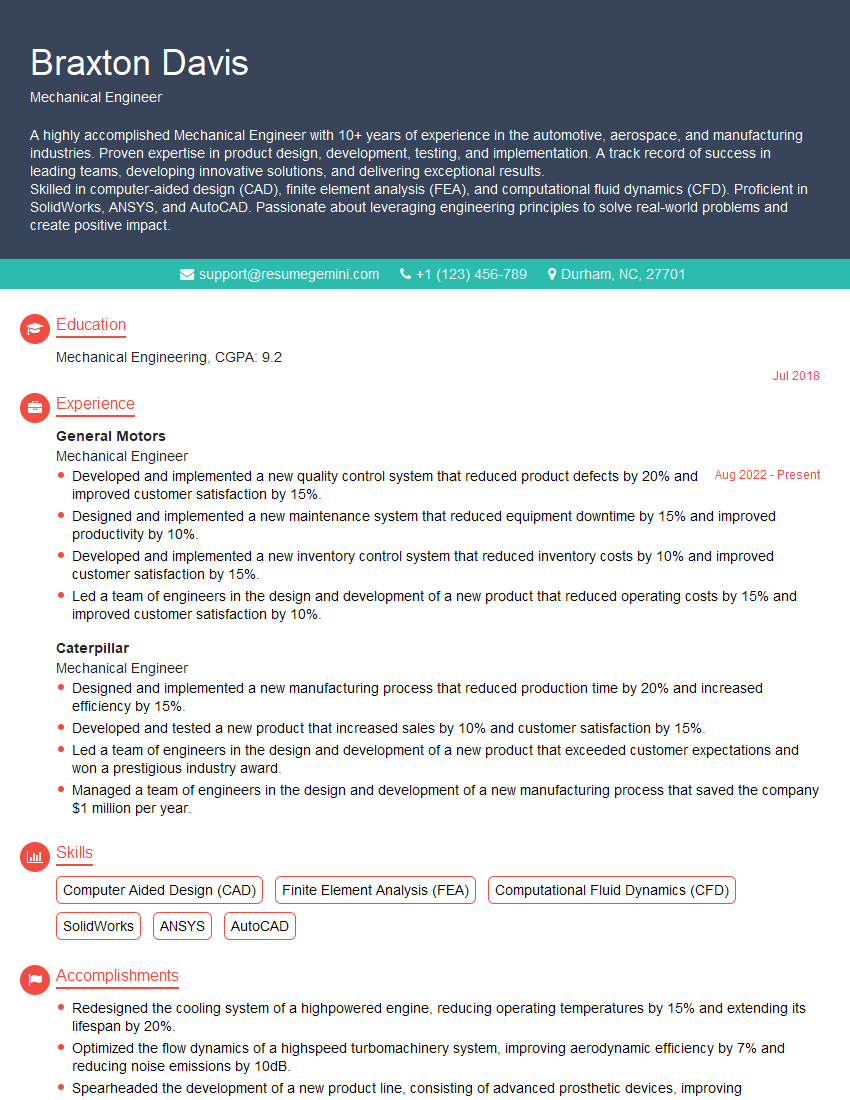
Mechanical Engineer Resume Sample

Mechatronics Engineer Resume Sample

Robotics Engineer Resume Sample

Robotics Technician Resume Sample

Machinist Resume Sample

Production Technician Resume Sample

Facilities Maintenance Manager Resume Sample

Plant Maintenance Supervisor Resume Sample

Repair Technician Resume Sample
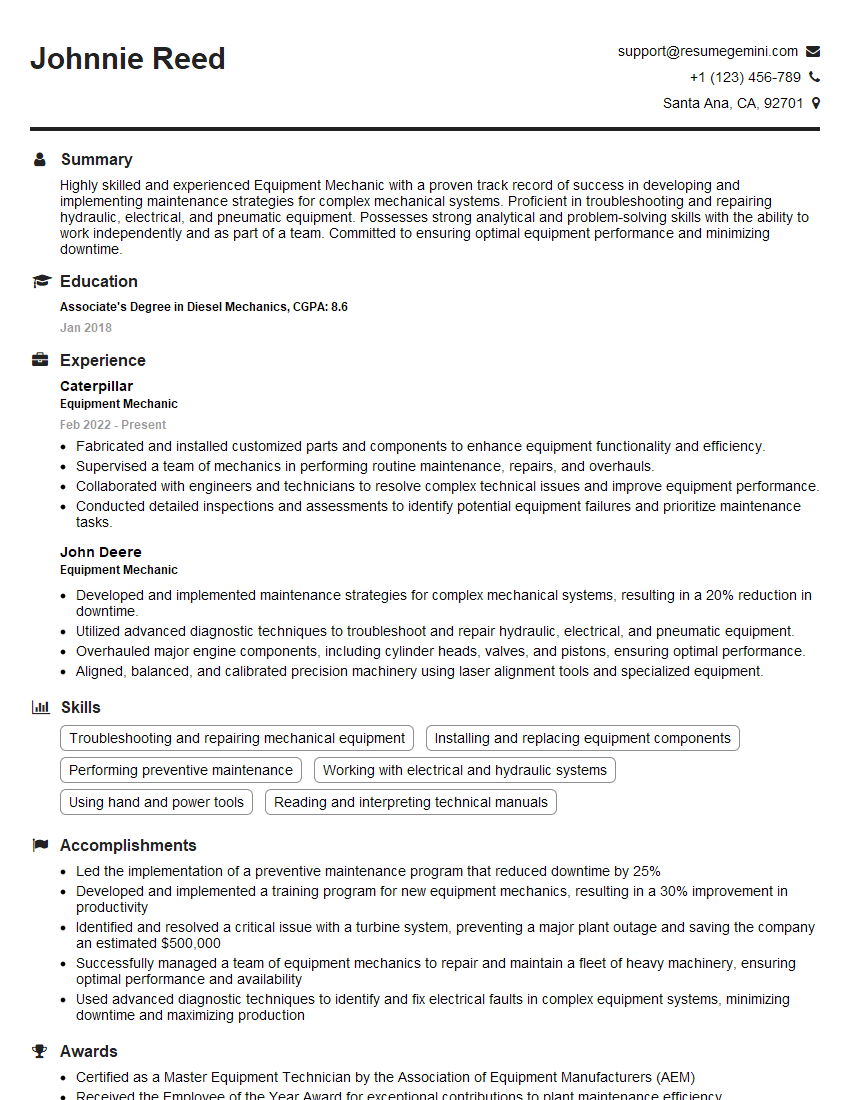
Equipment Mechanic Resume Sample

Automotive Mechanic Resume Sample

Electromechanical Technician Resume Sample

Industrial Mechanic Resume Sample

Millwright Resume Sample
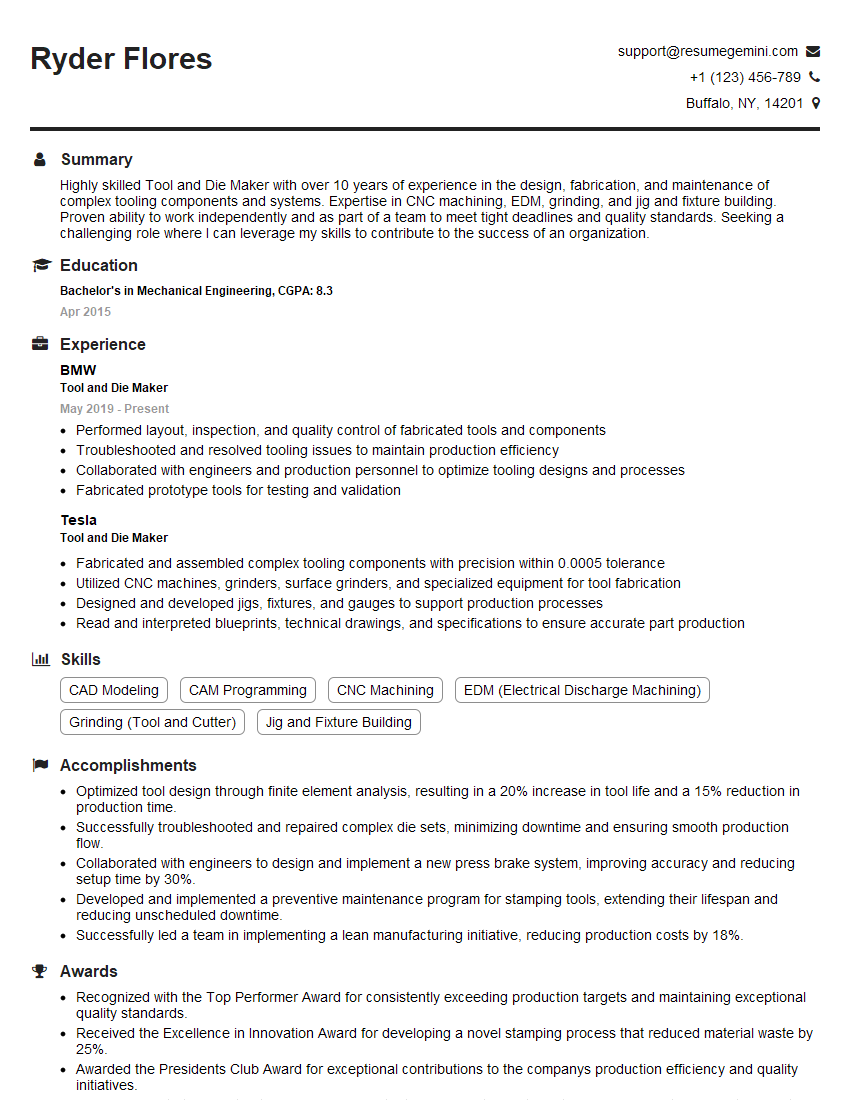
Tool and Die Maker Resume Sample

Quality Control Inspector Resume Sample
- Maintenance Manager
- Maintenance Technician
- Field Service Engineer
- Manufacturing Engineer
- Mechanical Engineer
- Mechatronics Engineer
- Robotics Engineer
- Robotics Technician
- Machinist
- Production Technician
- Facilities Maintenance Manager
- Plant Maintenance Supervisor
- Repair Technician
- Equipment Mechanic
- Automotive Mechanic
- Electromechanical Technician
- Industrial Mechanic
- Millwright
- Tool and Die Maker
- Quality Control Inspector
Explore more articles
Users Rating of Our Blogs
Share Your Experience
We value your feedback! Please rate our content and share your thoughts (optional).
What Readers Say About Our Blog
Very informative content, great job.
good