The thought of an interview can be nerve-wracking, but the right preparation can make all the difference. Explore this comprehensive guide to Medication Packaging interview questions and gain the confidence you need to showcase your abilities and secure the role.
Questions Asked in Medication Packaging Interview
Q 1. Explain the importance of child-resistant packaging.
Child-resistant packaging is crucial for preventing accidental ingestion of medications, especially by young children. It’s a critical safety feature that significantly reduces the risk of poisoning. The design must make it sufficiently difficult for children under five to open, while remaining accessible to adults. This involves a combination of mechanical and perceptual challenges, such as requiring significant force, dexterity, or problem-solving skills.
For example, consider the classic ‘squeeze and turn’ cap. A child may struggle with the coordinated action needed to open it, whereas an adult can easily manage this. Similarly, blister packs with difficult-to-peel seals provide another layer of protection. The effectiveness of child-resistant packaging is rigorously tested to meet specific standards, ensuring it offers an acceptable level of protection without unduly hindering access for the intended users.
Q 2. Describe your experience with different types of pharmaceutical packaging materials (e.g., blister packs, bottles, pouches).
Throughout my career, I’ve worked extensively with various pharmaceutical packaging materials. Blister packs, for instance, offer excellent protection against moisture and tampering, ideal for single-dose medications or those requiring protection from oxygen. They’re relatively inexpensive and easy to use but can be challenging to open for individuals with limited dexterity.
Glass bottles, a more traditional option, provide good visibility of the medication but are heavier, more fragile, and prone to breakage. However, they’re often preferred for products that require long-term stability and protection from light. Plastic bottles offer a lighter, less fragile, and more cost-effective alternative to glass, though the choice of plastic is critical to ensure product compatibility and prevent leaching.
Finally, pouches offer a flexible, lightweight option often used for unit-dose packaging or for medications needing protection from light and moisture. They offer efficient space utilization and often come with resealable features for convenient storage.
My experience spans selecting the right material based on product characteristics, stability needs, and cost considerations, ensuring the packaging choice optimizes both efficacy and patient safety.
Q 3. How do you ensure the integrity and sterility of medication packaging?
Maintaining the integrity and sterility of medication packaging is paramount. This involves a multi-faceted approach, starting with selecting appropriate materials that are resistant to moisture, oxygen, and microbial contamination. The manufacturing process plays a crucial role, employing cleanroom environments adhering to Good Manufacturing Practices (GMP) to prevent contamination during packaging.
Sterilization techniques, such as gamma irradiation or ethylene oxide sterilization, are often employed depending on the medication and packaging material. Thorough quality control checks are essential throughout the process, including visual inspection, leak testing, and sterility testing. Furthermore, the packaging design itself must account for potential points of failure and incorporate features to minimize contamination risk. For example, tamper-evident seals ensure that any unauthorized access is easily detectable.
Regular audits and validation studies confirm the effectiveness of the entire system, ensuring consistent adherence to standards and patient safety.
Q 4. What are the key regulations and guidelines related to medication packaging (e.g., FDA, GMP)?
Medication packaging is heavily regulated to guarantee patient safety and product quality. The FDA (Food and Drug Administration) in the US, and similar regulatory bodies internationally, set stringent guidelines covering various aspects, from material selection and manufacturing processes to labeling and child-resistant packaging. These regulations are based on GMP (Good Manufacturing Practices), a set of principles ensuring that products are consistently produced and controlled according to quality standards.
Key regulations encompass aspects such as:
- Child-resistant packaging requirements (e.g., specific testing standards)
- Labeling requirements, including detailed instructions and warnings.
- Material compatibility to prevent drug degradation or interaction.
- Tamper-evident packaging to deter counterfeiting and unauthorized access.
- Documentation and record-keeping requirements.
Staying updated on these regulations is crucial to ensure regulatory compliance and product safety.
Q 5. Describe your experience with packaging validation and qualification processes.
Packaging validation and qualification are critical processes I’ve been involved in extensively. Validation establishes that the packaging process consistently delivers a product that meets pre-defined quality attributes. Qualification involves demonstrating that the equipment and facilities used in packaging are suitable for their intended purpose.
This typically involves a series of tests and studies, including:
- Process capability studies to determine the consistency and precision of the packaging process.
- Leak testing to verify the integrity of the seals and prevent contamination.
- Sterility testing to confirm the absence of viable microorganisms.
- Stability testing to evaluate the effect of packaging on product quality over time.
- Child-resistant packaging testing to ensure it meets the regulatory requirements.
Detailed documentation is essential, meticulously recording every step of the validation and qualification process, providing a verifiable record of compliance.
Q 6. How do you handle packaging line changeovers efficiently?
Efficient packaging line changeovers are vital for minimizing downtime and maximizing production efficiency. A well-planned approach is essential, involving a standardized procedure and a well-trained team. This begins with thoroughly cleaning and sanitizing the equipment to prevent cross-contamination.
We utilize a system of documented changeover procedures, including detailed checklists for each step. This minimizes human error and ensures consistency. Quick-change components and tooling minimize the time needed for adjustments. Regular maintenance and preventative measures also ensure equipment functions optimally, reducing downtime during changeovers. Ultimately, an efficient changeover process translates into lower production costs and increased throughput.
Q 7. Explain your experience with different types of packaging seals and closures.
My experience encompasses a wide range of packaging seals and closures, each with its strengths and weaknesses. For example, induction seals provide excellent tamper evidence and protection against moisture and oxygen, frequently used for liquid medications. However, they require specialized equipment. Heat seals, used in blister packs and pouches, are cost-effective and provide a good seal, but their tamper evidence might be less robust than induction seals.
Screw caps are common for bottles, offering good resealability and varying levels of child-resistance. Press-on closures are simpler but offer less tamper evidence. The selection depends on the specific product needs, considering factors such as required protection, ease of use, tamper evidence, and cost-effectiveness. Detailed knowledge of each closure type is crucial for selecting the most appropriate one for a given medication.
Q 8. Describe your experience with packaging machinery and equipment.
My experience with packaging machinery and equipment spans over 15 years, encompassing various roles from line operator to senior engineering positions. I’ve worked extensively with high-speed blister packaging machines, bottle filling and capping lines, cartoning systems, and automated labeling equipment. This includes both traditional and aseptic packaging technologies. For example, I’ve overseen the installation and commissioning of a new high-speed blister packaging line for a major pharmaceutical client, which involved meticulous validation and qualification processes to ensure GMP compliance. My expertise extends to understanding PLC programming, troubleshooting mechanical issues, and optimizing production parameters to maximize efficiency and minimize downtime.
- Experience with specific equipment: Bosch, IMA, Romaco, and other leading manufacturers’ equipment.
- Expertise in: Blister packaging, bottle filling, cartoning, labeling, and inspection systems.
Q 9. How do you troubleshoot issues with medication packaging lines?
Troubleshooting medication packaging lines requires a systematic approach. I typically follow a structured methodology involving:
- Identifying the problem: Pinpointing the exact location and nature of the issue, such as faulty seals, inaccurate labeling, or equipment malfunction.
- Data Analysis: Reviewing machine logs, production reports, and quality control data to identify trends and potential root causes. For instance, a sudden increase in rejected units might point to a problem with a specific machine component.
- Visual Inspection: Checking the machinery for visible signs of damage, wear and tear, or misalignment.
- Component Testing: Testing individual components (sensors, motors, actuators) to isolate the faulty part.
- Corrective Action: Implementing the necessary repairs or adjustments, often involving collaboration with maintenance engineers and suppliers.
- Preventive Measures: Implementing measures to prevent recurrence, such as scheduled maintenance, improved operator training, or process improvements.
For example, I once solved a recurring issue of inconsistent blister seal integrity by identifying a subtle variation in the heat sealing temperature caused by a malfunctioning temperature sensor. Replacing the sensor resolved the problem and prevented further production delays.
Q 10. What is your experience with packaging labeling and artwork?
My experience with packaging labeling and artwork is extensive. I understand the regulatory requirements for accurate and compliant labeling, including the use of standardized formats, clear text, and appropriate symbols. I’ve worked closely with graphic designers and regulatory affairs teams to ensure that the final artwork meets all regulatory guidelines and branding requirements. I’m proficient in managing label printing processes, ensuring proper color accuracy, and verifying that the labels are accurately applied to the packaging. My knowledge also encompasses various label materials and printing techniques, including thermal transfer, flexographic, and digital printing.
A recent project involved updating the labeling for a new drug formulation, requiring careful consideration of updated warnings, dosage information, and batch numbers. We collaborated closely with regulatory agencies to ensure full compliance before launching the product.
Q 11. Explain your understanding of tamper-evident packaging.
Tamper-evident packaging is crucial for medication safety, preventing unauthorized access and ensuring product integrity. It involves using packaging features that indicate whether the package has been opened or tampered with. Common examples include:
- Sealed pouches or blisters: These leave a clear indication of opening, such as a tear line or broken seal.
- Shrink bands or labels: These tightly wrap around the packaging and are difficult to remove without leaving visible signs.
- Special closures: These include caps with tamper-evident rings or seals.
Understanding the different types of tamper-evident packaging and their limitations is crucial for selecting the appropriate solution for a given product. For instance, the choice between a shrink band and a sealed blister depends on factors such as the product’s fragility, the desired level of tamper evidence, and cost considerations. Proper quality control measures are essential to ensure the effectiveness of the tamper-evident features.
Q 12. How do you ensure the accuracy and traceability of medication packaging?
Ensuring accuracy and traceability in medication packaging is paramount for patient safety and regulatory compliance. This is achieved through a combination of measures, including:
- Serialisation: Assigning unique serial numbers to each package, enabling individual tracking throughout the supply chain.
- Barcodes and 2D Matrix Codes: Using these for efficient automated identification and data capture.
- Data Logging Systems: Recording production parameters and events, such as the date and time of packaging, machine parameters, and operator information.
- Batch Tracking: Maintaining accurate records of all components, materials, and processes involved in the production of each batch.
- GMP Compliant Documentation: Maintaining detailed records and documentation of all processes, adhering to Good Manufacturing Practices (GMP).
For instance, a robust serialization system will allow us to quickly identify and recall any potentially faulty batch of medications if a problem is detected. This is critically important for maintaining patient safety and meeting regulatory requirements.
Q 13. Describe your experience with packaging material testing and quality control.
My experience in packaging material testing and quality control involves ensuring that all materials meet the required specifications and standards for safety and performance. This includes testing for:
- Strength and Integrity: Evaluating the ability of the packaging to protect the medication from damage during handling and transportation.
- Barrier Properties: Assessing the material’s ability to protect the medication from moisture, oxygen, and other environmental factors.
- Chemical Compatibility: Ensuring that the packaging materials do not react with the medication and do not leach any harmful substances.
- Sterility (for aseptic packaging): Verifying that the packaging materials are sterile and maintain sterility throughout the packaging process.
These tests are performed using various methods and equipment, including tensile testing machines, gas permeation analyzers, and microbial testing techniques. Results are meticulously documented and compared to pre-defined acceptance criteria.
Q 14. How do you manage packaging waste and sustainability?
Managing packaging waste and promoting sustainability is a key aspect of responsible medication packaging. My approach involves:
- Waste Reduction Strategies: Implementing lean manufacturing principles to minimize material waste during the production process, such as optimizing packaging sizes and minimizing material usage.
- Recycling Programs: Partnering with recycling companies to process and recycle packaging materials whenever possible. This involves evaluating the recyclability of different packaging materials and selecting those that are most easily recycled.
- Sustainable Material Selection: Prioritizing the use of eco-friendly packaging materials made from recycled content or renewable resources. This often involves collaborating with suppliers to identify and source sustainable alternatives.
- Waste Audits and Reporting: Conducting regular waste audits to track waste generation and identify opportunities for improvement. The data gathered is crucial for continuous improvement and demonstrating our commitment to sustainability.
For example, we recently transitioned to using biodegradable blister packaging, reducing our environmental impact while maintaining product protection. Sustainability initiatives are not only environmentally responsible but also contribute to a company’s positive brand image.
Q 15. Explain your experience with packaging design and development.
My experience in packaging design and development spans over 15 years, encompassing the entire lifecycle from initial concept to final production. I’ve led teams in designing packaging for a wide range of pharmaceutical products, from tablets and capsules to injectables and topical creams. This involves a deep understanding of regulatory requirements (like FDA and GMP guidelines), material science, manufacturing processes, and consumer needs. For example, I recently led the redesign of a blister pack for a high-value oncology drug. This involved rigorous testing to ensure child-resistance, moisture barrier integrity, and optimal dispensing. The project successfully reduced material costs by 12% without compromising product integrity. Another key aspect is ensuring the packaging is suitable for automation on high-speed packaging lines, optimizing speed and minimizing waste.
- Concept & Design: Using CAD software and collaborating with engineers to create functional and aesthetically pleasing designs.
- Material Selection: Evaluating various materials (PVC, PVDC, aluminum foil, paperboard) for their barrier properties, sustainability, and cost-effectiveness.
- Prototyping & Testing: Creating prototypes and performing rigorous testing to validate design functionality and ensure compliance with regulations.
- Manufacturing Transfer: Working with manufacturers to ensure seamless transition from design to production.
Career Expert Tips:
- Ace those interviews! Prepare effectively by reviewing the Top 50 Most Common Interview Questions on ResumeGemini.
- Navigate your job search with confidence! Explore a wide range of Career Tips on ResumeGemini. Learn about common challenges and recommendations to overcome them.
- Craft the perfect resume! Master the Art of Resume Writing with ResumeGemini’s guide. Showcase your unique qualifications and achievements effectively.
- Don’t miss out on holiday savings! Build your dream resume with ResumeGemini’s ATS optimized templates.
Q 16. What are your experiences with different types of blister packaging?
My experience with blister packaging is extensive, covering various types: from standard PVC/PVDC aluminum blisters to more advanced designs. I’m familiar with cold form blisters, which offer excellent barrier properties and are ideal for moisture-sensitive medications. I’ve also worked with thermoformed blisters that allow for more complex shapes and designs, particularly useful for irregularly shaped tablets. Furthermore, I’m experienced with the challenges associated with various foil types and their influence on packaging line performance. For instance, working with a client on a child-resistant blister pack, we found that a specific foil type caused frequent jams on their existing packaging line. We addressed this by carefully selecting a different foil material with improved flexibility and machinability, ensuring a smooth production process.
- Cold Form Blister: Uses a pre-formed blister cavity that is filled and sealed.
- Thermoformed Blister: The plastic web is heated and formed into a cavity before filling and sealing.
- Child-Resistant Blisters: Incorporate mechanisms to prevent accidental opening by children.
Q 17. How do you handle packaging material shortages?
Handling material shortages requires a proactive and multi-faceted approach. The first step is identifying the shortage early on through close collaboration with suppliers and monitoring inventory levels. Then, a contingency plan is crucial; this might involve: sourcing alternative materials that meet quality standards, negotiating with suppliers for expedited deliveries, or adjusting production schedules to optimize the use of available materials. For example, during a recent shortage of PVC, we quickly identified a suitable substitute material with comparable barrier properties, minimizing any disruption to production and ensuring timely delivery to patients. This involved rigorous testing to confirm biocompatibility and performance standards.
- Supplier Diversification: Don’t rely on a single supplier to reduce risk.
- Inventory Management: Maintain optimal stock levels of critical materials.
- Material Substitution: Have alternative materials pre-qualified to minimize disruption.
- Communication: Maintain open and transparent communication with stakeholders.
Q 18. Describe your experience with packaging supplier management.
Managing packaging suppliers involves establishing clear expectations, maintaining strong relationships, and implementing robust performance monitoring systems. I use a collaborative approach focusing on transparency and communication. This means regular meetings, clear service level agreements (SLAs), and performance scorecards that measure on-time delivery, quality, and adherence to specifications. We’ve implemented a supplier rating system to ensure we work with the most reliable and capable partners. One example of this successful management was negotiating a long-term contract with a supplier that secured consistent supply of a specialty film while reducing costs over a five-year period through volume discounts and optimized delivery schedules.
- Supplier Selection: Rigorous qualification process including audits and performance assessments.
- Performance Monitoring: Track key performance indicators (KPIs) to identify areas for improvement.
- Relationship Management: Maintain open communication and collaborative relationships.
- Risk Management: Develop strategies to mitigate potential disruptions.
Q 19. What are your strategies for improving packaging line efficiency?
Improving packaging line efficiency involves a systematic approach. This includes analyzing the current line’s performance using data-driven techniques to pinpoint bottlenecks. Then, we explore solutions ranging from optimizing machine settings and improving operator training to implementing advanced technologies like automated guided vehicles (AGVs) for material handling or vision systems for quality control. For example, we implemented a new automated feeding system on a blister packaging line which increased the line speed by 15% and reduced waste by 8%. A lean manufacturing approach, focusing on eliminating waste and improving workflow, is also very important. Understanding OEE (Overall Equipment Effectiveness) is key to identifying and addressing inefficiencies.
- Line Balancing: Ensure all stages of the packaging process are synchronized.
- Preventive Maintenance: Reduce downtime through regular equipment maintenance.
- Automation: Implement automation where appropriate to improve speed and accuracy.
- Operator Training: Well-trained operators are essential for efficient line operation.
Q 20. How do you manage packaging-related complaints and non-conformances?
Managing packaging-related complaints and non-conformances requires a structured approach that prioritizes thorough investigation, corrective action, and preventative measures. When a complaint arises, we meticulously document the issue, collect samples, and conduct a root cause analysis to identify the source of the problem. This might involve inspecting materials, equipment, and processes. Corrective actions are then implemented and verified before reporting the findings to regulatory bodies if necessary. For example, we recently had a complaint about blister seal integrity. Our investigation revealed a minor setting error on a packaging machine. After correcting the setting and conducting rigorous verification testing, we confirmed the issue was resolved and implemented preventative measures to prevent recurrence, including regular machine calibration checks.
- Complaint Tracking System: Use a system to track complaints and their resolution.
- Root Cause Analysis: Employ methods like 5 Whys or fishbone diagrams to identify root causes.
- Corrective and Preventative Actions: Implement corrective actions to address immediate issues and preventative actions to prevent recurrence.
- Documentation: Meticulously document all aspects of the complaint handling process.
Q 21. Explain your understanding of serialization and track-and-trace systems.
Serialization and track-and-trace systems are crucial for ensuring drug authenticity and combating counterfeiting. Serialization involves assigning a unique identifier to each individual unit of medication, while track-and-trace allows for monitoring the product’s journey through the supply chain. This includes data aggregation, storage, and retrieval capabilities. I’m experienced in implementing and managing these systems, including selecting appropriate technologies, integrating them with existing systems, and ensuring compliance with regulations such as the Drug Supply Chain Security Act (DSCSA) in the US and similar regulations worldwide. Implementing serialization involves working closely with IT and data management teams to handle the vast amounts of data generated. This involves ensuring data security and integrity, and establishing robust reporting mechanisms to track product movement and identify potential counterfeits.
- Unique Identifiers: Understanding various methods for assigning unique identifiers (e.g., 2D barcodes).
- Data Management: Efficient and secure storage and retrieval of serialization data.
- Regulatory Compliance: Ensuring compliance with all relevant national and international regulations.
- Integration with Existing Systems: Seamless integration of serialization and track-and-trace systems with existing enterprise resource planning (ERP) systems.
Q 22. Describe your experience with packaging stability studies.
Packaging stability studies are crucial for ensuring the quality and efficacy of medications throughout their shelf life. These studies evaluate how various environmental factors, like temperature, humidity, and light, affect the drug product’s physical, chemical, and microbiological properties within its packaging. My experience encompasses designing and executing these studies, adhering to ICH guidelines (International Council for Harmonisation). This includes selecting appropriate storage conditions, establishing sampling plans, performing analytical testing (e.g., assay, degradation product analysis), and interpreting the results to determine the shelf life and appropriate storage conditions for the medication.
For example, in a recent project involving a novel oral tablet, we conducted stability studies at 25°C/60%RH, 40°C/75%RH, and under accelerated light conditions. Analysis of the data allowed us to establish a shelf life of 24 months under recommended storage conditions and define the packaging’s role in protecting the drug’s integrity.
Q 23. How do you ensure the appropriate barrier properties of medication packaging?
Ensuring appropriate barrier properties in medication packaging is paramount to maintaining drug stability and preventing contamination. This involves selecting materials with suitable permeabilities to oxygen, moisture, and other environmental factors. The selection process considers the specific drug product’s characteristics and stability profile. For example, a highly moisture-sensitive drug would require a package with a low water vapor transmission rate (WVTR).
We employ various methods to assess barrier properties, including WVTR testing, oxygen transmission rate (OTR) testing, and visual inspection for defects. Material specifications often include acceptable limits for these parameters. Furthermore, packaging design plays a key role; for example, using a laminated structure incorporating an aluminum foil layer can significantly improve the barrier against oxygen and moisture. Consideration is given to the entire packaging system, including the closure, to ensure a robust barrier against external factors.
Q 24. What are your experiences with different types of bottle closures and their applications?
My experience encompasses a broad range of bottle closures, each with unique applications. The choice depends heavily on the drug product’s characteristics, the desired closure properties (e.g., tamper-evident, child-resistant), and regulatory requirements.
- Screw Caps: The most common type, offering ease of use and cost-effectiveness, available in various materials (plastic, metal) and with features like induction seals to enhance tamper evidence.
- Push-Pull Caps: Simple to use but may not offer the same degree of tamper evidence as screw caps.
- Child-Resistant Closures: Essential for many medications to prevent accidental ingestion by children. They add complexity to the packaging but significantly improve safety.
- Flip-Top Caps: Convenient for dispensing liquids and powders, often used in over-the-counter products.
For instance, a highly potent oral liquid would likely require a child-resistant, tamper-evident screw cap with an appropriate liner to prevent leakage and maintain product integrity. Conversely, a large-volume powder for external use might use a simple screw cap or flip-top design.
Q 25. Explain your experience with automated packaging systems.
Extensive experience with automated packaging systems is a cornerstone of my expertise. These systems are crucial for efficient, high-volume production of pharmaceutical packaging while maintaining quality and consistency. I’ve worked with various systems, from simple blister packaging machines to highly sophisticated cartoning and palletizing lines. My experience includes system selection, validation, troubleshooting, and operator training.
A significant project involved the implementation of a fully automated blister packaging line for a new solid dosage form. This included integrating various modules (e.g., blister forming, tablet infeed, sealing, cartoning), validating the system’s performance, and developing rigorous quality control procedures to ensure consistent, high-quality output. Careful consideration was given to changeover procedures and the prevention of cross-contamination. The automated system drastically increased production efficiency and reduced labor costs compared to manual packaging.
Q 26. Describe your familiarity with different types of printing techniques for packaging labels.
My familiarity with printing techniques for packaging labels is extensive. The choice of technique depends on factors such as budget, print quality requirements, label material, and the complexity of the design. Common techniques include:
- Flexographic Printing: Cost-effective for high-volume printing, suitable for various label materials.
- Offset Printing: High-quality printing ideal for complex designs and detailed imagery, but less cost-effective for small runs.
- Digital Printing: Versatile for short runs and personalized labels, offers quick turnaround times, but may have higher per-unit costs.
- Screen Printing: Suited for simple designs and specialized inks, often used for tactile or textured labels.
For example, a high-volume product might benefit from cost-effective flexographic printing, whereas a small-batch, customized product might utilize digital printing to allow for personalized labels and flexible order quantities. The selection must always consider the need for durable and regulatory-compliant labeling.
Q 27. How do you ensure compliance with regulatory requirements for labeling?
Ensuring compliance with regulatory requirements for labeling is paramount to patient safety and product marketability. This involves meticulous attention to detail, adhering to guidelines set by agencies like the FDA (Food and Drug Administration) and EMA (European Medicines Agency). My experience encompasses developing and reviewing labels to ensure they meet all necessary requirements, including:
- Accurate product information: Drug name, strength, dosage form, route of administration, warnings, and precautions.
- Clear and concise language: Avoiding ambiguity and using easily understandable terms.
- Appropriate font sizes and styles: Ensuring readability for all target audiences.
- Tamper-evident features: Providing visual indicators to deter tampering.
- Lot and expiry information: Enabling effective product tracking and recall.
Compliance involves thorough review processes, label mock-ups, and close collaboration with regulatory affairs teams. Any deviation from regulatory requirements could lead to product recalls or market restrictions.
Q 28. What is your experience with packaging lifecycle management?
Packaging lifecycle management (PLM) is a holistic approach to managing all aspects of a package’s life, from design and development to disposal. My experience encompasses all phases of PLM, from initial concept and design through manufacturing, distribution, and end-of-life management. This involves material selection, design optimization, cost analysis, regulatory compliance, and sustainability considerations. It requires a systematic approach and collaboration across various departments (R&D, manufacturing, regulatory, supply chain).
In a recent project, we implemented a more sustainable packaging design that reduced material usage and improved recyclability while maintaining the necessary barrier properties. This involved a thorough life-cycle assessment to compare the environmental impact of different packaging options. The new packaging not only met regulatory requirements but also contributed to the company’s environmental sustainability goals. Such strategic approaches are crucial in today’s environmentally conscious marketplace.
Key Topics to Learn for Medication Packaging Interview
- Good Manufacturing Practices (GMP) in Medication Packaging: Understanding and applying GMP principles to ensure product safety and quality throughout the packaging process.
- Packaging Materials & Their Properties: Knowledge of various materials (e.g., blister packs, bottles, vials) and their suitability for different medications, considering factors like barrier properties, sterilization methods, and environmental impact.
- Packaging Line Operations & Automation: Familiarity with high-speed automated packaging lines, including troubleshooting common issues and understanding quality control checkpoints within the process.
- Regulations & Compliance: Understanding relevant regulations (e.g., FDA, EMA) concerning medication packaging labeling, barcoding, and serialization to ensure compliance and avoid legal issues.
- Aseptic Packaging Techniques: Knowledge of techniques to maintain sterility during the packaging of sensitive medications, preventing contamination and ensuring product efficacy.
- Supply Chain Management in Medication Packaging: Understanding the logistical aspects of sourcing materials, managing inventory, and ensuring timely delivery of packaged medications.
- Packaging Design & Development: Knowledge of the principles of designing effective and efficient medication packaging, considering factors like patient usability, tamper-evidence, and child-resistance.
- Quality Control & Assurance in Medication Packaging: Understanding the importance of quality control measures at each stage of the packaging process, including inspection techniques and documentation practices.
- Problem-Solving & Troubleshooting: Ability to identify and resolve packaging line issues efficiently, minimizing downtime and ensuring product quality.
- Lean Manufacturing Principles in Medication Packaging: Applying lean manufacturing concepts to optimize packaging processes, reduce waste, and improve efficiency.
Next Steps
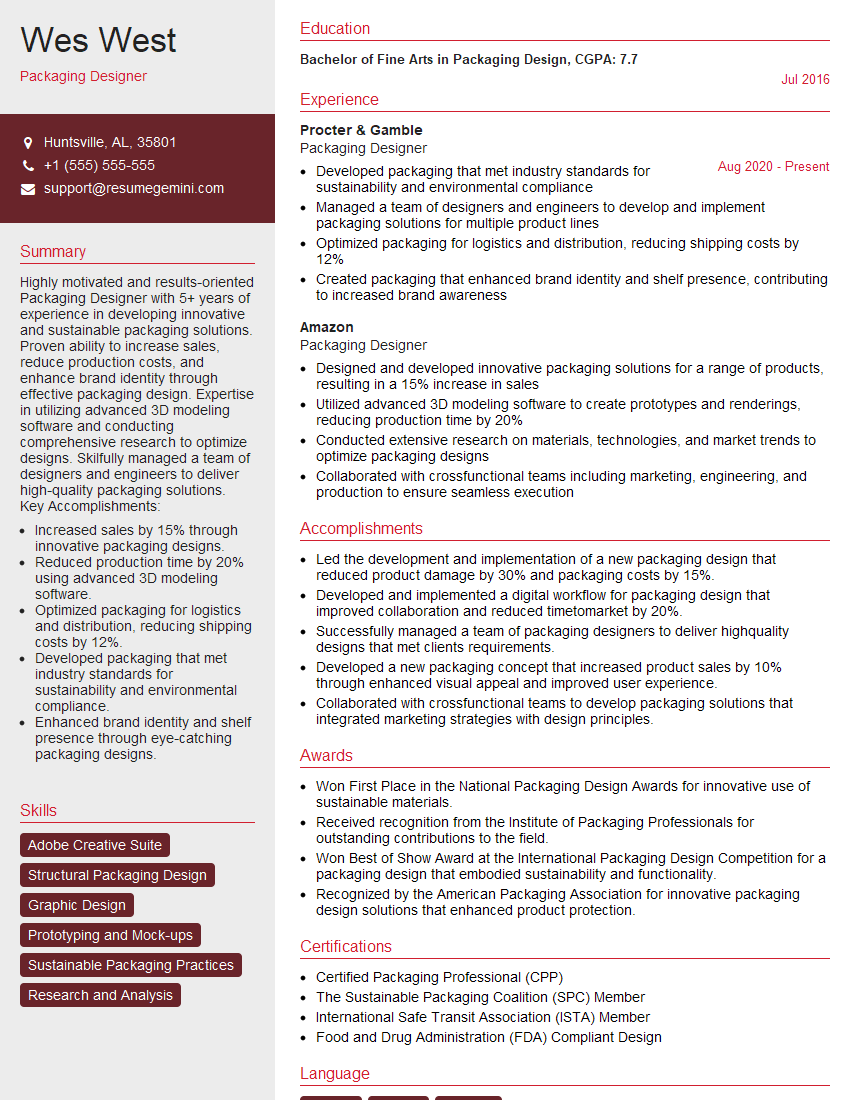
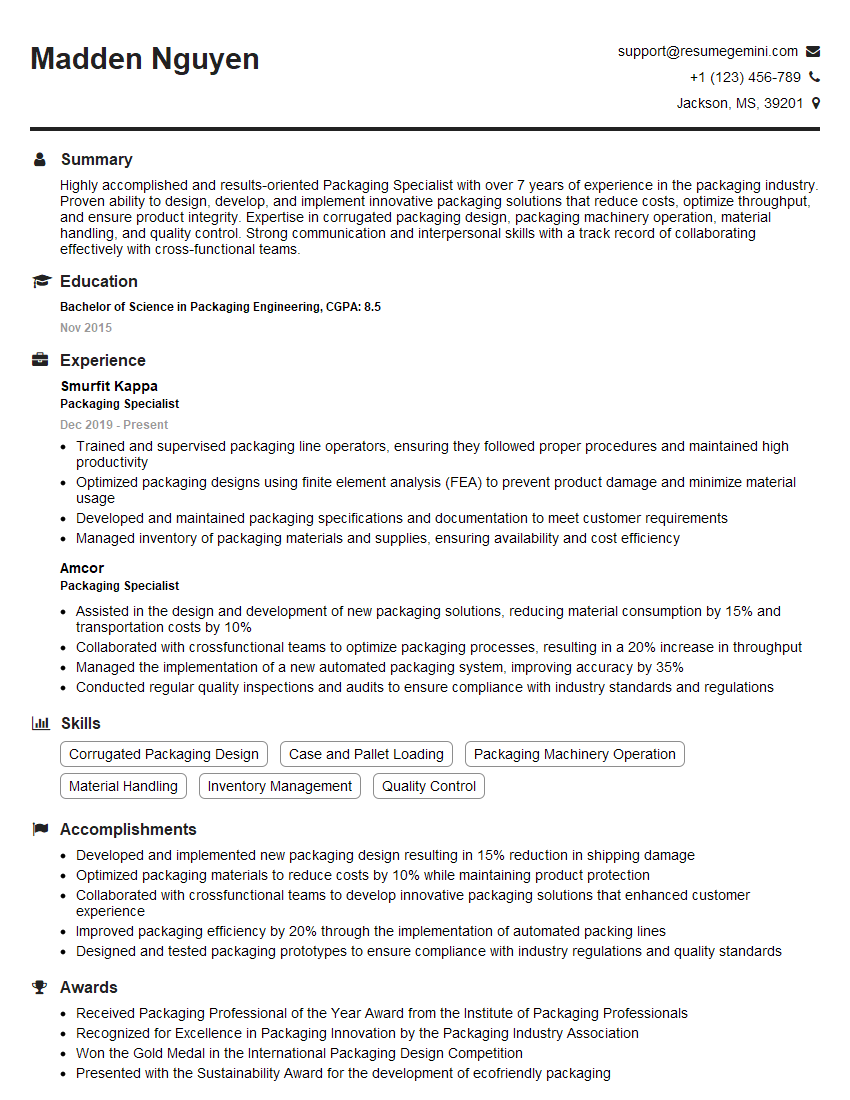
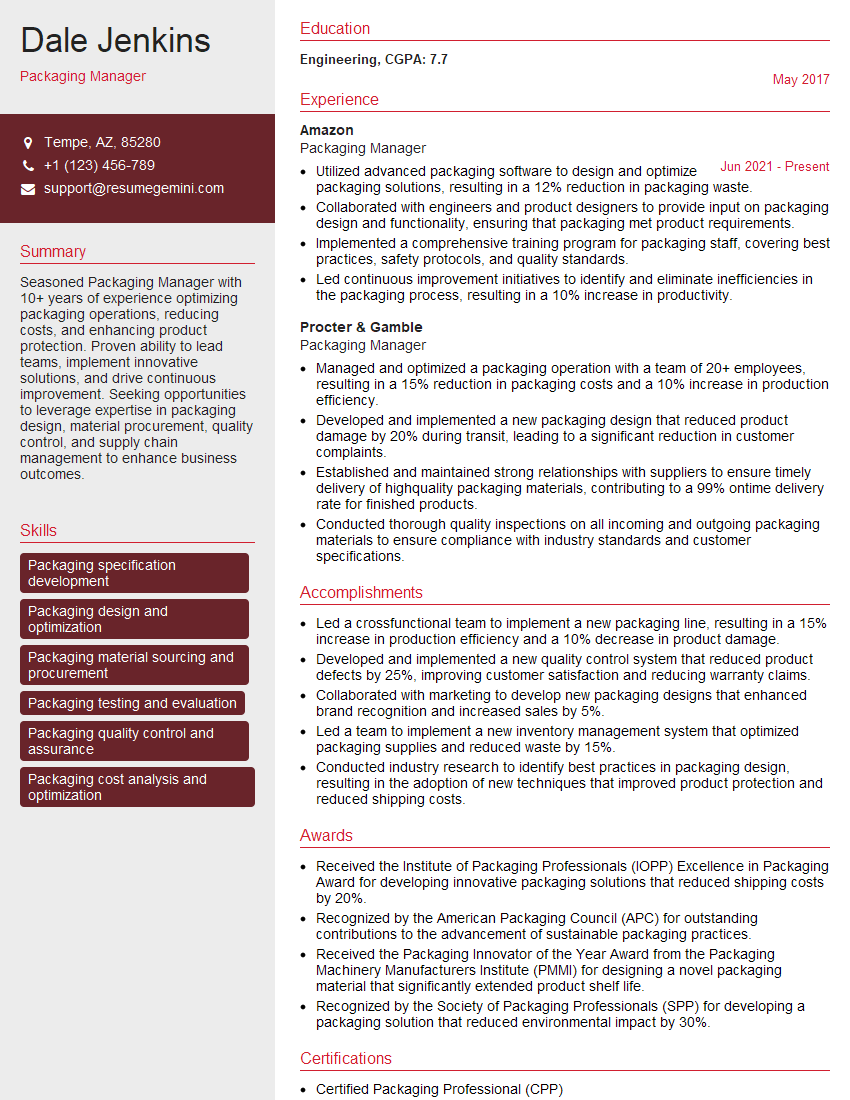
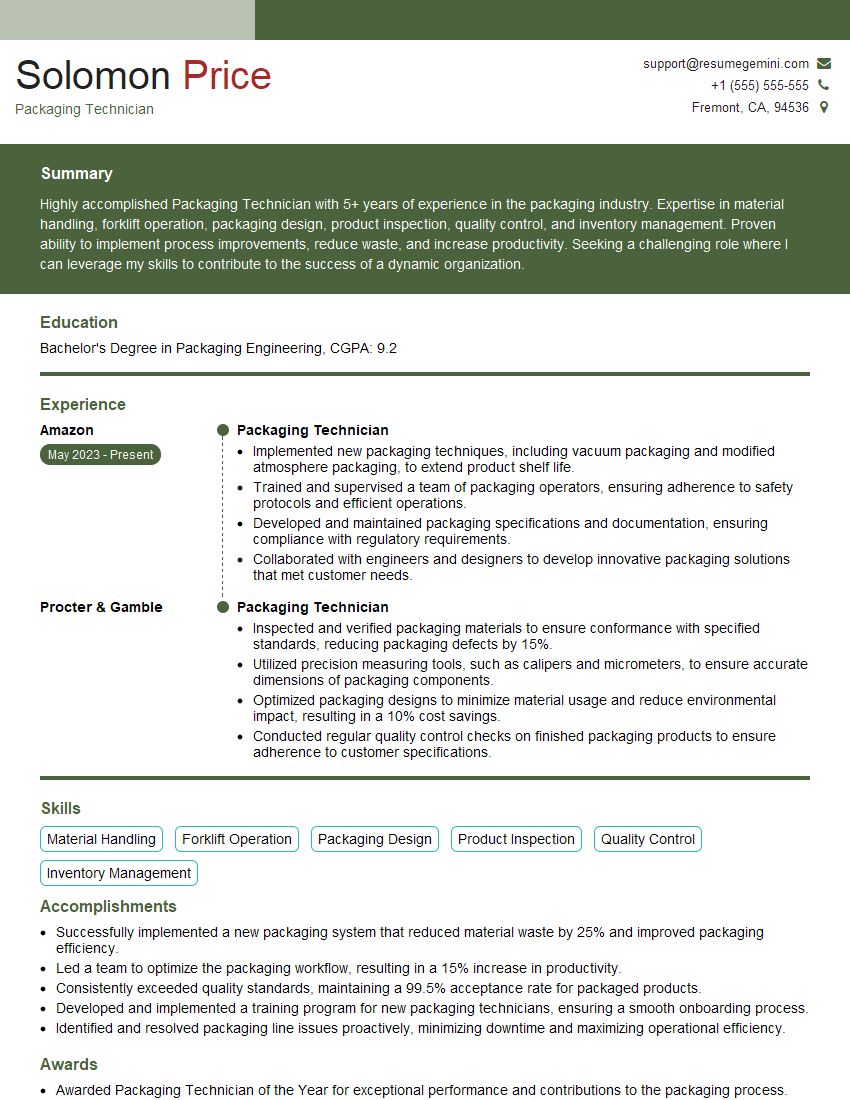
Mastering the intricacies of medication packaging is crucial for career advancement in the pharmaceutical industry. It demonstrates a commitment to patient safety and regulatory compliance, opening doors to higher-level roles and increased earning potential. To significantly boost your job prospects, create a resume that’s optimized for Applicant Tracking Systems (ATS). This ensures your qualifications are effectively showcased to potential employers. We highly recommend using ResumeGemini to build a professional, ATS-friendly resume. ResumeGemini provides valuable tools and resources, and we even have examples of resumes tailored to the Medication Packaging field to help you get started.
Explore more articles
Users Rating of Our Blogs
Share Your Experience
We value your feedback! Please rate our content and share your thoughts (optional).
What Readers Say About Our Blog
Very informative content, great job.
good