Interviews are more than just a Q&A session—they’re a chance to prove your worth. This blog dives into essential Mentoring and Training (optional) interview questions and expert tips to help you align your answers with what hiring managers are looking for. Start preparing to shine!
Questions Asked in Mentoring and Training (optional) Interview
Q 1. Describe your experience designing and delivering training programs.
Designing and delivering training programs is a multifaceted process requiring careful planning and execution. It starts with a thorough needs analysis to identify skill gaps and learning objectives. Then, I develop a curriculum that incorporates various learning methodologies tailored to the target audience and learning environment. Finally, I deliver the training, employing active learning techniques and providing regular feedback.
For example, I once designed a training program for a software company to upskill their customer support team on a new CRM system. This involved conducting surveys to assess their existing knowledge, creating a modular curriculum covering various aspects of the CRM, developing hands-on exercises using realistic scenarios, and designing post-training assessments to measure knowledge retention and application. The program was highly successful, resulting in improved customer satisfaction scores and increased team efficiency.
Another instance involved designing a leadership development program for mid-level managers. Here, I incorporated a blended learning approach using online modules, workshops, group coaching, and mentoring sessions. The focus was on developing their leadership skills, such as strategic thinking, communication, and conflict resolution. The program’s success was evident in the increased confidence and improved performance of the participants.
Q 2. What training methodologies are you most familiar with?
My experience encompasses a wide range of training methodologies, including:
- Instructor-led training (ILT): This traditional method involves direct instruction and interaction between the trainer and trainees. It’s effective for complex topics requiring immediate feedback and clarification.
- Blended learning: This combines online learning modules with face-to-face instruction, offering flexibility and catering to diverse learning preferences.
- Experiential learning: This approach uses hands-on activities, simulations, and role-playing to enhance learning and knowledge retention. I often use case studies and real-world examples to make learning more relevant.
- Gamification: Incorporating game mechanics like points, badges, and leaderboards can increase engagement and motivation, especially in online learning environments.
- Microlearning: Short, focused learning modules delivered in bite-sized chunks are ideal for knowledge reinforcement and just-in-time learning.
I select the most appropriate methodology based on the learning objectives, target audience, budget, and available resources.
Q 3. How do you assess the effectiveness of a training program?
Assessing training effectiveness is crucial to ensure the program’s success. My approach involves a multi-faceted evaluation strategy that incorporates both formative and summative assessments.
- Pre-training assessment: This establishes a baseline understanding of the trainees’ existing knowledge and skills.
- Post-training assessment: This measures knowledge gained and skill development after the training program using tests, quizzes, and practical exercises.
- On-the-job observation: I often observe trainees in their work environment to assess the application of newly acquired skills and knowledge.
- Trainee feedback: Gathering feedback through surveys and informal discussions provides valuable insights into the effectiveness of the training program and areas for improvement.
- Performance metrics: Tracking key performance indicators (KPIs) relevant to the training objectives, such as increased efficiency or improved customer satisfaction, demonstrates the program’s impact on the organization.
By combining these methods, I gain a holistic understanding of the training program’s effectiveness and identify areas that need improvement for future iterations.
Q 4. Explain your approach to creating engaging and effective training materials.
Creating engaging and effective training materials requires a deep understanding of adult learning principles. My approach focuses on:
- Clear and concise language: Avoiding jargon and using simple, relatable language ensures that the materials are accessible to all trainees.
- Visual aids: Incorporating visuals like images, diagrams, and videos makes the material more engaging and easier to understand.
- Interactive elements: Including quizzes, exercises, and interactive simulations keeps trainees actively involved in the learning process.
- Real-world examples and case studies: Relating the training content to real-world scenarios enhances relevance and improves retention.
- Storytelling: Using storytelling techniques can make the training more memorable and emotionally engaging.
- Modular design: Breaking down the content into smaller, manageable modules allows trainees to learn at their own pace and focus on specific areas.
For example, when developing training materials on project management, I used a case study approach, presenting real-world project scenarios where trainees had to analyze the problem, propose solutions, and learn from the outcome. This significantly improved their understanding and engagement compared to a purely theoretical approach.
Q 5. How do you adapt your training style to different learning styles?
Adapting my training style to different learning styles is essential for maximizing knowledge transfer. I recognize that learners have various preferences, including visual, auditory, and kinesthetic. To accommodate these differences, I employ a variety of techniques:
- Visual learners: I use diagrams, charts, presentations, and videos.
- Auditory learners: I incorporate discussions, lectures, and audio recordings.
- Kinesthetic learners: I use hands-on activities, simulations, role-playing, and group work.
I also provide learners with choices in how they engage with the material. For example, offering both written summaries and audio versions of key concepts allows learners to select the method that best suits their preferences. Furthermore, I create opportunities for learners to actively participate in the learning process through discussions, group activities, and feedback sessions.
Q 6. How do you handle difficult or challenging trainees?
Handling difficult or challenging trainees requires patience, empathy, and a proactive approach. My strategy includes:
- Understanding the root cause: I try to understand why the trainee is behaving in a challenging manner. This might involve communication issues, lack of understanding, or personal problems.
- Open and honest communication: I address concerns directly and respectfully, creating a safe space for dialogue.
- Active listening: I pay attention to the trainee’s concerns and validate their feelings.
- Positive reinforcement: I focus on the trainee’s strengths and provide positive feedback to build confidence.
- Providing extra support: If necessary, I provide additional support or resources, such as one-on-one coaching or mentoring.
- Setting clear expectations: I communicate clear expectations for behavior and participation in the training program.
- Seeking support: If the situation escalates beyond my capabilities, I seek guidance from my supervisor or HR.
For example, I once had a trainee who was consistently disruptive during a training session. After a private conversation, it emerged that he was struggling with a personal issue that was affecting his focus. By offering empathy and providing additional support, I was able to help him overcome his challenges and successfully complete the program.
Q 7. Describe your experience in developing and implementing mentoring programs.
Developing and implementing mentoring programs involves creating a structured process that matches mentors with mentees based on their skills, experience, and career goals. My approach begins with a comprehensive needs assessment to identify mentoring needs within the organization. Then, I recruit and train mentors, providing them with the necessary skills and resources to effectively guide their mentees. I also establish a framework for mentor-mentee pairings, setting clear expectations, and providing ongoing support and monitoring throughout the program’s duration.
In one instance, I developed a mentoring program for early-career professionals in a large corporation. This involved recruiting experienced senior leaders as mentors and pairing them with junior employees based on their career interests and development goals. The program involved regular meetings, workshops, and online resources to support both mentors and mentees. We tracked progress using surveys and feedback sessions, ultimately demonstrating significant improvements in mentees’ confidence, skills, and career progression.
Another project involved designing a reverse mentoring program, where younger employees mentored senior leaders on emerging technologies and social media trends. This fostered cross-generational learning and helped bridge the skill gap within the organization. The success of this program was evident in increased understanding and the integration of new technologies into organizational strategies.
Q 8. How do you match mentors and mentees effectively?
Matching mentors and mentees effectively is crucial for a successful mentoring program. It’s not just about pairing people with similar roles; it’s about identifying compatible personalities, goals, and learning styles. I use a multi-faceted approach. First, I conduct thorough needs assessments with both potential mentors and mentees, understanding their aspirations, skills, and areas where they need development. This often involves questionnaires, interviews, and reviewing their professional backgrounds.
Next, I build detailed profiles capturing these insights. This allows me to use a matching algorithm (often a custom spreadsheet or simple database), considering factors like experience level, communication style (introvert/extrovert), and shared professional interests.
For example, a junior software engineer might benefit most from a mentor with extensive experience in agile methodologies, not just someone senior in the same department. Finally, I always offer a trial period and feedback mechanisms so that both parties can reassess the match and make adjustments if necessary. This might involve informal check-ins or formal surveys to ensure the mentoring relationship is productive and mutually beneficial.
Q 9. How do you measure the success of a mentoring program?
Measuring the success of a mentoring program requires a holistic approach, going beyond simple participation rates. We use a combination of quantitative and qualitative data. Quantitative data might include the number of mentoring sessions completed, the duration of the mentoring relationship, and mentee satisfaction surveys (using a Likert scale for example, rating satisfaction from 1-5).
Qualitative data is just as important. This often includes open-ended feedback from both mentors and mentees, focusing on areas of skill development, achievement of goals, and the overall impact of the mentoring relationship. We also analyze changes in mentees’ performance metrics, such as project completion rates, performance reviews, or promotions, to track tangible improvements.
For instance, we might track if mentees successfully achieved their stated goals within the timeframe, or look at increases in their confidence levels, as reported in qualitative feedback. By combining both types of data, we gain a comprehensive understanding of the program’s effectiveness and identify areas for improvement.
Q 10. What are some common challenges in mentoring and how do you address them?
Common challenges in mentoring include time constraints, mismatched personalities, lack of clear goals, and ineffective communication. To address these, proactive measures are crucial. We implement structured mentoring programs with pre-defined goals and expectations, including regular check-in meetings with clear agendas. This helps manage time efficiently and keeps everyone focused.
Personality clashes are handled through careful matching, as mentioned earlier, but also by providing training to both mentors and mentees on effective communication and conflict resolution skills. We also ensure that mentors receive training on providing constructive feedback and building rapport. If issues persist, we offer mediation or facilitation to help navigate disagreements.
Finally, regular program evaluations, incorporating feedback from both mentors and mentees, allow for continuous improvement and address any emerging challenges promptly. This might involve reviewing program materials, adjusting training modules or improving the matching process itself.
Q 11. How do you foster a supportive and collaborative learning environment?
Fostering a supportive and collaborative learning environment is paramount. This involves building trust, open communication, and creating a safe space for questions, mistakes, and sharing of experiences. I use several strategies. Firstly, I establish clear expectations and guidelines for interaction from the outset – fostering a culture of respect and mutual support.
Secondly, I actively facilitate communication by providing regular platforms for interaction – group meetings, online forums, or even social events. These encourage peer learning and networking.
Thirdly, I incorporate collaborative activities into the learning process, such as group projects, peer reviews, and knowledge-sharing sessions. These encourage teamwork and active participation. Finally, recognizing and rewarding positive contributions, whether large or small, reinforces the collaborative culture and motivates learners to actively contribute. A simple acknowledgment of effort or a public commendation can have a powerful impact.
Q 12. Describe your experience using learning management systems (LMS).
My experience with Learning Management Systems (LMS) is extensive. I’ve used several platforms, including Moodle, Canvas, and TalentLMS, for delivering training materials, managing course content, tracking learner progress, and facilitating communication.
I find LMS platforms invaluable for organizing training materials, making them easily accessible to trainees, and tracking their progress through courses. Features like quizzes, assignments, and discussion forums allow for interactive learning and continuous assessment. For example, in one program using Moodle, we were able to automatically grade multiple-choice assessments and provide learners with immediate feedback, freeing up my time for more in-depth interactions.
Further, LMS platforms offer valuable analytics about course completion rates, learner engagement, and performance on assessments which enable continuous improvement of the training material. The ability to personalize learning paths and deliver targeted content based on learner needs is also a key benefit I have utilized extensively.
Q 13. What are your preferred methods for providing feedback to trainees?
My preferred methods for providing feedback to trainees are tailored to the individual and the context. I believe in providing feedback that is timely, specific, actionable, and constructive. I rarely rely solely on written feedback; rather, I prefer a blended approach.
I frequently use a combination of formal written feedback (for example, on assignments or presentations), informal verbal feedback (during training sessions or one-on-one meetings), and peer feedback.
For example, after a presentation, I might provide written feedback focusing on the overall structure and clarity of the presentation. Then, I would provide verbal feedback on areas needing immediate improvement, during a one-on-one session. Peer feedback from other trainees can add another perspective and enhance the learning process. The key is to balance direct feedback with opportunities for reflection and self-assessment.
Q 14. How do you stay current with the latest trends in training and development?
Staying current with the latest trends in training and development is an ongoing process. I actively engage in several methods to stay up-to-date. I regularly attend conferences and workshops, both online and in person, to learn about new methodologies, technologies, and best practices.
I subscribe to industry publications and newsletters, and follow leading experts on social media and through podcasts. This keeps me informed on emerging trends like microlearning, gamification, and AI-powered learning platforms.
Further, I actively participate in professional development communities, engaging in discussions and sharing knowledge with other professionals in the field. These networks provide valuable insights and perspectives. Finally, I regularly review and update my training materials based on feedback and new research findings, ensuring the training remains relevant and effective.
Q 15. How do you build rapport and trust with trainees and mentees?
Building rapport and trust with trainees and mentees is fundamental to effective mentoring and training. It’s about creating a safe and supportive environment where individuals feel comfortable learning and growing. This involves several key strategies:
- Active Listening: Truly listening to their concerns, perspectives, and experiences, showing genuine interest in understanding their individual needs and learning styles. I always start by asking about their goals and expectations for the training or mentoring relationship.
- Empathy and Understanding: Putting myself in their shoes, acknowledging their challenges and celebrating their successes. For example, if a mentee is struggling with a particular concept, I try to understand the root cause of their difficulty before offering solutions.
- Open Communication: Establishing clear communication channels and encouraging open dialogue. This means being approachable, responsive, and providing regular feedback. I find that scheduling regular check-ins, even short ones, helps maintain open communication.
- Respect and Valuing Differences: Recognizing and appreciating individual differences in learning styles, backgrounds, and experiences. This includes adapting my training style to accommodate various learning preferences.
- Building a Shared Vision: Collaboratively defining clear goals and expectations for the training or mentoring process. This ensures everyone is on the same page and working towards a common objective.
For example, I once had a mentee who was very hesitant to participate in group discussions. By actively listening to her concerns and addressing them with empathy, I was able to create a more comfortable environment that eventually led to her actively engaging in group activities.
Career Expert Tips:
- Ace those interviews! Prepare effectively by reviewing the Top 50 Most Common Interview Questions on ResumeGemini.
- Navigate your job search with confidence! Explore a wide range of Career Tips on ResumeGemini. Learn about common challenges and recommendations to overcome them.
- Craft the perfect resume! Master the Art of Resume Writing with ResumeGemini’s guide. Showcase your unique qualifications and achievements effectively.
- Don’t miss out on holiday savings! Build your dream resume with ResumeGemini’s ATS optimized templates.
Q 16. Describe a time you had to troubleshoot a technical issue during a training session.
During a training session on data visualization using a specific software, a critical update unexpectedly broke compatibility with the projected examples. Trainees were unable to replicate the steps shown on the screen. This required immediate troubleshooting.
My first step was to acknowledge the issue calmly and transparently. I explained the situation, assuring them that we would resolve it together. Then, I systematically checked various potential causes:
- Software Version: I verified if everyone had the correct, compatible version installed. This involved checking individual systems and offering immediate guidance on updates.
- File Permissions: I checked if the example files had the correct access permissions on everyone’s system; sometimes user rights can cause unexpected errors.
- Internet Connectivity: The software relied on online resources for some functions; I verified network connectivity.
- System Configuration: I checked if any system-specific settings were conflicting with the software requirements.
Once I identified the issue (a missing library file in the example project), I swiftly downloaded the correct version and provided instructions for replacement. We successfully resumed the session, and I added a valuable lesson about software version control and troubleshooting to the training material.
Q 17. How do you incorporate technology into your training programs?
Technology plays a crucial role in enhancing the effectiveness and engagement of my training programs. I incorporate technology in several ways:
- Learning Management Systems (LMS): I utilize LMS platforms (like Moodle or Canvas) to deliver course content, track progress, administer quizzes, and provide feedback. This provides a centralized and organized learning experience.
- Interactive Simulations and Games: Incorporating interactive simulations or gamified learning modules makes learning more fun and engaging. This improves knowledge retention and provides valuable practice opportunities.
- Virtual Reality (VR) and Augmented Reality (AR): For certain skill-based training, VR and AR can provide immersive and realistic training experiences, particularly beneficial in scenarios where physical practice may be unsafe or expensive (e.g., medical procedures or complex machinery operation).
- Video Conferencing and Webinars: Leveraging video conferencing tools like Zoom or Google Meet allows for remote training, increased accessibility, and real-time interaction with trainees.
- Collaborative Tools: Using tools such as Google Docs or Microsoft Teams allows for real-time collaboration on projects and facilitates knowledge sharing.
For instance, in a recent leadership training program, I used a virtual reality simulation to allow participants to practice handling challenging team situations in a safe, controlled environment.
Q 18. What is your experience with needs analysis for training programs?
Needs analysis is the cornerstone of any successful training program. It’s a systematic process to identify training gaps and determine the specific knowledge, skills, and attitudes (KSAs) required to achieve organizational goals. I typically follow these steps:
- Organizational Analysis: Examining the overall organization’s strategic goals and objectives to identify where training can contribute to success.
- Task Analysis: Identifying the specific tasks performed by employees and the KSAs needed to perform those tasks effectively. This often involves job shadowing, interviews, and observation.
- Person Analysis: Assessing the current KSAs of employees to identify areas of strength and weakness. This can involve performance reviews, skills assessments, and employee surveys.
- Performance Gap Analysis: Comparing the required KSAs (from task analysis) with the existing KSAs (from person analysis) to pinpoint specific training needs. This step reveals any discrepancies that the training must address.
For example, in a recent project, I conducted needs analysis for a client’s customer service team. Through interviews and surveys, I discovered that the team lacked proficiency in conflict resolution techniques. This led to the development of a tailored training program focusing on effective communication and de-escalation strategies.
Q 19. How do you ensure diversity and inclusion in your training programs?
Ensuring diversity and inclusion in training programs is essential for creating a fair and equitable learning environment. My approach incorporates several key strategies:
- Culturally Relevant Content: Designing training materials that are sensitive to and reflect the diverse backgrounds and experiences of the trainees. This includes using inclusive language, diverse examples, and avoiding stereotypes.
- Accessible Formats: Providing training materials in various formats (e.g., audio, video, text) to accommodate different learning styles and disabilities. This ensures that all learners can access and understand the information.
- Diverse Training Delivery Methods: Utilizing a variety of training methods (e.g., group discussions, individual projects, simulations) to cater to diverse learning preferences.
- Inclusive Learning Environment: Creating a safe and respectful learning environment where all trainees feel comfortable sharing their perspectives and experiences without fear of judgment or discrimination. I actively promote respectful communication and discourage bias.
- Representation in Training Materials: Ensuring that the training materials feature diverse representations of people from different backgrounds, genders, ethnicities, and abilities.
For instance, in a recent training on unconscious bias, I used case studies and examples that highlighted the impact of bias on individuals from various backgrounds, fostering a deeper understanding and encouraging self-reflection.
Q 20. Describe your experience with performance management and its link to training.
Performance management and training are intrinsically linked. Effective training is directly tied to improving employee performance. My experience highlights this relationship:
- Identifying Performance Gaps: Performance reviews and appraisals often reveal areas where employees need further training. These gaps are then addressed through targeted training interventions.
- Developing Performance Improvement Plans: Training is often a key component of performance improvement plans. This involves providing employees with the necessary skills and knowledge to address performance deficiencies.
- Reinforcing Positive Behaviors: Training can reinforce desired behaviors and competencies identified during performance management processes, ensuring that improved performance is sustained.
- Measuring Training Effectiveness: Performance metrics are used to evaluate the effectiveness of training programs in achieving their objectives. Improvement in performance indicators is a key measure of success.
In one instance, performance reviews revealed a consistent lack of proficiency in using a new CRM software among the sales team. This led to a dedicated training program designed to improve their CRM skills. Following the training, we saw a significant increase in sales efficiency and customer satisfaction, directly linking training to improved performance.
Q 21. How do you measure the return on investment (ROI) of a training program?
Measuring the Return on Investment (ROI) of a training program is crucial to demonstrate its value and justify its costs. This involves a multi-faceted approach:
- Pre- and Post-Training Assessments: Assessing employee knowledge, skills, and attitudes before and after the training to quantify the improvement. This could involve tests, surveys, or performance observations.
- Performance Metrics: Tracking key performance indicators (KPIs) related to the training objectives. This may include increased productivity, improved quality, reduced errors, or higher customer satisfaction.
- Cost-Benefit Analysis: Calculating the total costs of the training program (including development, delivery, and administration) and comparing them to the benefits achieved (e.g., increased revenue, reduced costs, improved efficiency). This provides a clear financial picture.
- Qualitative Feedback: Gathering qualitative feedback from trainees, managers, and other stakeholders to assess the program’s effectiveness and identify areas for improvement. This adds a richer perspective beyond just numbers.
For example, after implementing a customer service training program, we measured the reduction in customer complaints, increase in customer satisfaction scores, and the subsequent rise in customer retention rates. This allowed us to quantify the financial benefits and demonstrate a positive ROI.
Q 22. How do you deal with conflict or disagreements between mentees and mentors?
Conflict between mentees and mentors is inevitable, but it’s crucial to address it constructively. My approach involves acting as a neutral facilitator, encouraging open communication and active listening from both parties. I start by creating a safe space where both individuals feel comfortable expressing their perspectives without judgment.
I often employ a structured approach: First, I help each party articulate their concerns clearly and specifically, avoiding generalizations or emotional outbursts. Then, I guide them in identifying the root cause of the conflict, focusing on the issue, not the personalities involved. Next, I help them brainstorm potential solutions collaboratively. Finally, we agree on actionable steps and a timeline for implementation, with regular check-ins to ensure progress and address any further concerns. For example, if a mentee feels the mentor’s feedback is too critical, I’d help them articulate that feeling, explore the mentor’s intentions, and find a balance between constructive criticism and positive reinforcement. The goal is not just to resolve the immediate conflict but to strengthen the mentor-mentee relationship and improve communication skills for future interactions.
Q 23. What are some key metrics you use to evaluate the success of training?
Evaluating training success requires a multi-faceted approach beyond simply counting attendees. I typically use a combination of key metrics, categorized as follows:
- Reaction: This measures participant satisfaction and engagement using post-training surveys. A high satisfaction score suggests a positive learning experience.
- Learning: This assesses the knowledge gained through pre- and post-training assessments, quizzes, or practical exercises. A significant improvement indicates effective knowledge transfer.
- Behavior: This focuses on whether participants apply what they learned on the job. This might involve observation, performance reviews, or 360-degree feedback, looking for changes in work habits or improved performance.
- Results: This measures the impact of the training on organizational goals. Examples include increased productivity, improved efficiency, reduced errors, or better customer satisfaction. This is often the most challenging metric to track, requiring careful planning and data collection.
By tracking these metrics, I get a holistic view of training effectiveness and identify areas for improvement.
Q 24. Describe your experience with different training evaluation methods (Kirkpatrick’s model, etc.).
Kirkpatrick’s Four Levels of Evaluation is a widely recognized framework I frequently utilize. It provides a structured approach to assess training effectiveness across four levels:
- Level 1: Reaction: This involves measuring participant satisfaction and engagement, often through surveys or feedback forms. I’ve used this successfully to gauge the effectiveness of training delivery methods and content relevance.
- Level 2: Learning: This assesses knowledge acquisition through tests, quizzes, or practical exercises. Pre- and post-training assessments help to quantify the knowledge gained. For instance, I might compare pre- and post-test scores to determine the learning impact.
- Level 3: Behavior: This evaluates whether the learning translates into on-the-job behavior changes. This is often assessed through observation, 360-degree feedback, or performance reviews. For example, I might observe whether participants apply new skills in team meetings or projects.
- Level 4: Results: This examines the impact of the training on organizational goals, such as increased productivity or improved quality. This could involve tracking key performance indicators (KPIs) before and after the training.
Beyond Kirkpatrick’s model, I also use other methods such as return on investment (ROI) analysis to justify training costs and demonstrate business value, and focus groups to gather qualitative feedback.
Q 25. How do you handle situations where trainees are not meeting expectations?
When trainees aren’t meeting expectations, I follow a structured process emphasizing support and improvement. First, I conduct a one-on-one meeting to understand the reasons for underperformance. Is there a lack of understanding of the material? Are there personal challenges affecting their learning? Are the learning objectives not clearly defined or achievable?
Next, I collaboratively develop an action plan with the trainee, focusing on specific areas needing improvement and setting realistic, achievable goals. This might include additional coaching, mentoring, or access to supplemental resources. Regular check-ins are crucial to track progress and make adjustments to the plan as needed. I also ensure that there’s ongoing support and positive reinforcement to build confidence. For instance, if a trainee struggles with a particular skill, I might pair them with a peer mentor who excels in that area. The goal is to identify and address the root cause of the underperformance, providing the necessary support and resources for the trainee to succeed.
Q 26. What are some best practices for creating effective online training courses?
Effective online training demands careful consideration of design and delivery. Here are some best practices:
- Microlearning: Break down content into short, focused modules. This keeps learners engaged and allows for better knowledge retention.
- Interactive elements: Incorporate quizzes, simulations, games, and branching scenarios to enhance learner engagement and active participation.
- Visual appeal: Use high-quality visuals, graphics, and videos to make the content visually appealing and easily digestible. Avoid overwhelming learners with excessive text.
- Mobile-friendly design: Ensure the course is accessible and functions smoothly on various devices.
- Accessibility features: Design the course to be accessible to learners with disabilities, considering features such as screen readers and keyboard navigation.
- Regular feedback and assessment: Incorporate quizzes, polls, and surveys to gauge learner understanding and provide timely feedback.
- Community features: Foster a sense of community through discussion forums or collaborative activities to promote peer-to-peer learning.
For instance, instead of a lengthy lecture on a topic, I might create a series of short videos, each focusing on a specific concept, followed by a short quiz to assess understanding. This approach improves learner engagement and knowledge retention compared to a long, passive lecture.
Q 27. How do you ensure that your training programs align with organizational goals?
Aligning training programs with organizational goals is paramount for achieving a positive ROI. My approach begins with a thorough needs analysis to identify skill gaps and areas for improvement that directly relate to strategic objectives. This involves collaborating with stakeholders across departments to understand their needs and priorities.
Once the needs are identified, I design training programs that directly address those skill gaps, with measurable outcomes linked to specific organizational goals. For example, if a company’s goal is to improve customer satisfaction, the training might focus on customer service skills, and the success of the training would be measured by improved customer satisfaction scores. Regular review and evaluation of the training program are crucial to ensure it continues to align with evolving organizational goals and adapts to changing business needs. This might involve periodic updates to the training content, or incorporating feedback from participants and stakeholders.
Q 28. Describe your experience with coaching and how it differs from mentoring.
While both coaching and mentoring involve guidance and support, they differ significantly in their focus and approach. Mentoring is a long-term, relationship-focused process where a more experienced individual (mentor) shares their wisdom, experience, and insights to guide a less experienced individual (mentee) in their professional and personal development. It’s often less structured and more holistic.
Coaching, on the other hand, is more short-term and goal-oriented. A coach works with an individual to help them achieve specific goals by identifying and overcoming obstacles. It’s typically more structured and focused on specific skills or behaviors. A coach might use specific techniques and tools to help the individual improve performance.
For example, a mentor might help a junior employee navigate their career path, providing advice and support over several years. A coach, however, might work with the same employee for a few months to help them improve their public speaking skills for a specific presentation.
Key Topics to Learn for Mentoring and Training (optional) Interview
- Understanding Mentoring Philosophies: Explore different mentoring approaches (formal vs. informal, group vs. individual) and their effectiveness in various contexts.
- Developing Training Programs: Learn about the ADDIE model (Analysis, Design, Development, Implementation, Evaluation) and other instructional design frameworks. Consider the importance of needs assessments and learning objectives.
- Effective Communication & Feedback Strategies: Practice delivering constructive criticism and providing motivating feedback. Understand active listening techniques and how to build rapport with mentees or trainees.
- Assessing Learning & Performance: Explore various methods for evaluating the success of mentoring and training initiatives, including pre- and post-tests, observations, and performance reviews.
- Addressing Challenges & Conflict Resolution: Develop strategies for handling difficult conversations, resolving conflicts, and adapting training to diverse learning styles and needs.
- Utilizing Technology in Mentoring and Training: Explore the use of online learning platforms, virtual mentoring tools, and other technologies to enhance the learning experience.
- Legal and Ethical Considerations: Understand relevant regulations and best practices related to confidentiality, data privacy, and professional conduct in mentoring and training roles.
Next Steps
Mastering mentoring and training skills significantly enhances your career prospects, opening doors to leadership roles and opportunities for personal and professional growth. A strong resume is crucial for showcasing these skills to potential employers. Creating an ATS-friendly resume is essential for getting your application noticed. ResumeGemini is a trusted resource that can help you build a professional, impactful resume tailored to your experience and career goals. We provide examples of resumes specifically tailored for individuals seeking roles in Mentoring and Training (optional), helping you present your qualifications effectively.
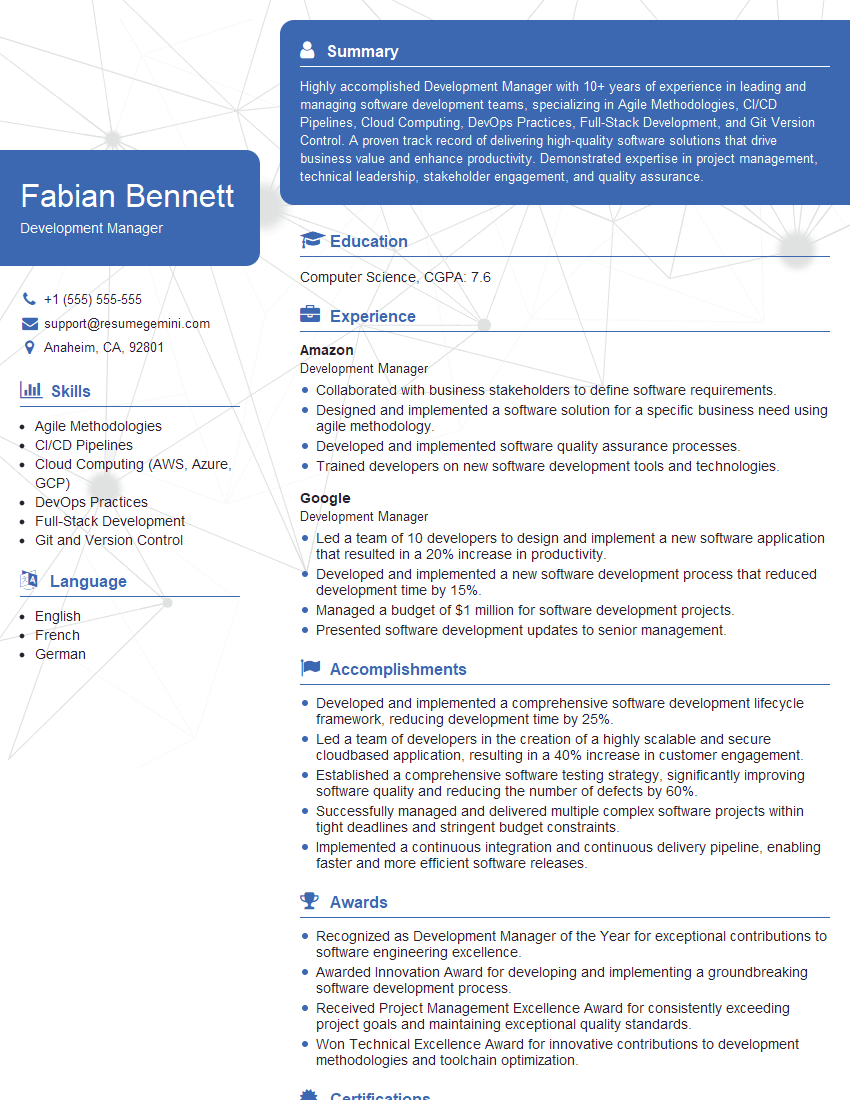
Development Manager Resume Sample
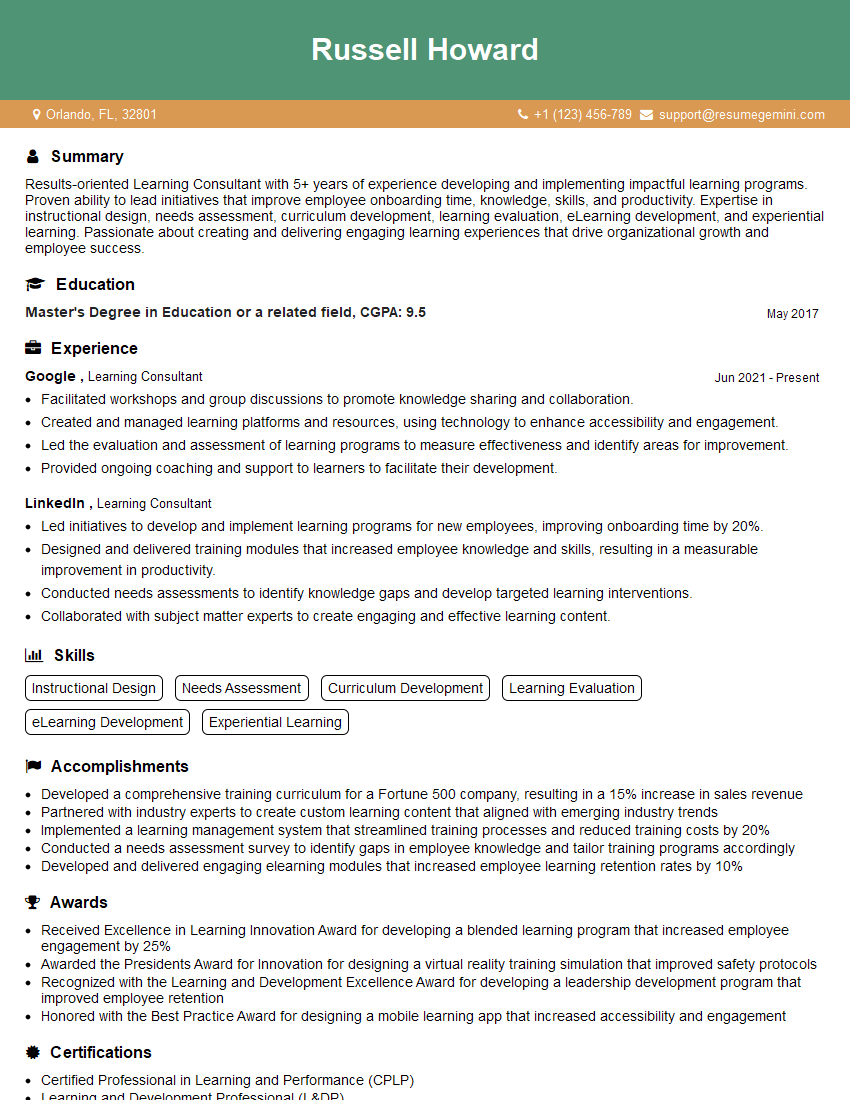
Learning Consultant Resume Sample
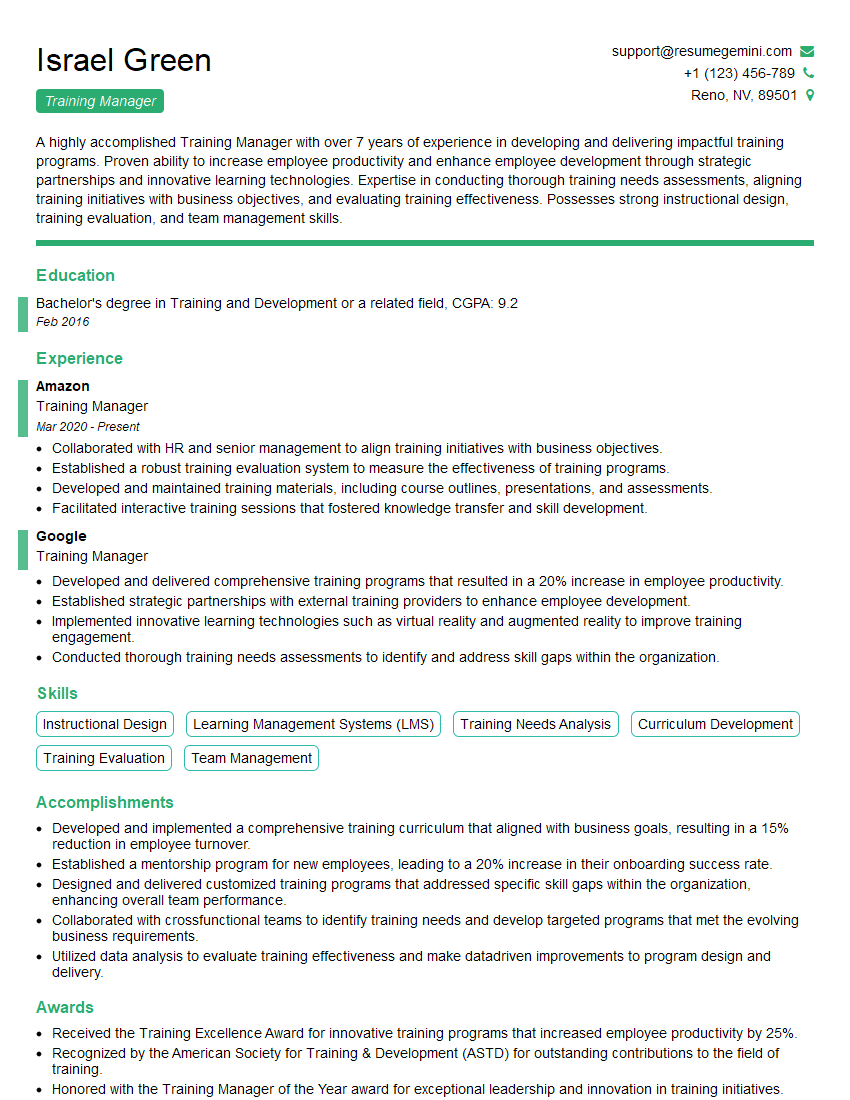
Training Manager Resume Sample
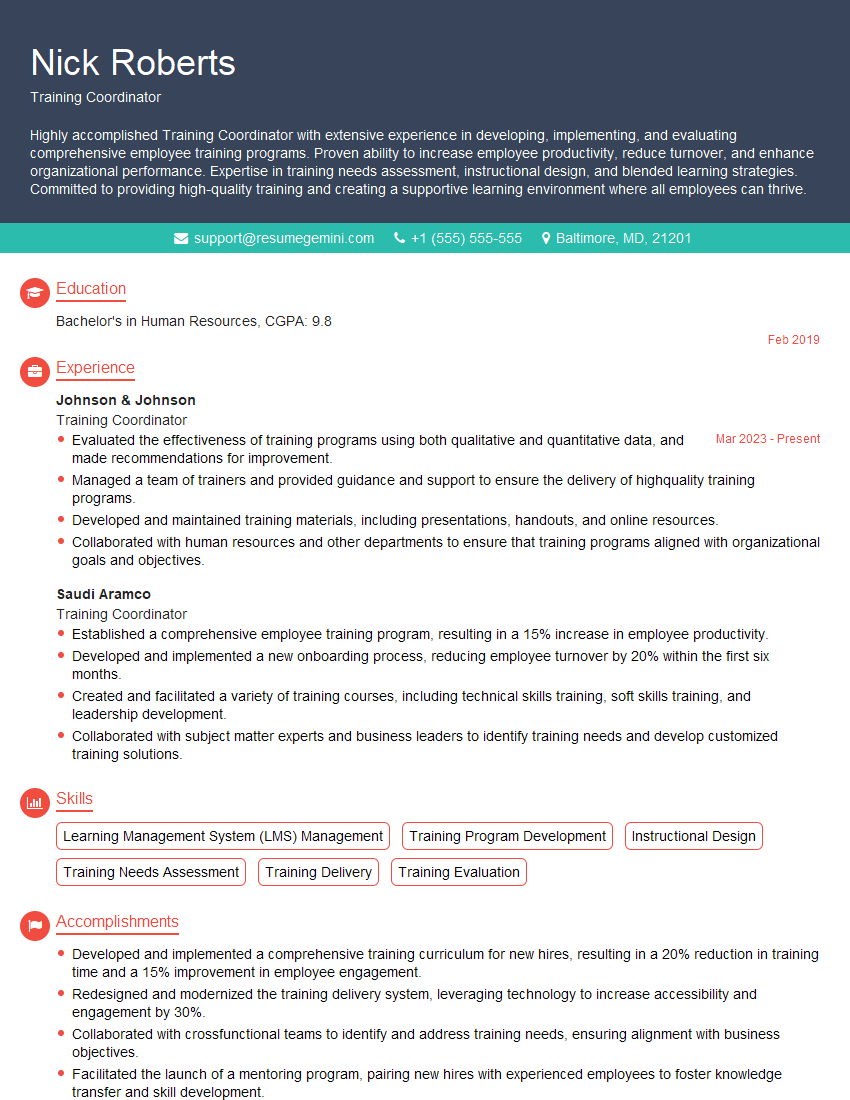
Training Coordinator Resume Sample
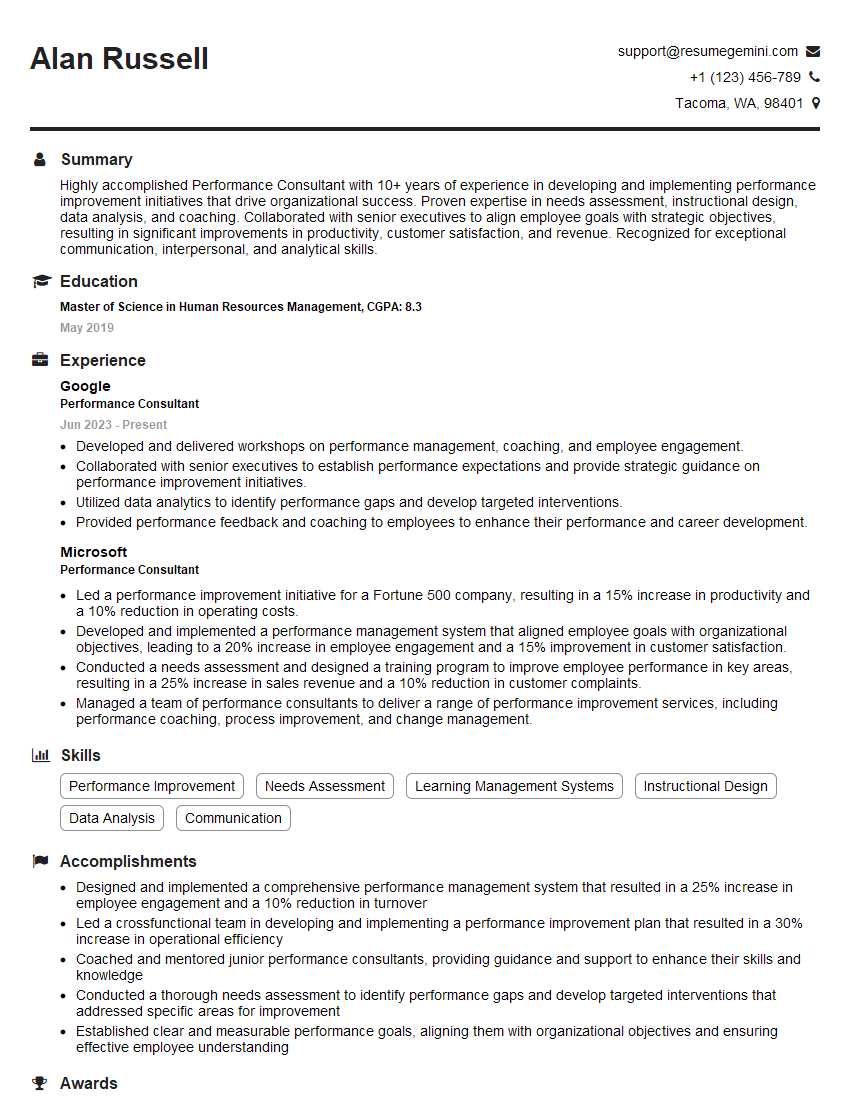
Performance Consultant Resume Sample
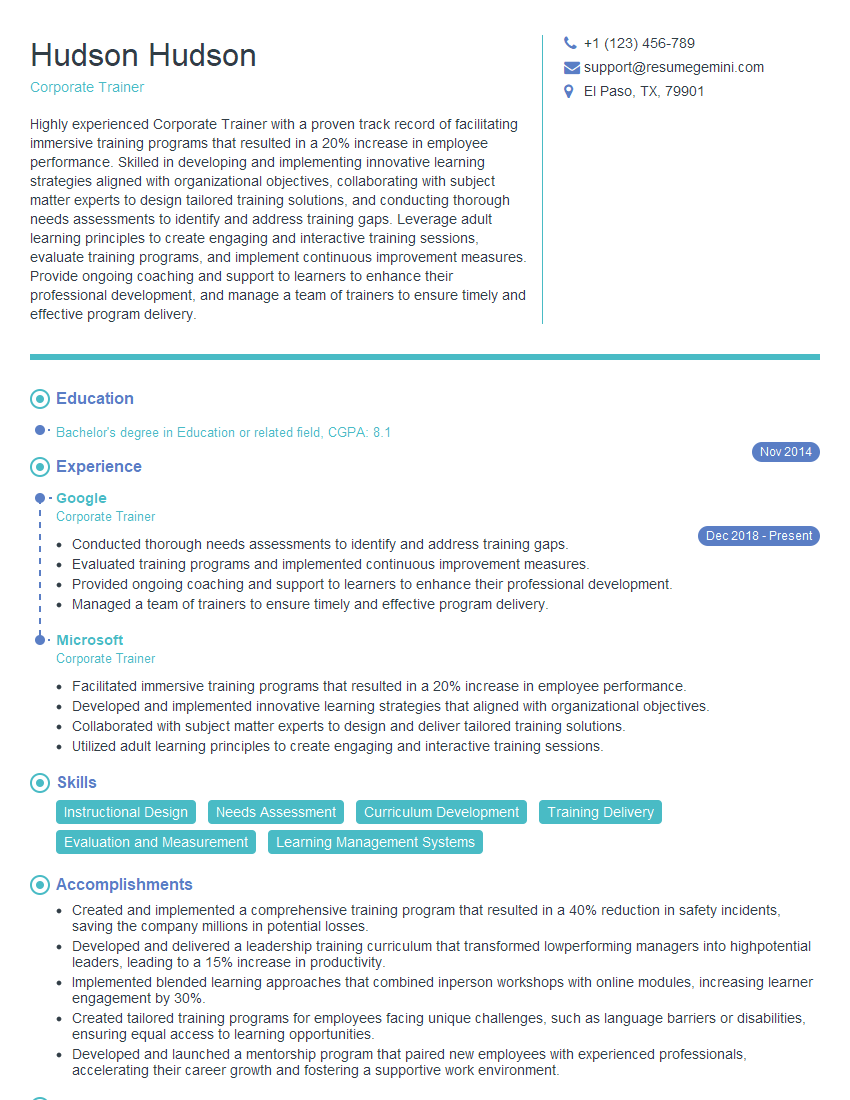
Corporate Trainer Resume Sample

Curriculum Developer Resume Sample
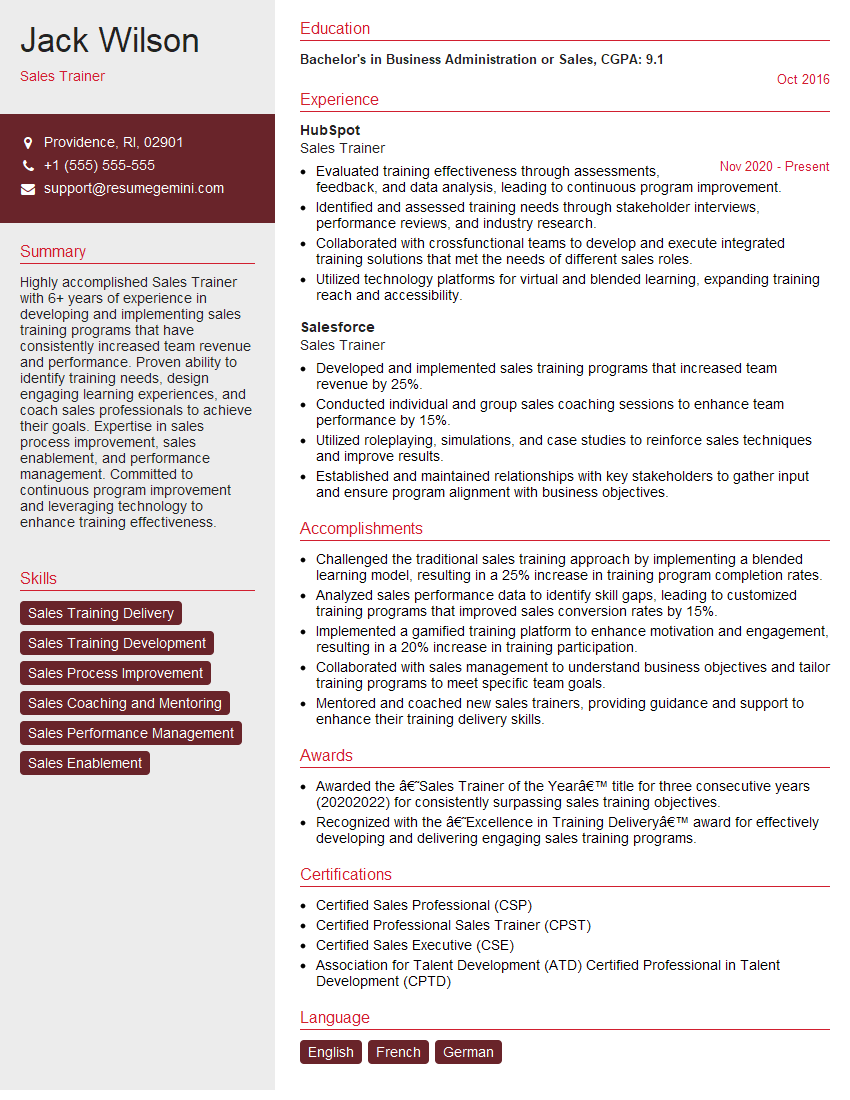
Sales Trainer Resume Sample
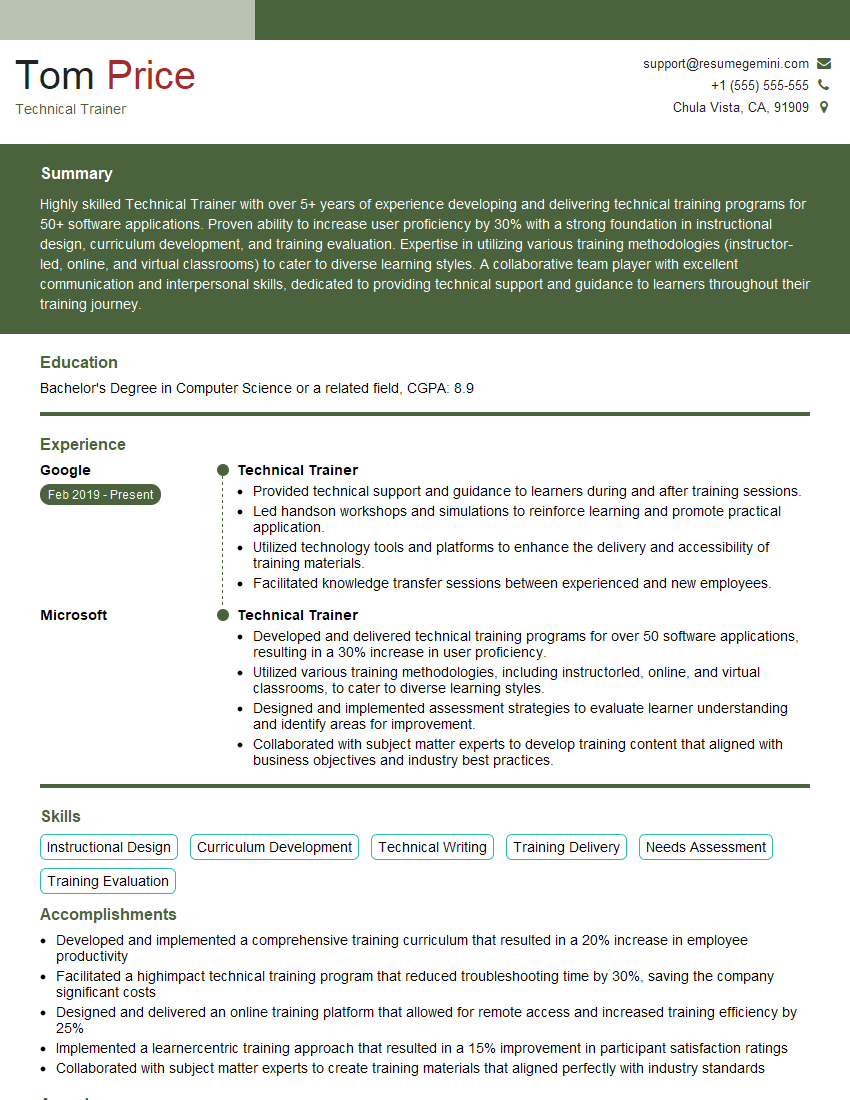
Technical Trainer Resume Sample

Training Specialist Resume Sample
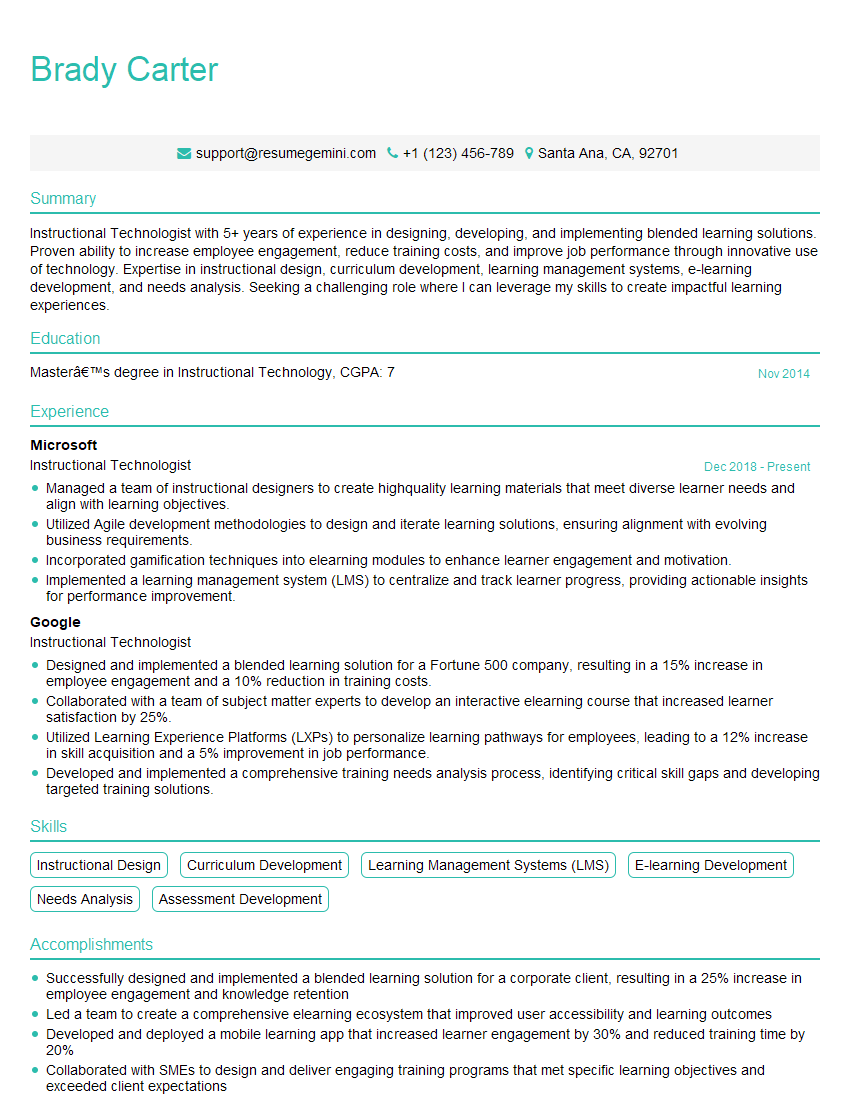
Instructional Technologist Resume Sample
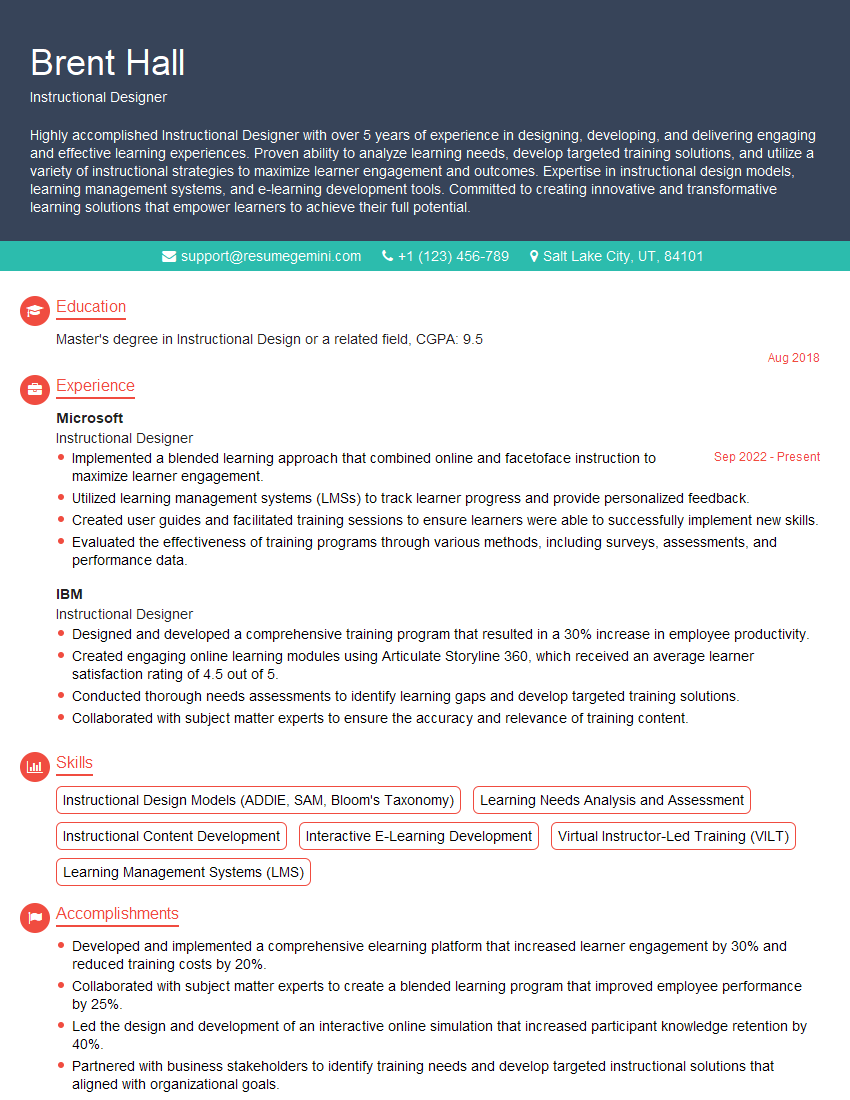
Instructional Designer Resume Sample
Explore more articles
Users Rating of Our Blogs
Share Your Experience
We value your feedback! Please rate our content and share your thoughts (optional).
What Readers Say About Our Blog
Very informative content, great job.
good