Interviews are more than just a Q&A session—they’re a chance to prove your worth. This blog dives into essential Metal Buggy Operation interview questions and expert tips to help you align your answers with what hiring managers are looking for. Start preparing to shine!
Questions Asked in Metal Buggy Operation Interview
Q 1. Describe your experience operating a metal buggy.
My experience with metal buggies spans over eight years, encompassing various roles from operator to supervisor. I’ve operated them in diverse environments, including construction sites, mining operations, and industrial facilities. My expertise extends to both routine operation and complex maneuvers, requiring precision and understanding of the vehicle’s capabilities and limitations. I am proficient in operating buggies across different terrains and under varying weather conditions. For instance, I’ve successfully navigated challenging terrain on a mining site in Nevada, requiring careful control and an understanding of weight distribution to avoid tipping.
Q 2. What are the different types of metal buggies you’ve operated?
I’ve operated several types of metal buggies, each suited for specific tasks. These include:
- Articulated Dump Trucks (ADT): These are highly maneuverable, used primarily for hauling large volumes of materials like dirt, rock, or aggregate over uneven terrain. I’ve worked extensively with these, mastering their articulated steering system and load-bearing capabilities.
- Rigid Dump Trucks (RDT): These are larger, more powerful buggies ideal for long hauls and transporting heavier loads. My experience includes operating RDTs in large-scale mining projects, where precision and adherence to safety protocols are paramount.
- Specialized Material Handling Buggies: This encompasses a wide range, including those equipped with forks for lifting pallets, or those designed for specific material types like hazardous waste. This experience highlights my adaptability and ability to learn and operate different equipment efficiently.
Q 3. Explain the pre-operational checks you perform on a metal buggy.
Pre-operational checks are critical for ensuring safe operation. My routine includes:
- Visual Inspection: A thorough check for any visible damage to the tires, chassis, body, lights, and hydraulic systems. I look for leaks, cracks, or any signs of wear and tear.
- Fluid Levels: Checking engine oil, transmission fluid, coolant, hydraulic fluid, and brake fluid levels. Low levels indicate potential problems requiring attention.
- Tire Pressure: Ensuring correct tire pressure for optimal performance and stability, especially on uneven terrain.
- Brake System: Testing the service and parking brakes to ensure they are functioning correctly. This is a crucial safety check.
- Lights and Signals: Verifying that all lights, indicators, and horns are operating as expected, enhancing visibility and communication.
- Safety Equipment: Confirming that all safety equipment, including seatbelts, fire extinguishers, and emergency contact information, is in place and readily accessible.
I document all checks on the pre-operational checklist, ensuring accountability and traceability.
Q 4. How do you ensure the safety of yourself and others while operating a metal buggy?
Safety is my top priority. I adhere to the following principles:
- Following Traffic Laws and Site Regulations: Observing speed limits, right-of-way rules, and all site-specific safety guidelines.
- Maintaining a Safe Distance: Keeping a safe distance from other vehicles, personnel, and obstacles at all times. This prevents collisions and other accidents.
- Using Signals Effectively: Communicating my intentions clearly through the use of lights, horns, and hand signals.
- Awareness of Surroundings: Maintaining constant vigilance, being aware of blind spots, and anticipating potential hazards.
- Appropriate Personal Protective Equipment (PPE): Always wearing appropriate PPE, including safety glasses, hearing protection, hard hats, and high-visibility clothing.
- Reporting Hazards: Immediately reporting any unsafe conditions or potential hazards to my supervisor.
I view safety not just as a procedure but as an ongoing responsibility that requires constant attention and proactive measures.
Q 5. What are the common maintenance tasks for a metal buggy?
Regular maintenance is crucial for the longevity and safe operation of a metal buggy. Common tasks include:
- Lubrication: Regular greasing of moving parts to reduce friction and wear.
- Tire Inspections: Regular checks for wear, damage, and proper inflation.
- Fluid Changes: Scheduled changes of engine oil, transmission fluid, and hydraulic fluid.
- Brake Inspections: Regular inspections and adjustments of the braking system.
- Filter Replacements: Replacing air, fuel, and oil filters as needed.
- Electrical System Checks: Inspecting and maintaining the electrical wiring, lights, and battery.
I always follow the manufacturer’s recommended maintenance schedule and keep detailed records of all maintenance performed.
Q 6. Describe your experience with metal buggy troubleshooting.
My troubleshooting experience is extensive, covering a wide range of issues. For example, I once diagnosed a faulty hydraulic pump causing slow steering by systematically checking fluid levels, listening for unusual noises, and carefully inspecting the pump for leaks. Another time, I resolved a sudden engine stall by identifying a clogged air filter through a series of diagnostic steps. My approach involves a combination of systematic checks, listening for unusual sounds, and using diagnostic tools when necessary. I approach troubleshooting methodically, starting with the most likely causes and progressing to more complex problems, keeping detailed records of my findings and actions.
Q 7. How do you handle mechanical failures while operating a metal buggy?
In the event of a mechanical failure, my first priority is safety. I immediately bring the buggy to a safe stop, away from traffic and hazards. Next, I activate hazard lights and assess the situation. If the failure poses an immediate safety risk, I evacuate the area and alert my supervisor. Minor issues might be addressed on-site, if safe to do so, while major issues require professional assistance. I meticulously document the failure, including the circumstances, symptoms, and any attempted remedies, providing valuable information for repair and future preventative maintenance. The aim is to ensure the situation is resolved safely and efficiently, minimizing downtime and preventing future similar issues.
Q 8. What are the load capacity limits of the metal buggies you’ve operated?
The load capacity of a metal buggy varies significantly depending on its size, design, and the manufacturer’s specifications. I’ve operated buggies with capacities ranging from 500 kg to 2000 kg. It’s crucial to always check the manufacturer’s plate for the maximum allowable load. Exceeding this limit severely compromises safety and structural integrity, potentially leading to equipment failure and accidents. For example, on one project, we used a 1000 kg capacity buggy to transport construction materials across uneven terrain. We meticulously tracked the weight to ensure we never overloaded it. We weighed materials before loading to avoid exceeding the capacity.
Q 9. How do you navigate challenging terrain with a metal buggy?
Navigating challenging terrain with a metal buggy requires a combination of skill, experience, and a thorough understanding of the vehicle’s limitations. Speed should always be adjusted to match the terrain conditions. On steep inclines, maintaining a steady, low speed is crucial to avoid tipping. In areas with loose gravel or sand, it’s important to use a wider wheelbase and lower gear for optimal traction. I often use the following approach:
- Assess the terrain: Carefully examine the route beforehand, identifying potential obstacles and hazards.
- Adjust speed and gear: Choose the appropriate gear for the terrain conditions; lower gears for steep inclines or loose surfaces, higher gears for smoother sections.
- Maintain momentum: Sudden acceleration or braking can easily result in loss of traction.
- Utilize diff-lock (if applicable): If the buggy is equipped with a differential lock, engage it when navigating particularly difficult sections. This ensures both wheels receive equal power, improving traction.
- Strategic route selection: Always look for the path of least resistance, avoiding large rocks, deep ruts, or steep drops.
For instance, during a mining operation, I expertly maneuvered a metal buggy across a rocky, uneven slope by carefully selecting my route, utilizing lower gears, and maintaining steady speed. Improper navigation could have resulted in a roll-over.
Q 10. Describe your experience with different types of terrain.
My experience encompasses a wide variety of terrains, from smooth, compacted surfaces to extremely rough and challenging environments. I have operated metal buggies on:
- Smooth surfaces: Roads, compacted earth, and paved areas present minimal challenges. Speed and maneuverability are not significantly impacted.
- Uneven terrain: Areas with rocks, bumps, and potholes demand careful driving and lower speeds. Proper weight distribution is vital.
- Loose surfaces: Sand, gravel, and mud require careful throttle control and potentially the use of specialized tires for better traction. Wheel spin is a common problem if speed or gear selection is not optimized.
- Steep inclines and declines: These require reduced speeds, appropriate gearing, and careful consideration of braking to prevent loss of control.
- Slopes with loose material: A particularly challenging scenario requiring expert navigation, close attention to weight distribution, and potentially the use of additional safety measures such as spotters.
For example, on one occasion, I safely navigated a buggy through a muddy construction site by utilizing low gear, maintaining momentum, and avoiding sudden maneuvers. A different approach could have resulted in getting stuck.
Q 11. What safety regulations do you follow while operating a metal buggy?
Safety is paramount when operating a metal buggy. My adherence to safety regulations includes:
- Pre-operation checks: Thorough inspection of the vehicle’s mechanical components, including tires, brakes, and steering before each use. This is a critical step for preventing accidents.
- Personal Protective Equipment (PPE): Consistent use of safety helmets, safety glasses, and appropriate work boots is mandatory.
- Speed limits: Always respecting speed limits and adhering to site-specific regulations.
- Load limits: Never exceeding the maximum load capacity as indicated on the manufacturer’s plate.
- Communication protocols: Maintaining clear and effective communication with other personnel on-site, especially when working in close proximity or in hazardous areas.
- Emergency procedures: Being familiar with emergency procedures and knowing how to react in case of an accident or breakdown.
- Environmental Awareness: Following all environmental regulations and minimizing the buggy’s environmental impact.
For instance, before starting a job, I always conduct a thorough inspection to ensure brakes are working, tires are properly inflated, and there are no loose parts. Ignoring these checks could lead to dangerous situations.
Q 12. Explain your understanding of load distribution and stability in a metal buggy.
Understanding load distribution and stability is fundamental to safe metal buggy operation. Unevenly distributed loads can cause instability, increasing the risk of tipping or accidents. The center of gravity should be kept as low as possible. Heavier items should be placed toward the center and lower section of the buggy, while lighter items can be distributed more evenly. The weight should also be balanced to avoid uneven stress on the chassis. Incorrect distribution can lead to tire slippage, poor steering, and even rollover.
For example, if transporting a large, heavy object, I would position it near the center of the buggy and secure it firmly to prevent shifting during transit. Using tie-down straps is critical to ensure cargo stability and reduce movement.
Q 13. How do you communicate effectively with other personnel on the site?
Effective communication is crucial for maintaining a safe and productive work environment. My communication strategies include:
- Radio communication: Using two-way radios to communicate with other personnel, especially when working in areas with limited visibility.
- Hand signals: Utilizing standardized hand signals to communicate in noisy environments or when radio communication is unavailable.
- Pre-shift briefings: Participating in pre-shift briefings to review the day’s tasks, safety protocols, and potential hazards.
- Clear and concise language: Using clear and concise language to avoid misunderstandings.
- Active listening: Actively listening to instructions and feedback from other team members.
For example, before starting any maneuver, I clearly communicate my intentions via radio to ensure everyone is aware of my actions and can take the appropriate precautions.
Q 14. What is your experience with different types of loading and unloading procedures?
My experience encompasses various loading and unloading procedures, adapting to the specific needs of each job and type of material. Methods include:
- Manual loading and unloading: This involves physically loading and unloading materials using shovels, ramps, and other tools, typically for smaller or lighter items.
- Mechanical loading and unloading: Using equipment such as forklifts, cranes, or conveyor belts for larger or heavier items, ensuring safe and efficient handling. This is essential for larger construction or mining operations.
- Bucket loading: Common in construction sites, this entails using the buggy’s own tipping mechanism or a separate bucket to load and unload materials. Safe securing of the bucket is critical to avoid accidents.
- Pallet loading: Loading and unloading palletized goods. Pallet jacks and forklifts may assist with placement.
Safety is paramount in all procedures. Before unloading, I always ensure the area is clear of obstacles and personnel, and I use appropriate safety equipment such as gloves and back supports when necessary. I select the most suitable method according to the materials, their weight and volume, and the available equipment.
Q 15. Describe your experience with using GPS and other navigation systems.
GPS and other navigation systems are crucial for efficient and safe metal buggy operation, especially in challenging terrains. My experience spans using various GPS units, from handheld devices with basic mapping capabilities to integrated systems within the buggy itself, featuring real-time tracking, waypoint navigation, and route planning. I’m proficient in using both satellite-based and terrain-following systems. For example, in one project involving remote mineral exploration, we relied heavily on a GPS system integrated with a digital terrain model (DTM) to navigate through dense forests and steep slopes, avoiding obstacles and optimizing the route to minimize travel time and fuel consumption.
Beyond GPS, I’m familiar with using compass navigation as a backup, as well as employing topographic maps and aerial imagery to plan routes and anticipate challenges. Understanding the limitations of each technology is key; satellite signals can be lost in certain environments, hence the importance of redundant navigation methods.
Career Expert Tips:
- Ace those interviews! Prepare effectively by reviewing the Top 50 Most Common Interview Questions on ResumeGemini.
- Navigate your job search with confidence! Explore a wide range of Career Tips on ResumeGemini. Learn about common challenges and recommendations to overcome them.
- Craft the perfect resume! Master the Art of Resume Writing with ResumeGemini’s guide. Showcase your unique qualifications and achievements effectively.
- Don’t miss out on holiday savings! Build your dream resume with ResumeGemini’s ATS optimized templates.
Q 16. How do you manage fuel consumption effectively?
Fuel efficiency is paramount in metal buggy operations due to the often remote locations and the high cost of fuel transport. My approach to managing fuel consumption involves a multi-pronged strategy. First, careful route planning is essential. Avoiding unnecessary detours and choosing the most efficient route, often utilizing GPS with elevation data to optimize fuel usage on inclines and declines, contributes significantly.
Second, I meticulously maintain the buggy. Proper tire inflation, regular engine servicing, and keeping the buggy free from unnecessary weight all contribute to maximizing fuel economy. Third, I adopt a smooth driving style, avoiding aggressive acceleration and braking. Lastly, regular monitoring of fuel levels and keeping a log of fuel consumption helps identify potential issues and track efficiency over time. For instance, I once identified a fuel leak by closely monitoring consumption, preventing a major breakdown in a remote area.
Q 17. How do you maintain accurate records of your operations?
Maintaining accurate operational records is crucial for both operational efficiency and regulatory compliance. My system involves a combination of digital and physical record-keeping. I use specialized software to log daily activities, including operational hours, fuel consumption, maintenance performed, location data, materials transported, and any incidents or repairs. This data is backed up regularly for security.
In addition to digital records, I maintain a physical logbook, which provides a readily accessible backup and includes sketches or notes on terrain conditions or route variations. This system provides a robust and easily auditable trail of operations, essential for reporting, cost analysis, and troubleshooting. Furthermore, this detailed record-keeping facilitates informed decision-making, allowing me to optimize future operations based on past experiences.
Q 18. What are your experience with different types of metal buggies?
My experience encompasses a variety of metal buggies, from smaller, more agile units designed for navigating tight spaces and challenging terrain to larger, heavier-duty buggies capable of carrying larger payloads. I’ve operated both petrol and diesel-powered buggies, each with its own advantages and disadvantages in terms of fuel efficiency, maintenance requirements, and power output.
For example, smaller, lighter buggies excel in traversing difficult terrain, while larger buggies are better suited for heavier loads and longer distances. My expertise extends to understanding the specific capabilities and limitations of each type, allowing me to select the most appropriate buggy for a given task, and to proficiently operate and maintain them. Understanding mechanical aspects, like differential lock systems and various suspension types, is key for efficient operation across a variety of terrains.
Q 19. Describe a time you had to solve a complex problem during metal buggy operation.
During a remote exploration project, a major rainstorm caused a significant washout on a crucial access road, completely blocking our path. The only alternative was a steep, rocky incline that was deemed too risky for the standard buggy. The solution involved a careful assessment of the terrain, using a combination of GPS and visual inspection. Then, we carefully cleared smaller obstacles, using winches and shovels to create a gradual incline more suitable for the buggy. We adjusted the buggy’s tire pressure and selected a low gear, which, along with careful maneuvering, enabled us to navigate the treacherous climb successfully, avoiding damage to the buggy and preventing project delays.
Q 20. How do you handle emergency situations while operating a metal buggy?
Emergency preparedness is critical in metal buggy operations. My approach involves several key steps. First, comprehensive training and familiarity with the buggy’s safety systems are essential. This includes knowing the location of and how to utilize emergency equipment like first-aid kits, fire extinguishers, and communication devices. Second, regular pre-trip inspections ensure the buggy is in optimal condition before each operation. Third, I always inform someone of my intended route and estimated return time.
In the event of an emergency, my immediate response focuses on ensuring personal safety and assessing the situation. This might involve contacting emergency services via satellite phone, administering first aid if needed, or taking steps to secure the buggy and prevent further damage. For example, during a mechanical breakdown far from the base camp, I had to utilize my knowledge of basic repairs, making temporary fixes and setting up a safety perimeter until rescue could arrive. Communication is key; clear reporting allows for efficient rescue efforts.
Q 21. What is your experience with preventative maintenance schedules?
Preventative maintenance is crucial for the longevity and reliability of a metal buggy. My experience includes developing and following meticulously detailed preventative maintenance schedules tailored to the specific make and model of the buggy, as well as operational conditions. These schedules typically incorporate regular checks of key components such as the engine, transmission, brakes, tires, and electrical systems.
These schedules are usually time-based and usage-based, meaning maintenance is performed at set intervals or after a certain number of operating hours, whichever comes first. I meticulously document all maintenance activities in my operational records. This proactive approach significantly reduces the risk of unexpected breakdowns, minimizes downtime, and extends the operational life of the buggy, leading to increased operational efficiency and cost savings in the long run. A well-maintained buggy is a safe and reliable buggy.
Q 22. What are the typical causes of metal buggy malfunctions?
Metal buggy malfunctions stem from a variety of sources, broadly categorized into mechanical issues, operator error, and environmental factors. Mechanical issues can include tire punctures or blowouts (common on uneven terrain), brake failure (requiring regular inspection and maintenance), engine problems (like overheating or fuel starvation), and damage to the chassis or load bed from impacts with obstacles. Operator error encompasses overloading the buggy beyond its weight capacity, improper braking techniques leading to skids or rollovers, and neglecting pre-trip inspections. Environmental factors include operating on unsuitable terrain (leading to instability or component damage), extreme temperatures (affecting engine performance and tire pressure), and exposure to harsh weather conditions such as heavy rain or snow (reducing visibility and traction).
- Example: A sudden engine stall could result from a clogged fuel filter, highlighting the importance of regular maintenance.
- Example: Ignoring load limits can lead to structural damage and instability, potentially causing accidents.
Q 23. How do you ensure the secure transportation of materials?
Secure material transportation hinges on proper loading techniques, securing the load effectively, and regular checks during transit. The load must be distributed evenly across the buggy’s bed to maintain stability. Securing methods vary depending on the cargo; for example, heavy items might require straps and chains, while smaller items can be secured with nets or bulkheads. Before starting the journey, a thorough inspection of the load and its securing mechanisms is essential. During transit, regular stops for load checks are crucial, especially on rough terrains. The speed and route should be adjusted based on the load and terrain conditions.
- Example: For transporting metal sheets, careful stacking and securing with straps are crucial to prevent shifting and potential damage.
- Example: For loose materials like gravel, a sturdy tarpaulin is needed to prevent spillage during transit.
Q 24. Describe your knowledge of relevant safety regulations and procedures.
My knowledge of safety regulations and procedures is extensive, covering areas such as safe operating procedures (SOPs), personal protective equipment (PPE), and emergency response. I am familiar with OSHA (Occupational Safety and Health Administration) guidelines and any site-specific regulations regarding the operation of heavy machinery. SOPs I follow include pre-trip inspections (checking tires, brakes, engine fluids, and securing mechanisms), maintaining safe operating speeds, awareness of surroundings (including other personnel and obstacles), and adherence to load limits. PPE, such as safety glasses, helmets, and high-visibility clothing, is always worn. Emergency procedures include knowing how to respond to equipment malfunction, accidents, and first aid protocols. Regular training keeps my knowledge and skills updated.
- Example: I always conduct a pre-trip inspection to identify potential issues before operation.
- Example: I am proficient in using fire extinguishers and know emergency contact numbers.
Q 25. What are your experience with different types of cargo?
My experience encompasses diverse cargo types, including metallic sheets, pipes, beams, construction materials, and even specialized equipment. Each type presents unique challenges in terms of handling, securing, and transportation. Metallic sheets require careful stacking and securing to prevent damage and shifting. Pipes need to be correctly cradled to prevent rolling. Beams require sturdy support to avoid bending or breakage. Handling specialized equipment demands detailed knowledge of its fragility and the need for bespoke securing methods. The experience gained handling these varied materials has strengthened my ability to adapt to different loading requirements and ensure safe transportation.
- Example: Transporting long steel beams requires careful planning of the route to avoid low-hanging obstacles.
- Example: Fragile equipment necessitates custom-made cradles and padding for secure transport.
Q 26. How do you adapt to changing work environments and conditions?
Adapting to changing work environments and conditions is a key aspect of metal buggy operation. This involves adjusting driving techniques to suit diverse terrains (muddy, rocky, steep inclines), adapting to variations in weather conditions (rain, snow, high winds), and responding to changing site layouts or safety protocols. My approach relies on observation, careful planning, and flexibility. Before embarking on a new task, I assess the environment and adjust my plans accordingly, paying close attention to potential hazards and adjusting my driving style to ensure both safety and efficiency. I am also quick to adapt to any instructions or changes given by supervisors.
- Example: Operating on a muddy site requires slower speeds and careful maneuvering to maintain traction.
- Example: A change in site layout requires a quick assessment of the new route to identify potential hazards.
Q 27. Explain your understanding of load limits and weight distribution.
Understanding load limits and weight distribution is paramount for safe operation. Each metal buggy has a specified maximum load capacity, which must never be exceeded. Overloading can lead to structural failure, instability, and accidents. Even with a load within the capacity limit, improper weight distribution can cause instability, potentially leading to rollovers. The weight should be evenly distributed across the load bed, ensuring that heavier items are placed lower and centrally. For irregular shapes, careful placement and consideration of the buggy’s center of gravity are vital to prevent imbalances. I always check the weight of my load and ensure it is within the specified limits before commencing transport.
- Example: A heavy load needs to be centered to maintain stability, preventing the buggy from tipping.
- Example: Load distribution charts provide guidance on optimum weight placement for different cargo types.
Q 28. How do you ensure the safe operation of a metal buggy in inclement weather?
Safe operation in inclement weather necessitates caution and adjustments to standard procedures. Heavy rain significantly reduces traction, requiring slower speeds and increased braking distances. Snow or ice can create extremely hazardous conditions, potentially rendering the buggy unoperable. High winds can affect stability, especially with a high load. Visibility is another critical factor – reduced visibility mandates extra caution and possibly postponing operations if conditions are too severe. I always check weather forecasts before operation, and adjust speeds, routes, and potentially postpone operations if conditions become dangerous. Appropriate lighting and safety equipment are vital for operation in low-visibility situations.
- Example: In heavy rain, reduced speeds and increased following distances are necessary to avoid accidents.
- Example: In snowy conditions, chains might be needed for enhanced traction, or operations may need to be delayed.
Key Topics to Learn for Metal Buggy Operation Interview
- Safety Procedures and Regulations: Understanding and adhering to all safety protocols, including pre-operation checks, emergency procedures, and hazard identification.
- Machine Operation and Controls: Developing proficiency in operating the metal buggy’s controls, understanding their functions, and performing routine maintenance checks.
- Material Handling Techniques: Safe and efficient loading, transporting, and unloading of materials, minimizing risks of damage or accidents.
- Environmental Awareness: Understanding the environmental impact of metal buggy operations and best practices for minimizing negative effects.
- Troubleshooting and Maintenance: Identifying and addressing minor mechanical issues, performing basic maintenance tasks, and knowing when to escalate problems to supervisors.
- Communication and Teamwork: Effective communication with supervisors, co-workers, and other personnel on the worksite to ensure safety and efficiency.
- Regulations and Compliance: Familiarity with relevant industry regulations and compliance requirements pertaining to metal buggy operation.
- Load Capacity and Weight Distribution: Understanding the safe load capacity of the metal buggy and how to properly distribute weight to prevent imbalances and accidents.
- Spatial Awareness and Maneuverability: Developing proficiency in maneuvering the metal buggy in various work environments, considering obstacles and space limitations.
Next Steps
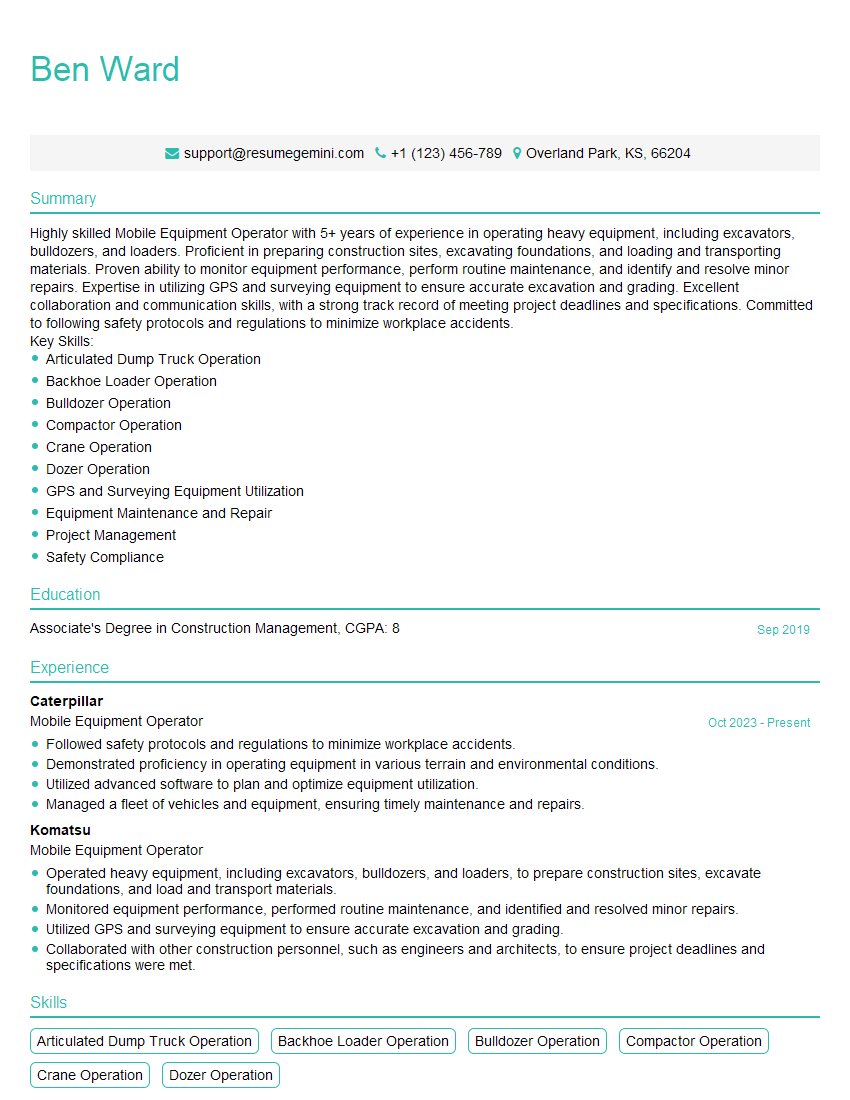
Mastering Metal Buggy Operation opens doors to exciting career opportunities in various industries, offering growth potential and competitive salaries. To maximize your job prospects, invest time in creating a strong, ATS-friendly resume that highlights your skills and experience. ResumeGemini is a trusted resource that can help you craft a professional and impactful resume tailored to the specific requirements of Metal Buggy Operation roles. Examples of resumes optimized for this field are available to guide your resume creation. Take the initiative to build a compelling resume that showcases your abilities and secures you your dream job.
Explore more articles
Users Rating of Our Blogs
Share Your Experience
We value your feedback! Please rate our content and share your thoughts (optional).
What Readers Say About Our Blog
Very informative content, great job.
good