Preparation is the key to success in any interview. In this post, we’ll explore crucial Millinery and Headwear Design interview questions and equip you with strategies to craft impactful answers. Whether you’re a beginner or a pro, these tips will elevate your preparation.
Questions Asked in Millinery and Headwear Design Interview
Q 1. Describe your experience with different millinery techniques (e.g., blocking, stitching, wiring).
My millinery expertise encompasses a wide range of techniques, essential for crafting diverse and structurally sound headwear. Blocking, stitching, and wiring are fundamental skills. Blocking involves shaping the hat’s base using steam and a block, creating the desired form. This is akin to sculpting with fabric. I’ve mastered various blocking techniques, from the traditional methods using wooden blocks to more contemporary approaches using readily available materials. Stitching, crucial for assembling various components, demands precision and an understanding of different stitch types—from hand-sewing delicate embellishments to machine-stitching sturdier fabrics. My experience includes working with various stitches like slip stitch, saddle stitch, and running stitch, each chosen based on the material and desired aesthetic. Wiring, often using millinery wire, provides structure and helps maintain the hat’s shape. This is particularly important for brim shaping and adding support to complex designs. I’ve worked with various wire gauges and have expertise in techniques such as wiring brims to create a crisp edge or using wire to create intricate floral elements.
Q 2. Explain your process for creating a hat from initial concept to finished product.
My hat-making process is a meticulous journey, starting with a spark of inspiration. This initial concept could stem from anything—a fabric sample, a piece of artwork, or even a fleeting image. I sketch initial designs, exploring various shapes, styles, and embellishments. Next, I meticulously select the appropriate materials based on the design and desired effect. This includes choosing the right base fabric, trims, embellishments, and even the type of wire. Then, I create a pattern based on my design sketch, accounting for seam allowances and structural elements. Following the pattern, I cut and assemble the hat body, paying close attention to detail. This step includes blocking the hat to achieve the desired shape and then stitching the various elements together. Finally, I add finishing touches like embellishments, veiling, and lining, before a final quality check to ensure structural integrity and aesthetic appeal. Each step involves problem-solving, often adjusting techniques based on the material’s behavior.
Q 3. How do you select appropriate materials for a specific hat design?
Material selection is paramount in millinery; it dictates the hat’s drape, durability, and overall aesthetic. For instance, a sleek, modern fascinator might utilize a stiff, structured felt or sinamay, while a whimsical summer hat could employ a lightweight straw or cotton voile. I consider several factors: the desired silhouette—a floppy hat would require a draping fabric, a structured hat a firm one—the occasion, the client’s style, and the season. Durability is key; I choose materials that can withstand wear and tear, particularly for hats intended for frequent use. For embellishments, I choose elements that complement the hat’s design and materials, ensuring a cohesive and balanced overall look. I often source unique and high-quality materials, sometimes even incorporating recycled or sustainable materials to add a touch of originality and meet the increasing demand for eco-friendly fashion.
Q 4. What are the key considerations when designing a hat for a particular event or occasion?
Designing a hat for a specific event necessitates understanding its context. A wedding hat demands elegance and sophistication, often featuring delicate embellishments and a silhouette that complements the bride’s attire. A race day hat, conversely, needs to be more dramatic and eye-catching, often incorporating bold colors and substantial brims. Consideration must be given to the dress code, the venue, and the weather. For outdoor events, I’d choose materials that are weather-resistant and comfortable. For formal events, I’d prioritize luxurious materials and intricate detailing. Understanding the client’s personality and desired level of boldness is also crucial. It’s a collaborative process, where the client’s vision and my expertise combine to produce a truly unique and fitting piece.
Q 5. Describe your experience working with various hat shapes and styles.
My experience spans a broad spectrum of hat shapes and styles. I’ve worked with classic styles like cloches, fedoras, and fascinators, as well as more avant-garde designs. Each shape presents unique structural challenges. A cloche requires precise blocking to maintain its rounded form, while a wide-brimmed hat demands sturdy materials and reinforcement to prevent sagging. My experience with different styles extends to various cultures and historical periods. I am comfortable working with structured silhouettes, soft draping styles, and unconventional designs, always adapting my techniques based on the hat’s unique requirements. For example, I recently designed a bespoke headpiece for a performance artist; it had no traditional hat structure but rather was constructed as a sculpted fabric piece that used wire armatures to achieve its striking, unique form.
Q 6. How do you ensure the structural integrity of your hat designs?
Ensuring structural integrity is critical. I utilize various techniques, from careful pattern making to strategic placement of millinery wire. For brims, I often use stiffening techniques, such as applying interfacing or using buckram, to prevent drooping. Proper blocking is crucial in establishing the foundational shape and ensuring the hat retains its form. I always choose materials appropriate for the design and ensure proper stitching, preventing weak points. My approach is multifaceted, considering the hat’s overall design and how each element contributes to its structural integrity. I believe that a well-constructed hat will not only look beautiful but also withstand wear and maintain its shape over time. I often test the hat’s durability through movement and handling to identify any potential weak points before finalizing the design.
Q 7. Explain your understanding of different hat blocking techniques.
Hat blocking techniques are diverse, each suited to different materials and hat styles. Traditional blocking employs wooden blocks shaped to the desired hat form. Steam is used to soften the material, allowing it to conform to the block. This is a time-honored method, resulting in a precise and consistent shape. Modern methods utilize alternative materials such as polystyrene forms or even balloons, offering more flexibility and cost-effectiveness. The technique varies depending on the material; felt requires a gentler approach than straw. I’ve become skilled in adapting my blocking technique to achieve the desired results for a variety of hat styles. For example, for a structured fedora, I would use a firmer block and apply steam carefully to prevent distortion. For a softer, floppy hat, I’d use a more flexible method to allow the fabric to drape naturally. Regardless of the method, achieving the intended shape requires practice, patience, and a keen eye for detail.
Q 8. How do you incorporate client preferences into the design process?
Incorporating client preferences is paramount in bespoke millinery. It’s not just about fulfilling a request; it’s about translating a vision. I begin with a thorough consultation, exploring the client’s style, the occasion for the hat, their preferred colors, fabrics, and overall aesthetic. I use mood boards – physical or digital – to visually capture these elements, showing various options of shapes, trims, and materials. We discuss practical aspects like hair style, outfit coordination, and comfort. Throughout the design process, I maintain open communication, showing sketches and prototypes, and incorporating feedback at every stage. For example, a client might initially envision a large, dramatic fascinator, but after seeing sketches and discussing practicality, they might prefer a more elegant, smaller headpiece that is easier to wear for an extended period. This collaborative approach guarantees the final piece perfectly reflects the client’s personality and needs.
Q 9. Describe your experience with pattern making for millinery.
Pattern making in millinery is a highly skilled process, different from traditional garment construction. It requires a deep understanding of three-dimensional form and the draping properties of various fabrics. I typically start with a head block, a form representing an average head size, which I can adjust to the client’s measurements. I then work with the chosen material, whether it’s straw, felt, sinamay, or silk, carefully draping and shaping it over the block to achieve the desired silhouette. This involves meticulous pinning, cutting, and adjusting until the pattern is precisely defined. I create multiple patterns for a single hat; for example, the crown, the brim, and any additional elements. Each pattern piece is numbered and labeled clearly, ensuring consistency and accuracy during the construction phase. I document my pattern making process through detailed sketches and notes, building a library of patterns that can be adapted and reused for future projects. For intricate designs, I might utilize computer-aided design (CAD) for more precise pattern generation and manipulation.
Q 10. How do you manage time effectively during the hat-making process?
Time management in millinery is critical, especially with bespoke orders. I use a project management system to meticulously plan each step, breaking down complex tasks into smaller, manageable ones. I allocate specific time slots for each phase – design consultation, pattern making, material sourcing, construction, finishing, and fitting. I set realistic deadlines, considering the complexity of the design and the available materials. I prioritize tasks based on urgency and dependencies. This systematic approach, coupled with a dedicated workspace free from distractions, helps me maintain a steady workflow and deliver projects on time. If unforeseen delays occur, I proactively communicate with the client, ensuring transparency throughout the process. For instance, if a specific fabric is unavailable, I immediately explore alternative options and adjust the timeline accordingly.
Q 11. How familiar are you with different millinery tools and equipment?
My familiarity with millinery tools and equipment is extensive. I’m proficient with a wide range of tools, including various types of needles and threads (suitable for different fabrics), blocking tools (for shaping the hat), millinery wire and pliers (for creating structures and armatures), steam irons and presses (for shaping and finishing fabrics), specialized scissors (for precise cutting), and hat blocks in various shapes and sizes. I’m also experienced with power tools such as sewing machines adapted for millinery work and heat guns (for shaping certain materials). Understanding the nuances of each tool and its application is crucial for achieving the desired result and ensuring the longevity of the finished piece. For example, the type of needle used – from a fine, sharp needle for delicate silk to a sturdy, blunt needle for straw – dramatically affects the outcome.
Q 12. Describe your experience with bespoke millinery commissions.
I have extensive experience with bespoke millinery commissions. I’ve created pieces for a diverse clientele, ranging from bridal headpieces and race day hats to custom-designed headwear for theatrical productions and private collections. This experience has honed my ability to understand client needs, translate their vision into a tangible design, and expertly execute the technical aspects of construction. One memorable commission involved creating a bespoke wedding headpiece incorporating feathers from the client’s family heirloom. This demanded not only technical skill but a sensitivity to the emotional significance of the project. The client’s satisfaction and the lasting memory of creating such a personal piece highlight the rewarding aspect of bespoke millinery.
Q 13. How do you handle unexpected challenges during the hat-making process?
Handling unexpected challenges is a fundamental aspect of millinery. This might involve material defects, unforeseen technical difficulties during construction, or even client requests that necessitate design modifications. My approach is threefold: First, I assess the situation calmly and identify the root cause of the problem. Second, I develop solutions based on my experience and problem-solving skills. For example, if a fabric tears unexpectedly, I might need to source a replacement or utilize a creative solution to incorporate the damage into the design, potentially transforming it into a design feature. Third, I maintain clear and proactive communication with the client, ensuring they are informed of any delays or adjustments and their input is sought whenever necessary. Transparency and a collaborative approach are key to navigating unexpected challenges successfully.
Q 14. What is your understanding of current fashion trends in headwear?
Current fashion trends in headwear are diverse and exciting. We’re seeing a resurgence of vintage and retro styles, with hats from the 1920s, 1940s, and 1960s inspiring many modern designs. Simultaneously, minimalist and sculptural forms are gaining popularity, showcasing clean lines and innovative material combinations. Sustainable and ethical practices are also becoming increasingly important, with designers focusing on eco-friendly materials and production methods. Bold colors, playful embellishments, and personalized details are other dominant trends. For instance, wide-brimmed hats with natural straw are a popular choice for summer, while smaller, more sophisticated headbands and berets are prominent in everyday wear. I stay abreast of these trends by attending industry events, following fashion publications, and engaging with designers on social media. This ensures that my designs remain fresh, innovative, and aligned with contemporary aesthetic preferences.
Q 15. How do you maintain quality control throughout the production process?
Maintaining quality control in millinery is paramount. It’s a multi-stage process that begins even before the design phase. I meticulously source high-quality materials – from feathers and silks to sinamay and straw – ensuring they meet specific criteria for texture, durability, and color consistency. This initial selection dramatically impacts the final product’s quality.
During the construction phase, I employ a rigorous system of checks and balances. Each step, from blocking a hat to stitching a delicate flower, is carefully inspected. For example, I might use a magnifying glass to ensure the neatness of seams and the evenness of appliqué. I keep detailed records of every material used and every step taken, creating a complete audit trail for each piece. This allows for easy troubleshooting if any issues arise and aids in recreating successful pieces. Finally, a final quality check occurs before the hat is presented to the client. This involves reviewing the overall shape, finish, and structural integrity to guarantee it meets my exacting standards and, most importantly, the client’s expectations.
Career Expert Tips:
- Ace those interviews! Prepare effectively by reviewing the Top 50 Most Common Interview Questions on ResumeGemini.
- Navigate your job search with confidence! Explore a wide range of Career Tips on ResumeGemini. Learn about common challenges and recommendations to overcome them.
- Craft the perfect resume! Master the Art of Resume Writing with ResumeGemini’s guide. Showcase your unique qualifications and achievements effectively.
- Don’t miss out on holiday savings! Build your dream resume with ResumeGemini’s ATS optimized templates.
Q 16. Describe your experience collaborating with other designers or craftspeople.
Collaboration is essential in millinery. I’ve had the pleasure of working with various artisans, including textile designers who create unique fabrics for my hats, and jewelry makers who craft bespoke embellishments. For instance, I once collaborated with a textile artist who specialized in hand-painted silk. Their artwork became the focal point of a bespoke wedding hat, resulting in a truly unique and unforgettable piece. The communication and creative exchange in these collaborations significantly enrich the design process, pushing creative boundaries, and often leading to unexpected and beautiful outcomes. In another instance, I worked with a jewelry maker to design a series of brooches that could be worn independently or incorporated into various hat designs. This collaborative approach expanded my design repertoire and my client’s styling options.
Q 17. How do you price your custom millinery creations?
Pricing custom millinery is a nuanced process that considers several factors. Firstly, the cost of materials is a primary consideration. High-quality materials like hand-dyed silk or vintage feathers significantly increase the overall price. Next, the intricacy and time involved in the design and creation process heavily influence the final cost. A simple hat with minimal embellishment will naturally cost less than a highly detailed piece requiring hundreds of hours of work. Finally, my design expertise and reputation also play a role. I take into account the value my skills and experience bring to the project. I create a detailed breakdown of costs for every custom piece, ensuring transparency with my clients and justifying the price fairly.
Q 18. What are some of the common challenges you face in millinery?
Millinery presents unique challenges. One of the most common is achieving the perfect fit. Each head is unique, demanding careful measurements and adjustments during the fitting process. Another significant challenge is working with delicate materials. Feathers, for example, can be fragile and require specialized handling and techniques. Weather conditions can also impact the hat’s shape and appearance, necessitating creative problem-solving in terms of construction and material selection. Finally, maintaining a balance between artistry and wearability requires skillful execution. A beautiful hat that is uncomfortable to wear is ultimately unsuccessful.
Q 19. How do you stay current with the latest techniques and trends in millinery?
Staying current in millinery requires continuous learning and exploration. I regularly attend industry events, workshops, and trade shows, both in person and online, to stay updated on the latest techniques, trends, and materials. I also actively follow leading milliners and designers on social media and in industry publications. Examining their work provides valuable inspiration and keeps my skills sharp. I also experiment with new materials and techniques in my own studio. This continuous learning ensures my designs remain fresh, innovative, and aligned with evolving styles.
Q 20. How do you ensure the comfort and wearability of your hats?
Comfort and wearability are paramount in my designs. I carefully consider the weight, shape, and balance of each hat to ensure it sits comfortably on the head without causing pressure points or discomfort. For example, I might use lightweight materials for summer hats and incorporate inner bands of soft, breathable fabrics to prevent irritation. The brim’s size and shape are also crucial; I ensure they offer adequate shade or protection from the elements while maintaining a flattering silhouette. I always strive for a balance between style and comfort, knowing a beautiful hat won’t be appreciated if it is uncomfortable to wear.
Q 21. What software or design tools are you proficient in?
My design process integrates various software and tools. I utilize CAD software for initial sketching and design development, allowing for experimentation with different shapes and sizes before physically creating the hat. While I primarily use traditional techniques, digital tools are invaluable for visualizing the final product. I’m also proficient in Adobe Photoshop and Illustrator for manipulating images and creating patterns. Beyond digital tools, my expertise in draping, blocking, and stitching techniques complements the design process, ensuring a seamless transition from digital concept to physical creation. This blended approach enhances efficiency and design accuracy.
Q 22. Describe a time you had to troubleshoot a problem during the design or construction of a hat.
One challenging project involved creating a bespoke fascinator incorporating delicate silk organza flowers and intricate wirework. During the construction, I encountered difficulty achieving the desired drape and support for the organza petals. They kept collapsing under their own weight.
My troubleshooting involved a multi-step process. First, I experimented with different stiffening techniques, including using a lightweight fusible interfacing, which proved insufficient. Then, I carefully examined the wire framework, realizing its insufficient structural integrity. I reinforced the wire by adding a second layer of thinner, more flexible wire, creating a more robust support system. Finally, I introduced tiny, almost invisible, stitches to subtly connect the petals to the framework, maintaining a natural look while adding extra support. The result was a perfectly formed, elegantly drooping flower that held its shape beautifully throughout the event.
Q 23. How do you adapt your designs to different head shapes and sizes?
Adapting hat designs to various head shapes and sizes is crucial for achieving a comfortable and flattering fit. It’s an iterative process involving careful measuring, precise pattern adjustments, and skilled construction techniques. I always begin by taking comprehensive head measurements, including circumference, height, and crown depth. This data informs the initial pattern creation.
For instance, a client with a wider head circumference might require adjustments to the crown’s base width and brim’s overall size. The crown’s height might be adjusted to accommodate different head heights, ensuring a balanced and proportional look. I might use darts, seams, or strategically placed elastic to create a custom fit that perfectly complements the client’s unique head shape. Sometimes, for more extreme head shapes, I will draft a bespoke pattern to ensure the hat is comfortable and doesn’t slip. This iterative process continues until a perfect fit is achieved, which involves several fittings, and is key to client satisfaction.
Q 24. Describe your experience working with different types of fabrics and materials.
My experience spans a wide range of millinery fabrics and materials, each with unique properties demanding distinct handling techniques. For example, working with sinamay, a stiff straw-like fabric, requires a firm hand and careful manipulation to prevent breakage. The shaping and blocking techniques are very different than with a soft felt.
In contrast, delicate silks and chiffons necessitate gentle handling to prevent stretching or damage during the construction process. I use different stitching techniques for each and carefully consider the weight and drape when designing. Then there are structured materials like toquilla straw for Panama hats, or the more modern synthetic materials that are increasingly popular for their durability and cost-effectiveness. Each requires specialized knowledge of their properties, and how to best utilize them to the advantage of the finished product.
Understanding these properties is paramount to crafting a hat that not only looks stunning but also holds its shape and endures through wear and tear.
Q 25. What is your understanding of historical millinery techniques?
My understanding of historical millinery techniques is extensive, encompassing both traditional and modern adaptations. I have studied and replicated techniques from various eras, including the elaborate millinery of the Victorian era with its use of feathers, flowers, and wired fabrics, and the elegant simplicity of the 1920s cloche hats.
I am familiar with techniques such as millinery blocking (shaping a hat base), hand-sewing techniques crucial for delicate materials, and the creation of intricate hat embellishments. Understanding historical techniques informs my contemporary designs, allowing me to integrate elements of classic styles with modern aesthetics, creating a unique blend of tradition and innovation. For example, I might utilize a historical blocking technique to create a modern-shaped hat base.
Q 26. How do you create a design that is both stylish and functional?
Balancing style and functionality is a core principle in my design process. A stylish hat is only truly successful if it’s comfortable and practical for the wearer. I begin by carefully considering the intended occasion and setting, which influences the overall design aesthetic and the choice of materials.
For example, a wide-brimmed sun hat for outdoor use needs to provide ample shade and incorporate features like a secure chin strap for windy conditions. The fabrics will be chosen for their UV protection and durability. A hat for a formal event may incorporate more delicate materials, but its structure and balance will be meticulously considered to ensure the design remains secure and comfortable throughout the event. The design process involves prototyping, and refining the design through fittings to achieve a pleasing aesthetic that functions perfectly for its intended purpose.
Q 27. How do you maintain accuracy and precision when working with delicate materials?
Maintaining accuracy and precision with delicate materials demands patience, the right tools, and meticulous attention to detail. I use specialized needles, fine threads, and appropriate stitching techniques for each material. For example, when working with silk, I use a very fine needle to prevent snags and tears.
I often employ techniques like French seams for a clean finish and structural integrity in delicate fabrics. Precise measurements and careful pattern cutting are essential to avoid any errors. Using appropriate tools such as tailor’s shears and pins help to maintain precision throughout the process. When working with intricate wirework, I use very fine gauge wire and small pliers, making sure to work in slow and deliberate movements.
Q 28. What is your approach to creating a unique and memorable hat design?
Creating a unique and memorable hat design begins with inspiration, often drawn from nature, art, architecture, or even abstract concepts. I spend considerable time sketching and experimenting with different shapes, silhouettes, and materials to explore various possibilities. I then carefully consider the overall aesthetic, playing with colors, textures, and embellishments to achieve a balanced and visually compelling result.
For example, a recent design was inspired by the intricate patterns found in seashells. This design utilized a combination of hand-dyed silk organza and delicate wirework to evoke a sense of fluidity and elegance. The result was a hat that was simultaneously striking and refined, leaving a lasting impression.
Uniqueness is also achieved by embracing unconventional materials, or by combining traditional techniques with modern, innovative approaches. It’s this blend of creativity, skill, and careful attention to detail that ensures every hat is not only unique, but also unforgettable.
Key Topics to Learn for Your Millinery and Headwear Design Interview
- Design Principles & Aesthetics: Understanding proportion, balance, color theory, and texture as they relate to headwear design. Consider how different styles and shapes complement various face shapes and personal aesthetics.
- Material Selection & Properties: Knowledge of various fabrics (e.g., felt, straw, silk), millinery supplies (e.g., wire, buckram, veiling), and their suitability for different designs and techniques. Be prepared to discuss the pros and cons of various materials in relation to durability, cost, and overall design effect.
- Construction Techniques: Mastery of essential millinery techniques such as blocking, stitching, wiring, shaping, and embellishment. Be ready to discuss your experience with different hand-sewing and machine-sewing techniques relevant to headwear creation.
- Pattern Making & Draping: Understanding the principles of pattern making and draping as applied to headwear, including creating patterns from scratch and adapting existing patterns. Discuss your problem-solving skills when adapting patterns to unique designs or materials.
- Design Software & Technology: Familiarity with relevant design software (e.g., CAD programs for pattern making and 3D modeling) and your ability to integrate technology into the design process. Be prepared to discuss how technology enhances your efficiency and design capabilities.
- Industry Trends & Innovation: Knowledge of current trends in millinery and headwear design, and the ability to discuss innovative approaches to design, materials, and construction techniques. Showcase your passion for staying current in this evolving field.
- Sustainability & Ethical Sourcing: Understanding the environmental impact of material choices and the importance of ethical sourcing practices in the millinery industry. Discuss your commitment to sustainable and responsible design.
Next Steps
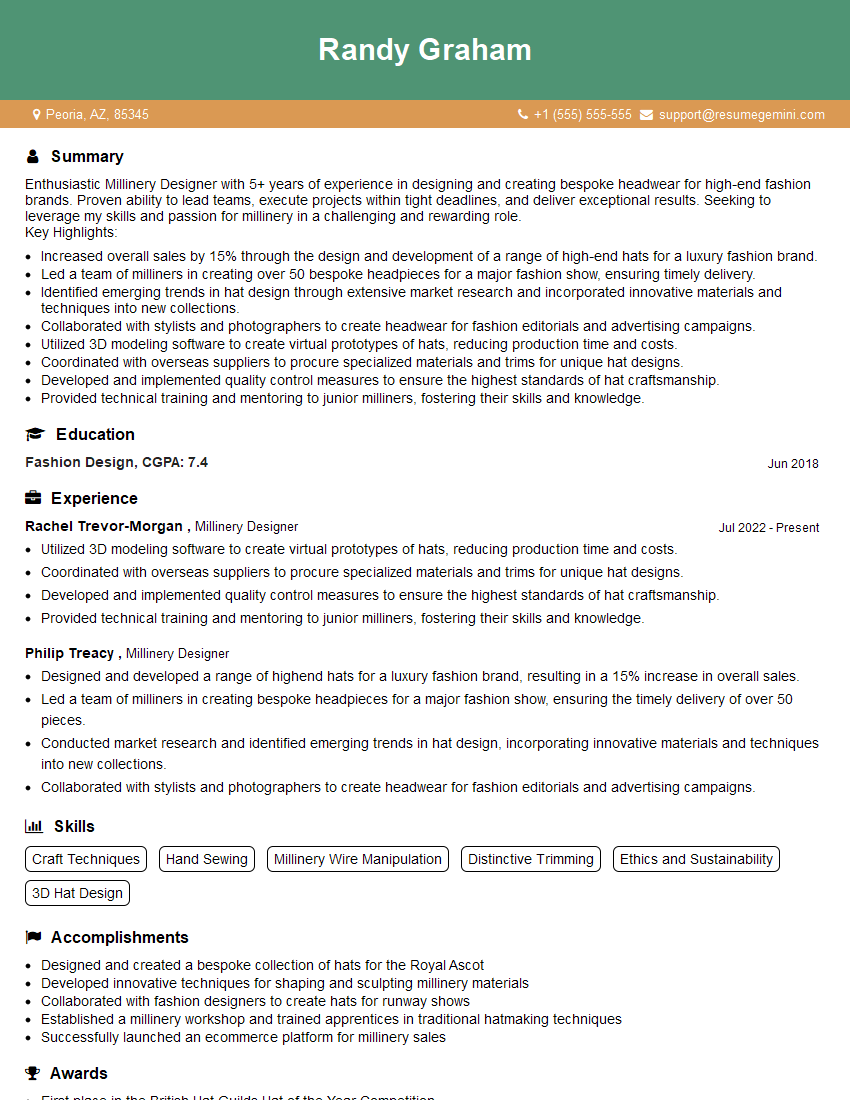
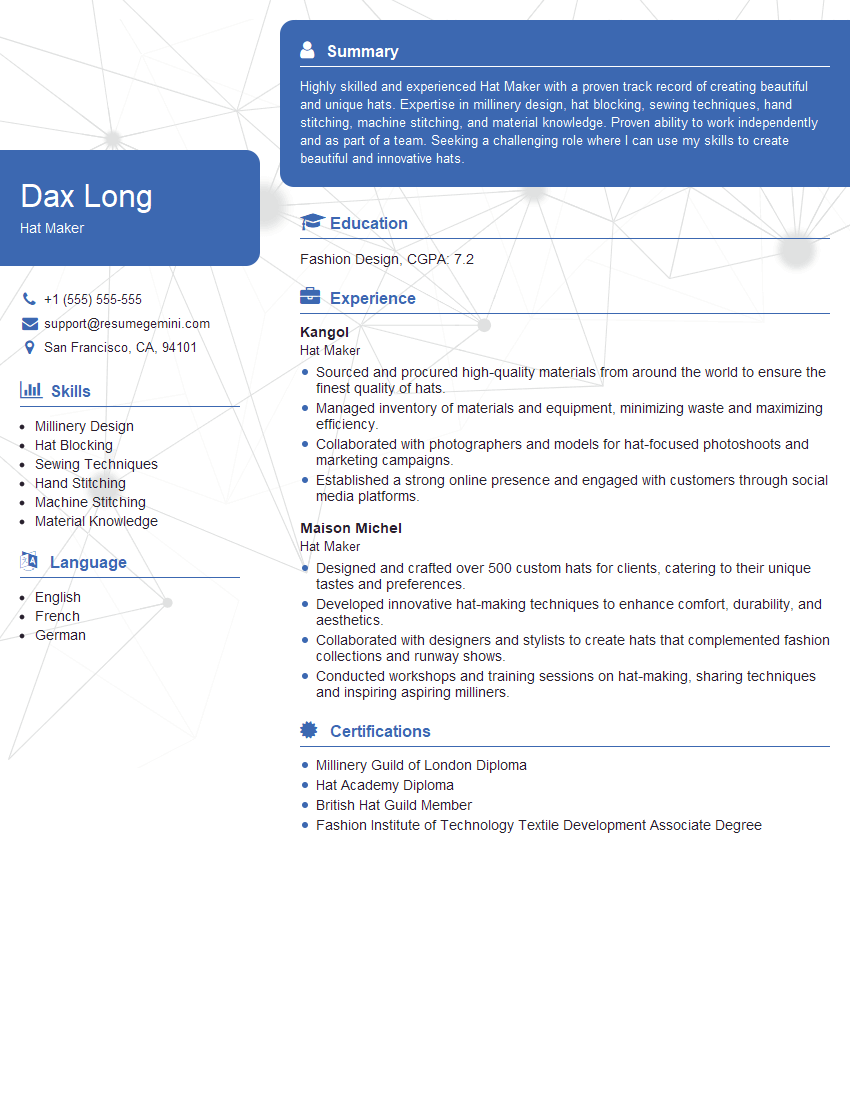
Mastering Millinery and Headwear Design opens doors to a creative and rewarding career, offering diverse opportunities in fashion, theatre, and beyond. To stand out in this competitive field, a strong and ATS-friendly resume is crucial. ResumeGemini can help you craft a compelling resume that highlights your skills and experience effectively. Take advantage of their resources and examples tailored specifically to Millinery and Headwear Design to showcase your unique talents and secure your dream role. Examples of resumes specifically designed for Millinery and Headwear Design professionals are available within ResumeGemini.
Explore more articles
Users Rating of Our Blogs
Share Your Experience
We value your feedback! Please rate our content and share your thoughts (optional).
What Readers Say About Our Blog
Very informative content, great job.
good