Interviews are opportunities to demonstrate your expertise, and this guide is here to help you shine. Explore the essential Mission Planning and Coordination interview questions that employers frequently ask, paired with strategies for crafting responses that set you apart from the competition.
Questions Asked in Mission Planning and Coordination Interview
Q 1. Describe your experience in developing mission plans.
Developing a mission plan is a systematic process that begins with a clear understanding of the objectives. It’s like building a house – you need a strong foundation and detailed blueprints. My experience involves leveraging various methodologies, from simple Gantt charts for smaller projects to more complex tools like MS Project for larger, multi-faceted missions. This includes defining the scope, outlining tasks and sub-tasks, identifying dependencies, allocating resources (personnel, equipment, budget), and establishing timelines with clear milestones and deadlines. For example, in a recent search and rescue operation, we meticulously planned the search grid, allocated specific search teams based on their expertise and equipment, and created a detailed communication plan to ensure seamless information flow.
I always incorporate contingency planning, anticipating potential delays or challenges. This involves identifying potential problems (e.g., bad weather, equipment malfunction) and developing backup plans to minimize disruption. A robust plan considers all aspects, from logistical requirements like fuel and transportation to risk mitigation strategies and emergency procedures.
Q 2. Explain your process for identifying and mitigating mission risks.
Risk identification and mitigation is crucial for mission success. I employ a structured approach, starting with a thorough risk assessment using techniques like SWOT analysis (Strengths, Weaknesses, Opportunities, Threats) and Failure Mode and Effects Analysis (FMEA). This involves brainstorming potential hazards – everything from equipment failure to human error, environmental factors to political instability. For each identified risk, I assess its likelihood and potential impact. This helps prioritize which risks need the most attention.
Mitigation strategies are then developed for each risk. These might include developing backup plans, implementing safety protocols, providing additional training, procuring redundancy in equipment, or obtaining necessary permits and authorizations. For instance, in a humanitarian aid mission, we might account for potential security threats by employing armed security personnel and establishing secure communication channels. We’d also have backup transportation plans in case of road closures.
Q 3. How do you prioritize tasks and resources within a mission plan?
Prioritizing tasks and resources is essential for efficient mission execution. I use a combination of techniques, including MoSCoW analysis (Must have, Should have, Could have, Won’t have), prioritization matrices (e.g., Eisenhower Matrix – urgent/important), and dependency analysis. This process involves ranking tasks based on their importance to mission success and their dependencies on other tasks.
Resource allocation follows a similar logic. Critical tasks receive priority in terms of personnel, equipment, and funding. For example, in a scientific expedition, the collection of crucial data might be prioritized over less critical tasks like setting up camp, although both are necessary. I also ensure that resource allocation is aligned with the overall risk assessment, dedicating more resources to mitigate high-impact risks.
Q 4. Describe a time you had to adapt a mission plan due to unforeseen circumstances.
During a wildlife conservation project, we encountered unexpected wildfires that threatened our research site and the animals we were studying. Our initial plan involved a systematic data collection process across multiple locations. The wildfires forced an immediate adaptation. We had to prioritize the safety of our team and the animals.
Our response involved immediate evacuation of personnel and animals to a safer location. We had to revise our data collection plan, focusing on urgent data gathering in areas not directly affected by the fire. We also implemented fire-monitoring and containment support. Effective communication with all team members was crucial during this period of rapid change, keeping everyone informed of the evolving situation and new plans.
Q 5. What are your preferred methods for tracking mission progress and reporting?
Tracking mission progress and reporting effectively involves using a combination of methods. We use project management software (like Asana or Jira) to track task completion, resource utilization, and deadlines. Regular progress meetings with the team are essential to identify and address any roadblocks early on. These meetings provide a platform to share updates, discuss challenges, and revise plans as needed.
Reporting is tailored to the audience. For internal stakeholders, detailed progress reports with charts and graphs are provided. For external stakeholders, concise summaries highlighting key accomplishments and challenges are used. Regular communication is key – daily, weekly or even monthly reports depending on the mission’s complexity and urgency. This could be through emails, presentations, or other formats.
Q 6. How do you ensure effective communication within a mission team?
Effective communication within a mission team is paramount. It’s the cornerstone of success. I foster open communication by establishing clear communication channels, assigning communication roles and responsibilities, and scheduling regular briefings and debriefings. This includes daily stand-up meetings for quick updates, formal weekly meetings for in-depth discussions, and emergency contact protocols for urgent situations.
Utilizing different communication methods – emails, instant messaging, radio communication (depending on the mission’s environment) – ensures that everyone has the information they need in a timely manner. I emphasize active listening and feedback mechanisms to ensure everyone feels heard and respected, improving team cohesion and collaboration.
Q 7. How do you handle conflicts or disagreements within a mission team?
Conflicts and disagreements are inevitable in any team. My approach is to address them constructively and promptly. I encourage open dialogue and active listening, providing a safe space for team members to express their concerns. I focus on understanding the root cause of the conflict rather than focusing on blame. This might involve mediating discussions, facilitating compromise, and helping the team reach a mutually acceptable solution.
If the conflict is serious or involves critical differences in opinion, I may involve higher management to provide guidance or make a decision. Documenting the conflict and the resolution process is vital for future reference and to avoid similar situations. Ultimately, the goal is to preserve team cohesion and ensure that the mission objectives are met.
Q 8. Explain your experience with resource allocation in mission planning.
Resource allocation in mission planning is the strategic process of assigning available resources – personnel, equipment, time, budget, and materials – to various mission tasks and objectives. It’s crucial for optimizing mission effectiveness and ensuring success. This involves understanding resource limitations, prioritizing tasks based on their importance and urgency, and allocating resources accordingly. It’s not simply dividing resources equally; it’s about finding the most efficient and effective distribution.
In my experience, I’ve used a combination of techniques including:
- Prioritization Matrices: Using tools like the Eisenhower Matrix (urgent/important) to categorize tasks and allocate resources to high-priority items first.
- Resource Leveling: A technique for smoothing resource demand over time, preventing bottlenecks and ensuring consistent resource utilization throughout the mission. This might involve adjusting task schedules or requesting additional resources if needed.
- Simulation and Modeling: Running simulations to test different resource allocation strategies and identify potential bottlenecks before the mission begins. This is particularly useful for complex missions.
For example, during a search and rescue mission, I prioritized the allocation of the fastest helicopter and most experienced pilot to the area with the highest probability of finding the missing person, while allocating other resources (e.g., ground teams, support personnel) to secondary areas and tasks.
Q 9. What software or tools are you proficient in for mission planning?
My proficiency in mission planning software includes experience with a wide range of tools, each tailored to different needs. I’m adept at using:
- Mission Planning Software (e.g., Mission Planner, QGroundControl): These are invaluable for creating flight plans, calculating flight times and fuel consumption, setting waypoints, and managing autonomous vehicles.
- Geographic Information Systems (GIS) software (e.g., ArcGIS, QGIS): These tools are essential for analyzing terrain, identifying potential risks, optimizing routes, and visualizing mission areas. I use GIS to create detailed maps and incorporate diverse data layers (topography, weather, population density, etc.).
- Project Management Software (e.g., MS Project, Asana): For scheduling, tracking tasks, managing timelines, and assigning responsibilities within the mission team. These tools are crucial for effective coordination and collaboration.
- Spreadsheet Software (e.g., Microsoft Excel, Google Sheets): Used for data analysis, creating resource allocation spreadsheets, tracking budget, and generating reports. They offer flexibility and are used for various analyses during the entire mission lifecycle.
The specific software used often depends on the mission type, environment, and available resources. I’m comfortable adapting to new tools and platforms as needed.
Q 10. How do you ensure compliance with regulations and safety procedures during a mission?
Compliance and safety are paramount. My approach involves a multi-layered strategy:
- Thorough Pre-Mission Briefing: Every team member receives a detailed briefing outlining safety procedures, emergency protocols, regulatory compliance requirements, and communication plans. This often includes scenario-based training.
- Risk Assessment and Mitigation: I conduct a comprehensive risk assessment, identifying potential hazards and developing mitigation strategies to minimize the risk to personnel and equipment. This involves reviewing weather forecasts, terrain analysis, and identifying potential environmental or logistical challenges.
- Adherence to Regulations: Strict adherence to all relevant national and international regulations (e.g., aviation regulations, environmental protection laws) is crucial. I ensure that all mission activities comply with these regulations throughout the planning and execution phases.
- Regular Communication and Monitoring: During the mission, I maintain constant communication with the team and monitor mission progress closely, intervening if any safety concerns arise. This might involve adjusting the plan or halting operations if necessary.
- Post-Mission Debriefing: A post-mission debriefing helps identify areas for improvement in safety procedures and compliance measures. Lessons learned are documented and applied to future missions.
For example, before a UAV (Unmanned Aerial Vehicle) mission, I would ensure we obtain necessary airspace authorizations and operate within designated flight corridors, adhering to all relevant aviation regulations to avoid collisions and ensure public safety.
Q 11. Describe your understanding of contingency planning.
Contingency planning is the process of identifying potential problems that could disrupt a mission and developing alternative plans to address them. It’s about anticipating ‘what ifs’ and being prepared to adapt and mitigate unforeseen circumstances. A robust contingency plan is essential for mission resilience.
My approach to contingency planning involves:
- Identifying Potential Risks: This involves brainstorming potential problems (equipment malfunction, weather changes, unexpected events) using techniques like SWOT analysis and Failure Modes and Effects Analysis (FMEA).
- Developing Alternative Plans: For each identified risk, I develop alternative plans or strategies to address it. These plans might involve rerouting, deploying backup equipment, or altering the mission timeline.
- Defining Trigger Points: Specific conditions or events that trigger the activation of a contingency plan need to be defined clearly. These trigger points ensure that the appropriate plan is implemented promptly.
- Regular Review and Updates: Contingency plans are not static. They are regularly reviewed and updated based on new information, changing circumstances, or lessons learned from previous missions.
For instance, in a disaster relief operation, we would have contingency plans for scenarios like severe weather, fuel shortages, and damage to communication infrastructure. These plans would outline alternative routes, fuel resupply methods, and backup communication systems.
Q 12. How do you balance competing priorities within a mission plan?
Balancing competing priorities in mission planning requires a structured approach. It’s a constant negotiation between different objectives, constraints, and stakeholders. A common method is prioritization based on a weighted scoring system.
My approach typically involves:
- Clearly Defining Objectives: Start by defining all mission objectives and their relative importance. This might involve creating a hierarchy of objectives.
- Identifying Constraints: Recognize constraints like budget, time, personnel, and resources.
- Weighted Scoring System: Assigning weights to each objective based on its importance. Objectives with higher weights receive greater allocation of resources and attention.
- Trade-off Analysis: Often, it’s impossible to fully achieve all objectives. Trade-off analysis helps determine which objectives to prioritize and which ones to compromise on strategically.
- Iterative Planning: Mission planning is often an iterative process. The initial plan may need adjustment based on resource availability, emerging constraints, or changing priorities.
For example, in a scientific research expedition, we might need to balance the need for thorough data collection with the constraints of limited time and resources. Prioritizing the most critical data collection tasks, while possibly scaling back on less crucial aspects, helps achieve a successful balance.
Q 13. What is your experience with post-mission analysis and reporting?
Post-mission analysis and reporting are crucial for learning from experiences, improving future missions, and demonstrating accountability. It involves systematically reviewing the mission’s performance, identifying successes and failures, and drawing lessons for improvement.
My approach includes:
- Data Collection: Gathering data from various sources, including mission logs, sensor data, performance metrics, and debriefing sessions.
- Performance Evaluation: Assessing the mission’s success against pre-defined objectives, identifying any deviations from the plan and their causes.
- Lessons Learned Identification: Identifying areas where the mission exceeded expectations and where it fell short. This involves analyzing successes, failures, and near misses.
- Reporting: Preparing a comprehensive report summarizing the mission’s performance, highlighting key findings, lessons learned, and recommendations for future missions. This report usually includes quantitative data and qualitative analysis.
- Dissemination of Findings: Sharing the report with relevant stakeholders, including team members, management, and sponsors. This facilitates continuous improvement and knowledge sharing.
For instance, after a humanitarian aid mission, we might analyze the efficiency of resource distribution, the effectiveness of communication channels, and the overall impact of the mission on the affected population. This analysis feeds into future mission planning and improvement strategies.
Q 14. How familiar are you with different mission planning methodologies?
I am familiar with several mission planning methodologies, each offering different advantages depending on the mission context. These include:
- Linear Programming: A mathematical method used to optimize resource allocation in situations where there are multiple objectives and constraints. It is suitable for missions with well-defined parameters and quantifiable objectives.
- Dynamic Programming: A technique suited for missions with multiple stages or phases, where the optimal solution depends on the decisions made in previous stages. This is useful for complex, multi-stage operations.
- Monte Carlo Simulation: A probabilistic method used to model uncertainty and risk in mission planning. It helps assess the impact of random events on mission outcomes.
- Agile Methodologies: Adaptable approaches focusing on iterative development and collaboration, particularly suitable for missions with evolving requirements or uncertain environments.
- Critical Path Method (CPM): Identifying the sequence of tasks that determines the shortest possible duration of the project. This is crucial for scheduling and time management.
My choice of methodology depends on factors like the complexity of the mission, the level of uncertainty, and the need for optimization. I can adapt and combine different methodologies to design a suitable mission planning process for any given scenario.
Q 15. Describe a challenging mission you were involved in and how you overcame the obstacles.
One of the most challenging missions I was involved in involved coordinating the emergency response to a large-scale natural disaster. The initial communication systems were severely damaged, hampering our ability to assess the situation and allocate resources effectively. We had limited real-time data on the extent of the damage and the needs of the affected population. Furthermore, multiple agencies were involved, each with their own priorities and protocols, making unified action difficult.
To overcome these obstacles, we implemented a three-pronged approach. First, we established a centralized communication hub using satellite phones and emergency radio frequencies, bypassing the damaged infrastructure. This allowed us to maintain constant contact with field teams and receive updated assessments. Second, we developed a standardized reporting format to ensure consistent data collection across all agencies. This involved defining specific data points – like number of casualties, extent of infrastructure damage, and immediate needs – and creating a template for consistent reporting. Third, we initiated daily coordination meetings with all stakeholders, establishing clear lines of responsibility and accountability. This collaborative approach ensured everyone was working towards a unified goal, minimizing conflict and maximizing efficiency. This experience highlighted the critical need for robust contingency planning, adaptable communication systems, and strong inter-agency collaboration during crisis response.
Career Expert Tips:
- Ace those interviews! Prepare effectively by reviewing the Top 50 Most Common Interview Questions on ResumeGemini.
- Navigate your job search with confidence! Explore a wide range of Career Tips on ResumeGemini. Learn about common challenges and recommendations to overcome them.
- Craft the perfect resume! Master the Art of Resume Writing with ResumeGemini’s guide. Showcase your unique qualifications and achievements effectively.
- Don’t miss out on holiday savings! Build your dream resume with ResumeGemini’s ATS optimized templates.
Q 16. How do you ensure the accuracy and reliability of mission data?
Ensuring the accuracy and reliability of mission data is paramount. We employ a multi-layered approach incorporating several key strategies. Firstly, data validation is crucial. This involves rigorously checking data sources for consistency and accuracy through cross-referencing and independent verification. We use techniques like data cleansing and outlier detection to identify and correct errors.
Secondly, we rely on robust data management systems. These systems track the source, processing, and modification history of all data points, allowing us to trace any anomalies back to their origin. We employ version control to maintain historical records and allow for easy rollback if necessary. Think of it like maintaining meticulous notes in a scientific experiment.
Thirdly, we utilize real-time data feeds whenever possible. This allows us to react to changes in the operational environment dynamically, making decisions based on the most up-to-date information. Finally, regular audits of data quality are conducted to identify any systematic issues and refine our processes. This continuous improvement loop is essential to maintaining the integrity of our data.
Q 17. How do you build and maintain relationships with stakeholders involved in a mission?
Building and maintaining strong relationships with stakeholders is essential for successful mission planning and execution. This is achieved through clear, consistent, and proactive communication. Regular briefings, updates, and open forums for feedback foster trust and transparency.
We prioritize active listening to understand the needs and concerns of each stakeholder, tailoring our communication strategy to effectively reach different audiences. This might involve using different communication channels – formal reports, informal meetings, or even social media depending on the audience.
Furthermore, we cultivate a culture of collaboration and mutual respect. Recognizing that each stakeholder brings unique expertise and perspectives is key. We strive to build consensus through collaborative decision-making processes, involving stakeholders in the planning process whenever possible. This sense of shared ownership fosters commitment and reduces conflict.
Q 18. Describe your experience with using geographic information systems (GIS) in mission planning.
Geographic Information Systems (GIS) are indispensable tools in mission planning. We use GIS extensively for visualizing operational environments, analyzing terrain, identifying optimal routes, and assessing risks. For example, in a search and rescue mission, GIS helps us map the search area, overlay relevant data such as terrain features, road networks, and potential hazards, and simulate different search patterns to optimize resource allocation.
Specific GIS applications we leverage include spatial analysis to identify the best landing zones for aircraft based on terrain slope and obstacle clearance, network analysis to determine the fastest routes for ground vehicles based on road conditions and traffic, and 3D modeling to visualize and assess the potential impact of events in the operational environment.
Moreover, GIS allows us to effectively communicate spatial information to stakeholders. We can create maps and visualizations to clearly show mission plans, resource allocation, and potential risks. This ensures everyone is on the same page and understands the operational landscape.
Q 19. What is your experience with budget management in mission planning?
Budget management in mission planning requires meticulous attention to detail and strategic allocation of resources. We start by developing a comprehensive budget proposal that clearly outlines all anticipated costs, including personnel, equipment, materials, travel, and contingency funds. This proposal is rigorously reviewed and approved by relevant stakeholders.
Throughout the mission lifecycle, we closely monitor expenditures, comparing actual costs to the budgeted amounts. We employ budgeting software to track spending, generate reports, and identify potential overruns. This allows for proactive adjustments and prevents unexpected financial surprises.
We also emphasize cost-effectiveness by exploring cost-saving measures without compromising mission objectives. This might involve negotiating better rates with vendors, optimizing resource utilization, or seeking alternative solutions to reduce overall expenditure. Transparent and accountable financial reporting is essential to maintaining trust and confidence among stakeholders.
Q 20. How do you ensure the security and confidentiality of sensitive mission information?
Securing sensitive mission information is critical. We employ a layered security approach, encompassing physical, technical, and procedural safeguards. Physical security includes controlled access to facilities and restricted areas, using secure storage for sensitive documents and equipment.
Technically, we use encryption to protect data both in transit and at rest. Access control systems limit access to sensitive information based on need-to-know principles, employing role-based access controls. Regular security audits and penetration testing identify vulnerabilities in our systems and processes.
Procedurally, we implement strict protocols for handling classified information, including secure communication channels and data destruction procedures. Regular training for all personnel on security best practices ensures everyone understands their responsibilities and contributes to maintaining confidentiality.
Q 21. Describe your experience with simulation and modeling in mission planning.
Simulation and modeling are invaluable for mission planning. We use simulations to rehearse mission scenarios, test different strategies, and identify potential problems before they occur. For example, we might use flight simulators to practice complex aerial maneuvers, or use combat simulations to evaluate different tactical approaches.
Modeling allows us to analyze various factors that could impact mission success, such as weather conditions, terrain, and enemy actions. By creating a virtual representation of the operational environment, we can test different strategies and optimize plans under varying conditions. This reduces risk and improves the likelihood of mission success.
The insights gained from these simulations and models are incorporated into the final mission plan, ensuring the plan is well-tested, robust, and responsive to the anticipated challenges.
Q 22. How familiar are you with different types of mission briefings and debriefings?
Mission briefings and debriefings are crucial for mission success. They ensure everyone is on the same page, understands their roles, and can adapt to changing circumstances. Different types cater to specific needs. For example:
- Operational Briefings: These provide detailed information on the mission’s objectives, timelines, resources, and potential risks. Think of a military commander briefing troops before a combat operation; every detail, from enemy positions to escape routes, needs to be clear.
- Tactical Briefings: These are more focused, often given to smaller teams, providing specific instructions for immediate tasks within a larger mission. An example is a SWAT team leader briefing members before entering a building.
- Technical Briefings: These focus on the technical aspects of the mission, such as equipment operation, communication protocols, or software usage. Imagine a team of engineers briefing operators before launching a satellite.
- Debriefings: These occur after the mission to analyze successes, failures, and lessons learned. They are often structured, involving feedback from all participants, and may use tools like AARs (After-Action Reviews) to identify areas for improvement. A post-surgical debriefing in a hospital is a prime example, ensuring the next surgery is even safer and more efficient.
The format and content vary depending on the mission’s complexity and the audience.
Q 23. How do you measure the success of a mission?
Measuring mission success isn’t always straightforward. It goes beyond simply completing the task. We use a multi-faceted approach:
- Objective Achievement: Did the mission meet its primary and secondary objectives? This is the most fundamental measure. For example, in a search and rescue mission, success is finding the missing person.
- Efficiency: Was the mission completed within the allocated time and resources? Did we optimize our processes? For a logistics mission, delivering supplies on time and within budget would be a measure of efficiency.
- Safety: Were all personnel and assets protected? This is paramount, especially in high-risk missions. A construction project where zero accidents occur showcases safety as a measure of success.
- Impact: What was the overall effect of the mission? Did it achieve its intended long-term goals? Did a marketing campaign deliver the desired return on investment?
- Lessons Learned: Even successful missions offer opportunities for improvement. Identifying lessons learned contributes to future mission success.
These factors are often weighted according to the mission’s priorities. A highly sensitive operation might prioritize safety above speed, even if it means slightly exceeding the planned timeframe.
Q 24. Explain your experience with developing and implementing mission-critical procedures.
I have extensive experience in developing and implementing mission-critical procedures, primarily focusing on risk mitigation and process optimization. For example, in a previous role, I led the development of emergency response protocols for a large-scale disaster relief operation. This involved:
- Risk Assessment: Identifying potential hazards and vulnerabilities through hazard analysis and risk assessment (HARA) techniques.
- Procedure Development: Creating clear, concise, and readily accessible step-by-step procedures for various scenarios (e.g., evacuation, resource allocation, communication). This included using flowcharts and decision trees to make the procedures visually intuitive.
- Training and Simulation: Conducting realistic training exercises and simulations to test the efficacy of the procedures and identify areas for improvement. For instance, we simulated various disaster scenarios, like earthquakes and floods, and tested our communication systems.
- Documentation and Review: Maintaining comprehensive documentation of all procedures and regularly reviewing and updating them based on lessons learned and emerging best practices.
My procedures consistently improved response times, reduced resource waste, and enhanced overall safety. The key was focusing on clarity, simplicity, and rigorous testing. Procedures are only as good as their implementation and the training provided.
Q 25. How do you incorporate lessons learned from past missions into future plans?
Incorporating lessons learned is crucial for continuous improvement. We use a structured approach:
- Post-Mission Debriefings: Conducting thorough debriefings with all team members to identify what went well, what could be improved, and why.
- Data Analysis: Analyzing mission data (e.g., timelines, resource usage, performance metrics) to identify trends and patterns.
- Root Cause Analysis: Using techniques like the ‘5 Whys’ to identify the underlying causes of problems.
- Process Improvement: Implementing changes to procedures, training programs, and resource allocation based on the findings.
- Documentation: Thoroughly documenting all lessons learned and incorporating them into updated procedures and training materials.
For example, if a communication failure occurred during a previous mission, we might invest in more robust communication equipment or implement backup communication plans for future missions.
Q 26. How do you stay up-to-date with advancements in mission planning technologies and methodologies?
Staying current in mission planning requires a proactive approach. I utilize several strategies:
- Professional Development: Attending conferences, workshops, and training courses focused on mission planning and related technologies (e.g., GIS, simulation software).
- Industry Publications: Reading journals, articles, and industry reports to stay abreast of the latest advancements and best practices. Staying informed through organizations like the Project Management Institute (PMI) is helpful.
- Networking: Participating in professional organizations and networking events to connect with other mission planners and learn from their experiences. The value of peer learning cannot be overstated.
- Online Resources: Utilizing online resources, such as webinars, online courses, and industry blogs, to access the latest information.
This continuous learning ensures I can leverage the most effective tools and techniques to optimize mission planning and execution.
Q 27. What are your strengths and weaknesses regarding mission planning and coordination?
My strengths lie in my analytical abilities, problem-solving skills, and ability to work effectively under pressure. I am highly organized, detail-oriented, and adept at coordinating complex operations. I excel at communicating clearly and concisely, ensuring everyone understands their roles and responsibilities. I am also comfortable working both independently and as part of a team.
My primary area for development is delegation. While I can manage multiple tasks effectively, I sometimes struggle to fully trust others to handle responsibilities independently. I am actively working to improve this by providing more thorough training and empowering team members to take on greater ownership.
Q 28. Why are you interested in this mission planning and coordination position?
I am deeply interested in this position because it offers the opportunity to apply my extensive experience and skills in a challenging and rewarding environment. I am drawn to the collaborative nature of mission planning, the intellectual stimulation of problem-solving, and the tangible impact of contributing to successful mission outcomes. This position aligns perfectly with my career aspirations and provides a platform to further develop my leadership abilities and contribute to a dynamic team. The specific challenges of this role appeal strongly to my desire for complex problem solving and impactful contributions.
Key Topics to Learn for Mission Planning and Coordination Interview
- Mission Definition & Objectives: Understanding the core goals, constraints, and desired outcomes of a mission. Practical application: Analyzing a mission statement to identify key performance indicators (KPIs) and potential challenges.
- Resource Allocation & Management: Efficiently allocating personnel, equipment, and budget to achieve mission objectives. Practical application: Developing a resource allocation plan considering time constraints, risk mitigation, and contingency planning.
- Risk Assessment & Mitigation: Identifying, analyzing, and mitigating potential risks throughout the mission lifecycle. Practical application: Conducting a risk assessment using tools like SWOT analysis or a Failure Modes and Effects Analysis (FMEA).
- Scheduling & Sequencing: Creating a realistic and efficient timeline for mission execution, considering dependencies and potential delays. Practical application: Utilizing Gantt charts or other project management tools to visualize and manage the mission schedule.
- Communication & Coordination: Establishing clear communication channels and protocols among team members and stakeholders. Practical application: Developing a communication plan outlining reporting structures, frequency of updates, and escalation procedures.
- Contingency Planning: Developing backup plans to address unforeseen circumstances and ensure mission success. Practical application: Creating alternative scenarios and strategies to handle potential disruptions or failures.
- Post-Mission Analysis & Debriefing: Evaluating mission performance, identifying areas for improvement, and capturing lessons learned. Practical application: Conducting a thorough post-mission analysis to identify successes and areas needing improvement for future missions.
Next Steps
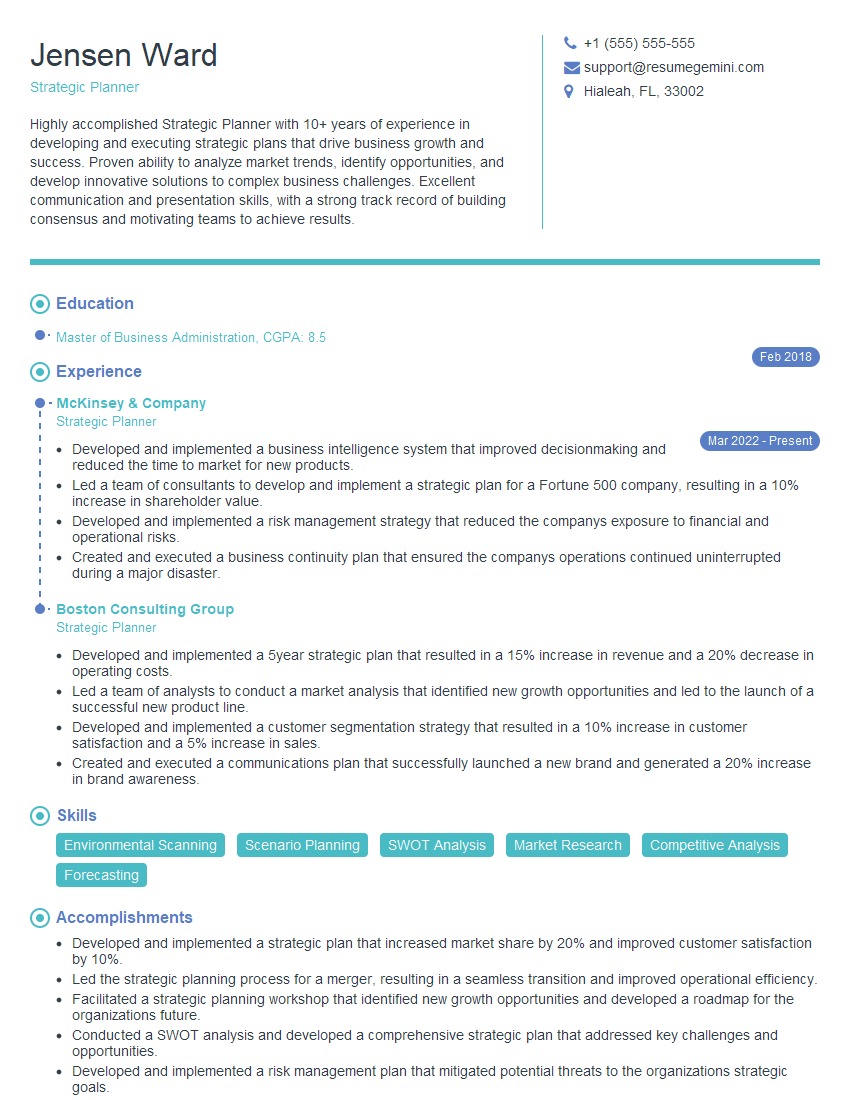
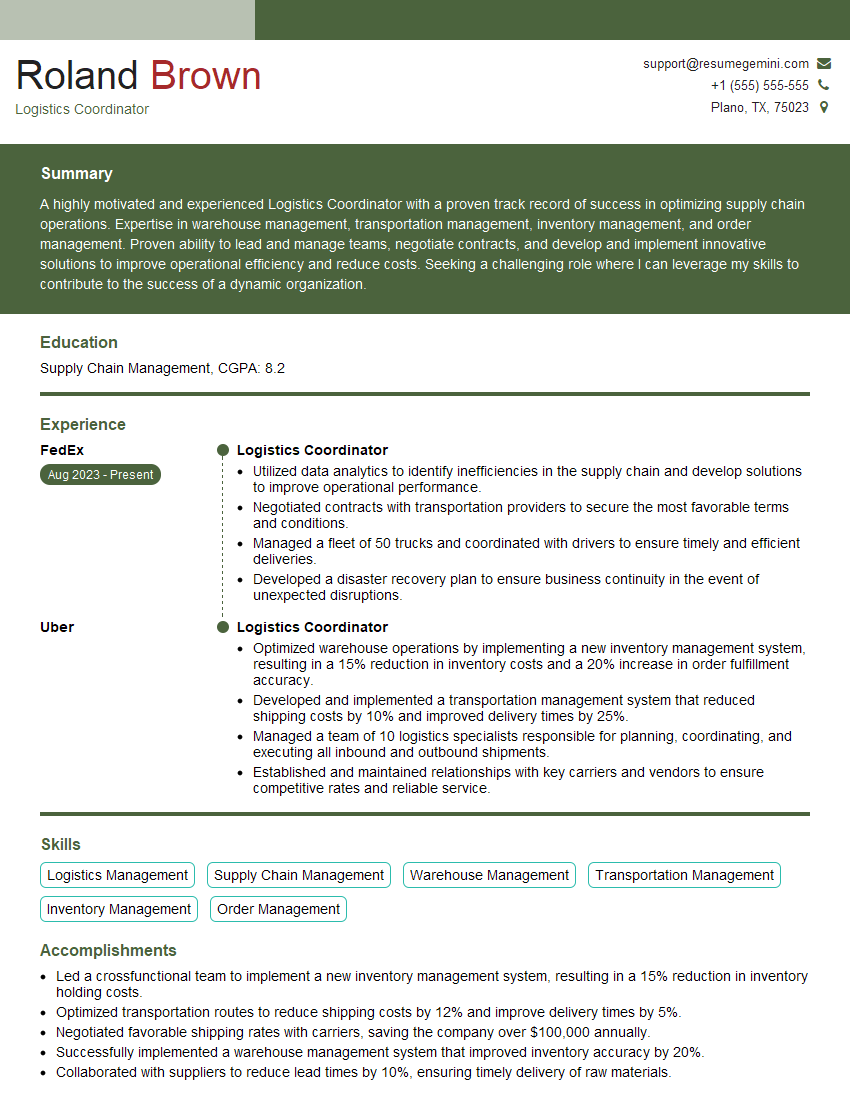
Mastering Mission Planning and Coordination is crucial for career advancement in many fields, offering opportunities for leadership roles and increased responsibility. To maximize your job prospects, it’s essential to present your skills effectively through a well-crafted, ATS-friendly resume. ResumeGemini is a trusted resource that can help you build a professional resume tailored to highlight your expertise in Mission Planning and Coordination. Examples of resumes tailored to this field are available to guide you through the process.
Explore more articles
Users Rating of Our Blogs
Share Your Experience
We value your feedback! Please rate our content and share your thoughts (optional).
What Readers Say About Our Blog
Very informative content, great job.
good