Are you ready to stand out in your next interview? Understanding and preparing for Model Design and Fabrication interview questions is a game-changer. In this blog, we’ve compiled key questions and expert advice to help you showcase your skills with confidence and precision. Let’s get started on your journey to acing the interview.
Questions Asked in Model Design and Fabrication Interview
Q 1. Explain your experience with different CAD software (e.g., SolidWorks, AutoCAD, Fusion 360).
My experience with CAD software spans several industry-standard packages. SolidWorks is my primary tool, and I’m highly proficient in its surface modeling, assembly, and simulation capabilities. I’ve used it extensively for designing complex mechanisms, from intricate clockwork components to robust robotic arms. AutoCAD, while less focused on 3D modeling, is invaluable for precise 2D drafting and detailed technical drawings which are essential for manufacturing documentation. Finally, Fusion 360’s integrated design and CAM functionalities have proven extremely useful for rapid prototyping and streamlined workflows, particularly for projects requiring both design and fabrication within a short timeframe. For example, during a recent project involving a custom-designed drone chassis, I leveraged SolidWorks for the primary 3D modeling, AutoCAD for creating manufacturing drawings, and Fusion 360 for generating the CNC machining toolpaths.
Q 2. Describe your process for creating a 3D model from a 2D sketch.
Converting a 2D sketch into a 3D model requires a systematic approach. I typically start by carefully analyzing the sketch to understand its dimensions, key features, and any implied geometry. Then, I use the 2D sketch as a base within my chosen CAD software (usually SolidWorks). I extrude or revolve 2D elements to create basic 3D shapes. For more complex forms, I might employ advanced techniques like lofting or sweeping to create curved surfaces. Throughout this process, constant reference to the original 2D sketch and rigorous dimensioning are crucial. Imagine, for instance, you have a sketch of a flowerpot. I’d start by extruding the basic pot shape, then add details like the lip and base using separate sketches and features. I would meticulously check dimensions to ensure the final 3D model matches the original design intent.
Q 3. How do you ensure the accuracy and precision of your models?
Accuracy and precision are paramount. I employ several strategies to ensure this. First, I always work with precise dimensions, using constraints within the CAD software to define relationships between elements. This minimizes errors during modeling. Second, I regularly check for geometric inconsistencies and errors using built-in tools for analysis and verification. Third, I use a combination of parametric modeling (where dimensions drive the model’s geometry) and direct modeling (for more intuitive edits) to maintain a consistent and accurate model. Lastly, prior to fabrication, I conduct thorough design reviews and simulations to identify and address potential issues, preventing costly errors during manufacturing. For example, before 3D printing a complex part, I’ll conduct a detailed stress analysis simulation to ensure the part can withstand the expected loads.
Q 4. What are the limitations of different 3D printing technologies?
Different 3D printing technologies have inherent limitations. Fused Deposition Modeling (FDM) offers affordability and ease of use but suffers from lower resolution and layer lines, limiting surface finish quality. Stereolithography (SLA) provides higher resolution and smoother surfaces but can be more expensive and materials are limited. Selective Laser Sintering (SLS) excels in producing strong parts with complex geometries but often leaves a slightly porous surface. Material choice is another key limitation; not every material is compatible with all technologies. For example, if high strength and heat resistance are needed, SLS might be preferred. If fine details and smooth surfaces are crucial, SLA might be a better choice. Understanding these limitations is vital for selecting the optimal technology for a given project.
Q 5. Describe your experience with various fabrication techniques (e.g., CNC machining, injection molding).
My fabrication experience encompasses a range of techniques. CNC machining allows for high precision and intricate details, making it ideal for parts requiring tight tolerances and smooth surfaces. I’ve used it for creating molds, fixtures, and complex mechanical components. Injection molding offers high-volume production capabilities, ideal for mass-producing identical parts. I’ve worked with injection molding to create plastic housings for electronics and other consumer goods. In a recent project involving a customized camera mount, I utilized CNC machining for the initial prototypes to validate the design and then transitioned to injection molding for mass production, leveraging the advantages of both techniques.
Q 6. How do you handle design changes during the fabrication process?
Handling design changes during fabrication requires a structured approach. First, I thoroughly evaluate the impact of the changes on the existing design and manufacturing process. Second, I communicate the changes clearly and promptly to the fabrication team, including updated drawings and specifications. Third, I assess the feasibility and cost implications of incorporating the changes. If significant changes are necessary, I may need to adjust the fabrication schedule and budget accordingly. For example, if a simple dimensional change is needed, it may be readily incorporated. However, a substantial design alteration might require creating new tooling or adjusting the entire manufacturing process, resulting in delays and additional costs.
Q 7. Explain your understanding of tolerances and their importance in model fabrication.
Tolerances define the allowable variation in a dimension. In model fabrication, they are critical for ensuring parts fit together correctly and function as intended. Tight tolerances demand higher precision manufacturing, increasing cost and complexity, while loose tolerances offer flexibility but may compromise performance. Defining appropriate tolerances involves considering factors like material properties, manufacturing processes, and the functionality of the final product. For example, a tolerance of ±0.1mm might be acceptable for a non-critical dimension, while a tolerance of ±0.01mm might be necessary for a precision-fitting component. Understanding and correctly specifying tolerances is essential for successful model fabrication; it’s the bridge between design intent and manufacturing reality.
Q 8. How do you select appropriate materials for different model applications?
Selecting the right material for a model is crucial for its functionality, durability, and overall success. The process involves considering several key factors, beginning with the model’s intended purpose and application. For example, a model used for aerodynamic testing will have vastly different material requirements than a model intended for visual presentation.
- Functionality: Will the model need to withstand stress, heat, or chemicals? This dictates whether you need a strong, heat-resistant polymer, a flexible rubber, or a rigid metal.
- Aesthetics: Is visual appeal a priority? If so, materials like wood, high-quality plastics, or even painted metals might be chosen for their finish and appearance.
- Budget: Some materials are significantly more expensive than others. Balancing cost and performance is often key.
- Manufacturing Process: The chosen material must be compatible with the intended fabrication methods. For example, 3D printing might limit you to certain plastics, while injection molding offers wider material choices but requires higher upfront investment.
For instance, in a recent project designing a miniature wind turbine, we opted for a combination of 3D-printed ABS plastic for the body (due to its strength and ease of printing complex geometries) and aluminum for the rotor blades (for superior strength and durability). This combination effectively balanced aesthetics, functionality, and cost.
Q 9. Describe your experience with rapid prototyping techniques.
My experience with rapid prototyping is extensive, encompassing a variety of techniques. I’m proficient in using technologies like stereolithography (SLA), selective laser sintering (SLS), fused deposition modeling (FDM), and PolyJet printing. Each method offers unique advantages and limitations. FDM, for example, is cost-effective for creating functional prototypes, but surface finish might be less refined than that produced by SLA. SLS excels in producing strong, durable parts from various materials, while PolyJet allows for high-detail, multi-material prototypes.
In a past project developing a new medical device, we used a combination of rapid prototyping methods. Initially, we used FDM to generate conceptual prototypes quickly and cheaply to test form and fit. Once the design was finalized, we transitioned to SLA to create prototypes with a superior surface finish for aesthetic and functional testing. This iterative approach, using the strengths of different rapid prototyping technologies, significantly accelerated the design cycle.
Q 10. How do you manage project timelines and budgets in model design and fabrication?
Managing project timelines and budgets effectively is critical. My approach is grounded in meticulous planning and proactive monitoring. It begins with a detailed work breakdown structure (WBS) that identifies all tasks and their dependencies. This WBS forms the basis of a Gantt chart, which visually represents the project schedule, allowing for easy tracking of progress. Budget allocation follows the WBS, assigning costs to each task and phase.
Regular meetings and progress reports are crucial. Any deviations from the plan are immediately addressed through collaborative problem-solving. This might involve adjusting the scope, reallocating resources, or negotiating timelines with stakeholders. Utilizing project management software helps keep everything organized and transparent, ensuring everyone is aligned and informed.
For example, in a recent automotive project involving the creation of a scale model for a new car, we carefully estimated material costs, labor hours, and software licenses. Regular monitoring against this budget and schedule allowed us to catch and address any potential cost overruns or delays promptly.
Q 11. Explain your process for troubleshooting issues during model fabrication.
Troubleshooting is an integral part of model fabrication. My approach is systematic and focuses on identifying the root cause before implementing a solution. I start by carefully examining the problem, documenting observations, and gathering data. This often involves visual inspection, dimensional measurements, and sometimes material testing.
The next step involves analyzing the potential causes. Was there a flaw in the design, an issue with the materials, a problem with the manufacturing process, or a combination of factors? Hypotheses are formulated and tested using various methods until the root cause is identified.
Once the cause is identified, a solution is developed and implemented. This might involve redesigning a component, changing materials, adjusting machine parameters, or even seeking external expertise. Rigorous testing ensures the solution addresses the problem without introducing new ones. For instance, encountering warping during 3D printing was once resolved by adjusting the print bed temperature and slowing down the printing speed.
Q 12. How do you ensure the manufacturability of your designs?
Ensuring manufacturability is paramount. It’s about designing models that can be efficiently and cost-effectively produced using the chosen manufacturing process. This involves considering factors such as:
- Part Geometry: Avoiding complex geometries that are difficult or impossible to manufacture.
- Material Selection: Choosing materials that are compatible with the manufacturing process and meet performance requirements.
- Tolerances: Specifying realistic tolerances that account for manufacturing limitations.
- Assembly: Designing parts that can be easily assembled.
- Tooling: Considering the cost and feasibility of creating necessary molds, jigs, and fixtures.
Design for Manufacturing (DFM) principles are key. It involves using software tools to simulate the manufacturing process and identify potential problems early in the design phase. Regular reviews with manufacturing engineers help ensure the design is manufacturable and cost-effective. For example, by simplifying a complex part geometry, we once significantly reduced manufacturing costs and lead time in a client project.
Q 13. Describe your experience working with different manufacturing processes.
My experience spans a wide range of manufacturing processes, including:
- Additive Manufacturing (3D Printing): FDM, SLA, SLS, PolyJet.
- Subtractive Manufacturing: CNC machining (milling, turning, routing), laser cutting.
- Casting: Investment casting, sand casting.
- Injection Molding: Creating molds and producing parts in high volume.
Each process has its strengths and weaknesses. Additive manufacturing excels in creating complex geometries quickly, while subtractive manufacturing is ideal for high-precision parts. Casting is suited for mass production of intricate shapes, and injection molding offers high-volume production at a lower per-unit cost. The choice depends heavily on the project’s requirements, budget, and desired volume.
I have practical experience in selecting the most suitable process for each application, optimizing parameters, and troubleshooting issues that arise during production.
Q 14. How do you communicate technical details effectively to non-technical stakeholders?
Effective communication with non-technical stakeholders requires avoiding jargon and using clear, concise language. I focus on using visuals, like diagrams, renderings, and prototypes, to aid understanding. Analogies are also helpful; for instance, I might compare the model’s structure to a familiar object to help explain its function.
Explaining the ‘why’ behind technical decisions is crucial. Instead of just stating the material choice, I explain the reasoning – its strength, durability, cost-effectiveness, and compatibility with the manufacturing process. Presenting information in a logical sequence, starting from the problem definition, through design considerations and manufacturing choices, and finally to the results, greatly enhances comprehension.
Active listening and soliciting feedback are equally important. Ensuring the audience grasps the key concepts and addressing their questions effectively builds trust and collaboration. Using simple language, clear visuals, and a logical presentation structure, I’ve successfully communicated complex technical details to various audiences, including executive teams, clients, and marketing personnel.
Q 15. What are your preferred methods for quality control in model fabrication?
Quality control in model fabrication is paramount for ensuring the final product meets the design specifications and intended functionality. My approach is multifaceted and incorporates checks at each stage of the process.
Dimensional Accuracy: I utilize precision measuring tools like calipers, micrometers, and coordinate measuring machines (CMMs) to verify dimensions against the CAD model. Any deviations are meticulously documented and analyzed to identify root causes, whether it’s a tooling issue, material inconsistency, or a process flaw.
Surface Finish Inspection: Visual inspection is crucial, complemented by surface roughness measurement using profilometers. This ensures the surface finish aligns with the design requirements, whether it’s a smooth, polished surface or a textured finish.
Material Testing: Depending on the material used, I conduct material property testing to confirm strength, flexibility, and other critical parameters. This often involves tensile testing, flexural testing, or impact testing, ensuring the material meets the necessary standards.
Functional Testing: For functional prototypes, rigorous testing is essential. This could involve simulating real-world conditions, stress testing, or even user testing to assess performance and identify any potential weaknesses.
Documentation: Meticulous record-keeping is vital. I maintain detailed documentation of all measurements, test results, and any identified defects, allowing for traceability and continuous improvement.
For example, during the fabrication of a complex aerospace component, I discovered a slight warping during the curing process of a composite material. By systematically analyzing the process parameters (temperature, pressure, cure time), I identified a slight temperature gradient in the autoclave as the culprit and adjusted the process to eliminate the warping.
Career Expert Tips:
- Ace those interviews! Prepare effectively by reviewing the Top 50 Most Common Interview Questions on ResumeGemini.
- Navigate your job search with confidence! Explore a wide range of Career Tips on ResumeGemini. Learn about common challenges and recommendations to overcome them.
- Craft the perfect resume! Master the Art of Resume Writing with ResumeGemini’s guide. Showcase your unique qualifications and achievements effectively.
- Don’t miss out on holiday savings! Build your dream resume with ResumeGemini’s ATS optimized templates.
Q 16. Describe your experience with reverse engineering.
Reverse engineering involves analyzing an existing product to understand its design, functionality, and manufacturing processes. My experience spans various techniques and applications.
3D Scanning: I’m proficient in using various 3D scanning technologies, including structured light scanning and laser scanning, to capture the geometry of complex shapes with high accuracy.
CT Scanning: For internal features or complex assemblies, I utilize computed tomography (CT) scanning to generate detailed cross-sectional images, allowing for precise reconstruction of internal structures.
Dimensional Measurement: I employ CMMs and other precision measuring instruments to record critical dimensions and tolerances, often complemented by manual measurements using calipers and micrometers.
Material Analysis: Determining the material composition is often crucial. I utilize techniques such as spectroscopy and chemical analysis to identify the materials used.
CAD Modeling: The data acquired through these techniques is then used to create a 3D CAD model. This involves significant post-processing to clean up scanned data, ensuring accuracy and creating a model suitable for analysis and modification.
For instance, I successfully reverse-engineered a vintage mechanical clock, using 3D scanning to capture its intricate geometry. This allowed me to create a digital model, which I then used to create replacement parts using 3D printing.
Q 17. How do you incorporate user feedback into your design process?
User feedback is integral to iterative design. I incorporate it using a multi-stage approach.
Early-Stage Feedback: I conduct user interviews and surveys during the conceptual design phase to understand user needs and expectations. This helps to validate design concepts and avoid costly mistakes later on.
Prototype Testing: Early prototypes are tested with users to gather feedback on usability, ergonomics, and overall satisfaction. This iterative process allows for continuous refinement of the design based on real-world user interactions.
Usability Testing: Formal usability testing is conducted on more refined prototypes. This involves observing users interacting with the product and collecting data on task completion time, error rates, and overall user experience.
Feedback Analysis: User feedback is carefully analyzed, categorized, and prioritized. I use this data to identify design improvements, address usability issues, and refine the design based on user needs.
For example, while designing a handheld medical device, early user feedback revealed that the button placement was awkward. This led to a redesign, resulting in a more user-friendly and intuitive interface.
Q 18. What are your strengths and weaknesses in model design and fabrication?
My strengths lie in my problem-solving abilities, attention to detail, and proficiency in a wide range of design and fabrication techniques. I excel at translating complex design concepts into functional prototypes, effectively managing projects from initial concept to final production.
However, like any skilled professional, I acknowledge areas for continuous improvement. Time management, particularly on large, complex projects, remains an area I’m actively working on to optimize efficiency and reduce lead times. I am also always seeking to expand my expertise in cutting-edge materials and fabrication processes.
Q 19. Describe a complex modeling challenge you faced and how you overcame it.
One challenging project involved creating a highly accurate, scaled model of a complex architectural structure with intricate detailing. The challenge stemmed from the vast number of small, delicate features requiring precise fabrication.
To overcome this, I employed a multi-stage approach:
Modular Design: I broke down the model into smaller, manageable modules, each fabricated separately and then assembled.
Additive Manufacturing: 3D printing was used for the intricate detailing, offering high precision and the ability to create complex geometries that would be difficult to achieve through traditional subtractive methods.
Material Selection: I selected a material that balanced detail resolution with strength and durability.
Precise Assembly: A jig was designed and fabricated to ensure precise alignment and assembly of the modules, minimizing errors and maintaining dimensional accuracy.
Quality Control: Rigorous quality control measures were implemented at each stage to ensure the overall accuracy and quality of the final model.
This multi-pronged strategy ensured the project was completed successfully, resulting in a highly accurate and detailed model that met the client’s expectations.
Q 20. What software are you proficient in for surface modeling?
I am proficient in several industry-standard software packages for surface modeling, including:
SolidWorks: A powerful and versatile CAD software ideal for creating complex surfaces, assemblies, and detailed designs.
Autodesk Inventor: Another robust CAD package offering excellent tools for surface modeling, along with strong capabilities for simulation and analysis.
Rhino 3D: A highly specialized software particularly well-suited for NURBS (Non-Uniform Rational B-Splines) surface modeling, often preferred for complex, organic shapes and freeform design.
Alias Automotive: A professional-grade solution, widely utilized in the automotive industry, known for its advanced surface modeling capabilities and its efficient workflow for complex automotive designs.
My experience with these programs allows me to select the most appropriate software based on project requirements and complexity, ensuring efficient and accurate model creation.
Q 21. How familiar are you with different types of engineering plastics?
My familiarity with engineering plastics extends across various types, each with unique properties suitable for different applications.
ABS (Acrylonitrile Butadiene Styrene): A common thermoplastic known for its strength, impact resistance, and ease of processing, making it suitable for prototyping and functional parts.
PC (Polycarbonate): A high-strength, transparent thermoplastic often used in applications requiring high impact resistance and optical clarity.
PETG (Polyethylene Terephthalate Glycol-modified): A strong, durable thermoplastic with good chemical resistance, often used in 3D printing for its ease of use and good layer adhesion.
Nylon (Polyamide): A strong and flexible thermoplastic with high abrasion resistance, suitable for components requiring high strength and durability.
PEEK (Polyetheretherketone): A high-performance thermoplastic with exceptional chemical resistance, high strength, and temperature resistance, often used in demanding applications.
Ultra High Molecular Weight Polyethylene (UHMWPE): A highly wear-resistant and low-friction thermoplastic ideal for components experiencing high friction or wear.
My knowledge extends beyond material properties to include processing techniques specific to each material, enabling me to select the optimal material for a given project and ensure successful fabrication.
Q 22. Explain your understanding of design for manufacturing (DFM).
Design for Manufacturing (DFM) is a crucial methodology that integrates manufacturing considerations into the very early stages of product design. It’s not just about making a design that looks good; it’s about making sure it can be efficiently and cost-effectively produced. A good DFM process helps avoid costly redesigns and manufacturing delays down the line.
The core principle is to anticipate manufacturing challenges and constraints. This involves understanding the capabilities and limitations of the chosen manufacturing processes (e.g., injection molding, 3D printing, CNC machining). For example, sharp corners might be difficult and expensive to create using injection molding, requiring design modifications for easier production. Similarly, intricate internal geometries might be easier to achieve with additive manufacturing than subtractive manufacturing.
- Material Selection: Choosing materials that are readily available, easy to process, and cost-effective for the selected manufacturing method.
- Tolerance Analysis: Defining acceptable variations in dimensions and ensuring the design is manufacturable within these tolerances.
- Assembly Considerations: Designing parts that are easy to assemble, minimizing the number of parts and the complexity of the assembly process.
- Cost Optimization: Minimizing material usage, simplifying design features, and selecting cost-effective manufacturing processes.
A successful DFM process results in a design that is not only functional and aesthetically pleasing but also manufacturable, cost-effective, and robust.
Q 23. How do you stay updated on the latest advancements in model design and fabrication technologies?
Staying current in the rapidly evolving world of model design and fabrication demands a multi-pronged approach. I actively engage in several methods to ensure I remain at the forefront of technological advancements:
- Industry Publications and Journals: I regularly read publications like Additive Manufacturing, Rapid Prototyping Journal, and others relevant to specific fabrication techniques (e.g., those focused on CNC machining or injection molding). These provide in-depth technical articles on the latest developments.
- Conferences and Workshops: Attending industry conferences such as those hosted by SME (Society of Manufacturing Engineers) or RAPID allows for direct exposure to new technologies and networking with leading experts. I often present my own work at these events.
- Online Courses and Webinars: Platforms like Coursera, edX, and LinkedIn Learning offer valuable courses on various aspects of CAD software, manufacturing processes, and material science.
- Vendor Collaboration: Direct engagement with suppliers of manufacturing equipment and materials (e.g., 3D printer manufacturers, material suppliers) provides crucial insights into their latest innovations and capabilities. This often includes beta testing opportunities.
- Professional Networks: Active participation in professional organizations and online forums facilitates discussion and knowledge sharing within the community.
This combined approach allows me to maintain a comprehensive and up-to-date understanding of the ever-changing landscape of model design and fabrication.
Q 24. What are your preferred methods for creating detailed textures and surface finishes?
Achieving detailed textures and surface finishes requires a strategic combination of techniques, often leveraging both digital and physical methods. The choice of method depends heavily on the desired level of detail and the chosen fabrication process.
- Digital Texture Creation (CAD Software): I utilize CAD software (SolidWorks, Fusion 360, etc.) to initially model the base geometry and then employ its sculpting and texturing tools. For example, using displacement maps, bump maps, or procedural textures can create highly realistic surface features before fabrication.
- 3D Printing with High-Resolution Printers: High-resolution 3D printers (SLA, SLS, MJF) can directly produce fine details. Selecting the right resin or powder, along with careful calibration of the printer, is crucial for achieving desired surface quality.
- Post-Processing Techniques (3D Printing): Post-processing techniques such as sanding, polishing, painting, and applying clear coats are essential for refining the surface finish. For example, airbrushing allows for delicate application of texture and colour.
- CNC Machining with Specialized Tools: CNC machining, particularly with specialized tooling, can create very fine surface details. This method is well-suited for metallic parts, allowing for a wide variety of surface finishes through the selection of specific machining parameters.
- Mold Making and Casting: Creating intricate molds, often using silicone or other materials, allows for the replication of fine surface details via casting. This is especially effective for high-volume production.
The key is selecting the most appropriate combination of methods to achieve the desired aesthetic and functional characteristics of the final product. For instance, a complex, organic shape might be 3D printed and then further refined through sanding and painting to achieve a polished, realistic finish.
Q 25. Describe your experience with assembly drawings and BOM creation.
I have extensive experience in creating assembly drawings and Bills of Materials (BOMs), which are fundamental for effective manufacturing and communication within a project team. Assembly drawings provide a visual representation of how individual components fit together, while BOMs list all the parts, materials, and quantities required for assembly.
My approach typically involves:
- Detailed Part Models: Ensuring each individual component has a complete and accurate 3D model, including dimensions, tolerances, and material specifications.
- Assembly Modeling: Using CAD software to create a virtual assembly of all components, demonstrating the correct fit and orientation of each part.
- Assembly Drawings Generation: Generating detailed assembly drawings that clearly illustrate the assembly sequence, including exploded views, sectional views, and callouts to relevant dimensions and tolerances.
- BOM Creation: Developing a comprehensive BOM that includes a unique identifier for each part, its description, material, quantity, and supplier information (if applicable). I utilize software specifically designed for BOM management to efficiently create and maintain this critical document. Different software can include automated updates and part tracking features.
- Revision Control: Implementing a version control system for both assembly drawings and BOMs to manage revisions and maintain accuracy throughout the project lifecycle.
Accurate and well-organized assembly drawings and BOMs are crucial for minimizing errors during assembly, facilitating communication among team members, and streamlining the manufacturing process. These documents become essential references throughout the entire product lifecycle from prototyping to manufacturing and maintenance.
Q 26. Explain the difference between subtractive and additive manufacturing.
Subtractive and additive manufacturing represent fundamentally different approaches to creating three-dimensional objects. The key distinction lies in how material is handled:
- Subtractive Manufacturing: This method starts with a larger block of material (e.g., metal, plastic) and removes material to create the desired shape. Common techniques include CNC machining (milling, turning, drilling), casting (where excess material is removed post-casting), and stamping. Think of sculpting a statue from a block of clay – you’re subtracting material to reach the final form.
- Additive Manufacturing (3D Printing): Additive manufacturing builds up a three-dimensional object layer by layer, adding material until the desired shape is achieved. Processes include Fused Deposition Modeling (FDM), Stereolithography (SLA), Selective Laser Sintering (SLS), and many others. Think of building with LEGO bricks – you’re adding bricks to create a larger structure.
Each method has its own advantages and limitations. Subtractive manufacturing offers high precision and surface finish for certain materials, but it can be less efficient for complex geometries and generates waste material. Additive manufacturing excels in creating complex shapes and customized parts, but it can be slower and may have limitations in terms of material strength and surface finish, though this is constantly improving.
The choice between subtractive and additive manufacturing depends on factors such as design complexity, material requirements, production volume, cost, and desired surface finish.
Q 27. How do you manage file formats and data transfer in collaborative projects?
Managing file formats and data transfer efficiently is paramount in collaborative projects to ensure seamless communication and prevent errors. My approach focuses on several key aspects:
- Standardized File Formats: We establish a standardized set of file formats at the project outset. Commonly used formats include STEP (
.stp,.step) for neutral data exchange, and native formats of the CAD software used (e.g.,.sldprtfor SolidWorks). This reduces the risk of data loss or corruption due to incompatible file formats. - Version Control Systems: Utilizing version control systems like Git, coupled with a cloud-based repository (e.g., GitHub, GitLab), enables collaborative editing and tracks changes made to designs and documentation throughout the project. This helps resolve conflicts easily and ensures everyone works with the latest version of the files.
- Cloud-Based Collaboration Platforms: We often leverage cloud-based platforms such as Dropbox, Google Drive, or SharePoint for central file storage and sharing. This allows team members to access files remotely and collaborate effectively.
- Data Management Software: For large projects, specialized Product Lifecycle Management (PLM) software can be used. This provides a centralized repository for all project data, including CAD models, assembly drawings, BOMs, and other documentation.
- Clear Communication Protocols: Establishing clear communication protocols, including regular meetings and documentation of design decisions, is crucial for maintaining consistency and managing any potential issues related to data transfer or file management.
A well-defined approach to file formats and data transfer greatly enhances the efficiency and reduces errors in collaborative design and fabrication projects.
Q 28. Describe a time you had to make a critical decision under pressure during a design or fabrication project.
During the development of a complex robotic arm for a medical application, we faced a significant challenge during the final assembly phase. One of the custom-designed motors failed unexpectedly, jeopardizing the project deadline. The original motor supplier could not provide a replacement in time.
Under immense pressure, I had to quickly assess the situation and make a critical decision. We had two options: 1) Delay the project significantly while waiting for a replacement motor, or 2) Explore alternative motor solutions that could be integrated with minimal redesign.
I opted for the second option. My team and I worked around the clock, researching suitable alternative motors and evaluating their compatibility with the existing design. We identified a commercially available motor with similar specifications that, with minor modifications to the arm’s mounting bracket, could be integrated. This required some rapid prototyping and testing, but ultimately, we successfully integrated the replacement motor without significant delays.
This experience highlighted the importance of adaptability, quick thinking, and resourcefulness in handling unforeseen circumstances during design and fabrication projects. The ability to weigh different options, make informed decisions under pressure, and rally the team around a common goal was crucial to the project’s success.
Key Topics to Learn for Your Model Design and Fabrication Interview
- 3D Modeling Software Proficiency: Mastering software like SolidWorks, AutoCAD, Fusion 360, or other relevant programs is crucial. Practice creating complex models and understand the nuances of different software features.
- Material Selection and Properties: Demonstrate a strong understanding of various materials (plastics, metals, composites) and their suitability for different applications. Be prepared to discuss material properties like strength, durability, and cost-effectiveness.
- Design for Manufacturing (DFM): Showcase your knowledge of designing models that are easily and efficiently manufactured. This includes understanding tolerances, assembly processes, and potential manufacturing constraints.
- Additive Manufacturing (3D Printing): Familiarize yourself with different 3D printing technologies (FDM, SLA, SLS, etc.) and their applications. Understand the advantages and limitations of each technology in relation to model design and material selection.
- Subtractive Manufacturing (CNC Machining): Gain a solid understanding of subtractive manufacturing processes such as milling, turning, and drilling. Be ready to discuss tool selection, machining parameters, and surface finishes.
- Tolerance Analysis and Geometric Dimensioning and Tolerancing (GD&T): Demonstrate your understanding of specifying and controlling tolerances to ensure model accuracy and functionality. Knowledge of GD&T symbols and their interpretation is highly valuable.
- Rapid Prototyping Techniques: Be prepared to discuss various rapid prototyping methods and their application in model design and fabrication workflows.
- Problem-Solving and Troubleshooting: Practice describing your approach to identifying and resolving design and manufacturing challenges. Use examples from your projects to illustrate your skills.
- Quality Control and Inspection: Understand the importance of quality control measures throughout the design and fabrication process. Be prepared to discuss inspection methods and techniques.
Next Steps
Mastering Model Design and Fabrication opens doors to exciting career opportunities in diverse fields. To maximize your job prospects, creating a strong, ATS-friendly resume is paramount. ResumeGemini is a trusted resource to help you build a professional and impactful resume that highlights your skills and experience effectively. We provide examples of resumes tailored to Model Design and Fabrication to help you get started. Invest time in crafting a compelling resume; it’s your first impression on potential employers.
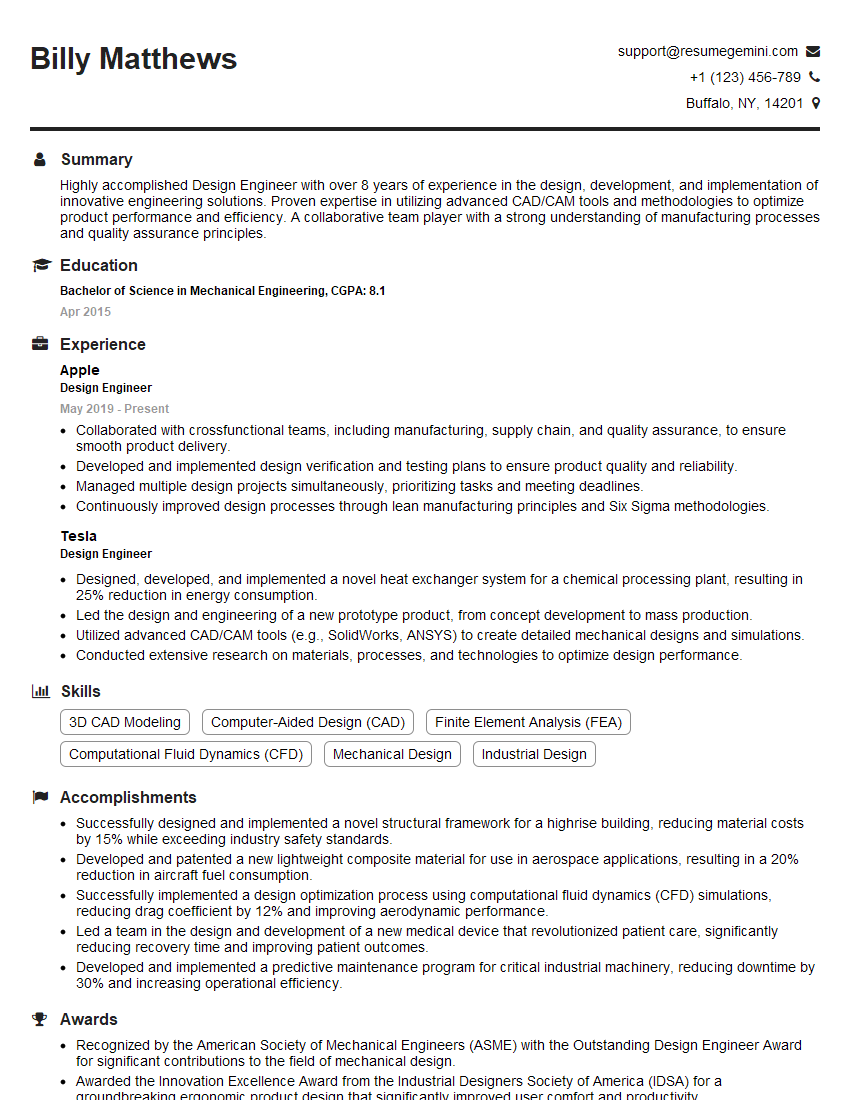
Design Engineer Resume Sample
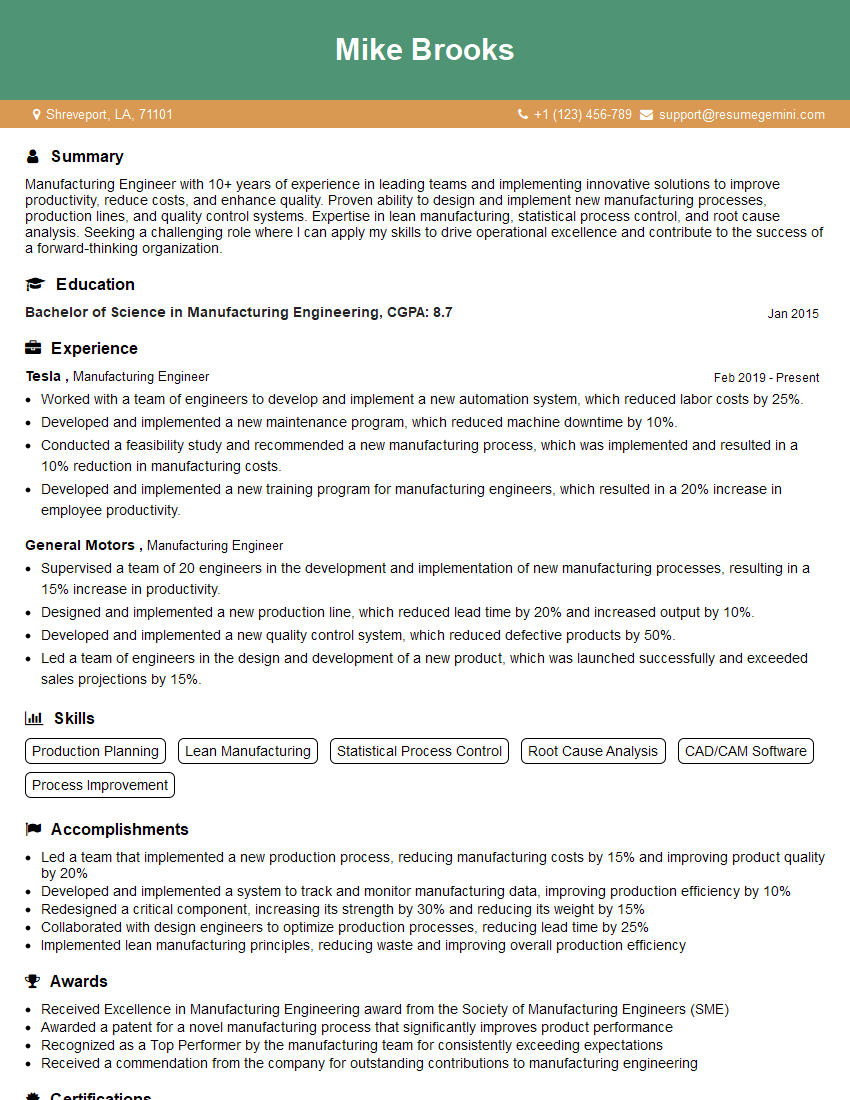
Manufacturing Engineer Resume Sample
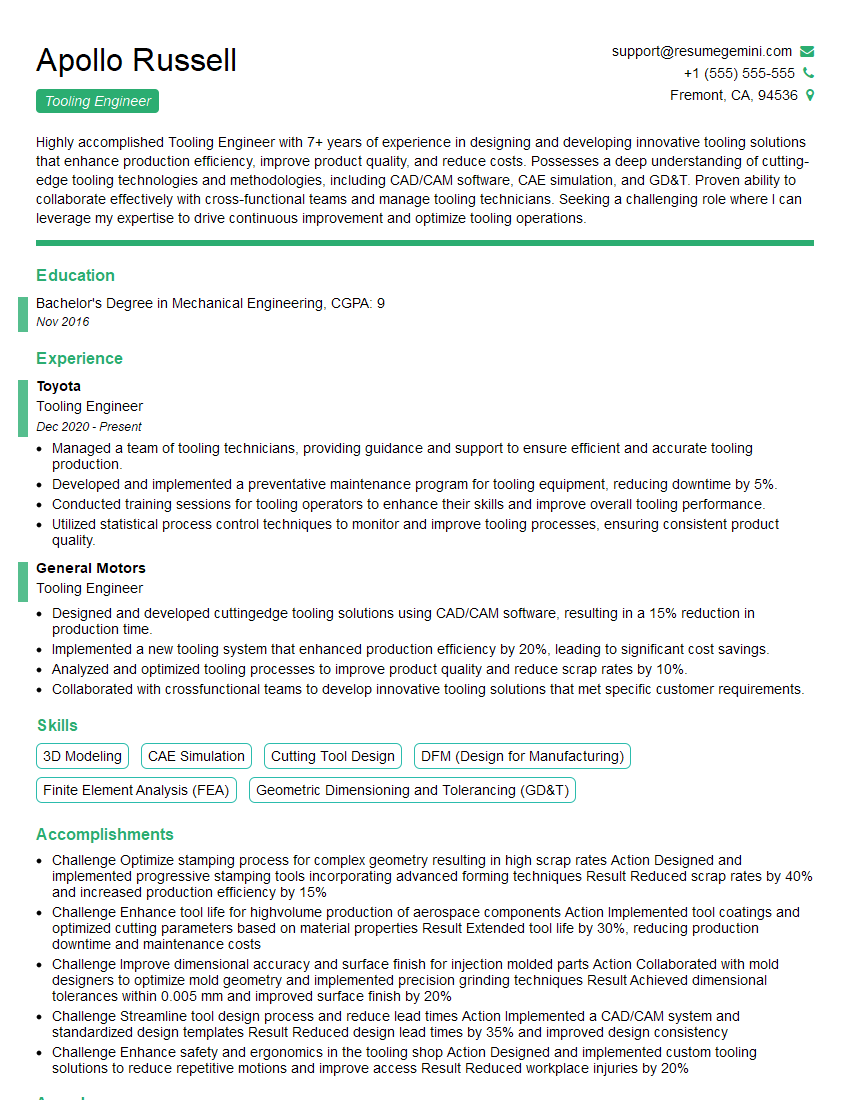
Tooling Engineer Resume Sample
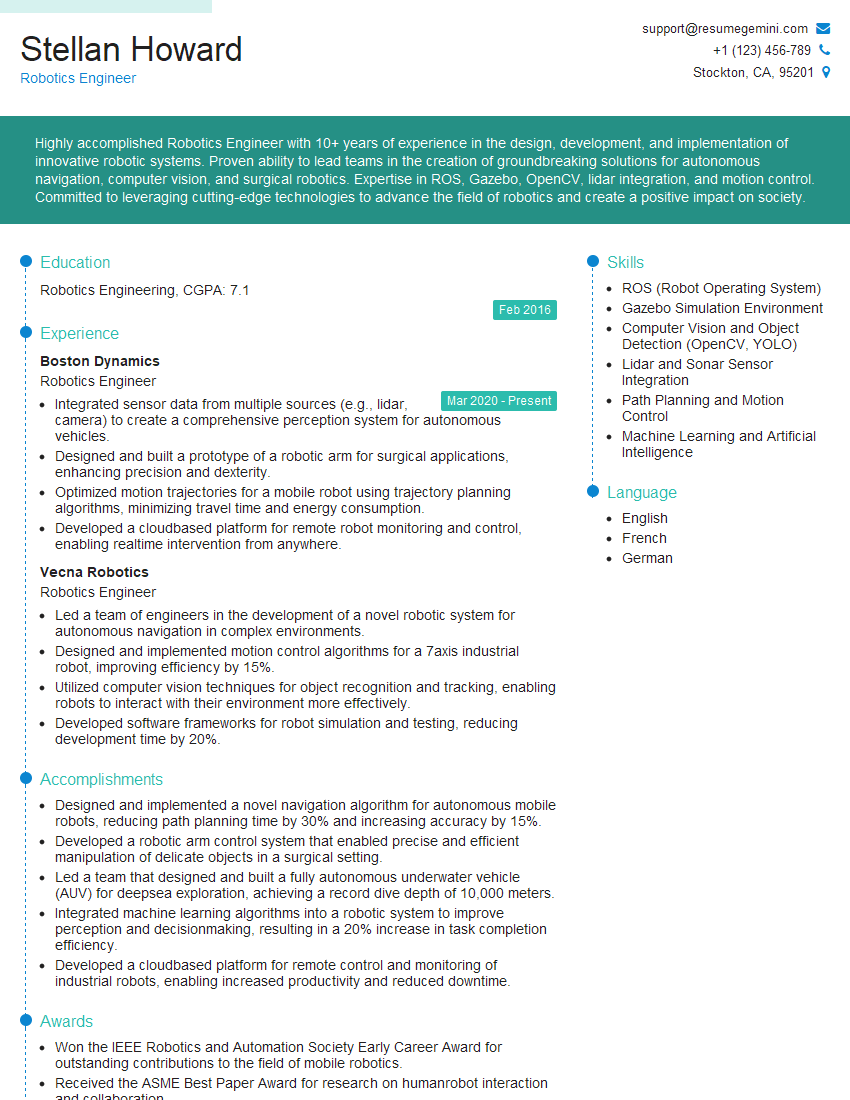
Robotics Engineer Resume Sample
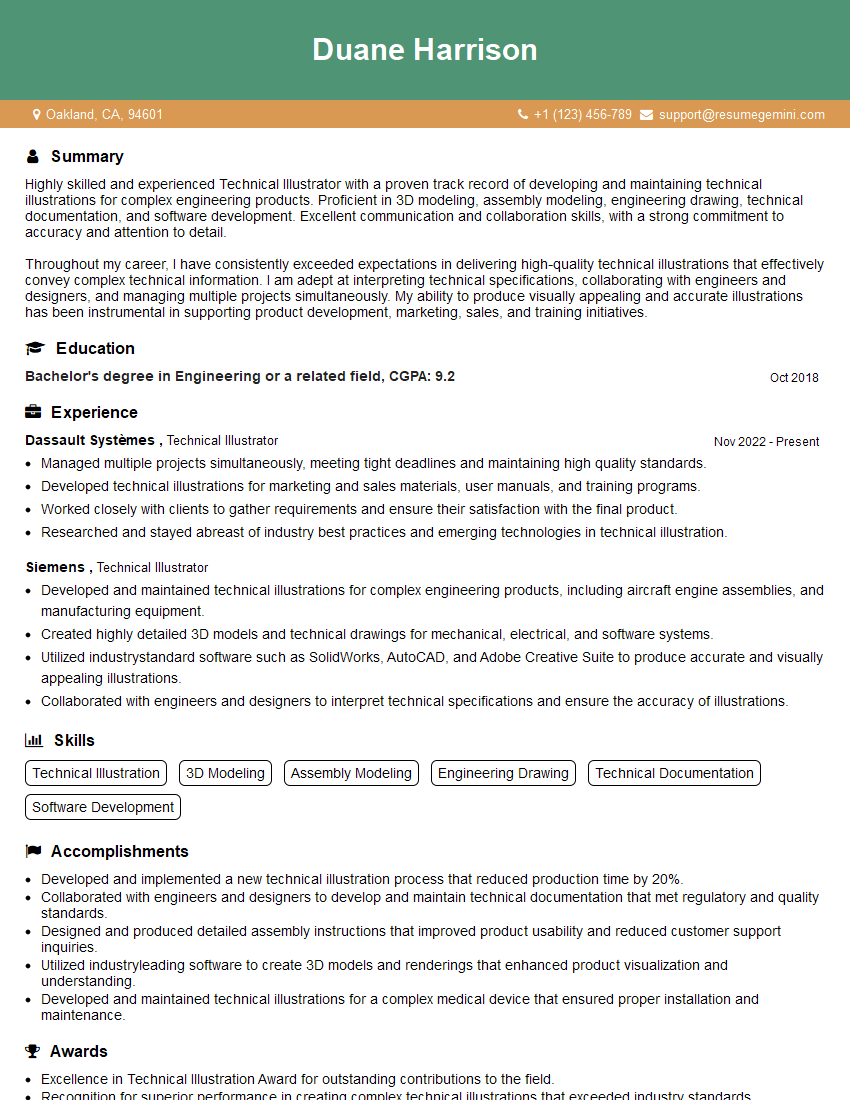
Technical Illustrator Resume Sample
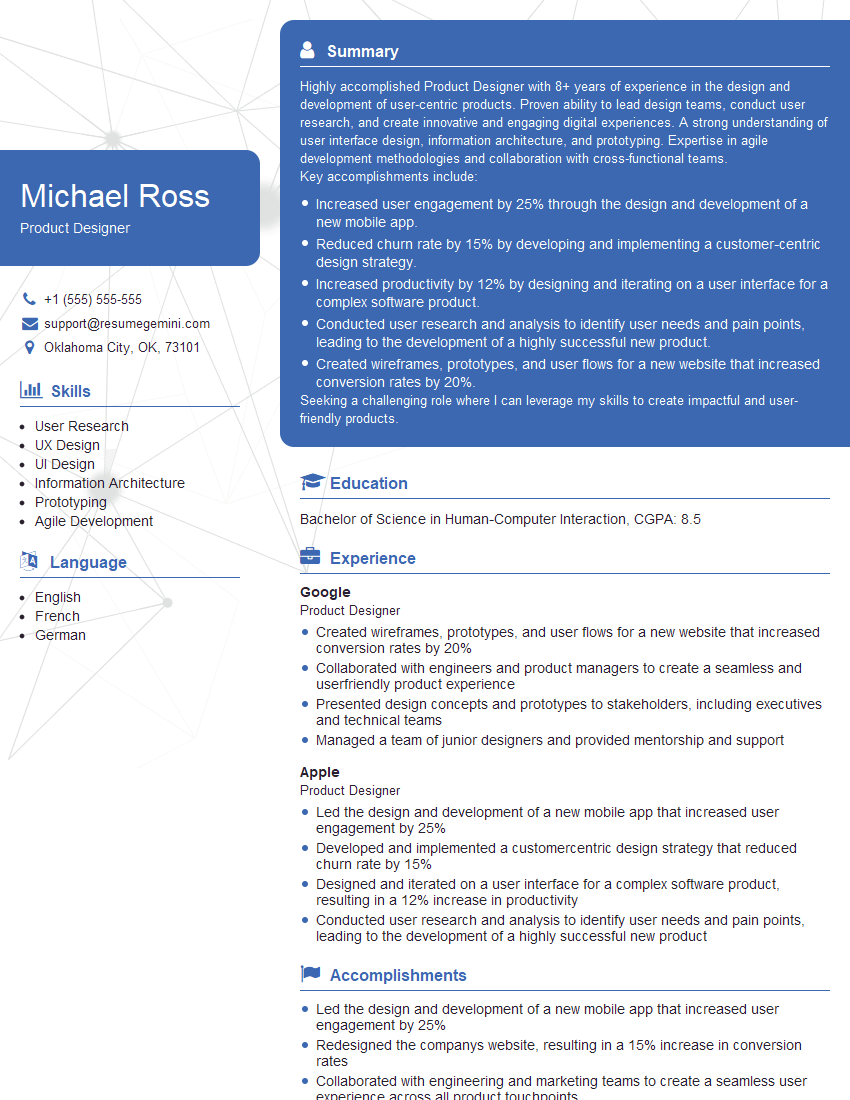
Product Designer Resume Sample
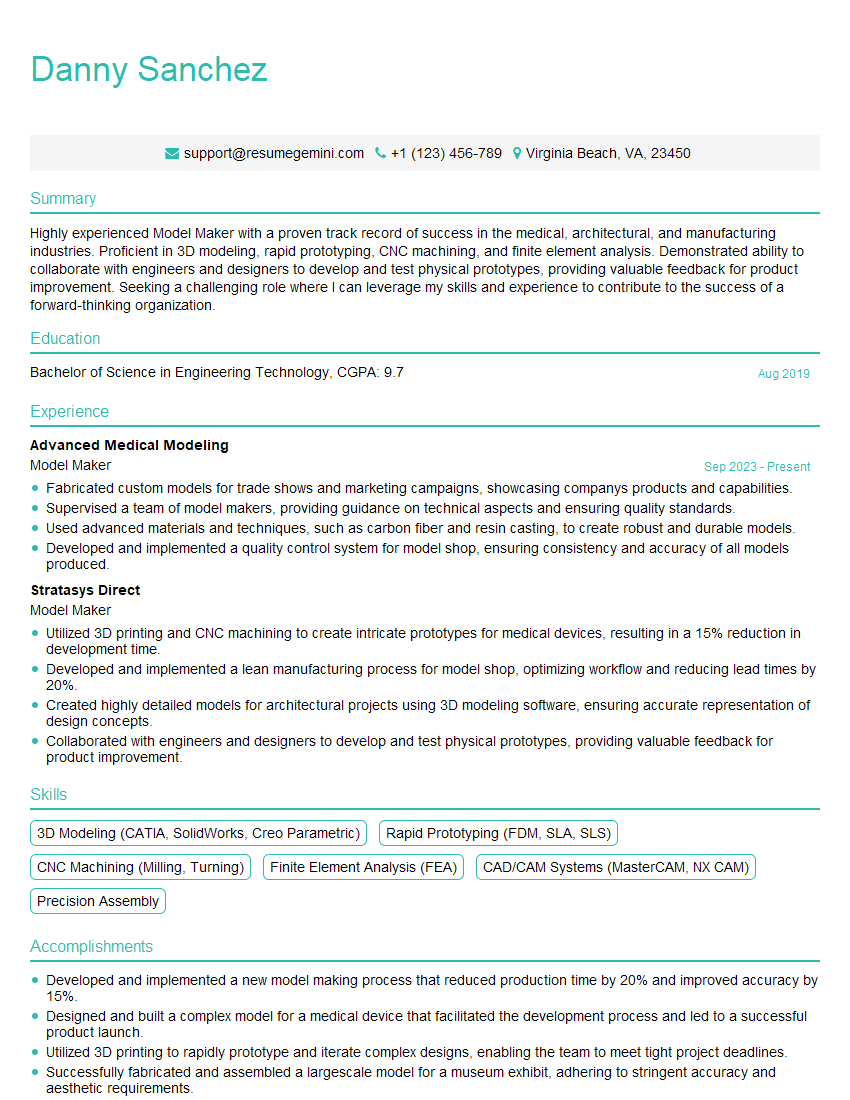
Model Maker Resume Sample
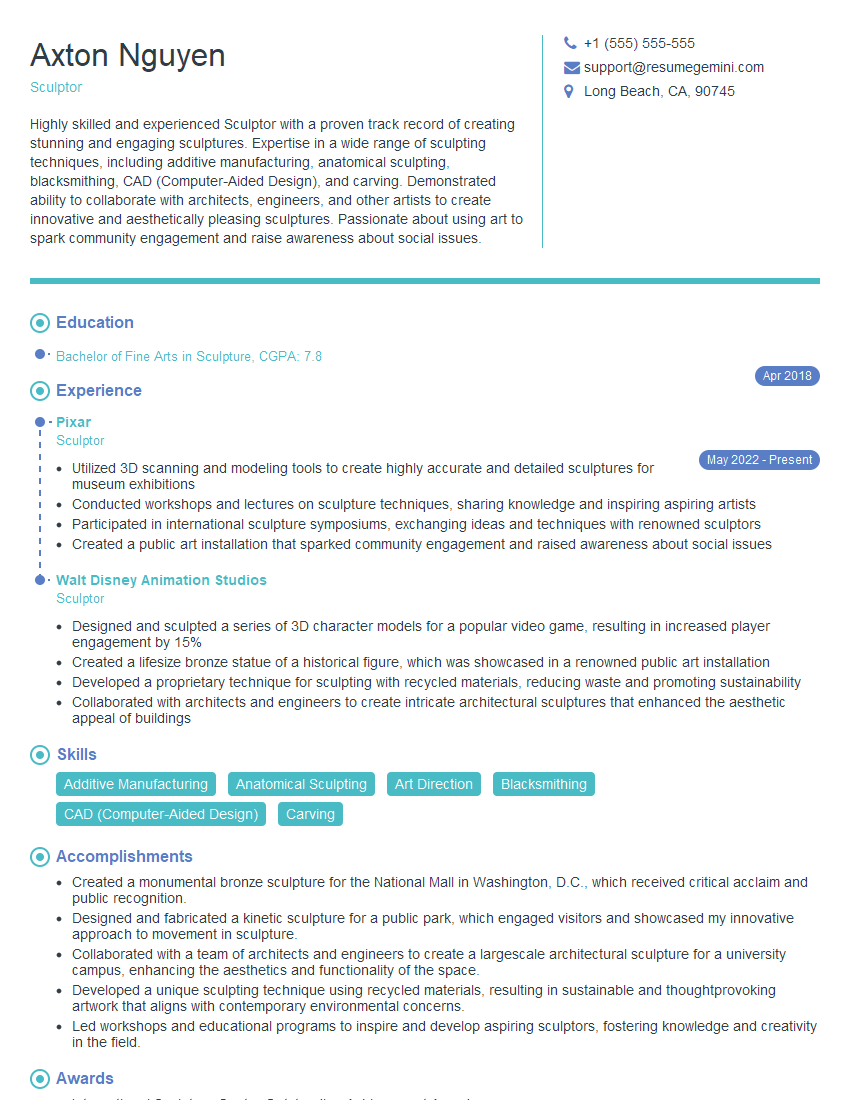
Sculptor Resume Sample
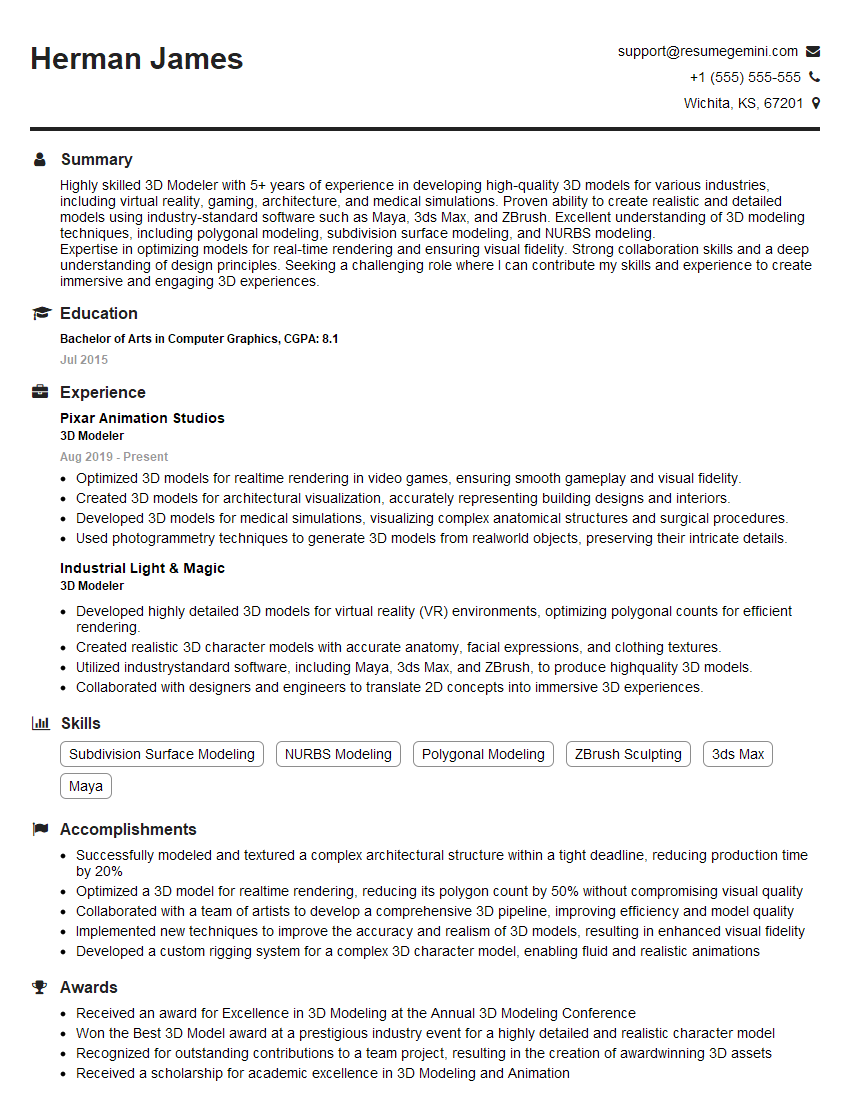
3D Modeler Resume Sample
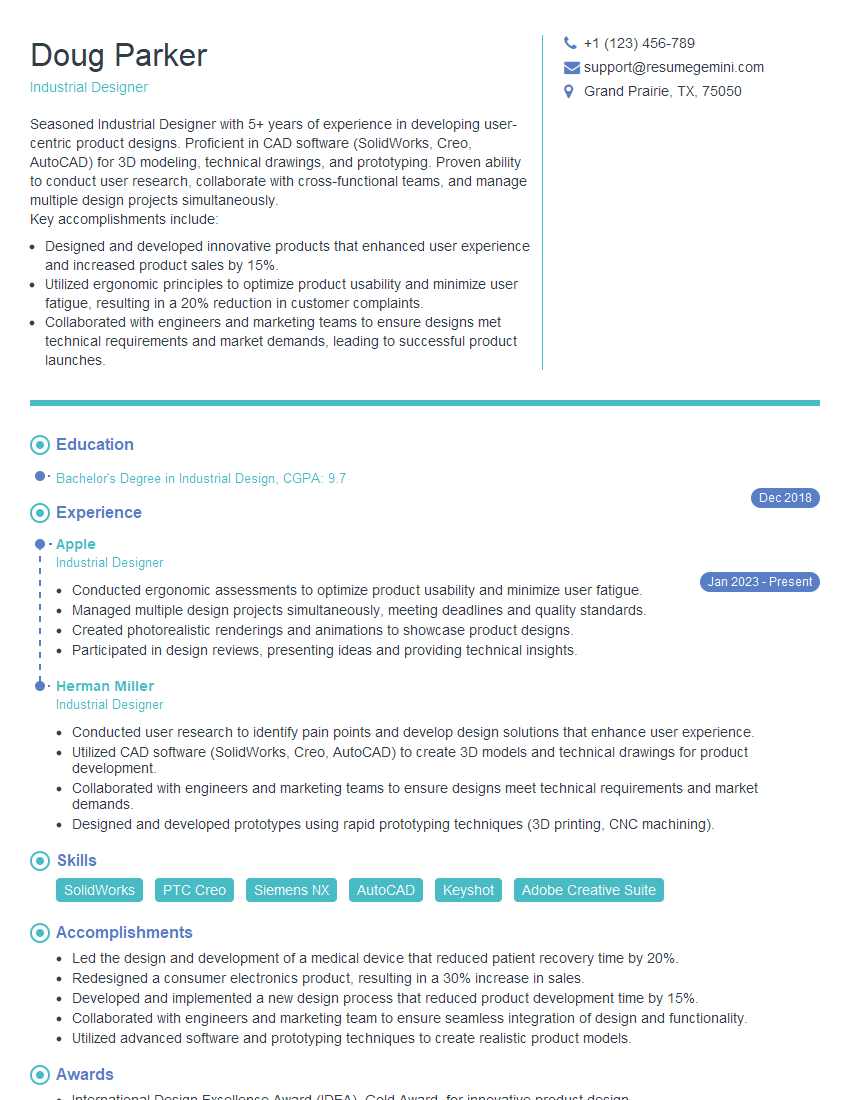
Industrial Designer Resume Sample
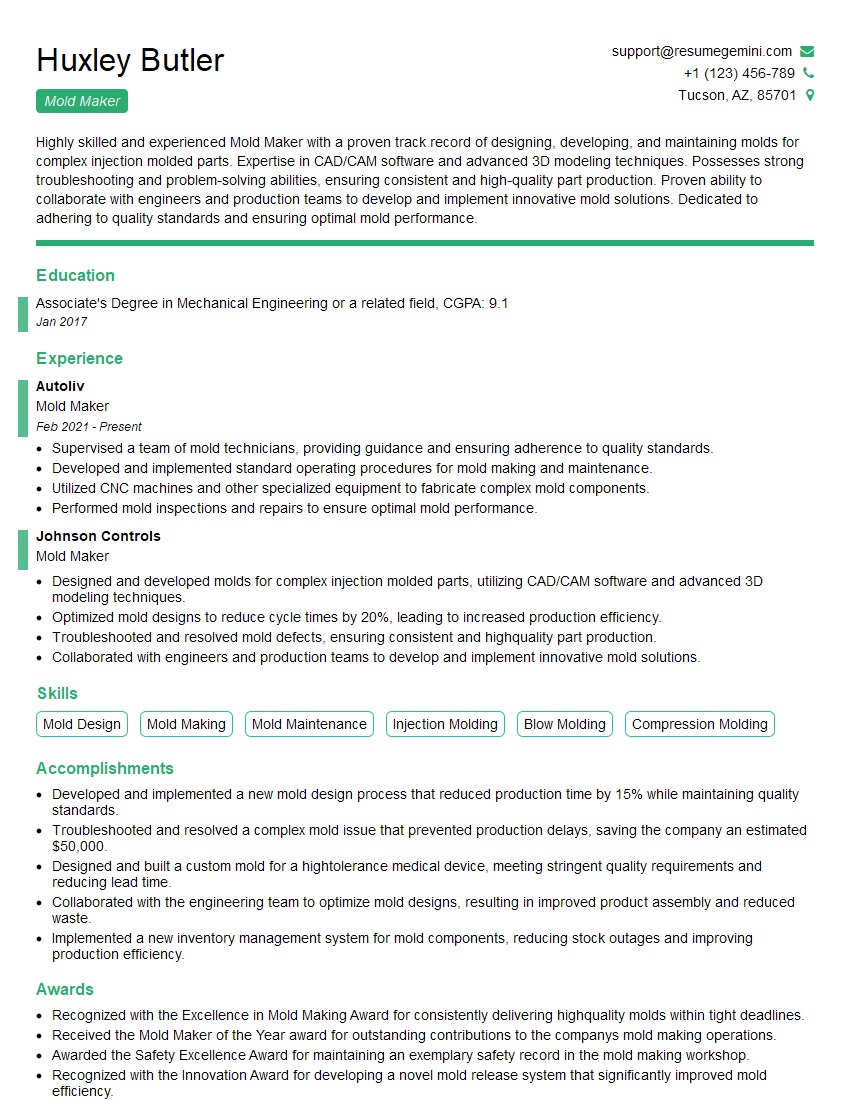
Mold Maker Resume Sample
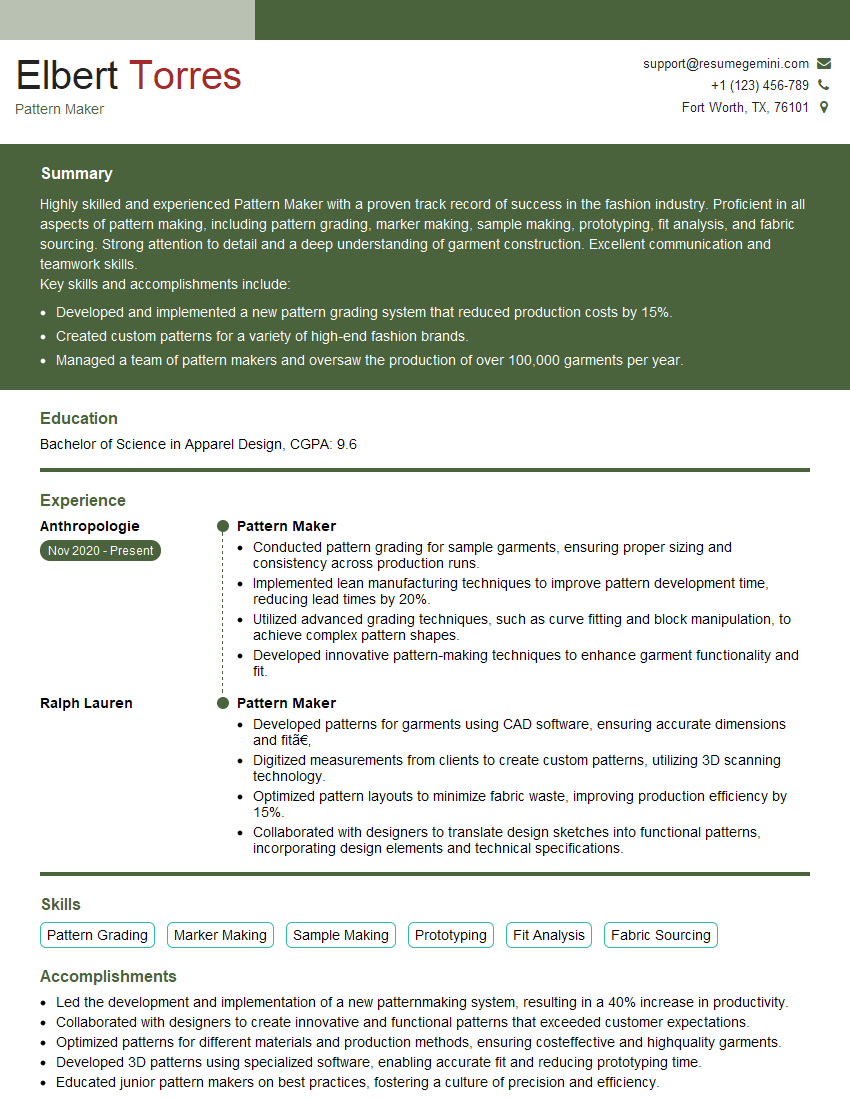
Pattern Maker Resume Sample
Explore more articles
Users Rating of Our Blogs
Share Your Experience
We value your feedback! Please rate our content and share your thoughts (optional).
What Readers Say About Our Blog
Very informative content, great job.
good