Preparation is the key to success in any interview. In this post, we’ll explore crucial Mold-making interview questions and equip you with strategies to craft impactful answers. Whether you’re a beginner or a pro, these tips will elevate your preparation.
Questions Asked in Mold-making Interview
Q 1. Explain the different types of mold materials and their applications.
Mold materials are chosen based on the application, required durability, and the properties of the material being molded. The wrong choice can lead to costly defects and production delays. Here are some common types:
- Steel: The workhorse of mold making, offering excellent strength, durability, and wear resistance. Tool steels like P20, H13, and S7 are frequently used, each with varying properties for different applications (e.g., H13 for high-temperature plastics). Steel molds are perfect for high-volume production runs.
- Aluminum: Lighter and less expensive than steel, aluminum is chosen for prototyping, lower-volume production, and applications where rapid prototyping is critical. Its lower heat conductivity means cycle times might be slightly longer compared to steel.
- BeCu (Beryllium Copper): Known for its high strength, excellent springback properties (critical for complex shapes), and good electrical conductivity. It’s frequently used in applications requiring intricate details or high precision, such as micro-molding.
- Plastics: Used for low-volume prototyping or for very short-run molds. Materials like ABS, polycarbonate, or epoxy resins are employed. The lack of durability restricts their use.
- Silicone: Used in rubber molding or applications needing flexible molds. Easy to use, but limited temperature and durability compared to metal.
For example, if you’re making millions of plastic bottle caps, you’d choose hardened steel for its durability and longevity. However, for a one-off prototype of a complex part, aluminum would likely be sufficient and cheaper.
Q 2. Describe the process of designing a mold for injection molding.
Designing an injection mold is a complex process requiring expertise in CAD/CAM software, material science, and manufacturing processes. It starts with the part design and progresses through several critical steps:
- Part Design Analysis: Analyze the part for moldability – checking for undercuts, draft angles, wall thickness consistency, and potential ejection issues. Poor design choices can significantly increase costs or render the mold unfeasible.
- Mold Base Selection: Choose a suitable mold base size and configuration based on the part size and complexity. This provides the framework for all the mold components.
- Cavity and Core Design: Create the 3D models of the cavity (the female part of the mold) and core (the male part) to accurately replicate the part geometry. This usually involves using CAD software like SolidWorks or Creo.
- Ejector System Design: Design a system of pins and mechanisms to remove the molded part from the cavity after molding. The design must ensure consistent and damage-free part ejection.
- Runner and Gate Design: Plan the flow path of the molten plastic into the cavity (runner system) and the entry point into the cavity (gates). This impacts part quality and filling efficiency.
- Cooling System Design: Design the cooling channels to ensure efficient heat removal, crucial for cycle time reduction and maintaining dimensional accuracy. This often involves simulations to optimize flow.
- Molding Simulation: Use specialized software to simulate the molding process, predicting potential issues like weld lines, air traps, and sink marks.
Throughout this process, close collaboration between designers, mold makers, and manufacturing engineers is critical to avoid costly design revisions.
Q 3. What are the key considerations for mold cooling system design?
A well-designed cooling system is essential for producing high-quality parts efficiently. Key considerations include:
- Cooling Channel Design: The placement, size, and shape of channels significantly affect cooling efficiency. Simulation is vital to ensure uniform cooling across the part. Incorrect design can lead to warping, sink marks, and internal stresses.
- Cooling Media: The choice of coolant (water, oil, or specialized fluids) affects heat transfer and cost. Water is most common, but oil may be necessary for high-temperature applications.
- Temperature Control: Precise temperature control of the coolant is needed for consistent cooling and preventing temperature fluctuations that affect part quality.
- Flow Rate: Sufficient flow rate must be ensured to effectively remove heat. Insufficient flow can lead to uneven cooling and defects.
- Material Selection: The material for the cooling channels needs to withstand pressure and temperature. Steel or copper are often chosen.
For instance, a mold producing thin-walled parts requires a very efficient cooling system to prevent warping, while a mold for thick parts needs less cooling but might benefit from strategically placed channels to avoid internal stresses.
Q 4. How do you ensure proper mold venting?
Proper mold venting is critical for preventing air trapping during injection molding. Air trapped in the mold can cause cosmetic defects like burn marks, sink marks, or even structural weaknesses. Venting is achieved through strategically placed small holes or grooves in the mold.
- Location: Vents are usually placed in areas where air is most likely to be trapped, such as near gates or in deep recesses.
- Size: Vent size is crucial – too small and the air won’t escape, too large and it might lead to leakage of molten plastic.
- Number: Multiple vents are often better than one large vent, ensuring even air release across the cavity.
- Type: Vents can be drilled holes, milled grooves, or even porous materials embedded into the mold.
Imagine a balloon being filled with water – if there’s no way for air to escape, it will burst. Similarly, if air isn’t properly vented in a mold, it can cause significant defects.
Q 5. What are common mold defects and their causes?
Many defects can occur during mold making and injection molding. Here are some common ones and their causes:
- Flash: Excess material squeezed out between the mold halves due to insufficient clamping force or mold wear. Often solved by improving clamping pressure or mold maintenance.
- Short Shots: The molten plastic doesn’t completely fill the mold cavity, possibly due to insufficient injection pressure, viscous melt, or cold mold.
- Sink Marks: Indentations on the part surface caused by material shrinkage during cooling. Often improved by altering the part design (e.g., thicker walls), mold cooling, or material selection.
- Weld Lines: Visible lines where two flows of plastic meet in the cavity. Can sometimes be mitigated through gate placement or improved injection parameters.
- Burn Marks: Scorched areas on the part due to excessive heat or trapped air. Improper venting or insufficient cooling contributes to this.
- Warping: Distortion of the molded part after ejection, often due to uneven cooling or improper gate location.
Identifying the root cause often involves careful examination of the molded part, mold itself, and the molding process parameters.
Q 6. Describe your experience with mold troubleshooting and repair.
Mold troubleshooting and repair requires a systematic approach. My experience encompasses a wide range of issues, from minor cosmetic defects to major structural damage. I start by thoroughly inspecting the molded parts, the mold itself (including runner system, gates, and cooling channels), and reviewing the molding process parameters.
For example, I once encountered a case of severe warping on a thin-walled part. Through careful investigation, I found that the cooling channels were insufficiently designed. By redesigning the cooling system using simulation software, we corrected the warping issue and significantly improved cycle times.
Repair techniques range from simple polishing or re-machining to complex repairs involving welding, EDM (electrical discharge machining) for intricate fixes, or even replacing damaged sections. Each case requires a unique diagnostic approach and solution based on the defect’s cause.
Q 7. Explain the process of mold machining and finishing.
Mold machining and finishing are critical steps that ensure the mold accurately reflects the part design and its functionality. The process usually involves:
- Rough Machining: The initial phase where the primary shape of the mold components is created using milling machines, lathes, or EDM machines. This removes excess material and creates the basic geometry.
- Semi-Finishing: This step refines the surface by removing machining marks and imperfections, bringing it closer to the final tolerances. Techniques like milling and grinding are frequently used.
- Finishing: The final step that ensures the desired surface finish and precision. This might include techniques such as polishing, lapping, and honing to achieve the required surface texture and smoothness.
- Texturing (if needed): Adding textures or patterns to the mold surface to achieve specific surface features on the molded parts.
- Inspection: Rigorous inspection at each stage ensures quality and conformance to specifications. This may include dimensional checks, surface roughness measurements, and leak testing.
For example, when machining a cavity, precision is paramount. A small deviation can lead to major part discrepancies. The final polishing ensures that the mold surface is smooth enough to prevent defects in the molded part and to extend the mold’s life.
Q 8. What CAD/CAM software are you proficient in?
My expertise spans several leading CAD/CAM software packages. I’m highly proficient in SolidWorks, which I use extensively for 3D modeling and design verification. Its powerful simulation tools are invaluable for predicting mold performance and identifying potential issues early in the design phase. I also have significant experience with Autodesk Inventor and Mastercam. Autodesk Inventor allows for intricate part design and assembly modeling, crucial for complex molds. Mastercam is my go-to for CNC programming, ensuring precise toolpaths for efficient and accurate mold machining. For example, in a recent project involving a highly intricate medical device mold, SolidWorks’ simulation capabilities helped us optimize the cooling system, preventing warping and ensuring dimensional stability of the final product.
Q 9. How do you ensure dimensional accuracy in mold manufacturing?
Dimensional accuracy is paramount in mold making. We employ a multi-layered approach to ensure precision. First, the CAD model undergoes rigorous design reviews and simulations to verify its dimensions against the specifications. Then, during the machining process, we use high-precision CNC machines equipped with advanced measuring systems. Regular checks are performed throughout the machining process using calibrated tools like CMM (Coordinate Measuring Machine) to detect any deviations early on. We also employ rigorous quality control procedures, including final inspection with a CMM, which provides detailed dimensional reports. Any discrepancies are addressed immediately through corrective actions, often involving minor adjustments or remachining. For instance, in a project making molds for precision optical lenses, we employed a CMM with micron-level accuracy to guarantee the mold’s dimensions met the stringent tolerances required.
Q 10. Describe your experience with different molding processes (e.g., injection, compression, blow molding).
My experience encompasses a wide range of molding processes. I have extensive hands-on experience with injection molding, arguably the most common process for mass production. This includes designing molds for various materials like thermoplastics and thermosets, optimizing gating systems, and addressing issues like sink marks and weld lines. I’m also proficient in compression molding, particularly useful for large parts or thermoset materials, where precise control over the molding pressure is crucial. My experience extends to blow molding, where I’ve worked on projects involving the creation of hollow plastic parts, demanding a thorough understanding of the blow-inflation process and parison design. Each process requires a unique approach to mold design and manufacturing. For example, in a recent blow molding project involving HDPE bottles, I focused on optimizing the parison design to minimize material waste and ensure uniform wall thickness in the final product.
Q 11. What are the safety precautions you take when working with molds?
Safety is my top priority. Working with molds and machinery involves inherent risks. We adhere to strict safety protocols, including the use of appropriate personal protective equipment (PPE) such as safety glasses, hearing protection, and steel-toe boots. Regular machine maintenance is crucial to prevent malfunctions. Furthermore, lockout/tagout procedures are strictly followed during maintenance or repairs to prevent accidental activation of machinery. Proper handling of sharp tools and materials is paramount, and we have regular safety training sessions to reinforce safe work practices. We also ensure the work area is well-lit and organized to minimize tripping hazards. A recent example includes the implementation of a new safety system for automated mold handling, reducing the risk of workplace accidents.
Q 12. How do you interpret and use engineering drawings for mold making?
Engineering drawings are the blueprints for mold making. I interpret them meticulously, paying close attention to every detail, including dimensions, tolerances, material specifications, surface finishes, and any special features. I carefully analyze the drawings to understand the part geometry, its intended functionality, and the molding process to be used. I also check for any inconsistencies or ambiguities that need clarification from the design team. The drawings are then used to create the 3D CAD model, ensuring precise replication of the design intent. Any deviation from the drawings must be justified and documented. For example, a recent project involved intricate surface textures specified in the drawing, which I meticulously recreated in the CAD model and the final mold.
Q 13. Explain your experience with mold tryouts and sample part evaluations.
Mold tryouts are essential for validating the mold’s design and functionality. I oversee the entire process, from initial trials to final part evaluation. This involves carefully monitoring the molding parameters (temperature, pressure, injection speed, etc.) and inspecting the initial parts for defects. Dimensional measurements are taken using precision measuring instruments to verify the part’s accuracy. The initial parts are then subjected to various tests, including material analysis, strength testing, and surface finish inspections, to ensure they meet the required specifications. Any issues identified during tryouts, such as short shots, flash, or warping, are analyzed, and corrective actions are implemented in the mold design or manufacturing process. A recent example involved optimizing the gating system of a plastic bottle mold after observing flow-related issues during tryouts, leading to a more efficient and higher-quality product.
Q 14. How do you handle deviations from design specifications during mold production?
Deviations from design specifications are dealt with systematically. We first identify the root cause of the deviation, whether it’s a design error, a manufacturing defect, or a process issue. Detailed documentation and analysis are crucial. Depending on the nature and extent of the deviation, the corrective actions might involve adjusting machining parameters, modifying the mold design, or even remachining parts of the mold. If the deviation is minor and within acceptable tolerances, it might be approved with proper documentation. In case of significant deviations, we investigate thoroughly and implement the necessary corrections. For instance, in a project involving a complex automotive part mold, a minor deviation in the cavity shape was identified during tryouts. A precise analysis revealed that a slight tool wear caused the error, and the mold was adjusted accordingly.
Q 15. Describe your experience with mold maintenance and preventative measures.
Mold maintenance is crucial for extending mold lifespan and ensuring consistent product quality. It’s like regularly servicing your car – preventative maintenance is far cheaper than major repairs. My approach involves a multi-pronged strategy focusing on cleaning, inspection, and preventative measures.
Cleaning: After each production run, I meticulously clean the mold using appropriate solvents and brushes to remove residual material and prevent buildup. For example, I might use a specialized cleaning agent for silicone molds and a different one for metal molds. Ignoring this step leads to defects in subsequent castings and can damage the mold’s surface.
Inspection: Regular visual inspections are vital. I check for wear and tear, erosion, cracks, or any signs of damage. I use magnification tools to detect even minor imperfections. A small crack, if ignored, can lead to a catastrophic mold failure later.
Preventative Measures: This includes proper storage (in a controlled environment to prevent corrosion or warping), lubrication of moving parts (to reduce friction and wear), and the application of protective coatings (where appropriate) to prevent corrosion or degradation.
Record Keeping: I maintain detailed records of all cleaning, inspection, and maintenance activities. This data is invaluable for predictive maintenance and helps identify potential problems before they escalate.
For instance, in one project involving a high-volume production of plastic bottle molds, a proactive lubrication schedule significantly reduced downtime and extended the mold’s lifespan by over 20% compared to previous projects with less rigorous maintenance.
Career Expert Tips:
- Ace those interviews! Prepare effectively by reviewing the Top 50 Most Common Interview Questions on ResumeGemini.
- Navigate your job search with confidence! Explore a wide range of Career Tips on ResumeGemini. Learn about common challenges and recommendations to overcome them.
- Craft the perfect resume! Master the Art of Resume Writing with ResumeGemini’s guide. Showcase your unique qualifications and achievements effectively.
- Don’t miss out on holiday savings! Build your dream resume with ResumeGemini’s ATS optimized templates.
Q 16. What quality control methods do you use to ensure mold quality?
Quality control in mold making is paramount. It’s not just about the final product; it’s about ensuring every step of the process meets the required standards. My quality control methods are implemented at various stages:
Design Review: Thorough review of the mold design to identify potential issues early on. This includes checking for manufacturability, draft angles, and potential stress points. Finite Element Analysis (FEA) software might be used here to simulate mold performance and predict potential problems.
Material Inspection: Checking the quality of the raw materials used in mold construction. This ensures that the materials meet the required specifications for strength, durability, and chemical resistance.
Dimensional Inspection: Using precision measuring instruments like CMM (Coordinate Measuring Machine) to verify that the mold dimensions precisely match the design specifications. Even small discrepancies can significantly impact the final product.
Trial Runs & Sampling: Conducting trial runs with the mold to assess its performance and identify any defects. Samples of the cast parts are then inspected to check for surface finish, dimensional accuracy, and overall quality.
Regular Monitoring: Continuous monitoring during the production process to detect deviations from standards. This can involve regular checks of temperature, pressure, and other critical parameters during molding.
For example, during the production of intricate medical device molds, the use of CMM inspection reduced defect rates by 85%, preventing significant production losses and ensuring product safety.
Q 17. How do you manage project timelines and deadlines in mold making?
Managing project timelines effectively in mold making requires meticulous planning and proactive problem-solving. I use a combination of techniques to ensure deadlines are met:
Detailed Project Breakdown: The project is broken down into smaller, manageable tasks with clearly defined milestones and responsibilities.
Gantt Charts/Project Management Software: These tools provide a visual representation of the project schedule and help track progress against deadlines. Critical path analysis helps identify tasks that are crucial to timely completion.
Regular Progress Meetings: Regular meetings with the team to review progress, identify potential delays, and implement corrective actions. Open communication is key to addressing challenges promptly.
Resource Allocation: Careful allocation of resources such as personnel, equipment, and materials to ensure efficient workflow.
Contingency Planning: Building buffer time into the schedule to account for unexpected delays or unforeseen problems.
In one instance, a tight deadline for automotive parts production required careful resource planning and a flexible approach. By utilizing overtime strategically and optimizing the production process, we successfully delivered the molds on time, despite facing unforeseen equipment challenges.
Q 18. Describe your experience working with different types of resins and plastics.
My experience encompasses a wide range of resins and plastics, each with its unique properties and processing requirements. I am proficient in working with thermosets (like epoxy, polyester, and phenolic resins) and thermoplastics (like ABS, PP, PE, and polycarbonate).
Thermosets: These materials undergo an irreversible chemical change during curing, resulting in strong, rigid parts. Understanding their curing cycles and potential for exothermic reactions is crucial. For instance, working with epoxy resins requires precise control of temperature and pressure to ensure proper curing and avoid defects like voids or shrinkage.
Thermoplastics: These materials can be melted and reshaped repeatedly, offering design flexibility. Different thermoplastics require different processing temperatures and injection pressures to achieve optimal results. For example, the higher melting point of polycarbonate requires higher injection temperatures than ABS.
Material Selection: Material selection is critical and depends on the application’s requirements, such as heat resistance, chemical resistance, and mechanical strength. For a food-contact application, I’d choose a food-grade resin, while a high-impact application might require a high-strength polymer.
A recent project involving a medical implant required careful selection of a biocompatible resin and meticulous mold design to ensure sterility and precise dimensional accuracy.
Q 19. Explain your understanding of mold flow analysis software and its applications.
Mold flow analysis (MFA) software is a powerful tool for simulating the flow of molten material within a mold cavity. It’s like a virtual test run, allowing us to predict and optimize the molding process before actual production. It uses computational fluid dynamics (CFD) to analyze factors such as:
Fill time: The time it takes for the molten material to fill the mold cavity. Too long of a fill time can lead to cooling and potential defects.
Pressure distribution: The pressure exerted by the molten material on the mold walls. High pressure areas can cause mold damage or create defects in the molded part.
Weld lines: The lines formed where two streams of molten material meet. Poorly placed weld lines can weaken the final product.
Air traps: Pockets of trapped air that can create voids or other defects in the molded part.
Using MFA software, I can identify potential problems in the mold design or processing parameters and make necessary modifications before investing in expensive mold manufacturing. This saves time, money, and resources. For instance, in a recent project, MFA helped identify an air trap in a complex geometry, which was then eliminated by adjusting the gate location and runner design. This avoided a potential significant production setback.
Q 20. How do you collaborate with other team members in a mold making project?
Collaboration is essential in mold making. It’s a multi-disciplinary process involving designers, engineers, machinists, and quality control personnel. My approach to teamwork emphasizes clear communication, shared understanding, and mutual respect:
Regular Communication: Consistent communication using methods like daily stand-up meetings, email updates, and project management software to keep everyone informed.
Shared Design Review: Collaborative design review sessions to ensure that all team members understand the design specifications and identify potential issues early on.
Constructive Feedback: Encouraging constructive feedback from all team members to improve the design and process.
Problem-Solving Sessions: Holding regular problem-solving sessions to address challenges and find solutions collaboratively.
Clear Roles and Responsibilities: Defining clear roles and responsibilities to ensure accountability and efficient workflow.
In one project, a collaborative approach between the design and machining teams led to the identification of a manufacturing challenge that was addressed before production, saving significant time and resources.
Q 21. What are the environmental considerations in mold making?
Environmental considerations are increasingly important in mold making. My focus is on minimizing waste, reducing energy consumption, and using environmentally friendly materials and processes:
Waste Reduction: Implementing strategies to reduce waste generation during the mold-making process. This includes optimizing material usage, recycling scrap materials, and properly disposing of hazardous waste.
Energy Efficiency: Utilizing energy-efficient equipment and processes to reduce energy consumption. This might involve using energy-efficient CNC machines or implementing strategies to minimize the use of cooling water.
Sustainable Materials: Using environmentally friendly materials whenever possible. This can include choosing recycled materials, bio-based resins, or materials with lower environmental impact.
Compliance with Regulations: Ensuring compliance with all relevant environmental regulations and permits.
In a recent project, we implemented a closed-loop cooling system to reduce water consumption and minimize waste during the molding process. This not only reduced our environmental footprint but also contributed to cost savings.
Q 22. Describe your experience with automated molding processes.
My experience with automated molding processes spans over 10 years, encompassing various technologies like robotic injection molding, automated die casting, and computer numerical control (CNC) machining for mold creation. I’ve worked extensively with systems using vision guided robots for part removal and automated gating systems for enhanced efficiency and precision. For example, in a recent project involving high-volume production of plastic housings, I implemented a robotic system for part ejection and placement. This reduced cycle time by 15%, lowered labor costs significantly, and improved overall product quality by eliminating human error in part handling.
- Robotic Injection Molding: I have experience programming and troubleshooting robots for tasks like part removal, spruing, and material handling.
- Automated Die Casting: I’m proficient in setting up and maintaining automated die casting cells, including die lubrication, temperature control, and shot quality monitoring.
- CNC Machining for Mold Creation: I’m skilled in programming and operating CNC machines for precise mold component fabrication, leading to improved dimensional accuracy and surface finish.
Q 23. How do you handle difficult or challenging mold designs?
Handling challenging mold designs requires a systematic approach. I start by thoroughly analyzing the design, identifying potential problem areas such as complex undercuts, thin walls, or intricate internal features. Then, I collaborate closely with the design engineers to explore alternative designs or modifications to improve manufacturability. If necessary, I leverage advanced techniques like conformal cooling, specialized materials, or multi-cavity molds to overcome the challenges. For instance, in a project requiring a mold with extremely thin wall sections, we employed a specialized steel alloy with superior thermal conductivity and implemented conformal cooling channels within the mold to ensure uniform part cooling and prevent warping.
- Design for Manufacturability (DFM): I actively incorporate DFM principles to identify and mitigate potential manufacturing issues early in the design phase.
- Advanced Manufacturing Techniques: I’m adept at using specialized techniques like conformal cooling, insert molding, and overmolding to address complex design requirements.
- Material Selection Expertise: Selecting appropriate mold materials and casting materials is crucial to the overall success of the project.
Q 24. Explain your experience with different mold bases and their functionalities.
My experience encompasses a wide range of mold bases, including standardized European and North American styles, as well as custom-designed bases for specific applications. The choice of mold base depends on several factors such as mold size, complexity, production volume, and the type of molding process. I’m familiar with various functionalities such as ejector systems, water lines, and temperature control systems. For example, using a modular mold base system in high-volume production significantly reduces assembly time and allows for easier maintenance and repair compared to custom-built bases.
- Standard Mold Bases: Proficiency in using various sizes and configurations of standard mold bases from leading suppliers.
- Modular Mold Bases: Experience with modular systems for ease of assembly, maintenance, and customization.
- Custom Mold Bases: Ability to design and specify custom mold bases for unique applications requiring specialized features.
Understanding the functionalities of each component within the base is crucial for designing effective and reliable molds. For instance, I choose appropriate ejector systems based on part geometry and material to ensure efficient and damage-free part removal.
Q 25. What are the key metrics you use to measure the success of a mold making project?
Key metrics I use to measure the success of a mold-making project include:
- On-Time Delivery: Meeting the agreed-upon deadlines is crucial for project success.
- Mold Life: The number of cycles the mold can produce before significant wear or failure indicates durability.
- Part Quality: Dimensional accuracy, surface finish, and overall part consistency reflect the effectiveness of the mold design and manufacturing process. We use statistical process control (SPC) charts to monitor quality.
- Cost Efficiency: Staying within the budget and achieving cost-effectiveness is important.
- Cycle Time: The time required to complete one molding cycle. Lower cycle times mean higher production efficiency.
By closely monitoring these metrics, I can identify areas for improvement and ensure that the mold meets the client’s requirements and expectations.
Q 26. Describe your approach to continuous improvement in mold making processes.
My approach to continuous improvement relies on a combination of data analysis, process optimization, and employee training. We routinely analyze production data to identify bottlenecks and areas for improvement. Lean manufacturing principles like 5S and Kaizen are implemented to eliminate waste and enhance efficiency. I also actively participate in professional development opportunities to stay abreast of the latest advancements in mold-making technology and techniques. For example, recently, we implemented a new quality control system that uses laser scanning to measure the mold’s dimensional accuracy, leading to a reduction in scrap rate by 8%.
- Data-Driven Decision Making: Using data to identify areas needing improvement and track the success of implemented changes.
- Lean Manufacturing Principles: Applying lean methodologies to eliminate waste and improve efficiency.
- Continuous Training and Development: Staying updated on the latest technologies and techniques through professional development.
Q 27. What are your salary expectations for this role?
My salary expectations for this role are in the range of $90,000 to $110,000 per year, depending on the specific benefits package and responsibilities of the position. This expectation is based on my extensive experience, proven track record of success, and the market value for experienced mold-making professionals in this region.
Q 28. Do you have any questions for me?
Yes, I do have a few questions. First, could you elaborate on the company’s current mold-making processes and technologies? Secondly, what are the company’s goals and objectives for mold-making in the coming year? Finally, what opportunities are there for professional development and advancement within the company?
Key Topics to Learn for Your Mold-Making Interview
- Mold Design Principles: Understanding fundamental design concepts like draft angles, parting lines, ejection systems, and cooling channels. Practical application: Analyzing existing mold designs for potential improvements or identifying potential issues.
- Materials Selection: Knowledge of various mold materials (steel, aluminum, plastics) and their properties, including machinability, thermal conductivity, and wear resistance. Practical application: Justifying material choices based on project requirements and cost considerations.
- Manufacturing Processes: Familiarity with different mold manufacturing techniques such as CNC machining, EDM, and casting. Practical application: Describing the advantages and disadvantages of each process for specific mold applications.
- Mold Flow Analysis: Understanding how molten material flows within the mold cavity and how to predict potential defects like air traps, short shots, and weld lines. Practical application: Interpreting simulation results to optimize mold design and processing parameters.
- Troubleshooting and Problem-Solving: Experience identifying and resolving common mold-making issues such as warping, flash, and sink marks. Practical application: Describing a specific problem encountered and how you successfully resolved it.
- Quality Control and Inspection: Knowledge of various quality control methods used in mold-making, including dimensional inspection, surface finish evaluation, and leak testing. Practical application: Explaining your role in ensuring mold quality and adherence to specifications.
- Safety Procedures: Demonstrating a strong understanding of safety regulations and practices within a mold-making environment. Practical application: Describing safe operating procedures for specific machinery or processes.
Next Steps
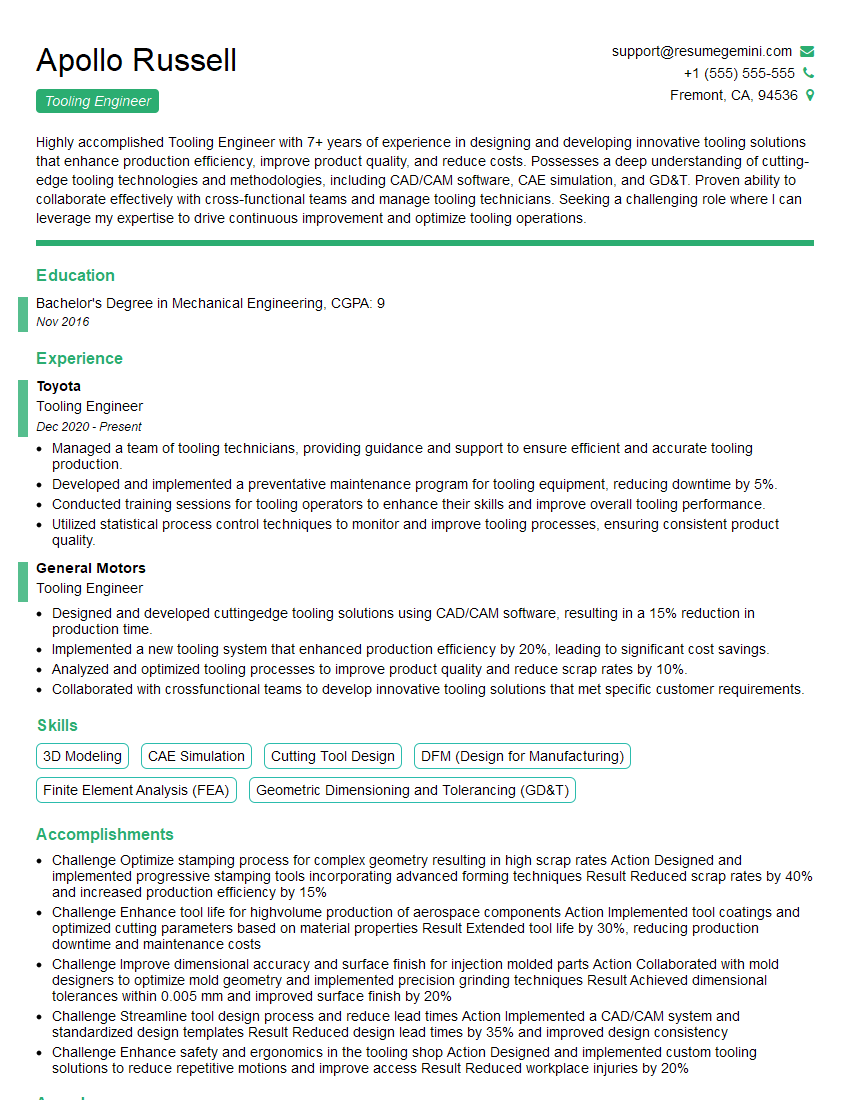
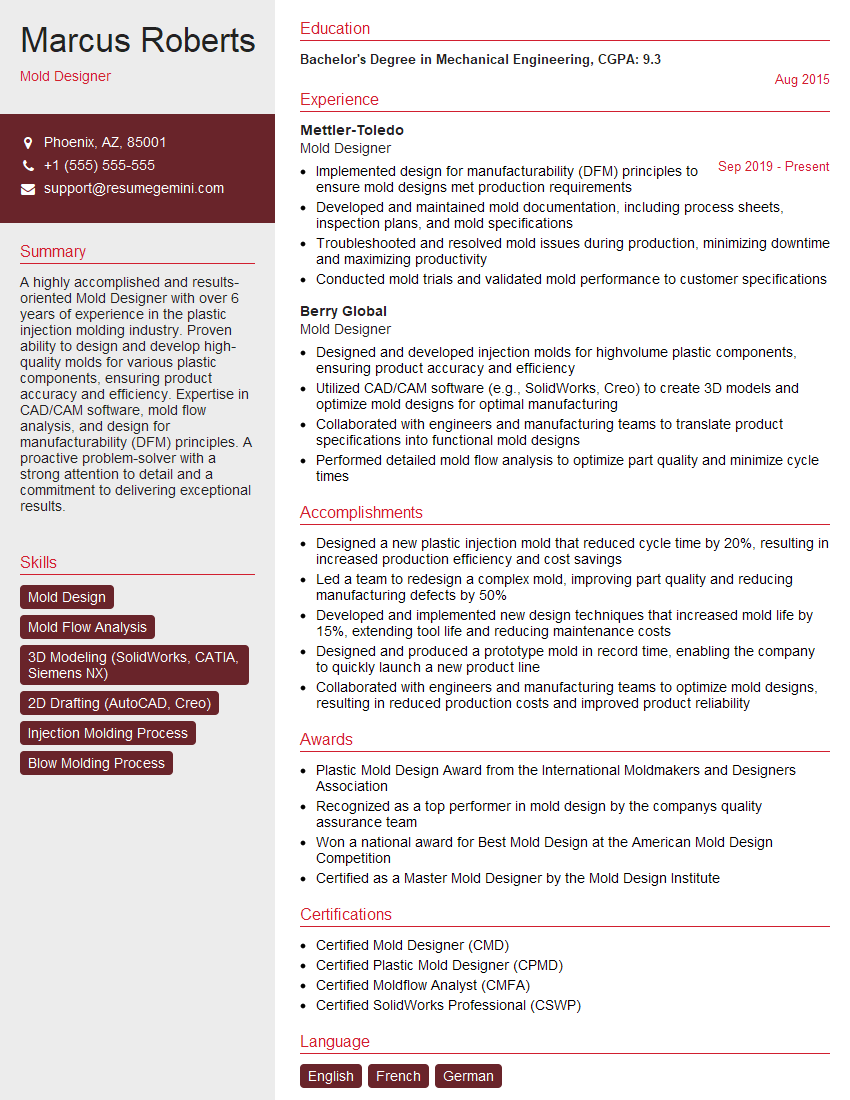
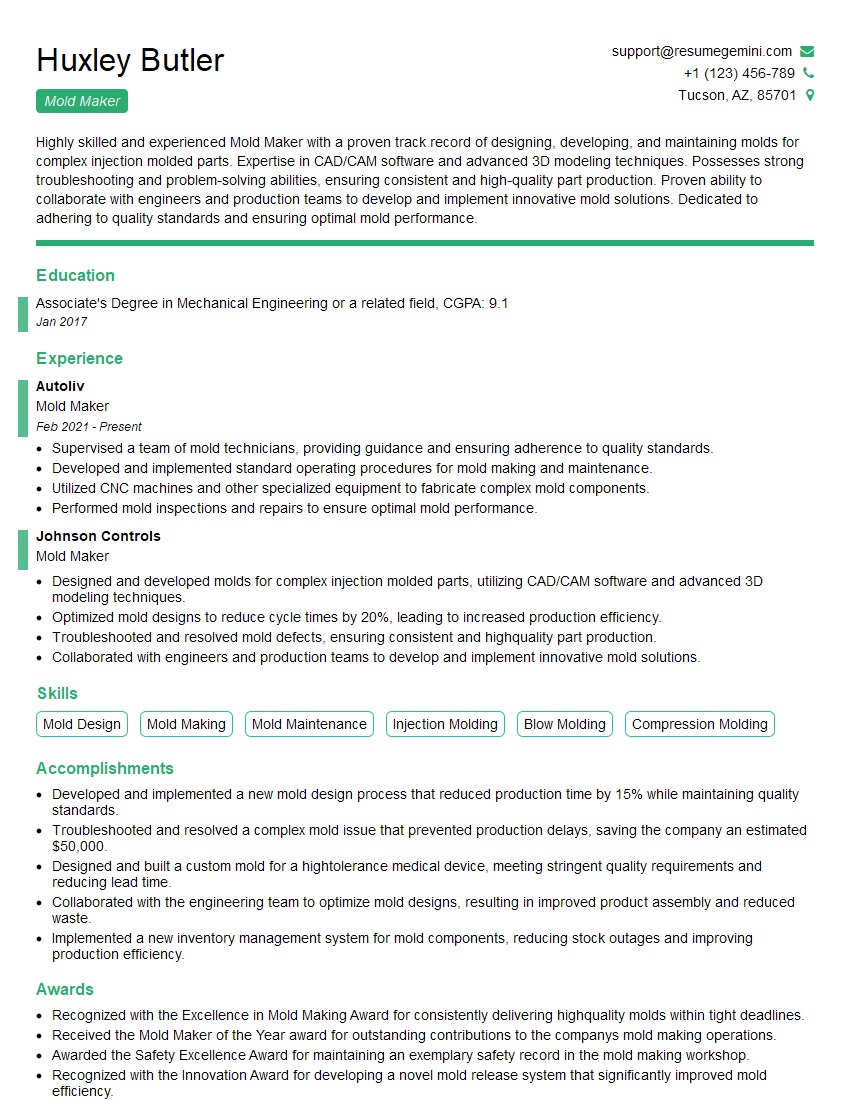
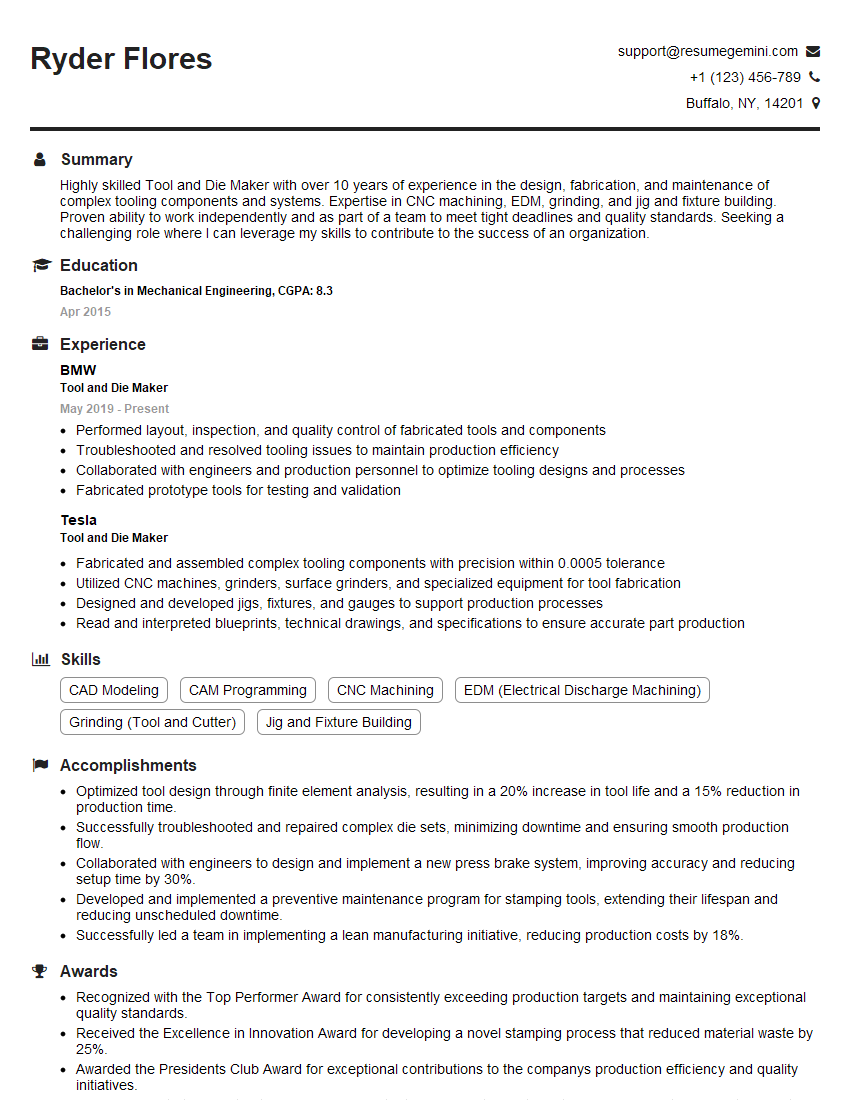
Mastering mold-making opens doors to exciting career opportunities in manufacturing, offering excellent growth potential and diverse challenges. To maximize your job prospects, crafting an ATS-friendly resume is crucial. This ensures your qualifications are effectively highlighted and easily identified by applicant tracking systems. ResumeGemini is a trusted resource to help you build a professional and impactful resume. We offer examples of resumes tailored to the mold-making industry to guide you through the process, helping you present your skills and experience in the best possible light.
Explore more articles
Users Rating of Our Blogs
Share Your Experience
We value your feedback! Please rate our content and share your thoughts (optional).
What Readers Say About Our Blog
Very informative content, great job.
good