Unlock your full potential by mastering the most common Revegetation interview questions. This blog offers a deep dive into the critical topics, ensuring you’re not only prepared to answer but to excel. With these insights, you’ll approach your interview with clarity and confidence.
Questions Asked in Revegetation Interview
Q 1. What are the key factors to consider when selecting appropriate plant species for a revegetation project?
Selecting the right plant species is paramount to a successful revegetation project. It’s like choosing the right ingredients for a recipe – the wrong ones will result in a disaster! We need to consider several key factors:
- Climate: Temperature, rainfall, and sunlight hours directly impact plant survival. A drought-tolerant species wouldn’t thrive in a consistently wet environment, and vice versa. For example, in arid regions, we’d select species like Acacia aneura (Mulga) known for their resilience to drought.
- Soil conditions: Soil pH, texture (sandy, clay, loamy), nutrient levels, and drainage all affect root establishment. A plant requiring well-drained soil wouldn’t flourish in heavy clay. Soil testing is crucial here.
- Site characteristics: Slope, aspect (direction the slope faces), and elevation affect microclimate and therefore plant suitability. North-facing slopes receive more sun than south-facing slopes, influencing temperature and moisture.
- Functional requirements: Are we aiming for erosion control, wildlife habitat, or aesthetic improvement? Different species excel in different roles. For erosion control, we might choose deep-rooted grasses like Themeda triandra (Kangaroo Grass).
- Species interactions: Consider the potential for competition or allelopathy (chemical inhibition of one species by another). Choosing compatible species is essential for long-term success. We might avoid planting species that aggressively outcompete natives.
- Availability and cost: Seed or seedling availability and cost must be considered. Sometimes, locally sourced, readily available species are a more practical option than rarer, more expensive ones.
Thorough consideration of these factors ensures that the chosen species are well-suited to the site conditions and the project goals, maximizing the chances of successful revegetation.
Q 2. Describe different soil preparation techniques used in revegetation.
Soil preparation is fundamental to revegetation success. It’s like preparing the ground for a building – a poor foundation leads to instability. Techniques vary depending on the site conditions, but common methods include:
- Ripping/Subsoiling: This breaks up compacted soil layers, improving water infiltration and root penetration. This is particularly important in areas with hardpans or compacted soil from previous land use.
- Contour ripping: This technique is employed on slopes to create channels that slow down water runoff and reduce erosion, especially effective in preventing gullying.
- Topsoil removal and replacement: In severely degraded areas, removing the existing topsoil and replacing it with healthy topsoil can provide a much better growing medium. This is especially helpful where topsoil has been significantly damaged by erosion or pollution.
- Soil amendment: Adding organic matter (compost, manure) improves soil structure, water-holding capacity, and nutrient content. This is crucial for sites with low fertility. It’s essentially like adding vitamins to your garden soil!
- Weed control: Removing existing weeds before planting is essential. Herbicides, hand weeding, or mulching are used depending on weed pressure and the species selected.
The specific soil preparation technique is selected based on a comprehensive site assessment considering the existing soil properties and the desired outcomes. For example, a highly eroded site might necessitate topsoil replacement and contour ripping to establish effective vegetation cover.
Q 3. Explain the importance of site assessment in successful revegetation.
Site assessment is the cornerstone of successful revegetation. Imagine planning a house without knowing the terrain – it’s a recipe for disaster! It’s a detailed evaluation of the site’s physical and biological characteristics, influencing species selection, soil preparation, and project planning.
A thorough assessment includes:
- Topography: Slope, aspect, and elevation influence microclimate and erosion potential.
- Soil: Texture, structure, pH, nutrient levels, and drainage capacity are crucial for plant selection and soil amendment decisions.
- Climate: Rainfall, temperature, and sunlight hours influence species suitability.
- Existing vegetation: Assessing the current plant community helps understand the site’s history and inform species selection. We need to know what’s already there and why it might have failed to thrive.
- Hydrology: Understanding water movement is critical, especially in areas prone to flooding or waterlogging.
- History of land use: Previous land uses (e.g., mining, agriculture) impact soil health and weed pressure.
The data gathered during site assessment informs all subsequent stages of the revegetation process, ensuring that the project is tailored to the specific site conditions, increasing the likelihood of success.
Q 4. What are the common challenges faced during revegetation projects, and how do you mitigate them?
Revegetation projects often encounter challenges, some of which can be mitigated with careful planning and execution. Common challenges include:
- Weed competition: Aggressive weeds can outcompete newly established plants. Pre-planting weed control and ongoing monitoring are essential. Techniques include herbicides, mulching, and hand weeding.
- Pest and disease outbreaks: Insects and diseases can decimate young plants. Regular monitoring and appropriate pest and disease management strategies are crucial. This might involve biological control methods or targeted pesticide application if necessary.
- Erosion: Soil erosion can damage young plants and undermine the project’s success. Erosion control techniques like mulching, contouring, and the use of appropriate plant species are essential. Establishing a quick cover crop in high-erosion areas is a crucial step.
- Lack of water: Drought can kill young plants, particularly in arid regions. Supplementary watering may be necessary, especially during establishment. Choosing drought-tolerant species is paramount.
- Animal damage: Grazing animals or rabbits can damage or destroy young plants. Protection measures such as fencing or repellents may be needed.
Mitigating these challenges requires a proactive approach, including thorough site assessment, careful species selection, and ongoing monitoring and management throughout the project. Regular inspections and adaptive management are crucial for responding to unforeseen issues.
Q 5. How do you monitor the success of a revegetation project?
Monitoring is crucial to evaluate the success of a revegetation project. It’s like tracking the progress of a construction project – you need regular checks to ensure everything’s on track. Monitoring involves regular assessments of various parameters:
- Plant survival and growth: Regular measurements of plant height, cover, and density provide an indication of establishment success. We can use quadrats (square sampling areas) to quantify vegetation cover.
- Weed pressure: Monitoring weed encroachment helps assess the effectiveness of weed control measures.
- Soil conditions: Monitoring soil moisture, nutrient levels, and erosion rates assesses the impact of revegetation on soil health.
- Wildlife response: Observations of animal use of the revegetated area can demonstrate its contribution to biodiversity.
- Erosion control: Monitoring erosion rates indicates the effectiveness of erosion control measures implemented.
Data collected during monitoring is used to evaluate project success, identify areas needing improvement, and make informed management decisions. Long-term monitoring is necessary to evaluate the long-term stability and ecological value of the revegetated area. Regular reports and photographic records are invaluable for tracking progress.
Q 6. What are the different methods of seed collection and propagation for revegetation?
Seed collection and propagation are crucial aspects of revegetation, particularly when using native species. The methods employed depend on the species and the scale of the project.
- Seed collection: Seeds are usually collected from healthy, mature plants in appropriate locations. Timing is critical – seeds must be collected at the right stage of maturity to ensure high viability. Collection permits may be required, especially when working with rare or endangered species.
- Seed processing: After collection, seeds are often processed to remove impurities and improve germination rates. This can involve cleaning, stratification (simulating natural winter conditions), and scarification (breaking the seed coat to aid germination).
- Seed storage: Proper seed storage is critical to maintain seed viability. Seeds are usually stored in cool, dry conditions with appropriate moisture content.
- Propagation methods: Seeds can be sown directly onto the site or grown in nurseries before transplanting. Direct seeding is usually employed for cost-effective large-scale projects. Nursery propagation allows for better control over seedling quality and establishment, particularly useful for sensitive or rare species.
- Vegetative propagation: Some species can also be propagated vegetatively using cuttings, layering, or division. This is faster than growing from seeds but is not suitable for all species.
The choice of seed collection, processing, and propagation methods is tailored to the specific species and project requirements, balancing cost-effectiveness and the need for high-quality planting material.
Q 7. Describe your experience with erosion control techniques used in revegetation projects.
Erosion control is a vital component of successful revegetation, especially on slopes or disturbed sites. It’s like building a wall to prevent damage; without it, the revegetation effort can easily be washed away. I have extensive experience using various techniques, including:
- Mulching: Applying mulch (straw, wood chips, or other organic matter) helps retain soil moisture, suppress weeds, and protect the soil surface from erosion. This is a cost-effective and readily available method.
- Contour bunding: Constructing small earth bunds along the contours of slopes slows down water runoff and reduces erosion. This is effective on steeper slopes where water runoff is a significant problem.
- Sediment basins: Constructing small basins to trap sediment before it reaches watercourses can be crucial in protecting water quality.
- Hydroseeding: Hydroseeding involves spraying a slurry of seeds, mulch, and fertilizer onto the soil surface. This is particularly useful for large areas or difficult-to-access sites.
- Use of erosion-control blankets: These biodegradable mats provide immediate soil protection and create a suitable environment for seed germination and seedling establishment.
- Selection of appropriate plant species: Deep-rooted grasses and shrubs are especially effective at stabilizing soil and preventing erosion. We often select species known for their strong root systems and tolerance to harsh conditions.
The choice of technique depends on the specific site conditions, erosion risk, and available resources. In some projects, we’ve combined several methods for optimal effectiveness. For example, in one particularly challenging hillside restoration, we used contour bunding coupled with hydroseeding and erosion control blankets for immediate erosion control followed by planting deep-rooted shrubs and grasses for long-term stabilization.
Q 8. How do you incorporate biodiversity considerations into revegetation plans?
Incorporating biodiversity into revegetation is crucial for creating resilient and ecologically valuable landscapes. It’s not just about planting trees; it’s about recreating a functional ecosystem. We achieve this through a multi-pronged approach.
- Species Selection: We prioritize using a diverse mix of native plant species, including trees, shrubs, grasses, and forbs. This mimics the natural plant community and supports a wider range of wildlife. For instance, in a riparian restoration project, we might include species tolerant to flooding and those that provide habitat for fish and birds. Selecting species with varying flowering times ensures continuous pollen and nectar resources for pollinators.
- Genetic Diversity: We source plant materials from multiple locations within the region to maximize genetic diversity. This increases the resilience of the revegetated area to diseases, pests, and climate change. Using seeds from a single source can lead to a population with limited adaptability.
- Habitat Structure: We aim to create diverse habitat structures by incorporating different plant heights, growth forms, and canopy layers. This supports a greater diversity of animal species, providing food, shelter, and nesting sites. For example, including shrubs and groundcovers alongside trees creates a more complex habitat structure compared to a monoculture of just trees.
- Connectivity: We consider the connectivity of the revegetation area to existing natural habitats. This allows for the movement of plants and animals, increasing gene flow and maintaining biodiversity. Creating corridors between fragmented habitats is essential.
Ultimately, the goal is to create a self-sustaining ecosystem that is both resilient and rich in biodiversity, providing ecological and societal benefits.
Q 9. What are your experiences with different revegetation techniques (e.g., hydroseeding, plug planting)?
My experience encompasses a range of revegetation techniques, each with its own strengths and weaknesses. The choice of technique depends heavily on site conditions, budget, and project goals.
- Hydroseeding: This is cost-effective for large areas with relatively uniform conditions. It involves spraying a slurry of seeds, mulch, fertilizer, and tackifier onto the ground. It’s particularly useful for erosion control on steep slopes or areas with poor soil conditions. However, it can be less precise in terms of species placement and may struggle in areas with very rocky soil.
- Plug Planting: This technique offers greater precision and higher establishment rates, especially for slower-growing species or areas needing immediate visual impact. It involves planting pre-grown seedlings (plugs) directly into the ground. While more labor-intensive, it’s ideal for sensitive areas or where high survival rates are critical. We’ve successfully used this for wetland restoration projects where establishing vegetation quickly is important to prevent erosion.
- Direct Seeding: This involves directly sowing seeds into the prepared ground. It’s suitable for many species, but success depends on favorable weather conditions and careful seedbed preparation. We often use it in conjunction with other techniques, such as hydroseeding, to maximize coverage.
We carefully assess each project’s unique requirements to determine the most appropriate and efficient technique(s) to use, often incorporating a combination of approaches for optimal results.
Q 10. Explain the role of weed management in successful revegetation.
Weed management is absolutely vital to successful revegetation. Weeds compete with desirable plants for resources like water, nutrients, and sunlight, hindering establishment and growth. They can also harbor pests and diseases. Effective weed management is a multi-faceted approach.
- Pre-Planting Weed Control: This is crucial and involves removing existing weeds before planting. Methods include herbicide application (using selective herbicides that minimize impact on desirable species), mechanical removal (e.g., tilling, mowing), and manual weeding. The choice of method depends on the weed species present, the scale of the project, and environmental considerations.
- Post-Planting Weed Control: Ongoing monitoring and control are necessary. Techniques include targeted herbicide application, mulching (to suppress weed growth), and manual weeding. We often use a combination of these techniques. For instance, a mulch layer can reduce weed pressure while allowing desirable seedlings to emerge.
- Choosing Competitive Species: Selecting plant species known for their ability to compete with weeds enhances natural weed suppression. For example, fast-growing native grasses can quickly establish and outcompete many weeds.
A well-planned weed management strategy greatly increases the chances of a successful and cost-effective revegetation project. Neglecting this aspect can lead to project failure.
Q 11. How do you manage the budget and timeline of a revegetation project?
Budget and timeline management are crucial for successful project delivery. We typically employ a structured approach.
- Detailed Budgeting: We develop a comprehensive budget that encompasses all aspects, including site preparation, plant materials, labor, equipment rental, weed management, monitoring, and contingency funds. Accurate cost estimations are essential, and we frequently use project management software to track expenses.
- Realistic Timeline: A realistic timeline is developed considering factors like seasonal variations, plant establishment times, and the duration of weed management activities. We use Gantt charts to visualize tasks and dependencies, identifying potential bottlenecks early on. Flexibility is built into the timeline to accommodate unforeseen circumstances.
- Regular Monitoring and Reporting: We regularly monitor progress against the budget and timeline. This allows us to identify and address potential issues early on, minimizing cost overruns and delays. Regular reports to stakeholders keep everyone informed.
- Contingency Planning: We allocate resources to cover unforeseen events such as extreme weather, pest outbreaks, or equipment malfunctions. This helps mitigate risks and ensure the project stays on track.
A proactive and well-planned approach to budget and timeline management is vital for delivering successful revegetation projects on time and within budget.
Q 12. Describe your experience using GIS software for planning and monitoring revegetation projects.
GIS software is an invaluable tool in revegetation planning and monitoring. We use it for several key functions.
- Site Assessment: GIS allows us to analyze site characteristics such as topography, soil type, hydrology, and existing vegetation cover. This helps us identify suitable planting areas and potential challenges. For example, we can overlay slope data with soil moisture maps to identify areas prone to erosion and prioritize them for revegetation.
- Species Selection: We use GIS to model species suitability based on environmental factors. This helps us select the most appropriate species for each location. We can analyze climate data and soil characteristics to predict species performance.
- Project Design: GIS allows us to design optimal planting patterns and layouts, considering factors like access, resource availability, and habitat connectivity. This enables efficient use of resources and enhances project success.
- Monitoring and Evaluation: We use GIS to track plant establishment, growth, and weed spread over time. This provides data-driven insights to assess project performance and inform adaptive management strategies. We can overlay satellite imagery with ground-based data to monitor changes in vegetation cover.
GIS significantly enhances our ability to plan and manage revegetation projects effectively, leading to improved outcomes. Software like ArcGIS is routinely used in our workflow.
Q 13. How do you ensure compliance with environmental regulations in revegetation projects?
Ensuring compliance with environmental regulations is paramount. Our approach involves a meticulous understanding and adherence to relevant legislation and permits.
- Permitting: We obtain all necessary permits and approvals from relevant authorities before commencing any work. This includes environmental impact assessments and approvals for herbicide use.
- Species Selection: We ensure that only approved species are used, avoiding invasive or prohibited plants. We use seed sources compliant with regulations.
- Erosion and Sediment Control: We implement appropriate measures to minimize soil erosion and sedimentation, complying with water quality standards. This includes using erosion control blankets and implementing best management practices during site preparation.
- Waste Management: We adhere to strict waste management protocols, ensuring proper disposal of all construction debris and hazardous materials.
- Monitoring and Reporting: We monitor our work to ensure compliance and submit regular reports to regulatory bodies. We maintain detailed records of all activities and findings.
A strong commitment to environmental compliance is not just about avoiding penalties; it’s about responsible environmental stewardship. We proactively seek advice from regulatory authorities to ensure our projects meet or exceed legal requirements.
Q 14. What are your experiences with different types of revegetation projects (e.g., mine reclamation, post-fire restoration)?
My experience spans diverse revegetation projects, each presenting unique challenges and opportunities.
- Mine Reclamation: These projects often involve restoring degraded lands affected by mining activities. The focus is on stabilizing the land, preventing erosion, and establishing a sustainable plant community. We use a variety of techniques, often tailored to the specific mine site conditions, including the use of specially selected species that can tolerate heavy metals or acidic soils. The aim is to achieve both environmental remediation and potential future land use.
- Post-Fire Restoration: After wildfires, revegetation aims to accelerate natural recovery, restoring the ecological function of the landscape. This involves addressing immediate needs such as erosion control and then establishing a plant community that is adapted to post-fire conditions. We may use techniques to enhance seed germination and seedling establishment, and focus on selecting native species resilient to fire.
- Roadside Revegetation: This involves establishing vegetation along roadsides to prevent erosion, improve aesthetics, and provide habitat for wildlife. We usually employ a mix of drought-tolerant native plants that can withstand traffic-related disturbances.
- Riparian Restoration: These projects focus on restoring degraded riparian zones (areas along rivers and streams). We use techniques adapted to wetland conditions, often incorporating a diversity of species to support aquatic and terrestrial ecosystems. The goal is to improve water quality and create habitat for fish and wildlife.
Each project demands a tailored approach, reflecting the site’s specific history, ecology, and regulatory requirements.
Q 15. How do you select appropriate irrigation techniques for revegetation projects?
Selecting the right irrigation technique for a revegetation project is crucial for success. It depends on factors like the site’s climate, soil type, available water resources, and the chosen plant species. We need to balance the need for sufficient water for establishment with the risk of overwatering, which can lead to root rot and other issues.
For example, in arid and semi-arid regions, efficient methods like drip irrigation or micro-sprinklers are preferred. They deliver water directly to the plant roots, minimizing water loss through evaporation. In areas with higher rainfall, we might consider a more passive approach, perhaps relying on mulching to retain soil moisture. On larger projects, center pivot irrigation can be very effective, but it requires significant investment and is less suitable for uneven terrain.
The decision-making process often involves a cost-benefit analysis, comparing water use efficiency, capital investment, maintenance needs, and the long-term sustainability of each approach. We always consider the environmental impact, striving to minimize water consumption and prevent runoff, which can lead to erosion and nutrient loss.
Career Expert Tips:
- Ace those interviews! Prepare effectively by reviewing the Top 50 Most Common Interview Questions on ResumeGemini.
- Navigate your job search with confidence! Explore a wide range of Career Tips on ResumeGemini. Learn about common challenges and recommendations to overcome them.
- Craft the perfect resume! Master the Art of Resume Writing with ResumeGemini’s guide. Showcase your unique qualifications and achievements effectively.
- Don’t miss out on holiday savings! Build your dream resume with ResumeGemini’s ATS optimized templates.
Q 16. Describe your experience working with different stakeholders in revegetation projects.
Successful revegetation projects require collaboration with a diverse range of stakeholders. My experience involves working closely with landowners, government agencies, environmental consultants, contractors, and local communities. For instance, I worked on a project restoring a degraded riparian zone where we had to negotiate access with private landowners, secure permits from the environmental agency, and collaborate with a local conservation group to engage the community in planting and monitoring efforts.
Effective communication and transparent decision-making are key. I facilitate workshops and meetings to ensure all stakeholders understand the project goals, timelines, and potential impacts. Addressing concerns and incorporating diverse perspectives is crucial for securing buy-in and ensuring the project’s long-term success. Building trust and mutual understanding are essential for navigating potential conflicts and fostering a collaborative working environment.
Q 17. How do you assess the long-term success of a revegetation project?
Assessing the long-term success of a revegetation project is an ongoing process, not a one-time event. We use a multi-faceted approach that goes beyond simply observing plant survival rates. We monitor key indicators over several years, ideally a decade or more, to understand the project’s impact.
- Plant survival and growth: Regular surveys measure the survival rate of planted species, their growth rates, and overall health. We might track parameters like height, crown diameter, and biomass.
- Species diversity: We assess the establishment of native species, the colonization of other plant species, and the overall biodiversity of the revegetated area.
- Soil health: Soil samples are analyzed to assess changes in organic matter content, water infiltration rates, and nutrient levels.
- Erosion control: We monitor soil erosion rates to determine the effectiveness of the revegetation in stabilizing the site.
- Hydrological function: For riparian revegetation, we track changes in water flow and quality.
This data is then analyzed to evaluate the project’s success in achieving its ecological goals. This ongoing monitoring allows for adaptive management strategies, adjusting techniques based on the project’s performance.
Q 18. What are the environmental benefits of successful revegetation?
Successful revegetation projects offer a multitude of environmental benefits, contributing to a healthier planet. These benefits often interconnect and amplify each other.
- Improved soil health: Plant roots stabilize the soil, preventing erosion and improving water infiltration. Increased organic matter content enhances soil fertility.
- Enhanced biodiversity: Revegetation creates habitat for a wider range of plant and animal species, increasing biodiversity and ecosystem resilience.
- Carbon sequestration: Plants absorb carbon dioxide from the atmosphere, helping to mitigate climate change. Healthy root systems store significant amounts of carbon in the soil.
- Improved water quality: Vegetation helps filter pollutants from runoff, preventing them from reaching waterways. Riparian buffers, for example, are crucial in this respect.
- Reduced greenhouse gas emissions: By improving soil health and reducing erosion, revegetation can lower the emission of greenhouse gases like methane and nitrous oxide.
- Improved air quality: Plants filter pollutants from the air, improving air quality in urban and rural areas.
These benefits extend to various ecological services, ultimately enhancing the overall health and resilience of the environment.
Q 19. Explain the difference between passive and active revegetation techniques.
Passive and active revegetation techniques differ primarily in their level of human intervention.
Passive revegetation relies on natural processes to restore vegetation. This approach typically involves minimal human intervention, such as removing invasive species or improving soil conditions. It’s often cost-effective and less disruptive, but it may take significantly longer to achieve desired outcomes and may not be successful in severely degraded areas. For example, simply removing grazing pressure from an area and allowing natural succession to occur is a passive method.
Active revegetation, on the other hand, involves direct human intervention. This includes planting seedlings or seeds, installing erosion control structures, irrigating, and managing weeds. It’s more expensive and labor-intensive, but it allows for faster establishment of desired vegetation and can be more successful in challenging sites. Planting trees on a mine site after reclamation is a clear example of active revegetation.
The choice between passive and active methods depends on several factors including the extent of degradation, available resources, project goals, and the time frame for restoration.
Q 20. How do you adapt revegetation strategies to different climate conditions?
Adapting revegetation strategies to different climate conditions is essential for project success. Climate significantly influences plant growth, survival, and the effectiveness of various techniques.
In arid and semi-arid regions, water conservation is paramount. We select drought-tolerant native species and utilize water-efficient irrigation techniques (drip irrigation, for example). We may also employ mulching to conserve soil moisture and reduce evaporation. Careful site selection is critical, choosing areas with access to groundwater or adequate rainfall patterns.
In wet and humid regions, drainage is a key consideration. We might select species that are tolerant of waterlogged conditions. Controlling water runoff can prevent erosion and nutrient loss. The risk of fungal diseases may be higher in these conditions and appropriate disease management strategies would need to be put in place.
In cold climates, we might select species that are cold-hardy and focus on protecting young plants from harsh winter conditions. This could include using protective shelters or selecting planting times to allow for adequate establishment before winter sets in.
In all cases, understanding the specific climate characteristics – temperature, rainfall, humidity, and frost frequency – is crucial for choosing appropriate species and adapting management practices to enhance project success.
Q 21. What are some common plant diseases and pests that affect revegetation projects, and how do you manage them?
Numerous plant diseases and pests can impact revegetation projects, hindering success and potentially leading to significant costs and delays. Effective management strategies are vital.
- Root rot: Caused by various soilborne fungi, root rot is particularly problematic in poorly drained soils or areas with excessive irrigation. Management involves proper site preparation, selecting disease-resistant species, and using appropriate irrigation techniques.
- Leaf diseases: Fungal and bacterial leaf diseases can reduce plant vigor and growth. Proper sanitation, avoiding overhead irrigation, and using fungicides when necessary are important management measures.
- Insect pests: Aphids, beetles, and other insects can damage plants, reducing their growth and overall health. Integrated pest management strategies, including biological control agents, targeted insecticide applications, and monitoring insect populations, are key.
- Weeds: Competition from weeds can significantly impact the establishment and growth of desired plant species. Weed control strategies may include pre-emergent and post-emergent herbicides, manual weeding, or mulching.
Early detection is crucial. Regular monitoring allows for timely intervention and prevents minor problems from escalating into widespread issues. A comprehensive plan outlining disease and pest management strategies should be integrated into the revegetation project design from the outset.
Q 22. Describe your experience with using native plant species in revegetation projects.
Using native plant species is paramount in successful revegetation. Native plants are adapted to the local climate, soil conditions, and pest pressures, leading to higher survival rates and reduced maintenance compared to non-native species. My experience spans numerous projects, from restoring degraded riparian zones using locally sourced willows and cottonwoods, to reclaiming mined lands with diverse grassland mixes tailored to the specific soil composition. For example, in a project restoring a coastal dune system, we prioritized native dune grasses like Ammophila breviligulata and Uniola paniculata for their exceptional tolerance to salt spray and wind erosion. These species not only stabilized the dunes but also provided crucial habitat for local fauna. We rigorously source seeds and plant material from reputable local nurseries ensuring genetic diversity and minimizing the risk of introducing invasive species or disease.
Q 23. How do you ensure the sustainability of revegetation projects?
Ensuring the sustainability of revegetation projects requires a holistic approach that extends beyond the initial planting. It involves careful site selection and preparation, choosing appropriate species, and implementing effective post-planting management. We focus on building soil health through practices like adding compost and mulching, which improves water retention and nutrient availability. Controlling invasive weeds is also critical, and we often utilize integrated pest management strategies, minimizing herbicide use whenever possible. Moreover, we conduct regular monitoring to assess plant establishment and survival rates, making adjustments as needed. Long-term monitoring is key to understanding the trajectory of the ecosystem, allowing us to evaluate the long-term success of the project and adapt management strategies accordingly. For instance, in a project on a former agricultural field, we established a monitoring program tracking plant diversity, soil health indicators and ground water levels over a 10 year period.
Q 24. What are your skills in data analysis and reporting in the context of revegetation projects?
Data analysis is fundamental to successful revegetation. I’m proficient in using statistical software packages like R and ArcGIS to analyze data collected during monitoring, including plant survival rates, species composition, soil properties, and ground cover. We collect data through field surveys, remote sensing (e.g., drone imagery), and environmental sensors. This data helps us to evaluate the effectiveness of different revegetation techniques and identify areas needing improvement. I prepare comprehensive reports illustrating project progress, comparing performance against established targets, and providing recommendations for future management. Data visualization plays a crucial role in communicating project outcomes to stakeholders. For example, using GIS mapping, we can visually represent plant density, soil moisture levels, and invasive species distribution, providing a clear overview of the project’s success.
Q 25. How do you handle unexpected challenges or setbacks during a revegetation project?
Unexpected challenges are inevitable in revegetation. These can include extreme weather events, pest infestations, or unexpected soil conditions. My approach involves a proactive risk assessment at the outset of each project, identifying potential issues and developing contingency plans. For example, if drought is anticipated, we might select drought-tolerant species and implement efficient irrigation strategies. When unforeseen issues arise, I employ a systematic problem-solving approach, involving thorough investigation of the problem’s root cause, consulting with colleagues and experts, and adapting management practices accordingly. Detailed documentation throughout the project allows us to learn from past setbacks, ensuring better preparedness for future projects. During a recent project, unusually heavy rainfall caused erosion in a newly planted area. We quickly implemented measures to stabilize the soil with additional mulch and implemented better drainage techniques.
Q 26. Describe your experience with different soil types and their impact on revegetation success.
Soil type significantly influences revegetation success. Different soils vary greatly in their texture, structure, nutrient content, and water-holding capacity. My experience includes working with a wide range of soil types, from sandy coastal dunes to clay-rich agricultural fields. Before any revegetation, we conduct a thorough soil assessment to determine its properties and suitability for different plant species. For example, sandy soils often require amendments to improve water retention, while clay soils may need treatment to enhance drainage. We tailor our species selection and site preparation strategies to match the soil conditions. In one project, we used soil amendments like compost and biochar to improve the nutrient content and water retention capacity of severely degraded soil before planting. This allowed us to establish a diverse plant community that would otherwise have struggled to thrive.
Q 27. What are the key performance indicators (KPIs) you use to measure the success of revegetation projects?
Key Performance Indicators (KPIs) are essential for measuring success. We use a range of indicators, including:
- Plant survival rate: Percentage of planted seedlings that survive after a specified period.
- Species richness and diversity: Number and variety of plant species established.
- Ground cover: Percentage of the ground covered by vegetation.
- Soil health indicators: Soil organic matter, nutrient levels, and water infiltration rates.
- Invasive species control: Reduction in the abundance and spread of invasive plants.
- Erosion control: Reduction in soil erosion rates.
Q 28. How do you stay up to date with the latest advances in revegetation techniques and technologies?
Staying current is crucial in this dynamic field. I actively participate in professional organizations like the Society for Ecological Restoration, attending conferences and workshops to learn about the latest techniques and technologies. I regularly read scientific journals and online resources, staying informed about advancements in areas such as seed sourcing, soil management, and ecological monitoring. I also participate in continuing education programs and collaborate with researchers and practitioners to share knowledge and best practices. For example, recent research on mycorrhizal fungi and their role in plant establishment has influenced my approach to soil management in revegetation projects.
Key Topics to Learn for Revegetation Interview
- Site Assessment and Planning: Understanding soil types, climate conditions, and the selection of appropriate plant species for successful revegetation projects. Consider practical aspects like surveying techniques and budget constraints.
- Seed Collection and Propagation: Learn about techniques for collecting native seeds, seed cleaning and storage, and nursery propagation methods for optimal seedling establishment. Be prepared to discuss the challenges of seed germination and factors influencing seedling vigor.
- Planting Techniques and Establishment: Explore various planting methods (e.g., direct seeding, plug planting, hydroseeding) and their suitability for different sites and species. Discuss practical considerations such as planting density, weed control, and irrigation strategies.
- Erosion and Sediment Control: Understand the role of revegetation in preventing erosion and controlling sediment runoff. Discuss specific techniques like contour planting, mulching, and the use of erosion control blankets.
- Weed Management and Pest Control: Explore integrated pest management strategies for controlling weeds and pests in revegetation projects. Discuss both preventative and reactive measures and their environmental impact.
- Monitoring and Evaluation: Learn about techniques for monitoring the success of revegetation projects, including plant survival rates, species diversity, and overall ecosystem health. Be ready to discuss data analysis and reporting methods.
- Regulatory Compliance and Permits: Familiarize yourself with relevant environmental regulations and permitting processes related to revegetation projects. This includes understanding endangered species protection and other ecological considerations.
- Technological Advancements: Research the latest technologies used in revegetation, such as drone technology for site monitoring, precision planting techniques, and advanced soil analysis methods.
Next Steps
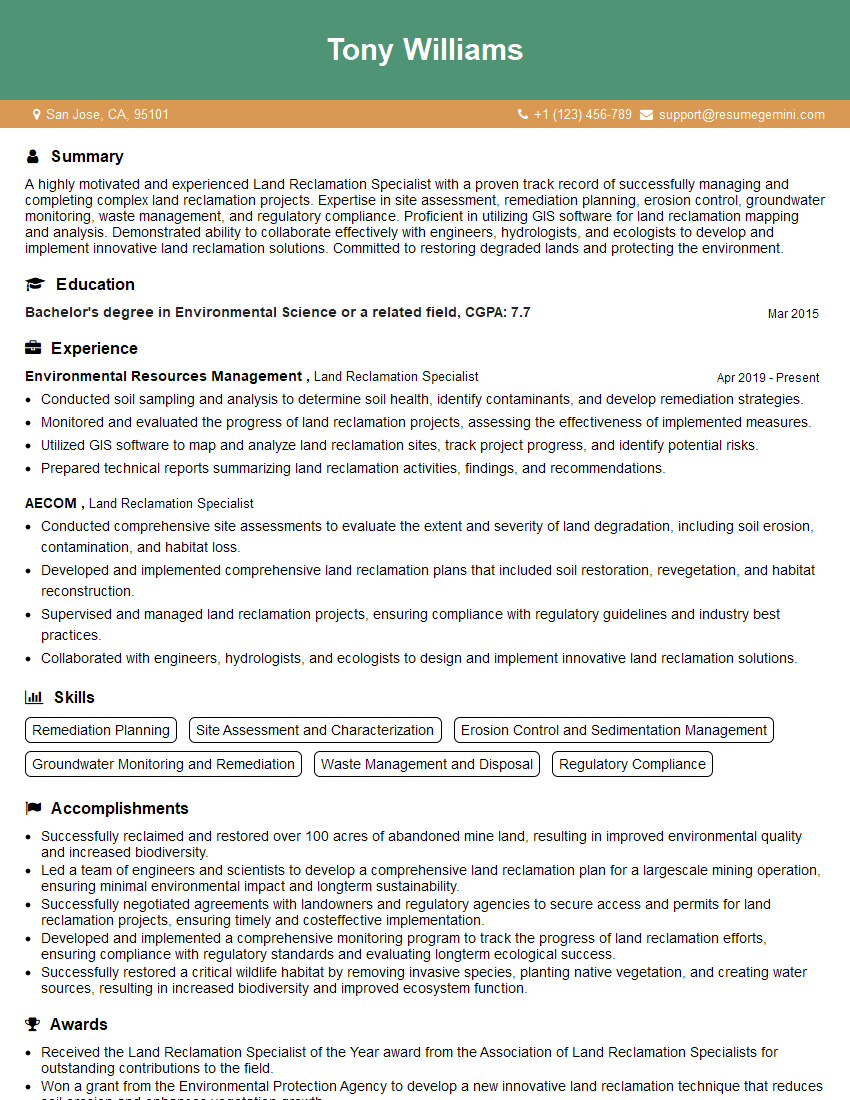
Mastering revegetation techniques opens doors to a fulfilling and impactful career in environmental restoration and land management. A strong understanding of these principles is highly sought after by employers. To maximize your job prospects, create an ATS-friendly resume that highlights your skills and experience effectively. ResumeGemini is a trusted resource to help you build a professional resume that stands out. They provide examples of resumes tailored to the revegetation field, ensuring your application makes a lasting impression.

Explore more articles
Users Rating of Our Blogs
Share Your Experience
We value your feedback! Please rate our content and share your thoughts (optional).
What Readers Say About Our Blog
Very informative content, great job.
good