Are you ready to stand out in your next interview? Understanding and preparing for Molding and Pressing interview questions is a game-changer. In this blog, we’ve compiled key questions and expert advice to help you showcase your skills with confidence and precision. Let’s get started on your journey to acing the interview.
Questions Asked in Molding and Pressing Interview
Q 1. Explain the difference between injection molding and compression molding.
Injection molding and compression molding are both processes used to create plastic parts, but they differ significantly in how the material is introduced and shaped. Think of it like this: injection molding is like injecting toothpaste from a tube into a mold, while compression molding is like squeezing a ball of Play-Doh into a mold.
- Injection Molding: Molten plastic is injected at high pressure into a closed mold cavity. The plastic fills the cavity completely, solidifies, and is then ejected. This process is ideal for high-volume production of complex parts with intricate details. Examples include plastic bottles, electronic housings, and automotive components.
- Compression Molding: A measured amount of plastic material (usually in a pre-formed state like a pellet or powder) is placed into a heated mold cavity. The mold is then closed, applying pressure to compress and shape the plastic. This method is often used for larger parts or parts with less intricate details. Thermosetting plastics are commonly used, as they undergo a chemical change during molding, making them very strong but less suitable for the high speed of injection molding. Examples include some types of buttons, knobs, and electrical insulators.
The key differences lie in the material handling, pressure application, and the types of plastics suitable for each process. Injection molding is faster and better for intricate designs, while compression molding is suitable for larger parts and thermosetting resins.
Q 2. Describe the various types of molding resins used in the industry.
The molding industry utilizes a wide range of resins, each with unique properties suitable for different applications. The choice of resin depends heavily on the desired properties of the final product, such as strength, flexibility, heat resistance, and cost.
- Thermoplastics: These resins soften when heated and harden when cooled, allowing for repeated melting and reshaping. Common examples include:
- Polyethylene (PE): Widely used for its flexibility, toughness, and low cost (e.g., plastic bags, bottles).
- Polypropylene (PP): Known for its strength, chemical resistance, and heat resistance (e.g., containers, automotive parts).
- Polyvinyl Chloride (PVC): A versatile resin used in various applications due to its durability and cost-effectiveness (e.g., pipes, window frames).
- Acrylonitrile Butadiene Styrene (ABS): Offers a good balance of strength, toughness, and impact resistance (e.g., toys, housings).
- Polycarbonate (PC): High impact strength, heat resistance and optical clarity (e.g., safety glasses, lenses).
- Thermosets: These resins undergo an irreversible chemical change during curing, forming a rigid structure. Once cured, they cannot be remelted. Examples include:
- Epoxy resins: Known for their high strength, chemical resistance, and adhesion properties (e.g., adhesives, coatings).
- Phenolic resins: Excellent electrical insulation properties and heat resistance (e.g., electrical components).
- Polyester resins: Used in fiberglass reinforced plastics (FRP) due to their high strength-to-weight ratio (e.g., boat hulls, automotive parts).
Understanding the properties of different resins is critical for selecting the appropriate material for a given application.
Q 3. What are the common causes of flash in injection molding?
Flash in injection molding is excess plastic that squeezes out between the mold halves during the injection process. It’s like toothpaste overflowing from a tube that’s been squeezed too hard.
- Excessive Molding Pressure: Too much pressure forces the plastic beyond the designed cavity limits.
- Insufficient Clamping Force: Inadequate clamping force allows the mold halves to separate slightly under pressure.
- Mold Wear and Tear: Worn or damaged mold components, such as parting lines, allow plastic to escape.
- Improper Mold Temperature: If the mold is too cold, the plastic viscosity may be too high, leading to excessive pressure build-up.
- Mold Design Flaws: Poorly designed mold cavities or gates can contribute to flash formation. Improper venting can also lead to pressure build-up.
- Material Viscosity Issues: If the material is too viscous (thick), it may cause pressure build up.
Addressing flash involves inspecting the mold for damage, adjusting molding parameters like pressure and clamp force, optimizing mold temperature, and, in some cases, redesigning the mold to improve its sealing and venting capabilities.
Q 4. How do you troubleshoot short shots in injection molding?
Short shots in injection molding occur when the plastic doesn’t completely fill the mold cavity, resulting in incomplete parts. It’s akin to only partially filling a cup with liquid.
Troubleshooting short shots involves a systematic approach:
- Check the Material Flow: Ensure that the material is flowing smoothly through the runners, gates, and into the cavity. Blockages or restrictions can lead to short shots. Clean the sprues and runners regularly.
- Examine the Mold Temperature: Too low a mold temperature can increase viscosity and hinder proper filling. Ensure the mold temperature is properly controlled and optimized for the specific material.
- Adjust the Injection Pressure and Velocity: Insufficient injection pressure and/or velocity may not provide enough force to completely fill the mold. Increase these parameters gradually while monitoring for flash.
- Inspect the Gates and Runners: Gates that are too small or restricted will prevent complete filling. Ensure the gates are properly sized and designed.
- Verify the Injection Time and Holding Time: Insufficient injection time won’t allow enough time for filling. Increase this time cautiously while monitoring for flash. The holding pressure also needs to be sufficient to keep the part packed into the cavity and avoid shrinkage.
- Assess the Melt Temperature: If the material is not hot enough, it will have a higher viscosity, impeding flow. Adjust melt temperature accordingly.
- Inspect the Mold for Defects: Check for any obstructions, burrs, or damage in the mold cavity that might restrict the flow of plastic.
A systematic approach, carefully adjusting parameters, and conducting thorough inspections typically resolves short shot issues.
Q 5. Explain the process of mold design and its critical aspects.
Mold design is a critical step in the injection molding process. A well-designed mold ensures high-quality parts, efficient production, and minimal defects. Think of it as creating the blueprint for your plastic parts.
Critical aspects include:
- Part Design: The mold must accurately reflect the dimensions, tolerances, and features of the final part. This involves considering draft angles (the slight taper added to vertical walls to allow for easy part removal) and undercuts (features that require special mechanisms for part ejection).
- Cavity and Core Design: These are the negative and positive molds respectively, creating the shape of the part. Precise dimensions and smooth surfaces are crucial for minimizing defects and improving surface finish.
- Gating System Design: The gating system delivers molten plastic to the mold cavity. Proper gate design is critical for consistent filling and preventing defects like short shots and weld lines. Types include sprue, runner, and gate.
- Cooling System Design: Efficient cooling is essential for rapid solidification of the plastic. This system controls temperature to avoid warping or defects.
- Ejection System Design: The ejection system removes the molded part from the mold cavity. It involves ejector pins and mechanisms. Proper design ensures easy removal without damage to the part.
- Material Selection: Mold material is selected based on factors such as the plastic being used, the number of cycles, and the required surface finish. Common materials include tool steels and aluminum.
Computer-aided design (CAD) and computer-aided manufacturing (CAM) software are extensively used to create detailed and accurate mold designs. Finite Element Analysis (FEA) may be used to predict potential issues, such as warping or stress concentrations, early in the design process.
Q 6. What are the different types of mold bases and their applications?
Mold bases serve as the foundation for mold components, providing standardized mounting surfaces and structural support. They are like the chassis of a car, holding all the essential parts in place.
- Standard Mold Bases: These are pre-engineered bases with standardized dimensions and features, simplifying mold construction and reducing design time. They are suitable for a wide range of applications.
- Modular Mold Bases: These bases allow for flexible customization through the use of interchangeable components. They’re versatile and adaptable to various mold designs.
- Precision Mold Bases: Designed for applications requiring extremely tight tolerances and high precision. These are commonly used for parts with complex geometries or demanding surface finish requirements.
- Specialty Mold Bases: These bases are designed for specific applications or industries and feature specialized features for particular needs, such as multi-cavity molds or molds with integrated features.
The selection of a mold base depends on factors such as the complexity of the part, the required tolerances, the production volume, and the overall budget. Standard bases are cost-effective for simpler molds, while modular and precision bases are often preferred for more complex designs.
Q 7. How do you determine the appropriate clamping force for an injection molding machine?
Determining the appropriate clamping force for an injection molding machine is crucial for preventing mold damage and ensuring consistent part quality. Insufficient clamping force can lead to mold opening during injection, causing flash and defective parts, while excessive force can damage the machine or the mold.
The clamping force is typically determined based on:
- Projected Mold Surface Area: The total surface area of the mold that needs to be held together under injection pressure. A larger surface area requires higher clamping force.
- Injection Pressure: The pressure exerted by the molten plastic during injection. Higher injection pressures require higher clamping force to counteract the opening force.
- Mold Material and Design: The strength and rigidity of the mold material influence the clamping force required. A more robust design may require less force. The material of the mold influences the frictional forces involved.
- Safety Factor: A safety factor is usually added to account for variations in injection pressure, mold wear, and other uncertainties.
Manufacturers provide guidelines for recommended clamping force based on the mold dimensions and injection pressure. However, the actual clamping force may need to be adjusted through trial and error during the initial production runs. Monitoring for flash or other mold-related defects helps to determine if the clamping force is appropriate. Software simulations can also be helpful in accurately predicting the necessary clamping force.
Q 8. Explain the concept of melt flow index (MFI) and its significance.
Melt Flow Index (MFI), also known as melt index, is a measure of the ease with which a thermoplastic polymer melts and flows. It’s essentially a gauge of the material’s viscosity. Think of it like this: imagine trying to squeeze honey versus water through a small opening. Honey, being more viscous, has a lower MFI than water. A higher MFI indicates that the polymer flows more easily at a given temperature and pressure.
Significance: MFI is critically important in plastics processing because it directly influences the processability of the material. A properly selected MFI ensures that the material flows smoothly and completely fills the mold cavity during injection molding, extrusion, or other molding processes. Too low an MFI can lead to incomplete filling and short shots, while too high an MFI can result in excessive flow, causing problems like weld lines, poor surface finish, or excessive shrinkage.
Example: In manufacturing plastic bottles, a precise MFI is essential. Too low, and the bottle walls might be too thin. Too high, and the bottle could be overly thick and costly, or the molding process might become unstable.
Q 9. What are the key quality control checks performed during the molding process?
Quality control in molding is crucial for producing consistent, high-quality parts. Checks are performed at various stages, starting with raw material inspection and ending with final part inspection. Key checks include:
- Material properties: Verification of the resin’s MFI, density, color, and other relevant properties to ensure they meet specifications.
- Mold temperature and pressure: Continuous monitoring of mold temperature and injection pressure to ensure they remain within the defined parameters to prevent defects.
- Dimensional accuracy: Measuring critical dimensions of the molded parts using precision instruments like calipers and CMM (Coordinate Measuring Machines) to ensure they conform to the design specifications and tolerances.
- Visual inspection: Examining the parts for surface defects such as sink marks, short shots, weld lines, flash, and other imperfections. This often involves comparing the part to a well-defined ‘golden sample’.
- Mechanical testing: Performing tests such as tensile strength, flexural strength, and impact strength to verify the mechanical properties of the molded parts meet the requirements.
- Statistical Process Control (SPC): Using statistical methods to monitor and control the molding process, identify trends, and prevent deviations from the target values. This involves charting key process parameters over time.
Regular calibration of equipment and adherence to documented standard operating procedures (SOPs) are also essential components of a robust quality control program.
Q 10. How do you identify and address sink marks in molded parts?
Sink marks are indentations or depressions on the surface of a molded part, often appearing where the part is thickest. They occur when the material cools and shrinks unevenly, creating a void underneath the surface. This is because the outer surface cools and solidifies faster than the interior.
Identification: Sink marks are usually visually apparent as shallow depressions on the part’s surface. They are commonly found in areas of high wall thickness or where ribs and bosses meet the main body of the part.
Addressing Sink Marks: Solutions involve reducing the thickness of the affected area, adding ribs or bosses for support, increasing the injection pressure, or adjusting the mold temperature profile. Sometimes, a change in material can be necessary. We can also utilize simulation software to predict potential sink marks before the mold is even made.
Example: In a thick-walled plastic housing, sink marks might appear on the flat surface. Adding ribs to this surface will increase rigidity and distribute the cooling, reducing the likelihood of sink marks.
Q 11. Describe the different types of presses used in metal forming.
Metal forming presses utilize enormous forces to shape metal into desired forms. Several press types exist, each suited for specific applications:
- Mechanical Presses: These use a crankshaft and connecting rod to generate the forming force. They offer high tonnage capacity and are reliable but can be slower than hydraulic presses.
- Hydraulic Presses: Employ hydraulic cylinders to generate the force. They are versatile and capable of delivering precise force control and are better for more complex shapes and deep drawing operations, especially with higher precision.
- Pneumatic Presses: Utilize compressed air to actuate the ram. These are commonly used for smaller-scale forming and lighter-duty applications.
- Screw Presses: Employ a rotating screw to feed and compact the metal during the forming process. These are very common in forging operations.
- Transfer Presses: Highly automated presses that transfer the workpiece through multiple stages within a single press, enhancing productivity.
The choice of press depends on factors such as the required force, the complexity of the part, production rate, and material being formed.
Q 12. Explain the concept of springback in metal forming.
Springback in metal forming refers to the elastic recovery of the material after the forming force is removed. Imagine bending a metal rod—once you release the force, it partially returns to its original shape. That’s springback.
Causes: Springback is primarily due to the elastic deformation of the metal. When a metal is deformed beyond its yield strength, it undergoes both elastic and plastic deformation. The elastic portion recovers once the load is removed, leading to springback. The extent of springback depends on several factors, including the material’s properties (elastic modulus and yield strength), the degree of deformation, and the forming process itself.
Addressing Springback: Several techniques mitigate springback, such as using more severe forming operations, using appropriate die design strategies (including pre-bending the die to compensate), or employing advanced material models in finite element analysis (FEA) to predict and compensate for springback during die design.
Q 13. What are the different types of dies used in metal forming?
Die selection is crucial for successful metal forming. Various types of dies exist, categorized by their function and the forming process:
- Blanking Dies: Used to cut blanks (flat pieces) from a metal sheet.
- Punching Dies: Create holes in metal sheets.
- Bending Dies: Form bends in metal sheets or wires.
- Drawing Dies: Form cups or other shapes by pulling the metal through a die opening.
- Embossing Dies: Create raised or indented designs on a metal surface.
- Coining Dies: Produce extremely precise shapes with very tight tolerances.
- Forging Dies: Used in forging processes to shape metal using compressive forces.
The specific die design is tailored to the desired part geometry, material properties, and production volume.
Q 14. How do you select the appropriate die material for a specific application?
Die material selection is critical; it directly affects the die’s lifespan, cost, and the quality of the formed parts. The choice depends on several factors:
- Material properties of the workpiece: Harder and stronger workpieces require a tougher die material to resist wear and tear.
- Forming process: Different processes (e.g., forging, stamping) demand different die material properties.
- Production volume: For high-volume production, a more wear-resistant but expensive material might be justified, whereas for low-volume production, a less expensive material might suffice.
- Cost: Balancing performance requirements with economic considerations is vital.
Examples of die materials: Tool steel (various grades), carbide, ceramic, and even composite materials are used, each with its own strength, wear resistance, and cost profile. High-speed steels are common for moderate-volume applications, while carbides are chosen for extremely high wear resistance in high-volume operations.
Careful consideration of these factors is essential to select a die material that optimizes performance and cost-effectiveness.
Q 15. Explain the process of die casting, including its advantages and disadvantages.
Die casting is a metal casting process characterized by forcing molten metal under high pressure into a mold cavity. Think of it like squeezing toothpaste from a tube, but instead of toothpaste, it’s molten metal, and the tube is a precisely engineered mold. The mold, typically made of steel, is designed to create the desired shape. Once the metal solidifies, the mold opens, and the casting is ejected.
Advantages: Die casting offers several key advantages. It’s known for producing high-volume, complex parts with excellent dimensional accuracy and surface finish. This makes it ideal for intricate components used in the automotive, electronics, and aerospace industries. The process is also relatively fast, leading to high production rates. Finally, thin wall sections are possible, leading to lighter weight parts.
Disadvantages: While efficient, die casting has limitations. The high initial cost of creating the die is a significant drawback, making it unsuitable for low-volume production. The process can also lead to internal defects like porosity (tiny holes in the metal) if not carefully controlled. Additionally, certain metal alloys are more challenging to die cast than others.
Example: Many car parts, like engine blocks or transmission housings, are often manufactured using die casting because of the need for high precision, strength and complex shapes.
Career Expert Tips:
- Ace those interviews! Prepare effectively by reviewing the Top 50 Most Common Interview Questions on ResumeGemini.
- Navigate your job search with confidence! Explore a wide range of Career Tips on ResumeGemini. Learn about common challenges and recommendations to overcome them.
- Craft the perfect resume! Master the Art of Resume Writing with ResumeGemini’s guide. Showcase your unique qualifications and achievements effectively.
- Don’t miss out on holiday savings! Build your dream resume with ResumeGemini’s ATS optimized templates.
Q 16. What are the common defects encountered in die casting?
Die casting, despite its precision, is prone to several defects. Some common ones include:
- Porosity: Tiny air pockets trapped within the casting, weakening its structure and potentially causing leaks.
- Cold shuts: When two streams of molten metal fail to completely fuse, creating a weak line across the casting.
- Shrinkage cavities: Voids formed as the metal cools and contracts, often near thicker sections of the casting.
- Surface defects: These can include cracks, pitting, or rough surfaces, affecting the aesthetic appeal and potentially the functionality of the part.
- Misruns: The molten metal fails to completely fill the mold cavity.
Identifying these defects is crucial for quality control and requires a combination of visual inspection, dimensional measurement, and potentially destructive testing methods, such as sectioning and microscopy.
Q 17. How do you prevent porosity in die castings?
Preventing porosity in die castings requires a multi-pronged approach focusing on both the process and material selection. Key strategies include:
- Proper metal temperature control: Overheating can lead to excessive gas entrapment, while underheating can hinder proper flow. Precise temperature control is achieved using advanced thermal management systems on the die casting machine.
- Mold design optimization: Designing the mold with appropriate venting channels helps to release trapped gases during the casting process. Careful consideration of gating systems (where the molten metal enters the mold) is critical for efficient filling without creating voids.
- Vacuum assisted die casting: Applying a vacuum to the mold cavity helps remove trapped air before the molten metal is injected.
- Melt treatment: Certain treatments can be applied to the molten metal to reduce the amount of dissolved gases before injection.
- Proper die lubrication: Ensuring consistent and sufficient lubrication helps to reduce friction and the creation of air pockets within the mold cavity.
Implementing these measures collectively minimizes the chance of porosity and leads to higher quality castings.
Q 18. Describe the role of lubricants in the molding process.
Lubricants play a critical role in the molding process, acting as a release agent and reducing friction between the molten material and the mold surfaces. Without proper lubrication, the casting would stick to the mold, making ejection difficult and damaging the mold. Lubricants also help control the surface finish of the molded part.
Functions of Lubricants:
- Mold release: Facilitates easy removal of the part from the mold, preventing damage to both the mold and the part.
- Friction reduction: Reduces the wear and tear on the mold surfaces, extending its lifespan.
- Surface finish improvement: Contributes to a smoother surface on the molded part.
- Heat transfer control: Some lubricants help regulate heat transfer between the mold and the molten material.
The choice of lubricant depends heavily on the material being molded, the type of mold, and the molding process itself. Water-based, oil-based, and silicone-based lubricants are commonly used, each with its specific properties and advantages.
Q 19. Explain the importance of maintaining proper temperature control during molding.
Maintaining proper temperature control during molding is paramount for consistent product quality and efficient production. Temperature affects every stage, from the fluidity of the molten material to the final dimensions and mechanical properties of the molded part.
Importance of Temperature Control:
- Material flow: The correct temperature ensures that the material flows smoothly and completely fills the mold cavity, preventing defects like misruns or short shots.
- Dimensional accuracy: Temperature fluctuations can lead to dimensional inconsistencies in the molded parts, making them unusable.
- Mechanical properties: The final mechanical properties of the part, such as strength and hardness, are significantly impacted by the cooling rate and overall temperature profile.
- Mold life: Excessive temperatures can damage the mold, reducing its lifespan and increasing maintenance costs.
Temperature control is typically achieved through sophisticated heating and cooling systems integrated into the molding machines, often involving feedback loops and precise temperature sensors to maintain consistent temperatures throughout the molding cycle.
Q 20. How do you calculate the cycle time for an injection molding process?
Calculating the cycle time for an injection molding process involves summing the time for each step in the process. While specific timings vary based on the complexity of the part, the machine, and the material, the general steps are as follows:
- Mold closing time: The time it takes for the mold to close.
- Injection time: The time required to inject the molten material into the mold cavity.
- Holding time (or packing time): The time the material remains under pressure to ensure complete filling and density.
- Cooling time: The most significant portion, this is the time required for the part to solidify sufficiently for safe ejection.
- Mold opening time: The time it takes for the mold to open.
- Ejection time: The time required to eject the finished part from the mold.
Example Calculation: Let’s say each step takes the following (in seconds): Mold closing (2), Injection (3), Holding (5), Cooling (20), Mold opening (2), Ejection (3). The total cycle time would be 35 seconds. Therefore, the approximate production rate would be 60 seconds/35 seconds ≈ 1.7 parts per minute.
Optimizing cycle time is crucial for maximizing production efficiency. This often involves careful adjustments to parameters such as injection speed, holding pressure, and cooling time. Simulation software is frequently used to predict and refine cycle times before actual production.
Q 21. What are the safety precautions to be followed while operating molding machines?
Operating molding machines requires strict adherence to safety precautions to prevent accidents and injuries. These include:
- Proper training: Operators must receive comprehensive training on the specific machine they’re operating, covering safe operating procedures, emergency shutdowns, and preventative maintenance.
- Lockout/Tagout procedures: Before performing any maintenance or repair, the machine must be completely shut down and locked out to prevent accidental startup.
- Personal Protective Equipment (PPE): Operators should always wear appropriate PPE, including safety glasses, hearing protection, and gloves, to protect themselves from potential hazards.
- Machine guarding: Ensure all safety guards are in place and functioning correctly to prevent contact with moving parts.
- Emergency shut-off procedures: All operators should be familiar with the location and use of emergency stop buttons.
- Hot surfaces: Exercise extreme caution around hot surfaces, molds, and molten material. Use proper handling techniques and thermal protection.
- Ejection mechanism: Never place hands or any body parts near the ejection mechanism while the machine is operating.
Regular machine inspections and preventative maintenance are also essential to ensure the safe and reliable operation of the equipment. A culture of safety should be ingrained in the workplace and reinforced through regular training and audits.
Q 22. Explain the concept of mold flow analysis and its applications.
Mold flow analysis (MFA) is a computer simulation technique used to predict the behavior of molten plastic as it fills a mold cavity. It’s essentially a virtual trial run of the molding process, allowing us to identify potential problems before actual production begins. This prevents costly errors and wasted materials. MFA considers various factors such as melt temperature, injection pressure, mold geometry, and material properties to predict things like fill time, weld lines, air traps, and warpage.
Its applications are widespread: From designing new molds and optimizing existing ones to selecting appropriate processing parameters, MFA is crucial in ensuring consistent product quality and reducing manufacturing costs. For example, we might use MFA to determine the optimal gate location to minimize weld lines, which are weak points in the final product. Another application is to predict warpage in complex geometries, helping to design parts that won’t deform after molding.
Q 23. How do you interpret a mold flow analysis report?
Interpreting an MFA report involves carefully examining various visual and numerical outputs. The visualizations often include color contours representing temperature, pressure, velocity, and fill time. High pressure areas might indicate potential sink marks or warping, while slow fill times may suggest inadequate injection pressure or gate restriction. Air traps are highlighted as areas where air isn’t fully vented, potentially leading to defects. The numerical data provides quantitative information like fill time, pressure drop, and shear rates, allowing for precise adjustments to the molding parameters.
For instance, if a report shows high shear rates in a specific region, it indicates potential for increased molecular orientation and potentially reduced strength in that area. This would prompt me to consider modifying the mold design or injection parameters to reduce shear stresses. In short, we look for any anomalies that deviate from the ideal filling pattern to proactively address potential defects.
Q 24. Describe your experience with different types of molding materials (e.g., thermoplastics, thermosets).
My experience encompasses a wide range of molding materials, primarily thermoplastics and thermosets. With thermoplastics like polypropylene (PP), polyethylene (PE), and acrylonitrile butadiene styrene (ABS), I’m proficient in adjusting processing parameters to achieve desired mechanical properties and surface finishes. The key with thermoplastics is finding the right balance between melt temperature and injection pressure to avoid degradation while ensuring complete filling. For example, with PP, it’s important to avoid excessive temperatures, which could cause degradation and discoloration.
Working with thermosets, such as epoxy resins and polyurethanes, requires a different approach. Thermosets undergo irreversible chemical changes during curing, so precise control of time, temperature, and pressure is critical. For instance, in reaction injection molding (RIM) of polyurethane, the precise mixing and injection timing are crucial for achieving the desired density and mechanical strength. I’ve had extensive hands-on experience with both, optimizing processing parameters for each material to achieve optimal part quality.
Q 25. What software are you familiar with for mold design and simulation?
I’m proficient in several industry-standard software packages for mold design and simulation. My experience includes Moldex3D, Autodesk Moldflow, and SolidWorks Plastics. These tools allow for detailed analysis of the molding process, from creating the mold design to simulating the filling, cooling, and warping stages. For example, I’ve used Moldex3D to simulate the effects of different runner and gate designs on filling times and pressure distribution, leading to improved mold design and process optimization. SolidWorks Plastics is particularly helpful for integrating design and analysis within a single platform, allowing for iterative design refinement.
Q 26. Describe your experience with troubleshooting and maintaining molding equipment.
Troubleshooting and maintaining molding equipment is a critical part of my role. I’m experienced in identifying and resolving a wide range of issues, from minor adjustments to major repairs. My experience includes working on injection molding machines, including troubleshooting hydraulic and pneumatic systems, identifying and replacing faulty components like heaters and sensors, and conducting preventative maintenance. For example, I’ve successfully diagnosed and repaired a machine experiencing inconsistent injection pressure by identifying a leak in the hydraulic system and replacing a faulty pressure relief valve.
Preventative maintenance is key to minimizing downtime. This includes regular inspections, lubrication, and cleaning of equipment to avoid major breakdowns. I’m adept at developing and implementing maintenance schedules that optimize machine uptime while adhering to safety regulations. I also have experience with different types of molding machines, including those used for overmolding and insert molding.
Q 27. Explain your approach to problem-solving in a manufacturing environment.
My approach to problem-solving in a manufacturing environment is systematic and data-driven. I typically follow a structured approach: First, I clearly define the problem and its impact. Second, I gather data through observation, analysis of process parameters, and examination of defective parts. Third, I develop and evaluate potential solutions, often utilizing root cause analysis techniques like the 5 Whys or fishbone diagrams.
Once a solution is identified, I implement it on a small scale (pilot run), monitoring the results closely. Finally, I document the problem, its solution, and lessons learned, ensuring that similar issues can be avoided in the future. For example, if we are experiencing excessive warpage in a part, I would start by analyzing the molding parameters (temperature, pressure, cooling time), inspect the mold for any defects, and potentially use MFA to simulate different scenarios to identify the root cause and implement a suitable solution.
Q 28. How do you ensure consistent quality in a high-volume molding operation?
Ensuring consistent quality in high-volume molding requires a multifaceted approach focusing on process control, preventative maintenance, and continuous improvement. This starts with meticulous monitoring of all process parameters, including melt temperature, injection pressure, cycle time, and cooling time. Statistical Process Control (SPC) charts are crucial for tracking key metrics and identifying trends that may indicate quality issues before they become major problems. We use these charts to set control limits and immediately address deviations from the set parameters.
Regular preventative maintenance and calibration of molding equipment are also essential to avoid unexpected breakdowns and maintain process stability. Furthermore, operator training and standardized work instructions are crucial to ensure consistent execution of the molding process. Regular audits and quality checks, including visual inspections and dimensional measurements, confirm the parts meet specifications. Finally, continuous improvement initiatives such as Kaizen events can identify areas for optimization and further enhance the consistency and quality of the molding operation.
Key Topics to Learn for Molding and Pressing Interview
- Material Selection and Properties: Understanding the characteristics of various thermoplastics and thermosets, their suitability for different molding processes, and the impact of material properties on part quality.
- Mold Design and Manufacturing: Familiarize yourself with mold components, design considerations (e.g., gating, venting, cooling), and common manufacturing techniques for molds (e.g., machining, EDM).
- Injection Molding Processes: Master the stages of the injection molding cycle, including plasticizing, injection, cooling, and ejection. Understand process parameters and their influence on part quality and cycle time.
- Compression Molding Processes: Learn the principles of compression molding, including material preparation, mold closing, curing, and part ejection. Understand the differences between compression and injection molding.
- Process Optimization and Troubleshooting: Develop your ability to identify and solve common molding defects (e.g., short shots, flash, sink marks, warpage). Understand statistical process control (SPC) techniques.
- Quality Control and Inspection: Become familiar with various quality control methods used in molding, including dimensional inspection, visual inspection, and material testing. Understand relevant quality standards (e.g., ISO 9001).
- Safety Procedures and Regulations: Understand and adhere to relevant safety protocols and regulations within a molding and pressing environment.
- Automation and Robotics in Molding: Gain an understanding of how automation and robotics are integrated into modern molding processes to improve efficiency and consistency.
Next Steps
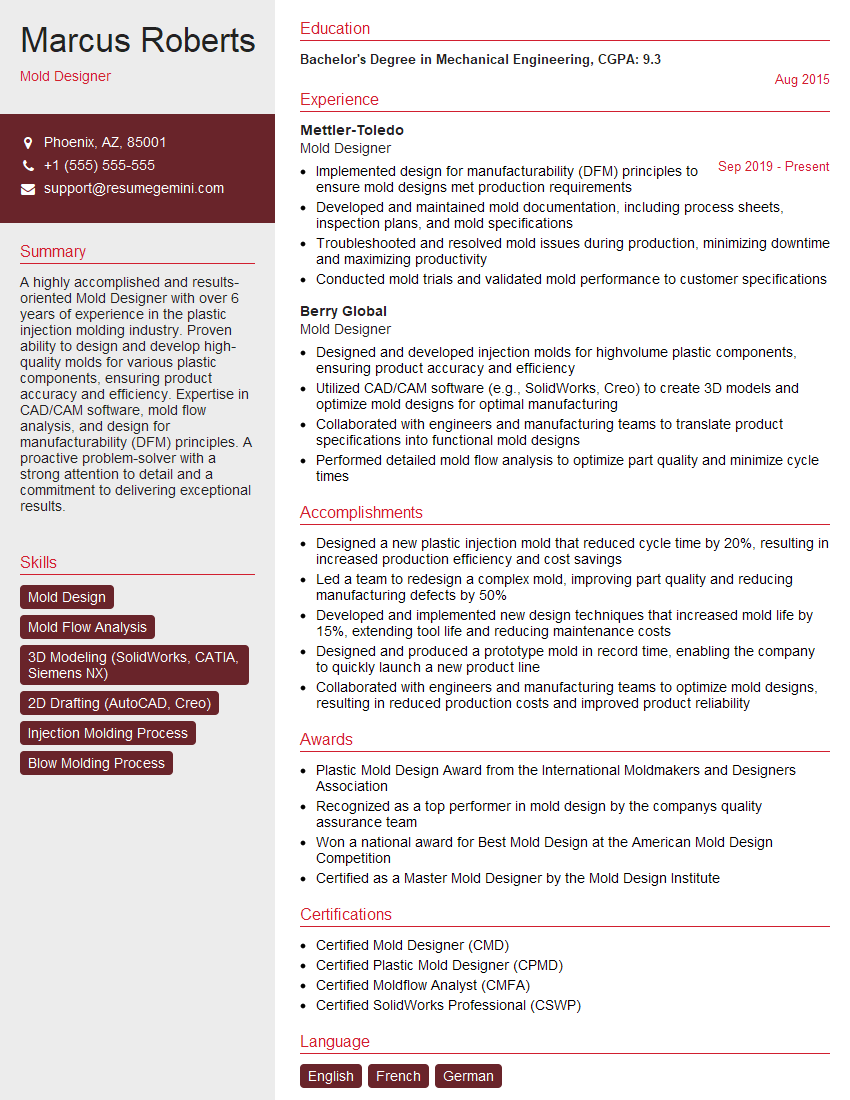
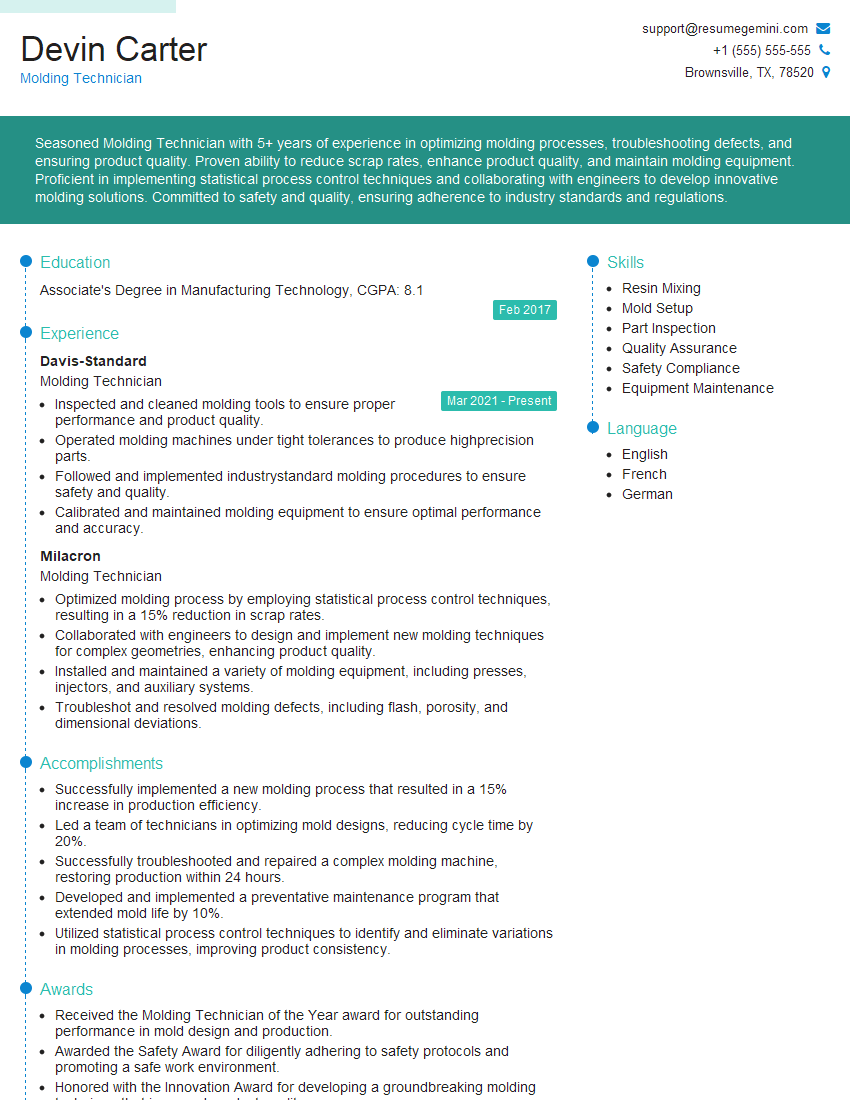
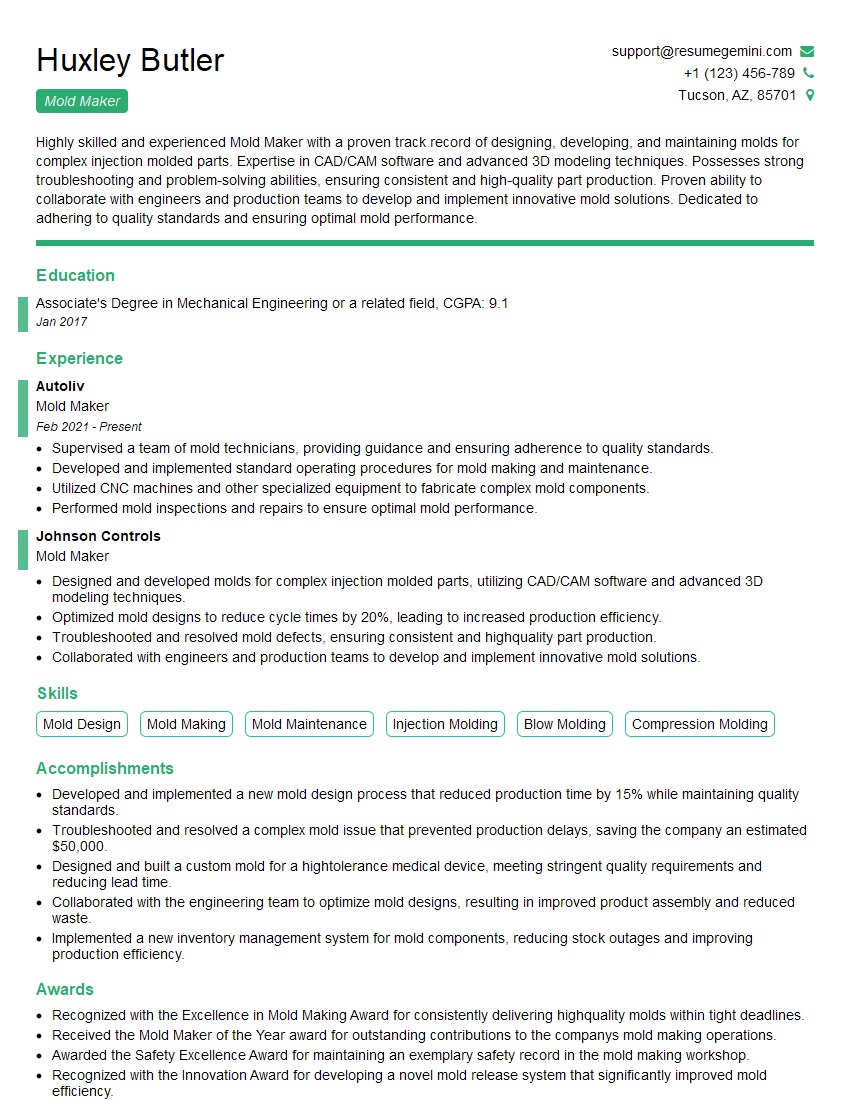
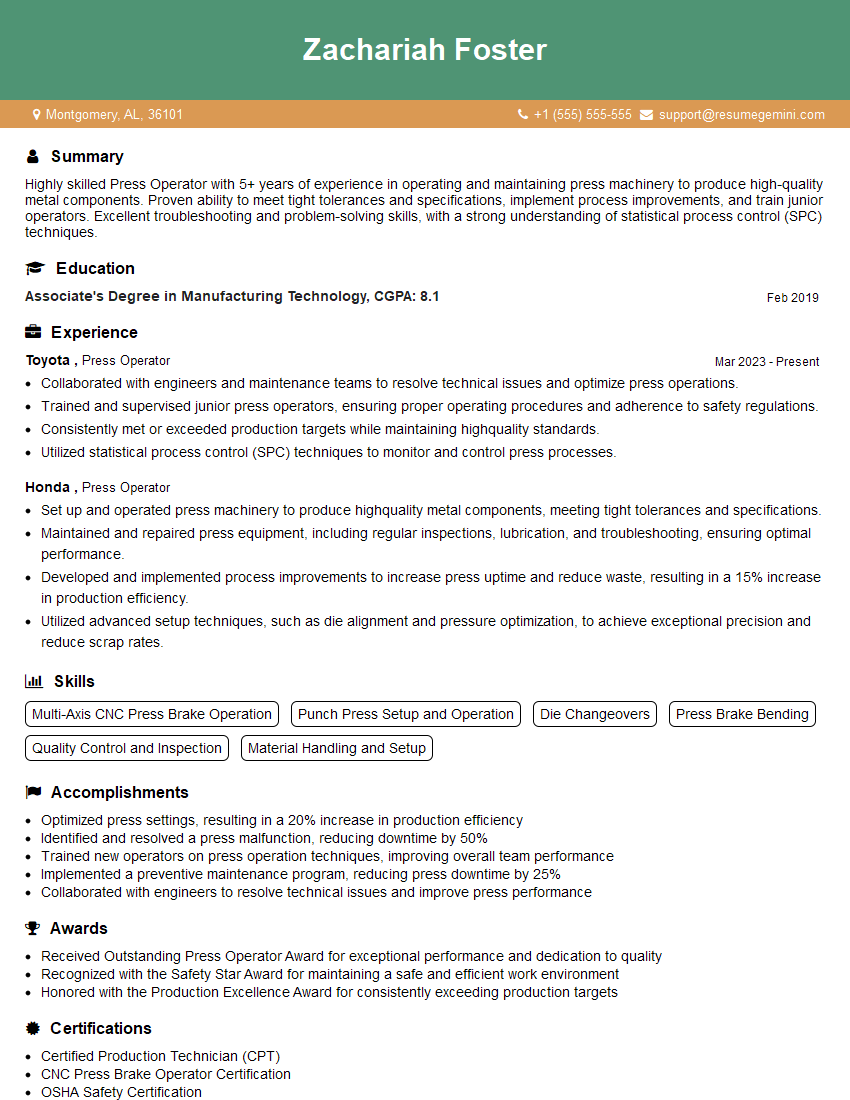
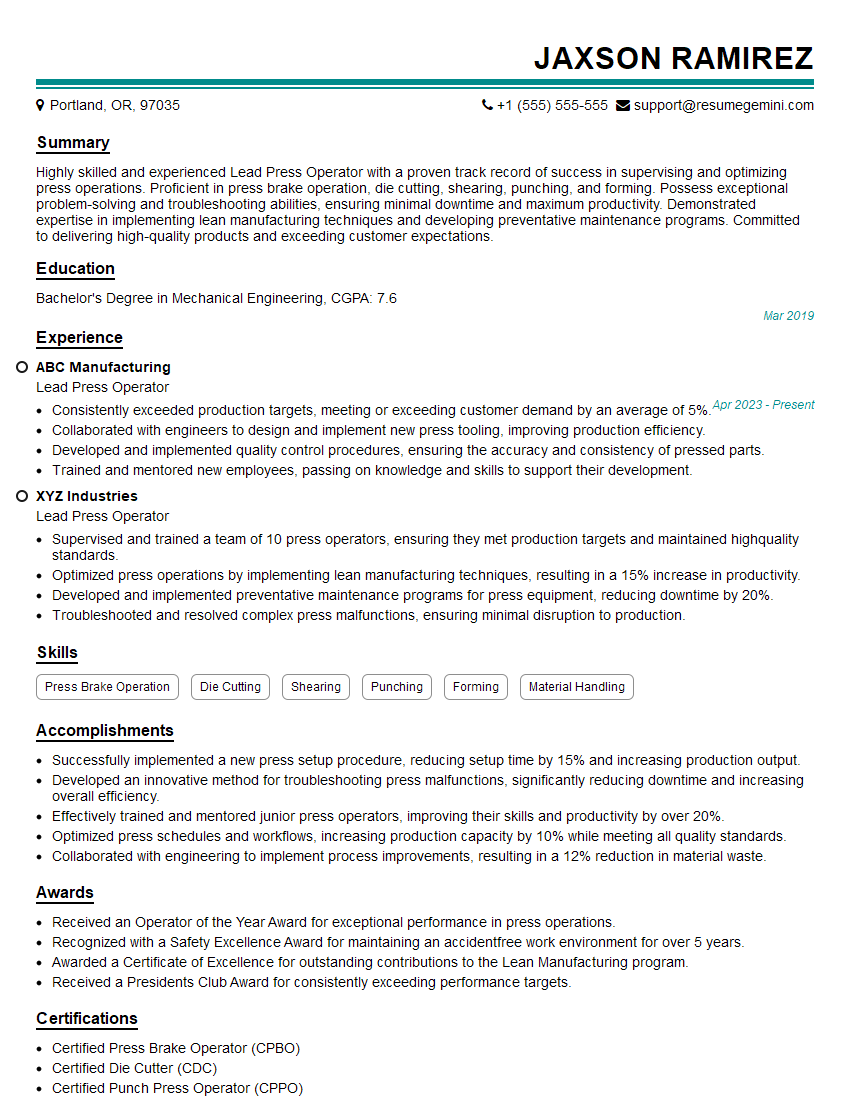
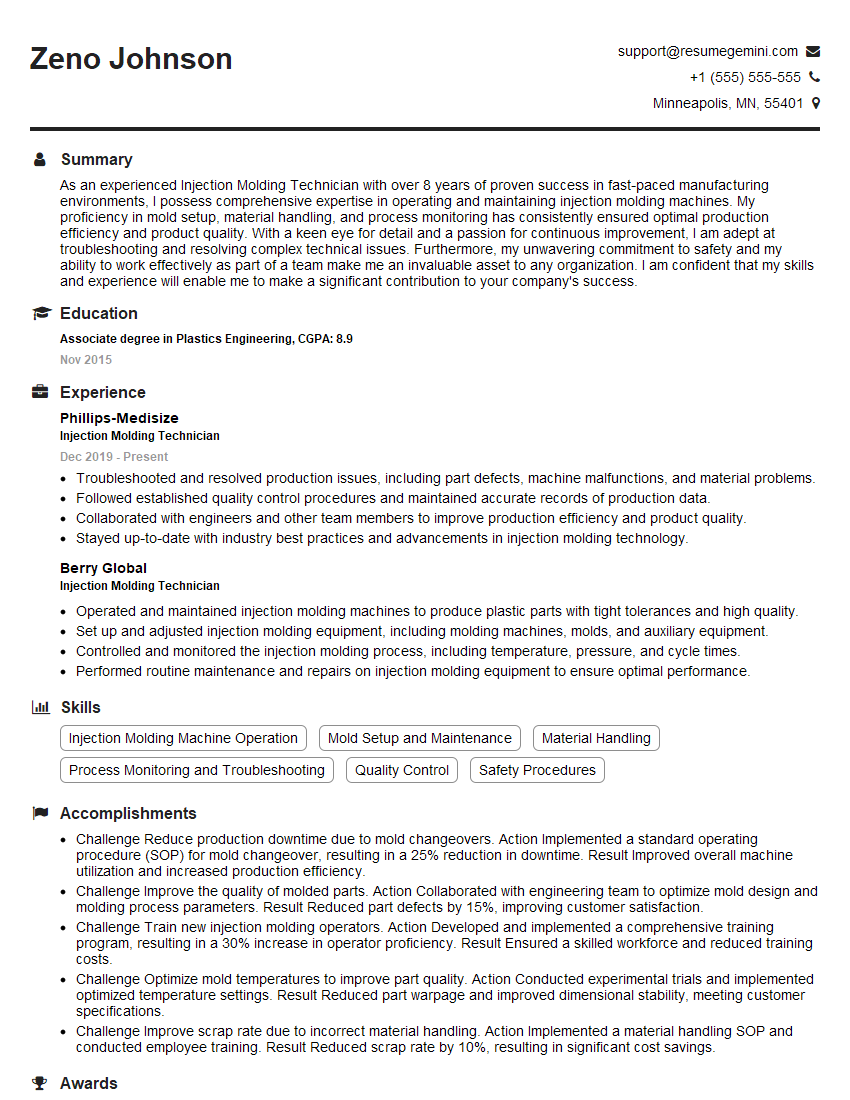
Mastering Molding and Pressing opens doors to exciting career opportunities with excellent growth potential in manufacturing and related industries. A strong resume is crucial to showcasing your skills and experience effectively. To significantly increase your chances of landing your dream job, creating an ATS-friendly resume is paramount. ResumeGemini is a trusted resource that can help you craft a professional and impactful resume tailored to the specific requirements of the Molding and Pressing field. Examples of resumes optimized for Molding and Pressing roles are available through ResumeGemini, empowering you to present your qualifications in the best possible light.
Explore more articles
Users Rating of Our Blogs
Share Your Experience
We value your feedback! Please rate our content and share your thoughts (optional).
What Readers Say About Our Blog
Very informative content, great job.
good