The thought of an interview can be nerve-wracking, but the right preparation can make all the difference. Explore this comprehensive guide to Monitoring Crop Health interview questions and gain the confidence you need to showcase your abilities and secure the role.
Questions Asked in Monitoring Crop Health Interview
Q 1. Explain the different methods for monitoring crop health.
Monitoring crop health involves a multifaceted approach combining various techniques. We can broadly categorize these methods into two main groups: direct observation and remote sensing.
- Direct Observation: This involves physically inspecting the crops. This includes visual assessments of plant growth, leaf color, and the presence of pests or diseases. Experienced agronomists can often identify problems early on simply by walking through a field and looking for abnormalities. For example, yellowing leaves might indicate nutrient deficiencies, while wilting might suggest water stress.
- Remote Sensing: This employs technologies like satellites, drones, and sensors to collect data about the crops without direct physical contact. These technologies measure various spectral properties of the plants to infer their health. Examples include multispectral imaging, hyperspectral imaging, and thermal imaging. These data are then analyzed to detect stress or disease.
Furthermore, we often use a combination of these methods. For instance, remote sensing might highlight an area of concern in a field, leading to a more detailed ground-based assessment in that specific location.
Q 2. Describe your experience with remote sensing technologies in agriculture.
My experience with remote sensing in agriculture spans over ten years. I’ve worked extensively with both satellite-based and drone-based systems. With satellite data, I’ve used platforms like Landsat and Sentinel to monitor large agricultural areas, analyzing NDVI (Normalized Difference Vegetation Index) and other vegetation indices to track crop growth and identify stress zones. This allows for large-scale monitoring and early warning systems for potential problems.
Drone-based remote sensing offers higher resolution data, allowing for more precise identification of issues. I’ve used drones equipped with multispectral and thermal cameras to create orthomosaics and identify specific problem areas within fields—allowing for targeted interventions, saving resources, and minimizing environmental impact. For example, a thermal image might pinpoint areas experiencing water stress due to uneven irrigation.
Q 3. How do you interpret NDVI data to assess crop vigor?
NDVI is a powerful tool for assessing crop vigor. It’s calculated using near-infrared (NIR) and red reflectance data from a sensor. The formula is: NDVI = (NIR - Red) / (NIR + Red).
A healthy, vigorously growing crop will have a high NDVI value (typically between 0.6 and 0.8), reflecting strong absorption of red light and high reflectance of near-infrared light. Lower NDVI values indicate stress, such as from water stress, nutrient deficiency, or disease. Values approaching zero suggest very poor plant health or bare soil.
I use NDVI data to create maps showing variations in crop health across a field. These maps help to identify specific areas requiring attention. For instance, areas with significantly lower NDVI than the average might be investigated for potential problems like pest infestations or nutrient deficiencies, allowing for targeted interventions instead of blanket treatments.
Q 4. What are the common signs of nutrient deficiencies in crops?
Nutrient deficiencies manifest in various ways, often showing up as visual symptoms on the plants. The specific symptoms depend on the deficient nutrient.
- Nitrogen (N): Leaves often exhibit a general yellowing, starting from the older leaves and progressing upwards. Stunted growth is also common.
- Phosphorus (P): Plants might show stunted growth, dark green or purplish leaves, and delayed maturity.
- Potassium (K): Symptoms typically appear on older leaves first, including yellowing, browning, and leaf scorching along the edges. Plants can also be prone to lodging (falling over).
- Other micronutrients: Deficiencies in other micronutrients like iron, zinc, and manganese have characteristic symptoms that often appear as interveinal chlorosis (yellowing between leaf veins).
Diagnosing nutrient deficiencies often involves a combination of visual symptoms, soil testing, and plant tissue analysis to confirm the specific nutrient deficiency and implement corrective measures such as fertilizer application.
Q 5. How do you identify and manage plant diseases?
Identifying and managing plant diseases requires a systematic approach.
- Visual Inspection: Carefully examine plants for any unusual symptoms, such as spots, wilting, discoloration, or unusual growths.
- Disease Diagnosis: Once symptoms are identified, accurate diagnosis is crucial. This may involve comparing symptoms to known diseases, consulting plant pathology resources, or sending samples to a diagnostic laboratory.
- Disease Management: Management strategies depend on the identified disease and its severity. Options include cultural practices (crop rotation, sanitation), biological control (introducing beneficial microorganisms), and chemical control (using pesticides, but only as a last resort and with careful consideration of environmental impact).
For example, if I find a fungal disease like powdery mildew, I would consider integrated pest management strategies which might include using fungicides but focus first on improving air circulation by adjusting planting density and using resistant cultivars.
Q 6. What are the key pests affecting crops in your region?
The key pests affecting crops in my region (Please replace “my region” with your specific region for a relevant answer. For example: “the Midwest United States”) vary depending on the specific crop but often include aphids, corn rootworms, soybean cyst nematodes, and various insect pests that attack fruiting crops. The specific pests will depend on local environmental conditions and cropping systems.
Effective pest management involves monitoring pest populations, implementing preventive measures (such as crop rotation and resistant varieties), and using appropriate control methods, such as biological controls or targeted pesticide application where necessary and under careful consideration of environmental impact.
Q 7. Explain your experience with using GIS software for crop monitoring.
GIS (Geographic Information Systems) software is invaluable for crop monitoring. I use GIS extensively to analyze spatial data from remote sensing and ground-based observations. I use ArcGIS Pro and QGIS for this purpose.
For instance, I integrate NDVI maps from satellite imagery with field boundaries and soil type data to create comprehensive spatial analyses. This reveals relationships between crop health, environmental factors, and management practices. I can then use this information to optimize irrigation, fertilization, and pest management strategies. The capability to layer multiple datasets in GIS allows for better problem-solving and more data-driven decision making.
Further, I use GIS to create reports, visualizations, and maps to communicate my findings to stakeholders effectively. This allows them to understand the crop status easily, improving management efficiency and reducing losses.
Q 8. Describe your experience with data analysis in agriculture.
My experience with data analysis in agriculture spans over a decade, encompassing various aspects from data acquisition to predictive modeling. I’ve worked extensively with large datasets, including remote sensing imagery (e.g., multispectral and hyperspectral data from drones and satellites), sensor data from soil moisture probes and weather stations, and yield monitor data from combines. I’m proficient in using statistical software packages like R and Python with libraries such as Pandas, Scikit-learn, and TensorFlow to analyze this data. My analyses have ranged from simple descriptive statistics to complex machine learning models for predicting crop yields, identifying disease outbreaks, and optimizing irrigation schedules.
For example, in one project, I used NDVI (Normalized Difference Vegetation Index) derived from drone imagery to identify areas within a field exhibiting stress due to nutrient deficiency. This allowed for targeted fertilization, reducing input costs and environmental impact while improving yield. Another project involved building a predictive model using weather data and historical yield information to forecast yields for the upcoming season, enabling proactive planning and risk management for the farmers.
Q 9. How do you use weather data to inform crop management decisions?
Weather data is crucial for informed crop management decisions. I use it in several ways. Firstly, I analyze historical weather patterns to understand typical growing conditions and identify potential risks such as droughts, floods, or extreme temperatures. Secondly, I integrate real-time weather forecasts with crop growth models to predict future conditions and assess their impact on crop development. This helps in making timely decisions about irrigation, fertilization, and pest control.
For example, a sudden drop in temperature predicted by the forecast might prompt the application of frost protection measures, while a prolonged dry spell would necessitate adjusting irrigation schedules. Similarly, knowing the anticipated rainfall can inform decisions about planting dates and the selection of drought-resistant crop varieties. I also utilize weather data in conjunction with other data sources, such as soil moisture sensors, to create a holistic understanding of crop water needs.
Q 10. What are the benefits of precision agriculture technologies?
Precision agriculture technologies offer numerous benefits leading to increased efficiency, sustainability, and profitability in farming. These technologies, which include GPS, sensors, remote sensing, and data analytics, allow for site-specific management of crops.
- Improved Resource Use Efficiency: Precision agriculture enables targeted application of inputs like fertilizers, pesticides, and water, minimizing waste and reducing environmental impact.
- Enhanced Yield and Quality: By optimizing resource allocation based on the specific needs of different areas within a field, precision agriculture leads to higher yields and improved crop quality.
- Reduced Costs: Minimizing input waste translates directly into cost savings for farmers.
- Better Decision-Making: Data-driven insights provide farmers with a clearer picture of their fields, allowing for more informed and timely management decisions.
- Increased Sustainability: By reducing the use of inputs and improving resource efficiency, precision agriculture contributes to more sustainable farming practices.
Think of it like this: instead of applying fertilizer uniformly across the entire field, precision agriculture allows you to apply it only where it’s needed, based on soil analysis and plant health assessments. This is significantly more efficient and environmentally friendly.
Q 11. How do you integrate data from different sources for comprehensive crop health assessment?
Integrating data from diverse sources is key to a comprehensive crop health assessment. I typically employ a multi-layered approach. First, I gather data from various sources, including:
- Remote Sensing: Satellite and drone imagery provide a large-scale view of the field, showing variations in vegetation health (NDVI, etc.).
- Ground-Based Sensors: Soil moisture sensors, weather stations, and plant sensors provide detailed, localized data.
- Yield Monitors: Data from combines provides information on yield variations across the field.
- Farm Management Systems (FMS): These software platforms collect and integrate data from various sources and can provide valuable insights.
Once collected, I use data processing and analysis techniques to clean, standardize, and integrate the data. I then leverage geospatial tools like GIS software to visualize and analyze the data spatially. Machine learning algorithms are often used to identify patterns and make predictions about crop health and yield. This integrated approach allows for a much more accurate and comprehensive understanding of the crop’s health and performance than any single data source alone could provide.
Q 12. Explain your understanding of soil health and its impact on crop growth.
Soil health is paramount for optimal crop growth. It refers to the overall condition of the soil, encompassing its physical, chemical, and biological properties. Healthy soil has good structure, allowing for adequate water infiltration and aeration. It contains a diverse community of microorganisms that contribute to nutrient cycling and disease suppression. It also possesses sufficient levels of essential nutrients available to plants.
The impact of soil health on crop growth is substantial. Healthy soil provides plants with the necessary nutrients and water, supports robust root systems, and protects against diseases and pests. Poor soil health, on the other hand, can lead to reduced yields, increased susceptibility to stress, and lower crop quality. I assess soil health using various methods, including soil testing (for nutrients and pH), visual inspection, and analyzing soil samples for microbial diversity. Improving soil health often involves practices like cover cropping, no-till farming, and crop rotation.
Q 13. What is your experience with yield monitoring and its applications?
Yield monitoring, using sensors on combines to measure yield in real-time, is a powerful tool for improving farm efficiency and profitability. My experience with yield monitoring includes data analysis to identify yield variations across fields. These variations can be due to factors like soil variability, pest infestations, or nutrient deficiencies.
By analyzing yield monitor data, we can create detailed yield maps which pinpoint high- and low-yielding areas. This information is invaluable for optimizing future management practices. For example, if a section of a field consistently produces lower yields, we can investigate the underlying causes (soil testing, imagery analysis) and implement targeted interventions to improve yields in subsequent seasons. This process not only increases overall yields but also helps optimize resource allocation, minimizing waste and maximizing profitability.
Q 14. Describe your experience with variable rate technology (VRT).
Variable rate technology (VRT) is the application of inputs (fertilizers, pesticides, seeds, etc.) at varying rates across a field based on site-specific needs. My experience with VRT involves integrating data from various sources (yield maps, soil tests, remote sensing) to create prescription maps that guide the variable rate application of inputs. This technology allows for precise and efficient input application, reducing waste and environmental impact while maximizing crop yield and profitability.
For example, using VRT for fertilizer application, I would analyze data on soil nutrient levels, combined with yield data to determine the optimal fertilizer rate for each area of the field. A prescription map is then generated and uploaded to the fertilizer applicator, which automatically varies the application rate accordingly. This approach significantly reduces fertilizer waste compared to uniform application, which would either over-fertilize some areas or under-fertilize others. Similar principles apply to variable rate seeding and pesticide application. The key is the precise, data-driven approach to input management.
Q 15. How do you assess the effectiveness of crop management strategies?
Assessing the effectiveness of crop management strategies involves a multi-faceted approach that combines quantitative data analysis with qualitative field observations. We start by defining clear, measurable objectives for the strategy, such as increased yield, improved fruit quality, or reduced pesticide use. Then, we meticulously collect data throughout the growing season using a variety of methods, including sensor readings from the field, satellite imagery analysis, and manual field assessments. This data is then compared to a control group or historical data to determine the impact of the implemented strategy. For example, if we’re testing a new irrigation technique, we’d compare the yield and water usage of treated plots to untreated control plots. Statistical analysis helps determine if the observed differences are statistically significant, allowing us to objectively assess the effectiveness of the strategy. Finally, we synthesize all findings – quantitative data, qualitative observations, and cost-benefit analyses – into a comprehensive report that details both the successes and areas for improvement of the crop management approach.
Career Expert Tips:
- Ace those interviews! Prepare effectively by reviewing the Top 50 Most Common Interview Questions on ResumeGemini.
- Navigate your job search with confidence! Explore a wide range of Career Tips on ResumeGemini. Learn about common challenges and recommendations to overcome them.
- Craft the perfect resume! Master the Art of Resume Writing with ResumeGemini’s guide. Showcase your unique qualifications and achievements effectively.
- Don’t miss out on holiday savings! Build your dream resume with ResumeGemini’s ATS optimized templates.
Q 16. How do you communicate crop health information to farmers?
Communicating crop health information to farmers requires a tailored approach, acknowledging varying levels of technological literacy and comfort. We employ a multi-pronged strategy:
- Simplified reports and dashboards: We translate complex data into user-friendly visualizations, such as maps highlighting areas of stress, charts showing yield projections, and simple tables summarizing key findings. These reports are accessible through mobile apps or web portals, making information readily available.
- On-site training and demonstrations: We conduct workshops and farm visits to demonstrate the interpretation of data and offer personalized advice. This hands-on approach ensures farmers understand how to utilize the information effectively.
- Precision agriculture tools: We integrate findings directly into precision agriculture tools, such as variable rate fertilizer applicators or irrigation systems. This allows for direct action based on the data, bypassing the need for complex interpretation.
- Community forums and networks: We facilitate discussion forums and knowledge-sharing platforms where farmers can connect, share experiences, and discuss the findings collectively. This peer-to-peer learning fosters broader adoption and understanding.
For instance, we might use a color-coded map to show areas of nitrogen deficiency in a field, directing farmers to apply targeted fertilization only where needed, resulting in cost savings and environmental benefits.
Q 17. What are the challenges of using drone technology for crop monitoring?
Drone technology, while promising, faces several challenges in crop monitoring. These include:
- Weather dependence: Strong winds, rain, or fog can ground drones, delaying data acquisition and impacting the timeliness of interventions.
- Battery life limitations: Drone battery life limits flight duration and coverage area, particularly in large fields. This necessitates multiple flights or strategic planning to ensure complete coverage.
- Data processing demands: Processing the large amount of imagery data generated by drones requires significant computational power and specialized software.
- Regulatory hurdles: Drone operation often requires licenses and adherence to strict regulations, which can add complexity and cost.
- Image quality variations: Factors like shadows, sun angle, and sensor calibration can affect image quality and hamper accurate analysis.
Furthermore, ensuring data accuracy requires careful calibration, proper flight planning, and skilled image processing. Overcoming these challenges often involves strategic planning, investing in high-capacity batteries and processing equipment, and employing advanced image processing techniques.
Q 18. How do you handle large datasets in crop health analysis?
Handling large datasets in crop health analysis necessitates employing efficient data management and processing techniques. We use a combination of approaches:
- Cloud computing: We leverage cloud platforms to store and process large datasets, allowing for scalability and parallel processing.
- Big data tools: We use tools like Hadoop and Spark to handle the volume, velocity, and variety of data generated by various sensors and sources.
- Database management systems: Well-structured databases ensure efficient data storage, retrieval, and querying.
- Data compression and filtering: We utilize techniques like lossless compression to reduce data size and filtering to eliminate unnecessary data points.
- Machine learning algorithms: Advanced machine learning algorithms are applied to identify patterns and extract relevant insights from the vast datasets.
For instance, we might use a distributed computing framework to analyze multi-spectral imagery from hundreds of fields simultaneously, allowing for rapid insights and timely interventions.
Q 19. Explain your experience with different types of sensors used in agriculture.
My experience encompasses a wide range of sensors used in agriculture, including:
- Multispectral sensors: These sensors capture images in multiple wavelengths beyond the visible spectrum, providing information on plant health indicators like chlorophyll content, nitrogen levels, and water stress.
- Hyperspectral sensors: Offering even finer spectral resolution than multispectral sensors, hyperspectral sensors provide detailed information about plant biochemistry and physiology.
- Thermal sensors: These sensors measure plant temperature, helping to identify areas of water stress or disease.
- LiDAR sensors: LiDAR sensors use laser pulses to measure plant height and canopy structure, providing insights into plant growth and biomass.
- Ground-based sensors: Soil moisture sensors, weather stations, and other ground-based instruments provide valuable contextual data, complementing aerial sensor data.
The choice of sensor depends on the specific application and the information needed. For example, while multispectral sensors are cost-effective for large-scale monitoring, hyperspectral sensors are better suited for detailed analysis of specific plant diseases.
Q 20. What is your experience with data visualization techniques for crop health data?
Data visualization is crucial for effective communication of crop health insights. We employ a variety of techniques:
- Geographic Information Systems (GIS): GIS maps are excellent for visualizing spatial variations in crop health, allowing us to pinpoint areas of stress or disease.
- Interactive dashboards: These dashboards allow users to explore data interactively, zooming into areas of interest, filtering data by different variables, and comparing data across time periods.
- Charts and graphs: Various chart types, such as line graphs, bar charts, and scatter plots, are used to represent key metrics and trends.
- 3D models: 3D models of fields can provide a more immersive way to understand the spatial distribution of crop health indicators.
- Color-coded imagery: Using different colors to represent different levels of crop health or other parameters makes the data more readily interpretable.
A strong focus is placed on creating intuitive and accessible visualizations that cater to different levels of technical expertise among users.
Q 21. How do you integrate predictive modeling into your crop health assessments?
Predictive modeling is integral to proactive crop management. We integrate machine learning models into our assessments to forecast potential issues and optimize resource allocation.
The process typically involves:
- Data collection and preparation: Gathering historical data on weather patterns, soil conditions, pest infestations, and crop yields.
- Model selection: Choosing an appropriate machine learning algorithm, such as regression models for yield prediction or classification models for disease detection.
- Model training and validation: Training the model on historical data and validating its performance using independent datasets.
- Model deployment: Implementing the model in a real-time system to make predictions based on current sensor data and weather forecasts.
- Model monitoring and refinement: Continuously monitoring the model’s performance and updating it with new data to maintain accuracy and improve predictive power.
For example, we might use a time series model to forecast the likelihood of a fungal infection based on weather conditions and historical infection rates. This would allow farmers to implement preventative measures before the infection spreads, minimizing yield loss.
Q 22. Describe your understanding of the various factors influencing crop yield.
Crop yield, the amount of produce harvested per unit area, is a complex interplay of various factors. Think of it like a recipe – you need the right ingredients in the right proportions for a successful outcome. These factors can be broadly categorized into:
- Climate: Temperature, rainfall, sunlight, and humidity are crucial. For example, insufficient rainfall can lead to drought stress, drastically reducing yield, while excessive rainfall can cause waterlogging and fungal diseases.
- Soil: Soil fertility (nutrient availability), texture (drainage), pH (acidity/alkalinity), and water-holding capacity directly influence root development and nutrient uptake. Imagine trying to grow a plant in pure sand – it won’t thrive due to poor water retention.
- Genetics: The inherent characteristics of the crop variety, such as disease resistance, yield potential, and maturity period, play a significant role. Choosing a variety suited to your local climate and soil is vital.
- Management Practices: This includes planting density, fertilization (providing essential nutrients like nitrogen, phosphorus, and potassium), pest and disease control, and irrigation techniques. Over-fertilization can harm the environment and even damage the crop, while insufficient fertilization leads to nutrient deficiency.
- Pests and Diseases: Insects, fungal infections, and viral diseases can significantly impact yield by damaging plant tissues, reducing photosynthesis, and hindering nutrient uptake. Early detection and appropriate management are crucial.
- Weed Competition: Weeds compete with crops for resources such as water, nutrients, and sunlight, reducing overall yield. A field choked with weeds will likely yield far less than a weed-free field.
Understanding the interplay of these factors is essential for optimizing crop yield. Precision agriculture techniques, leveraging data and technology, are increasingly important in fine-tuning these factors for improved efficiency and sustainability.
Q 23. What are the ethical considerations related to data collection and use in agriculture?
Ethical considerations in agricultural data collection and use are paramount. Farmers are often providing sensitive data about their operations, and responsible use is vital. Key ethical considerations include:
- Data Privacy and Security: Ensuring the confidentiality and security of farmer data is crucial. Robust data protection measures, including encryption and access control, are essential to prevent unauthorized access or misuse.
- Informed Consent: Farmers should be fully informed about how their data will be collected, used, and shared. They must provide explicit consent before data collection begins. This includes transparency about who will have access to the data and for what purposes.
- Data Ownership and Control: Farmers should have control over their data and the right to access, modify, or delete it. Clear agreements outlining data ownership are necessary.
- Transparency and Accountability: Data collection and use processes should be transparent and accountable. There should be clear mechanisms for addressing complaints or concerns.
- Bias and Fairness: Algorithms and analytical tools used to process agricultural data should be free from bias to avoid discriminatory outcomes. For example, a model trained primarily on data from large farms might not accurately predict the performance of small farms.
- Data Equity: The benefits of data-driven agriculture should be accessible to all farmers, regardless of their size or resources. Equitable access to technology and support is crucial.
Addressing these ethical considerations promotes trust between data providers and users and fosters a more sustainable and equitable agricultural sector.
Q 24. Explain your experience with different irrigation techniques and their impact on crop health.
Irrigation is critical for crop health, and various techniques exist, each with its own impact. The best choice depends on factors like water availability, terrain, crop type, and economic considerations.
- Drip Irrigation: This method delivers water directly to the roots through a network of tubes and emitters. It’s highly efficient, minimizes water waste, and reduces weed growth, promoting healthy crops. However, it can be expensive to install and maintain.
- Sprinkler Irrigation: Water is sprayed onto the field through sprinklers. It’s relatively easy to install but less efficient than drip irrigation, leading to higher water consumption and potential for water runoff. It can also lead to fungal diseases if leaves remain wet for extended periods.
- Flood Irrigation: Water is flooded over the field. It’s simple and inexpensive but highly inefficient, leading to significant water waste and potential for soil erosion and nutrient leaching. It is not suitable for all crops or terrains.
- Subsurface Irrigation: Water is applied below the surface through perforated pipes. It’s efficient and minimizes evaporation, but installation is complex and expensive.
My experience includes designing and implementing drip irrigation systems for vineyards and orchards, resulting in significant water savings and improved fruit quality. I’ve also worked with sprinkler systems in larger field crops, constantly monitoring for optimal water application to avoid stress or overwatering.
Q 25. How do you identify and manage weed pressure in crops?
Weed pressure is a major challenge in crop production, impacting yield and quality. Effective weed management involves a multi-pronged approach:
- Identification: Accurate identification of weed species is crucial to select the appropriate control methods. Different weeds respond differently to herbicides and other control measures.
- Prevention: Prevention is key! This includes using certified weed-free seeds, practicing crop rotation, and employing proper tillage techniques to minimize weed seed germination.
- Cultural Control: This involves practices like using cover crops to suppress weed growth, adjusting planting dates to outcompete weeds, and maintaining optimum crop density.
- Mechanical Control: This involves physical removal of weeds through techniques such as hoeing, weeding, mowing, and using cultivators. While labor-intensive, it’s environmentally friendly and appropriate for organic farming.
- Chemical Control (Herbicides): Herbicides can be very effective but require careful application to avoid harming the crop or the environment. Selective herbicides target specific weed species while leaving the crop unaffected. Pre-emergent herbicides prevent weed seeds from germinating, while post-emergent herbicides kill existing weeds.
- Biological Control: Introducing natural enemies of weeds, like specific insects or fungi, can help control weed populations. This is an environmentally friendly approach but requires careful planning and execution.
Integrated Weed Management (IWM) is the most sustainable approach, combining different control methods to minimize herbicide use and reduce environmental impact. For example, in a corn field, pre-emergent herbicides might be combined with careful tillage and mechanical weed control during the growing season.
Q 26. What are the economic implications of crop health management decisions?
Crop health management decisions have significant economic implications, affecting both profitability and sustainability. Poor management leads to yield losses, increased costs (e.g., from pest damage, disease control, and replanting), and reduced product quality. Conversely, sound management practices translate into higher yields, reduced costs, and improved product quality, ultimately increasing farm profitability.
For example, timely application of pesticides and fertilizers can prevent significant yield losses due to pests and nutrient deficiencies. Investing in efficient irrigation systems can save water and energy costs while improving crop performance. The economic impact is magnified when considering the scale of agricultural production. A small percentage improvement in yield across vast fields can translate to millions of dollars in increased revenue.
Additionally, proactive crop health management contributes to sustainable agriculture by minimizing the use of pesticides and fertilizers, conserving water resources, and reducing environmental impacts. Sustainable practices can even enhance a farm’s market value by attracting consumers seeking environmentally responsible products.
Q 27. How do you stay up-to-date on the latest advancements in crop health monitoring?
Keeping abreast of the latest advancements in crop health monitoring requires a multi-faceted approach:
- Scientific Journals and Publications: Regularly reviewing peer-reviewed journals like the *Journal of Agricultural and Food Chemistry* and *Crop Science* provides access to cutting-edge research.
- Industry Conferences and Workshops: Participating in conferences and workshops allows networking with other professionals and learning about the latest technologies and techniques. It is a great place to see and discuss new solutions.
- Online Resources and Databases: Websites, online databases (like Web of Science), and professional organizations (like the American Society of Agronomy) provide valuable information and resources.
- Industry News and Reports: Staying updated on industry news and market reports, often available from agricultural technology companies and consulting firms, helps understand emerging trends and technologies.
- Collaboration and Networking: Engaging with other professionals through collaborations, attending workshops, and participating in online forums fosters knowledge sharing and facilitates learning from experts’ experience.
Furthermore, I maintain a strong network of colleagues and actively participate in online communities focused on precision agriculture and crop health management. This dynamic approach helps me stay informed about the latest advancements and technologies, allowing me to effectively apply this knowledge in my professional work.
Key Topics to Learn for Monitoring Crop Health Interview
- Remote Sensing Techniques: Understanding the principles of multispectral and hyperspectral imaging, LiDAR, and thermal imaging for crop health assessment. Practical application includes analyzing imagery to detect stress indicators like nutrient deficiencies or disease.
- Crop Physiology and Stress Indicators: Knowing the physiological responses of crops to various stresses (drought, disease, pests) and identifying visual and spectral indicators of these stresses. Practical application involves interpreting field observations and remotely sensed data to diagnose crop health issues.
- Data Analysis and Interpretation: Proficiency in using statistical software and programming languages (e.g., R, Python) for analyzing large datasets derived from remote sensing, field measurements, and sensor networks. Practical application includes developing algorithms for automated crop health monitoring and generating actionable insights.
- Precision Agriculture Technologies: Familiarity with various precision agriculture technologies, including variable rate application, GPS-guided machinery, and sensor networks. Practical application includes understanding how these technologies integrate with crop health monitoring to optimize resource use and improve yields.
- Disease and Pest Identification: Ability to identify common crop diseases and pests, understanding their life cycles, and the impact on crop health. Practical application involves using diagnostic tools and integrating this knowledge with remote sensing data for early detection and management.
- Sustainable Agriculture Practices: Understanding the role of crop health monitoring in promoting sustainable agricultural practices, including minimizing pesticide and fertilizer use, optimizing water management, and enhancing soil health. Practical application includes using monitoring data to make informed decisions that reduce environmental impact.
Next Steps
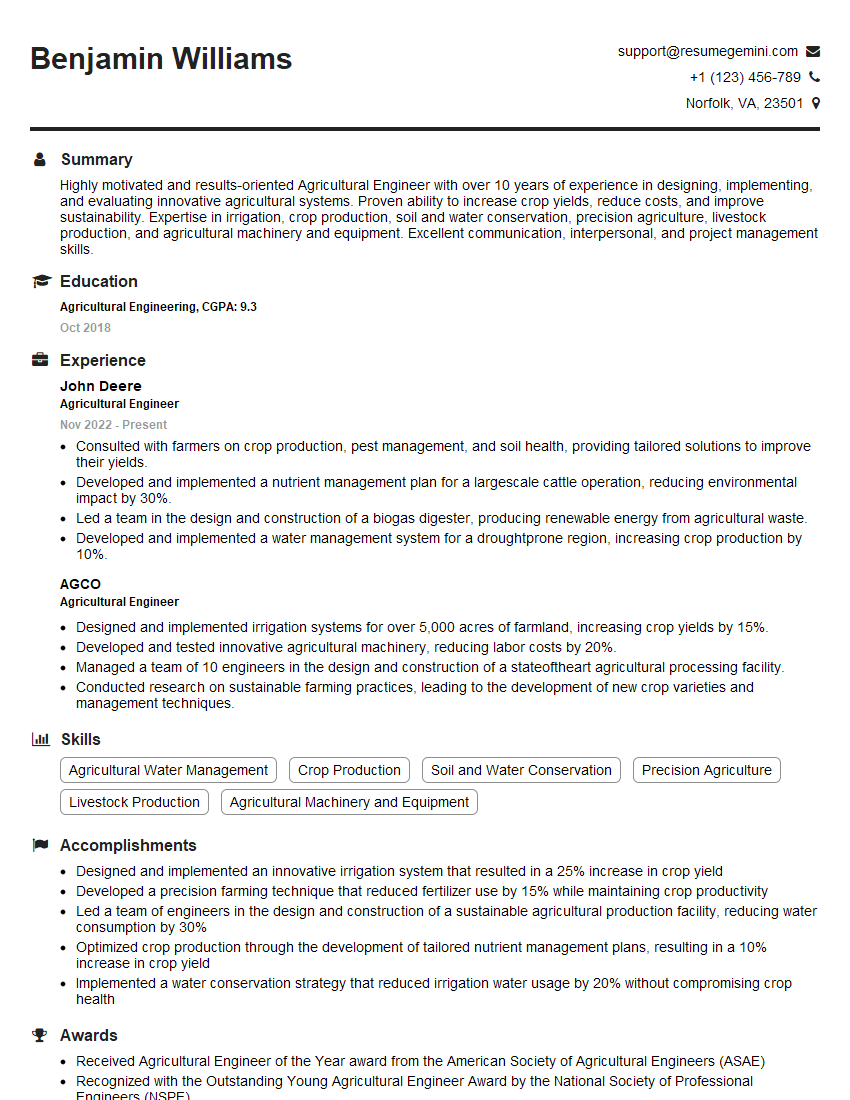
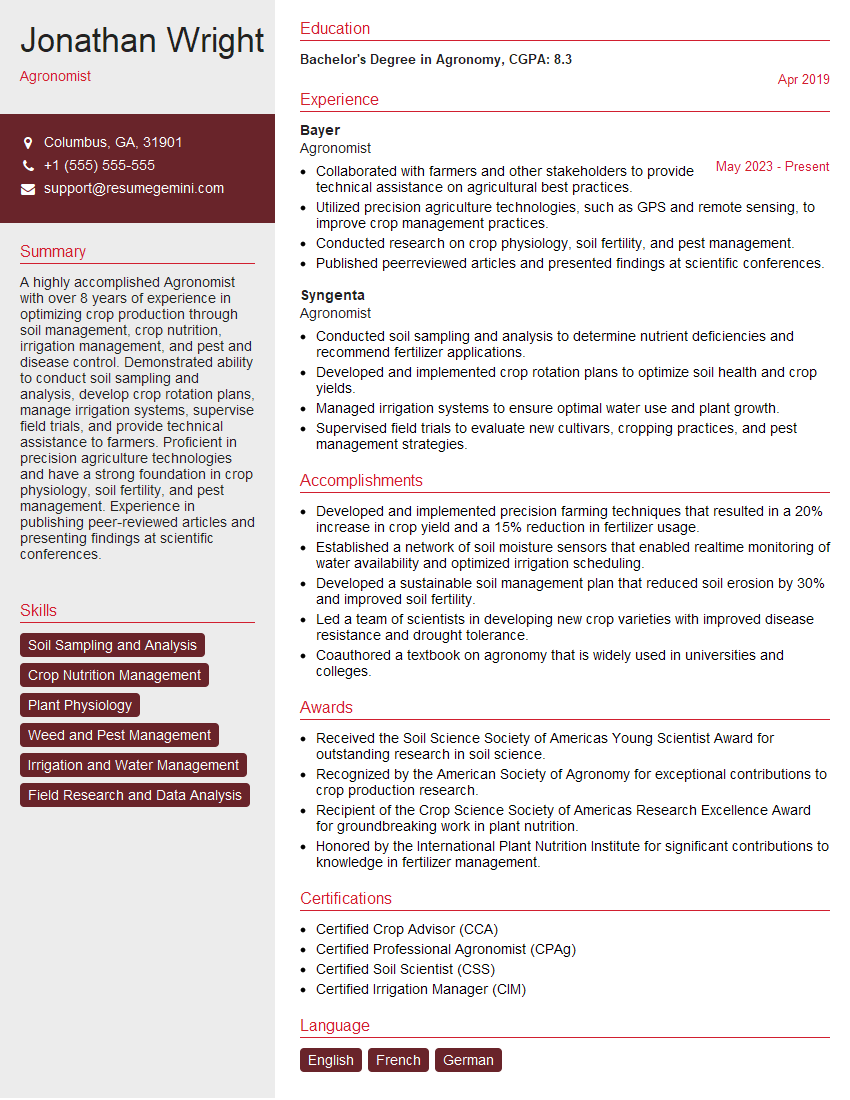
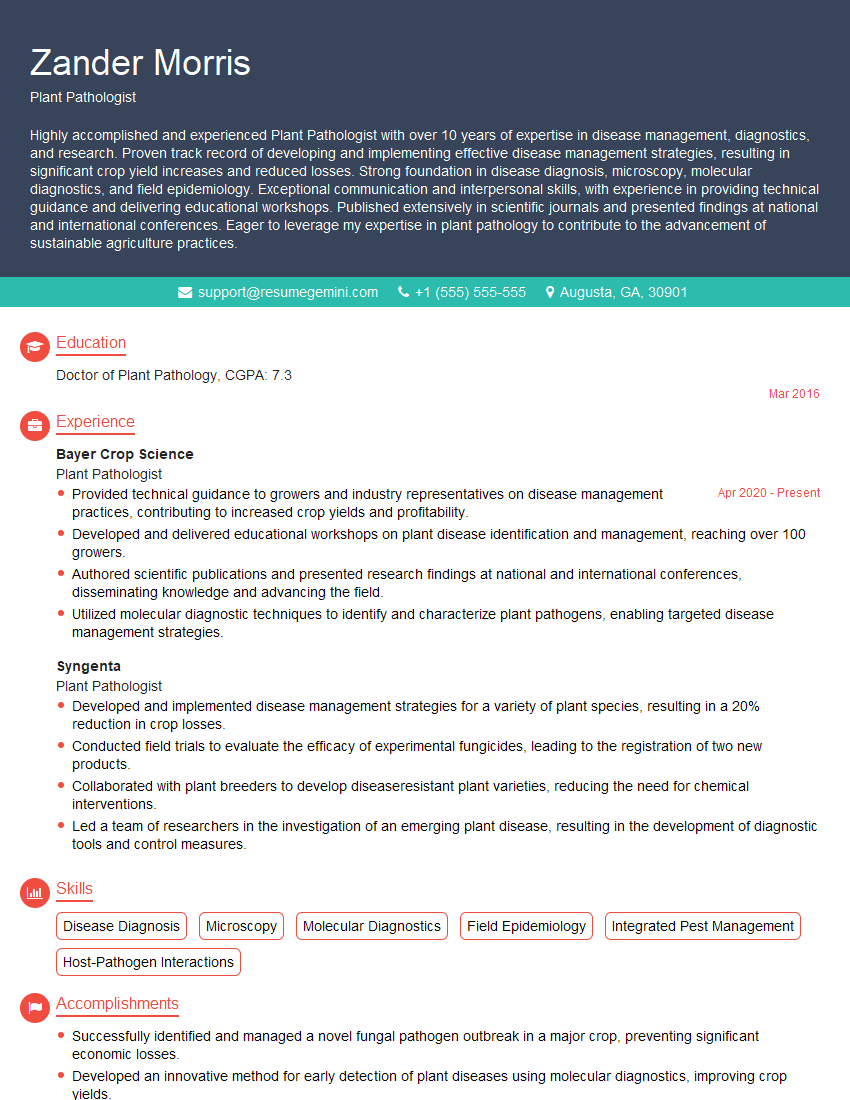
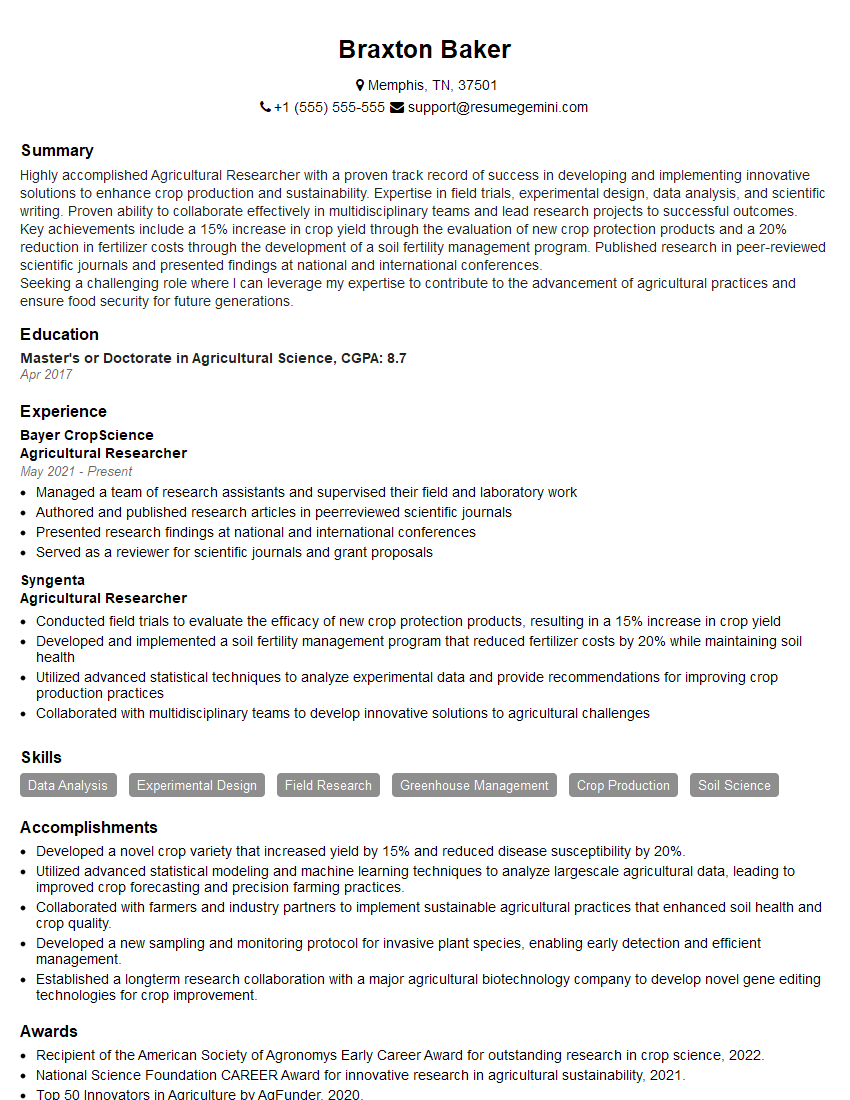
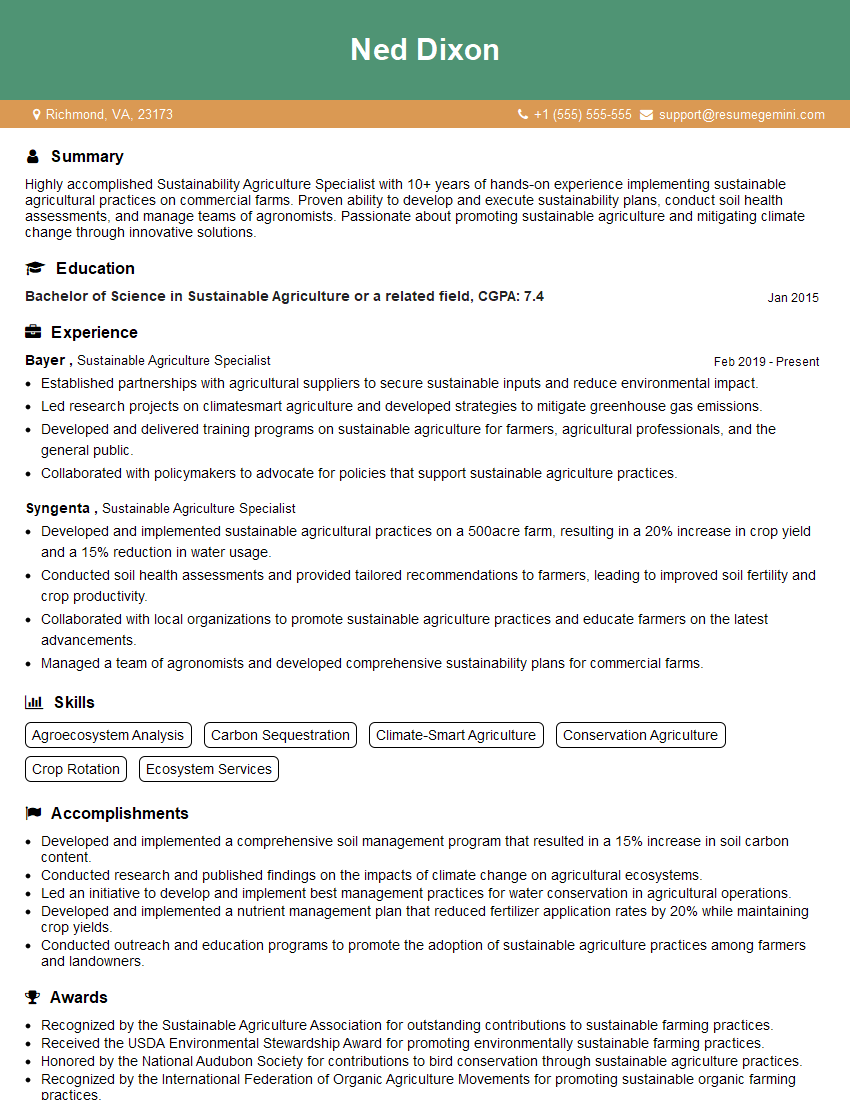
Mastering crop health monitoring is crucial for a successful career in the agricultural technology sector, opening doors to exciting roles with increasing responsibility and impact. A strong, ATS-friendly resume is your key to unlocking these opportunities. To make your application stand out, invest time in crafting a compelling resume that highlights your skills and experience effectively. ResumeGemini is a trusted resource to help you build a professional and impactful resume. We provide examples of resumes tailored to Monitoring Crop Health to guide you in creating yours. Let us help you showcase your expertise and land your dream job!

Explore more articles
Users Rating of Our Blogs
Share Your Experience
We value your feedback! Please rate our content and share your thoughts (optional).
What Readers Say About Our Blog
Very informative content, great job.
good