Are you ready to stand out in your next interview? Understanding and preparing for Monologue Delivery interview questions is a game-changer. In this blog, we’ve compiled key questions and expert advice to help you showcase your skills with confidence and precision. Let’s get started on your journey to acing the interview.
Questions Asked in Monologue Delivery Interview
Q 1. Describe your process for analyzing a monologue.
Analyzing a monologue is like dissecting a character’s soul. My process begins with multiple readings, each focusing on a different aspect. The first read is for comprehension – grasping the plot, setting, and overall arc. The second read delves into character – identifying their motivations, relationships, and internal conflicts. I then break down the text structurally, noting key phrases, shifts in tone, and punctuation, which often hint at unspoken emotions. Finally, I consider the monologue’s purpose: is it a confession, a plea, a boast? Understanding this objective is key to crafting a compelling performance. For instance, in analyzing Hamlet’s ‘To be or not to be’ speech, my initial read would focus on the existential crisis. Subsequent readings would pinpoint his grief, indecision, and suicidal contemplation, leading to a nuanced portrayal of a complex character wrestling with moral dilemmas.
Q 2. How do you identify the central theme and subtext of a monologue?
Identifying the central theme and subtext is crucial. The central theme is the monologue’s overt message – the main idea the character is communicating. The subtext, however, is the underlying, often unspoken meaning. It’s what the character is *really* saying, even if they don’t explicitly state it. To find these, I look for recurring imagery, symbolism, and emotional contradictions within the text. For example, in a monologue about lost love, the central theme might be grief, but the subtext could be self-blame or repressed anger. Examining the character’s actions and relationships outside the monologue can also illuminate the subtext. Let’s say a character delivers a seemingly cheerful monologue about their success, but their body language suggests exhaustion. This contrast between words and actions points to a possible subtext of hidden struggle or resentment.
Q 3. Explain your approach to character development in a monologue.
Character development in a monologue is a delicate dance between what’s written and what’s implied. I begin by creating a detailed backstory, including the character’s age, personality, experiences, and relationships. This backstory informs my choices about vocal tone, posture, and physicality. I then explore their motivations – what do they hope to achieve by delivering this monologue? Who is their audience, and how does that shape their delivery? I consider their emotional state – are they angry, sad, hopeful? For example, if a character is delivering a farewell monologue, I might consider their past relationships, regrets, and hopes for the future to inform the depth and authenticity of their performance. A thorough understanding of the character’s history and motivations will ensure a believable and emotionally resonant performance.
Q 4. How do you incorporate physicality into your monologue delivery?
Physicality is not merely an embellishment; it’s an integral part of conveying emotion and meaning. I use movement, gesture, and posture to mirror the character’s emotional state and internal conflicts. For example, pacing back and forth might suggest anxiety, while a rigid posture might indicate repression. Subtle changes in weight distribution can also convey shifts in mood. Imagine a character confessing a secret – their shoulders might slump as they begin, then tense as the confession becomes more difficult. I pay close attention to the relationship between the body and the words, ensuring that the physicality enhances, rather than distracts from, the message.
Q 5. Describe your techniques for vocal variety and expression.
Vocal variety and expression are paramount. Monotony is the enemy of engagement. I focus on pacing, rhythm, intonation, and volume to create a dynamic performance. Pauses are powerful tools, allowing the audience to absorb the weight of a particular phrase or emotion. Changes in tempo can highlight shifts in mood, while variations in volume emphasize key points. Consider the difference between whispering a secret and shouting a declaration. I practice vocal exercises to improve breath control and projection, ensuring that my voice is clear, resonant, and expressive. I also work on articulating each word clearly to ensure every syllable adds to the meaning of the monologue. Vocal variety is not about simply changing your voice; it’s about finding the right tone for every moment, every emotion.
Q 6. How do you manage stage fright or nerves before a monologue performance?
Stage fright is a common experience, but manageable. My approach is multifaceted. Thorough preparation is my first line of defense. Knowing the text inside and out gives me confidence. I also practice my performance repeatedly, not just in front of a mirror but in front of friends and colleagues. This helps me get comfortable with the material and identify any areas for improvement. Before a performance, I use relaxation techniques like deep breathing and mindfulness exercises to calm my nerves. Focusing on the character rather than my anxiety helps me embody the role and forget my own self-consciousness. Remembering that the audience is there to support me, and that I am sharing something meaningful, helps reduce the pressure.
Q 7. How do you adapt your delivery to different audiences?
Adapting to different audiences requires sensitivity and flexibility. I consider the size and demographic of the audience – a small, intimate setting requires a different approach than a large auditorium. I might adjust my volume and pacing to suit the space and audience’s attention span. I also consider the context of the performance – a formal theatrical setting calls for a different style than a casual reading. Moreover, gauging the audience’s reactions during the performance allows me to subtly adjust my delivery, ensuring that the message resonates. I might add a small beat here or adjust my tone there based on the audience’s energy and response. This allows for a dynamic and engaging experience for everyone.
Q 8. Explain your understanding of pacing and timing in a monologue.
Pacing and timing in a monologue are crucial for effectively conveying the character’s emotions, thoughts, and the story’s arc. It’s about controlling the rhythm of the delivery, similar to conducting an orchestra. Poor pacing can lead to a monotone, boring performance, while excellent pacing keeps the audience captivated.
Think of it like this: a rushed monologue feels frantic and overwhelming, while a sluggish one feels tedious and disconnected. The key is finding the right balance. Fast sections might emphasize urgency or excitement, while slower sections allow for reflection or build suspense. Timing also involves strategically placing pauses to highlight key moments or allow the audience to process information. For example, a beat of silence after revealing a shocking secret can amplify its impact.
- Fast pacing: Use for scenes of action, intense emotion, or rapid-fire dialogue.
- Slow pacing: Use for moments of reflection, introspection, or building suspense.
- Varied pacing: Employ a mix of fast and slow pacing to keep the audience engaged and prevent monotony. This dynamic approach creates a more natural and engaging experience for the audience.
Q 9. How do you handle unexpected interruptions or technical difficulties during a performance?
Unexpected interruptions or technical difficulties are an unfortunate reality of live performance. My approach is based on adaptability and presence of mind. If a microphone malfunctions, I might adjust my volume and projection, perhaps speaking directly to sections of the audience. If an unexpected noise occurs, I might incorporate it into the performance, using it as a source of humor or dramatic irony, depending on the context. The most important thing is not to panic or break character; maintain composure and continue with the performance as smoothly as possible. I have a practiced ability to stay in the present moment, focusing on my performance and my connection with the audience.
For instance, during a student performance, a loud crash happened backstage. Instead of freezing, I paused briefly, took a deep breath, and incorporated the noise into the monologue, remarking on the character’s heightened state of nerves, mirroring the unexpected interruption in a surprisingly effective way.
Q 10. How do you incorporate pauses and silences effectively?
Pauses and silences are powerful tools in a monologue, not just breaks in the dialogue, but opportunities for dramatic effect. They allow the audience to process information, build anticipation, or experience the character’s emotions more deeply. A well-placed pause can emphasize a critical line, amplify the emotional weight of a revelation, or create a sense of mystery.
- Emphasizing key moments: A pause before delivering a significant line can heighten its impact.
- Building suspense: A series of short pauses can create anticipation and tension.
- Showing emotion: A long pause can convey shock, grief, or contemplation.
Consider Hamlet’s famous “To be or not to be” soliloquy. The pauses within the speech are crucial to its effectiveness. Each pause gives the audience time to absorb the weight of Hamlet’s words and his internal conflict.
Q 11. Describe your approach to memorizing a long monologue.
Memorizing a long monologue requires a strategic approach that goes beyond rote learning. I employ a multi-sensory approach, combining visual aids, auditory cues, and kinesthetic movement. I start by breaking the monologue down into smaller, manageable sections, focusing on understanding the text’s meaning and emotional arc.
- Chunking: Breaking the text into smaller, logical sections for easier memorization.
- Repetition: Repeatedly rehearsing each section, paying attention to both the words and the subtext.
- Movement & Emotion: Incorporating physical actions and emotions corresponding to each section.
- Recording & Playback: Recording myself performing the sections and listening to the playback to identify areas needing more work.
Furthermore, I frequently practice the monologue in various settings and conditions, to simulate performance conditions.
Q 12. How do you maintain audience engagement throughout the monologue?
Maintaining audience engagement throughout a long monologue hinges on a number of factors: strong storytelling, clear characterization, skillful use of vocal variety, and meaningful connection with the audience. I aim to create a captivating narrative that draws the audience in from the start. I use variations in my tone, pace, and volume to keep the performance dynamic and exciting.
- Strong storytelling: A compelling narrative with a clear beginning, middle, and end.
- Clear characterization: A well-defined character with relatable motivations and goals.
- Vocal variety: Variations in tone, pace, and volume to maintain audience interest.
- Eye contact and connection: Engaging with individual audience members to create a sense of intimacy.
Think of it like a good novel; the audience needs to be invested in the character’s journey and invested in the outcome. The narrative needs to be compelling enough to keep them engaged, and the performance style dynamic enough to prevent their attention from wandering.
Q 13. How do you incorporate emotional authenticity into your performance?
Emotional authenticity is paramount in any monologue performance. It’s not about mimicking emotions but about deeply understanding the character’s emotional landscape and conveying it convincingly. This requires thorough character analysis, drawing on personal experiences and observations to access those emotions truthfully.
For example, if I’m playing a character grappling with grief, I might draw upon my own memories of loss, not to directly replicate it, but to tap into the related feelings of sadness, longing, or anger. I focus on creating a believable emotional arc for the character, ensuring the audience can empathize with their journey. I strive to avoid being overly theatrical or manipulative; genuine emotion comes from honest vulnerability and authentic connection to the character’s emotional truth.
Q 14. Explain your understanding of subtext and how you convey it.
Subtext refers to the unspoken or implied meaning behind the words, the underlying emotions and motivations that are not explicitly stated. It’s what the character is really feeling or thinking, even if they’re not saying it outright. Conveying subtext effectively involves a nuanced approach to acting. It’s about using subtle shifts in vocal tone, body language, and facial expressions to communicate these unspoken emotions.
Imagine a character saying, “I’m fine,” with a forced smile and slumped shoulders. The subtext is clear: they are anything but fine. This nonverbal communication is as important, if not more so, than the actual dialogue. To convey subtext effectively, I carefully analyze the script, looking for clues about the character’s inner life and motivations. I then use my physicality and vocal delivery to express those hidden emotions, allowing the audience to connect with the character on a deeper level.
Q 15. How do you use your voice to create different moods and emotions?
Vocal modulation is the cornerstone of effective monologue delivery. To create different moods and emotions, I manipulate several aspects of my voice:
- Pace: A fast pace can convey excitement or nervousness; a slow pace, solemnity or contemplation. For example, a frantic confession would use a rapid pace, punctuated by short breaths, while a reflective monologue might employ a slow, deliberate pace.
- Volume: Changes in volume emphasize key points or create dramatic tension. A whispered secret contrasts sharply with a powerful declaration, immediately altering the emotional landscape.
- Pitch: Higher pitch can indicate fear, excitement, or even hysteria; a lower pitch might express sadness, authority, or anger. Imagine the difference between a high-pitched, desperate plea and a low, resonant declaration of defiance.
- Tone: This encompasses the overall quality of the voice, ranging from harsh and aggressive to soft and gentle. A character filled with bitterness might speak with a grating tone, while a loving character might use a warm, soothing tone.
- Pauses: Strategic pauses create suspense, allow the audience to absorb information, and give the performer a moment to breathe and adjust their emotional delivery. A well-placed pause can be far more impactful than any words.
By carefully combining these elements, I can effectively portray a wide range of emotions and moods, ensuring a compelling and believable performance.
Career Expert Tips:
- Ace those interviews! Prepare effectively by reviewing the Top 50 Most Common Interview Questions on ResumeGemini.
- Navigate your job search with confidence! Explore a wide range of Career Tips on ResumeGemini. Learn about common challenges and recommendations to overcome them.
- Craft the perfect resume! Master the Art of Resume Writing with ResumeGemini’s guide. Showcase your unique qualifications and achievements effectively.
- Don’t miss out on holiday savings! Build your dream resume with ResumeGemini’s ATS optimized templates.
Q 16. Describe your experience working with a director to refine a monologue.
Collaborating with a director is a crucial part of refining a monologue. In one particular instance, I was working on a monologue about a character grappling with grief. My initial interpretation focused solely on the character’s outward sadness. My director, however, astutely pointed out that the character’s internal struggle was equally important. She suggested exploring moments of anger, denial, and even fleeting hope intertwined with the sadness.
We worked together through a series of exercises. She guided me to explore the physicality of grief – slumped posture, shaky voice, but also moments of sudden bursts of energy as suppressed emotions surfaced. We dissected the text line by line, exploring subtext and motivations. This collaborative process significantly enriched the performance, shifting it from a simple portrayal of sadness to a complex, multi-layered exploration of grief.
Q 17. What are your strengths and weaknesses as a monologue performer?
My greatest strength lies in my ability to connect emotionally with the text and translate that emotion convincingly to the audience. I find it relatively easy to embody the character’s inner life and make the monologue feel authentic and relatable. I’m also comfortable improvising subtly within the framework of the script to enhance the moment-to-moment spontaneity.
However, my biggest weakness is occasionally over-analyzing the text. Sometimes, I get so caught up in the intricate details of character analysis that I lose sight of the overall arc and the emotional flow of the piece. I’m actively working on developing a better balance between intellectual understanding and emotional delivery.
Q 18. How do you handle constructive criticism of your performance?
I welcome constructive criticism as an opportunity for growth. I approach feedback with an open mind, actively listening to understand the director’s or coach’s perspective. I don’t take criticism personally; instead, I consider it a valuable tool for refining my performance.
For example, if a director notes that a specific moment lacks emotional impact, I will carefully examine that section, analyze why it falls short, and experiment with different approaches to see what might work better. I might explore different vocal techniques, physical actions, or subtextual interpretations.
Q 19. Describe a time you had to overcome a challenge during a monologue performance.
During a university performance, I experienced a sudden, complete loss of voice midway through my monologue. Initially, panic set in, but I quickly realized I couldn’t simply stop. Instead, I used my knowledge of physicality and gesture to convey the emotion of the character, while simultaneously utilizing minimal vocal projection to buy time and try to regain my voice. I focused my energy on precise use of facial expressions and body language to get the emotion across. The audience was surprisingly engaged, understanding my struggle, and I even received positive feedback for my skillful adaptation to this unexpected challenge.
Q 20. How do you prepare for an audition that involves delivering a monologue?
Preparing for an audition requires a multi-pronged approach. First, I carefully analyze the script, identifying the character’s key traits, motivations, and relationships. I consider the context of the play to understand the monologue’s purpose within the larger narrative.
Next, I work on memorization, ensuring I’m comfortable with the text so I can focus on performance rather than remembering lines. Then, I practice the monologue repeatedly, experimenting with different vocal and physical choices. I also record myself to objectively assess my performance and identify areas for improvement. Finally, I practice delivering the monologue under pressure, simulating the audition environment as much as possible.
Q 21. What is your preferred method for practicing a monologue?
My preferred method combines several approaches. Initially, I work on understanding the script and character through detailed analysis and exploration. Then, I move to voice exercises focusing on breath control, articulation, and vocal projection. Next, I work on memorization through repetition and active recall techniques, and finally, I engage in full performance rehearsals, incorporating various elements such as blocking, costume (if applicable), and audience interaction (even if it’s just practicing in front of a friend or family member).
This method allows me to build a deep understanding of the character and text, develop solid technical skills, and ensure a confident and polished performance.
Q 22. How do you tailor your monologue delivery to suit a specific character’s personality?
Tailoring a monologue to a character’s personality is crucial for believable performance. It’s not just about reciting words; it’s about embodying the character’s inner life. This involves deep analysis of the script to understand their motivations, history, and relationships.
For example, if the character is introverted and melancholic, the delivery will be slower, quieter, and perhaps filled with pauses and internal reflection. The vocal tone might be low and subdued, and physical movements minimal. Conversely, an extroverted, energetic character might deliver the monologue with rapid-fire dialogue, expressive gestures, and a vibrant vocal tone. Imagine delivering Hamlet’s ‘To be or not to be’ monologue: a cynical, world-weary Hamlet would deliver it very differently from an optimistic, idealistic one.
The process involves:
- Analyzing the script: Identify key personality traits and motivations.
- Vocal adjustments: Adjust tone, pace, and volume to reflect the character’s emotions and personality.
- Physicality: Use posture, gestures, and movement to enhance the character’s personality.
- Subtext: Consider the unspoken thoughts and feelings of the character and how they are conveyed through delivery.
Q 23. Describe how you use your body language to enhance your monologue performance.
Body language is an incredibly powerful tool in monologue delivery. It’s the unspoken language that complements the words, enhancing meaning and conveying emotion. It shouldn’t be random; it needs to be purposeful and aligned with the character’s personality and the monologue’s emotional arc.
For instance, a character experiencing grief might have slumped shoulders, slow movements, and downcast eyes. Conversely, a character filled with rage might use sharp, angular movements, clenched fists, and a rigid posture. The use of space is also vital. A character feeling trapped might restrict their movements, while one feeling empowered might take up more space.
Consider these elements:
- Posture: Reflects confidence, vulnerability, or tension.
- Gestures: Emphasize points, express emotions, and reveal personality.
- Facial expressions: Convey a wide range of emotions.
- Movement: Can enhance the narrative and emotional impact.
- Proxemics (use of space): Reflects power dynamics and emotional state.
Q 24. How do you ensure your performance is both believable and engaging?
Achieving both believability and engagement in a monologue requires a delicate balance. Believability comes from thorough character work and understanding the text; engagement relies on captivating the audience’s attention and making them connect with the character’s journey.
To achieve this, I use a combination of techniques:
- Authenticity: Draw on personal experiences or observations to add depth and authenticity. This doesn’t mean directly copying but using those experiences to inform your understanding of the character’s emotions.
- Emotional connection: Connect with the character’s emotions and let them flow naturally through your performance. Authenticity breeds connection.
- Clarity: Ensure your voice projection, articulation, and pacing are clear so the audience can easily understand and follow the narrative.
- Varied pacing and rhythm: Avoid monotony by varying the speed and rhythm of your speech to reflect the emotional shifts in the monologue.
- Eye contact: Engage the audience through meaningful eye contact, but avoid staring intensely at one person.
It’s like painting a picture with words and actions: each brushstroke needs to contribute to a coherent and captivating whole.
Q 25. How do you manage your energy levels during a lengthy monologue?
Managing energy during a lengthy monologue requires careful planning and execution. It’s a marathon, not a sprint. You need sustained energy without appearing over-exerted or exhausted.
Here’s my strategy:
- Pacing and breathing: Strategic use of pauses and varied pacing allows for moments of rest and recovery without disrupting the flow.
- Physicality: Avoid remaining static. Controlled movements can help maintain energy and prevent stiffness.
- Hydration and vocal warm-ups: Proper hydration is crucial for vocal health. Warm-ups prepare the vocal cords for extended use.
- Mental preparation: Visualizing a successful performance beforehand can help manage nerves and improve focus.
- Breaks (if permitted): If the structure allows for natural pauses or breaks, utilize them to collect your thoughts and regain energy.
Think of it as running a race: you pace yourself to avoid burning out before the finish line. The same principle applies to a lengthy monologue.
Q 26. Explain the importance of understanding the playwright’s intent when performing a monologue.
Understanding the playwright’s intent is paramount. The monologue isn’t just a collection of words; it’s a carefully crafted piece within a larger work. The playwright has a specific purpose for including it – to reveal character, advance the plot, or explore a theme.
Before performing, I thoroughly analyze the play’s context, themes, and the character’s arc. Questions to consider include:
- What is the character’s objective in this monologue?
- Who is the intended audience within the play?
- What is the emotional arc of the monologue?
- How does this monologue contribute to the overall themes of the play?
By understanding the playwright’s intent, you can accurately portray the character’s emotions and motivations, ensuring a performance that is both faithful to the text and engaging for the audience. It’s about serving the playwright’s vision while bringing your own interpretation to life.
Q 27. How do you effectively use props or costumes to enhance your monologue delivery?
Props and costumes can significantly enhance a monologue performance. They can add visual interest, reveal aspects of character, and deepen the audience’s connection to the story.
However, their use should be purposeful and not distracting. A prop, for instance, should serve a narrative function or enhance the emotional impact. A letter being read aloud adds a physical layer to the emotional journey. Similarly, costume elements can reveal social status, profession, or personality traits. A worn-out coat might suggest poverty or hardship, while a pristine uniform could imply discipline and order.
The key is to:
- Choose carefully: Select props and costumes that are relevant to the character and the monologue.
- Integrate seamlessly: Ensure the props and costumes complement the performance, rather than detracting from it.
- Use purposefully: Each prop or costume element should contribute to the narrative or character development.
A poorly chosen or misused prop can be a distraction, while a well-integrated one can elevate the performance.
Q 28. What are some common mistakes to avoid when performing a monologue?
Many common mistakes can hinder a monologue performance. Avoiding these pitfalls is key to delivering a captivating and believable portrayal.
Some common mistakes to avoid are:
- Memorization over understanding: Focusing solely on memorizing lines without understanding the character’s motivations and emotional arc. The performance will feel robotic and unconvincing.
- Monotonous delivery: Failing to vary pacing, tone, and rhythm. This leads to a boring and unengaging performance.
- Ignoring subtext: Overlooking the unspoken thoughts and feelings of the character which are crucial for a nuanced performance.
- Overacting: Exaggerated gestures and facial expressions can detract from the performance and appear unnatural.
- Lack of connection with the audience: Failing to establish eye contact and engage the audience emotionally. The performance becomes detached and self-absorbed.
- Ignoring the physical space: Failing to utilize the stage effectively, and moving without purpose.
Remember that a great monologue is a carefully crafted blend of words, actions, and emotions that resonate with the audience.
Key Topics to Learn for Monologue Delivery Interview
- Understanding the Text: Analyze the monologue’s themes, character arc, and subtext to craft a compelling interpretation.
- Character Development: Develop a nuanced understanding of your character’s motivations, relationships, and internal conflicts. Explore backstory and objectives to inform your performance.
- Vocal Technique: Practice vocal projection, pacing, inflection, and articulation to ensure clarity and emotional impact. Consider vocal variety to maintain audience engagement.
- Physicality and Movement: Explore how physicality – posture, gestures, and movement – can enhance the storytelling and character portrayal. Avoid distracting mannerisms.
- Emotional Range and Authenticity: Develop a range of emotional expression that feels genuine and believable. Focus on connecting with the text’s emotional core.
- Audience Connection: Consider how to connect with the audience through your performance. Think about eye contact, energy, and overall engagement.
- Storytelling and Narrative Arc: Understand how to convey the narrative effectively, highlighting key moments and building towards a satisfying conclusion.
- Responding to Feedback: Be prepared to discuss your choices and how you would adapt your performance based on constructive criticism.
- Memorization Techniques: Explore effective memorization strategies to ensure confident and fluent delivery without relying on notes.
Next Steps
Mastering monologue delivery is crucial for success in many performance-based roles, demonstrating crucial skills in communication, interpretation, and emotional expression. A strong performance showcases your talent and dedication, significantly enhancing your career prospects. To maximize your chances, crafting an ATS-friendly resume is vital. This ensures your application gets noticed by recruiters and hiring managers. We highly recommend using ResumeGemini to build a professional and impactful resume tailored to your skills and experience. ResumeGemini provides examples of resumes specifically designed for candidates in Monologue Delivery, helping you present your qualifications effectively.
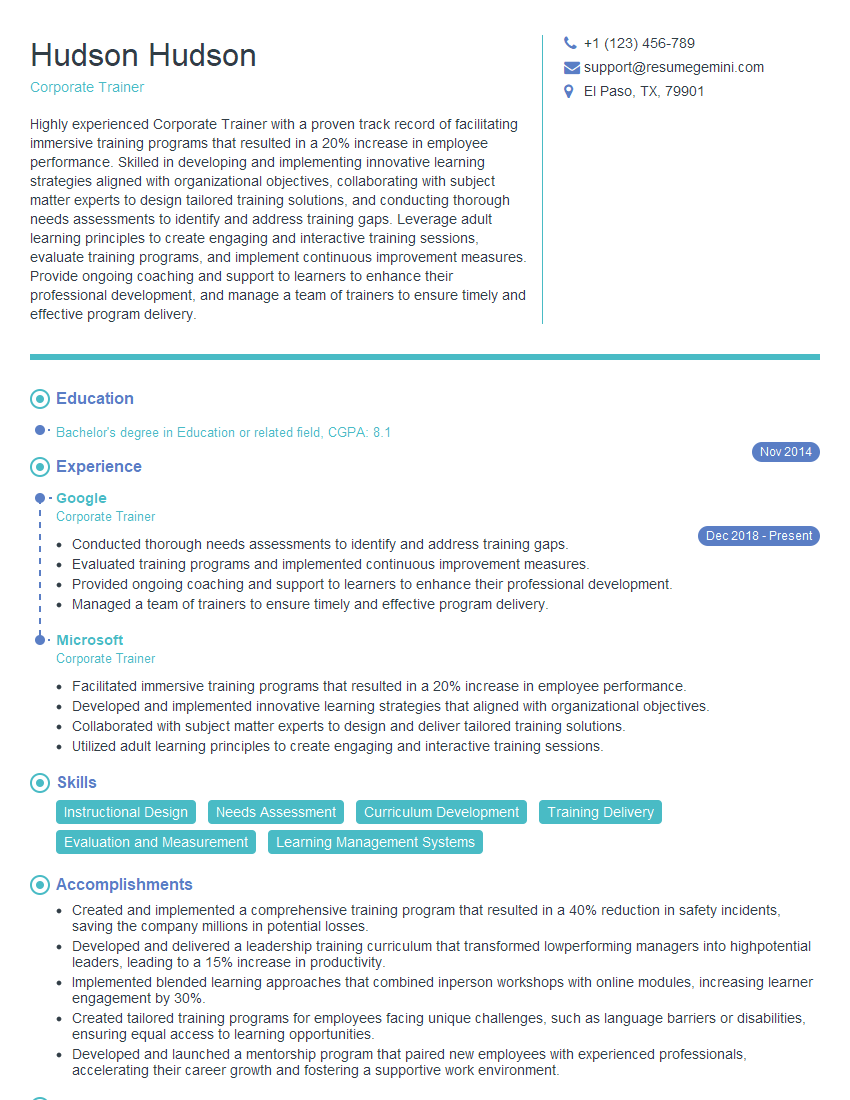
Corporate Trainer Resume Sample
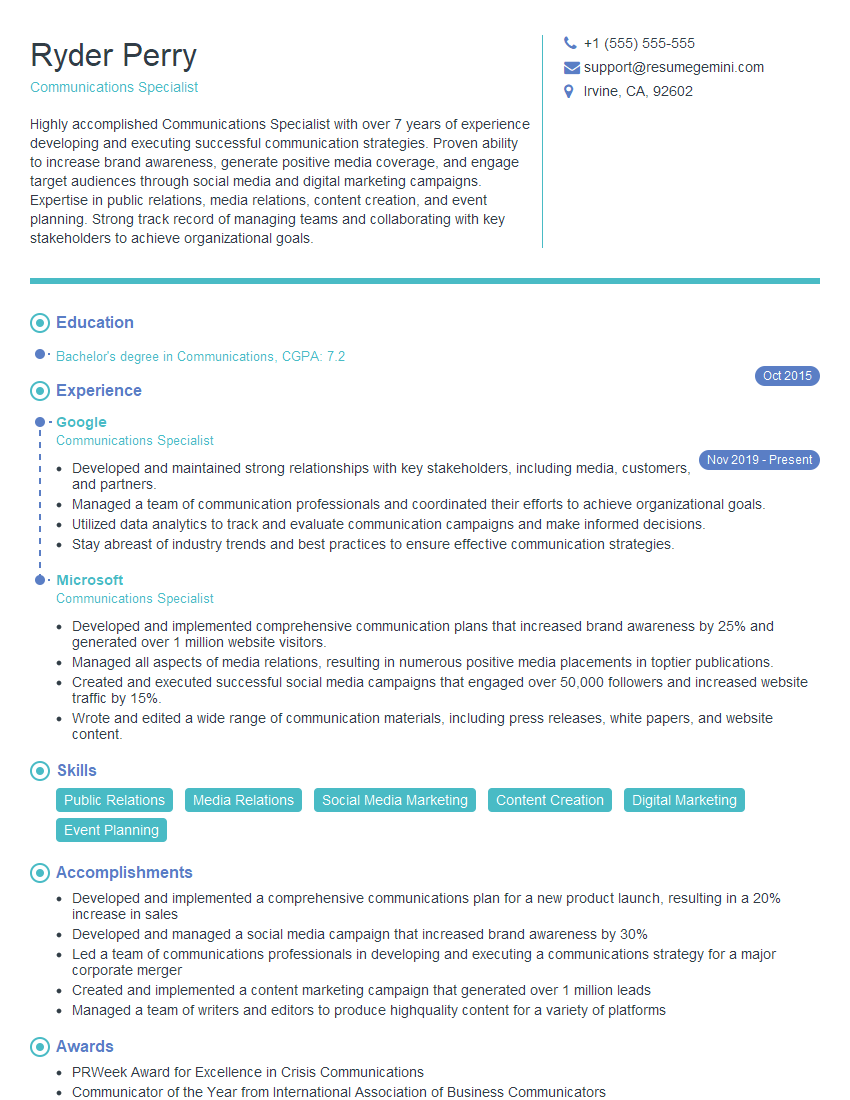
Communications Specialist Resume Sample
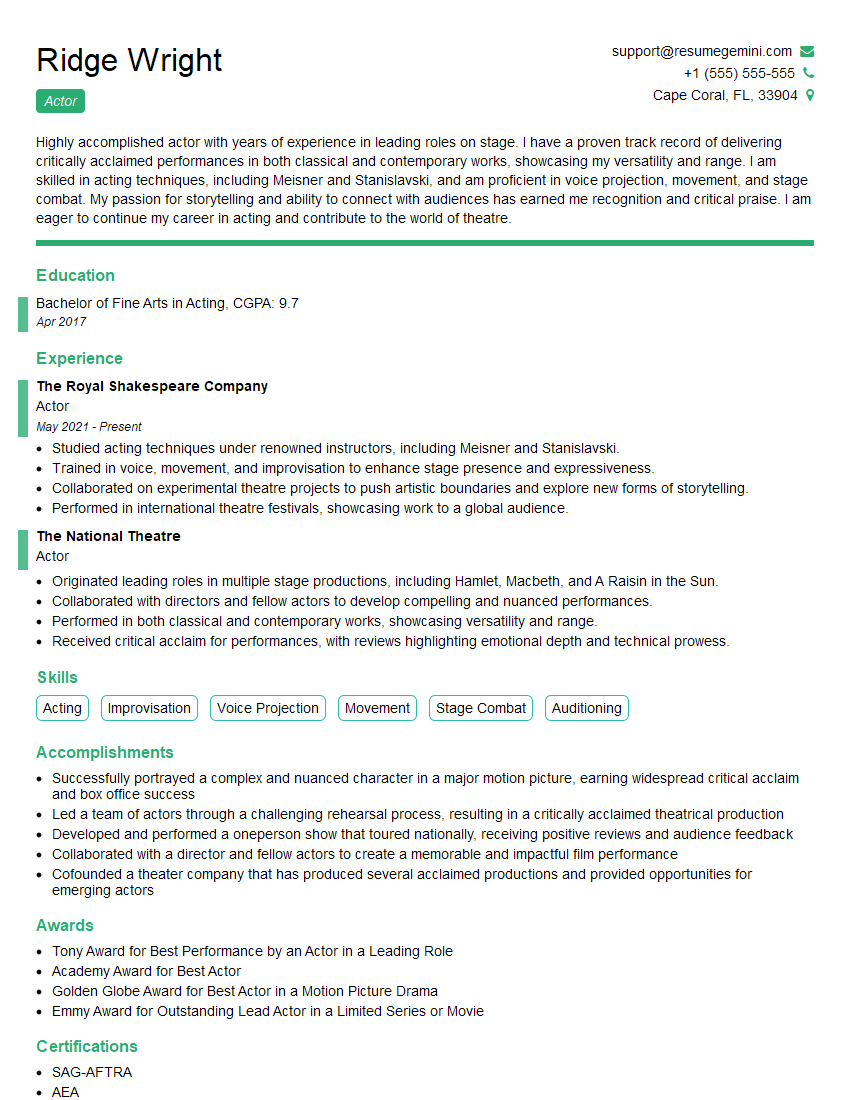
Actor Resume Sample

Narrator Resume Sample
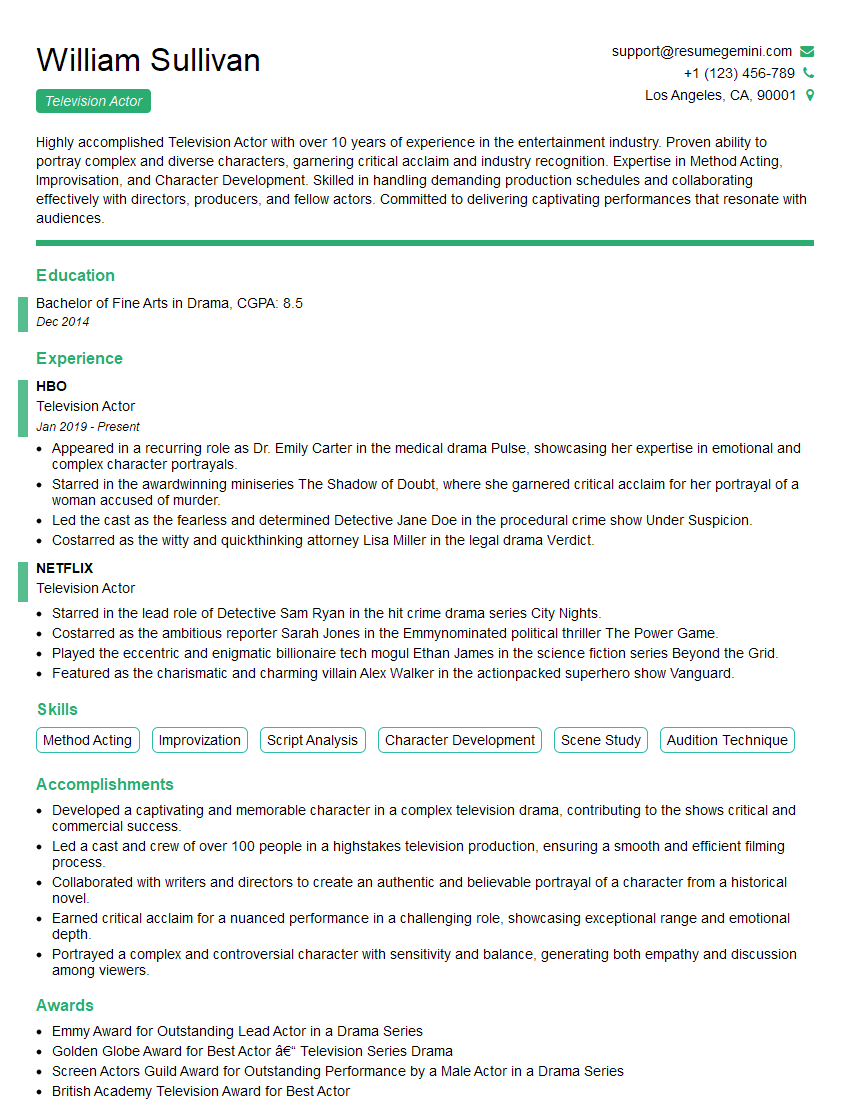
Television Actor Resume Sample
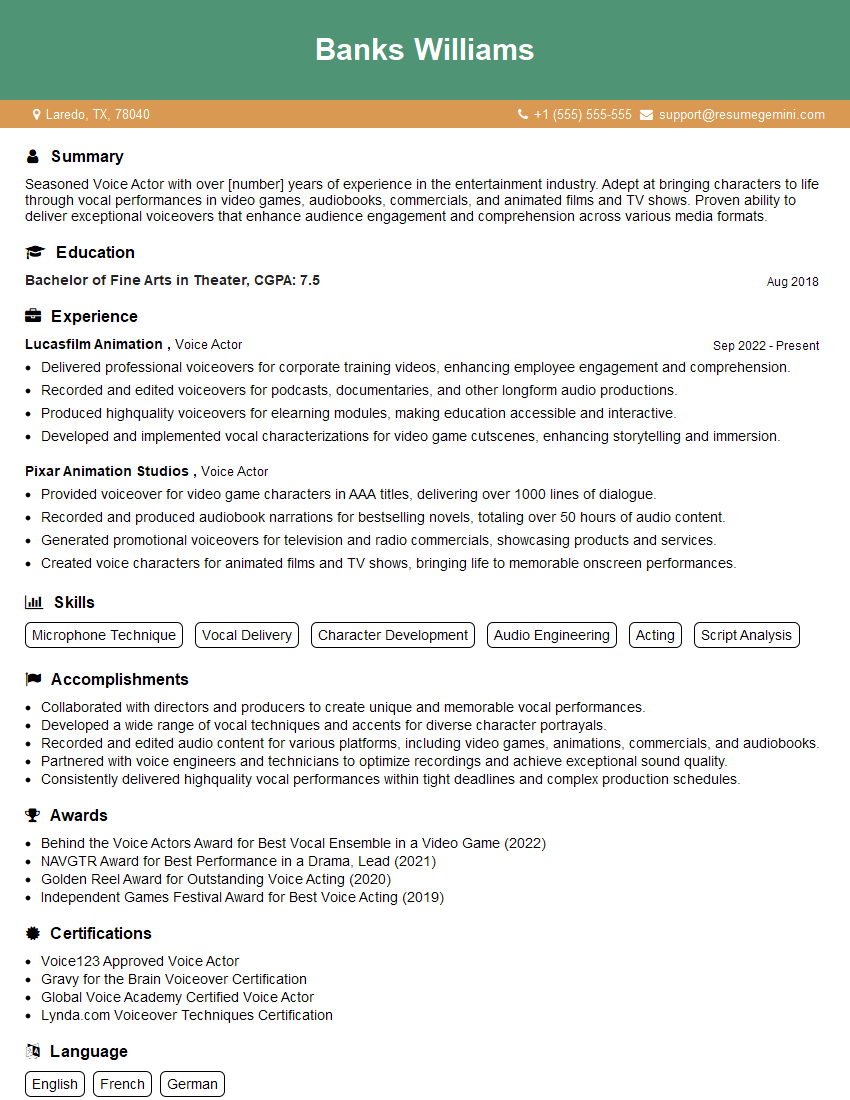
Voice Actor Resume Sample

Radio Host Resume Sample
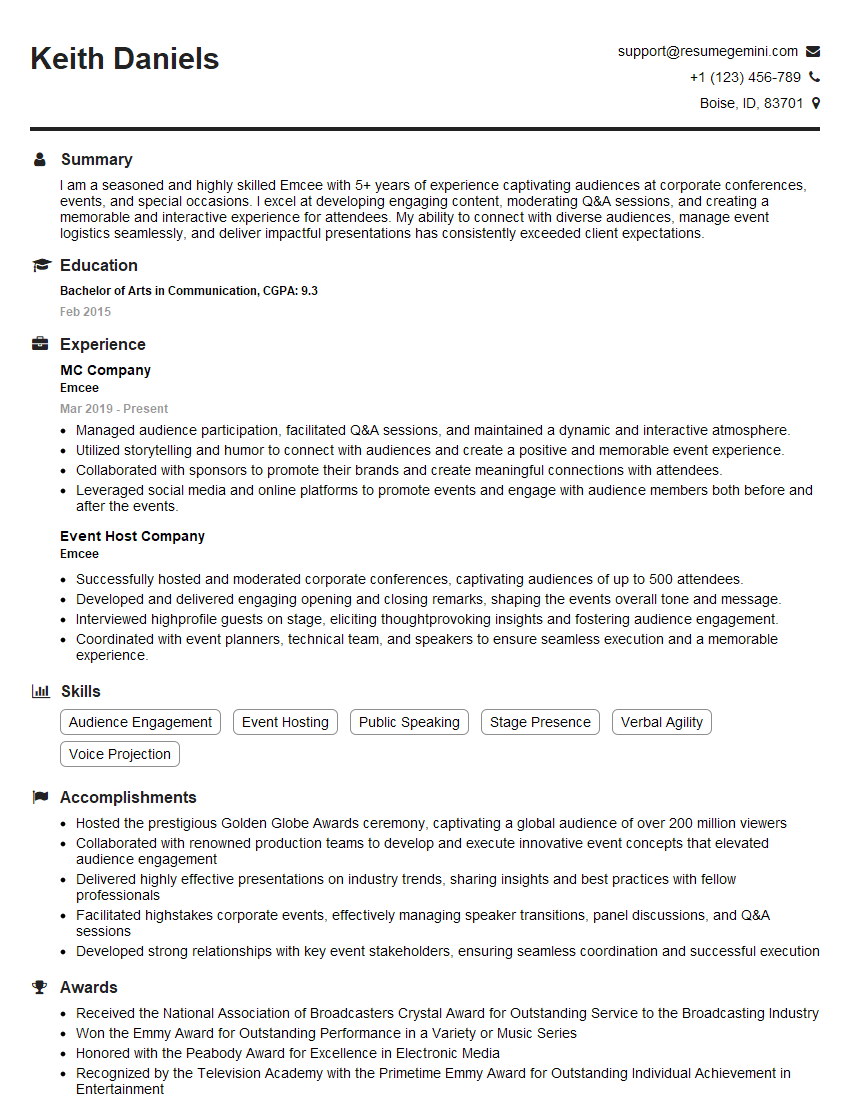
Emcee Resume Sample
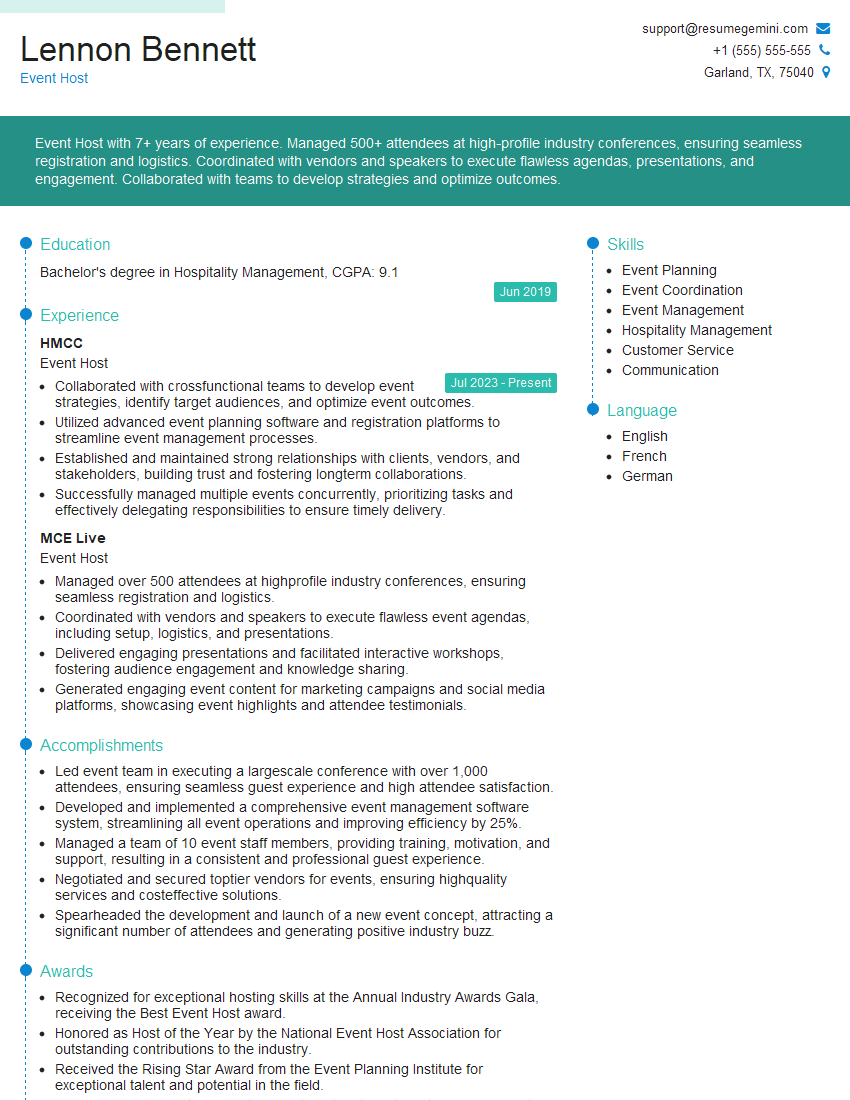
Event Host Resume Sample
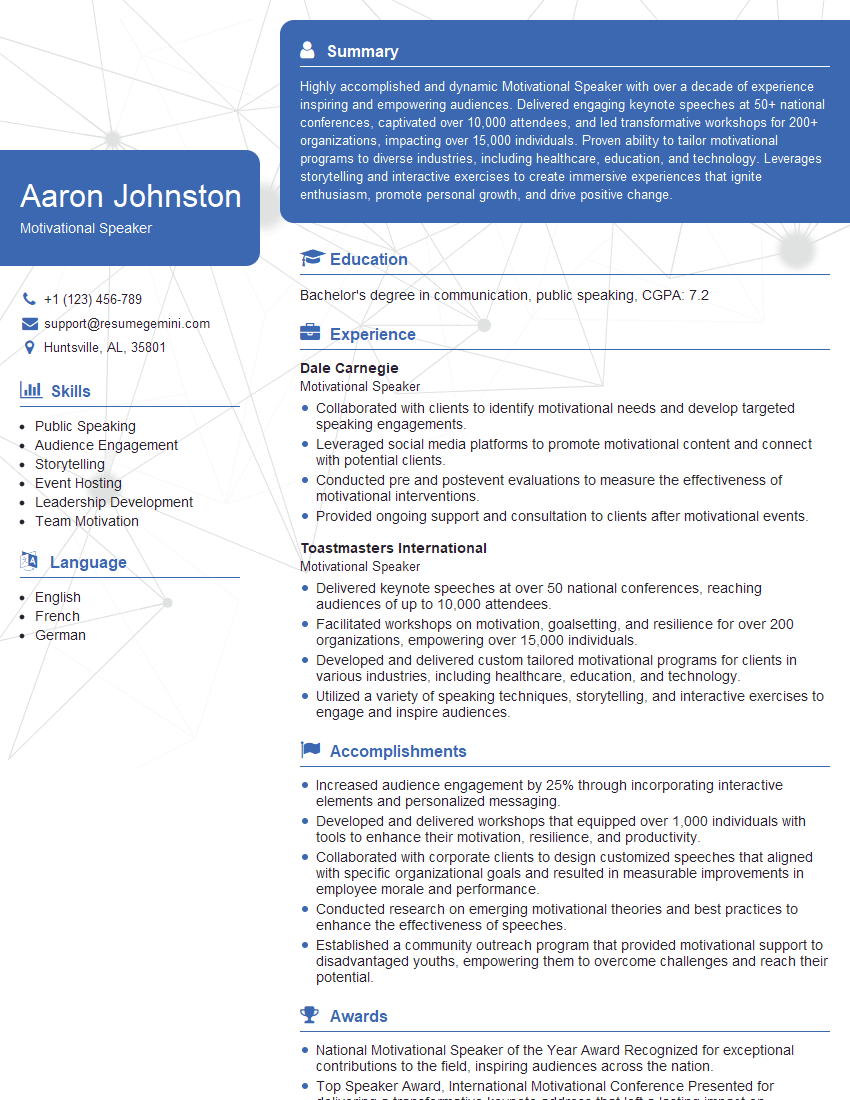
Motivational Speaker Resume Sample
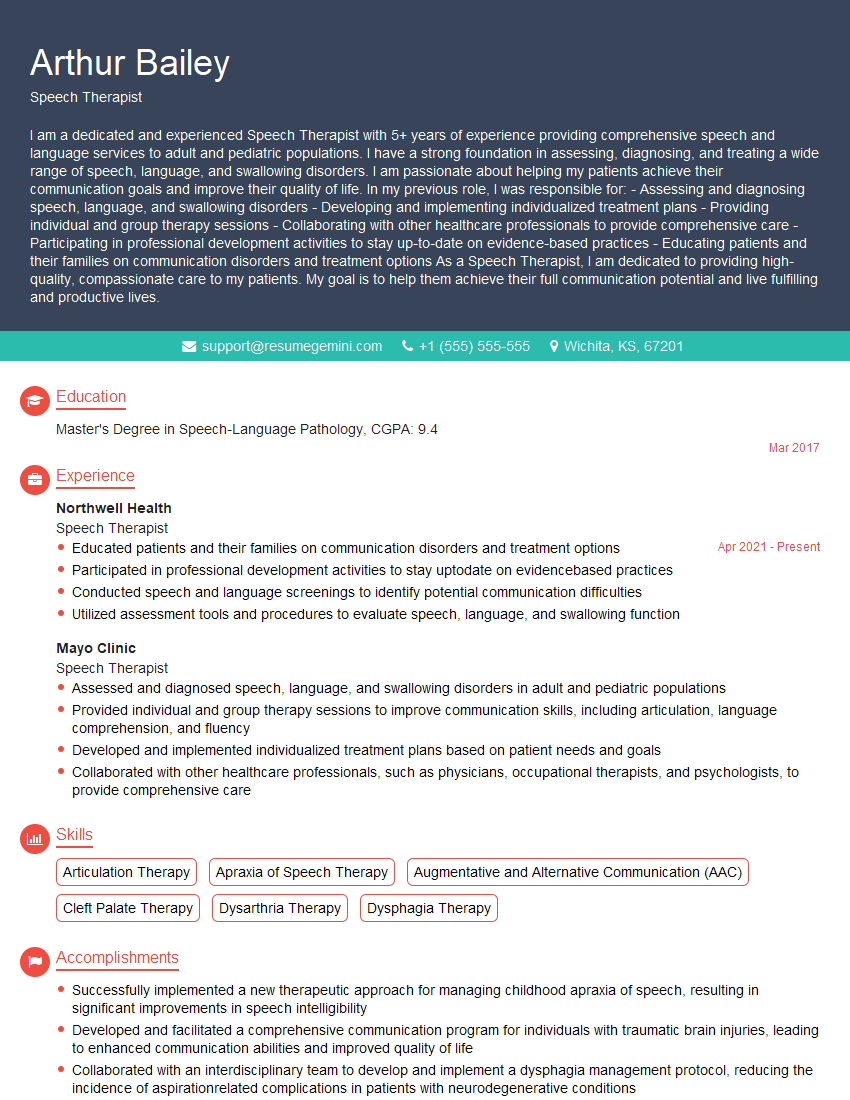
Speech Therapist Resume Sample
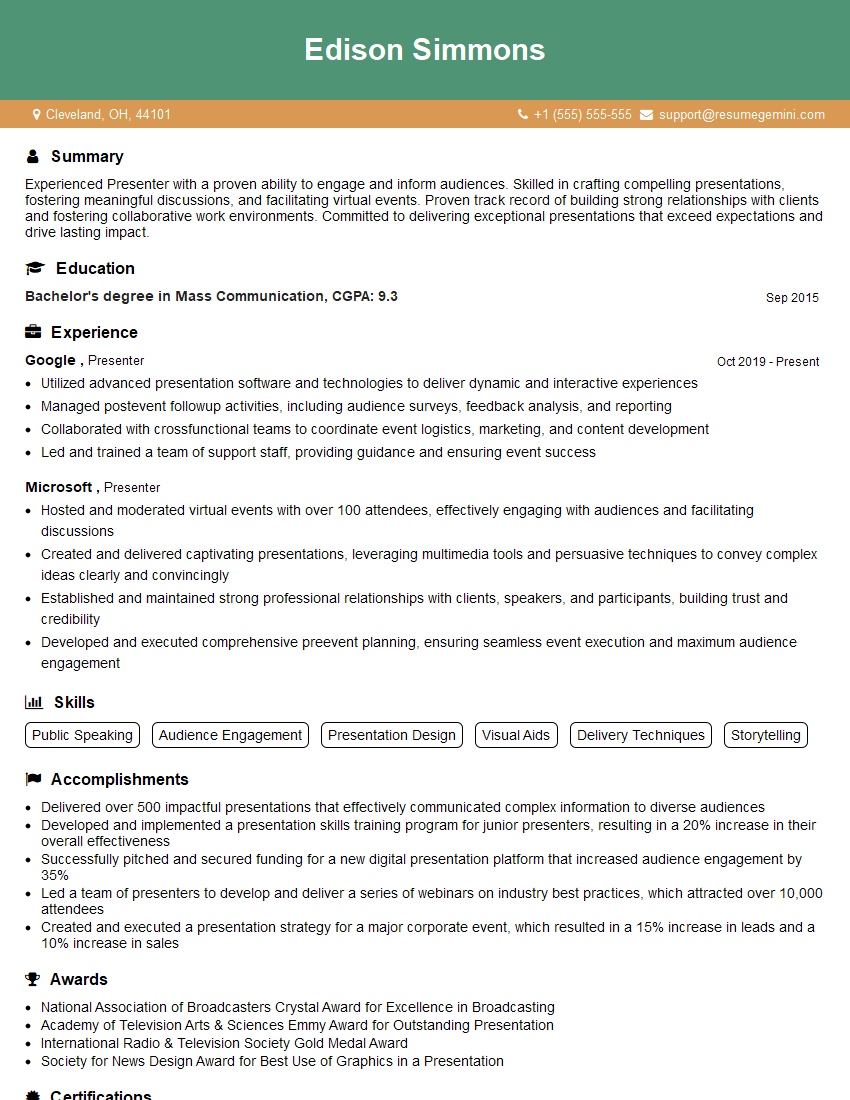
Presenter Resume Sample
Explore more articles
Users Rating of Our Blogs
Share Your Experience
We value your feedback! Please rate our content and share your thoughts (optional).
What Readers Say About Our Blog
Very informative content, great job.
good