Interviews are opportunities to demonstrate your expertise, and this guide is here to help you shine. Explore the essential Motor Control and Automation interview questions that employers frequently ask, paired with strategies for crafting responses that set you apart from the competition.
Questions Asked in Motor Control and Automation Interview
Q 1. Explain the difference between open-loop and closed-loop control systems.
The core difference between open-loop and closed-loop control systems lies in their feedback mechanisms. An open-loop system, also known as a feedforward system, operates without feedback. It simply executes a command without monitoring the actual output. Think of a simple toaster: you set the time, and it runs for that duration regardless of whether the bread is actually toasted. The output is entirely dependent on the input, without any verification of the result.
Conversely, a closed-loop system, also called a feedback system, constantly monitors its output and compares it to the desired setpoint. Any discrepancy between the actual output and the desired output is used to adjust the control input. Imagine a cruise control system in a car: the system constantly monitors the vehicle’s speed and adjusts the throttle to maintain the desired speed, compensating for inclines or headwinds. This feedback loop ensures the output closely matches the desired value.
- Open-loop advantages: Simpler, less expensive, faster response (no feedback delay).
- Open-loop disadvantages: Less accurate, susceptible to disturbances, prone to errors.
- Closed-loop advantages: Higher accuracy, better disturbance rejection, robust performance.
- Closed-loop disadvantages: More complex, potentially slower response due to feedback delay, more expensive.
In motor control, open-loop systems are often used for simple applications where precise control isn’t crucial, while closed-loop systems are preferred for demanding applications requiring high accuracy and stability, like robotic arms or precision machining.
Q 2. Describe the function of a Programmable Logic Controller (PLC).
A Programmable Logic Controller (PLC) is essentially the brain of an automated system. It’s a ruggedized computer specifically designed for industrial control applications. It takes input signals from sensors (e.g., limit switches, pressure sensors, temperature sensors), processes them according to a pre-programmed logic, and outputs control signals to actuators (e.g., motors, valves, solenoids). Think of it as a sophisticated decision-maker that orchestrates the entire automation process.
PLCs are programmed using ladder logic (a graphical programming language resembling electrical relay diagrams) or other programming languages. They manage complex sequences of operations, perform calculations, communicate with other devices on the network, and provide diagnostic information. Their ability to handle various input/output signals and their robust design make them ideal for harsh industrial environments.
For example, in a manufacturing line, a PLC might control the timing of conveyor belts, the operation of robotic arms, and the activation of safety mechanisms, all based on real-time data from various sensors. They are ubiquitous in factory automation, process control, and building management systems.
Q 3. What are the different types of motor drives and their applications?
Motor drives are power electronic devices that control the speed and torque of electric motors. Several types exist, each with its own strengths and applications:
- Variable Frequency Drives (VFDs): These are the most common type, controlling AC motors by adjusting the frequency and voltage of the power supply. They provide excellent speed control, energy efficiency, and soft starts/stops. Applications include pumps, fans, conveyors, and HVAC systems.
- DC Drives: These control DC motors by adjusting the voltage applied to the armature. They offer simple speed control but are generally less efficient than VFDs and are less common in modern industrial applications.
- Servo Drives: These drives offer precise control of both speed and position, often using feedback from encoders or resolvers. They’re crucial for applications requiring high accuracy and responsiveness, like robotics, CNC machines, and precision positioning systems.
- Stepper Motor Drives: These control stepper motors, which move in precise increments. They offer precise positioning but generally have lower torque capabilities than servo drives. Applications include printers, 3D printers, and automated assembly lines.
The choice of motor drive depends on the specific application’s requirements for speed control, accuracy, torque, and cost.
Q 4. Explain the principle of operation of a Variable Frequency Drive (VFD).
A Variable Frequency Drive (VFD) controls the speed of an AC motor by varying the frequency of the power supplied to the motor. The speed of an induction motor is directly proportional to the frequency of the supply voltage. A VFD accomplishes this using power electronic components like Insulated Gate Bipolar Transistors (IGBTs) or Metal Oxide Semiconductor Field-Effect Transistors (MOSFETs) which act as high-speed switches.
The VFD rectifies the incoming AC power to DC, then uses pulse width modulation (PWM) to create a variable-frequency AC waveform. By changing the frequency of this PWM waveform, the VFD can control the motor’s speed. The VFD also typically adjusts the voltage proportionally to the frequency to maintain the motor’s magnetic flux and torque capability. This ensures efficient operation across a wide speed range.
Think of it like changing the tempo of a record player – the frequency change directly alters the rotational speed of the motor, allowing precise control over the speed and, indirectly, torque.
Q 5. How do you troubleshoot a malfunctioning motor?
Troubleshooting a malfunctioning motor involves a systematic approach. It begins with safety precautions – always lock out/tag out the power supply before beginning any work!
The process generally follows these steps:
- Visual Inspection: Check for any obvious damage, such as loose connections, frayed wires, or physical damage to the motor casing or windings.
- Power Supply Check: Verify the power supply is functioning correctly. Measure the voltage and current to ensure they meet the motor’s specifications.
- Motor Current Measurement: Using a clamp meter, measure the motor’s current draw. Excessive current may indicate a problem within the motor or its load.
- Check Motor Bearings: Listen for unusual noises (grinding, squealing) which often signify worn bearings.
- Load Check: Ensure the load connected to the motor is within its operational limits and is not overloaded.
- Control System Check: If the motor is part of a larger control system, verify the control signals are correct and the PLC or VFD is functioning properly.
- Insulation Resistance Test: A megger can measure the insulation resistance of the motor windings to detect insulation failure.
- Motor Winding Test: A more advanced test to check for shorts or opens in the motor windings.
Depending on the findings, further investigation may be needed, involving specialized equipment and potentially professional motor repair services.
Q 6. What are the safety considerations when working with motor control systems?
Safety is paramount when working with motor control systems. Several key considerations include:
- Lockout/Tagout (LOTO): Always follow LOTO procedures to prevent accidental energization of the system during maintenance or repair. This is the most crucial safety measure.
- Electrical Safety: Use appropriate personal protective equipment (PPE), such as insulated gloves, safety glasses, and safety shoes. Be aware of high voltages and potential electrical shocks.
- Mechanical Safety: Moving machinery presents hazards; guard all moving parts to prevent injuries. Consider using interlocks and emergency stops to halt operation in case of unexpected events.
- Thermal Hazards: Motors generate heat during operation. Ensure proper ventilation and avoid contact with hot surfaces.
- Noise Hazards: Some motors operate at high noise levels. Use hearing protection when necessary.
- Proper Training and Competency: Only trained and qualified personnel should work on motor control systems.
- Emergency Shutdown Procedures: Develop and regularly practice emergency shutdown procedures in case of malfunctions or accidents.
A risk assessment should be performed before any work begins to identify and mitigate potential hazards.
Q 7. Describe your experience with different communication protocols used in automation (e.g., Ethernet/IP, Modbus, Profibus).
My experience encompasses several industrial communication protocols, including Ethernet/IP, Modbus, and Profibus. I’ve worked extensively with Ethernet/IP in large-scale automation projects, leveraging its high-speed capabilities and extensive networking features to integrate PLCs, HMIs, and other industrial devices seamlessly. This is often the preferred protocol for advanced automation applications due to its speed and robust features.
Modbus is another widely used protocol, known for its simplicity and open standard nature. I’ve utilized Modbus in projects requiring integration with legacy equipment or when interoperability between different vendor devices was a key requirement. It’s particularly effective where cost-effectiveness is paramount, particularly in smaller systems.
Profibus, a fieldbus protocol, has been employed in projects focusing on real-time control and deterministic communication. Its capabilities in handling large numbers of nodes and providing precise timing synchronization were invaluable in applications demanding precise motion control and synchronization of multiple devices. I’ve encountered this protocol most frequently in large manufacturing facilities that needed high reliability and consistent communication.
In each case, my work involved configuring communication settings, troubleshooting network issues, and integrating different components within the larger industrial control system. My proficiency in these protocols allows for effective design, implementation, and maintenance of efficient and reliable automation systems.
Q 8. Explain the concept of PID control and its tuning methods.
PID control, short for Proportional-Integral-Derivative control, is a feedback control loop mechanism widely used in industrial automation to achieve and maintain a desired setpoint. Imagine you’re trying to maintain a specific water temperature in a tank. PID control continuously adjusts the heating element based on the difference (error) between the desired temperature and the actual temperature.
Proportional (P) action responds to the current error. A larger error results in a stronger corrective action. Think of it as a quick reaction to the difference.
Integral (I) action addresses accumulated error over time. If there’s a persistent error (e.g., the temperature consistently drifts lower), the integral term will gradually increase the corrective action until the error is eliminated. This helps eliminate offset or steady-state error.
Derivative (D) action anticipates future error based on the rate of change of the error. If the temperature is changing rapidly, the derivative term will adjust the corrective action to prevent overshooting. It’s like predicting the future based on the current trend.
Tuning Methods: PID tuning is crucial to optimal performance. Common methods include:
- Ziegler-Nichols Method: This empirical method involves pushing the system to its limits to determine parameters. It’s quick but can be less precise.
- Trial and Error: A practical approach, especially for simpler systems. It involves adjusting the P, I, and D gains iteratively until a satisfactory response is achieved.
- Auto-tuning: Many modern controllers offer auto-tuning features that automatically determine optimal PID gains based on system identification.
Proper tuning ensures stability (no oscillations), minimal overshoot, and fast response times. It’s often an iterative process requiring adjustments based on real-world system behavior.
Q 9. What are the advantages and disadvantages of using servo motors?
Servo motors are precision motors known for their precise positioning and speed control capabilities. They are widely used in applications demanding high accuracy, such as robotics and CNC machining.
Advantages:
- High Accuracy and Precision: Servo motors can maintain precise positions and speeds, making them ideal for applications requiring fine control.
- Feedback Control: They incorporate a feedback mechanism (often an encoder or resolver) to constantly monitor their position and speed, allowing for accurate control even under varying loads.
- Fast Response Time: Servo motors can respond quickly to changes in commands, enabling rapid and precise movements.
- High Torque-to-Size Ratio: Servo motors are powerful for their size.
Disadvantages:
- Higher Cost: Servo systems are generally more expensive than other motor types due to their sophisticated control electronics.
- Complexity: Setting up and maintaining servo systems require specialized knowledge and expertise.
- Sensitivity to Noise: The feedback loop can be sensitive to electrical noise, potentially impacting accuracy.
- Maintenance requirements: Regular maintenance, like encoder calibration, is sometimes needed to ensure optimal performance.
For example, in a robotic arm, the precision and repeatability of servo motors are crucial for accurate manipulation.
Q 10. How do you select the appropriate motor for a specific application?
Selecting the appropriate motor for an application requires a careful analysis of several factors:
- Torque Requirements: The load’s required torque determines the motor’s minimum output torque. Will it be lifting heavy objects or performing delicate movements?
- Speed Requirements: The required speed determines the motor’s maximum speed. High-speed applications like spindles need different motors compared to slow-speed applications like conveyors.
- Operating Environment: Factors like temperature, humidity, and exposure to contaminants will influence the motor’s construction and protection rating.
- Power Supply: The availability of AC or DC power will dictate the type of motor you can choose. Will it be connected to existing infrastructure, or is a new power supply required?
- Duty Cycle: The percentage of time the motor operates at full load needs to be considered for choosing motors with appropriate thermal characteristics. A constant-load application needs a differently sized motor than one that only runs intermittently.
- Budget and Maintenance: Servo motors are expensive and need maintenance, while stepper motors are inexpensive but could require frequent replacements.
- Control Requirements: Does the application need precise speed and positioning control (servo motor), or is simple on/off control sufficient (AC induction motor)?
For instance, a high-precision CNC machine would necessitate a servo motor due to its accuracy requirements, while a basic conveyor belt system could utilize a less expensive induction motor.
Q 11. What is the role of a Human-Machine Interface (HMI) in automation?
A Human-Machine Interface (HMI) is a crucial component of automation systems, providing a user-friendly interface for operators to interact with and monitor industrial equipment. Imagine it as the dashboard of a complex machine, displaying critical information and allowing for control.
Roles of an HMI:
- Monitoring: Displays real-time data such as temperature, pressure, flow rates, and motor speeds, providing operators with a clear overview of the system’s status.
- Control: Enables operators to control and adjust process parameters, start and stop machines, and change setpoints.
- Data Logging: Records operational data for analysis, troubleshooting, and optimization purposes. This is vital for identifying trends or potential problems.
- Alarm Management: Alerts operators to abnormal conditions or errors through visual and audible signals, enhancing safety and preventing costly downtime.
- Recipe Management: Allows for easy storage and retrieval of process settings for different products or operations. This helps streamline production and maintain consistency.
Effective HMIs improve operator efficiency, enhance system safety, and streamline troubleshooting.
Q 12. Describe your experience with SCADA systems and their applications.
Supervisory Control and Data Acquisition (SCADA) systems are software applications that monitor and control industrial processes across geographically dispersed areas. They are like the central nervous system of a large-scale operation, coordinating and supervising numerous interconnected components.
My experience with SCADA systems involves working on projects involving:
- Water treatment plants: Monitoring water quality parameters, controlling pumps, and managing chemical dosing to ensure the delivery of clean water.
- Power generation and distribution: Supervising power generation units, optimizing energy distribution networks, and managing grid stability. Ensuring efficient and reliable electricity supply requires meticulous monitoring and control.
- Oil and gas pipelines: Monitoring pipeline pressure, flow rates, and temperature, and controlling valves and pumps to maintain safe and efficient operation. Preventing leaks and ensuring safety is a paramount concern.
SCADA systems improve efficiency, reduce operational costs, enhance safety, and allow for remote monitoring and control, enabling proactive maintenance and problem-solving.
I am proficient in using various SCADA platforms such as [mention specific SCADA platforms you are familiar with, e.g., Wonderware, Ignition, Siemens WinCC]. I have experience in system design, implementation, troubleshooting, and maintaining these systems.
Q 13. Explain the concept of motion control and its different types.
Motion control is the precise regulation of the movement of mechanical systems, encompassing various aspects like speed, acceleration, position, and trajectory. It’s like choreographing a complex dance of machines.
Types of Motion Control:
- Point-to-Point Control: The system moves from one predefined point to another without precise control over the path. Think of a simple robotic arm picking an object from a table.
- Path Control: The system follows a predefined path precisely. This is crucial in applications like CNC machining, where accuracy is paramount.
- Contouring Control: Multiple axes move simultaneously to create a complex shape or motion. Robotic arms assembling parts often use contouring control to ensure precision.
The choice of motion control type depends on the application’s requirements. A pick-and-place robot might use point-to-point control, while a robotic welder needs path or contouring control for precise and continuous movement.
Q 14. What are the different types of sensors used in motor control applications?
Various sensors play a crucial role in motor control applications, providing feedback for accurate and efficient operation. They act like the sensory organs of the machine.
Types of Sensors:
- Encoders (Incremental and Absolute): These sensors measure the motor’s position and speed, providing feedback for closed-loop control. Incremental encoders count pulses to measure rotation, while absolute encoders provide a direct position reading.
- Resolvers: Similar to encoders, resolvers measure the motor’s angular position. They are robust but require a more complex signal processing.
- Tachometers: These sensors measure the motor’s speed directly, usually using a generator or Hall effect sensor. They are useful for speed control applications.
- Proximity Sensors: Detect the presence or absence of an object without physical contact. This is useful for detecting the position of workpieces or ensuring safety.
- Limit Switches: Mechanical switches activated when a moving part reaches a specific limit, ensuring safety and preventing damage.
- Current Sensors: Measure the motor’s current draw, allowing for monitoring of load and detecting potential faults like stalls or overloads.
- Temperature Sensors: Monitor the motor’s temperature, preventing overheating and damage.
The choice of sensor depends on the specific application’s needs and accuracy requirements. For instance, high-precision robotics relies on encoders or resolvers for precise positional feedback, while simple on/off control systems might use only limit switches.
Q 15. How do you ensure the safety and reliability of an automated system?
Ensuring safety and reliability in automated systems is paramount. It’s not just about avoiding accidents; it’s about building trust and maintaining productivity. This involves a multi-layered approach encompassing design, implementation, and ongoing maintenance.
- Redundancy and Fail-Safes: Critical components should be duplicated. For instance, in a robotic arm controlling a welding process, a secondary safety system, perhaps an emergency stop button linked to a PLC, ensures immediate halt in case of primary system failure. This principle extends to software, too; implementing checks and balances within the PLC program to prevent unintended actions.
- Safety Instrumented Systems (SIS): These independent systems monitor critical processes and intervene to prevent hazardous situations. A common example is an emergency shutdown system triggered by high pressure or temperature readings in a chemical process. They adhere to strict standards (like IEC 61508) to ensure reliability and safety.
- Regular Maintenance and Testing: Preventative maintenance schedules are crucial. This includes routine inspections, lubrication, and calibration of sensors and actuators. Functional safety testing, often involving simulations, verifies the effectiveness of safety systems. I always advocate for rigorous testing, both before deployment and at regular intervals.
- Risk Assessment: Before designing any system, a comprehensive hazard analysis and risk assessment is performed to identify potential failure points and mitigate risks. This involves considering both hardware and software vulnerabilities. The outcome is a safety plan outlining specific measures to reduce risks to an acceptable level. I find the HAZOP (Hazard and Operability study) method particularly useful for this.
- Operator Training: Well-trained operators are vital. Thorough training on emergency procedures and safe operating practices minimizes the risk of human error, a major contributor to incidents.
In a project I worked on, involving a high-speed packaging line, we implemented a dual-channel safety system with independent PLCs monitoring speed and pressure. This prevented the system from operating outside safe parameters, avoiding potential injuries and equipment damage.
Career Expert Tips:
- Ace those interviews! Prepare effectively by reviewing the Top 50 Most Common Interview Questions on ResumeGemini.
- Navigate your job search with confidence! Explore a wide range of Career Tips on ResumeGemini. Learn about common challenges and recommendations to overcome them.
- Craft the perfect resume! Master the Art of Resume Writing with ResumeGemini’s guide. Showcase your unique qualifications and achievements effectively.
- Don’t miss out on holiday savings! Build your dream resume with ResumeGemini’s ATS optimized templates.
Q 16. Describe your experience with troubleshooting and repairing PLC programs.
Troubleshooting PLC programs requires a systematic and methodical approach. My experience involves using a combination of diagnostic tools, programming skills, and a deep understanding of the process being controlled. I approach this with a ‘divide and conquer’ strategy.
- Analyzing Error Messages: PLC error messages provide valuable clues. Understanding the error code is the first step. For example, a ‘communication error’ points towards a network or hardware problem, while a ‘program execution error’ suggests a fault in the ladder logic or structured text program.
- Using PLC Diagnostics: PLCs offer built-in diagnostic tools – such as monitoring I/O status, observing program execution, and checking variables – that are crucial for identifying issues. I extensively use these features to identify inconsistent sensor readings or unexpected actuator states. The logic of the program can be stepped through and the values of variables tracked to find the fault.
- Ladder Logic/Structured Text Debugging: The ability to analyze ladder logic or structured text is essential. A systematic check of the program for logical errors, improper timing, or data type mismatches is necessary. The use of breakpoints, single-stepping, and watch variables within the PLC’s programming software simplifies the process. For instance, I recently identified a race condition in a program which was causing intermittent failures. I restructured the code to eliminate this concurrency issue.
- Hardware Inspection: PLC malfunctions can also stem from wiring issues, faulty sensors, or failing actuators. A visual inspection, testing of inputs and outputs with multimeters, or replacing suspected faulty components, is often necessary. In one instance, a loose wire caused hours of troubleshooting before we found it.
My experience encompasses a wide array of PLC brands and programming languages, enabling me to effectively troubleshoot diverse automation systems. The key is patience, detailed observation, and a systematic approach.
Q 17. Explain your understanding of industrial networking and its importance in automation.
Industrial networking is the backbone of modern automation systems, enabling communication between various devices, PLCs, HMIs, and other automation components. It’s crucial for data exchange, centralized control, and efficient system management.
- Protocols: Various industrial communication protocols are used, each with its own strengths and weaknesses. Common examples include Ethernet/IP, PROFINET, Modbus TCP, and Profibus. Understanding the functionalities and limitations of different protocols is key to designing and maintaining robust systems. For example, Ethernet/IP offers high bandwidth and robust features ideal for complex systems, while Modbus TCP is a simpler, widely used protocol for smaller applications.
- Network Topology: The physical layout of the network (star, ring, bus) significantly impacts performance and reliability. Careful planning is needed to optimize communication efficiency and minimize vulnerabilities. A well-designed network facilitates efficient data transfer and reduces system latency.
- Security: Industrial networks are increasingly targeted by cyberattacks. Implementing robust security measures, including firewalls, intrusion detection systems, and secure communication protocols, is paramount to prevent unauthorized access and data breaches. Regular security audits and updates are also essential.
- Network Management: Monitoring network performance, identifying bottlenecks, and troubleshooting network issues are vital for maintaining optimal system operation. Tools like network analyzers and monitoring software help in achieving this.
In a recent project involving a large-scale manufacturing plant, I designed and implemented a PROFINET network to integrate various machines and processes. This allowed for centralized control, real-time data monitoring, and improved efficiency. The choice of PROFINET was based on its suitability for deterministic communication, crucial for the real-time demands of the production line.
Q 18. How do you handle unexpected errors or faults in an automated system?
Handling unexpected errors requires a combination of proactive measures and reactive problem-solving. My approach is founded on a systematic analysis and a focus on minimizing downtime.
- Error Detection and Logging: Implementing comprehensive error detection mechanisms within the PLC program, including checks for sensor failures, actuator malfunctions, and process deviations, is crucial. Detailed error logs help in identifying the root cause of unexpected behaviors.
- Alarm Systems: Well-designed alarm systems alert operators to critical issues, enabling timely intervention. These alarms should be specific and informative, guiding operators to the source of the problem. I usually prioritize alarms based on their severity and potential impact on the system.
- Automatic Recovery: Where possible, incorporate automatic recovery mechanisms into the system. This could involve retrying failed operations, switching to backup components, or temporarily adjusting operating parameters until the problem is resolved. For instance, in a robotic system, a failed attempt to grasp an object could trigger a retry mechanism, whilst logging the event for later analysis.
- Remote Diagnostics: Remote access to the PLC allows for quick troubleshooting and reduces downtime. Secure remote connections are essential for rapid diagnostics and resolution.
- Root Cause Analysis: Once the immediate problem is resolved, a thorough root cause analysis is essential to prevent similar issues in the future. This involves examining the sequence of events, analyzing data logs, and identifying potential improvements to system design, processes, or operator training.
In one instance, an unexpected power surge caused a PLC to malfunction. Our system’s error logging and alarm system immediately alerted the operators, and the remote diagnostics feature allowed engineers to diagnose the problem remotely, minimizing production downtime. Following the incident, we upgraded the power protection system to prevent similar occurrences.
Q 19. Describe your experience with programming PLCs using ladder logic or structured text.
I am proficient in programming PLCs using both ladder logic and structured text. My experience includes developing, debugging, and maintaining programs for various industrial applications.
- Ladder Logic: Ladder logic is a graphical programming language well-suited for visualizing control logic. I utilize it extensively for simpler applications where clear visualization of the control flow is beneficial. For example, a typical application might involve controlling a conveyor belt based on sensor inputs:
//Ladder Logic example (pseudo-code) IF (Sensor_1 ON) THEN Conveyor_Motor ON; IF (Sensor_2 ON) THEN Conveyor_Motor OFF; - Structured Text: Structured text is a text-based language offering greater flexibility and complexity. It’s my preferred choice for larger, more sophisticated applications requiring complex algorithms or data manipulation. I prefer it for handling complex mathematical calculations or implementing advanced control strategies. An example might be a PID control algorithm for temperature regulation.
//Structured Text example (pseudo-code) VAR setpoint : REAL; processValue : REAL; output : REAL; END_VAR; output := PID_Controller(setpoint, processValue);
I am adept at choosing the most appropriate programming language based on the project’s complexity and requirements. My experience spans various PLC platforms, allowing me to work efficiently across different brands and models.
Q 20. What are the key performance indicators (KPIs) for an automated system?
Key Performance Indicators (KPIs) for automated systems vary depending on the specific application, but some common metrics include:
- Overall Equipment Effectiveness (OEE): This measures the effectiveness of equipment in producing goods or services. It considers availability, performance, and quality. A higher OEE indicates efficient and productive equipment.
- Throughput: This measures the rate of production, often expressed as units per hour or cycle time. Improvements to throughput directly impact productivity and profitability.
- Mean Time Between Failures (MTBF): This indicates the reliability of the system. A higher MTBF suggests less downtime and greater stability.
- Mean Time To Repair (MTTR): This reflects the speed and efficiency of maintenance and repair operations. Reducing MTTR minimizes downtime and keeps production running smoothly.
- Production Yield: This is crucial in manufacturing and assesses the percentage of good products produced compared to total inputs. It helps identify areas of waste or inefficiency in the manufacturing process.
- Defect Rate: This measures the number of defective products or outputs relative to the total production. This is critical for quality control and continuous improvement.
- Energy Consumption: This is becoming increasingly important for environmental and cost reasons. Monitoring energy efficiency can lead to substantial savings and reduced environmental impact.
The choice of KPIs depends on the specific goals of the automation system. For instance, in a high-volume manufacturing facility, throughput and OEE might be the primary focus, while in a process control application, safety and consistency might be more important. I always work closely with clients to determine the most relevant KPIs for their specific needs.
Q 21. Explain your experience with different types of actuators used in automation.
My experience encompasses a range of actuators frequently used in automation systems. Each type has its own strengths and weaknesses, making the selection process crucial for optimizing system performance and reliability.
- Pneumatic Actuators: These use compressed air to generate motion. They are relatively inexpensive, simple to maintain, and offer high power-to-weight ratios. However, they can be noisy and less precise than other types. Common applications include gripping mechanisms in robotic systems and valves in process control.
- Hydraulic Actuators: These utilize hydraulic fluid to generate force and motion. They are capable of generating very high forces, but are more complex and require specialized maintenance. Typical applications are found in heavy machinery and large-scale industrial processes.
- Electric Actuators: These use electric motors to produce linear or rotary motion. They offer high precision, ease of control, and are relatively clean and quiet compared to pneumatic and hydraulic systems. Common examples include servo motors for precise positioning, stepper motors for controlled step movements, and linear actuators for linear motion. They’re commonly seen in robotic arms and automated assembly lines.
- Electro-Mechanical Actuators: These are devices that convert electrical energy into mechanical motion via an intermediary electro-mechanical component like a gear motor. These are versatile and often a cost-effective solution for a wide range of automation tasks.
The choice of actuator depends on factors like the required force, speed, precision, and the operating environment. In a project involving a delicate assembly process, we opted for electric servo motors to ensure precise positioning and repeatability. In contrast, for a heavy-duty clamping mechanism, hydraulic actuators provided the necessary force and robustness.
Q 22. What is your experience with robotic systems and their programming?
My experience with robotic systems spans over eight years, encompassing design, programming, and integration within industrial automation settings. I’ve worked extensively with various robotic arms, from six-axis articulated robots to SCARA and delta robots. My programming expertise includes proficiency in several languages including RAPID (ABB robots), KRL (KUKA robots), and Python for higher-level control and data analysis. For instance, in a recent project involving palletizing, I programmed a six-axis robot using RAPID to pick and place boxes onto pallets with precision and speed, optimizing the pallet layout to maximize space. Another project involved integrating a vision system with a robotic arm using Python to enable the robot to identify and sort objects of varying sizes and shapes, showcasing my ability to integrate multiple technologies for advanced automation tasks.
Beyond specific robot languages, I’m adept at utilizing ROS (Robot Operating System) for complex robotic applications requiring distributed control and sensor integration. This framework is invaluable for managing large-scale robot deployments and enables flexible and scalable solutions. A particular challenge I successfully overcame involved synchronizing multiple robots working collaboratively on a complex assembly line using ROS, requiring careful consideration of communication protocols and task scheduling to avoid collisions and ensure optimal performance.
Q 23. How do you ensure the cybersecurity of an automated system?
Cybersecurity in automated systems is paramount. My approach involves a multi-layered defense strategy, starting with secure network design and access control. This includes utilizing firewalls, intrusion detection systems, and VPNs to protect the system from unauthorized access. I advocate for implementing robust authentication and authorization protocols, leveraging strong passwords and multi-factor authentication where possible. Regular vulnerability scans and penetration testing are crucial to identify and address weaknesses proactively.
Furthermore, I strongly believe in adhering to industry best practices and security standards, such as those outlined by ISA/IEC 62443. This involves securing all communication channels, both internal and external, using encryption and secure protocols. Firmware updates and patching are regularly performed to mitigate known vulnerabilities. Finally, a strong emphasis is placed on operator training and awareness to prevent human error, a common cause of security breaches. For example, in a recent project, we employed a zero-trust network architecture, requiring each component to verify its identity before accessing any other part of the system, significantly enhancing the overall security posture.
Q 24. Describe your experience with different motor types (AC, DC, stepper, servo).
My experience encompasses a wide range of motor types, each suited for different applications. I’m proficient in selecting and controlling AC induction motors, often used in high-power applications due to their robustness and reliability. I’ve implemented vector control techniques to precisely regulate their speed and torque, crucial in applications like conveyor systems or large pumps. DC motors, particularly brushed DC motors, are excellent for applications requiring precise speed control and easy implementation, though they have maintenance limitations. I’ve worked extensively with their use in smaller robots and precision positioning systems.
Stepper motors offer precise step-by-step movement, ideal for applications like 3D printing or CNC machining. I’ve worked with microstepping techniques to further enhance their resolution and reduce vibrations. Finally, servo motors, which combine precise positioning with high speed and accuracy, are frequently used in robotics. I have considerable experience using servo motors with encoders for closed-loop control, ensuring accurate positioning and maintaining stability in dynamic environments. I have also used PID control to fine-tune the servo response, ensuring smooth and responsive performance.
Q 25. Explain your experience with designing and implementing control algorithms.
Designing and implementing control algorithms is a core aspect of my expertise. I’m proficient in using various control techniques, including PID (Proportional-Integral-Derivative) control, which is widely used for its simplicity and effectiveness in regulating various process variables. I’ve extensively utilized PID control for temperature regulation, speed control, and position control in various industrial processes. More complex applications often demand advanced control techniques such as Model Predictive Control (MPC), which I’ve successfully applied to optimize energy consumption in industrial processes.
My experience also encompasses state-space control methods, particularly beneficial when dealing with complex dynamic systems. I’ve used these techniques to design robust controllers that are less sensitive to parameter variations and external disturbances. Furthermore, I’m experienced in using simulation tools like MATLAB/Simulink to model and simulate control systems before implementation, reducing risks and allowing for effective testing and optimization. For example, I once developed an advanced control system for a robotic welding application using MPC to maintain consistent weld quality despite variations in material thickness and joint geometry, resulting in a significant improvement in productivity and weld quality.
Q 26. What is your understanding of industrial safety standards (e.g., IEC 61131-3)?
I have a strong understanding of industrial safety standards, particularly IEC 61131-3, which defines a standardized programming language for programmable logic controllers (PLCs). This standard promotes interoperability and facilitates easier maintenance and troubleshooting across different PLC platforms. I have extensive experience using the programming languages specified in IEC 61131-3, including Ladder Diagram (LD), Function Block Diagram (FBD), Structured Text (ST), and Instruction List (IL). This allows for flexible design choices, leveraging the most appropriate language for a given task.
Beyond IEC 61131-3, I’m familiar with other relevant standards such as those related to functional safety (IEC 61508 and its sector-specific adaptations) and machine safety (ISO 13849). This knowledge is critical in ensuring the safe design and operation of automated systems. I always prioritize safety during the design phase, implementing safety features such as emergency stops, light curtains, and interlocks to mitigate risks. I understand the importance of risk assessments and hazard analysis to identify potential hazards and implement appropriate mitigation strategies. For instance, in a recent project, I designed a safety system compliant with ISO 13849-1, ensuring the system met the required Performance Level (PL) for the specific application.
Q 27. Describe your experience with commissioning and testing automated systems.
Commissioning and testing are integral steps in the automation process. My approach involves a structured methodology, starting with a thorough review of the design specifications and ensuring that all components have been correctly installed and wired. I then perform a series of tests to verify the functionality of each module, progressively integrating components to test the entire system. This typically involves both functional tests, which verify that the system operates as designed, and performance tests, which evaluate its speed, accuracy, and efficiency.
I utilize various tools and techniques during the commissioning process, including data acquisition systems and specialized software to monitor system performance and identify anomalies. Documentation is meticulously maintained throughout the process, recording test results, identified issues, and implemented solutions. A crucial aspect of my approach is thorough testing under various operating conditions, including extreme temperatures, power fluctuations, and other potential stressors, to ensure robustness and reliability. For example, in a recent project involving a high-speed packaging line, we simulated various fault conditions during the commissioning phase, enabling us to identify and resolve potential bottlenecks before the system went live.
Key Topics to Learn for Motor Control and Automation Interview
- Fundamentals of Electric Motors: Understanding DC, AC (induction and synchronous), and stepper motors; their characteristics, operating principles, and applications.
- Motor Drives and Control Techniques: Explore various drive technologies (VFDs, servo drives), control strategies (PID, vector control), and their practical implementation in industrial settings.
- PLC Programming and Industrial Automation: Gain proficiency in ladder logic programming, sequential control, and the integration of PLCs with motor control systems. Understand the role of HMIs and SCADA systems.
- Sensor Integration and Feedback Control: Learn how sensors (encoders, resolvers, proximity sensors) provide feedback for closed-loop control systems, ensuring precise motor operation and position accuracy.
- Troubleshooting and Maintenance: Develop practical problem-solving skills related to motor control systems. This includes understanding common faults, diagnostic techniques, and preventative maintenance strategies.
- Safety and Standards: Familiarize yourself with relevant safety regulations and standards in industrial automation, including lockout/tagout procedures and electrical safety practices.
- Robotics and Automation Systems: Explore the integration of motor control systems within robotic arms, conveyor systems, and other automated machinery. Understand concepts like kinematics and trajectory planning.
- Power Electronics: Gain a foundational understanding of power electronic converters used in motor drive systems, including rectifiers, inverters, and choppers.
Next Steps
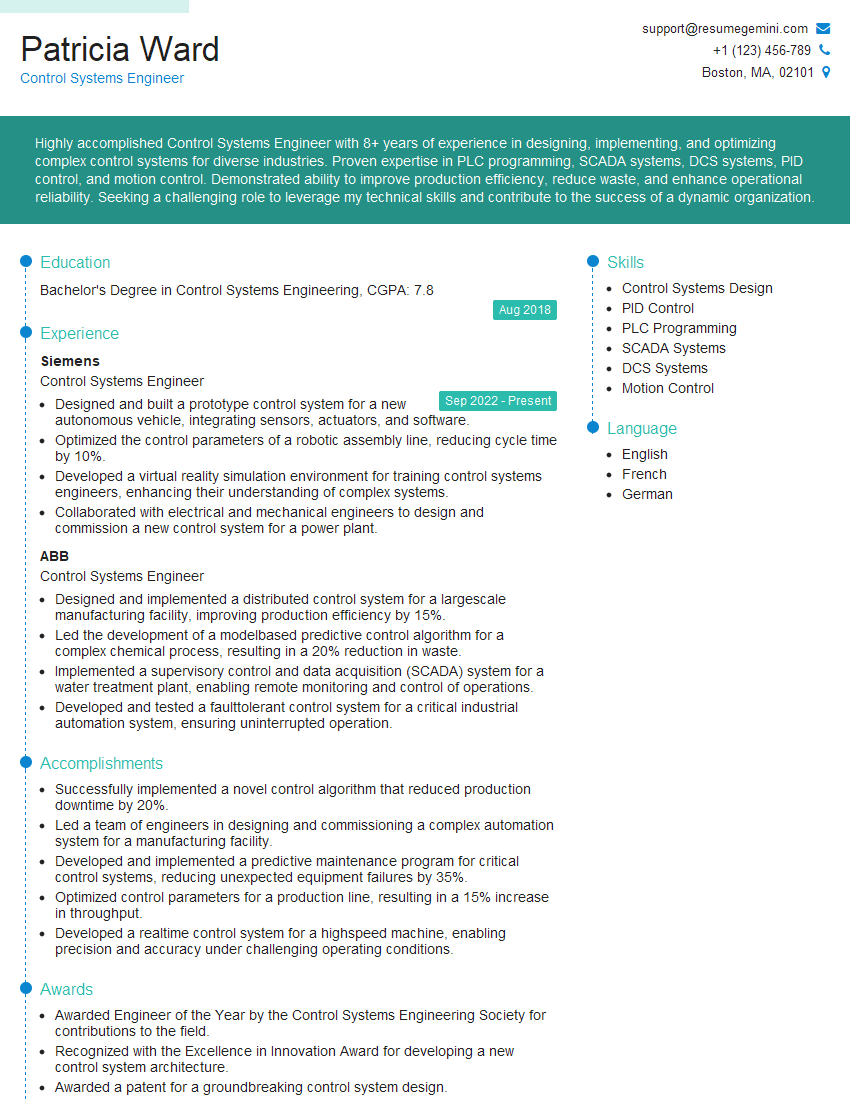
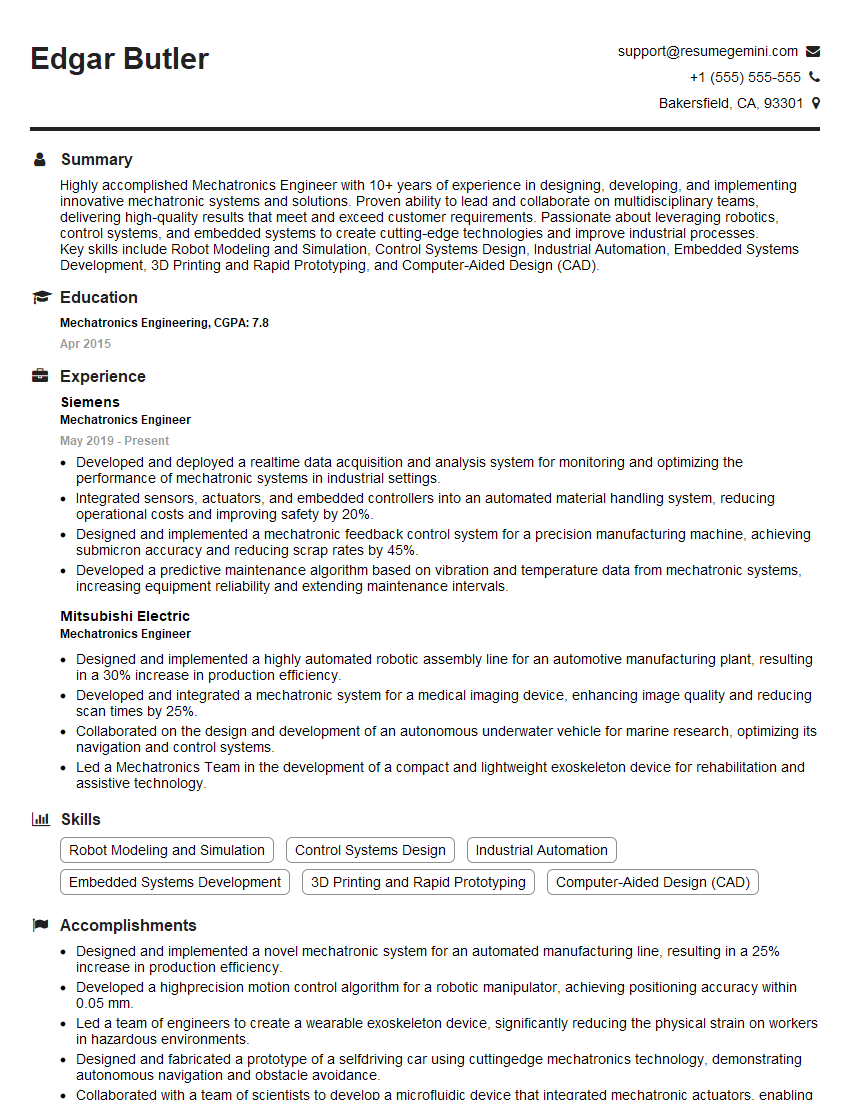
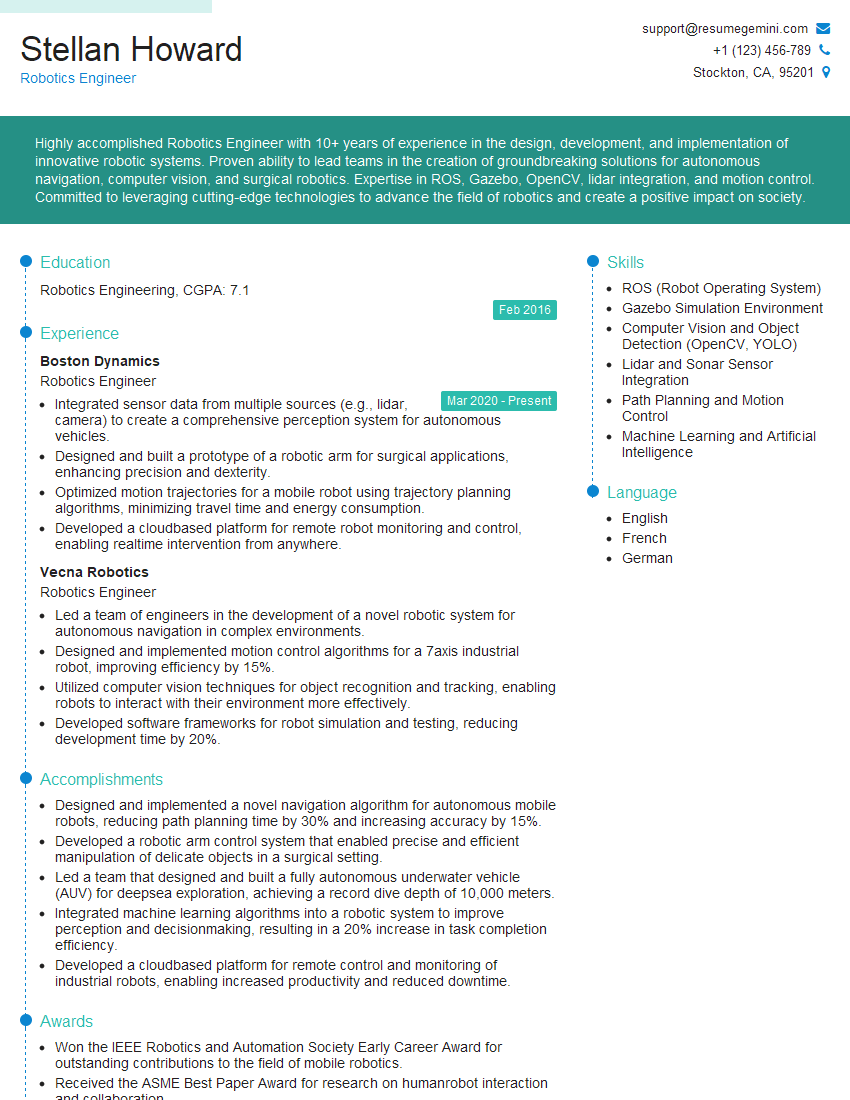
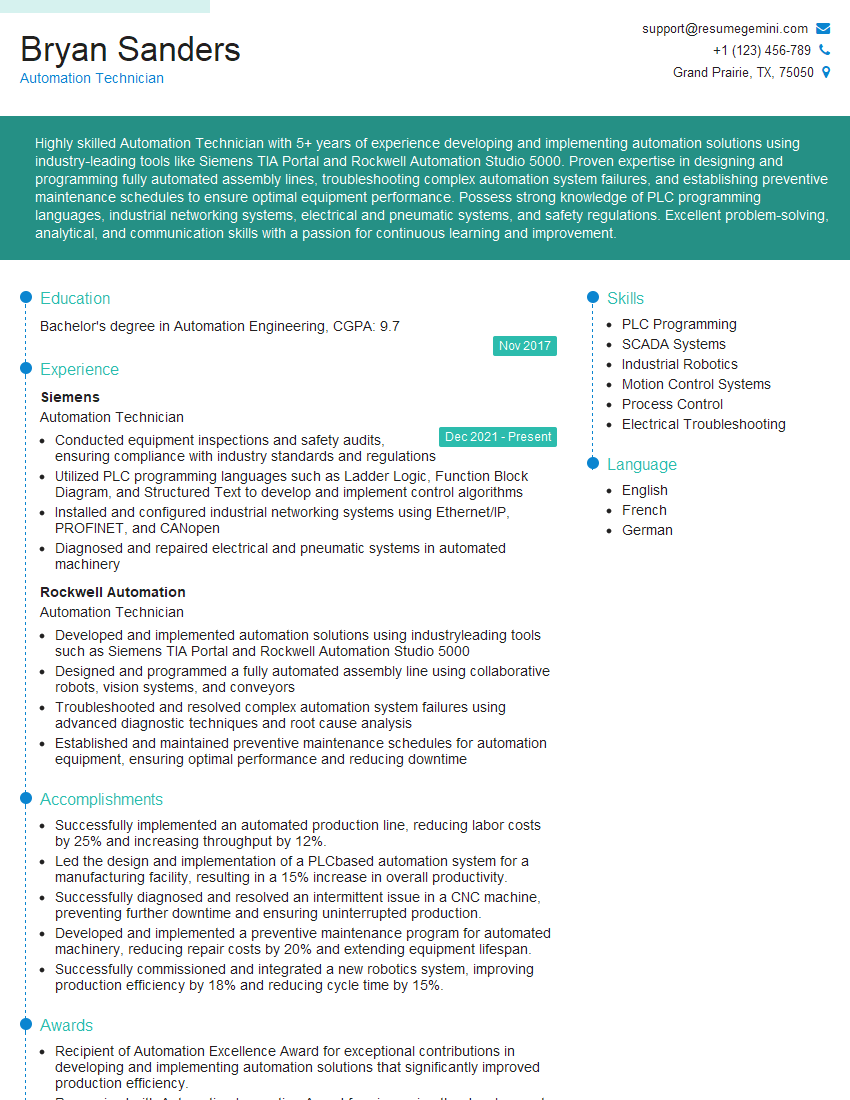
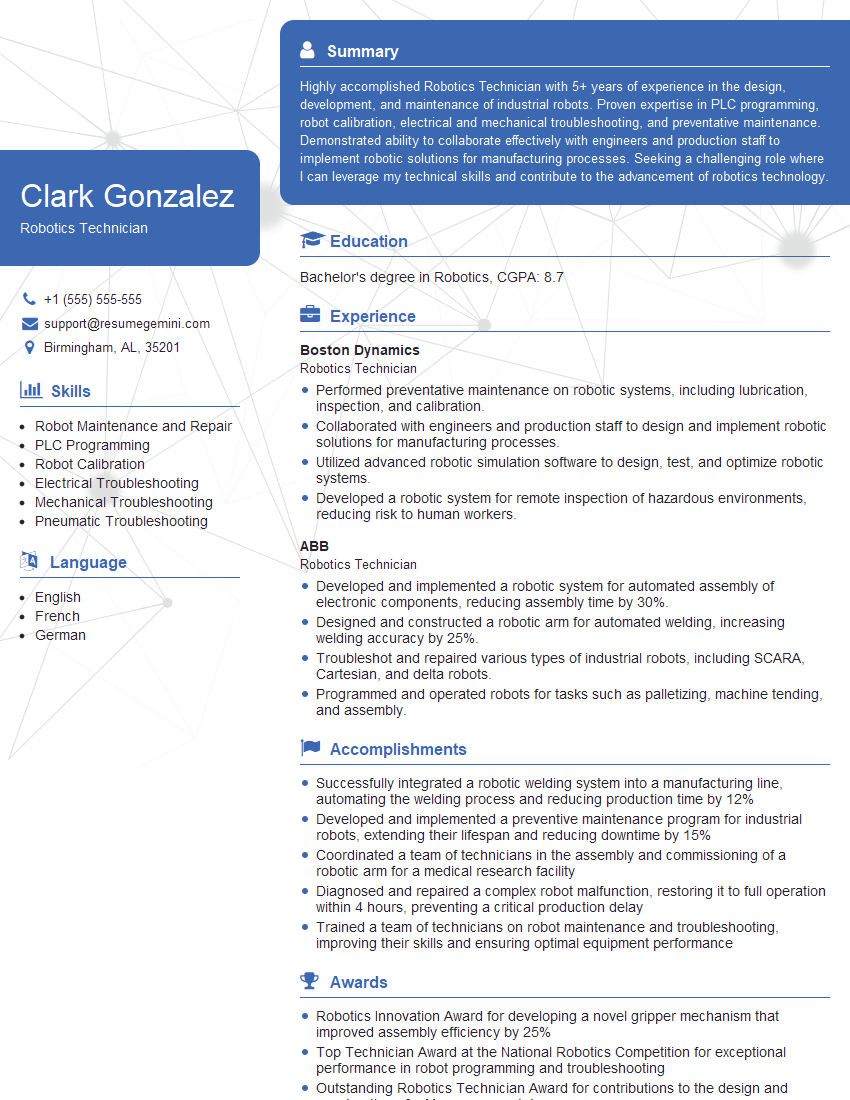
Mastering Motor Control and Automation opens doors to exciting and rewarding careers in a rapidly evolving industry. A strong understanding of these concepts is crucial for securing your desired role and achieving career growth. To maximize your job prospects, it’s essential to present your skills effectively. Creating an ATS-friendly resume is key to getting your application noticed by recruiters. We highly recommend using ResumeGemini to build a professional and impactful resume that highlights your qualifications. ResumeGemini provides examples of resumes tailored to Motor Control and Automation to guide you in crafting the perfect application. Take the next step towards your dream career – build your best resume with ResumeGemini today.

Explore more articles
Users Rating of Our Blogs
Share Your Experience
We value your feedback! Please rate our content and share your thoughts (optional).
What Readers Say About Our Blog
Very informative content, great job.
good